
How to Get Students to Compete: The Smoothcomp Founders' Ladder

You know the sign-up sheet. Your local open is six weeks out, your coach announced it after class, and the clipboard by your front desk has three names on it.
Two of them are members who sign up for everything.
Martin Janson and Ricard Carneborn have spent more than 20 years trying to get people onto lists like that.
Ricard has run tournaments since 1999. Martin started a small one in Stenungsund, a town on Sweden's west coast, in 2006, and it grew into the Swedish Open.
Both are co-founders of Smoothcomp.
Alex Cuevas, our CEO, went to Stenungsund to sit down with them for an episode of Gymdesk Originals.
Smoothcomp's office has mats in it. The local academy holds class there three times a week, Monday and Wednesday at lunch and Friday afternoon, so the people who write the tournament software can train without leaving work.
You'd expect two tournament founders to spend the hour on brackets. Turns out they have opinions about your sign-up sheet.
So why go after the members whose names aren't on that clipboard? Alex's view, from the owners he visits, is that "the more people are in competitions and competing, the more likely they are to train and stay there."
Nobody had a spreadsheet to back that up. Jorge Britto of Etobicoke BJJ didn't need one. Asked the same question on his own episode, he said "100%."
It matches the benefits of martial arts competition you've probably already seen in your own room.
Between the three of them, the answer to how to get students to compete comes down to the size of the step. Going straight from class to an open is a big one.
Break it into three: an in-house event on your own mats, then an interclub tournament with the gyms near you, then the open.
This post is about how you get more of your members up each rung.
If you need to host the event itself, the in-house tournaments guide covers formats, brackets, the timeline, and the money.
Why Most of Your Members Never Make It to an Open
Look at what an open asks of your members. They give up a Saturday, pay an entry fee, maybe drive a long way, maybe book a hotel.
Then you're putting them in front of a referee nobody knows at a 7am weigh-in. That's a lot to ask of a member whose last competitive event was a company softball game.
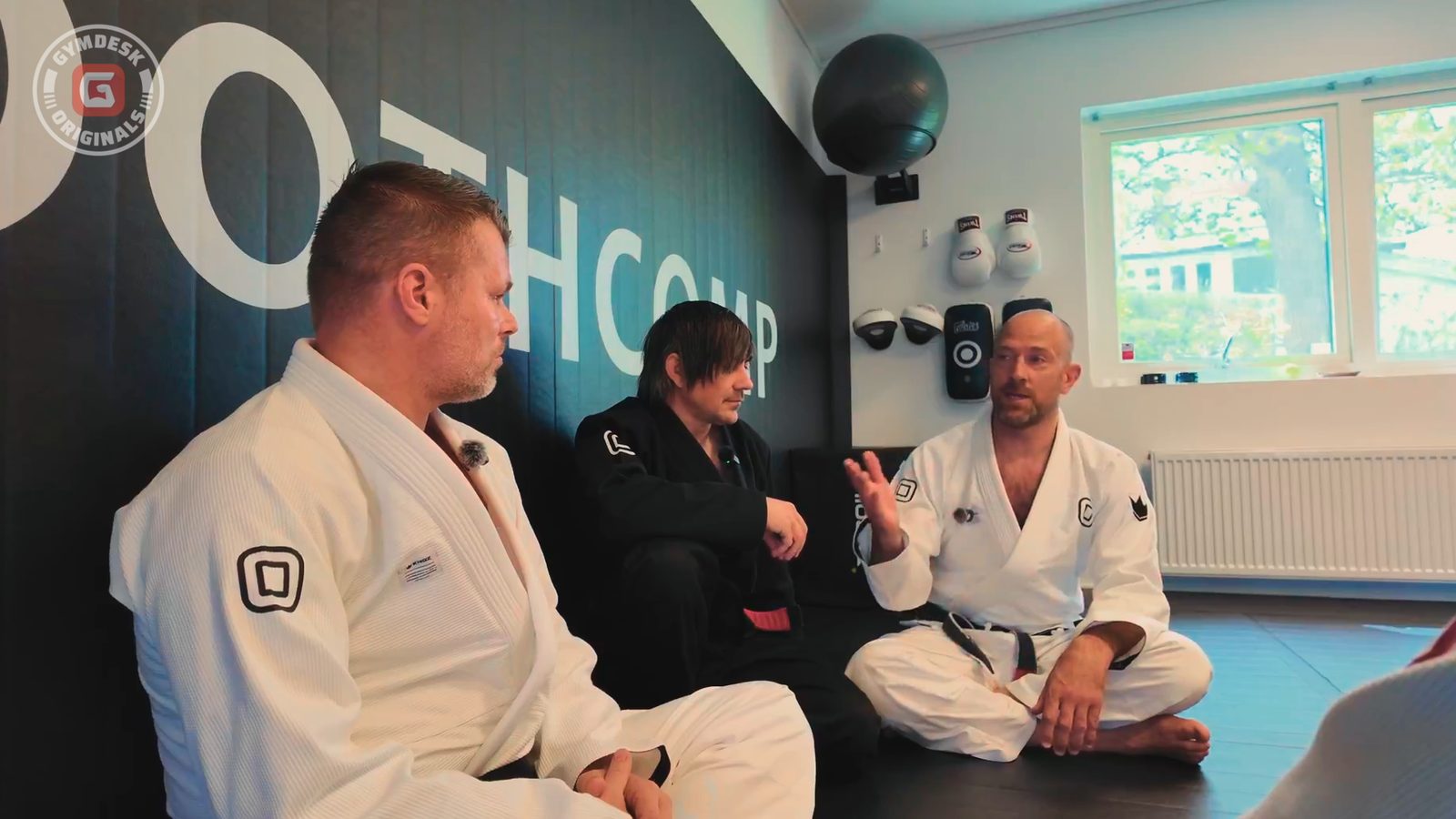
Martin Janson runs an academy in Stenungsund, Sweden, so he's had your problem.

If his gym aimed for Ricard's tournament, the Nordic Open, he said he'd get a fraction of his members willing to make the trip and actually prepare.
Down the hall, he said, it's different:
Your regulars already show up to train.
What they're weighing is everything around the match: the cost, the travel, the strangers, the chance of losing in front of all of them.
We'll keep you in the loop with fresh content, podcasts, how-to guides, tool reviews, and product exclusives.
Three Rungs, Each With One Job
Put what the three of them said side by side and you get a ladder, where each step asks a little more than the last one.
- Rung one, the in-house event. Your own mats, with your coach in the corner. This is where most members try competing for the first time.
- Rung two, the interclub tournament. Two to four neighboring gyms take turns hosting a small, cheap event. It's the first time your members face people they don't know.
- Rung three, the outside open. Official brackets and a referee who has never heard of your gym. This is where they find out how they stack up.
You don't need every member on every rung. Plenty of them will do one in-house event, have a great time, and never compete again.
That's fine.
Rung One: The In-House Event Gets Hands Up
Alex remembers going to an in-house tournament at his own gym when he was young.
Ricard Carneborn kept his advice on them short:

He called it a stepping stone.
If you want more competitors out of it, run it like one:
- Invite the members who'd never sign up for an open. Your two regulars will come anyway. Go find the blue belt who always says "next one."
- Put a first-timer across the mat from a teammate who has competed. Janson's point was that the experience rubs off: "And I get that experience rubbed off on me and build the confidence and take the step on to the real competition mats that way."
- Announce the next rung on the day. Put the circuit date on the wall at the in-house event, while the adrenaline is still in the room.
The guide linked above covers the hosting side, and the in-house tournament calculator runs your numbers.
The Case Against In-House Tournaments
Not everyone thinks rung one is worth building.
Jorge Britto runs a public tournament in the Toronto area that sold out its tenth year with more than a thousand competitors. You can read his argument in our post on when to stop in-house tournaments.
His problem is that an in-house bracket puts a student through every nerve of a real competition, then hands them a result that doesn't count anywhere outside the gym.
Britto sat on the owner panel for our in-house tournaments guide. He runs his recurring in-house events as kids-only and sends competitive adults to outside events.
He's got a point, and it doesn't cancel Janson's. If you build your ladder with Britto's warning in mind, two things change:
- Give rung one an end date for each member. Give them one or two in-house events, then move them up fast. Britto's own answer is a small members' event off the home mats: "So our guys have like a small event, but it's not in a gym. It's out. It's a different venue."
- Expect kids and adults to use the rung differently. For kids, a familiar room is the point. Adults are a different story. Britto's worry is that a bracket at home turns a comfortable room more hostile and can start rivalries between teammates.
He also attaches a condition to running any in-house event: "But then as soon as you build some structure, put that event outside."
Britto's off-site event and Alex's rotating circuit are nearly the same idea.
If the nearest open is a long drive away and your members have no way to get there, your in-house event carries more of the load. Britto makes that exception himself.
Rung Two: Build an Interclub Tournament Circuit With the Gyms Next Door
Alex picked this one up on the road. Owners kept bringing Smoothcomp up on his customer visits, and a few of them had built their own little circuit.
One gym invites the academies within a 5- or 10-mile radius to a small local event, charges $15 or $20, and the gyms take turns hosting.
Anyone can enter, he said. The understanding is just that the event moves around.

For your members, an interclub tournament delivers most of what local BJJ tournaments do: opponents they've never rolled with and a referee who isn't their coach.
They drive 20 minutes and pay lunch money to enter.
Why a roll isn't a match
A match has a clock and a score, and a roll doesn't. One of the Smoothcomp founders put the difference simply:
"When there's a scoreboard and a clock ticking, the match looks different. It's not the same. The guy you beat in a roll might beat you in a match."
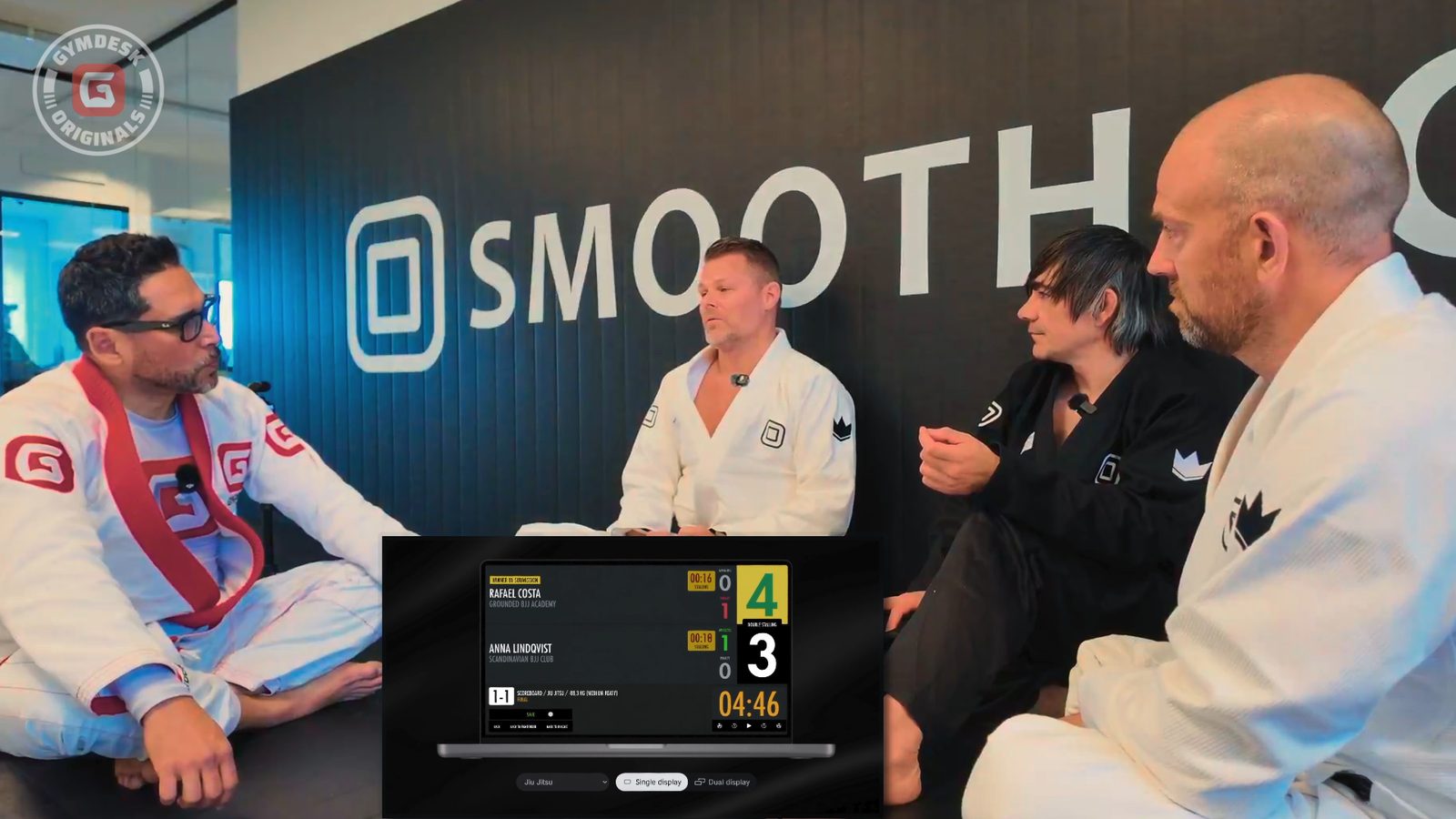
Members know each other's games. The purple belt who taps everyone on Tuesday has been tapping the same five people for two years.
An interclub tournament is your cheapest way to find out what that's worth against someone who's never seen it.
Start with one phone call
PRO TIP:
Two gyms is a circuit. Before the first event, agree on a low entry fee ($15 to $20 in Alex's examples) so the point is participation, and on referees who don't officiate their own students.
Nobody on the episode laid out a launch plan, so here's the simplest one I can see: call the owner of the nearby gym you get along with best.
Two gyms is a circuit. Add a third after your first event runs and you know what you're asking people to join.
Then agree on two things your members will feel: a low entry fee ($15 to $20 in Alex's examples) so the point is participation, and referees who don't officiate their own students, so your members face a real outside ref.
Rotate the home mat
When you host, your members compete at home, which puts them back on rung one for the day.
Rotation fixes that over a year: they get away events at every other gym in the circuit.
If your circuit is only two gyms, try a neutral venue now and then, like a community hall you split.
Keep a list of who goes
After each event, write down which members competed and how many circuit events they've done.
A member with three circuit events against two other gyms goes on your shortlist for rung three.
Rung Three: From Ready to Registered
When a handful of members hit those, pick one open for the group and make it a team trip.
The guide to building a competition team covers the team itself, and preparing athletes for competition covers the weeks before the trip.
This is also where your software helps, within limits.
Alex said as much on the episode. Gymdesk already tracked attendance, skills, and belt progression, but competition was the missing piece.
Gymdesk and Smoothcomp are now one company, so you'll see Smoothcomp events in a Competitions tab inside Gymdesk.
You can endorse an event with a Coach's Note, and your members see it marked Academy Approved. They tap Interested or Decline and see which teammates are in.
That clipboard by your front desk becomes a list every member sees, with their teammates' names already on it.
On your My Academy tab, every member shows as invited, interested, registered, or paid, so you know who's flaking before the deadline.
The competition planning and tournament registration pages walk through it.
IMPORTANT:
Your list covers Smoothcomp events only. For federation events like the IBJJF's, you'll still register on the organizer's site.
Build the Ladder Before the Next Open
Start with one or two in-house events a year, which is Ricard's number. Treat them as a first match, and give each member an end date on that rung.
Then call the gym down the road.
A quarterly interclub tournament at $15 to $20 a head puts your members on someone else's mats against strangers, and nobody pays for a hotel.
A member who has competed against two other gyms and came back after a loss is ready for an open.
Pick one, and make it a team trip.
FOR MARTIAL ARTS GYMS
Gymdesk and Smoothcomp are now one company. When your members are ready for an open, endorse a Smoothcomp event with a Coach's Note, let them see which teammates are in, and track who's invited, interested, registered, or paid before the deadline.
See Competition PlanningGym management software that frees up your time and helps you grow.
Simplified billing, enrollment, student management, and marketing features that help you grow your gym or martial arts school.


FAQ
Interclub Tournament FAQs
Quick answers for owners building a path from in-house events to outside competition.

Sean has spent the last decade creating content that helps businesses—small and not so small—grow smarter to allow operators to do more of what they love. You know, the fun stuff.
From shipping and international logistics to web development and marketing, he's done the work (not just the words) to scale retail and service businesses efficiently.
You can find his work at Sendle, Shogun, The Retail Exec, Gymdesk, and more.


