
Greater Charlotte's Gyms: Four Plans the City Rewrote

Alex has made the Charlotte drive enough times now to know it doesn't hold still.
On one trip out to Fort Mill he guessed the drive was about forty-five minutes. Fred Silva, who makes it constantly, corrected him down to thirty. Then reconsidered.
"Thirty minutes, forty minutes. With traffic, it took me a lot longer, a lot of construction."
That's greater Charlotte in one exchange. It sprawls south into South Carolina and north into towns most people outside Mecklenburg County couldn't place, and the drive time depends entirely on what's being repaved this month.
Four of the schools he filmed sit inside that sprawl. A nine-time world champion's academy in the city itself, and his cousin's location thirty minutes south, across the state line.
Then a Taekwondo dojang in Harrisburg, and a karate school in Belmont that spends most of its day not teaching karate.
One of them isn't in North Carolina at all. We're counting it anyway, because Fort Mill is closer to uptown Charlotte than plenty of Charlotte is.
Here's what they have in common, and it took four visits to see it: not one of these owners is running the school they drew up.
We'll keep you in the loop with fresh content, podcasts, how-to guides, tool reviews, and product exclusives.
Alliance Jiu-Jitsu Charlotte: The Eleven-Year Wait
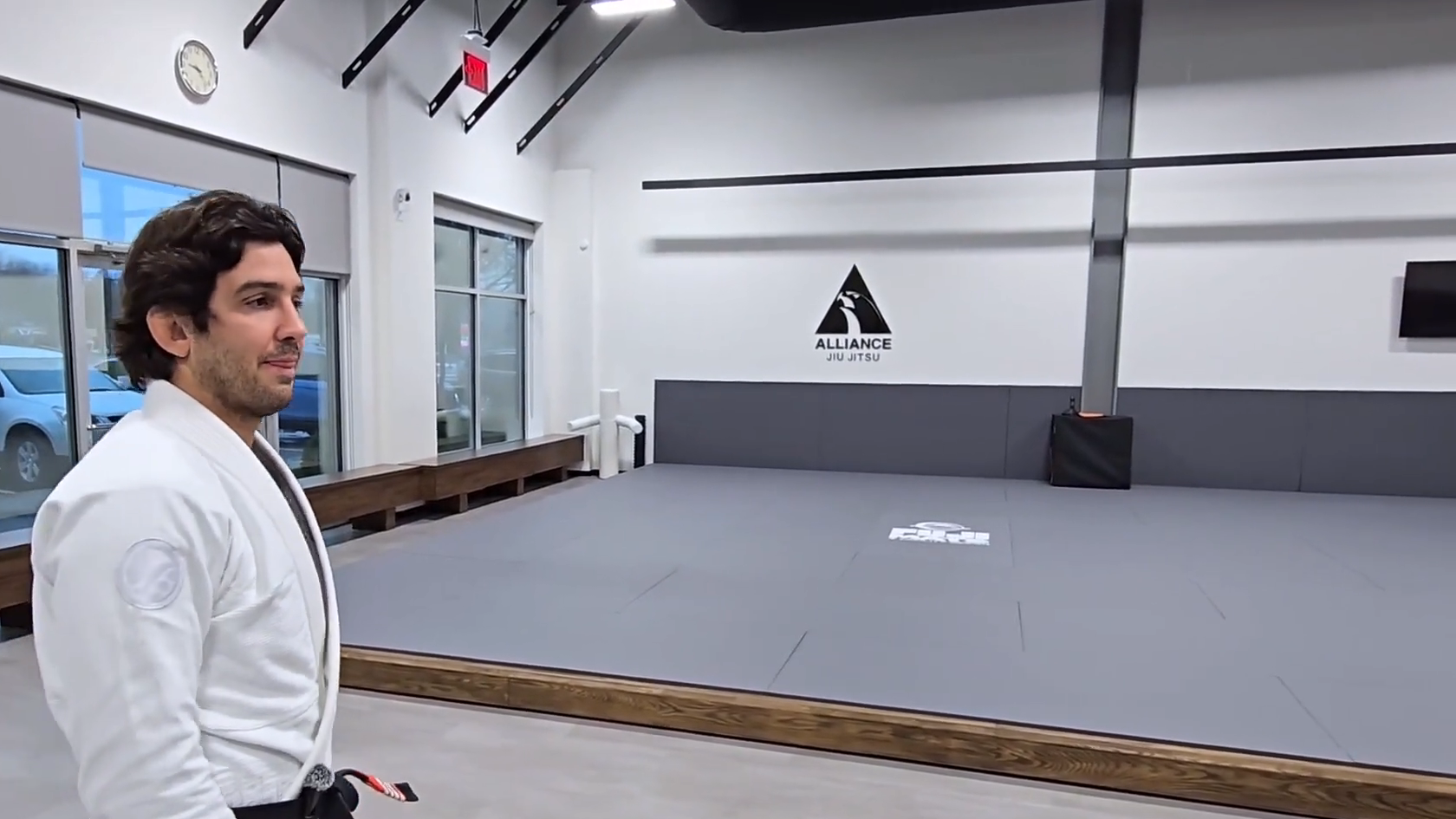
Lucas Lepri has nine IBJJF World Championship titles and a spot in the Hall of Fame.
He competed for twenty-two or twenty-three years, taught around 800 seminars across fifty-two countries, and has won the Charlotte Open sixteen times.
He also spent eleven years in the same first room, because he wanted it that way. Sort of.
"I was supposed to move a little bit before," he told Alex.
"But as I was competing, it was so hard to have time into looking for a place."
Read that again, because it's a real business decision dressed as a scheduling problem. Finding a building is a job. Fight camp is a job.
He picked the one with the medals in it and let the other wait a decade.
The new place is 9,000 square feet with 4,000 of mat, spring floors, big locker rooms, a store, and a lounge where parents can open a laptop while their kid trains.
Alex filmed the day before the grand opening. Lepri had been picturing the layout for years.
And he's noticeably more interested in talking about the people than the building. What he keeps returning to is that senior students take newcomers in hand without being asked.
That's the part of a positive culture in a martial arts school no floor plan produces.
"Jiu-jitsu as a tool to impact people's lives on the right way," is how he puts the whole enterprise.
There's one more thing he says plainly, and it reframes who actually runs this place.
She handles the systems, the leads, and the front desk staff.
He handles methodology and the mats. He's explicit that the business side is not his hundred percent focus, and that this is by design.
Watch the full Lucas Lepri episode, or read how he built the academy.
Alliance Fort Mill: The Cousin Who Found the Kids
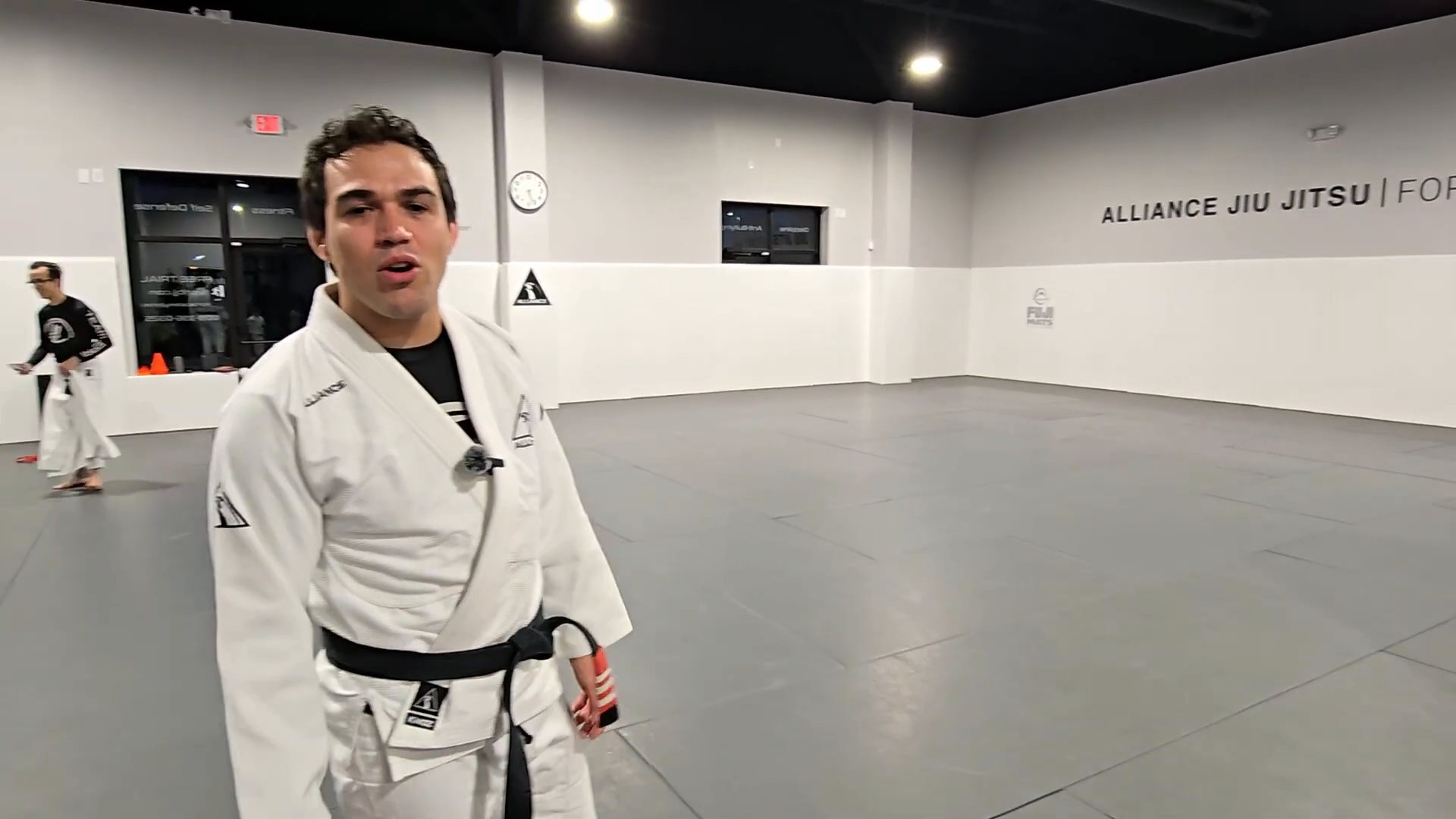
Fred Silva is Lucas's first cousin.
Their mothers are sisters, out of a big Brazilian family that gathered at their grandfather's place in Patos de Minas.
He found jiu-jitsu through Lucas on a family visit. He committed to it at sixteen, after a rough stretch of school and worse company.
Then he built a serious colored-belt career: the Brazilian nationals at purple, an IBJJF number one ranking at brown, a Pan Ams placement along the way.
Around 2014 he was in Austin, back before the city had much jiu-jitsu, when Lucas called and asked him to come be his assistant coach in Charlotte. He said yes on the spot, without knowing where Charlotte was on a map.
He landed in 2015. His wife and kids followed in 2017.
So Fred arrived to assist. What he runs now is a location, and the part of it he talks about hardest is the kids.
That's genuinely unusual.
Plenty of owners hand the kids classes to whoever's free. Fred splits them by age, runs a behavioral stripe system tracking things like discipline, friendship, and school, and describes watching a specific troublemaker turn around over two and a half years.
He remembers Lucas visiting and not recognizing the class.
"He was like water to wine… quickly shift."
The mechanics behind that are the same ones any kids BJJ program lives or dies on: age separation, a progression kids can see, and an adult who actually wants to be in the room.
The reach goes past the mats, too.
The morning Alex visited, Fred had just run a one-off session for a mother who'd asked him how to safely hold her autistic daughter through an episode. Nobody wrote that into the curriculum.
"There is a space for everyone," he says, and then lists the office worker who just needs to get out of the house, the person who wants a crew, the high-level competitor.
Fred coaches. Maria at the front desk runs the rest of it—the check-ins, the follow-ups, and the marketing side, which she says is the part she personally lives in.
When the academy moved onto Gymdesk at the beginning of the year, she ran the migration off a physical card system—collect the cards, mark the cards, key them in.
Before we used to have 10 different pages and tabs open, whereas now everything is into one.
Watch the full Fred Silva episode, or read how he rebuilt the kids program.
King Tiger Taekwondo, Harrisburg: The Gamble in the Back Room
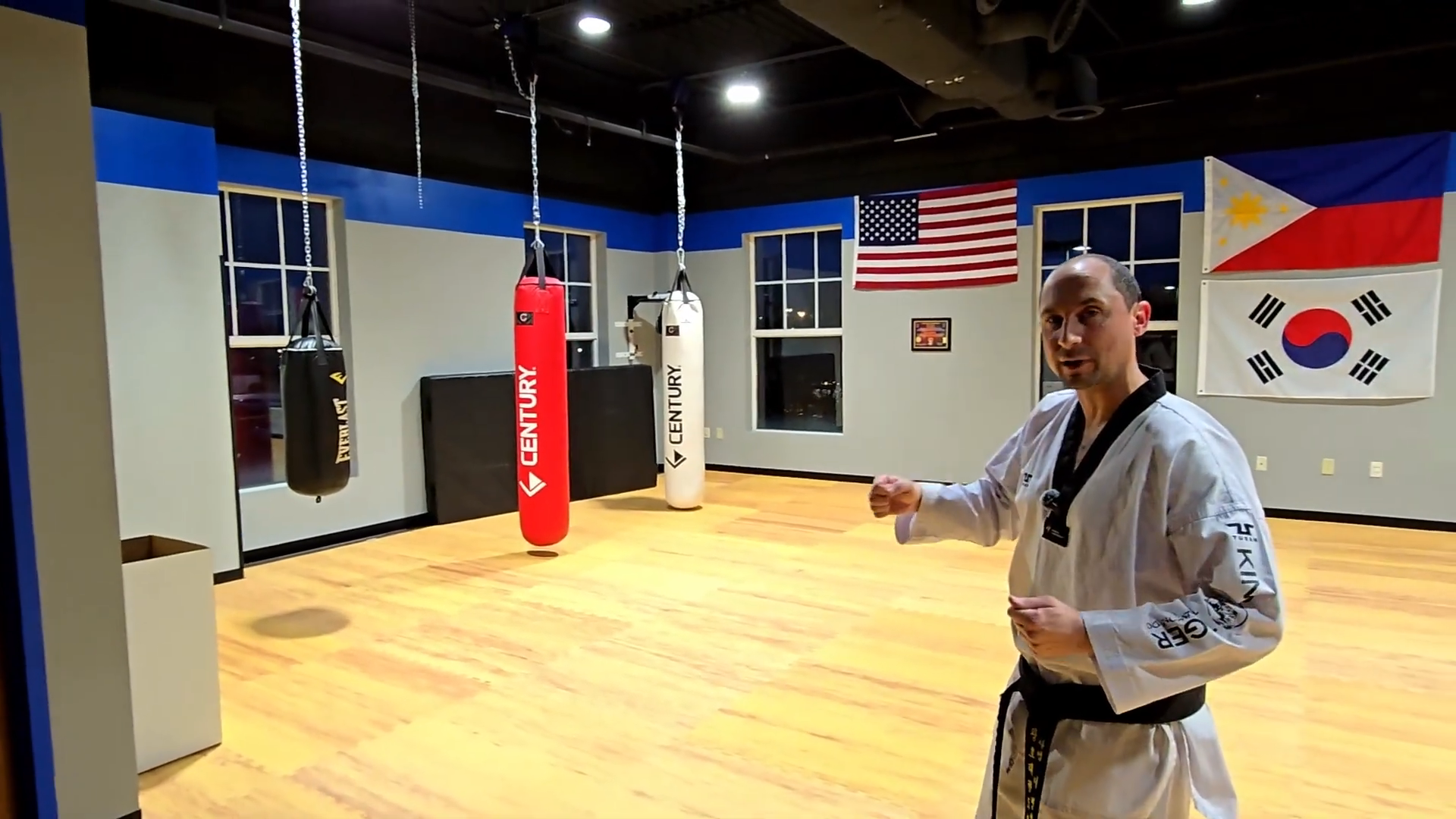
Chris Knight worked for the same instructor for fifteen years before deciding it was time to fly the nest. Brian Foster had a successful service business in Charlotte that he didn't enjoy.
Their shared instructor, Master Evans, put them together.
Foster took what he calls quite a bit of a pay cut. His wife approved immediately, which tells you something about the service business.
They opened in a former church in downtown Harrisburg in 2019, using about a third of the space they hold now.
You already know what happened next.
"We opened in 2019 and we all know what happened in 2019," goes the line on the tour.
"So it was kind of a crazy gamble, but it really worked out."
Surviving it is the easy half of that story. The part worth studying came during the shutdown.
They watched kids lose every outlet for physical activity. So they bought an entire ninja gym—warp wall, swinging obstacles, the works—and packed it into a room.
That program outgrew the building.
It now runs from its own facility five minutes down the road, which they own, and which also runs on Gymdesk.
Their second unplanned thing is the arts. Students walk in for Taekwondo and find Filipino stick-and-knife work, combat Hapkido, Olympic sparring.
"They come to the door looking for Taekwondo, and then they see different doors," Foster says. Not every art fits every person, and having somewhere else to send someone beats losing them.
Knight's focus is the five-to-seven-year-olds, a lot of whom arrive on a doctor's recommendation. "We have kids with all kinds of letters behind their name," he says.
He notes that parents sometimes describe what their kid can't do while the kid is standing right there. Turning that around is the part he likes.
The philosophy is one line, and they mean it structurally:
"We start and end with respect. Whatever you do, whoever you are, we don't expect our kids just to bow to us. We expect our kids, our students to bow to everybody else as well."
Anyone starting a Taekwondo school could do worse than copying their expansion logic. They kept taking adjacent units before they needed them, because they could see getting landlocked coming.
One of them is the idea guy and the other one says yes:
"I throw crazy ideas at him and he's just like, 'All right, try it.'"
And on why they wanted the software question to go away: "The hardest thing about doing a business is running a business."
Alex, for the record, took his first Taekwondo class in over twenty years on this visit. He reports that it showed.
Watch the full King Tiger episode, or read how the COVID gamble paid off.
NC Budo, Belmont: The Plan That Lasted a Week
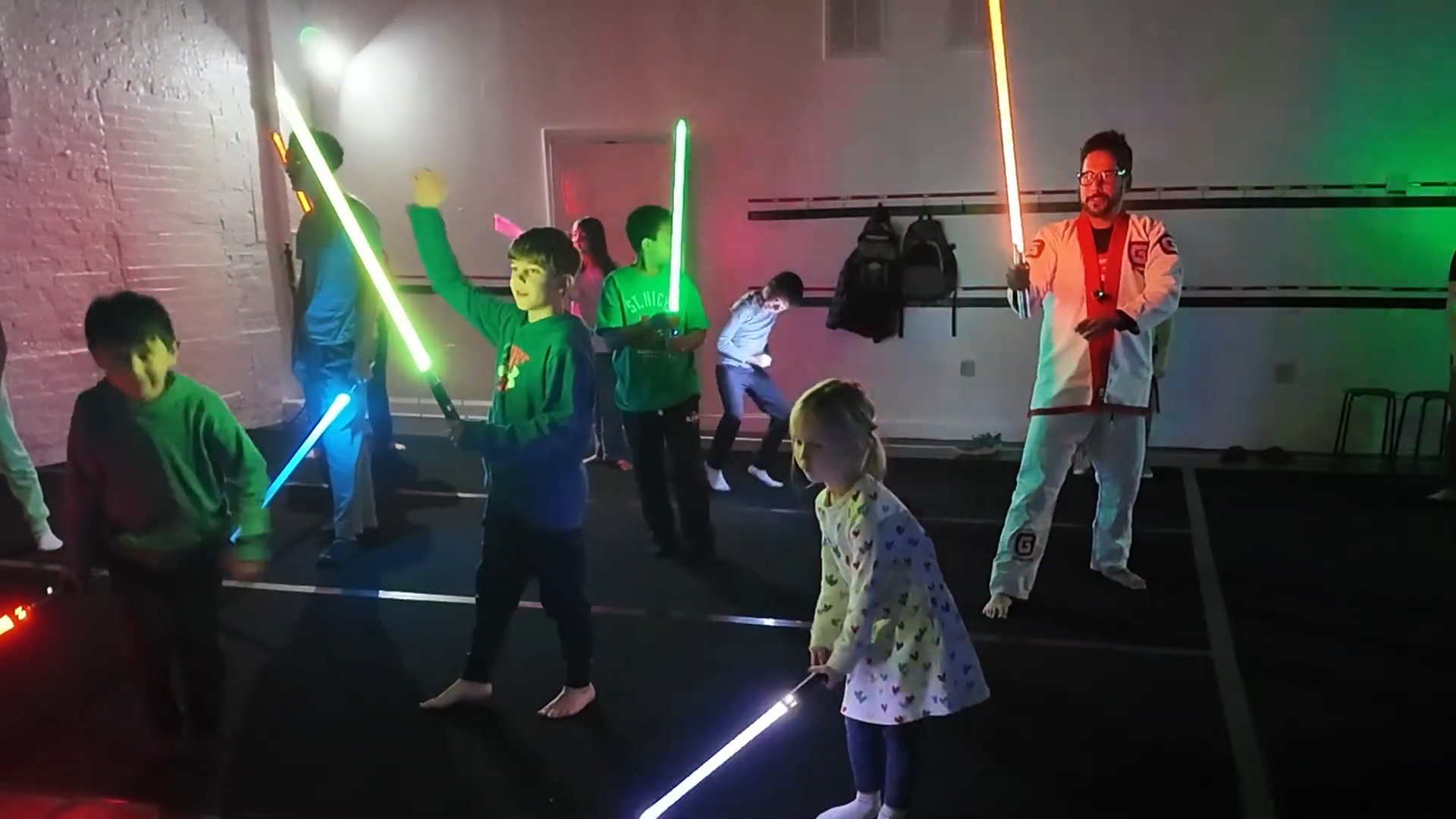
Jena Hare and Michael Baez met training together in Okinawan karate.
She'd just sold a business and didn't know what came next. He'd been training since he was eight and teaching for about twenty years, and wanted to do it full time.
Her read was that his passion could be turned into a viable business if somebody actually ran it like one. So they'd build one together.
The plan was a competitive martial arts center. Belmont had other ideas.
"In the areas we were in, we thought we were going to be a competitive martial arts center," Jena says. What Belmont actually had was three-to-ten-year-olds and parents who needed somewhere for them to go after school.
She adjusted at a speed most businesses can't manage.
A week. Mike, whose background is combative competition and self-defense seminars, discovered he was good with very small children, which nobody saw coming including him.
The after-school program is now the backbone of the business.
School buses start dropping kids at the dojo around 2:30, and seven vehicles run the pickup route. Kids rotate through thirty-minute stations—snack, homework, martial arts, mindfulness and yoga, arts and crafts.
No electronics. Somebody has to say it out loud in 2026, so they do.
"As much as we love teaching martial arts, what we love even more is being able to reach children who wouldn't have otherwise come through our door," Jena says.
That's a revenue model most martial arts schools never seriously consider.
It also solves a problem Alex knows personally: parents whose training schedule will never line up with their kid's class time.
Mike's teaching philosophy runs against the tradition he grew up in. He got tired of yes-sir-no-sir, so they ask kids to work out what good looks like and solve their own problems.
"We need thinkers, not followers."
They're in year nine, with about 150 people rotating through the space at any given moment. Students who started as little kids are now coming back from college over the summer to help with camp.
They came off paper contracts, Canva templates, spreadsheets, and three separate segments of Google Calendar. Growing by fifty students a year made that arrangement untenable.
Jena's verdict on the platforms they looked at first was that they had all the flash and about twenty percent of what she'd actually use.
They landed on Gymdesk instead, and by their own account still haven't hit the ceiling of it:
"...we're not even touching the full capacity of what we could use the software for, but it definitely makes our life a lot easier."
The line that holds the whole visit together is hers.
"You have to adjust, you have to be flexible, you have to read your audience and not sacrifice the quality of what you teach or the way that you want to teach, but you have to bend to the needs of the community."
Watch the full NC Budo episode, or read how the after-school program became the business.
What These Four Charlotte-Area Schools Have in Common
Four schools, four disciplines, roughly an hour of driving between the farthest two. The whole route in one glance:
School (Area) | Discipline | The plan | What it became |
Alliance Jiu-Jitsu (Charlotte, NC) | BJJ | Move to a bigger building | Eleven years in the first room, then 9,000 sq ft |
Alliance Fort Mill (Fort Mill, SC) | BJJ | Come assist a cousin | Runs a location, built around kids |
King Tiger Taekwondo (Harrisburg, NC) | Taekwondo, multi-art | A Taekwondo dojang | A dojang plus a ninja gym they own outright |
NC Budo (Belmont, NC) | Karate, multi-art | A competitive martial arts center | An after-school program with a karate core |
Three things hold across all four.
The community wrote the business plan
Belmont's version is the clearest, because the pivot took a week and Jena can date it.
King Tiger's took a pandemic. Fort Mill's took a few years of Fred noticing which classes he wanted to be in.
Lepri is the exception, and he's worth keeping in the frame for it.
His plan bent under a competing priority instead of a market. Eleven years is the opposite of fast, and it still ended with a building he'd been designing in his head the whole time.
What none of the four did was treat the original plan as a promise they'd made to themselves.
That's worth sitting with if you're starting a martial arts school right now with a very specific idea of what it will be.
Somebody else runs the business
This one is nearly uniform, and it's the least romantic finding here.
Lepri's wife manages the academy, and he calls her the real black belt without hedging.
Jena handles operations while Mike handles instruction.
Knight and Foster split the technical and business sides by temperament. Maria runs the front desk and the migration at Fort Mill.
In all four, the person on the mat is not the person holding the business together.
The teaching only gets to be the focus because somebody else made it possible for it to be.
That division also does quiet work for retention.
The follow-ups happen, the birthdays get remembered, and the belt tracking stays current, because it's somebody's actual job.
The paperwork caught up with all of them
Fort Mill was collecting physical cards, marking them, and keying them in by hand.
NC Budo was running paper contracts, Canva templates, spreadsheets, and three Google Calendar segments while adding fifty students a year. King Tiger had software they disliked and couldn't get help with.
Different systems, same threshold: the school got bigger than the person tracking it could hold in their head.
Foster names it directly.
"The hardest thing about doing a business is running a business."
He wanted the billing to stop being a thing he thought about, and to go back to teaching—which is a fair description of what a curriculum is for in the first place.
Four Schools, One Instinct, More to Come
Greater Charlotte doesn't hand you a clean story.
It hands you a state line, a lot of construction, and four owners who each expected something else.
A world champion who stayed put for eleven years so he could keep winning. His cousin who came to assist and stayed for the kids.
Two partners who bought a warp wall during a pandemic.
And a couple who planned a competition gym and were writing preschool blog posts inside of a week.
None of them got the school they drew up. All four are still open, and three of them are bigger than the original drawing.
What they share is a willingness to look at who actually walked through the door and rebuild around that person. Fast, and without treating the first plan as sacred.
Jena already said it better than a summary can. You have to bend to the needs of the community.
Alex keeps making the drive, so treat this as a living dispatch from greater Charlotte, with more schools to add as we visit them.
The rest of the series lives on Gymdesk Originals.
Gym management software that frees up your time and helps you grow.
Simplified billing, enrollment, student management, and marketing features that help you grow your gym or martial arts school.


FAQ

Sean has spent the last decade creating content that helps businesses—small and not so small—grow smarter to allow operators to do more of what they love. You know, the fun stuff.
From shipping and international logistics to web development and marketing, he's done the work (not just the words) to scale retail and service businesses efficiently.
You can find his work at Sendle, Shogun, The Retail Exec, Gymdesk, and more.