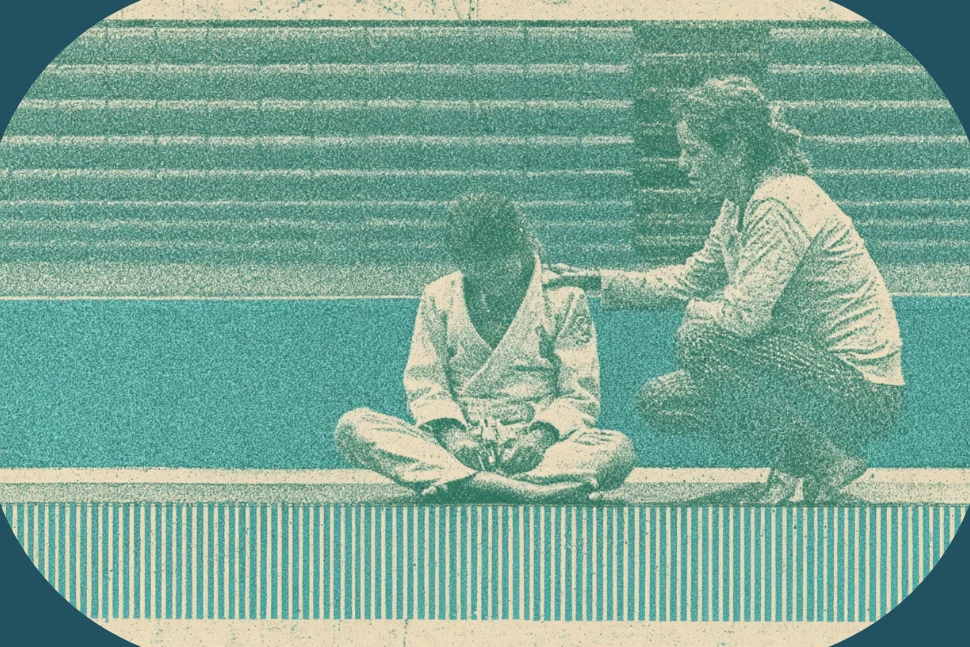
From Troubled Teenager to Head Instructor: How Jiu-Jitsu Saved Fred Silva

The kids class at Alliance Jiu-Jitsu Fort Mill was in full swing, but two brothers were making it nearly impossible to teach. They jumped on seats, ran around the mat, ignored every instruction.
One of them would do anything—literally anything—to get kicked out of class. He didn't want to be there, and he made sure everyone knew it.
Most instructors would have given up. Most would have had the conversation with the parents about "fit" and suggested they try something else.
Fred Silva did something different. He saw himself in those kids.
Because twenty years ago, Fred was the troubled teenager. The one hanging with the wrong crowd. The one spiraling toward a path that could have destroyed his life.
And if it weren't for jiu-jitsu—and the people who refused to give up on him—he wouldn't be standing on this mat today, teaching kids who need exactly what he needed back then: purpose, direction, and someone who understands.
The Wrong Path
Growing up in Brasília, Brazil's capital city, Fred struggled in school.
Not because he wasn't smart, but because he couldn't stay still. He couldn't focus. The bad grades started piling up, and with them came something more dangerous: shame.
"I always have a problem in school like… don't stay still you know… can never focus… always bad grades," Fred recalls.
"This start to become like a snowball of low self-esteem, trying to do things that you shouldn't be doing because you want to feel confident, you want feel powerful, you know, to hang out with the wrong crew."
It's a pattern you've probably seen in your own gym.
A kid struggling to find their place. Looking for validation anywhere they can get it. When school becomes a source of constant disappointment, when the shame of letting parents down becomes unbearable, teenagers look elsewhere for confidence and power.
For Fred, that meant the wrong crowd. The kind of friends who help you feel strong in the moment but lead you somewhere dark in the long run.
The shame hit hardest because he desperately wanted to make his parents proud.
But when you're failing at what everyone says matters—grades, academics, the conventional path—that shame "hurts them a lot," Fred explains.
"Like for me, I was never good on school. So that for me was a very painful age."
That pain, that feeling of falling short, was pushing him further down a dangerous road.
A Father Who Wouldn't Give Up
But Fred's father saw something others might have missed.
He recognized his son's pattern: Fred didn't just want to participate in things—he wanted to compete, to excel, to have a goal worth chasing.
As a kid, Fred had played indoor soccer, competed in swimming, tried judo. In every sport, he wanted more than just to show up. He wanted to be on the team. He wanted to compete. He needed something to pursue.
"I always have this goal," Fred says. "I want to do something, but I want to have a goal and and my father knew that."
His father understood something critical: "...for a young age, that's important to have a goal because if you don't, you're just lost, and then you choose any path. That was kind of what was happening."
Without a goal, without direction, Fred was choosing any path. And that path was leading somewhere destructive.
So his father kept pushing. "My father always push me and saying like, 'Hey man, you got to come back to this sport. Got to come back to this sport.' Because he knew I like to train."
He didn't let up. He saw what his son needed, even when Fred couldn't see it himself.
The Vacation That Changed Everything
Fred's extended family was huge—ten aunts and uncles, dozens of cousins scattered across Brazil.
Family trips to his grandfather's small city in Minas Gerais were a constant throughout his childhood. All the cousins would gather, travel together, celebrate together.
One of those cousins was Lucas Lepri.
Lucas was four years older, and during those family visits, he was often... missing.
"One of the times I went to like one of these trips to his hometown and I start to see Lucas was never there, you know," Fred remembers. "I was like, 'Hey, where's Lucas?' Ah, he's traveling. He's in São Paulo. He's like, he's doing a competition."
Then Fred started noticing the medals on the wall. A lot of medals.
At twelve years old, Fred was training Muay Thai and had already done one fight. He loved it, trained hard every day. But when he visited Lucas—who had just earned his brown belt and was beginning to teach—something shifted.
"I went there, put my gear on for the very first time, trained at L. Santiago's academy—his professor's place—lifted weights for the first time, my first bench press," Fred says. "Lucas was always like, 'Let's go, man, put more weight,' always pushing me."
That first jiu-jitsu class planted a seed. Lucas told him to find an academy back home. But Fred was into Muay Thai, and life got in the way. The seed went dormant.
Until a childhood friend brought it back to life.
The Friend Who Saved Him
Here's the beautiful irony of Fred's story: the friend who had gotten him into the most trouble was the one who saved his life.
They'd grown up together since kindergarten. Same neighborhood, tight families. They were the troublemaker duo, the ones constantly getting into mischief together.
"He was the friend that most get me in trouble, you know," Fred says. "We were like get in trouble every time together."
But that friend had started training jiu-jitsu and earned his blue belt. When he opened an academy nearby, he invited Fred to come train.
Fred was sixteen, about to turn seventeen. It was March 2006.
"He was the one that invited me to go to the place that actually like save my life, you know, like that give me purpose, and like give me a pursuit so I can get better."
Fred walked into that academy and never stopped training.
The sport gave him what his father had known he needed: a goal. A pursuit. A reason to show up every day and get better.
Finding His Why
Fred's new academy came from a competitive lineage. The professors saw potential in him, but they also saw the pattern—a talented kid who needed structure, discipline, and a clear target.
They started pushing. Train three times a week became every day. Every day became twice a day.
Behind the scenes, Fred's father was checking in with the coaches. "After, the professor was like hey how is he doing, still hang out with those guys? They really give me this great support in the academy."
Fred set a goal: compete at the Brazilian nationals in Rio de Janeiro as a blue belt. He got his blue belt in December and immediately started preparing for the next year's tournament.
Just three months into training, still a white belt, he entered his first competition. People made fun of him because he kept his Muay Thai stance on the mat—they joked he was going to punch his opponent. But he competed anyway.
The road wasn't smooth. In one tournament, with Lucas actually in attendance, Fred lost badly. He was too weak, too skinny. His opponent overpowered him, and Fred broke down.
"I lost just like I was too weak, too skinny, you know and the guy kind of overpowered me. I got, oh man, started to cry, like leave the venue, a big scene," Fred remembers.
Lucas consoled him with the wisdom Fred now shares with his own students: "Man calm down, it's part of the sport, you're going to lose, going to win."
But instead of quitting, Fred doubled down.
"I got to work out, man. I gotta get stronger. I was like, 'Man, I want to train every day.'"
A gym owner at his academy stepped up, sponsoring Fred with free training and a personalized strength program. The support system rallied around him.
The Grind That Rebuilt Him
Fred's new routine was relentless: college classes in the morning, then training twice a day plus weightlifting. No days off. No excuses.
"I would go in the mornings to college and work out the other day, the rest of the day two times and do the lifting and like this non-stop, you know?"
What made it sustainable wasn't just discipline—it was Lucas's example.
Fred had seen his cousin's work ethic firsthand. When his professors told him to train twice a day, to lift weights, to push harder, Fred could see it wasn't crazy. It was the blueprint Lucas had already proven.
"I see how he does it, and I was like, okay—the guys at my academy are telling me to do the same thing Lucas does," Fred explains. "So I was like, these guys are not crazy, you know what I mean?"
If Lucas could do it, it was possible. If Lucas made it work, the path existed.
And something unexpected happened: Fred started enjoying the grind.
"I enjoy the grind. I enjoy like being active, being like with a purpose, a pursuit and just developing and growing as a human being."
Jiu-jitsu didn't fix everything overnight. Fred was still growing, still figuring out who he was. But the sport gave him what he'd been missing: direction.
"It was kind of like just give me a direction, you know, like kind of redirect all this and could kind of find my way."
All that erratic energy, all that frustration and need for validation—it now had somewhere to go. Somewhere productive. Somewhere that built him up instead of tearing him down.
The Champion He Became
The troubled kid who couldn't focus in school became a champion.
Fred won the Brazilian nationals at purple belt. He placed third at the Pan-American championships. As a brown belt, he reached the number one ranking in his weight class on the IBJJF circuit.
"The brown belt I reach the number one on the IBJJF rank as a brown belt lightweight," Fred says with quiet pride.
He won the Brazilian nationals no-gi. He placed second at the Pan-Ams in his first year as a black belt, then third the following year.
The medals aren't the point of the story—they're the evidence. Evidence that structure and purpose can transform a life. That the kid everyone thought was lost could find his way. That shame and struggle can become fuel for something extraordinary.
But winning medals was never Fred's ultimate purpose. That became clear when Lucas called in 2015 with an opportunity.
Watch the whole episode here:
Becoming What He Needed
Lucas was opening an academy in Charlotte, North Carolina. He wanted Fred as his assistant coach.
Fred didn't even know where Charlotte was on a map. He didn't care. "I was like, 'Yeah, let's go.' I was like, 'I didn't even know on the map, you know, let's go.'"
The opportunity to work legally in the US, to build a life doing what he loved, to coach alongside his cousin—Fred didn't need to think twice. He flew to Charlotte in 2015, spent two years getting established, then brought his wife and kids to join him in 2017.
At Alliance Jiu-Jitsu Fort Mill, Fred found his true calling—and it surprised him.
Most jiu-jitsu instructors try to avoid teaching kids classes. They're chaotic, exhausting, and the students can't execute techniques the way adults can. Instructors pass kids classes off to assistants whenever possible.
Fred seeks them out.
"I love to teach jiu-jitsu in general, but I love to teach the kids class," he says. "I don't see this much, to be honest. I have a lot of friends who teach, and everyone's kind of trying to give the kids class to someone else. I really enjoy teaching the kids."
Why? Because he sees himself in them. Especially the troublemakers.
Remember those two brothers from the beginning of this story? The ones jumping on seats, refusing to listen, doing everything possible to get kicked out?
Fred worked with their parents. He learned that the younger one needed discipline, but the older one—he wasn't misbehaving because he was a bad kid. He was trying to get kicked out because he didn't want to be there in the first place.
His mother told Fred: "You can be tough with him. He just wants you to kick him out of the class because he wants to quit."
Fred adjusted his approach. He didn't need to be harsh—he needed to connect. He saw potential in the kid, even when the kid couldn't see it himself. He encouraged him, built his confidence, showed him he could do the techniques when he actually tried.
"His behavior just starts like changing," Fred says.
Months later, Lucas came to teach a class and noticed the transformation.
"Lucas came teach the class over here with me. He was like, 'Man, like what happened to them?' Like they're like changing, man. Like they got way better, you know? I was like, 'Man, like he was like water to wine.' Like completely shift, you know what I mean?"
Water to wine. A complete transformation.
And Fred almost didn't realize he was doing it.
The Bigger Picture
Parents started approaching Fred after class, telling him about the impact he was having on their kids. He was surprised every time.
"I see many parents start coming to me and saying, 'Hey man, you really have a good influence on the kids. You don't have any idea what you've done,'" Fred recalls. "And I was like, 'Oh man, I'm just training,' you know what I mean?"
His wife helped him see what he couldn't see himself: he was changing lives, just like his professors and his father had changed his.
"We never know what people are going through, you know what I mean? The kids are going through some stuff, the parents, everyone.
When someone steps on the mat, you don't know what's happening. Maybe that time is their time to decompress a little bit. Maybe you say something to the kid that he was needing to hear, and that takes him away from something you don't have any idea about."
That hour on the mat might be the best hour of a kid's week. That encouragement might be exactly what a struggling teenager needs to hear. That structure might be the thing that redirects a life heading down the wrong path.
Fred doesn't always know when or how he's making a difference. But he knows it's happening.
So when he teaches, he brings intention to it. "When I'm teaching, I just try to bring like this good thoughts, good influence, kind of like a positive kind of mindset to just be open to help, you know, and just put in God's hand and hopefully make me his instrument, you know, to bring some goodness."
One student trained with Fred for two and a half years before transitioning to wrestling. On his last day, the kid cried because he'd miss his instructor so much.
"It was making me almost cry in class, too," Fred admits. "I get attached to them, and you know I know that students come and go, change and stuff like that, but doors always open."
That kid will remember Fred when he's twenty-five. When he's forty. When he has kids of his own and needs to decide how to guide them through their struggles.
The impact multiplies in ways Fred will never fully see.
Advice for Parents
Fred's message to parents comes from hard-earned experience. He knows what shame does to a kid because he lived it.
"Be patient with the kids, you know, I know sometimes like as parents we get caught up a lot in life and abuse and trouble. So, and the kids sometimes like are not acting the way we're expecting, and that brings a lot of frustration. So just be patient with the kids."
It's easy to focus on the immediate problem—the bad grade, the missed homework, the disappointing performance. But Fred urges parents to think bigger.
"Think more about building a relationship of trust and confidence," Fred advises. "I feel that the kids will benefit more in the long term than just stressing and breaking the relationship because of one homework that wasn't done."
Because here's what happens when shame becomes the primary emotion in a parent-child relationship: "The kids look up to us a lot, and that disappointment, that feeling—the shame—it hurts them a lot."
That hurt, that shame, that feeling of constantly falling short—it's what led Fred to hang with the wrong crowd in the first place. He was looking for somewhere to feel confident, somewhere to feel powerful, somewhere that wasn't marked by disappointment.
The school system focuses on preparing kids for jobs, Fred observes, but it doesn't prioritize mental health and well-being.
"If the human being is well, if they have good mental health, everything else is going to fall in place," he explains. "But if you reverse it and think about what the person is going to become instead of who the person is—that's getting it backwards."
Build self-esteem first. Create trust and confidence. Help kids find their purpose, whatever that looks like.
Even if it's an unconventional path—like becoming a jiu-jitsu instructor—a kid with confidence and purpose can succeed. Fred is living proof.
The Seeds We Plant
These days, when Fred visits Alliance's Atlanta headquarters where he taught for years, he sees the long-term impact of his work.
"I teach in the HQ for many years, right? And then I taught most of the the kids class there until we opened this location. So we have kids there like my kids class now like teaching kids like there now like as a blue belts like a teenagers and teaching."
Kids he taught as nine-year-old white belts are now blue belt teenagers, teaching the next generation of students. He has pictures with them from years ago—tiny kids in oversized gis, looking up at their instructor.
"That's pretty cool," Fred says, laughing. "Yeah, that's that's amazing. That means I'm getting old too."
But the aging doesn't bother him. What matters is the multiplication.
"It feels good, you know, to see like the little seeds you're planting and like getting like a multiply, you know, like getting fruits, you know, getting fruits and that's very rewarding."
Fred's life could have gone so differently. If his father had given up. If Lucas hadn't set an example. If his childhood friend hadn't invited him to that academy. If his professors hadn't pushed him and supported him.
But they didn't give up. They saw potential in a troubled kid and gave him what he needed: structure, purpose, a goal worth chasing.
Now Fred does the same for every kid who walks through the doors at Alliance Fort Mill. Some will become champions. Some will train for a few months and move on. Some will struggle and resist and do everything they can to get kicked out.
Fred will be patient with all of them. Because he knows you never know which kid needs exactly what jiu-jitsu gave him. Which one is looking for direction. Which one will remember this mat, this instructor, this moment as the turning point in their life.
Some he'll never know he helped. Some will come back years later to tell him. Some will become instructors themselves, planting the same seeds in the next generation.
All of them carrying forward what jiu-jitsu gave them: purpose, direction, and a path forward.
Gym management software that frees up your time and helps you grow.
Simplified billing, enrollment, student management, and marketing features that help you grow your gym or martial arts school.


FAQ

Sean has spent the last decade creating content that helps businesses—small and not so small—grow smarter to allow operators to do more of what they love. You know, the fun stuff.
From shipping and international logistics to web development and marketing, he's done the work (not just the words) to scale retail and service businesses efficiently.
You can find his work at Sendle, Shogun, The Retail Exec, Gymdesk, and more.