
Opening a martial arts school in 2019 was risky. Opening one just months before a global pandemic? That's the kind of timing that breaks most businesses.
But buying $10,000 worth of ninja gym equipment—swinging obstacles, warped walls, climbing gear—while the world shut down? That seemed insane.
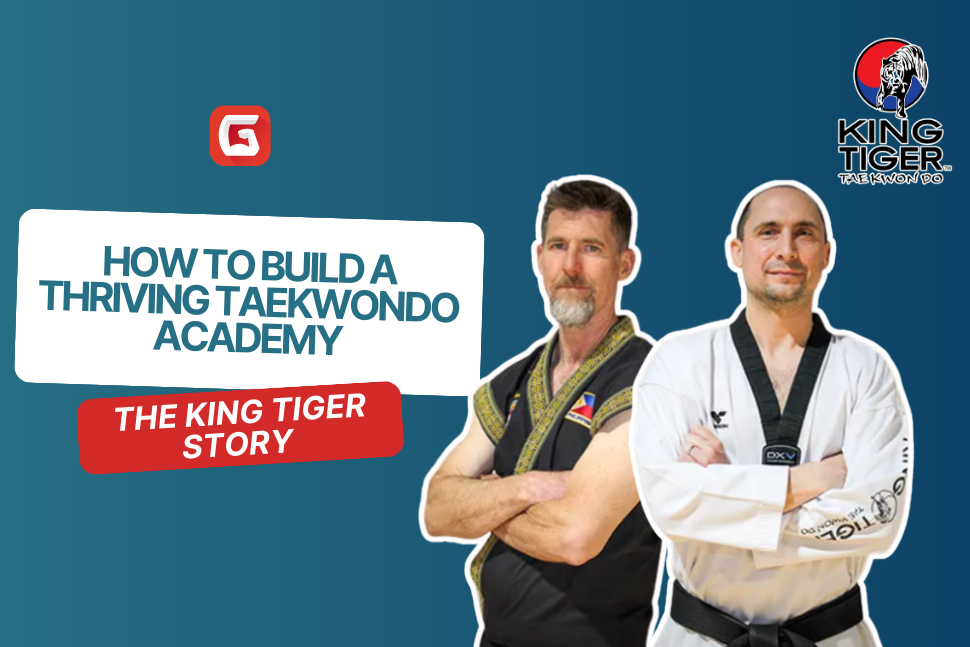
Master Brian Foster and Master Chris Knight did it anyway.
Seven years later, King Tiger Taekwondo in Harrisburg, North Carolina isn't just surviving. They're thriving. And that crazy gamble during COVID? It grew into a completely separate business five minutes down the road.
This is the story of two partners who looked at a pandemic, saw what their community needed, and bet everything they had on serving that need.
Two Different Paths, One Shared Mission
Master Chris Knight had been teaching taekwondo for 15 years. It was his first job at 17, and he never stopped.
For a decade and a half, he worked for his instructor, teaching classes, building skills, dreaming of the day he'd run his own school.
Master Brian Foster took a different route.
Military background. Trained Muay Thai in Thailand during tours in the Asian theater. Wing Chun in Fayetteville. Eventually settled in Charlotte, running a successful service business.
"I had a service business I was doing in Charlotte, and it was good. It was successful," Foster recalls. "It was just one of those businesses I really didn't like that much, you know, but it fit the bill."
He was handy, good at problem-solving, made decent money. But something was missing.
Foster's kids trained at Knight's school. He'd watch from the sidelines, that old pull of martial arts nagging at him. Then one day, their instructor called with a question that would change everything.
"He goes, 'Yeah, Knight wants to open up his own dojo,'" Foster remembers. "'He might need a partner. You want to do it with him?' I was like, 'YES.'"
Then: "Do you want to talk to your wife first?"
"Yes sir, I probably should."
His wife gave him the thumbs up. Even though it meant a significant pay cut. Even though it meant starting from scratch. Even though every logical business instinct said stay where you are.
"It was quite a bit of a pay cut at first, and it was so so worth it. It was so rewarding and to this day it's so rewarding. I love it."
February 2019: King Tiger Taekwondo opened in downtown Harrisburg with one-third of their current space—a former church they converted into a training room. Just mats, fresh paint, and two partners with different backgrounds and the same mission.
Thinking about opening a dojo? It all starts with writing a martial arts business plan, then taking the leap.
Then 2020 Happened
One year in business. Building momentum. Adding students. Getting their feet under them.
Then COVID shut everything down.
According to the National Federation of Independent Business, nearly 30% of small businesses permanently closed during the pandemic's first year.
Fitness facilities—built on in-person interaction, shared equipment, and physical proximity—were among the hardest hit. Some estimates suggest that up to 25% of gyms and fitness studios closed permanently between March 2020 and mid-2021.
Most gym owners went into survival mode. Cut costs. Reduce overhead. Hold on until things normalized.
Foster and Knight looked at their community and saw something different.
"We saw a great desire and need that kids need to be active again," Foster explains.
Schools were closed. Playgrounds were locked. Kids were stuck at home, staring at screens, losing the physical activity and social connection they desperately needed.
The CDC reported that children's physical activity levels dropped by over 20% during COVID lockdowns, with corresponding increases in childhood obesity and mental health challenges.
King Tiger had space. They had a community that trusted them. And they had an idea.
"We opened in 2019, and we all know what happened that year," Foster says. "So it was kind of a crazy gamble, but it really worked out."
They bought a ninja gym. The whole setup—swinging obstacles, climbing walls, balance challenges, everything designed to get kids moving, testing themselves, building confidence through physical challenge.
It wasn't cheap.
Equipment like that runs $10,000-$15,000 for a proper setup. For a one-year-old business in the middle of a pandemic, it was a massive investment.
But it wasn't a business decision. It was a community decision.
"This whole room was packed jam with ninja equipment, swinging things and all that kind of stuff," Foster recalls.
The Partnership That Made It Possible
Here's what makes the gamble even more remarkable: it only worked because of trust.
"It's one thing we've always worked so well together," Foster explains. "I throw crazy ideas at him, and he's just like, 'All right, try it.'"
Two different people. Military precision meets lifelong teacher. Risk-taker meets steady hand. The partnership could have fractured under that kind of pressure.
Instead, they leaned into it.
Knight brought 15 years of teaching experience, deep knowledge of how kids learn and progress, understanding of what makes martial arts programs succeed.
Foster brought entrepreneurial instinct, willingness to pivot fast, and the military mindset that you adapt to the mission, not the plan.
When Foster said, "We need to invest in ninja equipment right now," Knight didn't hesitate.
When Knight said, "This is how we structure the program to actually serve kids," Foster listened.
King Tiger had both elements: different strengths and complete trust.
💡 Gym owner tip: Strong partnerships aren't about agreeing on everything—they're about complementary skills and mutual trust. One partner sees opportunities, the other evaluates execution. Both voices matter. King Tiger proved this when growing their gym through hard times.
The Risk That Paid Off
The ninja program launched. Kids came. Parents were desperate for safe, structured activity. King Tiger delivered.
The program grew. And grew. And grew.
"It really worked out," Foster says with characteristic understatement.
So well, in fact, that the ninja program eventually outgrew King Tiger's space. It needed its own facility.
Today, that ninja gym operates as a separate business five minutes down the road. Still owned by Foster and Knight. Still serving the Harrisburg community. Still growing.
The gamble worked. The $10,000 investment during the worst possible time became a second thriving business.
But more importantly, it kept King Tiger alive during COVID. It gave them a way to serve their community when traditional taekwondo classes couldn't operate normally. It built trust and loyalty that carried them through the pandemic and out the other side.
"The hardest thing about doing a business is running a business," Foster reflects. "If we can just not have to worry about the system... it helps us tremendously."
That philosophy—focus on serving people, remove everything else that gets in the way—defined their COVID response. Don't worry about the business plan. Don't protect cash flow. Don't wait for certainty.
See the need. Serve the need. Trust your partner. Move. That mindset is essential for adapting to challenges.
What King Tiger Looks Like Today
Seven years in. Three thousand square feet. Multiple training rooms where there used to be one.
King Tiger now offers:
- Core taekwondo for kids (5-7 year olds) and older students
- Olympic-style sparring
- Combat Hapkido (locks, takedowns, joint manipulation)
- Filipino martial arts (sticks, knives, combatives)
- Leadership programs
- Obstacle courses
- Cultural trips to Korea for competition and training
The space expanded progressively—from one-third to two-thirds to the full facility they have today. Each expansion was a calculated risk. Each one paid off.
"We knew we'd get landlocked," Foster says. "So we kept expanding, knowing that someone eventually is going to take that."
Their goal: 500 members. They're not there yet, but with the space and programs they've built, both partners believe they'll hit it.
Whether you're expanding your gym space or just starting out, the lesson is the same: serve the need you see.
📊 King Tiger's Growth
- 2019: Opened with ~1,000 sq ft (one-third of current space)
- 2020: Invested in ninja gym during COVID
- 2021-2024: Progressive expansion to 3,000 sq ft
- Today: Original facility + separate ninja gym location
- Goal: 500 members across both facilities
More importantly, they've built the kind of community most gym owners dream about.
Parents become friends. They know each other deeply—strengths, weaknesses, struggles, victories. They walk to the nearby bar after class and have beers together.
Kids who started as shy five-year-olds grow into confident black belts, and their parents have been on the journey together the whole time.
"We have some people that can walk from here," Foster notes about their downtown Harrisburg location. "Most of our students are like five, maybe seven minutes away. It's a very very tight community."
The school's philosophy is simple:
"We start and end with respect. We don't expect our kids just to bow to us. We expect our kids to bow to everybody else as well."
That respect shows.
Kids with ADHD, developmental challenges, weight issues—students who come in with doctors' recommendations and parents who don't know what else to try—transform into leaders.
"It's so rewarding to see that kid who couldn't stand still for five seconds is now doing things that they couldn't do before," Knight says. "That's amazing."
The foundation for this transformation? Creating a positive culture from day one.
The Software Story: Finding the Right Partner
Running a business you love is only possible if the business itself doesn't consume all your energy.
For years, King Tiger struggled with their gym management software. High processing fees. Poor support. Systems that didn't adapt.
"Probably frustration," Foster laughs when asked how they found Gymdesk.
He searched online, found the platform, called them up. The response was immediate and different.
"A lot of software companies out there, they are: This is what we do. This is what we're doing. We're not changing," Foster explains.
"Every time I had a problem with Gymdesk, I'd reach out. Boom. I get an instant reply from a human saying, 'Hey, totally get that. We're working on that right now. Here's a possible solution.'"
The features they love:
- Messaging system. Texts and emails that reach parents who don't check one or the other
- Square integration. Low processing fees, easy refunds, simple reconciliation
- Belt promotion tracking. Organization that makes rank advancement simple
- Schedule improvements. Recent UI updates that make class management dramatically easier
"If we can just not have to worry about the system, like the billing system or the what makes the business side of it, it helps us tremendously," Foster says. "And so far, Gymdesk has been a great job with it."
That philosophy—remove friction, focus on people—mirrors how they ran King Tiger through COVID. See how martial arts management software handles the business side.
Lessons from a Gamble That Worked
Looking back, the ninja gym investment seems obvious. Of course, it worked. Of course, kids needed to move during lockdowns. Of course, serving that need built loyalty.
But in March 2020, it wasn't obvious. It was terrifying.
Foster and Knight had been in business for exactly one year. They had no cushion, no certainty, no roadmap for running a martial arts school during a pandemic. Every business advisor would have said: conserve cash, cut costs, wait it out.
Instead, they asked: What does our community need right now?
And then they served that need.
That's the lesson. Not "buy ninja equipment during COVID." The specifics don't matter.
The lesson is: See the need. Serve the need. Trust your partner. Move.
When asked what advice they'd give someone wanting to open their own dojo, Foster doesn't hesitate:
"Do it. Get out there and do it. Bust your butt every day. You know, get your rest, but lead by example. If you're passionate, and you're following yourself, people are going to see that and follow you as well."
Knight adds:
"It's like everything, any kind of business is a risk-reward. When we kept adding more space, it was a little daunting. It was kind of scary. But yeah, it's just that desire and taking the risk to expand and try things out."
Seven years in. Two businesses. A thriving community. Families who've been together from white belt to black belt.
All because two partners looked at the worst possible timing and decided to bet on their community anyway.
Gym management software that frees up your time and helps you grow.
Simplified billing, enrollment, student management, and marketing features that help you grow your gym or martial arts school.


FAQ

Sean has spent the last decade creating content that helps businesses—small and not so small—grow smarter to allow operators to do more of what they love. You know, the fun stuff.
From shipping and international logistics to web development and marketing, he's done the work (not just the words) to scale retail and service businesses efficiently.
You can find his work at Sendle, Shogun, The Retail Exec, Gymdesk, and more.