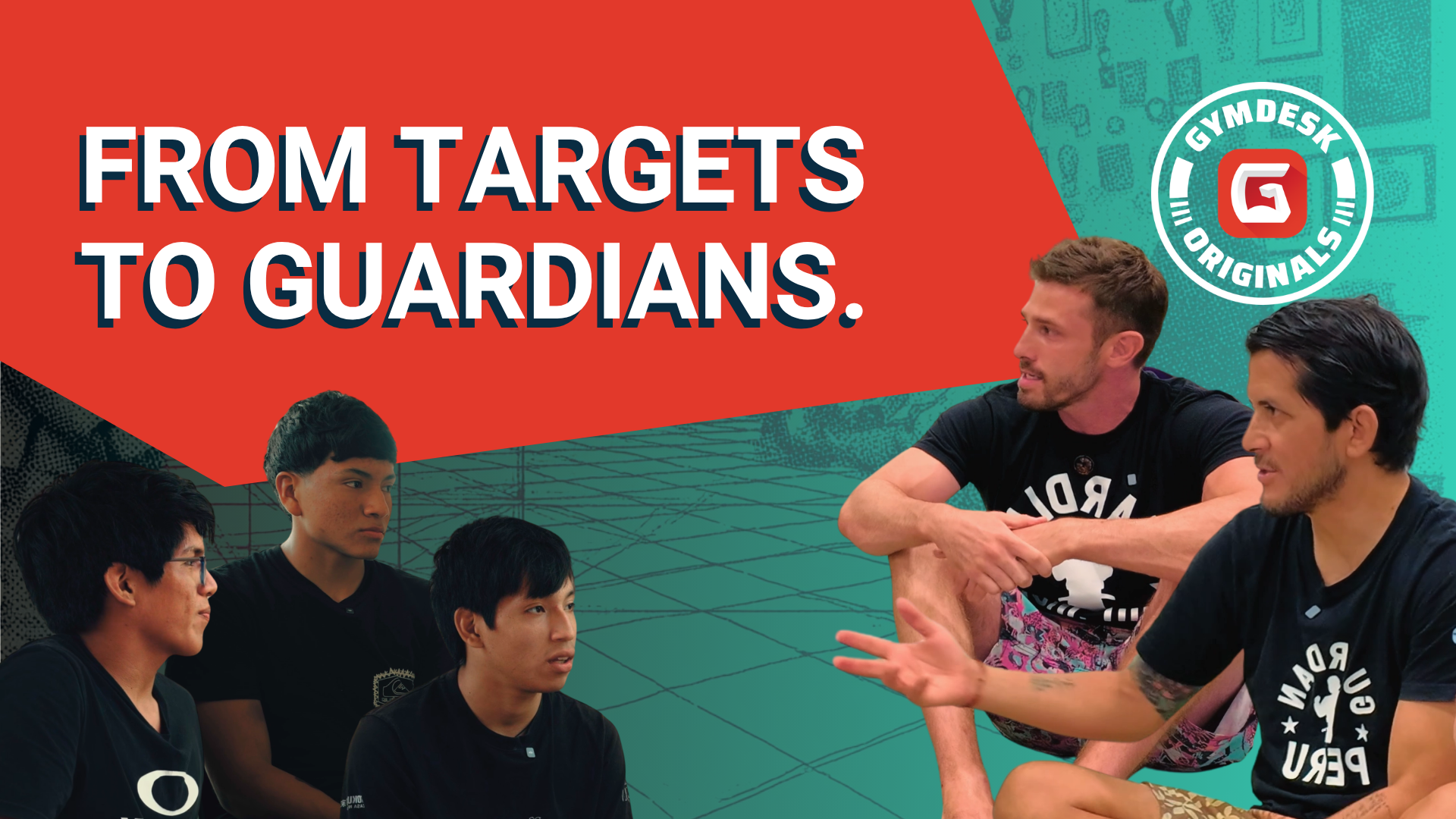
How Two Partners With Different Paths Built King Tiger Harrisburg Into a Taekwondo Community

Starring
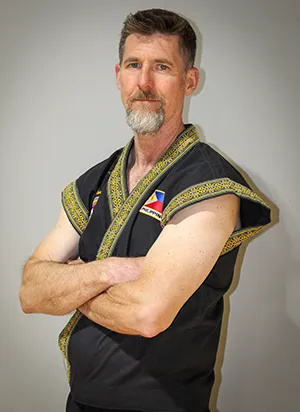
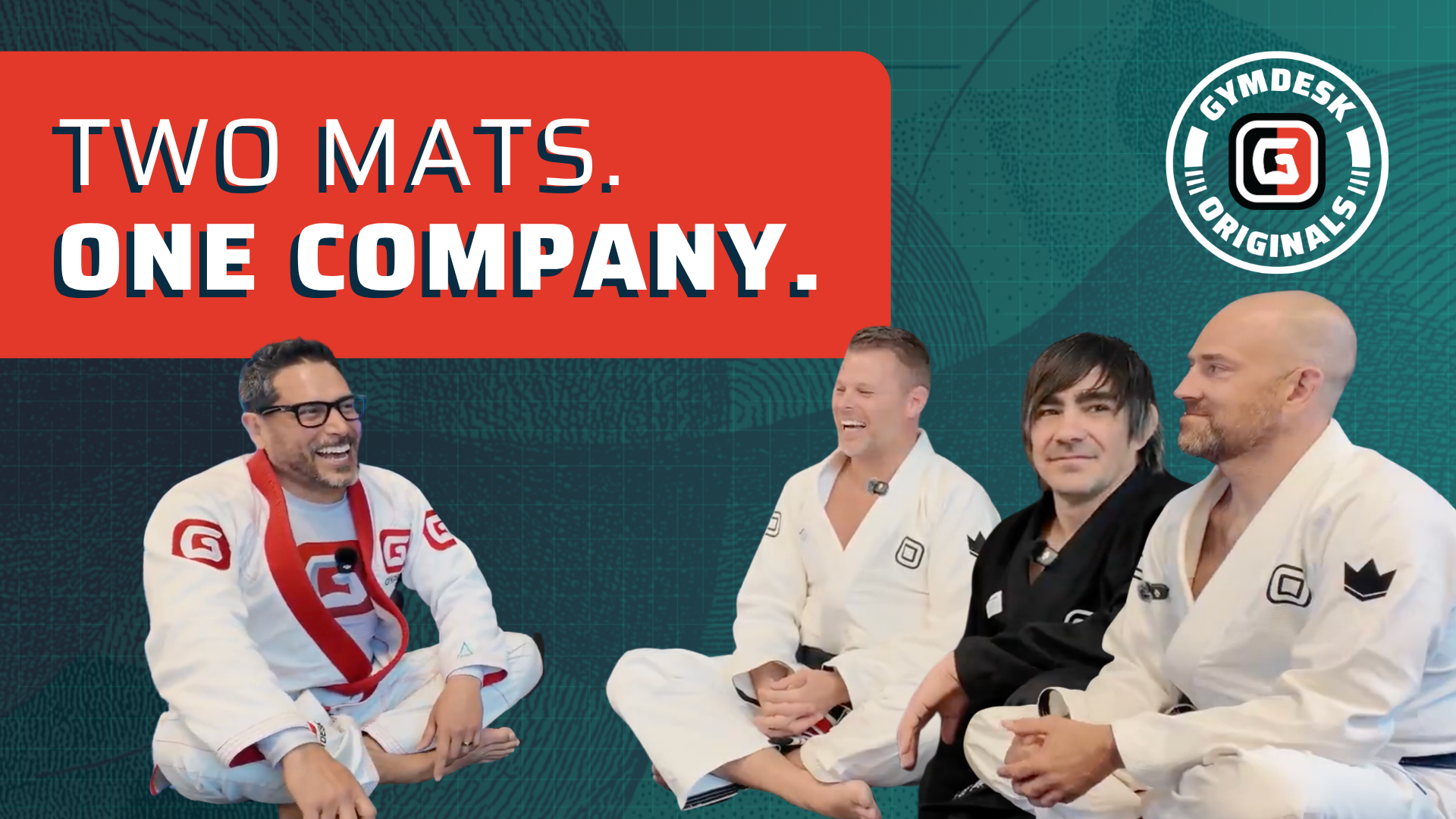
Master Brian Foster trained at America's Best under Master Chung. He joined the US Air Force in 1990 and trained as a Pararescueman for 10 years. During his service, he trained in Muay Thai while in Thailand, then Wing Chun with Sifu Brian Edwards while stationed at Fort Bragg, NC. After his military years, Foster moved to Charlotte and came across King Tiger. He is currently a 4th Dan in Tae Kwon Do, 2nd Lakan in Philippine Martial Arts, and training toward black belt in Combat Hapkido. He co-founded King Tiger Harrisburg with Master Knight in 2019.
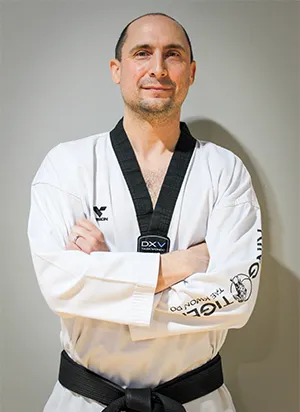
Master Chris Knight was born and raised in Charlotte and has lived in Concord since 2015. He started training in martial arts in 2003 and has been teaching ever since, including competing and training in Korea. After more than 15 years with King Tiger, he co-founded King Tiger Harrisburg in 2019.
About the Gym
King Tiger Taekwondo of Harrisburg is a martial arts academy in downtown Harrisburg, North Carolina, co-founded by Chris Knight and Brian Foster in 2019. Part of the King Tiger Taekwondo Association, the school has expanded three times from its original single room to a 3,000 square foot facility with three training areas. They offer Taekwondo for all ages, Philippine Combatives, Combat Hapkido, Olympic-style sparring, and a leadership program. During COVID, they launched a ninja gym that grew into its own separate facility nearby.
The school draws students primarily from the Harrisburg community, with most families living five to seven minutes away. Knight and Foster emphasize a philosophy of starting and ending with respect, serving children as young as five through adults. Their goal is to reach 500 members as they continue growing.
📍 4351 Main St, Suite 209, Harrisburg, NC 28075
📞 980-258-8678
Summary
Chris Knight and Brian Foster co-founded King Tiger Taekwondo of Harrisburg in 2019 and have grown it from a single room into a three-room, 3,000 square foot academy. The episode features both instructors sharing their contrasting paths into martial arts—Knight starting Taekwondo in 2003 and growing up through King Tiger, and Foster training across multiple disciplines during a decade as an Air Force Pararescueman before reconnecting through his son's enrollment.
Beyond core Taekwondo, King Tiger Harrisburg offers Philippine Combatives, Combat Hapkido, Olympic-style sparring, and a leadership program. Knight and Foster describe their tight-knit Harrisburg community and their experience switching to Gymdesk, praising its responsive support, scheduling tools, messaging system, and low-cost Square payment processing.
What They Told Us
Alex Cuevas took the Gymdesk Originals camera to downtown Harrisburg, North Carolina, for his first-ever visit to a Taekwondo studio—he taught Taekwondo himself as a teenager, so he pulled on his black belt for the first time in over twenty years to walk into King Tiger. Waiting for him were two co-founders who arrived at the same mat by opposite roads: Master Chris Knight, who fell for Taekwondo as a high-schooler and never left it, and Master Brian Foster, a military veteran who trained across half a dozen disciplines before his son pulled him back in. This is how those two paths became one school.
The kid who never left
Knight found the art almost by accident. He was a high-schooler looking for something to do, wandered into a brand-new studio, and watched a stranger run through a form. He never stopped after that—he trained straight through, then worked for his own instructor for fifteen years before opening his own doors.
"So I started Taekwondo in June of 2003. I was in high school, just kind of looking for a cool activity and walked into this new place that had just opened and saw a guy practicing some cool things. I'm like, man, I would love to do that one day. And he invited me in for a free week of classes."
—Chris Knight, Co-Founder, King Tiger Taekwondo of Harrisburg
The winding road back
Foster's path was the long way around. His parents put him in Taekwondo as a kid for the discipline; he trained under a master in Los Gatos, joined the military, picked up Muay Thai on deployments through Thailand and Wing Chun back in North Carolina. What finally brought him home to the art was his own son enrolling at six—Foster stood on the sidelines as a watching dad until an instructor decided that was over.
"Our instructor just walked up to me one time and just hand me a uniform. He's like, yeah, training's that Tuesday. I was like, okay."
—Brian Foster, Co-Founder, King Tiger Taekwondo of Harrisburg
Two paths, one partnership
By 2019 the two had trained under the same organization long enough for a partnership to make sense. Knight had put in fifteen years working for his instructor—his first job—and was ready to build something of his own. When their instructor connected the pieces, it fell into place fast, and Knight has been running King Tiger Harrisburg ever since.
"So I worked for my instructor for 15 years, same as you, that was my first job … I was also letting my instructor know it's about time for me to fly the nest. So it just worked out perfectly and been here almost seven years now coming up in February."
—Chris Knight, Co-Founder, King Tiger Taekwondo of Harrisburg
What the school is built on
Most of their families live five to seven minutes away, and the school leans hard into that closeness—parents linger, kids meet classmates they already know from school. Underneath the community is a single rule the partners repeat about how everyone treats everyone, students and strangers alike. It is the through-line they come back to when they describe what they are actually teaching.
"We always have this saying, we start and end with respect, whatever you do, whoever you are, we don't expect our kids just to bow to us. We expect our kids, our students to bow to everybody else as well, too."
—the co-founders, King Tiger Taekwondo of Harrisburg
Why they run it on Gymdesk
Before Gymdesk, the software was a source of frustration—high processing fees and no one to answer when something broke. The switch turned that around, and what they name first is not a feature but the feeling of reaching a person who actually responds. That responsiveness, plus scheduling, belt promotions, texting, and low-fee Square processing, is what lets two instructors keep their attention where it belongs.
"Every time I had a problem with Gymdesk, I'd reach out, boom, I get an instant reply from a human saying, hey, totally get that. We're working on that right now."
—a co-founder, King Tiger Taekwondo of Harrisburg
Read the full transcript
Lightly edited for readability. Speaker labels are omitted because the source recording is not diarised; quotes attributed elsewhere on this page were verified against context.
Behind every gym, there's a story, a mission, a spark of passion, that started it all. This is Gymdesk Originals, real owners, real struggles, and the communities they've built from the ground up. What's up, everybody? I'm in Harrisburg, North Carolina, and a special episode for me because I am going to my first Taekwon Do studio. This is King Tiger Taekwon Do, and I'm looking forward to it. I'm also kind of nervous because I'm putting on my black belt here for the first time in a long time and heading into a TKD joint.
So let's go check them out. Let's go see what it's all about. Hey, hello there. Hey, welcome. Brian Foster. This is Chris Knight. Welcome to King Tiger. Thanks, sir. Appreciate it. Thanks for having me. Good, good, good. Yeah, we've been here. We're going on our seventh year here at King Tiger. So we got a pretty good facility. We're in downtown Harrisburg. So guys, come on in. And so let's get your tour of the place real quick. This is the first room when we opened up. We had this one room here before us.
It was a church, so it was already kind of opened up. It was more just ideal. So anyways, all we had to do pretty much is just put the mats down and, you know, paint it up and kind of fix up a little bit too. We offer variety kind of classes. This is most of the time where our five to seven-year-olds will train on this mat right here too. And it's just got a more comfortable kind of area too. And then you notice right here on Saturdays, we do like an obstacle course with the kids, kind of develop that little bit of confidence and get them moving again.
It's always kind of funny to see how many kids don't do like somersaults and cartwheels and things of that nature anymore. So it's kind of interesting to see them. And then as they grow and progress and they start to feel a little more confident in themselves, they start moving through the course a little bit faster and stuff like that too. I think parents really like that as well too. So it works out pretty well. And so anyways, in this room here, we have our older kids' room from eight years old all the way up to adults.
We just simply call this the blue room for obvious reasons. So yeah, our heavy bags are over here. So a lot of our equipment and all that kind of stuff. We'll do sparring in this room side here as well too. But yeah, it's basically utilization. And then we use the two rooms in conjunction with each other. We do breakups and groups and those kind of things as well. It's just nice to have that extra space. And then we have a final room back over here. We call that the training room.
I'll let you follow, Mashal Knight. Come on this way. So our final room is our training room. We have some heavy bags hung up. We also offer some Filipino stick classes and martial arts in this room as well. It's also kind of an open area where students can come in. We have some exercise bells and things like that. And it's kind of get a good workout as well too. Before the training room, you kind of noticed there was a crazy little warp wall there. We actually had, during COVID, we bought a ninja gym basically.
And so because we saw a great desire and need that kids need to be active again. And it was kind of a gamble, you know, because during COVID, we opened in 2019 and we all know what happened in 2019. So it was kind of a crazy gamble, but it really worked out. So we had this whole room with this pack jam with ninja equipment, swinging things and all that kind of stuff. And luckily that program kind of grew and it's actually located about five minutes away just down the road.
So it's in another facility now too, and it's still going. So kind of a neat thing. Awesome. In fact, they think he used Jim Dess as well. Master Knight, Master Foster, appreciate you guys, uh, inviting me over today and opening your doors. This is, um, the first time I actually, this is my first class, Taekwondo class. Now I'm, uh, like, gosh, let me do the math. Oh man. Probably like over 20 years. We couldn't tell sir. Yeah. So, um, it was just, it brought back a lot of memories for me.
And, um, I tell this story a lot, but like, that was my first job ever was teaching Taekwondo when I was a little kid, you know, but not little kid, but I was like 17 or 18. So it was first thing I ever got paid for. So it's really fun to come back and, you know, where I'm in service of like my former self and what that experience was and all that. So, um, again, thank you very much. Brought back a lot of memories for me.
It's really cool. Um, I'd love to learn a little bit more about your backgrounds. Um, you guys have very different backgrounds, military background, and also trained in different countries. So I'd love to just kind of get into your martial arts history and how you bring it all together. Absolutely. So I started Taekwondo in June of 2003. I was in high school, just kind of looking for a cool activity and walked into this new place that had just opened and saw a guy practicing some cool things.
I'm like, man, I would love to do that one day. And he invited me in for a free week of classes. And from there just kind of snowballed and I fell in love with it. So never, uh, never quit since then. I've always been training and, uh, just love it. I can't ever stop. Yeah. I started when I was in high school. Um, and my parents got me to Taekwondo. They seem, uh, obviously want some more discipline in my life and those kinds of things. And so I trained under Master Chung over in Los Gatos, California for many years.
Um, a little bit of a funny thing about that. He's married. He was married at time to Cynthia Rothwick. Anybody that's been doing martial arts for a while probably knows the queen of B rated Kung Fu movies, you know, Cynthia Rothwick anyways. So I got to see her a little bit as I was growing up, I didn't know anything about her or what she was doing at the time either, but it was kind of cool, good experience. I stopped and then I joined the military for a time and, uh, and really didn't practice a whole lot, but then we were circling the, um, the Asian theater a lot and we would end up in Thailand a lot.
And just as kind of like a cross training kind of thing, we would, uh, they would train us in Muay Thai and it was fun, painful, but fun. So yeah, it was a lot of fun and we would do that a lot. And then, um, after I left that arena, I came to North Carolina where, uh, here I met my wife and all that good stuff and, um, end up in, uh, Fayetteville, North Carolina, not a great place to be in North Carolina, but it is what it is.
And so, uh, we trained in a Wing Chun there and really enjoyed Wing Chun, a lot of fast movement, all that kind of stuff too. Um, leaving the next part of my life and moved here to Charlotte. And so when my, uh, oldest son was about the age of six, I wanted him into more shards and was looking around. And so actually master night taught one of his very first classes he was in too. And, uh, it was kind of comical because he was a very nervous kid and he kind of hid in the corner right there in front of everybody.
I was like, you're not hiding from anybody. So anyways, I would, the dad on the outside just kind of looking in and just participating as far as saying, you know, get your hands up and all this kind of stuff. Um, our instructor just walked up to me one time and just hand me a uniform. He's like, yeah, training's that Tuesday. I was like, okay. And so I started, uh, before doing Taekwondo with him, I started with his Philippine martial arts. And I was like, inch sticks.
All of a sudden these guys came in, they're on black uniforms and they're swinging sticks around and stuff like that. And I was like, Ooh, this is kind of cool. And so I started there and we're doing stick stuff, nice stuff, all that kind of stuff. Fell in love with that. And then that all, just like you, just that old pulling of Taekwondo was kind of nagging at me too. And so I was like, okay, let me do this as well. And it's a great balance with the two of them.
Um, yeah. So the thing I love about Taekwondo is it's a fantastic entry level. Um, we get kids from all different types and walks and basically, you know, some who have very uncoordinated, some were very athletic and you know, some who don't want to spar, but then we kind of get them in a sparring and it changes a little bit on them too. So it's kind of neat to see. Two things I want to tug on here. So are you from the Bay area then I'm from?
Yes. Yes, sir. Oh no. So San Jose right here, man. Okay. Yeah. All right. So we're neighbors then. Yeah. So, um, yeah, so that's cool. I, uh, I haven't done like weapons in a long time. So that was one of these things that it like, Ooh, it's, you know, scary. I don't even want to be in a knife fight ever, no matter what, right. You're going to get cut and it's not, but as I was looking at that, I was just curious, is that, uh, cause I know we had knives when I was doing our niece back in the day, right?
The Filipino martial art. But, um, did you have that kind of training in the military as well? Doing that kind of thing? Very, very slight. Everything was mostly with, uh, guns and those kinds of things too. When we did some training in, uh, Virginia beach, basically we had a guy, Dwayne Dieters was his name. Um, and he would specialize in disarming and utilizing the gun against your opponent and stuff like that. When you're super close or you just came around a corner and all of a sudden the guns in your face, you know, and that was fun.
It was a lot of fun and very fascinating. And his technique was really amazing too, but, um, didn't do a lot of like sticks or knives or anything like that was in. So, um, opening up here in Harrisburg, right? What was the impetus? What was it like? How did you guys decide, Hey, let's do this together and, you know, get, uh, get this thing going? Yeah, that's a great question. So I worked for my instructor for 15 years, same as you, that was my first job and, uh, and, you know, training master fostering his children and heard that, uh, he had owned his own businesses and kind of been working on his own and kind of want to do something different.
And at the same time, I was also letting my instructor know it's about time for me to kind of fly the nest. So it just worked out perfectly and been here almost seven years now coming up in February. So it's been a dream come true. Right. So you had, um, other businesses and I'm assuming you had success and had some ability to do something entrepreneurial. Is that kind of, I had a service business I was doing in Charlotte and, uh, it was good. It was good.
I was, I, it was successful. I just, one of those business, I really didn't like that much, you know, but it fit the bill and I was always been very handy, hands-on problem solving. I love doing that kind of stuff too. But, um, but it doesn't, wasn't anything I really loved. And I will never forget the conversation that master Evans, you know, called me up and he goes, yeah, uh, Knight wants to open up his own dojon. And I was like, yeah, I was like, well, um, you might need a partner.
You want to do it with them? I was like, yes. And he goes, do you want to talk to your wife first? I was like, yes, sir. I probably should. Yeah. So anyways, my wife was like, yeah, thumbs up, go to it, you know? And, uh, even though it was quite a bit of a pay cut at first and it was so worth it. It was so rewarding. And to this day, it's so rewarding. So I love it. And, um, so when you guys decided to open up, it was just the original place that you guys opened up and I think you only had half or a part of the location.
A third of this. Yeah. Okay. So you get started, you have a third of the space and are you focusing on any programs at this point? Like your vision was kids and adults and teens and all that right from the start? Or were you thinking? Absolutely. Yeah. We wanted everyone to be able to come out. We didn't focus as much on the weapons or other things, but mainly just the good classes and having that high energy and getting everybody in. Yeah. And then your expansion slowly became, you know, I don't know if these are called units or, you know, whatever, but then you get another section and then you outgrow that.
Then you get another section. Now you, I mean, this is pretty big. What's the square footage you got now here? It's a three, 3,000 square feet about. So I'd say. Yeah. 3,000. Okay. And, um, once you have the space is when you decided to start opening up, different programs. I saw the, there was, uh, almost like a little kid's obstacle course down there and things like that with the space, you get to experiment and try new things. That's kind of how you guys have been operating.
Uh, yes, sir. Exactly. Yeah. Yeah. Okay. And, um, what about the, uh, um, the integration of, uh, so you have core taekwondo, then you also have other programs that you do. Like I couldn't make it to the Arnis class, but I think you guys had that. Was it yesterday. Yeah. Um, tell me about that. Like what's, what's the, uh, what are the, all the different programs that you guys are running here? So, right. We do the Philippine martial arts. Um, and, uh, they call it combatives basically, which is, you know, hand sticks and knives and stuff like that.
I love their philosophy because, uh, weapons or extension of the hand basically too. Um, so, um, and I, that's when I kind of started with anyways, too. And then our instructor, uh, guru Melo Grito was over located in Nebraska, um, from the Philippines, brought up over here. Um, a phenomenal martial artist. In fact, he's been on the cover of black belt magazine twice. He's just has a lot of poor. Um, but we also do a combat Hapkido class here too. When something about Hapkido, right. It's kind of like sister with Taekwondo and it works really well.
Um, some kids just love just kicking stuff, but some people like the locks and taking and manipulating and those kinds of things too. So it's a really, really good addition to what we do here. So they come to the door looking for Taekwondo and then they like, they see different doors that go through and it's like, okay, we can do, I can do that. I can do this. I can do this. And it's nice because not every art fits every person. So it's nice to have that option.
True. And then for some of our existing students, we also run Olympic style sparring classes. And then we also offer a leadership program. Master Foster does a great job with those guys. So a lot of them are chomping at the bit to wear some special pants in class. And a lot of them like to, uh, to learn how to assist some of the beginner students and not only do that, but also become leaders outside of here as well, too. How about Korea? I'd love to know a little bit more there.
Um, cause I've never been to Korea. I've been to Japan. So, you know, when I studied judo, I'm like, Oh, cool. I can, you know, I went to Kodakon, which was an incredible experience. The headquarters in judo is amazing. And I got completely smashed, you know, left and right. Cause I was expecting black belts and I've been in classes with black belts as a white belt judo guy, but I've taken a beating so much from them. I'm like, I'll be okay. It's all coral belts. And it's like, oh man, this is even worse.
So, um, but in Korea, I got to imagine the skill levels incredible out there. Yeah, it really is. Yeah. It was fantastic getting out there. And we actually have another Korea trip coming up next year. So we can't wait to get for that. Um, but the last time we trained in Korea, we did a, what's called a cultural expo. So they had people from over a hundred different countries there. And it was really cool just not only to compete, but also just to train and sightsee and things like that.
But it was amazing just to kind of see where, uh, Taekwondo is headquartered and kind of originated from, and then just a beautiful, clean country as well. Very respectful people is awesome. Very positive. Yeah. I'll have to go one day. Cause you know, I got to complete the circle there. If you're able to, yes, sir. Absolutely. Um, so you guys have a lot of kids that are in this program, right? So, uh, what could you tell me about them? Like, what does Taekwondo do for children?
You know, that come in through these doors, like maybe some of the changes that you've seen in them. Sure. So my focus, uh, here is mainly our five to seven year olds or our younger guys. Um, I just love to see their confidence go up and also their discipline. Some of the kids come in there were recommended by doctors and we have kids with all kinds of letters behind their name and, you know, different things their parents say they can't do or have trouble doing also in front of them sometimes.
But then we like to turn that around and it's so rewarding to see that kid who couldn't stand still for five seconds is now, you know, doing things that they couldn't do before. That's, that's amazing. And then just helping some people, if they're coming in, you know, maybe a little bit overweight, just kind of helping them get healthier. All those things are just incredibly rewarding to see each day. Um, and just one more question about your styles. Um, cause I obviously I saw one, one style today and I was part of that class, which is great.
Do you guys have complimentary styles or you feel like you guys, you know, just tell me a little bit about that. Yeah, we do. So we're underneath, uh, there's two main styles, ITF and, uh, and World Taekwondo Federation. We're under the world style. Um, but with our grandmaster, he's very open-minded and, uh, likes us training with other, um, styles and things like that. There's a lot of more traditional Korean masters who don't really like that as much, um, who aren't quite as open-minded. And luckily we're underneath an organization that likes that outside training and can compliment each other.
So absolutely. Yeah. I'm curious for those people who don't know, cause maybe some of the audience wouldn't know the difference. What are the difference between the two organizations that you mentioned? So the ITF is, uh, more of a traditional style. Um, you see that a little bit more in North Korea as well as South, uh, World Taekwondo is a little bit, um, a little bit newer, more modern. Um, and then some of the main differences are like the forms and stances and things like that. Cool.
Um, just one more question about the place here then just community. Um, how, how do you guys, how would you describe the community here? Like with the kids and students and you know, are they forming bonds outside of here and you know, friendships and that kind of thing? I really do. Um, it's always neat because, um, the parents more than anything else too, but the kids find other kids there go to school with and those kinds of things. Um, we have like, some people can walk from here and that's why we just love this location because they can literally walk down the house right behind us there.
Um, and most of our students are like five, maybe seven minutes away. So there's, it's a very, Herzberg's a very, very tight community. And then I, sometimes I got a little fuss at the parents cause they're getting all so, you know, their conversations and, you know, getting to know each other and having fun. And so then sometimes they'll, they'll walk over here to the, um, uh, the percent house and have a beer together and stuff like that. So it is really probably a big community here.
And it's fun to see. Um, especially when these, these guys have stayed here all this time from white belt, all the way to black belt, the parents really know each other. The families really know each other. They know all their strengths, all their weaknesses. We have fun together being fun each other and all this kind of stuff. Um, but it's a really good, respectful, positive environment. And I think the kids more than ever need that these days to just having that respect and positive environment because at other places, you know, well, you're not good enough, or you can't be on this team or those kinds of things to here too.
So, um, and we always have this saying, we start and end with respect, whatever you do, whoever you are, we don't expect our kids just to bow to us. We expect our kids, our students to bow to everybody else as well, too. And I love that philosophy. Awesome. Well, maybe we can just segue into how you found us. How did you find our software and what that experience was like? We'd love to get into that. Probably frustration. We won't name the other companies that we were working with, but it was very frustrating.
Um, and plus the processing fees and everything else. And then every time we'd have a problem, we couldn't find anybody to help fix a problem. Um, and I can't exactly remember who recommended it or if I just was searching around online and I found it. And I think I just told Mash and I was like, Hey, I found this, let's just check this out. Let's give him a call. And I think we did this all together. And it was just kind of like their response, their, uh, their philosophies, everything, their willingness to adapt and improve was the biggest thing.
A lot of this software companies out there, they are, this is what we do. This is what we're doing. We're not changing, you know? And every time, like I had a problem with Gymdesk, I'd reach out, boom, I get an instant reply from a human saying, Hey, totally get that. Uh, we're working on that right now. Here's a policy solution. Let me look into this further. And then the implementation of new stuff that's coming out new. Um, like I think it was an email just recently about all the new things that Gymdesk is doing now.
And we were on the scheduling page. I was like, oh my gosh, this is so much easier to see now. It's much easier to do. And then you see future payments, past payments, all those kinds of things. The hardest thing about doing a business is running a business. You know, your focus is very true with the kids, with everything we're doing, teaching classes, getting our head around that. If we can just not have to worry about the system, like the billing system or the, what makes the business side of it helps us tremendously.
And so far, Jim does been a great job with it. It's been great too, especially with a belt promotions and just organization overall, even the list of students, um, how they're filtered, uh, we're blown away. That's awesome. I'm so glad to hear you mentioned the schedule. Cause that's been a big thing for us where, you know, we put a lot of energy into it. It's a, it's a pretty big UI change. Um, but we thought it'd be for the better. So, you know, putting that out there.
Um, and you know, one of the things that, and I'm also glad that you're saying what you're saying, because we've been investing, you know, I've been on board now for about 14 months and I've been investing heavily in engineering and product to try and, you know, be, uh, more innovative. Uh, and, you know, although I think the technology is great, I just want it to continue to evolve. And, you know, as things come up, we want to add more things to the product to serve our customers better.
And one of the things that you said is just exactly what our tagline is. It's less admin, more members. Like if we can achieve that, then I think we're good, right? Just keep people on the mat and driving their passion. That's, that's kind of the deal there. So, um, anything that stands out in terms of like, um, other features that are good. I mean, you mentioned, um, the belt promotions, anything else that stands out that you guys are really leveraging today? Uh, the messing, uh, messaging system, emails, text messages, that makes it super simple.
Cause there's a lot of people who just don't check emails, even though we remind them. Um, so sending texts, uh, announcements and things like that has been amazing too. And square is a big, big part of it too. I love having the square system processing. I can go on the square site. I can see everything. Uh, if something went awry, whatever we refund somebody, it's super easy. I don't have to worry about the process. Some fees are very low. And it's like, I like that more than anything else.
We can kind of keep the money when you keep the money. Great. All right. Well, any advice for someone who wants to open up their own dojo, maybe your old self as a, if you could give yourself advice back in the day. Yes, sir. Do it, get out there and do it. Bust your butt every day, you know, get your rest, but, uh, lead by example, you know, everybody, if you're passionate and you're following yourself, people are going to see that and follow you as well too.
So get out there and do it. Yeah. And it's like everything, any kind of business is a risk reward. You know, um, when we kept adding more space, it was a little daunting. It was kind of scary. And, uh, you know, it's one thing we've always worked so well together. Um, I throw crazy ideas out time and he's just like, all right, try it. You know? And I was like, wow, that's pretty cool. You know, I didn't think that was a lot, you know, but it's just great because, um, with the ability of wanting to expand and get more and do more, like I said before, during COVID, we threw a big ninja in the space was a big old ninja gym.
Um, cause we saw a need that kids need to move and try things and do things and stuff like that. And it went really well. And now it's in a different location and we own it over there. Um, but yeah, it's just that desire and taking the risk to expand and try things out. And we knew we'd get landlocked in a little bit too. So we kept expanding over to that side too, knowing that someone eventually is going to take that and we wanted to have a big, our goal is still to hit like 500 members.
Um, we're slowly creeping to that, but I mean, it's not there yet, but with the expansion, with the space we have, I think someday we're going to hit that easily. Um, all right, well, we're honored that you chose us and thank you so much for, uh, having trust in Gymdesk. And, uh, thank you for hosting me today. Thank you, sir. I appreciate you, sir. Thank you very much.