How One of Oregon's First Female Black Belts Built Unicorn Jiu Jitsu
Starring
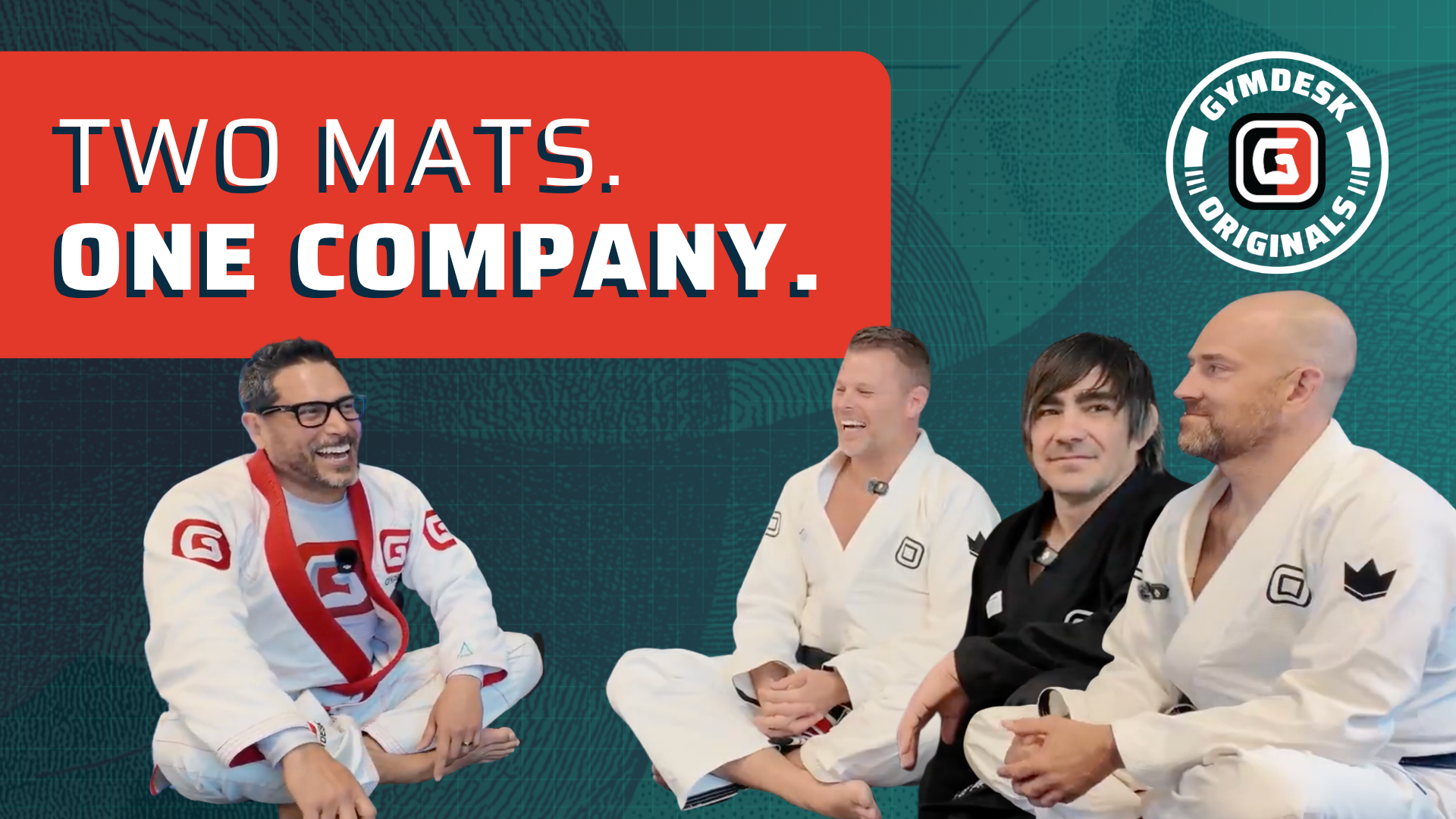
Hillary VanOrnum is a black belt of more than ten years and one of Oregon's first female black belts. She came up training almost entirely with men twice her size, started in 2005, and opened Unicorn Jiu Jitsu in 2019 to build the room she never had. She still works full-time as a paralegal.
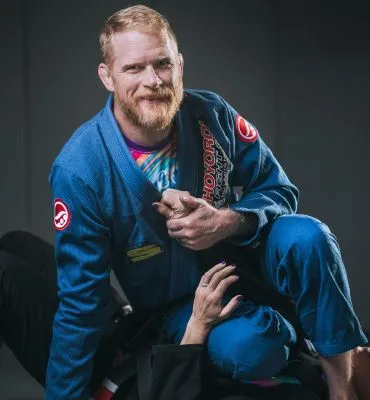
Brian VanOrnum is a black belt who took Masters Worlds gold at blue and purple, and didn't start training until Hillary was already a purple belt. He now runs the gym full-time—noon classes, kids classes, customer service, and all of its Gymdesk administration.
About the Gym
Unicorn Jiu Jitsu is a Brazilian jiu-jitsu academy at 9220 SE Stark Street in Portland's Montavilla neighborhood, opened in 2019 and affiliated with One Jiu Jitsu USA under Giva Santana since January 2020. It runs adult gi and no-gi, kids classes, a little-kids program for ages four to six, kickboxing, a members-only Friday study hall, and a Sunday open mat that's open to the public.
The instructor bench is deliberately deep and varied, with the stated goal that no student ends up a carbon copy of the owners. The room has held as many as 100 people for a Girls in Gis event, and the gym's annual three-day women's camp, Gathering of the Unicorns, has grown past technique into health and wellness programming. Unicorn has run on Gymdesk since day one—roughly seven years, back to when the product was called Martial Arts on Rails.
📍 Address: 9220 SE Stark Street, Portland, OR 97216 (Montavilla)
📞 Phone: (971) 386-5989
Summary
Unicorn Jiu Jitsu sits on SE Stark Street in Portland's Montavilla neighborhood—a little over 2,000 square feet of mat inside roughly 3,300 total, because the owners kept the lounge small on purpose. Hillary VanOrnum opened it in 2019, after years of teaching a women's class at someone else's academy where every guest instructor and every camp had to be negotiated through another owner's calendar.
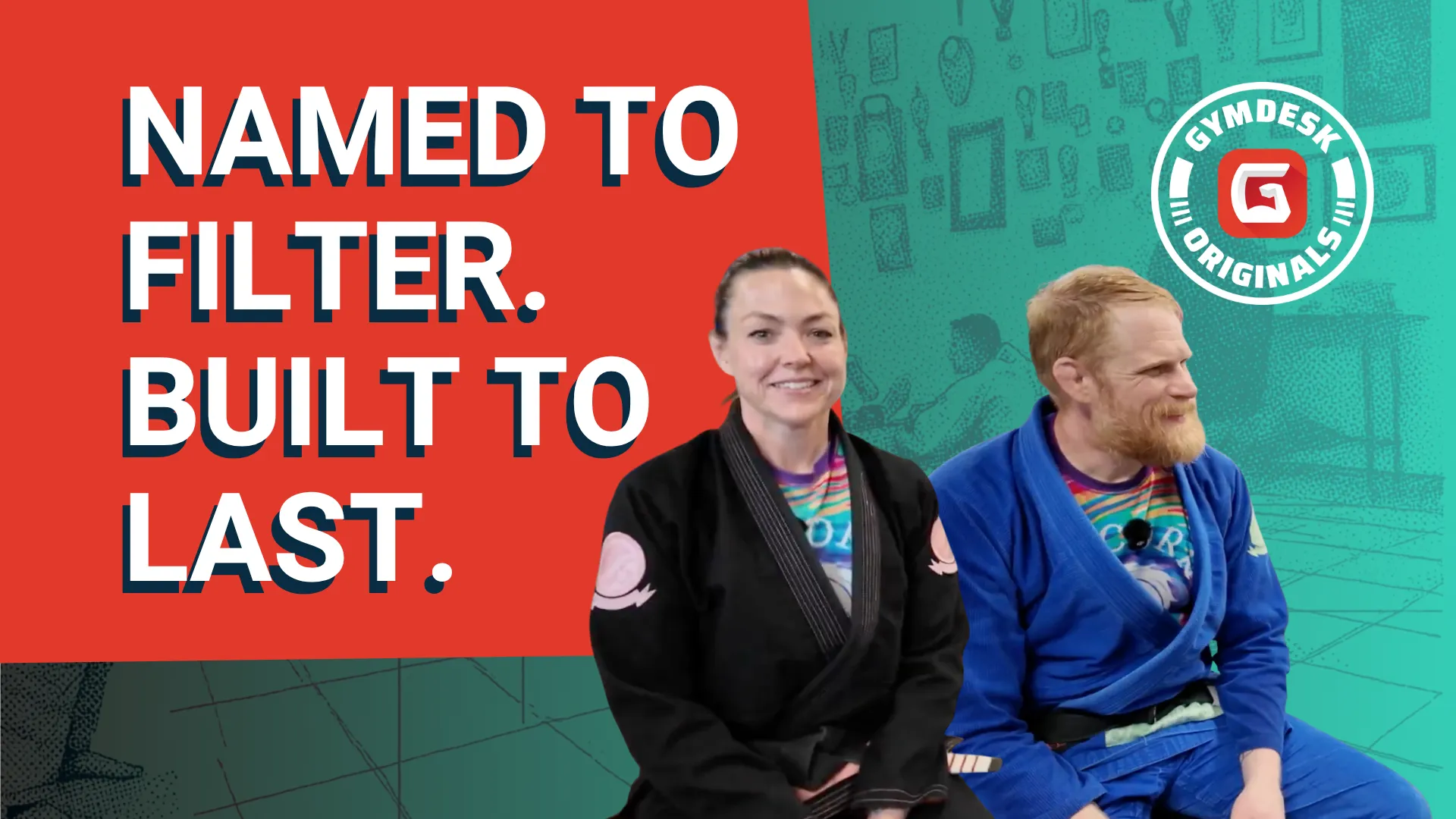
The episode is about how the room runs, not what's on the schedule. The name became a filter—Hillary's sponsors had started calling her the unicorn because a female black belt in Oregon was that rare, and it quietly kept the fight-first crowd away. Her husband Brian runs the day-to-day while she keeps a full-time paralegal job, and a purple belt teaches the no-gi class because she's better at it than the owners are.
What They Told Us
Hillary and Brian VanOrnum on the landlord who carried them through the shutdowns, why the kids' class is the hardest one they teach, and what a gray belt did for one very shy kid.
The gym survived COVID because of one person
Unicorn Jiu Jitsu started in a much smaller space a few blocks down the road, and spent about four years there before moving into its current home. Oregon's shutdowns were among the strictest in the country. Hillary is unambiguous about what got them through.
"I think if we didn't have the landlord that we had, when we opened that space, we would not have survived. He was an incredible person. … When we were hit with the shutdowns, he said, don't pay me rent."
—Hillary VanOrnum, head coach and co-owner
Reopening was capped, and so was the rent.
"When we came back, it was like 30% capacity, 40%. I don't remember the numbers, but it was like certain percentages. And he said, pay that much rent."
—Hillary VanOrnum
He also bought tickets to her fights and gym t-shirts every Christmas. It is the least systematic advantage in this whole episode and probably the one that mattered most.
Nobody started the kids' class for the money
The kids' programme came roughly a year after the gym opened and has been running five or six years. A four-to-six-year-old class started only a couple of months before filming, with Brian as head coach and one of the gym's brown belts alternating days on the older group.
The push came from their affiliation in California—and notably, not on the usual grounds.
"They pushed really heavy. Like you need to have a kid's class and it's not for the same reasons that everybody says it's the moneymaker. … I mean, kids are hard. … One of the hardest classes that I teach during the week."
—Brian VanOrnum, assistant head coach and co-owner
What he says makes it worth it is watching children arrive at technique without being walked through it.
"It is so exciting to see them almost naturally doing things without saying, okay, here's step one, step two, step three. Like they just naturally without even showing them that stuff are hitting things that are just like, wow, that is amazing."
—Brian VanOrnum
A gray and white belt, and a kid who now leads the line
Asked for a transformation story, Brian describes a student who arrived barely willing to speak.
"We had one kid, um, he, he's, I don't want to say he's nonverbal. Like he does communicate and talk and stuff, but he was extremely shy. … He came in here super shy, didn't know what he was doing. … Wouldn't say a word, even if you tried to have a conversation directly with him."
—Brian VanOrnum
"Now he's gotten himself to a gray and white belt. He's making friends. They're high-fiving each other. They're supporting each other. … Absolutely has come out of his shell, which is just, it's amazing to see."
—Brian VanOrnum
He is at the front of the room now, and leads the line.
A room where a women's class isn't a separate thing
Hillary is one of Oregon's first female black belts and came up training almost entirely with men—always rolling with partners heavier and stronger than her. The room she has built since is unusually mixed, and the point our host made after training there is that it was not a women's class. It was just a class.
The gym also runs a social side deliberately, including sit-down time on the mats that Hillary cheerfully calls "kind of girly, but that's what they want"—her reasoning being that there is otherwise no time built in for people to actually get to know each other.
What Unicorn Jiu Jitsu runs on Gymdesk
Gymdesk has been in place since the day the gym opened. Brian singles out the automated trial sequences—SMS and email on a timer that stop themselves once someone enrols—as the feature with the most left in it that they have not fully used.
Read the full transcript
Lightly edited for readability. Speaker labels are omitted because the source recording is not diarised; quotes attributed elsewhere on this page were verified against context.
We'll be right back. Behind every gym, there's a story, a mission, a spark of passion that started it all. This is Gymdesk Originals. Real owners, real struggles, and the communities they've built from the ground up. All right, well, we ended up coming back the next day. Feeling better? Did you get some sleep last night? You still a little bit out of it? All right, well, we're going to do no-gi today, and you're dressed for the part. Ready to go? We'll be right back. We'll be right back.
We'll be right back. And how hard it was to get people or women training or women training partners when you're back in the day. So you're always rolling with, you know, people that are way stronger, way heavier and things like that. So, you know, it's cool to see Coach Hillary and the progress in her martial arts and also in being a woman who owns her own gym here in Unicorn with a lot of great connections and a really good culture. And there are a lot of women on the mat.
It's pretty cool to see that. And it was just a regular class. It wasn't like a women's class. So it's really nice to see. Made it back to Unicorn Jiu Jitsu for the open mat on Sunday. I've been here three times. First time was for the episode and then I brought my son because he was too tired. Well, I'm here to do some rolling. So wish me luck. Ron, this is totally random because I'm here at Open Mat in Unicorn Jiu Jitsu in Portland and your buddy's here.
Hey, Ron. Good to see you. I saw this great key Gymdesk and I had a little post-traumatic stress. I recall enrolling with you. Hope you're doing well. All right. Cheers. Bye. All right. I made it. Here I am at Unicorn Jiu Jitsu in Portland. Is that right? Where am I? I've been traveling quite a bit. I just got back from a two-week trip in Europe, bouncing around. And I'm still, like, recovering from this, you know, time zone and all that. Yeah. My wrist is, like, hurting, you know.
But, yeah, I'm happy to be here. Thank you for having me. I just did a class. Had a lot of fun with the lasso guard sweep. And really unique. You said this in the class. You guys are open to letting a purple belt, even though there's black belts in the class, show what they're really good at. Yeah. Which I thought was really cool. It's something that we try to do. I'm not an expert in anything. I've been a black belt for over 10 years. And I still, there's still things that I'm not good at that I need to work on.
And I think we can learn from everybody. And I think that's something in old school Jiu-Jitsu that people are very machismo and, like, oh, the black belt knows everything. Yeah. And that's not how it is for at least me. And I learn stuff from my purple belts all the time. And we have a purple belt that teaches our Nogi class because she's better at Nogi than I am. So why not? And then also our students get to learn from a variety of people. So they're not carbon copies of me or Brian.
We hope that they develop their own games. Yeah. And that's going to be developed by learning from a bunch of different people. Yeah. That's cool. Thanks for having me. Yeah. Thanks for being here. Appreciate it. Yeah, I'd love to start maybe with your background. I mean, you've been doing Jiu-Jitsu for a while, but maybe let's talk about, you know, when you got introduced into any combat sport and how that worked out for you. I've always been an athlete since I was about three and a half.
I rode horses competitively. Hunters and jumpers. I did that until about high school. And then I didn't realize how expensive that was. And my parents were like, yeah, it's really expensive. So in high school, I started playing basketball. Okay. And I was not very good at basketball to start with, but I worked really, really hard. I ended up being able to walk on at TCU, which in that age, TCU was not the powerhouse they are now. The TCU's made the Elite Eight the past two years in the NCAA tournament.
When I was there, we were not that good. But yeah, so I started playing basketball. And then after college. So where did you grow up then? Born in San Diego. Okay. Moved around a lot. San Diego was kind of my home, but we moved up to Portland when I was in eighth grade. Okay. All right. And this is where you started playing ball? Yeah. Around eighth, ninth grade, something like that? Ninth grade. Ninth grade. Okay. All right. Yeah. They tried to get me in, we lived in Ohio when I was in the sixth grade.
And the girls were like, you're tall. You should play basketball. And I was like, I ride horses. Yeah. But yeah, I fell in love with basketball. And I was terrible at it, but I wanted to get good at it. Yeah. But then after college, I was like, what am I going to do? I need to do a sport. We were living in Washington, D.C. at the time. And my brother, who's over there teaching kickboxing, I don't know if we can see him on any of his screens.
He had done martial arts his whole life. Oh, he's the one who greeted me when I got in here then. Yes. Okay. My little brother, who's 6'5 and about 285, he has a few black belts in different disciplines. And he had just graduated from college and wanted to do something back in martial arts. And I said, well, why don't I buy you three months of training something? And we lived at different gyms in the D.C. area. And we found a gym that had, it was called Combat Defense Systems.
Wow, I still remember this. 2005. And I went into the gym with him and was like, I think I want to try this, too. So every day was something different. We did Koshikan kickboxing one day, judo, jiu-jitsu, ballet judo, and Krav Maga. Every day was something different. And at first, I loved the kickboxing. They had their whole belt system. This is actually the gym that Pedro Sauer moved to Northern Virginia outside of D.C. He was the first black belt I met was Pedro Sauer. Like, not to even hire anything.
The coach there at the time was Tony Passos, who, he was a purple belt at the time. Now, he owns a very successful gym in Northern Virginia now, too. But we did that full-time for about two years. And then they quit that program. But we had an amazing judo coach that taught the judo class. And he had his own gym. His name is Maurice Allan. He is, I think he's like a seventh or eighth thong in judo. He was a Scottish Olympian. He also did Greco.
He's out of the Yamasaki gym in Springfield, Virginia. And I still keep in touch with Mo. He is fabulous. He's Scottish, teaching judo, which has really messed up my vocabulary. I blame you, Mo. But his daughter was a very high-level judoka. She's also now a black belt in jiu-jitsu. He was always competing with Ronda Rousey. Oh, wow. We were exposed to a very high level of judo. And he focused a lot on the ground. And so I had some basis on the ground. We did that full-time for two years.
And then Brian and I moved back to Portland. And we were back here, but my brother was still in D.C. He was my main training partner, my 6'5 huge brother. But we came back to Portland, and I looked around at the gyms, and there weren't any women training. So I was afraid to go train without my brother. And then he moved back, and then we went to Team Quest. And that was back when Team Quest was all UFC guys. Matt Lindland, like, Chael Sonnen, Ed Herman.
Like, those guys were active in the UFC, and that's who we were training with. So that's kind of my origin story of jiu-jitsu. I went into Team Quest wanting to do kickboxing, and Fabiano Scherner was the coach there. And he was like, let's do a jiu-jitsu tournament. And I did, and I was like, oh, my God, there's other women my size and my belt that I can compete against. And that's when I fell in love with her. Well, I mean, if you're training with your brother and all of a sudden you go to a tournament.
Yeah. I mean, there's a... Well, at that time, a lot of that... Everybody was like, oh, you're going to kill everybody because you always train with the men. So did the other women. Oh, that's true. All the women that came up with me, we all were the only women in the gym. We all had only male training partners. So we were all getting our asses kicked. Yeah. Am I allowed to swear? Yeah, sure. Absolutely. We were getting the shit kicked out of us. And I think it's a testament to those of us that stuck with it because we were really tough.
And there were women before us. Like, one of my good friends, Emily Kwok, like, she was a black belt. I think I was a blue belt. Hannette Staack, like, she was one of the first. Lana Stefanac, these women that were early pioneers. Like, I was a blue belt, and I met a black belt female the first time. Yeah. It was wild. And when there are so few women, and you see a black belt, it feels like, oh, it is possible? Is this kind of like this feeling of, like, a manifestation of it, like, in real life, right?
Lana Stefanac was the first one. I used to be about 100 pounds heavier than I am now. She was built just like me, and she was American, and she was the first, I think she was the first American to win adult black belt worlds. And that was when they combined the black and brown belt women, and she was actually a brown belt. And she was Gabby Garcia. So I saw Lana at Worlds. The first time I went to Worlds was my second tournament at Blue Belt.
Second tournament ever. Blue Belt Worlds. Let's go do that. I met Lana, and I just went up to her, and I said, like, thank you for being here. Like, I see you. Maybe I could do that one day. Yeah. There you are. That's awesome. Yeah, I mean, you know, I've talked about this before. Like, my journey into martial arts, I was a Taekwondo guy when I was young, because that's what was popular back then. Like, everybody sees UFC, and everything changes. So I started Judo, because there was nothing else around me.
And I went from, like, an undefeated Taekwondo guy to getting slammed every day with black belts. I've been doing it since they were five, and I'm, like, 18 or 19. Yeah. It was really hard. And then I went to college, and then I came back, and I went to a place in San Diego called the San Diego Judo Academy. Okay. And these two guys from Brazil came. And I didn't know who they were, and they were doing great Judo, Jiu-Jitsu, rather. I started doing it in there, and it was just, I was solo.
And Sanji? Sanji, yep, yep. So they're at the University of Jiu-Jitsu. So it was pretty cool. And then I moved, and I trained at Renzo Gracie in New York City. Okay. And then, you know, work, career, and then nothing for a while. So then I've been training for the last two years, and now I feel, like, re-inspired. So, like, the competition element, I'm going to have my first competition now. Who knows when this airs? Maybe I'll already have competed. Yeah, as well. Yeah. So it takes a while to process the videos and all.
But I'm nervous about it. And, you know, I'm an older fellow. There's no judgment there. Yeah. And so I'm getting started on this journey. I'm like, all right, well, if I really grind for 10 years, maybe I can still get my black belt, you know? Absolutely. Yeah, so I'm looking forward to that. Earlier, we were talking a little bit about competition, and you were talking about you have made friends with the people you've competed against. And there's, like, how does that happen, you know? The first, well, actually, the very first girl that I became good friends with, I met her at my first tournament.
She was my third or fourth opponent. She beat me in the open. And we kept seeing each other. And I think it was, I think I've only gone against her twice. Her name is Brooke Goldsworthy. She took a long break. She's finally back training. She was from the Bay Area, and she trained with a friend of mine's friend. Okay. And we just started becoming friends. And I don't know, we would go to the Bay Area and train with her a little bit. We'd see each other at tournaments.
We only competed against each other, I think, twice. And she always arm barred me. Like, she would chew gum, and she would just smile and, like, arm bar you. And we were the same age. She was a weight class lighter than me. But that was my first, like, good friend. We were each other's, like, BJJ BFFs. Yeah. And then at Purple, that was at Blue and Purple. Now, you're in different cities? Yeah, she was in the Bay Area. And you're in here. Actually, her son is coming to Portland State to play football this fall.
So I was like, you've got to come train now. And then at Purple Belt also was my first match at Purple Belt. I was going against this woman, Ronda Andrews, who had been at Purple Belt for a long time. I'd watched her compete against, like, Mackenzie Dern. She lives in Vegas. And I think I beat her by two. My judo coach here in Portland had just died of cancer. And, like, a week before, this was Pan Am's. I don't even can tell you what year, 2011, maybe?
Eight, nine, no, 10, 2010. Okay. I huddled the girls before we got on the podium. And I just told them, like, this was for my judo coach. He just died. And she looked at me, and she goes, well, my dad just died. And I was like, God. Like, foot and mouth. And she was like, it's okay. Like, and she was like, I'm on a weight loss journey. My last time at heavyweight. But I love pancakes. I'm just a fat kid at heart. I love pancakes. And I was like, I, too, love pancakes.
You're going to notice the theme in my stories here. I was like, well, why don't we go get pancakes? And she was like, okay. And then that was at Pan Am's. At Worlds that year, she did drop weight. She went into middle heavy. I was still at heavy before they had super heavy for the women. And on the Black Belt days, we went to brunch, had a few mimosas. And that's, she's one of my best friends now. We've never competed against each other again. There was a year at Black Belt where she came back to a competition.
She owns her own gym in Las Vegas. She's actually a client of yours, Gracie, who might have West Craig. Okay. And Andrews. So what city is that? Las Vegas. Okay. Las Vegas. Yeah. She's up in North Vegas. Oh, okay. Okay. Yeah. I'll tell you about her more later. But yeah, maybe we'll have to go visit one of these shows up there. Yeah. We'll have to go visit Ronda. She is a solo female owner of gym owners. Like she's gone on. But yeah, there was one year she came back to compete at Master Worlds and I dropped down on age.
So we didn't have to go against each other because we like, no. Yeah. And then at the same time. Which is harder, right? When you drop down in age. Yeah. I mean, yeah. But I was still competing at adult in my late 30s and early 40s. Okay. I'm 48 now. So, but I was still out there with the 20 year olds. Oh boy. Yeah. Another one of my best friends met at Purple Belt. He beat me. The year I was, my first year at Purple Belt at Worlds, I had to go against Chris Cyborg.
And I hung with her. No way. She beat me. Yeah. But she picked me up and suplexed me like I was a tiny child. So that was my first year at Purple Belt at Worlds. The second year, I was like, I'm winning this year. Cyborg got her brown belt. I got this. And this Polish girl walks out. And I was like, who is this bitch? And she threw me. She was a brown belt in judo. She was on the Polish, I think, like one of the national judo teams.
Threw me and arm marked me. And I was like, who is this bitch? And then she hurt her coach and her at the time now husband, boyfriend, now husband, was somebody that I would go back to D.C. and train with occasionally. And I was like, how is he coaching her? So I didn't like her. We didn't like each other. Yeah. And she was very grumpy. Her name is Marysia Małyjasiak. I'm probably butchering her name. The grumpy BJJ girl. She's one of the top competitors in adult black belt right now.
Brown belt we met again. And I beat her. I don't know how because she kicks my ass now. We went again at brown belt at Pan Ams. And it was one of the hardest matches we've ever had. And we were both like she beat me by, I think, rough decision. And after the match, we're both like laid out. And that's when we came from. Oh, no kidding. And now she just went to Worlds today. This is the week of Worlds. Yeah, down in L.A., right? And I was, I needed to talk to her just about some life things.
But I was like, I don't want to drop some heavy stuff on you right now with Worlds week. So we're going to talk next week. But she is one of my best friends. And then the third, who's current, like, is Dominyka. He was one of my first matches at black belt. She had just come off winning double gold at Worlds the year before. And her first year at Worlds, or at black belt, was 18 the first year, 19 the second year. Oh, wow. And I have this night, I think I was 38.
And she was 19. And you were competing against her? Yeah. And she is Marcelo Garcia's first female black belt. She actually has done the artwork that's behind us. Thanks, Dom. But, yeah, Dom's going to come up for my camp in two weeks. But she's become a major contributor to this gym. She came for two months to coach here. She lived with us. She's been a big influence on a lot of these students here. So I've made friends along the way competing who have then come to our gym.
Yeah. That's really cool. Yeah. And so maybe we just transition to the artwork. So obviously this place is unicorn. Yeah. And there's unicorns everywhere. So what's the story behind the unicorns? Then we'll talk about the art. Well, the unicorn, growing up riding horses, the first barn that I rode at, it had a unicorn as the logo. And I've always been drawn to unicorns. Being a female black belt in Oregon, I was one of Oregon's first female black belts. Just being a female black belt is kind of like a unicorn.
And then my first year at Black belt, I got sponsored by Shoyoroll. And for some reason, they started just also calling you the unicorn. My hair, I've always had like pink or purple hair. Yeah. Marco and AJ just started to be like, unicorn, unicorn. And when we went to name the gym, that was a question we had is, are men going to want to come and train here? Yeah. Yeah. There's tons of guys. And the guys are like, yeah, fuck yeah, unicorn. And it's also become a self-filtering thing.
We didn't want the MMA bros that are just, I'm here to fight UFC. We wanted people that wanted to practice the art. We're also kind of, I came up kind of under Chris Haueter. So we like to think a lot about the, you know who Chris Haueter is? He's one of the first non-Brazilian black belts in jujitsu. I think he's the first non-Brazilian to win a black belt map. Okay. He came up under the Machados. He is in Redondo Beach, LA, but he has a saying of think street, train sport, practice art.
And I think that's very important to do in jujitsu. And I think it helps develop you as a better human if you can do all of those things. So I think like we don't want the people that just want to come and smash and I want to be a world champion. I mean, if somebody comes in and says, I want to be a world champion, cool, but you have to be a good person to be here. Yeah. And I mean, the distribution here in just a normal class, there's a lot of females in here.
Yeah. I mean, there's noon today, it was 80, 80 something percent women. Oh, no. And Brian was teaching it. Yeah. That's really cool. So. And so this is very different than when you came up because there were no women. This is why you're the unicorn, right? Yeah. And, um, how does that make you feel as a, you know, someone who's, it makes me feel very proud. There's parts sometimes where I'm like, you guys don't know how good you have it. Yeah. Um, but I don't think just because I went through something that was really difficult.
I don't think that means other people have to do that either. Like other women came before me that paved the way before me. And I just helped open that road up a little bit more for them. But the guys here really respect the women. Oh, Jordan's bleeding. Are you bleeding? Um, especially when Dom comes in here, Dom, I still think Dom is one of the most dominant women I've ever rolled with. Um, she's about six feet tall. Um, she's probably like 180. Like she's, she's a solid human and she just whoops up on all these guys and they all are like, Hey, Dom, fuck me up.
Like, no. And I mean, most places she goes, people, um, she teaches at a gym in LA now. Um, but yeah, like it's awesome. And these guys are more than happy to learn from women. Most of our guest instructors, Nikki Sullivan is another one that comes in multiple times. Um, I've never competed against Nikki, but, uh, but she'll come in and she's tiny. And we try to bring people like her that are different than us to come and teach. And they all are like, who's coming next?
Yeah. And so if, uh, some of your friends who have, you have formally competed with come to visit, do you roll with them? And it's just, yeah. So at that point, how do you, uh, are you like at 80%, 70%? Like what do you. It depends on the person. Yeah. With Marysia, uh, the grumpy one, man, if I don't bring it, she'll be like, Hillary, what's wrong with you? Why are you not coming? Like, yeah, let's go hard. Um, she'll be mad at me. Um, Ronda and I are both the same age.
Like Ronda's, I think a month older than me, not even. And we're both kind of broken and old. So we're like, okay, let's not kill each other. Some that I don't roll that hard, but we've both experienced a lot of injuries at different times. Like one of us is injured and the other isn't. So, um, but I, it varies. All right. Well, let me go back then to the artwork. So are those painted on the wall or did she paint those and you guys put them?
He painted them on canvas. So part of that was, I hope to move into a bigger location. One of it is I'd love to have an office. I realize now, especially when I bring my paralegal work here, I'm like, over in the weight room working. I want to have a sauna. Um, I've become a big proponent of sauna, uh, cold plunge, showers. Like we do have a shower. I'd love to have more space and like a hangout space. So the goal is to, when this lease runs up, that we can move and take Dom's art with us.
Okay. So she doesn't have to recreate it. I mean, we'll have her do more. Yeah. But she painted it all here. Um, I gave her paint unicorns, you know me, go. Yeah. And that's what she came up with. That's pretty cool. Um, she's, uh, not only one of the best women in jujitsu, but she's also an incredible muralist. Yeah. And she does this at a lot of different gyms. So if you're ever looking for a muralist, Dominyka. Um, so you're, uh, two things I want to talk about, cause you brought a paralegal.
I also want to talk about when you moved into this space, but let me talk about that first. So you have a full-time other life. Yeah. And then when you're done with that life, you come in, live in your passion space. So that's kind of how it's like, so how do you, uh, how does it feel? I was thinking about, cause I had read, I've read about that before I came in and I was thinking when you're at work, you feel a certain way and then you're here, you feel a completely different way.
Right. So maybe talk a little bit about that. Well, yeah, I, the gym ownership started, um, like how long ago in 2009? So seven years ago. Um, part of that, I know one of the questions that you had is like, how did we come up? Like, why did we start the gym? What's the origin story of the gym? I was teaching a women's only class. It started a one day a week, went to two days a week. Cause I was having more ladies on the mats than there were men.
Um, and the gym owner was great. Um, Tony like allowed me to have a class like, and got a lot of women on the mats, which was awesome. But I would have, if I wanted to bring a guest in, I'd have to say, Hey, what does your schedule look like? You know, the guests, what does your schedule look like? What does my schedule look like? And I was having to negotiate like all the different, and then our affiliation and like, how do I, how do I do a camp?
Yeah. I would have to work with your schedule, with your schedule. Like, I just wanted a little bit more control. And I always, I think there's, there's a lot of bad things happening in jujitsu right now. Um, I think one way to curb that or to, I think a lot about what my friend Emily says is that we need to have more women leading at the front of the class, not just women's classes and not just kids' classes. But the more women that are in front of the room leading and the more we normalize that, the more we're going to be able to hold other people to accountability and to a higher standard.
If, if there's other options where women, if they're women's at a gym that, you know, this doesn't feel right, but there's another option across town where a woman is a head coach, maybe I go there. Um, and normalizing that and supporting women on gyms, I think is really important in what's happening today. Um, I don't know how I got off on that tangent, but, um, well, I mean, since you've been in it for a long time, do you feel that it's just the tip of the iceberg in terms of like what happens in, as far as women running gyms or no, more like the things that are happening.
Yeah. Oh, they're still happening. Yeah. And people are still supporting the people there that it's happening with. Um, I haven't, I've been fortunate enough to have not experienced that myself, but I've seen and heard, like I've been subjected to a lot of the jokes, like the guy jokes, being the only girl, like on trips, that was always interesting. They want to go to strip clubs and I'm like, cool. Yeah. Um, and in my early thirties, I was like, sure, I'll go to a strip club. Like, I don't care, but it's awkward.
Yeah. But I think the, I don't want to name names, the longer we continue to support some of these men that the allegations keep coming from valid sources and they keep being validated by high up people. It's still happening and it's been happening and yeah. Yeah. Yeah. That's very unfortunate. I remember, yeah, I mean, we talked about it a little bit cause we, you know, every once in a while we don't, we haven't done this a lot, but we've sponsored athletes, you know, for like a fight here or there or whatever.
And, um, that's important for us to, you know, we don't want to sponsor anybody with that kind of a backstory. It's not good for anybody, but, um, all right. Well then, so there's a paralegal, uh, world come in here. You started the gym, um, COVID happens. I'd love to know about that experience. So we were in a much smaller space when we first started. It was just down the street. Um, I think if we didn't have the landlord that we had, when we opened that space, we would not have survived.
He was an incredible person. Um, when we were hit with the shutdowns, he said, don't pay me rent. Um, when we got, Oregon was extremely strict with the shutdowns. So when we came back, it was like 30% capacity, 40%. I don't remember the numbers, but it was like certain percentages. And he said, pay that much rent. Um, before COVID, uh, fight to win came to Portland for the first time. And I got the opportunity to fight Gabby Garcia, which was always like a big aspiration to fight her.
Um, the landlord, it did not go well, by the way, um, uh, the landlord bought tickets to come. He bought gym t-shirts every Christmas. He would give us gift cards to local businesses because he wanted to like, amazing human. We would not have survived without Jason. Like, and then he was selling the building and we were outgrowing the space. The space was probably like from a little bit beyond where we were sitting. Like that was the mat space. Yeah. Um, we had a basement, but the ceilings, like I couldn't, I couldn't straighten my arm overhead and I'm only 5'10".
So it's not like when we were down there, like we had a water leaking incident, um, where we had to go in the basement for a few weeks and it was, we had 25 people in the basement of like 500 square feet. Um, we had a, um, but we moved down the street, we moved down here, I think a little over three years ago. So this after COVID, things are kind of picking up and you're like, let's try a bigger, this is, I mean, I know you want to move to a bigger space.
This is pretty big. Like what's the square footage here? Um, the mat space is a little over 2000. Yeah. The total space is about, I think it's 3,300 square feet. Like we tried to really maximize the mat space because that's like, if we had a bigger lounge, that's not going to make us money or get us students. Um, I've been in a lot of gyms that you're tripping on each other and that's dangerous. So we, I mean, a big thing, one of our sayings is a safe place for violence.
Like we try to be safe, like safety is always first. I always am like a sweep, a submission is not worth your partners or your, you know, the training partners next to you, it's like, you're getting a sweep and you kick them over and like, that's not worth it. So we're here to help each other. It's funny. I was at a promotion for a female black belt yesterday, a girl that comes in here. She's another gym. It's one of my friends' gyms that I've known him for years.
They invited me to come because like, she comes and trains with us. She's awesome. They talked a lot about it's an individual sport, but you can't do this by yourself. You can condition, you can trim, you can invert, you can do all these things. You can work with a dummy during COVID. We worked with dummies, but you can't train by yourself. So this is a team sport. That's an individual sport. And I mean, wrestling's like that too, but, um, yeah, it's like, we have to take care of each other.
And, you know, one of the things that very first, the first like big scandal that I was aware of in jujitsu was, I was a blue belt and, um, I can't say, I have to say the name, but Lloyd Urban, probably in 2010, uh, female jujitsu athlete was pretty brutally raped by some of her teammates, um, in Washington, DC. And that was the first time that I really thought about, wow, we're really placing a lot of trust in our teammates' hands. And they were out at a part, I think it was New Year's Eve thing.
They were drinking. Um, but even on the mats, like if somebody holds onto a choke too long, if someone goes too hard in an arm bar or a knee bar, we're putting a lot of trust in each other. So like, let's make this as safe as possible. Like I see Miguel's over here making sure they don't run into each other. I know that happens at a ton of gyps, but that's really important. Yeah. Yeah. I remember, um, back in my judo days, we were doing the randori and somebody, I don't know, they rolled them over and the guy's toenail hit right here.
Just, it was like, uh, he got hit with a hatchet, just blood everywhere. I saw a horrible, I, well, actually I missed him. I came right in after they were randori, somebody was standing, another group crashed in, broke this guy's leg, bone sticking out. He was supposed to deploy in the Navy or something. Couldn't even go do that because of this injury. And that was just like, that didn't need to happen. Yeah. Yeah. Yeah. You gotta be safe. Yeah. Well, I mean, and I do know, uh, um, people talk about, it's easier to make money in jujitsu, not just because it's more popular, but you also can fit more people on the mat.
Yeah. In judo, for sure. Yeah. Tonight I would be like, we're not standing. Yeah. There's too many of you. Yeah. And how many people can you fit here now with this space? Um, I think the most, well, actually probably the most we've had is for either for camp. We did a girls and gis. I think we had about a hundred. Um, we also had Adam Wardziński here, um, for a seminar and I think we had about 80 on the mats for Adam. Yeah. That's a nice.
Yeah. I mean, it was tight, but yeah. So when it, when you talk about, um, camps, are you still doing camps? Yeah. I started, my first camp started in 2019, um, with Marysia and Ronda and we didn't really know what we were doing. I taught at a couple other camps, women's only camps, um, one in Philadelphia and one in Indiana. And I was like, I think I could do this. And we kind of made it up as we were going, um, over the course of the years, we've been doing during COVID.
We didn't do it in 21, but 22, we came back. Um, I had just had, uh, emerge. I talk openly about this. Um, I have endometriosis and I had an emergency ovarian cyst about to burst. So they had to remove my ovary. Um, I also needed knee surgery. Oh boy. I was a mess. So this was two weeks before camp. Oh, and Ronda and Marysia came and they like literally helped me like go to the bathroom. They helped me like around the house. I still taught.
I also had to do, Marysia had a camp in Washington DC that I taught at that month. I went down to our coach, Giva Santana, to his gym in LA to teach. And we went to master worlds to, I had to coach. I didn't get to compete all in the same month. Oh my goodness. Um, and then the next year we added Dom to camp and she added, cause Dom has been doing camps, teaching at camps since she was a teenager. And she added another element.
And then I kind of getting older, I wanted to bring in some more elements and I didn't want it to just be jujitsu. I wanted it to be more full body health, wellness. And so last year I changed it up a little bit and had Emily Kwok join me and Dom. And Emily Kwok is, um, an incredible individual. She's really smart and she's really good at calling people out on their shit, on their bullshit. And so you want to do this, well, why are you doing this?
This, these things don't support your overall goal. Why aren't you doing these things? That's how she kind of looks at teaching. And she's run camps for 15 or 20 years. Like for, I think it's 15 years. Uh, she had a camp with Hannette Staack and Jazari. Um, the, so Emily has a whole different perspective of running camps. So this year we are including, um, one of my physical therapists open that physio, which is, um, Diana Wang. She's a purple belt down in LA with Isaac Doederlein who, um, she does online PT and she worked with me after my latest knee surgery.
I've had four knee surgeries. Oh my goodness. Um, and she's phenomenal. She helped with camp last year. We've also added a nutritionist. So we have a nutritionist coming in to give a presentation. Um, my primary care, who's also one of my black belts out in the Dalles, which is about an hour, if east in the gorge, he's coming to give a presentation about how this year, it's going to be more focused on how to pick your primary care and how to talk to them. Um, so we're trying to look at like the majority of our campers are probably in their forties and purple belt.
And so they've lived, they know jujitsu. They don't need to learn more jujitsu, but I'm trying to build some more community. Um, a lot of these women come together to this camp and they see their old friends that they met at other, and it's really a fun community building experience. How, how long are your camps? Three days. Okay. Three days. And you have like a open mat kind of thing where everybody's rolling or? Yes, but that's not the, that's not the primary goal. Then we've had some campers that have said, I just want to roll.
I want to roll more. I want to roll more. And then I have other campers. I want to talk more, network more. And I think just with age and just, you can go learn jujitsu in a lot of different places. We're teaching jujitsu too, but the, there's a lot of different aspects of the camp that is trying to build, uh, just a healthier human and happier, hopefully. So you have some jujitsu, but you have a lot of other programs meant to build a foster community. Yeah.
And we do some guided conversations where I've asked the campers to give me what they would like to talk about. And, um, I found some common themes. So we're going to do a couple of guided conversations. We, last year we did a couple where it was big groups, but what, then we also did some smaller groups and then we broke out into these smaller groups. So more people had a chance to talk. And are we geared up in this moment or are we just street clothes?
They're typically right after lunch. Okay. So the people can digest. Yeah. Yeah. But you can wear whatever. Yeah. But we just sit on the mats and talk and it, I mean, it's kind of girly, but that's what they want. Yeah. How else are you going to get to know each other if you don't have like that time and help them? That's pretty cool. Well, maybe we can just get into, how did you find Gymdesk? You know, that's, I think actually Ronda, um, Ronda and then Marion Reneau, who's down at Visalia, California.
She was a former UFC fighter. She's also like, there's a fun, it's, there's a funny little group of us that all kind of came up felt wise together and we're all the same age, like born on the same year. And Marian is one other one that, um, we fought at purple belt and then we fought again last year at master worlds. Um, but she, I, when we were starting, she had just opened her gym. And I think between the two of them, they were like, this is who we're using.
Yeah. So, but I think friends, we always ask like our friends, like, who are you using? What are you using for this? Um, a friend of mine is starting a gym and she was texting me yesterday. How, what do you do for insurance? Who do you use for this? Who did you buy mats from? Like, so word of mouth and just referrals is kind of how we did a lot of things. Yeah. Nice. So then you've been with us for a while. What, what, uh. Seven years.
Yeah. So we started. Yeah. And so you probably were starting with martial arts on rails. Yep. Yep. And, uh, the, uh, have you heard of a heroes martial arts by any chance? Yeah. In San Jose? Yeah. Yeah. Gumby? Yeah. Yeah. So, um, our founder was training there and that's the backstory is that, you know, he was a tech guy. He's like, Oh, I want to build the, you know, build better software than what was out there and all that. And, um, you've been with us for a long time and, um, I've been CEO now for almost two years.
Okay. I'm going on two years and I've been, you know, I came in after the company was acquired by private equity and they, the founder wanted to still be involved, but not operationally involved. Okay. So anyway, so I came on board and I've been really putting a lot of energy and building out the company from being small to, you know, customer success, support and engineers and that kind of thing. Um, but in terms of like what you're, you know, what's your go-to with the product? What are you using the most?
What do you rely on? My husband, Brian, I think that's, you probably still need to talk to him for a minute. Um, he's a whole interesting story. Brian and I've been married for, oh God, he's going to kill me 25 years coming this year. 25 years. Wow. Um, congratulations. Uh, thanks. He didn't start training until I was a purple bell. Um, I switched gyms to a less MMA heavy, much more technical jujitsu. There was a lot of like professionals that trained there and he finally decided to be able to try.
And now this is his full-time job. He runs the gym full-time. Okay. I'm busy during the day being a paralegal. He runs the noon classes. He runs the kids' classes. He's the customer service. So he's really the one that does all this stuff. I look at Gymdesk for tracking students' progress, attendance. Um, we don't do promotions solely based on attendance, but it really helps, especially with the kids. Um, but that's what I, and I like looking at the demographics too. So, that's where you're at. Yeah.
Yeah. And he's about to like cheer out and stuff. He's going to what? He's going to like cheer out of class. Oh, okay. It might get funny. Well, we can keep going. Yeah. So, when you were dating, he was doing no martial arts when you first started? Married. Oh, so even, okay. Yeah. So, not only dating, but then married and no martial arts. Meanwhile, you're training and he's like doing something else. He was a brewer. He brewed beer. Oh, okay. Yeah. And he's like, nah, I'm good.
And then he got infected. Yeah. You know, what, what'd you say? Five years, 10 years into it? Uh, I was, well, into the marriage. I guess five years in. Okay. No, no, I have to do some math. I started training in 2005. We were already married. We got married in 2001. And then he started training, I think, 2013. But I took a two-year break in there. So, my timeline's a little funny. Yeah. Because of the first program we did and then the judo. And then, so my timeline's kind of funny.
Okay. But yeah, he does all the back-end stuff of the, he's more the one to talk to. Yeah. And he's, he's full-time in here. Yeah. Yeah. And it's been funny with him. He's won Master Worlds twice at Blue and Purple. Little big whoop. Like, Pan Am's, like, I think he probably could have won Master Worlds at Brown Belt, but he tore his LCL the year we were opening. Right before we opened the gym. But, no, he is phenomenal. He's, I think he's a better athlete than me.
And he's a more intuitive coach than I am. I learned how, I took a coaching program at Team Quest under a phenomenal coach, Robert Follis, who ended up, he was a UFC coach for a long time. Like, he coached Misha Tate when she won her UFC championship. Like, he taught me how to coach. Brian's never learned how to coach. He just knows how to coach. It's kind of annoying. That's cool. I do a lot of studying and, like, I listen to a lot of Simon Sinek books and things like that.
And he's like, hey, guys, here's what we're doing. And he does it really well. It's kind of annoying. Brian, thank you so much for having me. Absolutely. Thanks for coming. Yeah. Well, my son couldn't be here for the class earlier, but... Always welcome. Yeah. Well, maybe we'll get him out here tomorrow, maybe. Sweet. Yeah. No gi tomorrow. No gi. Got it. All right. Cool. Well, I was just having a conversation with your wife, and she was talking to me about her background and all that. And one of the interesting things that she mentioned, just she had been training for a while, and you weren't.
You were brewing beer, I guess? If I wasn't brewing it, I was drinking it, which was probably a problem in and of itself. But yeah, she would go off. When I get home from work, we say our hellos, and she'd be either on her bike, heading to the gym or in the car, heading to the gym, and she'd be gone all night. And so in the beginning, when she's doing that, you're like, I give zero interest. Yeah, I got zero interest. I think I knew we were friends outside of the gym with a bunch of her training partners.
So I knew them outside of that environment. And the environment that she was in at that time, just, I mean, hey, it probably wasn't conducive for her, but it definitely was not my thing. It was definitely a very grungy, you know, drilling it in, and it just had no interest in it whatsoever. And then she'd come home and be like, hey, let me show you what we learned in class today. Kind of the classic. And I wouldn't respond appropriately. She's like, why are you doing that?
That's stupid. I'm like, I don't know what I'm doing. Yeah. And yeah, she just, she kept at it, you know, and I'm thankful she did. I wish I had given in a lot earlier, but I gave in when I gave in and here we are now. Yeah. So yeah, it all works out. That's cool. So at some point you're like, all right, I'll try this. Yeah. And so what was that like? I kind of, it's probably a lot of people's story when they first came in, maybe like many years ago, before people started doing like intro style things.
You just got thrown into a class and you were working whatever it was they were working that day. Um, you got thrown right into the rounds. Um, it was both horrible, uh, but exhilarating at the same time. I was like, why is this stuff working so well for these people and people that were smaller than me, shorter than me, physically, maybe not as strong as me. And they were just handling me. Yeah. Um, Hillary loves to tell a story about one of the, uh, one of the kids, uh, teenagers that had been training, you know, since they were little, but they came to the adult class too, much smaller female.
She just whooped my ass and I was just like, wow, this is crazy. Like, I've got to figure this out. And it seems very intellectual. Yeah. Right. It wasn't just, you know, meatheads trying to beat each other up. It was technique and, you know, leverage and all the things. And I was just like, wow, like I've got to keep going with this. And there's something unique about jujitsu, I think, or maybe judo as well, but it's not like you could get lucky. Yeah. You know, it's not like, oh, they got me with the, no, no.
They can continue to do that. Yes. With that skill. Exactly. Over and over, right? Over and over. And, you know, you can, they can do it to you a hundred times and you'll still try to figure out why is it hitting me every single time. Yeah. The great thing is when, when you figure it out and it no longer works for them, right? You force them to have to change. Yeah. And it forced me to have to change. Right. Because obviously I wasn't doing something correct because they hit me with me with a hundred times.
Um, but when I figured it out, it was like, all right, never again. Yeah. All right. And then we all grow. And that's part of how we all grow. And now you're teaching kids class, some of the like women's classes as well. Like you're, I'm, uh, I'm teaching a large majority. Um, Hillary has got a full-time job outside of the gym. So it's hard for her to come like day-time classes. Yep. Um, so we do, you know, noon classes Monday, Wednesday, Friday that I'm the head coach for that.
Um, we just started a four to six year old, uh, little kids class a couple months ago that I'm the head coach for that. One of our brown belts and I kind of alternate days with the older kids. Yeah. Um, but I'm here quite a bit. So this is one of these things where I think, um, some gyms miss is like the kids programs are so important. Yeah. Um, but let me not put words in your mouth. I mean, obviously you're doing them. What, why'd you guys start them and how's it going?
Um, part of it is, um, some mentorship from our affiliation, the folks that are in charge of that, uh, One Jiu Jitsu down in California, you know, we sat down with them many times and just, you know, kind of picked their brains and, um, they pushed really heavy. Like you need to have a kid's class and it's not for the same reasons that everybody says it's the moneymaker. Yes. And no. Right. I mean, kids are hard. That's a, that's a, one of the hardest classes that I teach during the week.
Um, but man, it is so exciting to see them almost naturally doing things without saying, okay, here's step one, step two, step three. Like they just naturally without even showing them that stuff are hitting things that are just like, wow, that is amazing. And it's fun to see because you can have that vision of what are they going to be like in five, 10 years? Yeah. Like they're going to be kicking my butt for sure if they keep up with this. And it's just, it's fun.
It's exciting. It's cool to see the kids get out there and have some fun and do something a little bit different. Yeah. But those are hard, those are hard classes to teach. Yeah. So four to six. So my son, youngest son is four. My oldest is eight. My oldest one, I started him at four at home. Okay. And I was teaching him Taekwondo, some judo, little jiu-jitsu. And that was very, very hard. Yeah. And especially because it was just me and him. And so he'd be like.
Yeah. He would zone out. Right. Yeah. I'm like, okay, you do this. And he'd be, you know, I'm a pro. What do you know? Yeah. So with the younger kids, um, at least right now, cause like we just started it in September. So we're still pretty new with the little kids. Most of them have only been with us a couple of months and it's more about them just kind of understanding their bodies and how to move around and raise other than just walking on their two feet.
Right. So it's a half hour class. 20 minutes of that half hour class is just solo movements, ladder drills, animal drills, line drills. You know, we do what we call upside down snakes where they're laying on their back. It's almost shrimping. Yeah. Right. And some of them are even like starting to really start to get that rotation, but it's just, again, it's just getting them to move. Yeah. And then we'll spend maybe eight to 10 minutes with a partner. Right. And then even then it becomes, okay, I have these grips.
I'm just trying to keep you in front of me. Okay. You're trying to break those grips and get around the legs. Right. It's kind of that CLA style. That's really popular right now for that younger group. I think it works really well. Right. And those are the times when I see the things like, wow, you just did a toreando pass and you had no idea that you just did that. Yeah. That was awesome. You figured out that you've got to get the legs out of the way.
So that's the little kids, right? Yeah. The bigger kids, we can, you know, we can start doing a little bit more drilling like you would in an adult class. Um, but even then, you know, you give them more of an idea of some of the more advanced positions. But again, it's like, okay, go play. Right. Here's your position. Try to hold it. Okay. Not try to knock your partner over. Okay. Not try to come up when you knock them over. Right. You just kind of build on it.
Yeah. Yeah. And, um, how long have you been teaching the older kids? Uh, so we'd started the older kids. So this is our second space. Um, we've been in here for three, four years, I think. Um, and then we were a couple blocks down the road, um, for about four years. Okay. Um, it probably, we were probably open for about a year or so before we started bringing the kids in the kids program in. Um, so it's what five years, six years that we've been doing the kids program.
Um, so you've had enough time now to see some transformations perhaps. Oh yes. Any cool, cool stories you could share? Um, we had one kid, um, he's, I don't want to say he's nonverbal. Like he does communicate and talk and stuff, but he was extremely shy. You know, it's a classic. He came in here super shy, didn't know what he was doing. Um, wouldn't say a word, even if you tried to have a conversation directly with him. Um, now he's gotten himself to a gray and white belt.
He's making friends. They're high-fiving each other. They're supporting each other. Um, absolutely has come out of his shell, which is just, it's amazing to see. Right. Especially somebody that was kind of really reserved and kind of wanted to be in the background. He's right up front now. Yeah. He's leading, he's the line leaders. Um, just amazing. So what do you, what do you think happens in the brain there? You just like get confidence through the movements. I think it is. And I think it's confidence through working with a partner.
Yeah. Right. Um, we work, you know, if you think about it, we're doing something that they're probably told not to do outside of the gym. Yeah. Touch each other, get really close, move each other around, right? Stay on top, you know, those sorts of things. Um, and I think it just, it allowed himself to kind of experience himself in that way. I'm guessing that he didn't have a lot of contact. I think he was homeschooled. So he didn't have a lot of contact, you know, outside of the home.
Um, and I think just being with others and experiencing that just allowed him to kind of open up. I think you almost have to do something. Right. Yeah. Um, but yeah, that's it. I love watching him come in every day. It's like, yes, Baron's here today. That's cool. Yeah. That's cool. Um, well, I hear you're the guy that does all things Gymdesk. Yeah, I am. Yeah. Um, I guess what, what are your, you know, your go-tos with your experience? With, uh, Gymdesk, you know, I mean, it's the onboarding process is extremely easy, right?
The onboarding and the billing, you know, all that stuff that like, if I had to do manually, I would be tearing my hair out and would not be in the gym probably as much as I am because that would be a hell of a lot more work. Um, I'll be honest and say, I'm probably not using Gymdesk to its full potential. I'm still trying to mess around with it, go into it and see what, you know, what automation and things that we can do to implement to make my job even easier.
The attendance tracking, you know, I think that's great. You know, we have to reference and go back all the time and like, oh, he's been with us a year, but he's only been to 10 classes, right? You know, and we would have caught that a lot earlier on, but then, you know, we have to start following up with those people or, you know, if those are the ones that start asking, when am I getting my next belt? Well, man, you've been here, you know, six months and you've only been to a handful of classes, you can keep coming.
Um, so the attendance tracking, the rank tracking, all of that stuff is great. Um, but yeah, like I said, I think there's a lot more I think I could be doing. And I, you know, I reach out to the help desk all the time. The help desk is great. I'm like, Hey, this is my idea. This is what I want to do. And it would be like, oh yeah, just do this, that, and the other. Or I'd be like, ah, right now we don't have that ability.
You kind of have to go back door a little bit, um, but thank you for letting us know. And we'll, we'll put that into consideration for a future update. Yeah. Um, which I think is great. That ability to reach out and say, here are my thoughts. What's, you know, what's going on. Have you used the marketing automations yet or not? I have not. Okay. Those, those are cool, man. We just released them. They're, you know, they're part of the package. It's not way charging extra or anything like that.
But there's some, uh, hand templates you can use there too. So it's like, if you're trying to achieve something, you look at the templates, it gives you the structure. So like, I don't know, if someone comes in for a trial, it will automatically send messages, SMS, email messages, that kind of thing on a sequence, on a timer. So it won't do it like all at once. Obviously it was like, does one, waits two days, does another. And then if they enroll, it stops the sequence. Right.
So there's some really cool things that are already in there that you just say, oh, use this. Then you just got to change the text of what you want to say. Yeah. Yeah. Personalize it a little bit. Yeah. Yeah. For sure. Like I said, I, we've been with Gymdesk since we opened day one, um, before your time. Um, and it, I mean, it has changed quite a bit. And like I said, I haven't been able to keep up with it. And that's, that's always on my to-do list.
Yeah. Just to go in there and tinker and play around with things. So what's next? I hear you guys want to eventually get an even bigger space. Hillary's got some big dreams. Yeah. Um, she would love, and I don't falter for this, but have a more, um, kind of one-stop shop, you know, a better weightlifting area, fitness area. Um, she's been a member at a sauna by the house for, uh, about a year and a half now. She would love to have a sauna in the cold, you know, do contrast therapy, um, different spaces for different activities.
You know, when we first opened, she was doing a yoga class, um, have a separate room for yoga, you know, um, be able to separate, you know, I'm not sure if you saw it tonight, but we had two classes going on at once and that can get kind of hectic, especially if one class is like really busy and the other one, maybe not so much. Um, but yeah, just space to expand, you know, the classic. Yeah. So, but, by the way, do you guys ever do kids and adults at the same time?
No, no, we don't. No, no, that, the kids, we try to keep it as quiet and to their group as possible. The older kids, we can get away, the older kids go and then two days a week, like the adult class is like, bam, right after it. Yeah. And then Tuesdays a week, we have a little bit of a buffer, but they do a little bit better. They don't get so distracted, you know, like the little kids will, because we have the parents over here on the side watching and everything, but we have not done kids classes.
Like an adult, is that the same? Yeah. I mean, I've seen that you, those, you could have like maybe one where it's like parents and kids same time. And that's kind of cool. Cause you know, you're doing stuff next to your son and then obviously you split up, but you know, yeah. And a lot of people have asked about that. Like more having a parent kid jujitsu class together versus where I was coming from was say, we have a kid's class over here and then there's an adult kickboxing class.
Oh, that would be too much. Um, but no, we've, it's actually kind of cool. We've gotten several members, the parents being the kids, you know, the kids started first. Yeah. And then the parents are like, oh, that's kind of cool. I'm going to get to it. They come home and they want to choke me and I don't know what to do. So, um, we finally, we have a family, um, sister, little brother just came into the little kids class, the father started training several months ago and we had been trying to get the mom, trying to get the mom every once in a while.
Hey, you're going to, you're going to come train. We finally got her training. Oh, there you go. The whole family. Yeah. We got all four of them training now. So that's really cool. Um, but yeah, I love the idea of doing that kind of parent together. Um, I haven't, haven't done it yet. And, you know, I'll just say personally, like for me, if I had that, I would definitely do that with my son. I, we go to, we, he and I trained to live in places just because of the timing.
But for me, it's like, oh, if I could take him and train. Yeah. Cause I can't stay for the next class. Yeah. Cause I got to go with my other kid. Yeah. Too much. Yeah. For sure. Yeah. Yeah. Well then, uh, I guess I'll say, I appreciate, uh, you inviting me over today. Absolutely. Alice, you're always welcome anytime you're in Portland. Yeah. Well, hopefully I'll bring my son and, um, I was telling your wife, I'm going to, I'm training for my first competition. Yeah. So it's like in five, six weeks.
Okay. Cool. So, um, yeah, I'd love to come by and, you know, but you guys have an open man on Sunday. Yeah. We do, um, we do a members only thing on Friday. We call it study hall. It's more for them to come in and just kind of drill and kind of work on the things we've been doing during the week. Um, but then Sunday mornings, nine to 11, we do an open man. Okay. It was open to the public. Oh, wonderful. Maybe I'll pop in to, uh, some roles in. Absolutely. Cool. All right. Cool. Thanks again. Appreciate it. Yep. Yep. Yep.