
How to Build a Women's BJJ Program That Actually Retains

If you want to build a women's BJJ program, look at your mat on a Tuesday night.
In my experience running a jiu-jitsu gym, it's overwhelmingly men, and the handful of women who do show up for a trial rarely make it past their first month.
You can feel that gap before you can name it.
And when you go looking for help, the advice splits into two useless piles: feel-good arguments that women's classes are great, and a competitor's "join our class" page.
Nobody hands you the operator version: how to actually build a women's BJJ program, why women quit, and how to stop it.
I'll give you that version, because I've run one. And I got invested in it the hard way.
What made me care was my first women's BJJ competition.
It was the first time I was really exposed to female competitors, and it was the most awful experience I'd had in the sport. It was the one and only time I thought jiu-jitsu wasn't for me.
I could have quit right there. The women were unfriendly, the room felt hostile, and I spent the whole time bracing for injury.
I took over the women's program at my own gym not long after, as a late blue belt. I've spent the years since learning what keeps women on the mat—and what sends them home for good.
Why Women Try BJJ Once and Never Come Back
Women don't quit because the sport is "too hard for them." They quit for specific, fixable reasons. Naming those reasons is the first move toward a program that holds.
These four come up most often.
Sparring too soon
"They try to spar too soon… and they quit."
— JASON PLAISTED, Nova Jiu-Jitsu
The number one reason new students wash out: they get thrown into live rolling before they have any tools, get smashed, and decide it isn't for them.
Jason at Nova Jiu-Jitsu puts it plainly: "They try to spar too soon… and they quit."
It hits nervous beginners hardest, and most of your nervous beginners are women.
I lived a version of this. For years I trained almost entirely with men. Maybe one female partner once a week, usually a completely different size from me, but otherwise it was always guys.
Looking back, if I'd had female training partners, I would have had a different experience.
I wouldn't have been such a goon about it. I probably wouldn't have pushed myself into half the injuries I did.
That's what happens with no on-ramp: you survive instead of learn. A women's program exists to give beginners that on-ramp.
No one on the mat looks like them
If a woman walks in and every coach and every training partner is a man, she has no proof she belongs there. A visible woman on the mat is the difference between "this is a place for me" and "this is a place I'm being allowed into."
We've made the culture case for this in our women's program growth flywheel piece. Here, I'd rather focus on the how.
Gendered coaching language
The way you talk on the mat decides who feels welcome.
Coaching a technique as something for "some big guy who's attacking you" frames every woman in the room as a victim-in-waiting instead of a training partner. Habits like that quietly tell women the room wasn't built with them in mind.
Gear that doesn't fit
It sounds minor until it isn't.
A woman in a gi cut for a man's frame, with no rashguard that fits, spends her whole first class self-conscious.
Carrying women's sizing, and pointing new students to it before day one, removes one more reason not to come back.
The Women You Need Are Already in Your Building
Your cheapest, best source of new female students is already in your lobby every week: the moms, partners, and siblings.
You just have to schedule a reason for them to step onto the mat.
The jiu-jitsu-moms slot
This was the single biggest lever at my gym, and it was a scheduling change, not a marketing campaign.
We moved our women's program off a Friday night and onto Tuesdays, Thursdays, and Sundays, the same times most of our jiu-jitsu moms already had their kids in the program.
That's where we saw the increase.
PRO TIP:
The single biggest lever for our women's program wasn't a marketing campaign—it was a scheduling change. We moved the women's class off Friday nights and onto Tuesdays, Thursdays, and Sundays, the same slots our jiu-jitsu moms already had their kids on the mat. Run the women's class concurrent with the kids' class and you sign up the women already sitting in your lobby.
The women who actually walk onto your mat are rarely strangers who found the sport online. Far more often, they're jiu-jitsu moms already in the building every week, watching their kids train.
Those moms are sitting in your lobby with a free hour.
Run the women's class concurrent with the kids' class and you sign up the women already there. NEO Martial Arts built its women's program on exactly this move.
Partners, siblings, and the rest of the family
The same logic runs past moms. Partners who drop off, siblings who tag along, the friend who came to watch: each already trusts your gym, because someone they love trains there.
A short, specific invitation beats any ad.
The women's open mat or self-defense seminar
A women's open mat session or a low-pressure self-defense seminar gives the women already around your gym their first low-stakes rep.
The mom who watches every week and the partner who drops off can step on the mat without committing to a membership, alongside other women in the room.
If you do want to speak to women researching the sport from outside, best martial arts for women covers the consumer-side framing.
Women-Only or Coed? Make the Call on Purpose
The mistake is drifting into one model by default.
Women-only and coed both work, for different reasons. The strongest programs use women-only as a confidence-building on-ramp that feeds women into coed training over time.
Model |
Confidence-building |
Path to competition |
Scheduling cost |
Choose this when… |
Women-only |
Highest—safest first reps |
Indirect; needs a bridge to coed |
One dedicated slot |
You're starting from near-zero women and need a safe entry point |
Coed |
Lowest for nervous beginners |
Direct—they're already in the mix |
None; uses existing classes |
Your culture is already strong and your women want to be in the main room |
Hybrid on-ramp |
High, then transfers |
Strong—built-in graduation path |
One slot plus coed integration |
You want both: a safe start and real competition readiness |
I make that call at the individual level, during onboarding.
I get a feel for whether someone's comfortable in a coed room or not, and I use that first-week trial for more than selling the program. It's how I get to know who they are and what they're actually after.
If she's comfortable rolling with guys, I nudge her toward coed gradually, maybe pairing her with another woman in a coed class first, then widening it from there.
I'm honest with her about who she should and shouldn't roll with.
Not everyone is a safe partner, and I don't pretend otherwise. I'd never tell her jiu-jitsu is for everybody and she should be rolling with everybody.
The 250-pound ultra-heavy getting ready for competition? Rolling with him won't do anything for her. It can actually traumatize her.
One honest counter-note, so you don't over-engineer this: a female instructor helps a lot, but it isn't strictly required if the format protects the experience.
Nova runs its women's classes with male instructors demonstrating on each other and still produced three female purple belts.
The format did the protecting.
Run the Women's Class as a Fundamentals Class
The single best structural decision you can make is to run the women's class as a fundamentals progression: foundations first, sparring introduced gradually.
That one choice directly removes the top reason new students quit.
It also fixes a mistake I see everywhere. A lot of female programs don't work because they just try to replicate a competitive adult program and drop a female coach into it.
That's not what everyday women are looking for.
You need bodies. You need an actual, full-on women's community.
The goal is a room everyday women keep coming back to.
Start with one slot and let it grow
Don't launch with a five-class-a-week schedule and panic when it's half-empty. Dedicate one slot, start with one class, and let it grow.
That's the path Jason describes at Nova. Seven to eight years of patience turned one slot into three female purple belts. Tenure is what builds a program.
Keep continuity into coed classes
Line up your women-only curriculum with what's taught in the coed room, so a woman stepping over doesn't feel like she's starting from scratch.
Smooth that handoff with deliberate student onboarding so the transition feels like a graduation she's earned.
Make the Mat Safe by Coaching the Men
Safety for women is set by culture, specifically by how the men on the mat are coached. A policy on the wall does nothing.
You set that tone explicitly, and you set it at intake.
The first thing I tell my male students is a rule about control: when you roll with a newer woman, let her work her positions like the white belt she is.
Unless you're an experienced upper belt who's also her size or smaller, there's no benefit to her in you taking mount, knee-on-belly, or side control. Pinning a beginner half your size does nothing for your game and stalls hers.
That one instruction changes what the men think their job is when they partner with a less experienced woman.
KEY TAKEAWAY:
Set safety as culture at intake, not as a policy on the wall. The first rule for male students: when you roll with a newer woman, let her work her positions like the white belt she is. Unless you're an upper belt her size or smaller, there's no benefit to her in you taking mount, knee-on-belly, or side control—it does nothing for your game and stalls hers.
"They deserve to have a place on the mat. It's not a favor that we are doing."
— FERNANDO BRAZILEIRO, Renzo Gracie Niagara
It pairs with a reframe I like from Fernando at Renzo Gracie Niagara.
He reminds his students that walking in on day one takes courage for anyone—"imagine for girls, for women"—and frames their place on the mat as earned, not granted: "They deserve to have a place on the mat. It's not a favor that we are doing."
Put the two together, add the obvious etiquette (roll at the right intensity, control the ego, watch the language, ask before assuming someone wants to spar), and the norm becomes culture your members carry for you.
For the broader playbook, point your team to safe gym culture.
The Retention Math: Keep the Women You Recruit
Recruiting women is the easy half. Keeping them comes down to a short list of named drop-off points, each with a specific fix. Tracking those points is how retention stops being luck.
Why women drop off |
When it happens |
The fix |
Premature sparring |
First few weeks |
Fundamentals-paced class; introduce rolling gradually |
No role models |
First visit |
A visible woman on the mat—coach, upper belt, or training partner |
Gendered language |
Early on, accumulates |
Coach techniques as universal; brief the men at intake |
Gear that doesn't fit |
Day one |
Stock women's sizing; point new students to it before they arrive |
The white-to-blue gap |
Months 6–18 |
Upper-belt women as mentors; a clear path into coed and beyond |
Name your drop-off points
You can't fix what you haven't named. Walk your program against the table above and find which point is actually leaking.
For most gyms it's the first month and the first spar. For programs that survive those, it's the long white-to-blue stretch, where the novelty wears off and life gets in the way.
The Women's BJJ Retention Audit
Recruiting women is the easy half. This walks your program against the five points where women actually drop off—so you stop guessing which one is leaking.
Your five drop-off points
Be honest, not generous. Mark a point Leaking and its fix appears.
What actually keeps them
When I think about what kept me in the sport after that brutal start, it wasn't the technique at all.
It was the people.Having a community. You need people to go through this with you, and a coach who actually cares.
That's the thing to engineer.
Most women in your program aren't chasing a world title. They have different needs.
There's an empathetic need, a mindfulness about what they're carrying. They want a space to train, challenge themselves, work together, and grow.
This is why upper-belt women are your most valuable retention asset. A newer student who sees a woman two belts ahead, someone who was once exactly where she is, has living proof the hard months pay off.
Takeover Jiu-Jitsu has a student, Sarah, who had a panic attack in her first class and is now a blue belt who pulls other women in. That arc, made visible, beats any retention campaign.
Track attendance to catch drop-off early
The operational catch: you can't fix a drop-off you can't see. By the time a woman has quietly stopped coming, you've usually lost her.
Watching attendance patterns, like who's gone from three visits a week to one, flags the woman about to drift while you can still reach out.
If you want the number that makes this urgent, the gym member retention calculator turns your member count, churn rate, and average price into the revenue you're on track to lose this year.
It's a whole-gym figure rather than a women-only one—but it's usually the number that gets the drop-off taken seriously.
The Systems That Keep It Running
A women's program only survives a busy gym if the scheduling, attendance, and onboarding mostly run themselves. That's the unglamorous part, and it's exactly what gym software is for: keeping you on the mat instead of buried in a spreadsheet.
I ran my own gym on Gymdesk as a paying member before I ever worked here, so this is the part I lived.
The concurrent women's-and-kids' slot is just class scheduling once it's set up. Onboarding flows take the friction out of a nervous first visit, the moment you're most likely to lose someone.
Then there's the quiet drop-off.
Most owners catch it late, if at all, because it lives in memory or a side spreadsheet.
The same attendance data that improves member retention across the whole gym can surface a woman whose visits are quietly tapering off. That matters more here, because women tend to leave quietly.
None of it is a daily chore. It's the plumbing that lets the program exist.
The full picture is on the martial arts software page.
A Women's Program Changes the Whole Room
The payoff of a women's BJJ program lands across your entire membership, well beyond the women on the mat.
A strong women's program softens the culture for everyone. It pulls in the families behind every mom and partner. And the community it builds keeps people around for years instead of months.
And years is the right frame. The longer I've trained, the more I've learned the whole game is endurance, on the mat and in the business.
When I design a program for BJJ moms and women on the noncompetitive scene, I build it around longevity. That's what everyday women actually want from training.
KEY TAKEAWAY:
Build for longevity, not a launch spike. Most women in your program aren't chasing a world title—they want a space to train, challenge themselves, and grow, and they want it to last. Design the program around endurance and the community it builds keeps people around for years instead of months.
If you want the scheduling, attendance, and onboarding running quietly in the background while you coach, that's what martial arts software is there for.
A 7-part email course covering everything from lease negotiation to your first 100 members. Written for martial arts instructors ready to open their own school.
Gym management software that frees up your time and helps you grow.
Simplified billing, enrollment, student management, and marketing features that help you grow your gym or martial arts school.


FAQ
Women's BJJ Program FAQs
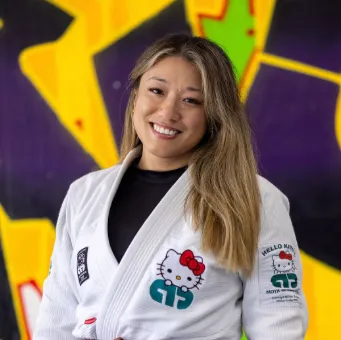
Solana Be is Community Growth Manager at Gymdesk and co-founder of NEO Martial Arts in Brampton, Ontario, where she directs the academy's women's BJJ program. A BJJ brown belt and active IBJJF Masters competitor, she's medaled at the European and Pan championships—and she ran NEO on Gymdesk as a customer before joining the team.