How Two Navy Operators Built TEAMSMMA on Military Precision and Family Culture

Starring
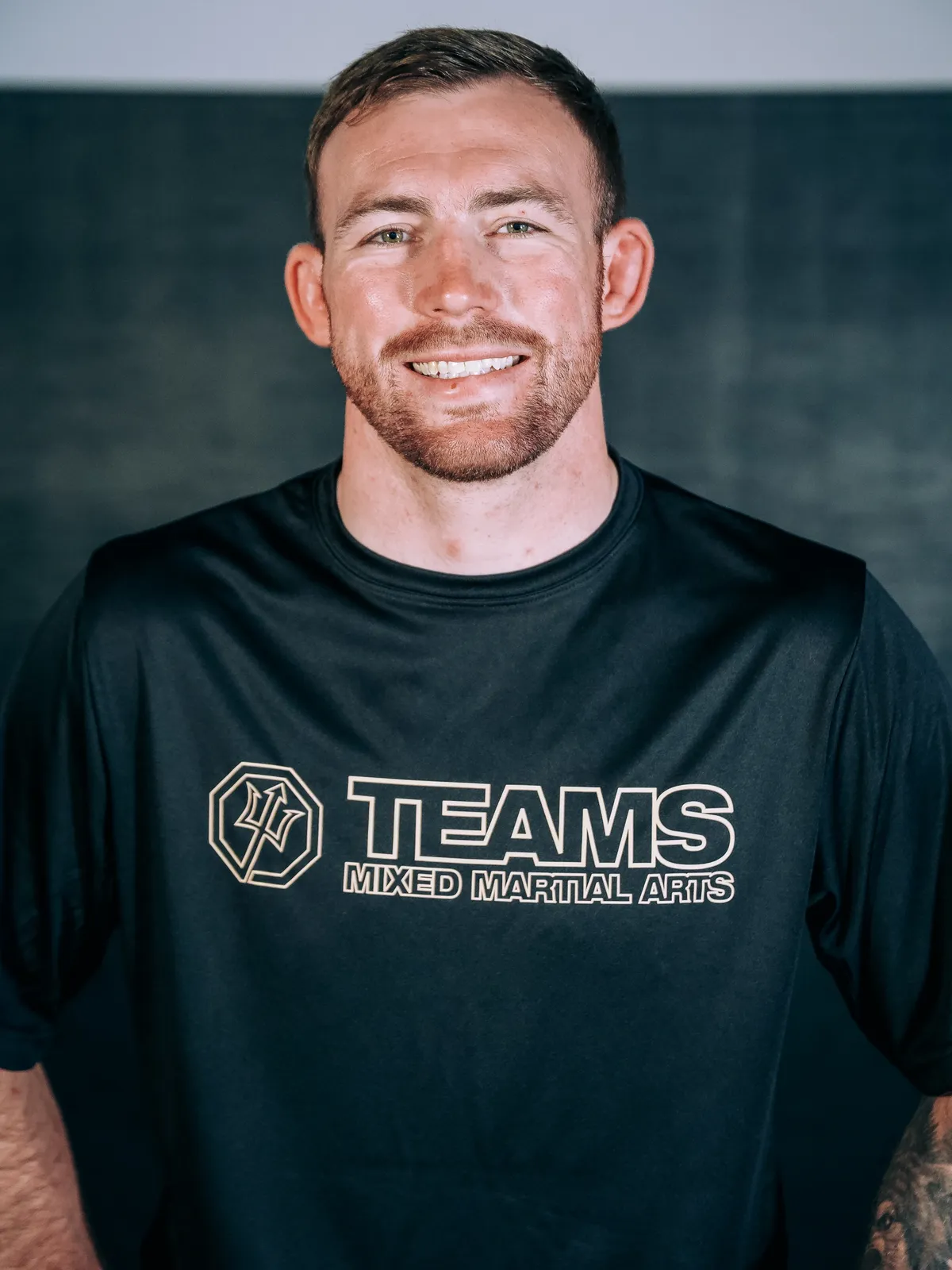
Bobby "The Ghost" Winther is a professional MMA fighter with a 4-1 record who has competed professionally in Cage Warriors and Tuff-N-Uff, and is also an ADCC Open competitor. An active-duty Naval Special Warfare service member, he started training jiu-jitsu at 14 and co-founded TEAMSMMA alongside Danny Felix to create an autonomous training environment shaped by military precision and competitive drive.
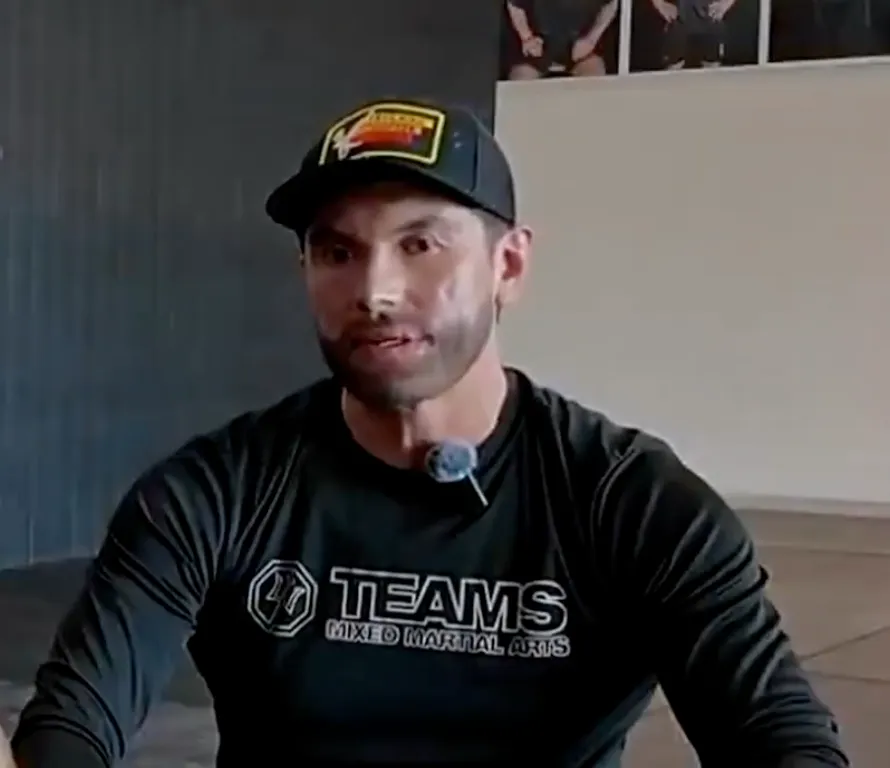
Danny Felix is a lifelong martial artist who started training at age five, progressing through ninjitsu, taekwondo, and Brazilian jiu-jitsu over a career spanning more than four decades. An active-duty Naval Special Warfare service member, he co-founded TEAMSMMA to bring elite-level combat training methodology to civilians, families, and competitive fighters in Chula Vista.
About the Gym
TEAMSMMA is a mixed martial arts gym located at 1172 Third Ave in Chula Vista, California, south of San Diego. Founded in 2025 by Danny Felix and Bobby Winther—both active-duty Naval Special Warfare service members—the gym offers programs for kids, adult beginners, amateur fighters, and professional competitors. Professional fighters teach daily classes from 7 AM through the evening. TEAMSMMA stands for Together Everybody Achieves More Success.
The facility features dual mat areas designed for simultaneous family training, a full strength and conditioning section, showers, and a coffee station. TEAMSMMA's curriculum draws heavily from military combatives, emphasizing positional dominance and techniques that work under realistic pressure. The gym also plans to open a human performance center with sports science, nutrition, and conditioning resources for its amateur and professional fighters.
📍 1172 Third Ave, Chula Vista, CA 91911
📞 (619) 762-9467
Summary
Danny Felix and Bobby Winther met in 2021 through Naval Special Warfare and bonded over their competitive nature and shared passion for martial arts. After years of teaching hand-to-hand combat in the military and training at other gyms, they opened TEAMSMMA in Chula Vista, California—a facility designed around a simple acronym: Together Everybody Achieves More Success. The episode captures a gym just seven months old, already running a structured pipeline from kids classes through amateur and professional competition.
What sets TEAMSMMA apart is how Felix and Winther translated military methodology into their curriculum—prioritizing top position, staying on your feet, and treating every technique as if a weapon could be in play. The episode features their parallel scheduling system, where parents and kids train simultaneously on dual mats, and a look at how pro fighter Winther (4-1 record, Cage Warriors veteran) applies tactical thinking to fight preparation. Alex's son Neo joins the kids striking class.
What They Told Us
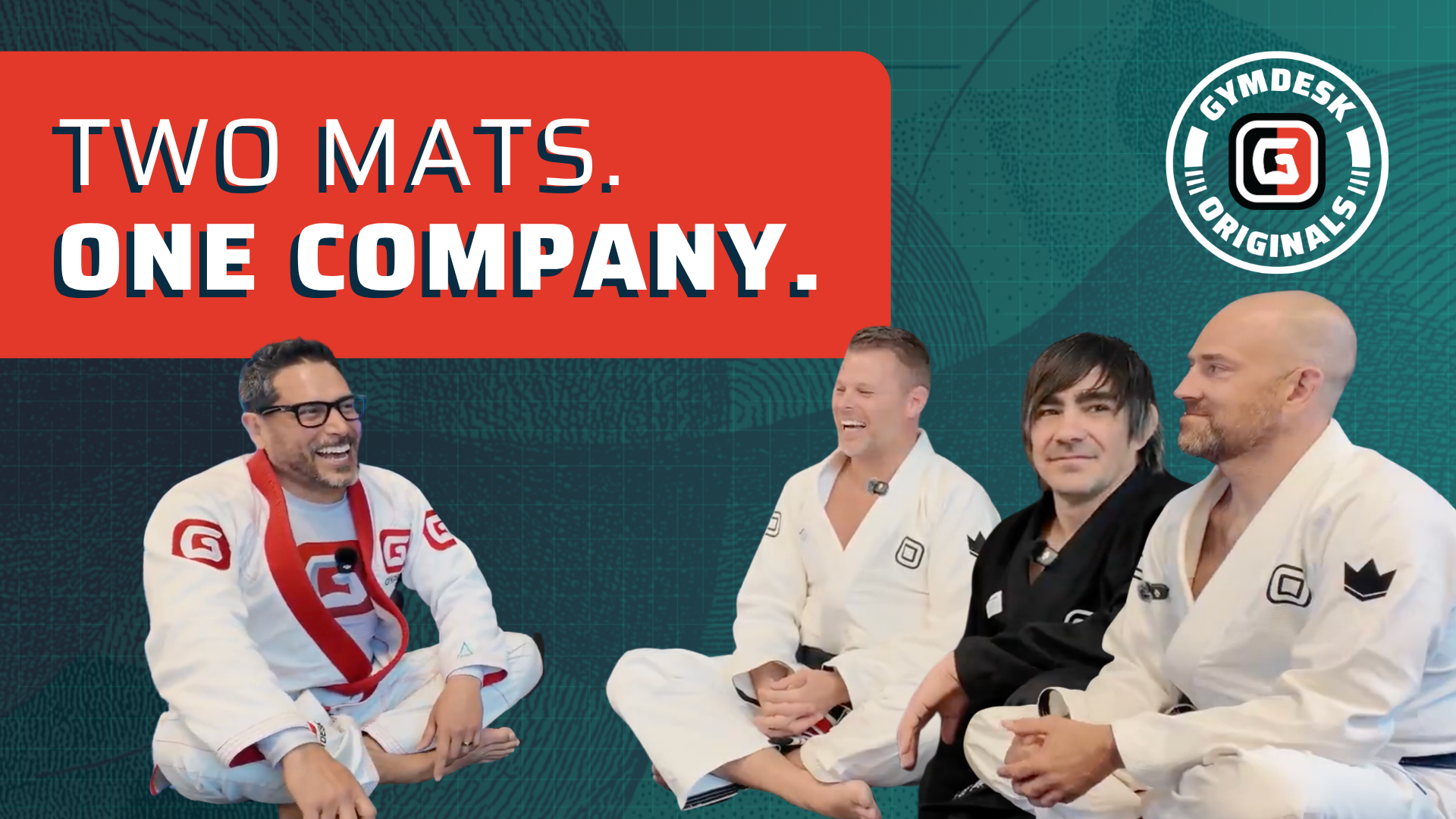
Alex Cuevas visited TEAMS MMA in Chula Vista, California, a gym opened about seven months earlier by two active-duty Naval Special Warfare operators, Danny Felix and Bobby Winther. The name is an acronym—Together Everybody Achieves More Success—and the conversation kept circling the same two poles: the combat-tested precision they carried over from the military, and the family culture they built the floor plan around. What follows are their own words on how those two fit together.
Combat martial arts versus the sport
Alex opened by asking Bobby Winther, a professional fighter, how combative martial arts differ from the jiu-jitsu you would see at a typical gym. His answer was about consequences—what changes when the fight might involve a weapon. In sport grappling you can afford to concede a position; in a real confrontation you cannot.
"We really hold on to the top position a lot in combative athletes. Whereas jiu-jitsu, it may be okay to give up the bottom. We don't really want to do that because there's sometimes there's knives in play, there's pistols in play, rifles in play, and other equipment that could be used."
—Bobby Winther, Co-Owner, TEAMS MMA
Why they opened their own gym
The two met in the Navy around 2021, bonded by a shared competitive streak, and trained together at another gym before striking out on their own. Bobby framed the decision as restlessness as much as ambition—a need to control the room and shape the professional team on their own terms.
"First off, Danny and I, we love chaos. It seems we don't like to rest for even a second, even though we always want rest. … But I think a lot of it kind of came out of a need for our own spot to really be autonomous."
—Bobby Winther, Co-Owner, TEAMS MMA
A high-performing environment needs a high-performing coach
Danny Felix answered the question of what sets the gym apart by reaching straight back to where he and Bobby come from. In Naval Special Warfare, he said, elite teams demand elite coaching, and the same rule governs how they run the mats for beginners, amateurs, and pros alike.
"Coming from a background in Naval Special Warfare, there's two things that run parallel. … A high-performing environment needs a high-performing coach."
—Danny Felix, Co-Owner, TEAMS MMA
MMA as the truth
Danny grew up on the martial arts of the 1980s, ninjitsu and then taekwondo, before the UFC arrived and reset the whole field. For him and the operators he trained with, mixed martial arts was less a sport than a proving ground: a way to test which systems actually held up under full resistance.
"The cool thing about that is it exposed us to something that was called the truth. … Mixed martial arts is awesome because what it did is gave us the ability to combine different martial arts and different aspects of those into an arena, if you will, or an octagon where we can put those systems against each other 100%."
—Danny Felix, Co-Owner, TEAMS MMA
Built for families to train together
The floor has dual mats placed so a parent and child can train at the same time, in the same framework, and talk about it on the drive home. Danny runs the kids class while Bobby takes the adults, which lets a father, uncle, or brother share the session instead of sitting in the lobby.
"Pops comes in, drops off the young one. I take the young one, teach the kids class, and Bobby takes pops or the uncle or the brother."
—Danny Felix, Co-Owner, TEAMS MMA
A pipeline that refuses to rush
The last question was how they decide a fighter is ready to turn pro. Bobby's answer was a caution as much as a method: talent matters, but pacing matters more, and moving an amateur up too soon can end a career before it starts.
"We've seen so many times amateurs turn pro too fast and they get crushed and it kills their pro career right off the bat."
—Bobby Winther, Co-Owner, TEAMS MMA
Read the full transcript
Lightly edited for readability. Speaker labels are omitted because the source recording is not diarised; quotes attributed elsewhere on this page were verified against context.
Music playing Behind every gym there's a story, a mission, a spark of passion that started it all This is Gymdesk Originals, real owners, real struggles, and the communities they've built from the ground up Alright, we made it to TEAMS MMA right here in, you remember where we are? Uh, no Chila Vista, California, a little bit south of San Diego, and we're ready to go, so let's go check it out Ready? Yeah, let's go Let's go see How's it going? Welcome to TEAMS MMA, come on in, my name is Danny, nice to meet you My name is Bobby, come on in guys Let me take you on a tour with our facility, start off with, this is some of the merchandise that we offer This is our check-in counter, we start off with the best software on the market called Gymdesk It helps us track all of our members and it helps the members log in We make sure everybody gets good, solid training This is our Freebird Coffee Station Right here we have Porchata Cold Brew We also have Kombucha Let me know if you're thirsty and you want a drink We point your attention right over here Now we've been in business for about six months What we're looking to do is
start a human performance center Now this human performance center is going to rival something that the UFC might have This is where pros, like Bobby over here, come to formulate their game plan Now Bobby will sit here with the coach, he'll get a breakdown of who he's facing We'll also be here with our sports science nutritionist, as well as our sports conditioners Now with that sports conditioning program, we'll be able to lay out a battle map It's going to help the amateurs and the pros take their best training Understand when they're going to fight,
how they're going to fight And most importantly, what game plan they're going to put together Now collectively, by putting all our heads together We're going to be able to take the biggest fight of the competition they've ever faced With the team that we have here from, Teams MMA Now Teams MMA stands for, together everybody achieves more success So we take that extremely serious As you can see, the two flags are hanging on the wall Something we have a lot of pride in Now Bobby and I both come from a background in Navy service We're still active duty service members With that,
it grounds us to our culture Now the culture here at Teams MMA, as you can see, is extremely well-rounded We have guys from all different walks of life and all different fighting styles We have guys that came up from their first day doing Muay Thai With our head coach Vince Sandoval Taking on their first amateur fight over at Epic Taking their first amateur fight over at PKG This guy over here, his name is Taylor Fox He's getting ready for a big fight at the end of this month If we make our way over here to mat 1 This is where the majority of the training goes down Now we built this facility with two things in mind Tough training and a culture that encompasses family and heavy competition You can
see the dual mats that are strategically placed So that your parents can drop you off You can have practice at the same time as your dad, your uncle, or your brother is taking training So at 5:30 we're going to start the kids class At 5:30 we're also going to start the adults, advanced, and intermediate grappling class Like I said, family and culture is one of the strong points of Teams MMA This is what truly bonds us together We're in the context of a martial arts family Let's go take a look down here Like I mentioned earlier,
we have a full strength and conditioning section right over here So whether your needs are cutting weight on the assault bike Or doing heavy lifting, getting ready for your next professional fight Teams MMA has the facilities that your training might need So what do we do after training? After training we want to get cleaned up We have a state-of-the-art restroom facility Men and women's showers Men and women's bathrooms What that means for you is you don't have to go home dirty You can take a shower, you can clean up, you can grab a cup of coffee, rehydrate yourself So one of the things about our facility that I want to point out is our roster One of the unique points about Teams MMA The majority of our coaches here, whether it's beginners, whether it's amateurs,
or whether it's kids Our top five professionals We have professional fighters as well as professional competitors All teaching daily classes from 7am to 4pm, 5:30pm to 6:30pm So if you're looking to train like a pro with a pro There's no better place to go than Teams MMA Hey coach, so I was telling him about how Taylor started off his first Muay Thai lesson with you And he progressed from PKBs to his amateur fight to where we are now Do you want to speak a little bit about that?
Uh, I don't know if I'm a holder like that Can you hold it for me? No, um, you know, that's the natural development of an athlete Started him off crawling, you know, let him run You know, he came to me with no training, just a baseball player Basketball, you know, but he was a good athlete in baseball So it translated well around the middle So you just got to show up every day, train hard That's all it is, just showing up, working hard, asking questions, studying that in.
We'll be right back. All right, everybody. Welcome to season two. I'm in Chula Vista, which is about, depending on traffic, 15, 20 minutes or an hour away from San Diego. Sometimes the traffic is real bad. And we're in Chula Vista and I'm at Teams MMA, right? And I'm here with... I'm Bobby Winther. I'm one of the owners here at Teams MMA. Name's Danny Felix. I'm the owner, along with competitor Bobby Winther right over here. So this is like a special moment. My son's going to be here.
My son's accompanying me on some of these. This is the fifth time I've had him on an episode. So he's really excited about joining the class. And he was really excited to meet you guys because we haven't had, at least I haven't had anybody with my son who has active military experience, still in the military today, right? And bringing some of the experiences that you guys have had in that world and, you know, introducing it, I guess, to the civilians of this world, right? Yeah. And I'm curious to learn just right off the bat, like, what is the difference between, you know, like combat martial arts and, you know, the stuff that you would see out here, like regular jiu-jitsu and that kind of thing?
Yeah, I think kind of like the main difference with like combat, like combative martial arts versus like what you would see in like a traditional martial arts gym is that A, the intensity with some of the techniques with like how you're teaching them, like not like how you drill them, but like the importance of certain positions being like attained. Like we really hold on to the top position a lot in combative athletes. Whereas like jiu-jitsu, it may be okay to give up the bottom. We don't really want to do that because there's sometimes there's knives in play, there's pistols in play, rifles in play, and other equipment that could be used.
So we really prioritize people staying on their feet and like having their hands about them. And that really translates well into our curriculum for MMA in general here, because that's how we like to fight. That's how we teach all of our fighters to fight. That's how we teach our kids. And that's how we teach all of our beginners all the way up to the most advanced adult. I'm like, I have a little bead of sweat. I'm like, oh, so you don't like turtle, right? Because I feel like I always turtle up.
And I guess that's a kind of position you don't want to be in if it's like a real battle. There's a knife involved. Yeah, honestly, like, I mean, I think the best way to look at it's like in MMA, like, if you like, because they can hit, seeing how jujitsu is used in MMA is usually a pretty good indicator of how like, you would use it in like a combat, like a combat, combative sport when there is a weapon involved. So I just like say, hey, the fist could be any weapon.
Therefore, I need to have a technique that protects me from getting hit by that weapon multiple times. So turtle and MMA doesn't generally bose super, super well for the guy in turtle. But hey, some people can make it work. And if you're really good at turtle, then you can make anything work. You can make any technique work to your advantage. But there's percentages, I think, that go with certain environments. And your particular gym is relatively new, right? You guys opened, was it in? About seven months ago.
Yes, about seven months ago. And what makes your gym unique? We did a tour a little bit earlier. There's lots of folks on the wall here. In terms of the folks who train here, who teach and coach, can you tell us a little bit about that? Yeah, that's a great question. So you hit it right on the head. What makes us different? Coming from a background in Naval Special Warfare, there's two things that run parallel. You're working with elite teams. You're working with elite teams like Bobby and the rest of the pro fighters here.
Elite teams like the amateurs. And one thing guys share in common with Naval Special Warfare, where we come from, is that a high-performing environment needs a high-performing coach. We have some of the best coaches over here. We have some of the best competitors. So we take those different environments. We bring the best out of them through competition. At our competition, there's no different from what we do in Naval Special Warfare. There are execution of fundamentals under high pressure. That's how we ensure concrete confidence. When the guys step foot into the cage, whether it's a beginner for the first time on the mat, whether it's an amateur fighter or a pro fighter like Bobby, whether it's an athlete or a pro fighter, or a pro fighter or a pro fighter.
So we have competitions, we have military, we have coaching. They're at the military as well as here. And now you guys have your own gym. That's a lot. It feels like there's a lot going on. Tell me in your minds when you get to the point where we're like, oh, we should open our own gym and bring what we've learned in either military and combat sports out to the civilian world. How does that work? First off, Danny and I, we love chaos. It seems we don't like to rest for even a second, even though we always want rest.
But it seems like we're always at a war with ourselves with that. But I think a lot of it kind of came out of a need for our own spot to really be autonomous, I think. We were at an old gym. We were treated very well. And I think we just all got to a point where we wanted our own spot to be able to shape the professional team the way we want it. And the practices outside of that, like the curriculum, we want to be able to shape it all the way we want it.
And I think because Danny and I have a lot of military experience, it naturally has that military style has kind of come out in our curriculum that we showed, mainly because that's just kind of all we know. We've done martial arts our whole lives. We've been in the military half of our lives. So it's like, that's kind of like the way we were like, hey, if we're going to do this is, I feel like the only way it could go, you know. It's a lot, but it feels very rewarding.
Like it's super rewarding when we get a beginner in there day one. And then we see him a couple months later still coming and he's getting tangibly better. And he sees that he's getting better to take that beginner and even replace him with a pro. Still, that same experience happens. Like you get a pro in here. He's in here for six months and he is way better than when he came in here too. So any skill level, any person can come in here and get better.
And that's what's cool and I think unique about our system. So let me just unpack the friendship here. It sounds like you guys have been boys for a while. Yeah. When did you guys meet? Like, was it in the military, you know, working together or in the same unit or what have you? Or how'd you guys meet? So right around 2021, I want to say, in the Navy, where we met, where we formulated our relationship based off of our competitive nature. Probably hit it on the head.
So you were talking about rewarding. One of the big things that's rewarding for us is developing or building a culture. At Teams MMA, I want to say the culture is identical to Naval Special Workforce. We have a lot of guys from different backgrounds, i.e. the community, different parts of the U.S. High Competitive Nature brought here at Teams MMA is something that builds as a foundation, allows us to expand, and allows us to truly give back to the community from our heart. We're driven by passion, and for us, our passion is our purpose.
Passing on the life lessons that we've learned from martial arts to the person who's starting at day one to the pros who are fine-tuning their craft. And so lifelong martial artists, I mean, can we unpack when you started? And what was your first art? And also, there's a lot of guys I talk to that are like jiu-jitsu guys only, right? And they may have done other things here and there, and they let go of that, like maybe capoeira and then jiu-jitsu, or karate, and then they moved into pure jiu-jitsu.
But if you can do MMA, you kind of have to hold on to specializations in all these arts to be able to be effective, right? So maybe unpack your martial arts history, and maybe a secondary question would be, well, how does the military affect whatever you see sports-wise? You know, like going back to you learn how to do something like a turtle, just pick it on a turtle again, and how you have to kind of unlearn it when you're in the military. Can you talk a little bit about both of those?
So yeah, I'll go first, and then I'll let you hit it. Yeah, so my martial arts career started when I was 14. I was training for the military, and I was like, look, I got to learn how to fight, so I better do it. I was fortunate. I had an uncle that was really into martial arts. He was a black belt in taekwondo, and he was a purple belt in jiu-jitsu at the time. So dude, it was like, I think when jiu-jitsu was like getting hooked on everybody.
And he was like, dude, try this out. We'll train you for it. I tried my first class, and I was like, yo, this is awesome. So jiu-jitsu is really what got me into martial arts. So when I was 14 is when I started. And then as I got into the military, I continued to train pretty much just jiu-jitsu and wrestling, started learning a little bit of wrestling. And then back in like 2020 is when I really like started branching out into striking because I felt like I always wanted to fight and fight competitively in MMA.
And I just wanted to keep competing. So I moved out to San Diego. That's when I met Danny. We were teaching a lot of hand-to-hand combat in the military itself. But I also wanted to compete at the same time in MMA. So it was a perfect job. I could do that as my job. And then my off time came to the gym and was training with the team. So I picked up striking really what I learned here with Coach Vince. And then picked up a lot of wrestling and judo through Justin Flores.
And then just trying to build a whole game around it. It's just been more mat time is really what it comes to. But you're right. You got to hold into all the different martial arts. And really, there's things I did in jiu-jitsu that was like, I almost had to let it go because in MMA, I was, you'd get beat up. And you figure it out fast because you're like, this thing ain't going to work, right? So as like that military component, looking into that, like looking at fighting, I always look at, think of it like a tactical advantage.
Like, okay, who's got, what tactical advantage, what game plan has to be employed against this opponent? Because each opponent's different. Each environment's different. You're a different fighter each time you walk in there and you have a different set of skills. Sometimes better in other areas, sometimes not as great in other areas compared to the opponent. So I'm always just looking at it like it's one big sand table that I'm always watching as fighting, fighting is going on, if that makes sense. So my side of the story, I'm a little older than Bobby.
Started out martial arts when I was around five years old. I'm in my 40s right now. Of course, back in the 80s, the biggest martial art, courtesy of the Ninja Turtles back then that I started off with was ninjitsu. From ninjitsu, got into Taekwondo. Luckily for us, the UFC came out, which introduced us. To Brazilian jiu-jitsu and other fighting arts. The cool thing about that is it exposed us to something that was called the truth. And this translates back into what Bobby brought into Naval Special Warfare.
Naval Special Warfare before had a lot of ambiguous martial arts systems. What worked? What didn't work? Now it was difficult for us to formulate under pressure what really worked. But courtesy of Bobby and guys like him, we were able to test something called mixed martial arts. Mixed martial arts is awesome because what it did is gave us the ability to combine different martial arts and different aspects of those into an arena, if you will, or an octagon where we can put those systems against each other 100%.
Now in addition to that, there are things within mixed martial arts, the mindset and the structure. Those things like resiliency, overcoming adversity, facing your fear, performance anxiety, all those things. We took from mixed martial arts because we have guys that are competing in the cage. Very, very similar to guys getting ready for operational missions. So if I were to put it in context, the big thing that evolution, courtesy of mixed martial arts, brought to NSW was realism and truth in combat. It was a system that we were able to evolve, test, improve with guys like Bobby in the cage or other guys like Jeff on Tough Enough Series.
Because I'm not in the military, I'm thinking about, well, if you're now going in with some skills that you've learned in different schools and all that, how do you influence military programs that maybe have been going on for 20 years or something and you've got to modernize it for today's learnings with MMA and all that? How do you guys do that? One of the easy ways that we were able to do that is just put on all your gear, everything that you're going to wear into bed.
If this system, your version of martial arts, functions with all those things that you're expected to utilize in the battlefield, then it works. If it works under 100% oppositional force, then it works. So we started to expand it. We started to take the ideas, evolve them, and prove them under proof of concept with high-performing team members that are stepping into cage warriors, that are stepping into tough or that are fighting over at heaven. Yeah, and also, I think our community inside the military is pretty unique.
It's to be able to influence change and stuff. A lot of people are willing to embrace a lot more new ideas, which, contrary to some other military thing, military is generally thought of as super rigid and stuff, and most of it is, right? But we're very fortunate. We come from a community within the military that's very innovative. So it's like, hey, this thing doesn't work anymore. Maybe it worked at a time and it's outdated. Then we can kind of sit there and operationally test kind of what he was saying.
Put all the stuff on, see what works, what doesn't work, right? Try not to get married to any techniques because that's when people, like, they're like, I really want this one thing to work, and they'll try to make everything work around it. So you just got to put the test on, have an unbiased view on it, and see how we can approach the situation, make a system that will actually have people who are putting their lives on the line, like, defend themselves correctly. The beauty of MMA, in my opinion, is that if we take a look at the UFC, for example, for a while he was the dominant force of the jiu-jitsu guys, and it was the dominant force of the wrestlers, and came the strikers.
And the beauty of MMA was that everything started to combine, evolve, and now you have a super fighter who combines everything effectively and understands everything. Take Ilya Teporia, for example. He's a great striker. He's a great grappler. He's a great wrestler. Take Khabib or take McGregor. You can truly see the evolution take place right in front of your screen, courtesy of guys that are throwing it down in the UFC. So that's one of the things that we truly drew strength from, to lay down our temper.
How do we take this thing that we have here, shape it, mold it, evolve it, to where it's cutting edge for what our guys need in special warfare. And today, there are, like we said earlier, a lot of the coaches and owners are still competing, right? So is your record 4-1 right now? Yeah. 4-1. And when's your next fight? Tell us a little bit about that. So, unfortunately, I was supposed to be fighting February 7th. Unfortunately, it just got canceled. The opponent got injured. So we're still waiting on something.
I'm having a baby at the end of February. So I'll be getting my own fight camp for that one right now. But probably, I think, to get back in the cage, I think it's going to be probably in, like, April, May time frame. But I'm going to try to do jiu-jitsu before. I'm going to do the ADCC Open here in San Diego. So really stoked. That's my next one. So that's coming up in, like, two weeks. Are you still competing? No. Not competing. Like I said, in my upper 40s, the only person I'm competing with these days is myself.
I'm right there with you, man. If I can get enough energy to do, like, two classes and one open mat and also do the gym, I had a great week. Oh, yeah. And there's late-night competitions running to the refrigerator for a snack. You fight those battles daily. Yeah. For me, it's the travel and just, you know, running around and then eating maybe not so good. So, yeah, I could lose 10 pounds and be happy. You're in San Diego. Some of the best food around the country over here.
Oh, yeah. Yes, yes. Coming home and, oh, here's another thing. I'm plant-based. I've been plant-based for 40 years. And they have a lot of really awesome Mexican food over here for that. And it's, yeah, it's really hard. Okay, so my son, Neo, is here. He's going to jump in the class a little bit later. He's doing the striking class. What should he be expecting for it? Super stoked that Neo's going to be hopping in the class. So, what he can expect is he's going to be doing, like, a lot of games to warm up.
So, have fun. We want the kids to like to be here and have fun. He's going to have some games just to warm them up. And then he's going to have a little bit more specific games to kind of, like, drive whatever the lesson is for the topic of the day there. And then you can expect kind of, like, partner drills, pad work drills. And then usually end it with some more fun games as well. We kind of keep it safe because if at any point we decide, like, they're going to practice sparring, they have shin pads, gloves, they have headgear.
And it's really just, like, extra safety because they don't even hit to the head here. We just have them, like, show the strikes at each other and enough to get good quality training. So, my son is going to be in his class. And I think there's a class for me at the same time, right? That's right. That's smart. And I've seen that work successfully at a lot of gyms so that if you're a busy parent, you come in. You're not just sitting around or you're dropping the kid off.
And then you have that same language to help the kid if you're both studying the same art, right? Is that kind of what inspired you guys? A hundred percent. You hit it right on the head. At the end of the day, the ride home, you're going to be able to discuss what you learned as an adult. Your kid's going to be able to understand what you're saying because, essentially, we're teaching the same framework. We're teaching it at a younger level. We're developing a child so that he understands agility, he understands the balance, and he understands why he's doing the movement and what are going to be the follow-on movements.
So, we see that unique aspect here at our gym. Just like you mentioned, pops comes in, drops off the young one. I take the young one, teach the kids class, and Bobby takes pops or the uncle or the brother. So, at the end of the day, we're creating a culture that can truly exist within Teams MMA. It'll exist at home, whether it's them talking about it at the dinner table or them practicing it on the weekend. They're both in that shared ecosystem called Teams MMA, where we are developing the foundation within that structured family bond.
I just want to put this out for those gyms that aren't doing this and for parents that are out there, they're in the area. Why is this so important? I think about the longevity of my relationship with my son, and I want to make sure he's my buddy and we have something to talk about when he's 18 or 21. Like, hey, we have this shared passion. We're doing this thing together. So, that's kind of why I love this idea, what you guys are doing here, because you're fostering that connection.
And I think it'll be persistent past whatever adolescent craziness happens. Yeah, I agree. That's exactly, honestly, why we wanted that to happen. We wanted parents to be able to bond. You guys, go practice this at home if you guys want. Like, you guys have something to talk about at home now, too. So, like you said, it's a journey for both of you, and it's a cool journey. And if you get to share that with your son, I hope I get to share it with mine. That's the best thing.
That's awesome. So, I'm happy that you guys have that. Yeah, thanks. So, last question I'll ask you guys, just about your pro team. Obviously, there's a lot of people. We saw some folks earlier training for a fight. You're training for a fight. How do you identify someone who's in your gym? And you're like, that's the guy. You should go pro or you should start doing amateur fights, that kind of thing. So, I think kind of what we really wanted to make here at Teams was a pipeline process to be like, because it is kind of confusing.
Like, how do I do this? When do I do it? If a kid wanted to be on that path, we could essentially train them kids, adults, amateur, pro, and then take an adult and flip-flop them in anywhere in that category. Like, if they have had prior experience in martial arts before, the way we kind of identify is like, A, do they want to do this? So, that's a big thing. Like, make sure they're not pressured into thinking that, like, they have to do this. Hey, do you want to fight?
Is this something you want to do? Awesome. We'll come to practice very consistently. And that shows us that you actually want to do this and be part of the team and part of the commitment that takes to fight because it's a dangerous sport. And I want to make sure you know what you're getting into. And as far as, like, somebody when they're ready to turn pro, kind of what myself and the other coaches are looking for is, are they sharpening up their skills quickly enough to hire better competition or, excuse me, handle better competition?
We've seen so many times, like, amateurs turn pro too fast and they get crushed and it kills their pro career, like, right off the bat. We will try to keep amateur, guys amateur as long as it makes sense for them. If they have good quality competition to fight at amateurs and they're not outgrowing it, let's keep them there until we think it's ready for them to go pro so that they, when they get the pro, they're staying pro and they're winning at that level too. Some guys turn that leaf way faster, like, and some guys take a little bit longer.
There's no, there's nothing wrong with either one, but it is just something that us as the coaches always want to make sure that, hey, they know what they're getting into and that we know that they're ready. Because a lot of guys think that, yo, I'm ready for pro, I'm ready for pro. Like, you're not ready for pro sometimes. Like, some of these guys, they need to know that, like, pro, it is a different, it's a huge jump in skill too. So, um, I hope that answers your question.
All right. Well, gentlemen, it's been a pleasure. I'm looking forward to, I'm sure we'll have more conversations and, uh, I know we're getting ready to do a class here in a minute. And, uh, yeah, we'll take a look at the class. Thank you so much. Thank you. Pleasure to meet you.