How Coach Rich Beaupit Built a 32-Year Martial Arts Academy Around People, Not Numbers
Starring
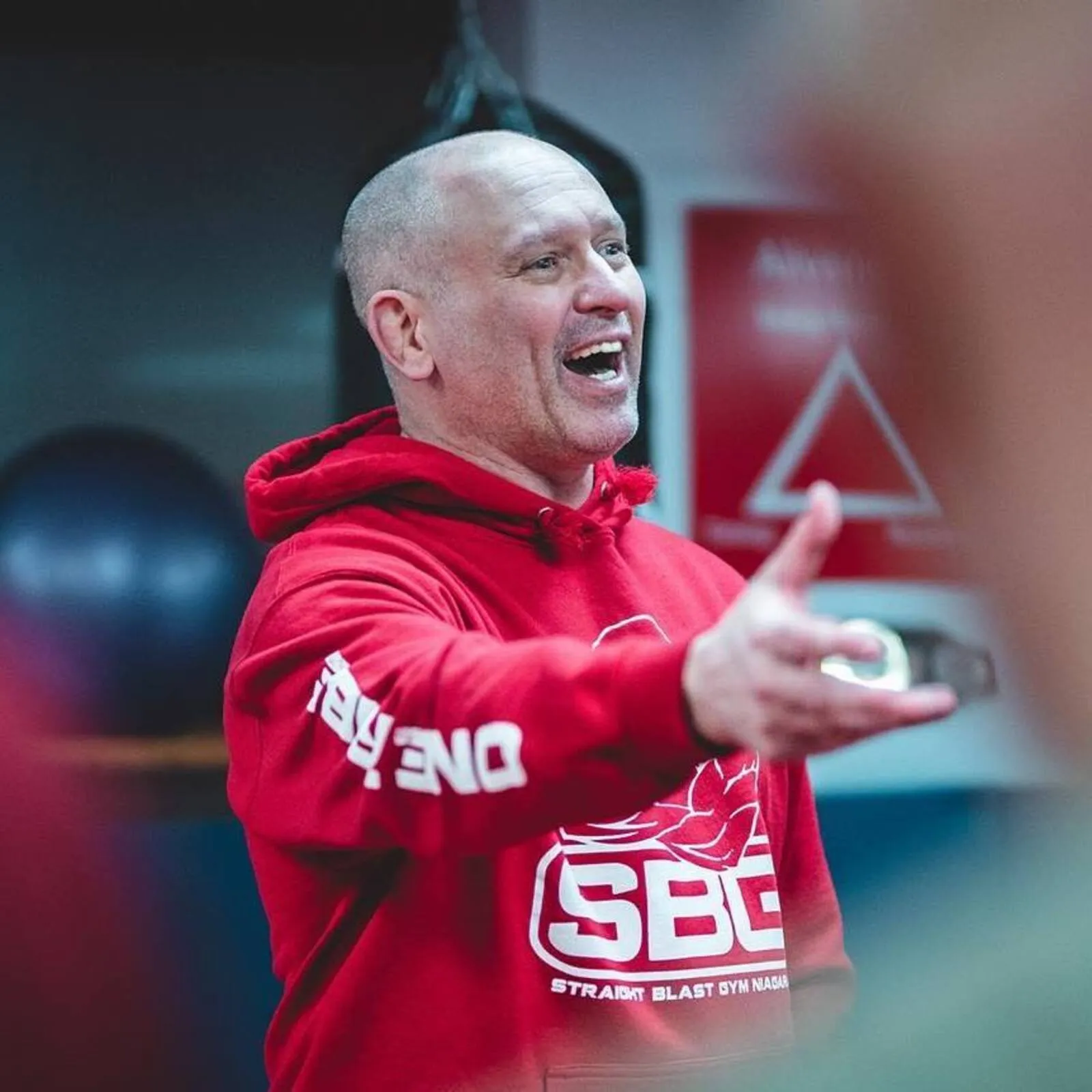
Rich Beaupit is a martial artist with 44 years on the mats and 32 years running Straight Blast Gym Niagara. He started in Japanese Jiu-Jitsu and Karate, earning a second-degree black belt before throwing it away to start over, later affiliating with SBG and earning his BJJ black belt under founder Matt Thornton after 25 years. Rich created the SAFE (Street Smarts Are For Everyone) bully-proofing system, coaches through SBG’s P and I Methods with an 80/20 drilling-to-rolling ratio, and has shared a weekly gratitude post on social media for over five years.
About the Gym
Straight Blast Gym Niagara s a Brazilian Jiu-Jitsu and kickboxing academy in St. Catharines, Ontario, that’s served the Niagara Region for over 30 years. Founded in 1994 and affiliated with Matt Thornton’s worldwide Straight Blast Gym International network, it shares the “One Tribe, One Vibe” ethos.
Programs cover adult and teen BJJ (gi and no-gi), three formats of kickboxing (kickboxing, low kick, K1), kids BJJ for Chimpanzees (6-9) and Junior Gorillas (10-12), plus the proprietary SAFE bully-proofing system baked into every class. The gym also runs “Jits with Hits” (BJJ with striking) and “Hits with Jits” (kickboxing with grappling awareness) weekly.
Rich caps membership at around 150 students so he can know everyone by name and handle every email and phone call himself. The youngest student is six; the oldest, Keith “The Iron Man,” has trained with Rich since 48 and still kickboxes twice a week at 74—now alongside a second generation of students whose parents once trained with Rich in local high schools.
📍 Address: St. Catharines, Ontario, Canada (Niagara Region)
Summary
Coach Rich Beaupit founded Straight Blast Gym Niagara in 1994 after literally throwing away his second-degree black belt to start over. He spent years under Burton Richardson before connecting with SBG founder Matt Thornton, running the gym as a white belt and earning every rank over 25 years until his black belt under Thornton.
The episode follows Alex through a kids’ Chimpanzees class where emotional regulation drills—hair-pull defenses with raised voices, crowd ambushes, the gauntlet—teach kids to manage fear first. Rich breaks down his SAFE bully-proofing system (Street Smarts Are For Everyone), honed over decades in schools, then puts Alex into a no-gi “Jits with Hits” class to feel SBG’s connection-based training.
On the walls are the systems that hold it all together: the P Method (Posture, Pressure, Possibilities), the I Method (Introduce, Isolate, Integrate), and a BJJ tree that keeps students chasing roots, not fruit. His 150-member cap, hands-on communication, and 74-year-old kickboxer Keith “The Iron Man” all reinforce one idea: bigger isn’t better when your mission is people.
What They Told Us
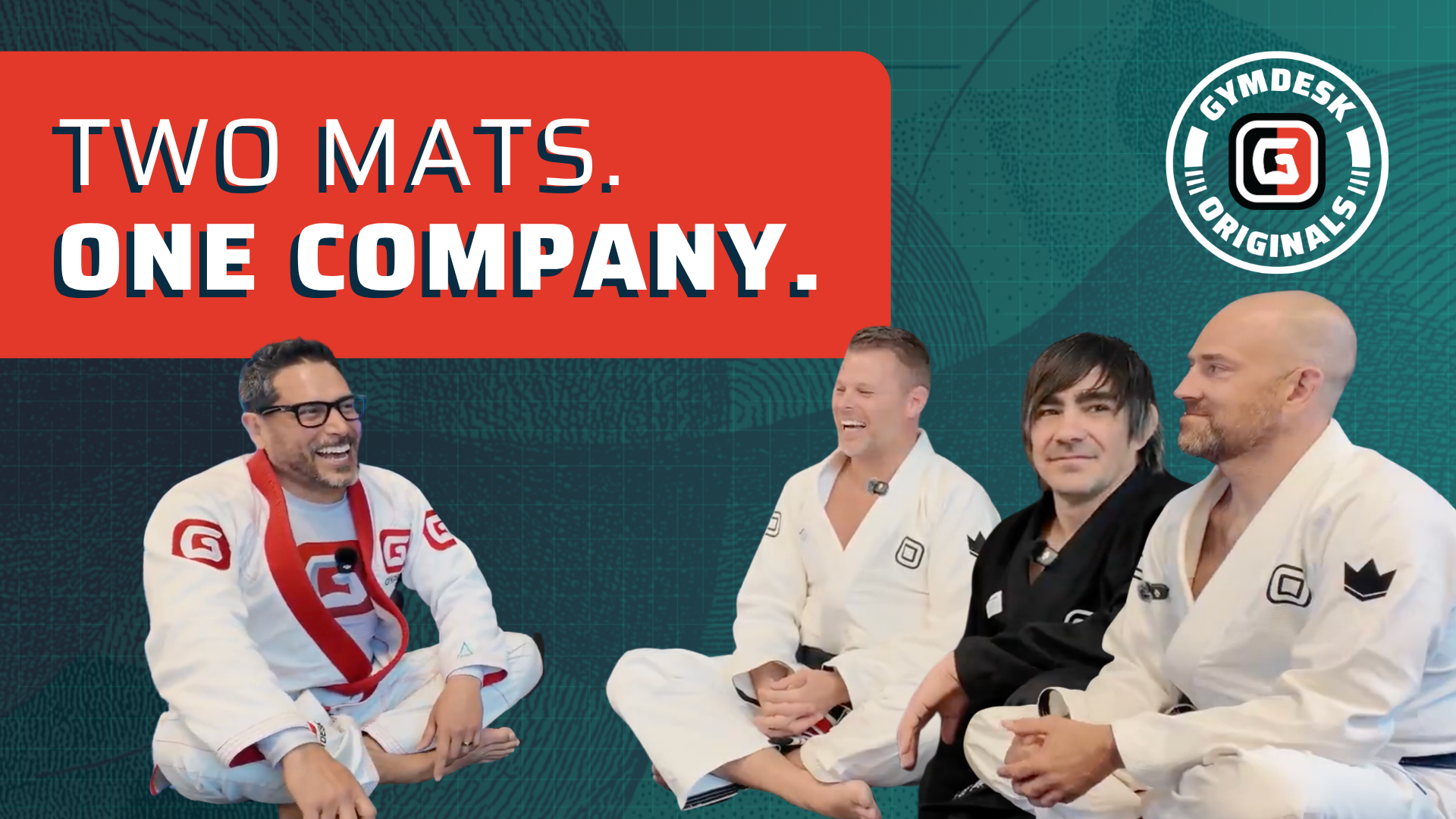
Alex Cuevas drove across the border to SBG Niagara, Coach Rich Beaupit's Straight Blast Gym in Ontario, and caught a kids' class before rolling no-gi himself. Between the chimpanzee drills and the adult mats, Rich walked him through 32 years of coaching—why he caps the gym at 150, why he still answers every phone call himself, and why his black belt certificate hangs in the public lobby instead of his office.
A black belt that belongs to the tribe
The first wall inside the door is covered in photographs Rich calls the Tribe. His own black belt certificate hangs out there too, in public view rather than tucked away in the office he admits he's rarely in. He frames the achievement the way he frames almost everything at SBG—as something earned collectively, not alone.
"my black belt is 20% mine and 80% the Tribes. They helped me get it through training, and that's why I put it out here."
—Coach Rich Beaupit, Owner and Head Coach, SBG Niagara
One hour on the mats, twenty-three off
Rich doesn't push competition. Students who want to compete get his full support, but he refuses to make the scoreboard the measure of the gym. What he's actually coaching, he says, is the person who leaves the building—the life skills that outlast any single roll, and they matter for the adults as much as the kids.
"I'm more into who you are on the mats for one hour a day. It means very little to me compared to who you are off the mats the other 23."
—Coach Rich Beaupit, Owner and Head Coach, SBG Niagara
The voice, not the grip
In the kids' self-defense drills, Rich grabs a student by the hair—never hard—and shouts, rehearsing the chaos of a real schoolyard scrap. When a child starts to cry, his first assumption is that he pulled too hard. Their answer reframed the whole exercise for him, and it's why he treats emotional control as the real skill underneath the physical one.
"the kids will cry. I'm like, oh, did I pull too hard? And they're like, no coach. It's when you raised your voice."
—Coach Rich Beaupit, Owner and Head Coach, SBG Niagara
A system, not a slogan
Plenty of gyms promise life skills, Rich points out, then can't say how they actually teach them. His frustration is with the gap between the claim and the method. SBG runs two named, codified programs—his SAFE bully-proofing system and Going Gorillas—built into every class so any coach can deliver the same thing the same way.
"people say, well, we teach life skills. Great. What's your system? Well, what do you mean my system? That's what I mean. You don't have a system. If you know, you're a businessman, if you don't have a system, it's not going to be working for you and it's not teachable."
—Coach Rich Beaupit, Owner and Head Coach, SBG Niagara
Six seconds to convince the average Joe
Rich writes his own website copy, and he's blunt about who it's for. Most martial arts sites, he says, are written to impress other black belts. His is written for the nervous beginner who has never set foot in a gym—the person he has to win over almost instantly, before the doubt sets back in.
"Other martial arts gyms are writing their website about impressing other martial arts guys … No one cares. The average Joe, I have six seconds to convince him to reach out to me."
—Coach Rich Beaupit, Owner and Head Coach, SBG Niagara
Every email, every phone call
Rich caps the gym at 150 members for one reason: he wants to know every person who walks through the door and what they need from him. That is also why he has resisted handing his communication over to automation. In a region where everyone already knows the drill, the coach is the one who picks up.
"Everyone knows here in Niagara region, if you're going to call me, you're going to talk to Coach Rich. You're not talking to my assistant or a secretary. I answer everything."
—Coach Rich Beaupit, Owner and Head Coach, SBG Niagara
Simple, like his jiu-jitsu
The one place Rich has leaned on software is the back office. He found Gymdesk online while looking for something to track members, and with support from Rachel at Gymdesk he is finishing a new website he says matches exactly what he pictured. What sold him was that the tool disappears into the work instead of adding to it.
"gym desk is the simplest it's it's for me. It's like my jujitsu. It's gotta be efficient. So it's simple. It's efficient."
—Coach Rich Beaupit, Owner and Head Coach, SBG Niagara
Read the full transcript
Lightly edited for readability. Speaker labels are omitted because the source recording is not diarised; quotes attributed elsewhere on this page were verified against context.
*music* *music* *music* Behind every gym, there's a story, a mission, a spark of passion that started it all. *music* This is Gymdesk Originals. Real owners, real struggles, and the communities they've built from the ground up. *music* Alright, I made it to Straight Blast Gym in Niagara, and I'm going to go check out a kids' class right now. And get ready for my own class that starts at 6pm. I think I'm doing no Gi today, so I'm all ready to go. Brought my Gi just in case.
Let's go check them out. *music* Hey Alex. Hey, welcome to SBG Niagara, man. Thanks for coming in, buddy. Thanks for having me. It's a pleasure, it's my privilege. This is where everybody comes in when they first come through. It's our front lobby, and this is all pictures of the Tribe. So we have everything in here, it's about the people, and that's what I love the most about SBG. It's always been about the people, and always will be. My office is in there, which I'm not in often.
And this is our current events board, so everybody knows what's going on in the gym. Again, the gorilla is our thing, so I do a lot of stuff with that. This is, again, more of the Tribe, and that's special pictures of everybody from tournaments to just hanging out and working. The certificates, that's our 30th anniversary, certificates of being in business. And my black belt certificate, and the reason that it's out here in the public viewing is because we truly believe that it's a 80/20 rule that my black belt is 20% mine and 80% the Tribes.
They helped me get it through training, and that's why I put it out here. This is our pride board, and this is things that we do with the community, and the kids love to draw me pictures and stuff, so I put that up there. This is some of the nice words that I've gotten from some of the schools I've taught for the last 34 years, and that's my safe bully-proofing system, so I'm really proud of that. And then everybody comes through here. More boards. We do a quote for the week, and my guys understand that motivation will get you started, but discipline keeps you going.
More for current events and what's going on with the gym. And then this is the main gym here. I'm really happy here. I'm at peace here. Our old gym used to have the ceilings were that high. I wanted higher ceilings. I wanted a bay door. I got two. I wanted a front lawn of grass. I got it. So I'm really happy with that. So when the guys come in, they can put their bags and everything here. The change rooms are in the back. This is our merchandise area.
And then we have King Kong's Juice Jungle. And then when people come to the gym, we always welcome them with their name up there. They really like that, and that's something personal that I like to do. And then this is our main training area. So it's a pretty cool place. I really love it. I'm privileged to be able to be around so many people and be a positive force in their life. So the P method, all those posters, that whole wall to me is unique to SBG.
So the P method, posture, pressure, and possibilities. That's how we coach every class. So we will give the students the correct posture for every position. What leads from posture to pressure is connection. And that's something we're really big on. And then the pressure opens up possibilities. And the students know that they need me less for possibilities. They need me more, I think, like a good parent, proper posture. And then they can play from there. The I method is something I believe is really unique to us because I feel sometimes people will either go 100% resistance or no resistance.
And they don't know how to dial it up and dial it down. We do. So we will introduce the techniques. That's where we give the student success. When we isolate it, we have them struggle for success, but they still get success. And then integrate is where we teach people how to accept failure. And failure for SBG isn't just something that is needed. It's required. Every class, you should fail. That's how you build success. We're not afraid of failure. And I think that's another big difference with us.
And then the Brazilian Jiu Jitsu tree. That's pretty cool. That's from coach Steve Bozzi in South Africa. So the bottom of the tree is the base and the posture. Then we have the connection in the middle, the pressure. And on the top is the possibility. I feel people get infatuated mostly with the possibility. That's the fruit of the tree. It's easy to get infatuated with that. Whereas we focus on what people can't see, the base and the posture. So the roots of the tree. And when you focus on that, then that's what I mean by as the students grow, they need me less.
So they need me a lot at the start foundations. But as they grow drills and skills, they need me less. They might get a couple of words from me if I need to say something. But again, we don't over coach. We don't over credit ourselves and we don't over control the athlete here. So it's a little bit of a different setup. Coach Rich, thank you so much for having me here at SBG. Thank you for giving me the opportunity, buddy. I appreciate it. Yeah, this is cool.
I mean, I love that I'm not very far from here. Yeah. Probably if there was no border, I'd get here in maybe 25 minutes. Oh, nice. So I'm real close. The border is about 45, the traffic and all. But this place has been here for a long time, huh? Or rather, you have been doing martial arts. Yeah, I've been doing martial arts for almost 44 years. Yeah. And April 22nd of this year is our 32nd anniversary for SBG Niagara. Yeah, that's wild. So I'm proud of that.
So it's pretty cool. 30 years. Yep. That's amazing. Yeah, I'm privileged. I'm privileged to be allowed to be a part of so many people's lives. And I always knew my calling was to be a coach. Yeah. So I'm blessed that I get to do what I feel my calling is for a living. So it's fantastic to me. Right. A little bit ago, I came in and I haven't, we're going to do a Nogi Jiu Jitsu today. Yes, sir. I'll be participating. I'm already under here. Awesome.
Ready to go. But before this, there was a kid's class. What do you call that class? Oh, so that class today was our chimpanzee class. Okay. So that's my six to nine year olds. And then the 10 to 12 year olds are my junior gorillas. Okay. Yeah. And what I saw was the chimpanzees. Yes, sir. Okay. I got to tell you, man, I was watching what you were doing and I felt legitimately emotional about it because I know what you're teaching them. And you brought me back to like elementary school.
Right. And I was like, oh yeah, I remember having this fear. Cause I grew up in a rough part of town in California where fights that just break out randomly. And then you're like, whoa. And you don't even know what to do. Right. And you're getting them used to this potential situation and getting them comfortable. So they can think. Yeah. Um, again, I'll say it a lot, you know, during our talk, but I truly am privileged that I have parents that trust me. Uh, I'm a different guy.
I'm old school. So, and as far as competition, I really don't care. I don't, I don't believe the status quo that you have to compete to test yourself. My kids, my adults test themselves every day they walk through that front door. So I believe in that. And with the kids, it's, uh, it's more about the life skills. So, you know, I've had kids where we do self-defense class and, you know, we'll do hair pull defense. So I will literally grab them by the hair, not hard, but I grabbed them and I'll yell like, come on.
And the kids will cry. I'm like, oh, did I pull too hard? And they're like, no coach. It's when you raised your voice. So again, I think that if you're going to teach somebody self-defense, it's mental, emotional, and physical, and the physical is easy. But if you don't have the mentally emotional self-control, like I talked to the kids today, there's no way they're going to physically be able to defend themselves. So the parents love it. Uh, you'll notice that the parents, they come in at 20 after five.
So class starts at 10 to five. They drop the kids off and then they can come in for the last 10 minutes to watch. That isn't because I'm worried about parents watching me. I don't care who watches me. I'm good to go. What it is I asked the kids when, when COVID happened and we couldn't have the parents in, when we came back, I asked the kids, do you want the parents, man? They said, no. Oh, no kidding. They said no, because that's their time. So I'm like, fine, we'll do that.
But the trade-off is I let the parents come in 10 minutes at the end. So they can still see what we're doing. Any new parent comes in. Like if you brought your son in for the first time, the first two weeks, you can stay for the whole class. Cause it's a new environment. And I want you to understand it's a great place to be. He's safe. We're going to take care of him. And then after the two weeks, then you come in at the last 10 minutes.
So it's a great process. But again, I am extremely privileged. And then I don't take that for granted that so many parents trust me. Yeah. And it's because I earn it. I work for it. Yeah. But like I said, are we in competition, Jim? We compete. But that's because my guys will come up to me and say, coach, I'd like to compete. Great. Let's go. I don't care if it's one or 10, but I'm more into who you are on the mats for one hour a day.
It means very little to me compared to who you are off the mats the other 23. And that's where the life skills comes in. And it's not just for the kids. The adults get it too. Well, like I'm going back to what the exercise was, which was, you know, preparation for the unexpected or whatever. Yeah. The voice thing too. Like I was thinking to myself as they're saying that I'm a grown man now. Right. But that might affect me too. Hearing a lot of voice. I'm not ready for that.
And the kids don't understand really at that age, the idea of trash talk. Yeah. So like someone would be like, fight, fight. But they, it's harder for them to raise their voice during the drill. Yeah. To get everybody going. But once they circle up and they all get together, they'll start screaming. Well, that's what happens outside. You'll have one kid start screaming, everybody circles around and then they all start going. And then you'll even get a kid who's a good kid, but he'll make the wrong decision because of the adrenaline dump.
Oh yeah. Of screaming. So that's why I want my kids to be able to understand and feel it here. So then that way, if it happens outside, like I said to them, I don't want it to be the first time outside for real that they feel that stress. Let's feel it in here. Cause at least in here, they can say, stop. I've had enough today coach. And then we just worked through it. So it's a cool process. And like I said, you have to have a drill that will, uh, bring in the element of surprise.
And there has to be two elements to the drill, fun and safe. Yeah. Otherwise kids are going to shut down. So you saw the kids today, like they're cranked up. If I say we're doing crowd ambush, that yeah. Yeah. And then now they want designated hitter. And then we also did the gauntlet. So those are unique. Uh, we play that a lot and the kids love it and we do it. The albums too. And they love it. Yeah. I mean like the psychology or the, you're basically teaching the emotional regulation for this, right?
Yeah. Like that's what our word of the day today was self-control. Yeah. So the kids know mental, emotional, physical strengths. But if you can't control the mental and emotional, the physical is not going to be there. And that's where some people can't control the mental and emotional. So they abuse their physical strength. And we don't want the kids doing that either. So I also teach the kids cause I've run my safe system, which stands for street smarts are for everyone as my bulletproofing system I created.
And I've been in schools teaching it for 34 years. I don't teach it in schools any longer because they won't let me talk the way I need to talk honestly. So I pulled it from the schools. If they want to bring the kids here, I'll teach it here because it's my house. It's my rules. But with the safe system, it is more about the life skills, the psychology of what you're going to feel. Uh, the physical self-defense is easy. You know, teach somebody to body lock somebody and don't let go.
That's easy. It's do you have the mental and emotional strength to actually cover, crash into them, hold them while you're feeling that adrenaline dump. So that's what I think is important to put into the drills. Yeah. I've been, I've been doing this a lot. I don't think I've seen that yet. Oh, that's cool. The emotional, uh, regulation element to it, you know, basically putting kids in a position to be okay with it. Because I think even as you get older, I think you see people, to your point, they abuse physical strength because they can't control the emotion.
Yes. And martial arts, you know, is all about, oh, we want to empower people. And that's great. And then the same as people say, well, we teach life skills. Great. What's your system? Well, what do you mean my system? That's what I mean. You don't have a system. If you know, you're a businessman, if you don't have a system, it's not going to be working for you and it's not teachable. So we have a system in place. So I have my safe system. We have our going gorillas, martial arts and life skills system.
So that's why it works. And that way it's cohesive. It's structured and everybody gets it. And it's part of every class. Like there is no special class for my safe system. I incorporate that into every class that I teach kids and the adults. And that's why the parents love it for the kids. And that's why my chimpanzee class is full. Yeah. But again, as I mentioned to you earlier, I don't want the biggest gym. It's never been my goal. And I'm privileged and blessed that I have a wife that allows me to coach the way I want to coach.
She's pushing me to get the big gym and everything. And, you know, I respect the heck of her for that because it would have been easy to just say, hey, man, why don't you keep growing? I don't want to. This is where I want to be. We can lead a comfortable life and be happy. That's more important to me than anything. Well, you said a cool story. We're off camera about the in the wild gorillas. Yeah, I have a max. Right. So 150 is what I say.
Yeah. And for me, that's my tribe. I want 150 between adults and kids. And as I said, like when people walk through my front door, I know exactly who they are. I know what they need from me, whether I should talk them up or not. And that's important to me. So I know, you know, AI is a big thing. And I've had people approach me on that stuff and that. And it's great, I guess. I like it for some things. But as far as emails, I return the email.
Phone calls, I return the phone call. Everyone knows here in Niagara region, if you're going to call me, you're going to talk to Coach Rich. You're not talking to my assistant or a secretary. I answer everything. And that's important to me. I mean, I guess it would probably be less work if I let that go. But I'm not letting it go. I love it. Yeah. You want to stay connected and. Yeah. Connection is huge for us at SPG with Jiu Jitsu. And connection is huge for me in life.
So it works for us. That same. So I'm here. Awesome. Awesome. I love connecting and hearing the stories out there for what people are doing. Yeah. The kind of businesses that are out there. You know, the theme that I've seen here on the road is that the majority of the people that do gyms of any kind really is to share their passion. Yeah. Something that has changed their lives and want to share with them. Yep. And say, hey, let me let me help bring this into your life because it bettered mine.
You know, that theme is clear here with the kids. You have a lot of adults that are prepping right now. Yeah. You have Jiu Jitsu here. You have striking arts and all that. So tell me, like, when you think about that, like, do you have a favorite or? You know, it's funny you said because the guys, if they talk to you tonight, they'll let you know. I always start every class with guys. We're doing mountain bottom tonight. Just with hits. It's my absolute favorite class to coach.
And then tomorrow night, whatever I'm teaching, I'll say, and tonight's my absolute favorite class to coach. So for me, it's whatever I'm teaching at the moment is my absolute favorite. If I had to, if I was forced to pick one thing in martial arts, it would always be clinch. Because there's stand up clinch ground. I truly don't believe all fights go to the ground. Most fights start standing. Some will go to the ground. If it's going to go to the ground, you've got to clinch me up.
So I believe everybody needs to know how to fight in the clinch. And I think that's what's missing. Most people don't understand unless they've wrestled. And even then, wrestling is fantastic. But you're not going to have a huge gym of just wrestlers because you have to be fit. You have to have that attitude of like, go, go, go. Whereas, you know, my youngest student is six. My oldest student is 74. We call him the Iron Man. And he's trained me since he was 48. And he still comes in for kickboxing twice a week.
So I don't want a system that's just designed for the person that has really strong attributes. Our systems here is designed for everybody. Anybody can do it. And anybody can prosper at it. So that's really cool. So the gentleman who started at 48 is now 74. And still doing all the striking. He does kickboxing twice a week. So tomorrow night, spar your tribe. And he'll be in. And his name's Keith. He gives me the hardest time sparring because he's not trying to be all fancy. He just covers up and he just goes.
He's fantastic. He's old school. And he can outwork people half his age. Great work ethic. Last night when we did striking, we finished with bit training. So that's our body impact training. So, you know, just shots to the body, kick the legs. Nice and light. But you tell me, lighter or harder. Yeah. And Keith does that. 74. Yeah. I'm so proud of him and to have him in the gym. The tribe is stronger for his presence. So your personal preference. Do you have a black belt in Jiu Jitsu?
Yes. Yeah. I earned my black belt a couple of years ago under Coach Thornton. And that's when I started the gym. I was a second degree black belt in Japanese Jiu Jitsu karate. Okay. And then, you know, I left my structure and gave it to me. And then I basically threw it away because I figured, why am I going to keep that if I don't? So I threw it away. I started over again. I've ran this gym since I was a white belt, blue belt, purple belt, brown belt.
And I earned my black belt. It took me 25 years to earn my black belt. And I love that nothing is given at SPG. And it has no bearing on me whatsoever that it took me 25 years because I'm never quitting. So it didn't matter to me. I just keep going. And what I love about SPG, uh, besides everything it's the people. Yeah. So like Coach Thornton, you know, like those are some of our coaches and they're just great human beings, you know? And even though he's my friend, it's still about, you have to have the tangible skill.
Yeah. And with SPG, we look at it also as black belts. It's not just your physical Jiu Jitsu skills. You have to be able to also coach it. You also have to be able to look at somebody and know what's missing and be able to, make them better. Yeah. So to us, there's like four parts to it. So that's another thing I think that is pretty unique to us. And where is Coach Thornton? Coach Thornton, our world headquarters is in Portland, Oregon. Oh, okay. Yeah. I got it.
Oh, actually, maybe I'll, I'll see him. Oh, cool. I'm heading in, uh, in the summer, I'll be in, uh, in the Oregon, Vancouver area. Oh, he's got two gyms now. Oh, he's got one in Vancouver and one in Portland. Okay. He just opened a Vancouver gym a little while ago. And yeah, if you, I talked to Coach Thornton and said, man, he's a phenomenal human being. All right. And they're under the same flag. SBG? SBG. Okay. Coach Thornton is the founder of SBG. Okay. Got it.
So we have gyms on every continent except Antarctica. And the common theme is the people. That's why we call it one tribe, one vibe. So every gym does their thing. What's common is the people we attract and the fundamentals. So again, when I coach all my athletes know I'm only responsible for coaching the system, which for us is the fundamentals from the system, you have to develop your style. Well, that's on you. So I have less and less to do with the style than I do the system.
And a style will be totally influenced by your personality. And I think sometimes people fight that. So for me, I'm very much going to be a counter fighter. I'm not an aggressive guy. I'm very intense, but I'm not aggressive. So for somebody to try to get me to wrestle, well, that's not me. Yeah. So that's why everybody here is I want them to be themselves. So the only thing that you'll see that my guys move the same way are the fundamentals. Nobody here moves the same way after that.
And that's important to me. Yeah. It's interesting you say that. Cause I would call myself the same thing. Like I'm not offensive. Yep. I'm defensive. So I always like want someone to come in on me. So I like react. Yeah. I don't know. I feel guilty going the other way. I guess I'm highlighting some movement. That's all good. That's all good. So, uh, the striking, um, uh, is it a kickboxing or. Yep. Yep. Kickboxing. Kickboxing. Yeah. And, um, when you started years ago, is that kind of what you were, uh, when you started?
When I started, I was, uh, like I said, Japanese jujitsu karate. Then when I started doing my own thing, I started. You know, traveling and trying to figure out what is it that I wanted to do. So I also trained with Burton Richardson and Burton is an incredibly humble human being. And I was his Canadian director for a couple of years. I used to travel every second month. I would travel anywhere within the 13 hour drive to see him. So I'd go to West Virginia. I go to Virginia a lot.
I went to Providence and Rhode Island. I went down to LA twice to do weeks training with him. And then what happened was he moved to Hawaii. I knew I couldn't go out to Hawaii. And so, you know, I had to move on, but also I always, always give credit to Burton because it was his turn to come in for a seminar. And I said, look, I want to meet Matt from SBG. You know, I want to meet him, see, you know, and he's like, Rich, if that's your path, that's great.
No problems. Um, I'll tell you right now, you'll go with Matt if you see him. And as soon as I met coach Thornton, it was at the Buffalo airport. I'm like, how you doing? We just hit it off. Like I've been connected with coach Thornton since the day I met him. And it's really cool like that. He's my coach, which I love that. But I also love our friendship because it's always honest. And we always search out each other's counsel on different things. So it's very, very, very cool.
Because you've been doing this now, 32nd year anniversary, right? Next April. April 22nd. Yeah. That's a long time. Yeah. And I would imagine you have seen five-year-olds, eight-year-olds become adults in your journey. How does that feel? It's cool. Because when kids come in, like even if they don't stay, uh, maybe I helped affect them in a positive light. And it's always cool. You know, if I'm traveling around the city and then something, Hey, coach rich. And like, Oh, when did I train? Oh, it's cool. I've had kids here that I trained their mom or dad in the high schools, you know, 20 years ago.
So basically it's a nice way of saying I'm getting older, but that's really cool. Like I said, like privileged, like how else can you not feel grateful that you get to affect somebody in a positive light? For sure. Like that's, that's amazing. I love asking this question too. And I'm sure you have a lot of these, but, um, you see in that amount of time, any stories that stand out for you or like someone was completely transformed by. Yeah. Into your programs. Yeah. Yeah. Uh, yeah.
When you have an adult come in who trains, develops his self-control, his patients and stuff, and then sends you an email that says a lot, but basically, you know, coach, I used to get angry. Now I just get better. Right. You gotta love that. That's what it's, that's what it's about for me. Again, I think the self-defense that's easy. Yeah. Right. To me, I'm not being smart. It's just, it's easy. It's all the other stuff that goes with it. And I think maybe sometimes people don't spend enough time addressing that.
Well, and I do, and I love the fact that I have athletes who trust me and allow me to coach the way that I feel is best for them. Any plans coming up for the anniversary that you guys have? We're going to have a barbecue. You know, we like to do that for the tribe and, uh, just have some fun with that. Yeah. And you guys have a little DJ set up over there. Yeah. We could. Yeah. I love that. Yeah. All right. Well, I guess I'll ask just then how'd you find us?
Find Gymdesk. So I think that was just online looking for different places. And honestly, Gymdesk is the simplest it's for me. It's like my jujitsu. It's gotta be efficient. So it's simple. It's efficient. And I mean, I'm now doing my website with Gymdesk. So they are just in the process of finishing it. And the lady I've been talking to is Rachel and outstanding, outstanding customer service. I mean, every time I message. Nice job, Rachel. Oh, amazing. Like I can't say enough good things about it and about her because I'm not the most, uh, best on computers.
And she's helped me all through it. And the website looks exactly how I envisioned it. And so I can't wait to release it. I think next week it should go live. Okay. Yeah. And like I said, the system, I can contact my members easily. It tracks everything for me. So, uh, 10 out of 10. That's great. And, um, in terms of features, like when you get into the product, are there areas that you use often? It sounds like communication, but. Communication is big for me. Yeah.
Yeah. I'm more into the, like, I want to stay in touch with everybody. That's huge for me. And then also the fact that I can just look at everybody, uh, birthdays, you know, so that kind of stuff. Like the, I'll say, I'll try to send cards and it's just great to be able to track everything. Yeah. And again, it's simple. So even I can understand, like I'm huge on social media. So people come to my gym because they're like, they were told to come see me or they read my reviews or my website.
So I wrote the website and it's not for, sometimes it's funny to me. Other martial arts gyms are writing their website about impressing other martial arts guys. Yeah. No one cares. The average Joe, I have six seconds to convince him to reach out to me. So again, um, with the gold up there, we used to say Niagara's most beginner friendly martial arts gym, but I wanted to modernize it and tighten it up. So that's where we came up with beginner friendly tribe, strong train, grow, belong.
That is a true reflection of our gym. And every Sunday, uh, every day I post our curriculum online and every Sunday I do the week long curriculum. But also for the last five, six years, I post my gratitude post on my personal page. And I started doing that because I am grateful for a lot of things. Most people wouldn't maybe be grateful for. So like the other day I'm driving to the gym and there's three wild turkeys out by the canal. So tip my hat to me ladies.
And I'm grateful for that. And then people will be like, Oh, you're weird. I'm like, well, instead of saying that, why don't you ask me why I'm grateful for it? Cause then I would tell you, because every day that I drove down that road with my mom before she died, that's what we saw. So it's way easier for people to critique you than to say, what can I ask you? Why are you grateful for wild turkeys? Then they'd understand. Now, if I'm grateful for that, you can't be grateful for waking up today.
So that's where I sort of come in with my students where it's like, Hey, you know, coach, I'm really feeling down. And was that, Hey, no problem. We all get there. I've been there, but there has to be at least one thing every day that you're grateful for. No, dude, did you wake up today? Yeah. And you ain't grateful for that. Now, if that adds up to like 21 days, now we got a problem here with you. So we need to help address that. So I write my gratitude post every Sunday and I stopped doing it, but then I had to go back to it.
It's my form of journaling, but also I had people worldwide. Coach. I read your post, man. And I, thanks man. It helped me through the day. And that's another reason why I believe that I'm on this earth. I'm here to help people. And so I just get to do it through the platform of martial arts. Well, I'm looking forward to getting on the mats. Awesome, man. You're going to be rolling as well, right? So. Oh, you have a wrist issue. Yeah. So basically, so that's my nice scar.
Man. November, I had wrist reconstruction. I thought it was surgery. It was reconstruction surgery. So I had a torn main ligament. I had three fractures in it and three 10 millimeter bone fractures floating around. And it was displaced. So when I had the surgery, they basically took the scaphoid bone out and they don't touch the ligament because there's nothing they can do there. And then I have two. So this knuckle and this knuckle, I have two pins. Well, screws that will stay in there permanently. So basically these two bones and these two bones form together to make one big bone, so to speak.
And then there's no scaphoid anymore. So like that's full range of motion. That's the most I have here. Oh, wow. So it's a nine to 12 month recovery. And it's been four months now. My doctor cleared me to start working out again. So I'm going to be smart, take my time. That's probably not my forte, but I'm going to do it. No pain though, since the day he cut me. Wow. Like the last two, three weeks before I got cut, my pain was like 20 out of 10.
So was your wrist one of these like, oh, I should go get this like that? What happened was, no, what happened was it just was hurting. Yeah. So then, so what do you do? You tape it. Right? Hurts more. Tape it tighter. And then I just got to the point where I went to actually get an injection. And I was lucky that the doctor's like, let's get you an MRI. It might be more than that. And then that's when it showed all the damage. Oh boy.
And that's just over, over years? Uh, yeah, I think it was, I'm full of arthritis. And so they cut some of the bones out. And so it was a two and a half hour surgery. It was pretty good. But I said, I would recover by six months. I did it in four. So I'm happy. Yeah. So now I can just start doing things. Like I cannot, like, I can't post on the mat. So I make a fist. So you adapt and overcome, but the guys know I'm going to start getting back in the rolling and doing stuff.
And, uh, then once it's where I can really go, then I'll go. All right. Okay. Dude. Sounds good. Thank you very much. Thanks so much, man. All right. Coach. Yeah. Did two great classes today. Dude. Yeah. Again, thanks so much for coming. This is an incredible opportunity. I appreciate it. Yeah, no. So, um, we were doing the Nogi. Yeah. Um, you know, I don't, I've been practicing Jiu Jitsu for a while, but I've never done like the MMA version where you have to like, think of actually getting punched or, you know, like more, more real, but even the fundamentals around just pushing down and connecting.
Yeah. That was a new for me. So that was really cool. Cause like I do that, but I'm up here. Right. I'm not connected to my body. I think most people try to connect to the hips. Yeah. The partnerships instead of like that on the ground. Yeah. And I, again, I believe it's something that we really stress that at SPG is connection. Yeah. Because connection needs efficiency. And that means, again, you can do it weaker, stronger, tired, not a hundred percent outskilled outweight. It can still work for you when you have connection because posture and connection leads to pressure.
Pressure opens up possibilities. But as far as like, Oh, this might be the first time you did it with, from a striking perspective. So we do, we call it JITs with hits. So some people call it MMA. Yeah. Okay. We call it JITs with hits. Yeah. And we do that once a week minimum every week of the year for our classes. So I'll dig it up foundations to do it. And that's going to be drills and skills. But we are a firm believer that like my saying is WBF.
It's a patch I'll make for it. White belt forever. Yeah. If you can't use your Jiu Jitsu against somebody who's trying to strike you don't understand the delivery system of Jiu Jitsu. So really, what are you doing? Yeah. Jiu Jitsu is designed for real fighting. So when people ask me, like, what do you teach, Coach? I teach Jiu Jitsu, kickboxing. Yeah. I teach real fighting. Yeah. Through the arts of, because those are the real arts that will actually work in a real fight. Boxing, kickboxing, Judo, Jiu Jitsu, things like that.
That's all I'm interested in. Right. Yeah. One other thing about the, like, this is again, this is my own game. And I'm kind of just talking about that. Cause it, the things that I have seen work for me with white belts, when I'm going against other white belts, even some blue belts, like I'm okay doing this. And even doing this, putting my arm up, but I got caught this past week. And my buddy's a third degree black belt Jiu Jitsu and all my little tricks. I hadn't wrestled, rolled with him in a while.
Yeah. I put my arm, it's an arm bar. I mean, he just grabbed it and just, you know, and, uh, but going back to this, it feels like this is almost fundamental. Even the kickboxing, the elbows, right? Yeah. So for us that's white belt. Yeah. So we refer to what we do is white belt Jiu Jitsu. Yeah. So even like my coaches, I'm doing white belt Jiu Jitsu. So what I was telling my guys is, um, be a black belt level in one thing, every belt level.
So at white belt, you need to be a black belt of defense escapes, getting up off the ground. And that connection, if you get connection from white belt, you'll be so far ahead of like what I would even have, because I didn't get it until later in my training. Yeah. If my guys get it now, which is always the goal of any good coach, my students need to be better than me. So my white belts know way more than I did when I was a white belt.
Right. That means it's evolving. That's what you want. Right. But connection, connection is key. And the cool thing about it too, is that I'm not saying to you, Hey, talk up about connection. I never said that you brought it up because you felt it. Oh yeah. It's natural. So there is no, you can't fake it. So, you know, you can't fake connection. You can't fake culture of your gym. You can't fake vibe. It's like surfing. If you fake it, you'll get hurt. Yeah. That's why I like all this stuff.
Yeah. Well, another thing that, um, I would just say, like, as an observation for an old type one dough guy, right? We were doing the kickboxing and, uh, it, the, like, I don't know what you'd call it. My brain was like, couldn't understand. It was like overwhelmed, right? Yeah. It was overwhelming with like being, you know, cause you know, there's the rules. You can't punch in the face in Taekwondo. Right. That's like, no, not even back fist or kick to the head. Yeah. So it's always been a game of like, this is the main target, except if I'm head hunting with the legs.
And here it feels, I mean, for me, no offense to the Taekwondo cause I love it as a sport. For sure. This feels much more real. Like I think that what it is that it's, to me, it's like heads and tails with the same coin. Both are great, but maybe the Taekwondo, you got to have space. Yeah. Whereas in what we're doing is we want to take away that space. Yeah, that's right. We're going to tie you up. We're going to clinch. And again, that's the other poster adaptability, stand up clinching ground.
As we talked about earlier, if I could only do one range for the rest of my life, it would always be clinch. Cause that's the real focus. I can't get you to the ground unless I grab ahold of you and stand up. You can run away. But if I clinch somebody, that's like a pit bull onto you. They holding you while they're biting. Right. Well, I think clinch is the range to really have everybody be good at. And my guys don't have to do a kickboxing class.
They don't have to do jujitsu. They do what they want. They can do both, but they have to understand it. So if you're a kickboxer, you don't want to do jujitsu. Cool. But you have to understand how to stay on your feet against the jujitsu guy and opposite for the other guys. The jujitsu guys have to understand how they have to stop the striker from closing the distance on him or hitting him. So we call for jujitsu, we call it jits with hits. For kickboxing, we call it hits with jits.
Oh, get out. Oh, there you go. So then kickboxing class, they'll learn how to use their footwork. And we have a very particular curriculum. It's designed that way because again, I want to build people up. So we don't come in here and coach what I want to coach. It's a system. So it's cohesive. So coach Jermaine could run a class for me. It's cohesive. It fits together no matter what. But say for kickboxing, we look at as footwork is our first themes. That's most important from footwork.
Then it's defense, defense to counter offense, then offense. And we have clinching. So we have a system that we have in place for SPG and it works. And that's what's really nice about what we do is that we truly are building people up. We're not tearing them down and we're not teaching what coach likes. So say jujitsu is easier explanation. You travel around a lot. You might go to a gym and an hour and a half class. So what do they do? They do 30 minutes of warmups that are designed to kill you.
So what that does is weeds out the weaker people where they should be building them up. Then you have say 45 minutes or 30 minutes say of a class. And the coach teaches two techniques that he loves, but they don't connect. And then it's, okay, let's roll. And I always tell my guys, rolling's great. It's fun, but that's the reward for doing the work. And rolling, you're probably not going to get better at what you're bad at as if you were drilling it. Because it's not human nature for me to think, hey, I'm going to the Alex Mountain because my mouth escapes suck.
But if I'm drilling, the reward is coach, I escaped in five seconds. Great. You got full minutes and 55 seconds left around. Get back under. Yeah. So we're big on, we call it like the 80/20 rule. 80% of our time is spent drilling. 20% is rolling and sparring. But when people come in, they'll be like, hey, you guys spar a lot. They're like, dude, we're not sparring. We're drilling. So drilling is with intent. Rolling, sparring, I can get away with stuff that I'm maybe not good at.
So that's why we like to drill a lot. Yeah, that makes sense. So for those folks that may be watching that are mostly in jujitsu or another sport, I got the explanation of the difference between like Taekwondo and Muay Thai. Yeah. Muay Thai being a little bit more brutal is how it was described to me, especially with having to move the body to count for a point. What about the difference between kickboxing and Muay Thai? And I don't know much about the history about that. Be great.
So where we compete, there's three forms of the kickboxing. So there's kickboxing, which is only punch kick above the waist. Okay. Then there's low kick. So now you can add in kicking the thighs. And then there's K1, which is very similar to Muay Thai. It's just that we don't do the Waikuru ahead of time. That's separate. The formal dance beforehand. Okay. That's strictly for Muay Thai. So when they made the organization, they said, no, that's yours. We're not going to do that because that's for Thai fighting.
So we call it K1. But you're allowed to punch, kick, balloon. You're allowed to clinch. You're allowed to attack the legs even low above the ankle, below the knee, above the knee, below the hip. So it's very complete from a striking perspective. That's the different levels of the kickboxing. Got it. So is K1 also a fighting like tournament thing? Yeah. Yeah. All of them could be a tournament format. Okay. All of them. So you can either have individual bouts at events, or you could maybe go to the provincials or nationals where you might have three, four, five fights in a weekend.
Okay. Yeah. Now, how much overlap is there from someone who does K1 and they're a Muay Thai? Can a Muay Thai guy jump into one of those? A hundred percent. Okay. A hundred percent. And even with your own athletes, my guys will say, I want to do a K1 fight, but if it's not available, I'll do low kick. If it's not available, I'll do kickboxing. So you can move up and down according to what is available or what you want to fight. Got it. Yeah. And, you know, Taekwondo, you can punch to the body, but it's so rare.
It's like, from what I remember, I haven't seen matches either 5%, 3% punch. What's the distribution of kick to punch when you're watching your average, you know, kickboxing match? I would say that it really still is more punching than kicking. Okay. And I think sometimes people forget that boxing is the grandfather of striking arts. So it's kickboxing, right? Kickboxing. So the hands are set up to kicks. Are there some naked kicks that land? Sure. But it's predominantly going to be combinations of the hands that set up to kicks or the kicks maybe set up the hands.
Wow. So I think it's a good mixture, but I would say, you know, maybe 60, 40, 70, 30 hands to legs. Yeah. Yeah. Okay. Cool. All right. Well, this was great. Guess we'll watch some more sparring here, right? Yeah. Do it again. Thank you so much, man. I appreciate the opportunity. I'm very grateful. Yeah.