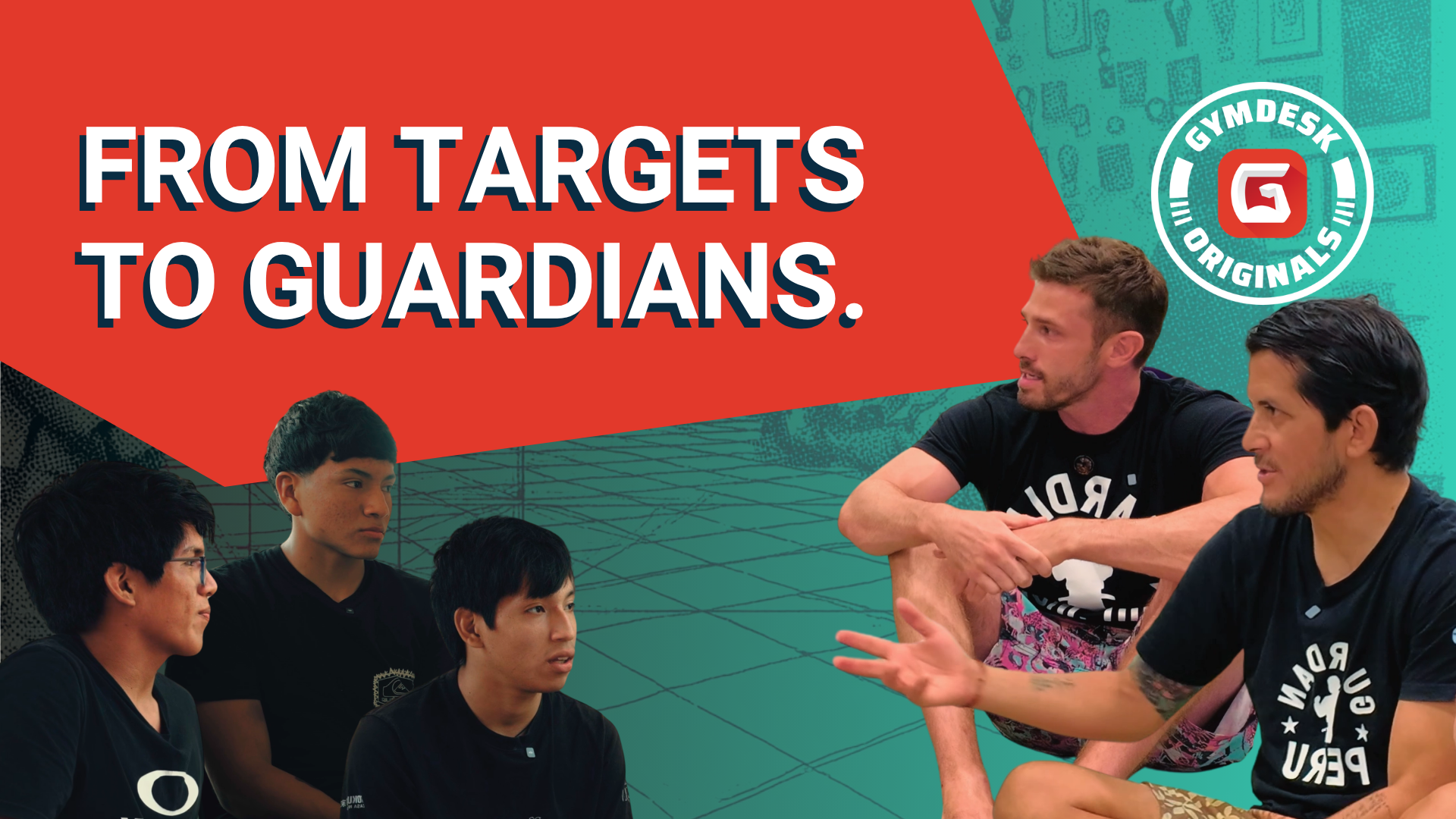
How Renzo Gracie Niagara Built a BJJ Family Where Members Show Up to Help Each Other Move
.png)
Starring

Fernando Brazileiro is a Brazilian jiu-jitsu black belt under the Ryan Gracie Academy lineage who began training in Rio de Janeiro in 1995. He received his purple belt from Royler Gracie in São Paulo, trained at Barra Gracie in the 1990s alongside Renzo, Royler, and Daniel Gracie, and spent 2000 to 2005 teaching Brazilian jiu-jitsu in Japan during the PRIDE era — among the first ten BJJ instructors to teach in the country. Fernando moved his family from Rio de Janeiro to St. Catharines, Ontario in April 2022 and founded Renzo Gracie Niagara the same year after being invited to launch a BJJ program at a local Muay Thai gym. Before teaching full-time, Fernando spent fifteen years in Brazil's IT industry as a technical architect.
About the Gym
Renzo Gracie Niagara is a BJJ academy at 486 Grantham Avenue in Linwell Plaza, St. Catharines, Ontario, Canada. Founded in September 2022 by Professor Fernando Brazileiro and affiliated with the Renzo Gracie Association. Fernando's lineage runs through Barra Gracie in Rio de Janeiro and the Ryan Gracie Academy—after Ryan Gracie's passing, he affiliated directly with Renzo since the Ryan Gracie Association has no North American presence.
Programs include adult BJJ (gi and no-gi), Little Ninjas (ages 3-5, ~30 students), and a bigger-kids program (~40 students). Saturdays feature a "no-gi family class" where adults and kids share warm-ups before splitting the mat—parents and children training in the same session.
The gym is built around community rather than competition. Fernando tells prospective students he isn't building a fight team and refers competition-focused athletes elsewhere. Despite this, the academy sent 13 athletes to a recent tournament and brought home 12 medals. Off the mats, a member WhatsApp group organizes volunteer move crews, car-battery jump-starts, and the everyday logistics of a tight-knit training community.
📍 Address: 486 Grantham Avenue, Linwell Plaza, St. Catharines, Ontario, Canada
Summary
Professor Fernando Brazileiro launched Renzo Gracie Niagara in September 2022 inside a local Muay Thai gym in St. Catharines, Ontario—after the head coach spotted him wearing a BJJ shirt and asked if he was Brazilian. A black belt under the Ryan Gracie Academy lineage who trained at Barra Gracie in Rio in the 1990s, Fernando moved his family to Canada as an international college student just months earlier. The program outgrew the host space and moved to its current standalone location at Linwell Plaza.
The episode follows Fernando through adult and kids classes—including Little Ninjas (ages 3-5), where break falls are framed as winter ice safety before anyone calls it jiu-jitsu. He shows Alex the culture he deliberately built: a WhatsApp group that mobilizes 15-20 members to help each other move houses, a Saturday "no-gi family class" blending adults and kids, and a rhetorical framing that makes the gym feel safe for women before any newcomer walks in.
What They Told Us
Alex Cuevas took the Gymdesk Originals camera to St. Catharines, Ontario, on a freezing winter afternoon—to Renzo Gracie Niagara, the Renzo Gracie Association school that Fernando, a Brazilian black belt, built from a single program inside a local Muay Thai gym. What he kept coming back to wasn't a competition record. It was culture—the gym as a place people come even when they aren't training.
Community over a fight team
Two weeks before filming, the gym sent 13 athletes to a competition and brought home 12 medals. Fernando mentions it almost in passing, because winning was never the point. Ask what the gym is for, and he draws a hard line against the fight-team model.
"I have no plan to build a professional MMA fighter here. Okay? If you want to be a professional MMA fighter, maybe you can find, you go for the blue basement. There, they have a professional team there. But here, I want to build a community … I want to build a family, a BJJ family. That's the goal."
—Fernando, Owner, Renzo Gracie Niagara
A Rio living room, rebuilt in Canada
He grew up on a version of the BJJ gym most North American owners never see: not a facility you visit and leave, but a room you drift into after a bad day whether or not you train. That was the feeling he rebuilt in Canada.
"the BJJ gym is a space that you go, even if you don't want to train, you go to hang out with your friends, to have a conversation. If you are stressed with your boss, your job, something like that, you go there, and even without training, you can relax."
—Fernando, Owner, Renzo Gracie Niagara
Culture you can count
The community isn't a slogan—it shows up as logistics. Members run a WhatsApp group that turns, on short notice, into a moving crew, even in the dead of winter.
"When someone will move, okay, we have a WhatsApp group. So, hey, guys, I'm going to move in two weeks. Can you guys help me? And when that happened, show up 15, 20 guys … The blue belt that we rode, he moved in the peak of the winter, end of January last year. And we had, I guess, 17 or 18 guys helping the move."
—Fernando, Owner, Renzo Gracie Niagara
Newcomers get claimed
In the early days, Fernando had to ask a senior student to look after each beginner. No longer. When a stranger steps onto the mat now, members reach them before he can say a word.
"every time that we have someone new here, I don't need to ask, Hey, Alex, can you help him? Can you help this guy? Is his first, I don't even need to help to ask for help. My students get, take the act. Hey, are you new? I'm going to help you. I don't even need to ask anymore."
—Fernando, Owner, Renzo Gracie Niagara
Double the courage
The gym draws a lot of women, and Fernando is deliberate about keeping the mat safe for them. He names the cost of the first day out loud, so the bigger, stronger beginners grasp what a smaller newcomer faces.
"I always tell them, hey guys, to step on the mats on the first day requires a lot of courage because you have no friends here. You don't know how that's going to happen. You don't know how that's going to work. You don't know what to expect. So that requires a lot of courage, even for big, strong guys. Imagine for girls, for women."
—Fernando, Owner, Renzo Gracie Niagara
The scoreboard he actually keeps
His youth programs run from Little Ninjas, ages three to five, up through roughly 40 big kids—but the stories he's proudest of aren't tournament results. A shy nine-year-old came to him bullied and withdrawn; her mother later confided the child had written a suicide note before jiu-jitsu rebuilt her confidence. A teenage student, cornered by a bully, held him in a rear-naked choke and let him go unhurt. That, for Fernando, is what the mat is for.
"medals, trophy, they're going to get old. But confidence in life is forever."
—Fernando, Owner, Renzo Gracie Niagara
Why he chose the software
Fernando spent his last 15 years in Brazil as a technical architect in the IT industry, so he didn't pick his gym platform on a hunch. He wrote out 20 required features, ranked Gymdesk against its competitors one by one, and only then committed. His front-desk staffer now runs attendance, belts, and payments through it.
"in the end of the day, I choose you guys. I don't regret. I'm very happy about your platform. And help me a lot."
—Fernando, Owner, Renzo Gracie Niagara
Read the full transcript
Lightly edited for readability. Speaker labels are omitted because the source recording is not diarised; quotes attributed elsewhere on this page were verified against context.
We'll be right back. Behind every gym, there's a story, a mission, a spark of passion that started it all. This is Gymdesk Originals. Real owners, real struggles, and the communities they've built from the ground up. And just by luck, it just started to snow. But it was starting to get good weather. Now it's freezing. But I made it. Here I am at Renzo Gracie, Niagara. So let's go. Let's go inside and check them out. Come on. Hi, Professor. Nice to meet you. Fernando. How are you?
Pleasure. Nice to meet you. I'm doing great. Hi, I'm Alex. Carol. Nice to meet you. These are my indoor shoes. Yeah? Yeah, yeah. I'm going to show you the changing room. Yeah. Remember what I'm saying is it? Here you go. That's a good change. Okay, wonderful. Okay. I'm going to show you the changing room. I'm going to show you the changing room. I'm going to show you the changing room. I'm going to show you the changing room. I'm going to show you the changing room. I'm going to show you the changing room.
I'm going to show you the changing room. I'm going to show you the changing room. I'm going to show you the changing room. I'm going to show you the changing room. I'm going to show you the changing room. I'm going to show you the changing room. I'm going to show you the changing room. I'm going to show you the changing room. I'm going to show you the changing room. I'm going to show you the changing room. I'm going to show you the changing room. I'm going to show you the changing room.
OK, Professor, thank you so much. Thank you very much for coming. It was a pleasure. I had a great role today. It was a really good class. I know I've been thinking about coming to visit you for a while. And you had reached out probably like a few months back, right? Yeah, because we did a renovation here during the break in December. Yeah. And we added this light. So we made some renovations here and some improvements. And now I think we are ready to have important guests like you.
Well, it's an honor. I mean, beautiful lights, by the way. We'll have to show them as we're talking to this. But it just really lights up the room. I've never seen lights like that before. But it has like an art form to it. But it's also very functional because it's very bright in here. Yes. Yes. Yes. And I like that bright because if some students have like vision issues and they can see better. If you wear some glass, something like that, they can see better. And I like that bright environment.
Yeah. Bring me some calm, something like that, I don't know. I think that's right. And, you know, without my glasses, I can't. I only wear these for like the first 10 or 15 minutes because then it gets all foggy when I start sweating. Okay. But I can still see very clearly, you know. So that's the goal. That's the goal. It is effective. So really cool to be here. I think, you know, as you know, I trained at headquarters in New York a long time ago when I was in the blue basement.
And you guys have your own version of the blue basement. Yeah. The blue mezzanine because the address here is mezzanine. Yeah. So, okay, let's make the blue mezzanine. Yeah. We don't have the blue basement, but we have the blue mezzanine here. Yeah. And, you know, just coming off of the class, and we were just talking about that now, people are hanging around here, they're chit-chatting here. You know, it just felt, even in the class, very friendly. It's still a very serious art, you know, serious class.
People are working hard, but it feels like you've built a very good culture in here. Yeah, that's something that we are very proud because some space, they are too focused on competition, something like that, and I don't blame them, but we aren't. We got some, two weeks ago, we got a lot of good results in the competition here, and we had 13 athletes with 12 medals. Wow. So, for us, it was a good result, but that's not our focus. It was about the culture, the lifestyle.
I'm from Rio de Janeiro, Brazil. And then there, the BJJ gym is a space that you go, even if you don't want to train, you go to hang out with your friends, to have a conversation. If you are stressed with your boss, your job, something like that, you go there, and even without training, you can relax. You can be with your friends. That was my goal when I created this space here. And I think you succeeded because it definitely felt that way today. So, I'm very proud about that.
We have some very good examples here. When someone will move, okay, we have a WhatsApp group. So, hey, guys, I'm going to move in two weeks. Can you guys help me? And when that happened, like, show up 15, 20 guys. No way. To help another one to move, to make the move. Yeah. That happened with one of the guys here. The blue belt that we rode, he moved in the peak of the winter, like, end of January last year. And we had, I guess, 17 or 18 guys helping the move.
When I moved, it was the same. More than 20 guys went there to help me. If your battery car is dead, hey, guys, my car has no battery. Is any of you close to me here? Okay, I'm going to be there in 10 minutes. That's the goal. Yeah. Yeah, you know, I think this is a very unique thing to, at least for my experience, especially as I've gone and visited. And, you know, like, I trained a long time ago. And I was telling you earlier, when I was a kid, there was no jiu-jitsu.
Everything was karate and taekwondo in the U.S., right? So, I was training. We had, in taekwondo, we had a very good, I would say it was a good culture. But I think it's different. It's in jiu-jitsu, when you're strangling somebody, or, like, you could literally arm, or, you know, break somebody's arm or shoulder, and then they tap, it builds that instant trust. Yes, I agree. There's, like, there's an element of, like, respect and, like, care. Care, yeah. Like, I don't want to hurt my partner. I just want us to get better together.
That's it. Yeah. And so, that's really nice. So, you pair that with the good culture that you've built here. Yes. That's pretty cool to experience. And, to be honest, that's the, maybe, our biggest asset here. It's not about, I don't, I have no plan to build a professional MMA fighter here. Okay? If you want to be a professional MMA fighter, maybe you can find, you go for the blue basement. There, they have a professional team there. But here, I want to build a community. Yeah. I want to build a family, a BJJ family.
That's the goal. Yeah. Beautiful. Maybe we can talk about Rio. I mentioned, I had a great fortune in October. I went to the Gracie 100 in Rio. I had an amazing time. A lot of my friends were there. A lot. A lot of my friends were there. Yeah. For me, I got to try acai. Oh, I love acai. It was so good. It tastes like nothing like I've had in the States. It was just so good. I don't know what to say. In Brazil, you can pick a fight talking about acai.
Because nowadays, in the way that people eat acai around the world, is the BJJ way. What do I mean? In the north, in the north of Brazil, they use consuming acai in salt recipes. Oh. But you try that in a sweet recipe. Ah. Probably. And that's the Gracie family way. Oh, wow. They created that culture. Okay. They brought that culture to Rio de Janeiro. And then, every place that you have some BJJ gyms, you can find some acai place. Yeah. I mean, it certainly was everywhere.
I mean, there was like on every street corner, they were selling acai. Yes. Yeah. So, it was really cool. But maybe we can go back to 1995. This is when you started training. Yes. 1995, yeah. In Rio. What, I mean, tell me about what attracted you to jiu-jitsu back then. Okay. I started to fight at seven years old. I started on taekwondo. Oh, okay. And I did taekwondo for five years. Five, yeah, almost five years. And then, I started to do Muay Thai. And I did Muay Thai for four years, almost.
And then, my professor, my Muay Thai professor, he jumped to the federal policy. Oh. He joined the Brazilian federal policy. Then, you have no professor. And back in time, you had a lot of revolt between the genes. So, someone will not accept you as a new student coming from another gene. That was the culture back in the 90s. Yeah. And then, I stopped training for a while, and I used to surf. Okay. And after a surf session, I was hanging out with a friend. And, hey, let's play like a play fight.
Let's fight. Let's fight. Just play. And then, I started to play hand with a hand. And I used to do Muay Thai. I started to make like some low kicks, something like that. Yeah. I don't remember how, but he took me down and applied an army lock, an army bar. And then, I realized, okay, now I need to learn that. Yeah. And then, I started to BJJ. Yeah. That's amazing. Yeah. Yeah. So, you have a certain sense of confidence with Muay Thai, Taekwondo, kicking. And then, yeah.
And BJJ was famous already this time. Yeah. And if I was off to the first UFC, so, you have a lot of BJJ famous and successful fighters fighting already, especially for the against Germany. Yeah. But, I thought, no, you will not work with me. Yeah. Here we are. Here we are. That's it. All right. And so, you also had an opportunity, what, five years later to somewhere, five years or more later, and you headed to Japan. To go to Japan to teach. I had this opportunity to go to Japan to teach there.
And I don't know if that's right or wrong, because back in time, we didn't have internet as we have today. But according with the guys that I met there, I was, had only five guys before me to teach Brazilian Jiu-Jitsu in Japan. So, I was one of the 10 first. Yeah. For, at least. I was a purple belt. I went there during the pride time. So, do you remember pride? Yeah. I do. So, BJJ just exploded there. Yeah. And they are looking for BJJ just, and I had this opportunity.
And I stayed there for five years, between 2000 and 2005, teaching Brazilian Jiu-Jitsu for Japanese guys. That, you know, the thought of that is just, even with the confidence of a purple belt training in Brazil, but you're going to, like, Japan, where, like, Jiu-Jitsu came from. Like, was there an element of that in your mind? Yeah. But look, sometimes I was, like, driving around. And, you know, when you realize, oh, my God, it was part of my, all of my dreams to be here. Because when you grew up doing martial arts, you always dream to go to Japan or somewhere in Asia, because usually these are the place that martial arts had born.
Yeah. So, sometimes I remember I was in Tokyo, Nagoya, driving. Wow, I'm here in Japan. It's not a dream. Yeah. I mean, really living here. And so, I just got very excited about that opportunity. It was not easy, because I fought with a lot of judo guys. The guys got jealous, like I meant, oh, what is this non-Japanese guy color red belt going to teach us? We are black belts. And I had some tough visitors at the place that used to teach, trying to, like, attest me.
Oh, wow. It was hard. Yeah. It was hard, because I need to deal with big guys, strong guys, like, you know, judo guys. They, like, almost play with me when we fight standing. And after, like, 20 minutes, they, like, throw me around. I got a submission, and like this, but I didn't give up. Yeah. Inside of myself, I want. Yeah. But I was in front of my students. I couldn't. Oh, my goodness. Inside of myself, I was calling my mom. Oh, I don't want to be here.
Imagine that guy just throw you around. Oh, yeah. Yeah. And, like, not national champions, but, like, provincial, state champions, black belts, guys bigger than me. Yeah. Going there and throw me around. But then, like, oh, I can see his foot here. Boom. I can see his leg. Boom. And that's it. And then I proved myself. Right. But it was tough. You know, I've said this story quite a few times as well. Like, my journey when, you know, when I was young, black belt, taekwondo, tournaments, I never lost.
You know, I was probably, like, 17 or 18 when Hoist Gracie showed the world UFC. Okay. And then I see, whoa, what is this grappling stuff? I never have seen it, right? Like, everyone else's mind was blown, and they're into jiu-jitsu. There was nothing. It was just judo. So, I went from black belt, taekwondo, never lost, to judo, like you said. And I'm a white belt now, every day around black belts that have been doing it since they're, like, five years old. Bam. Yes. Bam. And to imagine if I was in another country, and my students are there, and I can't stop.
Wow. Because I know how it felt for me. Yes. It was hard. Yeah. Wow. Luckily, I was young. I was a little bit, maybe, too arrogant. And that helped me. Hey, you are not the strongest guy of the world. Yeah. Because BJJ, especially in the past, used to give that us confidence, but sometimes too much confidence. Yeah. But it was not about BJJ. It's about the time. The nines, especially in Brazil, at Rio, was hard. Yeah. Was tough. You know, the other thing that I wonder, so I was so lucky to go to Japan twice.
I say lucky because I love Japan. Tokyo was amazing. I've only been to Tokyo, actually. I'm sure there's another, there's plenty of other places in Japan that are amazing. I just haven't had the chances. I've kind of just been in and out, but communication was okay for me because of English, but even sometimes it was hard. Yeah. But did you know English when you went to Japan? No. So you went there, no Japanese? No, no speaking. No. I used to teach like, mm-hmm, mm-hmm. Oh, no way.
No, okay. And then I started to study Japanese. Yeah. I studied a lot. I used to study every single day. Yeah. Because I think if I, it's like a general talk, okay? If I go to your house, I need to follow your rules. Sure. Okay. So I was there in Japan. How can I survive not speaking Japanese? Right. And then I started to study Japanese. In one year, I was speaking good enough to have a good conversation with a native, something like that. I was starting to reading, to writing.
Oh, nice. You know? Yeah. Counting. Yeah, yeah, yeah. I still can talk in Japanese, not too much anymore, because if you don't practice, you start to forget that. Yes. But I still can survive. So from Rio de Janeiro to Japan. Yes. And now we're in St. Catharines. Now I'm in St. Catharines. Yeah. So tell me, how did this happen? So I, after my time in Japan, I went back to Brazil. Okay. And then I got marriage, I got kids and I always try, oh, I need to go for a better place, something like that.
I think when you live abroad, you feel that taste, you always want to have the taste again. You know, it's the same after being on the match, doing Jiu-Jitsu, oh, I want to go again. I want to go again. I want to go again. Something like that. After you try something good or better than something that you have, you want that. And then I try to move from Brazil for a different place. And then during 2020, my wife, oh, let's go for Canada. And we start to figure out how to come here.
And then we decide to come. So 2022, April, we arrived here. I come to make like a college as an international student, even have my master's degree, everything in Brazil, but I need to make some steps back to be here. And then I joined that international college. Then the things start to happen because the college schedule was so busy. Some days I started to study like 9:00 AM and I used to go until 4:00 PM and I could not work. But I brought my kid, my youngest kid, my youngest son in a Muay Thai gym.
And then after like three, four times, looking at me with like a BJJ T-shirt, the master there, the head coach there, "Hey, are you from Brazil?" "Yes." "Do you do BJJ?" "Yes, I do." "What belt are you?" "I'm a black belt, second degree." "Do you want to start a program here for me?" I was not expecting that. Yeah. I was not planning that. And then I started the program for him there. And the class just grow, keep growing until we need to move here. Because here is bigger than there.
The space is bigger than there. And we started the program there in September of '22. And now we are here. So now I'm working only with BJJ. This is my full-time job now. I don't regret because I love that. Yeah. So you thought you were going to do something else in university studying. And then BJJ called you back. Yes. And now here we are. Yes, that's it. So you said, how many children do you have? Children here we have, because we have many different classes. For example, the big kids, we have 40 students.
Okay. And we have also the Little Ninja programs. Okay. This program starts between three years old to five years old. We have maybe almost 30 students from the Little Ninja in different classes. Okay. Because we split the class because they demand more. Yes. Yeah, the, you know, my son, I tell this story sometimes too. My youngest son went, I mean, my oldest son, he's eight now. When I started, he was four years old. And I was, in my mind, I was used to the old Taekwondo.
Because I used to teach Taekwondo when I was young, right? And I was very militant. And I expected him to be like, okay, put your arm here. And he was kind of like, I was so, I was so mad. I couldn't, I couldn't do it. So I stopped teaching him. So I did it maybe for like a month or two. And I stopped till he was like a little older, older than almost six. And I brought his friends in. I'm like, okay, I'm just gonna make it fun this time.
And that changed everything. So I had to change my mindset to meet them where they were and have fun with it. And now with my youngest, I try to make it more fun. So he's almost four. And, you know, I've noticed that the schools that, you know, like I'm assuming the little ninjas, I didn't get a chance to see it, but it's more around fun with jujitsu attached. Yeah. Is that kind of the way you do it? Yeah. The main goal is not about BJJ. Yeah.
Of course I teach BJJ movements for them, but like we pretend to not do BJJ. Right. It's like a behind, you know, like, let's make something fun. Let's make the break falls, the sprawl, because especially in Canada, we are in a very cold country. And if we have a lot of snow, a lot of ice, you can get a fall and you can hurt your head. So I, especially with this kind of kids, I teach them how to do break fall and keep the chin down.
Yeah. So if they fall, they will not hit the back of the head. So we like to pretend to do some games, but with the BJJ movements behind of that. Yes. And something interesting because I used to say more, more noise they make less. I do. I stop. Sometimes I stop to talk. I just cross my arm, make a bad face and look at them without any word, like, and then you start to see like, Hey, interesting. And the parents, how can you do that? I don't know.
That was the way that I've been raised for my parents. I remember my mom, my dad, they used to just look at us. If you do something wrong. If you, when we are doing some mistake, my dad just look at us. And you could feel like the laser. I don't know. Yeah. Without any words, we knew that we could be in trouble. Yeah. So we stop right away here. I try to do the same. And it works. Yeah. And more they make noise, lower I talk.
Hey kids, do I need to raise my voice? No, no. And then I start to build this respectful culture, even with the small ones. I like that. I think I'm going to try that because I don't always do that with my kids when they start getting a little wild. I'm going to try that. Yeah. Yeah. We'll see if it works. Yeah. I just need to make like a very bad face. It's like a very bad boy face. You know? Yeah, yeah, yeah. So tell me about the relationship with Renzo Gracie.
How did you get connected there? Okay. So I used to train in the old, not Gracie Barra. It was Barra Gracie in the nineties. And Renzo used to train there. So I met Renzo High on there. And when I got my purple belt, my professor was leading High on Gracie Academy in Sao Paulo, was one of the leaders there. So I got my purple belt in Sao Paulo, not at the Rio de Janeiro, because my professor was living there. And I went there and he gave the black, the purple belt to me with High on Gracie.
And when I moved to Japan, I was by myself. I have no professor, no master. Of course, I met a guy there, a master Edson, but he was not my professor. During that time, he helped me. He mentored me, but he was not my professor. I don't know. And then I started to get close to Renzo High on Daniel. And because we had like a history before that. And I remember when I got my brown belt, Daniel was there. Hansel was there. High on was there.
And when I moved back to Brazil, I realized, okay, I need to go under this guy again, just to keep the Vegas, to keep the connection. I went back to BJJ because I stopped it for seven years, BJJ. Okay. Before, went back to Brazil. I stopped it and maybe six months, seven months. And then I moved to Brazil, moved back to Brazil to get my university degree. I got married. I moved from Rio de Janeiro to Sao Paulo. I got kids. So everything happened at the same time.
I got a post degree just right away. So for seven years, I didn't train. And when I went back, okay, I need to go back to the same lineage. And then I went back to Ryan Gracie Academy. And I got my black belt under Ryan Gracie Academy with the professor, Peter Jr. He's my professor, Peter Jr. And never stopped again. And then we decided to move it here. And it makes sense to have, like, because here in North America, you have the Renzel Association. You don't have the Ryan Gracie Association.
Yep. And after Ryan passed away, Renzel became like the master of Ryan Association. So he was my master already. Yeah. And then, okay, let's make some association with him. I will not feel myself comfortable to make any different association. Nothing wrong with different association. But, you know, we like, at least in Brazil, we like to keep the lineage. You don't change. We call flag. You don't change your flag. You know? It's something like about honor. It's hard to explain because it's about our culture. But if you go, if you start, you don't change.
Usually, you don't change your gym, your legacy, your lineage. So I just kept that and opened this space here. And also, we have some plans to, Renzel, come here, make your other seminar. Okay. Has he been here yet or not yet? Not yet. Okay. But we are planning that already. All right. We are planning that already. Yeah. Yeah. A lot of things happen backstage. Sometimes the things just work. Sometimes it doesn't work. But I'm working in a lot of things in the backstage of the gym.
Yeah, it's great. I mean, the last time I saw him was in Rio. Okay. During the Gracie Hunter, right? Yeah, yeah, yeah. Yeah. So it's fun. He's a very nice guy. I don't remember one person that doesn't like him. Yeah, he's a lot of fun. It's great stories, too. He's a very nice guy. Ralph, Daniel. And that's, for me, in BJJ, you can be friends. You can be friends of your idols. Because you have your idols and someday you realize you are sharing the match with your idols.
Yeah. You cannot do that in basketball, baseball. You cannot share the space with your idols, you know, in different sports. But in BJJ, you can. Yeah. This is, for me, this is, like, that's what I feel when I'm, you know, I get to go around and, you know, visit people in their space that they're creating. And I get on the mat. It's just amazing. Like, yeah, it's such a, for me, it's such a cool experience. But, you know, in Jiu Jitsu, too, like, you have that with, you know, people who participate, go to a seminar, they get on the mat with people they've looked at in matches.
And, you know, it's pretty cool. Yeah. Yeah. So maybe going just back to the youth program that you have here. I always like to ask this question, you know, since you've been doing Jiu Jitsu, maybe just, I guess you could focus on any time since you've been doing it for so long. But, any cool stories of, like, change you've seen in kids? So, you know, maybe they came in shy or, you know, anything like that? I have very good stories. One of my students, a girl, her mom brought her, and she was very shy, very introspective, looked like scared.
And then she started to do BJJ, she became very good, one of the best. And then one day, her mom came to me, Fernando, can I talk in private with you? Yes. And she was looking like crying. And then she told me, I would like to say thank you for you, because I never told you that before. But my girl tried, she did write a letter of suicide, because she was being bullied at school. So she was being bullied at school. And then she wrote this suicide letter.
A girl was nine years old. Oh my goodness. And then after starting BJJ, her life changed. And it's not because of me, no, it's because of BJJ. It's the amount of confidence that BJJ gave her. And she was scared to go to the grocery, to go, okay, like I go to the grocery to take something. No, no, I will not go. I'm scared to go. Can you go with me? I cannot go by myself. After that, her life changed 108%. So it was amazing. And if you go for every BJJ gym, you're going to see very similar histories.
Yeah. Because I know how much confidence BJJ can give to you. And like that, I have a lot of different stories. But that about the suicide letter, for me, is the strongest one. Oh, yeah. Yeah. I can't imagine a girl with nine years old writing something like that, just because of the bullying. Yeah. One of the students here, I will not say the name, of course, but he was being bullied at school. And the guy started to punch his face. He got the arm, he made an arm drag.
And then he got the guy back. And he set up the rear naked choke. He didn't tie it. Just hold the guy. Not the guy, the boy. They were teenagers. And the bully started to cry. And then my students thought, "Hey, professor!" It was inside the school. "Professor, I need help here." And he started to call the professor. And then the professor came, "Look, he was bullying me. And I just defended myself. Can you take care of him now? Because I don't want to make him pass out." And then the bully got like three days of suspension.
My students just need to talk and explain. He was not trying to hurt the students, the bully. And then he got free without any problem. Wow. That's a great story. That for me means more than any medal, any trophy. Yes. It's about life. Yeah, yeah. How much worth a life? Yeah. And then that's like such a, I mean, just to think about if you put yourself in the shoes of either one of those people. Yes. How they felt before, scared of the world. And then they can come out of their shell and feel confident that they, you know, they have a space here, you know, that they can claim their space and feel good about it.
And this and the environment that we have here make me so proud because medals, trophy, they're going to get old. But confidence in life is forever. And so you obviously have been growing. Beautiful class today. A lot of people in the class. Thank you. Thank you. Um, well, you know, and we talked a little bit about this earlier. And in your mind, do you design in your head, not design, but do you have like envisioned when, uh, you know, white belt walks in or not even a white belt, but someone who's interested, what do you want them to feel when they walk in here?
Welcome. Yeah. I want to make him feel at home. Like when you know, when you go for a place that you, everybody welcome very well. For example, everybody, every time that we have someone new here, I don't need to ask, Hey, Alex, can you help him? Can you help this guy? Is his first, I don't even need to help to ask for help. My students get, take the act. Hey, are you new? I'm going to help you. I don't even need to ask anymore. That became something natural here.
Because it's about the culture to everybody help each other. You know, that's make me so proud because I don't need to ask anymore. Yeah. When you have some beginning getting the maths. Today we had one guy starting. Yeah. So yeah. And I did not ask, but two, three guys step to help him. I think some gyms miss that. Like if, if you don't control that. I mean, the hobbyist is what, you know, can keep a business going. For sure. It's the, not the competitors. It's only like what?
5%, 2%. Yeah. Right. It's everyone else who, who can support it. The guys that are computer, you know, workers, you know, out there, you know, doing a lot of different jobs other than being, you know, professional fighters and everyone starts somewhere. But if they don't feel welcome or they feel intimidated, that's hard. It's hard to build a school. We have a lot of girls, a lot of women here. Yeah. I saw that too. And I need to make this place comfortable because I use, I always tell them, hey guys, to step on the mats on the first day requires a lot of courage because you have no friends here.
You don't know how that's going to happen. You don't know how that's going to work. You don't know what to expect. So that requires a lot of courage, even for big, strong guys. Imagine for girls, for women. Yeah. Yeah. Double of courage. So I always try to bring that to the light. Guys, do you think it's hard for you to be here as a white belt? Imagine for the women. And then this one, you know, I mentioned this a few times as well. Like the, my mind was open to this because I didn't think about that before, but you know, I'm like 190, 195 right now.
You know, this, how much I, whoa, those are pounds. I don't know how to convert it to a battery. Okay. Yeah. So that's, that's pretty heavy. And, you know, your average woman could be anywhere from 110 pounds, 130 pounds. You know, even 150 pounds. I'm still almost 50 pounds heavier. It's like me against a 250 pound guy. Forget it. This guy, you know, that, and I'm like, oh, every man is that much heavier for a woman. And, you know, you don't think about that. It's too funny.
Yeah. Yeah. Yeah. And my opinion, if you watch women fighting, they are hard. Yeah. Because women fight with the hurt. Yeah. Men, they fight in a more strategic way, but the woman's fight. Come on. Yeah. Come on. They have the fire. That's the point. Yeah. And I think they deserve to have a place on the mat. Yeah. You know, it's not a favor that we are doing. Oh, no. It's, they deserve to have a place on the mat and be looking as everyone, of course, but we need to take care about the space to be safe for the woman.
Yeah. That's my point of view. Yeah. And I've rolled with, um, women who I've outweighed by like 80 pounds and they have submitted me and I wasn't being nice. I mean, they just the technique is, I mean, this is a, like, this is what I always find amazing about jujitsu is like someone with technique can beat strength. Right. And I feel like my technique is okay. I'm getting better as we go along, but if someone's really good, it doesn't matter. They could still get you just levers and all that.
So it's a, it's really, it's really amazing to see the art like that for the small person to take on a bigger. Yeah. I used to say, if you are smaller than your opponent, don't fight against your opponent, fight with, because imagine you are stronger than me. If you want to push me, why I will fight against you? Because you are stronger than me. Yeah. I will allow you to push me and I will take advantage about your movement. Mm-hmm. Something like that, you know? Yeah.
Not against, go with. Well, let's talk about how you found us, you know, how... I make a lot of research and some of the points about Gymdesk is about the belt control, the stripes control, and I think it's about the whole package. Mm-hmm. Because you have the payments, you have the membership, you have a very good dashboard. And something I didn't tell yet, my last 15 years in Brazil, I used to work in the IT industry. Oh, no kidding. Yes. Okay. And I used to be like a salesperson, but I worked as a technical architect.
Okay. So I draw some software, some idea. I brought some idea to build some softwares in the past. And when I started looking for a management software, I put myself, oh, I like that. I don't like. I like, I don't like. And then I start to build like a ranking. Okay. Okay. Let's figure out the features that I need. Okay. I need 20 features. Okay. And then, of course, I check some competitors of Gymdesk. And like a check, no check, check, no check, check, no check.
And in the end of the day, I choose you guys. I don't regret. I'm very happy about your platform. And help me a lot. For example, everybody, the girl in the front desk, she check if someone didn't do the check-in. Because we control the attendance. Okay. We control the stripes, the belt, something like that. And if a student didn't do, she does for him. Okay. The payment. So, I'm very happy about that. So, and especially they care about your support team. Every time I have a question, okay, guys, how can I do this and this and that?
And I receive email. Okay. Follow these steps. And I receive email in the way that I used to answer. It's like a IT mentality. Do you know? Okay. Follow this step on the menu. Step one, two, three. And then you can find easily. Something that I used to do when I used to work in the IT industry in Brazil. Yeah. So, you feel like you're getting that same kind of level of support. Yes. Yeah. That's great. So, you named a couple of features that you use quite a bit.
Anything else that you like you use regularly for Gymdesk? Like things that, you know, top two, three things, two or three things. So, for example, the birthday notifications. Yeah. Birthday. Birthday notification. Yes. Yes. And the freedom to work to create new membership plans. For example, sometimes we make like we had, we tried to have yoga class here. So, it was easy to create yoga free class. It was really easy to manage that in the calendar, in the schedule. So, it's easy to build everything so friendly at the point.
You don't need to be an IT specialist to create something new. Yeah. It's everything so friendly to work. Happy to hear that. And we're grateful for your business. So, thank you so much for that. Thank you. So, what's next with, you know, what are your plans here? Of course, to grow this space, to grow the team, and in the future, to have brown belts, new black belts, open aging around here, the area, and to build a bigger team. We are in St. Catars, maybe have one Hansel Grace Association, like a brother in Niagara Falls, maybe in Fort Arden, maybe in Greece, something like that.
And on a Saturday, everybody comes to training here to make this like a Niagara Region HQ. Okay. Why not? Yeah. Why not? The sky is the limit. Yes. Yeah, and I'm not too far from here, so maybe I'll come by one of these weekends. You're more than welcome. Yeah, every Saturday, we have a no-gi class. Okay. We call no-gi family class, because we have the kids' class running in the same time of the adult class. That's a great idea. So, we make the warm-up together, so a lot of families here, they train.
Yeah. So, during this Saturday class, they train, they make the warm-up together. Sometimes, they make some drills together. And when we start to teach some new positions or the roles, we split the mat. But they enjoy part of the class together as a family. Oh, this is amazing. I have done that one time with my son, when I was training with him. My buddy is also from Brazil. His name is Jose Balbino. He's just on the other side. Okay. And we were doing that, and my son would be in the class with me, and they would split.
That was the best time. Yeah. Best time. Because then, I could see him, and I'm watching, I'm doing my own thing, but he's there. We're doing it together. I think the kids feel confident, because they see their parents on the mat, too. Yeah. And we have something to talk about, because we can review the move together. You create a different bond. Yeah. Additional bond. Right. That's the point. Yeah. And I think, for me, I'm thinking about, well, when my son's 17 or 18, and most boys at that age are probably not going to be having much in common with their dads, we'll still have this.
Yeah, it's a very strong bond. Yeah. So, my kids don't want to come here, because for them, it's the same as if they have the mom teaching at school. But they know how to fight very well, because at home, we have very tough trainings there, very tough. It's like, it's not only BJJ. Sometimes it's like MMA trainings. Yeah. With gloves and sometimes some blood. But they know how to stand up for themselves very well. Yeah. Very well. Despite not training officially, if I bring them here, so they're going to make the role work.
Yeah. How many? Two boys? Two boys. Two boys. Yeah. Uh, 16 and 14. Okay. And you think they'll come here one day? The door is open for them. If they want, I'm going to be happy. If they don't want, I will respect too, because as a different person, I like to respect them. But I believe not only BJJ, but self-defense is like learning how to swim. You need to learn to survive. Yeah. You don't need to be the Michael Phelps, but you need to know how to swim at least to get out of the pool.
Yes. They don't need to be UFC fighters, but they need to defend themselves at least to get out of any bullying situation or violence situation. Same thing that I wanted for my sons. You don't need to be a professional, but you need to know how to handle that. Great. Well, anything else that you would want people to know? Maybe who don't know your back story or don't know the gym very well? Any other story you could think of that would be nice for them? So it's hard because I have so many stories, so many stories.
So one of the history, it was back in Japan. And one of my students, I didn't know him yet, and he pulled me over. He was a police officer. He pulled me over. In Japan? In Japan. Okay. In Japan. And then, "Oh, what do you do for work?" And I told him, I am a BJJ professor. And we had a conversation like one hour and a half, only talking about BJJ and pride. One hour and a half. On the side of the road? On the side of the road.
No way. Talking about BJJ. And in the week after, he became one of my students. Oh my goodness. And I still have contact with him. Yeah. He's not a police officer anymore. Yeah. But I still have him on my Facebook friends, something like that. Yeah. And sometimes we talk, but it was something unexpected. Yeah. Because he saw the gi on my trunk. "Oh, what do you do for work?" "Oh, BJJ." "Oh." And then, he realized I was not lying. Yeah. And imagine, have a conversation one hour and a half.
Yeah. In a side road. After he pulled over me. Yeah. Did he give you a ticket? No. No, I was doing nothing wrong. Yeah, yeah. Because it was, imagine, a black guy in Japan. It's not, especially in the past, it was not usual to see. So, they pulled me over because I remember, the light of my car, it was not in the right way. I didn't shoot on in the right way. Okay. And then, they pulled me over, but became friends. Yeah. And became students. Oh, wow.
So, did you already have a little bit of Japanese at this point? Yes. Yeah. Okay. So it was easier for you to talk. Do you want to go to the Hebrew? Hmm. No, no. I asked you if you speak Japanese. Nope. Well, I can count, and I know a couple of the, you know, throws. So, you count for either chi or yon? Well, ich, ni, son, che. Okay, chi is something old. People there don't use anymore. Oh, okay. Because means death. Oh, is it? Yeah. So, okay.
Now, nowadays, they count yon. They replace the chi for yon. It's like an ich, ni, son, yon. Yeah. Ah, wow. I have to change that up. Yeah. Yeah, I learned that way back in, you know, when I was in judo. So. Yeah. And here, I make my students learn a little bit of Brazilian Portuguese. Okay. Because I always tell them, hey guys, if you go for a judo gym, you're gonna learn Japanese. If you go for a karate gym, you're gonna learn Japanese. You're gonna count Japanese.
Here, you guys are gonna count Portuguese. Okay. But then, we had Brazilians here from all the countries around, and they joke with my Rio de Janeiro accent. Because my accent is very strong. Yeah. And my S and my R, they are very strong. So, they joke, oh, they are counting like Cariocas. Cariocas is people from Rio de Janeiro. Okay. Oh, they are not counting as a Brazilian. They are counting as a Cariocas. Because they repeat my accent. But I can't realize that until I listen to them.
Yeah, yeah. Because you're just counting, it sounds normal to you. Normal to me, yeah. That's the point. And then, when I listen to them, oh, they are counting like a Cariocas guys. That's funny. Yeah, well, I was gonna ask you something. Oh yeah, when you saw me rolling, did you notice a little judo in there? Of course. Yeah. It's easy to pick that. Yeah. Yeah. You know, like the thing for me is that I remember, I was thinking about this weekend. I remember the very first thing I learned was Kese Katame.
And now, as I've gotten older and I don't know, stronger, my base is better. That's like my default move. And then I learned it. But I, you know, like maybe even just a year and a half ago, I would just stay there. I had nothing else to do. I'm like, I don't know what to do now. I just have. Now you know the step faster, right? Now I know how to attack and that change. I'm like, oh, now I know what I, you know, and I can transition to other moves and all that.
But, you know, I don't, a lot of guys do Kese to me when I do Jiu Jitsu. But, you know. Because that's, that's common from guys, with guys from Judo, not from Jiu Jitsu. Yeah, yeah, I've noticed that. But yeah, no, great, great class. I really appreciate everything that you did. I appreciate you coming. Yeah. And roll with us. Yeah. And know the place. This is our timeline. This means our timeline, talking about the origins, the roof there, Japan. Then coming to Brazil, coming to Rio de Janeiro.
And then here we are. This is Niagara Falls Tower. So in the falls here, if, if we realize we have a mix between Japan, Brazil, and Canada here. So that, one of the students make that for the opening. And I love that. I love that. Because it's something unique that expresses our history. Awesome. Cool. And that, is that the, that's the CN Tower? Yes. So not the CN Tower. It's the tower of the casino in Niagara Falls. Oh, okay. I see. All right. Yeah. I remember when I first moved here, we came to Canada.
When I was going through the border thing. They're like, what are you coming here for? Oh, we're going to go see the Space Needle because I'm from the West Coast in California. And in Seattle, they have the Space Needle. He's like, the what? I'm like, oh, no, I mean, the CN Tower because I totally forgot about the name of it. Funny story. So.