The Renzo Gracie Growth Blueprint: From 300 Pre-Opening Signups to 300+ Global Academies

Picture this. Mike Jaramillo and Athan Siamas standing on the corner of 86th and Lexington in Manhattan.
Cold. Pointing up at empty windows. No gym sign. No visible indication that anything's coming.
Just two guys with iPads showing strangers 3D renderings of a facility that doesn't exist yet, asking for credit cards to join a gym that hasn't opened.
That's startup hustle.
Now picture Mark Cerrone. Thirty years in.
Managing locations in Connecticut and Florida simultaneously. Working with five UFC champions including Georges St-Pierre, Frankie Edgar, and Chris Weidman. Part of a global network of over 300 Renzo Gracie academies. Pioneering the first jiu-jitsu program in a US high school.
That's legacy building.
The gap between these two moments—street corner hustle and multi-location mastery—is what proper systems enable.
The same operational foundation supports both scrappy startup execution and sophisticated infrastructure.
Mike and Athan signed 350 people before opening day and hit 300+ members in nine months. Mark manages two states simultaneously while supporting network expansion across six continents.
Different stages. Same systems.
Two Gyms. Same Blueprint.
| Renzo Gracie Upper East Side | Renzo Gracie Milford |
|---|---|
| 9 months old (Opened July 2024) | 30 years in the making |
| 350 pre-opening signups | Over 300 academies worldwide |
| 300+ members in 9 months | 2 locations (CT + FL) |
| Mike & Athan | Mark Cerrone |
| Challenge: Convert street corner hustle into paying members | Challenge: Manage multi-state operations without drowning in chaos |
| Solution: Systems that capture leads and automate billing from day one | Solution: Centralized dashboards and network-wide infrastructure |
Here's what that looks like in practice.
PART 1: THE LEGACY STORY
From one basement to 300+ academies: The Renzo Gracie evolution
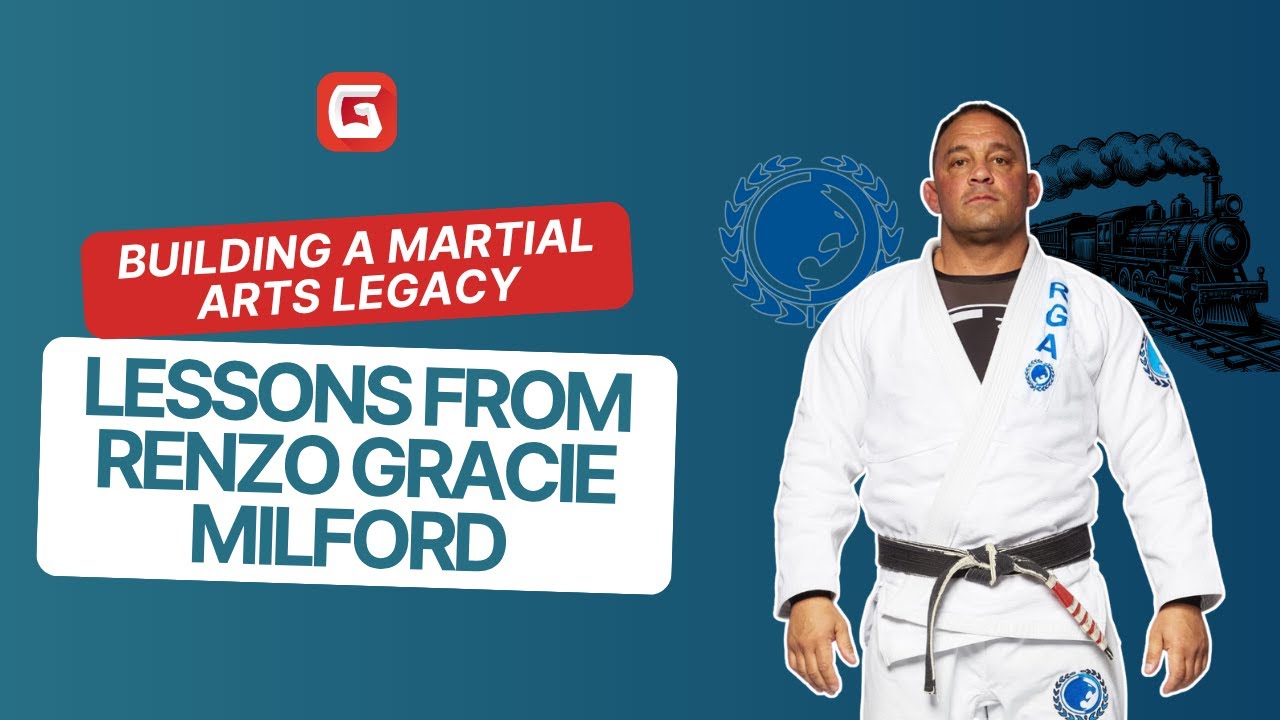
Mark Cerrone was 16 years old when he saw UFC 1 in 1994.
"When I saw what happened in UFC one, I said that I wanted to learn that. I wanted to become a master and I wanted to also spread that," Mark remembers.
Problem was, there was nowhere to learn. Royce Gracie's school was in California. On the East Coast, nothing existed except magazine articles.
"Inside Kung Fu had Gracie as a columnist, a paid columnist. We'd write one little article per month, one page only, and it would be some message about jiu-jitsu and maybe a little technique," Mark explains.
"That was the only knowledge that the entire East Coast had for jiu-jitsu at the time from the Gracies."
Then came the announcement. Renzo Gracie coming to New York City. Late 1995.
Mark's parents thought he was completely nuts. A teenager wanting to do strangulations in some random place in Manhattan when they wanted him to go to college.
He went anyway.
What he found was Renzo's first academy on 27th Street. That basement became the foundation for everything that followed.
The culture back then was different. Revolutionary, Mark calls it.
"It was a revolutionary mindset. We were a group of revolutionaries almost because the world was completely against MMA at the time.
It was illegal in 48 states. They demonized it. So it was almost us against the world. That's how we felt. Everyone inside of that room."

People would walk into the gym in jeans to challenge them. MMA was illegal. The mainstream culture thought they were barbaric. The wrestling community hated them.
"We would go out, even if we were going to dinner, right, in the city after training, we would all go with t-shirts on representing the academy and sometimes people would just challenge us in the restaurants," Mark recalls.
That us-against-the-world mentality forged something special.
A culture that would eventually spread to over 300 academies on every continent. Japan. Vietnam. France. Spain. Russia. Throughout the United States.
From one basement to a global network in 30 years.
The question is how. How do you grow from underground revolution to mainstream martial art without losing the soul that made it special?
Passion and dedication are necessary. Systems that support the mission instead of creating bottlenecks make them sufficient.
PART 2: THE STARTUP STORY
The pre-opening blueprint: 350 signups before opening day

Mike Jaramillo has opened multiple businesses. Four health clubs. Three restaurants. Forty years in construction and electrical contracting.
He knows how to build things.
When he and Athan decided to open Renzo Gracie Upper East Side, they didn't wait for the buildout to finish before starting the work.
"Get your ass on the street right away. The moment you sign that lease, that pre-sale starts," Mike says.
They signed the lease and immediately hit the streets. 86th and Lexington. All winter. No gym sign up yet. Just iPads with mockups and the conviction that this would work.
They had a young salesperson helping them in the beginning. First day, he said there was nothing to sell.
Mike told him a story.
When he opened his first gym in Williamsburg, Brooklyn, he had no money. He and his partner had to make it work. They signed up over 800 people on a pre-sale.
You couldn't even walk into the gym because the building wasn't finished yet—just a small trailer and a bunch of little signs.
"You can't do it. I said, 'No, no. You're going to go up on that corner. You're going to pass out these flyers and we're going to open the doors with 300 members,'" Mike recalls telling that salesperson.
They executed.
Street fairs. Corner stands. Flyer distribution. Anything to get people through the door. Visual selling with 3D renderings on iPads when the building wasn't finished. Conviction-based sales when people said it couldn't be done.
The result: 350+ pre-opening signups before July 2024 opening day.
KEY TAKEAWAY:
Don't wait for perfect conditions. Mike and Athan started marketing the moment they signed the lease—no gym sign, no finished buildout, just iPads with mockups and conviction.
Then the real challenge started.
Converting those signups into paying members. Tracking who paid deposits. Who scheduled intro classes. Who ghosted. All while still standing on street corners during the day.
That's where lead management becomes critical.
You can generate 350 signups through pure hustle. But if half of them fall through the cracks because you're tracking everything on spreadsheets and phone notes, you've wasted all that effort.
Mike and Athan needed a centralized system for lead management. One place to see every signup, every touchpoint, every conversion step. When you're managing 350 leads while building out a facility and planning class schedules, you can't afford manual tracking chaos.
They opened with 300+ members. Nine months later, they're still growing toward their 450-500 capacity target.
That rapid growth creates new challenges. When you go from zero to 300 members in nine months, operational chaos becomes your biggest enemy. Billing alone becomes a nightmare if you're processing everything manually.
Imagine processing 300 membership payments at midnight because that's the only time you have after teaching all day. Then following up on failed payments. Then handling membership changes and family accounts.
You either automate that process or you burn out.
Systems aren't the enemy of hustle. They're what allow hustle to compound rather than consume you.
The culture challenge: Growing without losing your soul
Here's the fear every gym owner has when they start growing fast.
Growth can destroy the community vibe. Mike and Athan talk constantly about "the vibe."
The Renzo Gracie vibe.
Everybody supportive. Everybody encouraging. Members feel like family. Mike knows that vibe intimately.

He first walked into Renzo's original academy in 1998—the building people called 'the methadone clinic' because of the two floors underneath. That basement on 27th Street became legendary.
The place where Shawn Williams greeted newcomers. Where Matt Serra taught classes. Where John Danaher rolled with students who would become champions.
"The vibe matters so much to us. Everybody is supportive, everybody's encouraging, and it's like that all the time across the board," Mike emphasizes.
But how do you maintain that from zero to 300 members in nine months?
Intentional culture design. Not hoping it happens. Building systems that protect it.
They carefully selected front desk staff. No phone-scrollers. Only people who love jiu-jitsu and care about members.
They structured class formats to separate intro students from advanced. This prevents beginners from getting overwhelmed.
They trained instructors on breaking down technique for new students—no assuming knowledge.
They also built a community beyond the mat. The team has raised over $200,000 for veteran programs through We Defy Foundation. They've placed 90+ military veterans in BJJ programs nationwide.
That kind of mission-driven work doesn't happen when you're drowning in administrative chaos.
Here's the insight most people miss: Culture during rapid growth requires systems.
When you're manually processing billing at midnight, you have no energy left to nurture community.
When you're chasing late payments, you're not coaching. When you're managing spreadsheets instead of teaching, your culture suffers.
Operational infrastructure isn't the enemy of culture. It's the foundation that protects it.
Proven member retention strategies show this clearly:
- Automated billing eliminates awkward payment conversations that damage relationships.
- Attendance tracking flags at-risk members before they quit. Declining attendance patterns become early intervention opportunities.
Systems handle the transactional stuff so you can focus on the relational work that builds community.
Mike can stand on street corners recruiting new members because billing runs automatically.
He can focus on teaching because scheduling isn't a nightmare.
He can build partnerships with veteran organizations because he's not manually tracking 300 membership contracts.
The infrastructure enables the mission. Not the other way around.
PART 3: BACK TO THE LEGACY
The 30-year-long game: Building a legacy
Mark Cerrone took the train from Connecticut to Manhattan for 12 years.
Four to five days per week minimum. Hour and 45 minutes each way. Work all day. Get on the train at 4:00. Hit Manhattan about 6:30. Walk to the 7 o'clock class. Train at the gym. Take the train back.
"Every single day. Train there and back. And I did that for 12 years. 12 years straight, four or five days, bare minimum, four days a week."
That's not a business story. That's a devotion story. But devotion alone doesn't build over 300 academies worldwide.
Mark became John Danaher's first black belt.
When John left for Puerto Rico, Mark took over the advanced program at headquarters. He opened Milford, Connecticut—the first Renzo Gracie affiliate in the state.
He worked with five UFC champions, including Georges St-Pierre, Frankie Edgar, and Chris Weidman, as training partners and teammates at Renzo's academy.
He served as assistant director of the Renzo Gracie Association, helping support network expansion. Now, he manages locations in Connecticut and Florida simultaneously.
And, he's pioneering the first jiu-jitsu program in a US high school.
How do you do all of that without cloning yourself? Mark's answer is direct.
"It would not be possible at all without a complete rockstar team around me. And that's the reality of it. It's impossible without rock stars around you. You need a group of A players around you,"

But even rockstar teams need infrastructure.
When you're managing Connecticut and Florida simultaneously, you can't fly back and forth every time you need to check attendance or billing.
You need real-time visibility into both locations.
You need to know which location needs support without manually calling every day.
That's where modern multi-location gym management tools become essential. Centralized dashboards show attendance, billing, member counts across all locations.
Mark can see Florida performance from Connecticut and vice versa.
That visibility enables strategic decisions about where to focus without drowning in operational minutiae.
The same systems that help Mike convert 350 signups into 300 members help Mark manage multi-location operations.
Lead capture. Automated billing. Attendance tracking. Multi-location visibility.
It's not different infrastructure at different scales. It's the same infrastructure applied at increasing complexity.
The revolutionary mindset: What the '90s taught us
Mark describes the early days as revolutionary. And not in a metaphorical way.
MMA was illegal in 48 states. People walked into gyms to challenge fighters. Going to dinner wearing academy shirts meant getting challenged by strangers. The culture demonized what they were building.
"We started as revolutionary just trying to get in society, this was our end goal, right? It's to get in society completely," Mark reflects.
They mapped out a three-pronged approach almost 30 years ago:
- One: The public. Get jiu-jitsu accepted by mainstream culture.
- Two: Law enforcement and military. Get the strongest of the strong training in it.
- Three: Children and schools. Get the next generation learning it as part of their education.
They've achieved the first two.
UFC went from illegal underground to mainstream sport. Law enforcement and military worldwide use jiu-jitsu for training.
The third prong—schools—has been the hardest.
Until now.
The high school breakthrough: Jiu-jitsu goes mainstream
Mark launched the first jiu-jitsu program in a US high school.
November 2025. Connecticut. This is huge.
Not a club. Not an after-school activity. A full athletic program.
Five-day-a-week practice schedule. Team competitions. Structured curriculum. Integration with school sports programs.
Just like soccer. Just like football. Just like wrestling.
The data supporting this decision comes from 15 years of school programs in Abu Dhabi and the UAE.
"18 percent increase in just math scores alone, the attendance skyrocketed by 15%," Mark shares.
When they announced the program at the school, administrators were shocked at the student response.
Kids cheered like they'd won something. Not polite applause. Genuine excitement.
The strategic vision here extends beyond one high school. Mark mapped this out like wrestling.
Wrestling has been in school sports for over 100 years. It became infrastructure. A standard option for students nationwide.
Jiu-jitsu can follow the same path.
If this Connecticut program succeeds, it will become the proof point for schools nationwide.
And when schools start adding jiu-jitsu programs, they'll need partners. Academies that can provide curriculum, instructor training, and competition frameworks.
Renzo Gracie affiliate locations become natural partners. Local academies that already have the infrastructure, the instructors, the competitive pipelines.
This isn't just about Mark's legacy. It's about positioning an entire network for the next phase of growth.
And it's possible because the operational infrastructure exists to support expansion without chaos—freeing Mark to work ON his business rather than IN it.
PART 4: THE SYSTEMS THAT CONNECT EVERYTHING
The network equation: Enabling over 300 academies worldwide
300+ academies. Every continent. Every country.
How do you maintain brand consistency, quality instruction, and the "Renzo Gracie vibe" across that many locations?
Mark's insight: You can't control everything. You can only enable success.
"We started when there was no such thing as any software at all," Mark explains. They watched the entire evolution of gym management tools.
- First generation: EFC. Just processed charges and sent money. No access to data. "Completely rob everybody blind," Mark says.
- Second generation: Mindbody. You could see your data, but couldn't control operations.
- Third generation: Zen Planner, Wodify. Control over operations. Pass-through credit card processing. Real infrastructure.
- Fourth generation: Gymdesk. "Tied it all together," Mark describes it. Intuitive operations. Scaled pricing for startups. Attendance innovation. Member app with belt colors visible on home screen.
Mark evaluated dozens of platforms over the years. His criteria evolved with experience.
"Just like MMA, where everything leveled out, now it's who's offering the best product."
He chose Gymdesk for Milford based on three factors:
- Intuitive interface requiring minimal training.
- Scaled pricing that doesn't punish startups.
- Attendance tracking innovation that supports branding.
That decision reflects a broader principle about network enablement.
When affiliate locations choose the same platform, the network benefits. Over 30 Renzo Gracie academies worldwide already use Gymdesk—from brand-new startups to established multi-location operators.
Shared infrastructure means lessons learned in Manhattan apply in Connecticut, Florida, and worldwide. Individual locations get proven systems instead of reinventing wheels.
The network gets consistency without sacrificing local autonomy. It's not about control—it's about enablement.
It's not about control. It's about enablement—the same principle behind successful gym scaling and profitability strategies everywhere.
Network success requires individual location hustle—like Mike's street marketing—AND network-wide infrastructure.
Lead management systems that work for a startup in Manhattan and an established location in Connecticut. Automated billing that grows from 50 members to 500. Multi-location dashboards that give visibility across two locations or two hundred.
Mark's role as director isn't dictating to affiliate owners. It's removing barriers to their success.
Providing systems, curriculum frameworks, marketing templates. Infrastructure that lets location owners focus on teaching and community-building instead of reinventing operational wheels.
The boots-on-the-ground fundamentals that never change
Systems don't replace hustle. They amplify it.
Mike still stood on street corners all winter. Mark still trains and teaches after 30 years. The technology doesn't do the work. It handles the repetitive operational tasks so they can focus on high-value work.
Sales. Teaching. Community-building.
Mike's advice for anyone opening a location is pure tactical wisdom.
"Get your ass on the street right away. The moment you sign that lease, that pre-sale starts."
Guerrilla warfare. Street fairs. Corner stands. Flyer distribution. Anything to get people through the door. Visual selling with 3D renderings when the building isn't finished. Conviction-based sales when people say you can't do it.
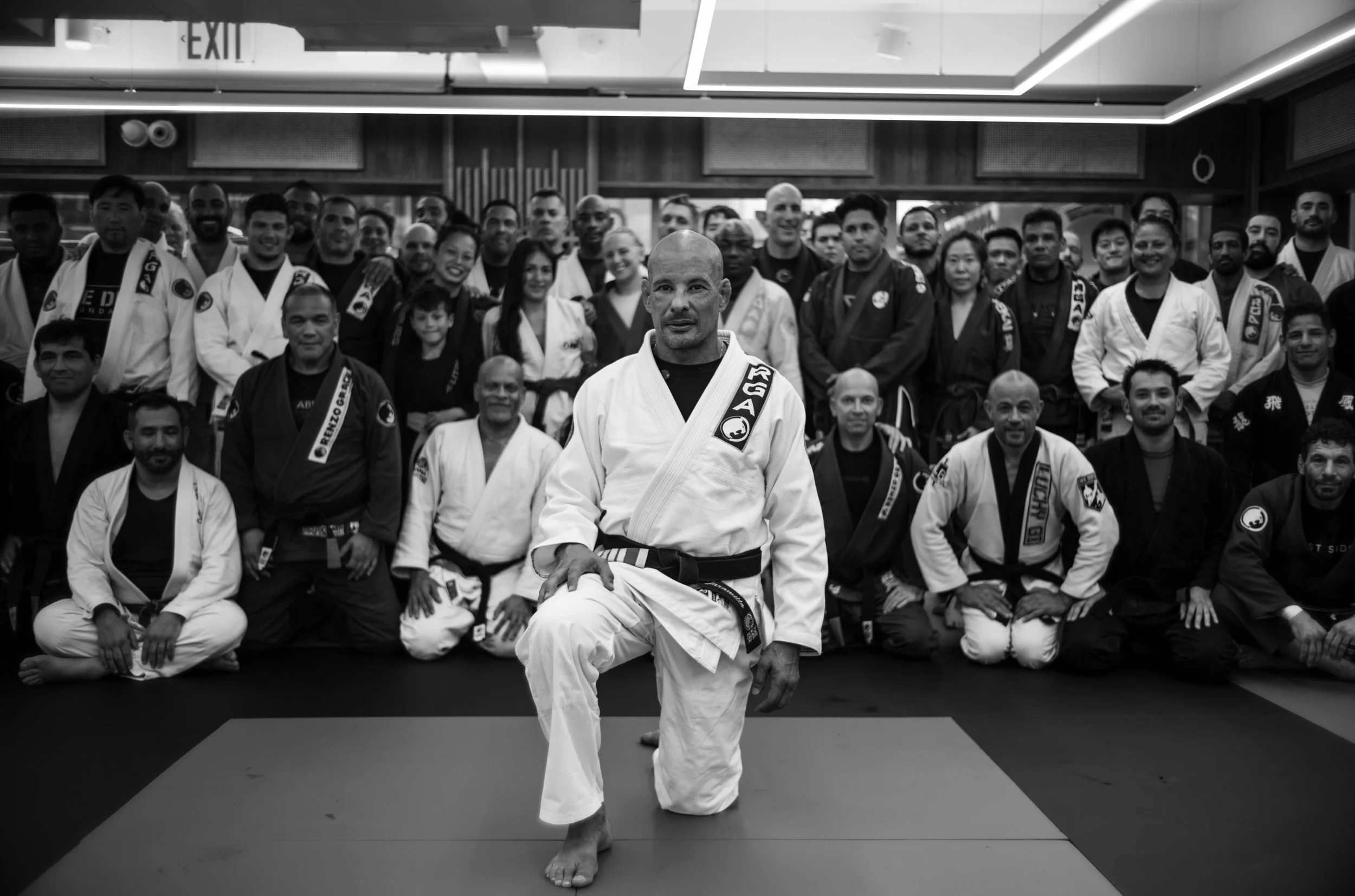
He also talks about priority sequencing. Putting the carriage before the horse, he calls it.
- First priority: Getting people through the door. Sales and marketing.
- Second priority: Closing the deal. Conversion.
- Third priority: Customer service. Cleanliness, responsiveness, member experience.
- Fourth priority: Instruction quality. Hire good teachers, but this comes after the first three.
That priority order shocks some people. Instruction quality fourth?
But Mike has opened multiple businesses. He knows the truth. You can have the best instructors in the world.
If nobody walks through the door, it doesn't matter. If you can't close the deal, it doesn't matter.
If the facilities are dirty and the experience is poor, they'll leave no matter how good the instruction is.
⚡ Quick Win: Mike's priority order for new gyms: (1) Get people through the door, (2) Close the deal, (3) Customer service and cleanliness, (4) Instruction quality.
This isn't about diminishing teaching—it's about realistic sequencing. The best instruction means nothing if you can't get members in the door first.
These pre-opening marketing strategies form the foundation of gym launch success.
The fundamentals haven't changed since Renzo opened that basement in 1996. You still need to get people in the door. You still need to deliver an excellent experience. You still need to build community that keeps them coming back.
What has changed is the infrastructure available to support those fundamentals as you grow.
The hard lessons: What nearly derailed growth
Mark was planning to open his second location in Greenwich, Connecticut. Then COVID hit.
They shut down for almost two years.
During that time, Mark pivoted. He scouted Florida. Identified Naples and Marco Island as underserved markets. Opened there instead of Connecticut.
That decision required flexibility and systems. You can't manage two states without operational infrastructure. You can't compress the startup timeline without proven playbooks.
Mark brought his entire framework to Florida.
Class structures. Pricing models. Curriculum frameworks. Operational systems. Billing automation. Lead management. Member communications.
He didn't rebuild from scratch. He applied existing systems to a new market—leveraging gym automation to replicate success.
That's how you compress startup timelines. That's how you manage multiple locations without drowning in chaos.
The Florida expansion came with its own challenges. Two managers quit. One quit the day the gym reopened after a two-week hurricane closure. Another quit out of nowhere.
Mark's reflection on this is telling:
"The most important question is just not giving up, man. Most people you really can't depend on. But when you do find that chemistry, that synergy, that's really what synergy is—it creates more power."
Dependable teams plus reliable systems equals resilience during chaos.
You can survive people quitting if operational infrastructure keeps the gym running. You can weather shutdowns if centralized systems let you pivot to new locations. You can manage unexpected challenges if you don't manually process everything.
The infrastructure creates stability. The stability creates resilience. The resilience enables long-term thinking instead of constant firefighting.
The software evolution: What 30 years taught the network
Mark watched gym management software evolve over three decades. He's used every generation of tools.
Each evolution solved specific problems. Each opened new possibilities.
Early tools just processed payments. Later tools provided visibility. More recent tools enabled control and automation.
The current generation—tools like Gymdesk—integrate everything.
Billing. Scheduling. Attendance. Lead management. Member communication. Multi-location visibility. Mobile apps with branded experiences.
The real innovation comes from reducing friction.
"I think it was just Google, right? I think you guys advertise as being specific to martial arts academy," Athan recalls finding Gymdesk.
"One of the things I liked about Gymdesk was the check-in feature, right? I like the idea of having people check in and then being able to see who's in the class right on the dashboard."
Compare that to the old system: Dig through a box. Find your card. Take it downstairs. Put it on the bench. Staff member comes downstairs. Picks up the card. Goes back upstairs to the desk you just got it from. Manually enters it into the system.
That's not just inefficient. It's demoralizing. When simple tasks require complex processes, you're fighting the tools instead of using them.
The modern Gymdesk features eliminate that friction.
Athan also appreciated the scaled pricing. When you're starting with zero members, a $700/month software bill is devastating. When the pricing scales with membership—$75/month for gyms under 50 members—it grows with you instead of crushing you.
Mark evaluated Gymdesk on different criteria. He's managing multiple locations. Training champions. Overseeing franchise expansion. His question was simple.
"Will this free up my instructors to teach more and admin less?"
That's the affiliate success question.
And at headquarters, the question becomes a network-level one. Will this enable our 312 locations to operate more efficiently? Will it give us visibility to help struggling locations? Will it maintain quality while removing operational friction?
The answer determines whether infrastructure accelerates growth or becomes overhead.
The Common Thread: Systems That Grow With You
Bring the two stories together.
What Mike and Athan did in nine months—zero to 300+ members—and what Mark built in 30 years—regional training to multi-location operations—share one critical factor: Operational systems that support growth instead of creating bottlenecks.
The parallels are striking:
- Lead capture: Mike needed it for 350 pre-opening signups. Mark needed it across two locations simultaneously.
- Automated billing: Mike needed it to avoid drowning when membership exploded. Mark needed it to manage hundreds of students without late-night manual processing.
- Attendance tracking: Mike needed it to spot at-risk members during rapid growth. Mark needed it to maintain engagement quality across locations.
- Multi-location visibility: Mark needed real-time dashboards to manage Connecticut and Florida. Franchise headquarters needs aggregated data across over 300 academies.
These patterns show up consistently across martial arts industry statistics nationwide. The systems that help a startup survive rapid growth are the same systems that enable multi-location operations and network-wide success.
The same infrastructure works at different stages, simply applied at increasing complexity.
Think about what that means practically.
When Mike signs up someone on a street corner, that lead enters the same system Mark uses to track trial members in Florida.
When Mike processes monthly billing for 300 members, he's using the same automation Mark uses across multiple locations.
When Athan checks class attendance on the dashboard, he's using the same tools Mark uses to monitor engagement patterns across states.
Same tools. Different scales. Consistent results.
That's what enables them to maintain quality. Not complex manuals. Not layers of oversight.
Shared infrastructure that makes operations simple enough for a solo owner and powerful enough for multi-location operators.
The Bottom Line: Infrastructure Enables Mission
Here's what 30 years of evolution taught these Renzo Gracie academies: Passion and community are necessary—but they're not sufficient.
You need operational infrastructure that handles the boring stuff, so humans can focus on the meaningful stuff.
Mike and Athan's 350 pre-opening signups came from relentless street marketing. Not software.
But systems captured those leads and converted them into 300+ paying members without spreadsheet chaos.
The hustle generated opportunity. The infrastructure converted it into results.
Culture grows with infrastructure.
The "Renzo Gracie vibe" exists at one basement gym and across over 300 academies worldwide because operational systems handle transactional work.
That frees humans to focus on relationships. On teaching. On community-building. On the mission that started in that basement in 1996.
Multi-location operations require visibility.
Mark manages Connecticut and Florida simultaneously because centralized dashboards show real-time performance.
He doesn't need to fly back and forth weekly. He doesn't need to manually compile reports. He can see what's happening and make strategic decisions.
That's the difference between managing two locations and drowning in two sets of operational chaos.
Effective Brazilian jiu-jitsu marketing follows the same principle: systems amplify hustle. Network success equals affiliate enablement.
Renzo Gracie headquarters grew to over 300 academies by removing barriers for location owners.
Providing proven systems. Curriculum frameworks. Marketing templates.
That lets affiliates focus on teaching and community-building instead of reinventing operational wheels.
The long game requires sustainable infrastructure.
Mark's 30-year journey from train-commuting student to multi-location operator to network leader was possible because systems evolved alongside ambition.
You can't maintain a decades-long mission while manually processing billing at midnight. You can't grow a network while drowning in administrative chaos.
Whether you're standing on a street corner with iPad renderings or managing academies across multiple states, the principle is the same.
Operational infrastructure isn't overhead. It's the foundation that lets passion and community grow without burning you out.
What this means for you
If you're building a martial arts academy—or already managing multiple locations—the Renzo Gracie blueprint offers a clear path.
Combine relentless grassroots execution with operational systems that grow with you.
That's how you go from 350 pre-opening signups to 300+ members in nine months. That's how you manage Connecticut and Florida simultaneously. That's how you build a 312-academy global network without losing the basement-gym soul.
The systems Mike uses to manage Eastside are the same systems Mark uses across multiple locations.
Gymdesk powers Renzo Gracie locations from pre-opening lead capture through multi-location operations.
Scaled pricing starts at $75/month with Gymdesk Payments for gyms under 50 members, and Smoothcomp Connect comes with every plan at no extra cost for finding tournaments and registering students. No long-term contracts. 30-day free trial. No credit card required.
Mark chose Gymdesk for his Renzo Gracie locations. Mike and Athan chose it for Upper East Side. They're not alone—over 30 Renzo Gracie academies worldwide run on Gymdesk, from brand-new startups to established multi-location operators.
If it works for them—from startup hustle to multi-location mastery—it'll work for you.
Watch The Full Stories
Renzo Gracie Upper East Side - Mike Jaramillo & Athan Siamas
See how Mike and Athan signed 350 members before opening day and built one of Manhattan's fastest-growing martial arts academies.
Renzo Gracie Milford - Mark Cerrone
Watch Mark's journey from 16-year-old train commuter to multi-location operator pioneering jiu-jitsu in US high schools.
Gym management software that frees up your time and helps you grow.
Simplified billing, enrollment, student management, and marketing features that help you grow your gym or martial arts school.


FAQ

Sean has spent the last decade creating content that helps businesses—small and not so small—grow smarter to allow operators to do more of what they love. You know, the fun stuff.
From shipping and international logistics to web development and marketing, he's done the work (not just the words) to scale retail and service businesses efficiently.
You can find his work at Sendle, Shogun, The Retail Exec, Gymdesk, and more.