Both Sides: Inside a Peru Jiu-Jitsu Program That Fixes the Bully and the Bullied
Starring
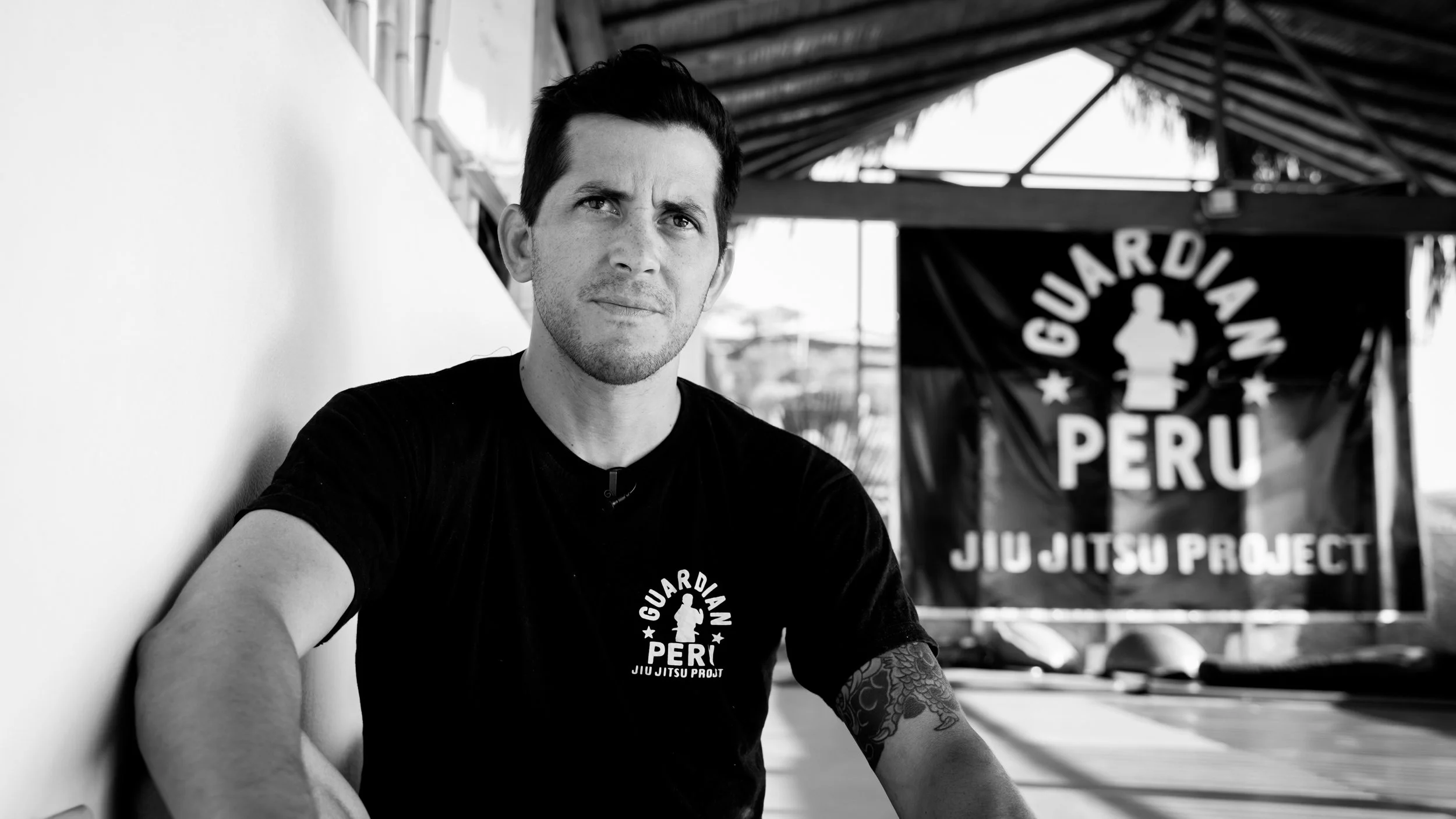
Salvatore Sanguinetti is a second-degree Brazilian jiu-jitsu black belt who founded and leads Guardian's Peru program in Máncora. Born in Lima, he started martial arts at age seven and trained in the United States under the Yamasaki team before returning to Peru. He frames the disruptive, aggressive kid not as a problem to remove but as one asking for limits, and points to former bullies in his program who now mentor younger kids and take them surfing.
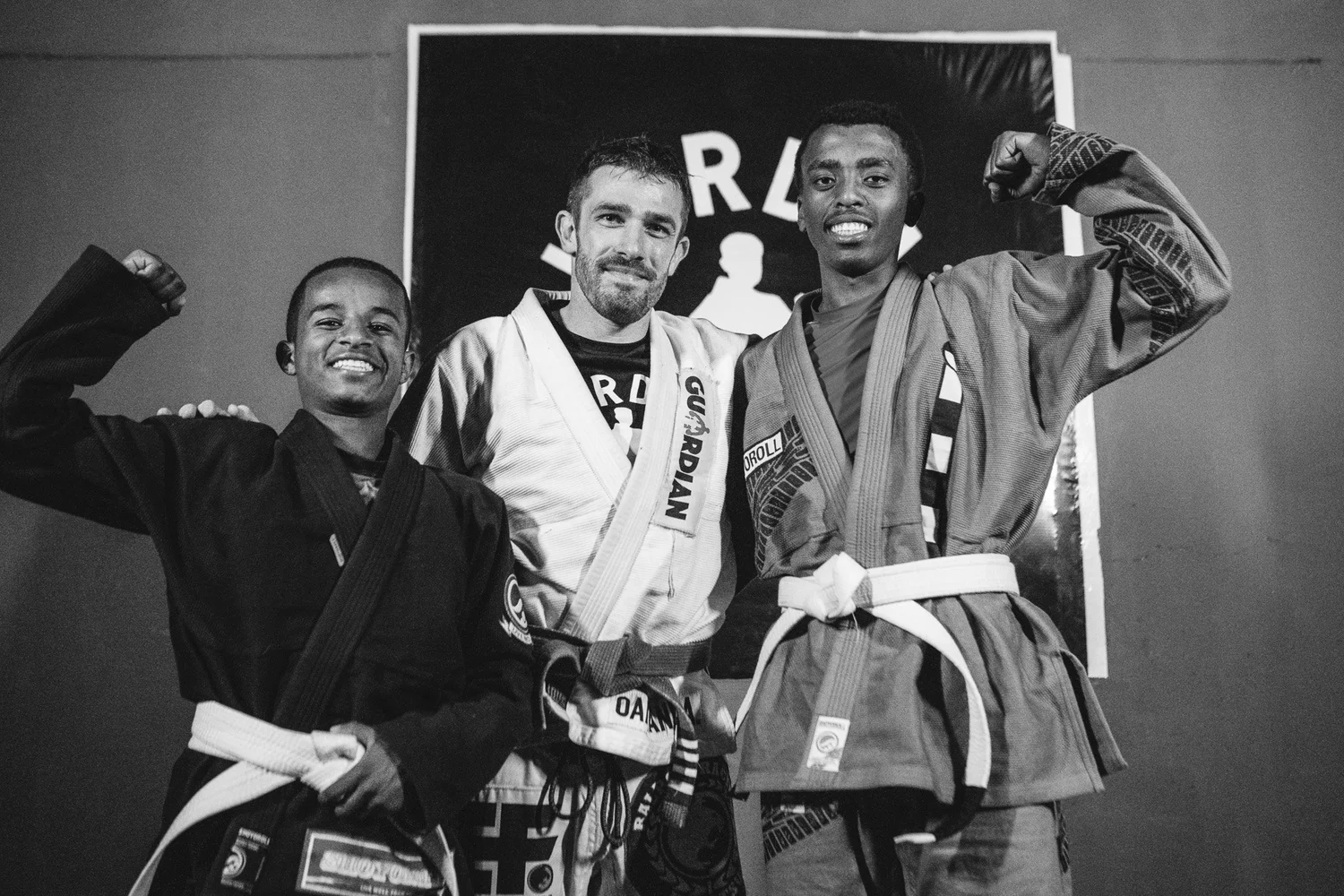
Calder Powers is the executive director of the wider Guardian Project. He came to jiu-jitsu at eighteen after a rough adolescence, and describes the art as a light switch that turned his life around, going from being told he wouldn't graduate to straight A's the next semester in community college. He now visits the Peru program regularly.
About the Gym
Guardian is a philanthropic 501(c)(3) program that brings Brazilian jiu-jitsu into under-resourced communities, with a focus on kids. In Peru it runs out of Máncora in the Piura Region, its northern hub, and Punta Hermosa, a beach town south of Lima. The program funds coaches and equipment and sponsors kids into training. Alex describes it on camera as one of dozens of sites the wider organization runs across Latin America, Africa, and Asia.
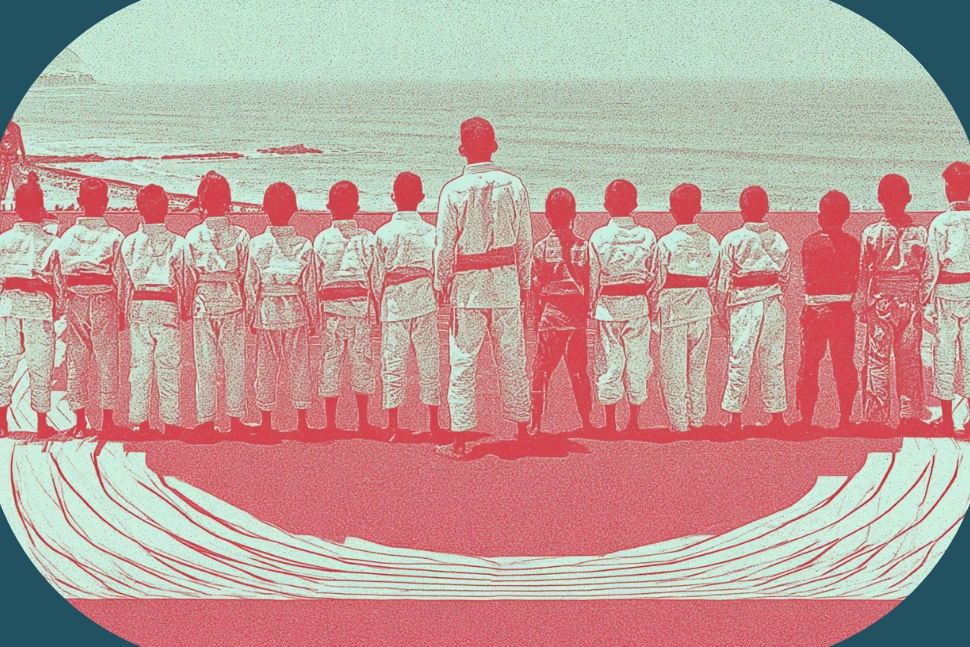
Salvatore Sanguinetti founded and heads the Peru program. In Punta Hermosa, Guardian deliberately mixes kids from the poorer edge of town with local kids from the affluent beach community, two groups who would otherwise never share a room, training on the same mat under instructor Jesús Anato. The through-line the kids name themselves, over and over, is family.
The environment the program works against is what Alex calls an infrastructure problem: troubled or absent homes, a bullying epidemic, and the pull of drugs, alcohol, fast money, and crime. Guardian's answer is structure, belonging, and a coach who notices, delivered on the mat rather than in a lecture.
Máncora (HQ), Piura Region
Av. Piura, Máncora, Piura Region, Peru, in the town center, about half a block off the Panamericana highway, across from Odisea Restobar (Av. Piura 501).
Punta Hermosa, Lima Region
Punta Hermosa District, Lima Region, Peru.
Summary
Alex Cuevas travels to Máncora, a surf town on Peru's north coast, and later to Punta Hermosa near Lima, to film Guardian, a philanthropic program that runs jiu-jitsu for kids in under-resourced communities. He trains himself, so the mat is familiar. The interviews are what catch him off guard.
He asks each kid the same thing: how has jiu-jitsu helped you through something hard? Kid after kid names bullying, some as the ones who were picked on, some as the ones who did the picking. Both are now teammates at Guardian. Salvatore Sanguinetti, who runs the Peru program, reframes the disruptive kid as one "screaming for limits." Alex lands on the phrase for what he's watching: "you're actually fixing both sides."
What They Told Us
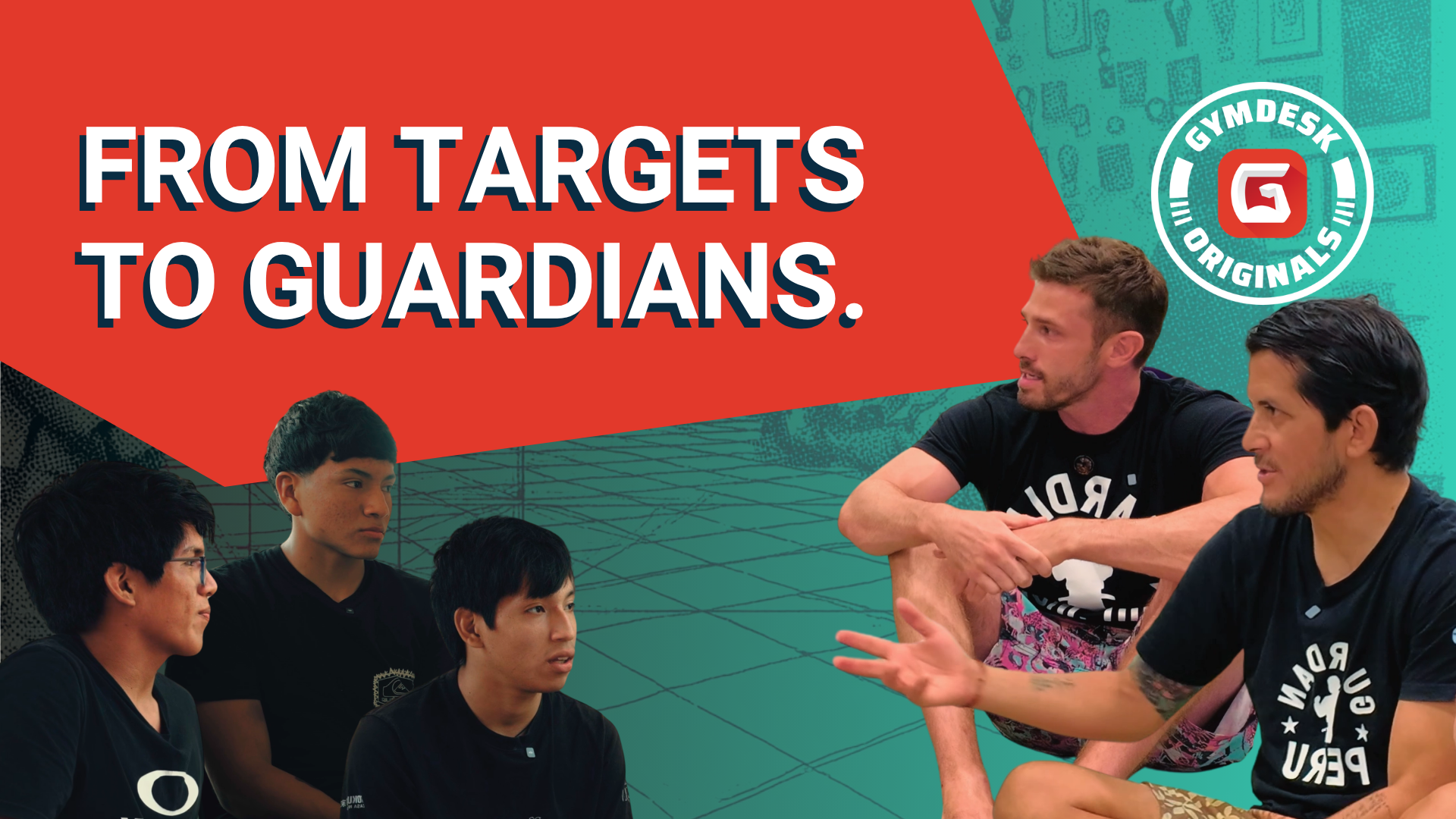
Alex Cuevas took the Gymdesk Originals camera to two Guardian sites in Peru—the program's hub in the surf town of Máncora, and a second location in Punta Hermosa, south of Lima. He interviewed the kids one after another, and then sat down with the coaches. What kept coming back, from the students and the coaches alike, was bullying—and a claim that the program works on both sides of it: the kid who was picked on, and the kid who did the picking.
The problem the kids kept naming
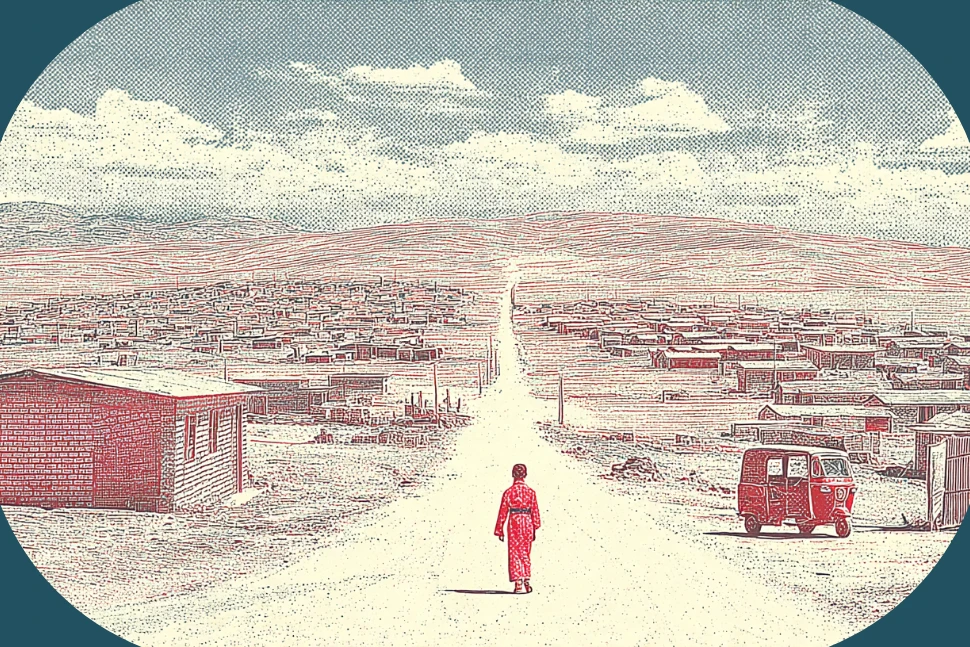
Alex trains jiu-jitsu himself, so the mat was familiar. The interviews were what caught him off guard. He asked every kid the same question—what jiu-jitsu helped them get through—and the answers converged. Some kids named drugs, alcohol, and the pull of fast money in neighborhoods with few other options. Almost all of them named bullying. Standing in Máncora afterward, Alex framed what he'd heard less as a discipline problem than a structural one.
"This is like infrastructure problem. This is hope, despair, despondency, temptation of a way out."
—Alex Cuevas, CEO, Gymdesk
Fixing both sides
The part that surprised him wasn't that bullied kids found their footing on the mat. That story is common. The surprise was hearing former bullies describe the same turnaround—kids who came in as the aggressor and changed, and who now train alongside the kids they might once have targeted. Alex landed on a phrase for it.
"Another one was, I used to be a bully. I came to Guardian and I stopped. And it's like, man, you're actually fixing both sides."
—Alex Cuevas, CEO, Gymdesk
Why the loud kid acts out
Salvatore Sanguinetti leads the Peru program and coaches out of Máncora. Born in Lima, he grew up close to the same conditions many of these kids know, and he reads the aggression around them as something structural rather than a character flaw—anger picked up at home and carried out the door. Ask him about the disruptive kid, the one who won't sit still and picks on everyone, and he reframes the whole picture.
"When they are like that, hyperactive and crazy, they are screaming for limits. They're screaming to you, like, I want limits. Teach me how to have limits."
—Salvatore Sanguinetti, Head Coach, Guardian Peru
What changes
Guardian's answer to that is structure: a schedule, a coach who notices when a kid skips, a training partner who needs him to show up. Over time, Salvatore says, the kids who arrived with the most aggression become the ones bringing newcomers along—into the gym, and out into the water.
"A lot of kids here were bullies before. Now they are helping other kids, taking them to surf … it's crazy, it's beautiful, how it changes."
—Salvatore Sanguinetti, Head Coach, Guardian Peru
A coach who lived it
Calder Powers, the Guardian Project's executive director, knows the arc from the inside. He came to jiu-jitsu after a rough adolescence, and describes the shift plainly—not as a gradual improvement, but as a switch flipping. He now visits the Peru program regularly.
"I was kind of my own worst enemy as a kid. I was drinking, I was smoking, I was failing school. I had low self-confidence and I found jujitsu at 18 years old and it was like a light switch went off."
—Calder Powers, Executive Director, Guardian Project
One place out of many
The kids in Máncora and Punta Hermosa themselves kept returning to one word for what the program gave them: family. In Punta Hermosa, that mixing is deliberate—kids from the poorer edge of town train on the same mat as local kids from the affluent beach community, two groups who would otherwise never share a room. And the Peru sites are only part of the picture. Alex noted on camera that this is one program among dozens the wider organization runs, across Latin America, Africa, and Asia—jiu-jitsu, as a friend of his put it, without borders.
Read the full transcript
Episode Transcript
Guardian Peru, Part 1: "Both Sides." Speaker labels are added from context; the host is Alex Cuevas, Gymdesk's CEO. Student answers are shown as the on-screen English from the episode.
Getting there
Alex Cuevas: 5:45 in the morning, and I'm heading to the airport. I'm looking forward to the experience—never been to Peru before, it's been on my wish list. Let's enjoy the trip together and check out some jiu-jitsu in Latin America and Peru.
Alex Cuevas: The Guardian Program is a really cool philanthropic organization focused on spreading jiu-jitsu into places that really can't afford it. I was describing it to some of the guys at my gym and they said, oh, that's like jiu-jitsu without borders. They go to under-resourced countries and present opportunities for people to learn jiu-jitsu, especially kids that can't afford it, or even coaches that can't afford to get a gym. They'll donate money for them to invest in getting mats and things like that to get going, and they also have sponsorships for kids.
Alex Cuevas: I've had so many conversations with people who practice and teach jiu-jitsu, and it feels like the right thing to do, especially given the market we serve. How about giving back a little? It's the right thing to do to help spread the art. My parents are from Mexico, and I was born in the U.S. I actually trained in Mexico as well—some really high-level jiu-jitsu in these tiny little towns, and people are just focused on it. The thing that excites me most is meeting some of the kids who are part of the program.
Alex Cuevas: I'm at the airport now, heading to catch the first of three flights today. From Miami I go to Lima, spend the night, then wake up around three in the morning to catch a 5 a.m. flight to Talara, and then travel about an hour by car. It's definitely a journey. Every single flight was delayed, but I made it.
Alex Cuevas: I made it to Talara. Now I've got to go find the driver. Hola, señor. Soy Alex. Mucho gusto.
Máncora—with Calder Powers
Calder Powers: This is probably my sixth time here, and I just fell in love with it. The food's way better, people are super friendly, everything's way cheaper. And it was also safer, which was surprising because I come from Oakland. My nervous system was actually able to come down.
Alex Cuevas: Are you from Oakland? I'm from San Jose—we talked about this, right? I forgot about the connection.
Calder Powers: I witnessed a shooting in Oakland, just living there. It felt like at any moment anything could happen. And it's funny, because there are dangerous parts of Lima as well, but there are these districts that are so safe. The real way to have a dangerous problem here is to have some personal situation with someone. It's very rare that you'd get robbed. In the tourist areas, I walk at any time and never had a problem.
Alex Cuevas: How did you get involved with Guardian? How did that even start?
Calder Powers: I had my life changed with jiu-jitsu, and I met Ben. He was a friend at Ralph Gracie Berkeley and he had started Guardian. I was trying to finish school and I basically needed something to do as a volunteer, so I reached out out of the blue—it was a message on Facebook Messenger. It made sense to me that I'd love to be involved in helping some kids that were like me just a few years ago find the same path. Even when I started I was like, do I really want to do this? I'd never volunteered for anything before. But it was the funnest thing. I don't even know if I started teaching—I was cleaning stuff. I'd always loved jiu-jitsu and being part of that network.
Alex Cuevas: So you were training in jiu-jitsu already before Guardian. How many years?
Calder Powers: It's been about 13 years, since I was 18.
Alex Cuevas: Made it back to HQ, and we're going to go inside to check out the kids' class. We have Professor Saul and Oscar teaching. Looks like the kids are about to go live with a Sotogari.
Alex reflects
Alex Cuevas: I had a feeling this was going to be a little personal for me. I grew up in a poor part of town in San Jose, California. You're from Oakland—so we both share that, the Bay Area and some of the poorer areas where there isn't a lot of opportunity. I found opportunities wherever I found them. My father tried to carve a path for me and block out as much of the tough life out there so I could have a chance at a better life. My brothers were also super helpful, and I made it. Some people have that and don't take advantage of it. Some people don't have that at all. What I've seen here is that in areas that don't have as many resources, sometimes the parents can't or won't, because there are homes that are troubled. The environment makes it extremely difficult to be successful.
Alex Cuevas: Today I felt like I was able to double-click on that with some of the kids I interviewed—seeing where they live, firsthand. I compare that to San Jose and say, yeah, I had a tough life, but this is a different level. This is like an infrastructure problem. This is hope, despair, despondency, temptation of a way out. Every single kid I spoke to today talked about how, if it isn't this—what you guys are doing in Guardian—then many of their friends are drinking, doing drugs, trying to make a dollar, getting into trouble, and potentially leading into a life of crime.
Alex Cuevas: Every single one talked about bullying, and how that's almost an epidemic here. And the insight these kids have is that some of the kids are bullies because their parents are—there's a lot of anger and aggravation at home, and they go out to the world thinking that's the model they need to apply. But all the kids talk about Guardian. I thought this was super honest of them: I was bullied, I came to Guardian, I got better jiu-jitsu, life's better. You hear that story. Another one was, I used to be a bully, I came to Guardian and I stopped. And it's like, man, you're actually fixing both sides, bringing balance in this epidemic of bullying and creating paths for these kids.
Alex Cuevas: This is HQ—and I said this earlier walking down the street: this is one place in Peru, out of so far 36 that you guys are doing globally, all over Latin America, Africa, Asia, India. My goodness. I come out of this inspired, motivated, thinking how can we do more. But let's talk about the guys on the front line—founder, executive director.
With Salvatore Sanguinetti
Alex Cuevas: Tell me about your martial arts experience. How'd you start?
Salvatore Sanguinetti: I started when I was a little kid. I had this Korean professor who was actually killed. At seven years old I started Taekwondo, then karate, many arts, and I kept going in martial arts since I was seven.
Alex Cuevas: And you're from Peru?
Salvatore Sanguinetti: I'm from Peru, I was born in Lima. Conditions were the same as you had—infrastructure, all these things similar to here—but the thing is that the bullying, as you said, there's an epidemic in the whole society, at least in Peru, when I was a kid. Then jiu-jitsu came into South America and spread, and we started jiu-jitsu when we were kids. I moved to the States when I was 18 and right away hooked up with jiu-jitsu under the Yamasaki team, with Mario Yamasaki, who was a ref in the UFC.
Alex Cuevas: When you went to the U.S., what level were you at in jiu-jitsu?
Salvatore Sanguinetti: We knew moves, but we never had an intense class here. There it was a different level, different training—everything was new. Jiu-jitsu was the only option I had at the time. My cousins were training already—Kenny Florian, Keith and Kirk—they got me into jiu-jitsu and connected me to the Yamasaki Academy. I went there and I never stopped since that day.
Alex Cuevas: Your cousins—I recognize those names. He was in the UFC. That's your cousin, Kenny. Are they from Peru too?
Salvatore Sanguinetti: They have Peruvian parents, but some were born in Peru and some in the States. When I started, they beat me up pretty good the first few months. That was the Yamasaki team at the time—there were a lot of people there. When people started coming to the States from Brazil, you had the older academies around the East Coast.
Calder's turn
Alex Cuevas: Your journey—Oakland, California, West side.
Calder Powers: When I was younger, I used to be that kid where if there was any disagreement or fighting, I'd feel really nervous, and I hated that feeling. There was a Krav Maga place I used to drive by, and I always heard Krav Maga was the best. I did that for two years—in hindsight, a lot of pantomime—but they had a grappling program. I was kind of my own worst enemy as a kid. I was drinking, I was smoking, I was failing school. I had low self-confidence, and I found jiu-jitsu at 18 years old and it was like a light switch went off. I acclimated out of drinking and some of these other things because of jiu-jitsu. Right when I found it, I became addicted to it.
Calder Powers: It was this unique environment where all these adults were coming together and trying to attack each other—so taboo and weird, but the connections were so real. I found a lot of mentors. I was basically told that I wasn't going to graduate. And then the next semester in a community college, I got all A's. I really think it was that combination of training and having that community, that different direction.
The kids—Máncora
Fabricio: Jiu-jitsu was a really important impact in my life. Before I discovered it I used to experience a kind of bullying at school—it didn't affect me too much, but ever since I found it I was able to change my way of life, the way I see things, the way I think and how I act. And most importantly it gave me a family—not just seeing it as training, but as a united family.
Martín: The Guardian project helped me overcome some problems at home and personal ones. I feel very grateful for having joined through my mom's invitation. My sister used to train here and my mom said, "son, don't you want to come here and train?" I joined, and the first day was incredible even though I didn't socialize much. Little by little I've been making friends, and now most of the people there are my friends. I'm very grateful to the Guardián project for giving me the opportunity to be here.
Daira: I think it's like a therapy. I used to have a lot of problems before, but thanks to jiu-jitsu and martial arts it became a therapy to improve myself and forget about all of that. Everything I had bottled up inside turned into something better. So, what I was feeling I would express on the mat, it stayed on the mat, and I felt completely free and very happy, honestly.
Irwin Albuquerque Mariñas: Before, I used to go out too much—a rebellious kid. Once I got to know the project, I met the wonderful people here, they changed my life, I became more disciplined. One day I was offered drugs—I had friends who were into drugs and they'd tell me "get into it, get into it"—but thanks to the project I was able to separate myself from those friendships and find true ones. I'm very grateful to the Fair Fight Foundation and Craig Jones for making this dream a reality.
Ian Sayio: I began at GX in 2022, then in 2023 I went through a really tough time mentally. That's where I had the support of all the guys and coach Salvatore, and thanks to that I was able to overcome those consequences.
Gianfranco: BJJ has really helped me. I used to be lazy, I didn't like doing things, and it's helped me be more disciplined—the discipline, the motivation, and the obsession for BJJ.
Rafael Hidalgo: It's helped me have better discipline and lift my spirits, because before I didn't leave my house as much. Now I spend more time training than going out.
Student (Máncora): It's helped me a lot, day by day, to grow emotionally and personally. I brought my sister to do jiu-jitsu, and some friends who've enjoyed it—they see me practice now and get motivated too. Here we're like a family; we support each other in everything.
Yaret: It helped me a lot. I used to be very lazy, and thanks to this I get to practice this beautiful sport and bring more people in—my friends too, who I can teach this to.
Student (Máncora): In my day to day, like all human beings, we have problems—at work, in the family. When I come to train jiu-jitsu, all that bad energy goes away, and positive energy comes in. The coach teaches us motivation and discipline. For me, it's a release—negative energy out, positive energy in—and I feel happy training.
Punta Hermosa
Alex Cuevas: We're on our way to Punta Hermosa Guardian, a pretty impressive beach town. There are signs of opulence around here, and maybe 10–15 minutes away there are homes constructed out of plywood and dirt. So not too far from a beautiful beach town are the people who are really struggling. Their gym is right here, and it's a mixture of kids—the Guardian program brings in kids from the other areas, and they get to train and interact with the folks from this side. It's a cool way to bring in different cultures and socioeconomic backgrounds.
Jesús Anato (instructor): Jiu-jitsu has really helped me, because it's shown me that even when things are difficult, with perseverance and training consistently, you can overcome them—not only physically, but mentally too.
Grace: It's helped me improve my daily life. I used to leave things to the last minute, and this has helped me be more disciplined. It also helps me a lot as self-defense, so I can feel safer.
Sebastián Mendoza: Jiu-jitsu has helped me a lot. Since I'm not from here in Peru—I'm from Venezuela—when I arrived here things didn't go so well. When I got into martial arts, that's when it helped me a lot and I was able to overcome many things from my country. I made a lot of friends, because when I got here I didn't know anyone. When I came to Guardian, I met so many friends, and coaches who helped me a lot.
Miguel Ángel: Throughout my life I haven't had great opportunities, until one day teachers came presenting Guardian. I came in with very little hope, a bit pessimistic, because my circumstances were complicated—but I managed to get in, one of the few selected, about 10 out of more than 200, 300 in my school. I felt very lucky, and truly many things have changed in my life. The biggest problem I've overcome is my procrastination. The responsibility of coming to train, being consistent, has carried over into different aspects of my life, whether doing my homework or my responsibilities.
Romina Sampaio: I used to be very insecure about my appearance or what I did, but since I came here I've realized it's not always about appearance, but also about what's inside. Jiu-jitsu has really improved my confidence—I can't say "I can't" anymore when I really can. It doesn't matter if you fail a thousand times; you can achieve whatever you want. Through constant practice I was able to do what I do today.
Both sides
Alex Cuevas: One of the things that stood out for me is: no jiu-jitsu, no framework—challenges with home, a challenging environment, temptations of drugs, alcohol, fast money, crime. The impact is enormous, to provide these kids shelter in a space where they can build good social bonds. And there's the story of the bullied and the bully both coming to Guardian, and now they don't bully each other—they're tight.
Salvatore Sanguinetti: A lot of kids here were bullies before. Now they are helping other kids, taking them to surf—it's crazy, it's beautiful, how it changes. They come from these backgrounds of violence. And sometimes it's not violence, it's just frustration accumulated, and they don't know how to release it. Some of these kids, their parents didn't talk to them, no love, no warmth. So the only way to take it out is by bullying others—I pick on you because I want attention. I need you to put limits on me, so I know you're giving me attention.
Salvatore Sanguinetti: When they are like that, hyperactive and crazy, they are screaming for limits. They're screaming to you, like, I want limits. Teach me how to have limits. What do I do? I don't know, I'm lost. That's when you have to come in.
Cristian Ávila: When my parents separated, I came to train and forgot about everything. Every time I came, I felt very happy with my friends here. When I train, I push myself so hard physically that everything mental just fades away. When someone's trying to choke you, you don't have the chance to be depressed. No—I have to focus on that moment.
Ali Rodríguez: Until recently—like my friend Cristian, my training partner—my parents separated. At home there isn't really anything to distract me, so I started coming here to the project more, and now I feel freer, less stressed. It's helped me a lot with self-regulation. I used to be very explosive, and now I know I could even end up hurting people if I lose control. This helps me personally, because now I'm calmer, more at peace. I don't look for trouble, I'm not violent—above all it's helped me self-regulate, to be a little kinder and more patient.
Closing
Alex Cuevas: I got emotional thinking about a kid making keys all day, going to school, coming over here, training his little brother. His father was real helpful—helping him pour weights, a supportive family. It reminded me of my dad. I was really emotional because my dad helped me when I was a kid and we had no money either. He built me a little dummy that I could do Taekwondo on—a piece of wood with legs on it—because he knew I was passionate about it and we couldn't afford to buy one. It reminded me how cool it is for a father to support a son.
Alex Cuevas: And then I think about you, and you are extending a form of fatherly love—even though they're not your children biologically, they see you as a role model. That's a really beautiful thing. A lot of these guys said, professor is amazing, he gave me a lot of guidance. One of the kids said, I thank God for everything, for the family, and I'm glad I found Guardian. That's deep, man.
Salvatore Sanguinetti: Once you have the core, the roots set—a good, strong root—all the kids that come are going to be contaminated with this goodness. You never have to be alone in the worst moments; you always have to be safe.