Fixing Both Sides: How a Peru Jiu-Jitsu Program Puts Bullies and the Bullied on the Same Team
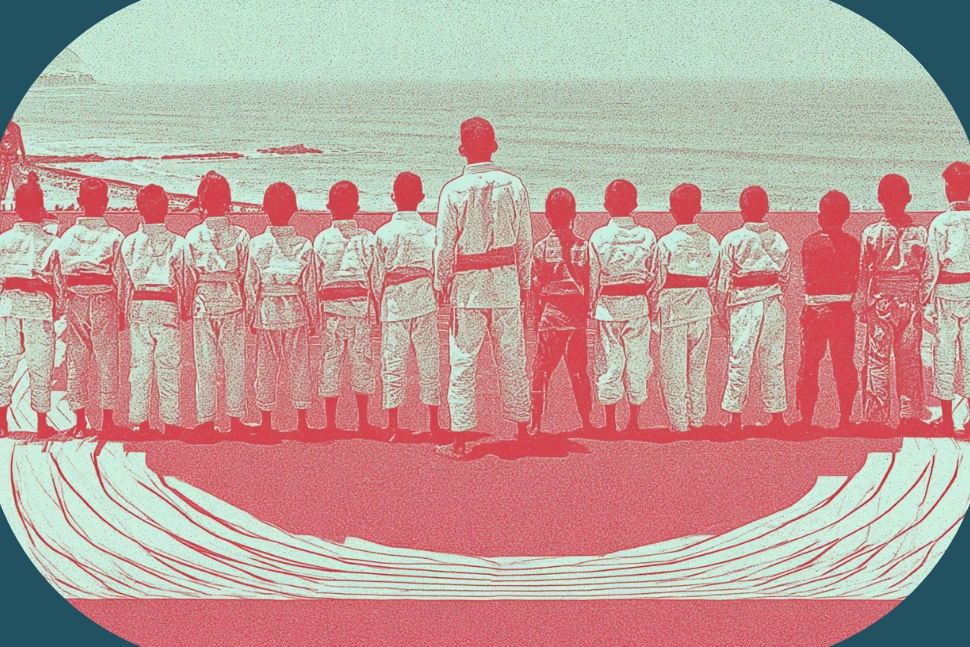
Máncora is a surf town on the north coast of Peru, the kind of place where the highway runs right past the beach and the heat sits on everything. It draws surfers from all over; the kids in this room are locals.
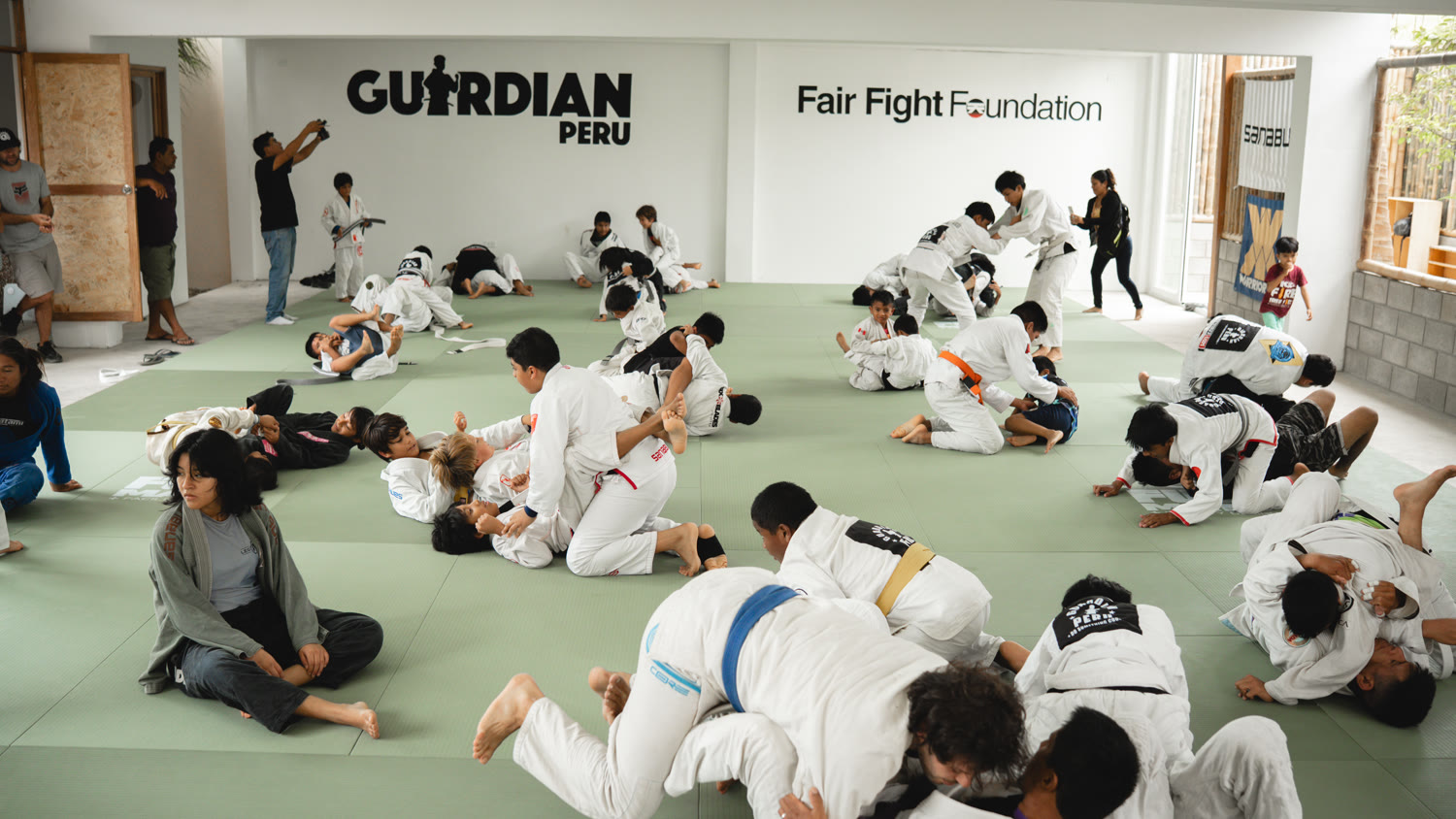
A few blocks off the water there's a mat. On it, most afternoons, a group of kids trains jiu-jitsu.
Alex Cuevas, the CEO of Gymdesk, went to visit. He trains himself, so he knew what he was walking into—the gis, the warm-ups, the smell of a room where people grapple.
He'd flown down to film a program he'd mostly heard about secondhand—no crew, just him and a camera. What he didn't expect was the interviews.
He asked the kids a simple question. How has jiu-jitsu helped you get through something hard? He wasn't fishing for anything in particular, and he barely had to ask twice.
The same word kept coming back, from kid after kid, unprompted.
Bullying.
Does Jiu-Jitsu Help With Bullying? Ask the Kids Who Lived Both Sides of It
It wasn't just the kids who got bullied.
Alex said afterward that what struck him was how honest the kids were about it.
Most conversations about jiu-jitsu for bullied kids stop at the victim. Get the shy kid on the mat, build some confidence, teach him he can defend himself, and the bully loses his target. True, as far as it goes.
But it treats the bully as weather. He's a kid with his own problem.
The Guardian kids don't see it that way. Neither does their coach.
Where the Aggression Actually Comes From
Salvatore Sanguinetti runs the Peru program and coaches out of Máncora. He grew up in Lima, in the same conditions a lot of these kids know, and he talks about the aggression around them as something structural rather than a character flaw.
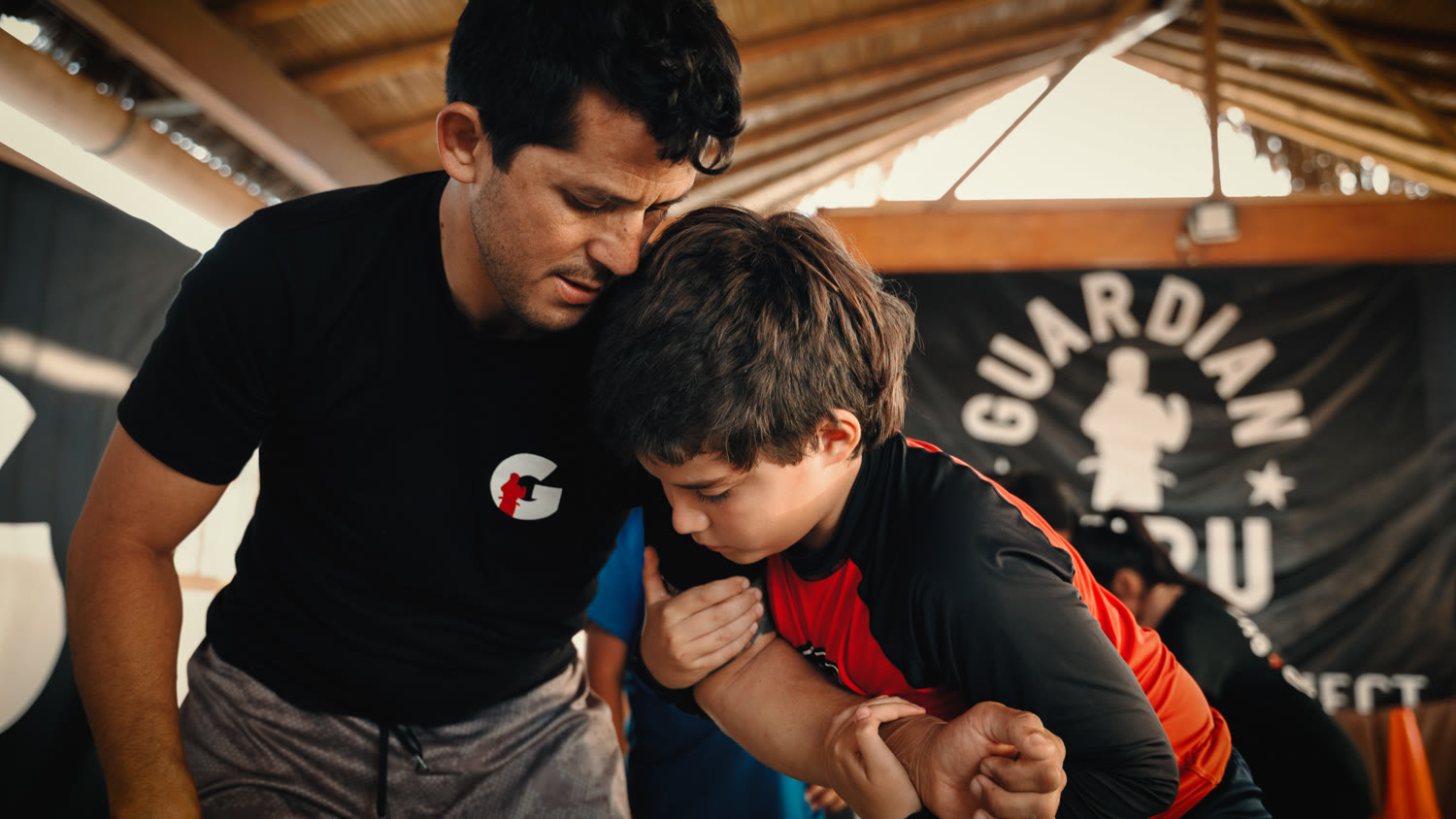
Anger travels. A kid picks it up at home and carries it out the door.
Alex saw the same thing from the outside.
Ask Salvatore about the loud kid, the one who won't sit still and picks on everyone.
The disruptive kid isn't the problem to be removed from the room. He's a kid asking, badly, for the one thing nobody's given him.
So Guardian gives it to him. Structure. A schedule, a coach who notices when you skip, a room where a training partner is counting on you to show up. And something changes.
The kid who used to corner people in the schoolyard is now the one dragging a nervous newcomer into the ocean to teach him to surf.
What the Mat Does That a Lecture Can't
Daira called it therapy, and meant it literally.
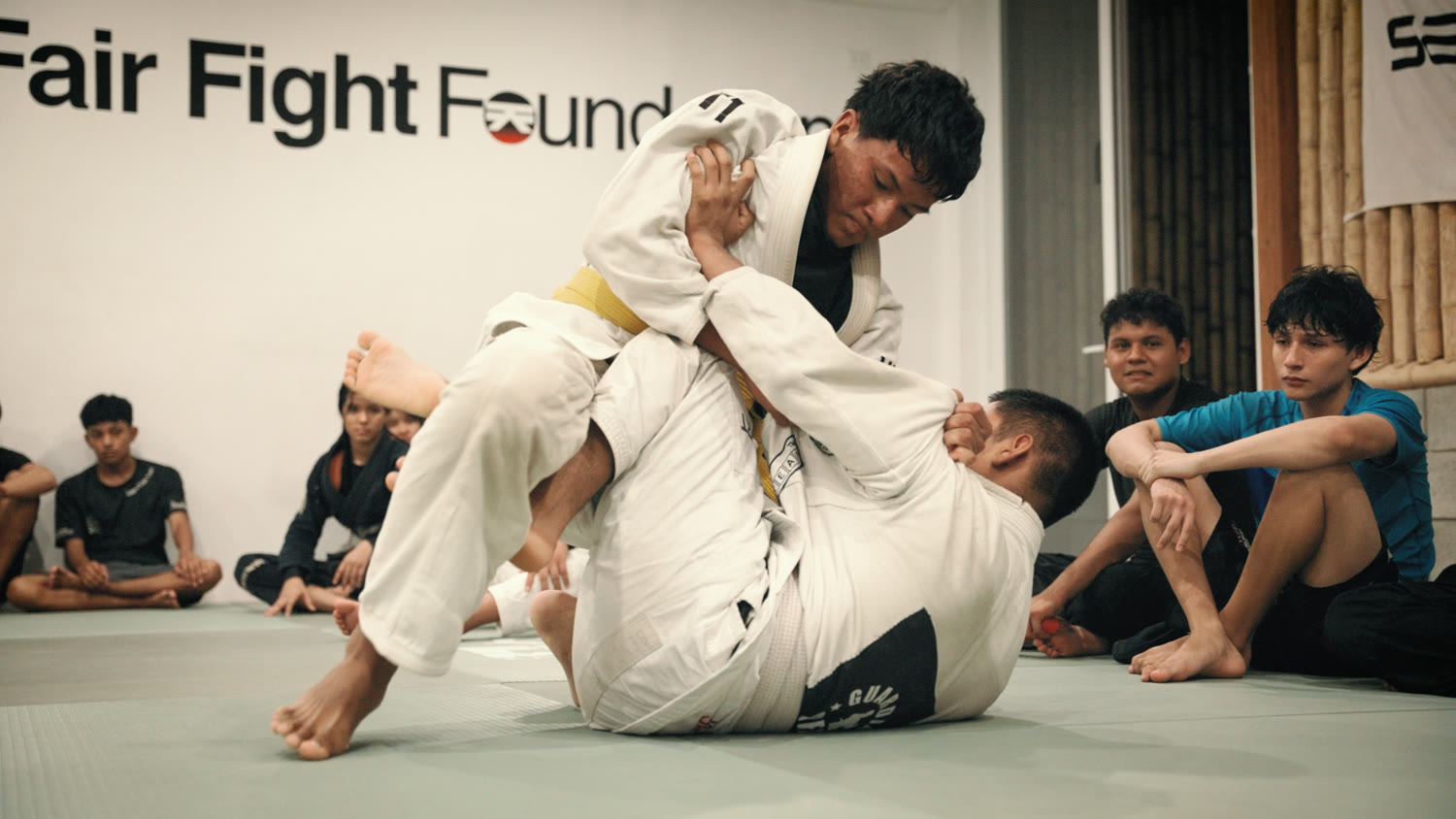
Cristian's parents separated. He started coming to train and, in his words, forgot about everything.
You cannot ruminate and defend a choke at the same time. The body won't let you.
For a kid whose head is a bad neighborhood after school, that stretch on the mat—where the only thing that exists is the person trying to submit you—is a break he can't get anywhere else.
Ali put it in terms of control.
The Thing They All Say
Across every interview, in Máncora and later in Punta Hermosa, one word kept coming up next to confidence, discipline, and self-defense.
Family.
Confidence for the bullied kid. Limits for the bully. A family for both.
Fabricio, who dealt with some bullying at school before he found the program, put it plainly.
Irwin found the same thing when the neighborhood pulled the other way.
Sebastián arrived from Venezuela not knowing anyone, and jiu-jitsu was where the new country stopped feeling like a wall.
Romina came in insecure about how she looked. Different kids, same landing.
Two Towns, One Mat
The trip's second stop, Punta Hermosa, is a wealthier beach town south of Lima. Drive ten or fifteen minutes inland and the paved streets give way to houses of plywood and dirt. It's a short distance to cover and a wide gap to cross.
The program pulls from both. Some kids are driven to practice and some walk, and they train on the same mat, under the same instructor, Jesús Anato.
On the mat, the gap goes quiet. A kid who arrived by car and a kid who walked in from the edge of town tie the same belts and take the same falls from each other. The mixing is deliberate—kids who would otherwise never share a room become teammates.
Miguel Ángel came into the Punta Hermosa program from the far end of that gap. Getting in, he said, felt like winning a lottery.
Why Any of This Matters Past One Town in Peru
Does jiu-jitsu help with bullying? The kids in Peru answered it from both sides. If you run a kids' martial arts program anywhere, the both-sides frame is worth carrying home.
The bully in your Tuesday class might be the kid who needs the mat most. The quiet one who won't spar is early.
Both are asking for the same thing: clear rules, and somebody who notices. Jiu-jitsu, run with real care, gives them that.
Calder Powers, the executive director of the wider Guardian program, knows the arc from the inside. He grew up on the wrong end of it.
And it held.
For Alex, the trip was about more than what a gym owner could borrow from it.
Over a few days across the two towns, he sat through interview after interview and watched training after training. He watched a program serve the exact kids the fast money and the fast trouble are competing for, and he named why Gymdesk had bothered to fly down and film it.
Máncora is one location. The program runs in dozens of places now, across Latin America, Africa, and Asia. The guys at Alex's gym back home, hearing him describe it, gave it the name that stuck.
Jiu-jitsu without borders. Same art, same mat, same two kinds of kid walking in the door—and, more often than you'd think, walking out on the same team.
The same trip became a second episode, and in it Alex put the point even more bluntly.
Every kid he talked to.
It hit close, because Alex had been that kid. Second or third grade, walking home from school, a group of bigger kids throwing tanbark at him across a playground. He told them to stop.
It stuck with him. "And if you have no tools, that's really rough."
That second episode became its own story, about what a free mat is really worth to the families who can't afford one.
Gym management software that frees up your time and helps you grow.
Simplified billing, enrollment, student management, and marketing features that help you grow your gym or martial arts school.


FAQ

Sean has spent the last decade creating content that helps businesses—small and not so small—grow smarter to allow operators to do more of what they love. You know, the fun stuff.
From shipping and international logistics to web development and marketing, he's done the work (not just the words) to scale retail and service businesses efficiently.
You can find his work at Sendle, Shogun, The Retail Exec, Gymdesk, and more.