She Was Told an All-Women Gym Would Never Work. That Was 21 Years Ago.
Starring
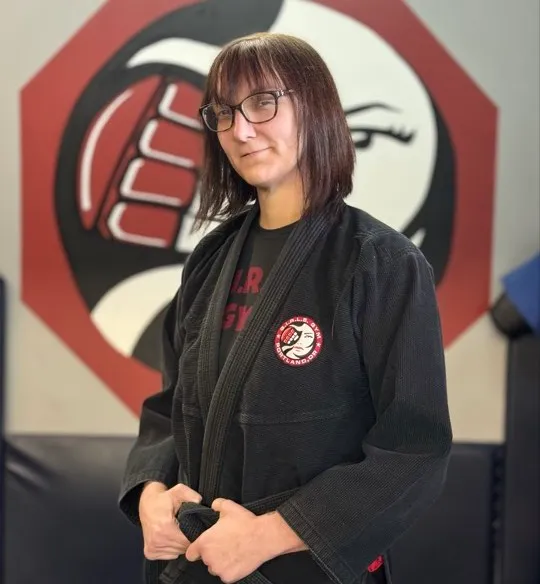
Sarah Oriza started martial arts in 1996 at fifteen, at a Jeet Kune Do school that, like many of that era, moved toward MMA. She competed professionally in MMA and jiu-jitsu—including a 2009 bout against Miesha Tate before Tate reached the UFC—then moved fully into coaching. She is a BJJ black belt who subsidized the gym out of pocket for years.
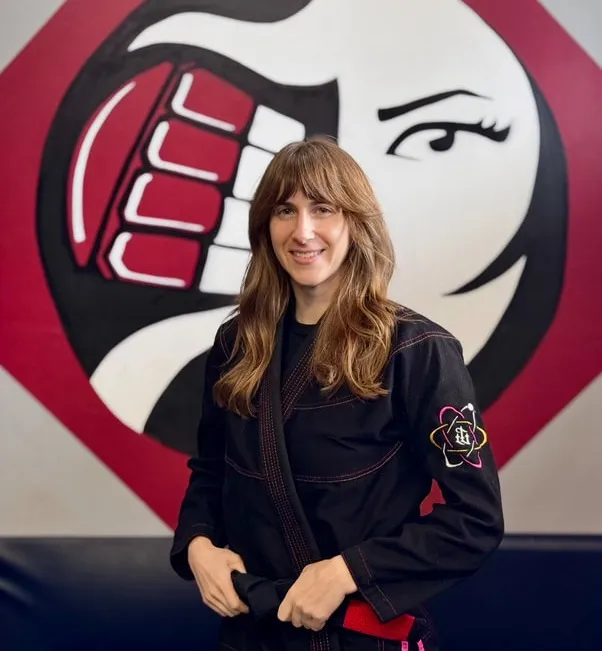
Allie Szymoniak is a black belt who joined G.I.R.L.S. Gym in 2012 and now trains gi and no-gi about equally. She started with three months of kickboxing only, because jiu-jitsu intimidated her, and stayed after Sarah told her she could always go back to kickboxing if it didn't take: "I was pretty intimidated by jiu-jitsu... but then I fell in love with it and haven't stopped since." Her first gi was a wedding gift from Sarah, about nine months in.
About the Gym
G.I.R.L.S. Gym (Grappling In Real Life Situations) is a women-only martial arts school at 7427 SE 52nd Avenue in Portland, Oregon. It offers gi and no-gi Brazilian jiu-jitsu, kickboxing, MMA, wrestling, open mats, and a competition team for all ages. This isn’t a women’s class inside a co-ed academy but a standalone facility where every session, seven days a week, is women only. A couple of coaches are male, including Sarah’s husband and co-founder.
The staff is five black belts and five purple belts—everyone but Sarah and her husband came up through the gym, with tenures often running fourteen to sixteen years. At its current address just over eight years, the gym survived COVID and now runs on Gymdesk, replacing a spreadsheet system that once let a member’s payment fail unnoticed for a year.
📍 Address: 7427 SE 52nd Ave, Portland, OR 97206
📞 Phone: 503-847-1681
Summary
G.I.R.L.S. Gym on SE 52nd Avenue in Portland teaches Brazilian jiu-jitsu, kickboxing, MMA, and wrestling to more than 150 members. It didn’t start that way. Sarah and her husband opened a co-ed gym in 2005 called The Snake Pit, built around a heavy slate of women’s classes; in early 2006 she converted the whole thing to women only, and it has stayed that way since.
This is what a business looks like when the niche is the entire model rather than a side door. Sarah heard “you’re never going to be able to make this work with just women” through the early years, alongside evictions over the noise of Thai kicks and covering payroll from an accounting salary.
What she has now is a coaching bench she grew herself—three of her five black belts and all five purple belts started at the gym with no prior martial arts, one training with her for sixteen years.
What They Told Us
Sarah Oriza on 21 years of being told a women-only gym wouldn't work, growing her own black belts, and the missed payment that finally ended the spreadsheets.
Everyone told her the model was wrong
G.I.R.L.S. Gym opened in 2005 and went women-only within months. The acronym is not decoration—it stands for Grappling In Real Life Situations, and Sarah says the self-defense focus was the whole point at the start, even though the sport side has since grown enormous.
Getting the first members in was ugly. Craigslist, flyers on cars, flyers on doors.
"We had a lot of people tell us, like, oh, you're never going to be able to make this work with just women. You know, like, you have to have men. You're not going to be able to build a big enough place. Women don't want to do what we do, right? … But I really believed in it, and I'm really stubborn, and if people tell me I can't do something, I can pretty much guarantee you it's going to happen."
—Sarah Oriza, head coach and co-founder
Twenty-one years later the gym runs seven days a week with over 150 members, and has been in its current space a little over eight years after moving a few times. Membership has grown every year.
Sarah is careful about the claim that gets made on her behalf, and the hedge is hers:
"I'm not aware of any other full-time female mixed martial arts schools."
—Sarah Oriza
The distinction she draws is between a women's class inside a co-ed gym and a schedule that is women-only all week. A couple of the coaches are men, including her husband, who runs the gym with her.
The black belts were grown, not hired
The gym has five black belts. Two are Sarah and her husband. The other three came up from nothing inside the room.
"We have three black belts that are homegrown. They started here from the very beginning. They didn't have previous martial arts, uh, skills. One of them has been training with me for 16 years and the other one, two are, I think around 14 years, maybe 15, somewhere in there."
—Sarah Oriza
The purple belts who coach there are homegrown too. Sarah's filter for who gets developed is simple—from the beginning, they showed an appetite for helping other people learn.
Training with women changed her own game
Sarah competed professionally in MMA and in jiu-jitsu. She describes an all-women room as a technical advantage rather than a limitation, because nobody can muscle through a bad technique.
Her own attacking game, she says, was the part that had been quietly stunted by only ever rolling with men.
"It really, it changed my game when I started having women to work with. Yeah, it really changed my game, and my ability to be competitive with men."
—Sarah Oriza
A payment failed for a year before anyone noticed
The gym ran on spreadsheets and assorted pieces for years while it grew. That ended with a specific, quantifiable hole.
"I started losing money because, uh, a payment wouldn't go through and, um, I wouldn't know it. Like I had a payment not go through for a year and I didn't catch it."
—Sarah Oriza
She evaluated Mindbody and other options. What decided it was not a feature.
"You guys didn't make me call and talk to anybody to set it up."
—Sarah Oriza
The part nobody warns you about
A gym open seven days a week does not switch off for anniversaries.
"We went away for our like 30 years together and we're like having dinner. And then my husband says, who's at class right now. And then I open up the cameras to look and like, see who's at class right now. … And then I'm happy. It's good, busy classes."
—Sarah Oriza
What G.I.R.L.S. Gym runs on Gymdesk
Membership and payments, member ranks, and emergency contacts—replacing the spreadsheets the gym outgrew.
Read the full transcript
Lightly edited for readability. Speaker labels are omitted because the source recording is not diarised; quotes attributed elsewhere on this page were verified against context.
G.I.R.L.S. Behind every gym, there's a story, a mission, a spark of passion that started it all. This is Gymdesk Originals. Real owners, real struggles, and the communities they've built from the ground up. Hi, this is Sarah with G.I.R.L.S. Gym in Portland, Oregon. We are here kicking butt every single day, and we would love to have you come down and kick butt with us. We are here kicking butt every single day, and we're here kicking butt every single day. We are here kicking butt every single day, and we're here kicking butt every single day, and we're here kicking butt every single day.
We're here kicking butt every single day, and we're here kicking butt every single day, and we're here kicking butt every single day. We're here kicking butt every single day, and we're here kicking butt every single day, and we're here kicking butt every single day. All right, I'm here with Ali. She was my training partner today. Fantastic. I think I almost passed out like five to six times with her, but you've been training for a long time now. How long have you been here at this gym?
Since 2012. 2012. 2012. Let me do the math. 14 years? Something. It'll be 15 in January. Yeah, and I saw you training earlier in the striking, so you're doing striking, and you just- The whole time, yeah. So the whole time you got here, when you started, you've been doing striking, like just being well-rounded? Yeah, so I started with kickboxing first. I was pretty intimidated by jiu-jitsu, so I did like three months of just kickboxing, and then I was like, maybe I'll dip my toes. Sarah was like, if you don't like it, don't quit kickboxing, just go back to kickboxing.
But then I fell in love with jiu-jitsu and like haven't stopped ever since, so. And you've been, your jiu-jitsu game, do you feel like you're, you did great in the no-gi. We and I were rolling in the beginning, but do you also do gi, and what do you like, you know, better? Yeah, I do both. I did start primarily no-gi. The gym had a little more MMA roots, so we didn't have like a dedicated gi class on the schedule for a little bit. One of the first like gifts I was given when I got married was a gi from Sarah.
There you go. And so that's when I started training gi, it was like nine months in. But I have recently like pretty much equalized my training between the two, but like at the beginning for sure it was more no-gi. Okay, fair enough. I'm the opposite. I'm terrible at no-gi and then I have a little bit more tricks on my sleeve with the gi. Yeah. But oh, just one more thing that you, which this doesn't happen every day, but fellow plant-based person, how long you been doing the plant-based thing?
Yeah, it's hard to do the math, so I guess it would be like 38 years long time. No, no. That's not how the math works. I'm 40. Just turned 40. Started when I was 11. So long, long time. Like don't really remember eating me at all. Fascinating. So yeah, same story with me. I was 10 years old and now I'm almost 50, so there's my math. That's easier math. Yeah. Awesome job. Thank you so much. Thank you so much for coming. I appreciate your time. Hey, if you're a woman or a woman in the Portland area and you're interested in combat sports, this is an excellent place to get your bearings.
Lots of very nice people here who are going to get you familiar with things in a comfortable way. We love to work hard and we love to have fun. So we try to make sure each class is an equal mix of both. All right, guys. I just wrapped up my jiu-jitsu class here at G.I.R.L.S. Gym. It was no-gi. It was great. So first, let me just say this. I was watching the class before where they were doing kickboxing and it was really impressive because, I don't know, I guess I'm a little bit of a snob when it comes to like form and your foot position and all that from my Taekwondo days.
And the form was really good. And it was like, oh, that's a really nice kick. Like when you're doing a roundhouse and the back foot, you know, the heel pivots and you're actually facing the opposite or the heels pointing in the direction you're kicking. Like they were all doing that. And there was power there and there was punches. And it's like, wow. You know, I know I'm self-aware. My hand game, my punches aren't good. So when I see those two being done very well, it's really cool.
It's really inspiring to watch that. And also a little bit intimidating because the kicks are powerful. Oh, I don't want to get kicked by that. And then we went into the jiu-jitsu part and very technical, just very impressive. Like the little details and things that I've experienced, people have done to me. I was practicing and like my buddy back home, Jose, if you ever watched this, grabbing the hand and kind of twisting it out so this hand is not worthless. And then lifting the arm up and throwing your leg over for it.
It's like it's all things that are very technical. If you don't do it right, you're not going to get the move. So I really appreciated, you know, the attention to detail there. And we were discussing this on the side. And Sarah mentioned that, you know, because it's all women, there's more emphasis on the technique, which makes a lot of sense. Because if you don't have like strength as a weakness, in other words, like because you're strong, you can like muscle the wrong technique and you have to have the right technique.
So there's an emphasis on that. And there's a lot of openness. You're mentioning since there's only women here, it makes it easier to have those conversations. So very unique for me experience to hear that. And you could tell on the technical application, also really good culture. Everyone was super friendly. Yeah, it's kind of strange for me to be there. I felt self-conscious a little bit, but everyone was super friendly and all that. But you could tell, like as an observer, like if you go to a gathering and, you know, cousins are there and the cousins, the females are on one side, the males on the other.
But you go hang out and listen to the females. There's this camaraderie that they have. They're all relatives. And I felt the same thing here. So clearly there's a big community here. They like each other to do things outside. So it was really cool. Been in business for 20 years. So obviously things are being done right. Gym's growing. So two thumbs up. Had a great time here. What's up, everybody? I'm here in... Am I in Portland? You're in Portland. You're still in Portland. I feel like I've been driving like forever.
It was a lot of traffic. And I started in Vancouver, Vancouver, Washington. I was driving down. It took me a little while to get down here, but I was like, did I pass Portland? No, I'm still in Portland. And I'm here at G.I.R.L.S. Gym. Yep. Right? Yep. Gym. And there's all kinds of cool stuff here. There's wrestling, MMA, jiu-jitsu, striking, kickboxing. Yep. Got it all. Got it. So I'm excited to hear about it. I think you guys are one of the only gyms in the U.S.
that is girls only. Is that right? Yeah. I'm not aware of any other full-time female mixed martial arts schools. Yeah. Just so we're clear, we're not talking about there's a class here for women only. The whole thing. Everything I just said, women only. Women only. Seven days a week. Seven days a week. Now, there are a couple of coaches that are male come in here, right? Your husband's part of the... My husband runs the gym with me and then some of my coaches also will make appearances here.
Well, I mean, I'd love to get into it. I mean, first thing that comes to mind, I always want to ask this question anyway, is how'd you get started? How'd you get started in martial arts? And now you're, you know, you're doing all kinds of stuff. Yeah. Let me hear that. I started in 1996. I was 15 years old. I actually, my husband now was my boyfriend at the time and he did Kenpo. Okay. And he was an instructor at his Kenpo school, so I couldn't go to his Kenpo school because of the boundaries that they had.
Okay. And so I found a different martial arts school, which was Jeet Kune Do at the time. Mm-hmm. And Bruce Lee, yeah. Bruce Lee, yeah. Okay. And many of those schools evolved into MMA, so it was really Thai boxing, Western boxing, and Brazilian Jiu-Jitsu was pretty much what we did in the Jeet Kune Do classes with some trapping and things that were specific to Jeet Kune Do. And then my husband left his school and joined my school, eventually my boyfriend at the time, though. Yeah. Okay.
And so you're dating, it's 96, and like you're doing Jeet Kune Do, did they have classes where it's like, okay, this is, you know, a sparring class of this discipline, there's another discipline, or was it all the same thing all in one program? Um, we had different disciplines, so we had a Jiu-Jitsu class, which was on probably like maybe a 12 by 12 mat was the mat they had, so we'd sit around the mat, a few people could drill at a time, and then maybe two people, two groups of people could roll at a time on that mat.
Yeah. Um, because Jiu-Jitsu was not that popular in 1996. No, yeah, I'm sure after, what was it, uh, when did it come out? Uh, 90, was it 93? It was 93 the UFC started. Yeah, that's right. Okay, so I was getting my timeline right. So, um, at that time, when you're entering into this Jeet Kune Do place, are they recommending like, hey, stay on this track for the first X number of weeks, and then jump into this, or it's like, hey, whatever you want to do?
Um, in the 90s, it was like you survived or you didn't, um, when you went into those classes, that we sparred hard, um, and they just kind of threw you into everything. You'd pick and choose what you'd go to, you'd get hit hard, you'd fight hard. Um, training was like fighting because we weren't, uh, looking out for ourselves as well as we do now. Yeah, and you're, when you're saying you're sparring, if it's kicking related, are you geared up like with pads and all? Um, sometimes we would be, but it also like, well, we did stick fighting back then as well.
Uh, Filipino style? Yeah, Kali. Kali, okay, yeah. And we would wear like, uh, soccer gear or hockey gear to protect ourselves. Okay, yeah, yeah, I did the same. Yeah. I did our niece, um, which is, I guess, very similar, or a screamer, you know? Uh-huh, uh-huh, uh-huh, uh-huh. All right, so when you're, now, way back then, it wasn't like there were plenty of women in these, I would imagine. No. Okay, so it was, even then, so Brazilian Jiu-Jitsu wasn't super popular at that point, at least not in the U.S., and now you're coming into a gym with all these different combat sports.
Uh-huh. So I'd love to ask you two questions, is how did it feel like being the only woman and, or one of the few, and then what was inspiring you to do it to begin with? Like, where did your interest come in into martial arts? Well, partially my, uh, boyfriend at the time introducing it to me, for sure. Okay. And, uh, I was a non-athletic person, I didn't play sports, um, I had no confidence, and I think it was actually that martial arts gave me confidence and made me feel a way that I couldn't, didn't feel on my own, uh, it made me feel strong, and that was something that I didn't have.
And there were two other women, I think, in my class for the first couple years, uh, well, that I would run into sometimes at class, but everybody was really accepting and welcoming, despite the fact that I was a 15-year-old girl, um, and I really appreciate that, because if I hadn't had that, I probably wouldn't have stuck with it. Yeah. When you have a class like that, you're basically gotta get used to sparring or, you know, having male partners. Uh-huh. Right? What's the, I mean, the obvious thing for me, and I said this before in other episodes, like, I didn't even think about that before, like, I'm walking around, uh, heavier than I should be.
I should be like 180, uh, but I was like, I'm pushing like 195, so I gotta cut for this tournament thing I'm doing here. But, um, I think about that, and like, say an average woman is, I don't know, even just 130, just say that, well, I'm like already 50 pounds heavier, and when I do that math, it's like, oh my goodness, like me going against a 250-pound guy? Uh-huh. Oh my gosh, you know, so is that part of the experience you have? Like, you're, you always have to figure out how to maneuver around, like, heavier opponents?
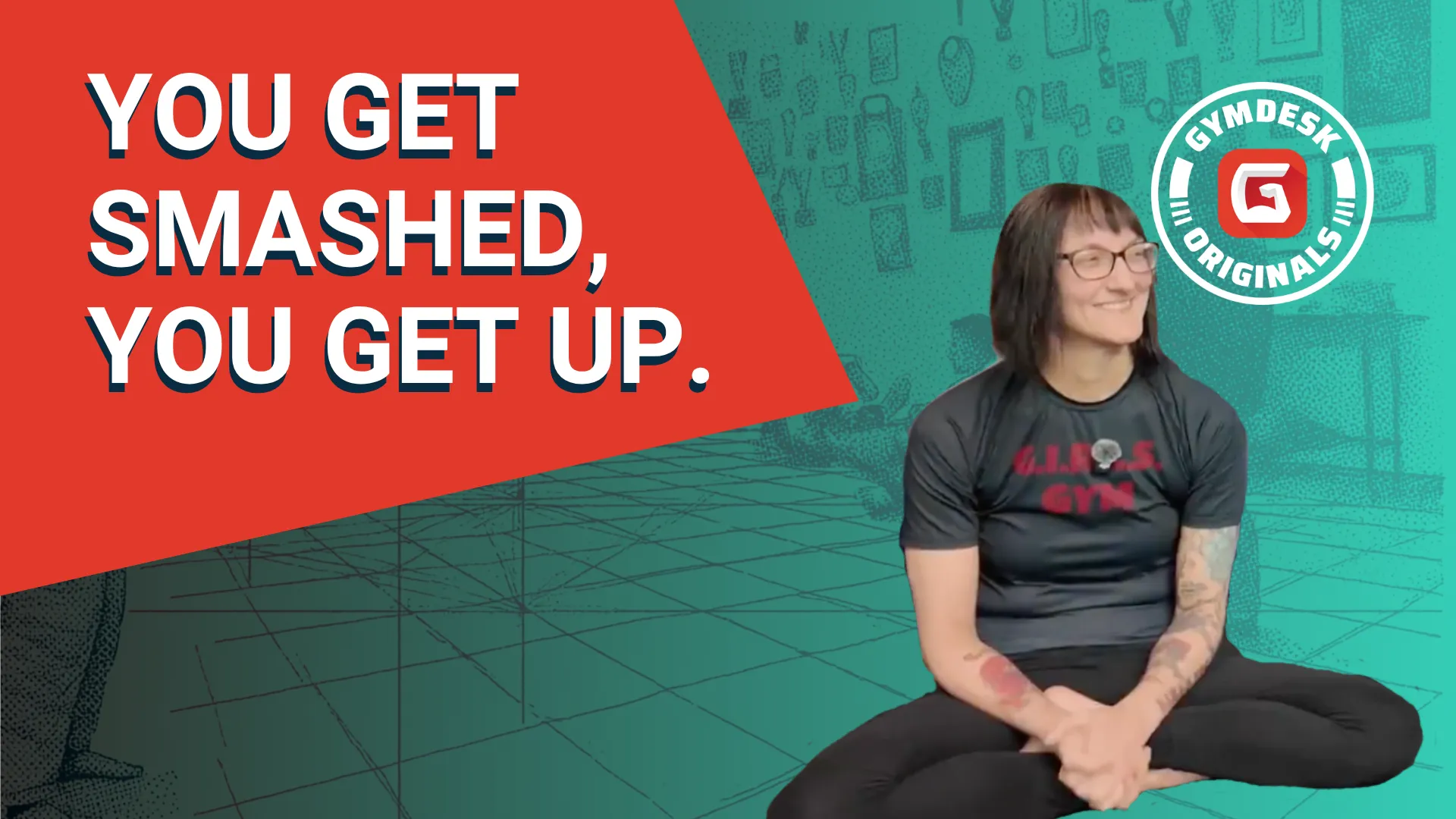
Yeah, yeah, for sure. I mean, you get smashed a lot. I tell women all the time, if you're gonna do jiu-jitsu, you're gonna get smashed. I mean, you get smashed, you get smashed by guys, right? Yeah, totally. You can get smashed by girls, for sure, like, I can smash people at my weight, so like, when you really first start it, like, start jiu-jitsu, you're stuck underneath people all the time, right? But as a smaller person, I think it's good to learn ways to get up and get on top, because you have a better advantage when you're on top, for sure.
And I have an embarrassing story, I feel like I gotta stay now. So I'll tell the world this, so this was, this wasn't even that long ago, it was like, about eight weeks ago, my son was rolling, and there's a kid in his class, they're doing gi-jitsu, or gi-jitsu, and he's known to be a pressure kid, and he was getting into that position, and I said, "Don't you tap," because there was no submission, right? He said, "You better not tap," and then, you know, the kid gets in a certain angle, and then my son taps.
I'm like, "Dude, you tapped the pressure? Come on!" And the class was laughing, the coach was laughing, and he was laughing, too. It wasn't like he felt bad or anything. So fast forward to me, I was in Europe, and I was rolling in the school, I won't say where I was, but I had a brown belt catch me in a full mount, and he was laying on my stomach here and applying the pressure, and I was like, "Uh-oh, this feels very uncomfortable." And I was doing my best to flex, you know, to like, keep him off me, and a minute and a half, I survived, a minute and a half, and I had, my vision started, I'm like, "I better tap," because, you know, I'm about to, you know, lose consciousness on pressure, and I was like, "Tap," and I felt so guilty that I had said that to my son, but, you know, like, pressure is a big deal, and like, if you're dealing with that all the time, like, I happened to catch a guy, I've been doing this for a while, that's not very common that has happened to me, but it can happen, but if that's your whole experience, you have to be ready for that kind of thing, right?
Yeah, well, as a female, I think, especially when you do train with men, like, I got really good at defense in the beginning. My defense is great, but I had trouble attacking, until I started training with women and teaching women, and then I could refine my techniques on people who, when they gave me their full resistance, I could still make those techniques work, and then, I took that back to the men that I was rolling with, and was able to apply it on the men, because I was able to work up and get that, like, ideal technique, you know?
Yeah, you know, and I went to, this was not jiu-jitsu related, I went to a physical, well, he was a physical trainer inside of Pilates school, and he was kind of explaining to me, like, the mechanics, the muscle movement, stuff like that, and he was just talking about range of motion, and, like, one of the things he talked about, I was like, oh, you know, when you're like this, you don't have a lot of strength, and you're like this, you have a lot more strength. I'm like, oh, he's not talking about jiu-jitsu, but that's an arm bar.
Like, that's the arm bar. My arm is like this, I have nothing, which is why, you know, two on one, and it's like, it'll snap. And so, when that got me thinking, that technique has to do with you learning how the, where the body has less resistance to your, you know, whatever your, whatever movement you're trying to push on them, and you're saying that's what you were able to refine when you were kind of working with women a little bit more, and then applied to even stronger guy.
Yes, 100%. It really, it changed my game when I started having women to work with. Yeah, it really changed my game, and my ability to be competitive with men. Yeah. And this school now, you've been in business for quite some time. I think you moved locations at least once, right? Yeah, we've moved locations a few times. We've been here for a little over eight years now. We've been open for 21 years next month. Wow. Yeah. So, 21 years, and through crazy times, including COVID, how do you do close combat, you know, stuff with COVID, and you're still around, which is amazing.
I'd love to hear about, you know, that story. Yeah, there were definitely times I didn't think we were going to make it. I had other people who encouraged me to stick with it, you know, when I was questioning it. I worked another job for a long time. I worked in accounting, so that was, like, my 40-hour-a-week job while I was also supporting the gym. And really, in the beginning, you know, you pay out of your own pocket to keep your business going. But I love it, right?
And I know how big of a difference it made for me. And I really, truly believed that, like, martial arts can change people's lives, and that women need martial arts. Like, it makes a big difference for women, made a big difference for me, and who I became. And so, when we first started, it was real hard to get people in. I can hardly remember how I advertised, I think, Craigslist. I think I flyered cars. Maybe I, like, snuck up to people's doors and, like, put flyers on their doors and then ran off.
You know? And there were times when, because we had a lot of people tell us, like, oh, you're never going to be able to make this work with just women. You know, like, you have to have men. You're not going to be able to build a big enough place. Women don't want to do what we do, right? That was, I heard it all the time. But I really believed in it, and I'm really stubborn, and if people tell me I can't do something, I can pretty much guarantee you it's going to happen.
Yeah. So, um, so we just grew in every single year. More and more people came in our doors, and every year we got bigger and bigger. Um, and still every single year our membership base grows, you know? And we had fighters that we put out, which really helped us draw attention to ourselves. Um, we do really well at the jiu-jitsu tournament. So that helps people take us more seriously, um, which can be a little bit of a struggle sometimes as an all-female martial arts school. Yeah.
Well, there's two things, again, you're giving me, uh, to go on. Um, one I'll comment is, uh, let's go to the genesis of the business. So you said, I want to open up, like, I want to kind of get into your mind at that time when you were starting the business. You said, I want to open up a martial arts gym, or you said, I want to open up a women-only martial arts gym. Like, was that at the same time? Uh, no, I wanted to open a martial arts gym, and we opened a martial arts gym that was men and women with a focus on women's classes.
I see. Lots of women's classes, but it was, uh, it was named the snake pit when we first opened. So this was 2005. Okay. I think there might be a snake pit nowadays. Yeah. And I wouldn't choose that name again today if I opened a co-ed school today. Um, but it was like already kind of oversaturated. Uh, the martial arts community was, you know, jiu-jitsu wasn't that popular at the time still. Now it's very popular and there's jiu-jitsu schools everywhere. And so I'm kind of glad that we got out of that.
I'm sure we would have done well. Um, but at the same time, this wouldn't have existed. And, uh, it's a pretty amazing, uh, place to have. Right. And so then you started as a co-ed and then over time, you're like, you know what, let's just go all in. Yeah. And that take you a while to be like, that took me a while. So we had a co-ed gym. I actually, uh, I trained with some other places and I got kind of a nasty staph infection that, um, put me in the hospital for a long time.
I had a PICC line. My husband had to give me injections because it was septic. So, uh, it had gotten my blood. It was pretty scary experience. Yeah. And, um, the people I trained with at the time were not very supportive of the situation and didn't want to take any responsibility for dirty masks. Yeah. Um, and like, I get it. Staph infection happens at a lot of different schools, but like, I didn't have their support while I was in the hospital. And so when I left that time, um, I was like, you know what, we're just going to focus on women now.
And so that was early 2006. So we initially opened 2005. We didn't do the co-ed thing for very long. Okay. Um, it was hard to find a location at first we got kicked out of location after location because of noise. Oh, no kidding. Yeah. They didn't like the sound of the tie kicks or the take downs. Yeah. The falls or the paddles being kicked or even bigger things. Well, now I'm very curious though, about the staph infection in the end. I mean, this place looks great.
And I've walked into gyms. Um, you know, I've done this for a while, some gyms a little bit dirtier, but like, how do you know, like, was that gym visibly dirty? So it was kind of visibly dirty. Um, and you know, I didn't really, until I had staph infection, I didn't truly understand staph infection. Yeah. Um, I saw dirty mats and I was like, Oh, that's kind of gross. But again, I started in, you know, the nineties. Yeah. Yeah. And dirty mats all the time. Yeah.
Um, and so, but what would happen is when the, I taught the women's class and when the men would come in, they'd push us into the back room that was never, ever cleaned. Okay. And, uh, it entered through my knee. And so, um, it was, and it was like a little rash first. Actually, my knee just swelled up. So I thought I just had a twisted me. I never saw anything on the outside. Um, but they thought what they said in the hospital was probably cause I had normally shaved my legs immediately before training.
I had maybe a microbe. Oh, they got in there. Yeah. So I always cover my knees when I train now. That's just like non-negotiable for me. Yeah. Understood. Uh, I feel like I had a staph infection, but I'm not exactly sure that this was when I was, uh, long ago, like 15, 18 years ago, I went to Hawaii and I got a wetsuit. I borrowed one and it kind of smelled like I'm getting the water anyway. And then afterward, I had this like ring of like weird wrap.
What is this weird rash? And it wouldn't go away. So I started putting Neosporin on it and eventually went away, but I feel like that might've been it. And it was pretty gross and it was kind of painful too. Yeah. Oh my gosh. They hurt so bad. Yeah. They really hurt bad. And so nowadays I see a lot of gyms, they use the little backpacks and they spray the thing down, you know, just to take it seriously. Yeah. So we spray with, uh, we spray with hospital grade cleaner.
Yeah. Uh, we blow the mats down with a, um, like a leaf blower first because we get a lot of hair on the mat here. Vacuum them, use hospital grade cleaner, clean it. We do some deep cleanings pretty regularly. Yeah. Yeah. We take clean mats very seriously. Yeah. Well, you know, now I want to go back to the second thread on the earlier statement that you were talking about is, um, man, the passion that you have here is like you had a full blown career and yet you said, I really want to do this.
And for what, for the reason that you said, it's probably what the little light that's been inside you this whole time, right? Just shining through all the adversity is I just want to make people's lives better. Yeah. And for women and introduce them to the art. Obviously that made a change for you in your life. Um, have you had like fun stories of women who've come in here and there are changed? There's so many. I wish I had counted how many people I've taught over the years, right?
Like women and men, but women like who have come through my doors, because let's say they spend one month here. They will, they change, you know, they become more confident people, even if they don't stick with it improves their lives. I can see the confidence build in them. Um, people become more resilient when they do, uh, martial arts in general, especially when they do jiu-jitsu can't survive in jiu-jitsu without resilience. Um, and so like I've watched, we teach all ages. So I've watched kids like they get the most benefit obviously, cause they're so young, but I saw somebody, I had a student that I trained for a while that you would have never expected to do a competition.
And she didn't do terribly well in the competition, but because she stepped on the mat on a competition mat and didn't ever believe that she could after that, she was walking around it. You could just see the difference in her body, her head being higher, you know, like it's pretty, um, awesome to just watch the impact that I get to have on all these people's lives. Yeah. And I think that is a big deal. I mean, I think about all the things that I have done in my career, you know, doing a presentation in front of like 3000 people or, you know, that's like, Oh, there's a lot of nerves and you're like pacing.
Like, you know, I remember just being like feeling like I'm an animal inside a cage in, you know, practicing whatever it is that I was practicing for that presentation. I did a investor presentation earlier this year, again, to a really big crowd. And, um, once you're done, you're like, Oh, right. And like a competition is like that too. There's a whole arena of people watching you and maybe others, but you feel that pressure. And there's like a lot of nerves for people. I mean, myself included, like I have not done the competitions.
I was mentioning earlier, I'm going to go do my first one here. By the time this airs, I'm probably already, uh, have competed. So hopefully I'm in one piece, you know, but there's, there's a little bit of like, okay, publicly I'm doing something, but then I hope I don't get hurt. Right. You know, you combine all those, you know, different feelings, nervousness, probably adrenaline and trying to calm down. Right. For sure. So someone who does that, I can see how post that competition, win or lose, they're going to feel like I did it.
100%. Right. 100%. Like stepping out there, like stepping on the mat is the win, right? Like who cares what happens once you get out there, you'll be so focused on that moment that you're not, you're going to forget you're in that competition, right? You're going to just do what you do in the gym, but the courage comes from like showing up, stepping on the mat, doing the preparation to get there. Right. Like it, all of those things, uh, change who you are inside and you can see it on the mat.
Like the next class, you'll, you'll see the confidence that you walk in with a little bit different, um, energy that you come in with. Well, let's talk about the name G.I.R.L.S. Gym. When you just hear it's like, oh, it's a gym for girls, but it actually means something, right? Right. What is the acronym? Uh, grappling in real life situations. Um, when we opened, we were really self-defense focused. I still believe in self and the self-defense aspect of what we do, even though it's has become a huge sport now.
Um, and that's kind of what that name is supposed to really represent is the self-defense skills that we gain, um, as well as just life in general. Like how can we improve our lives? And I think grappling in real life situations is a good way to explain that. Well, you, and you, since you have all of them, this is a fair question to ask you. Cause it's not like you're going to be more, or if I go to a kickboxing gym and I ask them what sorts, you know, what art do you recommend?
If you only can do one, they're going to be like kickboxing, but you have all of them in your opinion. If you know, your student walks in, which one would you say you should master? Well, jiu-jitsu is the one I would say you should master, um, because you learn to use leverage and technique to move larger people. Right. So strength doesn't matter as much. It definitely matters. Um, but it's not the, um, determining factor, especially if one person is trained and another person is not trained and they have those jiu-jitsu skills.
I still think it's important to know how to deal with strikes, um, how to protect yourself from strikes. Getting takedowns obviously is, uh, included in jiu-jitsu as well. Um, and being able to get up off the ground and get away because I don't think all of jiu-jitsu is good for self-defense, but if you train jiu-jitsu, you're going to gain the skills to have self-defense. Right. But I don't really think you should be mounted on somebody throwing an arm bar on if you want to defend yourself.
Yeah. And I think that can get a little confusing when people hear the argument that jiu-jitsu is good for self-defense. It doesn't mean that every piece of jiu-jitsu should be self-defense, but if you can do jiu-jitsu, I feel pretty confident in my ability to defend myself when there's not a knife or a gun involved. Okay. So competitions are obviously important for the folks that are here. I talked a little bit about, you know, the fact that I'm going to do a competition. You yourself have competed quite a bit.
Um, you've done MMA competitions. Uh, have you also done just regular jiu-jitsu competitions as well? Yeah. Okay. So you've done them both. Yeah. Uh, there's a big name you actually fought with, uh, someone who got pretty famous in UFC, right? Right. Um, that's, uh, Miesha Tate. Is that right? Miesha Tate. Yeah. Miesha Tate. So, uh, maybe walk through that. I mean, at that time she was just another opponent, I would imagine. It was 2009, I believe was our fight and she had fought in Strikeforce, um, not UFC yet.
And, um, it was pretty exciting to get the phone call to fight her at the time. There weren't a ton of women fighting and it was pretty hard to get fights. So you took what you could get. And I fought a lot of really tough people. I got beat up a lot with Misha. We, I got knocked out in the second round, um, eight seconds in, and I was pretty well known for my jiu-jitsu skills, um, at the time. And my striking was not great. I don't really like getting hit.
And so hitting people usually results in getting hit as well. Um, I wanted to rely on my jiu-jitsu, but you really need to be quite well-rounded to do MMA. Yeah. And my kickboxing is good until you make, make me fight somebody. Yeah. And, uh, so yeah, so eight seconds in, I dropped my hands ready to go in for a takedown, forgetting that I wasn't in an MMA fight and her first strike was the head kick, which knocked me out. Oh, knocked you out. Knocked me out.
I was propped up against the cage. I got hit like six more times and my, um, orbital bone got broken. Oh, from the kick or subsequent punches from the punches while I was unconscious. Um, and then after that, they took me to the hospital. Um, I was fine, but yeah, I was concussed and, um, really bad for three months. I felt like I was drunk after that. Oh my goodness. And I realized that if I could be a good coach or I could be a good fighter, but I really couldn't be both and coaching is my passion.
So I had one more fight after that. And, um, I was pretty gun shy and I realized that I was done fighting. Yeah. Yeah. Well, gosh, three months of recovery of feeling inebriated. That's rough. If you think back to that fight, are you seeing this and then you wake up and you're somewhere else and then you don't even know that you're getting punched cause you're out. Yeah. I never knew I was getting punched. I remember waking up. I actually don't remember anything inside the cage after I got knocked down.
I remember waking up in the back and having them hold their fingers up asking me how many fingers I could see. Holy moly. That must be weird. Kind of like going into surgery or something. Yeah. It was a lot like that. Yeah. Wow. Okay. Well, that sounds like the right move to, uh, to work on the coaching. Um, so this gym has now been around for 20 plus, right? And you had some, uh, some coaches here at the gym for like 10 plus years, right? Yeah.
So I think we read there's at least five black belts and five purple belts. Yep. Yep. And they've been with you for a long time. Yeah. So myself and my husband are, uh, two of the black belts here. And then, um, we have three black belts that are homegrown. They started here from the very beginning. They didn't have previous martial arts, uh, skills. One of them has been training with me for 16 years and the other one, two are, I think around 14 years, maybe 15, somewhere in there.
And then, um, same with all of our purple belts that our coaches here, they're all homegrown. They all started here and, um, gained their technical skills and their coaching skills. And from the beginning, they've demonstrated an excitement to help other people learn. So, yeah, really cool. Uh, maybe we'll just ask the question about Gymdesk. How did you guys find Gymdesk? I had, so I'd been doing everything with different pieces, spreadsheets and we were growing, right? Yeah. I started losing money because, uh, a payment wouldn't go through and, um, I wouldn't know it.
Like I had a payment not go through for a year and I didn't catch it. Oh no. That was what pushed me to find membership management software. Yeah. And I looked at Mindbody, you know, I looked at all these other software options. Um, you guys didn't make me call and talk to anybody to set it up. Yeah. That made me choose you, but I am so happy I did. Like I, it's pulled everything together. I haven't missed another payment since then. Like I know if people's payments don't come through now, uh, we keep track of rankings in there.
I don't have a different worksheet off, you know, somewhere else to do that. Um, yeah, Gymdesk has been really amazing for us. And whenever I need help, I send the email and I get very quick answers. So go ahead. I'm glad, uh, the team's doing well and you're enjoying the software. Um, are you anything else in the software that you're like really relying on that you like use daily? I mean, I feel like we like the attendance for sure. Attendance tracking, which then a lot helps me track ranks.
And when I should be giving ranks to people, I send emails through it, which is nice because then I can tell when people have read my emails, which is really nice to be able to, uh, know if they heard from me or not when they don't get back to me. Yeah. Yeah. We use it like all of our, all of our instructors log into it and use it to have access to people's ranks, emergency contact. Well, so what's next for G.I.R.L.S. Gym? Just keep getting bigger and better.
And, um, yeah, we're not, we're not stopping anytime soon. This is going to live much, uh, well beyond me. Yeah. That's great. And is it, is the, uh, I mean, you have capacity now for how many more students? You guys are doing pretty well now. Yeah. Yeah. We have over 150 members right now. Um, our instructors are also experienced. So even when we have big classes, we know how to rotate people around to make it work no matter what size of, uh, of class we have here.
I just plan on continuing to get bigger and bigger, maybe someday opening another location somewhere. Um, that's something I'm definitely interested in, but it's a lot of work to manage one location and manage a business. So yeah. And then you'll, you'll be, you'll be split. I did that with my business and I had one, I was in the restaurant. I actually had a plant-based chain of restaurants in, uh, in Miami. And people had gone really used to me being in location one, but I opened location two and I'm splitting my time and all my locals are, Hey, where are you?
You know? So you'll get that feeling of like, you know, when you get there, when you go to a new spot, it's like you feel torn, you know, you have a new baby, but you're old. That makes sense. I, uh, took, um, the small business administration, uh, business, it was called emerging leaders, uh, thrive emerging leaders. And I got selected for it like two years ago. Oh, cool. So I got all these great business skills, um, from that, like it covered every area, uh, running a business.
And I got a lot from it that really has helped me like just get myself together, which allowed me to think that I could run a second location, you know, but at the same time, like there's something's always falling apart when you own a business, you know, like every time I turn my head, there's a new thing that I need to deal with. Yeah. Yep. AC's broken. AC's broken. Yeah. Roof, roof leaks. Yeah. Membership payment doesn't go through. That's the, uh, life of a, of an owner.
Yeah. Well, one more question I'll ask you only because I, again, I've had this experience. I worked with my wife on the business I just mentioned. And it's like, oh, it's cool, but it's not cool. Right. Cause you're always like, it's all, I mean, I remember going out with her on like a date and we're out and then I'm like, oh, we could do this and this like, can we just not talk about the business for just a little bit? You know, we're both really passionate about it, but there's also, you know, how do you, how do you guys deal with it?
You know, working with each other and all. Yeah. It's, it can be rough for sure. You know, we've been, so we've been together for 30 years and now we've ran a business together for 20 years and we like maybe a couple hours a week. We're not together. You know, it's not really that many hours a week. Um, and we do, it's hard to take a vacation because you're still thinking about your business. Yeah. This is running seven days a week. So like we went away for our like 30 years together and we're like having dinner.
And then my husband says, who's at class right now. And then I open up the cameras to look and like, see who's at class right now. You know? And I'm like, um, like this is what we're doing on our anniversary dinner. But like automatically I just go to open it and see who's there. And then I'm happy. It's good, busy classes. It is hard to get away from it. Um, holidays. I like Christmas. Sometimes people will want to come in and do open math. And I'm like, no, on these days we're closed because if we're open, I'm on, you know, like, even, even if I'm not the one here, my coaches are amazing.
They take care of things great for us. But like, what if there's an injury, you know, what if something comes up that I have to deal with, you know, what if the toilet clogs and floods the mat? Oh boy. Yeah. Yeah. You always got to be, you're, you can't fully relax if it's open, right? Yeah. Yeah. That makes sense. Awesome. Well, today we're going to be, I'll be participating in the jiu-jitsu class. I think your schedule is, uh, you have a class at four or five o'clock, five o'clock kickboxing.
We have jiu-jitsu at 6 PM. 6 PM. And then you have something else at seven, right? We have like 7 PM kickboxing. Yeah. Okay. Awesome. Well, I'll do the jiu-jitsu one. That's perfect. And I also don't like getting kicked in the face. So, all right. Well, thanks very much. And, uh, we'll be seeing you shortly. Yeah. Thank you. Cool.