How Master Donnie Mignon Built Doggpound MMA on a Brampton Racquetball Court
Starring
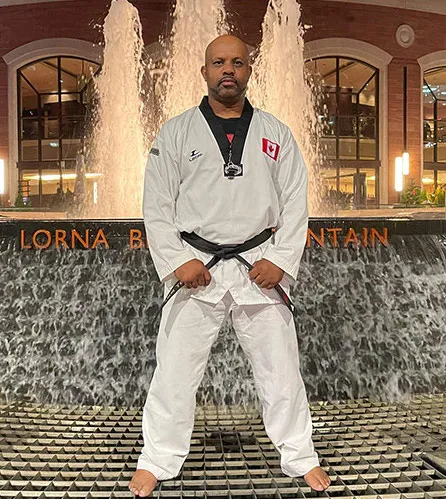
Master Donnie Mignon has trained in martial arts for 48 years, beginning in Taekwondo as a kid in Calgary under Master Everald Wright before progressing through kickboxing, Muay Thai, boxing, Brazilian Jiu-Jitsu, and MMA — including competitive full-contact kickboxing. He co-founded Doggpound MMA in 2009 with Brendon Aldridge and has spent more than 30 years teaching martial arts and bullyproofing in Peel Region schools, women's shelters, and disability-services programs. He is the creator of "Mignon's Freestyle" and the author of the forthcoming book *You're No Damn Black Belt*, a frank account of his career and his views on commercialized martial arts.
About the Gym
Doggpound MMA is a multi-discipline martial arts and fitness academy in Brampton, Ontario, co-founded by Master Donnie Mignon and Brendon Aldridge in 2009 and now operating out of a 25,000-square-foot facility. The academy serves nearly 300 active members across kids and adult programs in Taekwondo, Brazilian Jiu-Jitsu (gi and no-gi), kickboxing, Muay Thai, boxing, MMA, group fitness, and sports team training; hosts WAKO Canada-sanctioned KW Fighting Series kickboxing events and Boxing Ontario-sanctioned cards on premises; and was named Top Choice Martial Arts School of Brampton in 2021.
Master Mignon's coaching career predates the gym by more than a decade—he has taught bullyproofing and self-defense in Peel Region elementary and high schools, women's shelters, and programs for kids with disabilities since the mid-1990s.
📍 Address: 40B Hansen Road S, Brampton, ON L6W 3H4, Canada
Summary
Master Donnie Mignon walks Alex through the 25,000-square-foot home of Doggpound MMA in Brampton, Ontario—a multi-discipline academy with Taekwondo, Brazilian Jiu-Jitsu, kickboxing, Muay Thai, boxing, and MMA all running under one roof.
He explains the no-shortcuts curriculum that gates the MMA class behind months of fundamentals, walks through the no-McDojo testing philosophy laid out in his upcoming book You're No Damn Black Belt, hosts the camera through a kickboxing class he teaches himself, and tells the story of building this gym after four prior schools didn't make it—a journey rooted in 48 years of training, a Calgary mentor he still calls his father, a brother who was supposed to run the business side, and a wife who eventually convinced him to put paper-and-pen aside for Gymdesk.
What They Told Us
Alex Cuevas drove out to Brampton in the rain and walked into Doggpound MMA—25,000 square feet on the edge of Toronto, with 48 years of martial arts hung on the walls. The owner, Master Donnie Mignon, gave the tour, then sat down to talk. What came out wasn't a facility story. It was a man who spent three decades getting locked out of gyms before he built one of the biggest.
The racquetball court, thirty years on
Mignon has known this building longer than most of his students have been alive. Thirty years ago, before the ring and the viewing area and the strength floor, it held a single racquetball court he rented to teach Taekwondo and kickboxing—cement walls, a wooden floor, a window he cut himself so the room could breathe. Years later he came back and took the whole thing.
"I was in this building that we're in right now 30 years ago, just renting a racquetball court to do my class with him."
—Master Donnie Mignon, Owner, Doggpound MMA
Locked out, and back again
The road there was not clean. Before Doggpound filled a space this size, Mignon lost gyms—three or four of them, by his own count. Locked out. Behind on rent. Each time he started over. He tells it without softening any of it, because the failing is the part he wants new students to actually hear before they quit.
"I failed many times. I've had three or four gyms been locked out … Couldn't pay the rent. Couldn't do this. Couldn't do that. Business was rough. It was tough. And I kept going."
—Master Donnie Mignon, Owner, Doggpound MMA
The brother who was supposed to run it
The dream was never his alone. When he moved from Calgary to Ontario, he started teaching outside in a park with his younger brother, and the plan split the work in two—Mignon on the mats as the master, his brother running the business behind him. His brother died in his sleep, just after finishing college. Mignon built the gym anyway, and says honoring that plan is why it exists.
"It was me and my brother's dream. My younger brother. My brother. I'm going to be the master. I'm the guy at the back and he's going to be the business head."
—Master Donnie Mignon, Owner, Doggpound MMA
Why the paper-and-pen guy gave in
For most of those years he ran the school on paper and instinct. Software was his wife's idea—she handles the front of house—and he fought her on it. Then the roster outgrew anything a notebook could carry, and he started checking who paid, who bounced a check, who showed up, and where money leaked, without leaving the mats.
"I didn't want to do it because I'm old school. But when she showed me because of the magnitude and the numbers of students we have now, there's no way we could have done it without that."
—Master Donnie Mignon, Owner, Doggpound MMA
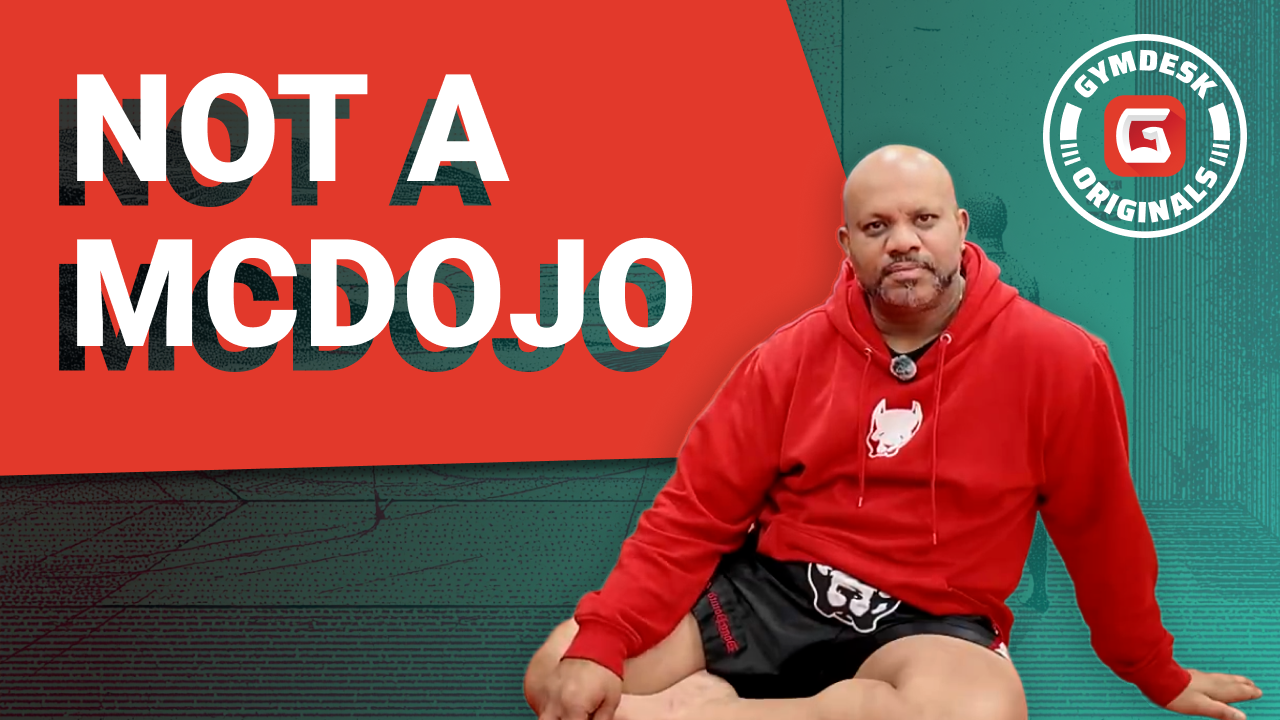
Not a McDojo
Mignon calls the place no-nonsense, and he means the belts most of all. He won't test a student who isn't ready, and he won't pocket the testing fee to pretend otherwise. No participation medals either. The way he reads it, teaching a kid how to lose is part of the instruction, not a hole in it.
"I don't test students unless they're ready. If I know you're not ready, I'm not going to test them just to make money."
—Master Donnie Mignon, Owner, Doggpound MMA
Second generation on the mats
After 48 years, the proof isn't on the award wall. It's in the parents. Mignon now teaches the children of students he first coached two decades ago—second-generation families walking back through the same doors. Ask him for the best story out of a lifetime of them, and he doesn't reach for a trophy.
"I have students that I had 20 years ago bringing their kids to me today. There's no other story to tell because what's better than that?"
—Master Donnie Mignon, Owner, Doggpound MMA
Respect he had to earn
Respect is the word he keeps returning to, and he's clear it was never handed over. Mignon grew up Black in Calgary—the only two black things on the ice, he says of his hockey years, him and the puck—and he names the tables he wasn't allowed to sit at on the way to building this. None of it stopped him, and he says it plainly.
"I give respect in order to get respect … I had to earn it from so many different ways of so many different angles. From people not respecting my culture, you know? People not respecting me as the black man that I am."
—Master Donnie Mignon, Owner, Doggpound MMA
Read the full transcript
Lightly edited for readability. Speaker labels are omitted because the source recording is not diarised; quotes attributed elsewhere on this page were verified against context.
We'll be right back. Behind every gym, there's a story, a mission, a spark of passion that started it all. This is Gymdesk Originals. Real owners, real struggles, and the communities they've built from the ground up. I am hiding underneath the cover here of my van. It's raining out here. I'm in Brampton today. I was in Orlando earlier this week and all the way near Toronto, and I'm going to go check out Dog Pound MMA. Going to get a kickboxing class in. Let's go check them out.
Come on. There we go. Dog Pound MMA. Welcome to Dog Pound MMA Gymdesk, Brampton's largest MMA facility. This is the place. If you guys want to come along, I can take you on a quick tour. This is our reception area right here where everybody checks in before they enter the class. These are our gates when they come through. Make sure everything is proper before they enter. Over here, we have our gym. That's our gym facility right there. We have classes. Everything we do in here is all about the classes.
Right over here, we have our strength and conditioning area. Okay? We do lots of CrossFit stuff. We train a lot of hockey teams and stuff in here as well. Over here is our studio. This is where we do fundamentals of boxing as well as this is a carpooler class going on in there right now. We have a room pretty much for everything. It's been a long time planning this. Over here is our boxing room. Right here is where we do the fundamentals of boxing or intro classes like what's going on right now.
Right back here is where all the magic happens. This is our viewing area where parents get to sit down, watch the classes as the classes go on. And right over there, you're looking at Dogtown's MMA. Over here is the wall of awards. 48 years in the business and still going strong. Nice. Thank you. Master Mignon. Nice to meet you, Alex. It's a pleasure. I had a great time and I got to tell you, I already said this a few times. I'm in awe of this place.
It's, you know, I fantasize about having my own gym. Yes. Right? And this pulls everything out of my mind into reality. And when I think about how you must feel, because you got weights, you got like a movement room. You have like another, you know, I don't know if you kind of a, I don't know, strength conditioning area. You have an area to do here, we're sitting in a Taekwondo area, that's how you guys are doing. The same time you're doing a kickboxing class on the other side.
Yes. You have jiu-jitsu, you have capoeira, boxing, MMA. And boxing, MMA, and you have a freaking ring that you have in the middle of your own space and people come out of the bottom from the stairs and emerge. Like, my goodness, this is like a dream come true. What, like, how are you feeling about all this? I feel really happy and excited. And I deserve it, you know. I've been doing martial arts for a very long time, 48 years. I love what I do. A lot of the times people find jobs, you know.
I never had a job in my life. So my job was to do what I can to make myself be the person who I want to be, right. And that came from when I was living in Calgary. So I met my master building his own gym when he was just first building his own Taekwondo school. And I was a kid helping him. And he was teaching me and teaching me while we were building the place. And I fell in love with martial arts then, you know.
And I've been in Ontario for a while now. And believe it or not, I was in this building that we're in right now 30 years ago, just renting a racquetball court to do my class with him. I'm happy with the way everything is right now and what it sounds like. We've still got lots more work to do. So if you come back here next year, you're going to see a whole bunch of changes. Because I have a lot of things to add. But I'm happy, you know.
But I could not have done this by myself. My wifey is like the brain, you know. She's the one who introduces me to you, Gymdesk. You know what I mean? So we're in a good place here. And we're just building, you know. I like the facility. The facility is great. Can't complain. I mean, there's so much to unpack here, man. You gave me just so much. I was just like, oh, where do I go? So let me go back to Calgary. Where in Calgary were you?
What was the town called? I was in Calgary. I grew up in the southeast, a place called Forest Lawn Dover, in the southeast side. That's where I started my actual martial arts training. With an individual called Master Everald Wright. My master who taught me everything. And still today, he is still my father. You know what I mean? Not my biological father, but he taught me a lot of things that my dad didn't teach me. He loved my dad when my dad was alive. My master gave me an old encyclopedia of martial arts to study physically, verbally, mentally.
And I fell in love with it. My first martial arts was Taekwondo. And from Taekwondo, I went into kickboxing, to boxing, to Thai boxing, to MMA. There's no stopping when it comes to martial arts. Yeah. So we talked a little bit about this earlier. And we share this lineage of Taekwondo. And, you know, one of the things that I always... For me, when I switched, the first thing I switched into was judo. Yeah. And when the guys would come up, you know, they'd be square. Yeah.
They'd come up to grab. And I'm like, man, if I could just unleash some of my kicks. But obviously, that's completely gone. But I see the same kind of thing in, like, Muay Thai and kickboxing. A little bit like a, here's the target. It's right there, right? You talked a little bit about that. How did your Taekwondo affect your kickboxing and, you know, your style? It didn't affect it in a negative way. What it did was brought more character to my kickboxing life. Because most kickboxers, you know, maybe know three kick smacks that they concentrate on, right?
Which is the tip, the push kick, you know, the roundhouse kick. And maybe a spin kick, right? But as you know, coming from Taekwondo background, we kick when we're falling down, getting up, standing up, all angles, jumping, flying. Yeah. And whatever, I mimic my kickboxing guys with my feet. So whatever a boxer can throw with their hands, I'll be throwing it with my feet. Most of my knockouts and damaging points was when my opponent was trying to punch me, I already kicked them. You know, so Taekwondo is a great art.
It's not the best art in the world because I don't believe there's no such thing as the best art in the world. It all depends on the individual and all you capitalize on martial arts. Martial arts is an amazing thing. You know, so there's weakness and strength in all of them. But I found my, I would say my glory in competition when I was fighting guys who were just strictly one style. Yeah. And then I can revolve myself by the foot movements, you know. When you look at karate, Taekwondo, Jit Kendo, things like that, right?
People always say, well, this art is the best because they only know one person and is great at it. You say, you're doing Jiu-Jitsu now. You know what I mean? But you came from Taekwondo. I saw you in class today. You're still throwing some nice kicks. But it's all fundamentals. You know, I think it's just people just don't understand that there's the difference between sport fighting and full-contact competition fighting. So if you train for sport fighting, you'll be pulling a lot of punches and kicks. If you're training for full-contact competition fighting, you just let it go.
And that's what I've been doing with Taekwondo. So when you're training on a competition, even the, I don't know, the framework of, like, you know, if I'm doing something and it's like no contact or whatever, right? You never fully, like, right? Because you don't want to, you know. No. You don't want to hit anybody with it and you don't get the chance to fully extend it. Yeah. But when you get into the world of, say, Muay Thai, and those guys are loading those shin kicks on you, then you'll be like, what the heck am I doing in here?
Yeah. You know what I mean? But you're capable of kicking just as hard as them or even harder than them. Yeah. So it's just, like, my legs are my danger. You know what I mean? I throw good hands, too, but I would say my legs are my go-to. Yeah. And it's from Taekwondo. Well, so there's a lot of different arts, as we talked about in here. How does it work? Like, how do you manage the programs? Like, if someone signs up to Dog Pound, are they able to do any class or do you have- Yeah.
So we have packaging. Okay. We have, like, we call it a difference, you know? So we have a package where we call the confident. So if it's a confident package that they're doing, they can do two styles, right? If it's unlimited, they can do all the styles. It's different packages, different prices, different things. But we don't try to push too many people to do unlimited because in order for them to learn all these things, they need to put in time. Yeah. And today, not everybody have a lot of time.
So a lot of guys come in here, students, as you say, come in here and they want to do MMA. So they just want to jump into my MMA class. It doesn't work like that here. Yeah. They have to learn the fundamentals and the basics of kickboxing or Thai boxing. And they have to definitely learn the fundamentals of Jiu-Jitsu. And anyone that does want to do MMA, they hate Gi Jiu-Jitsu. They make sure that they go and learn traditional Jiu-Jitsu so they can know how to capitalize the fundamentals for when they get into no Gi.
Yeah. Because MMA is from stand-up to the ground. Yeah. You can't just jump into a class and you don't know how to break, fall, you don't know certain things. No. So at minimum three months of each style, then if I see that they're able, then we introduce them to the MMA. That makes sense. Right. The boxing program we have here, we have two great coaches. We have Mr. Tony Wallace and Mr. Edwards. Um, uh, they both have produced some big champions. Um, the classes run Monday, Wednesdays and Fridays for boxing.
We're up for seven days a week. You know, but it's just, I got good people around me. You know, I got good coaches. And if the coaches are in here, if they weren't taught by me, they were handpicked. Nobody came here looking for a job and I hired them. I went looking for them. Yeah. Yeah. That was the next question I was going to ask in order to have these many programs, you have to have trusted coaches that are doing each of them. Right. Yeah. So, and, uh, maybe talk a little bit, obviously the ones that you had that are from homegrown a little easier, but kind of what, what is your vetting process for bringing someone in that is doing an art outside?
Well, first of all, I'm old school, I'm old, I'm old school, but I believe that people that are great coaches have the understanding of how to coach. They have to be approachable. They have to know when to turn on the heat and they have to know when to ease back because you may be a great fighter. It doesn't mean you're a good coach. Yeah. You know what I mean? So it's hard to find that in everybody. And I got lucky because my master always made me talk class because he was in the army.
So when he went away, he made me talk, teach class. Yeah. So I know I had to do it right. Because when I, when he came back and I was doing it right, back in those days, you're going to get it. You know what I mean? Yeah. So when I'm looking for, when we're looking for a coach, we usually look for personality. The wife researched them and she, we go from feelings, you know, and then we try them. And then we tell them exactly what we're doing here.
And if they're capable of doing it, then we give them a chance. If they continue to do what we're expecting from them, then we let them run with the program on their own. Hmm. You know, I don't have a manual. Yeah. You know, most people that have a manual, what they're going to teach Monday, Tuesday, Wednesday, Thursday, Friday, Saturday. When I get on the mat, it all depends on the type of class that I'm teaching. I just go from right here, because not everybody can handle the same thing.
The only style of martial arts we do here, where we actually give our belts would be our jujitsu and our taekwondo. Everything else is beginners, intermediate or advanced. Now, um, one thing that you said just now is, um, you tell them what you're about, right? Is that like, well, you mean culture and like your mission and what your, is that what you mean? Something like that. I tell them what I'm about in the martial arts world. Okay. This is a no nonsense place. Okay. So I'm not going to do pretend martial arts.
This is definitely not a McDojo. Okay. It's definitely not a McDojo. Kids in here. Adults in here. My youngest student is my youngest son. My oldest is three, my oldest is 67. So when you come in here, you probably already did the research, know what you come here for. I don't do patterns and katas and stuff like that. There's nothing wrong with that, but it's just something that I know that I don't want to do inside my facility. If somebody comes and they ask for it and specifically that's what they want, then I would tell them, pull them aside and give them a specific type of kata.
But nowadays, when you go to like Taekwondo tournaments, karate tournaments, the katas that these guys are doing is all made up. It's not traditional anymore. I'm traditional. Yeah. You know what I mean? So it's just like, I know about 30 katas. In Taekwondo, we call it forms, poomsae, right? But I don't teach it. If you're doing Tai Chi, which is an amazing art to heal the mind, body, and soul, then you want to learn that type of katas because it actually heals. But nowadays, everybody's so commercialized that they don't do it just for the show.
It's not a show place. It looks beautiful in here, because it is, but they come in here, it's all about the BST, blood, sweat, and tear. Yeah. Tough love. Yeah, no, and you know, I had a really good workout, by the way, so kickboxing is new for me, and there's a lot of arm and stuff. I mean, my shoulders were on fire, you know, and I'm getting these fists coming at me, I'm like, hey, that's not supposed to happen, right? No, no, no, man. Because I'm still stuck in the Taekwondo days.
It happened to me. Yeah, yeah. When I did my first kickboxing fight, I was getting punched in the face, and the style of Taekwondo that I did was WTF, World Taekwondo Federation. There's no punch into the face. Yeah, that's right, yeah. It's not like WTF, right? So I was like, man, if I continue to get punched in the face, I'm going to get knocked out, they're going to damage me. So right then and there, that's where I found my love for Taekwondo, because now I started mimicking me.
Yeah. And it reminded me of Bruce Lee. Yeah. Because if you can't beat them, you join them. So I was just mimicking them and trying to adapt to what they give me, but not getting used to those punches coming in your face, you don't know what the heck to do. Like you're blocking, like the way we were taught, it's not working. Yeah. And the reason why it's not working, because these guys are headhunter, and they're punching you in your face hard. Yeah. So distance, because we like to kick, but the difference between Taekwondo and most other art that kicks, we can kick you from chest to chest, we can kick you from far away, and we can kick you from the side or to your back.
So it's just adapting and challenge, like I would say, challenging yourself to do what they're doing, but use your style to beat them at their own game. Yeah. That was my biggest thing when I started doing kickboxing. Yeah. It was hard to do the transition. Yeah. And when I'm punching, I felt like I had no power in my punches. So that's why your arm feels like that. Yeah, totally. It's like, oh man, my shoulders are like burning up. So let's go back to this spot. So you've known this building now for how many years?
I've been in this building here for like five years. Okay. This one here. Okay. And you were first here long ago. 30 years ago. 30 years ago, and you rented a racquetball court. A racquetball court. And what were you teaching in there? Taekwondo and kickboxing. Okay. Yeah. Taekwondo and kickboxing. On a wooden floor. Just like how you see my studio is. Yeah. Floor just like that. Like a racquetball floor. Yeah. And believe me, man, there was no mats, no nothing, you know what I mean? Yeah.
The walls were all right. It was all cement walls. Are we training there? I cut a little window out because, you know, the racquetball courts are enclosed. I cut a little window out so we can get better breathing there and stuff like that. And just when I saw this building, actually when the wife saw this building was available, she says, let's go take a look at it. I'm like, no, this place is too big. It costs us too much money. Can't afford it. And she says, let's give it a try.
And I said, are you sure? She said, yeah. So I know this business better than most people, but I'm not a businessman. But I know the business and it's hard to do this business. And I'm going to give you a plug right now, right? Okay. It's hard to do this business because if you don't have the right software for this business, you get screwed up. I'm a paper and pen guy. Paper and pen doesn't work nowadays because these kids don't know anything about paper and pen.
Some of them can't even write the name properly, right? So, but now I can check everything. How many students? Who's coming to class? How much money are we making? Where are we losing money? Who's overdue? Who bounced the checks? Stuff like that. So it's just a matter of you putting yourself in a position to say, well, we needed that software. And she, when she introduced it to me, I was, I'm not going to lie to you. I was against it. Right? I didn't want to do it because I'm old school.
But when she showed me because of the magnitude and the numbers of students we have now, there's no way we could have done it without that. Yeah. I mean, it won art. I'm, you know, that's where I started. That's why I was like, I gotta go, you know, I had this opportunity for Gymdesk, come my way probably like 17 months ago. Yeah. And I'm like, the first job I ever had was teaching Taekwondo. Yes. And I had this little box I would carry with all these little papers and I'd take checks and all that, bring it to like headquarters.
It was the. I've been there. Yeah. But that was one art. I can't imagine. How do you do what you're doing here without a system? It would be. It would be chaos. Yeah. We wouldn't be able to do it. We wouldn't be able to track the people. We wouldn't be able to know who's in the right class. We wouldn't be able to actually, like, if there's an emergency cancer class right away or postpone something or send direct emails to everybody. Things that it's helped us. I'm not going to lie to you.
It's helped us a lot. Yeah. And we're still growing and we're going to continue to grow. Yeah. So, and we don't need another system. Yeah. You know what I mean? That's awesome here. Uh, so then let's, let's, let's talk about this place then. I mean, how many square feet is this? This gym is 25,000, a little bit plus. 25,000. Crazy. That's huge. Um, I don't know. I don't know. I've never, I don't think I've ever been at a 25,000 square foot gym yet. It was the first time.
I mean. Martial arts. Martial arts school. That's our first thing. Like the first thing here is martial arts. Yeah. And so, like the nervousness part, like you decided to take a big risk, the big space. And did you have in your mind what it is now, or did you have a small piece of it? And it's kind of organically grown into what it's become. We did it. I know what I wanted. Uh huh. I know exactly what I want. And we had some trials and tribulations at the beginning.
Because everything doesn't work out the way it's supposed to be. Right? I had an investor. We pulled out. And then it was just me and the wife. So we're already here, so we can't go back. You're in. No, we're in. So we got to go. I know what the foresight is. I know what I want to see. There's a lot of things that we have to fix inside this place still. There's a lot of stuff we have to add to it. And I know where I want to be.
But it does get frustrating sometimes. You know what I mean? Because we're open seven days a week. We're always trying to add stuff. And our program is 95% from 4:00 PM to 9:00, Monday to Friday. Saturdays, we're here from 8:00 until 2:00. Sundays, we're here from 10:00 until 1:30. So Monday, Tuesday, Wednesday, Thursday, Friday, Saturday. Oh, Monday, Tuesday, Monday to Friday. I don't really have much going on in the daytime. Things are shut down. Right? I teach in high schools. I have my martial arts program in high schools.
Oh, wow. Yeah. Your business. Yeah. I have a security company. Right? That's going to be our next Gymdesk company. Yeah. Yeah. So I have a security company. It's called Last Dragon Security Service. I do a lot of bodyguard service. I train a lot of security guys as well. Right? So everything is being done inside here. So once I get, once we get this place to the level, even if quarter to half of the people that we have in the evenings, then it will be a whole night and day switch.
The daytime we have this going on and the evening we have this going on. But I can't be here 24/7. Yeah. Right? So the wife has some ideas with some automatic locks, openers to open up the doors, things like that, and then just get the right people to man the place. Because as you see, we have a lot of kids here too, right? Yep. So this is not a gym. I don't want this to be like all the other gyms out there. We're not like that.
We're not in a competition with them or we don't want to be like, I got kids in here. So for me to run this as a gym, I could probably do that and make good money because you see we've got a nice facility there. But then I don't know who's coming into my building. Everyone that comes through here, parents and kids, we know them all. No stranger. Kids are running around and having fun while classes are going after the class. There's places for them to play.
And I think that's what separates us from everybody else. It's a family-run business and everybody in here is part of our family. Well, the big difference between a big box gym that's this size with weights and all that, you're walking with earphones, you know nobody, and you go home and this is not that. No. We would never allow that to be like that anyways. Yeah. Because I believe in order for us to grow and for people to trust you have to be able to tell them the truth.
You know, I don't test students unless they're ready. If I know you're not ready, I'm not going to test them just to make money. If you're not ready, you're not ready. That means you've got to put in more work. I don't test them to fail them. That means I'm setting them up for failure. But I also don't believe in giving anyone participation medals or certificates. It's either you win or you lose. If it's a tournament, it's first, second, and third. You have to teach kids how to fail.
And don't get me wrong, so I'm coming to this right now. I failed many times. I've had three or four gyms been locked out. Leonard kicked me out. Couldn't pay the rent. Couldn't do this. Couldn't do that. Business was rough. It was tough. And I kept going. And now we're in one of the biggest gyms maybe across the country. Yeah. Martial arts school, right? So don't give up. If there's things that you like to do, you know, your gymnast is going to grow even more and more because it's a good thing.
And once something is good, it doesn't matter. People are going to come to it. You know, like if you open up, if I open up this place farther from you, I think it will be still successful because people will come to this place because it's good. People like your product because it's good. And that's what we want to do. We want to make sure our product is good. And our product is martial arts first, everything else after. Discipline, respect, and confidence. One of the things we were talking about earlier is what martial arts did for you.
And he said, "Without martial arts, we might have got to..." I'm kidding. Yeah, yeah. You guys, go ahead and say that. Say it, man. Yeah. Guys, we're doing an interview. You got to go back over there. Sorry. Straight to the point, if it wasn't for martial arts, and I would say the guidance of my instructor, my master, I'd be there in jail. As a kid, I was rambunctious. Especially when I was doing Taekwondo, I was a tough kid. Yeah. And I had me get myself in trouble, going out there fighting all the time, doing stupid things, hanging out with the wrong crowd.
And it humbled me. Like a lot. It humbled me. Humbled me straight. So I have to give back to it. Like martial arts is like the way of life. Yeah. You know? It made me not to be a settler. When you settle, you don't get what you want. When you don't get what you want, it never happened. I'm in like the happiest state of my life right now. You know? Not just with this, but family as well. The people that come through these doors, the people that stay.
We're in the background. There's guys training right now, doing their classes. And I don't need to be there. You know what I mean? But even when I'm not here, they know that I'm here. Yeah. They know the respect that I command from them. And they know when they have to respect my place. Like, this is not a place where guys are going to come and lose their cool and swear on the mats. No, we don't do that here, man. I'm traditional. Traditional. And you've had so many people walk through these doors and you've been doing martial arts for so long.
48 years. That's a long time. Older than most people. Yeah. I always love asking this story because the stories are all different. Whenever I ask other coaches or professors or senseis, masters, what cool stories stand out for you of like people's lives that have been changed? I believe that I've changed a lot of people's lives. Just by being honest with them. Giving them a purpose. Showing them different ways. Showing up for them. I've had gang members, as well as the law, praying with me. You know what I mean?
And some people don't like it. Some people like it. But I'm not going to turn my back on them. You know? Good stories would be teaching people their worth. This was a dream of mine a long time ago. You know? When I came up to Ontario from Calgary, I started teaching outside in the park. It was me and my brother's dream. My younger brother. My brother. I'm going to be the master. I'm the guy at the back and he's going to be the business head. As soon as my brother graduated from Eliasson College, he died in the sleep.
Oh. You know what I mean? And my story goes deep. But this was our goal. And to find people to help me get to where my goal is supposed to be, which is here. And it would be mind fooling and disrespect to me if I didn't honor what me and my brother had planned. You know what I mean? The wife is amazing at what she does because this is pretty much a lot of the decos and the stuff that she's into that stuff. I'm just like that rough tough edge kind of guy.
But just for her to allow me to achieve the goal and the dream that me and my brother had because no one really knows. It's just, it's different, man. You know, it's like being that tough guy. You know, everybody looks at me as the tough guy and people is afraid of me. And I always say, don't be afraid of me. Respect me. Because when people are afraid of you don't know what they're going to do. But if they respect you, they're going to give you the honor and the glory that you deserve.
So what I tell everybody is the most important thing about martial arts is discipline, respect, and confidence. If you have those three things that martial arts gives you can do anything and achieve anything that you want in life. And I think those stories there, and there's always stories, but you can't leave out the respect, the discipline, the confidence, and the hard work, the blood, sweat, and tears, you know, and seeing people's change and worth. I have students that I had 20 years ago bringing their kids to me today.
There's no other story to tell because what's better than that? Yeah. Generations coming to you. Yeah. Decades of doing this. Generations. You know, I started a book. I'm almost done. And it's, um, it's about my life in the martial arts world and how it started and where I'm at today. And the name of the book is pretty, you know, pretty straightforward. It's called You're No Damn Black Belt. I believe that, um, if we get an opportunity to, if I get an opportunity to finish it, I think it will tell a story on all the stories that made me who I am today.
And what is your thought about black belt is something related to like the journey is not done just cause you get the black belt or journey is not done because you get the black belts. Other martial arts games giving away black belts. Um, people not understanding the honor and the respect of the black belt. People buying a black belt and I can go on forever. Yeah. You know, I'm not a commercialized guy. People have always saying, well, why don't you play? Why didn't you play football or play soccer?
Well, I was good at those things. I grew up in Calgary and I played hockey. There was only two black things on the ice, me and the puck. And I loved it. Yeah. But martial arts stole my heart. Yeah. And my book just tells it how it is. Yeah. From competitions I've been to myself, from competitions I've taken my students to, the different angles and the different types of people that try to hold me back. The fight I had to even open up a school here in Brampton when I first moved out here.
Just tell the truth. You know what I mean? So most importantly, I think people just lost the value of what a black belt is or what it should be. Yeah. Can't just be about this. Yeah. Maybe we'll just segue. We saw your son performing a series of very complicated moves for a three year old. And my son's about to, I'm here as I'm in Toronto and I'll be here this weekend because my son's turning four. Nice. Nice. I just barely got him in his gi like two weeks ago.
And, uh. Don't take him out of it. Yeah. Yeah. And we, I have, I'm fortunate enough to have a little dojo in my house. Yes. So I take him in there. I took my oldest son in there. When he was five, it didn't go well, but that was my fault because at that time I was trying to teach him the old way. Like the, you know, Taekwondo, very militant. Yeah. And he never even saw that side of me before. Yeah. It's just like, it came out of nowhere.
So I brought him into the dojo and I was trying to, you know, I was like, do the upper block. And his upper block was like this. I go, bro, what are you know, like, what are you doing? Put your arm here. And he would do it. And then it dropped like this again. And I'd just be. Yeah. What are you hardcore? Yeah. And you know, like for me as a father, I'm like, I just want my son to be okay. Like that's the spirit. I just wrote a blog about it and we put it online, but it was about, it's a feeling like I just want my son.
I don't want, I don't need them to be MMA champs. No. I just want them to be able to be safe in life. Protect themselves. Want them to be outside, they can get home safe to you. Exactly. Yep. So that's the spirit that I'm doing it. Your son has a very impressive, you know, abilities at this age and focus. And you told them to do certain things. And I was like, wow, I can't believe it. Like he knows what the commands are. He's doing them and he's doing pretty well.
And you haven't even started training him. No. So I've been training by myself. And so he goes to class or his brother is teaching the class. Yeah. I'm selling the wife. He pulls him aside and throw him a little one, two, but I haven't started training. I've never taught him anything myself. Yeah. Everything that you saw him do today is stuff that he learned in class. Okay. Yeah. How many kids you have? Let's not go there. I have eight children. Okay. Yeah. You know what I mean?
And those two are my youngest. Um, Eli is, um, probably going to be one of the, one of the best that I've had. Um, my son, Daniel is probably for my best student ever. How old is he? He's, um, 39. Okay. He's 39 years old. Right. Um, he's been training since he was three. He's won so many taekwondo karate tournaments back in the day, stuff like that. Very disciplined. Very, um, I would say understanding of the art. You know what I mean? So it's just, they're the ones that helped me teach here a lot.
Um, and it's good to, like I said, this is a family run business. So it's good to have them around. Yeah. Cause it's just like people see me, they see them, you know? And it's a little bit crazy because of my age and thing. People don't really see me. They think I'm a lot younger. So cause what I do. Yeah. But you want to stay healthy, man. You got to do healthy things. You got to keep yourself in check because our time could come at any time.
I know old people who live a long time and I know young people who die. You know what I mean? So it's just like, that's another thing about martial arts. It brings out like energy. It brings out like longevity, life, learning skills all the time. Like people always hear me. You want to learn martial arts? Oh, I don't want to fight. But it's not about the fight. Cause I believe there's three ways to fight. Mental, verbal. Then it comes physical. And a lot of people don't understand that.
Right? So Taekwondo is my love. First love. Taekwondo. I'm not going to lie. But when I started doing kickboxing, I started loving it too. But I was loving it because I was beating it with my Taekwondo. Yeah. Yeah. You know? Yeah. That's about it. Yeah. I figure in time to come, we are going to do a lot more stuff in here. You know, even if I fail now, which I'm not planning on failing, I'd be okay with that because I did it. And I did it in this building for eight years.
I did it in my last building for 14 years. I did it in buildings before. And I did it outside. And I did it in Calgary. And I'm still doing it now. So I can't ask for anything more. If I am honored to get more, I'm extremely happy. But if I'm not honored to get anything more, I'm still going to stay happy. Yeah. Because I'm done it. Yeah. Do you feel like since -- To me, from what I'm seeing with this conversation that I met you today, none of this was given to you.
You blood, sweat, and teared your way through several other businesses that didn't work out so well. And now you're here. Do you think that the journey has given you an immense appreciation for being here? You know what I mean? Like -- I do. Yeah. I do. I do because it's not something that wasn't possible. Right? It was something that was possible, but I had to go through negative stuff first. Because I don't think if I didn't go to the negative stuff, I wouldn't even appreciate it.
Yeah. You know? Because it's like, I was never born rich. I never just had the money to open. Even now, like, we are still doing things to make money to get the gym going. We're not struggling, but there's always more things that we'd like to do. And there's more things we'd like to give. There's a lot of people that can't afford martial arts because it's expensive. You know? And some people, the way -- like, we live in Canada, man. It's like, it's rough art here. Yeah.
Yeah. And I mean, things are not that easy. So when people come to me and I see the look on their face, I can probably figure them out that they want to do, but they don't have the money. And if I can help them, I'm going to help them. And a lot of the times, I do help them. Yeah. Right? Yeah. I give respect in order to get respect. I didn't get the new master mignon. I had to earn it. I had to earn it from so many different ways of so many different angles.
From people not respecting my culture, you know? People not respecting me as the black man that I am. I've seen it. You know, I wasn't allowed to sit on certain tables, you know, with certain people in the type of nowhere else, you know? So, but it didn't stop me and it's not going to stop me because I don't need it. I'm already here. Yeah. You know? And the only person that can take this from me right now is up there. Oh, myself. No one else can take it.
If you want to take it, you're not going to get it. But if you want to take it and I allow you to take it, you can have it. Because I'll tell you again, I did it and I'm happy with what I've done. I have two young kids now, two young children. When I was a kid having kids at a young age. But at 20 years old, 19 years old, I still had two children. I was doing things as an adult when I was a kid.
Even my business, my martial arts, my security company. I didn't even know. I just did it. Yeah. Because I had to fight for things. And I'm still fighting for everything that I have. So it's people look at, you know, oh, these guys, they got the people walking in. Oh, this place is so busy. These guys are making all this money. They don't know what my expenses are. Yeah. You know, they don't know. You know, they don't know what I got to pay. They don't know what I'm paying.
They don't know who I'm paying. They don't know. They don't know how much money we invested into this place. But they see the place is busy and we're busy. Yeah. But they're like, oh my God. I just leave it at that. I'm who I am because I've got an opportunity. And I'm not going to say anything to any art. I respect every art. But Taikonos made me who I am today. That's what I'm saying. It's awesome that you give back, but it's also important to be able to have a, you know, a viable business in order to be able to give back, right?
Because if it was free for everybody, then there's no business. No, there's no business, right? No, there's no business, right? Yeah. And I believe that a lot of people look for the freebies and the people that appreciate you will spend the money with you. But a lot of people just will spend just that money with you and not spend any more money to make you get ahead. They'll spend the money that they need to spend because that's what they want to spend. But I don't look at it like that.
Yeah. You know, because at the end of the day, money we can always make back. Time is, we're never going to make time out. Yeah. But memories. Yeah. Well, this is awesome. I get, well, I'll ask you one more question about your beautiful ring that you have in here. And earlier we talked about, you take these mats out if you're going to do an event here. And you've done a few events, you said? We've done about four events, five events here so far. Yeah. One boxing shows.
Three. Yeah. Three, three kickboxing shows. The mats come up. We put about 500 chairs down in. Good seating area. We do about anywhere from 14 to 18 fights. We have some prestige fights where the guy is still amateur, but they fight with milk with Manchester gloves. Sanctioned by WAKO, Canada. Right? It's amazing because I have the space to do it. Yeah. If I was to do this somewhere else, before I even started, before the day of the fight, I've already spent over 10 grand. But I have the space.
I have the space to do it. And that was part of the goal to have, to find it, to do it like this. Right? And we host a lot of things in here as well, but the ring is, um, I think it's one of the only rings I got around. It's, um, 24 by 24. So inside is 22 by 22. It's an Olympic sized ring. Yeah. And, um, get the lights going, you know, we got the lights on the poles. So the guys get the real feeling, the music, as you can say, that speaker.
Yeah. For the music, they come out, like they're, like they're doing a super show. And then once they get that feeling and they can get over that feeling, then they go outside to different competition or stuff. And they've been there before. Yeah. But if they don't have that type of feeling, then it could be your best fighter. But if they go in there, something catches them off guard. Then that feeling is gone because they never had it. But I like to give them the right experience.
I team up with, um, uh, my partner, um, come all aware. Right. They, um, that we do the fight series together. So it's called the KW fight series, more fight series. And, um, Jeff is a very good guy. Like, you know, um, you don't mind spending money with myself to make our show amazing. Give them the shorts, the gloves, everything. So they feel that they're in a pro environment, but it's still amateur. Yeah. And so are you, is this an open tournament? Um, or is it just inside your, no, it's open.
So we have, um, gyms from all over. Oh, wow. As long as they register to WACO Canada, they come. Oh, okay. I might have like three or four fighters from here. And a couple of fighters from Mississauga, Scarborough, Sudbury, across the border. Where would they come? They come because they have actual real fights. Yeah. That's amazing, man. You live in the dream, man. This is amazing. I miss the dream. I don't want to wake up. Yeah. I don't want to wake up, man. You know, but when the wife told me you were coming, I was like, wow.
I didn't even know about it. And I thought I don't really deal with the front. This is my, this is my domain. Yeah. But, um, I just learned maybe about nine months, eight, seven months, I want to actually use the system. Yeah. I can go in there and check everything that I want to check. Yeah. Testing people, know who's tested, who's paid, who didn't pay, who's showing up to class, who's not showing up to class, who's checking, who's not checking in. So it was just like the facility is big, but without having the right people and the right tools in place, you can't run it.
Yeah. Yeah. Well, and you know, our tagline, our mission, our company, our focus, everything that we're doing in the product and the engineering, how we structure ourselves from a support perspective has to do with these keywords is less admin, more members. That's it. We achieve that. Then, you know, the way I look at it is when I was teaching, that's all I wanted. I wanted students in the place. And I hated doing all the busy work. If we can minimize the boring office junk and get more people here so you can be on the mats, then we're doing our jobs.
That's exactly what Gymdesk does. You know, because sometimes if the wife is not at the front, you know, because we are, we're, we have a receptionist, but sometimes the wife's not at the front, but she know who's coming in. So things are booked. Appointments are booked. Everything is on there. We know who's coming. So it's always good to have the people then do everything before they get here. Because as you see, as you're coming in, there's lots of students here. Yeah. And jam people, nobody wants to wait, you know, so they get an opportunity.
So we know we set everything in place and do what we got to do. But I'm really happy with Gymdesk. You know, like very, very happy with Gymdesk and the surprise visit. Like we knew, I knew you were coming, but I didn't know we were going to do all this interviewing. I don't really get a chance to tell my story all the time, but hopefully when my book comes out, I'll send you a copy. Yeah, for sure. That'd be great. You know what I mean? Well, Master Mignon, it's been a pleasure. Thank you so much. Yeah, thank you for hosting me. We appreciate you and your business and for having me here today. Well, thank you for coming. Cool. Peace out. Thanks.