Sleeping on Mats to Owning a Gym: Gabriel Goulart’s Journey

Starring
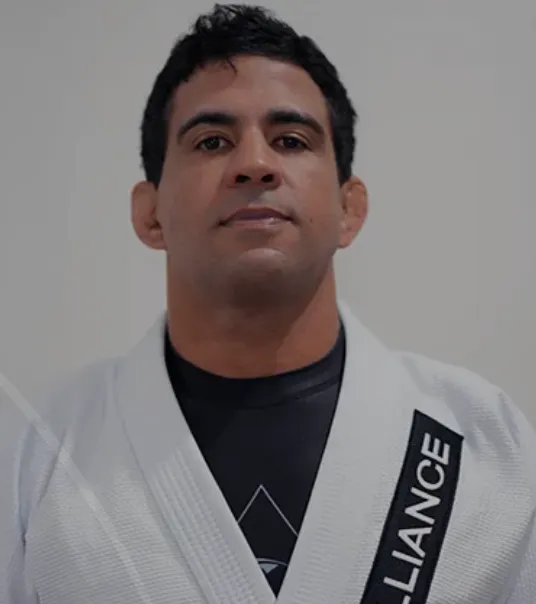
Gabriel is a Brazilian Jiu-Jitsu practitioner with significant accomplishments in the sport. In 2010, he was awarded his black belt from Fabio Gurgel after securing the world championship title in the brown belt division. In 2015, he relocated to Los Angeles, where he opened Alliance San Fernando Valley, with his wife, Mariane Leles.
About the Gym
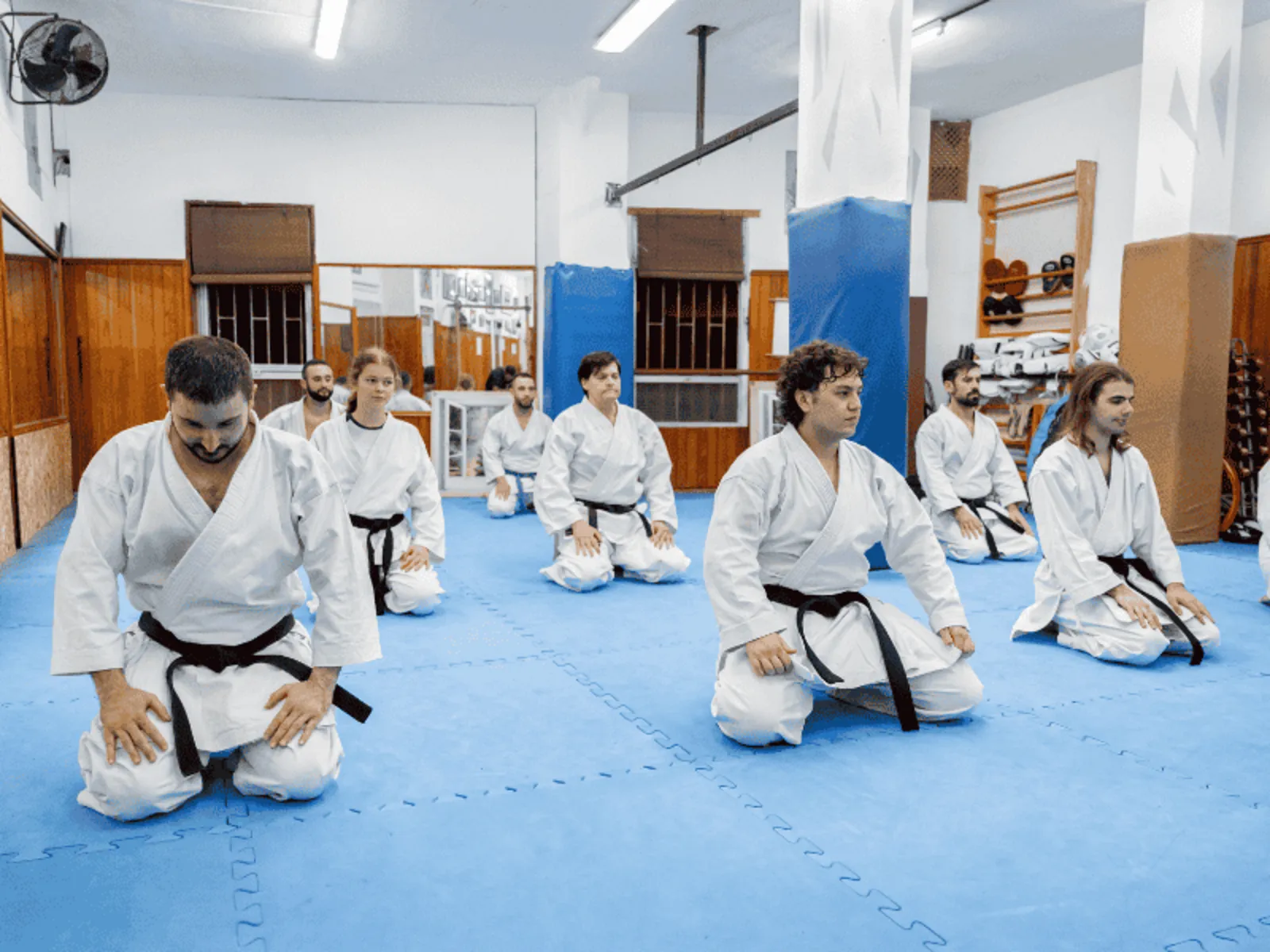
Alliance Jiu Jitsu San Fernando Valley offers a welcoming and top-tier training environment designed for both kids and adults, whether you're looking to get in shape, learn self-defense, or compete at a high level. The gym features a spacious mat area, excellent facilities with showers, and programs such as anti-bullying for kids, as well as structured pathways for adult students, focusing on a proven methodology and fair progression system.
Alliance not only holds a prestigious competitive record—including recent championship titles—but also prides itself on building a positive, family-friendly community that’s rooted in transforming lives and helping each member grow in confidence, discipline, and skill. The gym’s thoughtful design, inspired by world-class academies in Brazil, ensures every member feels comfortable and motivated, making Alliance Jiu Jitsu an outstanding choice for anyone looking to join a vibrant and supportive martial arts community.
📍9700 Woodman Ave suite A-07, Arleta, CA 91331
📞 818-472-5070
Summary
In this episode, Gymdesk CEO Alex Cuevas visits Alliance Jiu Jitsu San Fernando Valley to explore the inspiring journey behind this new gym’s opening. Gabriel Goulart, a fourth-degree black belt, shares the story of moving from his hometown in Brazil to the United States, his competitive legacy, and the collaborative partnership with his wife that brought their dream facility to life. Viewers get a tour of the state-of-the-art gym, complete with quality mat space and thoughtful amenities like showers—designed to create a welcoming family atmosphere and accommodate the busy schedules of students.
In this episode, you’ll learn about the deep sense of community and mentorship at the heart of Alliance San Fernando Valley. Owner Gabriel Goulart describes his athletic background, his progression from practicing capoeira and soccer as a child to winning Jiu Jitsu championships, and ultimately transitioning from competitor to passionate teacher. He shares powerful stories of transforming students’ lives—highlighting how martial arts training can instill confidence, discipline, and resilience in both kids and adults.
This episode also highlights how Alliance Jiu-Jitsu uses Gymdesk to streamline its operations and enhance member experience. With features that allow instructors to track classes, manage student progress, and ensure fair and efficient belt advancement, Gymdesk supports the gym’s focus on structured learning and engagement. Gabriel praise's the platform’s ease of use and the responsive support they’ve received, emphasizing how technology helps them focus on building their community while maintaining high standards in training and service.
What They Told Us
Alex Cuevas took the Gymdesk Originals camera to Alliance Jiu Jitsu San Fernando Valley, a brand-new academy in the Los Angeles area opened by fourth-degree black belt Gabriel Goulart. Goulart is a Brazilian world champion and a longtime student of Alliance founder Fabio Gurgel, and the conversation traces his arc from sleeping on gym mats in Atlanta to building his own family-style studio. The through-line is one idea: the sport that changed his life is the one he now hands to his students.
Sleeping on the mats
Goulart's competitive climb ran from his hometown of Uberlândia to São Paulo, and then, in the late 2000s, to a defining year at Alliance co-founder Jacaré's academy in Atlanta. He had no money, no English, and nowhere else to be. His coach let him live inside the gym—training all day, then unrolling on the mat at night—so he could keep chasing a world title he was afraid he'd never come back for.
"I just moved to Atlanta to sleep on the mat. Knowing nobody, not speaking English, no girlfriend, no nothing. So just to train."
—Gabriel Goulart, Owner, Alliance Jiu Jitsu San Fernando Valley
From competing to changing lives
For years Goulart's focus was singular: compete, win, find sponsors, compete again. Teaching was almost accidental—he took a job coaching kids at another gym and discovered something the medals never gave him. Watching uncoordinated children grow into confident ones, he says, was the moment the sport stopped being about him.
"I like how it transformed lives because I was getting kids very uncoordinated and then I was changing their life."
—Gabriel Goulart, Owner, Alliance Jiu Jitsu San Fernando Valley
Deciding to open his own place
The turn from competitor to owner came once he realized he wanted to teach on his own terms, in his own culture, rather than inside someone else's methodology. He had spent his whole career alongside legends of the sport in São Paulo, and he wanted a room where he could pass all of that on. So he made the call to build something of his own.
"I need to make my own place, replicate and share what I learned my whole life."
—Gabriel Goulart, Owner, Alliance Jiu Jitsu San Fernando Valley
A gym built with his wife
The academy is a genuine partnership. Goulart reconnected with his first girlfriend from back home—now his wife—after nearly two decades apart, and she moved from Miami to Los Angeles to build the gym with him. The savings that funded it came from both of them, and so did the vision. He runs the mat; she runs the business side.
"So that gym, it's a mix of my stuff with my wife's stuff. So my dream started to become her dream as well."
—Gabriel Goulart, Owner, Alliance Jiu Jitsu San Fernando Valley
Not an industrial box
Goulart was deliberate about the feel of the space. Most gyms he'd seen were industrial—roll-up doors, high ceilings, a mat and a bench and nothing else. His professor Fabio Gurgel had opened classy, comfortable academies in Brazil and in London, and Goulart hired Gurgel's wife, an architect, to bring that same style to the Valley. He wanted a place people would want to stay in.
"I want to make the place really nice so that they feel comfortable, a family place."
—Gabriel Goulart, Owner, Alliance Jiu Jitsu San Fernando Valley
Tracking belts fairly
Goulart is candid that he isn't the computer person—his wife and his front-desk manager handle that—but he lights up describing the belt-stripe graduation system the gym runs on Gymdesk. Progression is tied to how many classes a student actually attends, which he sees as the fairest way to do it: the person who shows up more earns the next stripe first. It also lets every student see exactly where they stand.
"So, based on how many classes they have, they have a stripe … this is easier to track and also it's fair to track."
—Gabriel Goulart, Owner, Alliance Jiu Jitsu San Fernando Valley
Read the full transcript
Lightly edited for readability. Speaker labels are omitted because the source recording is not diarised; quotes attributed elsewhere on this page were verified against context.
Behind every gym, there's a story, a mission, a spark of passion that started it all. This is Gymdesk Originals, real owners, real struggles, and the communities they've built from the ground up. All right, I made it all the way to San Fernando Valley, over to Alliance Jiujitsu, San Fernando Valley. Let's go check them out. Here is Gabriel Goular, I'm 40 Degree Black Belt under Fabi Gurgell. I'm inviting everyone to come to check the place. We just opened a brand new facility, Alliance San Fernando Valley. So come to check the place.
We have a really nice mat area, nice facility with shower stuff. So if you want to plan to train at 6 a.m., you can come to check the place. You can have a shower after and go straight to work. So it's a great opportunity to enroll your kids as well, so that they learn how to defend themselves. You know, you have a program anti-bullying, and it's a really nice space so that they can make new friends and learn how to defend themselves while in their training.
And also, you have the program for adults, if you plan to get in shape, or just to train wjits, or to compete, so yeah, come to check the place. You have a great methodology, so alliances hold the record of World Championship, so you just won the Master Awards this last weekend, and yeah, so come to check the place. We'll be right back. Okay, sitting here at Alliance, San Fernando, I think we're two months you guys been open now? Actually, it's gonna be three. You opened June 2nd.
Okay, June 2nd. June 2nd, August 2nd. June, July, August. Yeah, three months, gonna be the third month now. No, gonna be the fourth month now. June, July, and August. Yeah, three months. Three months. Okay, time goes fast. That was fast, yeah. Gabriel, pleasure. Thank you for having me. Yeah. Thank you for having my team here. Oh, thank you for stopping by. It was our pleasure. Yeah, I learned a lot. I mean, I've been doing the, I've been doing jiu-jitsu now, probably consistently for like a year.
Okay. And I had, you know, when I was early, gosh, I think I used to train around 30, and I'm almost 50 now. Okay, you're looking good for a few days. You're looking really good there. Yeah, and all these little details, I forget. So it was really helpful to learn about when you set those, you're with the layers, and then the passes that you were teaching. That's what I thought they stood on. Like sometimes a little detail makes a big difference in the whole thing. Yeah.
Yeah. And this little, little trick, you say, oh yeah, a little grip, a little something. It's super helpful. No, we had a, we had a great time. So for those folks who don't know you, I would love to know a little background about you. Okay. Your martial arts background. Okay. When did you start training? Where did you start training? Where are you from? Okay. So I'm from Uberlândia, Minas Gerais. It's a city and a state in Brazil. It's a state between São Paulo and Rio. I started training in 2002 in Uberlândia, my hometown.
And then I moved to São Paulo to train. So actually, like when I started, my professor was a big friend of Tererê. And then we started with doing your kind of TT before. I don't know if you heard this team before. It was Telus and Tererê. Tererê is a guy that he used to train on Lions. And then I started training in my hometown. And then I moved to São Paulo in 2006, 2007 to compete. All my life, I was very into sport. When I was a kid, I did like a swimming.
I played soccer until my 10 years old. And then from 10 to 16, 17, I played capoeira. It's a martial art in Brazil. Kind of do some acrobatic stuff. So I was very into capoeira before. And then my professor just stopped to become a religion and stuff. Yeah. And then I started training jujitsu. I'm from the semi-hominy power of Lucas Lepri. Okay. So he was my friend before. You played soccer together. You played capoeira together. Wow. Yeah. And then he started training jujitsu first than me.
And then I went to his academy to visit. And then I started to wait there. And then one time, some of his friends said, hey, come to check her out. Let's do a little fight over here. And back in the day, I was, I like this stuff. I was playing capoeira. I thought, come here, let me beat you. Yeah. And then I got inside that triangle. I said, whoa, I'm not that tough how I take. Oh, wow. And then I started to practice jujitsu. Yeah. Yeah.
And then I started training. Since my first time training, I was very into this. And then I started training kind of three times a day. Yeah, I was tough from kind of 11 to 1 and 5 to 7, 7 to 9. Back in the day, it was two hours training. Wow. Six hours a day. Yeah. Back in the day, it was two hours training. And then I started training. In three months, I competed a Brazilian national as white belt. And then I won. Oh, I had three months of jujitsu.
I won a Brazilian national. And then I said, wait, I'm Brazilian champion. And then I started doing this. Actually, back then, I started jujitsu not too young, like today, kids, today. Kids, today, I started three, five, six years old. I started jujitsu when I was 18. I was more than a teenager. I was 18 years old. So I started training. But since I started training, I never stopped anymore. But I didn't start too early. I was old already. So 18 years old, people get black belts today.
Yeah. So I was just starting jujitsu. And then in three months, I won the Brazilian nationals. And then I got very excited. And then I started training more. So in that time, I was doing college. I did the law school. And then the university started sponsoring me. And they were giving me money to compete, to travel. And then I was more into jujitsu. And then I kept competing. And then I kept competing. In 2006, I came to the U.S. I won the world championship. I stayed here one year with Jacare.
So before, the world championship was in Brazil. So I was competing. So I was competing there. And so I competed at Brazilian national in 2002. And then back in the day, you had another federation that was very, very famous. And there was another federation that was with IBJJF and this CBJJO. That was Confederação Brasileira de Jiu-Jitsu Olympia. And then it was very important. So I was competing in both federation. So my own world championship in that federation was a blue belt. I got IBJJF II world championship, second place on open class.
And then I came to compete at Pan Ams in 2007. I stayed one year in Jacare Academy. Like we have the founders of Alliance is Jacare, Fabio Gugel, and Gigi. So Jacare lives in what back in the day was living in Atlanta. Oh, okay. Yeah. So I came to compete at Pan Ams. And then it was a funny story because that year I finished my college and then I lost my sponsors. Oh. Yeah. And then I told Jacare, I say, Jacare, if I want the Pan Ams.
And I told him, I say, if I go back to Brazil, maybe I do not come back for world championship. And he said, you can stay here on my gym. You can live on the mat. I say, serious? He said, yeah. And then I say, okay, let's go there. And then I went to Atlanta and then I stayed almost one year sleeping or on the mat or he had a little office inside his gym that he was just working. About a little, little room. Wow. And then it was very tough for me because I didn't have a good English back then.
And then I was just training. And then I was just training. I was teaching there in Atlanta. So he was opening the gym at 7. I was waking me up till that I trained 7 a.m. And then he was leaving. And then I was doing conditioning workout. And then I was getting ready for the noon class. And then after I was having lunch and then training the whole day until night. And then the gym was closing. I was going to my room and sleeping. Wow. Either for a year.
A year. Like nine months. I did six months and then I did three more. It was kind of nine months. It was very tough. But like in Brazil, I had a great life there back then. Because I was living with my mom. I was with a champion. Everywhere I go through the street, anywhere, they were kind of either recognizing me. They recognized me and said, hey, you have this party. You want to go there? Get this ticket. Oh, you want to go to this place? I had everything there.
I was living in my mom's house. I had my clothes washed. I had food. I have everything. And then I just moved to Atlanta to sleep on the mat. Knowing nobody, not speaking English, no girlfriend, no nothing. So just to train. Yeah. It was very tough, but it was one of the best years in my career. Because I won world championship, middleweight, and open class. Wow. So that year, I stayed there training like crazy. I was a purple belt. I was training every single training and being on the mat and sleeping there on the mat.
And then when I came to California to compete, in my final, Jacare was yelling on my cornet, My nickname is kind of Fi. My name is Gabriel Goulart, but Jacare gave me this nickname Fi, because it's a slang from my state. Oh. Fi means filho. No, son, shortcut for son. Yeah. But in Brazil, in my state, it's like a slang. Like you say, hey, bro. Yeah, yeah. Great bro is brother. You say, hey, bro. My homie thought, they say, hey, Fi, what's going on? Hey, Fi, what's up?
And then I didn't have much English, and I was calling people to train Fi. I say, hey, Fi, you want to train? Hey, Fi, you have fire? Hey, Fi, lots of train. And then Jacare thought that's funny, and started calling me Fi. And then all the Alliance called me Fi. Ah. But it was a funny story, and then was a very small room that I was sleeping there. When I was doing my final, Jacare was yelling, hey, remember the little room? Remember you sleeping on the mat?
I did a kind of seminar in one school that Jacare took me. I made some cash, and then I bought all in sweet potato and canned tuna was my food, because inside the gym, I didn't have a kitchen. I was eating by microwave. Wow. And then I was getting, Jacare thought to me to get a sweet potato, to stand with a knife, and then rolling a toilet paper, and putting the microwave for five minutes. I was eating sweet potato and canned tuna. All my money was sweet potato and canned tuna, sanguari, and then after everybody leaving the gym, I was making my plate, sweet potato and tuna, and then Jacare was yelling, please, remember you sleeping on the room, remember the sweet potato and tuna, it was because of this guy, it was because of this guy, and then Pessa reflects on my mind of everything I suffered, you know, like, oh, I was training so hard, it worked, and then I won, you know, and then I just, oh, what the fuck, it's because of you, I stayed there, talk to our friend, you know, want to talk, you know, nice food, sleeping on the bed.
And then next to his place has a bakery, and then some rats were coming over the ceiling, I was listening to some rats walking through the roof, and then I was sleeping, I was afraid to then go on me. I got a muggy with an aluminum mug, I was smacking on some metal to make noise, so that rats would get rats away, and then Jacare was saying, I remember that day, it was because of this guy, you did all this because of this guy, you need to get this guy, I said, okay.
And it's a nice day because that day I got the record, who fought more fights in World Championship, I did the 13 mats in one day. That is 13 C. Yeah, because back in the day, like today for you to compete open class, you need to get some metal in any division. If you metal in middleweight, if you get gold, silver, or brown, you can compete open class. But back in the day, you don't need to qualify to compete open class. Everybody could sign in and compete open class.
So my division had more than 120 people. Wow. I had eight fights for open class. So I did five mats for middleweight in the morning, and then I did eight fights on afternoon. So I remember that I started fighting at 9 a.m., and I finished my last fight at 9 p.m. Oh my goodness. Yeah, when you just died, I was focused. I didn't want anything. I was just drinking water. I didn't want to even eat. Because I remember back in the day when I came to compete, I think the World Championship last year before, I think I took a Gatorade, and I was throwing up.
I didn't feel good. And then people was offering me those electrolytes. I said, no, man, I want to just water. Oh, you want some banana? No, just water. And I was out there without eating anything, just focused. So when you're in the open, are you competing against different levels of belts too? No, just purple belt. I was purple belt. Okay. But it was every weight. Oh, there's no weight class. No weight class. Open class is the same belt, but no weight class. The rooster can compete against the super heavy.
And did you get some heavy guys? I got super heavy guys. I got one guy that was Olympic judo. Oh. From Sweden. He was big. And it's fun because I was playing guard. I like to play guard. I was pulling guard. He was so big and so strong that I was playing guard. He was lifting me from here. He was lifting me up. I said, no, man, I want to play guard. I want to play guard. And I was being on the map. Wow. Yeah. I think I fought one guy that was American football athlete from the Giants.
The back quarters, the guys who do the defense. Yeah. It was huge. So it was professional football, American football player. So when you have someone who's that big, like a football player, where they're known to be, you know, 240 pounds of like solid muscles, right? In impressive form. How do you change the game for somebody like that? Is there anything different or it's just pure technique and you can't rely on muscle? Should be both, actually, you know, but my tank is the judo guy. He was very good on top.
I was not taking, take it down with him. I pulled the guards. Yeah. I could sweep him. And then I was standing up so that he could stand up. And then I pull guard again. I was trying to just play guard. And who's this? This is Nini. Nini. How are you, Nini? Welcome. You part of the show, Nini? She's awesome. This is a, I'm not a dog expert. This is a Pomerania. Yeah, Pomerania. Yeah. All right. So you have, clearly you have a competitive, you know, background and you're enjoying, like, competing.
At some point you want to shift into teaching. So tell me about that. Let me finish with you. And this was 2008. And then I won open class in my division. And then when I left here, I did want to go to my hometown because I was, my hometown I had Lucas Lepro to train with. And then he won the world championship as well. When I won as a purple belt, he won as a black belt. Ah, and then he moved to New York to pitch.
And then I didn't want to be in my hometown by myself, training with nobody. You didn't want to be back in Brazil? No, in my hometown in Brazil. Ah, from Uberlandia. So we lived in Uberlandia and then you were going to Sao Paulo to train and then I was going to compete. We went to Sao Paulo, you came here to compete. I won the world championship as a purple, he won as a black. And then he moved to New York. So when I moved back to my hometown, I didn't want to stay in my hometown with no training.
And then I moved to Sao Paulo. And then I started living in Sao Paulo and training with Fabio Gurgel. Ah. Yeah. So before I was leaving Uberlandia, but I was doing exchange. I was going to Sao Paulo, staying one, two months and going back. And then after Lucas left and then I had no part there to train, I moved to Sao Paulo to train for fully there. I lived in Sao Paulo for 10 years. And then I moved there. I was a purple belt and then I got brown belt.
And then I won the world championship as a brown belt twice. In 2015, I moved to Los Angeles. 2015. 2015. Yeah. And then I kept my training in Cabrinha. That is Alliance as well. And then I kept training. And then I decided to open my own place. I opened this year. Yeah. So how do you go from training to deciding you wanted to have your own school? That's the natural way for everybody who's competing, who's training and stuff like this. So always I like to train.
I taught some seminar. I like to teach as well. And then, but I was just competing. My focus was just competing, getting sponsors to compete. I was not very used to teach. I started teaching one another gym. And then I started teaching kids. And then I really liked that. I like how it transformed lives because I was getting kids very uncoordinated and then I was changing their life. So I had one kid there. Her name was Ayana. She was 12 years old. And then this was after the pandemic.
You are taking pictures. She always was isolating herself. She didn't want to be in the group picture. I was calling her. She was getting herself out. She didn't want to be in pictures. And then her mom came and told me, say, hey, she's getting bullied, being bullied in school. You have a boy there who's touching her, getting her butt, stuff like this. I don't know what to do. And then I talked to her. I started to build her confidence. She was a little overweight. And then I said, oh, OK, I can do a game so that you're going to win every time.
And then I started doing tug war. So let's be the tug war. Who want to be the queen or king of the tug war? And then she was pulling all the boys. Yeah. And then she, hey, I'm strong. I'm the queen of the mass. And then everybody, oh, Ayana is the queen of the mass. And every day she was, oh, that's the tug war because she was beating everybody. And then suddenly after class, the mom came and said, hey, professor, I want to just thank you.
And then I was teaching her. I taught her a takedown and an armbar, like the class we did today, kind of. And then the same boy went there and touched her. She took the boy out, the break of the class. And then she got him armbar. And then I advised her. I said, don't hurt him. Just stop right there and say, hey, don't mess up with me. I can't hurt you. I do jiu-jitsu. I just get away from me. Get far. Don't mess up with me.
And then she did it. She got him on armbar and said, hey, don't mess up with me. I can break your arm. I do jiu-jitsu. Get off of me. And then after this, she was walking at the school. All the other kids were walking behind her. And I was so excited, you know. And then I said, love how jiu-jitsu changed people's lives. Some other people, some other kids were very uncoordinated. Couldn't do back row, couldn't do front row. In one month, he was beating everybody. You know, some other kid that was very shy, didn't want to talk, was getting more excited, talking to everybody.
Some other that was very all over the place, getting more disciplined. It's beautiful how jiu-jitsu changed people's lives. Some other people were really out of shape and started getting healthy, you know. Some other who wanted to compete started to compete and get better. So, and then I started teaching. And then I said, no, I need to make my own place, replicate and share what I learned my whole life, you know. Because in Brazil, in Sao Paulo, so all those champions, we train together, you know. All those generations was training with us, you know.
Like, with me, I trained with all those legends, like Lucas Lepri, Marco Lange, Bernardo Faria. So, all those guys, Bernardo was my roommate. I don't know if you know Bernardo. Bernardo, he has the BJJ Fanatics. Oh! Yeah, I don't know if you know that guy. Yeah, he was five times world champion, you know. And then we were roommate. You lived in the semi-room, semi-house. Yeah, it was very fun. Also, like, you and Lucas were knowing each other for so long, you guys were, like, really good friends.
Since it's such a small world, since 10 years old. Yeah, that's amazing. Yeah, you played soccer in the same team, and then you played capoeira in the same team. Yeah, and then after we did jiu-jitsu. He started first, then me, and then I started going. How do you miss capoeira? Just for fun, like the dancing and the music? I like listening to music. It's a very good feeling. Nostalgia. Yeah, what they sing is bringing their nostalgia as well. So I like capoeira to get myself more mobile.
You know, I do some, like, flexibility, movements, just to keep the flow. I'm just jiu-jitsu now, you know, yeah. So I'm not practicing capoeira class, nothing of this. I just like my heart. And I remember when I used to do, you know, I really like the vibe, the music, the movement. It's this. Yeah, yeah, yeah. So, I mean, this is a beautiful gym, studio. It is. You know, the mats are amazing. I love the mats. Up on there, you're just... There's a waterfall. Yeah, so I'm like, imagine tumbling and falling feels, you know, really nice on here, on the body.
But it's got to have been pretty pricey for you to do that, right? So you open a gym, it's always, oh, man, you got to pay for all the materials, the build-out. You got beautiful bathrooms. Yeah. Or at least in the guys, there's like four showers, I think. Four showers, four boys. Yeah, girl. And, you know, I was like, I love that if I was, you know, around here and I would go train, I would want to take a quick shower and go to work. So it's beautiful that you have all these things.
How do you go about funding? How do you start a place like this? Like, tell me about your journey and getting ready. Okay, so all my life, I was very controlled with money. So I got sponsored, I taught seminars around the world. I was saving money. My wife as well. So that gym, it's a mix of my stuff with my wife's stuff. So my dream started to become her dream as well. Right. It's a cool story because my wife was my first girlfriend. Oh, yeah. So she's from my hometown.
Wow. So she was my first girlfriend ever. What age? I was 18, 17. We date for three years. And then I moved to Sao Paulo to train. And then we broke up. Ah. Well, no, I moved to Sao Paulo. I moved to Atlanta. And then she stayed in Berlin. And then she moved to Miami. And then you were apart for 20 years. And then I got some stuff here. She got some stuff there. And then suddenly I was single. She was single. We started talking. And then she came.
It was funny. I think, yeah. So we started talking on Instagram. And, hey, how are you doing? And then she kind of just said, oh, it's my birthday next month. I never went to California. So I'm planning to go there. What do you think? I said, oh, you can come. And then she came before past her birthday. We spent time together. She went back to Miami. And the next month she moved here. Oh. She blocked all her stuff. Wow. Car, house, everything. Yeah. And then I was teaching another place.
And then I was not happy with the place where I was teaching. Because it was not my methodology. The culture I was created. Alliance, you know. And then I told her, I said, yeah, I want to open my own place. You know, have my own people. What do you think? She said, yeah, let's do that. And then she got her stuff. I got my stuff. And then you built this. Wow. So you guys partnered together. Partners would rather. Yeah. And how do you split up? I mean, obviously, you're at Black Belt and you're teaching.
Is she more responsible for, like, the office and the business aspects and all that? Yeah. And how's been your experience so far with doing this? It's been good, actually. You know, myself, I do not work much on the computer. You know, it's my wife who takes care more. And Alexis, my front desk guy. But, yeah, every question you have, you guys are willing to help us to set up everything. I'm happy, you know. Itai, like, my first contact was Itai. He came here. And then he did a webinar with my employee, you know.
I explained to him how to do the stuff. And it's easy because you can track the students, you know. And then we can get home and see how many classes they have. We have the graduation system over there. So, based on how many classes they have a stripe, you know. And the White Belt, every 30 classes, you can strike. Like, this is easier to track and also it's fair to track, you know. Because maybe you do one class and the other guy does 100 class. That's why he's going to get first stripe than you know.
Because he's training more. Maybe you can be super tough, but, you know, you need to get fine on the mat as well, you know. So, like this, everybody knows where they are in their learning, you know. Oh, I have a 10-8 class. I have two more classes. Maybe I'm going to receive a stripe. And then push them more to train, you know. They keep as well. That's always a good thing to have this striking thing, you know. Anything else you want to share about, you know, the gym or your story?
No, basically, so the gym is a really nice place. So, the gym. So, I'm a Fabio Gujava student, 15 years, black belt. When Fabio opened his academy in Brazil, he just opened a new academy in Brazil and in London. And then I really like the style. Classy, you know, the way, how is this academy? Because I see a lot of gyms, it's more kind of industrial space. They have that row-up door, the high ceiling, you know, and just a mat and bench around. I want to make the place really nice so that they feel comfortable, a family place.
My professor, Fabio Gujava, his wife is architect. So, I hired her to do the design. And then it's like the same style of his gym in London or in Brazil. So, that's why this looks so nice. The ceilings like this, you have some cut on the ceiling and some LED lights. So, I tried to replicate that I was feeling in Brazil to bring them here, you know. Because a lot of places doesn't have showers. Well, I want to make a really nice gym so that the people can come train at 6 a.m.
and just take a shower and go straight to the world. Or train at the evening and go fresh at home or go to some date or go to dinner. You know, I want to make a really nice place for them. I think you did that. Yeah, thank you. I appreciate that. You often, during the vacation, kind of the summer break, all the kids are traveling, the parents as well. But it was a good time. So, you had time to learn a little bit and learn with some mistakes.
So, that now when people are coming more, you are a little bit more experienced. That's great. Well, we're going to keep our eye on you and checking your progress. Thank you so much for coming. Pleasure to have you guys here. Yeah. Thank you for having us. Yeah, thank you. Thank you.