
Mindbody Alternatives: 9 Platforms Compared for 2026

Nobody leaves Mindbody over one dramatic failure. They leave because the bill keeps creeping and the software was clearly built for a nail salon.
Then they email support and wait.
Here's what I actually did for this one. I opened all ten pricing pages on August 24, 2026 and wrote down what they say.
Not what a comparison post said last year, and not what a vendor told a sales prospect. What is printed on the page, on that date, linked so you can go check my work.
That sounds like a low bar. It isn't.
Most Mindbody alternatives roundups quote prices nobody publishes. Two of the ten vendors here—Mindbody and Glofox—don't publish a tier price list at all, so that is what it says below.
Quick note on scope. Mindbody Online serves salons, spas, and a lot of other service businesses, and some of the apps like Mindbody below do too.
I'm looking at every one of them as a gym, a studio, or a martial arts school. That's the lens.
Full disclosure up front: Gymdesk is one of the nine, and I work there. The prices are checkable either way, which is sort of the point.
What the 2026 Pricing Pages Actually Say
- Mindbody advertises a floor. The page says "starting at $79 USD/month per location." No tier has a public price. Every button says talk to sales.
- The cheapest options aren't gym software. SimplyBook starts free, Vagaro at $30. Neither knows what a belt is.
- Glofox publishes nothing. Zero rates on its pricing page. WellnessLiving used to be that way and now prints real tiers, $69 Starter up to $349 BusinessPro, which makes it much easier to argue with.
- The add-ons are the actual price. Every vendor that publishes app pricing bills it separately: PushPress $81–$97/mo, Zen Planner $39/mo, ours $100/mo. Nobody's branded app is free.
- Your gym type settles this faster than any table. A BJJ academy and a Pilates studio want almost nothing in common.
What Mindbody Costs in 2026
Start here.
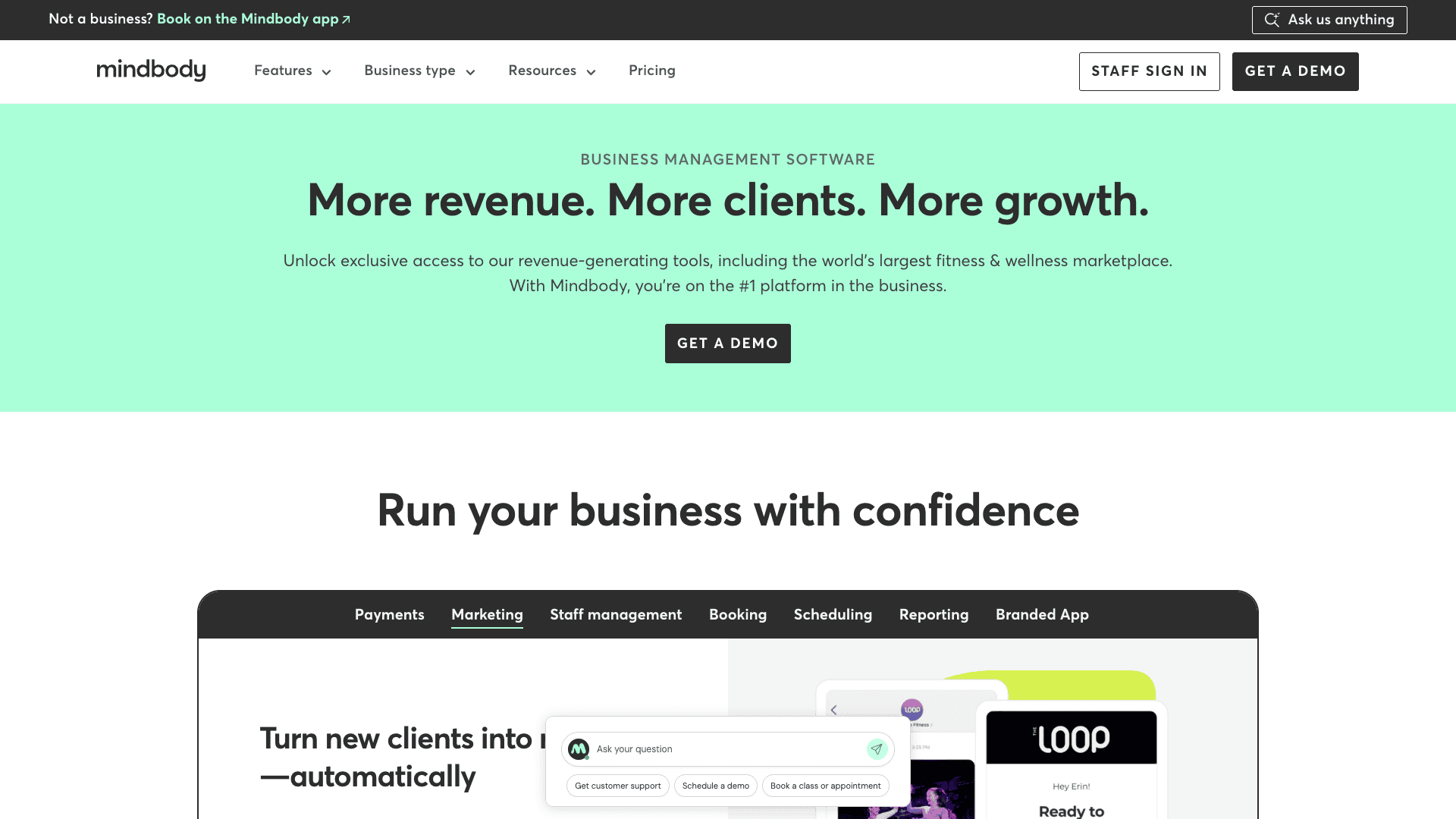
Mindbody's pricing page advertises "starting at $79 USD/month per location." That's the only dollar figure on the page. None of the three plan tiers carries a published price—each one routes you to a sales conversation.
The full picture is in the Mindbody fees guide, with a head-to-head on the Gymdesk vs Mindbody page.
So when a comparison post tells you confidently that Mindbody costs $X a month, be suspicious. Mindbody doesn't print tier prices. Any hard number you read is somebody's quote or somebody's guess.
Three things you can plan around. The $79 floor is per location, so it multiplies with your sites, and it's where pricing starts.
The features gym owners ask about most sit in the tiers above it: branded app, advanced marketing, deeper reporting.
GYM OWNER TIP:
When you get on the quote call, ask for the all-in monthly number with add-ons and payment processing included. The sticker and the invoice are rarely the same number.
Quick Comparison: 9 Mindbody Alternatives at a Glance
Alternative | Published starting price | What that price actually buys | Free trial or plan |
$75/mo with Gymdesk Payments | Up to 50 active members, every feature | 30-day trial, no card | |
$30/mo ($23.99 promo) | One bookable calendar | Free trial | |
$69/mo | Starter tier, one staff member | Demo only | |
Not published | Nothing—quote only | Demo only | |
Free / $60/mo | Free tier adds 5% + 4% payment fees | Free plan | |
Free / $159/mo | Core plan; Train and Grow cost extra | Free plan | |
$99/mo | Studio base; extensions cost extra | Demo only | |
$139/mo annual | Essential tier; $159/mo if paid monthly | Free trial | |
Free / €11.90/mo | 50 or 100 bookings a month | Free plan |
All figures verified against each vendor's own pricing page on 24 August 2026. SimplyBook publishes in euros. Gymdesk counts active members only—frozen, cancelled, and prospect records don't count toward your tier.
Prices change, so click through before you commit.
We'll keep you in the loop with fresh content, podcasts, how-to guides, tool reviews, and product exclusives.
Start With Your Gym Type
Nine platforms is a lot to hold in your head, and most of the differences won't matter to you at all.
KEY TAKEAWAY:
Your gym type settles this faster than any table. A BJJ academy and a Pilates studio want almost nothing in common, and belt ranks, family billing, and curriculum by level either exist in a platform or they don't.
If you run a martial arts school or academy
You need belt ranks, promotion tracking, three kids billed on one card, and a curriculum that changes by level. Most platforms here have none of it, because they were built around class bookings, and a rank is not a class booking.
Gymdesk builds all four in natively, including belt rank tracking. Zen Planner handles ranks too, though its interface asks more of you. If you want the wider field, we compare the category in martial arts software.
If you run a yoga or Pilates studio
Class packs, drop-ins, waitlists, and a booking flow nobody complains about. Momence was built for this and starts free. WellnessLiving is the heavier pick if loyalty programs matter to you as much as the schedule does.
Wider field: yoga studio software and Pilates studio software.
If you run a CrossFit box
Workout programming and performance tracking are what you're buying. PushPress has the deepest roots in the community and a genuinely free tier.
Zen Planner is the alternative if reporting is what you care about. Wider field: CrossFit gym software.
If you run multiple locations
Pike13 publishes its multi-location pricing, which is the difference that matters here. Glofox is built for this too, but you will sit through a demo before you learn what it costs.
If you're solo or on a hard budget
SimplyBook's free plan and Vagaro at $30/mo are the floor, and both undercut Mindbody's published starting rate. Momence's free Basic tier is the third option at one instructor. Expect to outgrow all three as soon as you're running a real class schedule—they price on bookings and calendars, so member count isn't what moves you up a tier.
Watch the payment terms as closely as the subscription. Momence's free plan is the cleanest example of a cheap subscription with expensive payments. Numbers are in its section below.
Why Gym Owners Switch From Mindbody
Four complaints come up over and over in public reviews. They're why most people start shopping Mindbody competitors at all.
Pricing that keeps climbing
The published floor is per location, and the features owners reach for most sit in tiers whose prices Mindbody doesn't publish. So the bill you end up with isn't knowable before the sales call.
Too many clicks for simple tasks
You're on the mat, covering the counter, putting out small fires before lunch.
Software that needs five screens to check someone in is a manual tax on every one of those days.
The interface assumes a dedicated admin sitting at a desk. If you're also the head instructor, you're not that person.
Support that can't keep up
When billing breaks or a member can't book a class, you need somebody now, and slow support is one of the most common complaints owners raise about Mindbody. It lands hardest on small gyms with no enterprise account attached to the name.
It grew up in salons
Mindbody grew up in salons and spas, and the product still reads that way. If your gym runs on belt tracking, rank promotions, family billing across siblings, or a curriculum that changes by level, you will be building workarounds for all four.
When the software doesn't fit how your gym runs, you build workarounds, and the workarounds eat your evenings.
How We Evaluated These Alternatives
Picture an owner with 50 to 300 members who teaches most days and does their own admin. Five questions:
- Can you find out what it costs without booking a sales call?
- Does it handle attendance, memberships, automated billing, and class scheduling?
- How many clicks does the routine stuff take?
- When something breaks at 6 PM on a Tuesday, what actually happens?
- What is it like from your members' side: booking, schedules, payments?
Two kinds of evidence run through this post and they aren't equally solid. Prices came off the vendor's own page on August 24, 2026. Anything about how a platform feels to use came from public reviews and vendor docs read the same day.
No star ratings. The sites that publish them block automated checks, so I'd be printing a number I couldn't confirm.
1. Gymdesk—Best Overall for Gyms and Martial Arts Schools
Published price: $75/mo for up to 50 active members with Gymdesk Payments | Trial: 30 days, no credit card
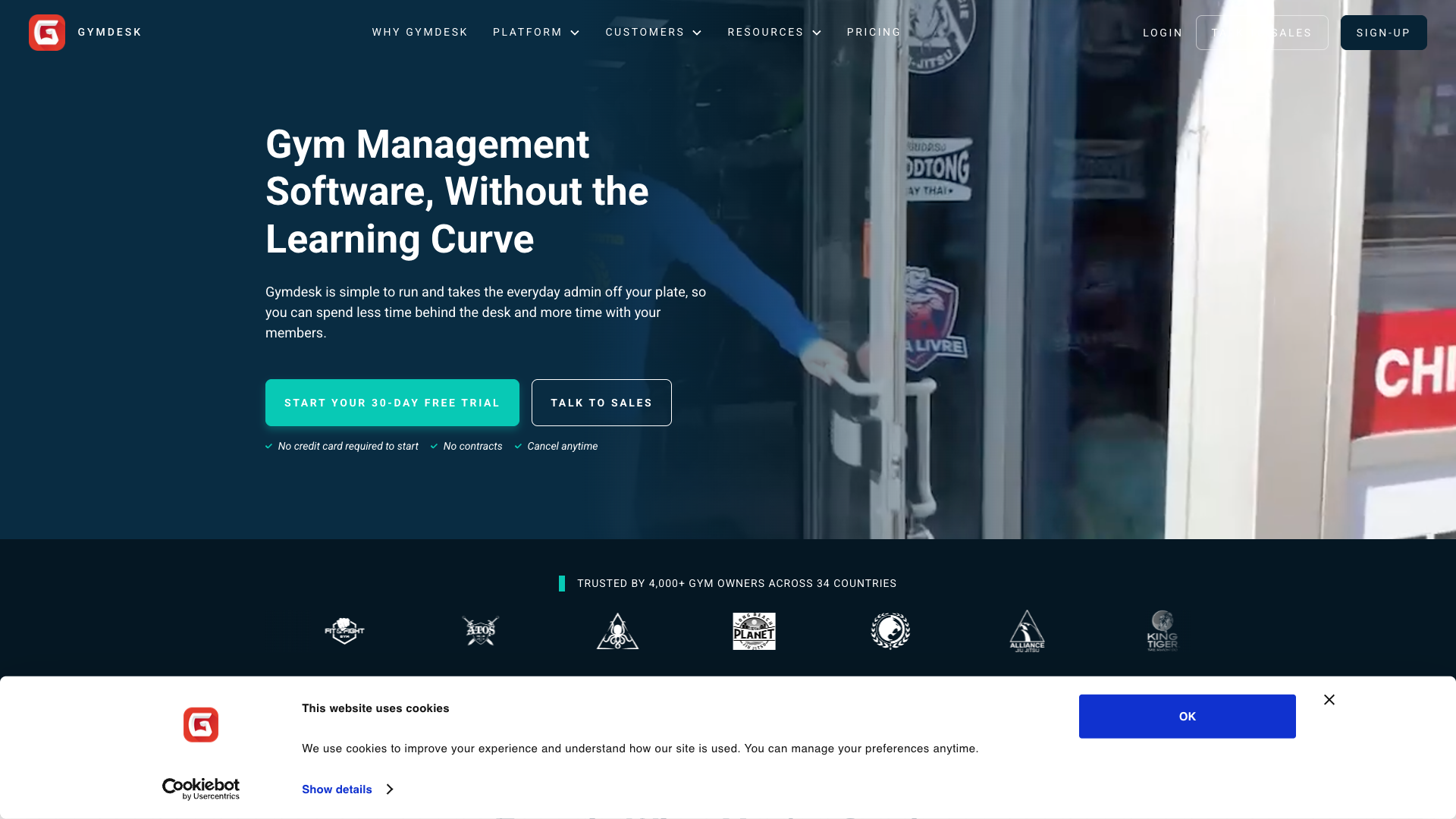
If your Sundays go to chasing failed payments and working out who actually paid, that's the specific problem Gymdesk was built to remove. It fits best where the owner is also the head instructor.
What makes it different
Gymdesk was designed for gyms from the first line of code. Plans scale by active member count: $75/mo up to 50 members, $100/mo for 51–100, $150/mo for 101–150, $200/mo for 151–250, all with Gymdesk Payments, and a quote above that. Use your own payment processor instead and it's $25 a month more ($40 on Large).
Every plan includes unlimited staff accounts and a responsive gym website. There are no per-staff fees and no upgrade wall in front of core features.
Key features
- Membership management: Members, family accounts, belt ranks, and contracts in one record.
- Automated billing: Set it once; failed-payment recovery runs on its own, so nobody spends Sunday reconciling.
- Attendance tracking: Check-ins and visit history at a glance, so you spot the member who's drifting before they cancel.
- Point of sale: Sell merchandise and gear from the front desk.
- Online booking: Classes, trials, and private sessions from your site or app.
- Marketing tools: Email campaigns, automated follow-ups, and lead tracking.
- Reporting: Revenue, attendance trends, and retention.
- Website builder: A gym site with scheduling, pricing, and lead capture included.
What to watch for
Not everything is in the base plan. Additional locations are $50/mo each with Gymdesk Payments ($100 with your own processor), and a branded member app is $100/mo with the first month free.
Door access is in beta at $100/mo for up to three doors and $29 per extra door. Hardware and installation are a separate one-time cost, quoted for your building. Payment processing and text messages bill at cost on whichever processor you use.
You're also not locked into one processor. Use your existing one—Stripe, Square, Authorize.net, GoCardless, or Ezypay—or move to Gymdesk Payments for a fully integrated setup. Your gym, your choice.
Either way the processing rates belong to the processor. In the US most of them land around 2.9% + $0.30 per transaction, though rates vary by processor and country.
Who it's best for
One-location gyms with 50 to 300 members. Martial arts schools most of all, where the owner teaches five or six days a week.
2. Vagaro—Best Budget Option for Solo Instructors
Published price: $30/mo list, $23.99/mo promotional, for one bookable calendar | Trial: Free trial
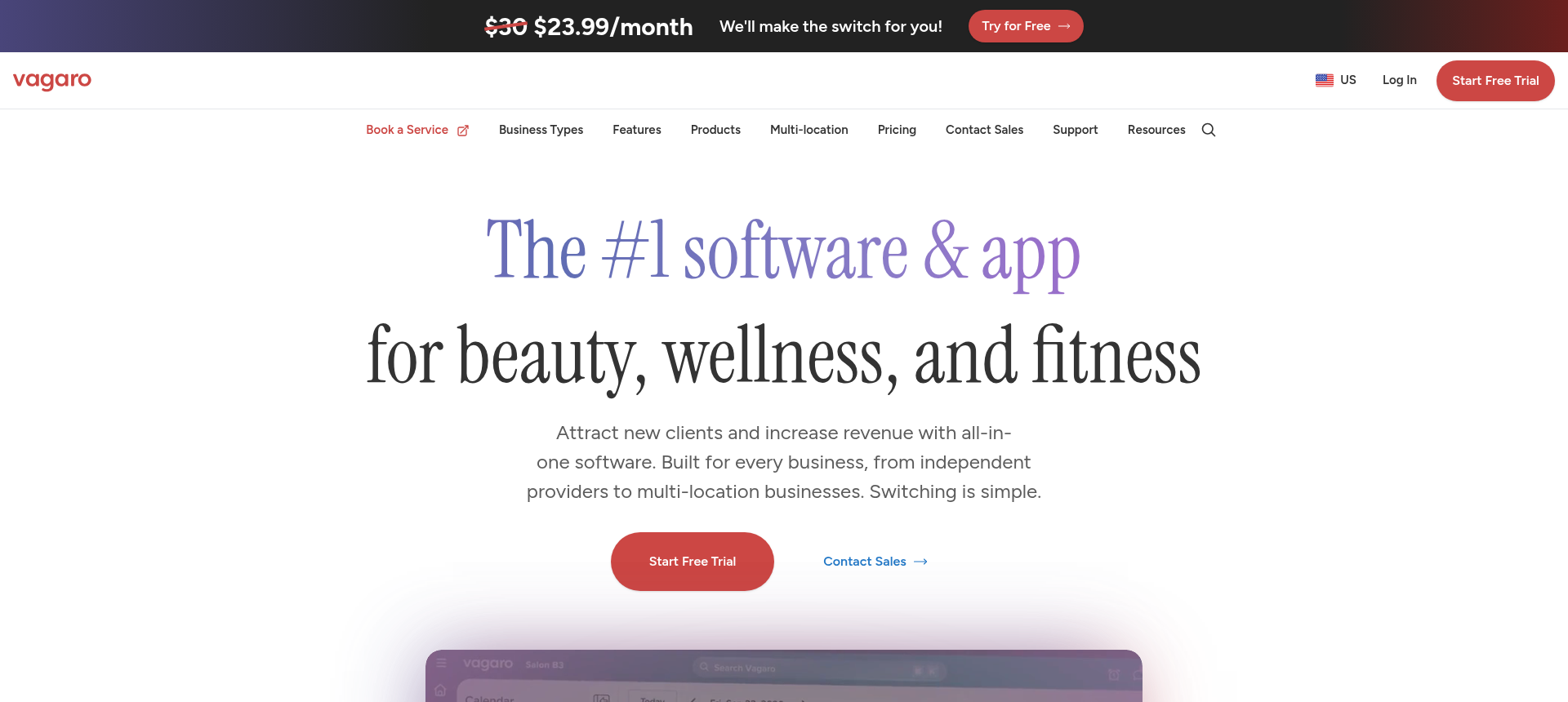
Thirty dollars buys one bookable calendar. That's the whole catch.
It's also why Vagaro is the cheapest real subscription here. Good fit for a new studio or a solo coach. It's the same platform salons and spas run on.
Key features
- Online booking and appointment scheduling
- Built-in POS for retail
- Payroll processing for staff
- Email and text marketing
- Livestream and on-demand class support
What to watch for
Vagaro's pricing page is clear that $30 buys one bookable calendar. Every extra instructor costs more, so a three-coach studio is not paying $30.
Branded apps, website builders, and advanced marketing all cost extra.
Gym features are thin or missing: no belt tracking, no rank management, and nothing for family billing.
Who it's best for
Solo coaches and personal trainers with a simple schedule and a hard budget.
3. WellnessLiving—Best All-in-One for Mid-Size Studios
Published price: $69/mo Starter, $199/mo Business, $349/mo BusinessPro | Trial: Demo only
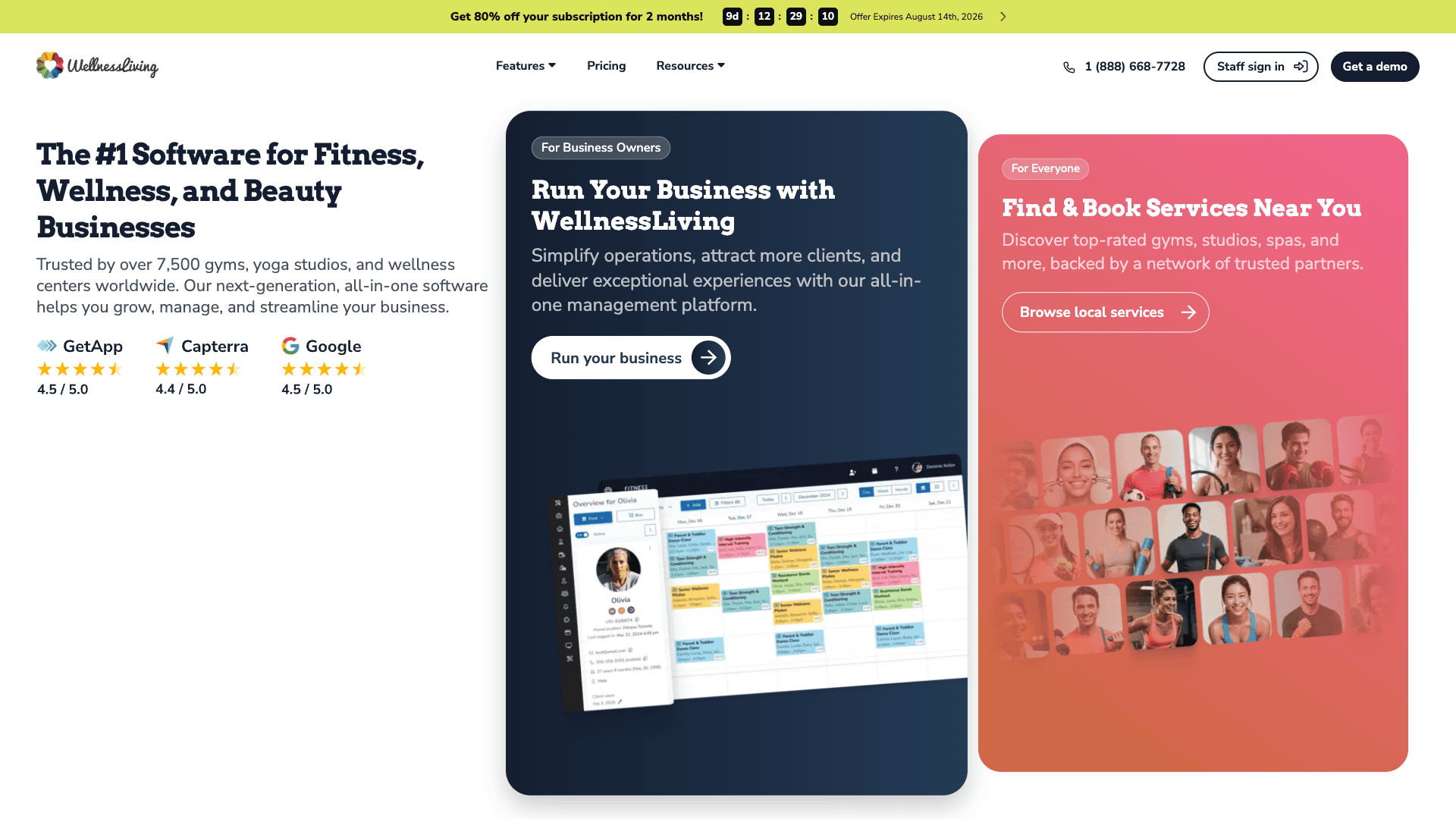
WellnessLiving pitches itself as the straight swap for Mindbody, and unlike Mindbody it prints its tier prices.
Key features
- Rewards and loyalty programs
- Email and SMS marketing automation
- Custom-branded member app on the top tier
- Staff management with scheduling and payroll
- Automated review collection and reputation tools
- Multi-location reporting and cross-location visits
What to watch for
Annual billing drops the tiers to $62, $179, and $314/mo. Promotional rates appear on the page too, but they're time-limited. Budget against list.
That depth has a cost. Expect a rough first few weeks if you're not especially technical. API access is a $19/mo add-on at every tier.
Who it's best for
Studios past 200 members that want one platform for everything, and have the patience to learn it.
4. Glofox (ABC Glofox)—Best for Boutique Fitness Chains
Published price: None—quote only | Trial: Demo only
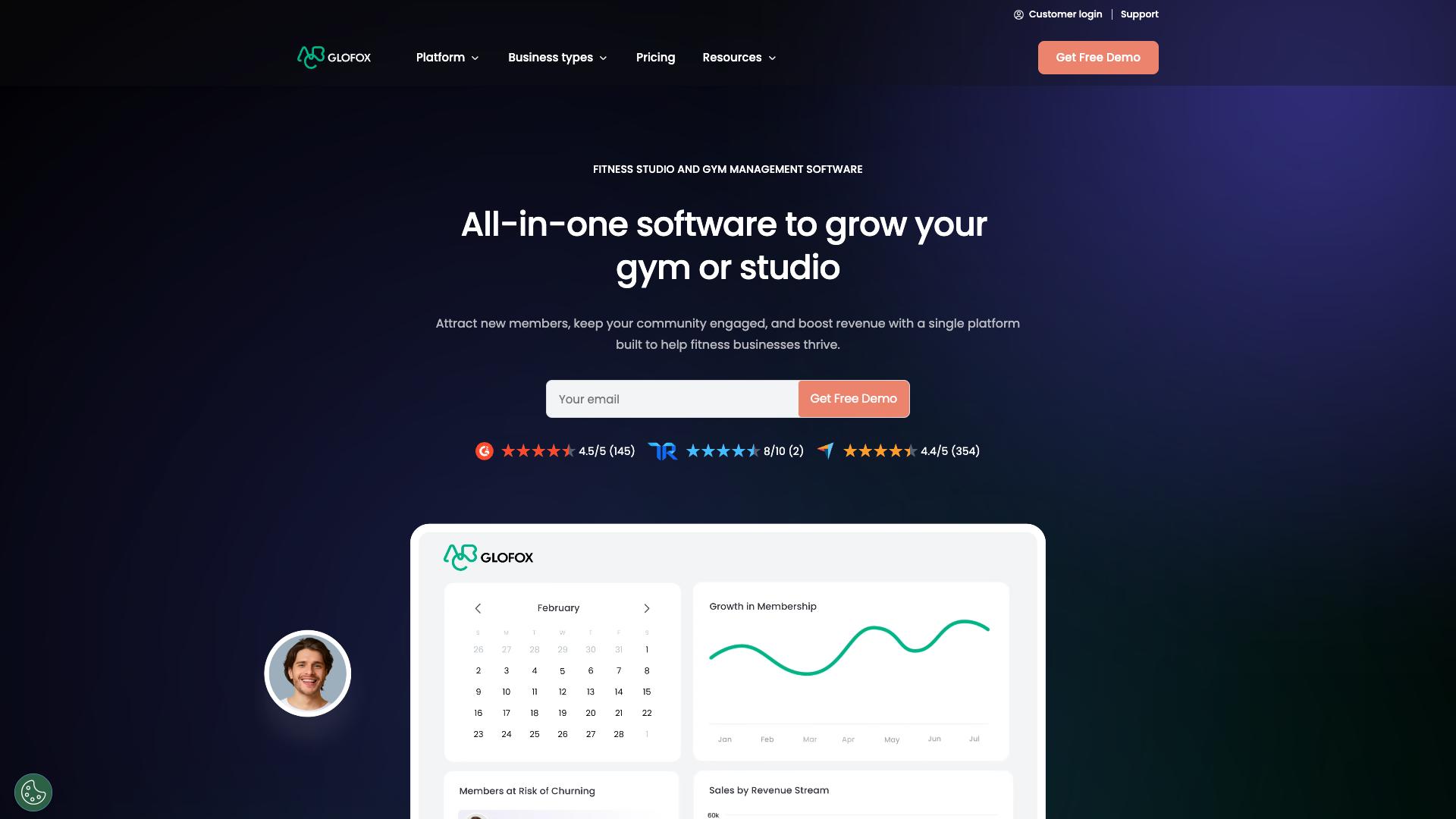
Glofox is now part of ABC Fitness. It's built for boutique brands that want a polished, app-first member experience across several sites.
Key features
- Custom-branded mobile app with a strong member-facing experience
- Lead capture and follow-up
- Automated check-ins and access control
- Staff-facing app for instructors
- Multi-location management dashboard
What to watch for
The pricing page publishes no rates at all. We checked on August 24, 2026 and it returns a quote request form and nothing else. You can't compare Glofox on price without booking a call.
There's also no built-in event management for workshops and no loyalty program. We put the two side by side on the Glofox comparison page.
Who it's best for
Boutique chains and multi-location studios where the member app matters most, and a sales call isn't a dealbreaker.
5. Momence—Best for Yoga and Pilates Studios
Published price: Free Basic, $60/mo Pro, $199/mo Custom | Trial: Free plan
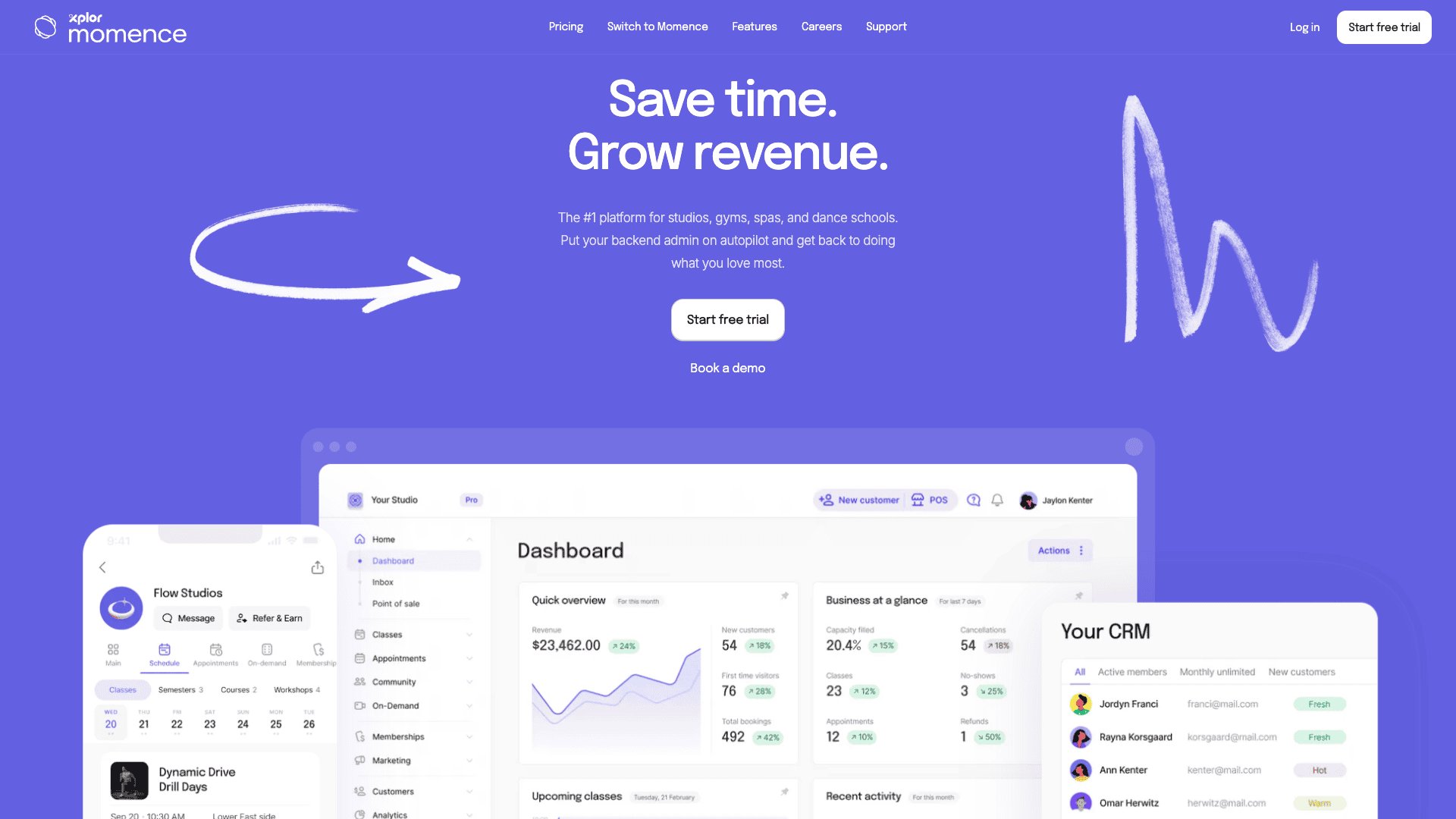
Yoga and Pilates owners keep landing on Momence, and it's one of the few platforms here with a genuinely usable free tier.
Key features
- Class scheduling with waitlists and series booking
- Built-in email and SMS marketing
- Embeddable booking widgets for your site
- Kiosk mode for self-service check-in
- Integrated payment processing
What to watch for
Read the payment terms before the subscription price. On the free Basic plan, Momence takes 5% from you plus 4% from the client on payments.
Pro drops your side to 2.5%. Only the $199/mo Custom tier removes the platform fee entirely.
That's on top of card processing, which Momence lists at 3.9% + $0.30 for online payments in the US. For a studio moving serious volume, the free plan is the most expensive option on this page.
Basic also excludes reporting, staff members, multiple locations, retail, and add-ons. Feature-by-feature: Momence comparison.
Who it's best for
Class-pack yoga and Pilates studios, especially newer ones testing the waters on the free tier before moving to Pro.
6. PushPress—Best for CrossFit and Functional Fitness
Published price: Free Core, $159/mo Pro, $229/mo Max | Trial: Free plan
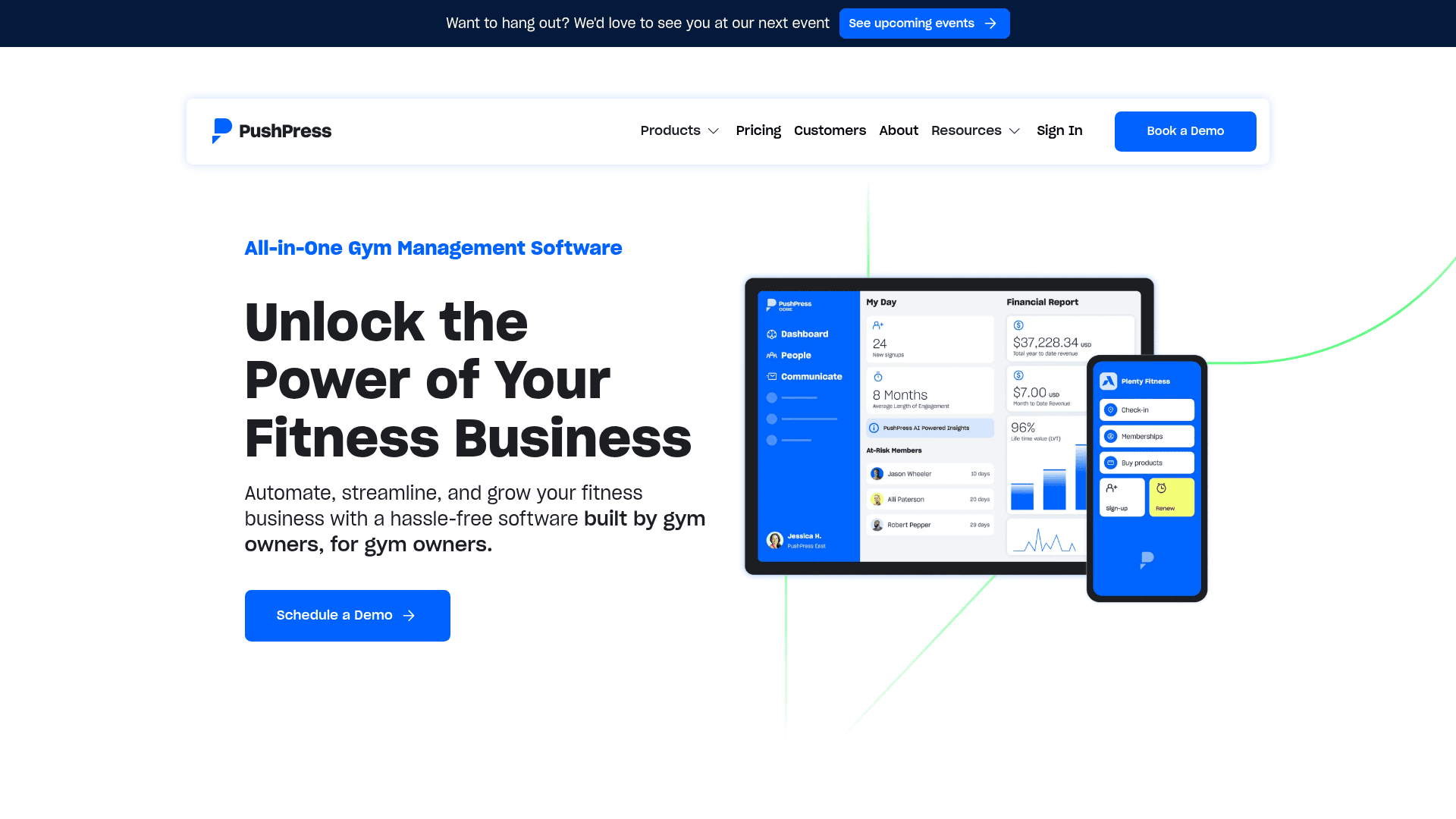
If you're opening a box next month with nothing to spend on software, start here. The free Core plan is the most accessible entry point on this list, and PushPress was built by gym owners with a loyal CrossFit following.
Key features
- Automated billing with failed-payment recovery
- Flex Fees to pass processing costs to members
- Member self-service portal
- Lead management and follow-up
- Integration-friendly architecture
What to watch for
The plan price is the beginning of the number. PushPress sells its capabilities as separate products:
- Train, from $79/mo, for workout tracking
- Grow, $329/mo, for full CRM and marketing
- Branded app, $81–$97/mo
The bundled Full Stack package lists around $559/mo.
A box that wants programming, marketing, and a branded app is looking at a very different figure than $159. The PushPress comparison page has the line-item breakdown.
Who it's best for
CrossFit boxes and functional fitness gyms. New ones especially, where you start free and add pieces as revenue allows.
7. Zen Planner—Best for Data-Driven Gym Owners
Published price: $99/mo Studio | Trial: Demo only
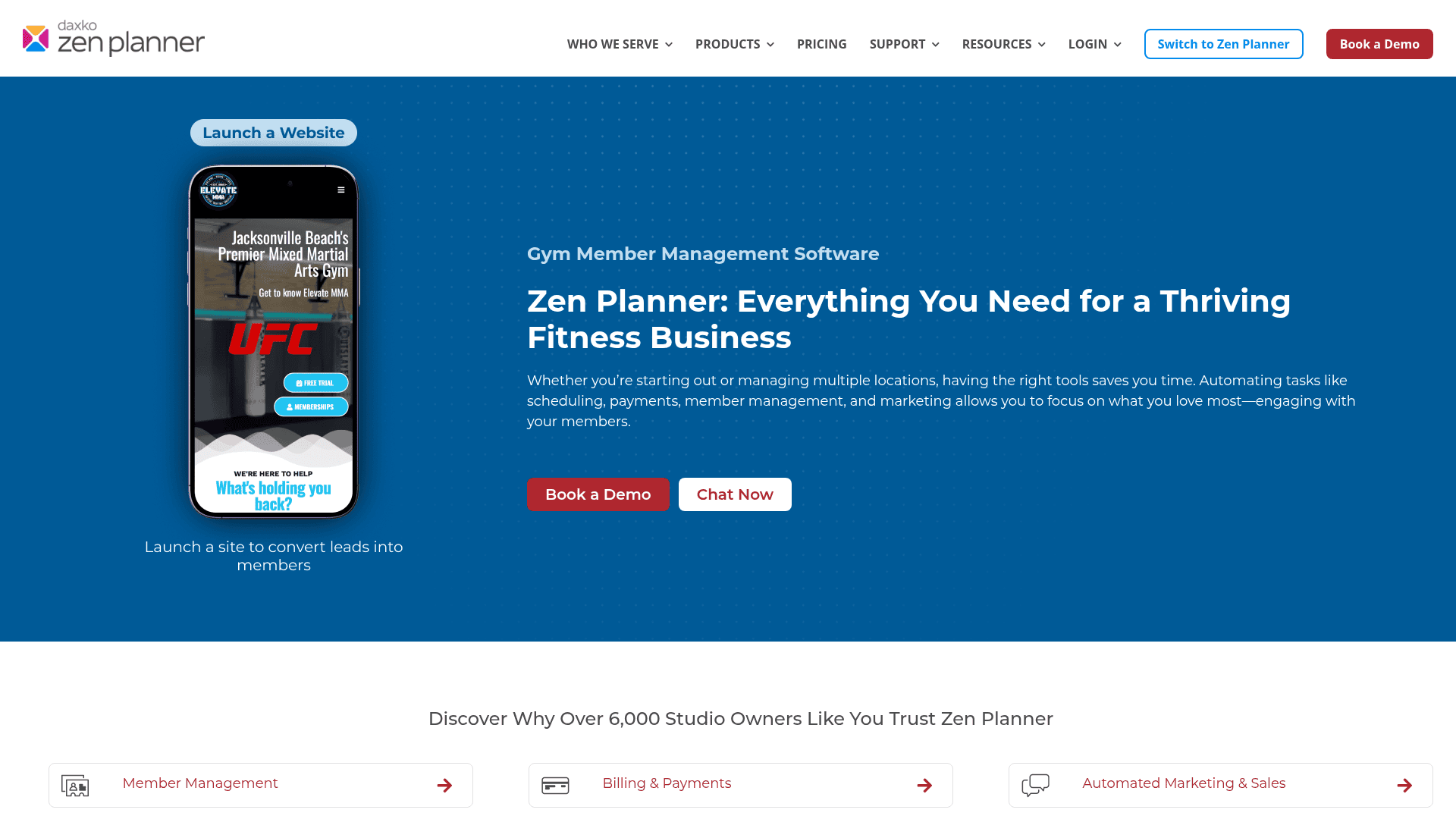
Zen Planner has been in this space a long time, and reporting and workout tracking are what it's known for. If you want dashboards behind every decision, it delivers them.
Key features
- Workout tracking and performance metrics
- Automated billing and payment processing
- Customizable reporting dashboards
- Staff scheduling and class management
- Website integration and online booking
What to watch for
Extensions are priced on top of the $99 base:
- Website: $99/mo
- Engage marketing suite: $249/mo
- Branded app: $39/mo
- EMV payment devices: $39/mo
Our arithmetic rather than theirs: base plus website plus branded app comes to $237/mo before you touch marketing.
The interface is functional and looks its age. Setup takes longer than average too. Feature-by-feature: Zen Planner comparison.
Who it's best for
Owners who genuinely use their reports. Strength and CrossFit facilities, mostly, where logging is part of the culture.
8. Pike13—Best for Multi-Location Studios
Published price: $139/mo annual or $159/mo monthly (Essential) | Trial: Free trial
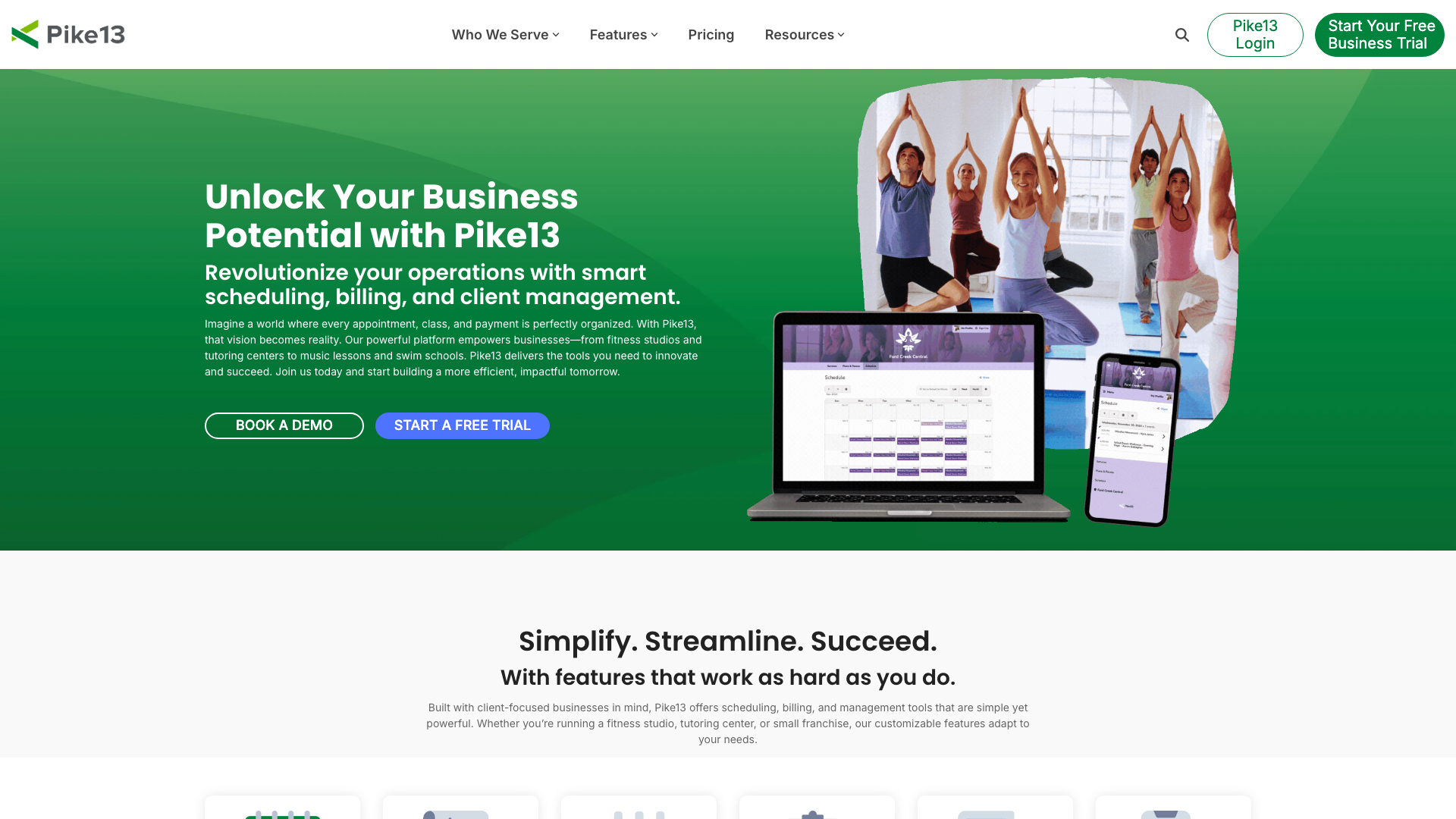
Outgrown your lighter tool? Pike13 is built for the next size up, where you're running several locations and a staff big enough to have a schedule of its own.
Key features
- Run several locations from one dashboard
- Sync staff hours to payroll
- Track member progress and goals
- Bill and invoice automatically
- Schedule recurring classes
What to watch for
The $139 figure everyone quotes is the annual-commitment price. Paying monthly is $159. The Advanced tier most multi-location operators actually need is $195/mo annual or $225/mo monthly, and Premium runs $249/$286.
For one location under 200 members, this is more platform than you need.
Who it's best for
Multi-location operators. Worth noting the tier most of them actually need is $195, not $139.
9. SimplyBook—Best for Basic Booking Only
Published price: Free, then €11.90/mo annual (Basic) | Trial: Free plan
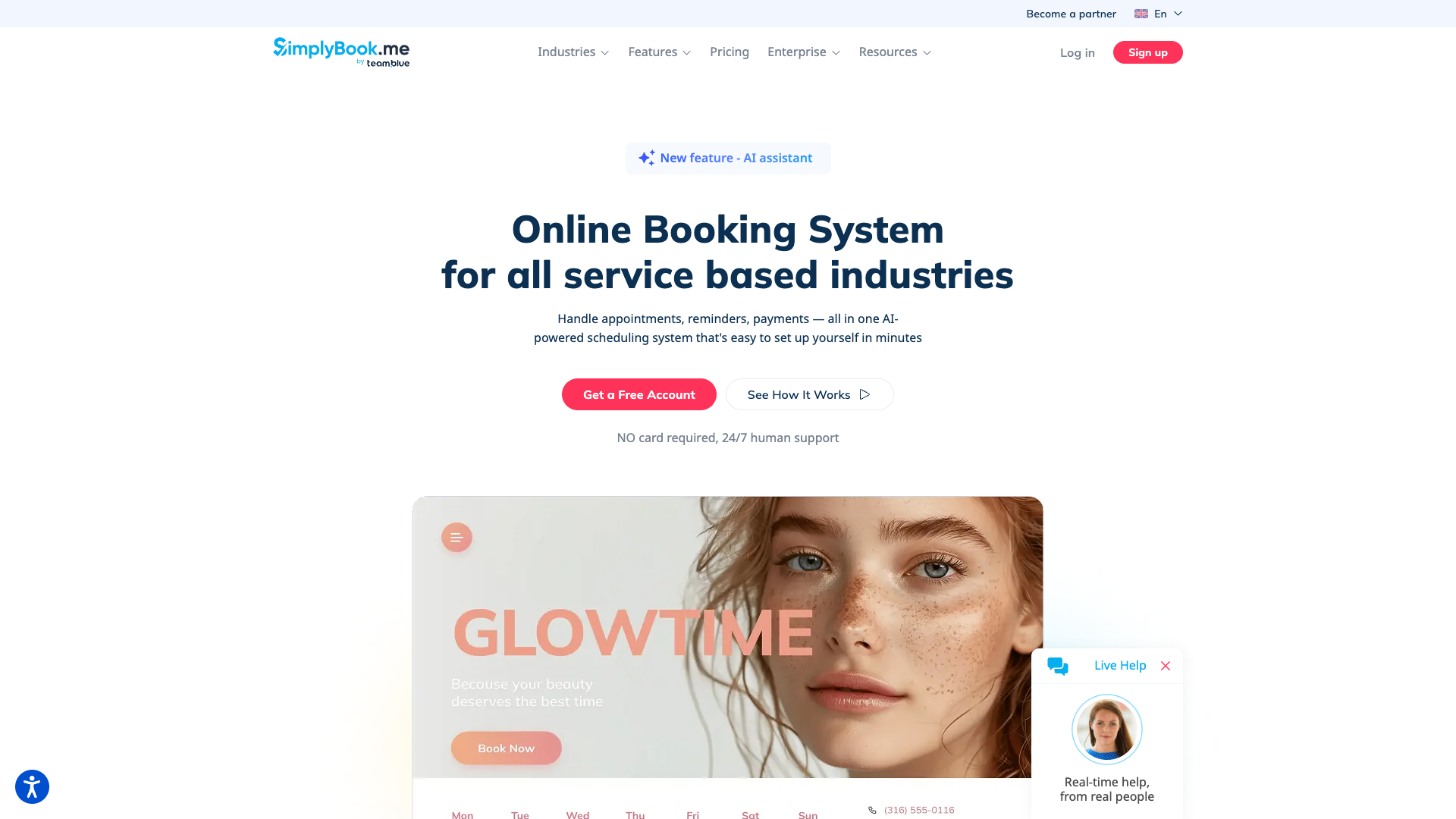
Fifty bookings a month, free. If taking bookings online is genuinely all you need, SimplyBook does it cheaply and well.
Key features
- Customizable booking pages and widgets
- Membership and class-pack management
- Payment processing through integrations, plus coupons and gift cards
What to watch for
Prices are in euros, not dollars, and every tier caps your monthly bookings.
Tier | Annual | Monthly | Bookings/month |
Free | €0 | €0 | 50 |
Basic | €11.90 | €13.90 | 100 |
Standard | €24.90 | €29.90 | 500 |
Premium | €49.90 | €59.90 | 2,000 |
SimplyBook publishes in euros. Verified on simplybook.me/en/pricing, 24 August 2026.
It's a general-purpose booking tool, so it doesn't track attendance the way a gym means it, and it has no belt ranks, no workout logging, and no real member management.
PRO TIP:
Treat SimplyBook as a stepping stone. If you're launching and need bookings tomorrow it's fine, but plan the move to gym management software early. Fifty bookings a month is roughly one class a day, so even a 20-member gym hits the free cap fast.
Who it's best for
Solo coaches and very small studios that need online booking and nothing more.
What Switching From Mindbody Saves You
The subscription is the smallest part of this.
Monthly software costs
Because Mindbody publishes no tier prices, the only honest comparison is against your own invoice.
Pull your last three Mindbody statements.
Add up everything, add-ons and processing included, and put that number next to the published price of whichever alternative fits your gym. The wider category is broken down in gym software costs.
Payment processing
The processor charges the processing. In the US that's roughly 2.9% + $0.30 a transaction, though it moves by processor and by country.
What varies is whether the platform takes its own cut on top. Momence's free tier does, and it's the biggest one here.
PushPress lets you push processing costs to members through Flex Fees. Gymdesk lets you keep your existing processor and pay its rate directly.
On $15,000/mo in billing, Momence Pro's 2.5% platform fee is $375 a month on top of card processing. That's more than any subscription on this page.
Admin time
"When I found Gymdesk, I saw you were a good CRM, you had email capabilities, you had some sort of automation. The billing process was very smooth... you offer everything I want and you're simple to use." — Luiz Costa, OCTA BJJ
Your mileage will differ, and any post quoting you an industry-wide figure made it up.
What you can measure yourself: count how many screens your current software takes to check in a member, run a failed payment, and add a family plan. Then count the same three on a trial account.
Quick win: Before you compare anything else, total your current all-in monthly cost with processing and every add-on in it. Most owners are surprised, and the surprise usually changes which column they're looking at.
What to Do in the Next Hour
Feature count won't decide this. If you're teaching five days a week you don't have time for software that needs a manual.
Six of these nine let you load your own member list into a free plan or a trial. Three are demo-only: WellnessLiving, Glofox, and Zen Planner. There you're evaluating a walkthrough of somebody else's gym.
Gymdesk is where we put our answer to that. Plans scale by member count. Every feature is in every plan, and staff accounts are unlimited.
You get a person on support, not a ticket queue.
The optional pieces carry published recurring rates on the pricing page: extra locations, a branded app, door access.
Thirty days, no card. Load your real member list and go find something that breaks.
FOR GYMS AND MARTIAL ARTS SCHOOLS
Plans scale by member count, unlimited staff accounts come standard, and every feature is in every plan. The optional pieces carry published rates. Thirty days, no credit card.
See Gymdesk pricingGym management software that frees up your time and helps you grow.
Simplified billing, enrollment, student management, and marketing features that help you grow your gym or martial arts school.


FAQ
Mindbody Alternatives FAQs
The questions gym owners ask most often before they switch.

Sean has spent the last decade creating content that helps businesses—small and not so small—grow smarter to allow operators to do more of what they love. You know, the fun stuff.
From shipping and international logistics to web development and marketing, he's done the work (not just the words) to scale retail and service businesses efficiently.
You can find his work at Sendle, Shogun, The Retail Exec, Gymdesk, and more.