
How Much Do Gym Owners Make? Real Salary Data & What Affects Your Income

Ask the internet how much gym owners make and it answers fast. About $86,000 a year, says one salary site. Around $80,000, says the government.
Both numbers are real. Neither one measures a gym owner.
Salary sites count job postings. The government counts people who get a paycheck. A gym owner gets whatever's left after rent, coaches, and the card processor have all been paid, and some months that's a number with a minus sign in front of it.
So this guide works backward.
It starts with the only owner-income dataset I could find that discloses its sample, then shows what gyms bring in, then does the subtraction.
(Quick disclosure: Gymdesk sells gym software, so I'd very much like your gym to stay open. Some of the revenue data below comes from gyms on the Gymdesk platform, and I'll say so every time it does.)
Quick answer
The median owner of a big group-class gym kept $52,200 in 2025, according to Two-Brain Business's State of the Industry report, which drew on data from about 7,000 gyms. The mean was $97,656, pulled up by a smaller group of high earners.
Are gyms profitable? Yes, once they have enough members. Gyms should break even before 50 members and be paying the owner a good wage by about 100, per the same Two-Brain report.
- Salary sites run higher: ZipRecruiter lists $86,197, built from job postings.
- Entertainment and recreation managers (the federal category that includes fitness center managers) earn a median $79,520, per the BLS (May 2025).
Average Gym Owner Salary: What the Data Says
Every source gives you a different number for average gym owner income, and it's tempting to average them and move on.
Please don't. Those sources are measuring different people.
Here's what each one counts:
- Two-Brain Business (2025 data). The gym-mentorship company's annual State of the Industry report puts median owner benefit at $52,200 a year for big group-class gyms, with a mean of $97,656. Owner benefit is what the owner paid themselves plus the business's profit, drawn from two gym-software companies' data on about 7,000 gyms. It's the closest measure of what owners keep, and it leans toward CrossFit-style and coaching gyms.
- Bureau of Labor Statistics (May 2025). Entertainment and recreation managers (the federal category that includes fitness center managers) earn a median of $79,520 and a mean of $89,750. The bottom 10% earn under $46,270, and the top 10% earn over $139,110. These are employees on a payroll, across every kind of recreation business.
- ZipRecruiter. Lists an average gym owner salary of $86,197, with top earners at $242,000. It's derived from employer job postings and third-party data, which tells you what someone would pay a gym manager. Gym owners rarely hire themselves off a job board.
Measures: owner take-home
Two-Brain Business (2025 data)
$52,200
Median owner benefit, big group-class gyms
What the owner paid themselves plus the business's profit, from about 7,000 gyms.
Measures: employee paychecks
BLS (May 2025)
$79,520
Median pay, entertainment and recreation managers
Employees on a payroll, across every kind of recreation business.
Measures: job ads
ZipRecruiter
$86,197
Average gym owner salary
Derived from employer job postings and third-party data.
Sources: Two-Brain Business State of the Industry report; Bureau of Labor Statistics, Occupational Employment and Wage Statistics; ZipRecruiter.
The two sources that measure paychecks land around $80,000 to $86,000. The one that measures what owners took home lands at $52,200.
So the median owner keeps about $30,000 less than the paycheck numbers suggest.
The realistic picture for most owners: about $2,800 to $6,500 a month for an established group-class gym. That's Two-Brain's "average" range for big-group owners in 2025, as Morning Chalkup reported it.
Above it, you're doing better than most. Below it, you have plenty of company.
We'll keep you in the loop with fresh content, podcasts, how-to guides, tool reviews, and product exclusives.
What a Gym Brings In
Revenue is the part anyone can count. Owner pay comes out of it, so start there.
For martial arts gyms, Gymdesk has the numbers. The Gymdesk 2026 benchmark report looked at collected revenue across 4,196 martial arts gyms on the platform, and total revenue climbs hard with member count:
Gym size | Gyms | Avg. monthly revenue | Revenue per member |
|---|---|---|---|
Under 50 members | 1,258 | $2,632 | $102 |
50–99 | 1,112 | $6,905 | $92 |
100–199 | 1,040 | $13,311 | $92 |
200+ | 786 | $26,821 | $66 |
Source: Gymdesk Benchmark Report 2026, martial arts gyms on the Gymdesk platform. Revenue per member = collected revenue ÷ active members.
If you run a 200-member gym, you're bringing in about 10 times what a sub-50 gym does.
Revenue per member dips at the top end because bigger gyms tend to run more family plans and kids pricing, which add members at a lower price each.
For big group-class fitness gyms, Two-Brain's 2025 data puts median revenue at $18,750 a month. That's roughly $225,000 a year (my math, not theirs).
The gym revenue calculator runs the membership math on your own numbers.
From Revenue to Take-Home: The Math
A gym that grosses $13,000 a month does not pay its owner $13,000 a month. Most of that money has somewhere else to be.
Where the money goes
Every gym's costs fall into the same handful of lines. Here's what eats into revenue before you see any of it:
- Rent. Usually the biggest single line, and the hardest to change once you've signed.
- Payroll. Instructors, front desk, and cleaning, whether you hire them as 1099 or W-2 staff. Across the 46,015 private fitness and recreational sports center establishments BLS counted in 2025, staff averaged $22,592 a year, which suggests a lot of this industry runs on part-time coaches.
- Equipment and maintenance. The rower that sounds like a dying goose won't fix itself.
- Insurance. Higher for contact sports and high-intensity training.
- Marketing. Heavier while you're growing.
- Software and card processing. Small per member, and it adds up.
Whatever's left is yours. Rent and payroll are the two biggest lines, so those two lines are worth fighting over.
A worked example
To see how those lines add up, meet Sweat Equity Fitness.
It's a made-up gym (the name is the most honest thing about it). It has 120 members paying an average of $110 a month, a little above the benchmark's $92 per member, so its monthly revenue lands near the benchmark average for a gym its size.
That's $13,200 a month coming in. The costs below are example figures I picked to show the math:
Monthly line | Sweat Equity Fitness |
|---|---|
Revenue | $13,200 |
Rent and utilities | −$4,200 |
Coaches and front desk | −$3,600 |
Insurance, software, card processing | −$1,100 |
Equipment and maintenance | −$400 |
Marketing | −$400 |
Left for the owner | $3,500 |
Illustrative example. Sweat Equity Fitness and its costs are made up. Your lines will differ.
That's $42,000 a year, before income tax, and it sits inside Two-Brain's average range. A normal, busy gym can pay you less than a salaried manager makes.
Now add the hours.
If you also coach 15 classes a week, part of that $3,500 is a coaching wage you'd otherwise pay someone else. Pull it out and the business profit gets smaller still.
Want your own number? Enter your revenue and costs here:
How Much Do Gym Owners Make by Gym Type and Business Model?
The one split with real survey data behind it is how you deliver coaching.
Two-Brain sorts gyms that way, and in 2025 the bar for an "above average" owner looked like this:
Gym model | Above-average bar, monthly |
|---|---|
Big group classes | $6,500 or more |
Small group | $7,000 or more |
One-on-one personal training | $8,500 or more |
Source: Two-Brain Business State of the Industry 2025, via Morning Chalkup. Owner benefit = owner pay plus business profit.
Smaller groups and private training charge more per member, so the bar sits higher.
If you run a personal training studio, your income is often tied to your own coaching hours, which makes it harder to grow without hiring.
By gym type, the data gets thin fast. You'll find tidy tables online with an income range for every gym type, and most of them trace back to software blogs citing each other with no sample behind them. So this guide doesn't print one.
Each discipline gets its own deep dive:
Martial arts
CrossFit
Studios
Each one shows its sources, including where the sources run out.
Are Gyms Profitable?
Yes, once they have enough members. Below that line, a gym is an expensive hobby with a waiver.
The line is probably lower than you think.
Two-Brain's 2025 report says you should break even before 50 members and, by about 100, be profitable and earning a good wage.
Member count milestones
Under
50
members
Break even
About
100
members
Profitable, paying the owner a good wage
About
150
clients
Two-Brain's $100,000 rule of thumb
Source: Two-Brain Business State of the Industry 2025, via Morning Chalkup (50 and 100 members). The 150-client figure is Two-Brain's rule of thumb for $100,000 a year.
So is owning a gym profitable? For most established owners, yes, and the range is wide.
Half of big-group owners took home less than $52,200 in owner benefit in 2025. The other half took home more, some of them a lot more, which is why the mean sits near $98,000.
Which half you land in comes down mostly to member count and price, and how long your members stick around.
The gym break-even calculator shows where your own line sits.
How Long Until a Gym Becomes Profitable?
How fast can you sign people up? That's most of the answer.
A gym becomes profitable once enough members cover your costs, and how many months that takes varies wildly by market.
Two-Brain's 50 and 100 are a starting point, and your own target comes straight from your costs. If you're still pricing out the cost to open a gym, plan around them.
- Operational break-even is the month revenue covers expenses. Divide your monthly costs by your average membership price, and that's your member target.
- Full payback is the point where you've recouped your startup costs. That takes longer, and a bigger build-out stretches it further.
- Your lender's timeline is a third deadline if you borrow to open a new gym or to fund buying a gym that's already running. Ask your lender what cash-flow timeline they want to see before you sign anything, and build your plan to beat it.
Operational break-even
The month revenue covers your monthly costs.
Full payback
Your startup costs are recouped. That takes longer.
Your lender's timeline
The cash-flow timeline your lender wants to see, if you borrow.
What speeds it up
What gets you to your break-even count faster:
- Pre-selling memberships before you open. Money from members who sign before day one goes toward the first rent check.
- A location people pass every day. Walk-ins are free marketing.
- Keeping year-one costs boring. The neon sign can wait.
- Strong retention from the first week. A member who stays is one you don't have to replace on the way to your break-even count, and these gym retention strategies start on day one.
Can You Make Six Figures Owning a Gym?
A hundred thousand a year works out to about $8,300 a month, well past Two-Brain's $6,500 above-average bar for big group gyms.
Plenty of owners clear it, and the median owner is about $48,000 short.
The 2025 Two-Brain mean of $97,656 sits just under the line. In its own client base, Two-Brain told BarBend in 2024 that almost 25% of owners were earning $100,000 a year. Those are gyms paying for business coaching, so they're hardly a random sample.
Two-Brain's rule of thumb is $100,000 a year with about 150 clients. Treat it as a target someone is selling, because it is. The math is still useful.
Getting there runs through the same levers as the rest of this guide: your price, how long members stay, collecting every payment, and how much of the work you still do yourself.
What Factors Determine a Gym Owner's Salary?
Where you land between the bottom of those ranges and the top depends on a handful of things.
Some you pick on day one, and some you work on every month.
Location
Where you operate changes what you can charge and what you pay.
Nobody publishes gym owner income by state. The closest thing is what entertainment and recreation managers (the federal category that includes fitness center managers) earn, from the BLS Occupational Employment and Wage Statistics survey (annual mean wage, May 2025).
It's a fair read on local wage levels, which shape what you'll pay your own staff.
Top five highest-paying for managers:
State | Manager pay (annual) | Manager pay (monthly) |
|---|---|---|
District of Columbia | $114,770 | $9,564 |
Washington | $113,810 | $9,484 |
Minnesota | $112,680 | $9,390 |
Colorado | $109,890 | $9,158 |
New York | $105,760 | $8,813 |
DC isn't a state, and its figure rests on about 30 jobs. Maine ($101,930) is next in line.
Bottom five lowest-paying for managers:
State | Manager pay (annual) | Manager pay (monthly) |
|---|---|---|
West Virginia | $52,600 | $4,383 |
Arkansas | $58,040 | $4,837 |
Louisiana | $64,690 | $5,391 |
Ohio | $64,760 | $5,397 |
Alabama | $68,790 | $5,733 |
BLS publishes no mean for Delaware, Montana, or North Dakota in this category, and New Mexico's is suppressed.
The states that pay managers more also charge more for rent, coaches, and groceries, so the bigger number comes with bigger bills.
Your local market matters more than your state average: competition, demographics, how far people will drive for a class.
A gym in a growing suburb with no competitor nearby can out-earn one in a crowded downtown.
Gym size and membership count
This is the big one.
In Gymdesk's martial arts data, revenue roughly doubles each time member count doubles (the benchmark table above has the numbers).
Your costs grow too: more coaches, bigger space, and more wear on equipment. You make more only if revenue grows faster than those costs do.
Business model and pricing
Two gyms in the same town with the same member count can pay their owners very different amounts, mostly because of price.
- Low-price, high-volume gyms need hundreds or thousands of members to make meaningful money, and they run thin.
- Coached group and boutique gyms need fewer members at a higher price, and they have to deliver an experience that justifies it.
- Hybrid models layer personal training, workshops, retail, or nutrition coaching on top of the base membership.
In Gymdesk's martial arts benchmark data, the typical member pays about $100 a month. List prices run closer to $165, so family and multi-member discounts set your real price more than the rate card does.
Years in operation
Age helps a gym mostly because an older gym has had longer to collect members. The member targets in the profitability section apply however long it takes you to reach them.
Once you're past them, referrals start doing some of your marketing for you. Happy members are the only marketing team that pays you for the privilege.
Owner involvement
An owner who teaches 20 classes a week, handles all billing, and answers every message might clear $80,000 working 60 hours a week.
That's about $26 an hour.
Another owner who's hired well and handed off operations might clear the same $80,000 in 25 hours.
That's about $62 an hour.
Hypothetical owner 1
Teaches 20 classes a week, handles all billing, answers every message.
- Hours
- 60 a week
- Income
- $80,000
About
$26
an hour
Hypothetical owner 2
Has hired well and handed off operations.
- Hours
- 25 a week
- Income
- $80,000
About
$62
an hour
Same income, very different Tuesday.
How to Increase Your Income as a Gym Owner
The fastest raise usually comes from the members you already have: charge them what the coaching is worth, keep them longer, and collect every payment.
These run roughly in order of effort.
Good gym marketing brings in new members too. These usually pay off faster.
1. Raise your prices
If your rates have sat still for two or more years, rising costs have been giving you a pay cut every year since.
This guide to raising gym prices without losing members walks through how to announce it.
A $10-a-month increase across 150 members adds $18,000 a year in revenue.
The math on a $10 raise
$10
a month more
150
members
12
months
$18,000
a year in revenue
2. Keep more of your members
A member who stays an extra six months is revenue you didn't spend marketing dollars to replace.
Harvard Business Review puts the cost of winning a new customer at five to 25 times the cost of keeping one, across industries.
Watch attendance. Members whose visits drop off are more likely to cancel, and a check-in text can save a membership worth about $1,200 a year at $100 a month.
Gym management tools that track attendance automatically flag those members before they cancel.
3. Collect what you're owed
Two settings fix most of it.
The two settings
- Require a card on file before a membership starts
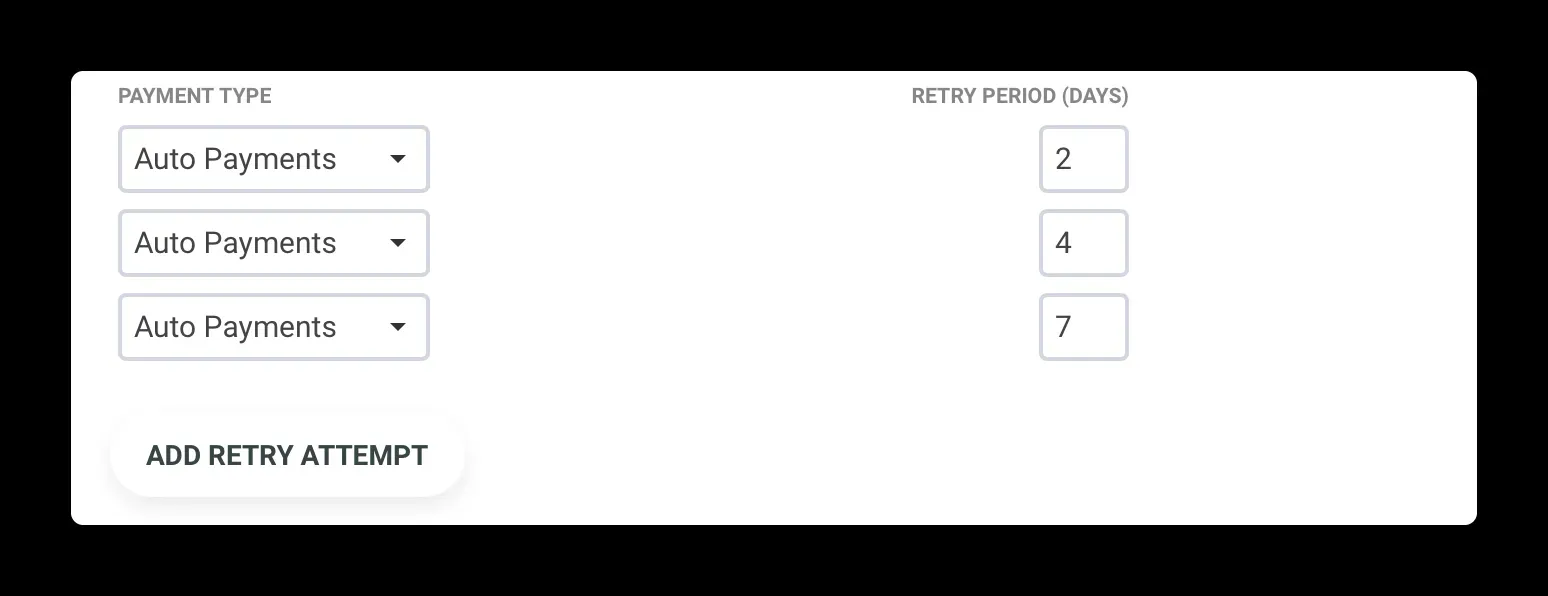
- Leave automatic retries on
Gyms with retries on recover roughly six in 10 failed payments.
Source: Gymdesk Benchmark Report 2026
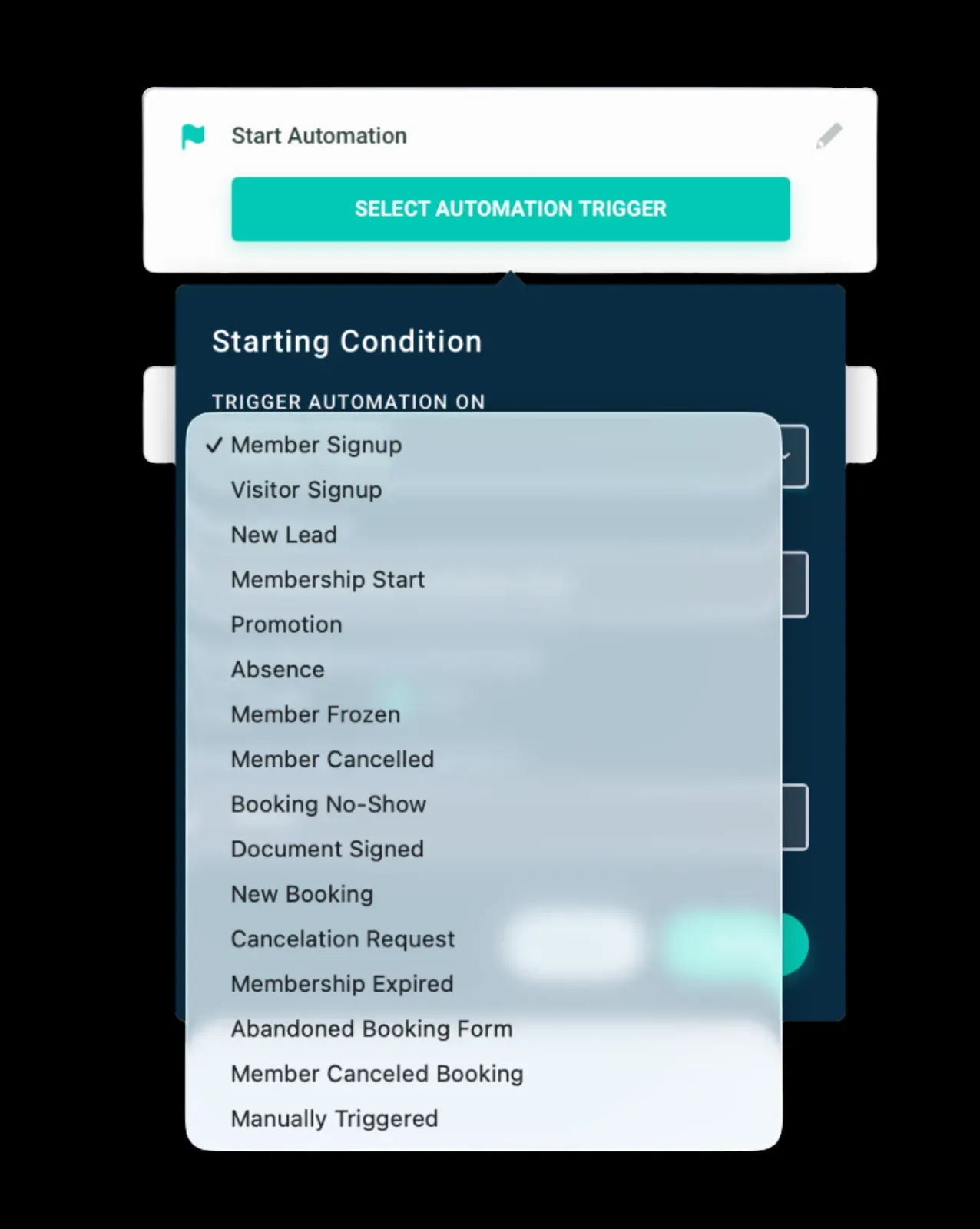
Any decent gym management software should run the retries for you.
In Gymdesk, automated billing retries failed payments on its own, and a check-in rule can require a payment method on file before a member gets in the door.
4. Add income beyond memberships
Private lessons, workshops, retail, nutrition coaching, corporate wellness partnerships.
These often carry better margins than the base membership, and the extra income raises revenue per member without needing more members.
The guide to alternative income ideas is written for martial arts schools, and most of it works in any gym.
5. Cut operational waste
Audit your expenses every quarter.
Are you paying for software you don't use? Can you renegotiate the lease? Does your staffing schedule match when people show up?
Cutting $500 a month in waste puts $6,000 a year back in your pocket. That's a vacation, or a new rower that doesn't honk.
6. Track your numbers
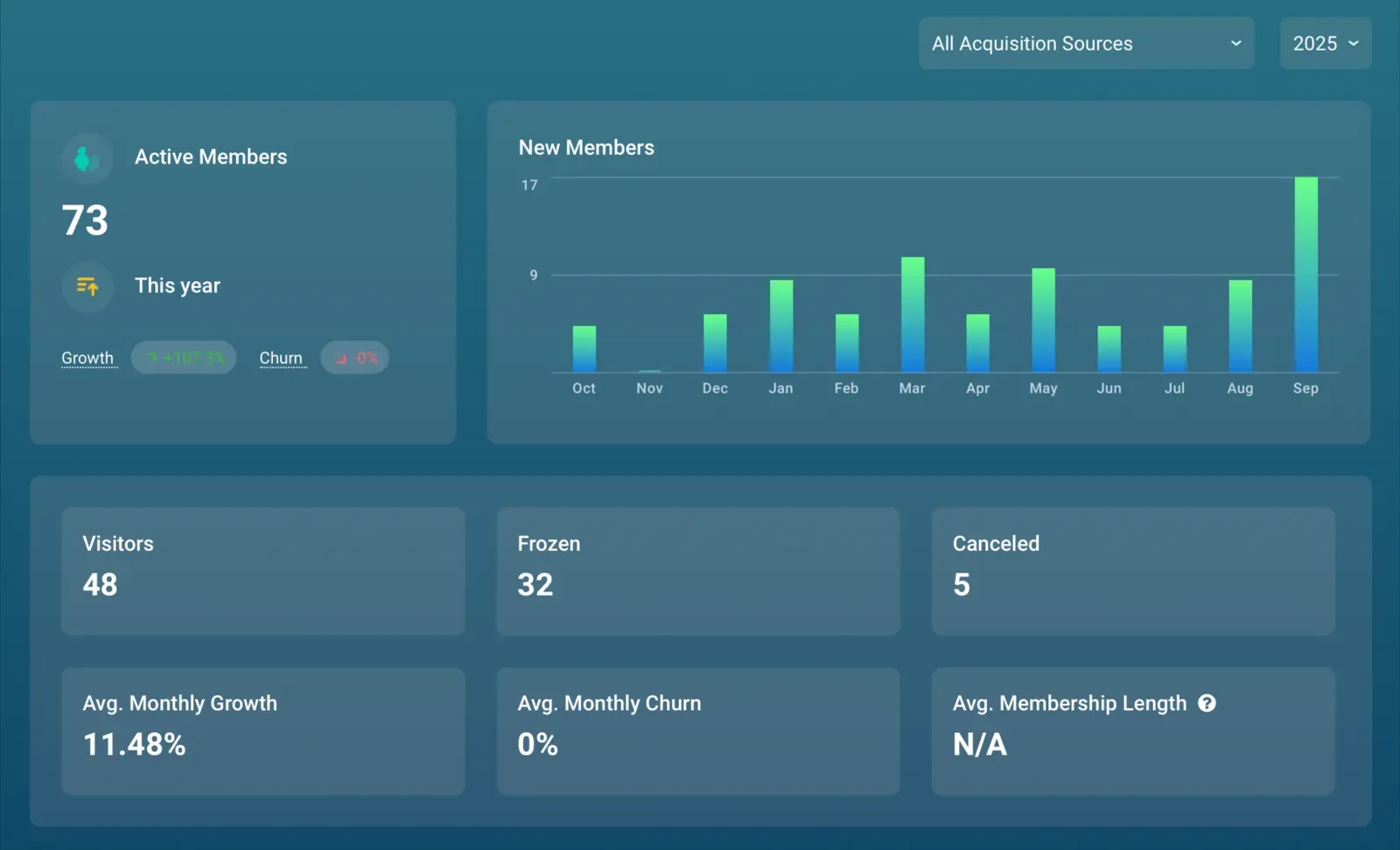
At minimum, know your revenue per member, your monthly costs, your churn, and how long members stay.
Gymdesk reporting pulls revenue (including the average per member), churn, and average membership length from your billing data.
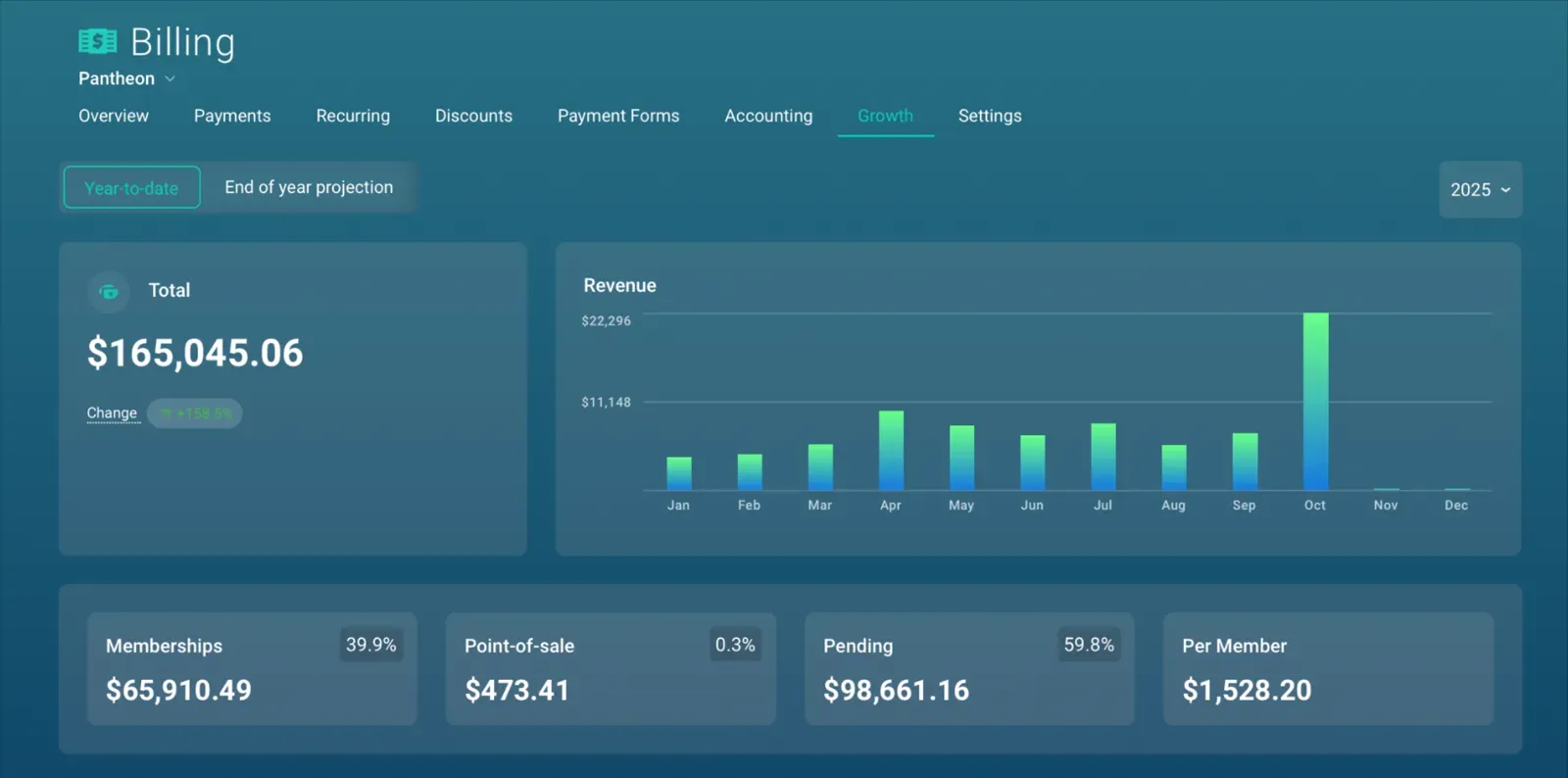
Expenses are the one column you fill in yourself.
Count Members Before You Count Your Salary
The median group-gym owner took home about $52,200 in owner benefit in 2025. Salary sites say more because those sites count paychecks, and an owner gets paid after everyone else.
Until you reach the member targets above, expect the gym to pay you very little.
What moves you from the bottom half to the top half is mostly unglamorous.
Price with confidence, keep members past their first few months, collect every dollar you're owed, and get yourself out of the front-desk chair.
The chair will miss you. It'll get over it.
Free for 30 days
If chasing payments is eating your evenings, Gymdesk retries failed cards on its own and can message members who stop showing up. You can try it free for 30 days and see whether it pays for itself.
Gym Management Software That Gets You Back On The Mats
Run your gym smarter with the right software. Automate your attendance tracking, lead management, belt tracking, and more.


FAQ
Gym Owner Income FAQs
The short answers to the questions gym owners search most.

Sean has spent the last decade creating content that helps businesses—small and not so small—grow smarter to allow operators to do more of what they love. You know, the fun stuff.
From shipping and international logistics to web development and marketing, he's done the work (not just the words) to scale retail and service businesses efficiently.
You can find his work at Sendle, Shogun, The Retail Exec, Gymdesk, and more.