

KEY TAKEAWAYS:
- Pilates studios break software in a way most fitness businesses don't: your inventory is bolted to the floor. Three reformers means three spots, and an empty one at 6am is gone forever.
- The most common failure is a platform that does group classes beautifully and appointments badly. Around 56% of Pilates studios run private training, so half your business can end up in a workaround.
- Waitlist automation is not a nice-to-have at a five-person cap. One cancellation nobody backfills is a fifth of the class.
- Ask about migration on the demo call, while you still have leverage. Card data, ACH mandates, visit history, and unused package balances are the four things that go missing, and prepaid packs are how Pilates studios make money.
- Most-used doesn't mean best-liked. Mindbody runs about a third of surveyed studios and generates most of the complaints.
Somewhere around 6am tomorrow, a reformer in your studio is going to sit empty.
Someone cancelled the night before. Maybe they texted. Maybe they just didn't show. There are four people on a waitlist who would have taken that spot in a heartbeat, and not one of them found out it was free.
So the machine spends the hour doing a convincing impression of a very expensive coat rack.
That spot is gone now. You can't sell it later and you can't put it on a shelf. It expired at 6:01.
This is the part of running a Pilates studio that generic software advice keeps missing.
Everyone writes about scheduling like the only question is whether clients can book online. They can. That was solved a decade ago.
The question is what your platform does in the ninety minutes between a cancellation and a class, and most of them do nothing at all.
So let's go through what actually matters when you're choosing Pilates studio software, what studio owners are really using, what it costs, and the part nobody warns you about until you're already three months in.
Why Pilates Studio Software Is a Different Problem
Start with the arithmetic, because that's where your studio and a gym part ways.
A gym sells access. If forty people show up to a 24-hour fitness floor, that's fine. If sixty show up, still mostly fine. Nobody rewrites the schedule.
You sell a seat on a specific machine at a specific hour, and you own a countable number of machines.
That one difference cascades through everything.
Your revenue per class is capped before anyone walks in, and your instructors get paid by the session.
Your clients buy packs of ten, vanish for two months, and come back expecting those ten to still be there.
So your cancellation policy is a revenue mechanism. A seat that goes unfilled is just gone.
And most studios are running two business models at once.
The PilatesBridge industry survey of Pilates studio owners found that 56% offer private training and 50.6% run group classes. Those two figures add up to more than 100%, so a meaningful share of studios are running both, and a platform that's brilliant at one is frequently mediocre at the other.
That's where most Pilates studios get burned. The platform handles your group schedule beautifully and turns your privates into a spreadsheet.
Seven Things That Break in Pilates Studio Management Software
If you only take one thing from this guide, make it this list. These are the failure points that show up after you've migrated, when switching again is expensive.
Spot and equipment booking
Can a client reserve reformer three, or do they just reserve "a spot"?
It sounds pedantic until you have a client recovering from a shoulder injury who needs the machine by the wall, or a regular who has quietly used the same reformer for two years and gets unsettled when someone's on it.
Studios with a mix of Pilates reformers, towers, and mats feel this hardest.
A tower slot and a mat slot in the same class are not interchangeable, and a platform that treats them as one pool will oversell one and undersell the other.
Waitlist automation
The question is whether the waitlist promotes people by itself.
A manual waitlist is a to-do list you've assigned yourself at 9pm. Automatic promotion means the cancellation triggers a notification, the next person accepts, they're charged, and the roster updates before you've read the original message.
The automation rules behind that loop are the thing you're really buying.
The survey found 49% of studios use waitlists, which is lower than it should be for a discipline this capacity-constrained. My read is that plenty of owners have a waitlist feature and don't trust it enough to rely on it.
Late-cancel and no-show enforcement
You need a policy, and you need the software to enforce it without you being the villain.
The best implementations make the charge automatic and the communication clear at booking, so the client agreed to the terms before they broke them.
If enforcing your own policy requires you to personally decide whether to charge a woman who's been coming for three years, you will not enforce it. Nobody does.
Packs, memberships, and privates on one account
Pilates clients buy in patterns that confuse general fitness software.
Ten-class packs. Unlimited monthly. A pack of five privates. An intro offer that converts to a membership. Sometimes a family sharing a pack, which several platforms simply cannot represent.
73% of surveyed studios use packages, second only to client self-booking, according to the PilatesBridge survey. If a platform treats packs as an afterthought bolted onto a membership model, you'll find out during your busiest month.
Instructor pay
Your teachers are paid per class, per head, per private, or some combination that changes by seniority. If your platform can't calculate that, someone is rebuilding it in a spreadsheet on the first of the month.
Only 30% of surveyed studios use payroll features in the PilatesBridge data, which tells you either the tools are weak or owners haven't found them. Both are worth checking on a demo. Gym payroll management in a studio is more varied than most platforms assume.
Intake, waivers, and injury history
Pilates is hands-on.
Instructors adjust people physically, often people with specific injuries or postnatal considerations or a surgery from six years ago that still matters.
That's a liability question and a quality-of-instruction question at the same time. 37% of studios use intake forms per the same survey, and the ones that do can hand a covering instructor a client's history before the class starts.
What actually transfers when you migrate
In our own experience migrating gyms and studios onto Gymdesk, four things routinely fail to survive a migration, and the one that hurts most in Pilates is unused package balances.
Ask about it on the demo, ask specifically, and don't accept "we'll handle it." There's more detail further down.
We'll keep you in the loop with fresh content, podcasts, how-to guides, tool reviews, and product exclusives.
What Pilates Studios Use Today Isn't What They'd Choose Again
Here's the market as it stands, from the PilatesBridge industry survey of Pilates studio owners—the largest publicly available survey of the group, though the sample size isn't disclosed.
Read it as a map of what studios inherited, not a ranking of what works. Most of these decisions were made years ago by a smaller version of the business, and switching costs have kept them in place ever since.
Platform | Share of surveyed studios |
Mindbody | 33.6% |
Acuity Scheduling | 15.6% |
Pen and paper | 11.5% |
Walla | 6.6% |
Momence | 5.7% |
WellnessLiving | ~1.6% |
Three things in that table are worth sitting with.
Market share is measuring inertia. Mindbody and Acuity together run about half of all Pilates studios, and neither is winning on affection.
Mindbody generates more complaints than any other platform in this survey and in every owner forum I've read. It has a twenty-five-year head start and a migration process people describe as punishing.
Those are the things holding the share, and neither one is a reason for you to pick it in 2026.
The dissatisfaction is the reason you're reading this. Nobody searches for Pilates studio software because their current system is working.
They search because the waitlist doesn't fire, because support stopped replying, because the monthly bill grew a module they don't remember buying.
The survey is full of studios on their second and third platform, and the switching stories all rhyme. If you're evaluating right now, you are the normal case.
Pen and paper at 11.5% is the loudest number here. That's about as many studios as Walla and Momence combined, and seven times WellnessLiving's share.
Nobody in this category writes about that, because it isn't a competitor you can put in a comparison table.
But if one in nine studios looked at every option above and decided a notebook was less trouble, that's a verdict on the category, not on those owners. Setup complexity and admin overhead are the reasons they give, and they're the same reasons owners give for putting off switching off paper year after year.
So treat the table as a starting point for questions. The question that matters is which of these you'd still choose after eighteen months and a hundred more members.
The same survey also shows which features studios switch on.
Read it next to the share table above: plenty of studios are paying for capabilities they never turn on, which is its own argument that the buying decision was made once and never revisited.
Feature | Studios using it |
Client self-booking | 86% |
Packages | 73% |
Reports | 66% |
Multi-instructor management | 50% |
Waitlists | 49% |
Client app | 44% |
Memberships and subscriptions | 44% |
Intake and health forms | 37% |
Payroll | 30% |
Livestream and Zoom | 27% |
The Best Pilates Studio Software, Compared
A note on how to read this.
I'm not going to hand you a ranked list of five platforms and declare a winner, because the winner depends entirely on whether you're a solo instructor with three reformers or a four-location operation with a front desk.
What follows is what each platform is good at, who it fails, and roughly what studios pay.
The costs below are what studios report paying. Most vendors in this space quote privately, and the gap between the quote and the number you expected is where a lot of budget goes missing.
Mindbody
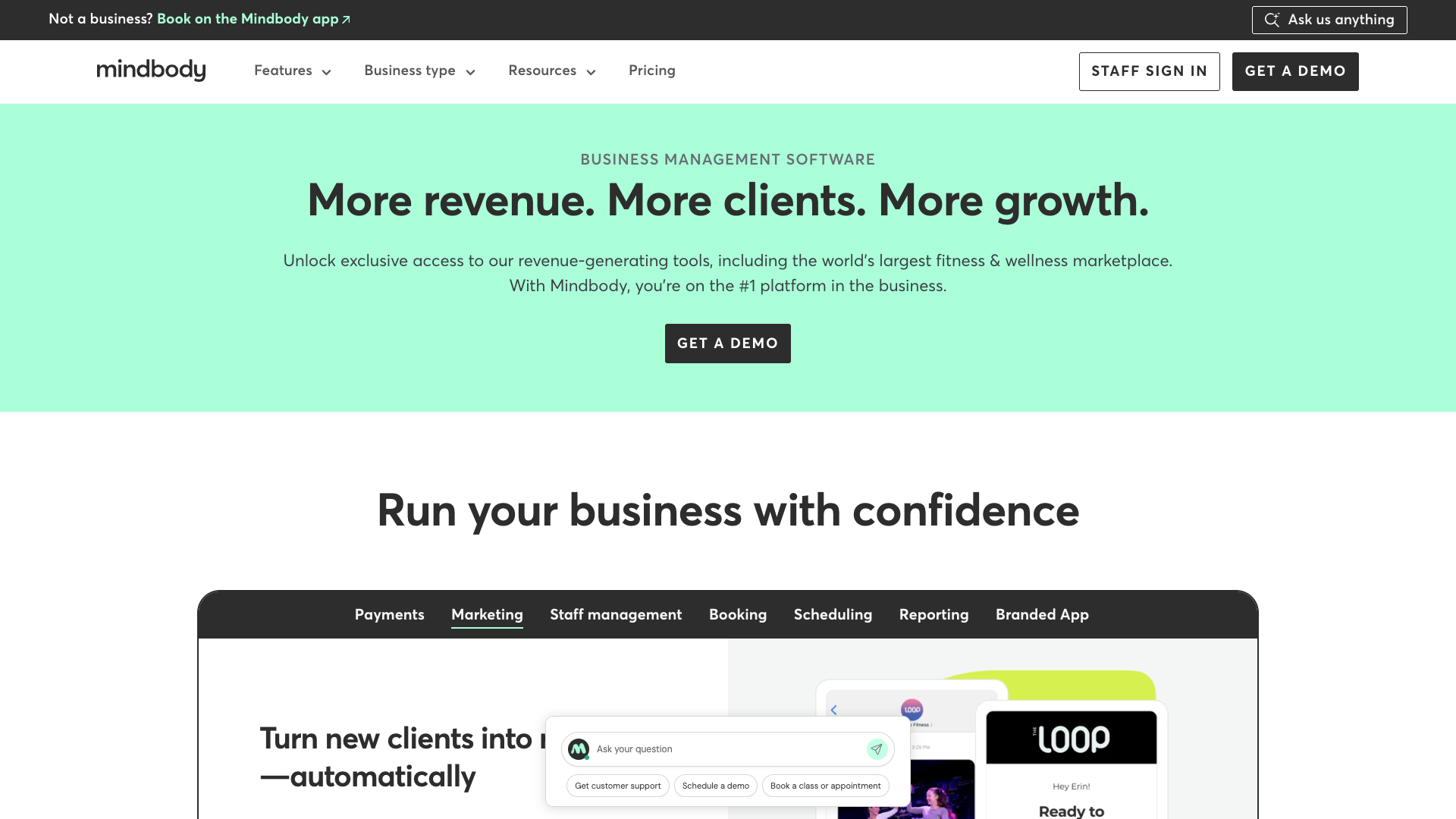
The default. Runs a third of the market, has the biggest client-side network effect, and does group classes well.
It's also the platform owners most often describe leaving.
The recurring complaints are consistent enough to be structural: pricing that's hard to predict, merchant fees owners find opaque, support quality that varies by who picks up, and a cancellation process that people describe in language I won't reproduce here.
One studio owner in the survey compared getting out of it to leaving a bad relationship. That's a lot of feeling to have about scheduling software.
If you're already on it and it's working, that's a real answer and you should stay. If you're choosing fresh, treat the market share as what it is. It's a head start from 2001.
There are Mindbody alternatives worth comparing before you default.
Acuity Scheduling
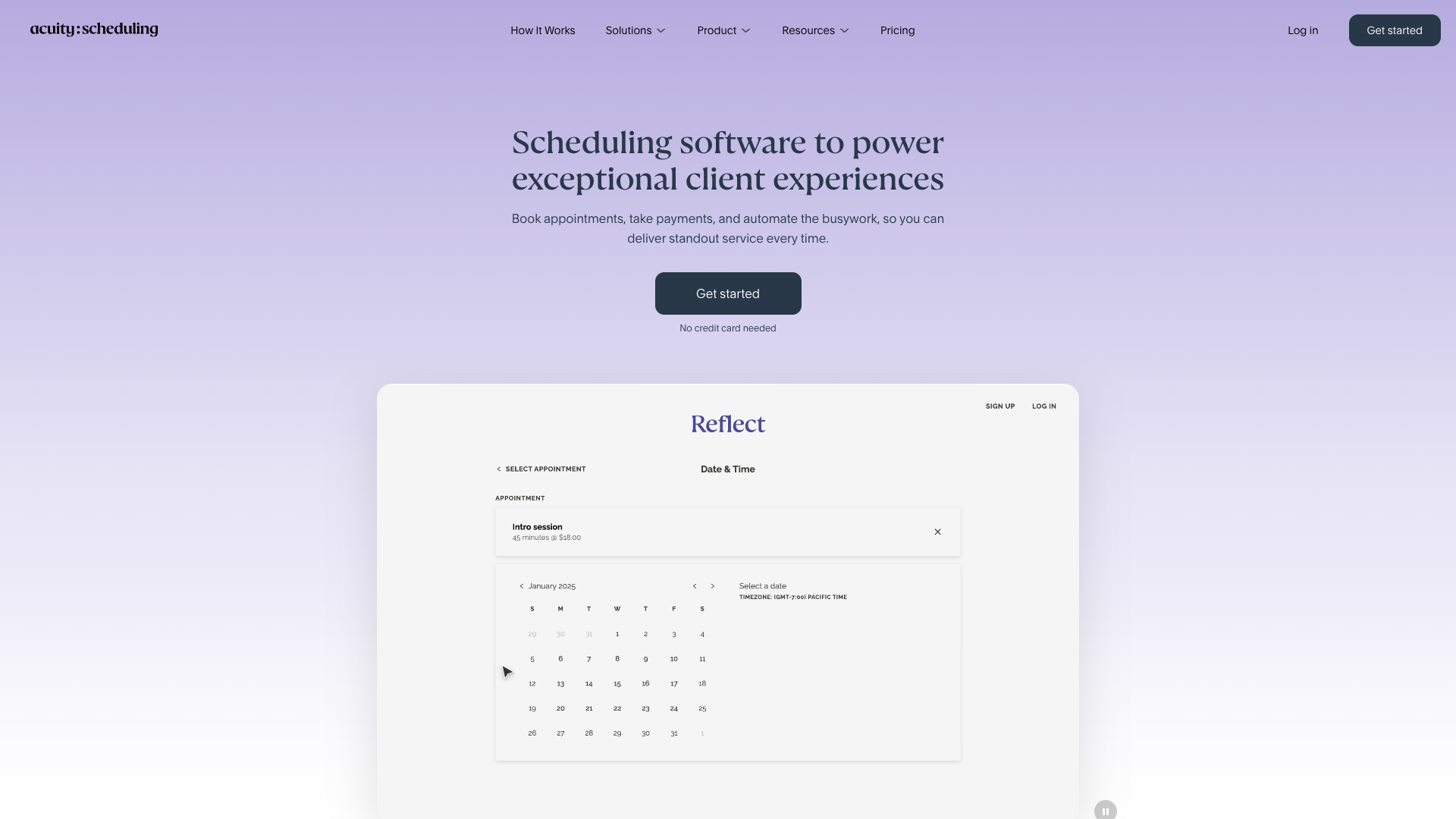
Acuity is a good appointment tool, and plenty of Pilates instructors start there before they ever go looking for pilates booking software.
It's cheap, it works, and if your business is mostly privates it may be enough for a while.
The wall it hits is capacity. It was built around a calendar, and your constraint is a floor plan.
Studio owners tend to discover the limits at the same moment: the day they need a waitlist. That's the most common reason cited for leaving it.
Momence
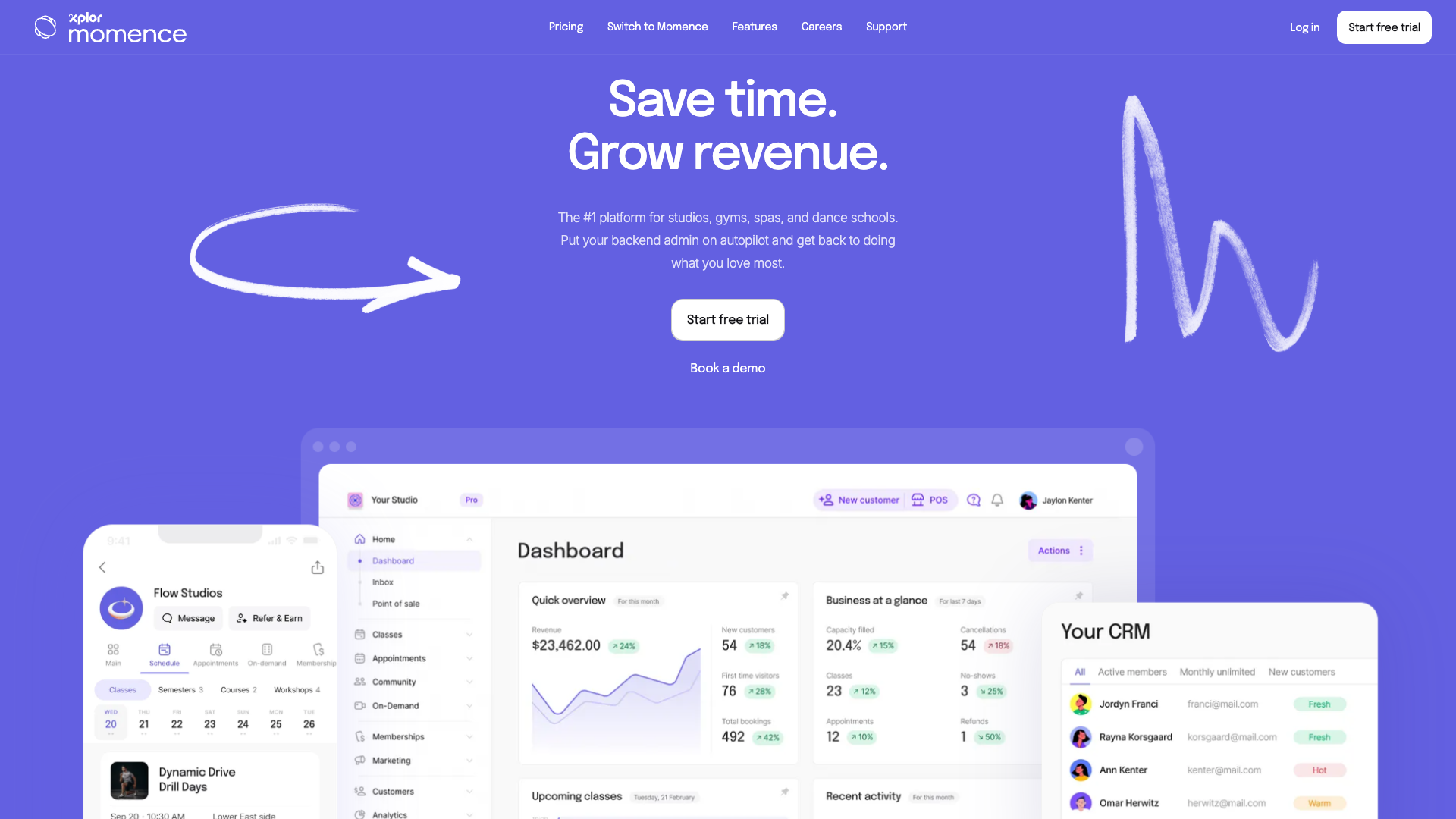
Among the highest-rated platforms in the survey, and the one owners compare favorably to Mindbody on price.
Strong on reporting, and it keeps client communication history in one place, which departing Mindbody users bring up constantly.
The consistent knock is support after onboarding, and some awkwardness tracking membership credits against recurring appointments. Worth pressure-testing on a trial if your model leans on packs.
WellnessLiving
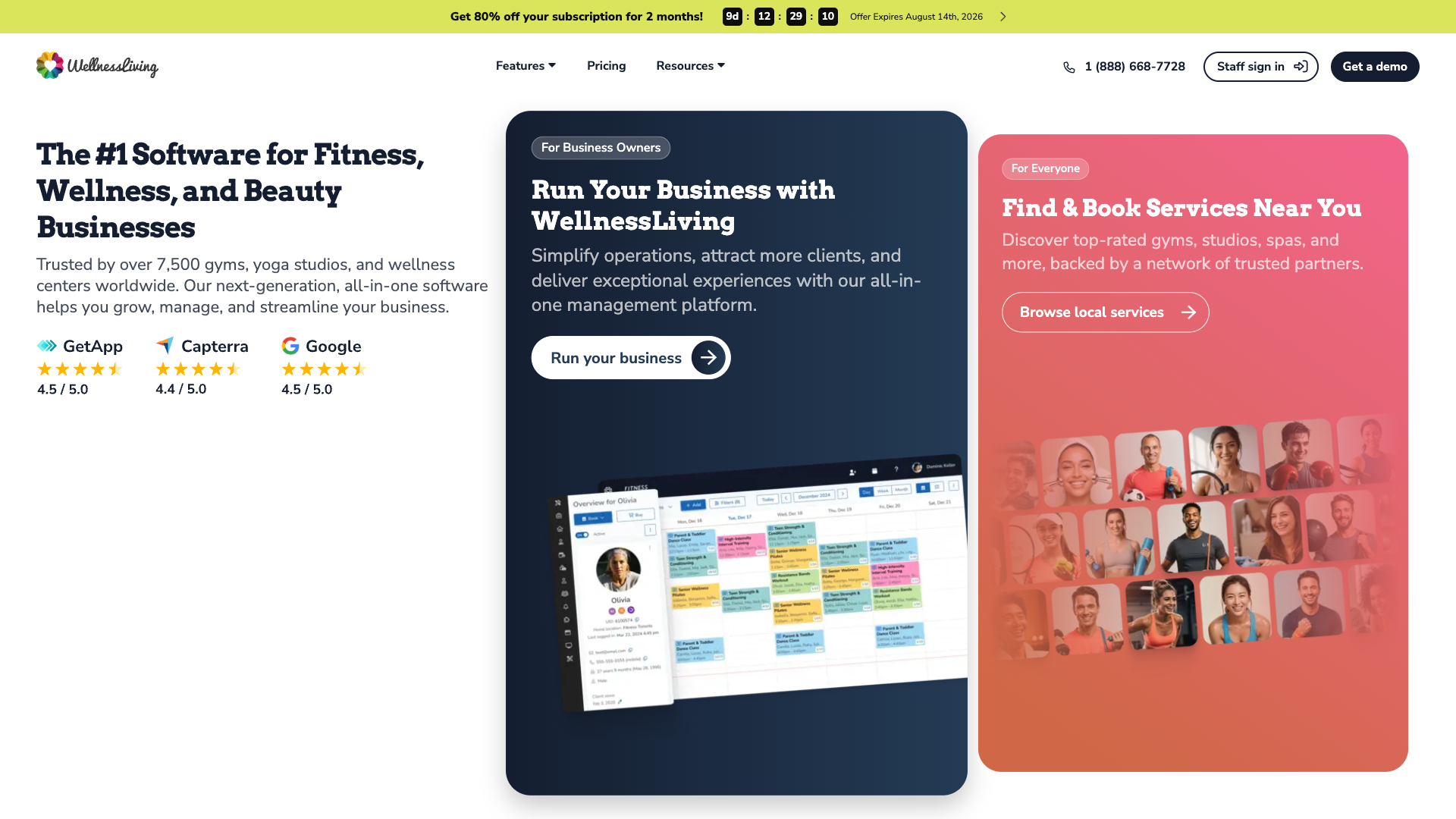
Grows from a single instructor to multi-location without forcing a replatform, which is a real advantage if you're planning a second location.
Survey respondents rate it well on functionality and overall value, and they single out customer support.
Walla

The best class experience of the group by most accounts.
Clean booking, clear rosters, waitlist behavior that works the way the seven-point list above wants it to.
The appointment side is where it thins out, and this is exactly the two-business-models problem. Studios that lean on privates have tested Walla and gone back. If more than half your revenue is one-to-one, test that side hard before committing.
Walla markets itself on AI, and the waitlist is the part that earns its keep.
Mariana Tek
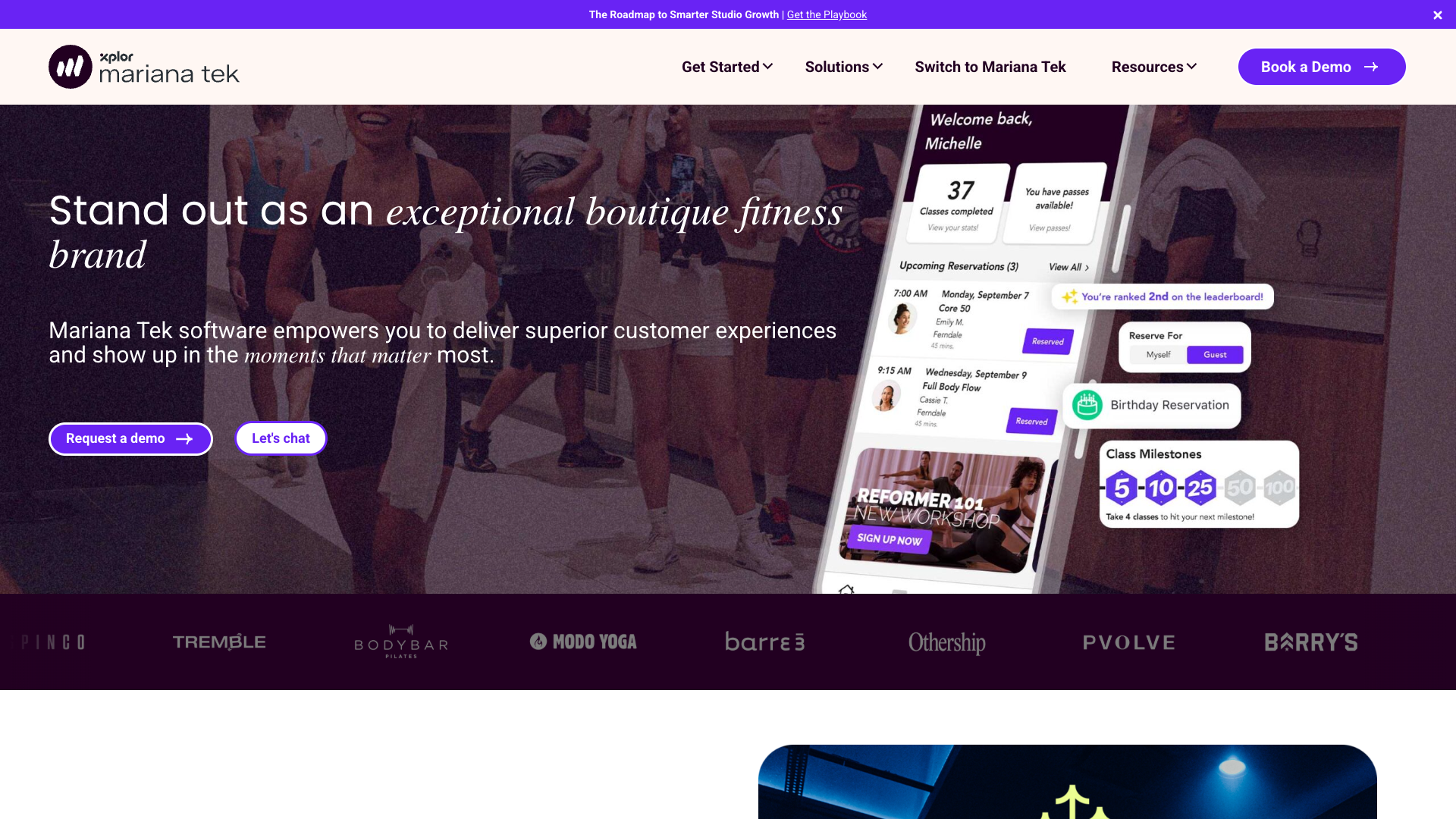
Beautiful on the client side, and in a category where your booking flow is part of your brand, that counts.
Owners running multiple locations across states use it and stay.
Owners in r/pilates put the complaints on the backend: clunky, and priced for a business with someone whose job is the software. If nobody in your building has that job, you'll feel it in month two.
Arketa
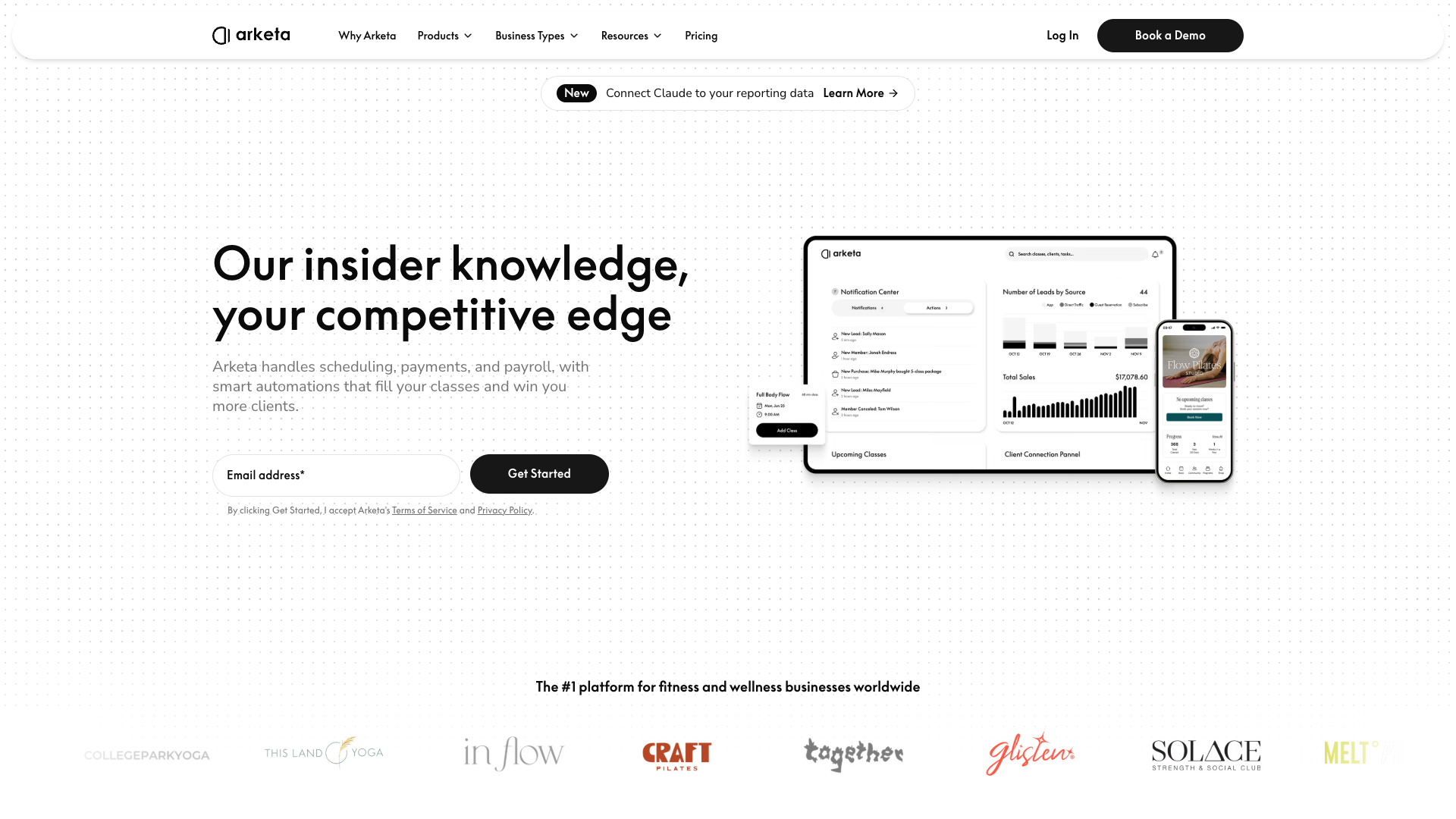
The name that comes up when owners are told they'll outgrow an appointment tool but aren't ready for Mindbody money.
Positioned as the step up, and priced so a two-reformer studio can start on it. If you're at two reformers now and planning six, this is the one to put on your shortlist first.
OfferingTree
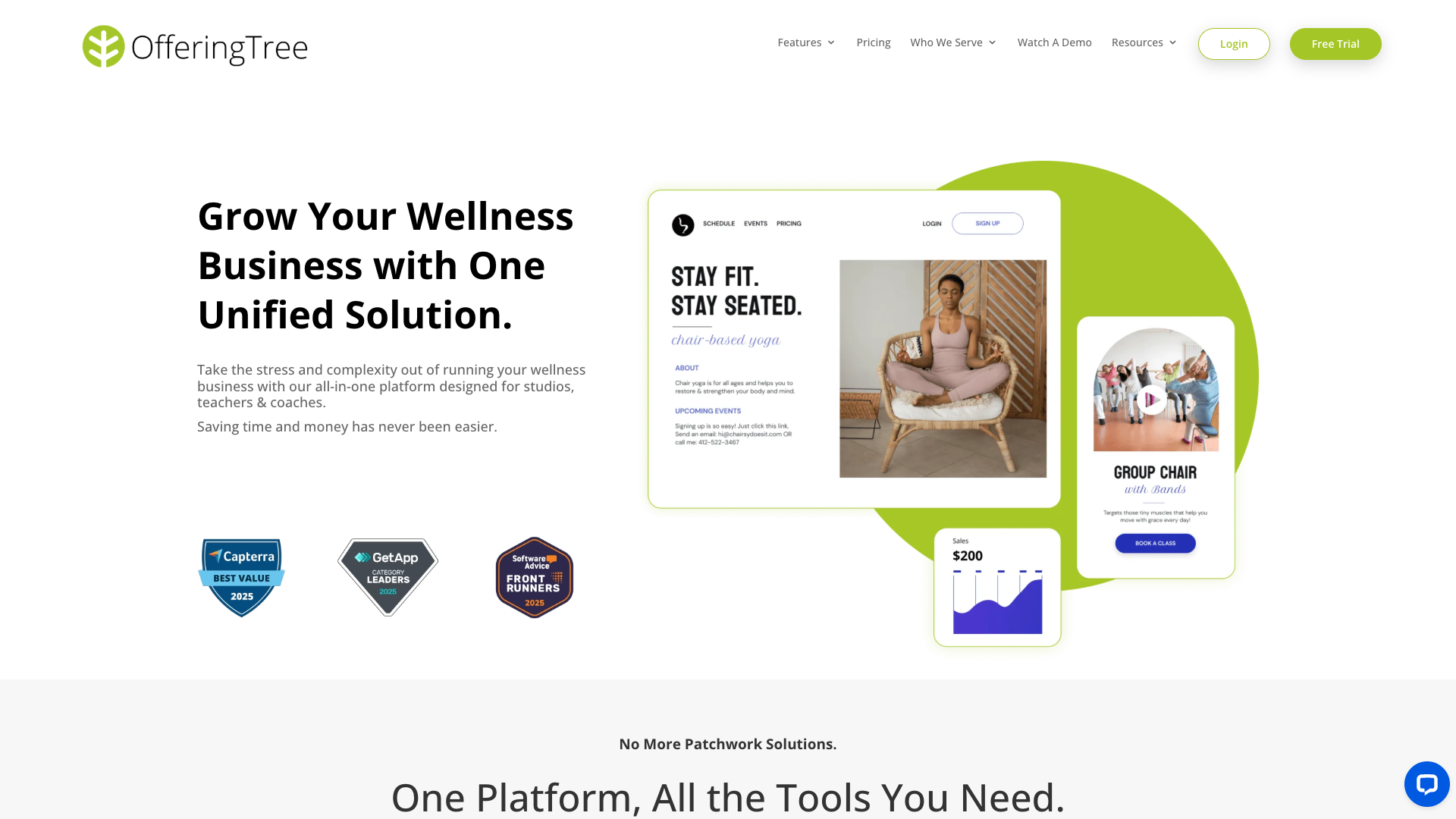
It comes up often for studios that haven't opened yet.
The reason is the bundle: it includes the website, which removes a separate Squarespace bill and one more integration to keep working. If you don't have a site yet, that's one fewer thing standing between you and taking bookings.
If you're opening your first studio, start your shortlist with these two.
Gymdesk
This is our software, so read the next part with that in mind.
The reason we're in a Pilates guide at all is the two-business-models problem. Gymdesk came out of martial arts schools, which run group classes and private lessons side by side and bill both against the same member account.
That happens to be the same shape as a Pilates studio running mat classes and privates, which is why boutique Pilates studios kept signing up before we ever marketed to them.
Booking handles class capacity and appointments on the same system. Billing covers packs, memberships, and recurring plans without treating one as a special case. Member profiles hold documents and history, so a covering instructor sees an injury note while there's still time to use it.
ActiveRange Method, whose owner you'll meet further down this page, chose it before opening and is past 200 members on it without having changed systems since.
Gymdesk pricing is published and banded by active members, so the bill moves when the studio grows and not before. There's a 30-day trial and no hard member ceiling—the bands continue into custom pricing.
You can see the full Pilates studio setup if you want the feature-level detail.
What Pilates Studio Software Costs
Nobody in this category publishes a straight answer, so here are bands synthesized from the survey's per-platform figures:
Tier | Monthly | What you get |
Solo / very small | $20–$75 | Appointments, basic booking, limited or no waitlist |
Small studio | $75–$150 | Classes and appointments, packs, waitlists, reporting |
Established studio | $150–$300 | Above plus marketing, payroll, apps, multi-instructor |
Multi-location / enterprise | $300–$500+ | Above plus multi-site, branded app, advanced reporting |
Three things distort those numbers in practice.
Payment processing. The monthly fee is rarely the whole bill. Ask what the processing rate is, whether it's published, and whether ACH is supported and at what cost. For a studio doing prepaid packs, a fraction of a percent compounds fast.
Add-on modules. Several platforms in the mid band price marketing, apps, or forms separately. The quoted number and the real number can differ by a hundred dollars a month.
The tools it replaces. A platform that includes a website, email, and forms at $150 can be cheaper than one at $90 plus Squarespace plus Mailchimp plus a forms tool. Count the whole stack.
If you want to model your own numbers, the gym software cost calculator runs the comparison across platforms.
Switching Pilates Studio Software Without Losing Money
Vendors don't lead with this part. Experienced owners bring it up unprompted.
A studio owner in r/pilates, running two locations, put it plainly in a thread full of people recommending platforms:
They're right, and the reason is specific to how Pilates studios make money.
Four things go missing in a migration:
Card data. Sometimes it transfers, sometimes you pay your old provider to release it, sometimes it arrives and doesn't work. Every client whose card doesn't come across has to re-enter it, and some fraction of them simply won't.
ACH and direct debit mandates. These are the ones that catch people. Bank mandates often cannot transfer between processors at all, which means re-authorizing every client on direct debit. In a PilatesBridge review, Melissa Murray of studiovervepilates.com described the damage in one line:
Those are your highest-margin clients, and they're the least likely to complete a re-authorization email.
Visit history. Some platforms won't load it. You lose the ability to see who's lapsing, which is the data your retention depends on.
Unused package balances. The one that hurts most in Pilates specifically, because packs are the dominant revenue model. If a client has six classes left on a ten-pack and that balance doesn't migrate cleanly, you're reconstructing it by hand or eating the difference.
There's a version of the card problem that doesn't hurt, and it's token migration.
Stored payment methods move across as tokens, so members never get an email asking them to re-enter a card. Gymdesk's Payment Method Sync pulls stored methods from Stripe, Square, Authorize.net, GoCardless, or Ezypay and matches them against your member records, which is how you skip the churn spike a processor migration usually causes.
So: ask on the demo, in these words. What transfers, what doesn't, who does the work, and what does it cost?
Get it in writing. A vendor confident in their migration will answer specifically.
There's a timing lesson buried in all of this, and it cuts against how most owners behave. Migrations get harder the longer you wait, because every month adds card mandates, history, and outstanding pack balances to the pile.
If you already know your current platform is wrong, the cheapest day to leave is today, and the second cheapest is tomorrow.
Studios that hang on for another season to avoid the disruption usually pay for that season twice.
How to Run a Two-Week Pilates Software Evaluation
Most pilates scheduling software comes with a trial, and most owners waste it clicking around the dashboard. Two weeks is enough to test the things that will hurt later.
Days one to three: load your real schedule. Your actual week, with your actual class caps, your actual equipment counts, and your privates alongside your groups. Half the platforms that look fine in a demo get awkward here.
Days four to seven: break the waitlist. Book a class to capacity, add three people to the waitlist, then cancel someone. Watch what happens without touching anything. Time it. If nothing happens automatically, you've learned the most expensive thing you'll learn all two weeks.
Days eight to ten: run the money. Set up a ten-class pack, a monthly membership, and an intro offer. Sell one of each to a test client. Then check what the reporting tells you about revenue, because the reports are what you'll actually live in.
Days eleven to fourteen: test support. Send a real question through their normal support channel. Skip the sales rep you've been talking to. How long is the reply, and is it from someone who understands the product? If support is slow while they're still selling to you, it won't get faster later, and it's the one thing on this list you cannot read off a feature page.
One general rule while you're in there. Several platforms in this category now market themselves on AI, and the label tells you very little on its own.
Evaluate what the software does on a Tuesday morning: whether the waitlist fires and whether the charge goes through. Automation is the foundation all of that gets built on. Check the foundation.
PRO TIP:
Questions worth asking on every demo call:
- What exactly transfers if I migrate, and what does it cost?
- Does the waitlist promote and charge automatically, with no staff action?
- Can a client hold a specific piece of equipment?
- How are instructors paid, and can the system calculate it?
- What's the payment processing rate, and is ACH supported?
- What's the total monthly cost with every module I just asked about?
What Two Pilates Studio Owners Decided
Milad Moghaddam and his wife Ella run ActiveRange Method in Newmarket, Ontario. Reformer Pilates and strength training, built around biomechanical assessment, now serving more than 200 members.
They started in a home basement on a single reformer in 2023. It didn't work economically. It did work in results, and that was enough.
"It gave me a small sample of this works. That was enough for me to gamble. I go all in," says Milad Moghaddam.
What's unusual about Milad, for the purposes of this guide, is when he chose his software. He picked it before he opened. He compared it to bookkeeping: if the foundation isn't ready, year-end is going to be very hard.
He was building for 200-plus members on day one, so he evaluated for that from the start.
The deciding feature was document signing in the app.
Platforms that handled documents well had weak scheduling. Platforms with good scheduling had no document handling. He needed both in one system and only found the combination in a few places.
On a feature matrix, both columns get a checkmark. The question is whether the two work in the same place, on the same client record, without you stitching them together.
He also wanted room to grow. "If you had a cap of 2,000 members, I wouldn't go with [it]," Moghaddam says.
On what it's meant for the business:
Pamela Yague hit the same problem from the other direction. She founded Pink Pilates Fitness in El Paso after the pandemic closed the local women's gym, and grew to four locations offering weight training, cycling, fitness classes, and Pilates.
Her old platform was fine at one location and fell apart across four.
Support was hard to reach, memberships across sites became unmanageable, and the equipment-limited classes, Pilates and cycling, were exactly where booking mattered most.
Two very different studios with the same underlying requirement: one system that holds classes, appointments, money, and documents without anything living in a spreadsheet on the side.
How to Choose Pilates Studio Software Without Regretting It
The honest answer to "what's the best Pilates studio software" is that it depends on the shape of your business, and anyone who gives you a single name without asking about your privates-to-group ratio is guessing.
But there is a useful shortcut.
KEY TAKEAWAY:
Work out which half of your business is bigger, groups or privates, then test the smaller half hardest. That's where platforms fail, and it's the half you'll be tempted to gloss over on a demo because it feels secondary.
It usually isn't secondary. It's a third or more of your revenue, and it's where the workaround gets built that you'll still be maintaining in two years.
Then check a few things before you sign. Does the waitlist run itself. What happens to your data if you leave. How long support takes when you're not a prospect anymore. And what the bill looks like with every module switched on.
Everything else on the feature list is easier to change your mind about later.
If you're still building the business around the software, the guides on opening costs, pricing your classes, what studio owners actually earn, and building a training methodology will do more for your margins than any platform will.
The software is there to stop the admin eating your week. That's the whole job.
Gym management software that frees up your time and helps you grow.
Simplified billing, enrollment, student management, and marketing features that help you grow your gym or martial arts school.


FAQ
Pilates Studio Software FAQs
The questions that come up most often when studio owners are comparing platforms.

Sean has spent the last decade creating content that helps businesses—small and not so small—grow smarter to allow operators to do more of what they love. You know, the fun stuff.
From shipping and international logistics to web development and marketing, he's done the work (not just the words) to scale retail and service businesses efficiently.
You can find his work at Sendle, Shogun, The Retail Exec, Gymdesk, and more.