
Martial Arts
Straight talk and proven systems for managing and growing martial arts schools.
The short answer: plan on about $60,000 as the cost to open a martial arts school in the US. That covers your mats and gear, a few months of rent and bills, and enough cushion to carry you while your membership grows.
That number moves a lot, mostly with your city, your art, and how big you go on day one. A coach running evening classes out of shared mat space spends a fraction of what a full commercial studio with a build-out does. Two owners can open great schools on the same street and spend wildly different amounts, because one took a small industrial unit and the other took prime retail with a full fit-out.
There's no single right number, so the goal is a budget that fits your plan and your market.
Here's the walk-through, in the order you'll spend the money: space first, then the gear to fill it, then the monthly bills, then the legal side, then the total. Last come the questions that keep you up at night: does it add up to a living, and how do you pay for it?
The Cost to Open a Martial Arts School: The Big Picture
For a standard 3,000-square-foot school, the money falls into four buckets.
Bucket | Range |
Startup and one-time costs (before renovations) | $16,500 – $35,500 |
Recurring costs (per month) | $2,500 – $8,200 |
Cushion to cover costs (about 6 months) | ~$27,600 |
Planning estimate to open | ~$60,000 |
The startup number buys your mats, padding, furniture, and the rest of the one-time setup. The monthly number decides whether you survive year one, because you pay it whether ten students show up or sixty. The cushion covers six months of a typical $4,600 month while revenue catches up.
Location and Lease: Your Biggest Cost
Location is the most important call you'll make, and your largest fixed cost. It shapes how easily people find you, how easily they park, how safe the block feels, and how many students fit on the mats at once. All of that has to balance against rent.
Start with mat size, because it drives everything else. Lined up fingertip to fingertip, an adult takes about 36 square feet and a child about 30. So 1,200 square feet of mat holds roughly 40 kids or 33 adults standing in class.
Sparring needs more room. A grappling pair (BJJ and most ground arts) wants around 100 square feet, and most striking arts fit there too. Throwing arts like Judo need at least 150 square feet per pair, since falls need space.
To run 15 pairs at once (30 adults sparring), plan on about 1,500 square feet of mat for most arts, or up to 2,250 if you're doing takedowns and throws.
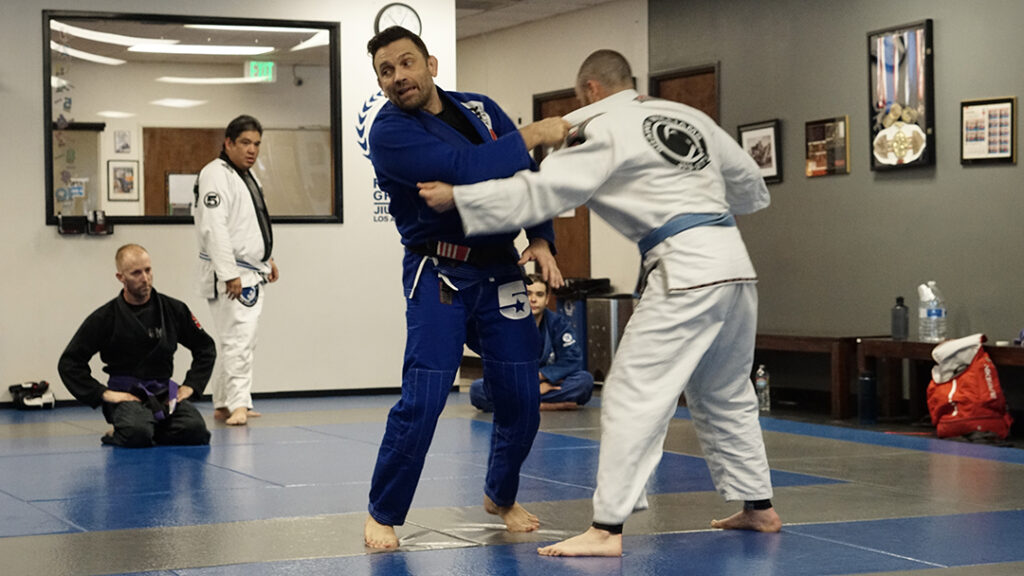
Add an entrance, front desk, waiting area, changing rooms, and a bathroom, and that's another 1,000 to 1,500 square feet. A typical first school lands around 3,000 to 3,500 square feet total. You can go smaller, but it gets tight, so the prices below assume 3,000 square feet.
To sanity-check rates in your own market, sites like PropertyShark and LoopNet give you a quick read before you ever call a broker. Office space usually costs about the same as retail or a bit more, so weigh it case by case.
PRO TIP:
Before you sign, check the term length, who pays repairs and property taxes, whether rent steps up each year, and what happens if you need out early. A landlord who'll give you a build-out allowance or a few months of reduced rent can reshape your whole first-year budget. They offer it more often than first-timers think to ask.
Don't sign a long lease on a hunch, either. A shorter term or a renewal option buys you room to be wrong about the location without being locked in for years.
Storefront and strip mall
A regular storefront puts you where people already walk and drive, and strip malls usually come with parking, too. You pay for that visibility. Here's what 3,000 square feet of storefront rents for in five US markets, based on 2026 broker averages:
City | Rate per sqft | Monthly rent (3,000 sqft) |
Austin, TX | $2.25 | $6,750 |
San Diego, CA | $2.40 | $7,200 |
Atlanta, GA | $2.10 | $6,300 |
New York, NY (outside Manhattan) | $4.50 | $13,500 |
Minneapolis, MN | $1.30 | $3,900 |
Sources: 2026 market reports from Partners Real Estate (Austin), Kidder Mathews (San Diego), Lee & Associates (Atlanta), Matthews/CoStar (New York), and Transwestern (Minneapolis). Manhattan storefronts average closer to $11 per square foot.
Industrial space
Industrial units rent for a lot less, which is why so many schools in expensive cities end up in one. You give up walk-by traffic, the block can feel empty at night, and the units often run bigger than you need. If most of your students find you by word of mouth or search, that's usually a fair trade.
Same cities, industrial rates:
City | Rate per sqft | Monthly rent (3,000 sqft) |
Austin, TX | $1.50 | $4,500 |
San Diego, CA | $1.50 | $4,500 |
Atlanta, GA | $0.70 | $2,100 |
New York, NY (outer boroughs) | $2.30 | $6,900 |
Minneapolis, MN | $0.75 | $2,250 |
Sources: 2026 market reports from Partners Real Estate (Austin, small flex units), Kidder Mathews (San Diego), Lee & Associates (Atlanta and Minneapolis), and Cushman & Wakefield (New York outer boroughs).
Read both tables as a starting point, not a quote. They're average asking rents, and most are "triple net," which means property taxes, insurance, and shared upkeep get added on top. Small units and busy corners often cost more than the average, so get real quotes before you budget.
For a first school, industrial space in a decent area often gives you the most mat for your money. Students will drive across town for a great coach.
The budget option: rent mat time
You don't need a lease to start. Plenty of owners sublease evening slots inside an existing school or gym, pay for the hours they teach, and build a student base before taking on rent of their own. It looks a little less polished—you work around someone else's schedule, and you may haul your own mats.
It's also the lowest-risk way to prove there's demand in your area before you commit to a lease. For the rest of the search, see our guide to choosing a school location.
We'll keep you in the loop with fresh content, podcasts, how-to guides, tool reviews, and product exclusives.
Startup and One-Time Costs
Unless you're taking over another school, your space needs work before anyone trains on it. Here's what to budget for about 1,500 square feet of mat area. These are planning estimates, so get quotes before you lock anything in.
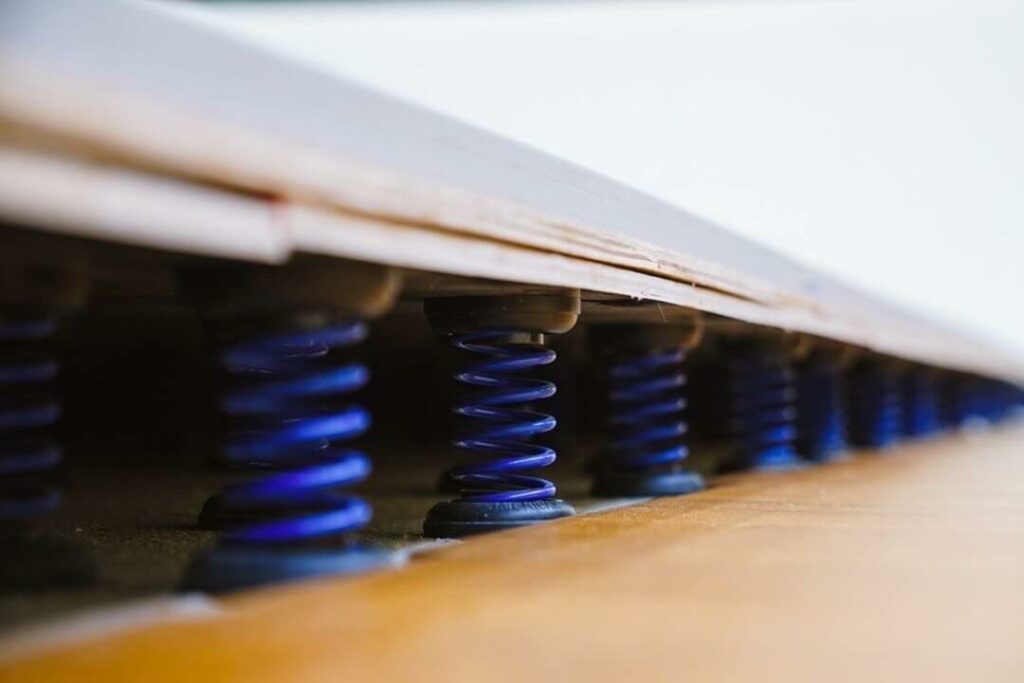
Mats and subfloor: roughly $10,000 – $15,000. This is your biggest single purchase and the wrong place to cut corners. It's two parts: the mats themselves and a subfloor underneath for shock absorption.
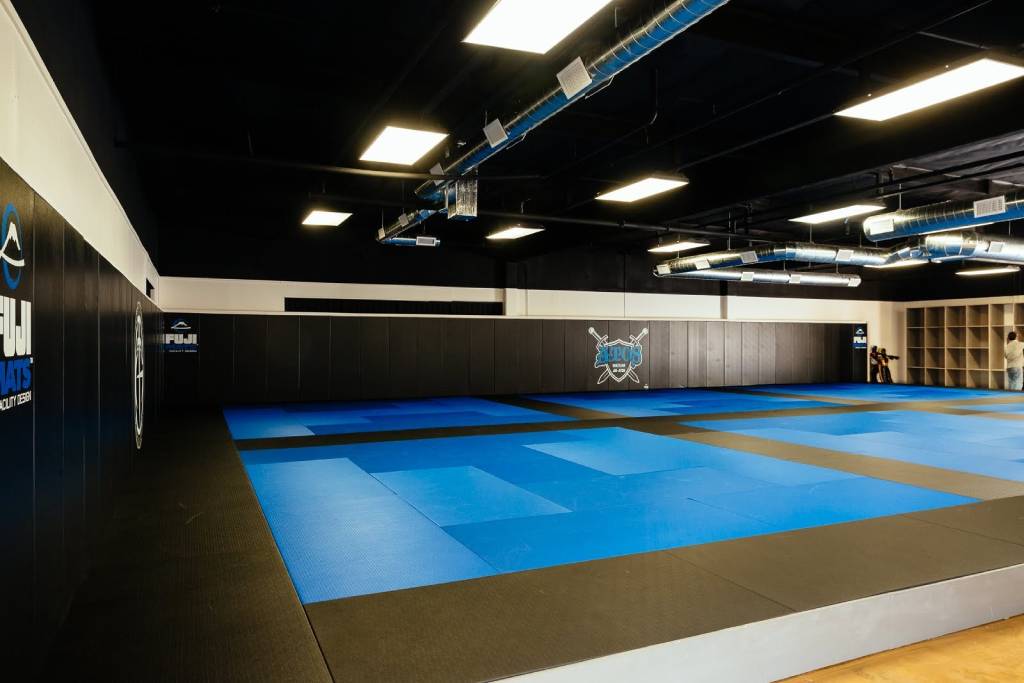
Your real number depends on square footage, mat thickness, and how the setup comes together, so get a current quote from a specialist like FUJI Mats before you lock a figure. As of October 2026, their prices run:
- 1-inch tatami mats start around $145 each, fine for striking arts.
- Grappling-grade mats for BJJ and Judo run $165 (1.5-inch) to $185 (2-inch). Each mat is 1 m × 2 m, about 21.5 square feet.
- A sub-mat underlayment pad starts around $389 per 250-square-foot roll.
- SuperBlock subfloor starts around $139 per 200 blocks, about one per square foot.
- A spring floor system starts around $10.95 per square foot, used mainly for high-impact throwing arts. Most schools skip it at first.
Covering 1,500 square feet takes about 70 mats. At $145 to $185 a mat, that's roughly $10,150 to $12,950 before any subfloor.
A layer of underlay for the whole area adds about $1,900, so mats and subfloor together run roughly $10,000 to $15,000 before shipping. Wood framing around the edges adds about $220 per 19.5 feet.
Wall padding: about $2,500 – $9,400. If your mats sit against a wall, pad it, because students crash into walls. At about $110 for a standard 2-by-6-foot panel, one long wall runs around $2,750 and all four walls closer to $9,000 with trim. Throwing arts need more coverage, and if your landlord or local code wants fire-rated pads, expect to pay roughly double.
Furniture: $1,000 – $1,500. A front desk, chairs or a sofa for the waiting area, benches for changing rooms, and a cabinet for paperwork. Nothing fancy.
Renovations: it varies. Some spaces are move-in ready; others need walls moved, floors leveled, lighting changed, or a shower plumbed in. You can't see behind the walls until work starts, so this line can swing your budget more than any other, and it isn't in the startup range above.
WARNING:
Have a contractor walk the space before you sign, and build in a cushion.
Training equipment and uniforms: around $1,000 – $2,500. Pads, bags, focus mitts, and a starter batch of uniforms in every size. Beginners often rely on you for their first uniform and belt, so you carry that initial stock up front and earn most of it back as students buy in. BJJ gis cost more than karate or taekwondo uniforms, which pushes grappling schools toward the high end.
Lease deposit: usually one to three months of rent. At one month, that's $2,100 – $7,200 depending on your space. First-time owners with no business credit should expect the high end. You get it back when the lease ends, but you need the cash on hand now.
Recurring Monthly Costs
These are the monthly bills for a 3,000-square-foot school, and the figures are planning estimates.
Rent: $2,100 – $7,200, your single biggest line, from the markets above. That range leaves out a New York storefront, which runs closer to $13,500 a month, and far more in Manhattan.
Utilities: roughly $200 – $550 a month. At 2026 commercial power prices (about 14.5 cents per kWh, per the EIA), electricity for 3,000 square feet runs about $175 – $350, and high industrial ceilings push heating and cooling up. Add $40 – $100 for water and sewer (more with showers or a laundry for loaner gis), and up to $100 for trash if you need your own dumpster. Some of this may be folded into your lease, though rarely electricity.
Internet: $60 – $150 a month, so call it $100. Business internet costs more and delivers less than home internet in most US cities. You need it to run your software, take card payments, and answer prospects during class hours.
Insurance: about $65 – $175 a month. Martial arts insurance is usually priced per student. One major carrier's 2026 program (K&K Insurance) charges about $21 per student a year, with a $750 minimum, for $1 million in coverage.
Full coverage for a school under 50 students typically runs $1,100 – $2,100 a year, and you need it before your doors open. Some governing bodies bundle coverage in, such as USA Judo and AAU Karate.
Our guide to martial arts insurance walks through what a policy should cover.
Gym software: about $75 – $150 a month. That's the range on Gymdesk's published plans for schools up to 150 members with Gymdesk Payments, or $25 more a month if you use your own payment processor.
Website: around $18 a month for hosting and a domain. Many gym software plans, Gymdesk included, come with a website, so this line may drop to zero.
KEY TAKEAWAY:
Add it up and you're at roughly $2,500 – $8,200 a month. Build your budget around a slow month, like December or mid-summer, and it'll hold all year.
Licenses, Permits, Registration, and Insurance
Most states don't license martial arts instruction. Your rank and your lineage are your credential.
What you do need is the same paperwork any small business needs, plus a couple of things specific to running a room full of people throwing each other around. Treat all of it as a checklist to verify locally, because rules change by state and city.
Register your business before you sign a lease, since forming an LLC first protects your personal assets from day one. LLC filing fees vary by state, and they're small next to rent but not optional. Two examples:
- Florida: $125 to file an LLC ($100 filing plus $25 for the registered agent designation), plus a $138.75 annual report that rises to $538.75 if you file after May 1.
- New York: $200 to file Articles of Organization, plus a publication requirement. You publish a notice in two newspapers for six weeks, then file a Certificate of Publication with a $50 fee, and newspaper costs vary by county.
Those are examples, not a full list, so check your own state before you budget. Our guide to writing a martial arts business plan walks through the whole structure.
On top of registration, you'll usually need a general business license from your city or county, plus a certificate of occupancy that matches your use. Building codes usually class a martial arts studio as a business occupancy, though a large training floor can be treated as assembly use, which brings stricter rules. Either way, expect a fire and building inspection before you open.
Some states also regulate how studios sell memberships. Florida's health studio law can require a $25,000 bond if you sell prepaid memberships, but a school used solely for martial arts, with no exercise equipment, can file an affidavit for an exemption. Check how your state treats prepaid plans.
WARNING:
Sort your registration and occupancy permit before you spend a dollar on mats, because gear for a space you can't legally operate is money you won't get back.
Because these rules carry real consequences, run your setup past a licensed attorney in your state. An hour of advice up front is cheaper than a fine later.
Get the right insurance, and check what it covers
General liability covers the everyday stuff, like a visitor slipping in your lobby. A student hurt during a drill is a different claim, and that's where professional liability coverage comes in.
Martial arts programs usually bundle this into one policy. Just confirm yours covers injuries during instruction, because a generic small-business policy often won't.
To keep all of this straight before you sign, grab our free pre-opening paperwork and lease checklist.
Adding It Up: Your Starting Budget
On top of startup costs, plan on about six months of expenses to cover your bills while revenue catches up. Paying yourself a real salary takes longer, usually 18 months to three years.
To plug in your own numbers, try our gym startup cost calculator.
Treat $60,000 as a planning estimate, because the real range is wider on both ends. Take an industrial unit in Atlanta at about $2,100 a month, with 1-inch mats, one padded wall, and a one-month deposit, and you're closer to $33,000 before a buffer.
Renting mat time skips the lease, the deposit, and the build-out, so a launch that's mostly gear and hourly mat fees can start well under $25,000. At the other end, a New York storefront at $13,500 a month spends $81,000 on six months of rent alone, so add startup costs and a build-out and you're well past $100,000.
Want to spend less? Start smaller. Dropping from 3,000 to 2,400 square feet cuts your rent by around 20%, and you can grow into more space once your membership does.
What Students Pay, and Whether Your School Makes Money
A new school usually starts small, and small schools bring in about $100 per member per month. Across 4,196 gyms on Gymdesk, most of them martial arts schools, the Gymdesk Benchmark 2026 puts revenue per member at $102 a month for schools under 50 members and $66 at schools with 200 or more. Your price sets your break-even, so our guide to pricing your programs is worth reading before you set tiers.
Gymdesk's martial arts industry statistics put the average US martial arts school on Gymdesk at about $114,657 in annual revenue with 112 members. The spread by discipline is wide, from about $74,783 for kung fu schools to $254,083 for MMA gyms. Those figures are a 2022 baseline, so treat them as directional.
INDUSTRY SNAPSHOT—2022 BASELINE
Average annual revenue for US martial arts schools on Gymdesk, from 2022 platform data. This is revenue, not owner take-home pay, and it's a 2022 baseline, so treat it as directional.
$114,657
Average annual revenue per school
112
Average members per school
$74,783
Kung fu schools, average annual revenue (low end of the spread)
$254,083
MMA gyms, average annual revenue (high end of the spread)
Source: Gymdesk martial arts industry statistics. 2022 platform data; revenue comes before rent, staff, and other costs.
Revenue isn't take-home pay, though. Rent, insurance, gear, and any staff come out first.
No public dataset tracks what independent school owners actually take home. The closest is one franchise brand's 2022 disclosure: across 59 studios, median earnings before taxes and debt were about $89,140, and the bottom 15 lost money.
If you hire help, instructor pay runs about $47,160 a year at the median (BLS, May 2025), and that comes out of revenue before you see a dollar. We broke down the owner side in what school owners make.
Your break-even is monthly fixed costs divided by what each member pays. Take the example school's $4,600 a month: at about $100 per member, the Benchmark figure for small schools, you need about 46 active members just to cover rent and bills. Add an instructor's pay and your own, and most owners we've interviewed put real break-even nearer 70 members.
Per-member revenue dips at larger schools, mostly because of family and kids pricing, but total revenue keeps climbing. A 200-member school brings in about 10 times what a school under 50 does.
Every member you keep is one you don't have to replace to stay above break-even. Track your active member count the way you track a student's progress.
Expect your first year or two to pour most of the money back into the school. That's normal. Owners who pay themselves too much too early get squeezed the first time a slow month and a surprise repair land in the same week.
How to Fund Your Martial Arts School
Not everyone has $60,000 in the bank, and most owners combine a few of these four paths. For a wider look at loans and lenders, see our roundup of financing options.
Small business loans. Start with the SBA. Its Microloan program lends up to $50,000, with the average loan around $13,000 and terms up to seven years.
Rates vary by the intermediary lender. Microloan funds can't buy real estate or pay off existing debt, so they fit gear, working capital, and setup.
Keep your day job at first. Plenty of owners teach evenings and weekends while holding another job, then go full-time once the school can pay them. It's slower, and it takes the pressure off every rent payment.
Generate revenue before you're fully open. If you have results or a unique approach, run seminars and open mats at other schools. Take a weekend or two a month to travel and teach, and you bring in cash while proving demand at the same time.
Personal savings and friends-and-family money. Most first schools lean on one or both. Borrow only what you can sleep owing, and put the terms in writing, even with people you trust.
The Cost That Never Shows Up in a Budget
Here's the one nobody prints on a spreadsheet: your time.
You opened a school to coach. Then ownership hands you billing, waivers, sign-ups, attendance, and the monthly hunt for who actually paid. A lot of owners spend their Sundays chasing that paperwork, and it quietly burns out good instructors.
Count those admin hours as a real cost, the same way you count rent. Then shrink them: block admin into one weekly window, put members on autopay at signup, and collect waivers at registration so nobody signs one at the front desk mid-class.
Software can do the rest. We built Gymdesk's martial arts school software for exactly this: members sign up, sign their waiver, and get billed without you touching a form. Their info lives in one place instead of three.
FOR MARTIAL ARTS SCHOOLS
Billing, waivers, sign-ups, and attendance are the hours no budget counts. Gymdesk takes them off your plate, so your Sundays go back to coaching instead of chasing paperwork.
See How Gymdesk WorksThe Short Version
Plan on about $60,000 to open a standard commercial martial arts school, and $35,000 to $40,000 if you go lean. Budget six months of expenses to cover your costs, and expect 18 months to three years before the school pays you a real salary.
For the full walkthrough beyond the budget, read our guide on how to start a martial arts school.
Ready to run the business side without losing your evenings? Start a free Gymdesk trial and get billing, attendance, and member management running in a day, so you can get back to the mats.
A 7-part email course covering everything from lease negotiation to your first 100 members. Written for martial arts instructors ready to open their own school.