

Imagine it's pickup time, the mats still smell like the kids' class, and a new parent asks you what comes after yellow in the judo belt order.
The honest answer is "Which country?" That's not a great look in front of someone already holding car keys.
So here's the judo belt order most clubs will recognize, followed by the part the charts online leave out: the colors change depending on which federation your club follows.
The short answer
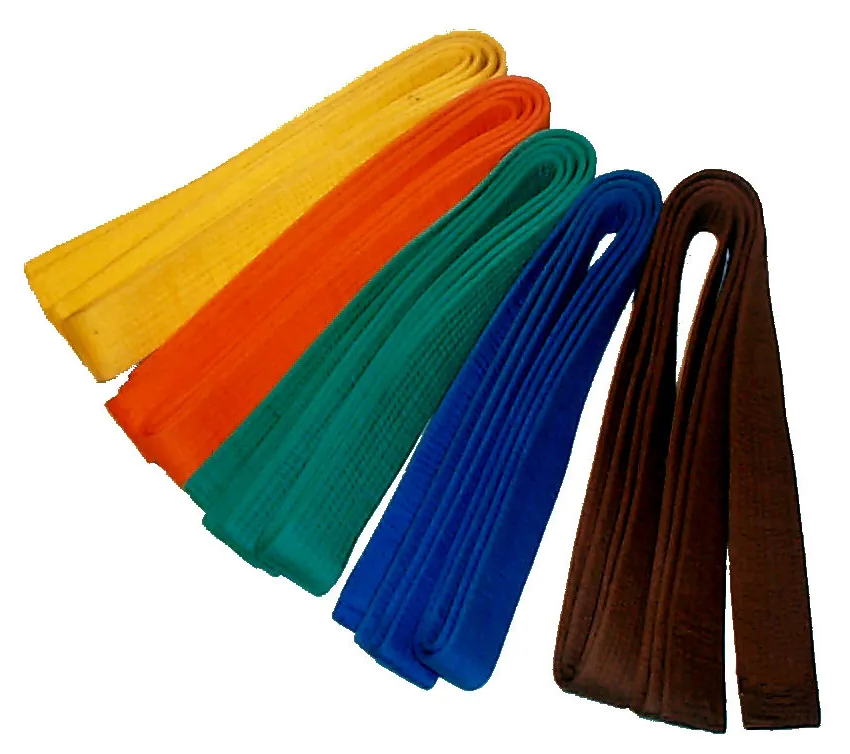
- Kyu grades (before black belt): usually six, counted down from 6th kyu to 1st kyu. A common adult ladder is white, yellow, orange, green, blue, and brown, but the exact colors depend on your federation.
- Dan grades (black belt and up): ten grades, counted up from 1st dan (shodan) to 10th dan. Black for 1st to 5th dan, red and white for 6th to 8th, and red for 9th and 10th.
- Kids: most federations run a separate junior ladder with more steps, two-color belts, or tabs.
Even Japan's national federation, the All Japan Judo Federation, says there's no nationwide rule for kyu belt colors.
I read through the rank handbooks from three American national organizations, plus British Judo, Judo Canada, the Kodokan, and the International Judo Federation (IJF). Everything's side by side below, so you can find the ladder your club actually uses.
A common adult judo ladder, white to black
- White6th kyu
- Yellow5th kyu
- Orange4th kyu
- Green3rd kyu
- Blue2nd kyu
- Brown1st kyu
- Black1st dan
Colors as Judo Canada lists them. Other federations change some of these grades, so check the federation table below.
Judo Belt Order by Federation
The senior kyu grades line up like this across five of the bodies you're most likely to run into. Two are American: the United States Judo Association (USJA) and the United States Judo Federation (USJF).
Read across any row, and you'll see why nobody can give a one-word answer.
Grade | IJF guide | Judo Canada | British Judo | USJA | USJF (17+) |
|---|---|---|---|---|---|
6th kyu | Not listed | White | Red | Yellow | White |
5th kyu | Yellow | Yellow | Yellow | Orange | Green |
4th kyu | Orange | Orange | Orange | Green | Blue |
3rd kyu | Green | Green | Green | Brown | Brown |
2nd kyu | Blue | Blue | Blue | Brown | Brown |
1st kyu | Brown | Brown | Brown | Brown | Brown |
1st dan | Black | Black | Black | Black | Black |
Sources: IJF Belt Grades Guide 2026, Judo Canada, British Judo kyu syllabus, USJA, USJF rank handbook.
The IJF column comes from its Belt Grades Guide, a teaching ladder the IJF recommends. Its member federations don't have to follow it.
The table also leaves out two things.
Most ladders start beginners on an ungraded white belt, so a British novice wears white before earning red. Judo Canada also adds a two-color half step between each grade (white-yellow, yellow-orange, and so on up to blue-brown).
Same grade, different belt.
In Canada, 6th kyu is a white belt, whereas in Britain it's a red belt and in the USJA it's a yellow belt. One number, three belts, and one very confused transfer student.
Same grade, different belt
Colors as each federation lists 6th kyu in the table above.
USA Judo, the US national governing body, isn't in the table. The US section below explains why.
How the Judo Belt System Works
The belt system in judo runs on two counts that go in opposite directions.
Kyu grades are student grades, and the numbers count down, so 6th kyu is a beginner and 1st kyu is the last stop before black belt.
Dan grades start at black belt and count up, from 1st dan (shodan) to 10th dan.
Dan grades count up
- 1st to 5th danBlack
- 6th to 8th danRed and white
- 9th and 10th danRed
The USJA is the outlier, listing 4th and 5th dan as black/red. Many 6th to 8th dans keep wearing black day to day.
According to the IJF, judo is where this grading idea started. Jigoro Kano created judo in 1882 and awarded the first dan grades in 1883, a year later.
You'll find kyu and dan grades in the karate belt order too. The taekwondo belt order uses the same idea under Korean names (geup and dan), and the colors in both vary just as much.
Who decides your club's judo ranks
Your national federation publishes the kyu syllabus, and in many places your club runs the kyu gradings itself.
Dan grades usually go through a national or regional grading committee.
Since January 2026, your black belts' dan grades also go one step further. The IJF now requires its member federations to submit every dan grade for IJF validation, so expect the paperwork to take a little longer.
We'll keep you in the loop with fresh content, podcasts, how-to guides, tool reviews, and product exclusives.
Why Judo Belt Colors Vary by Country
The short version: nobody ever standardized the colors in between white and black.
Even the start is a little fuzzy. The IJF's history of the belt says the exact date belts were created isn't entirely clear, though illustrations from 1886 seem to show a belt system.
The first written mention comes in 1913, and by then adult kyu grades wore white or brown.
The extra colors came from outside Japan.
According to the same IJF history, Gunji Koizumi, founder of the British Judo Association, added more belt colors in 1926, and the new belts show up in the records of London's Budokwai club by 1927.
Mikinosuke Kawaishi then brought colored belts to France in 1935.
How the judo belt got its colors
- 1882
Jigoro Kano creates judo.
- 1883
Kano awards the first dan grades, a year later.
- 1886
Illustrations from this year seem to show a belt system. The exact date belts were created isn't entirely clear.
- 1913
The first written mention of the belt. Adult kyu grades wear white or brown.
- 1926
Gunji Koizumi, founder of the British Judo Association, adds more belt colors. They show up in the records of London's Budokwai club by 1927.
- 1935
Mikinosuke Kawaishi brings colored belts to France.
- 2026
From January, the IJF requires its member federations to submit every dan grade for IJF validation.
Sources: IJF history of the belt, IJF grades and dan regulations.
Judo handed the martial arts world the belt. Everybody else brought their own crayons.
Each national federation then wrote its own syllabus. Even the Kodokan, judo's headquarters in Tokyo, says in its international grading guidelines that dan systems in other countries differ from its own.
The four places your students most likely come from show how far apart those syllabuses drifted.
Japan
The All Japan Judo Federation says there's no nationwide rule for kyu belt colors.
Historically, adult kyu grades in Japan were just white and brown. For kids, the federation gives the Kodokan's junior ladder as one example, and it's in the kids' table below.
The United States
American judo has three national organizations, and no two of them agree on what color 5th kyu is.
- USA Judo is the national governing body. I couldn't find a senior kyu color chart it publishes, but it does accept USJA and USJF kyu ranks, so a kyu rank from either one is recognized there.
- USJF recommends four separate ladders, split by age, in one rank handbook. If your club grades through the USJF, you can run a junior ladder and a senior ladder side by side.
- USJA clubs start from its promotion page, which lists separate senior and junior ladders.
So the colors an American club uses mostly depend on which body it's affiliated with. If you're starting a judo club in the US, pick that body first. The belt chart follows from it.
Take a made-up club, Kyu & A Judo (named for the conversation you have at pickup every week). It's a USA Judo member club, so it grades its kids on USA Judo's junior ladder. Its adults grade on the USJF senior ladder, which USA Judo accepts.
The United Kingdom
British Judo has six senior kyu grades, and the first colored belt is red.
If you coach under British Judo, your students can grade on the kyu syllabus from age 14, and everyone has to be on it by 18.
Younger students train on mon grades, British Judo's junior grades, where colored tabs on the belt mark each step. More on those in the kids' section below.
Canada
Judo Canada leaves kyu gradings to clubs and runs dan grades through its national and provincial grading committees.
Its national kyu syllabus lays out what each grade has to show, half steps included. If you coach in Canada, that's the document to keep at the front desk.
Kids' Judo Belts: Junior Kyu and Mon Grades
A kid who starts judo at five has about 10 years to wait before reaching the minimum age for a black belt.
Junior ladders add steps so kids have something to earn every few months along the way.
The main junior systems look like this side by side. In the British rows, Sho awards are what five- to seven-year-olds earn in Judo Kids sessions, and mon grades are the tabbed junior belts that come after.
System | Ages | Grades | How it looks |
|---|---|---|---|
USA Judo junior kyu | From about 5 | 10 | White/yellow up to purple, with half-colored belts |
USJF updated junior | 16 and under | 11 | White up to purple, with half-colored belts |
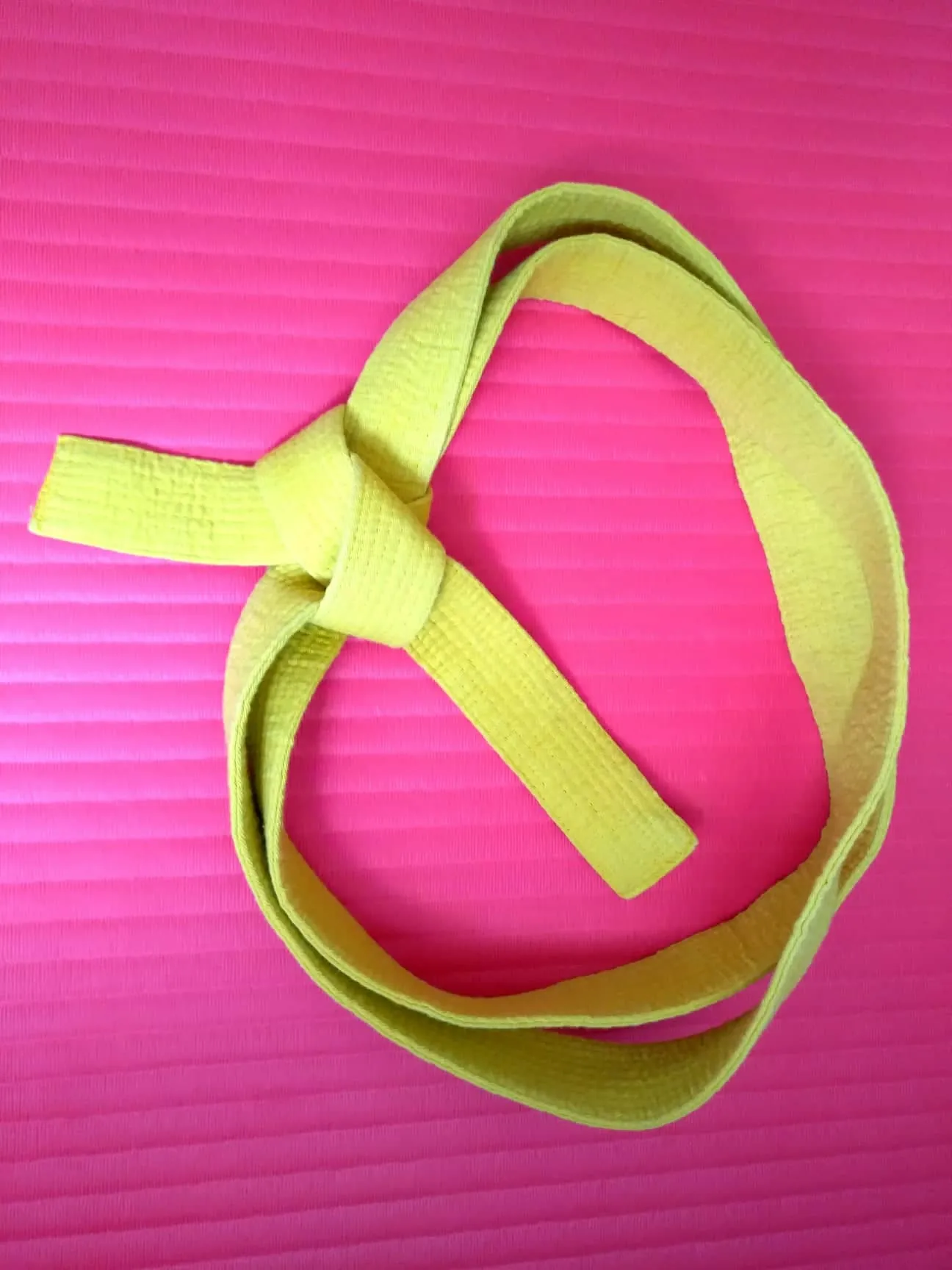
British Judo Sho awards | 5 to 7 | 9 | Awards earned in Judo Kids sessions, before any colored belt |
British Judo mon grades | 8 to 17 | 18 | Red up to brown, one to three tabs per color |
Kodokan junior kyu | Elementary school | 7 | Light blue up to brown |
Sources: USA Judo junior guidelines, USJF rank handbook, British Judo Sho and mon schemes, Kodokan.
USA Judo's junior program assumes a kid starts at five or six and earns about half a belt a year. At that pace, it says, your junior will have a brown belt by age 14 or 15.
A USA Judo junior, start to shodan
- Starts at five or six
The age USA Judo's junior program assumes.
- About half a belt a year
Through 10 junior grades, half-colored belts included.
- Brown belt by 14 or 15
At that pace, according to USA Judo.
- Shodan from 15
USA Judo's minimum age for 1st dan.
Sources: USA Judo junior guidelines, USA Judo promotion procedures (July 2025).
So Kyu & A's newest six-year-old won't see a brown belt until high school. The club's real job is keeping the years in between interesting.
British Judo's 18 mon grades sound like a lot. Then you remember an eight-year-old will happily train for three months to earn one colored tab.
When a junior ages out of the mon grades, the senior ladder takes over. In British Judo, juniors can switch to kyu grades from 14 and have to by 18.
Plan that handoff the same way you'd plan any kids' martial arts program, so a teenager doesn't feel demoted when the belt color resets.
Judo Black Belt Levels: The Dan Grades
Dan colors are the one part most federations agree on. The USJA is the outlier, listing 4th and 5th dan as black/red.
Minimum ages are where everyone splits:
Dan | Belt | Kodokan | USA Judo | British Judo |
|---|---|---|---|---|
1st (shodan) | Black | 14 | 15 | 15 |
2nd (nidan) | Black | — | 16 | 17 |
3rd (sandan) | Black | — | 18 | 20 |
4th (yondan) | Black | — | 21 | 24 |
5th (godan) | Black | 20 | 26 | 29 |
6th (rokudan) | Red and white | 27 | 32 | — |
7th (shichidan) | Red and white | 33 | 42 | — |
8th (hachidan) | Red and white | 42 | 55 | — |
9th (kudan) | Red | — | 60 | — |
10th (judan) | Red | — | 70 | — |
Sources: Kodokan dan regulations, USA Judo promotion procedures (July 2025), British Judo dan syllabus. Ages are minimums. A dash means that body doesn't publish a separate age for that grade.
The red-and-white belt (kohaku obi in Japanese) is less common on the mat than the chart suggests.
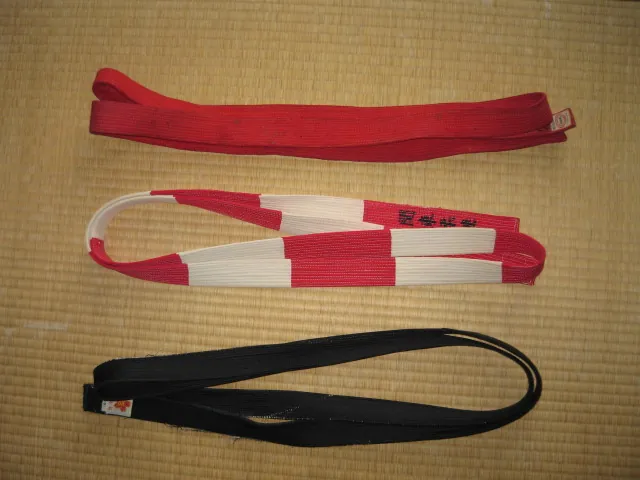
USA Judo's guide says a 6th dan can wear red and white or keep wearing black, and the red-and-white belt isn't worn in regular competition. British Judo calls it customary to keep the black belt for everyday practice.
Red belts are rare.
The All Japan Judo Federation says only 15 people had been promoted to the Kodokan's 10th dan as of March 2021. If one walks into your Tuesday kids' class, bow first and ask questions later.
How Long Does It Take to Get a Black Belt in Judo?
At least a couple of years for an adult who competes, and usually a good deal longer. The rule books only set the minimum, and it looks like this:
- Minimum age: at least 14 at the Kodokan, 15 at USA Judo and British Judo, and 14 to 16 at the USJF.
- Time at the grade below: USA Judo asks for three years before shodan for a non-competitor, and as little as six months for a student with 20 competition points. British Judo allows one kyu a month up to 5th kyu and one every three months after that, then asks for a year at 1st kyu plus 100 points.
- Kodokan: candidates for its international shodan exam need at least a year and a half of judo training.
Most adults training a few nights a week take well past the minimum, and your syllabus and their mat time decide the rest.
Setting that expectation early with a new adult saves you a frustrated conversation at year two, and the judo classes starter guide covers how to run those first months.
Where competition fits
Most of those competition points come from tournaments, which puts one more item on the list of benefits of competing. British Judo also awards points at its promotion examinations.
The catch is keeping track. A student's results end up scattered across whichever site ran each tournament.
In the US, many of those events run on Smoothcomp, which handles registration, brackets, and scoring for organizers including USA Judo.
Gymdesk and Smoothcomp are now one company. With Smoothcomp Connect, your students' Smoothcomp results land on your gym's record, so every tournament's results sit in one place.
Keeping Your Club's Judo Belt Order Straight
A real judo club rarely runs one ladder.
You've got juniors on half-colored belts, teens about to switch to the senior syllabus, adults on another ladder entirely, and a transfer student from Canada wearing a belt your chart says doesn't exist.
Kyu & A has all of that at once: about 40 juniors, 25 adults, and a new student from Toronto in a white-yellow belt, Judo Canada's half step above 6th kyu.
Then there are the rules that decide who's ready: a minimum age, time at the current grade, and sometimes competition points. Each one is easy to check for one student and miserable to check for 80.
This is where a spreadsheet starts to cost you.
It works right up until someone sorts one column and not the others. Then you're the coach who promoted a 13-year-old past a minimum age, or the one who forgot a student had been ready since spring.
That manual tax comes due the night before every grading day, when you're rechecking the sheet instead of sleeping.
How Gymdesk tracks a judo belt system
What Gymdesk does for a judo club:
- Belts that look like yours. Gymdesk has a judo rank style built in, so the belts on screen look like the ones on your students.
- One program per ladder. Set up a separate program for juniors and seniors, each with its own ranks in order. Half-colored belts and tabs work too, since each step can be its own rank.
- Promotion rules that match your federation. Combine sessions attended, days attended, hours, days at the current rank, skills, and a minimum age. A student only shows as eligible once your federation's age, time-in-grade, attendance, and skill rules are met.
- A list of who's ready. The promotion report shows who's ready across every program, and each student can check rank and promotion progress in the member portal if you turn that on.
Competition points aren't one of the requirement types, so keep those on your own list.
At Kyu & A, that's two programs. Juniors get USA Judo's 10 junior grades as ranks, half-colored belts included. Seniors get the USJF ladder, and shodan is set to a minimum age of 15 and three years at 1st kyu, USA Judo's rule for a non-competitor.
The Toronto transfer goes in at whichever rank the coaches decide matches, after a class or two on the mat with them.
Made-up example club
A made-up USA Judo member club: about 40 juniors, 25 adults, and a new student from Toronto.
Program 1
USA Judo's 10 junior grades as ranks, half-colored belts included.
Program 2
The USJF senior ladder, which USA Judo accepts.
Shodan: a minimum age of 15 and three years at 1st kyu, USA Judo's rule for a non-competitor.
More on how this works in practice in martial arts belt tracking software and managing belt promotions at scale. If you're comparing tools, here's our take on the best judo software.
It won't settle the argument about what color 5th kyu should be. Nothing will.
Put Your Judo Belt Order on the Wall
Judo's belt order has a fixed bottom and a fixed top. Everyone starts in white, and black belt is 1st dan. Red is for 9th and 10th dan, which mostly means the handful of people who live long enough.
The six kyu grades in between depend on your federation, and the federation table near the top shows how far apart the colors get. Kids get a separate ladder almost everywhere.
So publish yours. Print your federation's chart and put it by the mats and in your welcome email. Then track promotions against the same rules your federation uses.
The parent at pickup will still ask. You'll just have a shorter answer.
Gym Management Software That Gets You Back On The Mats
Run your gym smarter with the right software. Automate your attendance tracking, lead management, belt tracking, and more.


FAQ
Judo Belt Order FAQs
Short answers to the questions parents and new students ask most.

Sean has spent the last decade creating content that helps businesses—small and not so small—grow smarter to allow operators to do more of what they love. You know, the fun stuff.
From shipping and international logistics to web development and marketing, he's done the work (not just the words) to scale retail and service businesses efficiently.
You can find his work at Sendle, Shogun, The Retail Exec, Gymdesk, and more.