The Secret to Building a Successful Jiu-Jitsu School

Starring
.webp)
Joe has over six years of experience in Jiu Jitsu, having started his journey at age 35 after a successful background in sports like ice hockey and endurance cycling. He also works in tech as a CTO and is currently studying at MIT, balancing his corporate career with his passion for martial arts.
About the Gym
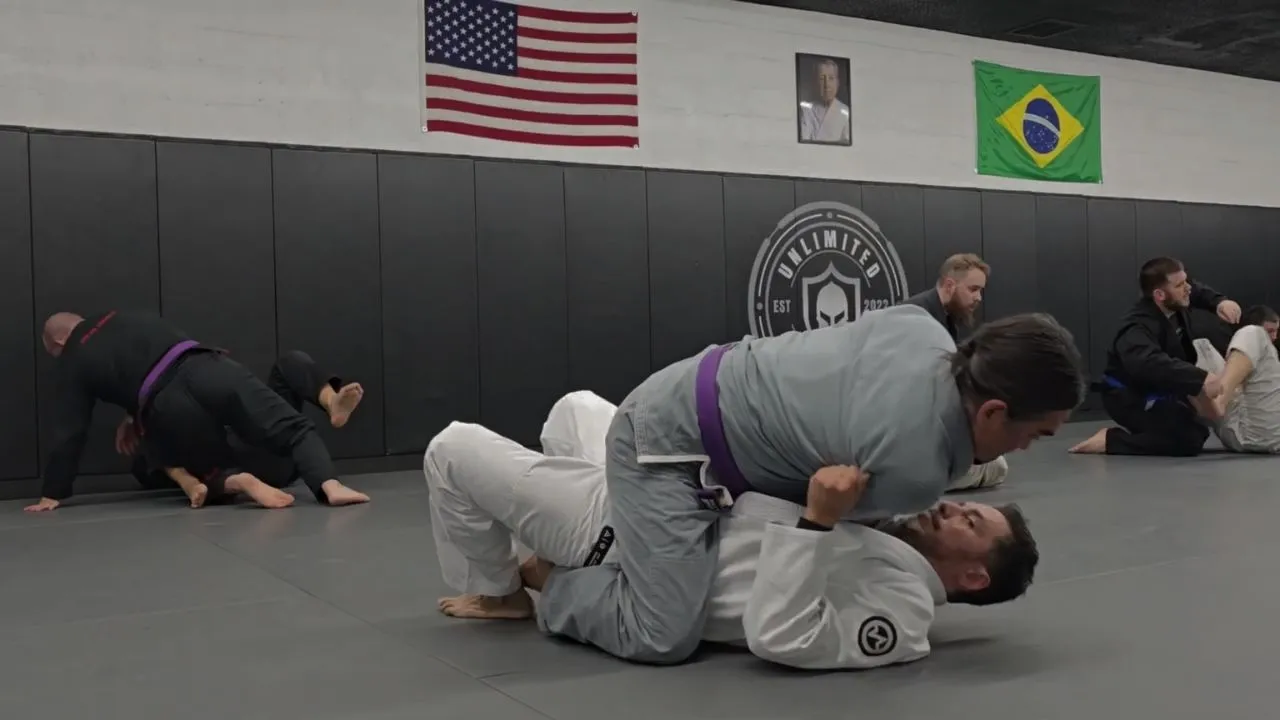
Unlimited Jiu Jitsu, founded in Las Vegas in 2020, offers training programs for all ages. The gym provides both self-defense and competition-focused Brazilian Jiu-Jitsu, including traditional and no-gi classes. The facility is located on Water Street in Henderson and features an open layout and modern amenities. Unlimited Jiu Jitsu emphasizes family-friendly classes, with dedicated programs for kids, hobbyists, and competitors, and welcomes new members to experience its supportive community.
📍115 S Water St, Henderson, NV 89015
📞 702-329-5123
Summary
In this episode, Joe Guarino, host and co-founder of Unlimited Jiu Jitsu in Las Vegas, shares the journey behind building a thriving jiu-jitsu school rooted in self-defense and competition. Joined by Gymdesk CEO Alex Cuevas, Joe discusses the importance of fostering a family-friendly, inclusive community where children as young as three can start training and everyone, from hobbyists to serious competitors, feels welcome.
Thir conversation covers the school’s unique culture, branding process, and the value of starting small while focusing on strong foundations. Joe emphasizes how crucial the right business tools are, highlighting Unlimited Jiu Jitsu’s use of Gymdesk software to streamline member management, automate marketing, support referral programs, and enhance the student experience with features like rank tracking and digital check-ins.
Ultimately, this episode offers valuable insights for anyone looking to build a successful jiu-jitsu academy, blending passion, smart operations, and community spirit.
What They Told Us
Gymdesk CEO Alex Cuevas visited Unlimited Jiu Jitsu on Water Street in Henderson, just outside Las Vegas, and sat down with co-founder Joe Guarino—a tech professional who runs the business off the mat. The gym grew out of a group of training partners who refused to scatter when COVID shuttered academies across Vegas, and Guarino talks about it the way a builder talks about a product: the brand, the culture, the systems, and the software underneath it all. What comes through is a specific idea of how a jiu-jitsu school actually gets built and stays welcoming.
Built out of COVID
The academy didn't start with a business plan and a lease. It started with a circle of training partners who had been together for years, and who watched the pandemic close gym after gym around them. Rather than drift apart, they stayed together and went looking for their own mat space—which they found, almost by accident, on a historic block in Henderson.
"We've been together, a lot of us, about five or six years. We were training at different camps and of course COVID had a lot of academies out here in Vegas closing, and we stayed together. We eventually kept training together and decided we needed our own mat space, and one thing after another led to this place."
—Joe Guarino, Co-Founder, Unlimited Jiu Jitsu
Starting them at three
Unlimited runs programs for every age, but Guarino is proudest of the youngest group. With three young daughters of his own and a sports-administration background, he built a class specifically for three-year-olds—an age most schools won't take—designed around motor skills and play rather than technique.
"We're one of the few schools that starts at age three. So I have three daughters, all very young, and we started a few of our kids at age three … we knew we could put a program together for our tiny t-rexes. Those are our three-year-olds."
—Joe Guarino, Co-Founder, Unlimited Jiu Jitsu
Why it feels welcoming
Cuevas noticed the room during the junior class—kids drilling and counting together, a brotherhood energy he compared to watching 300. Guarino traces that culture back to the founding group, and says the thing that surprises him at other academies is how often that welcome is missing.
"A lot of us have been together for many years, and that's the one thing that always surprises me when I go to other schools is sometimes it doesn't feel as welcoming. And I always feel like we're always ultra welcoming to other people."
—Joe Guarino, Co-Founder, Unlimited Jiu Jitsu
A passion project, not a business
Guarino works in tech by day and does web development for fun, so when it came to his own academy he poured that same energy into the details—the website, the logos, the trademarked branding, all of it. He describes the gym less as a company than as the thing he does with his free time, a distinction his wife has clearly noticed.
"I actually do a ton of web development on the side for just people I know just because I enjoy doing it so much. And when it came to this business, I was extremely excited to pour everything into our website and our logos and the design and down to the fine details … I joke with my wife, always says that this is not a business. It's my hobby."
—Joe Guarino, Co-Founder, Unlimited Jiu Jitsu
The pain of the wrong software
Before Gymdesk, Unlimited ran on a different platform and felt the cost of that choice almost immediately. Guarino's read is that most gym software is built for the general fitness industry, while the tools made specifically for jiu-jitsu tended to miss the business basics—lead tracking, a decent member experience. About a year in, he decided the migration pain was worth it.
"We even started with a different piece of software … software is built for the fitness industry, but it's not built for martial arts."
—Joe Guarino, Co-Founder, Unlimited Jiu Jitsu
What the switch changed
What sold him on Gymdesk was fit—features that actually matched how a jiu-jitsu school works, starting with belt rank built into the system. He also leans on the marketing automation to catch free-trial leads and the referral program to reward members who bring friends, the tools he says he had wanted for a long time.
"I found Gymdesk that was really in alignment with what I was looking for. As far as features, it worked really good for jujitsu. It had the belt rank system inside of it, which everyone loves seeing when they check in or on their app, they can see their rank and their promotion history."
—Joe Guarino, Co-Founder, Unlimited Jiu Jitsu
Read the full transcript
Lightly edited for readability. Speaker labels are omitted because the source recording is not diarised; quotes attributed elsewhere on this page were verified against context.
What's up? We're over here at Unlimited Jiujitsu in Las Vegas. Gymdesk in the building. Yep, got Alex Bojaca here and we're gonna go check him out and uh, let's just see what they got going on. What's up everybody? I'm here with Joe Guarino. Yep, yep. Sitting at Unlimited Jiujitsu, BJJ, in Las Vegas, Nevada. Look at this place. It looks amazing. Thank you. Love the lights. I love the uh, open, it kind of feels like an open kitchen when you walk by like a restaurant except you're showcasing your talents here.
Can you tell us a little bit about your spot? Like how long ago you started? Yeah, so we've been together a lot of us about five or six years. We were training at different camps and of course COVID had a lot of academies out here in Vegas closing and we stayed together. We eventually kept training together and decided we needed our own mat space and one thing after another led to this place. Uh, we came by one day, it was open and available and made a couple calls and it was like it was all meant to be.
So this is how we ended up here on Water Street. Water Street's a historic block of Henderson. It's uh, city halls up the street and uh, it's uh, it's been around a long time and we're really grateful to be here. It's a, it's a great block and community to be on. Yeah. And you know, you can't help but just notice the place when you walk by you got bars and all that. I mean, yeah, it's gotta be marketing is pretty easy for you in that regard, right?
Posting your sign. Yeah. And I think, you know, just word of mouth, the community that's around here is great too. And a lot of people are here because of someone else referring them here. So between the block itself and our community of people, that's where all of our new clients come from. Yeah. Yeah. And, um, did you plan for it to look like this or just did you get lucky? Because it's so, yeah. So actually it looked nothing like this when we opened this building is actually from 1940.
So, and it's been many different things, including the social security building for Henderson at one point in time, many years ago. But, uh, no, it was really just a gutted space. Um, a limited jujitsu was a brand new brand that we wanted to come up with our own brand that we could basically identify as, uh, all the things that we loved. We took a lot of elements from Las Vegas, the Raiders, the Golden Knights, a lot of color schemes, things like that. Yeah. But we wanted to keep it pretty simple.
Again, like you said, open space, inviting, and this is what we ended up with. So it's taken us a while to kind of get it to what it is, but we're very proud of the location itself. Awesome. So tell us a little bit about unlimited jujitsu. What is it, an amalgam of different things that you put together? It's very, I'd say almost self-defense oriented, but also at the same time had competition elements to it. I think there's a lot of gyms in Las Vegas that are very competition specific, and we wanted to kind of have a blend of both, where it was both self-defense, uh, your hobbyist, as well as those who want to compete.
Uh, and that's exactly what we did. We kept, you know, we keep a lot, there's a lot of traditional elements of jujitsu here at the academy. Um, and, but then also at the same time too, we do try to mix in newer things that you'll see out there and specifically nogi type jujitsu, things like that. So yeah. Got it. Awesome. And so you're, you got a lot of kids here today, right? Yeah. This is our juniors class right now. Yeah. Roughly probably about 30 or so kids on the mat right now.
So yeah. Nice. So when you were doing your programming, did you have like an intention? Like I want to do kids and adults, or you had, uh, you said 20 adults when you. Yeah. So we had 20 adults. A couple of them were juniors. So teenagers. Um, but we definitely wanted to have all ages. We, and we're one of the few schools that starts at age three. So I have three daughters, all very young, and we started a few of our kids at age three. So we knew that they could start at that age.
We knew how to talk to them. I also have a sports administration background. I actually come from hockey originally. Oh wow. So we kind of blended everything together and we knew we could put a program together for our tiny t-rexes. Those are our three-year-olds. Okay. And, uh, it's been, it's actually a huge class as well too. Uh, for a lot of those kids, it's their first social setting. And we do a really good job at bringing them in and showing them a sport that they can love and thrive at.
Yeah. And so I have a seven year old and a three year old. Okay. And, uh, I turned my garage. Yeah. Into a little studio cause I'm kind of, yeah, I'm in the middle of nowhere. Sure. So, and I have some kids that come over and train and, uh, the seven year old is doing a lot better, especially as he's got more kids in there. My three year old doesn't quite get it, but yeah, he's okay. He's playing around and you know, I don't pressure him to learn anything.
Just have fun basically and get used to it. Is that kind of the idea? Exactly what we do. It's a short 30 minute class. We get them on the mat. We get them improving motor skills, different things to them. They think they're having fun and learning something or hanging out with their friends and they're actually learning, you know, how to move, how to roll, how to tumble, how to fall. And then we teach them one technique and we give them at least one technique. So they understand the framework of how to learn something new.
And then after that, they play a game, which again is it's teaching them something about jujitsu. They think they're having fun, but they're actually learning motor skills that'll help them in the next age level actually do techniques that much better. So that's awesome. That's great. Well, we're looking forward to joining you in the class and maybe we'll spend some time afterwards. It'll be great. Awesome. Thanks very much. Thanks for coming through. So how are you feeling, man? I'm a little anxious, I'm a little excited. Yeah, looking forward to it, man.
It should be fun. Yeah, it should be fun. Let's go. It's the cuevas. All right, time to get going. Here we go. All right. What an awesome class. Thank you. Thank you very much. Yeah, for sure. That was a really energetic role. Yeah. I love the drills in the beginning where everybody's kind of counting together. Yes. Like a big giant brotherhood. Yeah, yeah. Like you're watching 300. Yeah. A lot of us have been together for many years, you know, and that's the one thing that always surprises me when I go to other schools is sometimes it doesn't feel as welcoming.
And I always feel like we're always like ultra welcoming to other people. Not to say that every school is not like that, but we just have a really good group of people. Kids too. The kids are really welcoming the new kids as well. Yeah. And why, why do you think your school developed that way as opposed to maybe having a different style? It's an individual sport, but it's very much, we're a team here when we're here. And it's about supporting at the kids level. It's about supporting each other for whatever reason they're there, whether they athlete getting bullied in school, something like that kind of breaks down those barriers that might exist elsewhere.
And here it's just about self-improvement at whatever level, for whatever reason you're coming through the door, you know, and adults as well. A lot of guys got to go to work the next day, you know, and some of us are here just for exercise. Some are here because I have a lot of guys who were deployed, who were in the military and they're looking for, you know, camaraderie and a group of guys or people that they can, you know, lean on as well and train with.
And I feel like the team atmosphere that we have here is a little bit different than some of the other places. So yeah. Yeah. That's awesome. Um, have you studied any other martial arts or just so as a kid, I've done like trial classes for other sports. I never did any fight sports my whole life. Yeah. So, and I started at 35, I'm 41 now. So I've been doing this six years. Um, yeah, I never had, I was an ice hockey player my whole life. So I've done a lot of different sports of, you know, extreme sports, even things like I was even a cyclist for a long time.
Oh, wow. Sponsored by some companies, things like that. So I've done a lot of endurance sports and a lot of sports with my legs, you know, things that were like a lot of running, a lot of skating, things like that, but never did fight sports. And of course now I wish I got into it way earlier in life. But for me, I got into it cause I was, I work in tech during the day and I just had my third kid. I put on a lot of weight.
My wife lost all that weight when the baby was born. And I was like, I'm not doing anything. Yeah. So, and it was trending. I follow a lot of podcasts and things like that, of course, and came up more than enough times that I got interested in it, did my research or research everything. And I was like, you know what? I could do this. I don't, I don't have to get hit in the head. Yeah. It'll help me though. If someone's trying to hit me in the head, you know, and, uh, gain a little self-confidence and my takeaways from it working in a corporate atmosphere is there's so many similar, it's so different.
It's just, but there's so many similarities as well too. Um, and it's really helped with, you know, being comfortable with being uncomfortable. Um, that translates to work as well, you know, in being in the boardroom, pressure, stress, things like that. So, um, I feel really grateful to have found it. I never thought I'd be an academy owner and it's doing things like procuring the right software to run your business and, you know, things like that, developing a brand, um, what you want that brand to mean, what do you want it to symbolize?
It means a lot to the people who come through the door and then you go to tournaments and you're proud about representing your team and things like that. So I think we've built, uh, been really fortunate to build a great brand product and community of people. So yeah, tell us about the logo. Yeah. Yeah. What, uh, so we, uh, when it came with, it came to the name, we went through, of course, most companies go through, uh, you know, trademark registration and things like that. Yeah.
You're going through those routes, trying to find a name no one has. And we came across unlimited because it symbolizes there not being necessarily limitations that anything's possible, believe a lot in the growth mindset, um, being able to change anything you want about yourself, self-improvement, things like that. And there being limitless, unlimited possibilities. When it came to the logo, we wanted something that symbolized strength. Um, we talked a lot about the Spartan mindset, you know, the 300, things like that. And, uh, it really resonated with us.
Um, don't tell the Raiders, but I mean, their color scheme is amazing. And we really love the colors. We love that gray, uh, you know, the white, black. Um, and, uh, from there I do a lot of graphic designs. I started putting together a lot of different samples. And when we kind of showed this to the group, they got really excited about, about the logo. So from there we've introduced many other designs with the name and stuff like that, but this is our registered trademark logo at this point.
So really proud of it. Yeah. Yeah. Great logo. Um, and it, you know, going back to the feeling that I got, not even having that in the forefront of my mind when we were in the class, you feel that Spartan energy in there. So good, good job. Yeah. Yeah. You know, there's so many things about unlimited jujitsu that just fell into place. It felt very meant to be. And, uh, you know, I learned early on in life, just trust your gut instinct. And this, while it was a big risk, you know, in the grand scheme of things, things just fell into place and I ran with it and everyone else who was here with us ran with it.
And it's been great. You know, we just conducted a survey. I think we had over roughly around a hundred, uh, participants. Um, a lot of them were customers and we were asking the questions, you know, tell us about, you know, why you started your gym. Did you go to university? You know, these kinds of questions. And we found a substantial amount. I think it was like 85% did not start the business to be like their sole source of income. Yeah. So it was like a passion project.
Yeah. Sounds like you're, this was very much so a passion project for me. For me, I got to do all the things that I really enjoy doing. Like I actually do a ton of web development on the side for just people I know just because I enjoy doing it so much. And when it came to this business, I was extremely excited to pour everything into our website and our logos and the design and down to the fine details. Cause they're really important to me. People, I feel like people really notice those fine details.
So yeah, I put a lot of, I joke with my wife always says that this is not a business. It's my hobby. Yeah. She's like, you're going to go hang out with your friends right now, aren't you? But she really respects it. And I owe a lot to her too. Cause she supported me the first year or two, like investing everything I had into it. I mean, I can tell you what my day's like, it's crazy, but she really held it down at home and they're here.
My, she helps me come here and clean all the time. And my kids are here. My teenager works the front desk some days. So it's also a family kind of thing at the end of the day too. Yeah. It's a nice family to have everybody. Yeah, no, for sure. My wife will not get on the mat. She's like, I don't like the sweat. Don't touch me. But she's, she understands what it means to me and that's enough for her to support me through it. Awesome. It's great.
Yeah. So what's the, uh, what's the vision where, you know, you're trying to get multiple locations? Yeah. You know, um, I would say, look, definitely want to expand. Right. But I feel that there's a right way to do it. I've seen far too many people try to grow too fast and it can be a struggle. Um, I feel like what we've built here is really strong as a foundation. We definitely have a couple of people who have become black belts recently and are actually moving away.
And I designed and drafted this business as a franchise. So it's completely franchisable and I totally intend on gifting that to anyone that my professor feels is worthy for that. I'm more than happy to share that business plan with them and help them expand as well too. The key part I think for us and growing our brand is there's something to our leadership that we have here and it's in our culture. And it's really important to retain that. I wouldn't want to just spin up a bunch of schools with people who haven't grown with us because they don't feel that they're going to retain that culture and bring it to the next unlimited jujitsu.
So I'm very cautious and that's even protective over what we've built here, but I totally am open to sharing that knowledge that I've built, you know, or at least gain to help the next person build their gym too. Awesome. Yeah. And so you're a technical, you're a CTO and you're, you know, other life building computers MIT student. Yep. Yeah. Yeah. Yeah. So I'm currently going again. I went back, I decided, let's go back to school. So I go to school from four to 6am every day.
Then I go work at nine to five. Then I come here until about nine, whether I'm training or working the desk or something like that. So yeah. So that's my day in a nutshell. Yeah. Yeah. I'll, I'll, I'll, when I retire, I'll hang out and just be here all day at the gym. You know, I do see this as kind of a not, I wouldn't say retirement plan, but this is what I'm doing with my free time. Once I am done with the corporate world. So yeah.
So you never get to, you don't need to retire. No. Say you can just do something you enjoy and love and you're building it in and you're going to step right into it. Yeah. I'd probably go crazy if I did nothing. So yeah. But yeah, I love what we've done here and I could see myself doing this for a very long time. So yeah. Yeah. Awesome. So as a co-founder, you're the technical side and I run everything off the mat. I do some coaching on the mat.
Of course I'm, I as well, I'm pursuing my black belt and part of my journey is also learning to teach. So I'm happy to do that. Um, but also, yeah, I do everything off the mat. So everything from accounting, legal, you know, find everything here on the business that's not on the mat is ran by me. So yeah. And so when you're starting the business, you know, on the technical side, can you walk us through that journey? Like how was it? Were you paper and pencil in the beginning?
Yeah. So it's drafted a business plan, right? Uh, identified. Um, of course you worry about things like location, uh, your build out, right? So worried about that. But at the same time, so you start looking for a name, start going on the USPTO website, seeing what names are available, things like that. Uh, you know, find a name, agree on a name and start to build your brand, your graphics, your logos, things like that. A website's a pretty, I won't say an easy thing to do, but it's your first storefront that's available to everyone.
You start there. And then from there, you start to worry about things like, you know, what's, what software am I going to use to run my gym? What's my phone look like? What email service am I going to go through? Um, you know, uh, and then you start to think about beyond that, how am I going to bring in new leads? Well, how am I going to market? Um, how am I going to spread word of mouth? Uh, what is, you know, what does my pricing look like?
How do I incentivize people to bring other people or things like that, building a referral program? You know, these, those things are important. Um, and it's about bringing them through the door and then the jujitsu sells itself. Right. So my whole job is just getting them here in the building, experience a class. We offer a free trial. It doesn't cost anything to give someone a trial. And if you have a really good product on the mat, they'll stay, you know, and I was joking with you earlier.
I don't spend a lot of money on marketing. I really don't. Of course, location helps. Right. So I won't discredit that, but at the same time, um, for me, it's about getting them in. So, yep. And, um, you mentioned you had looked at other software as well in the beginning. We even started with a different piece of software and a very quickly and early on felt the pain of picking bad software. Um, did a lot, you know, a lot of, I think software is built for the fitness industry, but it's not built for like martial arts.
And I think, um, after looking at the different products, the ones that were really specific to let's say jujitsu, they were lacking in some more generalized features like lead tracking and things like that. They helped manage a membership, but they didn't provide a good experience for the user, you know, being a mobile app or something like that. So, um, it took some learning real hand, you know, hands on learning to realize what I wanted. And then about, I think we were about a year in, I decided it's time we've dealt with it long enough.
I'm willing to take on the pain of doing a migration. Let's make it happen. And I outlined my requirements. I started shopping different softwares. Those that had free trials were low risk way to try out different software. And after trying several, I found Gymdesk that was really in alignment with what I was looking for. As far as features, it worked really good for jujitsu. It had the belt rank system inside of it, which everyone loves seeing when they check in or on their app, they can see their rank and their promotion history was a big, uh, value add for them.
And, um, we were really happy once we moved, there were so many features that were just like, we've needed this for so long. Thank goodness. Have you, uh, have you had a chance to play around with the, um, marketing automation? Yeah. Yeah. So, um, we, while I appreciate that Gymdesk comes with web software, uh, we ended up using some of the online forums on our website. And with that, um, people fill out for a free, free trial all the time. I then have an automation that automatically emails them back and lets them know, uh, what they need to do in order to come in for a free trial.
That then leads them to the waiver. They complete the waiver. At that point, I haven't done anything, but I've captured all their information, which means lets me then interact with them even beyond, um, you know, just what they filled out so far. If they don't come in for that trial, I have their details to contact and say, Hey, where are you at? Even that is an automation. After so many days, if they haven't converted to a certain member type or a free trial, uh, or checked in, I know to trigger another automation to say, Hey, where are you at?
These are things I was doing manually before. And it was a lot of effort to have to continuously do that. Um, once they actually come in, uh, they do the free trial at that point, converting them is super easy in the software. I can convert them to a member. Um, we also use the referral program a ton. So there's some, some ways as well too, I incentivize people. If they bring another person who signed for a membership, you know, the person who referred them gets a credit on their next bill and all of that happens without me.
I have the ability to quality control that, which is great. Yep. But at the same time, it's just clicks, simple clicks. Yeah. Yeah. And that, we have found that also in the survey that, uh, the bring a friend is one of the best marketing, you know, tools you can leverage for your gym. Yeah. Couples as well. Uh, yeah, definitely. We also do some, some free open self-defense classes to the general public. And I like as well that you can kind of segment user types as well.
So you'll have your tradition, you know, your traditional member who's doing jujitsu, but you could also hypothetically run a yoga class on Saturday and still have a completely separate kind of member base at the same time that is on a different payment schedule, you know, all that different stuff. So it's really, it's really nice to compliment things like that. Or even if you want to run a summer camp with your kids program, you know, the software supports that too. Yep. Um, if you can go back in time and give yourself advice from right now to when you're first starting, what would you take better software right off the bat?
Um, it was hard for us as a startup to know what we really wanted. Um, and, but it's important that you put, you really jot down your requirements. What are your non-negotiables? What can you live without and pursue those? And if you don't, once you get really invested into something, it's hard, it's much more painful to leave. But if you do have a bad product, there are definitely better products out there like Gymdesk and it's worth it at that point to make the move. Yeah. And so if I'm brand new, I don't really know what my requirements are.
What are some things that are must have, like maybe three, four categories or. Yeah. So definitely, I mean, depending on your audience, right? For me, I had a lot of family members. So being able to manage family accounts easy was huge for us. You'd be surprised a kid will start next thing you know, dad watches enough classes or mom, they want to get on the mat. They're like, let's go. How can you build out that profile? How can you give parents the ability to manage their children?
Far too many pieces of software are just, here's one account login. Here's another account login. I really recommend, especially for martial arts academies, get something that compliments family as well. The marketing automation is huge. Like you don't want to respond to every single email. You don't want to have to go through and auto and remind yourself with like tasks or handwritten notes to do things. You will forget them. You will lose leads because of that. And it's a shame because really you just don't have the right tools.
So those were huge for us. I think the referrals as well were, were big and having a good user experience for the end user, a good app, same thing with your check-in console. So many gyms have like little cards that they fill out when you show up to class, I don't want to manage paper at all. Like, and it gives us a really good digital presence, you know, when they walk through the door with the tablet checking in or on their cell phone. And we can communicate with everybody through the app as well too, whether push notifications, SMS, it lets us target our different audience for our different marketing campaigns.
The mass emails are huge, constantly staying in contact with your member base. So yeah, those are all features that definitely the old platform that we're using before I didn't have. And they were definitely huge wins right off the bat. So I could only imagine where we could be if we had the right software from the beginning. So yeah. Well, that's awesome. You guys have an amazing place here. It's been a, it's been a pleasure and honor for myself and Mr. Bojaka here who's behind the camera to check it out.
Yeah. And if you're in the Las Vegas area, come down to unlimited Brazilian Jiu Jitsu and, uh, jump in for a free trial. Yeah. Anytime. Cool. Thanks so much. I appreciate you coming out. Yeah. Thanks for having us. Thank you. Definitely. Thank you.