How Tanuki Martial Arts Made Toronto's Greektown a BJJ Home

Starring
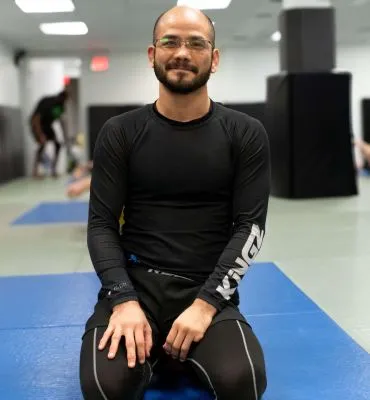
Seiji Sugiman-Marangos holds a PhD in biochemistry and ran a campus BJJ club for seven years, coaching from white belt through brown. He left a research position at SickKids hospital to open Tanuki Martial Arts full-time, bringing a background spanning Shotokan Karate, Taekwondo, Wing Chun, Capoeira, Wushu, and seven amateur MMA fights.
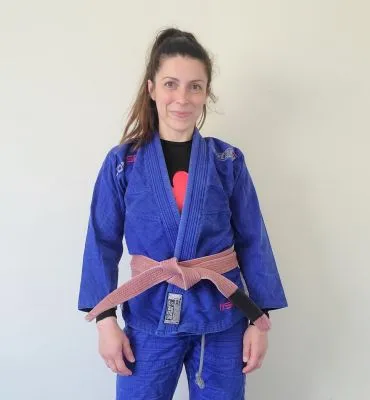
Marianna Zafiroudis is a BJJ black belt and former competitive boxer who won gold at purple and blue belt and earned silver at Pans at brown belt. She brings a background in child and youth work with high-needs kids to co-lead Tanuki's kids program alongside Seiji.
About the Gym
Tanuki Martial Arts opened in April 2022 in Toronto's Greektown neighborhood, co-founded by Seiji Sugiman-Marangos and Marianna Zafiroudis. Seiji holds a PhD in biochemistry and ran a campus BJJ club for seven years; Marianna competed internationally in boxing before transitioning to jiu-jitsu, winning gold at purple and blue belt and earning silver at Pans at brown belt. Both are BJJ black belts.
The gym offers adult and kids BJJ, adult boxing and kickboxing, MMA, wrestling, after-school programming, and kids boxing fitness, with both founders personally teaching the majority of kids' classes.
The gym is built around a community-first philosophy, welcoming all skill levels, from beginners to regional and national-level competitors. Membership pricing is transparent and publicly listed on the website, with equity-deserving memberships available on request for those facing financial barriers.
📍 475 Danforth Ave, Toronto, ON M4K 1P1
Summary
This episode tells the story of Tanuki Martial Arts, a BJJ gym in Toronto's Greektown neighborhood co-founded by Seiji Sugiman-Marangos and Marianna Zafiroudis.
Both are black belts with backgrounds in competitive fighting—Seiji in MMA, Marianna in boxing—who deliberately chose to build a community-first gym instead of a fight gym. They signed a lease during Ontario's last COVID lockdown in 2022, renovated during it, and opened a month later.
Four years in, they've grown entirely through word of mouth with no active marketing.
What They Told Us
Alex Cuevas brought the Gymdesk Originals camera to Tanuki Martial Arts, a jiu-jitsu gym on the Danforth in Toronto's Greektown, and sat down with its two co-founders after a no-gi class. Marianna Zafiroudis came up through boxing; Seiji Sugiman-Marangos spent a decade as an academic scientist while fighting MMA out of province. Four years in, what they built is deliberately small—a community gym that barely markets itself and puts its prices on the website.
A gym built to be a community, not a fight camp
Both founders carry real competitive résumés—Marianna has medaled internationally, Seiji fought professionally—so the easy assumption is that Tanuki would be a hard-nosed competition room. It isn't, and that was a choice Seiji made out loud when they opened. He wanted the space to hold families and everyday people more than fighters.
"I don't want this to be a fight gym. … We're much more community oriented. So families, we have a lot of kids whose parents also train, a lot of everyday people."
—Seiji Sugiman-Marangos, Co-founder, Tanuki Martial Arts
The culture that runs without a rulebook
Ask Seiji how they keep the room safe and respectful and he shrugs at the premise. There is no code of conduct posted by the door and no speech he gives new members. The expectation travels from person to person, and nobody has to enforce it.
"We don't have any rules written on the wall. I don't need to give people a talk ever. … We're here to train hard, have fun, but not get hurt and take care of each other."
—Seiji Sugiman-Marangos, Co-founder, Tanuki Martial Arts
Rooted in the neighborhood they grew up in
Both founders grew up around the Danforth, so when they opened they weren't starting from a room full of strangers. People they already knew walked in on the first days, and Marianna thinks that head start is what gave the place its feel.
"Growing up in this area and knowing people, and then when we opened up, we had a good base of people that we know come in. I think that really authenticated the place a little bit more, and it helped create more of a familial vibe."
—Marianna Zafiroudis, Co-founder, Tanuki Martial Arts
Prices on the page, no corner conversation
One thing a visitor notices fast: Tanuki lists its membership prices right on its website, which plenty of gyms still won't do. For Marianna that comes from her own allergy, built up over a boxing career, to getting cornered by a sales pitch before she has even tried a class.
"I personally hate going into a gym and getting put to a corner and talked about why I should be signing. … I'll come in, I'll check your vibe, and if I like it, I like it and I'll sign up."
—Marianna Zafiroudis, Co-founder, Tanuki Martial Arts
A membership for anyone facing a barrier
The transparency has a second side. Alongside the published prices, Tanuki openly advertises what Marianna calls equity deserving memberships—a standing invitation for anyone who wants to train but is up against a financial wall to just ask.
"We do have equity deserving memberships. … If somebody comes in and they really like the spot and they just ask us if there's anything they can do … in terms of financial barriers that they're facing … we're very happy to help. And we do list that directly on the website as well."
—Marianna Zafiroudis, Co-founder, Tanuki Martial Arts
Everyone in the room is deputized to teach
Seiji is one of the head instructors, but he works hard not to be the single funnel every question runs through. If someone else on the mat knows a position better than he does, he would rather point you their way—and that habit turns every member into a coach.
"Kind of everyone is deputized to teach. So if you have a question, you don't have to defer to me. … Someone asks me about something and I know that someone else in the room does that much better than I do. I'm very happy to push them towards that person."
—Seiji Sugiman-Marangos, Co-founder, Tanuki Martial Arts
The founder who checks attendance from the cameras
Seiji spent ten years as an academic researcher, and the scientist's need for a complete data set never left him. Tanuki runs on Gymdesk, and the attendance record is his favorite part—so much so that when members forget to check in, he reconstructs the night himself.
"I'll actually go on our cameras every night and do the attendance because I need—I need the complete data set. … Even when I'm on vacation, I'm out of the country, I'll get on the cameras and make sure everyone's checked in."
—Seiji Sugiman-Marangos, Co-founder, Tanuki Martial Arts
Read the full transcript
Lightly edited for readability. Speaker labels are omitted because the source recording is not diarised; quotes attributed elsewhere on this page were verified against context.
Behind every gym, there's a story, a mission, a spark of passion that started it all. This is Gymdesk Originals. Real owners, real struggles, and the communities they've built from the ground up. Okay. How you doing, buddy? Come on. Running late. Inclement weather. There we go. Tanuki martial arts. Hi there. Sorry for being late. Hi Marianna. Nice to meet you, Alex. Here's my son, Neil. Heat. Heat. All right. I'm here at Tanuki Martial Arts and I'm in Is this technically Toronto? Yeah, this Toronto. Okay. Cuz I was driving around like to try to get here from the downtown area.
It was a lot of snow. So, we'll show some of that footage. And then it turned into rain and then it turned into snow again. But we made it. Um I didn't realize this door there was an upstairs and a downstairs. And uh I just had my no gee class which was amazing. Thank you very much. Especially because I'm preparing for uh this weekend. I'm doing a no gee tournament for an hour straight. No no no rests. Just been almost like a tap tap uh tap out for cancer.
Oh yeah. Yeah. So um excited about that. Um but yeah, thank you for hosting us today and uh maybe we can just start with some introductions. You guys can let us know who you are and um we'll get into your martial arts background. Uh my name is Marianna. Uh my background is I started off with boxing originally. So I had a bunch of fights and it took me around the world training and competing. And then I ended up finding jiu-jitsu randomly when my coach told me to stop boxing or take a break um just because I needed to.
Oh, I missed. Yeah, this is the thing. My coach told me to take a break just cuz um I needed to just like refresh and then I found jiu-jitsu and ended up doing both for a bit and then after that I decided just stop boxing and just focus on jiu-jitsu. I think it's a little bit better for your brain. Yeah. Taking shots. But ended up competing with jiu-jitsu. I've done uh Europeans a couple times. I won at uh mast's one at purple and blue and then I ended up doing fans at Brown.
I got silver. Um and then I had a daughter, so it kind of put me out for a bit. Yeah. Making all that noise in the background. She's 15 months. Yeah. And now I'm back at it again. Maybe hopefully competing. Yeah. It's my story. Well, before we I'm curious. So, after she was born, how long did you have to wait before you could train again? Um, I had a pretty I was I remember telling Si, come on. Come on in. I remember telling Si to when I was expecting like I'm going to be back out and he's like, "Oh, yeah, good luck." I ended up um having a C-section, so it took me a little bit longer than anticipated.
Yeah. Uh I came back about a couple months after the birth, and then I ended up competing 10 months in on nationals, and that was a good experience. I ended up getting bronze. I had three fright three fights. Um, and I lost one and won two. So, it was pretty good. But, yeah. Yeah. Awesome, sir. So, I grew up in this neighborhood. I started with Shakon Karate. Okay. And that gym is still they've kind of moved around a bit, but they're still in the area. Same instructor.
He's probably in his 80s now. Uh, Koncho Puyama. I also did some taekwondo at a gym also down the street here. Still also going. I think that guy just retired. Um, I spent quite a bit of time in Wingchun and my instructor there has since stopped doing Wing Chun. He picked up jiu-jitsu as well, got his black belt and he's training with us now. Wow. Kind of Yeah. full circle. Um, so I dabbled around. I did some Guushu as well in Capoeira and then got into watching MMA, UFC, and Pride at the time in Japan.
Undergraduate, still involved in martial arts. And then a buddy of mine from high school reached out and told me that he had started training at this gym near his place. Should come check it out. This was an uptown Toronto Shaw Franco of crazy people just that they were involved in the early days of MMA in Ontario. So pioneers in Ontario MMA. So I took my first jiu-jitsu class there. Typical story. Got beat up by a bunch of teenagers and smashed by everyone in the room. Yeah.
I trained through the summer between first and second year of undergrad. And then even though there were clubs in Hamilton, I decided to start a club on campus as a white belt. We didn't charge anyone anything. So we were just small group, eight to 10 people training hard together. So doing that during the year, going back to Toronto on the weekends, trained at Shaw, spent the summers training, then just back and forth for seven years. Um, yeah. So I went from white to brown at that club at the university.
Um during that time I also did some kickboxing. Hello. Hi. had some fights, MMA fights. Uh competed a bunch just locally. Marian is much more accomplished in jiu-jitsu internationally. I've only done local stuff. Yeah. So MMA as well. Yeah. Yeah. So because you've had all the different other arts um that you've studied, you kind of just combined them all together and Yeah. So the again the gym that I started jiu-jitsu at was it was a fight gym. So the guys there were were fighting actively. Um so I took my first fight maybe about three years into training.
So on four days notice. So I was during grad school I was commuting from Hamilton to Toronto three days a week. Um Tuesday, Thursday and then I would come back for the weekend as well. Tuesday I showed up. Shaw said, "You want to fight on Saturday, Prince George, British Columbia?" Sure. We got on a plane Friday, weighed in that day, fought on Saturday. Wow. I did about seven fights. This is all through grad school. So, doing my PhD. Oh my goodness. I wasn't fighting very actively.
It was like one or two fights a year. So, and it kind of my PhD kind of bookended my fight career. And I've started about a year into grad school and then finished about a year or retired about a year before finishing my PhD. Yeah. I mean, I want to I want to get into all that and all your academic background. But um so you grew up around here? Is it Greek Town? Is that was we both actually we grew up around here. We didn't know each other.
Okay. Jiu-jitsu at the old gym we used to train at, but yeah, we both grew up around here. Okay, great. Um and um I guess let's get into your academic background. Um I think I had here that um PhD in biochemistry. Yep. Right. And then uh you were are you doing research still at Sick Kids? I should update the website. Okay. Um so we started the gym in 2022 and I was still working at Sick Kids. Um which is a research hospital's hospital with a research tower.
Yeah. And so I did both at the same time for two years and then I left academia about two years ago. Okay. Now, how uh I'm just trying I'm going back to like thinking if I was a student and that whole workload is there and then you're gonna go have a fight like how does that I mean that's why it only I only had one or two a year. Yeah. Um grad school is a little bit different than undergrad. So there's less course work. It's really just kind of like a very underpaid job in the lab seven to eight hours a day and then I hop on the go bus from Hamilton to Toronto like hour and a half there train for two hours and a half back to Hamilton.
Oh my goodness. Yeah. Yeah. That's that. So that's a three-hour commute. Yeah. There were gyms in Hamilton. I just I don't know why I Yeah. So loyalty. Yeah. I was going to Toronto. So BJJ Club. Uh I imagine you first started like I just need bodies even though you're a white doll, right? You want to like you need to roll. Um but you did it for so long. You must have learned a lot from doing that to apply it to what you're doing here. Yeah. Yeah.
So yeah, it was I was coaching for seven years like running class. It was a white belt coaching other white belts initially and then Yeah. A lot of those guys are still training. A lot of them got are black belts now. Some of them have their own gyms. That's kind of cool to see. Yeah. And so at some point you decide you make the switch like um I love training but you also had this interest in academia like what what finally made the uh like I'm full in I'm going to do just martial arts.
I mean, I did both ways, right? So, at the end of my PhD, I had a decision whether I needed to I wanted to take the MMA career seriously, don't get a real job, just train um and try to make it, you know, to the USC. And then my last fight retired me. So, I stopped doing that, but got a real job. Um, and then just burn out. I spent 10 years in academia. Academic research is hard. uh most of what we do doesn't work. And so, um I'd actually I have notes from 2019, like about starting a gym.
Oh, no. 2016 was when I first started thinking about opening a gym, put on the back burner. Then I was actually looking at spaces with someone else right before COVID. Like the week before everything shut down, we were at a space down the street looking at it. Good thing we didn't sign a lease. Um yeah, when everything shut down. Mhm. I don't know if that answered your question. It does. So then at what point do you two say let's kind of get together and work on it was actually really random.
I think we were well it was during co and then I messaged I think I just messaged AG just to see how he was doing. He was teaching at our other gym for a while covering classes and then I asked him if he ever thought about opening up a gym and I remember him saying that's I think about it all the time and then I said I was doing child and youth work at the time at um a residents um up in Scarborough and it was for high needs kids on the spectrum and I that was my that's my background and I like you know I actually doing this in a gym and like helping out with kids classes and like developing proper training programs for kids.
Um, and then I messaged AG and I was like, why don't we just do it? Like, let's just open up a gym. And then it just kind of was this like weird back and forth idea. And then we decided to just look at a couple places just to see what happens. And then this place came up and it was I think it was just after the last lockdown. No, there was one more lockdown, right? Oh, no. There was one more lockdown because I remember Yeah, the last lockdown.
I remember signing a lease just before and then we went back into a lockdown and then we spent the entire time just kind of renovating the place downstairs and uh by the time it was renovated, the lockdown was over and it was just like a slow grow from there. And yeah, I think that's how we just it was just very random. It was a very random kind of interaction. It was an idea that kind of just came to fruition randomly, which is kind of what this gym is about.
It's very random, kind of chaotic sometimes, but yes, I'd love to just double click on the name Tanuki. This is like a an animal that is half dog, half raccoon, or I think technically it's a raccoon. Oh, no, no, like a dog or something. It's only in Japan. Is that right? Yeah. Uh I think it's in other parts in Asia as well, but yeah, it's a it's a canine as far as I know. Yeah. Um versus a raccoon is a rodent, right? I wouldn't say it's not a it's not a hybrid animal.
It's just it happens to look like a raccoon, right? Yeah. And so why what's the symbolism? Uh we were just we were we were brainstorming. We wanted something we had consulted with some people. They said don't do geog geograph like a geographical name because what if you move? So you don't have to be Greek down jiu-jitsu or something. And so we're just looking for something. It wasn't too serious. Yeah. Um yeah, we came with that. like it was just something we both kind of agreed on.
We were just going through a bunch of names and both of us were just shooting down each other's ideas and then he said Tanuki, I was like, "Oh, you know what? I kind of like it. It's like a trickster animal." Yeah. In Japanese like folklore. Yeah. And uh what better kind of way to start a gym with that? Like jiu-jitsu itself, cuz that's what we're predominantly focused on is BJJ. Yeah. It's very unassuming martial arts, right? You see people that do it who are completely like lethal.
Yes. Right. And then uh so it's like kind of associated with the name a little bit. Yeah. The whole the whole basement today was tanuki for me. Lethal. Yeah. And you have like moms and dogs and babies, but they're still kicking ass. I can say that. Yeah, you can say that. Um no, I had a funny story because uh we have my little guest star over here. Um, he's been on I guess this will be the third episode that he's on and he was helping with the film.
So, I'm sure we'll show some of the film, but I'm in the middle of rolling and he's showing me a video of me getting submitted like from somebody else. I'm like, "Dude, I'm rolling right now. What are you doing?" Yeah. So, that was uh a little distracting, but uh all good. Um, but how would you how would you classify this gym? Is this uh would you call it a comp like a competition focused gym or just a I mean ironically no. We uh it's like Marian is very decorated as a competitor.
I did the MMA thing kind of what I told her when we were opening up is like I didn't want to I don't want this to be a fight gym. Yeah. So we're much more community oriented. So families we have a lot of kids whose parents also train um a lot of everyday people. I think our memberships use older like 40s rather than 20 year old year olds. So yeah, we're uh it's a recreation. We have people who compete and they do well, but we're not really too focused on competition.
That being said, we do have quite a bit of people who do compete. Um well, we have had uh and then like we do train hard like there is a high level. Yeah. The mom who was there today, she won she won pants. Oh wow. She has four kids and she won she won pans at gold and silver and silver el the le yeah yeah silver at absolutes gold in her division. Um so yeah I mean we do have we like to we like encourage people to compete who are actually training hard which and that actually have a chance of doing well.
We don't like to just send people out there sometimes to get killed. So if people are if people are competing Thank you. If people are competing, then we like to put in the work to help them get to that level. Right. And so I think in the website you guys talk about a little bit of training hard but balancing out for longevity. Yeah. How do you find that balance so people I guess stay in for the long game? Um we don't really actively cultivate the culture at the gym.
It's just because has kind of happened on its own. I think because we're generally nice to people and we don't bully the people training here. everyone kind of has the same approach. Um, so everyone takes care of each other. Nobody's cranking on submissions. Um, and again, we don't really need to reinforce that, which is I found nice. Like we don't have any rules written on the wall. I don't need to give people a talk ever. Like everyone kind of understands that we're here to have we're here to train hard, have fun, but not get hurt and take care of each other.
Yeah, for sure. I mean, I got caught so many times that downstairs and I could I could testify to that cuz, you know, I'd be like this and they just stop. I'm like, "Oh, yeah. I'm definitely caught." So, um, and you haven't had to do anything for it. It's just because as you've grown, you the new people that come in probably experience that from the others and you just continue that way of being, right? We had a kind of a weird start where initially, you know, it was it was the two of us.
We had a bunch of people come. We didn't actively coach anyone from the other gym we were at, but it's nearby. Yeah. Some people followed us over. Some people come from came from other gyms. And so we were predominantly people that had already trained before. And we had like a I think there were two brand new people on our opening day. And so we've been able to kind of maintain the culture that way. We're just kind of a slow input of new people and it can kind of get assimilated into how we do things instead of having a big bowl of brand new people with no experience.
have a higher propensity for getting injured and hurting each other. Right. I think what uh adding to what Si said, I think having um like growing up in this area and knowing people and then when we opened up, we had a good base of people that we know come in, I think that really authenticated the place a little bit more and um it kind of helped create more of like a familial vibe. Mhm. So like most people that came in kind of knew each other prior to and everybody just kind of respected each other terms of not trying to hurt each other, right?
No, like no huge egos. It was just kind of more of like working with each other and collaborating instead of trying to kill each other, right? And you guys have some some things about that on the website too about low ego, that kind of thing for this um place as well, right? Yeah. Um I think well we do yeah we try to not have that a huge huge ego. We have all sorts of different people training here. We have I said moms we have um young people like 14year-old that are doing idol classes.
We have people in their 60s that are practicing. So it's like a very diverse environment. But that being said we do like we do value like the B system. We just don't like we don't use it to pressure other people. So it's like we don't use the belts to be like move like if if you're rolling everybody kind of moves for each other. We're not using a belt to kind of intimidate or pressure somebody into into I don't know like I guess traditional rules. Yeah. there's not a lot of emphasis on rank and so I think a lot of people say this if everyone's equal on the mats but we really again like the rolling thing I think it's commonly a written or unwritten rule if two groups are rolling you get out of the way of the higher belts we don't really we don't have that kind of system here usually if it's someone's rolling more dynamically you just get out of the way everyone just kind of respects each other and doesn't put a big emphasis on who has what color belt around their waist I think that helps with the ego Yeah.
And then everyone just shares knowledge. We encourage everyone to like share their knowledge, right? So it's like you're constantly learning like black belts, white belt, blue belt, like you're constantly learning from somebody, especially if they have different types of backgrounds, right? Somebody shares something with you. It's like just be open to it. Maybe it'll work, maybe it doesn't, but try it. Yeah. I make a point of not I we try not to be the main source of everyone's information. Kind of everyone is deputized to teach.
So if you have a question, you don't have to defer to me. You can ask someone. And I'll often someone asks me about something and I know that someone else in the room does that much better than I do. I'm very happy to push them towards that person. Do you do anything consciously for a white belt that walks in the door like first week to make them comfortable? Any any out of the ordinary that you guys do there? My not we're not natural uh business people.
None of us have that kind of background. So I'm people people especially me I think they mock me for the way I handle new people. There's not really an onboarding process. Um everyone knows like we're not we're not a huge gym and so people will recognize if someone brand new comes in and I guess organically maybe because of the way I am I say hi to them. I welcome them in. Yeah, I show them where what the showroom is. But then there are other people who also jump at the chance to come and welcome someone new and um in terms of tech, you know, we just kind of we throw them into the class.
Today there were no brand new people there. Um so I kind of I could the language I used could be a little bit more I could use more common terms we're used to. If there's someone who's brand new, then I will I will speak in a more kind of less jargony way and kind of describe what we're doing and describe the positions rather than using words that we all kind of the shared vocabulary that we all understand. All right. Well, one one thing that is uh a little unusual um in that not not all places do this, but you guys had your pricing right on the page.
Is there any thought around that just transparency and you know why you're putting that out there? I mean, I personally I don't know about CG, but I personally hate going into a gym and getting like put to a corner and talked about why I should be signing. Yeah. I'm not like, it's not why I came here. I just want to try the sport. If I like it, I like it. So, I don't know. I just don't like I like going into a gym and getting told why I should be training.
I like I'll come in, I'll check your vibe, and if I like it, I like it and I'll sign up. That's just kind of how I'm used to going about like joining a gym, especially with a boxing background. And um yeah, so everything's just kind of transparent. We don't try and upsell people. But that being said, we do have equity deserving memberships. So if somebody comes in and they really like the spot and they just ask us if there's anything they can do to um for us to help them out in terms of like financial barriers that they're facing, then we'll we're very happy to help.
And we do list that directly on the website as well. So all right. May maybe just one more cool thing since um there's been at least a decade now. I guess if you put all of it together from when you started your club to now. Is that right that I did the gym's only been open four years? Yeah. But then you did like what? Seven years before, right? Seven years. So 11 in Hamilton. Yeah. Yeah. So um any cool stories? I love hearing, you know, people's lives changed by jiu-jitsu.
Kids or adults or students? Any anything like that comes to mind? Not not immediately. No. I mean there are lots of stories about about the fighting. Like that was a That was a crazy world, especially kind of I mean, even now, but pre-legalization, it was MMA was not legal in Ontario until somewhat recently. I think I only had one legal fight in the province. Um, otherwise, everything was out of province or on the native reservation. Oh, okay. So, that's the only way you could do MMA is Yeah.
again. So that's why like first fight was on four days notice. Again, no scene in Toronto proper, no scene in Ontario, so all of our fights had to be out there out of province. And so nobody wanted to pay to fly someone in, especially that they didn't know. So it was always last minute replacements. So first fight was in Prince George on four days notice, second fight was seven days Saskatoon. Um and then I had two fights on the reserves. Those were kind of those were more planned, but we had we had the weigh-ins.
It was kind of honor system. Oh wow. Yeah. I was the only one who showed up for the weigh-ins one day because the first fight on the reserve. I was the only one who showed up to the weigh-ins. He said, "Oh, everyone else just phoned it in. They told me they were all waiting." Okay. Second time I met with a guy at another local gym here. He was also from Toronto. So, we both weighed in front of each other and then we sent the footage to the promoter.
Okay. Um, you know, those were those are fun experiences. I don't uh I don't ever regret having fought. Uh I took a lot of a lot of damage my brain. If it wasn't for brain damage, I'd probably still be Oh, no kidding. I'd still be doing it. Yeah. Oh, so when you said you got retired earlier, you mean literally because you got injured? So my in my last fight and that was again that was the only one that was done legally in Ontario. Um it was it was televised on the score and I hopefully my parents are not watching this.
I lost it was my first time um losing time. So there's about 30 minutes that was just deleted from my memory. I wasn't I wasn't knocked unconscious which is the scarier part. I would kind of I could see that if I you know the lights have been turned off but I was conscious throughout the entire thing. Rib got separated at some point during the fight but I watching footage of the fight afterward. It's like an out-of- body experience. I don't I don't remember any of the things that happened.
And so the whole fight is like erased. Whole fight's gone a little bit before and then my first memories about maybe 15 minutes afterward when I was getting the tape cut off my hands. My coach was telling me like wrong time to be talking about this about the next fight that he had planned for me and that it probably wouldn't happen now because of the rib injury and the head injury that's supposed to fight Ryan Hall in Montreal not supposed to. Ryan Hall was available for an MMA fight in Montreal the next month.
Um and so yeah, that was the big turning point I think had I had I won that fight, these are big ifs. Yeah, that last fight had the fight with Ryan Halls, probably would have lost that one too, but would have been, you know, seven and one with a couple of good wins. Maybe do something kind of in that direction. Got it. Retired instead. Was that a kick that you got or a punch? No, I mean just accumulation of punches. Yeah. Yeah. Uh, I think the ribs was a punch and then the uh Yeah, the rest of it was just punches to the head.
Wow. Wow. That's wild. Yeah. So, and how long ago was this? 13 12 years ago maybe. Oh, okay. Yeah. Yeah. Okay. A last question for you then. Um, just on uh Tanuki, what's uh fiveear vision, 10 year vision? What are you guys thinking in terms of like goals? I know you said that really sort of from a business angle, but I'm just curious like what Yeah. I mean, so yeah, we don't actively market. Um, most of our people find us either word of mouth, direct referrals from friends or on Google.
So, we have, you know, we're on Google Maps and so if they're actually seeking out a martial arts gym or jiu-jitsu gym, we come up. But we don't we don't do any Marianna. Oh, we should be here for this. Okay. We don't do any active marketing. So, we don't get those big influxes of new people. we usually get people who are seeking us out. So, we've been growing kind of slowly but steadily over the last four years. Um, we're not at capacity yet. So, I struggle with the idea of growing too big because I do like to have kind of a hands-on relationship with everyone that's training here.
Um, and I worry about not knowing everyone's name. U, but we do, yeah, we still have room to grow. We are expanding into some other programming now, kids fitness. So, I thought of like we have a pretty robust kids jiu-jitsu program. Um, and then I think we're also going to try to do some kind of just general fitness stuff with kids. All right. Well, maybe we'll just segue into um Gymdesk. Curious how how did you guys find Gymdesk? So, I again I mentioned that so I've I've had multiple times in my life when I thought about starting a gym and so I've I've done research from early on um and I had come across the earlier iteration of Gyes MA on Rails.
Yep. during that search and I always kind of had it in my mind um because it was started by a jiu-jitsu person and so when we were starting the gym we knew that we needed some kind of CRM to manage the uh the administrative side of things. We tried a bunch of them. Gymdesk was the easiest and most intuitive and I guess the most relevant to what for what we were looking for. I know you guys have since expanded to things outside of jiu-jitsu, but it seems like it's made for jiu-jitsu gyms.
Yeah. Yeah, definitely martial arts gyms and our founders black belt jiu-jitsu as well. So, for sure. Yeah. A lot of the things that you cited came from him on the mat trying to help the places where he was training, you know. So, just a lot of that, you know, I guess on the mat, you know, discovery of what what's needed to help run the gym. Yeah. Um, are there any things that you guys think about like, oh, we, you know, things that you really rely on in the in the software?
I mean, I love having access to the data because of my background in academia. I just I like looking at I like looking at the attendance records and the trends. Yeah. Um, we're not as good about getting people to book and check in. So, I'll actually go on our cameras every night and do the attendance because I need I need the complete data set. It bothers me Yeah. when I don't do it. So, even when I'm on vacation, I'm out of the country, I'll get on the cameras and make sure everyone's checked in.
Um, yeah. In terms of, uh, checking in, one of the things that I see a lot of studios is they just put an iPad there. Yeah, I know. We've had that on our list of to-do. Yeah. Like things to do for since we opened. Um, I think there's some half Japanese and it's like cultural thing, Japanese, Canadian. It's like I don't want to impose on people. So, like it's okay. You don't have to do it. I'll do it. I'll do it for you. We really should we should put up a tablet like right there.
Yeah, it's super easy. I know. Takes me Yeah. Done. You know, but the problem what I tell people is like because they say, "Should I be booking my class because it automatically checks you in?" Yeah. I tell them if I don't have a 100% buy in, not everyone does it. I need to go on the cameras anyway. Yeah. But yeah, we should. Any advice for someone wanting to open up their own gym? What would you I guess even going back to you before you open this place, what advice would you give yourself?
This is probably not going to be the response you usually get, but I it was it was kind of easier than I expected it would be. I don't know why that is, but we haven't really had any major hurdles. We found this space. We signed the lease in March of 2022. We ran our first classes in April 2022. Took us about a month to get ready, get mats, we painted. Um, we got bodies on the floor. Again, we haven't done much marketing. I think it's because we truly care about the business and the people here.
We put a lot of emphasis on our kids program. Um, and we take it very seriously. So, we both actively teach the majority of the kids classes and we haven't handed that off to anyone yet and we care a lot about their development and them developing skills. I can't think of anything else I would advise. Any advice for this young anxious man when he jumps into the class here? I guess your son will be in the class. My son will be in the class with you.
There'll be some other kids here salvage and age. You can roll with him. We'll do some rolling. Yeah. All right. Well, we're grateful for having you host us today and for being a gym customer. Thank you so much, sir. Well, Tanuki Martial Arts, what' you think, buddy? I think it looks pretty good. Yeah, I like that. You have fun? Yeah. You had some pretty good matches, too, right? Mhm. Who' you uh roll with the most? Um Leo. Yeah. Was he your new best friend? Uh probably Yeah. Okay. All right. Well, awesome day today, man. High five.