Building a Gym That Changes Lives, On and Off the Mats

Starring
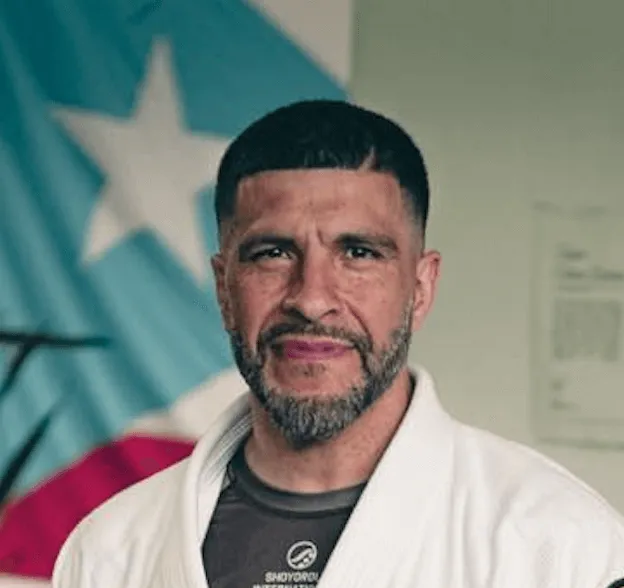
José Flores is a Brazilian Jiu-Jitsu black belt with over 15 years of training. His journey reflects discipline, perseverance, and a love for teaching. With 20 years of experience as an educator, he combines teaching and coaching to emphasize technical mastery, personal growth, and community.
About the Gym
Takeover Jiu Jitsu in Buffalo, NY, is more than just a place to train—it's a community-focused academy dedicated to changing lives both on and off the mats. Offering Brazilian Jiu Jitsu for kids and adults, Takeover emphasizes equitable access by providing affordable or free programs for Puerto Rican and Black youth in the area. The gym’s approach includes building deep relationships among members, fostering leadership skills, and integrating cultural education through its partnership with a Puerto Rican cultural center. Whether you're looking to gain self-defense skills, find a supportive community, or help your kids grow in confidence and character, you'll find a welcoming, inclusive environment at Takeover Jiu Jitsu where everyone’s voice matters and personal growth is at the heart of every class.
📍175 Rano St, Buffalo, NY 14207
📞 716 228 3996
Summary
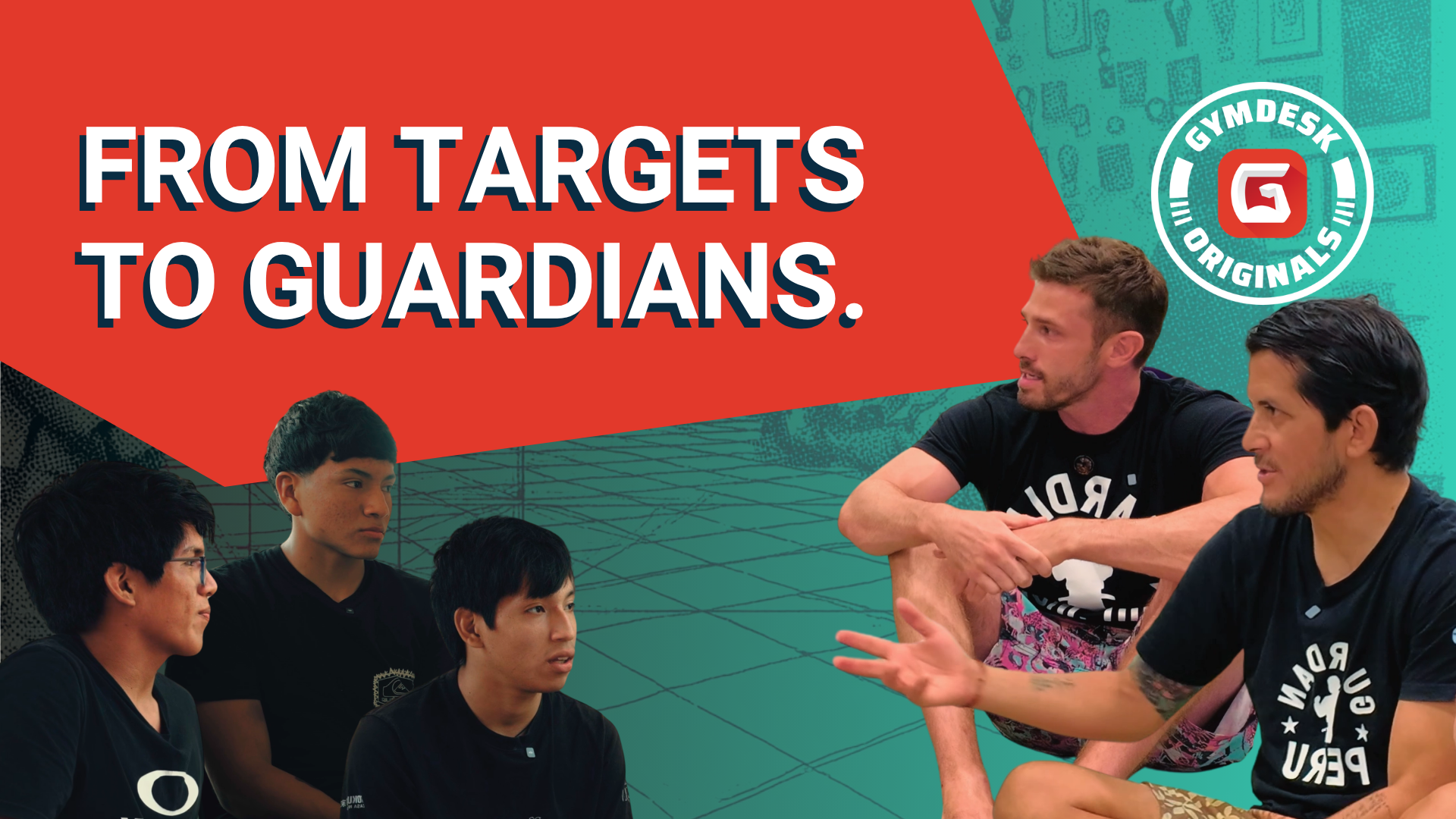
In this episode, Gymdesk CEO Alex Cuevas visits Takeover Jiu-Jitsu in Buffalo, New York, to explore the inspiring story behind the gym's founding and growth. Professor Jose shares how the gym was born out of personal tragedy and a desire to serve the local Puerto Rican community, especially following the aftermath of Hurricane Maria. What started in a tiny, renovated apartment space as a way to cope with depression and help children facing bullying quickly evolved into a vibrant community hub. Today, Takeover Jiu-Jitsu occupies a 10,000 square-foot facility, offering equity-based youth programs, summer camps, and strong cultural ties through Puerto Rican bomba dance and education.
In this episode, you’ll learn about Takeover Jiu-Jitsu’s unique approach to community building and martial arts education. Professor Jose discusses his journey from teaching in schools to developing a martial arts program that prioritizes leadership, equity, and self-expression over traditional discipline and punishment. The gym seamlessly blends martial arts with cultural programming, fostering an inclusive, uplifting environment for both kids and adults. You'll also hear remarkable stories of personal transformation—like students overcoming panic attacks to become confident leaders and competitors—and how the gym’s culture extends well beyond the mats, creating supportive, lasting relationships.
This episode also highlights how Takeover Jiu-Jitsu uses Gymdesk software to streamline its operations and enhance the member experience. Professor Jose explains that he chose Gymdesk for its affordability, user-friendliness, and crucial automation features like online booking, waiver management, and communication workflows. These tools help the gym focus on growth, member retention, and maximizing community impact, while reducing administrative overhead. The partnership between Takeover Jiu-Jitsu and Gymdesk demonstrates how the right technology can help mission-driven gyms scale their outreach and sustain vibrant, service-oriented communities.
What They Told Us
Jose Flores on starting a gym in the worst year of his life, running a kids' program as an equity program, and why he has no interest in getting big.
It started with a death, not a business plan
In 2017, Jose's closest friend since he was fifteen was shot and killed. His wife, Beatriz, was teaching Puerto Rican bomba dance and drumming to families in Buffalo out of a renovated bedroom in their apartment—about 200 square feet, hardwood floors, a mirror on the wall. Parents kept mentioning that their kids were being bullied at school.
"She thought that maybe I should teach some jiu-jitsu and get me out of my depression and get me a place to serve. That is how Takeover Jiu-Jitsu started."
—Jose Flores, founder
He taught Tuesdays and Thursdays after work. A friend brought his kid, that friend brought another, and it grew from there.
"It's very different than many traditional martial arts schools that start with a dream. I already started with a nightmare. It grew into something beautiful."
—Jose Flores
One building, two organizations, a wall between them
Takeover now occupies 10,000 square feet on Rano Street. Jose built a wall through it: the cultural center on one side, the jiu-jitsu academy on the other. The neighborhood is the fastest-growing Puerto Rican community in Buffalo, much of it arriving after Hurricane Maria.
The kids' program was never designed as a revenue line. It was built as an equity program—low-cost or free jiu-jitsu for Puerto Rican and Black kids who were priced out of it.
"We were really relying on grants. So we're like a non-for-profit."
—Jose Flores
Adult classes came later, and they came with a job: paying for the rest of it.
"Maybe some of the adult programming could help subsidize the cultural work that we're doing as well. Because I didn't really get into this to become a McDonald's jiu-jitsu program. We really loved the idea of small community, deep relationships, connections. … There's power in small."
—Jose Flores
That is a ceiling he chose. There is no member cap and no shortage of demand—he simply does not want the other thing.
Half the kids' class is free play, and it made the jiu-jitsu better
One side of the room has soccer, a football net, punching bags, building blocks. Kids do whatever they want there for half the class. The other side is technique and order. Jose expected to trade discipline for engagement and got the opposite.
"And what we found was that their behavior improved. Their technique and jiu-jitsu started to improve. It was just beautiful to watch that how when we met their needs, they were much more willing to meet our needs."
—Jose Flores
The building converts into something else entirely in the summer: three classrooms, K–6, six weeks of full-day programming covering mathematics, literacy, Puerto Rican history and nonviolent communication. Every morning at eight it fills with 60 to 70 kids.
The gym has also raised the money two years running to take kids to Puerto Rico—for some of them the first time in their lives, and for others the first time back since Maria forced their families out.
He is not hiring a black belt from Brazil
Takeover's coaching staff is being grown rather than recruited. One student came up through the program, took over the kids' classes, moved into a leadership role across both the cultural and jiu-jitsu sides, and competes.
"I'm not looking to go to Brazil and hire a black belt to come in and do it. We're going to build our greatness right from within."
—Jose Flores
What Takeover runs on Gymdesk
Gymdesk is the first management platform the gym has used—not a switch from a competitor. Jose found it through an online search.
Read the full transcript
Lightly edited for readability. Speaker labels are omitted because the source recording is not diarised; quotes attributed elsewhere on this page were verified against context.
Music - Behind every gym, there's a story, a mission, a spark of a dream, a spark of passion that started it all. This is Gymdesk Originals. Real owners, real struggles, and the communities they've built from the ground up. Good morning! This time, I'm actually in my own hood. Only about an hour away from where I live, in Buffalo. Gonna check out Takeover Jiu-Jitsu. Alright, welcome to Takeover Jiu-Jitsu, guys. Come check us out. Alright, so this is our front area, main mat area, where all the action happens.
We've got some members training now. Professor Matt is on the mat. One of our main coaches. Through these doors are our restrooms. So, we've got women's and men's and men's restrooms through here. And if we make our way around the mats, we can take a look over here. This is where the athletes come set up. Here, we got some extra mat space. For our training partners to drill before or after class. Got a nice rogue gym for you with everything you need. Weights, full of bars, echo bikes.
Everything you need here. Nice lit up place. Can't wait to have you come. How's it going, guys? Professor Jose here. We're at Takeover Jiu-Jitsu, 175 Rano Street in Buffalo, New York. If you're looking for unity, if you're looking to learn high-level Jiu-Jitsu, if you're looking for a kids' program for your child or nephew, come on through. We have specials for everyone. We would love to have you. You can hit the link for a trial class or just come on in or give us a call. Thank you.
So much, Coach Jose. Thank you for being here. I appreciate you having me. It's nice for me to be able to go somewhere near home Yeah. Do some of these interviews. And this place is amazing. Thank you. Yeah. I mean, you got beautiful windows and we'll pan in to show some of the beautiful windows, natural lighting in here. Very big mat. Weights in the back. Yeah. Got a nice rogue gym for you guys. Yeah. Plenty of space. Just super cool. I mean, the vibe, you saw some of the videos in Japan.
Yeah. Before you kind of go through a hallway to go to the place. Definitely feels reminiscent of that. And you come up here, it's just a really open, inviting space. So tell me about this place. I'd love to know about what inspired you to open this spot. I thought you have some relationship here doing something else before. Yeah. Yeah. Yeah. And you know, the umbrella, I guess, as you said earlier, love to hear more about that. Yeah. So the start of the takeover jiu-jitsu. So in 2017, I had a heartbreaking life experience.
My closest friend, a brother, someone who, since I was 15 years old, I would talk to every day, were shot and killed. Oh, man. And that put me into like a deep depression. And at the same time, my wife was teaching Puerto Rican bomba dance and drumming to the Puerto Rican community here in Buffalo. We had renovated a small little area in an apartment I had. It was like 200 square feet, like the tiniest little thing. Took out of the bedroom, one bedroom that was there, put down hardwood floors, and it was her dance studio with a mirror in front.
And that's where we started from. She started talking to parents and many of them in conversation before or after class were mentioning that a lot of the kids were experiencing bullying in school. She thought that maybe I should teach some jiu-jitsu and get me out of my depression and get me a place to serve. That is how Takeover Jiu-Jitsu started. We started in this little 200 square foot space on Tuesdays and Thursdays. After I got out of work, I would go there and teach jiu-jitsu to a small Puerto Rican community.
A friend had known, he brought his kid, and then his friend brought his kid, and it started to grow from there. And we just started teaching it just because we wanted to create supports and resources for the Puerto Rican community here. It was shortly after Maria, Hurricane Maria. So many of them were coming here. They didn't have any community. They were just planted here because the circumstances in Puerto Rico were so bad. And it was just a delight to see how receptive they were. They loved jiu-jitsu.
We would start there, and then it expanded. We said, let's see if we can grow this thing. We ended up finding this place here. We have 10,000 square feet of space here. We built this wall. The cultural center is on the opposite side of here. And then we had Takeover Jiu-Jitsu on this side. The kids' program was an equity program for black and brown kids that didn't have access to jiu-jitsu because it was so expensive. We started to grow from there. We were really relying on grants.
So we're like a non-for-profit. It's very different than many traditional martial arts schools that start with a dream. I already started with a nightmare. It grew into something beautiful. And now we service this community, which happens to be the fastest-growing Puerto Rican community in Buffalo. We ended up being right here. It was just God sent. A lot of the kids that train here are Puerto Rican. And we're building up their leadership skills and helping them become the next generation of champions and leaders, not only on mats, but in their community.
That's an amazing story. There's a lot there. Yes. And the dance that you called earlier, the Puerto Rican dance, what was it called again? Yeah, it's called Bomba. So it's a 400-year-old dance that started in a town in Loíza, which is pretty much an all-black town in Puerto Rico. So they're all black Puerto Ricans that started this. It's been going on for 400 years. And it's amazing. They're actually performing today. That's why one of our lead coaches, Coach Nani, had to leave. She does both. She does jiu-jitsu and she does both Bomba.
And she sits on our board. She's one of our leaders. You mentioned a student that has kind of taken on the spirit and embraced jiu-jitsu. She's the one that I would definitely point to and elaborate on when we get to that. Yeah, awesome. So wife was doing that. You had the space. And you're like, my passion is jiu-jitsu. I want to share that with folks that might be inspired better themselves. Stay with him bullying. That's the whole idea. Then it grows into this. Were you thinking about this, both of them together, when you found a spot?
And you're like, oh, we're going to expand both at the same time. That was the idea? Yeah. So the idea was, yep. We really knew that jiu-jitsu was a fast-growing sport. We knew just how and how it changed my life. I brought my brother into it, how it changed his life. And we just knew that there was something here that could help. And we thought that we would use jiu-jitsu as another business that we could use to help the not-for-profit side. So the cultural side is a not-for-profit organization used to teach Puerto Rican history, culture, traditions, family, and build community.
We would help have this takeover jiu-jitsu side. Really, the kids program was really focused on an equity program really designed to provide low-cost or free jiu-jitsu programming for Puerto Rican and Black kids. And then we expanded that also. And then we moved into the adult programming and then started to say, okay, maybe some of the adult programming could help subsidize the cultural work that we're doing as well. Because I didn't really get into this to become a McDonald's jiu-jitsu program. We really loved the idea of small community, deep relationships, connections.
And that is kind of what is inspired here. There's power in small. Awesome. I love the background. I love the inspiration. Passion project. Yeah. Communal. Giving back. Yeah. That's a good place to put energy, especially if you're feeling, like you said, you're dealing with a really bad situation. I had pretty much done the American dream. That's right. I went to college. I got a high-paying job. I invested in real estate. I had all the success that the American dream promises us. It's a lot. It's empty.
If you don't have community, if you don't have belonging, if you don't have a place of service where you're giving back, then you don't really have nothing. I abandoned the American dream. We went back to some indigenous practices of being a community, of being a reliable resource, of being a listening ear. Actually, this place converts into an entire summer camp with three different classrooms, K-6 grade for six weeks in the summer, full-day programming, where we teach mathematics for inner-city kids, literacy, Puerto Rican history and culture.
They do nonviolent communication, so it's all about relationship building. How do you build and stay connected with your parents, with your teachers, with your coaches, your peers? They just do tons of role-playing. Then in the afternoon, they move into jiu-jitsu. We teach them jiu-jitsu and self-defense, and we teach them bomba, drumming, dance. It's filled with kids throughout the entire summer as well. That's amazing. Yeah, so all of those weights get pushed all the way in the back. That becomes a classroom. There becomes another classroom there, and it becomes another classroom.
Every morning at 8 o'clock, this place gets filled with like 60, 70 kids. Yeah, that sounds like a rich man to me, just feeling, wow, what a cool life to give back in that way. Yes, absolutely. That's a beautiful thing. That's really, really amazing to hear. So maybe we talk about Takeover. Yeah. Is it mean Takeover? Yes. You know what, it actually happened like in stage cycles. Initially, I was just driving in the car with my wife, and we were just brainstorming ideas for the academy.
And she had said, Takeover. And I was like, Takeover, jiu-jitsu. I like that. I like the way that sounds. So initially, it was just the name. But I like the name. And then it became something more when we started to look, unpack, Takeover as a, you know, there was the first thing was Takeover the name. Then we came up with the kids. So one of the things where we always kind of share with the kids is a chant. So I tell the kids, what do we come to do?
And they go, Takeover. So it just became like a mindset of like giving 100%. We're here to take over, not just be a bystander. We're not sitting on the map. We're participating. We're active. We're engaged. It's like giving 100% of yourself. Also, it became this idea of like that jiu-jitsu, when I started jiu-jitsu and when you experience jiu-jitsu, it can be like really obsessive. Like you can easily become obsessive and addicted. And it really takes over your body, your life. And it becomes a part of your community.
It becomes in jiu-jitsu, you're obsessing about techniques and everything. It kind of like takes over you. So it had a couple of different meanings throughout the time of the naming and kind of building that. Yeah, no, I mean, I could tell you that since I sort of dove back into jiu-jitsu, you know, I'm still a white belt. You know, we talked about that earlier. But I'm in my own little garage dojo and I'm doing Google Dummy. Yeah. Yeah, it takes over. It really does. In the gym, doing flat bowls.
Yeah. Imagining someone has me in an armbar. I get it out of there. Exactly. Yeah, probably at least 100% of my waking hours I'm thinking about it. Absolutely. All right, cool. So I appreciate the background. Maybe talking about your martial art background. Yeah. When, you know, you had this apartment or whatever, you said you had already been doing jiu-jitsu for a while. Yes. Have you trained in any other martial arts? Like what's your journey through? I was a martial artist pretty much all my life. My dad had trained in Kung Fu.
Okay. So he would go to the academy and then he would come home and teach me and my sister Kung Fu all the time. And I had like a Kung Fu suit. I had pictures when I was a little kid. Yeah. I'm doing Kung Fu. And then I had a god brother who was really big into martial arts and fitness who I would train with. And he had like a, kind of like a garage that was, it was very similar to just inviting kids from the community and there'd be a field bus.
And then we would spar with the way we would bring one kid from another town and another kid from another town and then we would spar each other. And you were sparring with like the gear and all that? No, pretty much. Yeah, punching and kicking. But with like, just like some, some, like back then they had like the karate gloves. Yeah. Yeah. The plastic ones. Yeah. So we would spar it like that. I had watched the UFC and saw Royce Gracie and I was like, yo, that is insane.
How is this skinny guy beating everybody up? Yeah. I got to learn that martial art. And then there was a guy that came from Chicago. He was, he actually was, got received his black belt from Carlson. Okay. Gracie, which is a big deal. Like he was an actual Gracie. His name was Chuck and he was teaching out in West Seneca and that's where I would start first. And I would stay there for about two years, mostly doing like no-gi. I was really more interested in like the self-defense aspect of it.
But then I just fell in love with it, became so addictive. Then there was another gym, Western New York. I mean, it was a lot closer. So we started training there, invited my brother to come train and he started training there. And so that's where I pretty much started, starting to build ideas around, started moving up the rank. Awesome. Well, I mean, we're talking about Jiu-Jitsu. Maybe we'll talk about a little role right here. Yeah. I was doing my best to survive, but I got, I had my arm here.
You're about to, I felt like you were about to hit the Kimura. Yes. That's what I was going for. And I was going to try to roll out of it, but you had a nice knock on my head. Exactly. And I was trying to straighten it out, but eventually, you know, I got caught. How, when you look at myself as I'm rolling against you see that opportunity because of my position or like how, you know, a lot of this is chess, right? You're like three or three moves ahead.
Is that one of those things where you just saw an opportunity? You're like, okay, perfect. This is arms in the right position. Or tell me what your, what was going through in my mind when you saw that? A lot of it has to do with how we kind of started to learn Jiu-Jitsu, which really for me, I never found like the traditional way going to class, watching an instructor teach a move, going to do it a couple of times and redoing it. Like, I just didn't, like, I didn't have the capacity to learn like that.
I had to learn a lot through instruction, video learning. Through video learning, I felt like it just, I could stop it. I could rewind it, look at the technique over and over again. I could screen record it, put it in, create, I create albums on my phone. Probably got like 400 albums on my phone, all different techniques. Then I would meet with my brother before class and then just look at the technique, drill it. Look at the technique next technique and drill, drill, drill, drill, drill, and really how I feel like what's best for me to learn.
And that's why for my students, I created a video library. So all of my students have access to a video library. They log in, put their username and password, and then they have access to all the techniques that we'll teach you in class. So we can go home, we can review it, learn through seeing it over and over again. And then with these two F's that come together in this middle of the logger is an idea of what we call like finding your flow. Like this is this big elaborate tree.
And you have to find your flow. Your flow might be different than my flow. I might like Kimuras. You might want to always take the bath. And you might want to find a bunch of different strategies on how to get to the bath. Then I'll find strategies on how to get to that Kimura. So anytime somebody rolls over, I was going to see that was going to be my indicator. Start looking for the Kimura. So that's kind of some of the things you're going to have around learning and improving your jiu-jitsu.
Awesome. What were you doing before you started? You know, the center and all that. You said you're professional, you had real estate and all that. So what was your professional journey? Yeah. So I was in education. So I was a classroom teacher. Okay. And then I would move into school in Cleveland. So I got a job with the State Department of Education. And in schools that were failing, I would go in there and I would work with teaching teams. I would bring a group of teachers that were teaching the same content.
And I would say, okay, these are the assessments we have in line for the year. Let's look at how students are going to do on the pre-test so we can determine instructional strategies that will improve their learning. Really experiment and see what works, what doesn't work, and come back together every six weeks. Let's look at the data and then move and see if we can move progress. It was amazing, man. We had one school, one that jumps out at me was a school in the suburbs right here called Cleveland Hill.
They had ranked like 149th on State Assess and they had been targeted in need of improvement. We went in there, we implemented this data, we call them data teams. We implemented this data teams process and we had, within 24 months, moved to 16th in the state. Wow. So from 149th to the top 16th performing elementary school through this type of process of rigorously coming back and self-assessing and really looking at what we're doing. Isn't that what we do in jiu-jitsu? We're constantly reflecting on where am I making my mistakes and then how am I learning from those mistakes?
Yeah. And that is what brings me to education. Then the other big part that kind of relates to how we instruct here, which was we really wanted to move away from rewards and punishments with kids. When I was working in an alternative program with students who had been punished their entire, they'd been kicked out of every school. And now they're in this alternative program. And I said, you know what? I'm not going to do any rewards or punishments with them. What I'm going to do is just explore with feelings and needs that you have needs and feelings and I have needs and feelings.
If you, if we, in order for us to get along and to have a quality of connection that is healthy in a relationship, I try to meet your needs and you try to meet my needs. Your needs for freedom and fun are really important for you. I get that. You communicate that to me. And my needs for order and respect are important to me. And how do we, throughout the day, negotiate those needs? So, what we started off in Takeover was with a traditional model of a martial arts school.
And that didn't really work well because we're working a lot with kids who were coming, their parents were coming to me and saying, my kid has ADHD. My kid has social emotional issues. My kid can't get along with everybody. And I was like, bring it. A thousand kids we want to work with. Yeah, yeah, yeah. And we brought them in this environment and we had like a traditional martial arts and there's just so many behavior problems we're dealing with. So, we sat them down and we went over to a teacher.
Coach's needs, your needs, and how do we get both of these needs? And they were like, we just want more autonomy. In their words, they were saying, we want more fun, more freedom. So, we created a whole entire section of free play over here. So, for half the class, the kids are engaged in what we call free play. They have soccer. They have a big football net. They can throw football. They can play punching bags. They can do whatever they want. They can sit there and build blocks if they want.
Complete free play. And then when it comes to this side, we have order, technique. And what we found was that their behavior improved. Their technique and jiu-jitsu started to improve. It was just beautiful to watch that how when we met their needs, they were much more willing to meet our needs. Yeah, that's a – you know, because I could see the traditional person who is not aware of that kind of thing. I'm like, no, you got to do this, you know, very strict. And then it's just like, you know, rubbing again.
But you're like, no, no. What do you need? I'll tell you what I need. Let's do both. Let's do both. Wow, that's pretty cool. Yeah, it reminds me of a lot of things. Like my wife's great about doing stuff like that. And, you know, I grew up in a different kind of environment where if I didn't do something, I would get the belt. You know, that's how I grew up. But she has that approach where she does the – almost a quid pro quo. You know, you help me and I help you and all that kind of stuff.
We negotiate our differences. Yeah. That's cool. That's also influencing how you're teaching jiu-jitsu as well, I suppose. Because when I saw – I've never seen that before. Today, we had the class. You kicked it off and you asked – let me see if I can remember. How are you feeling today? Yes. The next thing you said. Any news? Any news. And then do you want to connect with anybody, you know, that you want to rekindle with or what have you? That's pretty cool to get people to share that.
Yeah. So that's a Native American practice called Circle. Wow. And what I found in education was that anytime I walked into any school, worked with any teams of teachers, it was – in any organization, really, the culture and climate was driven by relationships. So if you invest in relationships, then you have a better culture and you have a better climate on the building. Isn't that what we all are? Yeah. We want to be able to walk into a culture that is friendly, that knows my name, that knows who I am, that knows I'm getting married next month.
So that's why we have – do you have any news to share with the community? We have members who just – you're about to have their first child. Like, shouldn't we know that about you? Not just come in and we go over a bunch of different techniques. We want to know what's going on in people's lives. Or I recently lost my dog. Like, we mourn together when things like that happen. Or we celebrate when we're getting – we have things to celebrate. So we celebrate as a community, mourn as a community, and then we just ask different questions that inspire us to think outside the box or think about what that might share some of our common beliefs and attitudes.
Yeah. And that culture, that builds us getting to know each other, which is super important for us. Relationships is what drives culture and climate. So let's focus on relationships, getting to know each other well, the adults and kids getting to know each other well. It's dope. Yeah. And so speaking of that, clearly the approach that you take with kids is effective, especially if you might have kids that are, you know, maybe labeled as troubled or whatever. Exactly. But opening up to them so they can really truly express why they don't feel good or whatever, maybe opens up opportunities for them to, you know, be in a better spot.
Can you apply some of that to adults who come in here as well? Like, are you able, you know, to leverage any of these techniques or what you – you know, the skills that you've learned? Obviously, it sounds like you were training teachers. Yes. Right? So I'm assuming you can use some of these skills as well when you're teaching jiu-jitsu to adults. Yeah, absolutely. I think a lot of the – one of the things that we focus on early on in the class is once we finish warming up, you are going to be doing passing and guard.
And I work for three minutes and you work for three minutes. If you don't have anything, I'm going to go over a couple techniques that you could possibly work. But I really want you to start using that time to develop your own techniques. So some people see things on Instagram that they really want to try. This is your time to bring that in and try it during that time. So it gives them some autonomy, gives them some freedom to find their own flow. And that gives a little bit of freedom.
And what we're really trying to do is build in leadership. So often I'll have Coach Nani, who's one of the students here, who started about three years ago and has really just dedicated her life to jiu-jitsu, progressed really fast in her skill development, became the coach for the kids program, and really moved into a leadership role on both the cultural side as well as the jiu-jitsu side. And as a competitor has competed several times, it's just beautiful to see how we're building our team from within.
I'm not looking to go to Brazil and hire a black belt to come in and do it. We're going to build our greatness right from within. And we're really focusing on the kids. Put all of our energy into these kids so they can become the next leaders that can take my place, that can take Professor Matt's place. It's going to be glad within. Yeah, that's great. Any stories you can share with students, either, you know, could be a kid or an adult? Yeah. Has it, like, made some changes?
Absolutely. There's so many to come up with, but Coach Nani is one that I already mentioned. She is a purple belt here, has been training for about three and a half years, and a remarkable leader. She leads our kids program. She, so we work her into teaching the adults. She's starting our first women's self-defense curriculum. She is going to be teaching women how to defend themselves in scenarios where they're in a domestic violence situation or attacked on the streets. So, the curriculum around that, she's actually going to be leading and teaching that to women in our community.
So, we're super excited about that. And she's an honor student. She's graduated high school in her second year at Canisius College, studying political science, hopes to be an attorney in the future. And we had taken all the kids in the past two years, we have raised the money to go to Puerto Rico to take them. Some of them hadn't been there ever in their life. Puerto Ricans have never been to Puerto Rico, so they get their first time to go to Puerto Rico. And some of them have not, this is their first time back to Puerto Rico since Hurricane Maria, that they've been forced to leave Puerto Rico.
So, this is their first time back. She has kind of experienced that as well, that really changed her mind on how she sees Puerto Rico and its stance for the United States. And how can we create better resources and better quality of life for Puerto Ricans. So, it's kind of good purpose, kind of good for me, and that's been amazing. Another student that jumps out to me is Sarah, who is a woman who I did a trial class with and had to, like, stop because of panic attack during, like, a trial class.
And to see her progress, now she's a blue belt in jiu-jitsu, sparring with men and women, just going at it, super technical in her jiu-jitsu, is a learner. She has been inspiring other women to join jiu-jitsu. To see somebody that was so, came in and was so nervous and scared to have that physical contact where she panicked and cried in her first session. To see her feel empowered and feel like she can spar with anyone, it's just, it's inspiring. Yeah, that's why I said rich. You have so many of these stories that just, I mean, that's really nice to be able to walk around feeling, I mean, obviously you should be proud.
That's an amazing, amazing opportunity for you. What about, I guess, on the vibe here? I walked in, it's Saturday. By the way, I ran into Dahlia. Yeah! Which was a small world, Dahlia High. So, she and I went to school together and she's been practicing here, I guess, she said for a few years. Yeah, yeah, three years. Three years. Small world. It's pretty cool to see that. But I walk in here, everybody's super nice, man. Just, like, very welcoming. Everyone I rolled with was just, you know, kind.
I imagine, based on what some of the things that you've said, people, the culture here also extends outside of here. I would imagine these people are friends and do things outside of just coming here to get things. Exactly. Yeah. And do you do anything to foster or anything like that? I don't know, events, watch parties somewhere to... Oh, yeah, so, throughout the years, we'll do a lot of collaborations with the cultural side. So, one of the things we do are what we call monthly bombazo. So, bombazo is where we come together as a community and they play bomba.
So, you'll see drummers, dancers, and singers singing and dancing. We normally have food for sale and people just sit in community and hang out and chill. And that has been one vehicle we have to use to kind of build community. And another is tournaments. When we have tournaments, a lot of... If you're not competing, a lot of our members will come out and just celebrate with each other at tournaments. And it really builds a sense of community to just have your training partners there to cheer you on, coach you, celebrate with you.
Whether we win or lose, it's always something to learn. And it's great to see when somebody loses that somebody's right there to say, Yo, it's all right. You did great. Yeah. To still praise you and still support you. So, yeah. Those are some of the things. And we just try to create a vibe here that everyone's voice matters. That's why we make sure that everyone gets their voice immediately heard in the beginning of the class. So, everyone has their voice in the room. Super flexible. There's no punishment if you're late for class.
We understand people have got families. People have got other things going. There's no penalties, no burpees, no running or having to run. It's just a chill, flexible environment where we're trying to express love, kindness, principles that bring people together and keep us connected. Yeah. Awesome. I met you, I guess, about a month ago. Yeah. We were at the tournament. It was around here somewhere, right? Yeah. Not too far from here. Yeah. And I mentioned, oh, yeah, you use our software. Yes. I'm so happy because I wanted to come out here.
I knew you were on there. I'm like, I'm going to get to it too. I'm curious. How did you hear about Gymdesk? What's that story look like? Well, I'm trying to think how did Gymdesk come out? I think I was just looking for some software to use. And I think I might have just came online with you guys. It was reasonably priced. It was affordable for a small gym. And remember, at the time, we were mostly not-for-profit. So, we had no real big income coming in.
Yeah. I needed something affordable. And also, it was super easy, user-friendly. The interface was so simple. It was like, I'm not really deep into technology. But for somebody who's not really a big tech user, it was really user-friendly. Dealing with it, signing up members, being able to have them pay online. Those things have really streamlined a lot of our registration process and getting members enrolled. So, it was very, I think, the most attractive thing, how user-friendly it was. Yeah. Are there any features that you've come to really, when you go on the product, you're like, I love this thing.
I love that thing about it that you use constantly? Yeah. I think one that jumps out at me is automation. That we're able to immediately create a series of messages that allow someone to, when they book, the booking is beautiful, too. It's just simple. Book a trial class. They click there. They're ready. And then once they're in, they receive a message a couple hours before the class or the day before, depending on the sequence that they're in. And it tells them, yeah, you've got a class coming up, super excited to have you, can't wait to see you.
And then after the trial class, we have them do a Google review. So, another link goes out to them. So, that helps with our SEO search optimization. So, they do a Google review immediately after their trial class. And then it builds an easy way to communicate. But that's one of the things that jumps out at you. Yeah. Anything that, oh, let me ask you this, about your interactions with us, like from a customer service perspective or support, how have those experiences been? Anytime I had an issue, I can easily email you guys.
And it was a very detailed explanation of, this is where you need to go. This is how you set it up. This is what, this is how you're going to resolve your problem. So, that's always been helpful. After I met you and you were able to get me in contact, was it Shannon? The Shannon, yeah. Shannon, yeah. Like, to be able to have a one-on-one with her and for her to just go through some of the additional tools that I may not have been using or questions I had was really, really powerful.
That made me feel really supported, that made me encouraged to be like, okay, what can I, how can I really maximize this software? How can I really get deep into marketing and using it for sales and to really start to think deeply about how I can maximize the software to grow the gym as well as retain students? So, that's kind of like my next stage is how are we following up with the students electronically and do those tools to keep parents engaged as well as our students engaged.
Awesome. Shout out to Shannon. Good job, Shannon. Yes. Excellent job. Alright, well, by the way, I share this with my VPs and anything else you want to share? Could be about the place, Gymdesk, could be, you know, what your future plans are. Anything else you want to share with us? I mean, when I think about the future, I kind of mentioned this earlier, it's, we're really focused on the youth, man. We believe that they're going to be the next ones to carry the torch. So, we're really invested on how do we build young leaders, broaden, make jiu-jitsu more accessible for kids of color as well as young ladies in our community and kind of use it as a tool for service. I'm excited about that. That's awesome. Yeah. Thank you so much for having me. Definitely. Thank you for being a customer. Yes, absolutely. Very, very grateful for you hosting me today. Yes, thank you for being a customer.