From a Rained-On Playground to the Man Shop: How Lisa Titan Built St Johns Boxing
Starring
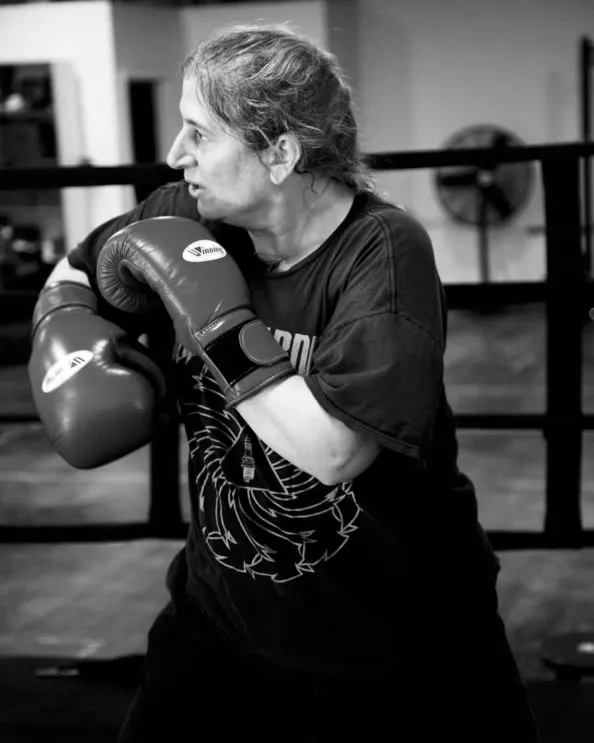
Lisa Titan is the owner and head coach of St Johns Boxing, USA Boxing certified. She came to combat sports through Portland roller derby with the Rose City Rollers in 2005, then cross-trained boxing, Muay Thai, and jiu-jitsu before boxing became home. She spent her career in community justice with court-involved youth—work that still shapes the gym's free memberships. She opened St Johns Boxing in 2021, and calls herself a "social entrepreneur."
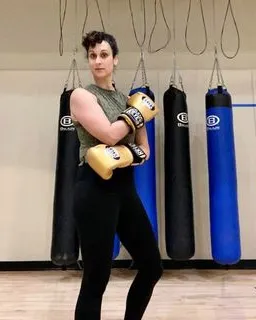
Sabrina Eveland is a coach at St Johns Boxing, a Bronze-level USA Boxing certified coach and NASM certified personal trainer. She found boxing in the middle of postpartum depression and turned it into a coaching career. She's known for the low-pressure teaching style the gym is built on—permission to laugh, to make mistakes, and to learn at your own pace.
About the Gym
St Johns Boxing is a woman-owned boxing gym in the St. Johns neighborhood of North Portland. Lisa Titan founded it in 2021 in the old Man Shop, a menswear store that anchored the block for decades—she kept the sign in the window rather than let the neighborhood down. Six independent coaches run a mixed-skill program: no-contact boxing workouts, beginner "green level" classes, technique-first light sparring, a small competitive team, and a youth class.
It deliberately fills the recreational middle between fitness-only boxing and hard competitive gyms, and offers free memberships to anyone tied to the justice system, at-risk youth, or in financial need. The room is kind by design—no screaming, no intimidation—a place the coaches sum up as we play boxing.
📍 Address: 8511 N Lombard St, Portland, OR 97203 (St. Johns, North Portland)
📞 Phone: (503) 459-3046
Summary
This is the story of a reluctant owner. Lisa Titan came to combat sports through Portland roller derby, then found her home in the culture of a small, inclusive boxing gym. When COVID closed it, she and about a dozen displaced members kept training on a school playground under a shelter—until someone had to reopen a gym, and nobody else knew how. So she did: a dance studio rented by the hour, then the old Man Shop storefront she gutted and rebuilt with her own hands. Today St Johns Boxing is a woman-owned community gym where people who never pictured themselves boxing find out they love it.
What They Told Us
Lisa Titan and coach Sabrina Eveland on opening a gym nobody else would, keeping a 1940s sign in the window, and what "we play boxing" means.
A year of training on a playground
Lisa came to combat sports late and sideways—competitive roller derby in Portland starting in 2005, then boxing, Muay Thai and jiu-jitsu around 2010, mostly because her kids were training. She settled at Sweet Science Boxing for its culture and stayed roughly thirteen years, while working full time in community justice with juveniles in the system.
Then COVID closed Sweet Science. Lisa kept training with one of its coaches on a covered concrete playground across the street, and the displaced group found its way there.
"I think at some point we'd regularly have like 14 people from Sweet Science, like coaches and members. And we were kind of having unstructured classes. … So that went on for about a year."
—Lisa Titan, owner
Schools reopened. The group was about to lose the playground, and nobody was volunteering.
"I knew that out of this group, somebody should open the gym again because it was a big enough group and the coaches were there. … There were like people there who wanted to open up a gym, but nobody really knew how."
—Lisa Titan
She had never run a business. She opened it anyway, first out of a rented dance studio a block away.
The sign in the window is not theirs
The gym's current space had been a men's clothing store since 1940—roughly eighty years on the same corner, in a neighborhood Lisa has lived in for about thirty. She kept its sign up.
"I think I had to keep the sign on the window that says the Man Shop because I didn't want to let the neighborhood people down."
—Lisa Titan
She describes what the gym is for in terms borrowed from her old career—building bridging capital, partnering people with strangers on purpose. She calls herself a social entrepreneur, then immediately adds that it "might not be a real thing."
"We don't play boxing"—except here
Sabrina Eveland found boxing through a friend of a friend, at a point when nothing else was working.
"When my older daughter was born, I had really bad postpartum depression. And before that, I was like super into yoga. I did yoga multiple times a week. And then after I had her, like the yoga just didn't hit. Like I had this really bad anger that I didn't even know that I had."
—Sabrina Eveland, coach
That experience shows up in how the room is run. There is a saying in serious boxing gyms, and St Johns has turned it inside out.
"There's this expression it's called, we don't play boxing. That's what people, serious boxers say, but here, me and the coaches sometimes joke around that we play boxing because we like to laugh. We like to have fun. It's okay to make a mistake."
—Sabrina Eveland
The low barrier is technical as well as cultural.
"The cool thing about boxing is, in essence, there's just six punches. So you can learn the six punches pretty quickly and that's boxing."
—Sabrina Eveland
Sparring is a dial, not a rite of passage
Coaches modify sparring as it runs rather than gearing people up and hoping.
"We might say something like jab round only, or keep it below 20% power. We're looking for timing and you're looking for the target, but you're not looking for power. … We use sparring as a training tool."
—Lisa Titan
Hard sparring still happens, usually Sundays, usually the competitive boxers.
What St Johns runs on Gymdesk
Member records, messaging, growth monitoring and new-member check-ins, run day to day by the gym manager rather than the owner.
"I used to be a teacher, and it's more intuitive than, like, a Moodle or a Google Classroom."
—St Johns Boxing gym manager
Read the full transcript
Lightly edited for readability. Speaker labels are omitted because the source recording is not diarised; quotes attributed elsewhere on this page were verified against context.
We'll be right back. Behind every gym, there's a story, a mission, a spark of passion that started it all. This is Gymdesk Originals. Real owners, real struggles, and the communities they've built from the ground up. Margo, is it? My name's Margo, yeah. Okay, so you're, what, are you responsible for the gym here? Yeah, I manage the gym. Anytime someone sends us an email or a message to Gymdesk, like, I answer it. I monitor the growth and, like, check in with new members. Awesome. How do you like the system so far?
I like it pretty good. I used to be a teacher, and it's more intuitive than, like, a Moodle or a Google Classroom. I like how, like, the members, like, you can see which ones are new and, like, if they're active or not, and, like, everything's all in one place. And how's my team been treating you? The support and service? You're hearing questions? Really good, yeah. Okay, good to hear. We talked to them a couple times. They've always been really helpful. Awesome. Well, thank you for introducing yourself.
What was your first boxing class? I like it. Yeah, what'd you like about it? Good game. A lot of fun games. Yeah, would you do it boxing again? Yeah, it's really good to round out your different combat skills you're learning, right? All right, so that was my first boxing here at St. Johns in Portland, cheerboxing. So, yeah, I've done the Muay Thai and the kickboxing, cheerboxing. That was a lot of fun. And there's a lot of energy in here. I felt like I'm connecting with something that I feel like I could probably do pretty well, but I'm not very good at right now.
It kind of makes sense. It kind of makes sense. It's like, come on. And then I got kind of confused. But, you know, in terms of being here and visiting, it's like I love being out here with customers. And here at St. Johns, what I hear at least doing is really trying to be part of the community, building the social aspects of a gym. And I feel that right now. Class, it was great. I mean, there's just everyone's super friendly. I feel like we're all working together.
Yeah, I mean, it's pretty cool. I mean, to be able to have the experience in seeing culture in different ways, whether it's judo, jiu-jitsu, Muay Thai, kickboxing, or now boxing for me, it's a really cool experience. And hearing the story behind it and what inspired Lisa to start this place, it's, I don't know, it's just, it's really cool to hear that. And there's so many social programs that they have that they take advantage of here to help people who have had some troubles, you know, with the law or whatever, to reintegrate into society.
And what better way than to have a community like this in the neighborhood? So it's a lot of fun. You know, boxing, I wasn't quite sure what to expect. I had a great time. I mean, I'm all smiles right now. My son had a really good time as well. So if you're in the area, you got to come down, check it out. Well, made it here to St Johns Boxing in Portland, Oregon. Earlier, I was in Vancouver, Washington, not Vancouver in Canada, but we drove down here about 15 minutes to get down to, is this the downtown area?
What is this area? No, this is a side, a neighborhood far north and downtown's about six miles east or southeast. Okay. It's a really cool area here. Yeah. It's got a lot of, like a, I don't know, it feels like an Oregon, Portland vibe to it. It's pretty nice. Yeah. This neighborhood was established around 1856 and it was a working class neighborhood. And then there's a neighborhood about five miles that way that's about the same age. And it's where the old gym used to be. Okay.
Got it. All right. Well, I'm here with Lisa, owner of St Johns Boxing. And this is a first for me. I've never been to a pure boxing place. I've had some experience with kickboxing and Muay Thai. You know, I was trained as a Taekwondo guy when I was young. It was my first experience in combat sports. And it was always like, you can't use your hands, right? That was part of the sport. Anytime I use them, I feel like I'm doing something wrong. So I want to break out of that mold a little bit.
And I'm looking forward to today. I think we were talking earlier and you said you've had some experience with other combat sports. Maybe we could talk a little bit about your background, stuff you trained in, and kind of how you got into boxing. Okay. So I started in 2005 with roller derby. No way. Yeah. So roller derby in Portland in 2005 was really big and the shows were huge. And it was really a very creative time for roller derby. Can I stop you here to make sure?
Because I've seen, I saw it on TV. Is this when you're on skates? Yeah. You're on roller skates and you're trying to hit each other and knock each other out of the way. So is it, this is fascinating because I had no idea, right? So when you're doing this, is it like WWF or you guys are really trying to clobber each other? So like in the 50s or 60s, there was, you know, like choreographed roller derby, I guess. I don't, I wasn't privy to all that, but in the 2000s, pure sport roller derby started and there were two, two associations.
One was flat track derby association and one was banked track derby association. And the choreographed derby from like the 50s or 60s was banked track, but flat track derby was what took off in the early 2000s. So you're really punching each other is what you're telling me? We don't get to punch each other. You can't even elbow each other. You can only hit with your hips and shoulders and you're not allowed to trip either. Okay. So checking a lot of stuff. Yeah, checking and a lot of moving.
And there's one, there's five skaters from each team that are on the track for a two minute round. And the goal is to get one of your skaters who has a bar on the side of her helmet through the pack. And then she scores points for each skater she passes. So that's how you score points. Wow. So you're trying to get one skater who's like the ball through a mass of women who are hitting each other and trying to get their skater through and not let your skater through.
And so it's a, it's a huge team sport and there's not, there's a living ball, which is a roller skater. Wow. That's, that's really cool. I actually remember seeing it as a kid and I was like, I never like, oh, is it real or not? I hadn't thought about it in a while. So, uh, when you're doing this, I got to imagine it's pretty physical. Yeah. Yeah. Yeah. When I first started, I'd never really been involved in combat sports. And, um, this league was sort of, um, we were just all learning at the same time and there weren't that many rules at first.
And so we were just hitting each other and it was pretty brutal. And I learned early, it took me like six months to be comfortable getting hit hard. And in that first year or two, I think the hits were harder because they hadn't really nailed down the rules yet. So we were basically like, there were a lot of leagues and the leagues were coming up fast because it was a huge creative sport. And like the women would like design their outfits and their teams would have a theme.
And it really did have sort of a lot of creative elements and a lot of individuality and a lot of like kind of rock and roll vibe. Yeah. And at the same time, we were really hitting each other hard and, um, I, it took a while to get used to getting hit. Yeah. And then once I got comfortable with it, then I could focus on other parts of the strategy. But, um, yeah, that's a really cool background. So you do this for a while. And, uh, so is that the first combat then you come till 2010.
And then in 2010, I started getting into boxing and Muay Thai and Jiu-Jitsu, um, primarily because my kids went to a really excellent, um, martial art gym downtown. It had Muay Thai, Jiu-Jitsu, um, Eskrima and Tai Chi, but the main head owner, he was really good at teaching. And so I learned there as, and my kids learned there and I was still in roller derby at that time. And then as I kind of phased out of being an athlete in roller derby, I started coaching roller derby and taking more boxing at different gyms.
So I was a gym dabbler, meaning like I had like three or four gyms where I'd kind of bop around at. Yeah. And so out of, uh, being exposed to all the different arts, boxing was the one that like really did it for you. You're like, Oh, I'm really into it or. No, not yet. No. So I don't have a, I don't. Specialized in, um, I found things I loved about every, um, combat sport I ever tried. So the roller derby was just, uh, so much fun and just hilarious.
So it was more amusing and just, um, social and the teamwork thing was my main thing. I loved about it. And then with jiu-jitsu, um, I thought it was really strategic and interesting and I had to look for spaces and I learned a lot, um, from jiu-jitsu and I thought I was in love with jiu-jitsu for a while. And then Muay Thai, I was just kind of lukewarm about, but I liked sparring Muay Thai. So I think when I started sparring, I started sparring Muay Thai and, um, I kind of thought I liked all the ranges in Muay Thai, um, what nailed me down to boxing was the gym that you're going to mention, which is sweet science boxing.
Yeah. And the reason I kind of ended up there was socially, it was a very inclusive environment and the people that were at that gym, you could really feel like you easily belong to there. And some of the other gyms I went to, uh, I sometimes felt like maybe an outsider for, you know, like, so, uh, for whatever reason, I didn't always feel like I could fit in cause I'm older. Maybe I wasn't as athletic or maybe I wasn't competitive or for whatever reason at this gym, sweet science boxing, which was Western style boxing, it was kind of comfortable and like the mashed potato gym, like you're, it's like a cozy gym.
Yeah. So I ended up there toward the end of all my explorations of combat sports, I guess. Yeah. So really it was the culture that like, all right, this is where I feel like I belong. That kind of drew you into there. Yeah, I think so. Um, and the other thing about boxing was the less I was practicing regularly, the easier boxing was because boxing has less ranges to worry about. And so you can kind of, uh, not really master it easier, but there's less technical stuff to worry about.
I would say boxing to me is a little bit more like rock and roll. Like you can learn five chords and then maybe jam out with your friends. Whereas like jiu-jitsu, you have to learn so many techniques before you can really get something done and Muay Thai had a lot of, um, traditional, traditional, like we, at the gym I was going to, we had to do the Wai Kru and everything like that. So I wasn't as into sort of those parts of it. So I kind of like boxing for the ability to be creative with it.
Got it. And so now you're doing boxing. You feel like you found your home. You're at Sweet Science. You're there for how long? And then COVID happens, right? Yeah, so right around the time I nailed down and started going to Sweet Science, um, I started working full time in community justice because my kids were getting older and I could afford to work more. So then I started really concentrating on, um, working with juveniles who are in the justice system. Um, and I had like three different jobs working with, um, uh, juveniles who are in the justice system or who have been adjudicated and need to reintegrate into the community.
So boxing was sort of like hobby, more hobby. And I had, I was spending less time on sport and more time on work. That's kind of why boxing fit in a little better too, because I didn't have as much time to like focus on learning a sport. Yeah. So now you're working, uh, community justice training at, uh, Sweet Science and then COVID hits. Yeah. Is that what happened? Yeah. So, um, COVID hit and the owner of Sweet Science had been open about 13 years and I'd been going off and on there between all these other gyms I was going to.
Then COVID hit and Laurie Gold, who was the owner of Sweet Science, she closed that gym. And she was about my age. So I kind of looked up to her cause I thought, well, an older woman can own a boxing gym. So she was like a role model for me. And she had this inclusive environment where lots of people felt welcome. So then COVID hit and I was paying one of the coaches from Sweet Science to train me in the playground across the street, which at James John Elementary School.
And we were just working out there, but eventually more and more people from Sweet Science started showing up there for some reason. Like, I think at some point we'd regularly have like 14 people from Sweet Science, like coaches and members. And we were kind of having unstructured classes. So we'd partner up and maybe someone would write a few drills. Well, we weren't like sparring on the playground. We were practicing. So that went on for about a year. And what kind of floor are we talking about?
On concrete. Okay. It's under a shelter. So when it was raining, we could, it's like a basketball court with a shelter at the playground. Now, is everybody like, you know, wrapped up? Yeah, we were all wrapped up. Okay. So you guys are. We had all our gear. Yeah, you're ready to roll. Yeah, we didn't have bags and we didn't have body armor. We just, we were just running footwork drills and combinations and different things, what we knew from the regular boxing gym. Yeah. Okay. And then, so you do this for a while and did that inspire you at some point?
You're like, well, wait a minute. There's so many people coming here. Maybe I should just open my own gym. Yeah. It was kind of like school was opening up again and then we were going to lose the playground. And I knew that out of this group, somebody should open the gym again because it was a big enough group and the coaches were there. So I was like, one of us should do it. You know, and it took me like a couple of weeks of like, which of you is going to open up a gym, you know, like poking around to see like who would do it.
And there were like people there who wanted to open up a gym, but nobody really knew how. And I didn't even know how. So I didn't even know anything about owning a business or anything. Yeah. So I was like, we're going to lose our playground. So I looked online and I found this dance studio that rented by the hour. So I was renting a dance studio for $50 an hour, which was like a block away. And then before I could rent the dance studio, they said, you have to have a business license and insurance.
So like day one, which was like July of 21 or no, uh, I don't know. Yeah, I think it was 2021. Uh, I had to get a business license and I had to get insurance so I could rent this dance studio three times a week for $50 an hour. And then, um, the coaches were just volunteering their time at that point. And so I had like three or four coaches from the old gym and we were in this, it was a nice dance studio. And then, um, I don't know how we got people to come.
I think we just put some signs up and people started coming and then we opened up an Instagram account and then a few more people come and we all had our masks on cause we were still, it was still COVID. Yeah. So like we were trying not to breathe on each other, but we're boxing. And then that happened, that went on for like six months. And at some point I'm like, well, we have enough people and we're kind of making, I don't know, it was donation based.
So you just pay whatever you want when you came through Venmo. And then Venmo's like, you can't do that anymore because you're a business. So I was like, I need to have a real place with bags and stuff. I moved the whole operation into a space that was right behind that wall. It's like on the other side of that block. Yeah. And, um, we were there for about a year or a year and a half. And then this space opened up and one of my roller derby teammates was remodeling it because she worked for the development company.
And so I came over here to say hi. And then she told me that no one had leased it. And if I helped her tear it down and fix it back up again, that, uh, we could have it for the gym and it was a better space for us. So, yeah. And it used to be the man shop for like 80 years. So that's why. What shop is it? So this space was an iconic business in the neighborhood. I've lived in this neighborhood like 30 years.
And this, um, business that used to be here before us was called the man shop. Okay. And it was, um, it sold men's clothing, but like kind of, um, and it had been here since 1940. So everyone in the neighborhood always shopped at the man shop and everyone in the neighborhood felt like the man shop was iconic. And like, I think I had to keep the sign on the window that says the man shop because I didn't want to let the neighborhood people down. Like we came and took over the man shop and it's woman owns.
So you're, you work with your friend, you get it like remodeled, you were able to secure the lease and that was around four or five years ago. That was four years ago. Yeah. And originally, since I did a lot of the helping with the TI or the tenant improvement, which it was just a lot of asbestos, um, remediation at first, and then it was a blank shell. And then I helped paint and, um, pay for the electric stuff. So at first my rent was pretty low, but it's been going up every year and the building sold since then, so that's kind of why things are harder now.
That's, that's the hard part with small business that happened to me too. I had, uh, I was letting you know earlier, I had a restaurant that was in a corner middle of nowhere and in Miami. And then, uh, as Miami downtown started encroaching the Brickell area encroached into my area after three years, the, um, my lease went from like some small, very manageable rent of like $3,000, like $15,000. That's how this, that's the route. This one's going in. It's not that high yet, but we started at like $3,000.
Yeah. And that's hard. It's a hard, hard jump to keep up with that, the level of expenses and all that. Yeah. It's tough. I've been there, you know, four years now you've been doing boxing. Yeah. A lot of people, you know, kind of coming in here. You have several coaches that are part of the program now. Yeah. So we have six coaches. There's still a lot of members who were part of Sweet Science and several coaches that were part of Sweet Science and a member that will be part of your class.
She used to be a coach in the beginning, um, from Sweet Science, but she's now a member because her work kind of took a lot of time. And the, uh, coach that owns Knucklehead Boxing, his name's Daryl and he coaches here sometimes, but he has a new baby. So he's taking some paternity leave, but he has a business that's Knucklehead, but he doesn't have, um, a space and all the coaches are independent contractors so they can teach class how they want, but they know that the classes are structured, mixed skill, mixed fitness.
And we have some classes that are basics though. If you don't know anything about boxing, you can start with those green level classes. And then if you're high level, like advanced, um, we have some options for more advanced students like sparring. And then we have a small group of about seven or nine, um, boxers who are competitive. So, um, yeah. And that's been one really big struggle from Sweet Science. We used to have non-sanctioned events that the community could come to and our boxers could show their skills kind of at a competitive level at a non-sanctioned event.
But when I opened this business, I realized insurance-wise, you can't do that really anymore. And so now to try to have the opportunity for people to compete in their boxing, we have to go through USA boxing, which is a little bit more of a jump. Um, and it's more difficult. Yeah. So if you want to do your own, like a tournament or something like that, it's way harder. It's way harder. You have to get a sanction. This ring would be too small. It's too close to that wall.
So we'd have to go borrow a ring from somebody, find a space and get, you know, so many, a doctor and six officials and make sure that you have everything in place for a sanction and then get a sanction and then go through all the things. So if, even if you did like an in-house tournament or something like that, no kidding trouble. Yeah. Wow. Yeah. That's what we used to do as sweet science was in-house tournaments. And that was one of the best ways to market because you'd invite the community and you'd put like a hundred folding chairs, then you'd take your, whatever boxers signed up for that tournament, match them up by weight and skill level, and then run a show.
And that's how sweet science kind of did it. And it was fun and, um, it showed the community, you know, what boxing can look like competitively, but you're not allowed to do that anymore. Like the gym would, could lose its insurance. It could, it would get kicked out of USA boxing. It would, it's just not possible. Yeah. Okay. Very interesting. I know I've, I've seen some martial art places do it, but maybe it's a different rule set or something. It might be a different rule set, but I do remember, um, if 10, 12 years ago, I've been to many, uh, mixed martial art unsanctioned events, but I've also refed, um, mixed martial art sanctioned events.
So I think there is a sanctioning process for MMA amateurs, but I don't really know what that is, but, uh, Western style boxing is way more tight as far as requiring sanctions for events. Yeah. Interesting. We'll have to look up why, why that is. Um, probably cause people die in the ring. Oh, really? Is that, I mean, you can, uh, it's dangerous. I mean, I know MMA can be dangerous too and, um, you know, but yeah. Yeah. I guess, you know, jiu-jitsu technically when you're rolling and you, even if you go hard, you could get injured, but it's not as common as you stopped before, you know?
Yeah. Cause I mean, tapping out, I mean, yeah, I think, um, submission hold isn't going to kill somebody. Right. I mean, I guess if you got choked for long enough and never tapped out. Yeah. Yeah. I don't know. I've never heard of anyone dying in jiu-jitsu. Yeah. Yeah. I think I've heard some people like having a heart attack or something like that, but not related to, you know, whatever, just physical exertion. Let's go back to the community program. So you're still working with, um, kids who are trying to reincorporate into society and all.
And are you bringing them into the, you know, into the program here and giving them like, you know, I do offer free, um, membership to anyone that's associated with the justice system or who needs it for financial reasons or is at risk youth. Um, but since it's a for-profit, there are a lot of boxing gyms around town that are nonprofit that are, um, competitive only. So sometimes some of those kids will end up in one of those gyms and this gym has a bigger recreational style component.
Um, so, um, historically or not historically, but re more recently boxing got separated into competitive and fitness, but there hasn't been a huge amount of activity in the middle where people are like playing with the sport non-competitively and having contact. So this gym, um, kind of is meeting that need for people who want to try to play this sport, um, but not necessarily competitively, but they're going to experiment with contact. So it's fitness boxing would be no contact, competitive boxing. They're going pretty hard and it's really disciplined and, um, and it's cheap because they're nonprofits and they're in like community centers and they have like free rent and they're, you know, getting grants and stuff like that.
Got it. When, when you're doing, you know, hard sparring, do you have like a helmet on too? Uh, yeah, so we, um, headgear and, um, the main safety equipment for boxing is headgear, um, hand wraps and gloves and groin protectors at this gym, at a lot of gyms that are competitive. Uh, the sparring is generally a little harder, um, on the harder side, um, because that's what it takes to be competitive at this gym. Um, since we're sort of trying to ease people into the idea of contact, we have light touch sparring, timing, we call it timing sparring, technique sparring.
You don't have to be as skilled to protect yourself because there's always going to be a coach modifying the sparring as it goes along. So if we have a new boxer or younger boxers who, uh, we're trying to keep them safe and protected from the coaching side of things and not just let them wear gear and hope for the best. So we're like, we might say something like jab round only or keep it below 20% power. Like we're looking for timing and you're looking for the target, but you're not looking for power.
So we kind of just give them different options. So we use sparring as a training tool. Um, and we do do hard sparring. When, when, when it's, when it's useful to it, the purpose is. So usually on Sunday, there's pretty hard sparring and it's normally the competitive boxers. And we often have outside boxers from other gyms come in and we can match them better for weight. And they're working on skills to be competitive at a sanctioned event. Yeah. I could tell you right now that, um, as a newbie coming into boxing, hearing you say that, okay, 20%, like that's like, oh, what a relief.
Cause I don't want to get clocked in the head. In class, you don't really experience any of that cause you're, um, classy. We have a lot of, um, partner work drills here cause we want that social component and we want people to interact. Yeah. But you use focus mitts usually. Okay. So it's on a bag or focus mitts. And then a regular class, what we call boxing workout class, there's usually no, um, contact. Okay. And then sometimes on the schedule, we have sparring related drills. Um, and that's for when people want to try to experiment with contact or sometimes in my class, if I had a boxing workout class, I'll say, we're going to work on defense now.
Um, here's what the drill looks like. You have your choice of using a pool noodle or you're, you can with your partner, you can both be wearing gloves and then you're throwing toward the target so the person can practice slips and ducks. Oh, that's cool. Usually if it's a contact or defense related drill or something, a combination with a counter punch, then I give options for contact. Nice. Cause there's different skill levels in each class. Maybe I'll transition to asking you, how'd you hear about Gymdesk?
How'd you end up? About Gymdesk? Yeah. I don't know. I was probably in that first year and I was like, uh, I didn't, I, it was probably that very first year when I was like, didn't know that what the heck I was doing. And I probably just like was scrolling and like, I need something to organize all this stuff. And so I was like, this Gymdesk looks great. And so I just picked it at, I don't know. I probably read, I don't know how I picked it.
It was sort of just like, I was just trying to get all my ducks in order that first year. And I knew I needed something to organize what was happening. Um, yeah, I think it was after the dance studio and we, when we first moved into the space and then I'm like, I need Gymdesk. And then I've had a lot of frustrations with Gymdesk because I'm not a very technically minded person and, um, software in general, I usually kind of not my favorite thing to deal with.
So I usually try to pass Gymdesk off to someone else and then they pass it back to me. And then I'm like, okay, this Gymdesk, I'm going to get the hang of it. Yeah. But there's a lot of tools on Gymdesk and I haven't utilized all the tools. What do you, what do you like the most about it? Uh, I like that it's, it keeps the members organized. I like that I could attach the website too, that I can control the schedule page and then some pages from Gymdesk.
I like, um, the messaging part of it. I can send a message out to all the members who have ever signed a waiver. Like over the years, it's almost a thousand people. So like, if I want to, I can send a message out to those people and that's really helpful. I like it that they can log into their own account and, um, I can decide what they can and can't do from their account. So I can give them some amount of freedom on their account. Yeah.
And I am getting used to the software a little bit more. Have you used the marketing automations yet? I've looked at them a lot, thought about it. And the marketing is one of my huge weaknesses. And I can't, I don't know. It's just sort of one of those like worlds outside of my head. Well, one of the cool things will help you set this up if you don't have it yet is, um, the marketing automations are now come prepackaged with workflows that you can leverage so that if someone comes in and like signs a waiver, tries, uh, but that tries out of class or something, but they didn't sign up or they come in as a lead will automatically do things for you.
Like send them a message. Hey, you still interested in boxing? Wait two days and then send an email. Hey, you come check this out, you know, whatever. So basically it's like automatically keeps in touch with someone who's interested in coming to the gym. And then if they end up signing up, it stops all calm on that. And then it enrolls them in a different thing. So it's a pretty cool thing. It'll kind of help you, especially if you don't want to have to deal with the contacting and stuff like that.
So we can work on that with you. Yeah, I have a, I have a tutorial, um, lesson with Sergio, um, day after tomorrow. Okay. I'll get some Gymdesk tutorial. All right. Sounds good. Yeah. Well, cool. So what's next here? Yeah. Okay. Um, so we do have a youth class that starts in about 10 minutes and then there'll be an adult class later. As far as the gym goes, we're really doing well as socially. So like with the social agenda, which I consider myself a social entrepreneur, which might not be a real thing.
And so to be clear, you mean helping people in the society? Is that what you mean? Yeah. I mean, like building bridging capital. So like if you come into the gym and you're going to meet new people that aren't necessarily in your social group and you might get partnered with someone you don't know. And then you're going to be practicing a skill and it might be hard. And then you're practicing it with somebody and they're being helpful and nice. So like the gym is great because all the coaches are super kind and nobody's intimidating anybody and everyone's really helpful.
And there's a huge diversity of people here. So diversity wise, we've met, um, my goal of having people that normally wouldn't come try out boxing, find that they're interested in boxing. Yeah. The hard part with that is finding ways for experienced boxers to get the next level up challenge, which I think is going to be a competitive team, having a stronger competitive component, um, will allow, uh, we usually lose about six people a year to a competitive gym because there's not enough team support to get yourself to an event here, but we have coaches for it and we have the knowledge for it.
I think the challenge is just more people in general. So like the more overall members we have, the more we'll be able to add to a competitive team and make it possible. Yeah. Awesome. Well, maybe we can help you out with some of those things. That would be awesome. Yeah. The kids program really needs kids. Last year, it was like a great kids program. This year it's really dwindled down and I'm not entirely sure why, but I need, um, to get more kids. And I think it's partly because I went to a full-time position and wasn't able to teach all the kids classes myself.
So now I have Wes and the, another coach, Benji, who helped with that. Um, and yeah. Okay. Awesome. Well, thank you for your time. Appreciate that very much. And looking forward to having my kid in the class and participating. So I'm here with Sabrina, uh, one of the coaches here, uh, the boxing studio, and, uh, maybe you could just kind of give us your perspective here on, you know, the program we have going on here and, you know, any, any perspective you think it'd be interesting to share.
Yeah. So this gym is a really special place because it's a gym for everyone. Um, I've worked at a lot of different gyms and I've had all different kinds of environments. Like, um, for a long time, I was like the only women in the gym and it was awkward. Like there were a lot of kind of sketchy moments and stuff. And then I came here and, um, everyone's just like really accepting, really chill. The gym just has a vibe and kind of attracts a certain kind of person.
Like we have people who compete and we have people who are really serious. Um, and we have people that want to learn, which is really nice as a coach, but we don't have the kind of coaches that are like going to scream or like, you know, be like, it's very chill. And, um, I appreciate that about this place. Yeah. So someone who's in the area and they're like curious about boxing, what would you tell them about this place? They're like, Hey, come on. Like, what's your pitch for them?
And I would say come try it. Like, even if you don't think boxing is for you, like, and you don't have an experience, no matter what age you are, um, come check it out. Like we have all the gear, we have everything. Um, yeah, boxing is super fun and it's a really good stress relief. You don't have to be really technical. You can just hit the bag. Like you can just have fun in boxing. There's this expression it's called, um, we don't play boxing. That's like what people like serious boxers say, but here, like me and the coaches sometimes joke around that we play boxing because like, we like to laugh.
We like to have fun. Like it's okay to make a mistake. It's okay to do something wrong. Like you don't have to be perfect and we don't expect that. And we don't want that. Like we just want people to have fun, learn, learn at your own pace. So how long have you been coaching here now? Four years. Four years. In terms of levels for box, excuse me. Cause there's not, there's not like belts you get in boxing or whatever. Right. But like, how do you, how do you know, how do you know if you're a boxer, like that you're getting better?
Like what signals do you get? The thing about boxing is like your progression is not often linear. So like, as you get better, you actually refine the basics more. Like it's like one step forward, one step back, one step forward, one step back. And so even if you get to a really high level, like there are really simple drills that you'll continue to do. So like refine and yeah. Got it. How well does, maybe this is like a dumb question. I just think about like, okay, with gloves, you know, they're big gloves.
Is that to protect my hand or the person's face? The person's face. Okay. All right. And so if I take them off and I'm wrapped and I get into like a street fight, not that I would ever, but if you do that, how well does that translate? I mean, does the glove like throw you off if you have no glove? You know what I mean? I don't know. I don't know much about boxing. Boxing and self, self-defense are like two totally different things. It's like, I know a lot about boxing, but I took a self-defense class and I was like, whoa, I don't know.
I don't know. It's like, it's pretty different. Like, I think that I can carry myself with confidence and like, if I needed to, I could throw a really hard punch and then, you know, fend off an attacker that way. But the goal of it isn't like really to defend yourself. It's like to participate in the sport of boxing. I see. Yeah. So you, when you get into it's more like there's this rule set, you're using your hands to do the kind of reminds me of like Taekwondo.
Like I, some people might get offended, but I think of it as a sport. It's a good thing. And I like the sport aspect, the rules and how well does it translate to a street fight? Yeah. Maybe a little, but yeah. I mean, I'm not going to be doing those types of moves there. The cool thing about boxing is like, in essence, there's just six punches. So like you can learn the six punches like pretty quickly and like that's boxing. Like you know, kind of all there is to know, like the basics, there's footwork, there's head movement, there's all kinds of things.
But like the basics are just six punches. And then it's just like, you can add onto that and add on. There's always something to learn. I feel like I know four of them. Yeah. Okay. Can we, okay, let's see. All right. So yeah. Yeah. Good. Cross. Uppercut. Yeah. Hook. Yeah. There you go. And then I'm, now I'm lost. And then other, other hook. Okay. Other hook. And then uppercut. Upper hook. Oh, okay. You're done. You learned boxing. I'm ready to go then. What time do we start the class?
Awesome. Okay. Awesome. So let me ask you, what got you into boxing? So I have two kids. They're ages 10 and six. And when my older daughter was born, I had really bad postpartum depression. And before that, I was like super into yoga. I did yoga multiple times a week. And then after I had her, like the yoga just didn't hit. Like I had this really bad anger that I didn't even know that I had. And I like, didn't know what to do with it. I was like pretty miserable.
And then through a friend of a friend, I heard about a boxing class and I went and like the first day I was like, Oh my God, this, like, this is what I need. Like, this is like really a match for where I was at in that moment. And then as I learned more, like you can learn the basics, but then there's always more and more and more to learn. And so I really became like a student and a sponge and I was just soaking everything up.
And then I like found other coaches, other gyms and was just like literally anything that anybody could teach me, I was like, please, please, please, please, please. Like, I want to learn all of it. And I spent like years just like immersed in boxing. Um, and it was really great. And that's kind of how I got to be where I am now. That's awesome. Well, how long did you suffer before you found boxing? So you like, uh, I would say I suffered for about a year.
Oh, so you, okay. So it was definitely at that point, medicine, you're like, oh, what a relief. I found something to. Yeah. I mean, I had like, you know, seen a therapist, like taking antidepressants, like done all the things that they tell you to do. And like nothing was really working. Um, and I think that when you have a kid, you kind of lose your sense of self, who you are as a person, like everything's turned upside down. And so through boxing, like I found a new sense of self and a new passion, new purpose.
Um, and I really like just kind of was like a hundred percent boxing, like so laser focused on it. And now that I'm kind of on the other side of that, I'm like a little bit more chill about boxing now. Like I learned like so much so quick and then now I'm kind of in a moderation phase where I'm like, I like boxing, but I also have other things in my life that I like too. Yeah. Yeah. That's fair. Oh, well, let me ask you one more question then about coaching.
Are you coaching mostly children? No, no. I coach adults. Adults. Okay. But even in that space of adults, have you seen transformations of people when they walk in? Tell me about that. I love those stories. I'm like, which one? Who? Um, yeah. Yeah, I think that we have all kinds of people that come in here. That's like people who have boxing experience, people who don't have boxing experience. This isn't exactly answering your question, but sometimes as a woman coach and when people see me, they're like, does she know her stuff?
Like, is she really good coach? Does she really know boxing? And so like part of it is a little bit of a give and take, like them scoping me out, me showing them the skills. Um, and then I think that with every coach, it's like, you have to have a little bit of buy-in, like you have to trust the person and believe like this person can help me. And then once I get that initial buy-in, it's like, okay, oh, I didn't know that. Oh, I can change it.
Oh, I like my other coach told me to do that. Let me try this way. Okay. I got it. I learned, I practiced it like recently after sparring, there was this guy who sat down on the bench here and I was like closing up the door and I was like, are you good? Like what's going on? And he had a little notebook and he was writing things down and I was like, what's that? And he was like, my boxing notebook. And I'm like, what are you doing in your boxing notebook?
And he's like, oh, I'm like writing down everything I learned today. He's like, every time after every session and every class, I write down like things that I want to work on, things I want to improve, things the coach said. And I'm like, that's what I did. And that's like my favorite thing, favorite way to learn. That's cool. That's really cool. All right. Awesome. Well, I guess we're starting a class here and actually it's already starting. So let's take a look at the kids' class. Thank you so much. Appreciate it.