

St. Johns sits at the far end of North Portland, out past the bridge, in the part of the city that got annexed in 1915 and never entirely agreed to it.
It's a working-class neighborhood with working-class bones—shipyards, sawmills, the old woolen mill—and the kind of main street where the businesses still have the names of the people who ran them.
There is a storefront on that street with a sign in the window that reads the Man Shop.
Go in anyway. The men's clothing store behind that sign closed a long time ago.
What's in there now is a boxing gym, and it belongs to a woman named Lisa Titan, who did not want to own a boxing gym, did not know how to own a boxing gym, and owns one because there was nobody else.
The Woman Who Learned to Get Hit
Before any of this, there was roller derby.
In 2005, Lisa started skating competitively with the Rose City Rollers, Portland's flat-track league—a founding member of the sport's national association and, at its peak, a genuine spectacle.
Two thousand people in the Portland Expo Center on a Saturday night.
This is not the choreographed, elbow-throwing, 1950s television version. Flat-track derby has rules. You hit with your hips and your shoulders. No punching. No elbows. No tripping.
Which still leaves an enormous amount of hitting.
Lisa had never done a contact sport in her life. It took her about six months to get comfortable with being hit hard by another adult on purpose.
Six months is a long time to keep showing up to something that hurts.
She kept showing up.
The Gym She Stayed For
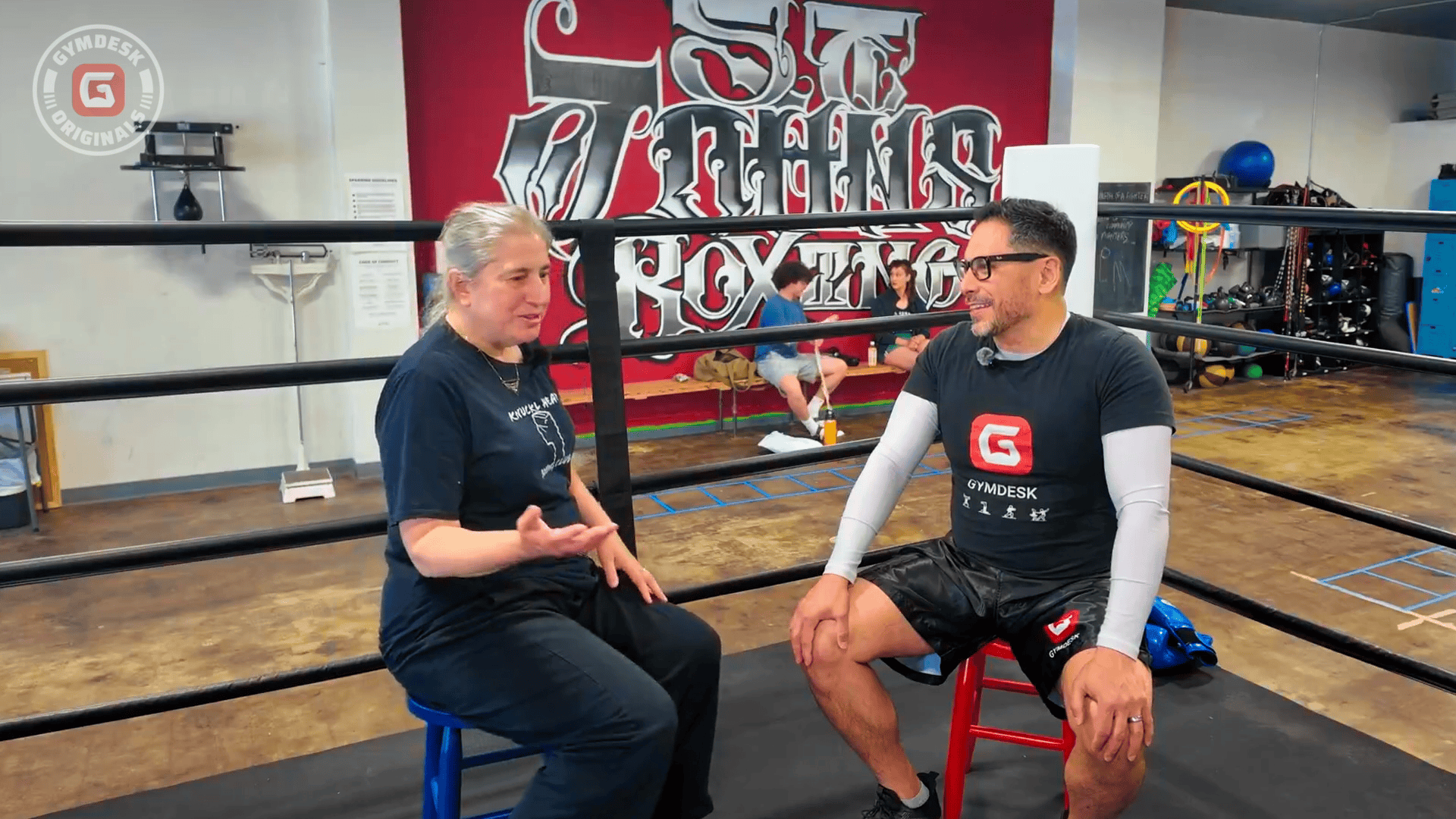
Around 2010 she started cross-training—boxing, Muay Thai, a little jiu-jitsu—partly because her kids were training at a martial arts gym downtown and she was already in the building. By her own accounting she was a gym dabbler. Three or four of them, in and out.
Boxing is where she landed, and she has a good theory about why.
"Boxing to me is a little bit more like rock and roll. You can learn five chords and then jam out with your friends. Whereas jiu-jitsu, you have to learn so many techniques before you can really get something done."
— LISA TITAN, Founder, St Johns Boxing
The gym that finally held her was Sweet Science Boxing, in another North Portland neighborhood. Western-style boxing, about thirteen years in the neighborhood, run by a woman named Laurie Gold.
She stayed for the room.
Sweet Science was cozy, which is a strange word for a boxing gym and exactly the right one. It was a place where an older woman with no interest in competing could walk in and belong.
And Laurie Gold was roughly her age, which mattered more than Lisa probably understood at the time. Here was proof that a woman past a certain birthday could own a boxing gym.
Lisa was not thinking about owning anything. She had a full-time job in community justice, working with juveniles inside the system or on their way back out of it. The gym was the other part of the week. The good part.
Then it was 2020, and it wasn't.
Under the Shelter at James John
Laurie Gold closed Sweet Science and moved to Maine. That was the end of it.
Except Lisa kept training. She paid one of the Sweet Science coaches to keep working with her, and they met at the covered playground at James John Elementary.
A basketball court under a shelter, a concrete floor, and Portland doing what Portland does for most of the year.
Other Sweet Science people started turning up. Nobody organized it. A coach here, a member there, everyone circling back toward the only thing left standing, which was a slab of concrete and each other.
Eventually there were about fourteen of them. Coaches and members, out on the playground, running drills with no structure and no home.
This went on for roughly a year.
Then the schools reopened, the playground stopped being theirs, and the whole thing was about to evaporate for real.
Which One of You Is Going to Open the Gym
Lisa spent a couple of weeks asking around. Not offering. Asking. Which one of you is going to open the gym?
People wanted to. That was never the problem.
"I knew that out of this group, somebody should open the gym again... There were people who wanted to open a gym, but nobody really knew how. And I didn't even know how. I didn't know anything about owning a business."
— LISA TITAN, Founder, St Johns Boxing
So she did it—the alternative was watching fourteen people go home.
Around July 2021 she rented a dance studio a block from the playground. By the hour, three times a week.
And here is where the romance of the thing runs straight into a filing cabinet. To rent a room by the hour she needed a business license and she needed insurance, and she needed both of them on day one.
Ask anyone how to open a boxing gym and they'll tell you about the bags and the ring. Nobody leads with the licensing and permits.
But before there is a gym, there is paperwork. Before the first bag hangs, there's a general liability policy with your name on it, and a coach standing in a rented dance studio waiting for you to say go.
The coaches volunteered. Masks on—it was still COVID. Money came in through Venmo, donation-based, whatever people could give. She put signs in the window and started an Instagram account.
It ran like that for about six months.
The Month Venmo Did Her a Favor
Venmo, being Venmo, eventually noticed that a great many people were sending money to the same person for the same thing, flagged her as a business, and cut the donations off.
Which was a disaster, and also the only thing that could have happened.
Because now she needed a real space. A space with bags in it.
She moved the operation into a room directly behind the dance studio wall—about a block of progress, geographically—and stayed there for a year and a half.
Somewhere in that first chaotic stretch, she also started using Gymdesk.
"I was just trying to get all my ducks in order that first year, and I knew I needed something to organize what was happening."
— LISA TITAN, Founder, St Johns Boxing
Lisa will tell you flatly that she is not a technically minded person, that software and she have a long and complicated history, and that her preferred approach to any platform is to hand it to someone else.
After which, reliably, it comes back to her.
What she wanted was for the mess to be somewhere. Members organized in one place. The website attached to it, the schedule page controlled from it. Everybody logging into their own account, with her deciding what they can and can't do in there.
That's it. That's the whole review. It keeps the thing that is happening from becoming a thing she has to remember.
She'll be just as blunt about the parts she hasn't solved.
"The marketing is one of my huge weaknesses. It's just sort of one of those worlds outside of my head."
— LISA TITAN, Founder, St Johns Boxing
She's right that it's a weakness, and she's not wrong that most of boxing gym marketing is a foreign language to people who got into this to teach a hook. But she built a gym out of a rained-on playground with a phone and a hand-lettered sign, so let's not overstate the deficit.
The Man Shop
The building came the way everything else came—through somebody she knew from derby.
A former teammate was working for the development company remodeling an old storefront on the main street. Nobody had leased it. The offer, roughly: help us tear it down and build it back, and it's yours.
So Lisa did the tenant improvement. Asbestos remediation, painting, and paying for the electrical out of her own pocket.
Gutting an old retail space is not a metaphor for anything. It's just a lot of dust.
And when it was done, she left the sign up.
"This space was an iconic business in the neighborhood. I've lived here like 30 years. It sold men's clothing and it had been here since 1940... I had to keep the sign on the window because I didn't want to let the neighborhood people down. We came and took over, and it's woman-owned."
— LISA TITAN, Founder, St Johns Boxing
People navigated by it. They'd been telling each other turn left at the Man Shop since before Lisa lived there.
She kept it. Then she filled the room behind it with heavy bags.
Bridging Capital
Today there are six coaches, all independent contractors.
Classes run from the basics up through advanced work, plus a small competitive team and a youth class. The green level is where people who have never made a fist correctly start.
Margo manages the place.
And anybody who needs it, trains free.
"I do offer free membership to anyone that's associated with the justice system or who needs it for financial reasons or is at-risk youth."
— LISA TITAN, Founder, St Johns Boxing
That is the community justice career, still running, just wearing hand wraps now.
Lisa calls herself a social entrepreneur and describes what the gym makes as bridging capital. It's the kind of social connection that happens between groups rather than inside them.
A boxing gym is unusually good at this. It puts strangers who would otherwise never meet into a room and gives them a shared, slightly ridiculous problem to work on together.
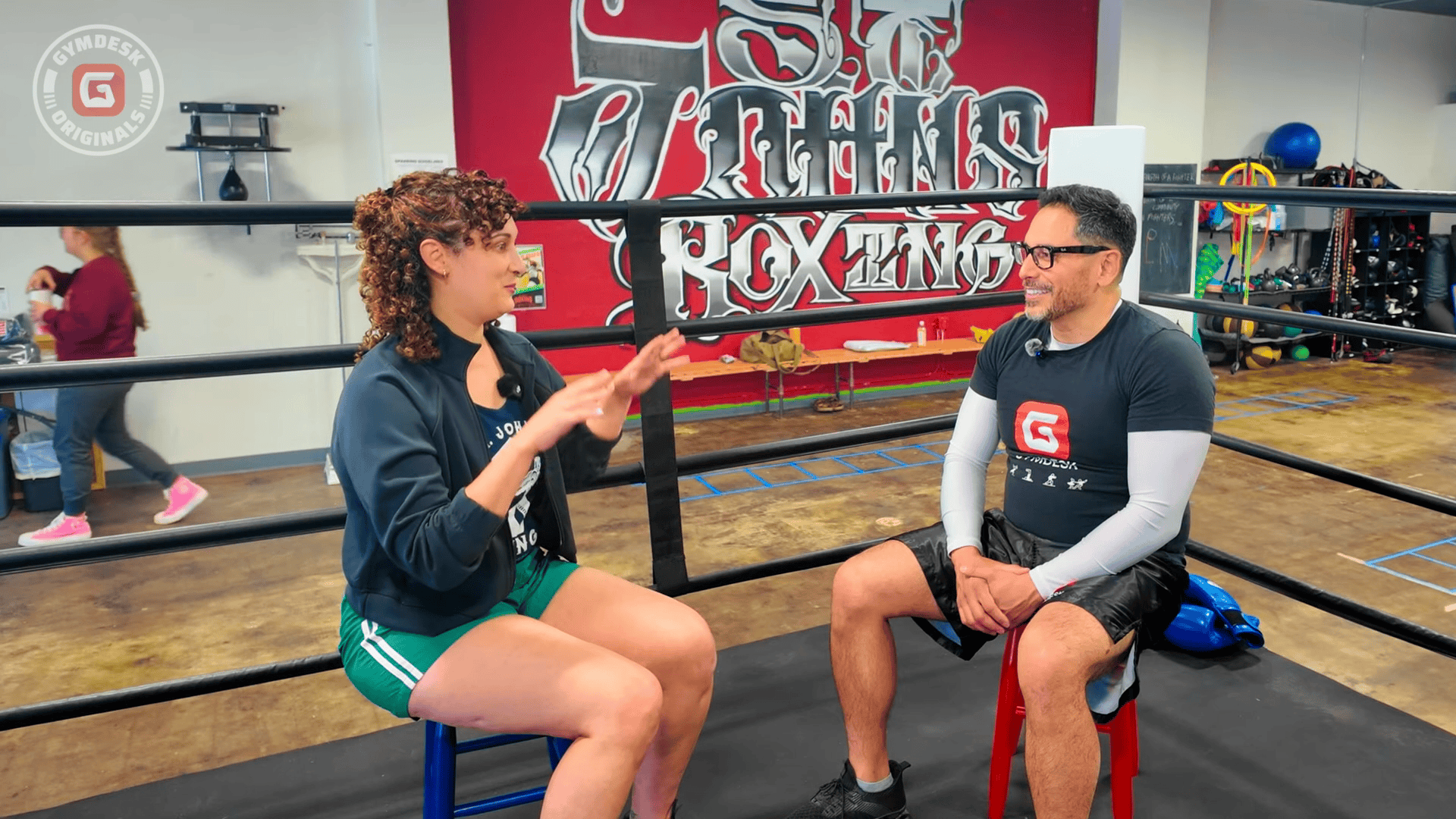
The room is kind, on purpose. Nobody screams. Nobody is trying to intimidate anybody. The coaches, per Sabrina Eveland, are running a slightly heretical operation:
"There's this expression, we don't play boxing... but here, me and the coaches sometimes joke around that we play boxing because we like to laugh... It's okay to make a mistake. You don't have to be perfect and we don't expect that."
— SABRINA EVELAND, Coach, St Johns Boxing
People who would never have tried boxing find out they're interested in boxing. It began with fourteen people on a playground who didn't want to stop.
She was never the qualified one.
She opened it anyway. The gym is on the main street in St. Johns. The sign still says the Man Shop.
A 7-part email course covering everything from lease negotiation to your first 100 members. Written for martial arts instructors ready to open their own school.
Watch the full story of St Johns Boxing in our Gymdesk Originals series. For more on what gyms build when they stop thinking of themselves as gyms, read how Nova Jiu-Jitsu grew a community that outran its mat space, and how Takeover Jiu-Jitsu is doing the same thing in its own neighborhood.
Gym management software that frees up your time and helps you grow.
Simplified billing, enrollment, student management, and marketing features that help you grow your gym or martial arts school.


FAQ

Sean has spent the last decade creating content that helps businesses—small and not so small—grow smarter to allow operators to do more of what they love. You know, the fun stuff.
From shipping and international logistics to web development and marketing, he's done the work (not just the words) to scale retail and service businesses efficiently.
You can find his work at Sendle, Shogun, The Retail Exec, Gymdesk, and more.