The Truth About Building a Jiu-Jitsu Academy No One Talks About

Starring
.webp)
With a martial arts background that began in childhood, Joshua earned black belts in kung fu and kickboxing. He has extensive experience as a competitive kickboxer and amateur MMA fighter, and has owned and operated multiple martial arts academies.
About the Gym
Square One Jiu Jitsu, founded in 2023, is located in downtown Lee’s Summit, Missouri. The academy offers Brazilian Jiu Jitsu training with a focus on both beginners and advanced students, including adults and kids. Programs emphasize modern techniques, fundamentals, competition preparation, and efficient grappling methods. The facility supports a welcoming training environment for hobbyists and serious practitioners alike, drawing on the instructor’s extensive experience in martial arts and competition. Square One Jiu Jitsu is committed to high-quality instruction and community-focused martial arts education.
📍2 SW 4th St suite d, Lee's Summit, MO 64063
📞 816-287-0492
Summary
In this episode, Alex Cuevas visits Joshua Smith at Square One Jiu Jitsu in Missouri to explore the untold realities of building a martial arts academy. Josh shares his journey from training in kung fu as a child in Alabama through competitive kickboxing and MMA and his transition to Jiu Jitsu, a sport that ultimately became his passion and life’s calling.
He opens up about the challenges of opening and maintaining academies, the importance of not doing it alone, and the value of building strong business and community networks. Josh emphasizes training smarter, building resilience through setbacks, and prioritizing personal growth over material success.
Throughout the conversation, he highlights the pivotal role Gymdesk has played in managing his schools—from streamlining student communication and attendance to supporting smaller academies with affordable, accessible features. The episode is both a candid look at the realities of martial arts entrepreneurship and a practical insight into how the right tools, like Gymdesk, can make a difference.
What They Told Us
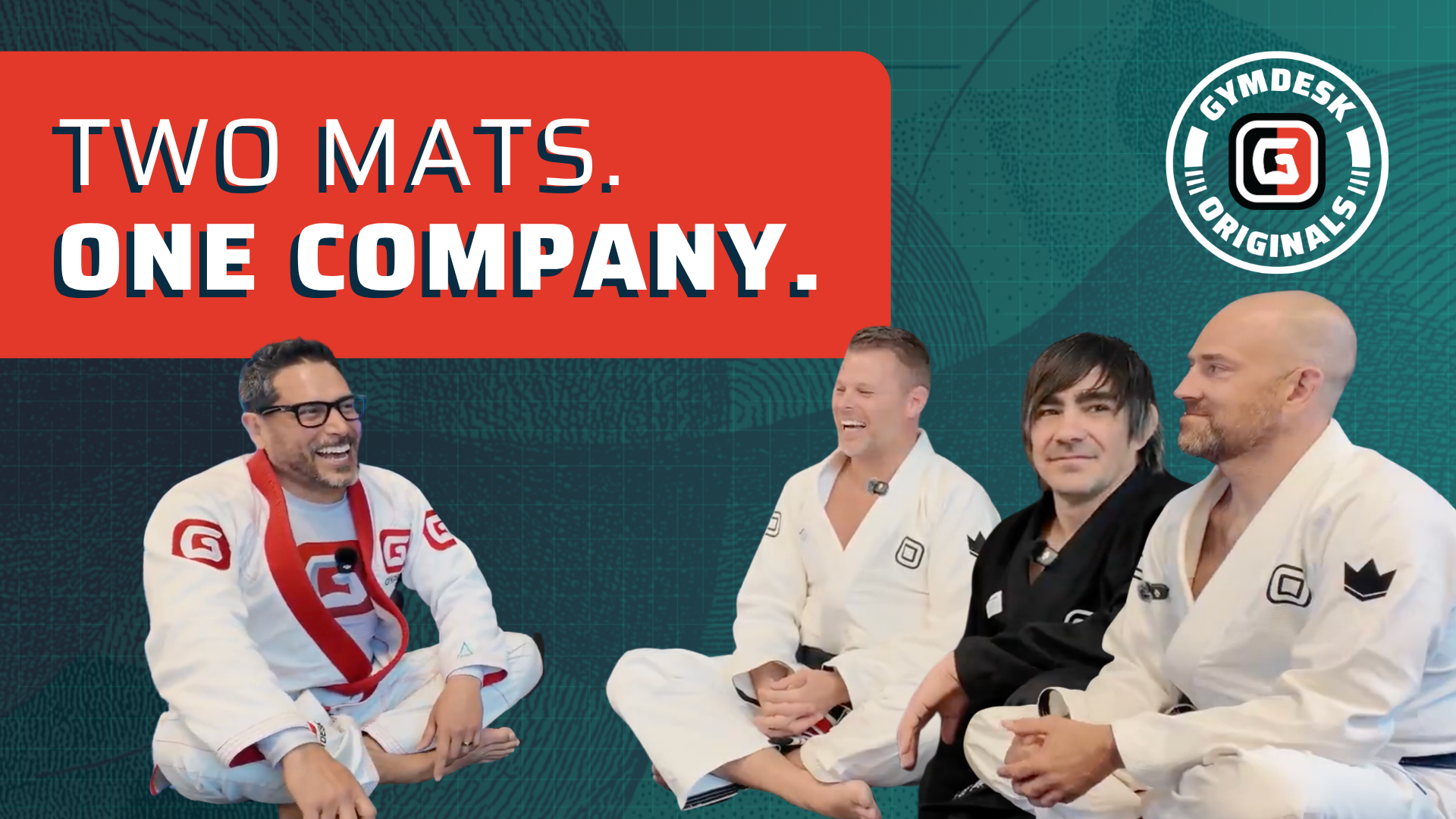
Alex Cuevas took the Gymdesk Originals camera to Square One Jiu Jitsu in downtown Lee's Summit, Missouri, and sat down with founder Joshua Smith three weeks after the gym moved into its newest home. It is Josh's third go at running an academy—one in Alabama, a big 5,000-square-foot facility in Kansas City that closed after the pandemic, and now this one, named for the fact that he and his wife Heidi were starting over from scratch. The through-line of the conversation is resilience: what he learned about training smarter, coaching better, and never trying to build a gym by yourself.
Why it's called Square One
Josh has opened and closed enough gyms to know the name is not an accident. After the Kansas City facility folded and he spent a stretch working in the cannabis industry, he and Heidi decided to build again in 2023—and chose a name that owned the restart rather than hiding it. He walks Alex through the logo, too: the square, the one, and a black belt in the middle.
"Heidi and I, we opened another academy here in the Midwest in Kansas City in 2023 called Square One Jiu-Jitsu because we're just starting it from Square One again."
—Joshua Smith, Founder, Square One Jiu Jitsu
Jiu-jitsu as an engine
Josh doesn't think of jiu-jitsu as a style, and he's blunt that it isn't gi versus no-gi or wrestling versus judo. To him it's whatever technique is most efficient for the job in front of him—if a wrestling entry beats the jiu-jitsu way he learned, he uses the wrestling one. He has a metaphor he keeps coming back to for how a practitioner should read a body on the mat.
"It's kind of like how a mechanic looks at an engine and they know what's going on. I feel like that's how people who study jujitsu should look at the body."
—Joshua Smith, Founder, Square One Jiu Jitsu
We're not fighting in here
Josh came up training with a chip on his shoulder, treating every roll like a real fight, and it cost him—shoulder surgery, both menisci, an LCL. Learning to train smarter is the thing he now tries to give his students from day one, which is why he delivers a short talk before every session. The mindset, he says, is the whole point.
"I want everybody in the mindset that we are not fighting in here. We are studying a fighting art, but when we're actually going live to train, this is not a real fight."
—Joshua Smith, Founder, Square One Jiu Jitsu
Don't do it alone
When Alex asks what advice he'd give someone opening their own martial arts studio, Josh answers before the question is finished. He's watched owners try to be great at coaching and marketing and sales and operations all at once, and he's clear that no one is good at all of them. The fix is a partner and a network you trust.
"Don't do it alone because you have to wear so many hats and you can only be good at so many things, right?"
—Joshua Smith, Founder, Square One Jiu Jitsu
There's no such thing as self-made
The advice gets concrete fast. Josh trades referrals with a chiropractor, a massage therapist, a yoga instructor, and a personal trainer—people who heal the bodies his gym spends its days breaking down. It costs nothing but a weekly check-in, and he has no patience for the self-made pose.
"Just don't try to be self-made. Try to really learn how to work and communicate and establish relationships with people and do right by them."
—Joshua Smith, Founder, Square One Jiu Jitsu
Meeting people where they are
Josh has been a customer since the software was called MA on Rails, and when he opened the second gym he searched for it, found it rebranded as Gymdesk, and signed up without shopping around. What keeps him loyal is the pricing—he runs on a shoestring and pours everything back into the academy, and he's adamant that a tool built for small gyms is what a small gym needs. He put it to Alex as a standing bargain.
"You guys meet people where they're at. And as long as you guys keep doing that, I'll always support y'all."
—Joshua Smith, Founder, Square One Jiu Jitsu
Read the full transcript
Lightly edited for readability. Speaker labels are omitted because the source recording is not diarised; quotes attributed elsewhere on this page were verified against context.
What advice would you give to somebody that wanted to open up their own martial arts studio of any kind? Don't do it alone. Behind every gym, there's a story, a mission, a spark of passion that started it all. This is Gymdesk Originals. Real owners, real struggles, and the communities they've built from the ground up. Hi, I'm Alex. Hey, I'm Josh, man. So, this is your new place, huh? Yeah, we just moved here, man. We'll have a fixer-upper right now, but... Yeah, three weeks you've been here?
Yeah. Nice. About to start the class here at Square One Ji-Jitsu in Kansas, in Missouri, and I'm looking forward to it. Very instructive class. Yeah. I learned a lot. But, yeah, thank you for, again, for inviting me to Square One. This is the first, or the new location for you guys, right? Yeah. Love to hear about your story, your background, your journey in martial arts. I think you said you started, like I did as a little kid, doing totally different art, right? Yeah, I started doing a southern style, they call it wusu, kung fu, wuzu, not wu.
Wushu is something different. It's like a northern style, but it's called wuzu, or lin, like it's the five ancestor fists, kung fu. And they did that from the time that I was like six until, I don't know, I fell out of it slowly. Because when I got my black belt, I wanted something more that was like fighty, right? Like instead of forms and weapons, which are all cool and stuff. But I wanted something that was a little more practical. Because guys in my, where I was growing up, they were, we were starting to fight.
We were all going through like puberty and adolescence and stuff like that. Guys were fighting in high school and stuff. That was back in the days when they would let you fight in high school. Yeah. And I lived in South Alabama. I'm from Mobile, Alabama. I'm a native from there. And yeah, man, back then, like people would just meet up on the 50-yard line on the football field. Because that's when you could go to the high school after it closed. Yeah. And run the track. And it was like more communal back then.
We didn't have kids like doing all kinds of crazy shit. Like the craziest thing we did was getting fistfights. So it's simpler times back then for sure. So I transitioned from kung fu, where we were, where I was training kung fu at. I was training under Grandmaster John Graham in Mobile, Alabama. And he, I don't remember the degree of black belt he was. It's been so long. But he was like the highest ranked in the United States in the Southern Fists. And he had learned, he was a Marine during Vietnam era.
So he was like, he was kind of like a Cobra Kai instructor, bro. He was like, we were like slamming our hands and like gravel and shit. Like hitting the Wing Chun dummies with our fists and stuff like that. And they're like, no mercy in this dojo type shit. And I was like, that's cool. I didn't never really feel like I was learning how to fight when I was learning kung fu. I wanted to be able to take care of myself. So in high school now, when you have these fights and all, are you using any of this?
No, no. So that's what I'm leading up to. So that's what made me be like, yo, I need something more practical than traditional martial arts. And these wide forms and all these little chopping motions and stuff like that. I need something like more real. So in this same academy, Master Graham, he was also under Bill Superfoot Wallace for point sparring, right? Which Bill Superfoot Wallace is like, he's one of the pioneers of like point sparring, like Chuck Norris, like those guys back in the day. I'm trying to think of some other people from back in that day.
I just haven't been in that realm of martial arts in a long time. So everything's fuzzy. And I get choked a lot. But anyways, at that time, I was just like, you know what? I'm going into high school. People are throwing real punches. They're not like throwing point spar punches. And I went to my master at the time and I was just like, I want to learn something more real. So we did. He had me in point sparring. And it's okay. It's kind of points. But what really changed my mind is when he was also under Joe Lewis, the late Joe Lewis, the kickboxer.
Not the boxer, but the kickboxer. L-E-W-I-S. He passed away in 2010 from a brain tumor. But I was under him and Master Graham training kickboxing. And I got my black belt under Joe Lewis as well. And I started doing kickboxing at 14. And I kickboxed competitively for a little while. Just as like a youth, as a teenager. Yeah. And then like there was some point where one of my instructors, one of the junior instructors there, started going off. And he was telling me about like jujitsu and stuff like that.
And this was like at the end of high school. And he was like, oh, come do this jujitsu stuff. And I met this guy named Adriano Lucio. And I was like 18 years old. And Adriano was super nice. He was under Barilla Boost. At the time, I think he was a first degree black belt at that time. And he came, he would come up from Brazil like every quarter or so, every two quarters, and teach Brazilian jiu-jitsu seminar. There were very few purple belts. There were no brown belts around.
Like a purple belt was like seeing a fucking unicorn. And the blue belts back then were not as good as like the blue belts today. Like it's pretty proficient when they're in blue belt now, at least for the common person, right? A blue belt in jiu-jitsu these days can pretty much defend themselves unless, you know, you're going to a school where you never see punches or we never discuss the clinch or something like that. But I was training, I remember my first lesson with Adriano and I was like, man, that's cool.
But what if guys are punching you? And he was so nice to me. And I think this is really what really attracted me to jiu-jitsu is because where I trained, everybody had a chip on their shoulder because there was no grappling, right? And what Joe Rogan says is like when you're striking, you're pulling back. You know what I mean? You're not hitting each other 100%. Because if you did that, you'd run out of training partners. If you'd bust it up every day, you wouldn't be able to – you can't train like that.
So it's like there's always this like margin of where like I'm hanging back a little bit. On jiu-jitsu, there's none of that except when we get to the submission. Like we don't actually want to break our partner's arm. We don't actually want to break – or we don't actually want to choke our partner unconscious. But I can use 100% of my efforts to get to that final point where I am going to apply the submission. There's a control mechanism. There's a finishing mechanism. And Adriano, what impressed me so much is I was a complete dick.
Like I was overweight, 240 pounds almost, just not in a good place in my life. And I'm just sitting here, what if somebody was trying to punch you? You know what I mean? And instead of being a dick back, he was like, okay, my friend, how do you want to – like how do you want to show me how you want to punch? Because you can put on the gloves if you want. I'm like, okay. So he did. And like I go to throw the punch and he maintains the distance so well that he makes me overcommit.
He double-legs me. He puts me on my back, right? And instead of going to the mound and just beating my ass, like he picked up my head and he turned over and put me in closed guard. And I was like, this dude's trying to make fun of me. So it made me mad. So I stood up like A-frame, like Vitor Belfort style, and just started trying to tee off. He's like laughing at me. He picks me up on his feet like a kid, like how you play airplane with your kids.
240 at this point. 240, yeah. He's 165 soaking wet. He picks me up on his feet because my head was over my feet and my base was extended. And I'll never forget, he just drops me into an armbar. And he's like, I'm up in the air. And he's just like, okay, boom, drops me into an armbar. And on my arm, I'm sitting there struggling. I'm trying to pull it back. It's already locked out straight at this point. And he's like, I think you've got to tap now, my friend.
And then I tapped out. And he got up. He said, hey, man. He said, you did so good. He said, my friend, you can be good at this stuff. You have a fighter spirit. I know you just need to calm, learn some technique, open your mind, things like that. Wow. He said, he was very nice to me. It broke right through whatever shield or... Yeah. He did not fight fire with fire, right? He did not add gasoline to the fire by meeting aggression with aggression. He showed me, I think if aggression had been met with aggression my first time in jiu-jitsu, I don't think I would have the respect for it that I did.
This guy was 165 pounds soaking wet. I did jiu-jitsu most of his life and handled me like a child. And I was trying as hard as I could to beat his ass. And I was not a beginner martial artist at this time. I was competing and kickboxing all the time. I was trying to get into MMA at the time when this happened. And like, I did MMA for a little while. I did seven fights. I'm like 6-1 in amateur MMA. I got my jaw broken in my seventh fight.
I realized that's probably not something I want to do. And in 2008, I was 21 years old when I decided to pursue jiu-jitsu full-time and just give up on striking. Did some cardio kickboxing for a while, hit mitts and helped train fighters, like people that had aspirations to fight. But I never did striking again or never competed in striking or MMA or anything of the sort again. I was just, after breaking your jaw, it was just all grappling from that point on. What does that feeling look like?
Dude, so for six weeks, I was just eating like a liquid diet. Like I couldn't like chew food. Yeah, and what sucked is like when some of that liquid was cold, right? And so like it would hurt so bad, like just eating cold stuff. So I had like a wire type thing going on. Yeah, and it was just, it was really stupid. I realized there wasn't like, I didn't have the talent for that, right? Like I wasn't athletic enough. I've never been like an athlete. I've always had to be like learn things the hard way because I thought I was an athlete.
And I really realized that, no, I'm just a fucking nerd, you know what I mean? I was just a nerd that really likes this stuff and like it brings value to my life. So, and then what was cool is like in 2009, I met my wife, Heidi. We were both white belts together. I met my wife, Heidi, on the mats. I were training at a club downtown that one of my friends and I were trying to start, but it didn't like really pan out because neither one of us knew how to run a business.
I still don't. I still mostly just do social media and teach classes and train really hard, but. And when you guys met, you were in Alabama? Yeah, we were in Alabama. Yeah, Mobile, Alabama. And then family circumstances had us moved to central Alabama in 2013. I had got my, received my blue belt in 2011. So when I moved to central Alabama, the place I moved to in 30 mile radius, there was no jujitsu. The closest one was like Birmingham. That was like an hour drive one way.
It's funny because at first an hour drive one way just seemed like way too much, right? So I talked to my professor and he said, you're a blue belt. He said, start something up. And I'm just like, I'm a blue belt. He said, yeah, but you know more than like the average person around there. You know what I mean? And you won't always be a blue belt. He said, just start something up. So we started a mission submissions in Hill City, Alabama. Started out at a community center, like two days a week.
And like we started having some success. Three days, we went up to three days a week. Community center, but did they have mats? No, we bought some. We bought some mats. We bought some like cheap zebra mats, puzzle mats. We started with those and we started at two days a week. And then when we asked to go to three days a week, they're like, oh, we'll give it to you. No more than that. And then we were like, no, we got people that want to compete.
So we started looking for our own space. And then we ended up in this hundred year old building in downtown Pell City. And from there, we produced a lot of IBJDF champions, like open champions. And we did a lot in that little space, man. We produced some really good amateur MMA fighters. We added on a wrestling coach there. We added on a kickboxing coach there and started like putting fighters out in MMA. Heidi and I were both purple belts at this time. And then I decided that I just wanted to get a little more serious with my jiu-jitsu.
Like I didn't know. I started training with people that were just like, we may never want to be world-class, but we want to study what world-class jiu-jitsu practitioners do. And I found that some of my friends that were originally with me when I was under Seneca, which was my first professor, he was the first IBJDF world champion. I didn't go under Adriano. I just went to his seminar. That was my first impression. My first actual professor was Elio Seneca. He's the first IBJDF world champion. He beat Megaton Diaz in the finals of the first IBJDF.
And I can't remember. I was thinking it was 93 or 94 when that happened. But anyways, I started training with him in 2008. And I went up to Purple Belt with him. And Seneca is a great guy. I still would be training with him, but he was like, his visa was weird. He was in Brazil three months, United States three months. And I wanted to get better. I was competing in jiu-jitsu at this time. And I really wanted to see while I'm still in my 20s and early 30s, like how good can I get at this jiu-jitsu stuff?
And one of his former affiliates who was a friend of mine went under Andre Galval and they were trained under Ottos. And I'm like, hey, what's this Ottos stuff about? And they're like, we're trying to be the best. Like point blank. That's why I was like, what do you mean you're trying to be the best? No, we're trying to learn the best strategies to beat people. Like we're trying to like be the best in the world. That's what Ottos is about. So like I started studying under them.
And when I started studying under Evan and Suzanne Ramson, who was running the Ottos affiliate in Huntsville, Alabama, I did drive two hours one way once a week to take privates with Evan. Wow, the sun. Yeah, because it meant that much to me by then. Like it's funny because when I moved there as a blue belt, it was like it seemed crazy to drive an hour to Birmingham, right? From Pell City to Birmingham or from Talladega. That's where I was living. From Talladega to Birmingham. It was like almost an hour when you hit traffic.
So that seemed crazy. But once I had like once I started taking responsibility for others and I was teaching and stuff like that, like I wanted to be the best representative of Jiu Jitsu that I could possibly be. And I know I couldn't do that. Just training with my students are just waiting for Seneca to come back to the United States and teach me some more stuff. Right. So I had to seek out the best and the best people I could possibly find was the Ottos affiliate Huntsville.
It was two hours away. I was like, you know what? Fuck it. I was like, I'm just going to have to make the sacrifice. So I would pick a day every week and I would go do a private with Evan Ramson. I would drive two hours there. I'd train for an hour and a half. I'd get some acai in the shower and I'd drive back two hours and I'd teach my evening classes. So like I was all in with that shit, man. Like I was bleeding for Ottos.
I competed at IBJJF like for Ottos. Like when IBJJF switched over and you had started having to have registration cards like USA Judo and stuff like that. Like IBJJF, there was a point where every single belt color started having to have registration cards. And when that started being applicable to the purple belts, like the only thing I've ever competed in an IBJJF under is Ottos. So I feel like that was the point where I grew so much in my jiu-jitsu journey was under Evan and Suzanne Ramson with Ottos of Huntsville.
And then in 2021, I got my brown belt from Evan and Suzanne. And then I moved to Kansas City. We had some complications after the pandemic. We moved from our, during the pandemic, we moved from our downtown facility to a really nice 5,000 square foot facility. But at this point, we weren't just a jiu-jitsu gym. We were like a complete martial arts facility. We had on payroll, we had an instructor, like a jiu-jitsu instructor, a kickboxing instructor. We had a wrestling coach. We had a yoga coach.
We had a fitness instructor. It was a 5,000 square foot facility. It was really nice. We really scaled up there. But man, it was expensive to run like post pandemic, right? And some complications happened after that and we had to close it. So after that, I realized I didn't have much life skills because I'd spent like literally all of my 20s pretty much doing jiu-jitsu, like doing martial arts professionally. And I was like, I don't know what to do now that my school's closed. So I had a buddy that lived up here and he was like, oh, you don't have to have an experience to join the cannabis industry.
It's brand new. Everybody's doing it. So I came up here and I started working in cultivation and cannabis. And yeah, I did that for a little while. And cannabis became a big part of my jiu-jitsu journey because I was really against it for a long time. And then I realized that cannabis helped me take the fight out of the training because I used to take myself way too serious and get injured in training a lot. And cannabis helped me like really relax and stuff like that.
So I started this page called The Garden Grappler and it really got me some notoriety in Kansas City. And I was just talking about like the benefits of cannabis. And I don't really think that it's for everybody, right? But I think that the people it's for, it shouldn't be so taboo, right? Because there are people that are really active, like productive members of society that use every single day. They just, they have some things going on in their life that it helps them with and helps accelerate them instead of whatever the opposite of accelerate is.
I don't know. I don't know words, but it helps me a lot. And learning about it helped me try to figure out like, do I need to tell people everybody should be doing like weed to do jiu-jitsu? But they shouldn't. They really shouldn't because it affects people differently. Just like Motrin affects people different. Tylenol affects people different. So I started doing that and yeah, I started just gaining some notoriety around Kansas City. And eventually like I was just like, nobody around Kansas City trains like Otto's trains.
There's only a couple of schools in the area that I really feel like want to like study elite level jiu-jitsu. Everybody else is doing it as a hobby, which is cool, like because jiu-jitsu needs hobbies because that's how the sport grows. That's how the industry grows. But I really just, for me personally, like I just always wanted to be like my personal best. Even if my personal best isn't as good as it was 10 years ago, I still want to be whatever it is today. And I still want to understand the strategies of the top 1% of competitors in the world so that I can be an instrument of success for somebody else, right?
So I can be a better instructor. So I opened my own, Heidi and I, we opened another academy here in the Midwest in Kansas City in 2023 called Square One Jiu-Jitsu because we're just starting it from Square One again. So it was a good name. Yeah. And yeah, the name fit and we started making up all like the branding and the logos and stuff. And you can see like SOJ, Square One Jiu-Jitsu Academy, and there's like the square and the one in the middle is the black belt.
And anyway, some of the people that I have been training around the Kansas City area, I didn't really have a professor to speak of at that time. So some of the people that I've been training with in the area recommended me to give my black belt to Hanato Tavares. So Hanato awarded me with my black belt. Shit, what year was it? Yeah, 2023, the same year I opened the academy. A few months after opening my academy, I received my black belt from Hanato Tavares. So I'm going on now in November of the two years as a black belt.
And in the last three weeks, we just moved to downtown Lee Summit, Missouri and like in the downtown district off of Southwest Main and Southwest 4th Street. We're right at the corner here and love it, man. I just love being in the Midwest. It's a different feel, a different vibe. A lot of good wrestlers here. We didn't have that back home. That's something that I had to get used to is the mental fortitude and like the just the grit and grind of Midwest wrestling. Yeah. Because it is so those guys are just such different grapplers.
Like at the end of the day, I think it's all grappling. I think judo has its place. I think sambo wrestling has its place. And jujitsu to me is finding the most efficient method to do whatever it is I'm trying to do. Jujitsu to me is not like a style. It's not gi versus no gi. It's not wrestling. To me, if this wrestling technique is efficient, then that's what I'm going to use. If I'm trying to get to the back and this wrestling technique is better than this jujitsu way that I learned, then I'm going to use that one.
Or if this judo throw is better than this like jujitsu technique that I learned, this jujitsu takedown, right? I'm going to use the judo one because I like it's more efficient. It's kind of like how a mechanic looks at an engine and they know what's going on. I feel like that's how people who study jujitsu should look at the body. That's how all grapplers should look at the body. How can I break this down the most efficient, effective manner, right? Based on the person that I'm versing in their reactions.
How can I force them into dilemmas where I have like just a couple of options and I can anticipate where they're going to go with those options. And yeah, and that really separates like the levels. That's where you start to see separations of the levels of like modern day jujitsu versus 10, 15 years ago when it wasn't like as technical. It is as intricate as it is now. When I started learning jujitsu, De La Jivo was like something they started teaching purple belts. Now we teach it to white belts.
X-Guard was something I didn't see until I was a blue belt, right? Now I'm teaching it to white belts. Now I'm teaching it to kids like X-Guard, beginners. Not because I'm going into these advanced sweeps or anything, but I'm teaching them as levels of flight controls. Leg locks. Leg locks are big things that are prevalent now. So not because it's popular and there's so many people that train leg locks that have no idea how to do leg locks. They see Instagram footage and oh, I can do this or something like that.
But my buddy Sean Applegate for Tiff Planet really turned me on to leg locks and how you isolate the hip, retain the knee line, and then you have your braking mechanism for each leg entanglement. And it's just fascinating. I'm a nerd for this stuff and I really like the pure, like I taught tonight, just breaking the technique down and getting to like understanding the why, the when, the where, and how. So that's just always been my style is what's the best that I can be? How deeply can I understand this?
And how can I relay it to people who don't do this for a living so that they can understand it and be effective with it? Because they're probably not willing to put in the kind of time I was. So how can I translate that to your general like enthusiasts, right? But how can I also maintain enough proficiency to teach a high level competitor that could be possibly world champion material if they're willing to put in the time? How can I make that balance, right? So that's the question that I'm always trying to ask myself and the question I'm always trying to answer.
Going back to your belts. So the first belt that you had was Kung Fu. And then did you also get a black belt in like kickboxing? Yeah. I'm doing Joe Lewis. So you got two black belts and now you got three. Yeah. But I don't even really claim those other black belts anymore, dude. I've been, I'm so far removed from that culture. Yeah. Like my life is all about jujitsu and it has been for so long that I don't really, until you started talking about it tonight, I was, oh yeah, I've been doing martial arts a long time too.
You know what I mean? It wasn't, I don't, it's not something I really think about anymore, honestly. So for the folks, there's like, you had an experience where you had a school back home or home state. Yeah. You came here, had another school, big school, went big, didn't work out. And then you're, here we are again. Yeah. Part three, square one. Yeah. That's resilience. Yeah. Yeah. Clearly you're passionate. So what drives you? What's, where's the, where do you pull from? I'm weird. I'm weird, man. I don't have to have many things that make me happy.
Jujitsu makes me happy. I wasn't very good at sports. Right. So like I gravitated to a martial arts, like a lot of people, like when they get to know me for a while, they comment on my feet. Right. So when I was born, I had my feet were locked out like a ballerina like this. So I walked on my, the balls of my feet and I had to have four corrective surgeries on both of my legs to fix this. And it left me like with a really high arch.
You can see, right. They used to call me, it's the NECA's camp. They used to call me Arcos, which is Portuguese for arches. And like they make a, they would make a joke. They could slide a marble under my foot. Cause like I have such high arch. The opposite. Like I have no arch. The flat feet. Yeah. So yeah, man. So just growing up, not really being able to keep up with kids my age and stuff. And like when I was 10 years old, it was so embarrassing.
Cause like when I was 10 years old, starting the fifth grade, I remember starting. Starting fifth grade with braces on my legs. Like Forrest Gump. I was like, I'm like Alabama, I'm from Alabama and I'm starting school with braces on my legs. I am pretty much fucking Forrest Gump. Yeah. Like I just didn't have the real deep Southern draw. I hope not. At least I tried really hard to break away from that, but yeah, man. So I just, I was just basically told my whole life, all the shit that I couldn't do.
Right. And I was just like, I'm going to do what I want. I just, I like, I grew up skateboarding. I live like 15 minutes from the beach growing up, always boogie boarding, surfing when I, when there was good surf with friends. And I pretty much just lived a different kind of life. I didn't do sports. I, my best friend, when I was 13 years old, he committed suicide and I just, I stayed in for a little while. And I really indulged into music. Like I started playing guitar when I was 12.
And then when my friend killed himself, all I wanted to do was just lock myself in my room and play guitar all day, which was not a healthy coping mechanism. But at the same time, like I developed a love for music and like for other things, because I wasn't out like being very social and that broke really quick when like you meet girls and things like that, you start getting social again. And yeah, so it was just always martial arts and music for me. I was always the artist.
I wasn't ever like the popular kid or anything, but I hung out with everybody. So it's weird because I hung out with popular kids and then I hung out with the weirdos and I just never had a specific group that I ever felt like I belonged to. Jiu-jitsu was the first time I ever felt like I belonged to him. I was like, oh, this shit's for me. You know what I mean? This is what I want to do with my life. So it's easy for you to roll again and live in your passion state.
Yeah. Yeah. Yeah, man. It's just the only time I feel like I could really express myself because I've been in a lot of fights, man. And then I had a brief stint where I was working. I really don't want to talk a lot about it because I have extreme PTSD. I did contract security for a while for my dad's friend's company and it was, I had a really bad experience working overseas and it was just like, yeah, it's not a fun tale, but it's pretty much what got me into jiu-jitsu is because I had so much PTSD and I have seen a lot of extreme violence.
And I was just like, for some reason, when I'm in here like simulating violence, I feel peaceful, but I know this is not real violence. So that's where cannabis really helped me a lot. I was like, I know this isn't real violence because cannabis could help me separate because when I don't use cannabis, my mind and my body go into this. Oh, this is a fight. What if this was a real fight right now? And this dude was like pinning me on my back. What would I do?
Like, how would I handle this person? And that's not really a conductive way to train, man. You're going to get somebody hurt or get yourself hurt. And it's really bad for your mindset to really stick with something as hard as jiu-jitsu long term thinking like that. So yeah, I do want to be able to protect myself and I do want to have those like protective instincts in my head, but I have to disassociate from that mentality when I'm training because my training partner is not trying to hurt me.
We are in a padded room. Nobody's trying to punch me in the face. Nobody has any ill intentions toward me and we're trying to develop and grow our skills. And like for a long time, man, I think I sustained a lot of injuries just because I did not get out of that mindset. In fact, I didn't get out of that mindset until I started training at Autos because they were just like, man, you're just going to hurt yourself. Like I had a bicep tendonesis done on my shoulder surgery and I had both knees.
I've torn my meniscus in both knees and I torn my LCL, my right knee. I've had a bunch of injuries. Yeah. And it's just like, you get to a point where if you train like that and you injure yourself a lot, you either learn a different way or you're going to quit because your body can't take this long term like that. Right. It cannot. We're not made out of steel. Right. So I just had to learn how to train smarter and Autos really helped me with that.
And then after I learned how to train smart, I just make it my personal mission. Now, I guess what really keeps me in training is the fact that I'm responsible for others and their journeys. And I want to see how long and how hard they can go, but I want to see them do it the right way. I want to see them where I was at halfway in my journey, where I learned how to train correctly. I want to see them start that from day one.
Hence why I give all the details, why I explain things multiple times, like why I give my little pregame talk before, before we roll. Right. Because I want everybody in the mindset that we are not fighting in here. We are studying a fighting art, but when we're actually going live to train, this is not a real fight. So that, yeah, even the tip about pulling the arm out, but not in such a way where you just yank it out. You're helping the other guy by pulling your arm out slowly.
So they understand what's happening and they can learn to stop it. One of the things that I learned from my professor at Autos was that we drill things so that we feel them the way they're supposed to feel when they're perfect. That's why we drill. So minimal resistance is required. Sometimes we need to give a reaction for a certain technique to happen, right? But if we give maximum resistance, like we're not going to feel what it feels like perfect because we don't have the skill set to withstand maximum resistance, right?
So we give some resistance when we're drilling just so people can be like, oh, man, they could minimally escape this. So I need to close this up minimally and feel what it's like to do this correctly, 100% right. And then I was told that live training was where we come to fail and we learn to get comfortable with failure. So when I go live training, yeah, the guy's going to pull this arm out 100%. And I'm probably, if I'm not proficient in doing arm bars, even if I am proficient, I may still fail.
But I need to learn how like creating that asymmetry and creating those positions and what failure from that position, what that leads to. So I do drilling to feel what it's like 100% correct. And I do live training to feel what it's like to be able to correct the mistake, right? To make a mistake, to learn from it and how to recover from it. I want to try to do, I want to try to centralize my game around something that's very forgiving, meaning that if I screw something up, that I always have something to recover off of it.
Yeah, that makes sense. And I start to chase those paths. Given you've had multiple runs, what advice would you give to somebody that wanted to open up their own martial arts studio of any kind? What's that advice? What are some things you've learned? Don't do it alone. Don't do it alone because you have to wear so many hats and you can only be good at so many things, right? Like you can be good, a good jujitsu instructor and terrible at marketing and sales, right? And then you can be good at marketing sales and your jujitsu sucks.
And there's just so many ways. So having someone that is in your corner that you trust, that also loves what you're doing and believes in you, having a network, right? Like right now, like I'm getting a lot of business referrals because I'm networking with like-minded businesses. Okay. What consolidates well with jujitsu? Let's see. What are we doing jujitsu? We break people's bodies, right? Or at least we practice breaking people's bodies. I might want to work with some people that knows how to heal people's bodies. So I have a chiropractor that I network with.
I have a massage therapist I work with. I have a yoga instructor that I work with, a personal trainer. And just try to find people that you can like feed referrals to back and forth. Like it's free. All it will cost you is just checking in with these people every week. Like how's business? Like, how's it going over there? I'm going to send you somebody this week that's having aches and pains with this. I did an arm bar too hard to them. Just an example. Not me personally, but they got arm barred a little too hard.
They need this worked out. What can you do for them? And they refer me business too. So it's like just building a supportive network of people, business owners, friends and family, jujitsu people. Just, you never know. Like I was thinking, I was like, how, why would I ever need to network with a contractor or something? Right. Oh, because maybe I've got a new facility and I need some things done. Right. So even like having things that may seem like they don't consolidate well, right. Into your business and you still network with them anyway, you can find ways to like network with other businesses, reach out.
Don't try to be like self-made. I know everybody likes to like to have that flex of, oh, I'm self-made. I'm so, there's no self-made. Everybody, there's millions of people on this planet. You have to work with people to teach people, to bring people to your business, to help people, right. So yeah, that's the advice I would give. Just don't try to be self-made. Try to really learn how to work and communicate and establish relationships with people and do right by them. Please do right by them because one wrong business transaction and that could just ruin a friendship forever.
So make sure if you ever burn bridges, don't want to ever walk back across them. So you guys have been a customer now from back in the day when we were martial arts on rails. Yeah. So you've used us at least twice, right? Yeah. How did you guys find us? What's been your experience? So I originally found out about it from my professor, Autos, because they were using it for their academy. And I was going up there every two weeks and every week for two hours a drive and I would get there and like, I had my own profile set up on there and stuff like that.
I was like, Hey, what is this system that you guys are using? They're like, Oh, it's like one of the selling points on it. It's really inexpensive. Like for people who are just starting gyms, like you guys don't just cater to the like big schools, like the Gracie Bajas and the huge academies that has over a hundred members. You guys really try to meet people where they're at. And that was the most appealing thing for us. And we're like, Oh, like these people have like everybody in mind.
This is like an all inclusive company. Right. So I was like, we need to work with these people. Like we need to do this. And so we worked it into our budget because we have, we always have ran things on a shoestring budget because we pour everything back into our academy. So we, it doesn't leave a whole lot to take home. So it's like, when we found the system, we're like, yes, this is, we were doing like attendance cards and everything like old, really old school.
Right. Like I learned when I first started teaching martial arts because that's all I knew. And then like, when I found out about like, everything's going digital attendance and like we can look in and see how long someone's been training with us. We used to have to write it at the top of the attendance cards, you know what I mean? And then we would take the rubbing alcohol and get all of the, like the marks off of the attendance cards. And it would be such a chore.
We'd have to take a whole day, go through all of our students' cards and wipe them for the year. And it was just ridiculous. And doing MA on rails or back then was just like a godsend to us. And so of course, when we started the second one, we searched MA on rails and found out that they are rebranded as Gymdesk. And now that we're just like, I don't care what they rebranded as. We're going with that because that's what we know, like product loyalty, people that looked out for you network and you look out for them, you know what I mean?
So it wasn't even like a choice when we were looking for, to start up another academy with anything else, but didn't even seem like a choice to us. It was like, we're going with this because this is what we know. Yeah. And then in terms of the features that you guys use, I know Heidi's mostly the one doing some of the office stuff, but are things that, are there things that stand out in the product for you that, so yeah, it's really easy to like, I don't program all my students numbers on my phone.
So sometimes I need to contact the student, send them a text message, something that they need to get like instantly. Not something that I can wait on. This doesn't happen often, but like when it does, it's really nice to just be able to go in there and I can look up my student's profile, tap on their number, hold it down and like just send them a text message, like straight from the app. I don't have to like copy and paste their number and put it over into my text messages and stuff like that.
I just hold it down, send them a text right from the app, like on the website, however you like you're accessing it, but I can just do it right from there. I don't have to copy and paste and do all that stuff. That was, that's one feature that I use a lot. Another thing is like attendance. Like I forget because I train so much, man, and not just at my academy, I also cross train and go travel places and train and stuff. And it's so, I forget how much time has gone by the students have been training with me.
So I don't do a lot of, I do for the kids. I do stripes for the kids, but I don't do stripes for adults. I don't do it. I'm just like a little piece of tape. Like you need to develop your patience more. You need a tape to show you how long you've been training and stuff like that. It's just dumb. I get it for the kids because the kids need to be praised. They need that validation and stuff like that. Adults, they need to develop patience.
They need to develop real discipline. And I don't like, so because I don't give out stripes, it's like, how long has this person been training with me? Hold on a second. I can go right there at the top of their profiles. So-and-so has been training since such and such. Boom. Oh man, they've been with me six months. It seems like they just got here yesterday. Holy crap. So I really like that too. Everything's just so streamlined and organized. People can customize their profile pictures and stuff like that.
As I'm getting older and like part of my PTSD is my memory is like just fuzzy, man. And if I have a new student and I haven't seen him in a while, like their profile pictures there, oh yeah, what's up with that guy? I can follow up with him and stuff. Like if I can't think of their name, like in the name directory and stuff, there's just so many tools outside from the, just the marketing and the follow-ups and the emails, the text messages that you just told me about the push notification, like so many things, so many little things that are helpful and then the big things that really make a difference for the marketing, like you said.
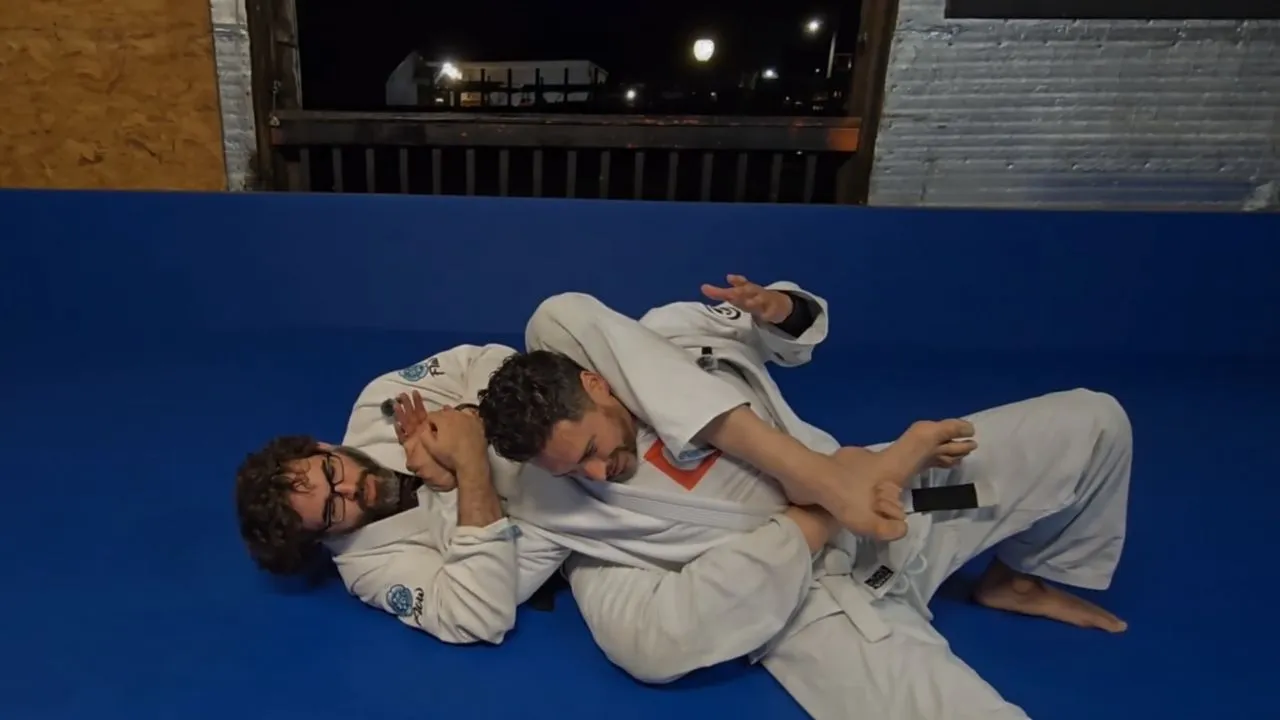
Yeah. Yeah. Awesome. Great. It's been, it's been an awesome evening here to visit you. Love the class. I got caught by, what was it called again? The shoulder. Oh, I don't really have a name for it. It's just kind of, here I'll show you on the camera real quick. So if I'm on your back right here, I like to climb to this higher position. Like when you're defending the choke really right here and you're hand fighting, I'm like, okay, all right, well the choke's probably not going to happen, right?
So I like to bring my foot on top if I can get my hamstring over the top of your shoulder, right? And then I want to come with this armbar style grip, right? Yep. So if they sit here, like most of the time I'm going to try to wrench you back and try to get the armbar, right? Yep. So most people, if I start back healing right here to wrench you backwards, you're going to want to lean forward, right? Yep. To not let that happen. So see how I'm stuck right here?
Yep. So now I modify my grip and I start pulling the arm flush to my body and feel how I let your elbows rock through that hole there. Yeah. And now it's against my body. So in my head, I'm like, here comes an armbar and I still haven't registered that this is effectively a Camaro position. Yeah. Or it's an Americana. Americana. So like I'm pulling it tight to my chest and it's become a part of my body. And now like, I really want your shoulder to rotate.
I want to isolate it. So ideally I'd like to bring my foot on top. It's not necessarily the best. You don't necessarily have to have this, but it does help for locking it in because I have two legs versus your shoulder now instead of just one leg versus your shoulder, but I can finish it with the one leg and a back heel. So what I'm just doing is just pushing your shoulder forward while I'm posturing back and keeping it isolated. Right. And what's great is that when I start to do this, guys will lean back because they don't want this pressure to happen.
And if you lean back, like I can't finish it. Yeah. So put your back on the mat. And as you lean back, I can still just step over and get the arm lock if I want to. Yeah. And then alternatively, if I can get this really clean over your shoulder and it's contingent on that, I have even more options because as you're noticing that I'm dealing with your arm and you're starting to kind of lay back and stuff, like to not let me have that angle, I can grab my shin and I can start working reverse triangle options.
So like that triangle options off of there. Yeah. So I really like that position and I'm going to be teaching a seminar on that on May the 31st at Cast Iron Jiu-Jitsu in Liberty, Missouri. My friend, Josh Littleton is going to have me up teaching a back to take seminar and some of the options I like to play off the back. And that's my favorite position. Hi, Josh. Good to see you soon, buddy. Yes, sir. Yes, sir. So Josh was the first place I ever visited.
I mentioned earlier. Josh actually took, I'm going to say it on camera. Josh actually started Gymdesk because we recommended him to it. Oh, yeah? Yeah. I told him he was having some of the same issues that we were doing. He was, we were talking back and forth and he's like, yeah, man, I'm still doing everything on paper. So I can't keep up with my students. Attendance and stuff like that. I was like, dude, just, I was like, I say Gymdesk is really inexpensive. If you have a few students that are paying members, you can afford Gymdesk, right?
Like it's not totally something where I, and I hate all these like services, like all these marketing services and stuff like that, where they're just like, oh, we'll get you such and such members. And however many months Gymdesk is not really for that. It's an operating system. But what I do is that you guys don't cater to people who are just have like really expensive gyms. Yeah. I really like that. Cause if you have a gym, you're paying your overhead and you have just a few students, you can afford Gymdesk.
You guys meet people where they're at. And as long as you guys keep doing that, like I'll always support y'all. Yeah. A hundred percent. Yeah. I think that's important. Luckily our founder is also Black Belt Jitsu. I don't know if you knew that. Yeah. I figured he would be a bad, by now. Yeah. So he, and he's in Japan today, but all the credit goes to him for developing the pricing. And now that I'm sitting in the seat, it's really important for me too. Cause I think about myself carrying a little blue box with all the, that was me.
I was doing the same thing. And I'm like, I want to be able to help my, the past version of myself and meeting people where they're at. That's really important. There's a lot of ways to grow revenue, jacking up prices and all that. Let's just get more people on the system. And yeah, so that's an important thing. It's part of our ethos. Yeah, man. And if you have a quality product, so what if it's inexpensive? You're, if you, if it's quality and it's fair, like it will grow because quality and fair is what people want.
That's what the average person wants. Nobody got into teaching martial arts because they want to make a shit ton of money. They got into it because they want to help people. And sometimes people that want to help people also need help. Yeah. So Jim Desk recognizes that and you have a support a hundred percent, man. Thank you very much. Thank you, man. It's been a pleasure. Thanks for having me. And you're probably back anytime, brother. Yeah. Let me know if you're in Buffalo. Oh yeah, for sure, dude. I don't know that I will be, but if I happen to be, I will contact you for sure. Sounds good, man. Thanks very much, buddy. Thanks, bro. Thanks, bro.