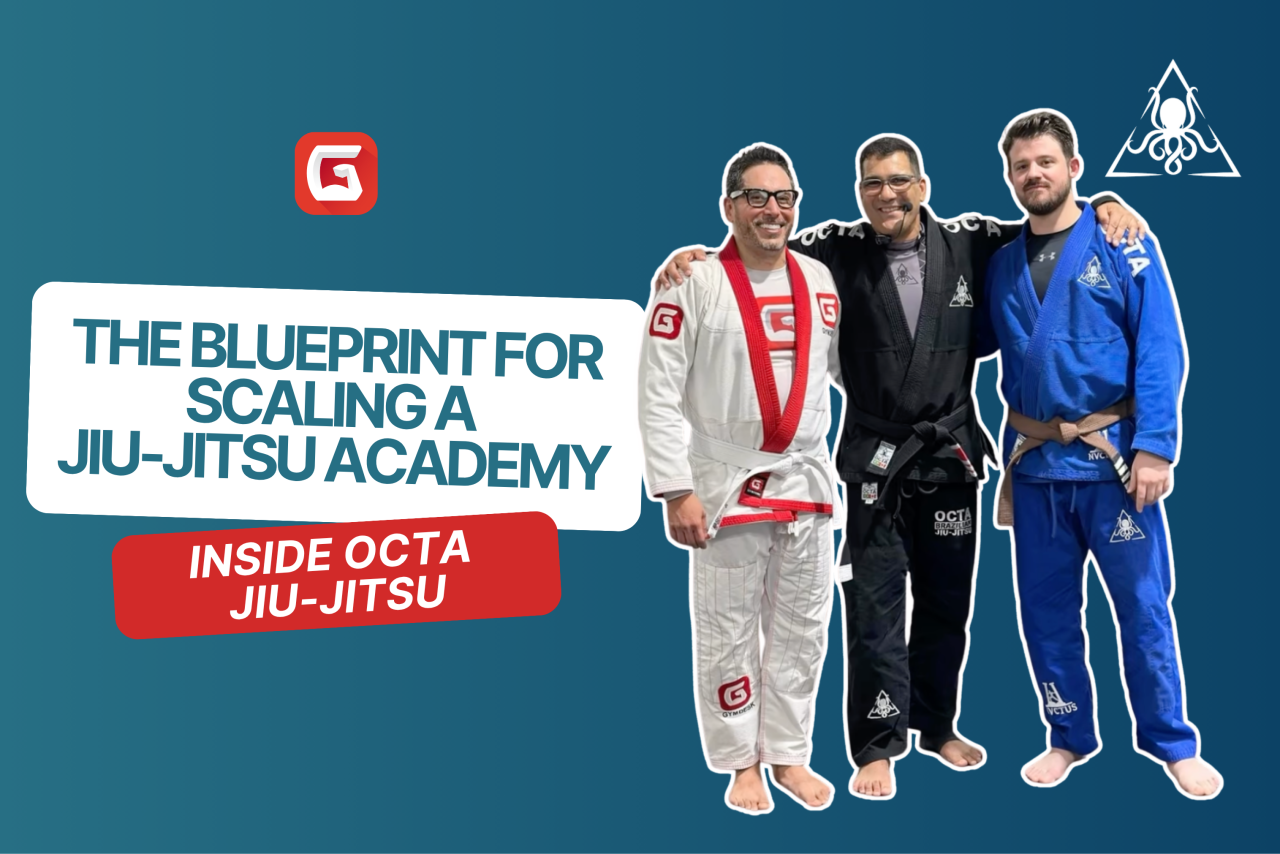
The Blueprint for Scaling a Jiu-Jitsu Academy | Inside OCTA Jiu-Jitsu

Starring
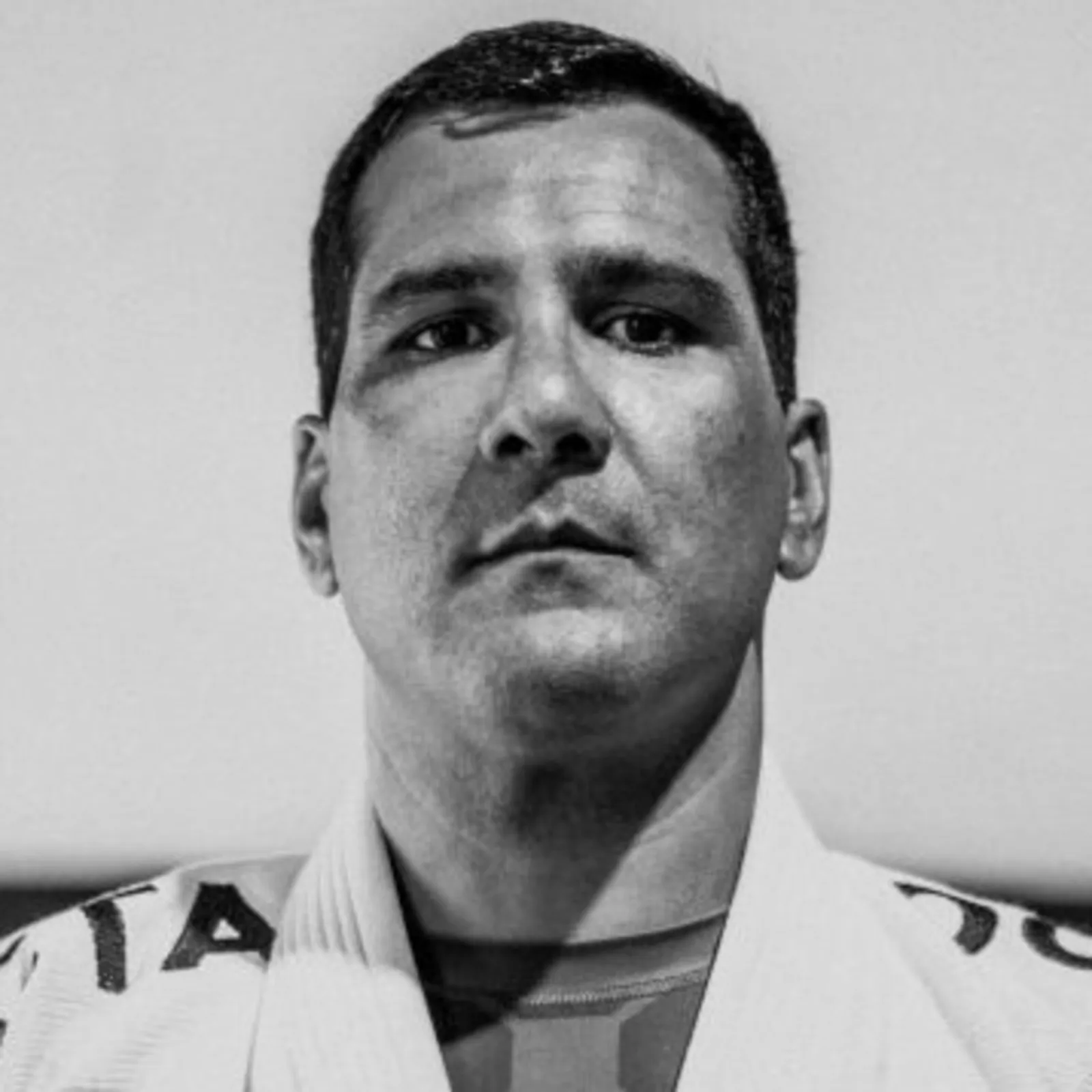
Born in Rio de Janeiro, Professor Costa began training in Judo, Capoeira, and Taekwondo at age six. After returning to Jiu-Jitsu in the early 2000s under Professor Flavius Virginio at De la Riva School, he helped develop a structured and progressive training system for students. Now based in Oakville, he is proud to share his passion for Brazilian Jiu-Jitsu with the Halton community.
About the Gym
OCTA Jiu Jitsu is a thriving martial arts academy based in Oakville, Canada, with multiple locations spanning the region. Led by a team of passionate instructors—including Luiz Cota, whose philosophy centers on building confidence and fostering community—they offer Jiu Jitsu classes for all ages and skill levels, from complete beginners to advanced practitioners.
Their programs are designed around families, providing a welcoming environment where adults and children can train together, learn self-defense, and develop life skills like discipline, resilience, and problem-solving. OCTA places a strong emphasis on inclusivity, quality instruction, and personal growth rather than just competition, allowing students to safely build both physical and mental strength.
📍220 Wyecroft Rd #41, Oakville, ON L6K 3V1, Canada
📞 647 822 4653
Summary
In this episode, Gymdesk CEO Alex Cuevas visits OCTA Jiu Jitsu headquarters in Oakville, Canada, and sits down with professor Luiz Costa, a seasoned instructor and co-founder of the rapidly expanding academy. The conversation dives into his inspiring journey from Rio de Janeiro, Brazil, to Canada, his lifelong passion for martial arts, and how OCTA grew from a side project to a five-location institution. Viewers are taken inside the gym as Alex experiences both fundamental and advanced jiu jitsu classes, gaining firsthand insight into the school’s welcoming, family-oriented atmosphere and its unique approach to building community through martial arts.
In this episode, you’ll learn how their philosophy sets them apart from traditional, competition-focused academies by emphasizing inclusivity and personal growth for students of all ages and backgrounds. Luiz Costa explains how their gym was intentionally designed to be accessible and supportive, nurturing children’s confidence, providing parents a comfortable community space, and ensuring everyone—from beginners to seasoned practitioners—feels valued. The episode also touches on the importance of strong role models, the positive impact of martial arts on youth development, and stories of real-life transformations experienced by OCTA students and their families.
This episode also highlights how OCTA Jiu Jitsu uses Gymdesk to seamlessly manage and scale its operations across multiple locations. Luiz Costa, who has a background in IT, discusses how Gymdesk’s lead management, automation, promotions, and franchise dashboard features support not just efficient business growth but also their mission of keeping student experience and quality at the forefront. He praises the platform’s user-friendly design, responsive support, and the role it’s played in helping them maintain a cohesive culture as it continues expanding and enriching the lives of its community members.
What They Told Us
Alex Cuevas brought the Gymdesk Originals camera to OCTA Jiu-Jitsu's headquarters in Oakville, Ontario, to sit down with founder and head coach Luiz Costa. Costa moved his family from Rio de Janeiro to Canada in 2013, spent more than a decade as an IT professional, and only after COVID turned a long-simmering side passion into a school—one he and his business partner, Greg Carrasco, have since grown into five locations. The conversation kept circling one question: how do you scale a jiu-jitsu academy without losing the thing that made it work?
Built to give something back
Costa didn't arrive in Canada with a business plan. He landed with a young family, a friend nearby, and, by his own account, broken English—and he says the community embraced him from day one. That feeling became the reason for the gym. He and Carrasco, both from business backgrounds, wanted to return something to the place that had taken them in, and what Costa had to give was jiu-jitsu.
"we always spoke about it, that we felt the need to give something back. And what I can offer to the community is the knowledge that I have."
—Luiz Costa, Founder and Head Coach, OCTA Jiu-Jitsu
A boom out of the gate
OCTA opened with roughly fifty students already signed up, because Carrasco—whom Costa calls a master at marketing—started advertising before the doors opened. The kids program is what turned a solid start into a surge. Costa traces the early trajectory in plain numbers.
"we opened already with 50 students. But it was a great boom. … As soon as we started with the kids program, it was a boom. In eight months, we were reaching 200 students."
—Luiz Costa, Founder and Head Coach, OCTA Jiu-Jitsu
Same experience, five addresses
As families drove in from the neighboring towns, Costa and Carrasco decided to bring OCTA to them, opening locations in a horseshoe around the Oakville headquarters. The promise was that every room would feel identical—same curriculum, same look, same feel. But Costa is blunt that replication has a ceiling, and that ceiling is people.
"It's the same logo, it's the same color, it's the same smell, it's the same walls, the same floor, the same curriculum. … So you can't expand and have the same experience unless you have people you can trust to deliver."
—Luiz Costa, Founder and Head Coach, OCTA Jiu-Jitsu
Hire for the mission, not the belt
When Costa weighs who can run another OCTA, technical skill is almost beside the point. Good jiu-jitsu, he notes, is everywhere—there are strong schools and strong professors all around him, and he happily sends prospective students to them when OCTA isn't the right fit. What he screens for first is whether a coach shares the gym's family-first mission.
"the first thing we want to know is if they're aligned with our mission. Because in fact, the hard skills, jiu-jitsu, you find it in a lot of different places."
—Luiz Costa, Founder and Head Coach, OCTA Jiu-Jitsu
The real cost of growth
Ask Costa what's hardest about running five schools, and he doesn't name payroll or real estate. He names the small things that quietly slip when a place gets big. His example is disarmingly specific: he still knows every member's name at his home location, where enrollment is nearing 420, and treats that as non-negotiable because it's how he tracks whether each person is actually making progress.
"the main challenge for us right now is to make sure we expand without losing quality. … I know everyone's name here. It's not a simple thing."
—Luiz Costa, Founder and Head Coach, OCTA Jiu-Jitsu
The lessons that made it work
Asked for the biggest lessons from building OCTA, Costa offered two. The first is patience—move at a fast pace, but never rush. The second is a posture he brings to every stakeholder meeting: the coaches he has recruited, some with decades more mat experience than his own, all have something to teach, and he would be foolish not to listen.
"The first one is that we don't need to rush. We can always go in a fast pace, but not rushing things. And the second biggest lesson is that everyone has something to bring. You learn from everyone."
—Luiz Costa, Founder and Head Coach, OCTA Jiu-Jitsu
Read the full transcript
Lightly edited for readability. Speaker labels are omitted because the source recording is not diarised; quotes attributed elsewhere on this page were verified against context.
Music playing Behind every gym, there's a story, a mission, a spark of passion that started it all. This is Gymdesk Originals. Real owners, real struggles, and the communities they've built from the ground up. What's up, everybody? I'm over here for another Gymdesk episode in Oakville, Canada. That's kind of near Toronto, here at OCTA Headquarters, a local jiujutsu school with multiple locations. Let's go check them out. All right, let's go inside and see if we can meet Professor Luis. Hello. Welcome to OCTA. Hi, Alex. How are you doing?
Pleasure. Pleasure. Thank you for having us. So, welcome to OCTA. This is our main, main room. Here you can see Gymdesk. This is Angelina, our Gymdesk master. Hi there. She's the one responding to all the leads and working with Gymdesk every day, so follow me. Here's our parents' area. So that's when they connect and wait for their kids. We also have a watching area over here. So most of the parents, they like watching, so we have a few benches for them to watch. The kids, you can walk with me.
And here we have a good 3,000 square feet on them. Oh, and you know watching, like, the pre-teens, pre-teens class, they have advanced and beginners working at the same time. Thank you. Thank you. I'm from Oakville, Canada. I'm about, what is it, about 30, 45 minutes from Toronto? Yeah, roughly 45 minutes. Awesome. So I'm here in OCTA headquarters in Oakville with Professor Luis. Had a great class today. I guess we had two classes going on at the same time, right? Yeah, we had fundamentals and advanced.
Yeah. And the fundamentals was on the right-hand side, on the left-hand side. So I decided to jump into the advanced class. Right. And I learned something new. And it's, you know, it's one of those things where, as I've been practicing for a while, the legs and doing this. And when you first did it, I remember like maybe 10%, right? But we kept drilling it. And at the end, I got it. I was so proud of myself. So what was the move called that we're doing today?
So we are doing setup guard. So we have a bunch of different variations that we've been working on. We've been working on for four weeks. That's the last week. Instead of that, yeah, there's going to be five weeks with this one that we've been working on different variations when you sit up and entangle yourself around the legs. So that's what we've been doing. Yeah. And so, and then we had, I loved that the beginning was the same for all three of the variations that we did.
So it's easy for me to remember the four things. Then depending on what the opponent would do, we would drill something new. So I found that very effective. So I really appreciate it. Thank you very much. I would love to know about you just to start off, like where are you from and, you know, how long you've been here and, you know, what was your journey to get here and that kind of thing. Yeah, sure. I'm from Rio, Brazil. I was born and raised in Rio.
When I was 33, we decided to move to Canada, the entire family. So Michael was six and me and my wife, we were early. We were cool for the thirties. So I left my job in Brazil. I come from an IT background and I decided to venture here. So we moved in 2013, July, 2013. And since then we've been living in Canada. Right now, the three of us, we are now citizens in Canada and both in Brazil and Canada. And it's been like a long 12 years that we're here in Canada.
Still loving it. Yeah. So you went to school, university, studied IT or software technology, something like that, right? Yes. But always have been doing martial arts. Since I was a kid. Yeah. Yeah. So I've been through judo, taekwondo, capoeira back in Brazil. I was dating in karate for a long time. I still practice every now and then. But I started both jiu-jitsu and karate back in the 90s, around 95, 96. And I stopped jiu-jitsu for a while and I stayed in karate. It was hard to keep both in school.
So karate was a little bit closer to home. It was convenient at the time. So I stayed in karate and I came back to jiu-jitsu in 2004. I never stopped after that. But yeah, I'm curious. I've never been to Brazil. Hopefully I get to go soon. But is karate, you know, as prevalent as jiu-jitsu or is it, you know, how does that breakdown look like? Oh, it used to be. Especially 70s, 80s, early 90s. Karate was the big thing. So we had a few kung fu, karate schools, taekwondo.
But striking was the big thing. Especially because of the movies, right? Yeah. Yeah. Yeah. Yeah. Yeah. Bruce Lee, Genko, Van Damme. But when we had the first UFC, things started changing in Brazil. Yeah. So jiu-jitsu was well known in Brazil for a long time. Even when I was young, I always knew someone who did jiu-jitsu. I was exposed to jiu-jitsu before, but it was not too popular. After UFC, it exploded. It became popular everywhere. And I'm sure there was some national pride. Yes. Right? So like, oh, let's rally around something that...
Yes. Yeah. We perfected something that was already amazing. Yeah. So it's a martial art that came from Japan, came to Brazil and had that touch of creativity that Brazilians like to put on every single thing. So we took things here and there and we made it, in fact, the Gracie family, right? They created something that went a little bit beyond what jiu-jitsu was at that time. And they created something that was for the weak, for the smaller, so everyone could do it. So now jiu-jitsu is for everyone.
So it doesn't matter how big you are, how strong you are. If you apply the proper technique, you can do jiu-jitsu. Yes. So we'll get into a little bit more on your background in a bit, but I'm curious, how did you choose Oakville or, you know, coming to this? Like you could have gone anywhere in the world perhaps. Yes. And were you choosing between different countries and you settled on Canada and then a specific area or how did that... Yeah. So my wife was born in Brazil, but she was raised in DC.
Okay. Close in Maryland, close to DC. And when we got married, her family, they moved back to US. And we were always talking about moving to US, but it was not my English at that time. It's not that it's perfect now, but it was even worse. And I didn't feel quite comfortable going there. So we had some friends here in Burlington. Close by. Yeah. And we came here to visit. We fell in love with the place. Canada is fantastic. It's everything the US has. And we decided to come to Canada.
So it was a little bit different from US at that time. It was right after the big crisis we had in 2009. So the market in the US was not quite there yet. And I was not working with Jiu Jitsu at all. I was working with IT. So the market here at that time seemed to be a little bit better. And we fell in love with the place. So we decided to migrate to Canada. So the original idea is I want to go to Canada and continue to be an IT professional.
Yes. And I was until 2024 last year. I was still working. Even in Europe and all the schools, I was still working. I left in October last year when I left my contract and I decided to focus on Jiu Jitsu. Okay. So maybe let's go back to the lineage in Jiu Jitsu. Where did you train in Rio and some of the lineage there? Yeah. Most of my life in Jiu Jitsu came from the De La Riva lineage. So I trained here and there before. But then I found my professor Flavis in Brazil.
He's a De La Riva student. And he came from Carlson Gracie, De La Riva and Flavis. So we are training in Ile do Verador. Ile is a neighborhood in Rio. So that's my lineage. So since then, I've been following that. Okay. And while you're in Brazil, you're training. And what belt did you leave Brazil? Brown belt. Okay. So you left there, brown belt. But you had a black belt in karate as well? Yes. I got my black belt in karate in 2006. Okay. And then at this point, right when you're leaving, were you mostly doing Jiu Jitsu or a combination of both?
No, I was doing a combination of both. My karate professor in Brazil was very old school. So the karate is slightly different in Brazil. A lot of striking. So I was still practicing. Even when I came here, I did it. But it comes to a point where the age comes, right? So getting hit all the time and getting punched and kicked, it's not exactly what I wanted. And I had to pick and choose. And Jiu Jitsu was already a big part of my life at that time.
And in Jiu Jitsu, I feel you can go a little bit extra both and beyond without getting hurt. So I decided to stick to Jiu Jitsu a little more. Still love karate, but I'm not practicing anymore. I'm just 100% focused on Jiu Jitsu. Awesome. Okay. So now you're here, you're doing IT, and suddenly the passion comes back and you want to get back into it. So I assume you stayed and you kind of did a little side project to start a school, right? Yes. Yes. Yes.
It started as a little project. In fact, after COVID, things were very different during COVID. And I always had that in the back of my mind, but it was never really a project. After COVID, I decided to do it. And I have my partner, Greg, so he cannot be here today. But we spoke about it, I think, in 2018. We spoke a little bit about opening a school, but I was not ready to do it. And I decided to do it. After COVID, I felt the need to do it.
So we sat together. I had a plan in place. We shook hands. He's my 55th partner on this. And he decided to put his life into this as well. And we started building up in 2022. And now, in the sky's the limit. Yeah. And your business partner, is he also a martial artist? Or he's mostly a business guy? No, he's a brown belt. He's about to get his black belt. He's been training since 2017. Very strong brown belt. He's very dedicated. But he's also a business guy.
So we both come from a business background. But we do have this in common. We love Jiu-Jitsu. So we decided to put this project and move forward with this. And it became a success. Yeah. Right. So it starts as a passion project. Yes. You're doing it on the side. It starts to grow and grow. And now you have five locations. Yes. We have five locations. That's an amazing story. So I'd love to unpack that. At some point, you say, well, if it gets this big, I can do this full time, right?
Yes. In fact, when we opened our third school, that was always the topic. We knew that at one point, one of us would have to focus, dedicate to it. And it was just a matter of deciding who would do that. And it was better for me at that time. I was coming from a long contract. And I decided not to renew the contract. And then we started this. So it was a natural progress. So it's leaving my job and dedicate to OCTA. I truly believe one day we will both be dedicated.
But right now, we don't feel the need. Yeah. I understood. Well, let's talk about OCTA for a second. Yes. Very unique. Yes. Logo. And what does it mean to you? I mean, obviously, there's an octopus there, right? But tell me how you guys decided on the name and the meaning behind it. Well, the name OCTA comes from Octavio. Octavio is Maeda's name. Maeda came from Brazil. He brought Jiu-Jitsu and he adopted that name, Octavio. So that came from Octavio. And my name is Luiz Octavio as well.
But that was just a nice coincidence. But I isolated that name, Octavio from Maeda. And the logo being an octopus is because I love this animal. So he's so resourceful, so smart, intelligent. Some people even say he's not from this planet, right? Yeah. So it's an interesting animal that has a lot to do with Jiu-Jitsu, with the entanglement, with the intelligence. It's an escapist. So I decided to invest on this. And when I sat with Greg, he loved the idea. So that's not the first logo that came after, right?
So it's the triangle. So you have mind, body, spirit. So the triangle is the symbol for Jiu-Jitsu. So we have a strong base. We have the balance on all the sides. And the octopus is coming from the front. And if you look underneath, you have the number eight. Ah. Right. So that is also the infinite. Yes. And in Asia, number eight is a lucky number. So that's why we adopt. And there's also a close guard. So there's a lot of... Yeah, there's a lot of meaning.
A lot of meaning. Yeah. So that's what it is. It's a cute logo, but with nasty eyes. Yeah. No, it looks kind of intimidating. You know, there's like an element of like... Like there's an alien element. There's an octopus element. And then there's like, oh man, these guys really study. Do you guys like specialize in the... What is it called? Octopus guard? Is that... Is that such a thing? No, no. No, no. But it's a very resource for us all. No, we are not specialized. Yeah.
We do have a lot of different flavors here. So you're going to have the opportunity to talk to my son. My son's a guard player. I'm not really a guard player, but I come from a school where a guard was really strong. The De La Riva guard came from De La Riva. Yeah. So we are... We like to be a school for everyone. So I don't really have a team for the school. So I try to navigate all the areas. But we have different instructors here.
They have their preference. That's why Octopus is so different because we do have plenty of instructors. Different black belts from different Octopus come here to teach every now and then. So we can have different flavors. So if you're a guard player, we'll have a structure here. We'll be a guard player as well. If you're more of a passer, we'll have another structure that is more focused on passing. And that's how we build our team. Yeah. And so today's class, like I said, was two sides. A lot of people here.
I don't know how many. Was it like 60, 70 people? Around 60. Yeah. A lot of... 60 something. But you're big here now, this school. Yes. Yeah. So a lot of students here and four other locations on top of that. But what were the early days like when you started as a passion project? What did you... How did you start? Do you have a tiny space or... We did have half of this space was beside here. We started with around 50 students. They won't. Because before we opened, we started advertising.
Okay. And my partner, Greg, he's a master. So when it comes to advertisement, marketing, he's a master. So he started advertising earlier. And we opened already with 50 students. But it was a great boom. It was... As soon as we started with the kids program, it was a boom. In eight months, we were reaching 200 students. Wow. That's great. It was very successful. So when you do... When you're doing the 50... Was that before you even opened the doors, right? Yeah. So were you doing some kind of like a program?
We grandfathered you in early... What do you call this? We had the Pioneer. Yeah. We called it the Pioneer Program. Yeah. We had the Pioneer Program. So everyone... When you come to OCTA, we guarantee the price you got when you came in. So we never raise the price. So everyone that got the Pioneer deal, we have a bunch of the Pioneers here. They still have the same deal. Oh, nice. Unless you break the contract and you come back later. If you stick to the contract, you will never have a price raised.
So that group had a deal from the beginning. Yeah. But we were able to get to 70 students when it shifts and it's top of the Pioneer. Oh, okay. So you wanted to do... You extend a little bit to let more people in and then at that point, you're like, "All right, cool. We're now working to raise the price or not raise the prices, but you can have a different price for new students." Yes. And OCTA started as a passion project, like you said. And so when I came to Canada 12 years ago, we were very welcome here, me and my family.
So we came without a job, without really knowing where to go. So we landed in OCTA because I had a friend around here and we felt embraced by the community. So I never felt like an outsider here. Since day one and I got here, even with my broken English and et cetera, I felt like embraced by the community. And I always had that in the back of my mind. So even with my partner came here 30 something years ago and he is the same. So he put his entire life here.
He's a very successful businessman. And we always spoke about it, that we felt the need to give something back. And what I can offer to the community is the knowledge that I have. So we started that in a way to give it back to the community. So we built everything in OCTA around families. We wanted this to be a family place. Jiu Jitsu can be very intimidating. So if you're coming to Jiu Jitsu, you've been there, I've been there. The first days, the first week, the first month is very intimidating.
And especially when you have a lot of higher belts, like going against each other, when you see from outside and say, "Oh, they're going to kill me." Yeah. So we try to do it in a different way, right? So if families, they can come, they will be welcome. We're going to introduce them to the program without exposing them to a lot of dangerous things. So we will alter them to the entire program. So they come from the introduction to beginners, to fundamentals, to advanced. And always with the family in mind.
So you come here, you're going to see your kids doing the same thing you're doing. And we have space for the family to watch. The parents are, it's not uncommon to see parents training and the kids playing on the mat outside. You saw it today, a bunch of kids playing here. Because that's the way we are. We built the place for the families. So that was the main goal when we opened up. Yeah. I was rolling earlier with a gentleman who explained to me that his son was right there.
And yeah, I think he was 16 years old, his son. And they're training in the same class. It's just so cool. I mean, I got an eight-year-old and I train with him. But he's eight, it's hard, you know. I can't really do stuff, do a lot of moves with him. But it's still really an amazing connection you can build with your children. And if you're providing a school where you're both able to train, it's a really cool thing. Yeah. I've been training with my son for more than 10 years.
And the bond, we've spoken about that before. The bond that you create with your kid, when you train together, you end up speaking the same language. Yeah. Right? So he sees me going through the same struggles. Right? Even when the kids look up to you, but they see that you're trying as hard as they're trying. They're going through the same trouble. You're overcoming the same situations. They end up creating more of a bond with you. And that was the secret sauce of my son. We always spoke the same language.
Now he's a professional athlete. He's probably killing me on the mats. Yeah. So he's in a different level now, but we still speak the same language. Right? Yeah. At home, the topic is always Jiu Jitsu. Yeah. Yeah. He's done really well lately, right? With competitions and all. Very proud. Yeah. I think a few weeks ago, he was in New York for a competition. New York. Yeah. For the pants. The pants. And purple belt, right? Purple belt. I got the gold. The gold. That's great. And the pants low gi.
Yeah. So as a dad, I mean, okay, I'll tell you one little quick story. Last week, my son in class got, I've been working with him to, cause I did some judo a long time ago. And, uh, the Ogoshi throw, right? This is very basic throw Ogoshi. And, um, he got it twice in class against the kid. And I, and he was very gentle about it too. So after he got it, he put him down, but he got twice and I felt so proud. I was like, oh man, just an emotional feeling.
Your son winning the gold. My goodness. What does that, how does that feel for you? Well, it's hard to describe. So when I'm with him in competitions, I'm always coaching, but it's hard to turn the key, right? So when you become the coach and you're no longer father, it's almost impossible. Every time I have someone else to coach him, I prefer that someone else coach him. So I can be the father. It is incredible. It is incredible. I see the amount of work he's putting on it and the discipline and the dedication.
So when you see the results, uh, I feel not only proud, but I also feel like it's a good feeling when he achieves something by himself. He's a sui young boy, 18 year old. So he's becoming an adult and he's achieving so much at such a young age. It's fantastic. Yeah. And I think only Jiu Jitsu can do something like that. And we can even go to the same tournament together. So this is priceless. Yeah. Yeah. Yeah. It keeps extending the, uh, the good times you can have with your children, right?
Yes. It's priceless. I guess I had a question about multiple locations. Uh, first question is at what point did you decide, okay, it's time to open a second location. Uh, maybe you can talk a little bit about that. Yeah. Yeah. So we, the focus at the beginning was the main location. So we, when we started, we never thought about hope anymore, but we saw the tremendous success we had in the beginning. And we had the opportunity to partner with different people to bring the same experience here to different neighborhoods.
So Oakville was bringing people from Vista Soda, from Burnington, from Utah. And we sat together one day and said, well, people coming from different neighborhoods to have that experience here. They trust us with their kids. They trust us with their families. Let's try to bring OCTA to their neighborhoods. So we try to bring OCTA to the neighborhoods around us. So if you see the five locations we have, they have this horseshoe shape. that is around OCTA headquarters. So that's what we try to do. We have one that is a little bit farther, but most of them, they are 20 minutes distance from each other.
So if you cannot come here, you can go to different locations. And we try to have the same experience everywhere. It's the same logo, it's the same color, it's the same smell, it's the same walls, the same floor, the same curriculum. So if you're teaching something here, you're teaching something, the same thing in Mississauga, the same thing in Milton. Of course, each professor has a different way to teach, but the thing is the same. So you can't expand and have the same experience unless you have people you can trust to deliver.
Yes. But you are so big, is that your secret? You grew to a point where you can then choose people to help you expand? Yeah, we do have a great group of people. And the first thing we want to know is if they're aligned with our mission. Because in fact, the hard skills, jiu-jitsu, you find it in a lot of different places. There are a lot of good schools around us, a lot of good professors. I know a bunch of them. They're all good. So I always tell people who want to train jiu-jitsu, they cannot come to OCTA.
I always send them to schools that I know because I prefer having people joining another school and having the benefit of training jiu-jitsu than not having this person at all anywhere. So if they cannot come to our school where we don't offer what they want, I send them to other schools. In terms of OCTA, what I'm looking for is someone aligned with our mission. And our mission is to bring jiu-jitsu to families. So if the person has the hard skills, so they are good in jiu-jitsu, they know how to teach, and they're aligned with our mission, this person is part of the team.
So your primary target, when you are focusing there, is it to influence basically the children to have a better life? And, you know, so maybe unpack that a little bit. Yes. So when I focus on families, I believe we have such a powerful tool that we are giving to people, right? I'm teaching people literally not only to defend themselves, but to be more confident, to be more outgoing, to face any pressure in life. So it doesn't matter if it's someone trying to hurt you, or if it's maybe a presentation that you have to do in front of 200 people, sometimes the pressure is the same.
So we're teaching people how to navigate through life. If I bring this, if I bring a kid here, and I can expand that to the entire family, even if I go through the kid first, and I start bringing the same knowledge, the same confidence, to the parents, to the grandparents, to the siblings. So that's what I try to do. And it's not only to bring more students in, it's to spread the benefits of Jiu-Jitsu. And it's not that I'm trying to build a coat or anything like that, but I believe that Jiu-Jitsu has so much to offer to anyone, regardless of age, gender, like where you live, so that I try to expand that to the entire family.
Yeah, and I think there are some schools that they neglect the children or the family thing, right? And they focus more on the competition or the adults. And it's just, it's a lot harder, I think, to go that route. It is. And not against, nothing against that. So I know some great competition teams and the focus is to build a competition team. We don't focus on that. I respect a lot who does. And in fact, I send people to other schools and they want to focus on competition.
Even my son's training in New Jersey with anybody else because I can only offer to a certain point to someone that wants to be a professional athlete. So whenever they reach that point and they're reaching escape velocity, right? So they're getting so good that they're beyond what I can offer. I send them to competition schools. This is not the focus at all. The focus at all is to build people, to build good people with good Jiu-Jitsu. with a way to protect themselves, to be more confident.
That's my main goal. So I would get people from four-year-olds to seven-year-olds. That's the range. I cannot expect that out of our 1,200 people, I'll have 1,200 athletes. Right. So it's not realistic. So my goal is to bring Jiu-Jitsu to more people and not focus on the niche. Yeah. We do have a competition team within our group, but it's not my focus. My focus is to bring Jiu-Jitsu to everyone. And of course, the competition is part of this. Yeah, and in the classes that you do with the children, are you talking about like core values or things like that with them?
Yes. Tell us a little bit about that. So I do have an influence from multiple places. So not only from my school, from De La Riva, from Flavius, but also from karate. And I also have a lot of influence from the Gracie family. So the Gracie University, what they do with their students, right? The way they frame a lot of books that are read from different people, from the Ribeiro brothers. So they have a great book about Jiu-Jitsu. And all of them, they connect the fact that this is a combat, combat sport.
It is a martial arts. There are two different things, right? So one is you have a rule set to respect. Martial arts, you're learning how to protect yourself, to defend yourself and your family. And you also have the philosophy behind it. I truly believe that someone that holds a black belt in Jiu-Jitsu is a role model. So it doesn't matter how good you are with your techniques or on the mat, if you're not a good person, if you don't have that philosophy and you cannot pass it along to your students or to the kids or even if you're not teaching at all but you're a role model on the mat, it's hard for you to say you're a real black belt.
So whenever we teach the kids here, we always have that component. But I'm not very strict with the kids, right? I was born and raised in martial arts and especially the Japanese ones they're very strict. Very militant, right? Yes. Here we believe that kids they can be kids on the mat. I allow them to be kids because if I'm too strict, I don't build the trust. If I don't build the trust, they block me. The moment the kid blocks you, they will block Jiu-Jitsu. And I'm not only losing a student, but I'm losing that person through Jiu-Jitsu forever.
And that's not what I want. So we are flexible enough to teach them respect, discipline, hard work, but allowing them to have fun in the process. Yeah. And that's my program is designed around it. So you have time to be serious on the mat and have time to have fun, be a little bit silly, play a little bit with your friends and that's working. So we have around 300 kids in this location alone. And a lot of these kids are training for four years together. Yeah.
And, you know, the class is pretty big for the kids, but even though you're not really driving, as you said, the strong, strong discipline, it still felt very organized. Yes. I didn't see kids really goofing off in there. No, no, the kids, they like routine, right? When they come in, everything in the beginning is a little bit chaotic because they're all beginners, but the moment you have a group that know what they're doing, whenever you have a new kid coming in, kids, they will, it's not that they comply, but they will follow the lead.
So they will see the other kids and they're, okay, let me copy, let me see what they're doing. So they see kids here, tiny kids, maybe six-year-old, like doing an amazing technique, coming on top of someone dominating someone that is stronger, bigger, these kids that come in and say, oh, they want to be like that kid. So if that kid is not goofing around, they're not goofing around. So if that kid is not disciplined, or maybe just laying down on the mats, they will copy. So when you have a big group and the kids that are here with me for three or four years, they have their routine, they come, they bow, they warm up, they start rolling.
So the kids they come in, they copy right away. Yeah, so you get a good base of kids that are role models. Yeah, that's great. Yeah, that makes a lot of sense. Earlier you said something around, you know, helping kids with their self-esteem, you know, with the programs, developing, you know, sort of better humans, right? and you've been doing this now for at least four years, right? Have you had some cool stories of seeing that transformation with kids? Yes, so when you have that amount of kids, you have all sorts of kids, right?
So they come from different backgrounds, some kids they're getting bullied at school, some kids they're very shy, some kids they have some challenges with attention, so I can see even little things like the way they fall and they protect themselves now, you see a lot of different improvements. I have kids who are bullied at school who are able to speak up for themselves without hurting anyone, just voicing what they want, right? So don't get close, don't touch me, don't play like this with me because they get more confident and if things go south, they can control.
I have another kid that is even one of my instructor's son. He got bullied at school and the guy was charging, so punching and his father showed me the footage. He was just controlling, took the back, put the guy down, controlled the seat belt, didn't throw a punch, they disengaged, the boy came over again, so trying to punch him, again protecting, body lock, putting on the floor, taking the back, controlling again until the teacher came. So he didn't get in trouble, the other boy got, but he didn't throw a punch, so he was out of trouble, he could control the situation, no one was killing him anymore, he was able to stand up for himself, that's because of jiu-jitsu.
even little things, one of my kids, he rides horses, and he fell from the horse, and he did a break fall, and the instructor said, oh, what did you learn that, because you didn't hit your head, and said, oh, from jiu-jitsu, so even little things here and there, the kids, they learn, and they apply it to their lives, kids, they learn fast, right, and they do that every day they come here, break falling, shrimping, rolling, so it became second nature, so as soon as he fell from the horse, break fall, and he didn't hurt himself, so I have a lot of little stories like that show that this is working.
Yeah, so both of those stories are, you know, my mind's spinning, thinking about, well, you know, I hope with all my training, I would react the same way this kid did, I mean, amazing to someone's attacking, and he just defused it, and did not try to hurt the kid again, and he let him go, and did it again, did it again, wow, and I have it on video, yeah, that, I mean, the dad must be just ecstatic about, yes, especially, and what we teach the kids here is,
it doesn't matter if you defend yourself or not, if you hurt someone, you end up in trouble, yeah, at school, and in life, so if you use excessive power to protect yourself, and you end up killing someone, or you end up hurting someone badly, they fall, they hit their head, it's on you're going to answer for that, so don't think that's because you're protecting yourself, or defending yourself, that you can go above and beyond and hurt someone bad, and they all understand what we're giving them,
it's not only a way to exercise the self-defense, but it's like a weapon, you become a weapon, you can hurt people badly if you want to, but they know they can go so far, but without hurting anyone, we can stop right before hurting someone, and we train that a lot here. Yeah, that makes a lot of sense, I think I was in Japan, and I was visiting customers out there as well, and I actually got, you know, Kodakon? Yeah. So I went there, that was an amazing experience, and so I trained judo many years ago for like two years with a bunch of black belts, and I was white belt, and I just every day falling and falling, so I've said that story a few times now, but I was expecting Kodakon to be a bunch of black belts, like just like when I was training in San Jose State, and it was all horrible belts, and I was like, oh man, it was like, forget it, I wasn't going to throw anybody,
it was just an amazing experience, but I was talking to the gentleman there, he's a customer of ours, he owns the school there, I'm a fight club, and he told me that if you get into a fight in Japan, and somebody punches you or whatever, and you punch him back, you get like three years in jail, and it's like, it's not like you can have a bar fight in the US, so to be able to instill the fuse and not attack or hurt somebody, it's a good training to be able to give somebody.
Yeah, that's what we teach the kids, so the main goal is to de-escalate, so a conflict happens, and simple things, like you have a bully coming to you and you make a fist, you're inviting someone to a fight, so if you open your hands and no, you're the one in trouble, stay away from me, you're de-escalating, so we start from ground zero, from the beginning, de-escalating, de-escalating, that's the main goal. Altercation, fights, they may end up that way, that's a point when you lose control, right, so you don't know the outcome, so you don't know what the other person will do.
Throwing punches, you don't know where it's going to land, the way it's going to land, and you don't know what's the other person's background, you don't know what kind of limitations they have, if they have any trouble, if they have any problems, any health issues that you're not aware of, you hit a punch, they go to the hospital, you're in trouble. So we teach the kids, it is powerful, you can break arms, you can choke people out, you can put them to sleep, but you can use it properly, right, you can get to a point when you have full control of someone, without throwing a punch, without hurting anyone, you de-escalate, wait until you get some help, and then you hand it to someone that can take that person away.
So if they apply this framework, and it works for them, it works for everyone, if they apply, they have the blueprint to make it work, without getting in trouble. That's great. And I like the horse story too, the idea of being able to apply concepts of jiu-jitsu in everyday life, just falling down better. It's fundamentals. Yeah. So what about, I mentioned earlier, I had restaurants, and I had like five or six restaurants that were active at the same time. It was so hard to bounce around.
It is. Right? What do you find the most difficult thing is, now that you guys have five locations? So when you have five locations, you end up having different flavors. Right? So I think the main challenge for us right now is to make sure we expand without losing quality. So we're expanding here in Oakville, I'm reaching 420 students. The other schools are all around 200 students each. So when you get to that point, it's very easy to lose track of the little things. I'll give you an example.
I know everyone's name here. It's not a simple thing. So you need to love what you do and be very invested to learn everyone's name and remember everyone's name, even the parents. this is one simple thing that I make sure we do. Everyone needs to know everyone's name because they're part of the family. I cannot call some of my family if I don't even know their names. So the simple things like their names is hard for me to remember. How can I remember what this person needs most?
How can I pay attention if they're making progress or not? So how can I help them to overcome their challenges, their roadblocks if I'm not paying attention or even to their names? So simple things like that is very important to us. And this is my main concern that we grow and we don't lose that. We don't lose quality. So we have processes in place to make sure the quality is there. The curriculum is one of them. We have meetings with the stakeholders often to see if we're on the same page.
We promote knowledge sharing so we have training here with the black belts to make sure we're training together so we know what each other is doing. We're always talking to each other to make sure we don't lose touch. So if we're not in touch all the time, we start drifting away. And I'm not saying that my way is the only way. So I talk to all of them. We have open minds. Every stakeholder, every coach brings things to the table. If we study together, if we feel that it makes more sense, we shift, we change our curriculum, we change our ways.
But as long as everyone is involved. So I will never go to a room and come up with something and say, now implement. And if they are not aligned, that's when they start drifting away. And we learn from each other. So in Burlington, we have my professor, he's six degrees, so he's been doing jiu-jitsu since 93. He has a lot more experience than I do. So he brings a lot to the table. I would be stupid if I don't listen to someone who has so much to bring.
And I think I have all the answers, right? Right. I would have in Milton, Professor Adam, he's been doing jiu-jitsu since 96. Professor Patrick in Miss Saga, Professor Vicente. Professor Vicente is a referee. So he's a referee for IBJF, high level referee. So he's been doing jiu-jitsu for quite a while. They all have things to bring to the table. If I don't listen to them, my brown belts here, they all have background in something else. And they've been doing jiu-jitsu for 10 years, 10 plus. If I don't open my mind and I don't learn from them and bring everyone to the table to decide what to do together, it's not going to work.
And so your professor is here? Was he already here? Yeah, we brought him from Brazil. Oh, wow. So at some point you're like, come join us. Yeah, he was in Abu Dhabi for 10 years and he expressed that he wanted to be part of us. So we shook hands and we brought him to Canada. He's now teaching in Burlington. Your that's great. Maybe I'll have to go visit him one time. Yes. Yeah. By all means, I think you should visit all the schools. Yeah, I would love to.
You're going to understand when I say we have the same environment with different flavors. We're going to see the school is the same, but this place has that guy. So he brings something different to this place. And when you bring everyone together, it's fantastic. It's like a big family. I can have different little families coming together as a big family. So we learn so much from that. So the biggest lesson you learned here at opening the school? Oh, yes, for sure. The first one is that we don't need to rush.
We can always go in a fast pace, but not rushing things. And the second biggest lesson is that everyone has something to bring. You learn from everyone. I have students here, they're white belts, fresh, they just started with me. These guys are lawyers, they're doctors, they're teachers, they had such a rich background. So I had CEOs here like you, and I'm not the master of anything. We're all sharing experience. I have something to provide, I have something that I'm teaching. Yes, I'm sharing my knowledge, but the most important lesson that I learned so far is that I'm learning from everyone all the time.
I have so many people that are white belts, but they can outsmart me in so many ways that they see a technique and they grab it like this, and it's not unusual to see someone that is very used to troubleshoot, IQ troubleshoot every day. So that's your role as a CEO, you get big problems to solve and solve them. If I present you, and Jiu-Jitsu is all about problem solving, I present your problem here, and your mind works in a way that you see things that I may not see, and you come to me as a white belt and you see something different, I'm going to learn from you.
So that was the main thing I'm exposed to so many people now doing the same thing here that I learn from everyone all the time. So I don't go home without learning one thing a day, at least. So I think that's the main thing that I learned so far. Yeah, just kind of being open to other people's life experiences and expertise. Yes, and respect everyone's background. Yeah. Because everyone, regardless of their age, their gender, where they come from, their background, they will bring something to the table, and you're going to learn something from that.
Do you do any community events, things like that? things for the outside gym to, you know, improve the area? Tell us a little bit about that. We do go to schools. Oh, you go to schools? Yeah. So every now and then we go to schools and present jiu-jitsu in schools. It's something that we do occasionally. So I don't really like to push out the throat, people's throat in the community, right? So we build something and we show people the power of jiu-jitsu. So we go to schools and we go to this fair.
and we go to showcase, talk to the students. We give away some months so they can train with us, they can see what jiu-jitsu is. I like going to schools because I think that's where my public is. The kids are in schools right now and I need to go there and show them there is something they can learn that can help you, help them in life. Not only with bullies, and I'm talking about simple things like thinking under pressure, right? Overcoming your challenges, so not being paralyzed when you have some pressure on you, troubleshooting.
So knowing that every single bad situation has a way out. So if you just calm down and think, right, and use what you learn in life. So those are the lessons that I think we build skills for life. And I believe the schools are the best way to start teaching people. Because the kids, they take it home. So if I'm a parent and my kid is starting jiu-jitsu, six, eight months, one year from now, I see a transformation. My kid is more confident. My kid is more focused.
Be sharp. Right? If it's thinking under pressure, troubleshooting more, I'll be interested in knowing what jiu-jitsu is. So if my kid makes such a good progress, maybe I should try as that. And for adults, when they come here and they discover that this is the closest thing to have to mindfulness, when you're here training jiu-jitsu, they don't have a boss, they don't have bills, they don't have problems, they get addicted. They understand the power of cleaning your mind and focusing on one thing for one, two hours and not thinking about anything else.
You recruit your system every day. That happens a lot. Yeah, I mean, for me, especially when there's a lot of things going on, I feel like, especially if I don't feel like going, for whatever reason, I was like, oh, I have so much, and then I go and I do it. It's like active meditation or something. Those are the things we need most. For those who don't feel like moon, those are the things you should come. Yeah. So you've been with us now, was it since you opened?
Yes. So you chose us? Almost four years. Yeah. So at some point you decided you need to have some software. Was it like right before you opened? Before I opened. Okay, so being an IT guy, you're like not messing around. You're going to go. So how did you find, at that point with martial arts on rails, right? Yes. How did you find us and how was that experience? Well, I Googled. To be honest, I Googled, I saw a bunch of reviews and I compared the features that you guys brought and I tested.
So when I tested at that time, I think we were just becoming Gymdesk, if I'm not wrong. And I come from an IT background. And the tool that you have was extremely user-friendly. Even for me, I was looking for something that I could use on daily basis without getting burned by that. Because I know how hard it is for you to use a software that is cranky or you have bugs here and there. You're not really smooth to use. I knew this would be a tool that I would use every day.
So one and two that was easy to use and powerful to deliver what I wanted. So when I found Gymdesk, I saw you were a good CRM, you had email capabilities, you had some sort of automation. The billing process was very smooth, very simple to implement and you had integrations. So I put everything on the table and I said, okay, you offer everything I want and you're simple to use. It will not be crazy building my script is to use it too. So I decided to adopt and my first student registered.
We played a Gymdesk one month and a half before we opened. So Gymdesk was generating revenue before we opened. It was a smooth. I work with Square and Gymdesk. It's perfect. Great feedback. Thank you for that. And thank you for being a customer and trusting us with that. We take that very seriously and in terms of the things that you use on a daily basis because I would call you like a power user especially with your background right? What are the features that you're mostly using in the product?
I use everything every day. So I of course because I have five schools I have the franchising dashboard. That's quite important so we're always going there. But the first our main feature is the leads. It's the whole marketing piece. So handling the leads in Gymdesk is very seamless. So it's very smooth. So what we use most right now is the lead, the whole marketing piece. And the marketing automation piece and all that? Yes. And especially handling the leads. So receiving them, getting contact, sending invitations to join.
So that's what we use most. For me, I spend a lot of time on the dashboards and I see the numbers and I see the programs, how they're working. And I also manage my day-to-day here on the mats. So for that I use the members, the attendants, the promotions. I love the promotion features that you have. So when I can see who is getting close to promotion, I can see the skills they're getting, the attendance. So I have right away, I have a way to generate the report and see exactly who is due for striped or belts.
So I use pretty much everything every day. Oh, and the emails. Recently, we came up with the ability to send a blast email to all the locations. That saved my life because it makes it so easy now. So I use the Gymdesk every day. Yeah, and today we were, at least I was here witness for, was it five people got stripes today? Yeah, we had some stripes today. We had three intro classes here on the second floor. When we were having classes there, I had my intro class here with a different coach.
We had three intro classes that came through the system and I had five stripes that I got the report from Gymdesk. And how's been your interactions with us just from a support perspective? Amazing. Amazing. Now I have someone that is a direct line, so Shannon is my point of contact there. But even before that, every time I sent an email or even with the chat, the response was very, very fast. So I never had issues with the support at Gymdesk. Everything I always need, I always, always, the response was positive.
was always fast. Yeah. Right? So I don't remember having trouble with Gymdesk. Even the new features that I was requesting, and I know how hard it is for you to implement new features, but every time I bring something to the table, it gets taken into consideration and I see a few weeks, months later, the future is coming because I believe everyone needs that. So I'm pleased with the way you've been helping us with your business. I don't see Gymdesk as a supplier, I see Gymdesk more as a partner in this journey.
Great, well, we're honored. Thank you. Thank you for the trust on that. Great, well, we have your son here, he's going to jump in, you want to come on in to the show. So Michael now has been training consistently for the last how many years? So Michael has been training since he was six. Okay. But consistently, I would say for the last three, four years, three years, that's when he really decided to do it. Yeah. For three years, he's been training hard. And so Michael is 18 now, yeah?
18. So six years old, 18, 12 years is like gone by like a flash, right? So how's it been to watch your son sort of grow up on the mat? It's amazing. So he was always around, even when I was doing karate, he was like two or three. Yeah. He was always around. So he grew up seeing him doing that. So I was always on the beat. Yeah. So he was very familiar with the environment and very, very, um, he was comfortable. He was very comfortable around everyone.
But seeing the man he's becoming, the way he's turning into an athlete is beyond any expectations. I was never, even in my wildest dreams, I expected him to be an athlete. Yeah. Yeah. And earlier we were talking about, you know, in competition, yes, you are dual role, right? You're the father and the coach. And so how do you, how do you balance those things? I don't. Usually I mess it up. So I'm glad when I have the meows around because they can take over the coach role and making it more of a father.
But this is something that I have to be on top of this thing all the time. because if I allow my heart to speak freely, I'll be the dad. So I'll be like, going on the side, just screaming. As a coach, I have to be different. I have to see things beyond what I want to happen, but I have to help come on the mat. so I think he can speak better about it, but I've been struggling with playing both roles and I'm on the side.
It's not easy. And what's been some of your proudest moments watching him? Well, I would say the world was, I was very proud, but not only the moment that he won, but the whole process, right? So he was cutting weight, he was training hard, training when he was sick, when he was hurt, when he didn't want to train. I think the proudest moment is when I see him going and training, going above and beyond, even if he has everything saying no, right? When he has the mental strength to put the work, even when the world is going against him, that's when I feel the proudest, yeah, that he's going after something that he really wants regardless of the way he feels.
So that's for an 18-year-old is very mature. Right, yeah, like the persistence, the consistency, the dedication, and the progress. Yes. Yeah, all those things, and I get that because you want, you know, as fathers, like I want my son to work hard because, you know, achieving big things in life, internal goals, whatever, that's an important thing. and so, man, that must be just the best feeling, man. It is fantastic. It is fantastic. The moment he didn't want, it was like flushing all these emotions at the same time, right?
It was a mix. But seeing him struggling with cutting weight and training every day, training hard for hours, and going on diets, and sleeping when everyone is partying, so this is what makes me really proud. So, Michael, I talked to your father about his background, and he's been doing karate, capoeira, and jiu-jitsu, and you have memories as a kid, probably seeing him doing all these things, right? So, what are some of your earlier memories of your father? Do you see him more doing jiu-jitsu or karate or like all of it, and just trying to understand what's going on as a kid?
Yeah, so back in Brazil, I mostly saw my dad doing karate. Okay, so I would always see the sparring and how it is, because in karate, especially back in Brazil, it was more like a fight, like more hands-on and stuff like that. So, ever since being young, ever since I was like maybe six years old, five years old, I've always been fascinated with not fighting, but like the art of self defense, you know what I mean? I've just been fascinated with that type of sport. So, ever since young, I think I got that from my dad, that love for martial arts, I got that from my dad.
Yeah, so you, because you were exposed and your father obviously has had so many, how did you decide, oh, no, out of all other things, jiu-jitsu is for me? Okay, it's a long story, but I'll try to shorten it up. What I saw was when I got to that age that I was able to understand what was happening, I saw the difference between a bunch of martial arts that my dad did from jiu-jitsu was jiu-jitsu people that were younger, or not younger, sorry, people that were smaller were able to still thrive.
People that were smaller were still able to fight against that person that was bigger, kind of like David and Goliath situation. Sure. I saw that in jiu-jitsu. Unlike some sports like karate or boxing, I'm not saying that people that are smaller are necessarily going to lose in that sport, but people that were bigger had much more of an advantage. In jiu-jitsu, they still do, but it's not the same way. In jiu-jitsu, it's more using your head, more using your body than using strength, more using body mechanics, more using leverage, I'd say it's more math, it's more like chess, jiu-jitsu.
Yeah. So, I'm heavier than I normally am. I weigh 190 pounds and I've been going to the gym a lot. And this is not a brag, I've been working on trying to get 225 pounds, you know, the two plates, right? and I was able to bench press that 10 times. So, my point is, I'm pretty strong, but you caught me in whatever wrist thing that you did and I could not pull my arm out. What was the thing that you caught me in? A handcuff. Okay, a handcuff.
Shout out to Professor Byron for teaching me that. Yeah. Handcuff. Handcuff. And it was, I was, I asked you like, hey, am I supposed to tap here? I don't want to hurt my wrist, but it was locked, man. And for all my strength, I could not get it out. So, I was very impressed because I'm like 190, man, compared to like, how much do you weigh? 135 this morning. So, way heavier than you and I could not get my hand out. So, shout out to you.
Yes, for sure, you're obviously coming off a great win. You were at the Pants in New York. What town was it again? It was New York. In New York. It was New York. I don't know. Somewhere south-ish, right? It was like, not quite the city. I can't remember the name of the town. But you competed there and for a purple belt, you won. Yes. That's awesome. So, tell us about, I mean, you obviously did a lot of work to prepare for that, but what is it that even motivated you to want to do that and compete at that high level?
So, my dream is to be a world champion on the black belt. So, I've had that dream since I was 15 years old. And me and my dad came up with a plan for me to achieve that. And winning that tournament fell in the plan. So, I needed to win that tournament to see how my skill level was, how my training was doing. if what I was doing was working. And the results of that tournament showed that my training was paying off. So, it's a step in your project to achieve what you're trying to do.
And it's like you check the box and now you keep going, you keep ascending. So, I think you've talked about or you've written, I think you had some social media posts about health for you, right? and I'd love to kind of unpack that a little bit. I think that's pretty inspirational that you're competing at that high level and what you do and then you're dealing with some challenges. Can you talk a little bit about that? Yeah, I'm type 1 diabetic. I have a lot of problems because of that.
Because of due to jiu-jitsu and of being an athlete, the biggest problem is when I have to cut weight. So, the challenges I face is, for example, type 1 diabetes, sometimes my blood sugar goes low. So, there's not enough glucose in my blood and I can get a bit of side effects from that. I can pass out, I start having headaches, my hands start shaking, I lose a lot of energy, and that happens a couple of times in tournaments. Or the opposite happens when my blood sugar goes high.
Basically, the same thing. I start, my hands start shaking, I lose a bunch of energy. So, there has been lots of times where I have to fight in those conditions, like in the Pans Nogi. The first match all the way until the end, my blood sugar was 30. And that's bad. I didn't even tell my parents about that. That's bad. So, I'm not an expert. Is it too low or too high? That's way too high. Okay, so that means you have too much sugar. Okay, and that means the insulin, because it's not working properly, can't get it out of your blood.
Is that right? Exactly. They can't get out of my blood so that I don't have any energy. And the last time I was 30, I was in a hospital. So, I had to fight under conditions like that. Holy moly. Yeah. Yeah. Or the opposite can happen. When I was cutting for the world championships, my blood sugar would go low. So, then I would be forced to eat something and go out of my diet. And then I would gain weight. So, because of that, I had to do a diet more restricted with less calories and stuff like that.
Wow. That's another layer of obstacle for you to manage. Besides just competing, you're competing against this. Myself. Yeah. Wow. Yeah. Okay. And so, but how did you know that you were at 30? Did you test yourself? Yeah, I tested myself. Oh, man. So now you're not feeling great when you're competing. At this particular, so it's too high. Yeah. Was it for the whole time you were fighting? Yeah. Every match? Yeah. It wouldn't go lower. Wow. Especially because it had to do with my adrenaline as well.
Because I was also nervous, right? So, because of that, usually under those conditions, my blood sugar rises. Yeah. So, even if I give insulin, usually it takes a lot for it to go down. If I give too much, then it, goes all the way low. Yeah. And then that's when the other side effects come in. Yeah. Afterward, as a father, did you, when you found out, were you, what were you thinking? Were you upset? Proud? I think you found out about it now. Oh, you just found out about it right now?
I'm not surprised. Oh, my goodness. It's not the first time. Yeah. Yeah. So, he needs to manage it properly. Of course, that has long-term effects. But even at the moment, the sugar cannot be too high, right? So, that can have an impact on his performance right away. Yeah. So, it's hard to manage, but he's been managed for almost 10 years now, and he does it very well. Yeah. So, I trust him a lot with the management. Got it. Okay. All right. So, you're standing there with the medal.
Or, you know, I think I saw a photo of you with it, right? And, how are you feeling at that moment? I am feeling amazing, but nervous also at the same time. Because after this tournament, comes the next. Understand? After this tournament, comes the even bigger one. So, I was feeling amazing. I was feeling so happy, but I was also feeling nervous because I knew that the next training, the training that I'm going to have to do is going to be even worse, even more intense.
So, what is next for you? What is the next tournament? Or, where is it? I'm going to be fighting in Las Vegas for the world's number. December time. Oh, this is like around the corner. Wow. Okay, so, you're getting ready to compete. It's going to be no Gi in Vegas. And that's checking this box that you're as part of your plan. And then whatever happens there, what are you doing after that? Do you have another plan? Like, okay, after we conquer there? I mean, that's like a big deal, that one, right?
So, what's after that? my plan would be for next year would be to fight these six tournaments is going to be the Europeans who's going to be in Europe, the Pan Americans, the Brazilians, Brazileros, in Brazil, the Worlds, again, for Gi, all of them are going to be for Gi, the Asia, which is in Japan, and the Jiu-Jitsu Con, which is in Orlando, right? Jiu-Jitsu Con is in Orlando, in Vegas. So, those are the main tournaments that you're going to lock in on? Yes. And those are all going to be for Gi.
Okay. So, the rest of the year is going to be no Gi, and then next year is going to be all Gi. If you caught up your training on any given week, are you doing 50-50 Gi no Gi or 80% Gi? I'd say 90%. For right now? Yeah. Right now it would be 90% no Gi and 10% Gi. Oh, wow. Okay. So, you're already training no Gi most of the time. Yeah. Got it. How does your father influence what you do here in terms of coaching and that kind of thing?
Do you leverage him the most as a coach or you try to think of him as dad and you try to go to other people that are in here, other black belts, that kind of thing? It's different for me because I feel my dad does the job of being both very well. He knows when to be a dad and he knows when to be a coach. I think the biggest lesson that I learned on and off the mats from my dad is first the way he teaches.
The way my dad teaches, I feel like it's very methodical. He uses a lot of logic behind his teaching, which I feel like I like that. I might not be like a logical person, but I feel like I can understand more when it comes to logic instead of when it comes to jiu-jitsu. The way that he puts something that is not logic, that is physical to something that is more, I don't know, more logic behind. Yeah, yeah. The way that he combines both of them just helps me understand more.
So I always, whenever I'm teaching, I always try to teach the same way he does. Now when it comes to jiu-jitsu, like training and the sport in general, so my athlete life, let's say, there's a saying that he would always tell me, which is do something the first time, I'm trying to translate it in Portuguese, but do something the first time, so you don't have to do the second time. Do it right. Do it right. Do it right the first time, so you don't have to do it a second time.
Can you say it in Portuguese for us? Okay. So do it right the first time, so you don't have to do it a second. Yeah. So do it right. Do it like you want to do it the first time, so you don't have to do it again. Are you saying? Yep. Yep. That's probably the biggest quote that I learned from my dad. Yeah. The one that lives rent-free in my head. You hear that quite often in your head. So you're, I mean, I think it's, you know, it's not every day that you have to deal with something like, you know, diabetes and you're still performing, you know, training all the time and you're performing at a super high level and even when you're there, have to deal with that.
So like, what's your message for athletes that are struggling with whatever health thing that they might be going through? I would say exactly what my dad would say. Do it right. Try to take care of yourself. Of course, try to find that balance. But you have to remember when it comes to being an athlete, there is no balance. It's either you're an athlete or you're not. It's either you're prepared to make sacrifices or you're not because somebody's going to make the sacrifices. It's either you or somebody else.
So you need to be prepared to make those sacrifices. That's what I think is being an athlete. Now, whenever I'm training, I'm more thinking about the training than anything else. I can have I'm in college. I can have a test. I can have a quiz. I can have some personal problems in my life. But when I'm training, everything else is off. The only thing that I'm focused on is training. That goes for everything. That goes for my diabetes. That goes for my college. That goes for everything.
Training comes first. Everything else is second. Yeah. And I trained when I was young, too. And I remember not going out on a Friday night because I had to go to class on Saturday morning. You know, so there's elements of things you aren't doing as an 18-year-old that maybe others are. So there's a sacrifice element too as well, right? Where you're dedicated to what you're doing. You ever think about that and think, oh, I'd rather go out and do that kind of stuff? I'm going to be honest.
Okay, I'm going to be honest. Okay. No, because since I started doing this from a young age, I never really had the experience of doing it. It's not like I got to do it and then I stopped. I never did it in the first place. So for me, it didn't feel like I was missing anything because I never did it. So I didn't have anything to miss. You understand? Yep. I never had anything to miss. For me, it just feels normal. And I'm curious, as a, I guess, 14-year-old, your father opens up the first gym and you start seeing what he's doing because obviously you've seen him train before and all of a sudden there's two gyms and three and four and five.
How does that feel for you as a son to see your father, you know, building this amazing business with multiple locations? It feels amazing. I'm super happy for him. Yeah, I'm super, I'm super happy for him, especially because he keeps on growing and it just showed that he could do it. I feel like a lot of people didn't believe that he could do it, but the fact that he's doing it and is successful at what he's doing, makes me happy. It makes me happy that he's happy.
Let's talk about your, you know, your training or I don't know if you want to use fight camp, you know, as you're preparing for the next battle. You've been training here for a while and we were talking, I was talking to your father earlier about sort of the whole purpose here isn't necessarily to create, you know, competitors. However, there is a community of competitors within the school. It's not primary purpose around that. so you started training in other places now, right? To help that. Can you tell us about that and how you've found wherever you're going and how that works?
So the reason I am training at other places isn't because what I don't get what I want here. This place is amazing for all types of people. This place is amazing for competitors, for people that don't want to compete, for people that are just doing it for a hobby. This place has everything here. The reason I left was because there's these two competitors that I've been watching ever since I was a kid. Ever since I was nine years old, I've known these competitors. and I had the opportunity to go train with them and learn how they did it, how they achieved what they did.
So the experience to be able to see somebody do what you want or somebody like I had the experience to train with Neymar, if you think about it, because these guys, the highest achievement you can get in Jiu-Jitsu, they achieved it multiple times. It would be like if you were in soccer and you had the opportunity to go train with Neymar or go train with Messi. I would say other sports, but I don't know other professional athletes, but it's kind of like that. I had the opportunity to go train with my Neymar or my Messi.
Yeah. And so who are you training with? The Miyao brothers, Paulo Miyao and João Miyao in New Jersey. Yeah. Cool. And did you know them before or did you just reach out and tell them? How did you even meet them? So my aunt, she lives in the US and what happens is she lives here, we live here. They live in the middle. Every time we go to my aunt's house driving, we always hit by their school. We never knew we hit by their school. But one time we saw on Instagram that they were open and it was the same time that we were there.
We were stopping by, we were passing by them. So we visited them and they were welcome. It's very hard. It's very hard for regular people to be able to train with their name or their message. And that's exactly what happened. Like my heroes, my dad is one of my heroes as well, but one of my heroes, I had the opportunity to train with them. Your idols, right? Yeah, my idols. I had the opportunity to train with them. So that's what happened. how do you say? Yeah, they embraced you.
They welcomed you with open arms. Yeah, they were very welcoming when we went there. The first time he even had a private class with Paulo and they were like very open, right? So he was 16 at that time. They were very open explaining everything and welcoming him. And it's hard for you to not only talking to your heroes, it's already hard for you to talk to your heroes and your idols, but training with them, having the opportunity to be there with them on daily basis. So he decided to move there for a few months to prepare for the worlds.
And then he won and we decided to extend his stay. Now he's in between. So he goes there, spends three, four weeks there, comes back, spends three, four weeks here. And he's studying. So every time we have a competition, big competition, he spends a few weeks there, competes, and comes back. So it's a good opportunity for him to be exposed to different ways. Oh, wow. So you're doing that still right now? Yep. Oh, so you're, I guess you're flying there. Are you driving or flying there?
Flying. Okay. And what's the airport you're flying to? In the Bishop. In the Bishop. To New Work. Okay, got it. All right. Well, you know, given, you know, your experience in the sport, I'm just curious, where do you see this going? Do you see it becoming more and more sport? I'm talking about jiu-jitsu in general? Because it's growing like crazy, right? Do you think it'll grow more around sport or more like self-defense? Like, what direction do you see? I feel like if it grew more towards self-defense, then, no, no, let me reframe what I'm saying.
I feel like it's going to grow more towards sport. I feel like it's going to go towards sport. Like, there's a lot of athletes that are doing amazing jobs right now growing our sport. So, I feel like it's going to go towards sport. I think so, too. It's like, I almost feel like, hopefully you don't have to use the martial art aspect of it to, like, really hurt something. We're talking earlier about self-defense and all that. But I love it for the sport part, just to keep me healthy.
I'm almost 50 now, so it's getting up there. But being able to roll around and stuff, I was so gassed today. I just had no energy because I was sick last week. Basically, I didn't do anything last week. And then this week, I'm just like, where's my air? Hopefully next week, I'll be back to normal. But I think that's the thing that will get your accountants and your lawyers and all that come in here. They're not going to ever want to go to battle, but they want the sport aspect to it.
So I'm not a clairvoyant or anything like that to predict where it's going to go, but it feels like that's the direction because it's like everywhere. it's really cool to see this. Schools popping up everywhere and all that, raising the vibe and getting more jiu-jitsu out there. So let's talk a little bit more about the plans for OCTA, five locations now. What's the future? What do you guys think in the next two to five years? So we're going to continue expanding. So we believe that we have a good thing here that we would like to introduce to more people.
So there is to continue expanding. Of course, we need to find the right people to run the other schools. We also have to be careful about not going beyond our limits, right? So not stretching ourselves, spreading ourselves too thin. But we want to continue growing. So I think we have something magical here, something special that we've been building in the past four years. We don't want to stop, right? So if you're around the area, if you're around Halton, make sure you check your location because we may end up opening a school close to you.
Yeah, so keep expanding and then keep going. Our goal is to bring Jiu-Jitsu to more families, more people. That's all we want. That's great. Awesome. Well, thank you again for multiple reasons for having me today and inviting me over. for being a customer for so many years and for the amazing class. I appreciate it. Thanks for coming. So the doors are open. Anytime you're in town, please come and visit us. I want to invite you to visit the other schools whenever you're around. Go to the other octas.
You're going to see the same vibe, the same message, the same spirit. So we're going to be surprised. Yeah, well, this is kicking off the Toronto tour here. Yes. first time and I'm sure we'll be back because I'm not too far. It took me like an hour and 45 minutes to get here. Not too far. And if you're in New York and New Jersey, go and check them. Yeah, for sure. I'll have to follow you on Instagram and we'll see if it will roll again. All right.
Well, thank you very much. Appreciate it. Thank you, sir. Thank you. Hello, guys. This is Luiz Costa. I'm the head coach here at Oakville. Oakville. So we want to invite you and your family to come and join us. So if you're around Oakville, Mississauga, Burlington, Milton, or Kitchener, check us out. So if you're interested in bringing jiu-jitsu into your life, giving your kids a powerful tool to fight anything and everything in life, bring them to jiu-jitsu. You're not going to regret. Wrapped up a great interview here at OCTA in Oakville and had a great class. Great day.