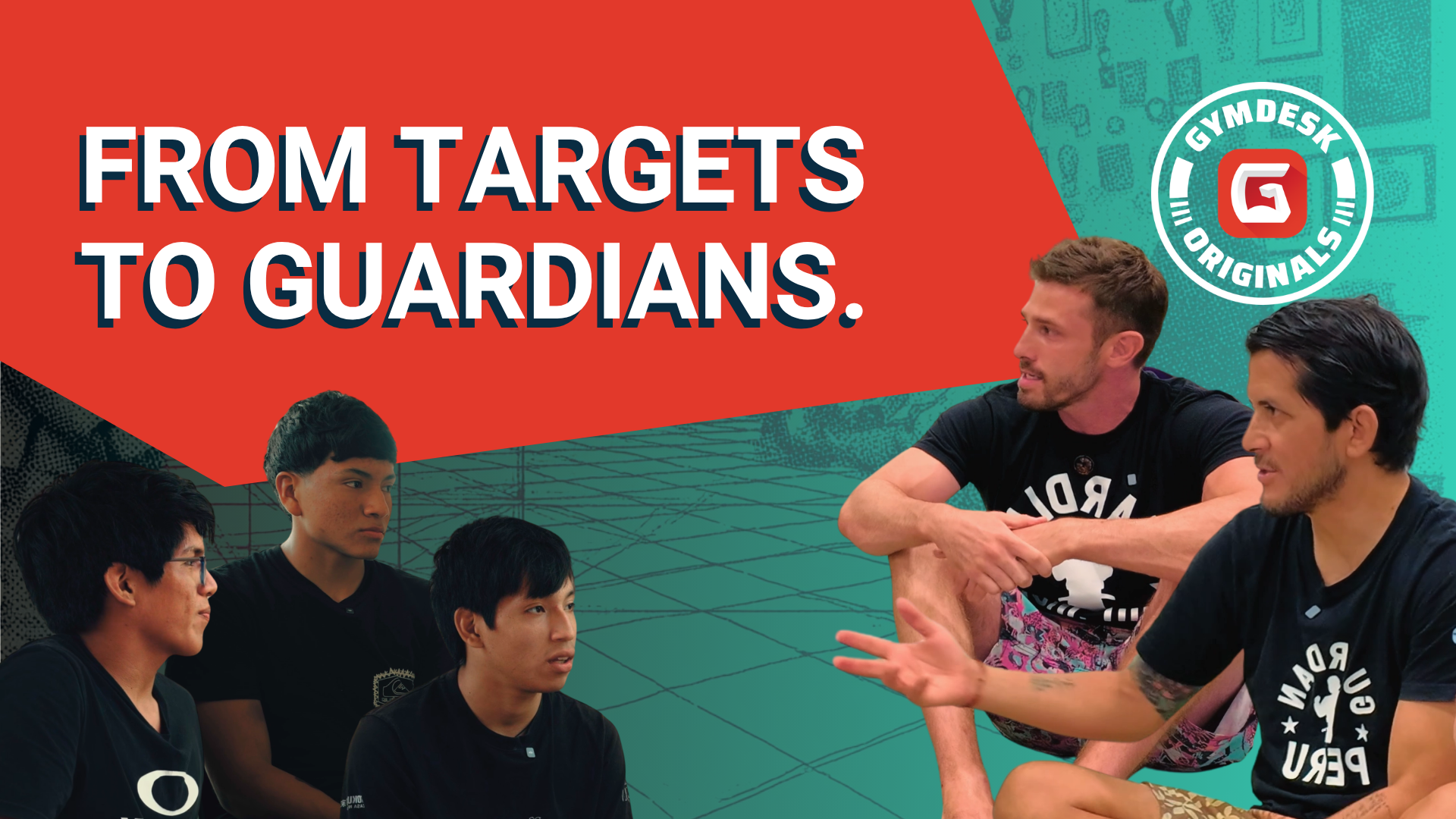
How a Google Maps Search Led Marty Herrick to Open Adayama Jiu Jitsu

Starring
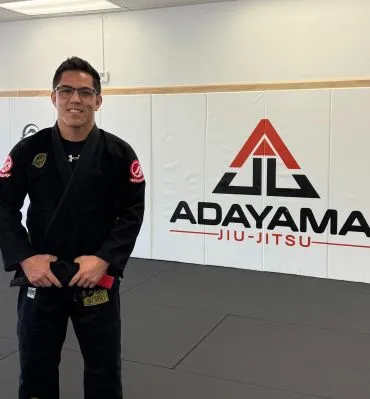
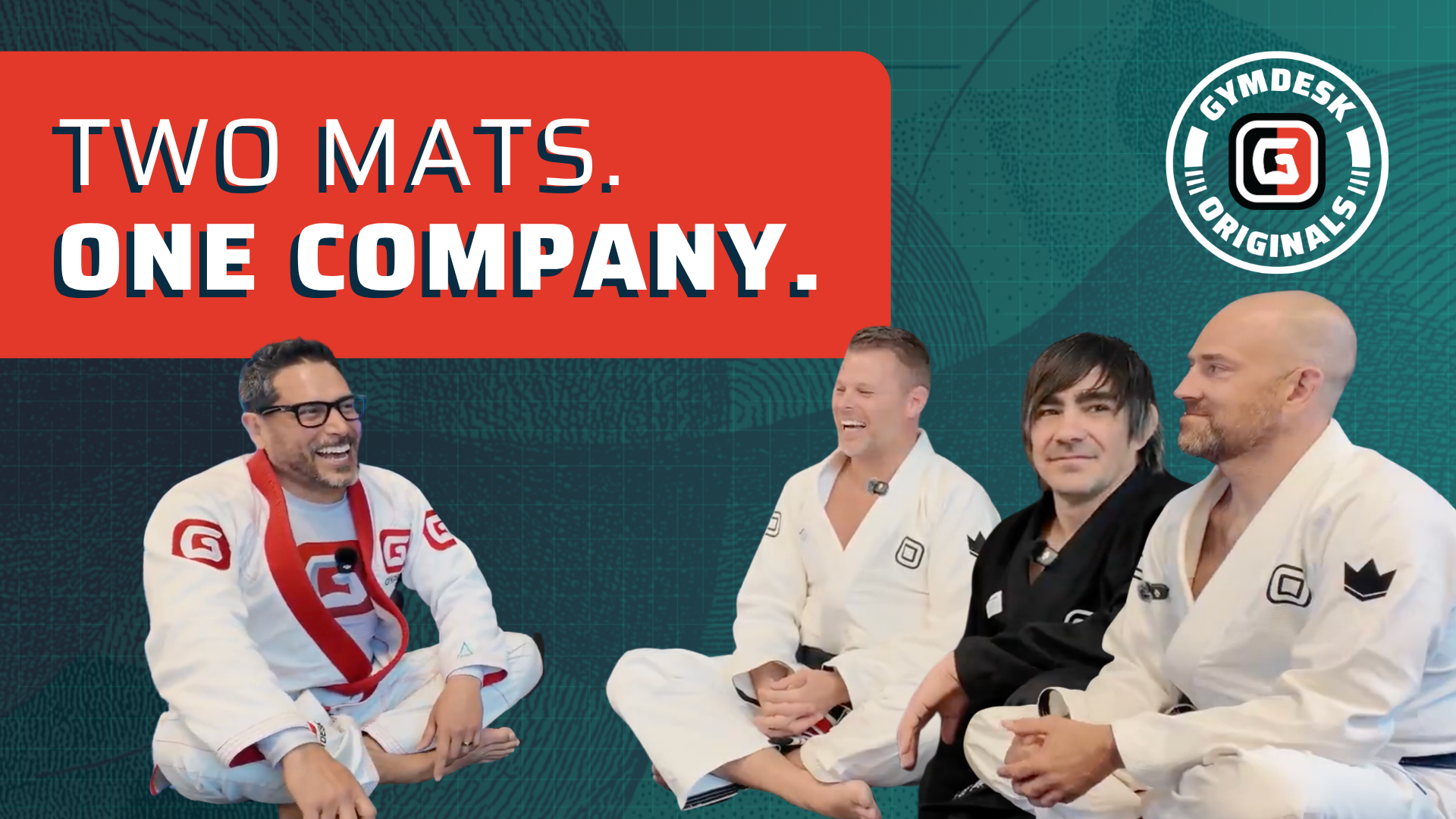
Professor Marty Herrick is a black belt with over 15 years of BJJ experience who started training in 2009 at BJJ Unlimited on Miramar Road in San Diego. Born and raised in San Diego to an Irish-American Navy father and an Asian mother, Marty studied Communications in college and built a career in fintech before opening Adayama in 2025. He runs the gym while working full-time, teaching kids and adult fundamentals classes. A former kung fu student as a kid, Marty competed four times at white belt and brings hard-won lessons about pacing and injury prevention to his coaching.
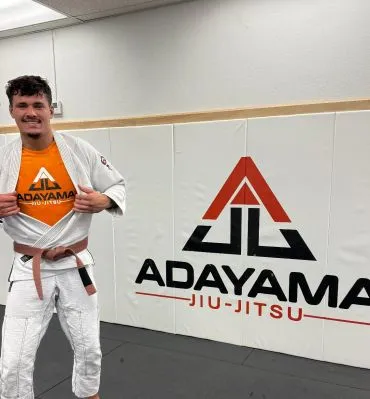
Rogerio Leite is a brown belt and accomplished competitor with multiple IBJJF double gold finishes at Pans, Europeans, and Worlds in 2024 and 2025. He teaches early morning gi and no-gi sessions, kids no-gi, and co-teaches advanced classes with Maria Alencar. Known for a dynamic, detail-oriented instructional style, Rogerio emphasizes discipline and creativity on the mats.
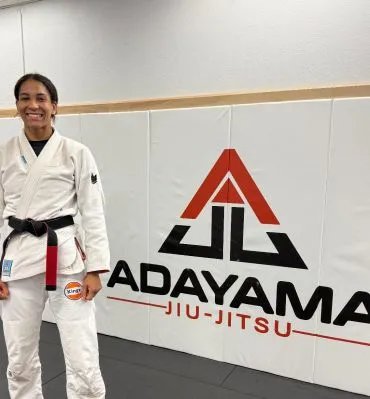
Maria Joia da Silva—known as Maria Alencar or Little Mary—is a black belt from Ceará in northeastern Brazil with multiple IBJJF double gold finishes at Pans, Europeans, and Worlds. She co-teaches advanced gi and no-gi classes with Rogerio Leite and leads the Friday night women's BJJ session. In the episode, she describes Adayama as feeling like home—"like Brazil, the same energy"—and shares her perspective on teaching in a second language and the transformative power of jiu jitsu.
About the Gym
Adayama Jiu Jitsu is a Brazilian Jiu Jitsu academy located at 2656 Jamacha Road, Suite 104, in El Cajon, California. Founded in 2025 by Martin and Ellen Herrick, the academy offers kids and adult programs in both gi and no-gi, with over 1,000 square feet of Fuji mats.
Adayama's class schedule runs from early morning (5:30 AM gi/no-gi) through evening sessions, with a dedicated women's no-gi class on Friday nights and kids programs in the afternoon. The gym offers a 7-day free trial and month-to-month memberships with no long-term contracts. The instructor team includes Maria Alencar (black belt, specializing in advanced gi, no-gi, and women's classes), Rogerio Leite (advanced programs), Aaron Bagley (a retired Santee firefighter who runs the lunch class), and Chase (Atos-trained with competitive experience).
The gym sits in a strip next to a Dairy Queen, near baseball fields—a location Marty chose deliberately for the foot traffic from kids and parents in the area.
📍 2656 Jamacha Road, Suite 104, El Cajon, CA 92019
📞 (858) 353-4140
Summary
Adayama Jiu Jitsu is a Brazilian Jiu Jitsu academy located at 2656 Jamacha Road, Suite 104, in El Cajon, California. Founded in 2025 by Martin and Ellen Herrick, the academy offers kids and adult programs in both gi and no-gi, with over 1,000 square feet of Fuji mats.
Adayama's class schedule runs from early morning (5:30 AM gi/no-gi) through evening sessions, with a dedicated women's no-gi class on Friday nights and kids programs in the afternoon. The gym offers a 7-day free trial and month-to-month memberships with no long-term contracts. The instructor team includes Maria Alencar (black belt, specializing in advanced gi, no-gi, and women's classes), Rogerio Leite (advanced programs), Aaron Bagley (a retired Santee firefighter who runs the lunch class), and Chase (Atos-trained with competitive experience).
The gym sits in a strip next to a Dairy Queen, near baseball fields—a location Marty chose deliberately for the foot traffic from kids and parents in the area.
What They Told Us
Alex Cuevas visited Adayama Jiu-Jitsu in El Cajon, on the inland edge of San Diego, where Marty Herrick opened his first school roughly ten months earlier. Herrick still works a full-time job in fintech; the gym is the dream he chased after a plan to run a jiu-jitsu program in Kansas City fell apart. Across the conversation he keeps circling the same idea—that a school is really its community, and that the person across from you on the mat is the whole point.
Where the name came from
The name came before almost anything else. Herrick's father was an Irish-American often deployed with the Navy, and his mother, who is Asian, worked long hours, so neighbors in their apartment complex helped raise him. He wanted a name that carried both his San Diego roots and that Asian side, and landed on Adayama—a Japanese rendering of Mount Ada, the street he grew up on. For him the name and the value are the same thing.
"I always tell our students here, the most important person in the room is your partner. You've got to take care of each other."
—Marty Herrick, Owner, Adayama Jiu-Jitsu
Pump the brakes
Herrick found jiu-jitsu in 2009 at a small San Diego school, paid a year up front, and fell for it hard—training twice a day, competing four times, and collecting injuries that slowed his climb to purple belt. A torn oblique still lingers when he stretches in the morning. Now 43, he passes the lesson he learned the hard way to eager white belts who won't listen.
"So I always tell everybody here like, Hey, be patient, try to slow it down. Train three, four days a week is great. That's a lot in jujitsu."
—Marty Herrick, Owner, Adayama Jiu-Jitsu
A gap on the map
A university job in Kansas City had promised Herrick his own campus jiu-jitsu program, but it collapsed and he came home discouraged, sure the universe was telling him to stay in his lane. Months later a former instructor tipped him off to a location. The first spot didn't fit, but that night Herrick sat down and studied the map himself.
"I sat down at my desk and I Googled jujitsu in San Diego. And I looked at all the pins dropped for all the schools and I found this pocket and I was like, what, why is there nothing there?"
—Marty Herrick, Owner, Adayama Jiu-Jitsu
The nap that woke him up
The building he found had sat vacant almost five years—bare concrete, no drywall in places, yellow paint—an old Taekwondo and karate space nobody else had claimed. Signing a five-year lease with a personal guarantee, the kind where they take your house if the school fails, terrified him. He tells people about the day it caught up with him.
"There was a day that I was taking a nap before we opened and I had a dream that like some nightmare that I had ruined us financially. And I woke up screaming, what have I done in the middle of the day?"
—Marty Herrick, Owner, Adayama Jiu-Jitsu
Advice for the next owner
Ten months in, with classes filling and a Tuesday-night adult session pushing 35 or 40 people, Herrick has thoughts for anyone opening their own gym. Forgive your own mistakes, he says—you'll make plenty. And be deliberate about who you let shape the culture, because the wrong additions take a long time to dig out from under.
"If you're going to bring people in, be sure about those people that you bring in. Don't do it out of desperation."
—Marty Herrick, Owner, Adayama Jiu-Jitsu
The people help me
Herrick's coaches echo the family theme he keeps returning to. Maria Alencar—known around the gym as "little Mary"—has trained for a decade and is teaching for the first time at Adayama. Nervous about her English when she arrived, she found the room warm instead, and describes teaching there as a two-way exchange rather than a one-way job.
"So I'm trying to help the people here, but the people help me."
—Maria Alencar, Coach, Adayama Jiu-Jitsu
Read the full transcript
Lightly edited for readability. Speaker labels are omitted because the source recording is not diarised; quotes attributed elsewhere on this page were verified against context.
Music by Ben Thede Behind every gym, there's a story, a mission, a spark of passion that started it all. This is Gymdesk Originals. Real owners, real struggles, and the communities they've built from the ground up. All right, we made it to Adayama, and Neo, are you excited about jumping in the class? I sure am. All right, we're going to go over there and check them out. Let's go. Hello, Professor. Good. Apologies for the delay. Oh, sorry. I don't know what's happening. Yeah. Yeah, likewise. How's it going, my son, Neo?
Nice to meet you, buddy. Hi, I'm Neo. I'm playing at Adayama Jiu-Jitsu today, and I'm super excited. I'm so excited. All right, the kids' class is happening right now, and it's packed. There's the younger kids are doing it now, and then there's another class right after this. But it's amazing to see the energy. I just had to pop outside real quick and just mention that it's so cool. Let's go take a look real quick. All right, Neo. You made it through two classes back-to-back. Today's champion over here at Adayama Jiu-Jitsu in El Cajon, San Diego.
How are you feeling, buddy? Feeling pretty good. Did you feel like you were going to be able to make it through the second class? I felt like, oh, I didn't know there was going to be a second class, and I was thinking I might just jump out, but I made it through it. Good job, buddy. And you're also jet-lagged a little bit from being in New York and coming to California, so I'll give you a lot of props for that. Good job, bud. Yeah, thank you.
Good job, bud. All right, everybody. Welcome to another episode, season two of Gymdesk Originals, and I made it. I'm here at Adayama Jiu-Jitsu in El Cajon, which is Rancho San Diego. Rancho San Diego, so just a little bit inland away from the water. Yeah, about 25 minutes. 25 minutes, unless there's a ladder on the freeway. It'll take you about an hour. And there's a lot of that stuff. I've seen a couch. I've seen painting supplies. I've seen a lot of stuff on the freeways. Yeah, there's a lot.
Thankfully, we got here safely, so we're excited to check out the class. Yeah, this is amazing. It's incredible to have you guys here. Yeah, thank you. Thank you so much for inviting us over. It's amazing, yeah. Yeah, grateful for that. Yeah, likewise. Thank you. And so we've got a lot going on today. My son is here. He'll be joining us. That's awesome. We'll be in on the class at half o'clock, I think. I want to get your feedback on that. Yeah. And then I'll be in at, I think there's a 615 geek class.
615, yeah. Yep, so really looking forward to that. Let's get started. Yeah. Maybe we'll just start with the name. Yeah. What does Arayama mean? So Arayama is a really cool story. When we were looking to open up the school, we wanted to do something that was unique to us. We didn't just want one of those fight type of name schools that was out there. And so I am from San Diego. My father is an American, Irish guy, green-eyed, freckle-faced Irish guy. My mother is Asian, grew up in San Diego.
I wanted to have some kind of infusion of Asian and San Diego in the name to kind of represent who we are. So with the help of ChatGPT, I was looking at the area that I grew up in, and I grew up on a street that was named Mount Ada. And so I asked ChatGPT, how do you say this in Japanese? And it's Arayama. Yeah. Yama is mountain, right? Or hill or something? Yeah, exactly. So that felt perfect. I walked into my wife's craft room at home, and I said, hey, what do you think of Arayama?
And she said, I actually like that. And she asked me how I came up with it. And I told her. And, you know, it harkens back to, you know, growing up and this little apartment complex that we lived in and this great community that we had. My father was often deployed. He was in the Navy. My mother was often working, and we had all these great neighbors that I could walk over to their house, and they would let me in and fix a plate of food for me and take care of us and things like that.
So it felt really natural. It has the Asian component to it, which was important to Ellen and I. My wife is also Asian. It has San Diego. It has our roots in it. And so that's how we came up with it. The community that took care of us was really important because I always tell our students here, the most important person in the room is your partner. You've got to take care of each other. And so it just felt right. Everything just landed in the right place.
Yeah, that's awesome. Yeah. Yeah, really, really cool to kind of connect everything. Almost get back to the community from where you're from, right? Yeah, yeah, exactly. And so father was in the Navy, you said? And when he would be deployed, does that mean you would leave with them or you just hang back and dad's away for- Dad's gone for six months, nine months at a time. Mom's taking care of us, working. And yeah, so the community really had to step in and it takes a village, as they say.
Yeah. Let's talk about your martial arts journey. Yeah. When did you get into any martial arts at any point and maybe into your jiu-jitsu career? Yeah, so as a little kid, I did some Kung Fu, I think from like the age of 11 to 13-ish. I got into Kung Fu, which was, you know, like the sashes and swords and the staffs and all that stuff, which I loved. I thought was great. But my father was stationed somewhere else. And so we moved and I lost access to that and shortly started high school.
And, you know, in high school, I played sports, football and track and those things. And that consumed my time. Mm-hmm. After high school, went to college and then, you know, started my career and moved to the East Coast. Came back, I gained 60 pounds after living on the East Coast for five years. So meet all my friends back here in San Diego. Everybody's jacked and ripped in their mid-20s, right? And I'm like, man, wow, I need to get myself back in shape. So I started working out with a neighbor of mine.
He was a retired Navy SEAL. And he said, you know, I'm, and this guy was just like 200% mad. He had like fallen out of a helicopter, broken 150 bones in his body, like rehabbed himself, like, you know, just all the crazy things that make you admire somebody. And he started getting into jujitsu and he was like, Marty, you know, I think this is something that you would probably get into. You should go check this out. And it just so happened that my coworker, his brother, was opening a school within a few months, which was BJJ Unlimited on Miramar Road.
So before Legion, before Alliance, we're on Miramar Road. Those schools are what everybody knows about in San Diego. There was a little school called BJJ Unlimited. I was there before the grand opening, tried a class, everybody beat me up. I paid a year in advance and that was 2009. So going on 17 years ago. Wow. Yeah. How was that first year? It was incredible. I received my blue belt after 12, 13 months. And I was there like most white belts, you know, that fall in love with it.
I couldn't get enough of it. I was there like twice a day when, when we were on vacation or when I had days off from work, whatever classes were available, I was there. Just absolutely loved it. Now, knowing in retrospect, I always tell the students that come in here who, who have the same thing happen to them, pump the brakes. Yeah. Because it, when I received my blue belt, I started having some speed bumps because of all the injuries that had accumulated during white belt. And that ended up slowing me down on my way to purple belt.
So I always tell everybody here like, Hey, um, you know, be patient, try to slow it down. Train, you know, three, four days a week is great. That's a lot in jujitsu. Um, if you do more than that, you're kind of pushing your body to a place where, you know, there's injuries that are on the horizon, especially if you're over like the age of 35. Um, I always tell everybody, I know you love it. I know it's great. It's a great time. It's great camaraderie. It's all this great people that you're hanging out with, uh, but take care of your body.
No one ever listens, but you know, you have to say it. Yeah. And I think that's a solid, uh, plan, solid advice. Like I have recently got back into jujitsu and I'll say within like the last two years. And, um, that's been kind of the thing for me doing about every other day, like maybe twice a week and then open mat or something on a weekend. That seems to be perfect. I have like ratcheted up a little bit and then I feel messed up for like three or four weeks, but I'm older now, man.
I'm almost 50. So it's even, oh, you look great, man. Good for you. Thank you. Nice. So it's, but it's, you know, it, uh, it takes longer to recover. Yeah. And, uh, I think, uh, I think this is really good advice for someone who's kind of getting started in jujitsu, even though you want to do it more. Yeah. You know, what are some of the things that maybe, um, that caught you? Like what your blue belt now, and you said you got your speed bump. What was it like elbow, shoulder, knee, man, lower back, I had a bunch of lower back issues.
Um, at a tournament, I had torn my oblique really bad tear. Um, I was at, I was fighting super early in the morning. It was in December and it was just really cold in the gymnasium. I didn't warm myself up and I felt this pinch and I was like, oh, I must have like a cramped ball. I was developing, went out and fought the guy locked in an arm bar. I went to stack them. And when I went to stack them, I just felt it rip.
It was the most painful injury I think I've ever had. And jujitsu was a tear in that muscle and how long it took me to come back. So I just lower back, uh, shoulders, man, shoulders were destroyed, elbows destroyed. Uh, I had that big oblique injury. Um, yeah. And that was all in white belt. Oh my God. It was all in white belt. Yeah. I think at white belt, I competed four different times. Um, the bug had just gotten me, I didn't do well. Um, I didn't, I didn't do well.
I think I got one second place out of the four, uh, tournaments, but yeah, I, like I said, man, I just dove in head first and loved it. And, um, you know, I was in my late twenties. So still in a place where like I could, uh, sustain that, but I still feel, you know, sometimes I wake up in the morning and I stretch and I feel that oblique tear. Yeah. Um, it still lingers with me. I'm 43 now. So, uh, that's why I pace yourself, you know, that's why I tell time, white belts.
Yeah. Don't rush it myself included. Yeah. It's a marathon. It's not a sprint. Trust me. Yeah. So, um, then let's go back to maybe around that age. So what you went to school here in San Diego, right? Yep. Okay. What'd you study? Communications. Communications. Yeah. Um, and then my understanding is you had an opportunity to go to Kansas city or you were in Kansas city and you had a job opportunity there. Well, that was actually very recently. That was in 2024. Um, and essentially I had been recruited to join a university as the vice president of enrollment for the university.
Um, and part of the package for me to go out there was that they were going to let me, I knew the president very well. Uh, he knew that I was very passionate about jujitsu and he said, Hey, if you come out here, I'll let you run your own jujitsu program on the campus. Wow. I'll have every freshman that comes in and take your program as like a self-defense course to help you kick off. And you use our wrestling room as your school. Um, and you know, I'm from San Diego and I'm thinking to myself, you know, how do I get started in San Diego?
One of the most expensive, you know, real estate, housing, business markets that you could be in. And I had this huge offer made to me to go out there. Um, and so that was what really kicked it off. I said, you know, I talked to my wife and said, Hey, how do you feel about this? She said, you need to run your own school. You know, I'm a hundred percent behind you. Uh, so we got the house ready to be an Airbnb, started working on that.
I flew out to Kansas city, started working on it. Unfortunately, that massively imploded on me, which I don't know if we have time to, uh, to go into, but, uh, it didn't work out. That's the short of it. Came back to San Diego, um, head, you know, tail tucked between my legs and, uh, kind of felt like the universe had given me a good hard check. Like you're not ready for this. Uh, but I was wrong. Um, there's a few months later, my instructor at outliers jujitsu called me and said, Hey, do you still want to open a school?
Cause I found there's a location that you might, uh, that you might be interested in. And that led to all of this. Wow. And so where you lived at the time when you got that phone call relative to this spot. 20 minutes away. Okay. 20 minutes away. Yeah. So it's not like crazy far away or anything like that. And, um, when you got this call, what did it do for you? Given where you might've been there, tail between the legs or whatever, or does it like an emotional uplifting opportunity or were you like consciously optimistic?
Or, you know, at the time I was kind of like, Hey, you know, I think the world and the universe kind of sent me a message that, you know, we shouldn't, I shouldn't try this. Um, I should kind of stay in my lane and, you know, I'm, I work in, uh, FinTech now. And that's what I do. And I should probably just stick with that. But, you know, we took the invitation. We drove down to, it's not this location. We drove down to take a look at the location.
Uh, Ellen, my wife and I were like, no, this is not really for us. And we came in that night. It was like 9 PM at night. I walked in, I sat down at my desk and I Googled jujitsu in San Diego. And I looked at all the pins dropped for all the schools and I found this pocket and I was like, what, why is there nothing there? It seems so strange because San Diego is like the, one of the meccas of jujitsu in the U S, you know?
Um, and then I said, no, that's kind of weird. And then I Googled retail space for lease in that pocket. And I found this spot and the location, the advertisement was terrible for it. Um, but I messaged them and said, Hey, I want to open a jujitsu school only because I wanted to hear what it takes to lease and like go through the process. They got back to me and said, yeah, it used to be a karate school. Why don't you come down and take a look?
Wow. And I said, this used to be already martial arts. Yeah. This was a type of, apparently according to my students who are locals, they told me that like three different times, this was a Taekwondo karate school while they were growing up as kids. And so I took the meeting, I came down, stepped inside. It was all concrete, some, no drywall in some places, um, yellow paint. Uh, and I thought, I can't believe it. And I asked the guy, how long has this place been vacant?
They said almost five years. And I thought, no way. And I went home and I told my wife, I was like, I kind of can't believe what's happening, but I think I found like this great spot and nobody realizes the potential of this. And I drove her down here and we're, you know, looking in through the windows and she's like, Oh my gosh, this could be it. You know, um, we got the dairy queen right next to us and we have all these, uh, baseball fields over here.
So there's constantly kids walking by and we've got this great nail salon right here, which is very popular. It brings all the moms in, you know? And so people are constantly looking in the windows when we're running classes. And, um, and it has been so far, everything we had hoped it would be. That's amazing. Yeah. Yeah. It's an incredible, like couldn't believe no one saw this for what it was. And yeah, we, uh, we jumped on it as quickly as we could. Yeah. Yeah. Uh, and then, um, the concrete and all that was, I mean, you must've just laid on the new wood floor or something.
Yeah. Yeah. Uneven concrete. So we had to float it, you know, level it out and do all of that, uh, had to build a platform with the foam blocks and, you know, went through Fuji mats, obviously shout out to Fuji mats. Um, they did a great job for us, um, uh, you know, designed it, funny story, went onto your, uh, Gymdesk and was looking at your website templates and it's like five color templates. This is one of the color templates. I picked this, went to Fuji mats and designed all of this based off of, no kidding.
Yeah. The color. Wow. So you guys, that's awesome. Shout out to the, uh, market. Yeah. Good job guys. Yeah. You did a good job. You picked a couple of good templates. So yeah, that's how this all came together. So you've been in business now for almost a year, right? It's going to be, uh, it's 10 months on the 15th. Okay. So yeah. Two months away. Yeah. Um, how's that journey been, man? It's been incredible. Um, like I said, it's been everything we had hoped it would be, you know, when we were going to open, um, to be completely transparent with you know, we put everything in, you know, we pushed on and Ellen, my wife allowed me to push all in, um, on all of this and back me up on it.
And I was terrified. Cause you know, when you sign those leases, they're like, you know, personal guarantee. Oh yeah. We're going to take your house. You know, if you don't, if you don't make good on this five year lease, you know, Oh, whoa. Um, and I had, I tell people this story, there was a day that I was taking a nap before we opened and I had a dream that like some nightmare that I had ruined us financially. And I woke up screaming, what have I done in the middle of the day?
I had just taken a nap on the couch. So I was pretty stressed about all that coming in and, uh, kicking off the school. But I knew if I got a few like really good people that those people would make other people want to be around them, you know? And I did, um, I got like three or four guys right, you know, before we opened connected with people, we were putting out flyers on cars and I put us on Google maps and Apple maps early on, started getting phone calls from people.
And, uh, when we were out putting flyers on cars, I did Instagram posts were like, Hey, if you find us and you want to sign up, we'll give you your first month free and people came and found us and took pictures with them. And those guys that found us are like my foundational, like the guys, you know, everybody loves them. They love this place. They have their families in here. Uh, they're great jujitsu practitioners. Uh, they're great people and man, I got, so AJ and Josh, uh, love you guys.
And they, uh, they came in and then as people started coming in and rolling with us and meeting us and getting to know us as we built our culture, it just became this amazing thing. It's been incredible. It's been so much work. It has been so much work. Um, it has been incredibly draining and difficult on my body, but, uh, it has been everything we had hoped, everything I had hoped it would be. Yeah. So you're living now in the space of fulfilling the dream. You're in it.
Yeah. You're actually going through it. We're doing it on a day-to-day basis. Yeah, that's what's happening. Yeah. So we've not, you've been operating now for 10 months, um, in those 10 months, any lessons that you think would be helpful for new people that want to open their gyms. What do you think? Yeah. Um, first of all, you know, don't punish yourself for the mistakes that you're going to make. You're going to make them, um, keeping yourself up at night and torturing yourself and lingering on those things is not going to be healthy for you.
Uh, you're probably still going to do it to some extent, but try not to. It's part of the growing experience. It's like, you know, jujitsu is being a white belt, getting subbed, you know, 30 times a night, you know, like you're going to make some mistakes. You're going to fall on your face and, uh, you're going to have some regrets. Don't torture yourself over that. That's one to, if you're going to bring people in, um, be sure about those people that you bring in. Don't do it out of desperation.
Um, because you know, uh, people contribute to the culture culture is important. And if that culture that they bring in and what they're contributing to it is not healthy, um, it's going to set you back and you're going to have to dig your way out of those holes for a long time. Um, so I think those are, uh, probably the two most important things. Use a good, uh, gym management software like Gymdesk. Uh, I'm not, I'm not just, uh, trying to give these guys a plug the website.
Uh, so easy for me to figure out. I'm not a techie guy. I was able to figure it out, getting that up and running and looking professional. So many people, uh, have commented on that. Get your school up on Google maps and Apple maps and Yelp as early as possible. Phone calls will start coming in. Um, I remember that first call, someone said, Hey, we're interested in, you know, joining your school and I thought, me, you know, where did you find out? And we saw you on Google maps.
Oh, oh my gosh. You know, so, uh, get those things done as soon as possible. That's awesome. Uh, I get him since you brought Gymdesk up. How'd you find us anyway? You know, I just went searching, um, for gym management software. This is the schools that I had attended coming up in jujitsu. Didn't have it. You know, it was like, you sign up, you give them their credit card that goes somewhere. And you just walk in and train and you never, you know, you never sign in, you never track your attendance.
You might, the schools that I attended didn't have great websites, but there was one that I had visited and I saw the whole like ecosystem that they had. And I was like, if I ever do it, I need it like that. Um, and then I went online, started searching and I saw the story, which was that the founder was training jujitsu and he was looking at the software that they use. And he was like, I think I could do this better. Um, and who hasn't, you know, like when you open your own school and you're thinking about doing it yourself, who's not thinking the same way.
So that immediately caught me. And I started, uh, researching you guys and I did the trial. Um, the free trial was huge cause it lets me tinker around with the platform and learn all the stuff. Um, especially the website and getting, believing that you can use it for what you need it for on a day-to-day basis is really important. And, um, that trial allowed me to do that with like any out of pocket. And, um, once I was in and using it, um, more ideas of how to use it kept coming in.
And, um, and man, that stripe integration to do the, you know, all the charging and payment, yeah, the payments and all the custom payment things that I can create with it. Just huge, just, uh, so just amazing. And there's so much more, you know, if we get to chatting more later, I'll, hi, good to see you, buddy. Our kids are coming in for the first, uh, kids class right now. And, uh, there's a lot of good friends here. So that's what we're hearing in the background.
Yeah. Fantastic. No, look, looking forward to it. Um, you know what we can do since this class is going to get started. Yeah. Um, I can also spend some time with you after, if I'm off, you know, post post. Yeah. We'll finish it that way. Well, FYI, Tuesday nights for the adults is always our biggest class. Okay. So there's going to be, we usually get up to like, I hope I don't say this and regret it, but we usually get up to like 35, 40 people in the adults class.
Yeah. That should be a nice one. Yeah. Okay. Yeah. So spend some time afterwards. Sounds good. Thank you, sir. Yeah. Thank you. All right. What are your favorite things you like about Jimdesk? Well, there's obviously the website, which I think is incredibly important. Um, but the lead tracking is really important. Uh, the referrals that come in, the people that request information off of our website, all that information that comes in. And then, uh, there's already a base automation that's built into it for you, where the system will follow up with your leads and, uh, with your active students.
So with your leads, if they, uh, if they request information, the system sends them stuff, you know, to ask them what their goals are and things like that, to get them talking to you, which is really important. Um, and speed the lead. If you've, uh, been in, you know, the business of a client acquisition or business acquisition for any amount of time, you know that's important. And the system does that for you automatically. I have a full-time job. So throughout the day I'm working on other stuff.
So when leads come in, the system automatically starts pumping out stuff to them to get the customer engaged, which I think is really important. Um, then for your current students, which I think is incredible is that when students are gone for a week, when they haven't attended, it starts sending out emails. Hey, where are you? What's going on with you? We miss you. Uh, the birthday, happy birthday, you know, things like that. Congratulations. You've attended 30 classes. You've attended 90 classes, all that stuff. It sends out all of those things for you to make sure that your students are aware and feel contacted by you.
And I'm not actually behind any of that. That's all just coded in there. And you can go in and you can change it, the cadences and things like that. And make it, uh, three days. If they're gone for three days, you can send them something. Um, I haven't changed anything. I think it works fine. And there's always a time where I'll see an email come in from a customer, from a member where they're like, Oh, Hey, uh, thanks for reaching out where, uh, we just got sick or we had a family emergency, but we're going to be back.
And I'm like, what are they talking about? Oh, they responded to an email that went out, uh, from the system. Um, so those are the great things that happen, uh, coming out of the system for you that. Uh, take that off of your plate so that you don't have to try to be in a hundred different places, uh, and track all of those things. Um, the system does that for you and you can even augment it and supplement it with even more that the system's capable of.
Um, so that's just the really, uh, really exciting stuff. The referrals coming in, managing the, uh, my favorite thing is the referral bonus that we gave, we do a 50% off. If you refer somebody, the member gets 50% off, the new person gets 50% off. That's all automated. All they have to do is put in, Hey, Marty referred me or Alex referred me. It goes into the system, automatically sets it on the next billing period, uh, takes care of all that stuff for you, um, which makes all of your members feel special.
And, you know, it encourages the referrals, which is the best business that you can get out of this type of business. Um, so again, it does all of those things for you know, right out of the box. So you open it up, you set it up. It just does all of those things for you. Uh, there's not a lot of setup that you have to go in. You actually, the setup that you do is just say, yes, I'm okay with how it's set up and just hit start, uh, which is the best part, um, that I think so.
Uh, yeah. Um, incredible that it does all of that for you and, uh, makes it look like you are much more omnipresent than you actually are. Hi guys. My name is Maria, but all the people know me for the name little Mary. I'm training since 10 years. Adayama is my first gym doing the classes teaching. So I love here the energy, the people we, you have the so welcome here and I can feel in home. So I love this and the other place. I can feel this, it's here.
It's like Brazil, the same energy. I'm from, for the North part, um, Seara, Nordeste. It's the long distance of the older series, more famous. It's nine months. I think gonna be 10 months now. Yeah. Gi, but I love no Gi because I can't stop. I just need move all the time. And when finished, I'm feel so tired and I love this. If I know no Gi, I can know more Gi. I think this, I always think about this when I come for to teach, I'm learning more because I need study for past the things and before to come to here, I'm afraid because my English is not so good, so I was afraid about come here, but the people here is amazing and I can learn more about leave and to do the things same if I have the friends, all the things.
So I'm trying to help the people here, but the people help me. My name is Rogério, I'm from Brazil, I'm 21 years old, I'm brown belt of André Galvão. So I'm a jiu-jitsu athlete and I teach some classes here in Adayama. Well, I'm trained jiu-jitsu, I think, nine years ago, nine years ago. I'm from the south part of Brazil, it's called Portobello, it's a small town close to Florianópolis. Do you remember like your first year as a white belt? Yeah, it was hard actually. The beginning, everything is hard, everything is different to understand, but I think it's all about to be consistent, to keep like, to be persistent and try to enjoy all the process, right?
Because if you try to think too much, oh, I hate the white belt, but every guy that's black belt started in the white. I think it's a big deal, right? It's a big deal, and I think it's a big deal, right? It's hard to say, you know, I love it all, I love the people of Brazil, I love the people of America too, but being here is a good, it's been a really good experience to teach the people here. The energy here in Adayama is really good, so I'm really happy to be here.
Oh, I find with Maria Strength, she introduced us here with Professor Mari, and he gave the opportunity to teach here, and Professor Andre led us to teach here too, so thank you for all the opportunity that Did a pair? Oh, actually, I don't know now. Probably the pants, right? But I don't know. Maybe that. That's the next goal. I take the brown belt last August of last year. So a couple months. Three classes of adults here in Odayama and one of kids. So a little kid is hard too.
Yeah. It's different. No, actually, my whole story of Jiu-Jitsu is we see a lot of people that change the life of Jiu-Jitsu. I think Jiu-Jitsu is the best tool to improve your life, to improve your skills and the personal life in the whole thing, you know? So Jiu-Jitsu is amazing. It's amazing. Change a lot of lives, right? I love the both, but Gi is my passion, you know? So I started in the Gi and I really like to fit the Gi, you know? So for me, Gi is magic. I like no Gi, but the Gi have a different flavor, you know?