Building a Martial Arts Legacy | Lessons from Renzo Gracie Milford

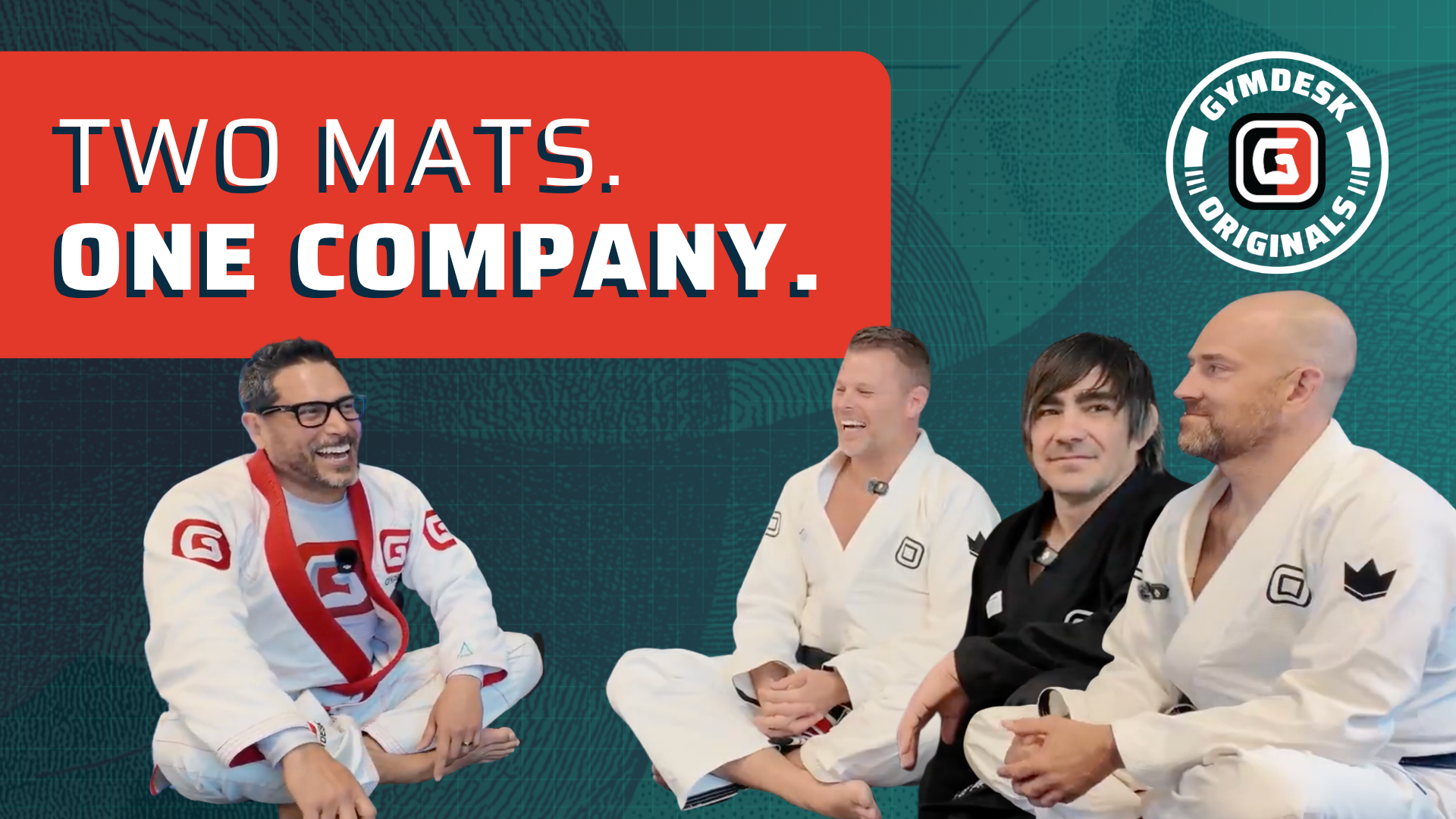
In this episode of Gymdesk Originals, we visit Renzo Gracie Milford led by Professor Mark Cerrone, one of Renzo’s earliest students from New York City. From taking the train into Manhattan every day as a teenager to helping grow Gracie Jiu-Jitsu into a global movement with over 300+ academies worldwide, Mark’s story is one of dedication, discipline, and vision.
Starring
Professor Mark Cerrone is a 4th° Brazilian Jiu-Jitsu black belt under Renzo Gracie and John Danaher. As one of Renzo’s first U.S. students, he has over 30 years of BJJ experience. He continues training at the renowned Renzo Gracie Academy in New York City to maintain the highest level of instruction at his own academy
About the Gym
Renzo Gracie Milford is more than just a martial arts gym—it's a vibrant, welcoming community built on decades of Brazilian Jiu Jitsu expertise. Led by Professor Mark Cerrone, one of Renzo Gracie's earliest students in New York, the Milford location offers top-tier Jiu Jitsu instruction for all ages, including kids as young as three, and fosters personal growth, confidence, and emotional regulation alongside physical skills.
Training here means becoming part of a diverse, unified team where newcomers and experienced practitioners alike are supported and challenged to reach their full potential. Renzo Gracie Milford stands out not only for its rigorous, science-based training and lineage of world-class competitors and UFC champions, but also for its commitment to spreading the positive impact of Jiu Jitsu—whether it’s helping bullied kids, empowering law enforcement, or building lifelong friendships. If you’re looking to train in a place that feels like home while getting world-class instruction and joining a true legacy, this academy is the place to be.
📍354 Woodmont Rd STE 10, Milford, CT 06460
📞 203-496-5827
Summary
In this episode, Gymdesk CEO Alex Cuevas visits Renzo Gracie Milford in Connecticut to explore what goes into building a martial arts legacy. He sits down with Professor Mark Cerrone, one of Renzo Gracie’s earliest students from New York City, to discuss the origins of the Milford academy, the journey from training in the original NYC “blue basement,” and how Mark became a leader in the Gracie organization. The conversation warmly welcomes viewers into the Renzo Gracie community, touching on Alex’s own martial arts story and the family atmosphere in the Milford location.
In this episode, you'll learn about the early days of Brazilian Jiu-Jitsu on the East Coast, the challenges of running martial arts academies, and Mark Cerrone’s dedication—including his daily commute from West Haven to Manhattan for over a decade. Mark shares entertaining and inspiring stories about defending the art during the “revolutionary” period when MMA was widely misunderstood and often illegal. The discussion touches on the explosive growth from a single gym to a global network, the importance of building strong teams, and the critical role martial arts play in instilling discipline and emotional regulation in children. Mark also reveals exciting news about bringing Jiu-Jitsu as an official school sport to Connecticut high schools, a first in the United States.
This episode also highlights how Renzo Gracie Milford uses Gymdesk to streamline operations and support growth. Mark explains how Gymdesk’s innovative features—such as branded member apps, attendance tracking, and intuitive user experience—allow academies to focus less on administration and more on building their communities. Through candid feedback from users like Mark and other Gracie locations, Gymdesk is continuously evolving, emphasizing the importance of ongoing innovation for martial arts businesses. The partnership reflects the synergy between technology and tradition, enabling academy owners to scale their impact while preserving the family feel that makes Renzo Gracie gyms unique.
What They Told Us
Alex Cuevas brought the Gymdesk Originals camera to Milford, Connecticut, to sit down with Mark Cerrone—one of Renzo Gracie's earliest students in the United States and now a fourth-degree black belt running his own academy. Cerrone came up in the New York City jiu-jitsu scene of the mid-1990s, and the conversation traces a line from a teenager reading martial-arts magazines to a coach about to put jiu-jitsu into an American high school. The through-line is one idea: spreading the art, and never standing still.
A room full of revolutionaries
Cerrone found jiu-jitsu after watching UFC 1 in 1994, then chased down an ad announcing that Renzo Gracie was opening in New York City. He walked in around 17, into a scene the wider culture wanted nothing to do with—people still came in off the street to challenge the school. He remembers the feeling in that early room vividly.
"I mean, what I remember from back then is a very distinct mindset. And that was, it was a revolutionary mindset. We were a group of revolutionaries almost because the world was completely against MMA at the time. It was illegal in 48 states."
—Mark Cerrone, Head Instructor, Renzo Gracie Milford
Twelve years on the train
Cerrone grew up in West Haven, an hour and 45 minutes from the only Renzo Gracie academy on the East Coast. There was no closer option, so as a teenager he committed to the trip—working all day, then riding into Manhattan for the evening class and home again. He did that for more than a decade before he moved closer.
"I used to take the train every single day. So I'd work all day. I get on the train at four o'clock, hit Manhattan about 630 and walk to the seven o'clock class. … And I did that for 12 years, 12 years straight, four or five days, bare minimum four days a week."
—Mark Cerrone, Head Instructor, Renzo Gracie Milford
The goal was always to spread it
Ask Cerrone why he opened a school and he doesn't talk about business first. From the moment he saw jiu-jitsu work in the first UFC, he says, the plan was to learn it, master it, and hand it to as many people as possible—because when he started, almost no one on the East Coast had access to it. Milford was his first academy, and being first in Connecticut was the whole point.
"And my vision or my goal when I entered jiu-jitsu was always the same. It was just to spread the art. When I saw what happened in UFC 1, I said that I wanted to learn that. I wanted to become a master, and I wanted to also spread that."
—Mark Cerrone, Head Instructor, Renzo Gracie Milford
Jiu-jitsu in an American high school
Cerrone used the interview to announce a project he says he hadn't discussed publicly before: an elective jiu-jitsu team inside a Connecticut high school, structured like any school sport with practices five days a week and competitions. He frames it as the last piece of a three-pronged plan the early crew mapped out thirty years ago—the public, law enforcement and military, and finally kids in schools.
"So we're going to be the first jujitsu team to actually be in the high school in the United States. … And we've struck a deal, but we're going to be the first jujitsu school in the entire country. And that's going to start in November at a school here in Connecticut."
—Mark Cerrone, Head Instructor, Renzo Gracie Milford
Running two schools, two states
Cerrone now splits his time between Milford and a second academy in Florida, flying down about once a month. When Alex asked how he actually runs gyms in two states, Cerrone didn't credit systems or hustle. He credited the people he leaves in charge, and was blunt that dependable ones are the hardest thing to find.
"It would not be possible at all without a complete rockstar team around me. And that's the reality of it. It's impossible without rock stars around you. And you need a group of a players around you."
—Mark Cerrone, Head Instructor, Renzo Gracie Milford
Why gyms and companies stall
Having watched the martial-arts business for three decades, Cerrone has a theory about why operations fail—and it isn't competition or bad luck. He says the ones that fall almost always share a single cause: they reach a level that looks promising, then quietly stop pushing.
"We've seen companies grow and fall. So many of them, and they all have the same thing, a reason why they fall. It's just stagnation. They all stop. They stop innovating."
—Mark Cerrone, Head Instructor, Renzo Gracie Milford
Read the full transcript
Lightly edited for readability. Speaker labels are omitted because the source recording is not diarised; quotes attributed elsewhere on this page were verified against context.
We'll be right back. Behind every gym, there's a story, a mission, a spark of passion that started it all. This is Gymdesk Originals. Real owners, real struggles, and the communities they've built from the ground up. What's up, everybody? Here I am in Milford, Connecticut. Going to go check out a Renzo Gracie location down here in Milford. Going to meet with Mark Cerrone and one of Renzo's earliest students back in the city, in New York City. So let's go check it out. Come on. Well, I forgot my belt, so that's not a good start, but luckily someone let me one, so I got my white belt on.
Ready for some action. Flash starting in about 5-10 minutes. Looking forward to it. This is our beautiful guest, Alex, here with Jim. Hi. How are you? How are you? Yes. Thank you very much. How are you, sir? Pleasure. Pleasure. Thanks for having me here. My pleasure. Pleasure. Thank you for having me. Appreciate you inviting me over. Your house while you're here, man. Your house. Thank you, man. Thank you. Just jump right in. Yes, sir. Thank you so much. Alex. Yes. It's your house, Alex. Thank you.
Yeah, definitely felt that way today. Very welcoming. Super cool vibe. I felt like I was coming home. I'd never been here before. Yeah. So it was a nice class, too. It never ceases to amaze me. I've been training for a while now. And all the little things. I got, yes, three corrects in there. Yeah. Through one of them, I got dead wrong. Well, most of the class did, as you can see. It's kind of like trick questions, right? I knew that they would get them wrong.
But it's designed to help them learn stuff. Yeah. No, it was very instructional. And I loved the drilling. And it's, yeah. So anyways, it was a great class. I love your space. Love to learn all about, you know, Milford location. You have another location as well. So let's unpack that a little bit. So maybe we can start with you. For some folks who have maybe followed my journey. I used to train at Renzo's in New York City way back when I was a young man. Moons ago.
Many moons ago. And I just had the privilege of going back there again. I think it was about a month and a half ago. Yeah. So I trained. I trained with Professor Mike Iramello. Yeah. Yeah. It's the same vibe, right? It's still the same vibe as when you went there 15 years ago. That's what part of makes our team unique. It's just that vibe, that family vibe that's always there. Yeah. That was great experience as well. But I have a feeling I probably ran into you way back in the day because you've been tricked there for a long time.
And especially back then, I was there almost every day back then. So it definitely ran into me. Yeah. So I mean, probably in the night classes, I remember being there a lot at that time. Yeah. So tell us about your journey. How have you got into martial arts and all that? So I originally got into it. Just a friend said to me, hey, did you see what's on pay-per-view? There's this crazy tournament. It's called the UFC. And this was UFC 1, we're talking. So this was 94.
And I'm like, no, I haven't seen this. So I look and I'm like, wow, I just couldn't believe this skinny little guy with the gi on was just tapping everybody out. So I was like, I have to learn this. So at the time in 94, there was nothing there. The only school there was really the one in California in Torrance, which was Hoist's school. On the East Coast, there was pretty much nothing at all and no Gracies. So I was out of luck. So what I would do is I used to get Inside Kung Fu in Black Belt magazines in every single month in those magazines.
There was articles in the back. Inside Kung Fu had Hori and Gracie that was a columnist, a paid columnist. We'd write one little article per month, one page only. And it would be some message about Jiu Jitsu and maybe a little technique in Black Belt magazine. It was Hicks and Gracie that wrote the article. And that was the only knowledge that the entire East Coast had for Jiu Jitsu at the time from the Gracies. So I would learn through this. And then while I was flipping through the magazine one month, I looked and it said, Renzo Gracie coming to New York City.
And this was about a year and a half later. Right. And I saw that ad and I went right down there. I was about just turning 17. So my parents thought I was completely nuts. Yeah. Right. I'm telling them I want to go do strangulations in some random place in New York City and they want me to go to college. It was like a war. Like they were completely against it, completely against it. But I persisted and I just kept going and going. And that's how that's how it started.
I'm trying to imagine myself being 16 or 15 and just like going to the back scene, just being like a super fan without even having a place to go do it. That was it. And then announcement coming to your town. You must have been like. I couldn't believe it. At first I thought it was fake and I thought it was like a fake guy or something. It wasn't really Gracie. And I look and says Renzo and I'm like, I only know of Hoist. So how am I going to find out?
And I did a little research and come to find out he was related directly to Hoist. So it was legit, you know, and I was all in. So you start training that when Renzo opens his spot at some point pretty early on. Yeah. And I guess John was there when you were. I'm down and I heard it. And what was the vibe like back then? The vibe back then was amazing. It was just like 96, 97. Yes. 96 is when it first started, you know, late 95.
And it was amazing. I mean, what I remember from back then is a very distinct mindset. And that was, it was a revolutionary mindset. We were a group of revolutionaries almost because the world was completely against MMA at the time. It was illegal in 48 states. They demonized it. They thought it was awful. So it was almost us against the world. That's how we felt, right? Everyone inside of that room. It's funny when we kind of, you know, link back up nowadays. We always talk about that feeling that we all had where it was us against the world.
We would go out, even if we were going to dinner, right? In the city after training, we would all go with t-shirts on representing the academy. And sometimes people would just challenge us in the restaurants, right? So it was like, not only were people coming in and challenging us all the time. Into the school. Oh, yeah. Back then, it was a regular thing for people to just walk in and say, hey, this just doesn't work. I don't think it works. I want to try it out.
Yeah. So it would be. No kidding. Yeah. Because back then, they had the active Gracie challenge, right? Which was an early challenge that the Gracie family put out and said, hey, if you don't think this works, come into any one of our academies. And you could find out, basically. And so a lot of people did take up that offer and just walked in. Walked in. At the same time, culture didn't accept it at all. It was illegal. The sports culture definitely didn't accept it, right? There was no such thing as kids' classes or anything.
Everybody thought it was so brutal. Yeah. The wrestlers hated it, right? So we really had to prove ourselves through MMA in just persistence of just driving it into the culture. It was really about breaking into the culture. So that's why I say revolutionary because at the time, it was a revolutionary idea. This mixed martial arts thing as a whole is a revolution in martial arts, right? That has emerged now in 1995, right? So it was a very unique time and set the foundation for what it is now, right?
So do you feel like a constant state of alertness at this point in your life? Because you're just like, you never know when someone's going to get you. Yeah. I mean, that comes with just knowing jiu-jitsu for so long. You're always in a reactive state where you're kind of ready. You know, I mean, you're used to your guys in training just coming out of nowhere and jumping on you out of nowhere, start mounting you and playing games. So you're kind of always ready for that. And that's what jiu-jitsu gives you the confidence to always feel confident and always be ready to, you know, have to defend yourself if you need to.
So when you're getting a challenger to come in, are we talking about like all kinds of different, you know, like that's in the day, you know, like boxers kicking, you guys, type on dough guys, karate guys, you know, wrestlers. I remember one time, this was Renzo's first academy on 27th street and Matt Serra was getting ready for an underground MMA fight. At the time, it was completely legal, right? To do MMA, but they had amateur, there was a couple of loopholes. When they wrote the laws of MMA, they said no professional MMA in New York.
So which left a loophole of amateur MMA being able to be legal. So even back in the early days, there was amateur MMA events in New York City in the underground. He was preparing for one of these underground fights way before the UFC or before he was in the UFC. And yeah, some guy just came in off the streets in jeans and was like, yeah, this shit doesn't work at all. And Renzo was like, hey, you want to come out and do it? And at the time, Matt was literally sparring for the event, getting ready.
So he's like, yeah, I'll go out there. So the guy goes right out in the jeans. No way. Yeah, and just goes. And I remember Matt Serra guillotining him like four times in a row, fast. And the guy's like, he keeps choking me from the same direction. And we're like, yeah, man, well, hey, this is MMA, you know. He's trying to throw a blow, you know. Matt came in, tried to take him down. He would try to take Matt down and then just catch him with the guillotine, you know.
So this happened a lot, though. This would happen a lot. You know, John Danaher has a lot of stories about this as well, where people would just come in and challenge him out of nowhere. Yeah, so it's pretty, pretty crazy. You're going to see, especially in New York City, right? This is New York City in the 90s. So you would see a very special breed coming in to that place. Yeah, I mean, I feel like I, too, was, I grew up in the, you know, Karate Kid and, you know.
Bloodsport. Three Ninjas or all these kid movies that everyone's doing kicks flying around. All right. You know, I was super fan of, like, Kung Fu Theater in the Bay Area. And I've watched, like, old Chinese movies. So I had a Taekwondo belt, black belt. Oh, okay. I didn't know this. Okay. So undefeated. Oh, wow. So it was, like, 18. Dude, Taekwondo is a vicious art, man. It's very hard. Yeah. Very hard. Some of the craziest TKOs I've ever seen are in Taekwondo. Oh, yeah. Very good.
You get nailed with the... Yeah. The kicks they have are just unbelievable. Force they have. You know, I walk... I was walking around with a certain set of confidence, right? And then I, too, watched URC, and I'm like, wow. Yeah. Right? So I switched to the only thing I had in the Bay Area was the local schools in San Jose, downstate judo team. So I went from undefeated to a lapel. Cool. And judo. Yeah. Every third. Hard four. I mean, for almost two years. One of the most hardcore sports that has is judo.
Yeah. A lot of blind ball. It was a lot of fun. So, you know, that's my journey. You know, then I trained... Actually, I trained with Saulo. Oh, yeah. Yeah. Saulo Ribeiro. Yeah. Down in San Diego. His brother. He came to the San Diego judo school that I was practicing at, and he opened his... The best competitors ever. First step. First jiu-jitsu place was right earlier. Right there. Right there. Right when he first started. He's big. Yeah. And then I moved in on earth and started doing...
And his brother, Shanji, is another champion. Yeah. Those guys are legends. Yes, we are. So, that's my journey, but what about yours? Like, you've been with Renzo, and now you've got a position as COO. Is that right? Yeah. Well, this is more of my own organization, the Renzo Gracie Worldwide, which is my... We're, you know, we're just branching out and stuff. But yeah, for a while, I was the assistant director of the Renzo Gracie Association, which is the board that governs it. Now, his daughters kind of run everything for him, which is the best.
You know, it's nothing like family watching it over for you. Yeah, for sure. But yeah, I did that for a long time. Yeah, just oversaw everything that's going on. And just the growth that our academy, our team has done over the past, you know, 30 years is just remarkable. We went from that one little gym in Manhattan to now over 300, I think there's 312 academies worldwide. Yeah. And we're in every continent, every country. We're all over the place. I mean, we were in Japan. We have one in Vietnam, France, Spain, everywhere you could think of, Russia, you know.
So, that's what's been, like, kind of remarkable for me is having that revolutionary mindset in the beginning, fighting, and then finally just seeing what it's become now. It's just remarkable. From the newspaper to now you have your own two schools, and now it's worldwide, over 300 locations. That's amazing. Tell me about your journey and, like, when you decided, oh, I want to open my own school. What came first? Milford? Milford was first. Yeah. And my vision or my goal when I entered jiu-jitsu was always the same.
It was just to spread the art. When I saw what happened in UFC 1, I said that I wanted to learn that. I wanted to become a master, and I wanted to also spread that. Right? Because I knew that there was no access to it. So, I wanted to be part of the team that led that growth spurt that would kind of populate the East Coast. That was always our vision. Right? We all stayed on that vision for many, many years. And that was really the basis of why I wanted to do it, is just to spread the art.
We saw what kind of benefits it does for people from children who are just, you know, getting bullied all the way until the most advanced law enforcement guys that need it to direct operations. It's just such a critical part of society. So, that's why I was so into just making it spread. And that was really my goal. Right? So, it aligned with Renzo's goal, with John Donahue's goal, with all of the teachers' goals that really wanted to spread it with me. You know? So, we all aligned together and just pushed hard.
And now, here we are. Yeah. You say you opened this place first. Yes. You get it to a certain critical mass. And will you just happen to be going back and forth between those places? Or how did it happen? So, this is an interesting story. I was going to open up my second location actually in Grandage, Connecticut. Okay. But what happened is the COVID. And they shut us down here. They shut us down for two years. We were shut down. This location as well? Almost a year.
No, almost two years. This location. Yes. This was before Naples. I just had this one location. I was ready to open up a second one. I was going to do it here in Connecticut. And they shut us down. So, it was about a year and a half. And during that time frame, I said, I'm going to try something new. I want to try a new area. I want to try a new demographic. I was a little nervous, honestly, on what might happen in the future. And was thinking about my kids growing up and where they might be.
I just wanted to make sure that I secure all bases, being how crazy the world is. And it sucks that I even have to kind of talk about this, right? About politics or whatever. But that was a choice that made me or a decision that I had to make based on thinking about the future. So, it was a scary time back then. Things were heading to a scary place. And I just wanted to be on the safe side, kind of. How did you pick Naples from that Fort Lauderdale or my shemmy?
No question. So, I actually looked and I focused on trying to find where in Florida needed jiu-jitsu the most. So, I looked for the biggest holes. I found out that there was pretty much three areas that I was looking at. Two on the East Coast and then one on the West Coast of Florida in Naples. Then I'm zooming in on the map there and I see Marco Island. So, I'm looking. I'm like, Marco Island? Well, my son's name is Marco. So, I'm like, this has got to be a sign.
So, I just picked there and that was it. So, it was pretty much an emotional response at the end of the day. I did narrow it down to three and then I took an emotional route. Yeah. The son's name. So, that's why I chose that place. So, how many children do you have? I have two. Twin boys. Oh, okay. Yeah. Age 13. 13 years old. They practice? Yeah. Yeah. They've been training jiu-jitsu since they were four. Okay. Yeah. Jiu-jitsu and wrestling. How'd that work out at four?
So, I have four and we have our three to five-year-old class here. Which is one of our most popular classes. At that age, it's really, you know, some of them are pre-K. Some of them kindergarten. So, at that age, it's really about just getting them to listen. You know, and to stand still. Then maybe do a move. One move and you're just like, great, you know. Because at that age, especially pre-K, they just don't listen, you know. And this is something that we have to instill even in parents.
Because parents come in and they think, like, if their kids are being a little wild or bad, there's something wrong with them, right? And they're born good and they're kind of getting wild so they have to come and fix. But in fact, it's the actual opposite. Like, kids are the most violent offenders on earth. Like, they steal, kick, punch, lies, you know, get mad. They're jealous. They punch, you know. It's just so they're born wild. And we have to kind of civilize them a little bit, you know.
Emotional regulation. Yeah, my wife talks about that all the time. It's very difficult to do, but that's what we do here. So that's, in the beginning, it was just, it was all that kind of stuff. Just getting them to, you know. Yeah. So my oldest is an eight. And I, yeah. And my youngest is three. Oh, so you got a young one. Yeah, when my oldest was the only child at that time, the sport. I tried to train him. It was, like, so frustrating for me.
Yeah. Because I was, it was only him and me and other little dojo attached to my house. So, yeah. And, but, yeah, I couldn't get him before that. That's good at all. He was like this. So I kind of gave up for, like, a year. But then I said, let me bring your buddies in. And then I switched. So let's make it fun. And maybe strength a little martial art of some kind. Yeah, I'm getting a sidekick or doing some judo or whatever. And then that changed it.
Now he loves it. So he had friends. He's got friends. And then he was less regimented. I think as you know, as you progress later, you can add that. So. Yeah. Wish I'd known that before. Yeah. Yeah, me too. At that age, you know, when you're young, it's like, I wish I knew when I was younger, you know, or my parents knew. But back then there was nothing like that, right? Yeah. No. No. We were lucky to have karate back then. That's right. In those days.
And so where did you grow up? So I grew up in West Haven, which is a town over here. Okay. Yeah. About 15 minutes from here. Okay. Yeah. And so that's another thing I didn't add into the equation was when I read that article and I saw that I was living in West Haven, which is an hour and 45 minutes away. So at 16, I used to take the train. No way. Yep. I used to take the train every single day. So I'd work all day.
I get on the train at four o'clock, hit Manhattan about 630 and walk to the seven o'clock class. I get there. Yeah. Every single day train there and back. And I did that for 12 years straight, four or five days, bare minimum four days a week. Then went to five. Then after 12 years, when I was, you know, already like legit and high level, I ended up getting a little apartment there for three, I think a year and a half, two years at an apartment there.
But that was it after the 12 years. Yeah. That's dedication, man. I mean, I'm over here complaining about 20 minutes. It's dry because I'm in the middle of nowhere, but you're traveling that far because there's no one else. Well, that's the thing. It was it was that or nothing. Right. So it's like, yeah, I'm going to do it. Yeah. And everybody thought I was crazy. Every human that I knew. I mean, my entire family, every girlfriend that I had. I mean, I had girlfriends leave me and everything, but I was completely nuts, you know.
And, uh, yeah, it turned out to be against everyone's. It turned out you don't want to bet against me. It's not a smart thing to do, I guess. Huh? I hear a female voice, man. Oh, why don't you marry your jujitsu? Does that ever happen? Oh yeah. Oh yeah. Yeah. You love it more than you love me. All this kind of stuff I would get. So, uh, that explains why you would go back home and open up somewhere in here where you lost. Yes. Yes. Okay.
So that's why I wanted to actually be the first. My goal was to be the first one in Connecticut. Okay. At the time. Got it. And you're now fourth degree? Fourth degree. Fourth degree. Yeah. Right. See, fifth degree, I think next year. Yeah. 30 years, it'll be next year. Yeah. Training jujitsu. So, uh, you've had some, you, there's medals everywhere, right? Uh, tell us about the professional side. What have you done? Yeah. So, you know, we've, uh, we've built a little empire here, right? With the team.
We've had many, many competitors come out of here. You know, a lot of jujitsu guys, a lot of MMA guys. I've worked extensively with MMA guys here. I work with five different UFC champions. So, hall of fame champions. I've worked with five of them actually. So, it wasn't just, uh, George St. Pierre. I worked with, uh, Frank Yeager. Worked with Chris Weidman. So, all these guys together, and these guys were in the same room at the same time, too. You'd go to, you remember, I think this was around back then, right?
You used to see George in there, you said? Yeah. But, it'd be George, Frank Yeager, you know, George St. Pierre, Frank Yeager, Chris Weidman walking in there, beating everybody up. It was insane. Hodger, Gracie, all in the same room. Gordon, little Gordon, though. Right? Gordon Ryan was like a purple belt back then in the room, though. I feel like, uh, I don't, I never rolled against GSG, but I was always, like, starstruck. Because he's, like, one of my, like, the guy is just so, the humble, and, like, I don't know him personally, but I just, like, love, he's, like, one of my favorite UFC guys.
Yeah. So, I remember that. I'm like, oh, man, that's, you know, but I didn't want to, like, bother him, right? And I'm pretty sure I rolled, because I remember a guy I had, like, it was like, sorry, man, I didn't mean to waste your time. No, it was, uh, Gordon Ryan. Oh, yeah. Yeah, yeah, I mean, the guy was just a tank back then, too, right? Yeah. I mean, it was just like, sorry, dude, I know I'm terrible compared to you. Yeah, this was, what, like, 2012, 2015?
Yeah, that's about when I was there. It was big back then. Yeah. And that's when it was a, I mean, that room was just amazing. Yeah. It's an amazing room back then, and that's where, you know, you'd have every single round was just a death round, man. Yeah. You'd have a round with GSP, the next round you'd have to go with Gordon Ryan, then the next one, Gary Tone, and then after that, Frankie Egger, you know, so it was like, man, for me, it was tough being those training partners.
I got to be honest, but it was the best time of my life, honestly. Yeah. So how do you keep in touch with all these folks, like our regular races? Oh, yeah. What do you do, like, once a week? Yeah, well, not really, once a week, and, you know, it's just always sporadic. Yeah. For most of this point. Yeah, but it's always, we're all one tight circle, you know, that's the good part of it. Like, all of their lineage is all tied into ours and all traces back to that blue basement there, you know, so it's just one, like we say, circle, right?
So we're always together, no matter how far apart, no matter if it's, we're not talking for a couple of weeks or whatever, it's always good vibes the second we pick up. It's right where we left off, so. So tell me now about your vision here. So you got two locations. Yeah. Are you trying to open more or? Yeah, yeah. We're going to do a few more in Florida and now considering another one back here and now that everything's kind of calmed down, right? And yeah, and that's, we have very, we're very optimistic.
We're trying to get everybody together and that's what we do in jujitsu, right? Jujitsu is all about unity. And that's the beautiful part about here is you walk in and it doesn't matter what your background is, what kind of politics you're in. It's all one big family here. Yeah. And I believe that jujitsu now is more important than ever because of all the crazy stuff going on. Jujitsu truly does unite people, right? And also helps us understand that trial and error in science is really what works, right?
What works on the mat is super scientific. Like what, there's no faking getting out of the mouth. There's no lying or bullshitting your way out. There's only what works and what doesn't work, right? So it kind of grounds us in this scientific approach of problem solving, which is just kind of looking at the truth at all times, right? There's no way to deny it. So I think that is what society needs more than ever. So we're focused, me and my team right now, I'm just building the next generation, super strong and just, you know, taking it to the next level.
Yeah. Are you doing anything outside of, uh, you know, the gym, Bojo to foster that community? I am. And I'm actually working on one of the biggest projects ever. I actually haven't talked about it at all. Like I haven't even mentioned it at all. So this is going to be the first time I actually do discuss this, but it is something that is absolutely going to be historic. So we're going to be the first jujitsu team to actually be in the high school in the United States.
Wow. So, yeah, uh, there's no jujitsu in high schools right now, right? There's no jujitsu anywhere in the entire country as far as school is concerned. Right. But other countries like Abu Dhabi and the UAE out there, they've had jujitsu in schools for about 15 years now and all the data is back right on this stuff. And these kids are just, you know, it produces just like a 18% increase in just math scores alone, right? The attendance skyrocket. So the, you know, people dropping out and not showing up for classes, the attendance just skyrocket about 15%.
There's just so much data that proves that there's just so many benefits to jujitsu in schools. And when I say we started as revolutionary, just trying to get in society, this was our end goal, right? It's to get in society completely. That means the public, it was really a three-pronged approach is what we mapped out almost 30 years ago, which is the public law enforcement, right? In military, which is the strongest of the strong and then the children, right? And we've been successful getting into law enforcement in the military.
It's been there for years now, but the school has always been a complete battle. But we have officially cracked it, okay? And we've struck a deal, but we're going to be the first jujitsu school in the entire country. And that's going to start in November at a school here in Connecticut. Wow. Yeah. So it's going to, it's just like a soccer, football. It's an elective sport. You go, there's practice five days a week. There's competitions. It's a team, everything all set. So yeah, it's going to be the very first one in the entire United States.
And that's in November. I bet there's a kid there just like you. It was like, I can't believe it's coming to my school. Exactly. Oh yeah. When we announced this, we get an announcement at the school and literally that's what I told the school administrators. I was blown away at the response. We announced it. We just expected some response. When we announced it, they cheered like it was like they had won a thousand dollars. I couldn't believe it. Like they would really, it was like a loud cheer all collectively together, you know?
So that was, that response was just remarkable to us as the staff. And since you've been doing it so long, you probably have tons of stories of kids that have gone through your program and the transformative chore is there, right? And you're now going to be able to sprinkle that in schools. That must make you feel like. Yeah. It's an amazing feeling to be able to do that. And then we're going to push it to the next level. And you know, what we're doing is, uh, we're mapping it out where we kind of taken the, um, it's very easy to do once we've figured out that we can actually map it almost like wrestling is.
So wrestling has been in the sports system, in the sport school sports for a hundred years. So we kind of took that mapping to map jujitsu into the school and combined with, you know, the Gracie family and just getting it all together. It's going to be something really revolutionary. I think. Yeah. Gi, no gi, folks. Gi. It's going to be gi. Right. And we decided to do the gi just for the values, right? The tradition of martial arts and, you know, really to get them immersed into the real culture of it.
So yeah, that's going to start in November and that's going to be a remarkable program. Good for you, man. Yeah. I'd love to hear more. I'll keep in touch. Yeah. It's going to be cool. Maybe if you don't mind going back to two schools, maybe three and four. Yes. How do you, I did this when actually I'm, I lived in Miami for 10 years. Oh, I didn't know this. Yeah. So this was fun life down there. Right. Like I had right in South beach and I had restaurants.
Oh, okay. Yeah. That's a good place. I had restaurants. Then S, you know, so yeah. Plural. Hard. But first one I was there, I basically took a year off my career in software to do that. It was like during the big crash. Oh, back in the day. Yeah. Back in the day. When did I start? 2011, 2010, somewhere around there. Something was going on. It was just a good time. Let me go do something. So I started. It was wildly successful. It was actually the first plant-based in Miami.
No way. And it was, actually there was one before, but this was like cooked through, basically New York style vegan. And it blew up down there. Blew up. Like people out the door are lining. And then we kind of had a four, we're forced open a second. We were so successful, but they sold the building under us. And so I lost my lease. I'm like, ah, so now I have to open two locations. But then, you know, people complain. Like I'm at this one. They're like, hey bro, where were you?
I'm like, oh dude, I was working 13 hours over there. Yeah. You know? And so it's like, I wanted to be in both where I could. So how do you do, I mean, literally you see a different state. Yes. And that is the most important question. How, right? Um, what I can say is this, it would not be possible at all without a complete rockstar team around me. And that's the reality of it. It's impossible without rock stars around you. And you need a group of a players around you.
Uh, I would not be able to do anything that I do at any location, even including this one without a really solid, strong team around me, you know, like you saw the guys, Kubi in there and some of the instructors around and even Christina here with the filming, it's like always people around us that actually make it all happen. You know, I would never be able to do, as you know, right. It's like impossible that you have to have people that are dependable. And that's the hardest part as well.
It is the absolute hardest part on earth. It's only getting harder now, but they are out there, you know, just like I was out there back then looking, you know, just for that one opportunity. Cause when I saw the opportunity, I just thought it was the biggest opportunity of my life. And there are people that are still out there like that, but it's just not, not too many. So it's hard to find. Yeah. I have horror stories of like finally taking a vacation with my wife and, uh, get a call five seconds later.
We were in another state and, uh, the person quit there. She was one of our managers. So we, I mean, we basically shut down. I've had this, I've had this while I was out of state too. I've had, as a matter of fact, while it, so that's the thing. It's another part of it is just not giving up, man. Right. I've had two managers do that same exact thing in Florida. Two managers just completely quit out of nowhere. Yeah. And one of them was first a hurricane hit us and closed us for two weeks.
And then that person quit the day we opened back up. So it was like, yeah, you just have to be able to depend on people. Yeah. And most people you really can't, you know? Yeah. But when you do find that chemistry, that synergy, that's really what synergy is. You know, it's just when people work together, it creates more power. It's just how, and that's a science, right? It's synergy is a real thing. The sum of, you know, two or three people together is way stronger than each individual.
Yeah. So. And especially if you're all, uh, going after a collective goal. Yes. And one goal, which is hard to do. Mission-based always, always helps. Love to know more, a little bit of, or know more about, uh, how you found us. You know, how'd you find him? Gymdesk. Yeah. So, uh, originally, that's a great question. I didn't really even think about that. So Gymdesk originally. So I did hear about you guys about maybe a year ago, but not too, too much. And then I called my friend Holes Gracie and Holes said, I'm switching software right now.
And I had called them because I was complaining about my studio. Honestly, in my studio, I've had a really bad experience with these people. I mean, it's just like, they're just, I don't know. We've, they dropped the ball on us so many times. We had projects like on the table and they just never call back. They just, a lot of dropped, uh, customer service self. So we chose to leave them. And I called up Holes because I knew he used to be with my studio years ago.
So I'm like, Hey man, what are you doing? Where are you at now? It's software. And he goes, Oh, I'm going with Gymdesk. They're the best. You have to try them out. So I'm like, Oh really? They're the best. He goes, yeah. Now Holes Gracie, obviously he's a legend. Obviously he's in a Gracie family. And this is somebody that was in the room back then in the late nineties at that revolutionary table, right? With all of us. And now part of that revolution and coming up.
And like I said, breaking into society was learning about how to run a martial art academy. So I would argue that we have like the most experience on earth where it's running academies, because we started when there was no such thing as any software at all. Then we worked with the very first software company, EFC. Oh yeah. Right. They used to just completely rob everybody blind and just like, and we gradually saw the evolution of the software companies over the decades. Right. Also, while we're fine tuning our own academies and finding the right franchise model to work worldwide, we've always been super on top of the most innovative softwares and where it is.
And with software in martial arts, it's almost like the sport of MMA, how it's evolving at different levels, at different areas, at different times. It was always an evolution. So EFC, for instance, didn't, they just charge and you had no access to nothing. Yeah. They would just send you your money. Then like a company later, I can't, I think it was MindBody or something came out and you were able to have a software and see it, but you still couldn't control anything. Right. Then my studio came out with their software, you can control everything and pass the credit card processing on, which nobody else did.
That was one step up. Right. Right. So it was always one step up everyone, but you guys kind of tied it all together. And now it's becoming just like MMA where it's, everything is leveled out. Yeah. And now, so it's who's offering the best product, which you guys do. The way that this software is just really innovative. Everything that we need is there. The way the attendance works, that was something that's, you guys evolved kind of more than anybody, which is the attendance tracking and how it looks on the app.
Everything counts, especially with us. We're very focused on branding. Yeah. So just the fact that you can have your app on the home screen, right? That logo on there is big on everybody's home screen in the academy, just that logo there. Nevermind when you click on or able to see the actual belt color, right? No other app had that. Which is that little visual is an innovation that keeps pushing, you know, the companies higher. So you guys are just on point. And I would just say now, because you now have the asset of having us on board, right?
Listen to our direction of where it's going, right? So if you see things that are evolving elsewhere, jump on it before somebody else does. You know, yeah. Continuous innovation. That's a big thing for us. And, you know, that's why I love coming out here and talking to customers. Yeah. So they're on top of it. Right on the mat. And we hear about what needs are evolving in the market. And if I could just say one last thing about that, the most important thing I believe about that throughout the 30 years, we've seen companies grow and fall.
So many of them, and they all have the same thing, a reason why they fall. It's just stagnation. They all stop. They stop innovating. Like you said, they innovated to that next level and it looked all promising and then they just stop. They play defense, you know, the whole time and not offense and just keep innovating. Well, hopefully you'll see, you'll see us continue to do that. You know, we're looking great. We've ramped up our team too. So maybe a lot of people will know that, but I was, I've been here for about a year now and that's what I've been doing.
I've, the company's now three times, four times bigger and added a bunch of engineers. That's what we were listening to. Hey, what do you guys need? And let me get into the product and all that. So it's just about how to make the member experience better. Yeah. That's it. You know, for sure. So our little mantra now that we're using for our company mission is less admin, more members. Yeah. If we can do that, I think people will be happy, right? So absolutely. Absolutely. Well, again, is there anything else you want to share with, uh, with folks?
It's just, it's about it. I do recommend Gymnask. I think it's a great product and I think everybody should go with it. We're preaching about it, trying to tell everybody to, uh, to go. As you know, the headquarters now is going to be switching over. So yeah, pretty soon. I think we're just maybe a month or so away from, yeah. They're a big academy. So it's going to be a big deal. But yeah. Yeah. Great. Great. But we're talking about it earlier. Um, I had my little reunion or what have you.
I had a class with coach Mike J down there about a month and a half ago and just brought back a ton of memories. Even in that basement. It was fun. How often do you get out there? I'm there like once a month. Okay. Yeah. Yeah. Cause I'm back and forth with the Florida stuff and the fight camps here, you know, so. Yeah. And your kids in white are here. They're here. Yeah. Okay. So then you go down there and you're away. And then I come right back.
Okay. Got it. Yeah. So I only, when I'm there, I'm only there for like a couple of days and then come back once a month, I go down there. So I got that team down there that's doing it and yeah, we're going to be growing. Well, but yeah, thanks for coming, man. This is your house. Anytime you're here, feel free to stop in. Thank you, sir. Yeah. Thank you, bud. Thank you so much for hosting and for having me here today. Yeah. Thank you, bud. Another great role at Enzo Gracie. I'm in Milford, Connecticut with Professor Mark's class. It was amazing. Thank you so much. See you guys.