How Milad and Ella Moghaddam Built ActiveRange Method From a Basement to 200 Members in Two Years
Starring
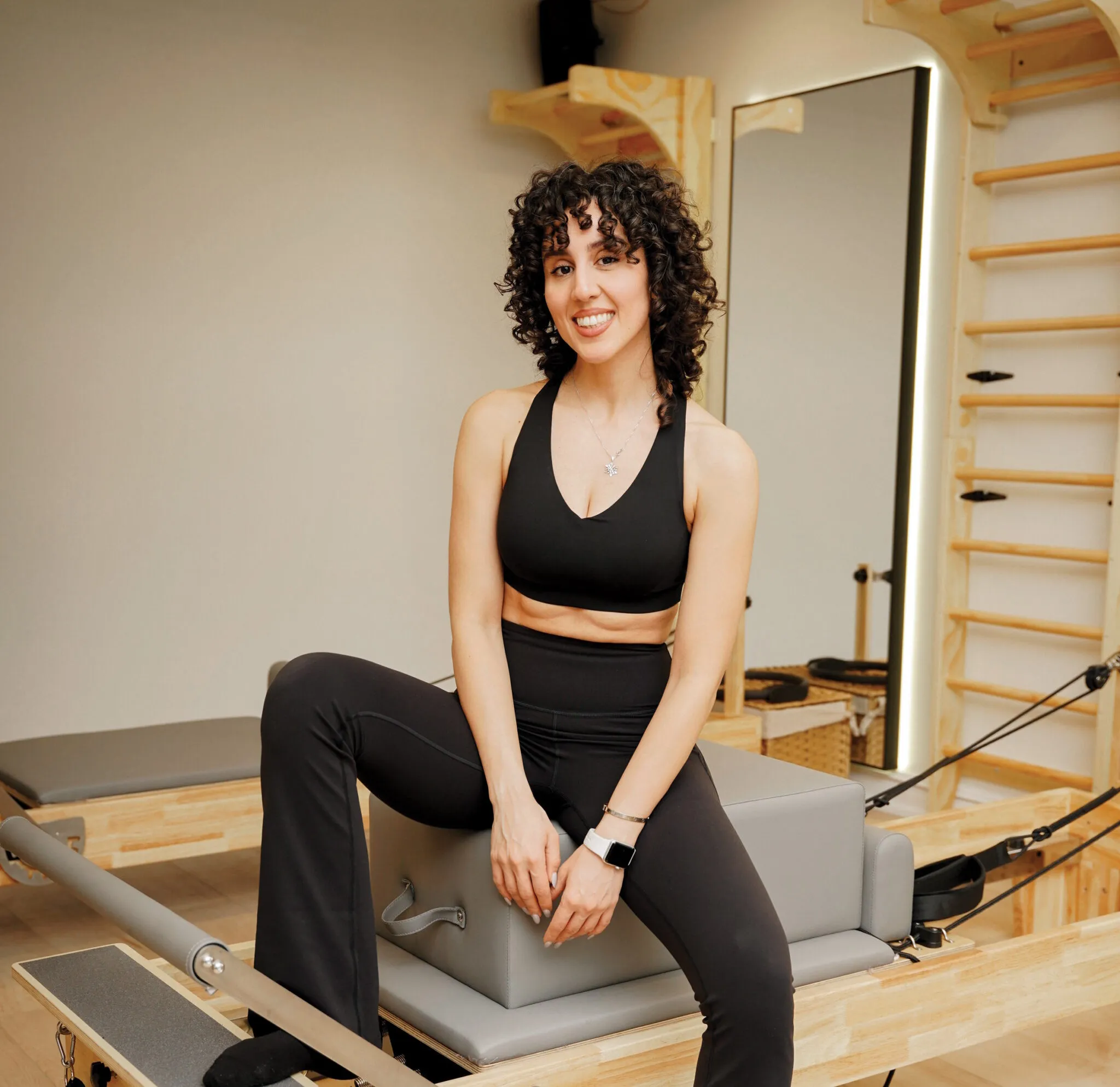
Ella Moghaddam holds a Bachelor's degree in Physical Education and has spent 14+ years teaching mat and Reformer Pilates. A former competitive swimmer, she came to Pilates after Milad pushed her to try it in 2017—a single side-plank session converted her, and she's led ActiveRange's Pilates programming ever since. Her teaching blends Pilates with resistance training and runs the day-to-day on the Reformer floor.
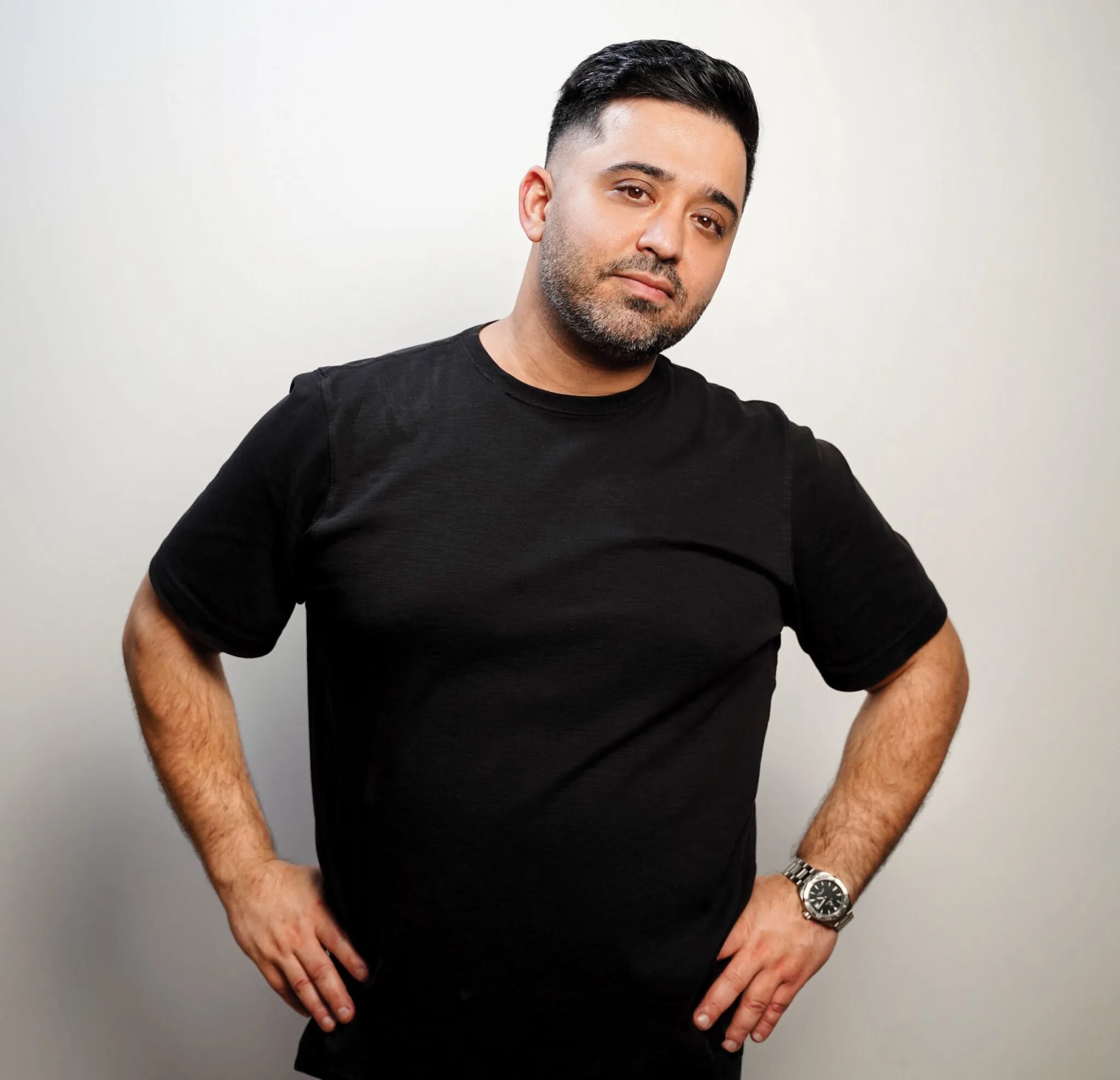
Milad Moghaddam is a civil engineer turned strength coach with over 10 years of training experience and a background in competitive bodybuilding. He ran his own gym in Iran before immigrating to Canada and spent years working for established Canadian fitness companies before going independent in 2023. He created the Internal Strength Model—the joint-integrity-first methodology at the core of ActiveRange's training—and is a Pro Trainer with CanFit Pro, certifying other trainers through the studio's education arm.
About the Gym
ActiveRange Method is a boutique Pilates and strength studio in Newmarket, Ontario, founded in 2023 by Milad and Ella Moghaddam in their home basement and relocated to a 3,300 sq ft commercial space on Yonge Street in September 2025. The studio combines Reformer and mat Pilates, semi-private strength training built on Milad's Internal Strength Model, mobility programming, recovery services, and nutrition coaching under one roof. Every client starts on an individualized program built from a body-composition scan, a goals interview, and a biomechanical assessment, then runs that program inside a small group. Beyond the studio, ActiveRange runs a fitness education arm offering CanFit Pro Personal Trainer Specialist certification, a proprietary ActiveRange Anatomy Course, and Assessment & Program Design Levels 1 and 2.
📍 Address: 16925 Yonge Street, Unit 25, Newmarket, ON L3Y 5Y1, Canada
📞 Phone: (365) 337-0202
Summary
ActiveRange Method opened its Newmarket, Ontario studio in September 2025, after two years of proof-of-concept work in the founders' home basement. Husband-and-wife co-founders Milad and Ella Moghaddam—Iranian immigrants who rebuilt their careers in Canadian fitness—combine Pilates, strength training, and individualized assessment inside a small-group format. Alex sits in on a Reformer class with Ella, takes a biomechanical assessment from Milad, and digs into the Internal Strength Model, the economics of small-group personalized training, and why the couple chose Gymdesk before opening day.
What They Told Us
Alex Cuevas took the Gymdesk Originals camera an hour north of Toronto to ActiveRange Method, a boutique studio in Newmarket, Ontario—the first non-martial-arts gym in the series. Milad and Ella Moghaddam run it, a husband-and-wife team who moved from Iran, proved their method in a basement, and now manage a full Pilates-plus-strength operation. What came through, across a morning of assessments and reformer classes, was a way of thinking about training, business, and marriage that treats none of them as separate problems.
Where people actually get injured
Milad is a civil engineer by training, and he reads the body the way he would read a structure—joint by joint, load by load. Sketching a strength curve for Alex, he explained that most lifters train hardest in the middle of a range, where they are already strong, and leave the end ranges weak. That, he argued, is exactly where the damage happens.
"That actually increases the risk of injury at the end ranges. Where you get injured. Nobody get injured at the middle of the range. You get injured when your arm is pulled all the way back."
—Milad Moghaddam, Co-Founder, ActiveRange Method
The $200-an-hour problem
The business underneath the method is an economic one. Personal training in the Toronto market he describes runs anywhere from $60 to $200 an hour, which prices out most of the people who need the frequency to actually get results. Milad's fix was to assess each client individually, then run five of them together—splitting his hour without diluting the personalization.
"The hourly can be shared. And it's going to be a fracture of what they pay, which is going to help them to become more frequent, which is going to give them the results, which is going to guarantee my paychecks. So it's a win-win situation."
—Milad Moghaddam, Co-Founder, ActiveRange Method
Software before opening day
Milad picked his management platform before the studio opened, not after it grew—because, he said, the foundation is the part you cannot retrofit. He compared it to bookkeeping: skip the groundwork early and the whole year gets harder to close.
"It's very much like accounting. If you don't start from, if you don't have the foundation ready, you will have a very hard time closer to the year end."
—Milad Moghaddam, Co-Founder, ActiveRange Method
Starting over from zero
When Milad left his last company to go independent, he did not take his client list with him—he felt he owed the old company that. The basement studio Ella pushed him to open became the test. It never worked economically, but it worked as proof.
"I ended up having zero of 35 active clients that I had, which was my main hope."
—Milad Moghaddam, Co-Founder, ActiveRange Method
The side plank that humbled her
Ella came from competitive swimming and years of strength training, and she dismissed Pilates as stretchy stuff—until Milad had her try a single side plank on the reformer. The whole point of the studio, combining Pilates with strength instead of choosing between them, started at that moment.
"And then I was sweaty. That was humbling. I was like, oh my God, I did for years and I couldn't do that."
—Ella Moghaddam, Co-Founder and Head Instructor, ActiveRange Method
A business with no boss
Running a studio with your spouse, Milad said, works because they refuse to rank each other. The flat structure runs through the whole team—decisions get talked through until there is an answer, and nobody claims the win as theirs alone.
"In our culture, we don't have boss. Everybody is a boss. Even our front desk is a boss."
—Milad Moghaddam, Co-Founder, ActiveRange Method
The long game
Milad and Ella did not try to fast-track the studio. They took jobs with big fitness companies for years, saved, and waited—choosing the slow, deliberate build over borrowed speed. Milad framed the patience as a stance, not a setback.
"What I wanted was we're going to start from the bottom and even go further than that and just be quiet and work like an immigrant proudly and pay the dues and be a good immigrant. And then step by step, time's going to arrive."
—Milad Moghaddam, Co-Founder, ActiveRange Method
Read the full transcript
Lightly edited for readability. Speaker labels are omitted because the source recording is not diarised; quotes attributed elsewhere on this page were verified against context.
music plays Behind every gym there's a story, a mission, a spark of passion that started it all. This is Gymdesk Originals. Real owners, real struggles, and the communities they've built from the ground up. All right, here we are Friday morning. I am in Newmarket, which is about an hour north of Toronto. It was so warm. Oh my gosh, it's freezing now. But I'm going to do something a little different today. I'm going to go challenge myself with a Pilates class. So I'm not quite sure what to expect.
I've never done that before. But if it can strengthen my core, then it's all good. Let's go check them out. Let's go check them out. Come on. Here we go. Hello. How are you? Nice to meet you, sir. Yes. Shivani, thank you for inviting me to this. Pleasure to meet you. I'm Alex. Nice to meet you. Let me show you around. All right. So we started with what we usually start. So this is the body composition assessment machine, STYCO. So you're going up on that. It's going spinning around and then we'll see your measurements like body fat percentage and then muscles and then everything.
And then this is our waiting room. Hey, I know you. Hi again. This is our Pilates room. Wow. Look at that. Yeah. This is a reforming machine, which makes like group, small group classes that the instructor can more observation the clients. And this is a hallway. Go through the weight training room. And then this is the memory wall. We have grand opening, the events, the Christmas time. And the other room, we have the other Pilates room, which is more specific for reforming machine, more advanced. Then the next room is our weight training room.
We have the private room and private classes and then also semi-private classes. So, and then another assessment here, we're doing personalized program for every person who's come here. And then we have a change room here, women and men. If you go have a look, very much it. And then this guy is the Joseph Plotus. Okay. The man who started it all. So right now what I'm going to go do is do a body composition. So I'm going to put myself out there and embarrass myself. So apparently there's a machine here that'll scan my body and let me know what I need to work on muscle-wise or fat or percentage, that kind of thing.
So come on, let's go check them out. Hello. Hi there. How are you, Alex? Doing well, sir. Awesome. So are you ready for the exam day? Ah, man, I guess so. So what does this machine do? Essentially, it's a laser scanner. It will take all of the measurements and your weight and it uses its own database. The company has a very, very good reputation in the market. So it's going to take a lot of information. And basically what I would say, this is going to help us to not get lost along the journey.
Make sure that we are on the track and we are taking all of the measurements and measures to get to the goal. Especially if the goal is anything body composition related. Yeah. So all we do here is to take care of your goals, right? So now, even though I know you're in martial, right? Yeah, martial arts. This is still going to help you to know if you wanted to lose weight, gain weight, lose fat, gain fat. Whatever that is, usually it's no gain. Hopefully not. Yeah.
So the way the machine works, you step on a platform, it does a 360 rotation and it takes all of the measurements off your body. So you stand on here, it'll tell me my weight, body fat. Does it also tell you like muscle? Like if it's, you know. Absolutely. It gives you the breakdown of all of the different body. Even it goes beyond that, the fat and gives you an estimation of what percentage of fat is for your visceral fat. Your subcutaneous fat and so on and so forth, right?
Got it. It gives you, again, an idea. When it comes to consistency, probably this is one of the most accurate machines that existed in the market. And I really like it. It's been working. We've been using it and our members absolutely love it. So when I get on here, it's just going to spin me around and it's going to measure everything. Absolutely. And am I doing this with my clothes on or? So it has to be skin exposed again. Most accurate one is going to be.
Madam Zumbu is Tara. Yes. And that's what we do this in this room. And, uh, usually there's a female with a female client and a male with a male client. Okay. Uh, yeah. All right. I think about that. Well, can we get, can we get this on OnlyFans afterwards? Oh my God. Bye. All right. So I think what's happening now is we're going to do a body. Uh, it's not a composition cause I did, I just did that over there and I spun around like this.
And, uh, I was just in my, uh, boxers. So look out for the special, uh, you know, download. I'm just kidding. And then here I'm doing, um, I think we're doing a strength assessment. Yeah. So we'll see if, uh, if I have any, you know, guns in here or whatever. So I have had an injury here. I think I just got, uh, Americana to, uh, you know, like six months ago or something. It's actually better. I couldn't lift my arm up like this maybe like three months ago.
Now I got full range of motion. So that's back. I still feel a little bit here. I am working on, you know, some bench press stuff. I want to, I want to get to a certain goal by the end of the year. Here we are. Let's get started. Absolutely. Yeah. So we did do the first part of the assessment, which is our, uh, body composition. The second part is a small, uh, small little interview asking you about your goals and your plans and everything. So that based on that, I can have a game plan to, uh, to do your biomechanical assessment.
Um, you want me to tell you what my goals are? Cause I have clear goals. Absolutely. Why not? Okay. So I had a, and I actually, uh, I talked to my leadership team about this. We say, Hey, what do you guys want to do this quarter? Some people have like, Oh, I want to run, you know, a mile under seven minutes. But my goal has been strength related this year and this quarter. So my goal for this quarter was to hit 275 pounds, three times on a flat bench.
So I'm fortunate to say I just hit that last week, but the real goal for me is for the year. I want to be able to rep 275, 10 times clean. So, uh, I have seven more sets to go and we'll call it an ancillary goal. I don't want my legs to become little chicken, chicken wings, right? Or chicken wings or whatever chicken legs. So I want to make sure that my legs continue to grow as well. So I'm trying to push a same, what I'm pushing with the chest, with the legs, my back.
You know, I don't want to be, uh, what is it called? Uh, like out of proportion. So I don't really have a, uh, a back goal, but I have been doing weighted, uh, pull-ups. So I have a weight bar and I put a 45 pound dumbbell. I can't remember how many of those that I hit. And then the last thing is, I don't, I don't know, I don't like my biceps. So I've been trying to focus on getting a little bit more bicep growth. Lovely. So what I can see here is, uh, is a strength related as well as, um, body composition related.
So bodybuilding and Olympic lifting all together. Yeah. Right. What is the behind the scene type of thing? Like you want to be stronger. So I was going to make a video about this very question. I've been doing a lot of jujitsu right now in jujitsu. The better you are, the more technical you are, the less strength you need. So, which means that I'm not that good at jujitsu. I almost think of that as an advantage while I am, you know, in the current state that I'm in.
Strength is very much an asset. Technique always beats strength, but strength and technique will beat just technique. So I'm also racing. Cause my understanding. So here's the real thing beyond jujitsu is, um, almost 50 by this year, I turned 50. And, um, I do know that as I get older, you know, plus 55 plus, I won't be able to get the gains that I can get. So I'm kind of sprinting as hard as I can right now to stack on as much muscle as I can, because I know that it'll be harder to maintain it in just five, six years.
And I could still grow, but you know, eventually the game is like, I just don't want to lose muscle. So I'm trying to put as much as I can in the bank before I start losing it. So that's the true, true reason of why I'm trying to get as much weight on. Now you have a goal to use it like a functional, not functional, but strength and muscular wise goal to serve a way higher, more important goal, which is the quality of life. Longevity getting, uh, age, but well aged, not, not, not in a good way.
And then helping that strength and muscular capacity to then use it in your function, which is going to be jujitsu. So, and, uh, we'll say that in jujitsu, there are certain moves, like a great one is the arm bar. Like you're about to pull my arm and do this. Yeah. So this is very much the same as, you know, doing it with lap pulls, right? And even the lap pulls in certain situations, you know, pulling my arm out, or if someone's got me in their guard and they're pulling me down, here comes my bench press to arch up.
I imagine myself, Oh, someone's just got my arm. If I don't do this row properly, it's going to break. So I've connected it to the jujitsu, which is kind of inspiring me to continue to, you know, build strength. So you brought me right where to my niche is the perspective that you have. And first off, there's nothing, there's no right or wrong at the end of the day. Right. But it's very, uh, commonly used in the, let's say last 50 years, your specific training. Training, training to be better at or stronger at jujitsu.
I'm going to do some, what we call it a conventional lifting and get as close to a technique at your sport. And then do that. The thing is, it's not always a lot of time it helps, but it can make it a lot more efficient when you're working on your strength. It's motor control, learning, patternizing. This is important. We have something we call the law of a specificity in training. You're going to get better at what you do more. In that sense, doing a row will help you to be better at row at that particular angle.
The angle is changed by like five degrees. You're doing it. If not absolutely, but you do 90% different exercise. Yeah. If you're positioned on a line down position, it's going to be absolutely different than doing similar. We like to have the idea of this is the same or very similar, but in fact, it's not. It's probably helping you in a more broader perspective, making you probably more healthier. Maybe that's one thing that's helpful. Helping you systematically to have that reaction time, probably. You can't even say that for sure.
But what I am going to propose to you is change the mindset from muscle to every single compartment of that move from a joint perspective. So I'm going to get my shoulder to have the range that serves me from the broader and there is a strength in all of that range. This is what I'm going to show you. So this is your joint. This is, this has been your range of motion. Yep. And this is your strength. Now you can apply this to every joint, the behavior.
And again, I'm very generalizing this, but the generally the behavior of a joint is that our strength is very minimal at the beginning of the range. And then as we go get closer to the middle of the range, it goes really high. The highest, the peak is where you're in the middle of the bicep, right? Yeah. Like you're very weak at the beginning and you get stronger and stronger and stronger and you're very strong in the middle. Yes. And this drops as you get closer to the end range.
Yeah. What happens a lot of time with our bodybuilding and other types of training, we like to do things that we're better at, no? Mm-hmm. So you train in here. So what happens, this diagram will be changed. This will drop down, it go really peak and then comes down. This is your strength. So you are not stronger. You're stronger at certain range of motion. That actually increases the risk of injury at the end ranges. Where you get injured. Nobody get injured at the middle of the range.
You get injured when your arm is pulled all the way back. Neck is pulled this way. You know what I mean? No. So this is amazing. Can I borrow this pen? This part right here is like, that's the arm bar. My arm is like this. I have nothing. Which is why, you know, two on one and it's like, it'll snap. But if I'm here and I'm locked, then the guy, it doesn't mean you can't rip this off. I'm way stronger here if I'm in an arm bar until they rip it.
And I'm like, oh, now I'm gone. This is the technique part. Finding this in Jiu Jitsu. So you don't need to battle that. A hundred percent. Now you brought me to that. A hundred percent. You got this. Like people say, oh, you're not doing functional training is different. The whole functional training in a way that exists in the, in our marketing. It's not really like because they won't, they won't call a bicep curl. This is legit. What Dre Spina says. Who says bicep curl is not functional?
Because a bicep curl can be as functional as possible. Guess how a mother lift. That's exactly the example that people always bring. The mother lifts a baby. Does he do it like a clean and jerk or like a clean, nice bicep curl? The question is, are you addressing the weak part of your range of motion or not? So are you training your bicep at the position that always, or most of the time you're at when you get injured or not? So what I would do, I'm going to ask you to put your upper back here.
Okay. Right. Can you do the other way around my back? Oh, this way. So what I'm going to do, I'm going to ask you to bring your arm. So I'm going to add more extension to her. Oh yeah. Right. I'm going to make it a bit lighter and then hold it in. Start doing supination and pronation, meaning this rotation out and in. Oh, keep turning. 17. Yeah. Let's go micro movements up. Go all the way. Up, up, up, up. Slow down. Focus on your bice. Stay there.
Micro movements a little bit up and down. Spend time feeling your training tendon and muscle and joint and nervous system. You're training everything here, right? Yeah. Six. Continue up. Breathe through it. Don't hold your breath. Breathe through it. Lift your head and neck up. Your fist on the other side. Create your stomach strength. Imagine that you're under pressure. Feeling. Up, down, rest. That's nice. Oh, man. That would be your string training. A sample of string training. Yeah. When we call this is legit internal string model.
So now we make this idea of training, adding the muscular capacity, but way second or third or fourth to your nervous system, to your white stuff, which is fascia, which is your ligamentous tissues, which is the joint capsule itself. Right? This is the idea. This is the idea. I just wanted to show you how we, like the approach is absolutely different from client to client. This would be your training session where a grandmaster over there does a shoulder rotation. It could be different from person to person, right?
That's what we found. It's our strength in this model. You know, especially the last part where you had me come up like this, that was like, oh, someone has me in an armbar. And it felt just like that. And I was like, oh, you know, and that's the exact thing that I've been doing at that moment to get it out. Let's actually do something very fun. Normally, what I like to do is to look at the client's body from the global to local, then to focal.
Let's do the joint by joint version of it, right? So I'm going to ask you to lie down on your back. Feet that way or this way? Feet this way. First thing first, what I'm going to check. So what I realized is one thing that there is degrees of pronation, right? I could see that your feet likes to go this way versus this way, putting more pressure this way in the medial part of your. It makes sense. You usually go wider on your stance when you do martial arts, a little bit, and it automatically puts the weight on the medial.
Medial part. There is opportunity to work on making this more supinated. From there, ankle in a range of motion. I'm checking this passively and see what, how much range you have in this. You see how much more there is range. On that side? On that side. On that side. This side is much more free to move. I am checking your internal rotation versus external rotation. That leg I think is even tighter than the left leg. So immediately, first thing comes to my mind is to work on the external rotation passively.
Meaning that there is no range to work on. First we have to gain range passively and then work on it. That would be my mobility stuff. Like this is your hip, given hip, and this is the range of motion. This is external rotation. Comes here and then boom, done. There is nothing after. Duh. Right? So for me it's to first bring this here and then train it. For example, this could be something that starts working on this. Oh wow. Holy moly. Yeah. So you start breathing.
Where do you feel this now? Boom. Perfect. Now I want you to, as you breathe in, press against me here. No, no. With the knee. Exhale and let go. Give you a little bit of a, what are we doing after? Now I'm allowed. You found what it is. Right? So I'm going to ask you to let go. Let go here. Let go. I want to feel the weight of your arm. Now let's do this yourself. One side only. Lift it up. Yeah. Right now. The other side.
Abduction. On the left side, both sides, but more abduction on the left side. That's it. We need to, we need to add capacity on this range. And this thing was messed up like three months ago. I couldn't, I couldn't only go right here. You add like a good levels of compensation. Probably five to 10% you heal from this. And the rest is you got better at hiding it. That's what athletes do. Yeah. That's what athletes do. Athletes get better at compensating and hiding stuff. Your body is super smart in cheating.
The coach, yourself automatically, your physiotherapist. If I want to show you how much not fine you are from here. I'm going to isolate that shoulder abduction. First step on this. My intention here is to make that shoulder blade extra stable. I don't want this band to be pulled so much. Let's try not to move your shoulder blade and see how much you can lift this arm up. Elbow straight. Make a fist. Feel it. Do you feel it? Oh yeah. I see what you're saying. Okay. Without, without lifting that.
Two third of the motion comes from the GH joint. And one third comes from the scapular thoracic. Yeah. You probably gained almost two third. Not all of it. You have 18 to 90% of the potential range. On the other side. Keep that straight. Elbow straight. Right here. Here probably. And that's the range you have on the other side. So what would be my goal in your plan moving forward is to restore this range before you start loading it. Or guess what's going to be the next injury?
The same injury. I hurt my trap like two weeks ago. I wonder if it's related to me doing, you know. Oh, we don't have 100%, but there's a good chance. Yeah. That the compensatory pattern where the tissue itself wasn't trained for this. Tissue yields, right? Yeah. It's fine. Good. So we have this now planned. So you're my client. Now I have a goal. Left shoulder abduction. Does this mean that we don't do any of the fun stuff? No. But that's going to be my focal approach, my focal approach, and my focal approach.
Then we have a local approach. And then we have a global approach. Doing the assessment we do from general. Like even with the shoulder. So I just did the shoulder abduction, right? Shoulder flexion, same story. So let's do both arms simultaneously. And again, I haven't done your passive. First we do the passive. See where the left shoulder starts to hike up. You see that? Left shoulder is hiked up. Boom. And the neck. Boom. Next come forward. Right? And this is the kind of thing you do for the people who come in here.
Absolutely. Personalized. Personalized. Single. Like by detail. And they're going to get educated along the way. And that's important. But it makes a lot of sense. Because you know, like this thing has been bothering me for a long time. And I thought, oh, I can do this now. So I'm good. To your point. My body's compensating. I sit down a lot for the interviews. And I'm sitting cross-legged. And lately it's been like, what is going on over here? But I haven't been stretching. I've been doing yoga in a long time.
So then I feel like this got tight. Yeah. You're finding all the things that I'm walking around like. Yoga is great. Pilates is great. All those are great. But they're not necessarily serving the particular. Your yoga session can be different. Anything you do can be different. If you know exactly, your brain knows what exactly you're doing. You're subconsciously. Your body's working. You're mindful of it. Right? General rule of thumb. Performance without having the prerequisite equals injury. It's just a matter of time. Problem unsolved equals problem multiplied by time.
Right? That's one of my big, big philosophies. If you don't fix it now, it's just going to get worse. On the other hand though, sports has nothing to do with health. That's another thing we need to know. Sport and health, they're sometimes counter each other. You are working to get better at something. And something sometimes requires sacrifice. Maybe a health, like a sport person is healthier on their cardiovascular. If their sports require a certain level of activity, maybe. But does that also force their joints? And I'm not against the sports.
I do sports. I love sports. Like bodybuilding. Probably one of the worst when it comes to joint preservation. Right? So has the jujitsu. You like it. You do it. Keep doing it. It keeps you young. Keeps you active. Keeps you happy. Keeps you motivated. If you're not taking care of the, like maintaining stuff. For example, a boxer. If I train a boxer who's like this. If they come to me and they go, okay, okay. You have the shoulder protracted, protraction. We're going to bring this back.
What's going to happen? They're going to get punched right in the face. So I'm not helping their sport. Maybe I'm helping their posture or longevity or, right? There's no, again, there's no perfect boxer too, right? So there's some stuff, again, we have in our system. So we train that almost before we start this place. Education was my, our main focus. All right, everybody. I'm here at ActiveRange. And I'm in about an hour north of Toronto. What's the name of this town that we're in right now?
New Market. New Market. Okay. New Market. And I've done all kinds of things today. So it was really, really fun. All new. So one, we're sitting in the Pilates studio and I did the reformer. And that experience was, you know, they're like, oh, you know, you put the green and then the yellow, whatever. And I was like, oh, that's nothing, man. You know, and then you get to like set four. And I'm like, well, like, how's that little weight just, you know, affecting me so bad.
So it was a lot of fun. Never did anything like that before. I see these machines and it's like, I don't understand what they are. And now that I've used it, I'm like, oh, okay, I get it. You know? And, uh, feels like functional, like muscles. I didn't even know I had, you know? Yeah. So that was cool. And then we did the, um, the thing where I spun around. That's the, uh, Psycho machine. Psycho machine. Okay. It gave me, uh, body fat analysis, weight, muscle.
Am I uneven or even? I think we found my leg one side or down here. One of the muscles is a little bit bigger. Um, and, uh, it did say champion on the bottom. I saw that, right? It flashed up. Yes. Absolutely. It's like, you found one. Don't let go. So then we moved from there into the, uh, biomechanical testing. Is that what it's called? Okay. And there we, you know, I've been doing jujitsu for a while and, um, my left shoulder, I was mentioning was hurting quite a bit, like, um, about three or four months ago.
I could only go up to right here and anything more was just painful. And now I'm like, oh, let's fix. There's no more problems. But we did the test and you clearly found that my body's compensating. So got to work on that. Uh, a lot of times I'm doing these and I'm cross legged and this right hip just feels super tight. Um, but I've been doing a lot of like, uh, squatting and not stretching much. So I feel like that's finally caught up to me. Then you notice that I pronate out.
I think that, or. Oh, it's like, um, collapsing the foot collapsing. Okay. Right. Arch collapsing. Yeah. And I'm flat footed too. So. Yeah. That's what it's that comes explained. However, you're not, like I would say, we could do, talk about it later, but, uh, you let me talk about the bike. Like this. Like I'm nerdy. When it comes to this stuff, I'm a nerdy. I can't stop talking to us. Like you're not actually, you're not an actual physically flat footed. Okay. The reason why is like when you're, we don't, when you don't have weight on it, you have a nice arch.
Interesting. Yeah. Like there's a little bit extra meat here, but that's not like meat. It's structured, but it's not much. So it's mainly the musculature and the strength of your soles, the feet that needs work. Is it possible to strengthen this? Oh yeah. Oh yeah. No way. Yeah. So we can actually, uh, later we can go and we can talk about the stuff. Yeah. I have actual small little stuff that I can work on. Yeah, definitely. Good. I would do lots of toe walking, toe training, like train your, do your standing Jujitsu?
Cause like, unfortunately it's like Jujitsu is this line up, but it's Judo or stuff on the toes. That's what I can say, right? Yeah. Well, so the only way I can run is on my toes. If I touch my heel, my knees hurt. Cause I start to pronate. So like, that's the, that's how I got myself able to jog. I haven't been jogging much lately. That's the only way, but like, just, I mean, I'm like, Whoa, what? I can actually work on this. I thought this was just genetics.
There's nothing you can do. Oh, that's actually protocol. Number one, like our wrist, neck, wrist, and ankles are the first thing that we tack. And interesting enough that professional, we have like professional sports athletes. That need the very same thing that at my 80 year old neck risk angle. Interesting. Right. Oh, let's get into it. But why don't we do this? Let me have you all introduce yourselves. Cause we jumped right into it. Cause I was just so excited. All the new things that we did today.
Um, so yeah, we can start with yourself and you know, absolutely. My name is Malai. And. My name is Olaf. Well, beautiful wife. My little one, Eva. Who would be sitting somewhere here. Yeah. He said four, three year old, four year old. Okay. She's doing rock climbing and, uh, gymnastics for a start, but. Okay. And she'll be doing everything else too. Nice. Uh, but yeah, so, uh, a short version of our story. 2015 moved to Canada before, prior to then we had our small little gym in Iran coming here.
It wasn't as easy. Okay. As an immigrant from coming to have, uh, to a totally different climate and other stuff. Uh, yeah, we had to work so hard, uh, work for other com like it's been now 20 years collectively that I am here. Cause she's I think about 15 years. Uh huh. So we're running body, soccer and bodybuilding, lots of bodybuilding shows and stuff. Uh, but when I came here, I realized that it's not the same. It's very different from one business perspective to, uh, I can't say science or I can say that the approach was way different.
The way that we had in here and we had it back in Iran. So got my hands dirty. Was different taking different courses and avenues and working with different, uh, companies. And then we're here. We were planning. I'm not gonna lie. We always were planning to have, eventually have our own place. Um, we were both working for Africa, uh, like big companies, series of stuff happened. Including COVID that we, uh, we are here probably three to five years earlier that we were planning on, but we did plan.
I did, we always plan it right now. We always, we have our plans for expansion and everything else. So, but along the way, the stuff that happened, one of them, one of the very important realities that happened. It was that I realized when I was working at the company, the last company I was working at, I realized that this Pilates is a start. This is like 2017. I realized that this is becoming more trendy, popular, right? Mm-hmm. And she was always lifting and everything. I said, and she was actually looking genuinely to take a, she said, I want to go, I want to join a college or do something.
And I said, why don't you do this? And she's like, Pilates? Yes. It's like, really? Like you tell me to do like Pilates, that one that people do like some stretchy stuff. Yeah. And the very same feeling that you had the first day here, she had when she tried it and she immediately, instantly became in love with it. And she actually, you want to say? Yeah. My story actually like connected to this. Um, I have a physical education background. Mm-hmm. And, um, I've been training for years, especially training.
And, um, we were talking, we were sitting one day and then he said, do you want to Pilates? I said, what? Pilates? And then I, he introduced Pilates. He just turned the YouTube on and then he said, do it. Just two minutes. It's like, ah, yeah, I can do it. Yeah. And it was just simple plank. It was like side plank. I was like, oh, I just showed. And then I was sweaty. That was humbling. I was like, oh my God, I did for years and I couldn't do that.
I practiced. I learned. I taken the courses. I fell in love. And I was thinking why we choose one? Why? Um, why not? Like we can have string and coordination and control and like flexibility, like everything that it can mix together. So we built this place, which with, um, our visions, our, uh, like team works. So experience, so many experience from the other studios. So many experience with the, like, um, uh, programming, like gender, like mind body, like everything. And then we found this, it's like, yes, this is us.
Yeah. Yeah. So the, um, the, uh, so this is new for me cause I had never done Pilates. Right. And, uh, I, it's like I said, in the beginning, I sort of, um, let's say maybe I was a little too arrogant thinking the springs were too light for me. Cause I'm stronger. I can, you know, squat, whatever, 200 plus pounds. And then you go through the exercise and she's counting down from like seven. Then at like two, I'm like, oh man. Okay. I'm feeling it. Then there's the other thing where it's like, okay, now go, you know, like the back and forth thing.
I'm like, oh, I thought I was done already. And then that just kills. Like my leg is so sore right now in weird ways. Like it feels different than if I squat a bunch of weight, but it's still like my, I don't know if it's smaller muscles or what, what that targeted. But is that what you mean with it? You fell in love with that? Exactly. Yeah. Fell in love with that. The muscles that I, you never know is exist. Yeah. So I just go with the plan.
So I'm doing a plot at, um, at the gym too, but the different way. So I was trying to, okay, my arms are strong. I have my big muscles strong. So this one with the plank position, it's going to be easy. Right? Right. But it wasn't, I like for the first time I tried and I was like, I couldn't even go through the basics. Yeah. So it's like, I have to do it. So I have a background. Like my main field is swimming. Okay. Uh, when we moved, I went to swimming field.
And then that was really hard and tough, uh, environment. I had the rush on my skin, my eyes. Like that was like for the second language, even like go through the, like this job. That was like, Oh my God. And, uh, when we talk and then he showed me the plot is, I was like, I have to do this. I have to get off the water. Yeah. Yeah. And exactly. So even it's so, um, interesting, you think with the one yellow, like the yellow springs or the other machine has different, uh, colors.
Yeah. So one yellow is going to be easy because it's light, but it goes reverse. So, because when you go to the plank position on the reformer, so you feel, oh, you're shaking because your core is engaging. Right. And if you go heavy springs, your legs is engaging. It's different springs with different muscles. Oh, no way. Okay. It's not the same meaning when you have like one yellow, it's actually full body, but you feel more core. Yeah. Because you have to more like hold in it.
Right. Carriage to not moving. But with the other springs is going heavier and it's going to like, goes more muscles, like your legs engaging too, and an arms engaging too. Right. The machine is really like, it's magic. Yeah. Yeah. Yeah. That's, that's fascinating to think about like how just the level of weight crosses some threshold that engages a different muscle. And so if you want to target the other one, you can't go that high. Yeah. Yeah. Wow. That's probably what made this very unique in a way, probably when I think about it, because again, human body is human body.
I haven't done much Pilates, but I can see what has become a positive thing about Pilates itself or reformer is that maybe, maybe that's the thing. That's the, that's the reason because it's so limited in the space, which it happened to be a good thing for a business owner that you probably, but that's the limitation of the space will make your hands tight and you will have to come up with ideas and problem solving using other stuff, which means using gravity, using different positions of training.
Think of doing a bicep on a standing position or lying down on an incline bench and on doing it with chin up. They're all boss biceps, but they're all different because the position changes, right? So they become very articulate. The instructors using the human anatomy versus different external forces. That is the pivotal point when it comes to training. That's the thing. Is your bicep serving the dumbbell or your dumbbell is serving the bicep? Are you, is the objection to move the thing or the main objection is to flex a thing?
So that approach changes literally everything from a beginner to professional. A professional bodybuilder, no matter how much they're lifting, they're absolutely connected to their mind. What they're doing is their brain is inside the muscle, right? They're really understanding every bit of their movement and they're, they know exactly what they're, that's a professional bodybuilder. That's nothing but Pilates. Like Pilates people, they know exactly what they, over time when you get better, they're intentionally, they can do the same very movement. It looks very similar, but because they want to work on somewhere else.
It's almost like swimming, like scuba diving. You're inside the water. You just, whatever you want to do, you bring your head and your body goes towards that. So when a person does a, let's say a lunges, lunge, it looks the same, but if to us, but they want to work on their quads. They work on the quads. They just change something in their brain. Now they work on their bum. Well automatically they see the changes that change the center of gravity on their feet or the leaning or, or the prioritizing the activation of the muscles, whatever that is.
It's very simple at the first glance, but it gets very complicated when your objection changes from an external world to an internal world. And that's why automatically, even though the instructors aren't necessarily like, they don't have 10 years or 20 years of experience in the field immediately because of the, because of the condition and circumstances that this only gives them. They're going to become effective. They're going to become, they are problem solvers. They are critical thinkers on the go. And they don't, you can't be an instructor and don't have that in you.
You will over time, you will like develop that. And that's what I really love it. Even though I'm a bodybuilder and I'm like, I'm going to be honest. I do this, but not very often, but I really admire the entire thing. Let me go back to the story. So I came, we came, came from Iran, had the, worked with different companies. And then she, at certain point, she started to do the Pilates just by doing the, like the getting certified. Cause nothing else changed. Nothing else changed.
The food was the same. Her lifting was the same. Now she's probably doing this less lifting. Her body changed so quickly. And she said, look, I never had this muscle. And she's like, okay, it's apparently working. And then she, at certain points, Pilates was the only thing that she was doing. My Pilates people would hate me for this. Right. And she's like, a lot. I feel too skinny. I feel like I don't have my strength anymore. And I feel like something is missing. So we found that balance.
And this, we realized the same very thing works for pretty much most of our audience. And this is what we found off our basement, which was prior to this. So we started a business at the basement and we had a small little, we still have that reformer. Started the platform. I'm going to be honest. I was always against having a basement business. So she pushed and we, I said, okay, whatever. We're going to have it. But I had no faith. Yeah. But I realized, no, people are coming.
A lot of the people that I thought would come from my previous gyms and stuff. I never pushed them when I left the other company. They didn't even, they didn't know where I am. I said goodbye. One day I said, I'm changing my career. So I, they changed so they don't chase me. Because again, I felt obligated and responsible for the company. The last company I worked for. So I, again, whatever. So I quit and some of them, they found me. But I ended up having zero of 35 active clients that I had, which was my main hope.
Wow. Right? Okay. Whatever. Let's do it. So I started and word of mouth, found some community clients. They started coming and they saw results. And I'm going to be honest. When I go back and think about two years, like when, when we left off, I really like to say that we left off really good. But no, basement wasn't working. It, not that it wasn't, it was, it wasn't working economically, but it worked in a result base. It gave me a small sample of this works. That is literally what I took out of it.
Mm-hmm. That was enough for me to gamble. Yeah. I go all in. Yeah. I go, this works. And we're going to just bring it. People, if people know what this is going to work. But yeah, things are on the plan. And Jimdesk honestly is one of the, one of the, I'm not going to lie. If it wasn't because of Jimdesk, we had, we weren't, we weren't here. I would say, I would say it made my life so much easier in many ways. And there are other companies.
I'm going to be honest. When I was doing this place was getting ready. I had so many other stuff on my list to do list, but I knew that the management aspect of managing 200 plus members. It's just going to be impossible if I don't have a good foundation from the get go. Maybe some, some, some people have that approach that, okay, let's see how are things going and then finding a company. And as you grow, you, I didn't have that. I knew that it's very much like accounting.
If you don't start from, if you don't have the foundation ready, you will have a very hard time closer to the year end, right? So same thing. I had this vision that we have to find a company that's not only effective in a technical way, but it's also fair. And I tried it. I loved it. I had some experience with other companies. I still did give a chance, give a chance to other companies to sit down and talk, even though Jimdesk was very appealing from the get go.
But I still didn't want to make a blind decision. I still did my due diligence. I still gave them a chance, but I'm going to be honest for the folks that they're looking for something to start with. Honestly, honestly, because the better they do, the better I do. Right. And I haven't, it hasn't been an even in case that we had an issue. Things are very smooth, very easy to work with. That's very important. That was very important for me. And one of the stuff that I found that Jimdesk has, and that was a very big factor for me, was they were either on documenting, like being able to sign documents.
On the app, and the ones that they had that, they didn't have so much of the scheduling stuff. The ones that they were good at scheduling, they didn't have that documentation signage. And other stuff, right? Everything is perfect, the way that I like. And they have even done, gone beyond above and beyond. And sometimes they customize stuff beyond what is included in our package. So I asked them, look, this is the issue we have. And behind the scene folks that I thank them, they're supportive. Yeah, the customer support people.
And yeah, they're like technical, right? So this is what I want to go. Oh, this is not, we haven't been asked. We've never had this case in the past, but okay, we'll see what we can do. And then they fixed it. Because again, this is, I can see how it's primarily designed for martial arts, but it's serving us very well. Like I have, I don't see anything, any boutique studio don't benefit. Right. Like it's a hundred percent has them and more. And that is our roots.
Originally we were a company called martial arts on rails. And then we turned into Gymdesk because we had so many people like yourselves that weren't martial arts. That the software was applicable for us. You know, I do spend a lot of time doing jujitsu and, you know, I was just, I did judo, judo and jujitsu this week. Pilates today. Uh, what did I do yesterday? Uh, kickboxing. So, you know, I get to, I get to visit customers and see what their stories are all about, which is what, what this is about is just making sure that, you know, people understand.
Uh, it's not easy to run a business and, um, especially the things that you're mentioning. What I don't want to have us do as a business is have you in the back playing around with our software, trying to get it to work for whatever you're trying to do. Like that's the opposite. I mean, I'm literally wearing the thing on the back. It's like less admin, more members. That's it. If we can do that for our businesses, then I think we're doing the right thing. Well, I can say, um, you guys have so many things in here and I just wanted to touch on that real quick.
I went through this little sample of the kinds of things that you do. You then have identified things that would specifically benefit me. Um, and that unique approach is very different than going to a big box gym and I'm just on my own. Right. Then I'm not talking to anybody. I'm just got my earphones on or whatever. Right. There's those experiences. Nothing wrong with that. If that's all you want. Um, but, uh, you know, coming here and I've, this is the first time I've done Pilates.
Right. But, uh, I've never seen Pilates and strength combined, but on top of that, you're also prescriptive on what the individual needs. So you can tell them how to improve whatever it is that their goals are and all that. And I, and for me, I told you what my goals were, this, that, and whatever. And in order to get there, what's best for me is I work on range. Like I didn't even, that's not even in like, oh, that's brand new to even think that way.
Is that your unique, uh, market offering is what you're doing? Is that really it? Yeah. Doing, uh, being a personal trainer for years. Yeah. Being a personal trainer. I always provided that one-on-one personalized service. And I think that's what every personal trainer do, but it ends up really expensive at the end of the day. Right. It's in Toronto right now, it's marks anywhere from $60 to there's folks that they charge $200 per hour. Right. And in that circumstance, like money is one of the stuff that people won't be able to afford this type of, uh, service.
Or some people, they just don't like to be on one-on-one setting. They like to go and they like their extrovert. They don't, they want to do other stuff and they don't want to be stuck with one person. Right. That's another issue with theirs. And I think there's, even if the money is not the main, uh, objection is sometimes people like the group setting. So that was what I witnessed along the, when I was training for many years. And I had always something in my mind that what if I could train five individual, like assess them individually.
But I could train more people because you don't need me to stay next to you for that entire hour. If you know what you're doing every 10 minutes, give you the work and make sure that you're doing it. And you were fully on like understood what you want to do. And what's that? What's our goal? Then you're good. Then I can move to the next one. But this way I can, that the hourly can be shared. And it's going to be a fracture of what they pay, which is going to help them to become more frequent, which is going to give them the results, which is going to guarantee my paychecks.
So it's a win-win situation. Yeah. Uh, that's how I always looked at it. But assessments, we take it absolutely serious and then documenting everything along the journey, writing down to what exactly you did today. Cause that's another part. Like in the group settings, everything else is good, but it's really service oriented and now result oriented. And that's another thing that's missing on the other side of that perspective. People go to, uh, boxing clubs. Perfect. Great. So, is there a measure that tells me that you're a better boxer?
Only if you do competing. If you don't compete, how do you know you want a better, you're a better, uh, boxer? Right? Maybe, maybe your coach thinks that you're better or you think you're better. So it's, everything is really, uh, it's not quantitative and it's more subjective. And what we do here, what we do here, we're quantitating things. Yeah. Uh, with either arrange pictures. We're doing a lot of video taking pictures and attaching them to their, uh, to your profile. But there's still people that they either don't like to be assessed or have that personalized, or they don't want to pay more, which is a little bit more.
They still want to do the Pilates part. So we do have a, we're covering them both as well as a nutrition, right? So that nutrition is included. I think what we have in here is a all around, uh, support when someone really needs that help. Um, maybe we can just go back to, uh, you know, coming to Canada and then taking, you know, another risk for starting your own business. Like, tell me a little bit about that. I mean, obviously it's, um, different country, different culture.
I have no idea what it takes to open a business in the, in Canada, but in the U S I have done that. And there's, you know, geez, a checklist of things you need to do, right? From legal to lawyer stuff. And, you know, there's just a bunch of things. Um, how was that experience for you both as, you know, business owners here? It's everything's intertwined, right? So you come to Canada, there's a multifactorial, uh, subject. It's not one thing. You're dealing with language. You're dealing with, uh, with so many things.
And one thing we know, we knew when we came here was that, I mean, it's supposed to be like this in an advanced country that if you work hard, it'll pay off. So we worked so hard. We just closed our eyes and worked like there's days that she's waking up in the morning. On a Sunday morning. And she says, there is not a single car in the streets. And I'm heading to death to open the pool for just one person. Isn't that even, is that even fair?
And they go, yes, that's fair. When you look at the end of things, when they're going to arrive, like there are days that the frustration, it's working and working. And it wasn't because we didn't have the, well, I'm not going to lie. We didn't have the lots of resource like financially or any other aspect, but because we were on shore, we couldn't risk. What I wanted was we're going to start from the bottom and even go further than that and just be quiet and work like an immigrant proudly and pay the dues and be a good immigrant.
And then step by step, time's going to arrive. And once it shows, show itself to us, we're going to just go for it. And we were, we like, I quit the last company. I was working on starting my education platform out of my basement as well as training other people. But that was the avenue of overthinking. I said to her that this is going to be our first step to establish the education system. And then once the time arrives, then we're going to open the studio.
And one day a friend of ours said that there is this space, that nice space closer to your house. I said, yeah, it's too early, but okay, let's go take a look at it. And immediately when he said there's in the basement, I said, basement? Forget about it. Yeah. I'm not going to do the basement. I said, no, you must go. Come with me. It's free. You're not going to pay. That's good. And then I came here and I fell in love with this place. I said, this is cozy.
It gives me everything I want. Immediately I could picture myself running this place. I could see all of this machinery and everything. Picture that. And she came. Surprisingly, she liked it immediately too, because she's pickier than me. She's going to put it in a good way. I'll tell you for like, I've been here now. I don't know how many hours, two hours, something like that. It does not feel like I'm in a basement. You guys have done a fantastic job with the lighting. Because that has tricked my mind to think like, oh, there's windows behind.
But there's so many mirrors. There's so many mirrors. It feels very open. So you guys have done a very good job. And I said this earlier, it's super clean in here. Very well organized. There's no, besides my own bag that's laying in there, you know, laying around. But yeah, you guys did a very good job here with that. Thank you. So great use of space. So maybe we could talk a little bit about what you were doing before. Was it civil engineering? Is that what you were doing before?
Yeah. So I, right before we moved to Canada for at least four, four years, I had my own gym. Again, like many other professional in this field, it's so interesting that I have not seen many other fields where people start this because they had some personal experience, a good experience. And that, I'm not excluded. I was very heavy, lost a lot of weight, and I ended up doing shows. This is, this itself, it's some years over there. And that was the main motivation for me to open my own gym.
But I'm going to say that my father, I'm a civil engineer. I just followed my father's path. And he, we, my father had a mid-sized, large-sized, relatively mid-sized company. We were active in the field of construction, roads, buildings, dams, stuff like that. But yeah, that civil engineer and studying in the mechanical has served me a lot. Mm-hmm. Because I always have that mechanical perspective. I look at the human body of a moving thing. So you understand the, you understand the lever and fulcrum. The principles of mechanics that exist, it still exists on the human body.
With the different approach of, a little bit different approach of now, this are cells that they're moving and not an object. Mm-hmm. Like a dead object. And that's different. So that's always helped me. And I really, I'm really happy. Like if someone tells me a personal trainer, as a trainer, an engine, I think an engineer could be a better trainer than a person in science. I think that's, that gives the better, that's my personal hand. What's interesting to me is that you are basically telling me that you are trained in like a, I don't know, I don't know how you would describe that.
Like, even just say in engineering, right? You have an engineering background that you could have done that for your profession, but you were moved in your life by the bodybuilding and the lifting. Cause it changed your life for the benefit of, for, you know, for bettering your own life. And now you said, Oh, I want to share that with the world. Like I have a passion cause I know I could help people in the same way that this helped me. And you, I hear that all the time with, you know, whether it's a kickboxing guy or a jujitsu, it's like people that are doing things that are related to motion.
They just want to share that passion with others. Say, look how this changed my life. I want to help you change yours, which is really cool to be. Yeah. I don't, I, at least I don't know any other trait that people are, their motivation is, was started with the belief in something that it works. So I'm a pro trainer with Canadian fitness professional, CanFit Pro. So I help people to become certified and start working as a trainer. And that's usually our first initial conversation. I, that's how I break the ice with.
Say, is there anyone in this room that they inherited this job from their father? Is there anyone who got really motivated because their family members were a personal trainer? I get none. And the answer is like, let me guess 80% of you, at least 90% who take, lift your hand. If you're doing this because you did it and you enjoyed it and you think you're going to have some stuff to work. And 99% of the cases, everybody's arms up. Yeah. And that's the magic about this.
It's, it starts from within. And I think that's why personal trainers are, people in this field, personal trainer, instructors, you're serving the world, not less than the medical system. And I think you're now with your experience and what you have done so far, clearly you're doing great. So what would be your advice or your suggestion in any ways that you can give to someone like me? That's a very interesting question. I say it depends on the type of business. Okay. What I have learned, cause I've spent a lot of time in martial arts, which will have zero, I think applicability is one of the things that not all martial arts do is focus on kids.
And women specifically carving those out is very useful there. Right. Applicability here. I don't think either one of those, um, I would assume that there, you get mostly women that do Pilates. Yes. Right. Is that true? Right. I, again, I'm no expert, but, uh, from the one thing that I did today to me incorporating that, it feels like it would help me in my game, which is jujitsu. But also just in general, help me with, you know, stabilizer muscles or whatever. So maybe I would say, uh, it to broaden it a little bit.
I don't, I, again, without getting into the weeds of your model, just brainstorming some things. Yeah. Like if you have women, maybe you can have a, Hey, bring a guy over for a free session and then maybe get them hooked. Right. I don't know. I'm throwing ideas out here. Yeah. Yeah. Totally. But like from the, like an aesthetic standpoint or like walking into the gym. Oh yeah. I think you guys did a great job. Decorations are amazing. Um, you know, the feeling of openness, which we talked about earlier.
It's clean. You have everybody take, you know, their shoes off and get socks, which kind of helps maintain it to be clean, which is great. I have no advice for you right now. Cause I. Let me phrase this. Yeah. Our goal is to grow. And my goal is grow way bigger than what we are. Do you, can I, let me just qualify. Do you mean more people in this space or do you mean more spaces like this? Internationally. Internationally. So you want to replicate this? Of course.
Okay. Moving towards being a multi, multi location. Now physical location and virtual location or virtual service. It could be anything. It could be anything. Well, I do have some plans and we're working, but we'll, we'll go with the flow and see what happens. And again, different industries, give or take. What would be your key advice when someone wants to grow? Is that the location? Is that the people? Is that, cause I am right now, what, what we have done, we have done my absolute best to let's say.
When we, let's say when we are purchasing something or purchasing something that works for multiple location. When we are using an, a platform like Gymdesk, it's a platform that's. If you had everything you have, but you had only like, you had a cap of like 2000 members. I wouldn't probably go with the cup. Cause my goal is way bigger than that. So everything we're doing is to foresee. Uh, the, what we need in future, what we will need in future. Right. But what would be a principle of grow?
Um, I think I would go back to the, I'll give you an analogy of what not to do. Um, in my restaurant world, um, I ended up having multiple locations and then I ended up opening up a food hall. And in that food hall, I had several different types of, uh, businesses that had, you know, like I had a pizza place. I had a, uh, like Latin food place. I had a soul place, a bakery, uh, you know, et cetera. Like 10 concepts. My menu was enormous.
The overhead was, it was very complicated. Now I put systems in place. So it was good. It's fine. But even the customer walking in, they see a menu. It's like, what am I going to, there's a hundred menu items. It's too much. It's overwhelming. So often they're like, just what do you recommend? So when you think about that, it's like, I think there's only, there's a, um, from a business perspective, uh, if I could have just one thing on the menu, think about how easy my life would be.
And I just do that one thing. My wife tells me that she was disappointed. She wanted to go see a, uh, a shop in Toronto that only does literally one thing, pumpkin oat latte, nothing else. You can't get literally it's one thing. It's like all that. And they're very successful. They do one thing very, very well. My advice is especially when it comes to think about replicating that. How easy is that? It's literally one thing and you're known for that one thing and it's working for them.
How, how much of a market? I don't know, but I think the fewer things on the menu for what you do and the more you can operationalize it so that you can, you know, the other thing I would say is, can you be gone for a month? And this thing still runs the answer is yes. Then I think you have a reduced menu of things that you do and it can operate without you being there. Then it's replication time. Question is, do you want to replicate it yourself or do you want to give somebody the instructions on how to replicate?
So then there's a franchisee model or the, I own them all. Right. And that's a decision you could, you can make, you can do both too. I've seen those models. I've worked with franchisee, uh, and affiliates and things like that. Um, and in there you have to make it easy for someone else. So you know, you look at and you study what brings you the most revenue. What are your members currently doing today? And you may be doing all these things, but if most of the market is saying this, then just do that more of that, because it'll make it easier for you to get your later achievements, which is grow by location.
Uh, and I know in the, in this world, in this day and age of, you know, zoom and all this, you could probably even think about doing things that are a little different. Although, you know, I've seen this before where you will have a reformer and, uh, you can do a remote zoom thing, but no one's going to have, they're so expensive. So you're not going to have these at the house, but you could have these set up key list entry to, you know, eight people come in your instructors on video.
I mean, who knows? I mean, I'm now I'm just throwing out ideas of how you can do this. Um, and there, you know, not knowing your numbers or where you're getting most of your revenue, uh, or, or what programs are most successful. That's what I would say as a general answer. That's a very good answer. Very well put. I got lots of stuff. Good stuff. Yeah. Perfect. Yeah. So just because I brought up the, you know, my restaurant. So my wife was actually my girlfriend at the time.
And, um, I remember, uh, she was living in New York and I was in Miami and she would come to visit. And I couldn't escape because I wasn't in yet that position where I was free. So she'd come, she fly in, take a cab, go to one of my, you know, go to the restaurant. She put on a little bandana and she jumped right into the machine, start making smoothies and drinks. And I was like, wow, that's awesome. You know, but I'm also chewing away at my personal time with, you know, someone that I was really fond of, which, which is rough.
But, you know, my youngest, uh, my oldest son was born and, you know, she was strapped with him at the cash register a couple of times. You know, that was our life. And it's challenging sometimes to split, you know, business to like, and then you go home. And I remember a lot of times she would say, can we please not talk about the business? And I'm like, well, what do you mean? What else is there to talk about? We're so passionate about what we're doing. Right.
So I'm curious, you know, as a husband and wife, do you guys have similar experiences like this? That's what, do you want to start? I would say, yeah, if you were, one thing again, when it comes to relationships start as a boyfriend and girlfriend, right? Yeah. I would say, I'm a, I'm a, I'm a believer in when you, things are not replacing each other. So most people think that now that you're married, we're not boyfriend, girlfriend anymore. We're not friends anymore. We are, I think we are now married to, or we are friends.
And I think when it comes to, when it comes to like doing a lot of, a lot of our partner life, shirt life, we are choosing to be friends. And it's distinct when, when it comes, when we go to like, when we take a vacation, we go out, we are friends. Right. Of course we're obligated. We're still our husband and wives too, but it's, we're there to enjoy. Yeah. Right. At work, same thing. I think, and I realized that we are both, because again, in this field, I'm not going to lie.
There are, it's aesthetics. There's, there's stuff that happens not to the extent of Hollywood, but it happens as stuff that in people's boundaries are different and their standard of boundaries are different. And sometimes they don't, you have to be like, we have to be smart and professional enough to set your boundaries. Right. And that happens all the time that what individuals that they come and they're, they want to get better at their body. Right. So you're very physically, uh, involved. You're going to assess, uh, people's body and people help them get better.
Right. And that's an extension of getting personal with people. Mm-hmm. How do you want to put that barrier? Okay. This is enough. Right. Mm-hmm. And this may be a reason for a lot of folks that not being able to work in the same atmosphere. So to what you say, it's even, it could be even more dangerous for our field. But if you're professional and if you know what you're doing and you're for transparent, uh, I think it's been working really, I'm going to be honest, better than I expected.
Right. Right. This is my perspective. I think this, and again, it's, that's one thing that also talking about the gender, uh, um, uh, diversity here. I started it like four months ago to be more, I actually recreated the marketing in particular to target men. And when I realized that this is an organic way of industry wants this to happen, that probably 80 to 20% is feminine and female and male, I've, it felt like almost I'm changing that nature of this. In other words, one man could actually kick four women out of here because they're comfortable.
Not everyone, but this atmosphere being a little bit towards famine, it's been helping the organic way of growing things. Right. So I think everybody is usually, again, it's a general trend, at least what I found in, at least in the market, right. It could be different, different, different cultures, but in here, when a man comes to a class, if a man is comfortable, all of those female are comfortable too. So there are males that they come, men that could come and they like one or two machines, men, fine.
They do their workout, they leave. Like you had experience today, right. If you felt, if it felt overwhelmingly different for you, if yes, probably they felt the same thing. If it's, if you felt, if you were okay, they were okay too. So even if you want to have like a class for men, I was thinking to have some solely designated for male to get them more comfortable with the class. And then once they're not having that fear of being under so much pressure, then they can come.
But coming to the back to the same conversation about me and her, I think she's comfortable with the members. Right. And that's the most important thing for me. But yeah, you talk about this stuff and like anything may trigger someone. Right. But I don't, honestly speaking, I'm going to be, I think, female are more neutral than gender than men's are. Men's are more, maybe more by nature. They're dominant. They're, they, I don't know. I don't know. I don't know. I don't, I don't even know. Like I don't, my expertise is not this in this, but what I felt is it's almost not natural.
To have a 50/50 diversity in this field. Right. That's my, that's my understanding to this point. And that's why she's always the boss. And she's the boss here too. I don't think so. We all talk about the main, like main stuff. And I'm slowly, slowly sneaking out of this place. She's going to be more on her own. Uh, I'm training, I'm planning to do like working on the second location and the education part and stuff. So the plan in the first place was to do this together.
And of course it wasn't because of her, like she's doing the most of the job. But now I am kind of, I have, I took my computer out of this place. It's in my basement. Uh, kind of run away. I'm just kidding. Right. So that's it. That's the idea is that you're going to basically run the show here. Um, that was like, um, for this start, we had like so many up and down. Like that'll be both of us go through it. Like we made it.
So if we like, I think together we can made it. So if like one of us get tired or like complaining, like the someone like me or like you just pushing up. Yeah. No, let's go. We have to go. Like we were here like 3:00, 4:00 AM and then back at 6:00 AM to work. And then sometimes I'm complaining. Sometimes he's like, Oh, I'm tired. It's like, no, we have to do it. So I think this together, that was more support in team works, help us to like, you know, to make this business.
So if like one of us, like we want, we give up. Right. Absolutely. But I think that both of us are families too. Like, I think that's why we have the plan to make this place more family comes. Like we have more, um, ads for this. We are like the owner is based off family. My sister-in-law working here as well, but she is on location. So my mom at home, like take care of my kid. Right. My, um, uh, husband's parents, like they are sometimes come to help us.
Absolutely. So we have them support too. Yeah. And I think like, yeah, we had a good day that day, like up and down. Like so, but I think, uh, if we were alone, that was really hard. I'm so happy. I'm proud of him. Like he did the most of the time. Like he think the, I would say like 70% of the like managing, like everything. And then he found the Gymdesk and then he called me Ella. I found this. And then the first couple of months when he found like something else, um, I don't want to say the name.
And then I was like, okay, we'll figure it out. I'll play with that. Oh, I can find a thing. But that was really confusing. I didn't want to like, um, uh, to tell him. And I was like, okay, I'll figure it out. I'll do that. Okay. No, no worries. And then he said, oh, Ella, I found this. I was like, okay, let's see. And then he just explained that was very like short. And I was like, oh, that's easy. I can do it. Don't worry. So, um, he did so many things.
I just support like, and then we grow together and I, we are going grow together, which is like, that's whole point. Another thing is I have to add, I have to add this part that in our culture, we don't have boss. Everybody is a boss. Like even our front desk is a boss, right? It's we collaborating. We're communicating. Like we literally book time off of our schedule that we need to go. And normally we go get a coffee. We drive around. We talk about a matter.
Like we're not going to let that go until there is an answer to that. Right? Like, obviously we talk, sometimes we argue, but there is a solution to a matter or that matter stays there. So there's no boss. And I think the freedom that we have, of course, at the end of the day, one is making the decision and takes responsibility for that decision. I think nobody is, I did it or you did it, or I'm going to do this or like, we don't have that I thing.
No egos. No egos. Like everybody, like even our, I, to my instructors, I always say, we are growing. Think of if you want to have your own space under active range or on your own. I'm going to be absolutely supportive to whatever that I did to give it to you as a little bit back to what you're putting here and what you care. Like, so that's the mutual growth. Right? And of course we put me and her financially, there's no boundary. Like we are a hundred percent.
We don't have separate stuff. Everything is, again, that's, that's, that works for us. Maybe it doesn't work for some other people. It's still, but other than that, even the personal growth wise is like, this is now you need to do this course. Now you need to do this. Now you need to like, you're making sure that we're not using the others, the other sides of genuineness, right? Towards the growth. So things have been, knock on the wood, it's working. But I always say marriage is a contract that has expiry if you don't, uh, renew it.
So we have, we, it's not like a parents or family, initial families, uh, it's not a blood thing, right? It's not, it's not mandatory. If you every other day, every day don't renew that and don't take care of it. It's, you're going to lose it. I'll leave you with this two advices. You asked me about businesses. I thought about this as we were discussing it. The first one's simple. And I have no idea again, if this is of any value, but it is in martial arts.
And I've seen this happen a lot where, um, you won't be able to do fully the other, uh, thing, but it's the inverse where the kids are in, um, in a class and the parents are watching. So what some studios started doing is like, well, wait a minute, those people could be practicing the same thing. These people are doing. So they have a separate mat. Now they get the parents in a class and now they're speaking the same language. Right? So that makes sense there. But you have the inverse here where you have the moms are in here.
Let's just say it's all females. How many of them can't, and I'm just telling you about my own experience. My wife can't do anything cause she's got the kids. What about a little, like what moms and their kids program, but the kids are somewhere else, but at least mom can get her workout in. She doesn't have to worry about babysitting. Okay. That's idea one. Summer camp. Something. Yeah. School related or whatever project. So you might have to, but if that opens up a series of classes, then maybe it's worth investing in somebody doing that.
Right? That's idea one. Idea two is if you could categorize certain sports into mobility programs. So give me wrestling, jujitsu, judo, whatever. Then you advertise that. You know, you don't say for men only, but you just say, um, for these sports, if you want, you know, like something like this, cause this is very common in jujitsu. There are people who train way too much and they injure out. And all of a sudden they have permanent knee issues. Right? So like, that's real. That's real. Like you, your body gets worn out.
Build. So if your commercial is about, you know, build your long-term game in, I'm just going to choose jujitsu. I built a program here to help with what you just, like, I don't even know the words to say. I get that. That might get in people who have now a common interest and, you know, get them through your program, which is affecting something else that, you know, another thing that they're doing. So anyway, two, two little ideas for you. That's, that's, that's really, really beneficial. Should I do the, that's probably, that's based on your experience.
Should we do next branch physically on the map closer to this one? What's the radiation do you think? I mean, there might be, there might be different answers, but, or should we focus on east, west, south? I would first talk about you before I even answer that question. I would say, what's your tolerance? Because it would, so you're probably going to have to be in location two, unless you franchise. Well, even then you probably want to make sure. Right. So how I would say that's an important thing.
Also, what's the, have you, do you have any more room to grow in this location? If you have capacity for 30, 40% more, I don't want to put myself too close. Then I'll start cannibalizing myself. Then, you know, worst thing that could happen. You're too close. Half the people here leave and go to the other one. Yeah. And now you're like, your costs are doubled and you've not made any more money. So I would say, I don't know enough information to suggest there, but you probably don't want to go.
I did this too. I had another, one of my locations was like 45 minutes away. Mm-hmm. So sometimes I'm, when one locate from my house, but then some are down here. So I could literally have an emergency in one of my locations. I had to drop everything and drive an hour to get to this place and imagine somebody no-shows. Like that could be a real problem for me. Right. So I think you want to think through all the things that could go wrong. If you're not at a location.
Yeah. Keyless entry, remote, whatever. So any, you know, keep all that in mind. At least for one year, if it's in a different city. Right. Because I'm thinking for some reason West, we have to move there because this is working. Right. But yeah, there are some, there's some stuff where, that we are finalizing. It's not finalizing. It's not finalizing. Like we're getting closer to the execution level. Now we have to see what, what's what, but the world is changing so rapidly. It is. That things, so many things are, it's just a bigger risk to make decisions when nothing is stable.
Right. Like politically, financially, things are so, if it wasn't because of this, probably we had the second one going already. Yeah. But it's like, what's going to happen? What's going to happen? Well, I, again, I just want to thank you for your time, for your business, but also your hospitality, for showing me around, opening my mind to a different form of movement that I've never experienced, even just exposing areas of my own, you know, body that I could work on and target and stuff. So it's been great.
And I just want to say thank you so much. Likewise. Thank you. Thank you. I think that the hospitality is on your end and our, in our culture as a Persian. I think that, when you put the effort and time and energy to come here, so you are hosting us, not we're hosting you because you did the hard job coming up here. We've been here. So I appreciate that. And I learned so much from yourself. And, yeah, I think we, I'm sure we're going to continue growing together and learning from each other and contributing. I'm very happy that I'm with this company. Yeah. Here we go. Gymdesk. Awesome. Thank you. Thank you. Thank you. Awesome. Thank you.