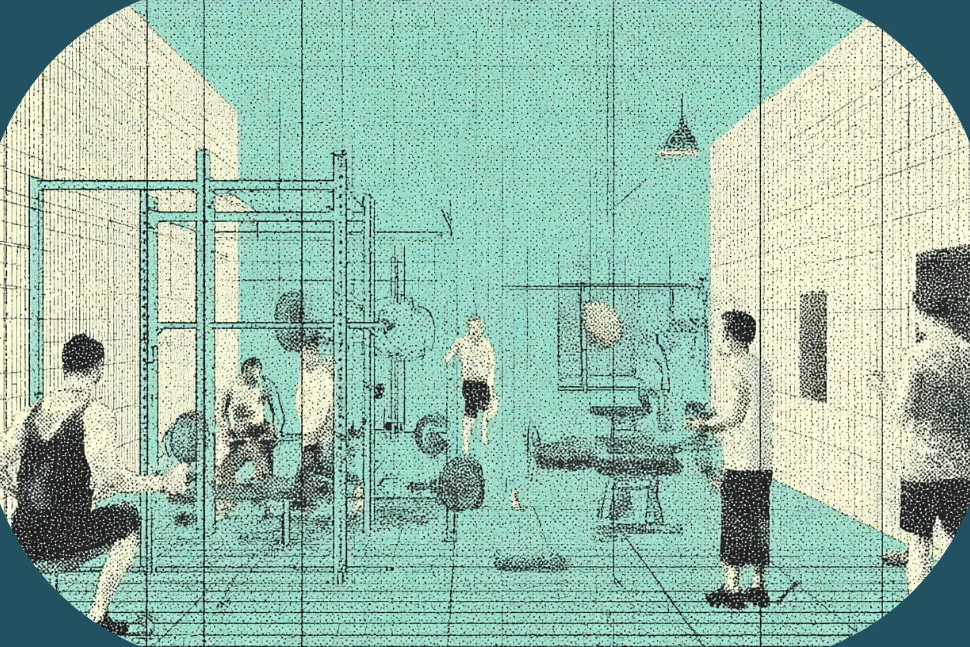
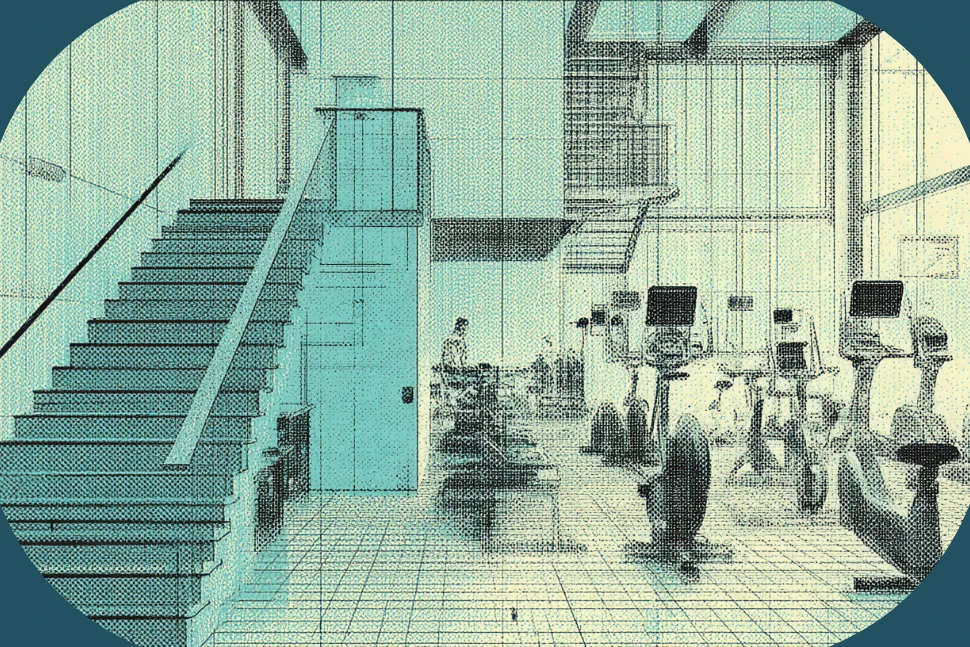
The five cardio machines you'll find in almost any gym are the treadmill, the elliptical, the stationary bike, the rowing machine, and the stair climber. Most gyms add a few more from the list below.
Here are all 15 cardio machine names, what each one does, and what it costs commercial vs home, with a picture of most of them. The names get loose on a gym floor, too. Plenty of members call every stepmill a StairMaster, whoever made it.
If you own or run a gym, your half starts after the head-to-head comparison. It sizes the fleet and the floor space, then works out the mix for your type of gym.
What Are Cardio Machines?
Cardio machines are exercise machines that keep large muscle groups moving long enough to raise your heart rate and breathing. They're also called cardiovascular machines or aerobic machines.
Treadmills, bikes, rowers, ellipticals, and climbers all count. They build endurance and heart and lung fitness, and most of them let you set the intensity from an easy walk to all-out intervals.
Cardio Machine Names at a Glance
Gyms, manufacturers, and members don't always use the same name for the same machine. The "also called" column covers the names you'll hear. For strength equipment too, see the full list of gym equipment.
Commercial and home prices are far apart for a reason.
Commercial machines are built to run all day for a long line of different users. Equipment dealer GymPros says a true commercial treadmill is built for 8–12 hours of use a day, with a heavier frame, a bigger motor, and a longer warranty.
Home machines are built for much lighter use, so a home treadmill on a busy gym floor won't last long. For a garage setup, see the guide to home gym equipment.
Machine | Also Called | Commercial Price (approx.) | Home Price (approx.) | Where You'll Find It |
Treadmill | Motorized treadmill, running machine | $3,500–$4,000+ | $650–$1,800 | Nearly every gym |
Curved treadmill | Non-motorized treadmill, manual treadmill | $2,800–$7,000 | $1,700–$2,500 | HIIT and performance gyms |
Elliptical | Cross-trainer | $2,900–$3,200 | $1,000–$2,000 | Nearly every gym |
Arc Trainer | Cybex Arc | $9,900–$13,400 | Rare | Big-box and university gyms |
Stair climber | Stepmill, StairMaster | $6,400–$10,100 | Rare | Larger gyms |
Stepper | Stair stepper, climber | $2,200–$6,400 | Mini steppers | Common |
Upright bike | Exercise bike, stationary bike | About $2,400 | $500–$700 | Nearly every gym |
Recumbent bike | Recumbent cycle | $1,300–$2,800 | $600–$800 | Most commercial gyms |
Spin bike | Indoor cycle, indoor cycling bike | $2,400–$3,000 | Varies widely | Gyms with cycling classes |
Air bike | Fan bike, assault bike, Airdyne, Echo bike | $900–$1,500 | $250–$750 | HIIT and CrossFit gyms |
Rowing machine | Rower, rowing ergometer, erg | $990–$3,500 | $270–$1,300 | Most gyms |
Ski erg | Ski ergometer, SkiErg | About $850 | About $850 | HIIT and CrossFit gyms |
VersaClimber | Vertical climber | $3,600–$5,400 | N/A | Specialty gyms |
Jacob's Ladder | Ladder climber | About $6,000 | Same machine | HIIT gyms |
Arm ergometer | Arm bike, upper body ergometer (UBE) | $6,100–$6,600 | About $160 | Rehab and accessible gyms |
We'll keep you in the loop with fresh content, podcasts, how-to guides, tool reviews, and product exclusives.
15 Types of Cardio Machines, One by One
The last line of each entry is for owners.
1. Treadmill
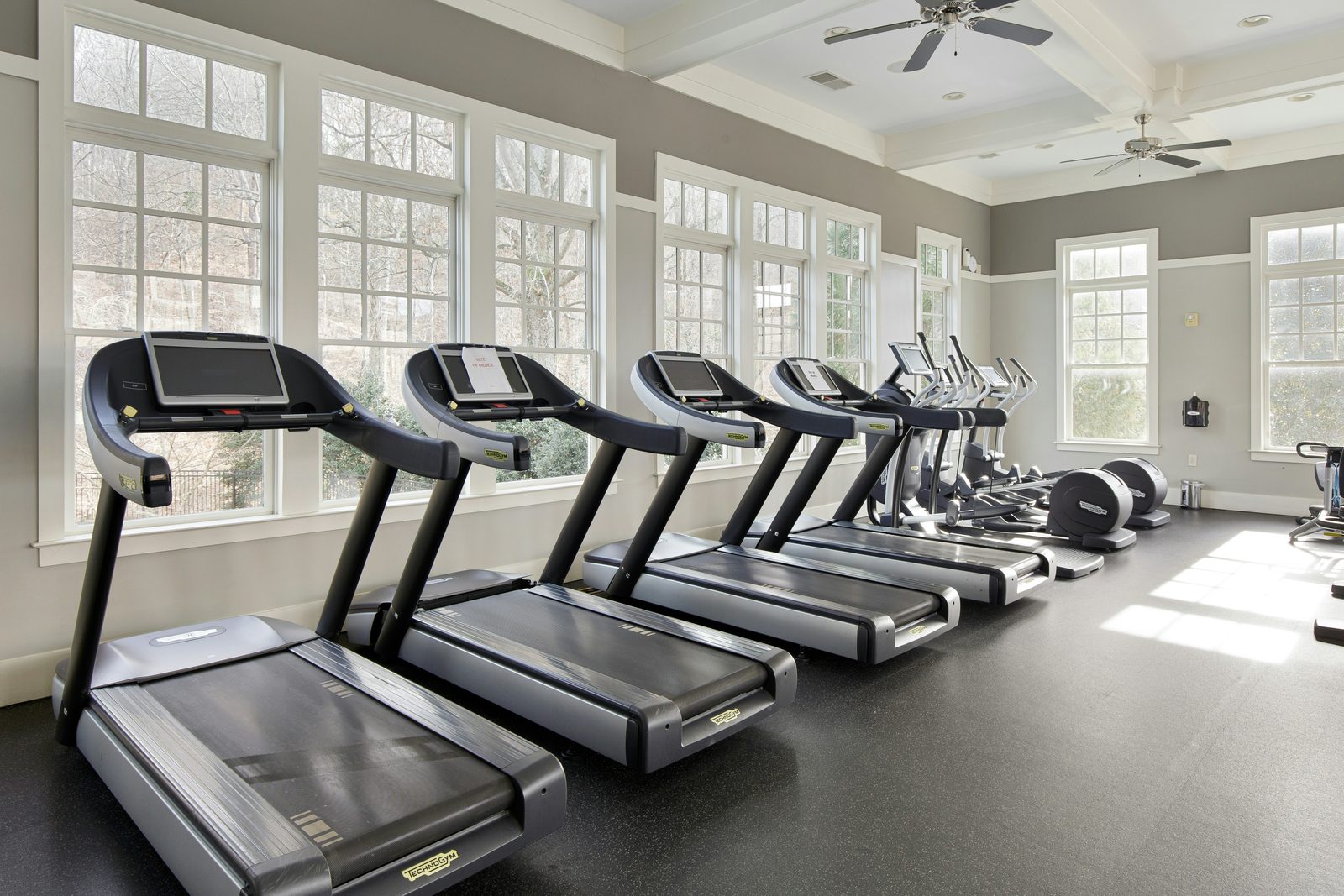
A treadmill is a moving belt you walk, jog, or run on in place. You set the speed and incline, and a safety clip stops the belt if you fall back.
- Easy to learn. If you can walk, you can use one.
- Adjustable. Speed and incline cover everything from a recovery walk to sprints.
- Year-round. Weather and daylight stop mattering.
Types of treadmills: Motorized treadmills (the standard gym version, with a motor driving the belt), manual treadmills (flat, belt moved by your feet, mostly cheap home models), and curved non-motorized treadmills (their own entry below). Some high-end commercial treadmills use a slat belt, rubber-coated slats in place of a single belt, which lasts longer under heavy use.
Cost: Commercial treadmills run about $3,500–$4,000 and up, and a Spirit CT800 sells for about $4,000. Home models run $650–$1,800, from the Sunny Pace 500 at $650 to the NordicTrack Commercial 1750 at $1,800.
On a gym floor: The treadmill is usually the busiest machine on the floor in a general gym, so it gets the biggest share of your cardio budget.
2. Curved treadmill
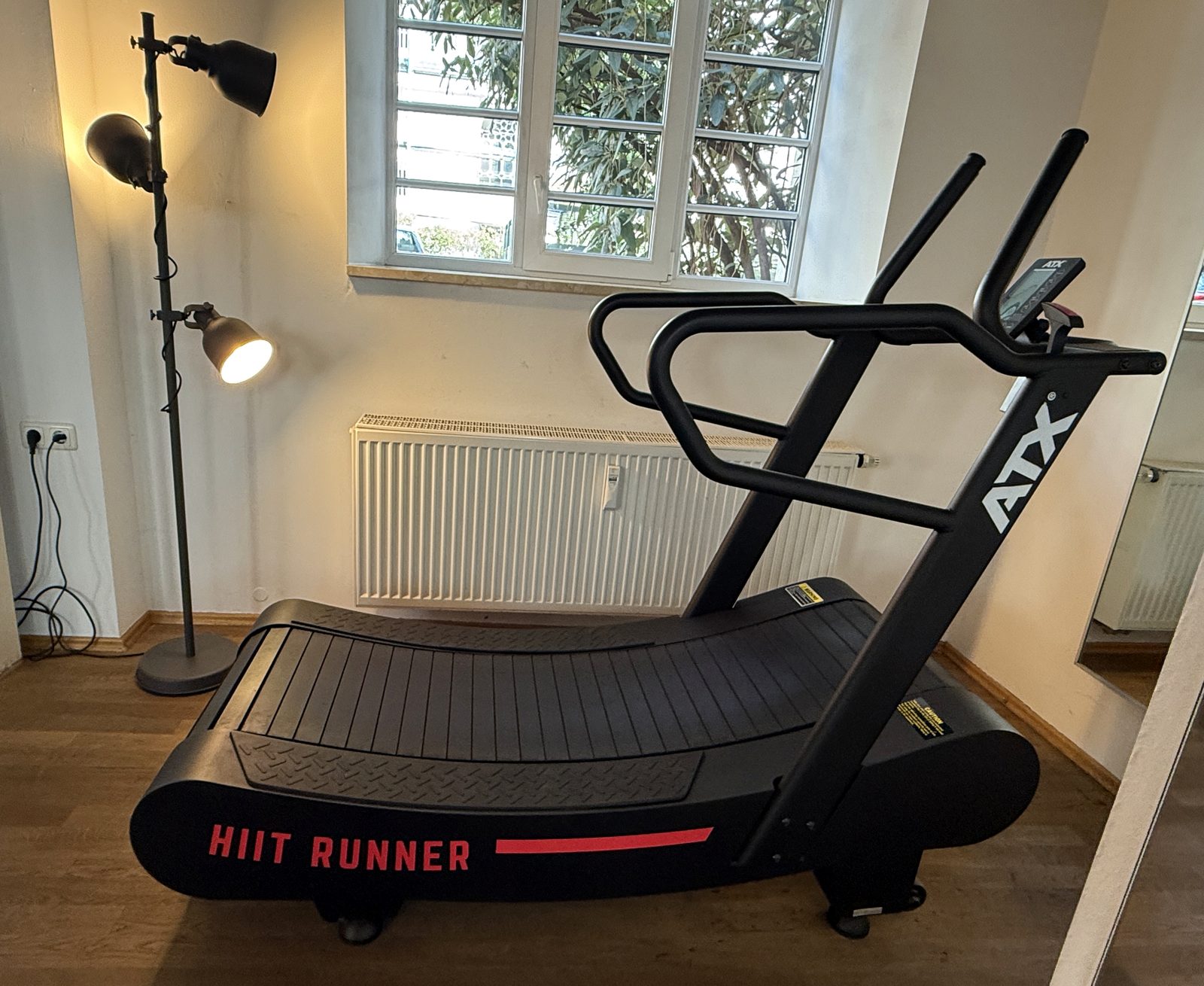
Photo: Burkhard Mücke, CC BY-SA 4.0, via Wikimedia Commons
A curved treadmill has a concave running surface and no motor. You move the belt yourself, and you speed up by moving your feet forward on the curve.
- No electricity. Your effort is the motor.
- Harder work. The same pace feels harder than on a motorized treadmill.
- Natural stopping. Slow down and the belt slows with you.
Cost: Commercial curved treadmills run about $2,800–$7,000. The AssaultRunner Classic lists at $2,799 and the Elite at $4,499, and the Woodway Curve has an MSRP of $6,995. Home versions run $1,700–$2,500, like the APE wood motorless at $1,699 or a Sunny curved model at $2,500.
On a gym floor: One or two work well for sprint intervals in a HIIT or performance gym. A full row is overkill.
3. Elliptical
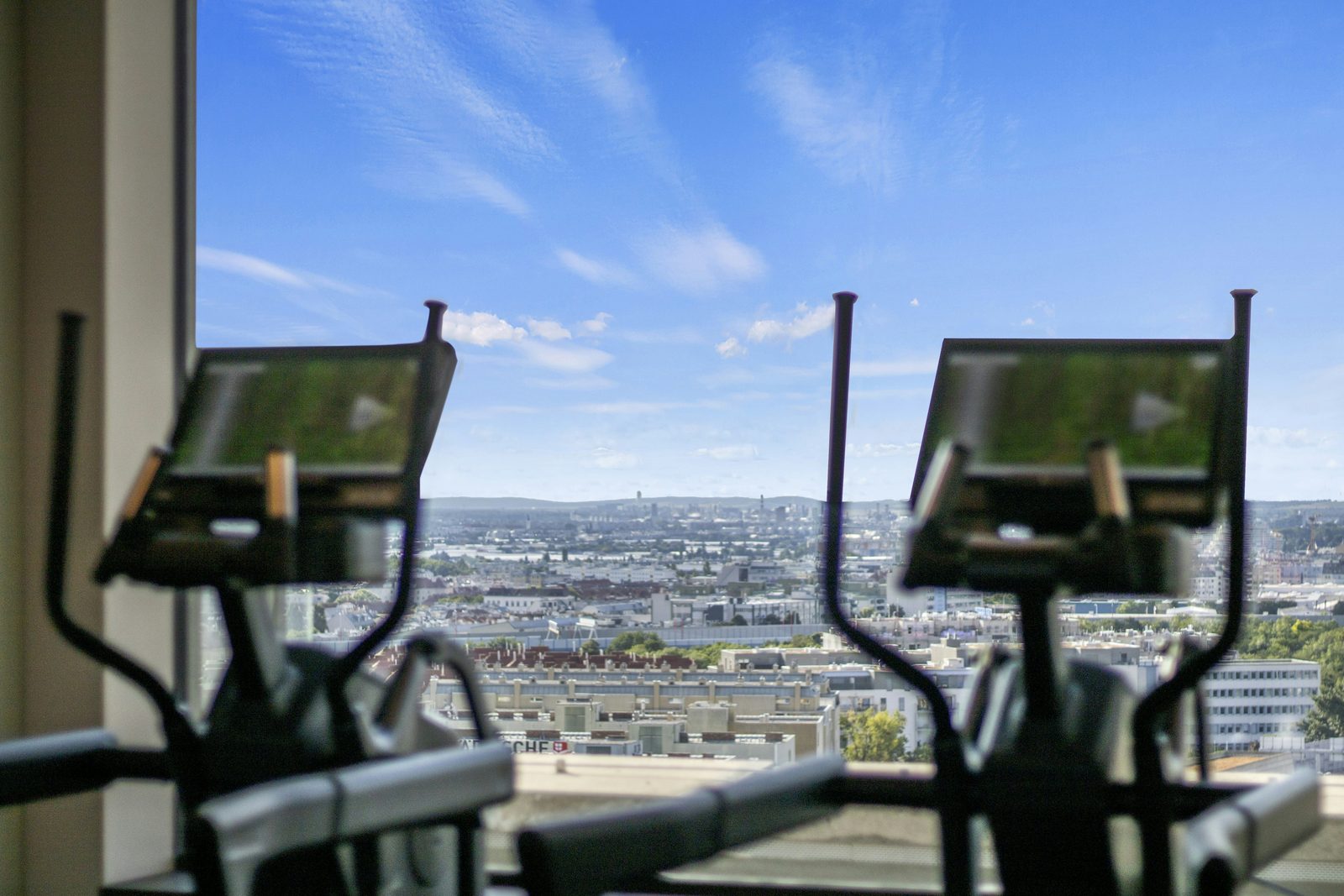
An elliptical moves your feet in an oval path while your hands push and pull moving handles. Your feet never leave the pedals, so there's no impact, and it's easier on knees and hips than running.
- Upper and lower body. The handles bring your arms in.
- Beginner-friendly. The motion is guided, so there's little to learn.
Cost: Commercial ellipticals run about $2,900–$3,200, from the Endurance E5000 at $2,860 to the Spirit CE800 at $3,200. Home models run $1,000–$2,000, like the Horizon 7.0 AE at $999 or the Endurance E300 at $1,935.
On a gym floor: The default low-impact option for older members and anyone coming back from an injury. Many general gyms run a full row.
4. Arc Trainer
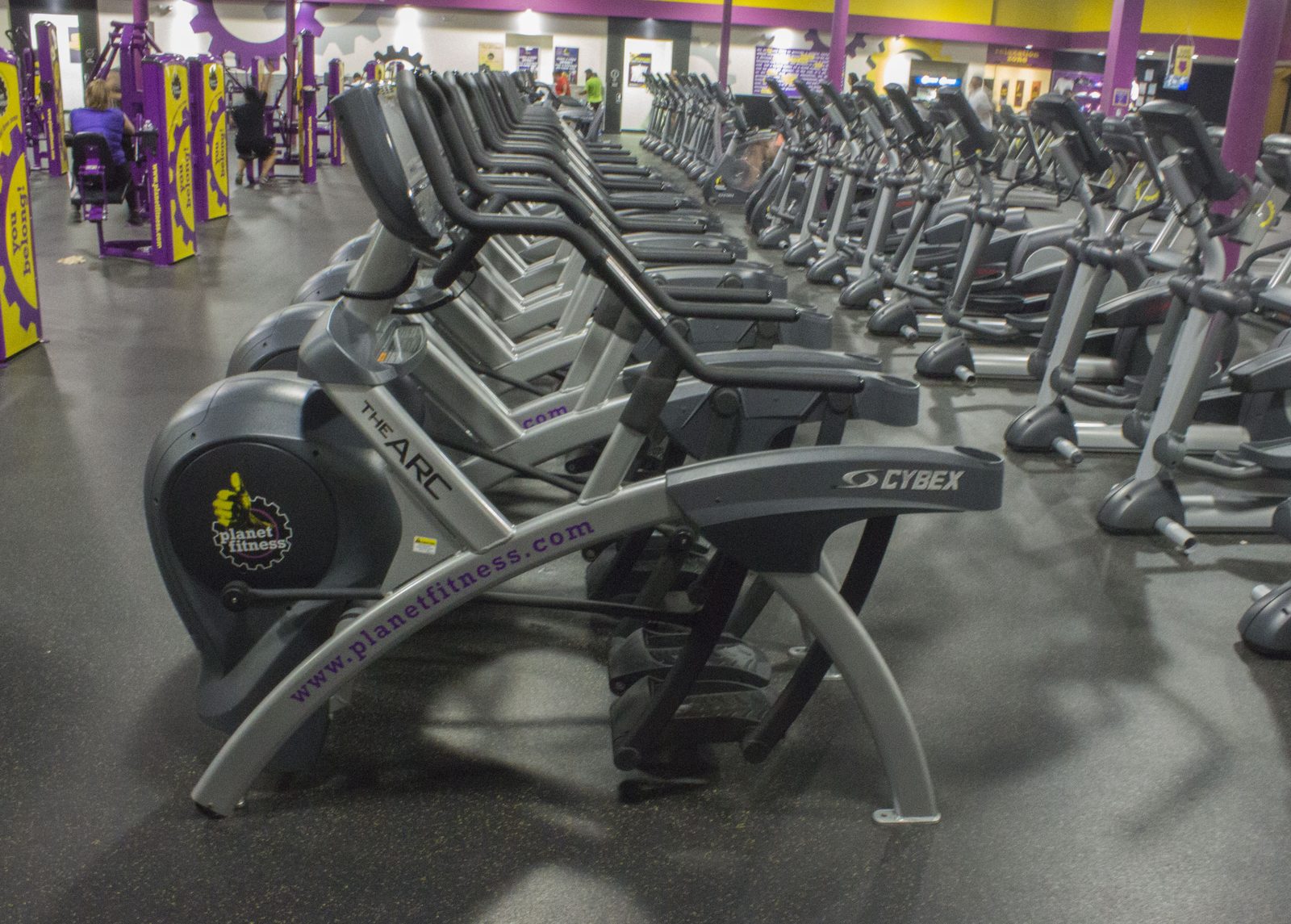
The Arc Trainer is Cybex's take on the elliptical, sold today under the Life Fitness name. Your feet travel in an arc, and you can change the stride from a gliding motion to something closer to stair climbing.
- Adjustable stride. One machine covers glide, stride, and climb.
- No pounding. Your feet stay planted, like on an elliptical.
- Lower-body heavy. The climbing setting works glutes and quads hard.
Cost: New Arc Trainers run about $9,900–$13,400. The Life Fitness Club Series+ Total Body Arc Trainer lists at $9,899 with the SL console and $13,399 with the SE4. Dealers also sell refurbished units for much less, and you won't find many home versions.
On a gym floor: A premium alternative to a second elliptical row. You'll see them in big-box and university gyms more than in small studios.
5. Stair climber
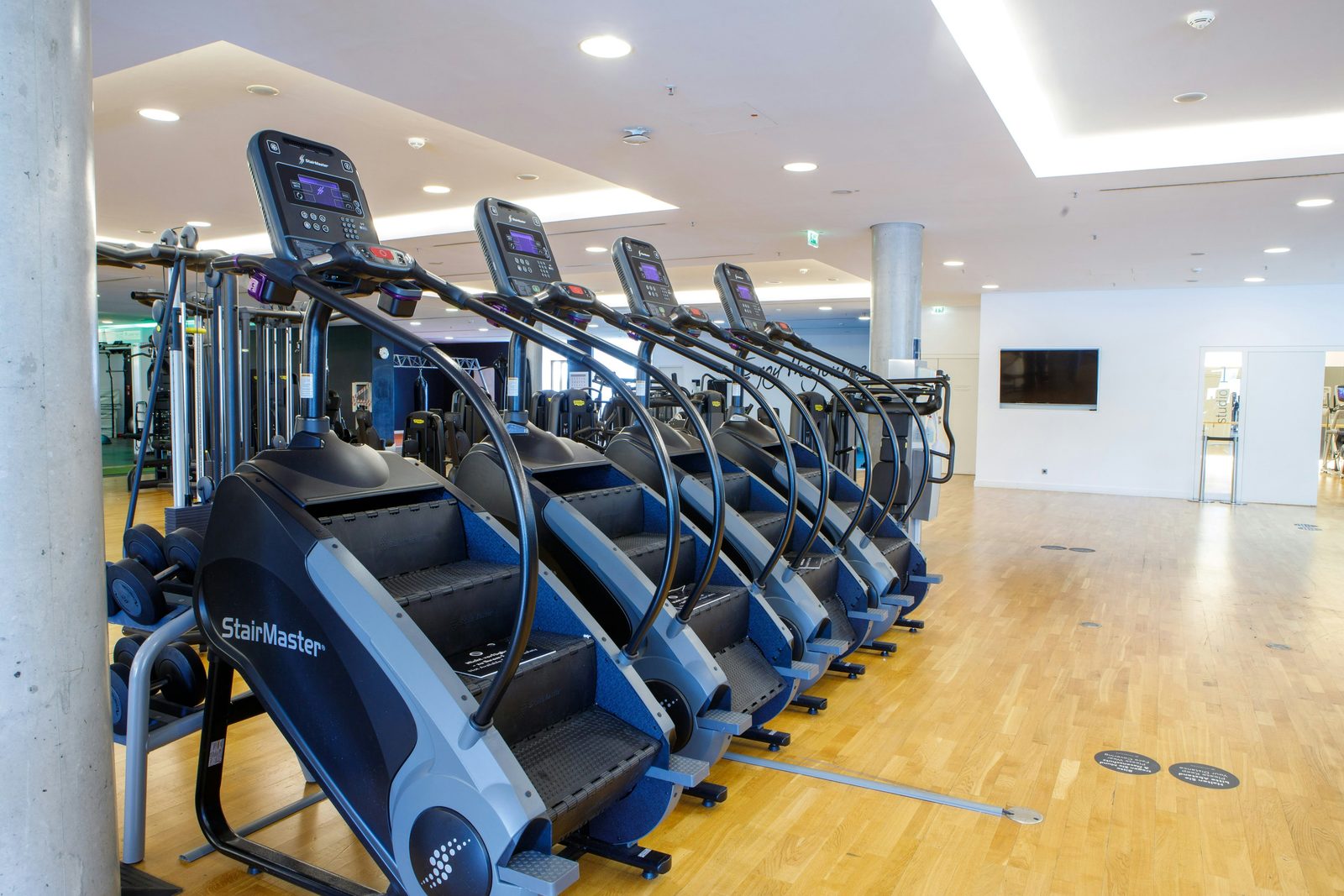
A stair climber, or stepmill, is a short revolving staircase. The steps keep moving down, and you keep climbing to stay in place. StairMaster is the brand, but you'll hear the name used for almost any stepmill.
- Hard cardio fast. Heart rate climbs quickly, even at slow speeds.
- Lower-body focus. Glutes, quads, hamstrings, and calves.
- No landing. Less joint stress than running.
Cost: Commercial stepmills are some of the most expensive cardio machines, at about $6,400–$10,100. The compact StairMaster 4G Gauntlet sells for $6,449, and the StairMaster 8Gx for about $10,100. Home versions are rare.
On a gym floor: Popular and pricey. Larger gyms often have a couple, and smaller gyms tend to skip them.
6. Stepper
A stepper has two foot pedals that move up and down against resistance. It's older and simpler than the stepmill. You press the pedals down and they rise back up, and your feet stay on them the whole time.
- Small footprint. Takes less room than a treadmill or elliptical.
- Independent pedals. Each leg pushes its own pedal, working quads, glutes, and calves.
Cost: Commercial steppers run about $2,200–$6,400, from the Spirit CS800 at $2,300 to the StairMaster FreeClimber at $6,436. For home use, there are mini steppers.
On a gym floor: A cheaper way to offer climbing if a stepmill is out of reach.
7. Upright bike

Photo: Ralf Roletschek, CC BY-SA 3.0, via Wikimedia Commons
The upright bike is the first of three stationary bike types on this list, along with the recumbent and spin bike. It's the classic exercise bike, with the seat over the pedals like a road bike and a console in front, and it's easy on knees and ankles.
- Simple. Pick a program and pedal.
- Space-efficient. About half the footprint of a treadmill.
Cost: A commercial upright bike like the Spirit CU800 runs about $2,400. Home models run $500–$700, like the Nautilus U616 and U618.
On a gym floor: Low cost per station and easy to fit into tight corners.
8. Recumbent bike
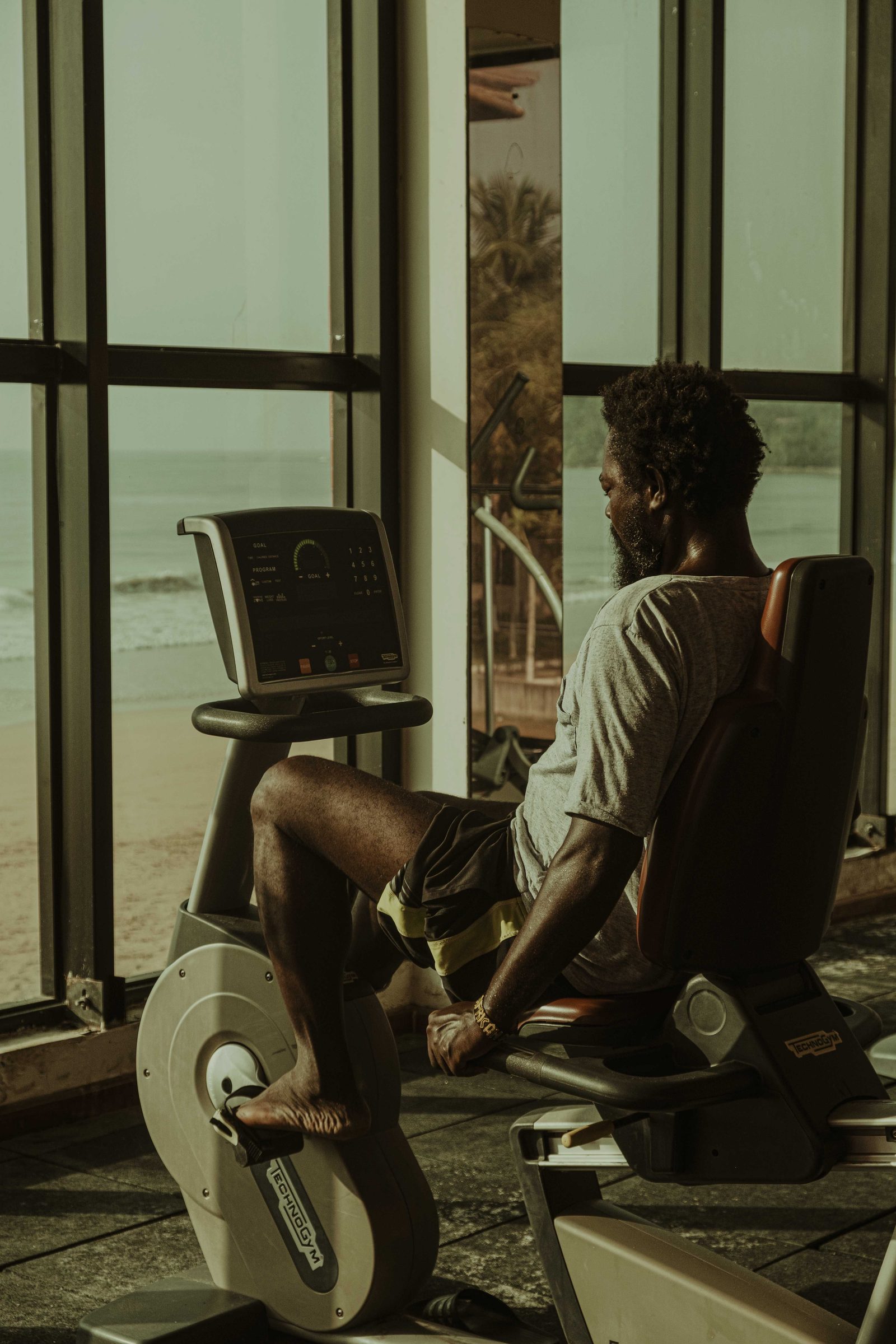
A recumbent bike has a wide seat with a backrest, and the pedals sit out in front of you. You pedal from a reclined position, which is gentle on every joint.
- Back support. The backrest takes load off your lower back.
- Easy to get on. A step-through frame helps older members and anyone with limited mobility.
Cost: Commercial recumbent bikes run about $1,300–$2,800, from the Endurance B4RB at $1,335 to the Spirit CR800 at $2,800. Home models run $600–$800, like the Nautilus R616 and R618.
On a gym floor: A must if you have older members or run programs for special populations.
9. Spin bike
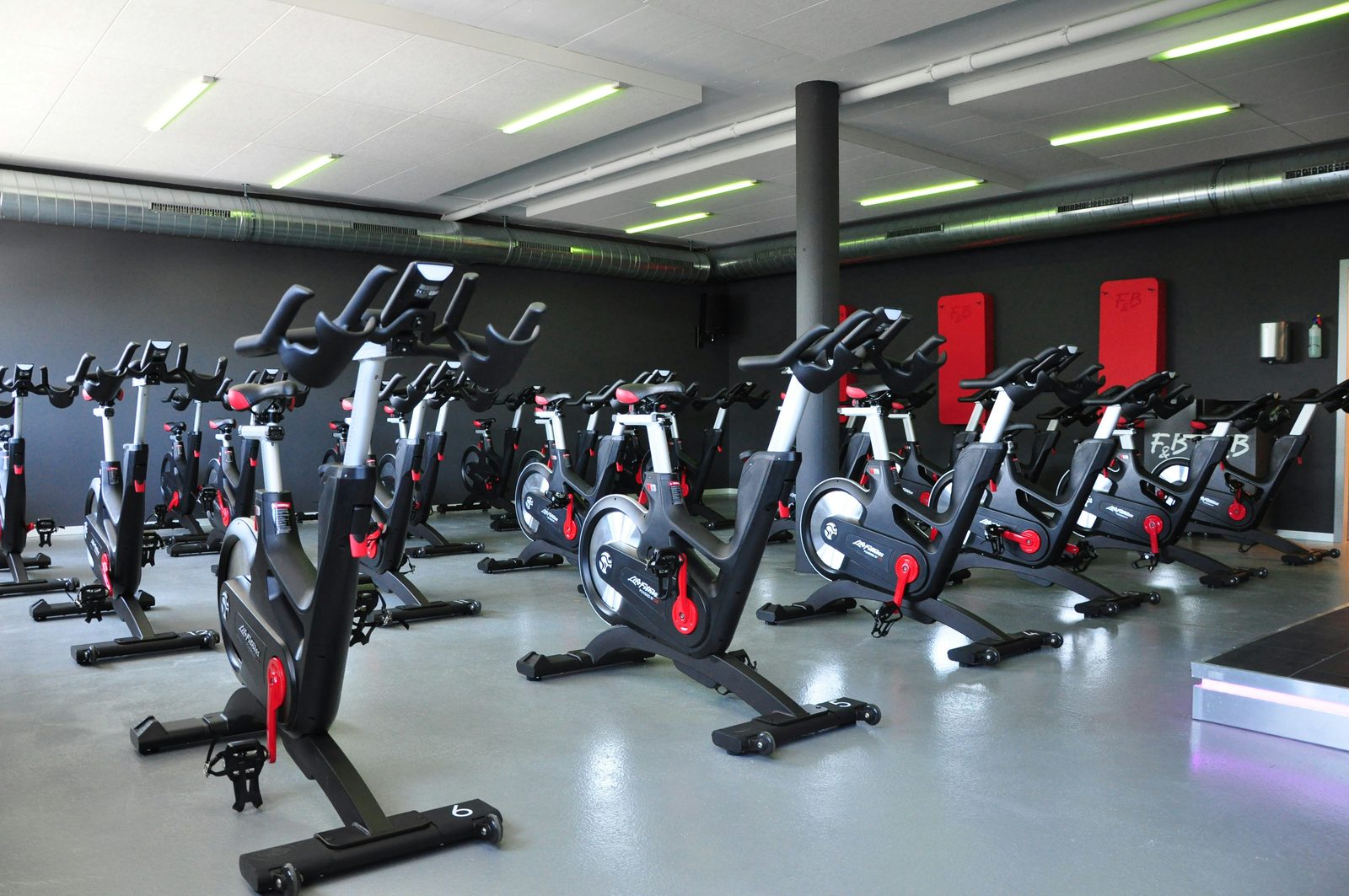
A spin bike, or indoor cycle, is built to feel like a road bike. It has a heavy flywheel, a resistance knob, and handlebars you can ride seated or standing.
- Class-ready. Built for group cycling.
- Intense. Hill climbs and sprints with a twist of the knob.
- Durable. Handles riders standing up and hammering.
Cost: Commercial spin bikes run about $2,400–$3,000. The Schwinn AC Sport sells for $2,439 and the Keiser M3i for $2,985. Home spin bikes vary widely in price.
On a gym floor: Usually lives in a studio room for classes, separate from the main cardio floor.
10. Air bike

An air bike has a big fan in place of a front wheel and handles that move with the pedals. The harder you push and pull, the more air the fan moves and the harder it gets.
You'll hear it called a fan bike, an assault bike (after the Assault AirBike), an Airdyne (Schwinn's long-running model), or an Echo bike (Rogue's). They're all the same idea.
- Arms and legs together. Every pedal stroke is also a push and a pull.
- No settings. Resistance matches your effort automatically.
- Built for intervals. A 20-second sprint on one is miserable in the best way.
Cost: Commercial air bikes run about $900–$1,500. The AssaultBike Pro X lists at $899, the Elite at $1,499, and the Schwinn Airdyne AD7 at $1,099. Home models run $250–$750, from the Marcy NS-1000 at $256 to the AssaultBike Classic at $749.
On a gym floor: A staple in CrossFit boxes and HIIT gyms. It pairs well with CrossFit exercises in any conditioning area, and it's a cheap addition.
11. Rowing machine
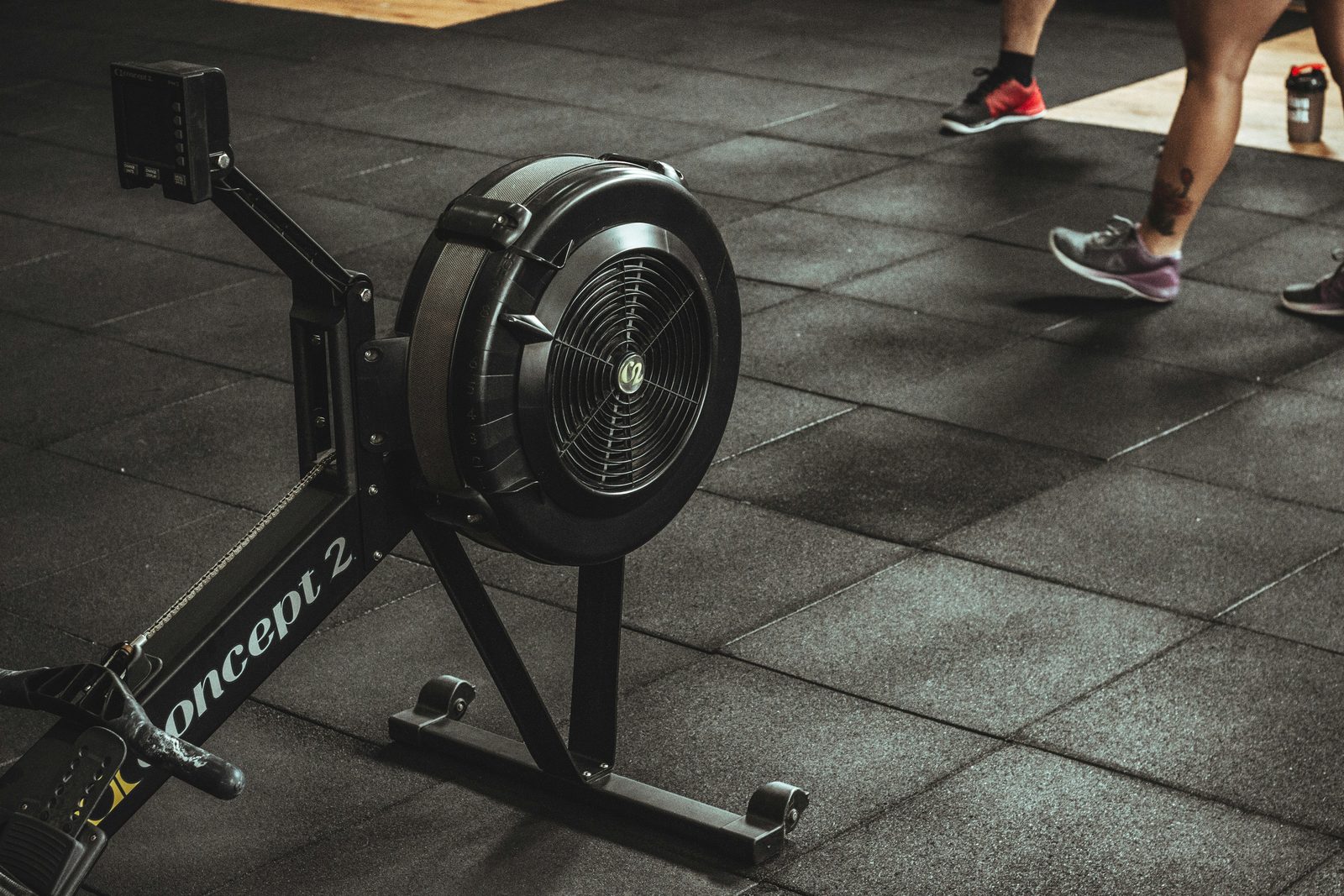
A rowing machine copies the motion of rowing a boat. You sit on a sliding seat, strap your feet in, and drive with your legs before pulling the handle to your chest.
- Legs, back, and arms. Each stroke starts with a leg drive and finishes with a pull.
- Seated. Your weight stays on the seat, so there's no pounding.
- Steady or intervals. Works for a long row or short sprints.
Types of rowing machines: Air rowers (a fan flywheel, the type you'll usually see in gyms), magnetic rowers (quiet, resistance set by magnets), water rowers (a paddle in a water tank, with a swooshing sound people love), and hydraulic rowers (pistons, mostly cheap home models).

Cost: The Concept2 RowErg, the rower you'll see in most CrossFit and HIIT gyms, costs $990. Other commercial rowers run up to about $3,500, like the WaterRower Original Club at $1,299 and the Matrix RXP at $3,490. Home models run $270–$1,300, from a Sunny magnetic rower at $270 to the WaterRower Original at $1,199–$1,299.
On a gym floor: The best value in cardio. They're cheap and they last for years. When you need the floor for something else, most of them stand on end.
KEY TAKEAWAY
Rowers are one of the cheapest commercial cardio machines, and most can be stood on end when you need the floor for something else.
12. Ski erg
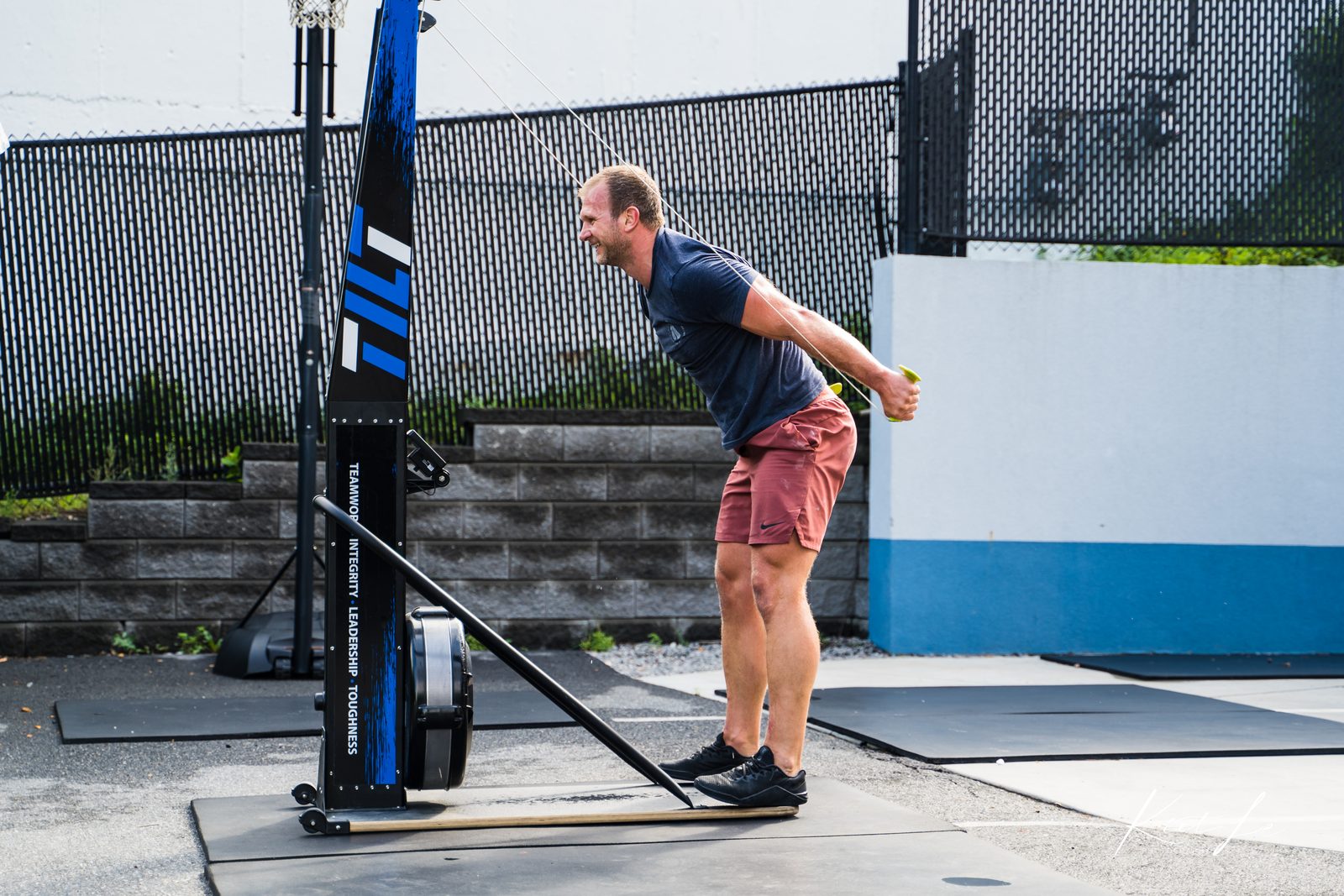
Photo: Kiet Le, CC BY 2.0, via Wikimedia Commons
A ski erg copies the double-pole motion of cross-country skiing. You stand facing the machine and pull two handles down, hinging at the hips. Nothing lands, so it's low impact.
- Upper-body heavy. Lats, shoulders, triceps, and core, with legs joining in.
- Tiny footprint. Some mount on a wall.
Cost: The Concept2 SkiErg, the one you'll see most, costs about $850. Gyms and home users buy the same machine.
On a gym floor: Popular in CrossFit and HIIT gyms, and a growing fitness trend because it takes almost no space.
13. VersaClimber
The VersaClimber is a vertical climbing machine. You stand on two pedals and grip two handles, then move opposite arm and leg together like you're climbing a ladder.
- Learning curve. The opposite-arm-and-leg rhythm takes practice.
- Intense. Heart rate climbs fast.
- Small footprint. Tall but narrow.
Cost: Commercial vertical climbers run about $3,600–$5,400. VersaClimber's commercial models sell for $4,895–$5,395, and the Xebex 3.0 is a cheaper commercial option at $3,619.
On a gym floor: Specialized commercial gym equipment for HIIT and athletic training gyms. Members need some coaching on it, so it's a poor fit for unstaffed hours.
14. Jacob's Ladder
Jacob's Ladder is a self-paced climbing machine with rungs on a moving belt set at an angle. The faster you climb, the faster the rungs move.
- No buttons. You set the pace by climbing.
- Full body. Legs, core, back, and arms.
Cost: A Jacob's Ladder 2 runs about $6,000 ($5,999). The same machine goes into homes and gyms.
On a gym floor: A specialty piece for HIIT and functional gyms. One is usually enough.
15. Arm ergometer
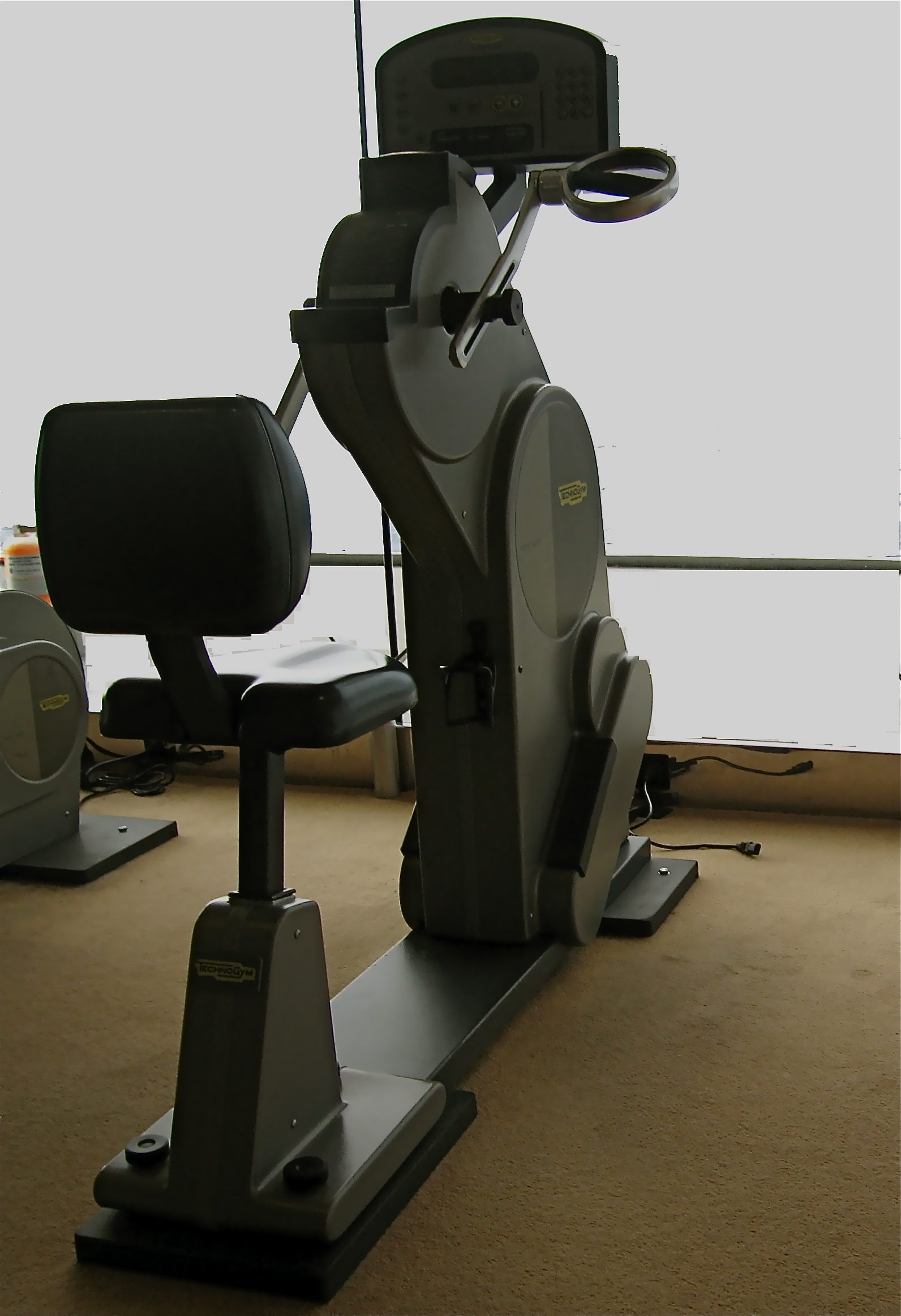
Photo: Karlarndthans, CC BY-SA 3.0, via Wikimedia Commons
An arm ergometer, also called an arm bike or upper body ergometer (UBE), is a bike you pedal with your hands. You sit or stand and turn the handles in a circle.
- Upper body. Arms, shoulders, chest, and back.
- Accessible. Cardio for members who can't use their legs, or are recovering from a lower-body injury.
- Seated or standing. Many models have a removable seat for wheelchair access.
Cost: A commercial arm ergometer like the SciFit Pro1 runs about $6,100–$6,600. Home tabletop pedal exercisers cost far less, like the CanDo Deluxe at about $160.
On a gym floor: Common in rehab clinics and gyms that serve members with mobility limitations. Rare in general gyms.
Treadmill vs Elliptical vs Bike: Which Cardio Machine Is Best?
Among the six machines in the best-known study, the treadmill burned the most at the same effort. For sparing your joints, the elliptical or recumbent bike is the gentlest choice.
That study ran in JAMA in 1996. Researchers had 13 healthy young adults exercise on a treadmill, a cross-country ski machine, a rower, a stair stepper, a Schwinn Airdyne, and a cycle ergometer, all at the same perceived effort.
The treadmill burned the most energy. The ski machine, rower, and stair stepper came next, and the Airdyne and cycle ergometer burned the least.
It's an old study with a small group, so treat it as a tiebreaker.
A few practical rules:
- Treadmill vs elliptical. The treadmill has landing impact and the elliptical has none, so the elliptical is easier on your joints. If your knees complain, pick the elliptical.
- Bike vs elliptical. Both are low impact. The bike is easier to learn and lets you rest your upper body. The elliptical brings your arms in.
- Rower vs bike. Both are seated and low impact. The rower works your back and arms too, and it burned more energy than the cycle ergometer in the JAMA study.
- Stepper vs treadmill. These two pushed heart rates highest in that study. The stepper has no landing impact, and the treadmill is easier to learn.
How Many Cardio Machines Does a Gym Need?
Start with your member count.
Start with a rule of thumb, then check your busiest hour
A simple starting point is one cardio machine for every 10 members on your roster in a general-purpose gym. A 300-member gym lands at about 30 machines.
Then check that number against your busiest hour.
Say 60 members check in between 5 and 6 p.m. If most visits run about an hour, that's roughly 60 people in the building at once. In a general gym, about half of them want cardio at some point, so about 30 people want a machine.
That half is a planning assumption, and it runs lower in strength-focused gyms. With it, the busiest hour lands right on the rule of thumb.
If your busiest hour comes in well above or below that, trust your floor over the rule. Fewer machines than you need, and people queue. Many more, and you're paying rent on machines nobody touches.
PRO TIP
Check the rule of thumb against your real busiest hour. Pull the check-ins for your busiest weeknight and count how many members checked in between 5 and 6 p.m. If that number is far off what the roster rule assumes, size to the floor you actually have.
Put your member count into the recommender below and it'll size the fleet, floor space, and budget for your type of gym.
Cardio Mix Recommender
Tell us about your gym. We'll size the fleet, the floor space, and the budget.
| Machine type | Why it's in the mix | Count |
|---|
Floor space per machine
As a planning rule of thumb, give ellipticals, bikes, rowers, and ergs about 30–50 square feet per machine, including walking lanes. Bikes and ski ergs sit at the low end of that range.
Treadmills need more. Someone who slips off needs somewhere to land, so the ASTM F2115 safety standard calls for at least 2 meters (about 6.5 feet) behind a treadmill and half a meter on each side. Add that clearance and a treadmill takes roughly 80 square feet.
In a 1,500-square-foot cardio area, ten treadmills at about 80 square feet (800) plus twenty other machines at about 35 (700) comes to about 30 machines.
Do Cardio Machines Pay for Themselves?
Run the worked example below and a commercial treadmill pays for itself in about 31 months, somewhere between two and three years.
The reasoning is simple. Members stay when the cardio works, and every member who stays keeps paying. A sturdier machine also breaks down less, so you lose less revenue to "out of order" signs and replace it less often.
The simplest version of the formula:
Payback months = Machine cost ÷ (monthly revenue from members you kept + monthly downtime savings)
Say a $5,000 treadmill helps your member retention by keeping two $80-a-month members who would otherwise have cancelled. That's $160 a month you still have, and about 31 months to cover the machine before you count downtime.
If the equipment is part of a bigger build-out, the gym startup cost calculator covers rent, equipment, and launch costs in one place. See also the cost to open a gym and your gym financing options.
Cardio Mix by Gym Type
A martial arts academy doesn't need 12 treadmills. A 24-hour gym does. Your type of gym and your class schedule decide the mix.
For a big-box or general-purpose gym, a sensible starting mix looks like this:
- 55–65% treadmills. Usually the busiest machines on the floor.
- 20–30% ellipticals. The low-impact default.
- 10–15% bikes. Upright and recumbent on the floor, spin bikes in a group room.
- A few rowers, climbers, or ergs. For variety and interval work.
Big-box chains and most independent multipurpose gyms run some version of this.
Other gym types look very different:
- 24/7 access gyms. Anytime Fitness, Snap Fitness, and independent 24/7 access gyms mostly run treadmills and ellipticals, because nobody's there to coach. Skip anything with a learning curve, like Jacob's Ladder or the VersaClimber.
- HIIT gyms and CrossFit boxes. Four to six rowers, two air bikes, and two ski ergs cover most workouts. Treadmills are optional, and a curved treadmill or two is a nice extra. If you're still planning the box, here's the cost to open a CrossFit box.
- Martial arts and boxing gyms. One or two rowers and an air bike for warm-ups and conditioning rounds. Members come for mat time and cross-training in martial arts, so the budget goes to mats and boxing equipment.
- Yoga, Pilates, and functional studios. Almost no traditional cardio. One rower or recumbent bike for members with special needs, and the rest of the floor goes to mats, reformers, or open space.
Connected Cardio Equipment
Many new commercial consoles connect to something. They pair with members' phones, heart-rate straps, and fitness apps so a workout gets saved somewhere besides the machine's screen.
Members who can see their progress have one more reason to keep coming back. So ask a vendor which apps a console supports before you buy.
Also ask what happens when the vendor stops updating the console software, because you'll own the machine for a long time after that.
IMPORTANT
Before you buy connected cardio, ask the vendor which member apps the console supports and how long they'll keep updating its software.
Cardio Equipment Maintenance
Commercial cardio machines need regular care, and skipping it shortens their life fast. Treadmills take the most work because of the belt, deck, and motor.
A working baseline:
- Weekly: Wipe-downs, console cleaning, belt inspection
- Monthly: Belt tension check, treadmill lubrication, electronics check
- Quarterly: Deep clean, motor inspection, treadmill deck check
- Annually: Professional service on high-use machines
Check your owner's manual, since intervals vary by model.
For cleaning routines, see the guide to cleaning your gym and equipment.
Size and Mix Your Cardio for the Gym You Actually Run
The roster rule gets you a starting number. Your busiest hour tells you if it's right.
If members check in with Gymdesk's attendance tracking, every check-in is logged with a time, and you can export the log to see how many members checked in between 5 and 6 p.m. last Tuesday.
If you're choosing software and want to size your floor from real numbers, look at how each system logs check-ins. Here's how the best gym management software compares on that, plus billing and scheduling.
Gym management software that frees up your time and helps you grow.
Simplified billing, enrollment, student management, and marketing features that help you grow your gym or martial arts school.


FAQ
Cardio Machines FAQs
Quick answers to the questions people search most about gym cardio machines.

Sean has spent the last decade creating content that helps businesses—small and not so small—grow smarter to allow operators to do more of what they love. You know, the fun stuff.
From shipping and international logistics to web development and marketing, he's done the work (not just the words) to scale retail and service businesses efficiently.
You can find his work at Sendle, Shogun, The Retail Exec, Gymdesk, and more.