Greater Toronto's Gyms: Seven Founders, One Question

Toronto has a version of itself it sells to the world: the tower, the lake, the glass downtown you see from the plane. Alex has spent his time in the other one.
The real map of martial arts gyms in the Greater Toronto Area is a two-hour loop of strip plazas, business parks, and shared industrial units, wrapped around the west end of the lake in a long grey horseshoe.
Brampton. Oakville. Newmarket. Thornhill. Ancaster, out where the city gives up and turns into Hamilton.
And, eventually, the core itself: a room on the Danforth, in the actual city the postcards are selling.
It gets cold. "It is, I think it's negative five, but it's not in the regular Fahrenheit units," he says into the camera on one stop, hands going numb in a parking lot nobody would put on a postcard.
That's the right place to look.
You don't learn a city from its skyline. You learn it from the people who signed a lease in a unit off a service road and turned the lights on.
Over a run of trips to the GTA, Alex filmed seven of them: a karate dojo, a windowless competition room in Thornhill, a concept-based jiu-jitsu gym, a no-hard-sell academy on the Danforth, a Pilates studio, a 25,000-square-foot fight factory, and a five-location BJJ operation with 1,200 members.
He kept going back.
Seven founders. Seven answers. One of them isn't even martial arts.
And that turns out to be the point. The only question all seven actually answered is the one most owners never stop to ask: who is this gym for?
Here's what those trips turned up, gym by gym, and the three things every one of them understood.
Lion's Heart Family Martial Arts, Ancaster: The Kids Sent Home

Ancaster is the far edge of the sprawl, the part of the GTA that smells like a small town because it mostly is one. Alex made the drive, almost two hours, and pulled up to a shared building that used to hold a dance studio.
Inside is a karate school run by a woman who opened it at 24, straight out of college, on a hunch about the children other programs didn't want.
Mersina Giampapa has trained since she was three—fourth-degree black belt, some Taekwondo, a little weapons work, eventually Team Canada. But the school she built isn't about medals, and she's blunt about it.
"I opened so that the kids had a safe space… and even the teens… just somewhere they can be themselves."
— Mersina Giampapa, Founder, Lion's Heart Family Martial Arts
The safe space is an admissions policy.
Kids come to Lion's Heart after being turned away somewhere else, the ones labeled too hyper, too much, too hard to teach. Mersina takes them as the default, not the exception.
"Every kid at this point that walks through the door, I'm like, that's ADHD until you prove otherwise. Like all of you."
— Mersina Giampapa, Founder, Lion's Heart Family Martial Arts
One family drives thirty to forty minutes each way because their deaf daughter had been told, at dance and at gymnastics, that she couldn't do it. Mersina's staff learned basic sign language.
"She's cognitively perfectly fine, physically perfectly fine. What? She can't do it because you don't know how to teach her."
— Mersina Giampapa, Founder, Lion's Heart Family Martial Arts
She threw out how she was raised on the mat, replacing it with play-based teaching, partner games, accommodations built in.
The traditional way would have emptied her room. If she taught the way she was taught, she says, "these kids would not be here." That instinct is the whole engine behind an inclusive, adaptive program.
The design follows the mission down to the furniture: no seating in the training room, just a hallway livestream, so parents back up the teaching at home instead of hovering at the mat's edge.
It works where it counts. She hasn't lost a single black belt.
Watch the full Lion's Heart episode to hear where the name came from and why there's nowhere for parents to sit.
King Jiu-Jitsu, Thornhill: The Strivers

Thornhill sits just over the top of the city, the kind of suburb that reads as ordinary until you find the unmarked door.
King Jiu-Jitsu runs out of a room inside Chu's Martial Arts, a Taekwondo school owned by Gregg King's longtime friend Master Chu, who invited him in just before COVID.
Gregg keeps the room raw on purpose. No windows, no polish. Just mats laid over a hard past.
"It's not fancy. It's not beautiful like a lot of the academies. We wanted to keep that original first touch of the old academy—the blood, sweat, and tears, the dungeon feel, you know?"
— Gregg King, Founder, King Jiu-Jitsu
The dungeon is a filter. It sorts for the people who want the work, and those people are exactly who the gym is built for.
Gregg came to jiu-jitsu the humbling way. He was a bodybuilder, 185 pounds and jacked, when a much smaller man folded him up.
"This small guy is a 130-pound guy—can't lift me. At that time I was 185, jacked."
— Gregg King, Founder, King Jiu-Jitsu
He walked home that day and decided he'd become a black belt.
Two decades on, he's a second-degree black belt. The team he's grown is what he calls one of the top-three kids-and-teens competitive schools in Ontario, with a strong adult program underneath.
The people he builds for are the strivers: kids and adults who want the podium badly enough to earn it the hard way. His coaches are the proof of the model.
Professor Dane, a black belt who runs the Vaughan location, and Coach Johnny both started as his students.
When the team outgrew a single room, the tooling followed. Gregg runs two Gymdesk accounts, one per location, and he raised the software himself, unprompted.
"As it grew, I had to have something that helped me manage my memberships—the email, the newsletters, payment processing. That was the best place that fit my needs."
— Gregg King, Founder, King Jiu-Jitsu
Watch the full King Jiu-Jitsu episode for the bodybuilding-to-black-belt turn, the dungeon tour, and the case for technique over strength.
NEO Martial Arts, Brampton: The Overlooked

Brampton is where the GTA does its actual living, one of the youngest, most diverse cities in the country, packed into subdivisions and industrial units northwest of the airport. NEO Martial Arts runs out of a shared unit on Fisherman Drive, sharing its facility with a Taekwondo school (Red Dawn).
Patrick Teruel, Coach P, is a two-time IBJJF Masters world champion who started teaching out of his basement.
The brand is pure Brampton: twenty years as a DJ, a Matrix-green color scheme, and a whole pedagogy built on one metaphor.
"I take people out of the matrix and I plug all this information into them."
— Patrick Teruel, Founder, NEO Martial Arts
That's the hook. The real story is who he plugs in.
Most gyms build for the guy who already knows he wants to train.
NEO built two whole programs for the people that guy's gym forgets. Co-founder and shareholder Solana Be runs a women's-only class at the same hour as the kids' classes, turning the moms waiting in the lobby into practitioners.
"Women deserve a spot on the mats."
— Solana Be, Co-founder, NEO Martial Arts
Then there are the teenagers. NEO treats its fourteen-to-twenty-one-year-olds as future operators.
Mock sales calls, reading the dashboard, handling a lead on the phone. His own sons coach the younger brackets.
It's a gym designing on-ramps for people the industry treats as afterthoughts, which is really the case for best martial arts for women.
For years NEO grew on word of mouth alone. Then the website started pulling Google leads, and Patrick still sounds a little amazed by it:
"Every time I answer a call, it's like, 'How did you hear about us?' And it's like, 'Through Google, through Google, through Google.'"
— Patrick Teruel, Founder, NEO Martial Arts
Watch the full NEO Martial Arts episode for the basement origin and the teenagers being trained to run the place.
Tanuki Martial Arts, The Danforth: The People Who Hate Being Sold To
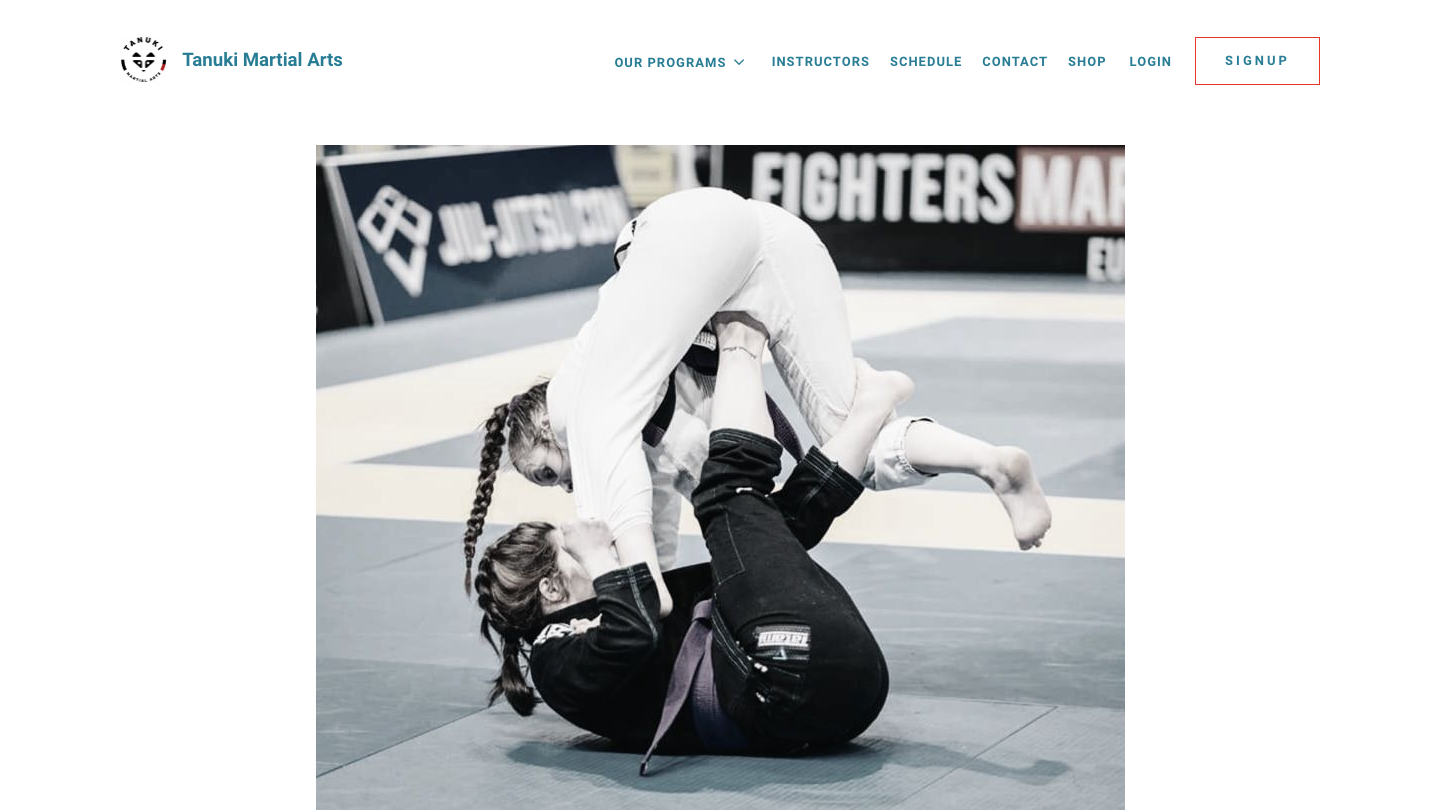
Here, finally, is the city on the postcards. The core.
The Danforth is Greektown: restaurants, the subway, sidewalk life. Tanuki Martial Arts sits right on it at 475 Danforth Avenue, mats downstairs.
Seiji Sugiman-Marangos grew up in this neighborhood. He and Marianna Zafiroudis opened the gym here in 2022 and built it for the one person most gyms treat as a mark: the walk-in braced for a pitch.
Marianna knows that person because she is that person.
"I personally hate going into a gym and getting put to a corner and talked about why I should be signing. It's not why I came here. I just want to try the sport… I'll check your vibe, and if I like it I'll sign up."
— Marianna Zafiroudis, Co-founder, Tanuki Martial Arts
So Tanuki removed the corner. The full prices are on the website. There's no sales desk and no upsell, and there's a quiet line on the site for anyone who needs a hand.
"We do have equity deserving memberships. If somebody… asks us if there's anything they can do in terms of financial barriers they're facing, then we're very happy to help. And we list that directly on the website."
— Marianna Zafiroudis, Co-founder, Tanuki Martial Arts
The room they've built is deliberately not a fight gym, even though both founders compete—Marianna took silver at the IBJJF Pans, and Seiji, a former SickKids biochemist, once fought pro. They wanted something calmer than either of their résumés.
"What I told her when we were opening up is, I didn't want this to be a fight gym. We're much more community oriented. So families… a lot of everyday people. Our memberships skew older, like 40s rather than 20 year olds."
— Seiji Sugiman-Marangos, Co-founder, Tanuki Martial Arts
That's a different "who" than a competition academy chases, and it serves an older, recreational crowd that most gyms walk past. It also grows slowly on purpose, because Seiji is wary of the day the room gets too big to know.
Seiji is also the reason the back office runs on real data. An ex-scientist, he can't stand an incomplete set.
"I'll actually go on our cameras every night and do the attendance because I need the complete data set… even when I'm on vacation, out of the country, I'll get on the cameras and make sure everyone's checked in."
— Seiji Sugiman-Marangos, Co-founder, Tanuki Martial Arts
Watch the full Tanuki episode for the Greektown roots, the anti-sales philosophy, and a competing mother's return to the mats.
ActiveRange Method, Newmarket: The Priced-Out
Drive an hour north and you reach Newmarket, and here the series takes a hard left. This stop isn't a martial arts gym at all.
ActiveRange Method is a Reformer Pilates and strength studio run by Milad and Ella Moghaddam, Persian immigrants from Iran who once ran a gym back home.
When they got to Canada, as Milad puts it, they "worked like immigrants": jobs at bigger fitness companies while they planned their own place.
I'm putting a Pilates studio in the middle of a martial arts roundup on purpose. So did Alex.
The "who" here is sharp: people priced out of Toronto's personal-training market.
One-on-one coaching in the city runs sixty to two hundred dollars an hour. Milad's model shares a coach's hour across about five clients, each paying a fraction and still getting individually assessed and programmed.
He's a civil engineer by training, and he reads a body like a structure: levers, fulcrums, the weak end of a joint's range.
The whole business almost didn't happen. It started in a basement, on a single Reformer, as a test he didn't believe in. Then the results came back.
"It gave me a small sample of this works. That was enough for me to gamble. I go all in."
— Milad Moghaddam, Co-founder, ActiveRange Method
Gymdesk started life as software called Martial Arts on Rails. A Persian-run Pilates studio in Newmarket runs on it now. The tool didn't care what the discipline was, and neither did the Pilates studio software it turned out to serve.
Watch the full ActiveRange episode for the basement bet, the biomechanics demo, and the immigrant-founder story.
Doggpound MMA, Brampton: The Whole Neighborhood

Back in Brampton, in a 25,000-square-foot building off Hansen Road, is the biggest thing Alex filmed anywhere in the GTA—and the one with the longest memory.
Master Donnie Mignon has run his school in this Brampton building for roughly thirty years, one chapter of a martial-arts career closing in on fifty.
He started in a park, then rented a racquetball court in this same building: cement walls, no mats, a window he cut in the side for air.
Before Doggpound survived, three or four of his gyms didn't—locked out, behind on rent.
He grew up Black in Calgary's hockey world and describes it the way only he can: "There was only two black things on the ice, me and the puck."
The current place was a dream he shared with his younger brother, who'd run the business while Donnie ran the mats. His brother died in his sleep after college.
Donnie built it anyway, as a promise. His wife stepped into the operator's chair. "My wifey is like the brain," he says; she found the building he thought was too big.
Now it's a fight factory: Taekwondo, kickboxing, Muay Thai, boxing, BJJ, MMA, and an in-house venue that hosts sanctioned cards, all under one roof. His "who" is everybody, for as long as they'll stay.
"I have students that I had 20 years ago bringing their kids to me today. There's no other story to tell because what's better than that?"
— Master Donnie Mignon, Founder, Doggpound MMA
At 297 members, the index cards finally stopped working. Donnie is the last person you'd expect to admit it.
"I'm a paper and pen guy. Paper and pen doesn't work nowadays… but when she showed me, because of the magnitude and the numbers of students we have now, there's no way we could have done it without that."
— Master Donnie Mignon, Founder, Doggpound MMA
Watch the full Doggpound MMA episode for the thirty-year grind, the fight nights, and the paper-to-software turn.
OCTA Jiu-Jitsu, Oakville: The Families Who Came From Away
The last stop is Oakville, forty-five minutes west, and it's the biggest of them all—which is exactly why Alex saved it.
Luiz Costa left Rio de Janeiro for Canada in 2013 with his wife and six-year-old son.
He came from IT, kept the tech job for more than a decade, and only went full-time on jiu-jitsu in late 2024. When Alex filmed, what he and his partner Greg Carrasco had built was a five-location operation across Oakville, Mississauga, Burlington, Milton, and Kitchener, with roughly 1,200 members in a horseshoe around the headquarters. It's seven locations now.
The "who" here is families, and the reason is personal.
"We felt embraced by the community. I never felt like an outsider here, even with my broken English. And I always had that in the back of my mind, that we felt the need to give something back."
— Luiz Costa, Co-founder, OCTA Jiu-Jitsu
Everything at OCTA is built to be un-intimidating, because Luiz remembers how intimidating month one of jiu-jitsu is. He's deliberately non-militant with kids, and his reasoning is the best argument against strictness I heard anywhere on these trips:
"The moment the kid blocks you, they will block jiu-jitsu. And I'm not only losing a student, but I'm losing that person through jiu-jitsu forever."
— Luiz Costa, Co-founder, OCTA Jiu-Jitsu
Even reaching 420 students at his home location, he insists on knowing every name.
It's his proxy for whether the family-first jiu-jitsu model is holding. Founding members are locked into their original price for life. And the software that lets one man keep his arms around five buildings, he won't call a vendor:
"I don't see Gymdesk as a supplier. I see Gymdesk more as a partner in this journey."
— Luiz Costa, Co-founder, OCTA Jiu-Jitsu
Watch the full OCTA episode to see how one man keeps his arms around five buildings and still knows every name.
What These Seven Greater Toronto Gyms Understood
Seven gyms, from the Danforth to Ancaster, and no two selling the same thing. Line them up and the contrasts stop being trivia. The whole route in one glance:
Gym (Area) | Discipline | Who it's built for | The overlooked detail |
Lion's Heart (Ancaster) | Karate | Kids turned away everywhere else | Staff learned sign language for one deaf student |
King Jiu-Jitsu (Thornhill) | BJJ | Kids and adults chasing competition | Keeps its HQ a windowless "dungeon" on purpose |
NEO Martial Arts (Brampton) | BJJ / multi | Women and teenagers | A women's class during the kids' class |
Tanuki (The Danforth) | BJJ | Grown-ups who hate the hard sell | Full prices on the website, no sales corner |
ActiveRange (Newmarket) | Pilates / strength | People priced out of Toronto training | One coach's hour split across five clients |
Doggpound MMA (Brampton) | MMA / everything | The whole multi-generational neighborhood | 20-year students now bring their kids |
OCTA (Oakville) | BJJ | Immigrant families | Knows every member at his home gym by name |
Three things hold across all seven, whether you run a one-room dojo or a five-location horseshoe.
They picked a person, not a sport
Lion's Heart chose the kids sent home; King chose the ones itching to compete. NEO chose the women and the teenagers, Tanuki the grown-ups who hate a sales pitch. ActiveRange chose the priced-out. Doggpound chose the whole neighborhood, and OCTA the immigrant families who wanted somewhere to belong.
The discipline was almost incidental. One of these seven is a Pilates studio.
What separated them was that each aimed at a specific person the market had walked past, and built the whole room around that person. That precision is the real work of positive culture in your school, and where anyone starting a martial arts school should begin.
The family was the first staff
Nearly every one of these gyms is family-run before it's anything else.
Mersina's mother works the front desk. Patrick's sons coach at NEO. Donnie's wife found the building he thought was too big, and his son teaches.
Luiz trained his own son to a Pan-Ams medal. Milad and Ella run ActiveRange as a two-person partnership, and Marianna and Seiji still teach Tanuki's kids' classes themselves.
King's version is the kind of family you grow: Gregg turned early students into his coaching staff. Professor Dane, who started under him, now runs the Vaughan room.
Family labor is how a gym serves one specific "who" long before it can afford to hire for it. It's also a quiet retention engine: people don't leave a family.
The software showed up when the gym outgrew one person's head
Donnie ran Doggpound on index cards for years.
At 297 members they finally failed him, and a paper-and-pen man admitted he needed something else. That's the line every one of these gyms eventually crossed: the moment the gym got bigger than one person could hold in their head.
The others reached it by different routes. OCTA needed five buildings in one dashboard, and King one system to run two rooms and every newsletter he sends. NEO went looking for the Google leads it had never chased.
Tanuki's Seiji, a scientist by training, wanted an attendance record clean enough to trust. ActiveRange wanted the foundation set before it opened a single door. Lion's Heart couldn't track its membership tiers on a spreadsheet anymore.
That's the honest answer to "what software do gyms use?". Software is a threshold every growing gym eventually crosses.
Seven Gyms, One Instinct, More to Come
The Greater Toronto Area is the kind of place Alex keeps coming back to, and the kind of trip that proves why this series exists.
One gym is for the kids nobody else would teach. One is a windowless Thornhill room where a reformed bodybuilder trains the ones who want to win. One is a Pilates studio that grew up out of a basement.
One puts its prices on the website and refuses to sell you anything. One is a fight venue built on a promise to a dead brother. One is five buildings run by a man who came from away and learned every name.
Put them together and the lesson is a question. It's the one all seven answered before they answered anything else.
Who is this gym for? Get that right, and the discipline, the size, and the software all sort themselves out behind it.
Alex keeps coming back, so think of this as a living dispatch from the GTA, with more academies to add as we visit them. You can see the rest of the series, and where it goes next, on Gymdesk Originals.
Gym management software that frees up your time and helps you grow.
Simplified billing, enrollment, student management, and marketing features that help you grow your gym or martial arts school.


FAQ

Sean has spent the last decade creating content that helps businesses—small and not so small—grow smarter to allow operators to do more of what they love. You know, the fun stuff.
From shipping and international logistics to web development and marketing, he's done the work (not just the words) to scale retail and service businesses efficiently.
You can find his work at Sendle, Shogun, The Retail Exec, Gymdesk, and more.