
Adaptive Martial Arts: How to Build a Special Needs Program
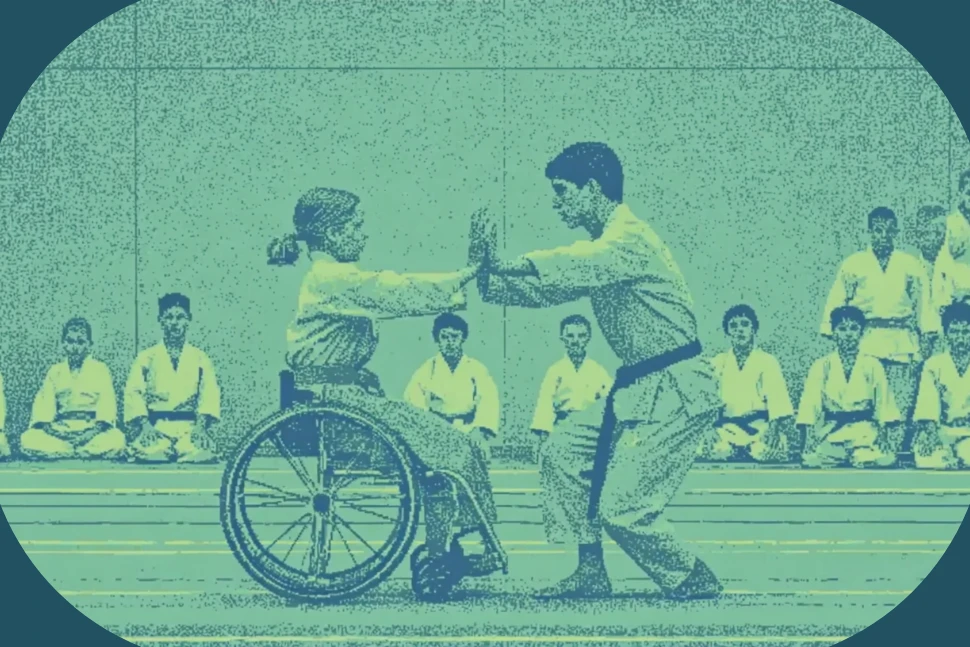
Somewhere in your town, a parent is typing "special needs karate near me" into their phone for the third time this month.
They've already called two schools. One said "we'll see how it goes." The other went quiet.
Most martial arts schools don't have an answer for that family.
A school with an adaptive martial arts program does, and it tends to keep the family for years, plus the parents from their support group, their OT's other clients, and the kid's classmates from the resource room.
What Is Adaptive Martial Arts?
Adaptive martial arts is martial arts instruction modified so students with physical, cognitive, sensory, or developmental disabilities can train at their ability level.
You'll also see it called adaptive karate, or special needs or additional needs classes.
The art stays the same.
The teaching style, rules, equipment, and environment change to fit the student.
Programs commonly serve students with autism, ADHD, Down syndrome, cerebral palsy, visual impairments, and mobility limitations, including wheelchair users.
Most schools run it one of three ways. The options are a dedicated adaptive class, integrated classes where adaptive students train with everyone else, and private or small-group lessons.
Why It's Worth Building
Short version: a lot of families are looking, and you can be the school that's ready.
About 1 in 31 eight-year-olds in the US has been identified with autism, according to the CDC. An estimated 11.7% of US kids ages 3 to 17 have a current ADHD diagnosis, per CDC data, and more than 1 in 4 US adults live with some type of disability.
Worldwide, UNICEF puts the number of children with disabilities at almost 240 million.
Plenty of kids with disabilities grow up without finding a sport that fits. Team sports move too fast. Rec leagues aren't built for a kid who needs more time.
Martial arts, taught well, is individual, repetitive, structured, and progress-based. That's close to a spec sheet for what a lot of autistic kids need.
The research is early but encouraging.
In one small randomized trial, 34 kids with autism ages 8 to 11 were split between a 13-week mixed martial arts class (two 45-minute sessions a week) and a waitlist. Parents of the kids who trained reported large improvements in social skills and fewer problem behaviors.
A separate karate kata study (Bahrami et al., 2012) of 30 autistic kids found less repetitive, stereotyped behavior. The same MMA trial also reported better executive function in a companion paper.
The catch: the samples are tiny, and the MMA trial's ratings came from parents who knew which group their kid was in.
A 2024 review of 22 studies said there still isn't enough research to pool the results.
Be honest with families about what that means. Martial arts isn't therapy, and you shouldn't sell it as a treatment. What you can promise is a structured class where every student is expected to work hard and can earn a belt like anyone else.
Then there's the business side, which is simpler than it sounds.
Search "adaptive martial arts" or "martial arts for special needs" in your own city. In a lot of places you'll find one program or none, so a school that builds a real one has very little competition for that parent's search.
If you're the school that finally said yes, a parent who spent a year looking is unlikely to go shopping again.
Three Ways to Run It
Which model you start with depends on your coaches and on the students who walk in first. Most schools end up running more than one.
Dedicated adaptive classes
This is the version most families are searching for. A set day and time, a smaller group, a slower pace, and more adults on the mat.
A dedicated class lets you control the room.
You can drop the music, lower the lights, cut the crowd, and keep the routine identical every week. For a lot of autistic students, that predictability is what makes the class work.
Integrated (inclusive) classes
Plenty of students can train in a regular class with the right support: a coach who knows how to modify a drill on the fly, and a peer or assistant nearby.
This is what most people mean by inclusive martial arts.
If you want to see what that looks like in practice, read how Aaron made regular classes work. He trained in a regular class with hypotonia and dyspraxia.
Integration depends completely on your coaches.
Private lessons
Privates are often the on-ramp.
A new student meets one coach, learns the room and the routine, and you move the student into a group class when it's time.
Privates also work long term for students with higher support needs who may never join a group, and that's fine.
Adapting Classes With the TREE Model
The Australian Sports Commission built the TREE model for coaches including kids with disabilities in regular sport, and it works on the curriculum you already teach. TREE stands for Teaching style, Rules, Equipment, and Environment.
When a drill isn't working for a student, you run through the four and change one thing at a time.
Teaching style
Short instructions, one at a time. Show, then say.
A student with a processing delay who hears "step forward, jab, cross, step back, guard up" gets lost at "cross."
Visual supports help a lot. Put a picture schedule on your wall showing the class order (warm-up, kicks, pads, game, bow out). Students can see what's coming, which lowers anxiety before you've said a word.
Rules
Break every technique into its smallest piece and let students master that first, so stance comes before striking and single strikes come before combinations and footwork.
Then change the rules of the drills themselves.
Take contact out of a partner game, or let a game be won by landing ten clean strikes on a pad. Add the original rules back as skills grow.
Equipment
Most of what you own already works.
You may need softer targets, pads a smaller student can actually hold, or a chair or bench for students who train seated.
Many wheelchair users drill upper-body striking and blocking with small changes. Ask the student and family what equipment works best.
Environment
Sensory load matters more than most coaches expect. Loud music, a packed floor, fluorescent buzz, and a neighboring class yelling kiais can overwhelm a student before class even starts.
For dedicated classes, pick a time when the building is quiet. Keep the music off. Give each student the same spot on the mat every week.
Designing the Program
Most of the setup happens before a student ever steps on the mat.
Start with an intake conversation
Before a student's first class, sit down with the parent or caregiver for 15 minutes.
Ask about the student's strengths, triggers, communication style, calming strategies, and goals for training.
The parent already knows most of what your coach needs. Get it on paper now, so your coach doesn't learn it the hard way in front of the class.
Keep the class small
No governing body publishes a standard ratio, and most programs just say "small."
For a sense of scale, the 13-week autism study above ran its classes with two instructors and paired every student with a typically developing peer buddy. Plan on fewer students and more adults than your regular kids class.
Assistant instructors, senior students, and trained volunteers all count.
Some programs let a parent or aide stay on the mat for the first few weeks. (For your regular kids classes, see this guide to kids program design.)
Protect the routine
Same day, same time, same class structure, same coach if you can manage it. For a lot of autistic students, change is the hardest part of the week.
When something does have to change, a new coach or a holiday closure, give the family a heads-up so the change doesn't land cold.
Rethink how belts work
Rank matters to adaptive students as much as anyone. Maybe more. A belt is proof, in their hands, that they did something hard.
The question is what earns it. Many adaptive programs test each student against individual goals set with the family, so a student who can't kick above the waist can still show control and the technique they've built.
Some schools run a separate adaptive rank track. Others use the regular belts with adjusted requirements. Either works if it's consistent and the family knows the plan up front.
This guide to building a martial arts curriculum covers the mechanics.
Staffing and Training Your Coaches
A special education background helps. Mostly, though, the job takes a patient coach who'll change the plan halfway through a drill.
There's no widely recognized, accredited adaptive martial arts instructor certification in the US. A few schools and groups sell courses, but none is an industry standard.
What does exist is autism training.
IBCCES offers an online Autism Certificate (14 hours of coursework, $295) for people currently working with autistic individuals. Its Certified Autism Specialist credential ($495) also requires a master's degree (or a bachelor's plus 10 years of experience) and two years in an autism-related field.
Some schools go further.
According to IBCCES, Amanda's Adaptive Martial Arts in San Diego became the first martial arts center to earn its Certified Autism Center designation, in 2023. Its founder is a certified occupational therapy assistant.
Some of the best adaptive coaches come from outside martial arts, like an adult student studying occupational therapy or a parent who teaches special ed. If you have someone like that in your building, that's your first call.
Safety, Liability, and the ADA
Before you launch, get three things in order.
Your insurance. Call your carrier and tell them you're adding an adaptive program. Ask whether anything about your coverage changes, and get the answer in writing.
This guide to martial arts insurance covers what a school policy should include.
Your waivers and medical info. Every student needs a signed waiver. Adaptive students also need emergency contacts, medical notes, and any behavior or sensory information the family is willing to share.
If you're not sure your waiver covers what it should, start with this liability waiver guide.
Your legal obligations. Under the Americans with Disabilities Act, gyms are public accommodations, which means you're expected to make reasonable changes to your policies and practices so students with disabilities can take part.
The limit is a change that would fundamentally alter what you offer.
In practice, you can't turn away a student because of a disability. You can offer a separate adaptive class, but under the ADA's integrated-settings rule, a student generally can't be denied a spot in your regular classes because that separate class exists.
Safety requirements based on actual risk are allowed.
This isn't legal advice. Talk to a lawyer about what applies to your school, especially before you decide who trains in which class.
What to Charge
Adaptive classes cost more to run than your regular kids class. Smaller groups and more staff per student mean less revenue per coaching hour.
Before you set a price, know the line you can't cross.
The ADA bars surcharges on students with disabilities to cover the cost of accommodations, so talk to your lawyer before you set the rate.
Adaptive students in regular classes pay your regular membership, full stop. Privates stay at your private rate.
The open question is the dedicated class. It runs like a semi-private, with a small group and extra staff, so ask your lawyer whether you can price it that way or whether that would count as a surcharge.
Don't discount it into a charity program, either. If the program loses money every month, you'll eventually cancel it, and that hurts the families more than a fair price would.
Some adaptive programs run as nonprofits or with a nonprofit partner.
World Seido Karate in New York funds its adaptive karate classes through its own 501(c) foundation. That's a bigger lift, but it's how some schools offer adaptive classes at low or no cost.
If you want to sanity-check the numbers, the kids program revenue projector lets you plug in class size and rate. This guide to pricing your martial arts programs goes deeper on setting rates.
Getting the Word Out
Families find adaptive programs two ways: referrals from professionals, and search. You need to show up in both.
Start with the professionals. Pediatric occupational therapists, physical therapists, speech therapists, and ABA providers all get asked "What activities would help my kid?" constantly.
Drop off a flyer, offer a free trial class, and ask the therapist to come watch a session.
Then the schools. Special education teachers and school counselors hear the same question from parents. So do local disability nonprofits and parent support groups, many of which run active Facebook groups.
Then make sure search can find you. Put "adaptive martial arts" on your website and Google Business Profile, with the actual class day and time, and use the phrases parents type, like "special needs martial arts."
A parent searching "adaptive martial arts near me" can't find a program you haven't named.
One more thing. Show real students, with permission. A 20-second video of a kid earning a stripe does more than any ad copy you'll write.
One Record Every Coach Can See
Picture your adaptive program living on a clipboard. It works fine until the one coach who knows every student calls in sick.
An adaptive program carries details your regular program doesn't: medical notes, guardian contacts, a class-size limit, and accommodations every coach needs to know before a student walks in.
The fix is one shared record every coach checks before class, however you store it.
In Gymdesk, each member profile holds medical and special-needs notes, emergency contacts, and guardian info, plus custom fields for things like "prefers visual cues" or "needs a two-minute warning before transitions."
Your sign-up form can collect medical information and signed waivers before the first class. Class booking lets you cap the adaptive class at the size you set, and you can require a booking to check in, so the class doesn't fill past your ratio.
Attendance tracking shows you who's coming consistently and who's slipping, so you can call the family before they quietly drop off.
It's the same martial arts school software that runs the rest of your school.
Start With One Class
You need one class slot and a coach who wants to teach it. Put the class on the schedule and tell the local OTs it's there.
That parent typing "special needs karate near me" is still searching. Be the school that shows up.
Gym management software that frees up your time and helps you grow.
Simplified billing, enrollment, student management, and marketing features that help you grow your gym or martial arts school.


FAQ
Adaptive Martial Arts FAQs

Sean has spent the last decade creating content that helps businesses—small and not so small—grow smarter to allow operators to do more of what they love. You know, the fun stuff.
From shipping and international logistics to web development and marketing, he's done the work (not just the words) to scale retail and service businesses efficiently.
You can find his work at Sendle, Shogun, The Retail Exec, Gymdesk, and more.