No Plan B: Inside Axé Capoeira Chicago
.webp)
In this episode, Alex visits Axé Capoeira Chicago, where Mestrando Bambu (Steven Kolhouse) teaches capoeira not as a workout but as the whole Brazilian art at once—martial art, music, dance, language, and history, inseparable. Bambu walks Alex through a 28-year arc that started with a movie, ran through a 55-hour bus ride to Canada, and survived years of self-funded losses to become a two-location academy. It's the first GDO episode centered on capoeira, and it's a study in choosing depth over scale.
Starring
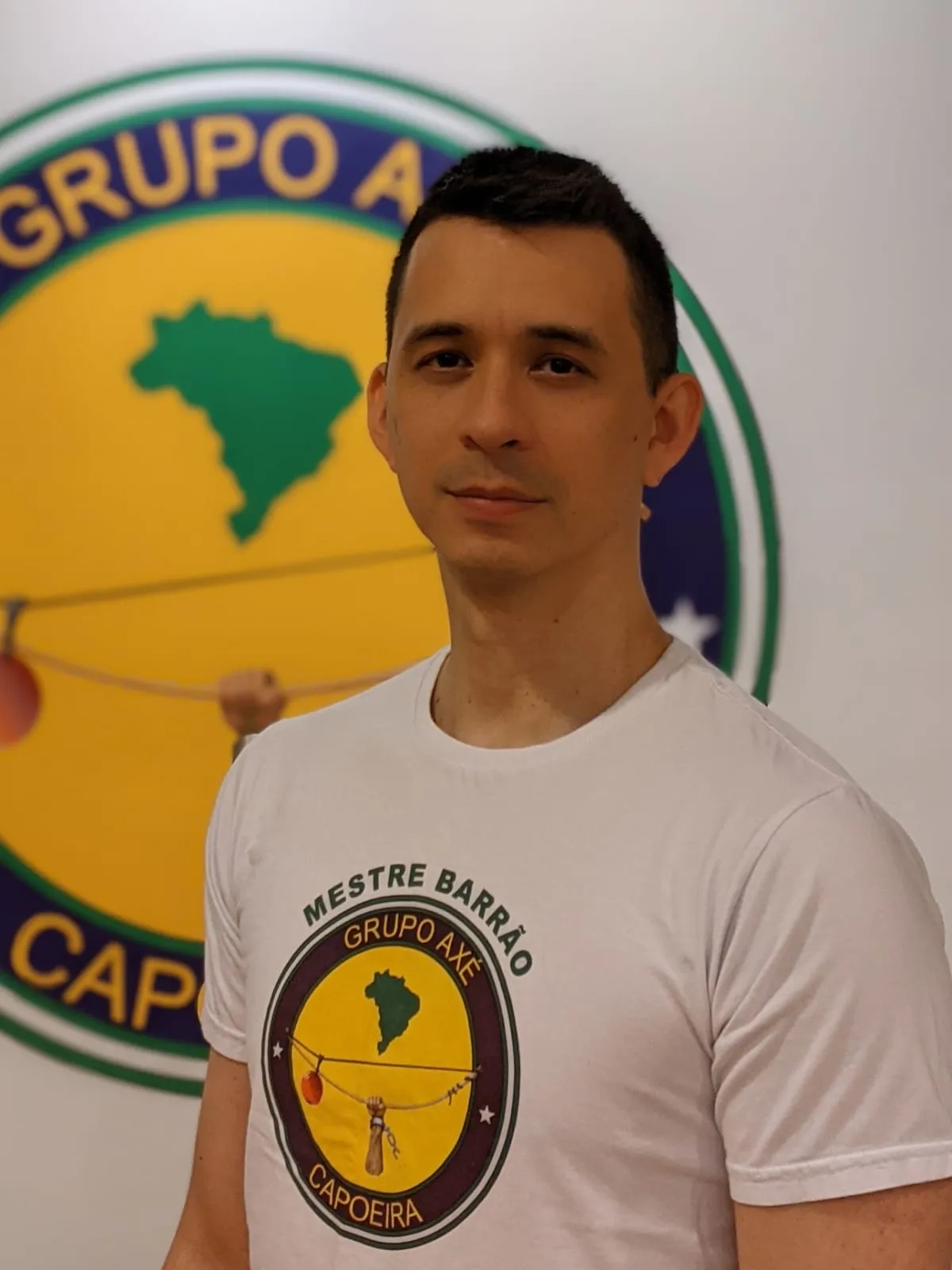
A non-Brazilian capoeirista who has taught for roughly 28 years and holds the rank of Mestrando under Mestre Barrão of Grupo Axé Capoeira. He discovered capoeira through the 1993 film Only the Strong, committed for life after a 55-hour bus ride to train with Barrão, and opened his Chicago academy in 2009 on a single principle: no Plan B.
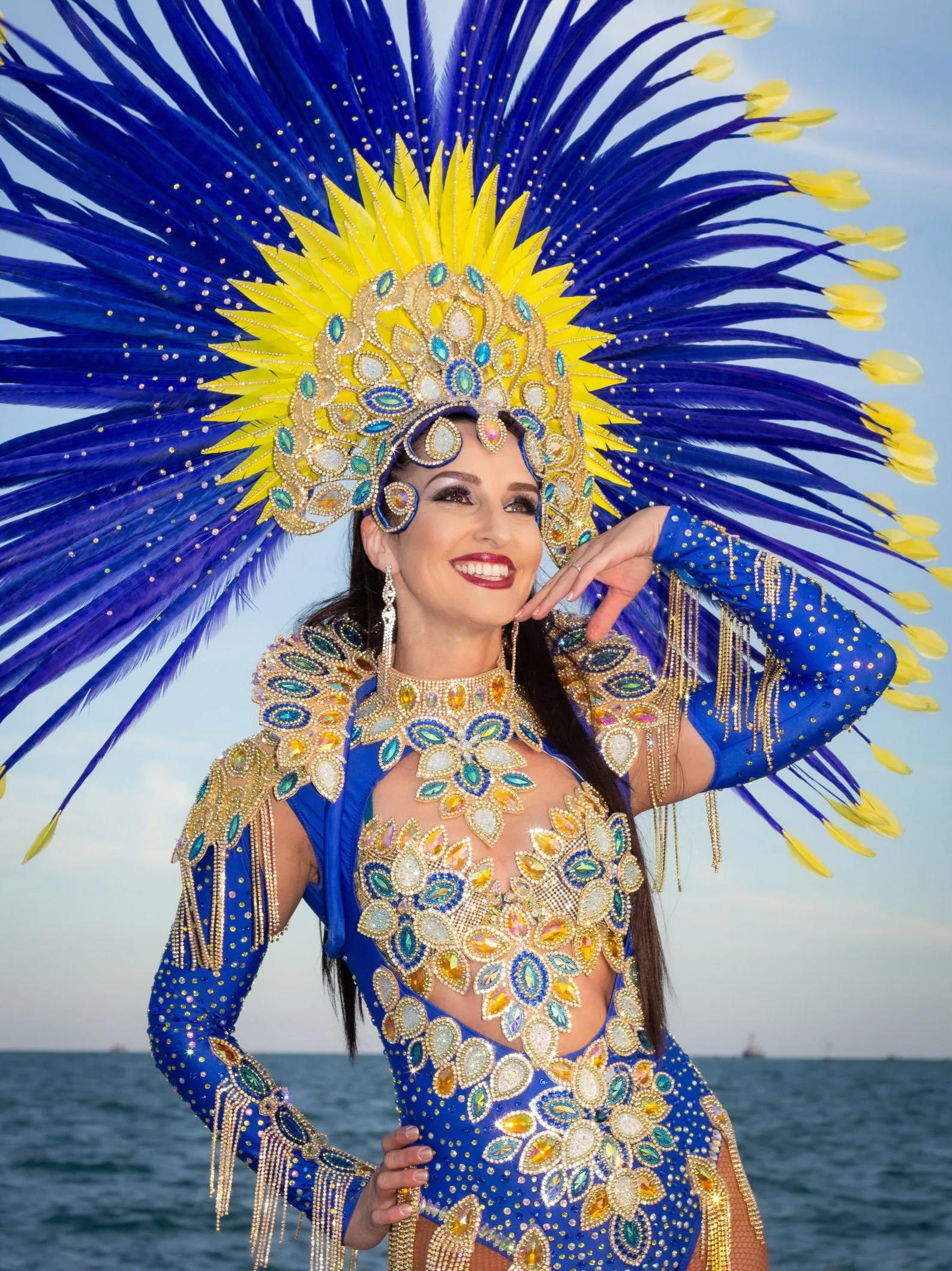
Apelido Gata; Bambu's wife and co-leader of the cultural operation. She has led the academy's dance group since 2013 and runs Escola de Samba Chicago, a separate but collaborating samba school. On camera, Bambu credits her as the reason the business survived its hardest moment—early in their relationship, when the academy's lights were cut off, she paid the bill and kept the doors open.
About the Gym
Axé Capoeira Chicago is a capoeira academy in West Town with a second location in Rolling Meadows, founded by Mestrando Bambu (Steven Kolhouse), who has taught the art for roughly 28 years and holds the rank of Mestrando—one tier below master—under Mestre Barrão, founder of the global Grupo Axé Capoeira.
The academy treats Brazilian culture as the product, not an add-on: students learn the martial art alongside the music, the movement, the Portuguese, and the history that capoeira was born from. Bambu teaches capoeira while his wife Jennifer "Gata" Kolhouse runs the samba side through her own Escola de Samba Chicago, the two collaborating across performances and events. Classes run from kids as young as three up to a first-timer who was 75 on his opening day.
📍 Location (primary): 1543 W Chicago Ave, Chicago, IL 60642 (West Town)
📍 Location (second): 2180 S Plum Grove Rd, Rolling Meadows, IL 60008
📱 Phone: (872) 222-8813
Summary
This is the story of a Hoosier who fell for a Brazilian art nobody around him was doing and never looked back. Mestrando Bambu saw the capoeira film Only the Strong as a kid, finally started training at Indiana University in 1998, then took a 55-hour bus ride to a workshop in Canada and came home certain: "there's nothing else in this world that I want to do."
He taught to empty rooms in Indiana college towns for years before moving to Chicago in 2004, where it "instantly took off," and opened his first academy in 2009. Today he and his wife Jennifer—apelido Gata—run a two-location school built on the conviction that capoeira only works when you teach all of it at once.
What They Told Us
Alex Cuevas brought the Gymdesk Originals camera—and his son Neo—to Axé Capoeira Chicago, a school that runs out of two locations: West Town and the northwest suburb of Rolling Meadows. Its owner is Steven "Bambu" Kolhouse, an American who fell for a Brazilian art through a movie and has now taught it for twenty-eight years. What he kept circling back to was depth—capoeira as a hidden fighting art, a language the body speaks, and a life built with no plan B.
Why everyone got a nickname
Bambu goes by an apelido, a capoeira nickname, and the reason reaches back to the art's origins. Capoeira was built by enslaved Africans and stayed illegal in Brazil even after abolition, so a nickname became cover—the practice learned to hide its own practitioners.
“In Capoeira, it was created by enslaved Africans, right? When they were brought to Brazil. After slavery was abolished, it was still outlawed because of the problems it caused for the government. So it was illegal to practice. So everybody got nicknames.”
—Steven "Bambu" Kolhouse, Owner and Head Instructor, Axé Capoeira Chicago
A martial art that reads like an accent
Ask Bambu what capoeira actually is, and he reaches for language rather than fighting. Everyone who steps into the game carries their history in how they move—the wrestler ducks, the karateka stiffens, the dancer flows—and a trained eye can read all of it.
“Capoeira is like a language, actually. So when you start speaking, your accent comes out … Your natural accent is whether it be sitting at a desk or dancing or doing other martial arts. It starts to seep into the surface. You can see what everybody's done before.”
—Steven "Bambu" Kolhouse, Owner and Head Instructor, Axé Capoeira Chicago
A movie, then a decision at eighteen
The whole thing started with a film. Bambu wanted martial arts as a kid, but his parents wouldn't sign him up—too sure he'd quit after a week—so they told him he could spend his own money on it at eighteen. A 1993 capoeira movie had already lodged the idea.
“I was exposed to a movie. It's called Only the Strong. … I was completely captivated by it, because I always wanted to do martial arts. My parents never signed me up for anything because they assumed I'll just quit … When you're 18, you can do whatever you want with your money.”
—Steven "Bambu" Kolhouse, Owner and Head Instructor, Axé Capoeira Chicago
The 55-hour bus ride
At Indiana University he found a student capoeira club, and when its teacher graduated, he chased the art to whoever would still teach it. That search led to a Vancouver workshop, and to a bus ride that settled the rest of his life.
“We hopped on a bus, 55-hour bus ride to Canada. We stayed for three days. … And when I came back, I was like, there's nothing else in this world that I want to do. Because it was incredible. The energy, the life, the feeling I felt.”
—Steven "Bambu" Kolhouse, Owner and Head Instructor, Axé Capoeira Chicago
The night the lights went out
For years the school lost money and Bambu covered it himself, convinced the doors simply had to stay open. Then his wife and co-leader, Jennifer "Gata" Kolhouse, stepped in at a literal low point—early in their relationship, with the academy's power cut off.
“She came in, the lights got cut off in the academy. And it was only a very short time that we were together. And she was like, all right, well, I'll pay it. And she paid the bill for us.”
—Steven "Bambu" Kolhouse, Owner and Head Instructor, Axé Capoeira Chicago
No plan B, by design
Twenty-eight years in, with COVID and self-funded losses behind him, Bambu has no tidy formula for the hard stretches. He has the opposite—the deliberate absence of a way out.
“I don't really have any coping mechanism other than, I don't have a plan B, right. If you don't have plan B, plan A has to go, right. So you have no other choice. So I just bury my head and then keep going forward, educate myself.”
—Steven "Bambu" Kolhouse, Owner and Head Instructor, Axé Capoeira Chicago
Why he left the last software
Bambu found Gymdesk almost by accident, after a reseller tried to repackage it with fees. What had pushed him off his previous platform wasn't a missing feature—it was a pattern he traces to how those companies are built.
“Every platform that I used before … a lot of them were publicly traded. So they're always looking to grow. And the best way to grow is just charge your people more. And that was always what was happening.”
—Steven "Bambu" Kolhouse, Owner and Head Instructor, Axé Capoeira Chicago
Read the full transcript
Lightly edited for readability. Speaker labels are omitted because the source recording is not diarised; quotes attributed elsewhere on this page were verified against context.
Music Behind every gym, there's a story, a mission, a spark of passion that started it all. This is Gymdesk Original. Real owners, real struggles, and the communities they've built from the ground up. Okay, well, we made it to our last visit on this tour. How are you feeling, Neo? I'm feeling pretty good, and I think we're going to Axe Capoeira today. Axe Capoeira. Do you remember what Capoeira is? You've never seen it before, right? My mom told me about it, so like dancing, kicking sport. Yeah, it's another Brazilian martial art that we're going to go feast our eyes on and participate in.
Well, you, because my knee's still kind of messed up, but let's go see what they're all about. Come on. So where we're going now, where we're going again, Neo? Axe. Axe. Axe. Capoeira. Axe Capoeira. Here we are! Hi, I'm Alex. Hi, Bambu or Steven? Bambu, hi! Nice to meet you. Nice to meet you. Yeah, yeah. That's my son, Neo. Hi, he's a filmer. All right. We made it here and we're still in Chicago. Not quite sure exactly what area of Chicago. It's West Town. West Town.
West Town. Awesome. And we're at what I was going to say Axe, but it's Axe, right? Axe, Capoeira. Correct. It's our first Jim Dusk episode with Capoeira. We have some people who have had roots in that, but it's a pleasure. Thank you so much for having me. Thank you. Thank you for having us here. And I was stumbling a little bit on the title. So Bambu, right? But is it teacher? Is that what that means? No. Bambu is my app called the Capoeira apelido, which means nickname.
Okay. In Capoeira, it was created by enslaved Africans, right? When they were brought to Brazil. After slavery was abolished, it was still outlawed because of the problems it caused for the government. So it was illegal to practice. So everybody got nicknames. Because if you told them that the Capoeira apelido is the guy, Steven Kolhouse was the one that they saw, they're going to come to your house and arrest you. Oh, wow. So all their nicknames were just like to hide the identity of the people who practice.
Interesting. Yeah. So Bambu means literally bamboo. Okay. So nicknames are usually meant to kind of poke fun of you and you, your appearance or whether it's your personality or whatever. Right. So that's my nickname Bambu. My title is Mestrando, which is kind, is a tier below mastery, which is a master. So my next status would be a master. Got it. Okay. Awesome. And Jennifer, you have a Gata. Is that right? Yeah. My Capoeira nickname is Gata. Okay. All right. Now, I had no idea about the nickname.
So the idea then is you practice and then you learn from a certain person. Mm-hmm. If that person ain't Maboo only if you're within the circle of practitioners. Well, you know who that person is. Yeah. That way, if the authorities came by looking for that person, like, I don't know who Bambu is. Yeah. Yeah. And there's a highly likelihood that the people wouldn't even know who their name is outside of Capoeira. And sometimes the nicknames were just nicknames. Everybody had nicknames. Right. Also the history as well.
A lot of people's names were taken from them. Right. During slavery, their actual names are taken from them. So then they were just given nicknames in captivity from other people. They just know this guy is tiny or this guy as big guy or whatever, this kind of thing. So that's how it was. As it came, as it evolved, we, they kept the tradition and kept the, uh, the tradition of keeping those things. Yeah. But, um, over time it became more of just something to have in the nineties and the eight, in the nineties, when I started, nobody knew my actual name until social media came around.
Right. So even, even in the nineties to like the two thousands, nobody knew who I was. Nobody knew who I was until Facebook, et cetera, came around. And then people found out what my name was. And then they were like, Steven. Yeah. Yeah. Okay. Yeah. And so for those people who don't know really what Capoeira is, I've seen it before the movements and all, but the whole thing around it is basically hiding, uh, fighting art. Yeah. Yeah. And making it look like dance. Right. Yeah. So, you know, they were the enslaved Africans.
They were brought over to, uh, from, from Brazil, as well as the indigenous people. As well as the indigenous people of Brazil, they were enslaved as well. So they had, were in captivity. They weren't allowed obviously to practice any sort of fighting form or self-defense or self-liberation or anything like that. So they gave them some small freedoms of keeping their ritualistic dances that they had and their music. So they'll give them that. And then that started to meld into some sort of kind of dancing combat where they learned to train and practice.
And then they would escape, they would escape to these places called Quilombos. The Quilombos are where these kingdoms of the slaves went to, or they, where they would, all the freed slaves would go there. And then they would also help to free more slaves as time went on. And then after Capoeira was, or sorry, slavery was abolished. The Capoeira, like I said, was still outlawed, still illegal to practice. Punishment would be in either, um, uh, imprisonment or even death. Right. Like you, they wouldn't just kill you.
Right. Depending on the name you had. So after that, they had to hide the debt, the schools inside of dance schools. So that's the connection they have with Samba. Right. Is that Capoeira was hidden within the Samba schools. So in different regions, they have different types of dance. So in the Northeast where our group is from, they were hidden in the stable schools, but it was a different type of dance. So that's the connection that it has. And that's why some of the dance movements today and Capoeira today doesn't look like up where they look like in the slave times.
So now it's changed because it's evolved and it's adapted and picked up things here and there. Capoeira kind of uses everything to its advantage. Whatever works, whatever doesn't work, kind of disappears. So as time has gone, Capoeira has evolved and evolved and keeps evolving, changing. And then now today it started, once they started to teach Capoeira to the upper class, it started to spread more, started to be more international. And now Capoeira is actually the national sport of Brazil. Wow. Yeah. Yeah. So the, I'm just like thinking about how times must have been so crazy.
You have to go to a dance school and in the dance school, you have to hide your martial art program and adapt your moves to whatever the dance is. Right. That's, that's wild. To appear. Yeah. To appear. And then not even just we're adapting it to the dances. It's just the dances are there. And everybody who did the Capoeira was also doing sambo or also doing febola. So then those steps start to infiltrate because your body starts moving. Capoeira is kind of a free movement where your body is just moving the way it wants to move.
However, it wants to move and reacts in a real, in real time, as opposed to a lot of thought process that goes on. So in that moment you react more naturally. So if you've been doing a lot of samba, maybe one of their samba steps is going to come out. If you do this type of dance, maybe that kind of move is going to come out. If you do a lot, like you can see it when people play, if they're a wrestler, they have a wrestling background, their body starts to want to like duck down.
They want to start to grab, grab somebody kicks a lot or whatever. They're from karate background. They get a little more rigid. So Capoeira is like a language, actually. So when you start speaking, your accent comes out, whatever your natural accent, like your personality is. Your natural accent is whether it be sitting at a desk or dancing or doing other martial arts. It starts to kind of like seep into the surface. You can kind of see what everybody's done before. Yeah, that's that's great. Now, I remember samba.
I think there's even like a video game on Xbox at some point. It was like pretty popular samba. You know, at some point I was seeing it everywhere. But if you don't know what samba is, how would you explain to folks that have never seen it before? What's unique about that? It's a it's a Brazilian dance created by enslaved communities abroad with rhythms from Africa. It has very deep African roots. Yeah. And samba was something that enslaved communities enjoyed after long days. The plantations in the in their community and dancing, keeping that rhythm going, keeping that cultural aspect going.
And in Brazil, fortunately, they were able to preserve it until this day. Samba is a leading dance of Carnival. Yes. So when when you see Carnival in Rio de Janeiro, it's all samba and all the samba schools from from different parts of the city come together into this in this competition. This competition, this amazing competition between the samba among the samba schools and put together an amazing show. And so the samba was historically was used as a line like inside as a lifestyle. It became a lifestyle of most mostly poor communities where they formed the samba schools.
The samba schools to keep the kids off the streets to provide jobs for the communities within the community. So it's still is that. And it is it is amazing to see how samba is not just a dance. It's a lifestyle. Yeah. And there's a it seems like especially on the history that you just explained here, there's a natural sort of connection between capoeira and samba because of the history there. So now are there different styles of capoeira that are distinct depending on, you know, what dance they were attached to in the past in the past they were kind of regionally they were different.
Because like I said, like in the Northeast, samba is not as prevalent as it is in Rio. So wait. So she's talking about carnaval, carnaval in Rio. They do they do samba in the Northeast and his city where my group is from, they do for the carnaval, they do maracatu, which is a different Afro-Brazilian dance. So there was not a lot of schools that the capoeira schools were tied to. They were tied to frevo schools, which is a different dance. The frevo steps are very different than the samba steps.
So some of the capoeira was different back then when the Northeast had a different style than in, say, Rio de Janeiro and then Bahia as well. Those are the three major port cities where capoeira was brought over, where the slaves were brought over. Yeah. So they had very distinct styles. As capoeira has become more global, like we have three different styles, but they're basically based on kind of where and who they follow. Right. So now we have capoeira regional, capoeira angola and capoeira contemporánea, which is a contemporary capoeira.
Right. Any group that wears like a white pant like this is a contemporary school. Everybody else is like more historic school, kind of preserving a tradition of a specific lineage. And so Angola is a little slower type of game, less fight oriented, more ritualistic. More dance like still dangerous, but it's more you has more rituals to it. Hezul Nao is created by Mestre Bimba, a very specific person who said the capoeira was getting too weak. So he stripped a lot of the ritual out and made it.
If you make it simple, it's like 80% fight, 20% ritual, less instruments, more fight oriented. Right. So, but that's an older time. And then he kind of developed the way that capoeira is trained today for contemporary schools. And the contemporary schools kind of evolve capoeira to be more modern. Our school specifically tries to make sure that capoeira has a bright future. We try to make sure that it is respected as a fighting art form because many people say capoeira is like worthless as nothing. It's just a dance.
But we try to make sure that we show that we have some professional fighters within the group. The son of the Mestre Bimba and Mestre Bimba, they are like professional fighters, etc. So we try to make sure that we adapt to whatever is changing. So certain techniques from when I started are completely different than what they are now because they weren't efficient anymore. Yeah. And I've seen, I'm sure our marketing guys will find the footage, but I've seen a guy who's a Brazilian like MMA fighter, pretty big guy.
And he's a great grappler, but he has this one, like it reminds me of the capoeira stuff where he gets that, you know what I'm talking about? That he spins around and does like a back hook kick with his hand on the ground. Yeah. Yeah. Yeah. And he's probably his name, Marcus Aurelio. I think so. Yeah. That's Mestre Bimba. He's on the wall there too. Oh, okay. He's my master's son. Yeah. Yeah. Crazy. And these knockouts that he does with that kick. I'm like, yes. Fast.
He's the first person who really showcased capoeira in MMA. Yeah. A lot of people have MMA history, like Anderson Silva, Jose Aldo, they all have capoeira in their background, but nobody really showcased it. Like this is like, what's it, this capoeira master, Andre Gusmao. Right. He fought Jon Jones in his initial fight and he's a capoeira master. Right. But he's one who really wanted to say, I want to show capoeira like on its own. Right. And how it's effective. So he's kind of one of the first people that did that.
Yeah. It's pretty cool to see that. I mean, how does that make you feel though? Now seeing capoeira kind of come into the MMA stage and does it change anything for you? It doesn't change too much for me because capoeira is like a, it's a fight. Capoeira is kind of MMA in itself. Right. Because capoeira, there's a, there's a, there's a unique saying. There's an old saying that capoeira is everything the mouth eats. Meaning that whatever you need in that moment, in that time, capoeira, that's capoeira.
Right. So at any time capoeira can change from a playful game into a fight at any point. So at all times that when we play capoeira, I'm always prepared for it to be a fight at any time. And those fights can end up being grabs, going to the ground, knees, slams, like all this stuff. And it's a, it's basically a valley to the fight back in capoeira. So we just, it's, for me, it's no different. It's just now it's in a ring. And then it was before it was with some rules, then it would be in a whole other way.
You just never know when they're going to, what's going to happen. Yeah. So maybe you could, cause I'm not familiar with this. Does the belt mean anything and the color and all that? Yeah. In capoeira, each school kind of has its own system. It's not, it doesn't follow any sort of traditional system. Some schools follow the Brazilian flag colors. Some schools have different color systems, right? So our system goes in tiers of color, right? So there's a pointed, like the tips are colored and then half of the belt is colored.
And then the whole belt is colored, right? So the very first color is blue. So it goes from a raw color. That's the first belt, raw color. Then it has blue tips. Then it'll be half blue, half raw. Then it'll be all blue. Then the next step would be brown. So it would be blue with brown tips, blue and brown, all brown. Then it goes to green. Then it's green tips, brown, green tips, half brown, half green. Then it goes to yellow, or then it goes for all green.
Then it goes to yellow, yellow tips. Half green, half yellow. All yellow. That's when you become into the titles. Profesor, instructor, graduado. And now there goes half and half. It goes from yellow to yellow purple. Only half, no tips. And then it goes to purple. Then it goes to purple, red. Then it goes to red, which is a full master. Red and white, which is a secondary master. And then white, which is a full master. Which is a grand master. Oh, interesting. So white is the top.
White is the top color. Yeah. Wow. Okay. Cool. Okay. So let's go back to when you first picked up Capoeira. Is that back in 1998? Yes. So Indiana University, it was there and you were exposed to it. And you're like, wow, what's this? Yeah. It was actually before that. I was exposed to a movie. It's called only the strong. Okay. And I think that's from 96 is where I first saw it. Yeah. And I was like completely captivated by it because I always wanted to do martial arts.
My parents never like signed me up for anything because they assumed I'll just quit or they'll sign up for a three year contract and I'll go one week and then I won't want to do it anymore. So he said, when you're 18, you can do whatever you want with your money. So I did poorly in school. My first year, I moved away from home to go to Indiana University in 1998. And my brother was there before me and he showed me that there was a pamphlet that showed they had Muay Thai, which was unheard of as well at the time.
And they had a Capoeira class. And those are two of my options that I want to do because I am half, my mother's from Thailand. So I'm half Thai. So I was like, okay, I'll do Muay Thai or Capoeira. Capoeira was there. So I just joined this little club, this little group. There's a student of a student of a master that happened to be there for his school time. And then he just started training there at first. After 98, I trained with this person for like four months.
He graduated from school. And then we were kind of left without anyone to teach the class, me and a few other people. So we were kind of looking around for someone. There were rumblings of teachers in different cities, St. Louis, Chicago, Milwaukee, Madison, Wisconsin. So we started to kind of travel to different workshops and events where we could find. We actually ended up in Chicago in 1998 at the end, I believe, July of 98. And Mestre Barrão, my teacher, was a guest for one of the other Capoeira schools here.
The only Capoeira school at the time here. And he was just kind enough to invite us to be a part of his group or to join it. And he was the person who first brought Capoeira to Canada. And so in 1990, he moved to Vancouver, Canada. And that's where he started teaching. He said, come to Canada in November. We're having an event. You can join the group then. So we hopped on a bus, me and three other people. We hopped on a bus, 55-hour bus ride to Canada.
We stayed for three days. Yeah, yeah. We stayed for three days. And then we took a 55-hour bus ride there. And when I came back, I was like, there's nothing else in this world that I want to do. Because it was incredible. The energy, the life, the feeling I felt. Every day was like a death workshop where your body was just exhausted. But every time when we started Capoeira, the music would play and my body would just feel it. Like there was no pain left. There was just go, go, go, go, go.
So I just felt like I had, that's what I had to keep doing. Went back to Indiana to start trying to create a school or try to create a group. So I started teaching really early right away. Didn't know what I was doing. Like failed a bunch, failed a bunch. And at the time in '98, '99, there's not social media. There's no internet really even. There is, but not really. So it was like flyers and putting up things with grocery stores and on the posts. And it's a college town.
Started to grow, but we had a college town. So every six months or so you have a whole new rotation of students and people never really got any traction. So I moved to Indianapolis because I grew up there. So I thought I'll teach in Indianapolis. That'll be a bigger city. It'll be better. Not much better at the time. And then it just kind of fell off. Everybody was saying like, you should move to Chicago because it's a bigger city. There's already a school there. It's only one school.
So there's plenty of people in Chicago to do it. As soon as I moved here in 2004, it instantly took off. And then we've been going ever since. Really cool backstory. And I'm trying to picture the person like when they walk in the door, do they know what it is? Oh, they're like, oh, I love those movements. They look almost like a gymnast, like a gymnast would move. But there's the rhythm thing. Like what is it that they come for? Is it dancing? Is it, you know?
Everybody's different. Everybody's different. Everybody. Rarely does anybody actually know what they're getting into unless they've done it before. Most people kind of come in and they're like, they're in for an aspect. Like they like culture. They like history. They like martial arts. Or they like dance. Or they like acrobatics. Or they like the video game Tekken as a character. Yeah, that's right. I saw the movie, right? Or I saw this stunt guy. You know, he's doing these flips. So everybody kind of has like a little bit.
So there's not really a demographic that it fits. Because it can be anyone from ages three up to like my oldest student ever was age 75 on his first day. So it can be anything because they're trying to learn what they want to learn and how they want to learn it. So someone who's 75, obviously they don't want to come in and start doing flips, right? But they want to learn how to move. They want how to control their body a little differently. And they want to express themselves, right?
So Capoeira is great because it's for everybody, right? It's just. And so today you have Ache Capoeira here, but you also have the Samba program. Is it part of Ache or is it separate? It is separate. It's called the School of Samba in Chicago. And she runs it. She opened it because our school is a Capoeira school. We've always been a proponent of spreading Brazilian culture. So Brazilian culture is really rich. A lot of different things. Brazilian music, Brazilian dance, right? Martial art, Capoeira. So we, Capoeira was born when Brazil was born.
So we feel it's important for you to really understand what Capoeira is. You have to understand Brazilian culture. So she started with me in Capoeira. And then she had a love of dance her whole life. And then she started to develop her own kind of dance program in school. And it's taken off. And so now she's running that program. And we work together. We collaborate for performances, for events. We just had a Capoeira event last week. And we like their group performed. We play the music for it and they perform.
And then we do Capoeira as well. Oh, okay. It works perfectly together. Is it the same instruments that you could dance to the Capoeira instruments? It can be in more a traditional way. But there is more for samba and for other Afro-Brazilian basses. Oh, I see. So it actually is more elaborate with instruments and with music. Got it. And then how do you guys segment the classes? You'll have like, okay, samba is at five on this day. Capoeira at five the next day. That kind of thing?
You're just trading? Yeah, pretty much. We have the second academy. So we kind of trade off what days we're where. So on Mondays, she teaches samba here. I teach Capoeira in Rolling Meadows. Tuesdays, we swap. Wednesdays, we swap. Thursdays, I come here. She has a day off. Friday, we both teach over there. Saturday, I teach here. Ah, I see. So we kind of swap. Because of our four-year-old, we have to take her over there. We can't take her here. It's too far. Okay. So you literally have two different locations and you have two different programs and you're doing, okay, busy.
Yeah. And some days my students teach as well. Like they teach the classes here when I'm not here. Yeah. So the other location is only a few years old. So we don't quite have any teachers there yet. They can take over the classes. Yeah. But eventually that's the plan. So we don't have to be every single day going every day. Yeah. And you've had this business now for a while now, right? Several years? Yeah. Yeah. I mean, if you count like starting right away. So 04 is when I started teaching here and I started actually doing it.
But the actual academy itself is 09 when I opened my first academy. 09. And then the Samba school? Samba school was. 2024 we launched the official logo and the flag and all the symbolics of the actual Samba school. But I've been teaching and leading the dance group within Ache Capoeira in Chicago since 2013. Yeah. Got it. Now, so the Capoeira starts when Brazil starts. Yes. Which means that it's way older than like Brazilian Jiu Jitsu, right? Yeah. Yeah. Since obviously it's very popular and growing, which is also, you know, really good for Brazilian culture.
And I guess I have a question, strange question perhaps, but like there's certain kind of music. So my parents are from Mexico. If I hear like a mariachi, there's like this weird thing that feels like this pride of like, yeah. Yeah. Go. And is that how you feel when you hear the instruments for Capoeira? Yeah. When I hear Capoeira music, that's how I feel. And I'm sure when she hears Samba music, it's the exact same thing. Your body just kind of wants to move a specific way.
However, it's like how it kind of takes over. And that's kind of like the meaning of Ache. Ache is this positive energy. And it's kind of when you feel your body, like you hear music and your body wants to move. That's like the Ache is coming through you. Ah, yeah. So my first introduction to Capoeira was back in like 1997, 98, something like that. And I was at my school. We had a buddy of mine. I wonder if he's going to watch this. His name is Tai Tai.
And he was a Capoeira guy in my school. And then one time, I'm not sure where they came from. These guys came and they're all dressed up in, you know, all white and they were doing Capoeira. And so I have a Taekwondo background. And, you know, I know how to do some kicks, especially about that age. I was much younger. But the things that these guys were doing was just like, wow. And I'm sure I'll see that today. But I was like, how do you like what?
And then the kick comes like in the body is diverting. And I was like, it's amazing. It's it feels like gymnastics combined with karate, but music. And there's rhythm and flow. Sure, sure. Yeah, yeah. It's the best way I describe it is it's complete fluency with your body. That's kind of what you want to want to achieve. So where you're completely comfortable doing anything at any position, upside down, right side up, hands like falling backwards, falling forward, that you have a complete understanding of where the floor is and where to catch yourself.
All the acrobatics that you see in Capoeira today are actually derived from counters to takedowns. So they learned how to like land on their feet when somebody tried to throw them. So this is something that Mestre Bimba created. He created these different techniques where you would throw your partner and the goal would be to land on your feet. Throw your partner, land on your feet. So our version, what a cartwheel we do called our when we do a cartwheel. It's actually our version of a roll instead of rolling and landing on our back.
We land on our feet and we try to stay on our feet. And that's one of the golden rules of Capoeira. Five things touch the floor, your feet, your hands and your head. That's the only things that can touch the floor. Wow. Did not know that. Yeah. Okay. Cool. All right. You've been doing Capoeira, teaching Capoeira for over 25 years. 28 years, I think. 28 years. Yeah. What do you say to other people that are thinking about their own passion, whatever that might be? You know, we have a lot, obviously lots of martial arts, but it could be that yoga is for them or, you know, whatever.
Yeah. What are your words of encouragement for somebody who's really passionate about some movement related thing? Two feet in. Right. Just go for it. Right. Like, if you have the opportunity, you have the possibility to pursue it, whatever the passion, whatever the dream is, go for it. Right. Like, because we, especially if you're in North America, especially, right, we have the opportunity to be able to be kind of do whatever we want to do and be able to make it into a profession. And, but we need to educate ourselves, learn how to do it, learn how to open a school, learn how to run it, learn how to feel like there's a lot of different things that you have to learn.
But if you love something, then you're like, it's going to show in your work. When you're passionate about it's going to show in your work. If you're just kind of in it as a hobby, then of course it's not going to be something and that's fine to be that. Right. But if you're really into something, then you can do it. Right. That's one of my, one of my, one of my biggest things that I'm proud of is that I inspired my brother to go back to art school because he loved, he loves art.
And he was kind of dissuaded by people to say like, what are you going to do with an art degree? Right. So he saw me doing what I love to do. And he decided he's going to go back to art school to do that. And now he's a, he do as he does ceramics and he teaches ceramics and that's what he does. It doesn't, you know, like we're not, I'm not here to, you know, gain boats and cars and, you know, make tons and tons of money because I love what I do.
I love that. I have a passion for it. So while we opened two schools, cause we had a lot of people interested in that area. And so we're just, we just keep going for it. So I suggest if you love it and do it. Yeah. And so since you've been doing this so long, um, how do, have you seen transformations of either children or adults that come into the class, take, you know, train with you for a while and then they're like different people. Yeah. Anything that stands out that you could share?
Absolutely. Uh, I mean, there's the different, different people. And I don't want to say it's directly related to Capoeira, but they have some experience. I mean, I've seen children come in as young as three and there's, there's one right now that he's, uh, he's, I believe he's on, he's on the Purdue swim team. Right. So, and he like holds the swim record for butterfly. And I think he might be headed to potentially for the Olympic trials or something like that. But he saw me, he was a little three year old kid and wanted to show me that he got his blood drawn or he took a shot in his arm.
And now there he is doing, doing amazing. Right. So I get to see all these children doing that. And I get to see adults too, right. They do something and they start up with it. They get excited about it. Then their career paths and changes or they get excited. And I like to think that's my goal is to not, I would love everyone to do Capoeira for the rest of their life and become masters of Capoeira at some point. But if I can give them that confidence that whatever you want to do, you can do it.
That's really what I, what, what my kind of passion and dream has become. Yeah. And as a business owner, um, I'm sure you've had plenty of challenges in the amount of time that you've, uh, been operating. Um, and you know, what, what's been your, like when, when you encounter a tough time, because there, I've actually had very recently a couple of business owners tell me about some struggles that they've had. Um, how do you, how do you kind of overcome those things and keep your eye on the fries when things aren't?
Um, I don't really have any coping mechanism other than like, I don't have a plan B, right. If you don't have plan B, plan A has to go, right. Like, so you have no other choice. So I just bury my head and then keep going forward, educate myself. Try to think of new techniques, new ways to promote the business, new ideas, ask for help. But so many students that come into our community, uh, are, are invested, invested, and they have different backgrounds. So many people I can pull and get some information and knowledge from.
So, uh, that's just kind of it. We just kind of go for it. And then she's been an immense help, right. We had some, I had a troubling time because for years I didn't, I just threw my own money at it. Cause I was just failing, failing, failing. But for me, I was like, I have to keep the doors open. And then she came in, the lights got cut off in the academy. And it was only a very short time that we were together. And she was like, all right, well, I'll pay it.
And she paid the bill for us. And then the lights, we get the lights back. And then we'd start going, going and going and going. And then we go ups and downs and ups and downs and COVID hits. Of course, that's a troubling time. We've been lucky enough that our student base, I'd say 90% of them said, keep it going to pay, keep paying, keep charging us. We want to make sure it's here. When we get back, our landlord was gracious enough to give us like whatever you can pay kind of thing.
And then after COVID, we were still training on Zoom. Yeah. On Zoom. We had online classes. We shifted. Yeah. We shifted to Zoom, right? Which we continue to use now. And then we opened the other one because we were teaching less. We were coming to the city less because we had the, we had our daughter. And so we were like, it was her. It was really her idea. It's like, we're here. Why are we not do it? We're only here three days a week. So we need to do something.
So we're going to do it. Let's do it. We open another one. And then that's when I realized I didn't really know what I was doing. And I had to learn how to open a business and run a business. And I can't throw money at it for 10 years. Hoping to get break even. Right. So I educate myself on some more things and that's really what, and we're continuing doing that now. Yeah. That's great. I mean, I have a personal experience as well. So my wife and I, we had a business in Miami and we worked together and it, you know, working together as husband and wife.
I had, I know personally from my side, there are some challenges. And I remember, um, she would say to me, like, we go on a date somewhere and we're having some kind of meal. And of course I'm still talking like, Hey, we should do this. We should. And she said to me like, Hey, can we just not talk about it? Not talk about the business for just the dinner part. And, uh, I wonder like, how do you guys create time for yourselves outside of, I mean, this is, you do this and you're doing it all.
I mean, do you guys have those moments? Uh, no, I don't think so. Yeah. I don't think we really have those moments. Like we've been lucky enough, like that we are both not from Brazil, but we both fell in love with resilient culture. Right. So we have a mutual love for it and like a legitimate passion for what we do. So, you know, every time that we, uh, like we have our own time at home, you know, we're lucky that we're able to do things and we COVID kind of actually brought us closer together while some people have kind of pushed them further apart.
Cause you have to spend every waking hour together, but it kind of brought us closer together. And it kind of realized that we're really on the same page with kind of everything that we're trying to do. So we're very lucky in that. And every time I decided to do something, she's right behind me. Uh, and then when she wants to do something, I think that's a great idea. Let's do it. And if we start talking about it, they kind of, they kind of don't have lines.
It's not, this is business and this is home. It's all kind of the same. So we don't really feel like stop talking to me about this. I'm talking about, you know, I just, we were luck. We're lucky in that sense. So on the date night, we most likely we'll be talking about. Yeah. Plotting or strategizing or whatever, you know, it is like that. So I like if, if it's my life 24, almost 24, seven is Capoeira. So if I'm not with someone who can. Can communicate about it.
Yeah. Handle that. Then it's not going to work out. So luckily she's able to handle that for me. So that's a, that's a great thing. Um, so another question I have is, um, I guess, how, how'd you find us? How'd you find Gymdesk? Uh, actually I found Gymdesk, uh, by accident. There was another company who was saying that their platform was theirs, but they were just getting the referrals for it. Right. So they would get us to sign up for Gymdesk. And then like that. And then I didn't sign up with them.
And then I kind of did some digging and I was like, Oh, that's a just, that's a different platform called Gymdesk. And then there is no fees, et cetera. This kind of stuff that they're charging. Right. To get it. So then I went through that and I looked through the options and the plans and the things that were offered. And it was, uh, one was better priced. Right. First of all, and it was scaled with the number of students you had, which was awesome at the time.
Cause I didn't have a ton of students. And then, uh, every, every platform that I used before, especially like, I don't want to say names, but a lot of them were, uh, publicly traded. So they're always looking to grow. And the best way to grow is just charge your people more. And that was always what was happening. And then I was promised then the last one I was with that they would never change the rate. This is your lifetime. This is what it is changed the rate on me.
Right. And so it's like, okay. And then it was getting charged more for, and then the services were getting less or worse. Like they were different. Things were breaking. And so I just switched over for something that I thought would be good. Okay. And initially I was just kind of like, well, I'll stick with this for a while. See how it goes like that. And so far it's been great as zoom integration was really important for us, especially after Kobe, we use it. We use it regularly.
Like, look, we just basically zoom the, uh, we just stream the class. So people have access to it. And, uh, and it has all. Everything that we need and needed. And it continues to add new features on a regular basis. And sometimes when I'm like, ah, I wish they had that. And then it's like, oh, just recently the time left on memberships just changed. It used to just say like one month or two months. And now it says months and weeks. I'm like, oh, that's awesome.
I was hoping they would do that. Okay. And you did it already. So like we've been really happy with it. And like I said, I've been, I've been promoting it to other people. Just like, you should try it at least to give it a shot. Right. So we, I really like it. Awesome. Is there anything in the product that you feel like you're always using like on a daily basis? Oh, this is my go-to. I look at this or that. Yeah. On a daily basis. I use, uh, with our lead generation, it basically like pops in new people.
And then we have the automations that run through that. So we are using automations regularly where when we get a new lead that comes from our website or, uh, through Facebook ads, uh, it's all connected. So when it, like the forms that are integrated into our website automatically feeds us a new lead. We get a Lotus and we've got new, a new lead and people are interested so we can call them right away. And then it goes through an automation of like sending them text messages, sending them automatic emails, little, uh, tasks for us.
So we got to call this person. We got to call that person. Right. So those automations are really important to us so that we can kind of keep between our team as well. We have a couple people who do the calls so they know who's doing what. We can have a nice notes feature inside. So everybody knows like so-and-so called this person already. This person is interested. He wanted to do a trial on this day. So it's very easy for us to do that kind of stuff.
Oh, cool. Yeah. So it sounds like you're really deep on the, uh, on the, uh, on the lead and the process of making sure you're covering it. You nailed all the different areas of things. That's cool. Yeah. I mean, it's going back to, um, the gym and you know, there's, I've, I've spoken to karate schools, taekwondo schools, um, lots of jujitsu, judo, and they all go to tournaments. Mm-hmm. Do you have the equivalent thing that you do? Um, is it a performance or? Yeah. Capoeira has, um, uh, is very young in a tournament and competition area.
So they've just started to kind of make these things more prevalent. Okay. Uh, in the last, I'd say, I mean, they've been around. I've, I've competed in many competitions, but they weren't like very well organized. Each one had his own rule set and they didn't have rules and the rules were there, but nobody followed the rules. And then the judging isn't really squared away. So they're kind of trying to figure it out. Still. We have a few really like big, uh, big, uh, corporate, I guess corporations, you might call it, but they're just kind of like organizations that they've started to do, uh, these competitions.
But, uh, in a regular sense, we have what's called a hoda and that's where we actually just try to do what we can do against each other in an unscripted environment. Right? So kind of like sparring. So we have open holders where we invite people from every other school. Anybody. So this Saturday we have one and everybody, people are going to come from all the different schools. And then you just kind of put yourself against each other. Not always is a competition. Sometimes it's probably friendly and sometimes it's trying to be, and you never know what's going to happen.
It's like we meet each other when you kick at me the way I don't like. And then I kick back at you and then you don't like how I get back. And all of a sudden now we're fighting instead of just playing. Very good. So yeah. So that's kind of on a regular basis. The competitions happen and in different parts of the world where you go, it can be more and more dangerous or less dangerous. Yeah. Here it's pretty tame, right? But when you get to Brazil, you've got to really know what you're doing to get into some of the hodders.
Cause if you don't, then people are going to be upset because especially like myself, if I'm an American with a high rank coming into a hod in Brazil, everybody's wanting to try to make a name. for themselves. And then, or they feel disrespected. If I come in there and I'm sloppy and I'm not very good, they feel disrespected. And then they're going to try to like throw me around and beat me up a little bit. Right. So interesting. So, and now in these competitions, are you know, geared up?
Are you just like this? Like this. So this, you're like this and you can evolve into a full on. Yeah. Yeah. Yeah. Yeah. And this, like, and this floor or that or the street or the street. Yeah. Yeah. It's real, very fast. Right. Like in the hardest competitions, like where they have the actual competition, they at least put a mat like that down. Okay. That's it. So like that, no, no pads or gloves or anything. So when, when it's a competition, I'm just trying to like understand it.
Cause I've seen when they do the sparring thing, you know, and whatever, I'm not sure what you call it, but it feels like, you know, okay, you go. And then you go and then I go, it's almost like we're working together. Yeah. Yeah. Well, it's like I said, it's like language. Think of it more like a dialogue or a conversation. Uh, when we have a conversation, we, it is cooperative. Right. Until it's not. Right. So when we get to a topic, we talk about something, we get along very well.
And then something you say, maybe like, Oh no, no, it's not like that. Right. And then you say, Oh yes, it is like that. And then we have an argument and then that argument can lead to a physical fight at some point. Right. If it's, if the misunderstanding happens that way. There's no different. We start off. Maybe we play, we, when we do capoeira, we play capoeira. We play a game. So when we play the game is the conversation and it can start off very nice and it can, or it can turn really quickly.
You just never know. It just depends on how it's going to be. Yeah. And so in the competition part, when you start that way, even if you're going there to like actually engage. Yeah. Um, you still would start off a little bit like. In competitions. That's where it's in competitions. That's where it's that in competitions. That's where it's a little bit unsure. Okay. Because some competitions you just go out there and it's like kickboxing with a base, with a base of capoeira. Right. They just go at each other like that.
So capoeira is elements of surprise exists. And when a lot of times the competition that goes away because I know your intention right away. They're like, but, uh, when you go to a harder, I don't know what your intentions are. We come and I shake your hand. We're going to play. I don't know. Like maybe you had a bad day at work and you just want to beat somebody up. Right. And I might just be the unlucky person. So we go in, I don't know your intention.
So you surprise me because you're going to play like you're just going to play first. And then you just come after me in the competition setting. It's different. I know that you're going to try to beat me. Right. So whether it's like knockout or, or knock me out of the ring or, or depending on what it is, scoring points or a style knocking me down to the ground, like, and then they, the judges take over from there. Like, I know that's what you're going after. So it changes the element of the game.
So there's not a whole lot of opening dialogues. It's very cordial. Right. There's not a lot of handshakes in a boxing match. Right. Oh yeah. So. Well, thank you so much. Thank you. Much appreciated. Thank you for your business. And thank you for your time today. Of course. Enjoy it. Awesome. Ready? Yeah. Neo, you finished your first capoeira class. What did you think? I think it was great. What did you like about it? What was different? I was surprised I was a Brazilian martial art. Because you did kicking and stuff.
So the kicking was different? You thought it was more like jiu-jitsu? I saw you trying to do some rolls. I didn't think it was like jiu-jitsu. It was just weird that it was a Brazilian martial art. Yeah, it was just different, huh? Did you like the rhythm and the dancing and stuff? Yeah. I liked the jumping around. The jumping around? Was it challenging? Was it hard? Different, right? Different? Yeah, yeah, yeah. We did well. Pretty well. Just got to slow down. Yeah. Your first capoeira class ever, buddy. Good job. Nice work. Alright, we'll see you next time. So my knee is really messed up right now. I'm going to try just to move and see if this feels... Have a good night, don't fight. Have a good night.