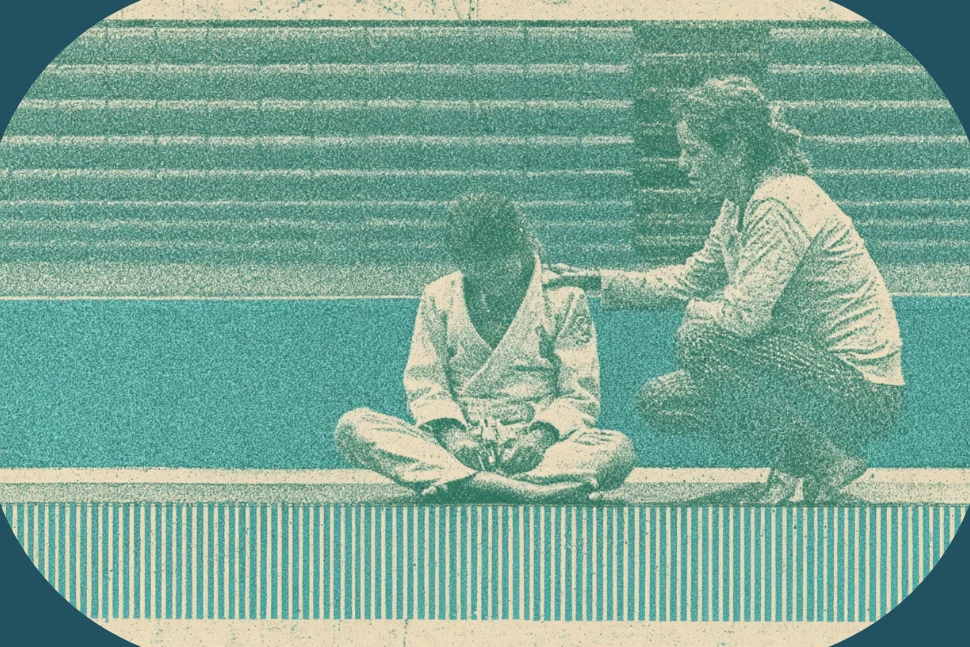
Two Feet In: How Mestrando Bambu Built Axé Capoeira Chicago on No Plan B

The lights went out in the academy once. Not a metaphor—the electric bill went unpaid and the power got cut.
Steven Kolhouse had been pouring his own money into a capoeira school for years by then, and there wasn't any left.
What saved it wasn't a loan or a pivot. It was Jennifer—a woman who had only recently come into his life—looking at the dark room and saying, all right, I'll pay it.
She paid the bill. The lights came back on. And the school that almost died in the dark is now a two-location institution that has been running for 28 years.
When Alex took the GDO camera to Chicago to meet Mestrando Bambu—Steven's name inside capoeira—he found a founder who has survived on a single, stubborn operating principle.
I don't really have any coping mechanism other than—I don't have a plan B. If you don't have a plan B, plan A has to go. You have no other choice. So I just bury my head and keep going forward.
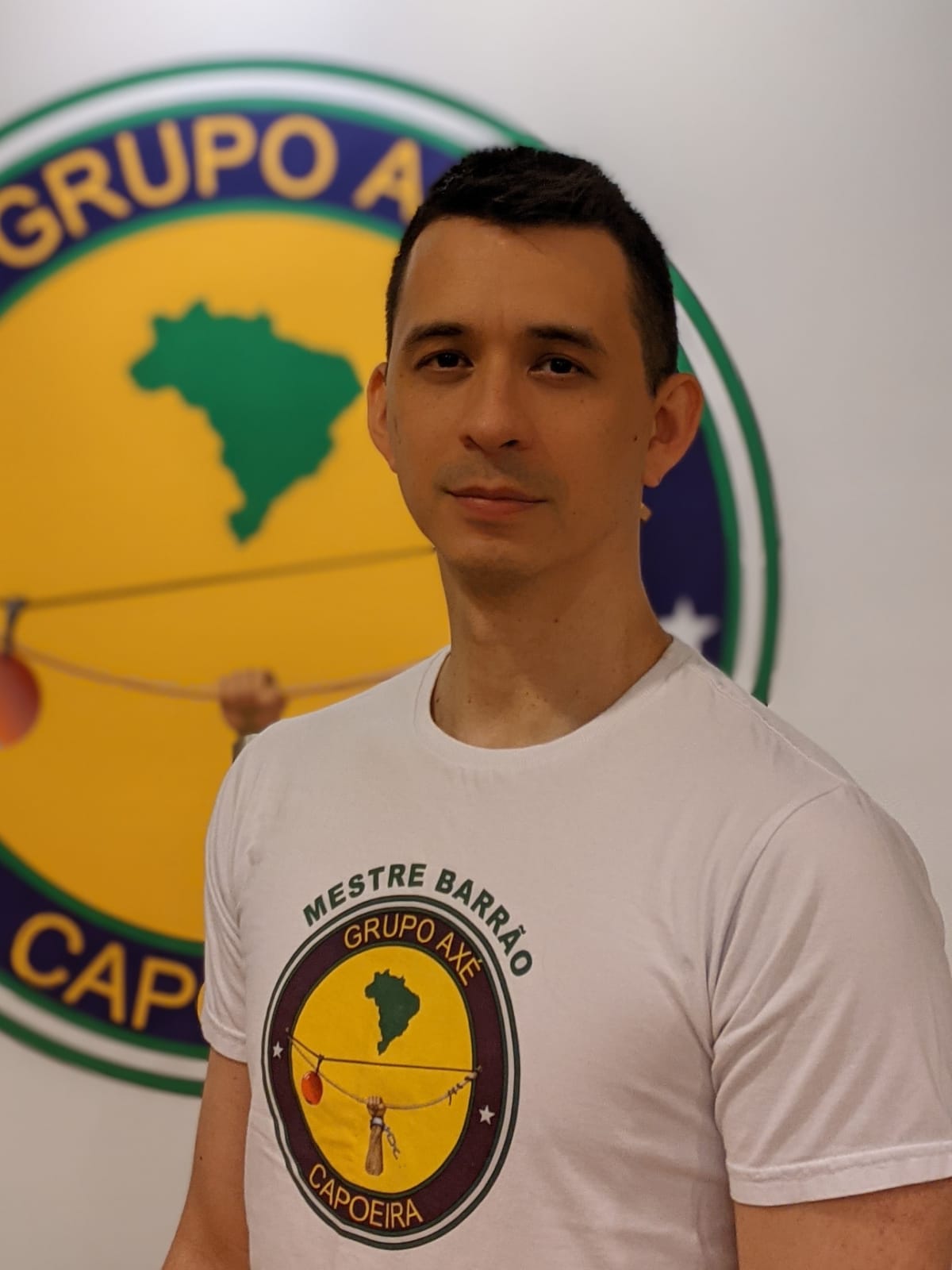
This is a story about a man who refused two things on the way to building something real: a Plan B, and a watered-down version of the art he loved. They turn out to be the same refusal.
Watch the full episode here:
A Movie, a Bus, and No Way Back
Bambu didn't grow up in a martial arts family. He grew up as a kid whose parents wouldn't sign him up for anything.
My parents never signed me up for anything because they assumed I'd just quit. So they said, when you're 18 you can do whatever you want with your money.
Then, around 1996, he saw a movie called Only the Strong—a low-budget action film built around capoeira—and something locked into place. When he got to Indiana University in 1998, his brother handed him a pamphlet from a student club. He joined.
A few months in, the student running the club graduated and the group was left with no teacher.
So they started driving—to St. Louis, Milwaukee, Madison, Chicago—chasing workshops, looking for someone to learn from.
At one of those Chicago workshops in 1998 he met Mestre Barrão, the founder of Grupo Axé Capoeira and the man who would become his teacher for the next quarter century.
Then came the bus.
So we hopped on a bus—me and three other people—a 55-hour bus ride to Canada. We stayed for three days. And when I came back, I was like, there's nothing else in this world that I want to do. Because it was incredible. The energy, the life, the feeling I felt.
Fifty-five hours each way for three days of training. That's the moment a hobby became a life. What hooked him wasn't a workout—it was the depth of the thing.
The Art He Refused to Dilute
It would be easy to run capoeira as a cardio class—pop music, no Portuguese, no instruments, set it to a clock. Bambu has spent 28 years building the opposite.
His central metaphor is the one that has stayed with me since I watched the episode.
Capoeira is like a language. So when you start speaking, your accent comes out. Your natural accent—whether it be sitting at a desk or dancing or doing other martial arts—it starts to seep into the surface. You can kind of see what everybody's done before.
He has a proverb for it too: "capoeira is everything the mouth eats"—meaning whatever the moment needs, that's what it becomes. A game one second, a fight the next. The flips and cartwheels that make capoeira look like performance aren't decoration, either.
"All the acrobatics you see in capoeira today are actually derived from counters to takedowns. They learned how to land on their feet when somebody tried to throw them."
That depth has a heavy history under it.
Capoeira was created by enslaved Africans in Brazil and stayed illegal even after abolition, so it was hidden inside dance and music to survive. The nicknames every capoeirista still carries—Bambu's own included—come straight from that.
WHY THE NICKNAMES:
Capoeira was created by enslaved Africans in Brazil and stayed illegal even after abolition, so it was hidden inside dance and music to survive. The apelidos—the nicknames every capoeirista still carries—come straight from that history.
"Everybody got nicknames. Because if you told them that the capoeira apelido was Steven Kolhouse, they're going to come to your house and arrest you."
So when Bambu insists his school teach the full thing—the martial art, the music, the Portuguese, the history—he's protecting the product, not indulging nostalgia.
His framing is direct: he wants capoeira "respected as a fighting art form, because many people say capoeira is worthless, it's just a dance." Watering it down wouldn't make it easier to sell. It would make it something else.
That depth is also what he has to show for it.
Bambu is one of a very small number of non-Brazilians to reach Mestrando, a tier below master—the kind of standing you only earn by refusing the shortcut for decades.
That conviction is also a quiet retention strategy. The students who come for a quick workout drift. The ones who come to learn a language stay—it's one of the most durable gym retention strategies there is, long after the novelty wears off.
The Indiana Grind and the Chicago Turn
None of this made him an overnight success. For years, it barely worked at all.
I started teaching really early, right away. Didn't know what I was doing. Failed a bunch, failed a bunch. At the time in '98, '99, there's no social media, no internet really. So it was flyers, putting things up at grocery stores and on the posts.
He taught in Bloomington, a college town where the whole student base turned over every few semesters. He moved to Indianapolis. He kept losing money.
"I had a troubling time because for years I just threw my own money at it. I was failing, failing, failing. But for me, I was like, I have to keep the doors open."
The advice he kept getting was to go bigger—a real city. In 2004 he moved to Chicago, and the math finally changed.
"As soon as I moved here in 2004, it instantly took off. And we've been going ever since."
Teaching took off in 2004. The first actual academy—a dedicated capoeira school in Chicago—didn't open its doors until 2009. The breakthrough wasn't a single moment—it was five more years of grinding before the room with his name on it existed.
The Partnership That Runs the Business
The marriage is the spine of the business. The school survives because of it.
Jennifer is Gata inside the culture; she has led their dance group since 2013 and now runs Escola de Samba Chicago, a separate samba school that collaborates with the academy.
She is also the reason the lights came back on. And when Bambu describes how they operate, there's no line between the business and the home.
Every time I decide to do something, she's right behind me. And when she wants to do something, I think that's a great idea, let's do it. It's not 'this is business and this is home'—it's all kind of the same.
That partnership got its hardest test in 2020. When COVID closed the doors, the academy ran on the loyalty of its members and a landlord who gave them room to breathe.
"During COVID, our student base—I'd say 90% of them said, keep it going, keep charging us. We want to make sure it's here when we get back."
(That 90% is Bambu's own recollection of his members, not an audited figure—but it tells you what kind of community he built.)
They moved classes to Zoom to keep going, and never stopped using it.
Opening the second location, in Rolling Meadows, was Gata's idea—driven by having a young daughter and spending fewer days downtown. It also forced a reckoning Bambu is refreshingly honest about.
That's when I realized I didn't really know what I was doing. I had to learn how to open a business and run a business. I can't throw money at it for 10 years hoping to break even.
Twenty-eight years in, managing two locations on a day-swapping schedule built around a four-year-old, he finally had to learn the part of the job that isn't the art.
The Part of the Job That Isn't the Art
Bambu found Gymdesk almost by accident.
A reseller had been repackaging it with extra fees; he dug past the markup, found the real platform, and switched. What he was escaping is a pattern a lot of owners will recognize.
"A lot of them were publicly traded. So they're always looking to grow. And the best way to grow is just charge your people more. I was promised by the last one they'd never change the rate—this is your lifetime rate—and they changed the rate on me. The services were getting less, things were breaking."
What won him over was pricing that scaled to his student count—which mattered when he didn't have many students yet—plus the Zoom integration he'd leaned on through COVID and the lead automations he uses daily: website and Facebook forms feeding new leads in, automatic texts and emails going out, and shared notes so the team always knows who already called whom.
Software is never the reason a school exists.
But for a founder running on no Plan B, a platform that grows when you grow—instead of taxing you for it—is the difference between keeping the lights on and watching them go out.
Two Feet In
What stays with me about Bambu isn't the rank. It's that the thing that nearly sank him and the thing that saved him are the same thing: he would not hedge.
He wouldn't keep a Plan B that gave him permission to quit. He wouldn't sell a thinner version of the art that would have been easier to fill a room with.
Both refusals cost him—years of his own money, a night in the dark. Both refusals are also why there's anything to write about 28 years later.
He has a phrase for it, the advice he'd give anyone sitting on a passion and waiting for permission.
Two feet in. Just go for it. If you have the opportunity, the possibility to pursue it—whatever the passion, whatever the dream—go for it. If you love something, it's going to show in your work.
You can argue with the strategy. Plenty of consultants would have told him to soften the product and keep a fallback. But there's a version of building a business that only works if you refuse the escape hatch—and Bambu is standing in the proof of it, in two rooms in Chicago, with the lights on.
A 7-part email course covering everything from lease negotiation to your first 100 members. Written for martial arts instructors ready to open their own school.
Gym management software that frees up your time and helps you grow.
Simplified billing, enrollment, student management, and marketing features that help you grow your gym or martial arts school.


FAQ

Sean has spent the last decade creating content that helps businesses—small and not so small—grow smarter to allow operators to do more of what they love. You know, the fun stuff.
From shipping and international logistics to web development and marketing, he's done the work (not just the words) to scale retail and service businesses efficiently.
You can find his work at Sendle, Shogun, The Retail Exec, Gymdesk, and more.