
The Best Gym Member Apps of 2026, Ranked for Real-World Use

Pick the wrong member app and your front desk ends up running your gym out of two systems that don't talk to each other.
The right app pulls billing, scheduling, attendance, communication, and a member-facing mobile experience into one place your athletes can run from their phone. Which one is right depends on your gym type, size, and budget.
Below is an honest comparison of the ten apps most independent gyms and studios end up evaluating—plus a separate section on what's actually true for martial arts academies, because there's a claim circulating in 2026 that needs correcting.
Two short notes before the list.
Full disclosure. I work at Gymdesk, and Gymdesk is one of the ten apps below. So you should know my bias before I make any recommendations. I'll be specific about where Gymdesk fits, where it doesn't, and how I ranked the rest. You can weigh the bias accordingly.
How I ranked these. I'll get into the methodology in a minute. The short version: this isn't a "we're #1" listicle dressed up as neutral. Each of the ten apps gets a fair, specific entry with a real limitation. The order leads with Gymdesk because that's the transparency play—not because Gymdesk wins every category.
OK. Let's get to it.
What a Gym Member App Should Actually Do
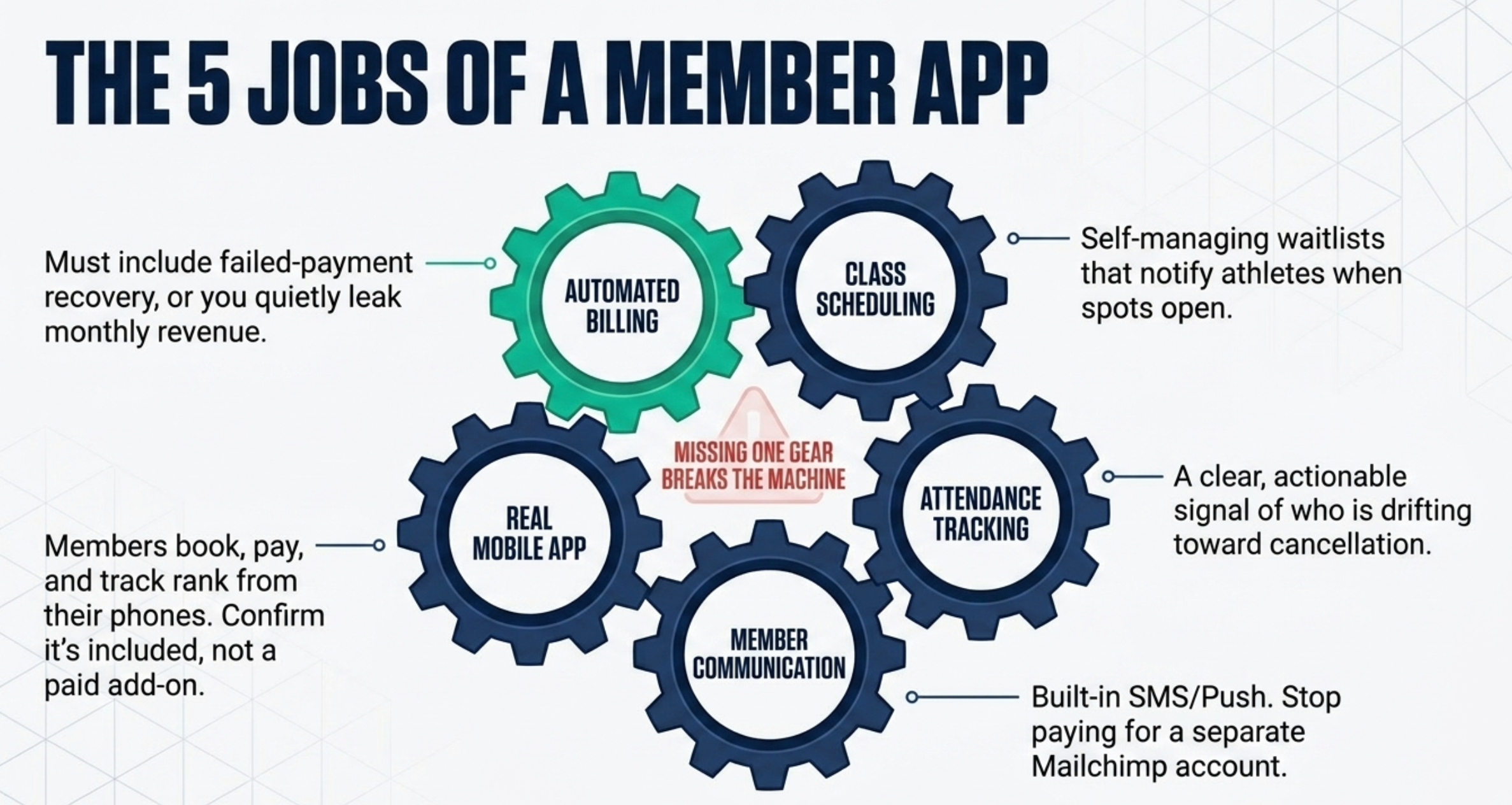
A member app earns its monthly cost when it collapses five jobs into one system. If your platform is missing one, your staff will end up using a second tool to plug the hole—and you'll be paying for both.
- Automated recurring billing with failed-payment recovery. Monthly dues should run on their own, with automated retries when cards decline. Platforms that don't recover failed payments can quietly leak a few percent of monthly revenue.
- Class scheduling, reservations, and waitlists. Members book a class from their phone. When a class is full, the waitlist self-manages and notifies people when a spot opens. Coaches see who's checked in.
- Attendance tracking that produces usable data. Tracking who walked through the door is only the start. What you really want is a clear signal of who's drifting toward cancellation, because that's the data your retention strategy runs on.
- Member communication. In-app messaging, push notifications, automated reminders. The point is you're not running a separate Mailchimp account to do what your gym software should already be doing.
- A real member-facing mobile app. Members book, pay, view their account, and (for martial arts) see their rank progression. Confirm it's included in your tier, not a $39/month add-on.
Keep one distinction in mind as you read the list: most products that call themselves "member apps" are full gym-management platforms.
You're usually shopping for an all-in-one system, not a standalone app—which is exactly why the five-job rubric above matters, since a gap in any one job sends you back to a second tool.
How I Ranked These 10 Apps
Four criteria, weighted in this order:
- Fit by gym type. Martial arts academies need things CrossFit boxes don't. Boutique studios need things franchise networks don't. A platform that's #1 for one is rarely #1 for another. The honest read is "best for what kind of gym."
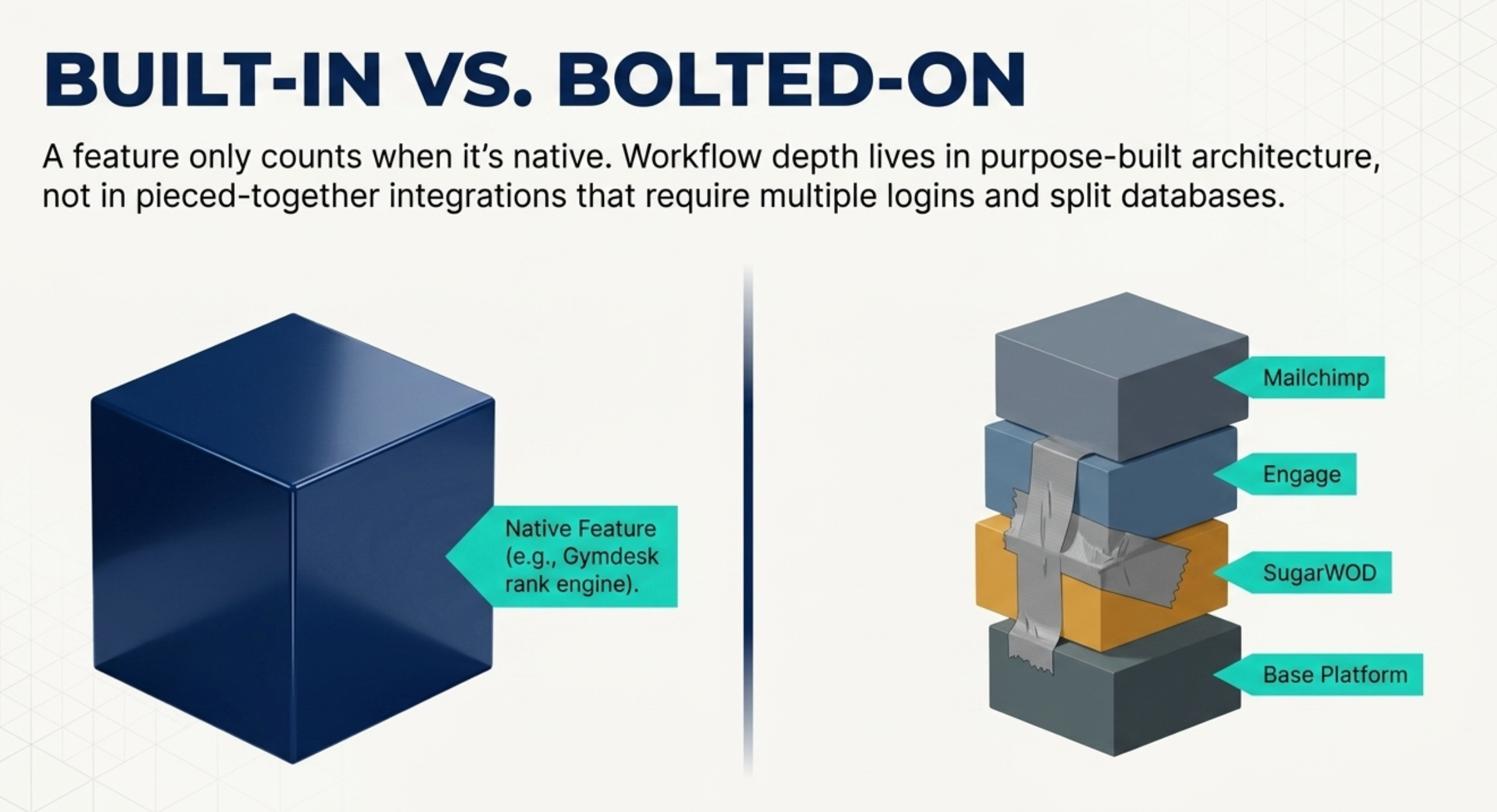
- Depth of the five core features above. A feature only counts when it's built in, not bolted on. WOD tracking that lives in a separate add-on counts for less than native WOD tracking.
- Pricing transparency. A platform that requires a sales call to learn the monthly cost is a platform that's protecting itself, not you.
- Ease of setup. Time-to-first-class-booked is the metric that actually correlates with whether you'll get value from the software.
And the bias disclosure, restated: I work at Gymdesk, Gymdesk leads the list, and every other entry still gets a real strengths-and-limits read rather than a thin paragraph.
The order is "Gymdesk first, then by general market fit." If any of the nine non-Gymdesk options genuinely fits your gym better, the list will say so—I'd rather you pick the right one of the other nine than pick Gymdesk and regret it.
App | Best for | Standout strength | Starting price |
Gymdesk | Martial arts academies + value-focused gyms | Native rank/curriculum engine; flat pricing | $75/mo Micro · $100/mo Small Gym |
PushPress | CrossFit boxes; AI/CRM-forward owners | Train + Grow add-ons, AI features | Free · $159/mo Pro · $229/mo Max |
Mindbody | Wellness, spa, multi-service studios | Consumer-facing discovery marketplace | Starting at $79/mo per location (quote-only) |
Wodify | Performance-tracking CrossFit boxes | Deepest WOD/PR analytics on this list | Starting at $179/mo per location |
Zen Planner | Boutique fitness studios, established ops | Mature billing, broad reporting | Studio $99/mo (+ paid add-ons) |
Glofox | Studios prioritizing a branded app | Polished white-label member experience | Demo only |
Mariana Tek | Premium/enterprise boutique networks | Multi-location scalability | Demo only |
Pike13 | Appointment-based / personal-training studios | 1:1 scheduling + client management | $139/mo (billed annually) |
ClubReady | Large gyms + franchise networks | Full-service franchise features | Demo only |
TeamUp | Class-based group fitness | Strong booking and waitlist logic | $119/mo (up to 100 customers) |
The 10 Best Gym Member Apps in 2026
Pricing reflects what's published on each vendor's pricing page as of June 2026. Three of the ten—Glofox, Mariana Tek, and ClubReady—still won't show a price without a sales call, which is a meaningful signal in itself.
If you've narrowed it to Gymdesk versus PushPress, you can run the PushPress vs Gymdesk cost calculator at your member count before you trial either one.
Gymdesk
Built for martial arts academies from day one—Gymdesk started life as martial arts software, and the rank-and-curriculum engine is still the deepest and widest part of the product.
The member app is included at every tier, not a paid add-on, and pricing is flat by member count starting at $75/month with Gymdesk Payments.
Honest limitation: if you want a native AI lead assistant or a deep standalone CRM as a first-class feature, PushPress's Grow product is more mature there. Gymdesk includes marketing automation but not a multi-channel SMS/email/WhatsApp CRM with its own product page. If that's the centerpiece of your acquisition strategy, that gap is real.
GYMDESK PRICING, FULL BREAKDOWN:
Pricing is flat by member count, and every feature is included at every tier—the member app, rank engine, billing, scheduling, and communication are never add-ons.
Micro — $75/month, up to 50 members. Small Gym — $100/month, 51–100 members. Medium — $150/month, 101–150 members. Large — $200/month, 151–250 members. Past 250, you talk to us for a price. Those are the Gymdesk Payments prices. Use your own payment processor instead and it's $25 a month more ($40 on Large).
What you pay scales with your member count, not with which features you turn on.
PushPress
A capable platform with the strongest AI and CRM stack in this list.
The Grow add-on handles automated SMS, email, and WhatsApp follow-up, and per PushPress's Grow product page its AI lead assistant qualifies prospects and schedules tours.
Free Core tier; Pro at $159/month; Max at $229/month. Per PushPress's published pricing, processing rates run 4.99% + $0.30 on the free tier and drop to 2.89% on Pro and 2.75% on Max.
They also hold an official partnership with CrossFit Affiliate Programming for partner workouts through Train.
The catch: paid-tier pricing runs $159–$229/month before add-ons, which is meaningfully higher than the lower end of the market. PushPress also entered the martial arts vertical in 2025—more on that below.
It's a strong platform, just a more recent arrival to that specific gym type.
Mindbody
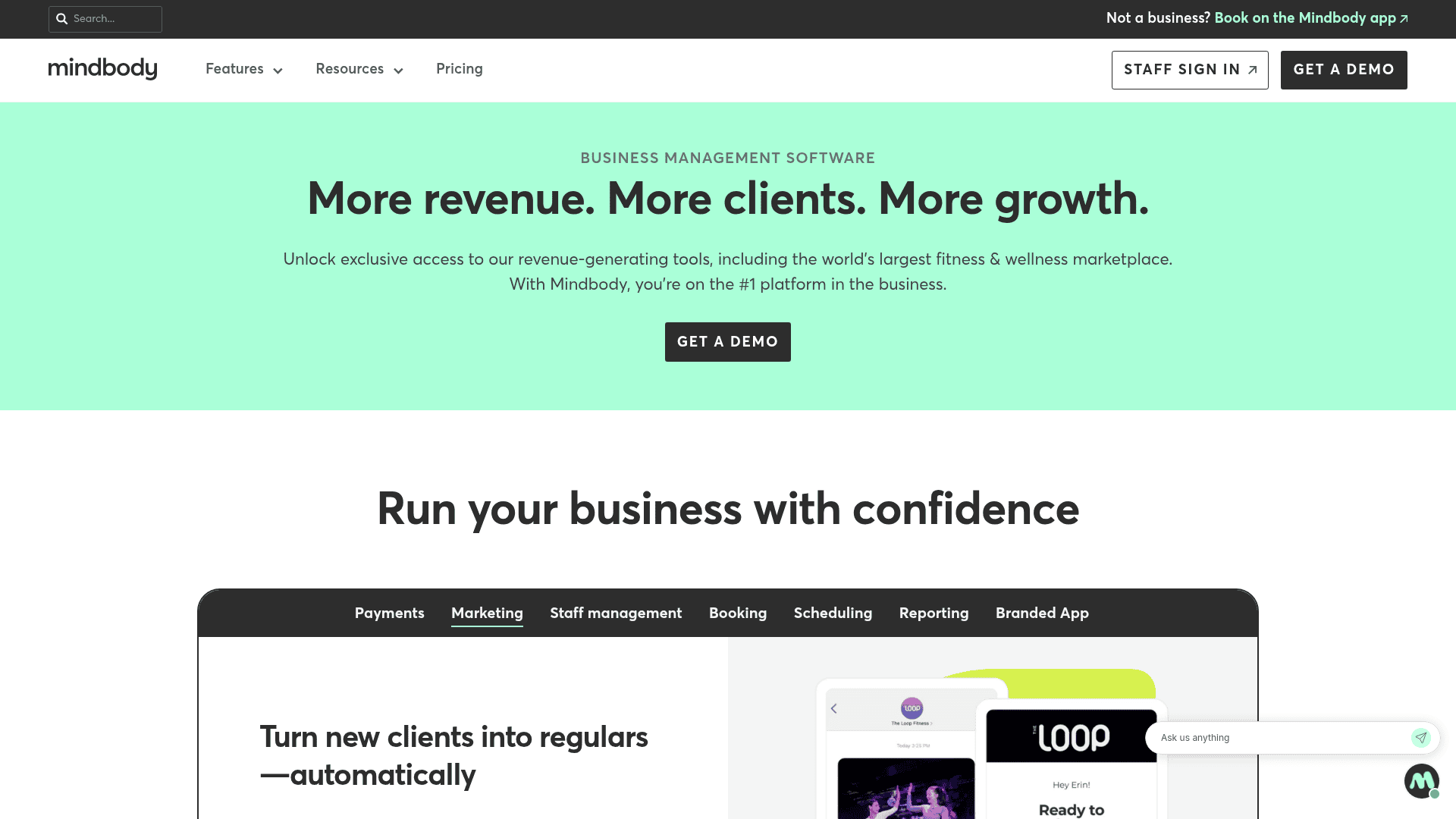
The breadth play. Mindbody serves the wider wellness industry—spas, salons, yoga, pilates, fitness studios—and runs a consumer-facing discovery marketplace that can drive new leads for studios visible on it.
If you're operating a multi-service wellness business or a yoga/pilates studio that benefits from the marketplace, this is a legitimate consideration.
Honest limitation: the breadth that's a strength for wellness studios is the weakness for gym-specific operations. Mindbody's workflows are designed across many business types, so gym-specific features (WOD tracking, rank systems, class capacity nuance) get less depth than gym-native platforms.
Pricing starts at $79/month per location, but the Starter, Accelerate, and Ultimate tiers are all gated behind a sales call. For a deeper read, see the Mindbody features breakdown.
Wodify

Built inside the CrossFit world and shows it. The Performance Tracking add-on is genuinely the deepest WOD-logging and analytics experience on this list.
If your community is built around the leaderboard and the year-over-year PR history, Wodify is doing a thing no general platform does as well.
Pricing starts at $179/month per location for Essentials, with Accelerate and Ultimate tiers above it. Multi-location operators should price the per-location cost carefully before signing.
Where it falls short: depth costs operational overhead. Some boxes find the performance-tracking depth more overhead than it's worth relative to the admin work it creates, while others swear by it. It depends on how much your members actually use it.
Zen Planner
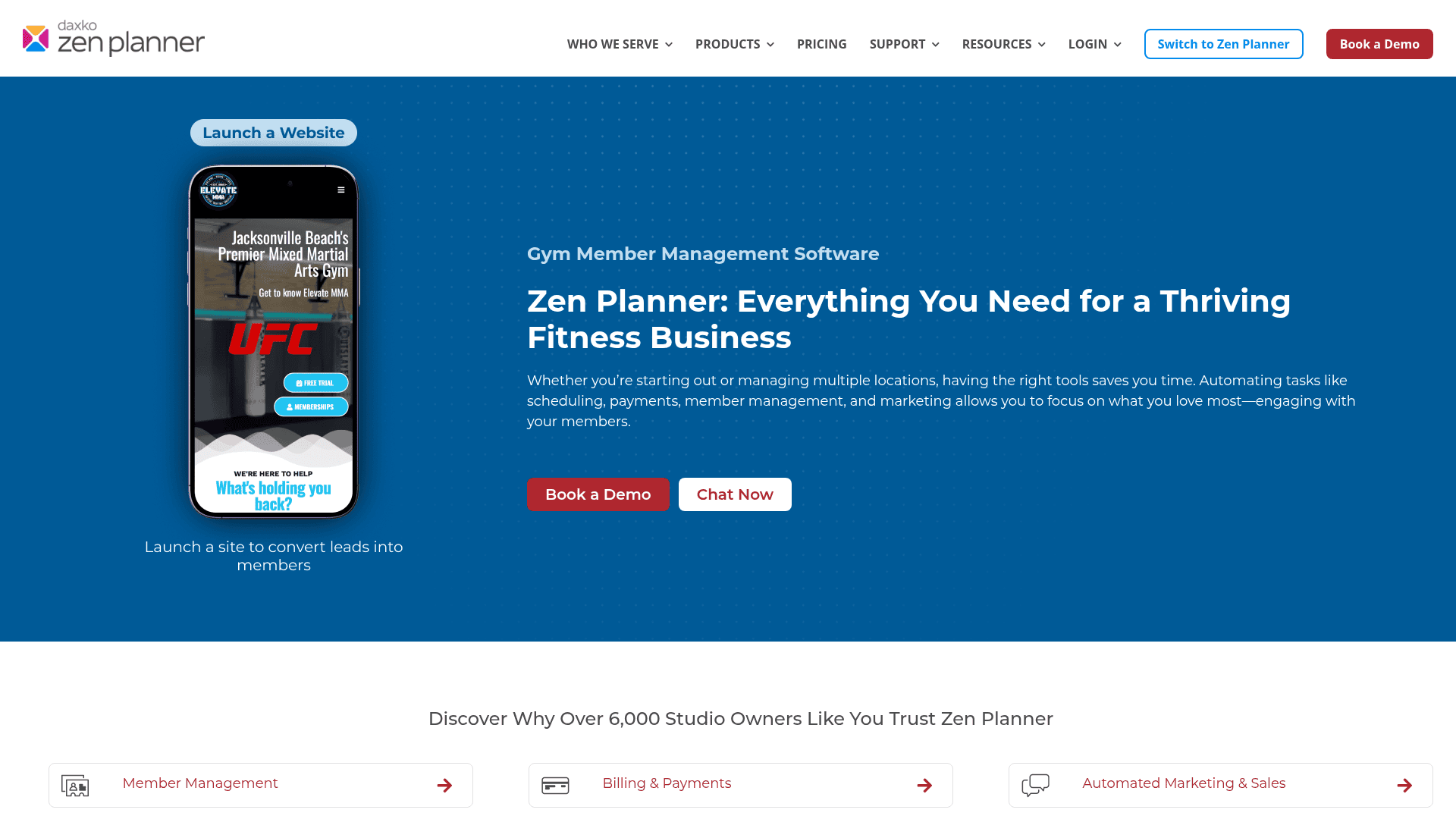
The established option for boutique fitness studios with stable, mature operational needs.
Membership management, scheduling, billing, and reporting in a platform that's been shaped by years of customer feedback in the boutique segment. Studio (the core product) starts at $99/month.
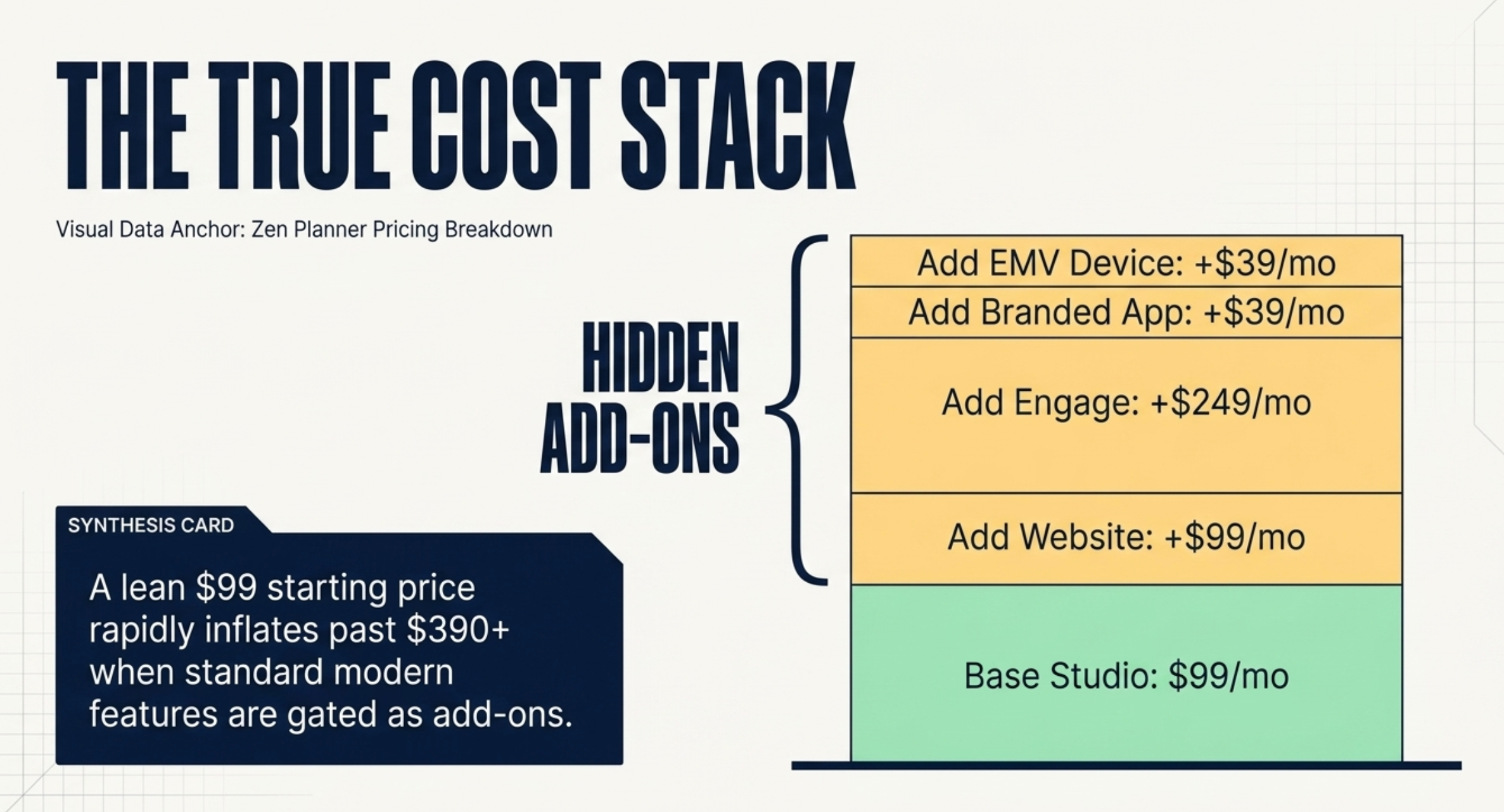
Honest limitation: most modern features live in paid add-ons that stack fast. Website is $99/month, Engage (marketing automation + AI campaigns) is $249/month, the Branded App is $39/month, EMV devices are $39/month. Studio at $99 looks lean until you add three modules and you're at $390+.
Workout tracking is the SugarWOD integration, not native.
Zen Planner is also part of Daxko, which means updates ship on a slower cycle than at newer platforms—stability for some operators, a frustration for others.
Glofox
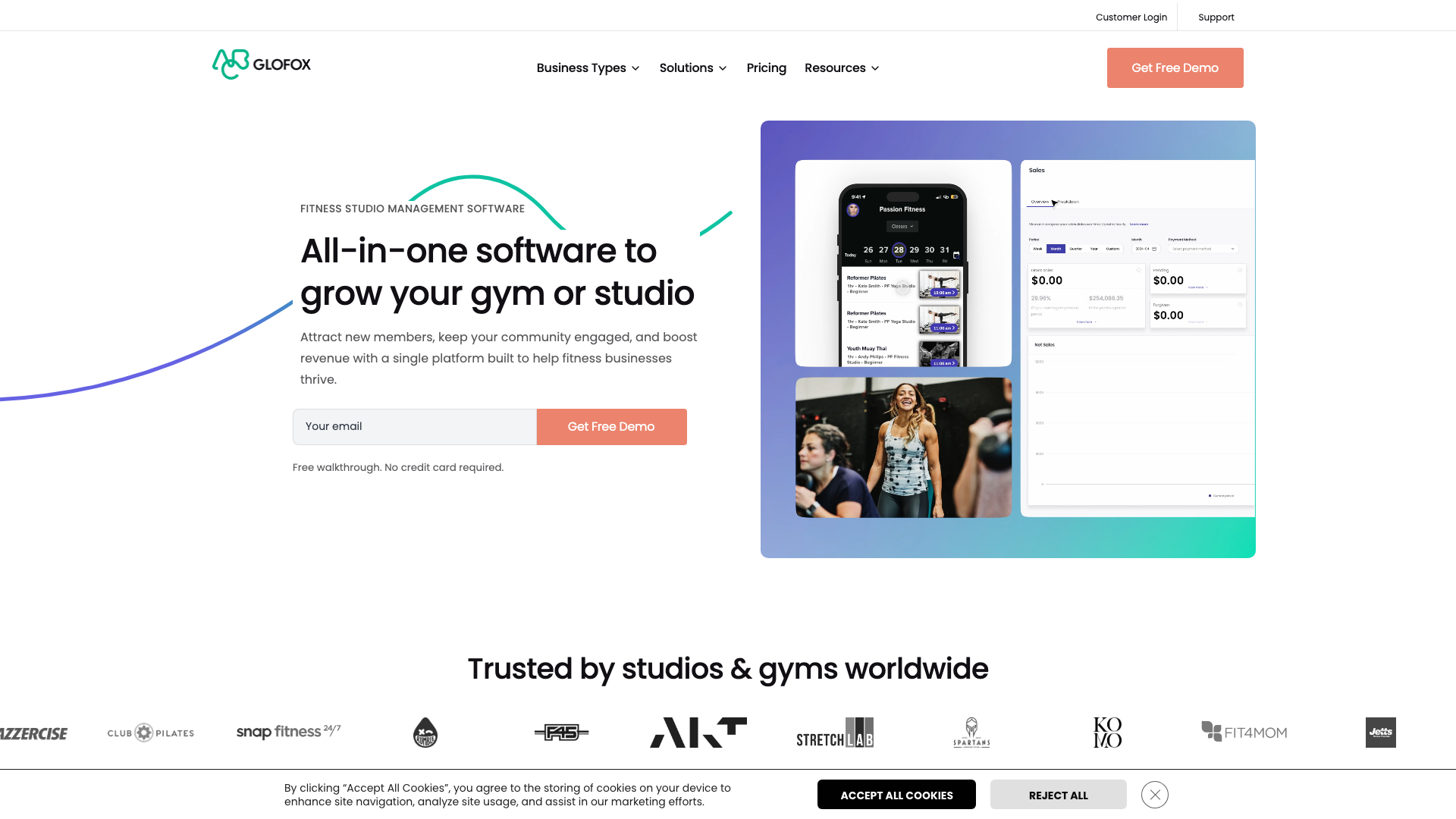
Strong choice if a polished, on-brand member app is a centerpiece of your member experience.
Glofox specializes in white-labeled mobile apps and the marketing tooling around member acquisition. Studios that compete on brand polish—boutique cycling, premium pilates—tend to do well here.
Honest limitation: priced and positioned for growth-stage studios with marketing budget. Pricing is demo-only—you won't see a number without booking a call.
Smaller independents often find Glofox more expensive than its feature set justifies for the size they actually are.
Mariana Tek
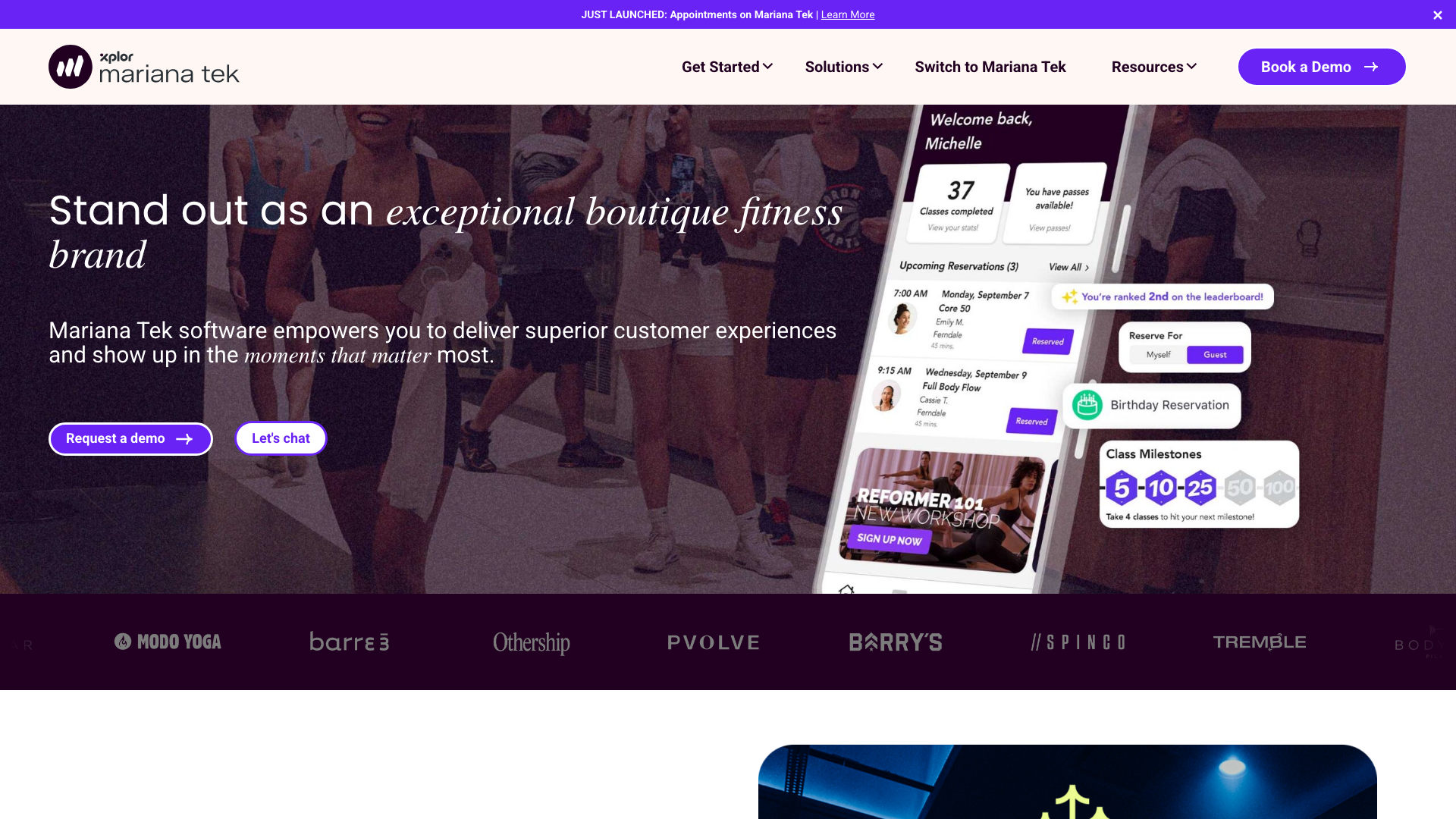
Built for large multi-location boutique fitness networks.
If you're operating ten or more locations, or you're a fast-growing brand that needs sophisticated multi-location reporting and member experience consistency, Mariana Tek is a legitimate pick.
So where does it fall short? The pricing and the complexity both scale with that size. For an independent studio under three locations, this is more platform than the business will use.
Pike13
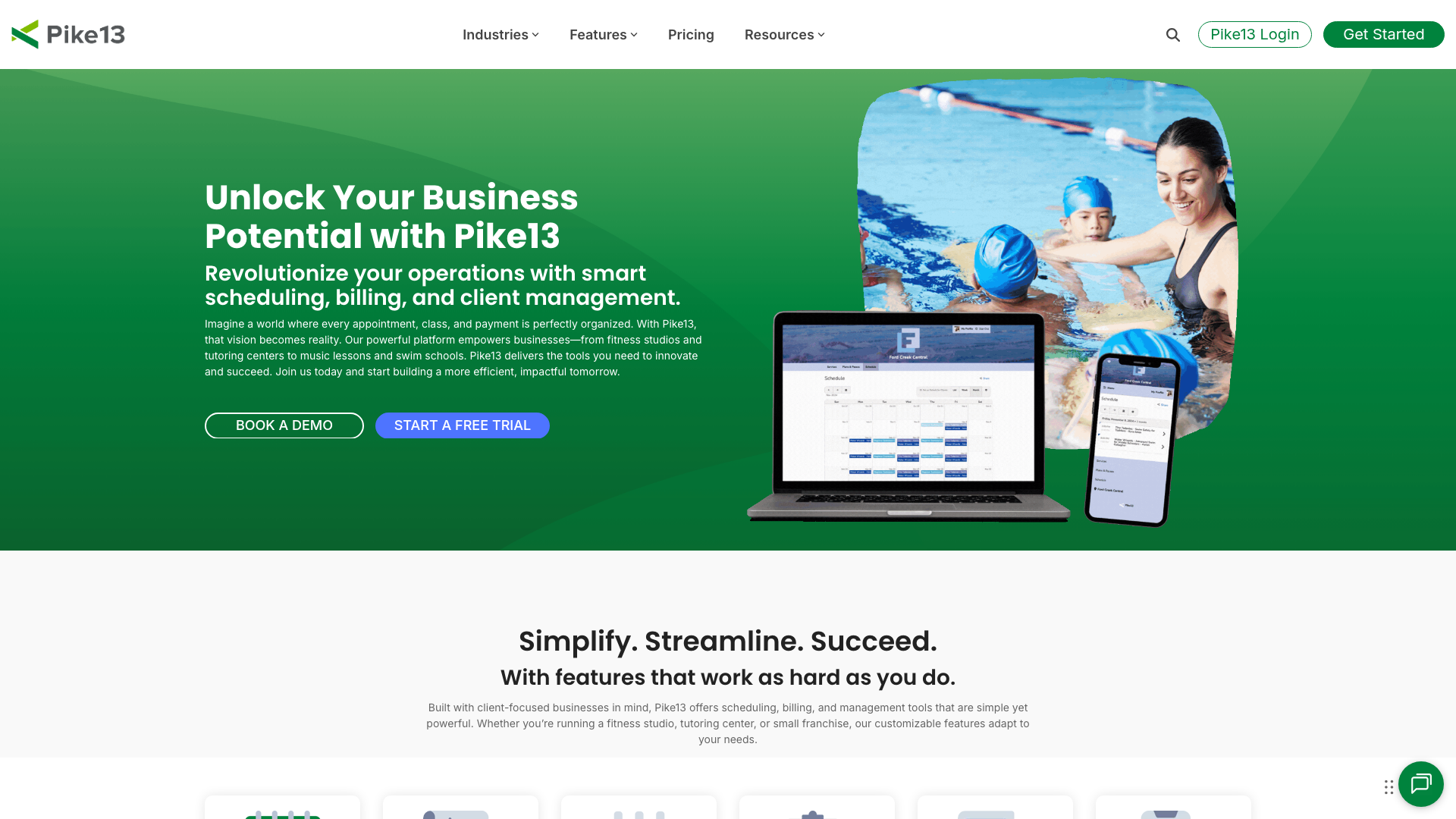
Optimized for appointment-based fitness businesses—personal-training studios, one-on-one coaching practices, small-group training models where individual sessions matter more than group-class capacity.
Scheduling and client management features are strong for that model, and pricing is published: Essential starts at $139/month billed annually ($159 monthly), scaling to higher tiers as you add features.
Honest limitation: weaker for high-capacity group classes. If your model is class-based with significant waitlist activity, Pike13's design philosophy is pulling in a different direction than your workflow.
ClubReady
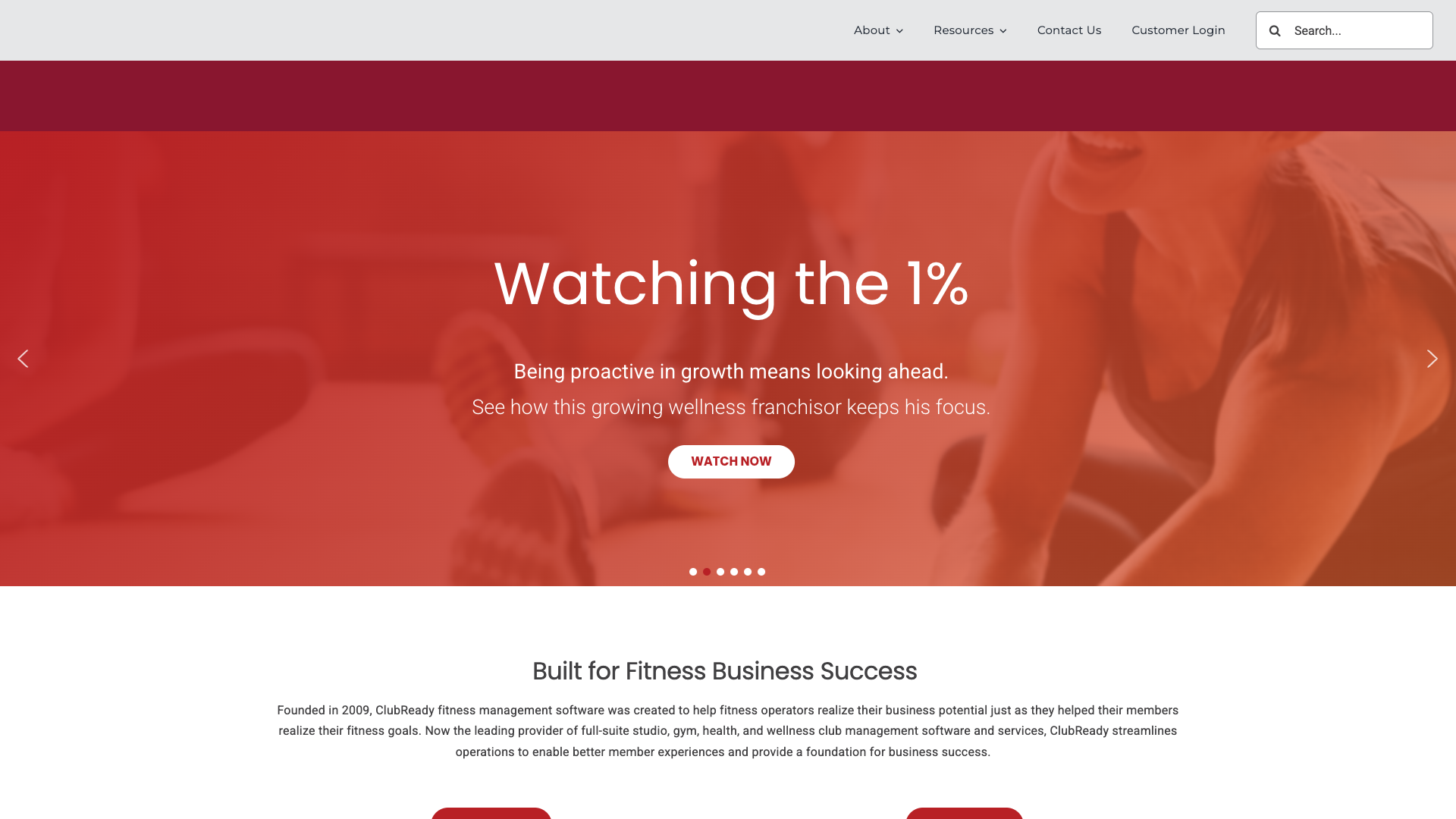
Big-operation platform. Built for large gyms and franchise networks that need full-service organizational features—territory management, location-based permissions, franchise-style reporting structures. Established credibility with large multi-location operations.
The catch: it's more platform than an independent gym needs. If you're a single-location operator under 400 members, ClubReady's complexity is a tax, not a benefit.
TeamUp
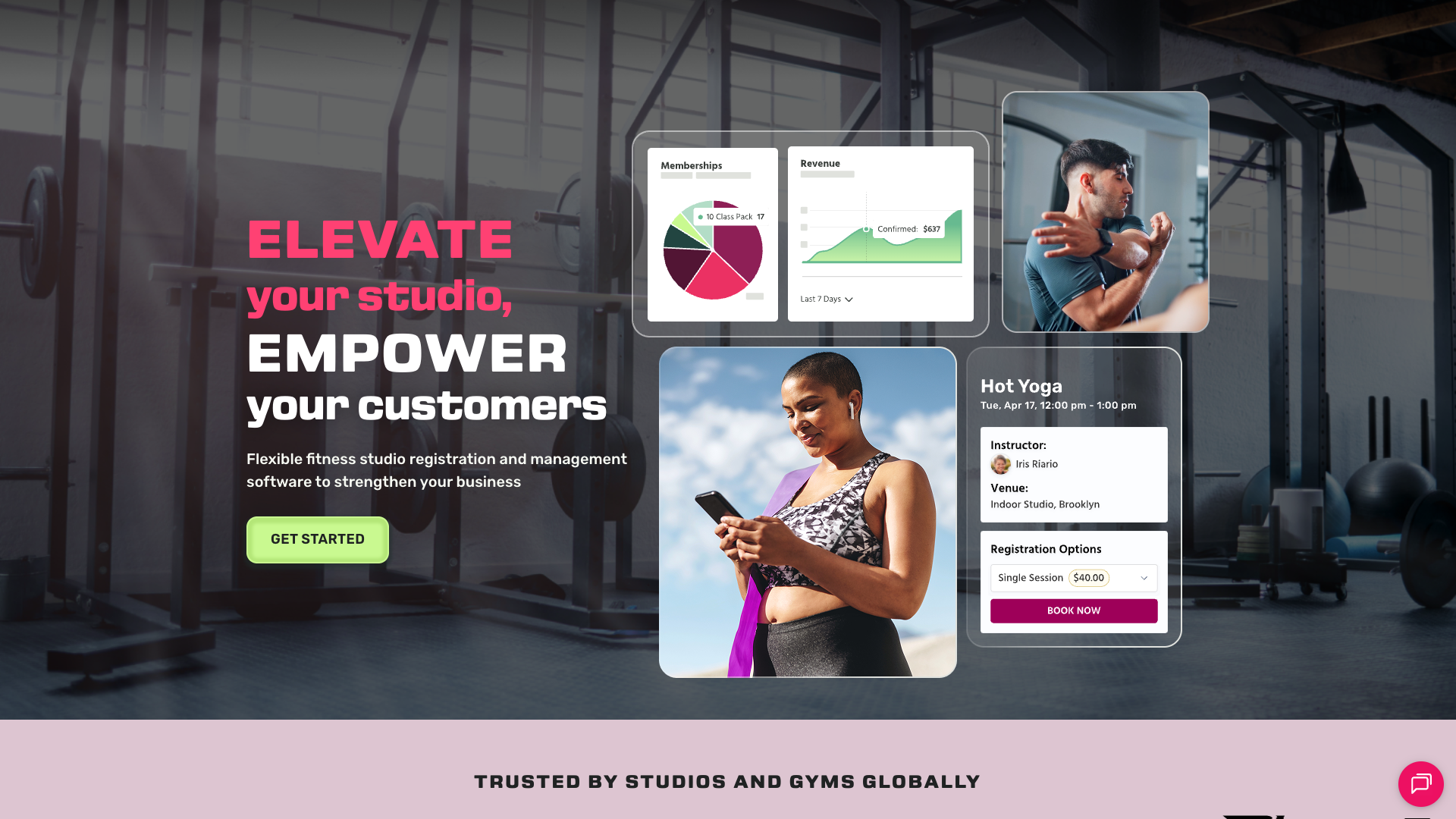
A clean, focused choice for class-based group fitness businesses. Strong booking and waitlist logic, simple member experience.
Pricing is published and usage-based—$119/month for up to 100 active customers, scaling with your member count—so you can size the cost before you ever book a call. Owners who want a no-frills platform that handles classes well without lots of additional modules often land here.
Honest limitation: lighter on the deeper management features that bigger operations rely on. As you grow into multi-program scheduling complexity or sophisticated reporting needs, you may outgrow what TeamUp offers.
The Best Member App for Martial Arts Academies
Martial arts academies have software needs general fitness platforms simply don't cover.
- Belt and rank progression history through black belt.
- Family memberships with sibling discounts. Families are a large revenue share for many academies.
- Multi-program scheduling: gi/no-gi for BJJ, striking/grappling for MMA, kids and adults on the same dojo schedule.
- Digital waivers parents can sign on behalf of children.
- Tight recurring billing. A large share of academy revenue runs on monthly autopay, so the failed-card recovery rate has a real effect on the bottom line.
There's a claim circulating in 2026 that "only PushPress is purpose-built for martial arts academies as a first-class use case." That isn't accurate.
PushPress entered the martial arts vertical in 2025, launching dedicated landing pages and a rank-tracking feature, and has built capable martial arts support since.
But the platform that was purpose-built for martial arts academies from day one is Gymdesk. Gymdesk started as martial arts software, and the martial arts gym software we sell is named what it is because it's what the product was built for first.
The curriculum-and-rank engine remains the deepest and widest feature area in the product.
Both platforms serve martial arts academies well today. The honest read is that PushPress is a capable, more recent entrant in the martial arts space, and Gymdesk is the incumbent that's been doing it for years.
The claim that only one of them is "purpose-built" for martial arts academies doesn't hold up against the timeline. If you're evaluating either, demo both and check rank-engine depth, family-billing flexibility, and curriculum tracking against your school's actual operations.
That depth shows up in production: a multi-location jiu-jitsu academy can run belt promotions, structured curriculum tracking, and family billing with sibling discounts across every location from one franchise dashboard—the kind of rank-and-billing workflow that only holds up because martial arts academies have been on the platform from the beginning.
How to Choose the Right Member App for Your Gym
Gym type is the variable that actually decides this.
Instead of counting features, match the tool to how your gym operates—run your busiest morning's check-in, billing, and class flow against a shortlist—and the right pick usually narrows itself down to two options.
| Your gym type | Top fit | Strong alternative | Why |
|---|---|---|---|
| Small or boutique studio | Gymdesk | Zen Planner / TeamUp | Flat pricing and full feature inclusion; TeamUp wins on simplicity |
| Martial arts academy | Gymdesk | PushPress | Built for this since day one; PushPress if the AI/CRM stack matters more |
| CrossFit box | Wodify | PushPress / Gymdesk | Wodify for performance data; PushPress for CrossFit partner programming |
| Appointment-based / personal training | Pike13 | — | Design philosophy matches 1:1 sessions and small-group training |
| Multi-location or franchise | Mariana Tek / ClubReady | Gymdesk | Enterprise options; Gymdesk for multi-location martial arts without the complexity tax |
Small or boutique studio. Simplicity and value matter more than feature depth. Gymdesk, Zen Planner Studio, and TeamUp are the three honest options—Gymdesk for flat pricing and feature inclusion, Zen Planner for established reliability in the boutique segment, TeamUp for simplicity if you don't need the full management surface.
Martial arts academy. Which feature direction does your school prioritize? Choose Gymdesk if you want the platform that's been built for this since day one, or PushPress if the AI/CRM stack matters more to you than rank-engine maturity. Either one works.
CrossFit box. Wodify is the pick if athlete performance data is the centerpiece of your culture, and PushPress if you want the CrossFit Affiliate Programming partnership integrated natively. Gymdesk fits when simplicity and cost matter more—you get WOD tracking with leaderboards and PR history, just not the official partner workouts piped in. (For a longer read, here's the best CrossFit gym management software breakdown.)
Appointment-based / personal training studio. Pike13 is honestly the strongest fit. If your business is 1:1 sessions and small group training, the design philosophy matches.
Multi-location or franchise. Mariana Tek or ClubReady are the enterprise options. For multi-location martial arts specifically, Gymdesk's franchise dashboard handles it without the enterprise complexity tax.
Most owners get this right by demoing two platforms in the same week. Run the same workflow on both. Whichever one your front desk staff figures out first is usually the one to pick.
One thing worth saying: software is the floor, not the ceiling. If you want to go deeper on what happens after you've picked a platform, how member retention software actually moves the number is a useful next read.
Pick the App That Fits How Your Gym Runs
No member app wins for every gym. The right one matches your model and—just as important—is the one your staff and members will actually open every day.
The best feature list does you no good if nobody uses it. A simpler platform your front desk runs without thinking will serve you better.
For martial arts academies and value-focused gyms, the honest case for Gymdesk is strong.
It was built for this, the pricing is flat, the feature set is included, and you can test the whole thing for 30 days free—no credit card, no sales call. Set up your programs, import your members, run a week of real classes, and see whether it fits.
If it doesn't, pick the right one of the other nine. That's the spirit of the disclosure—I told you the bias, now you decide.
FURTHER READING:
Once you've picked a platform, the work shifts to getting members to stay. These three reads go deeper on retention and engagement:
Gym management software that frees up your time and helps you grow.
Simplified billing, enrollment, student management, and marketing features that help you grow your gym or martial arts school.


FAQ
Gym Member App FAQ
A few quick answers to the questions gym owners ask most when comparing member apps.

Sean has spent the last decade creating content that helps businesses—small and not so small—grow smarter to allow operators to do more of what they love. You know, the fun stuff.
From shipping and international logistics to web development and marketing, he's done the work (not just the words) to scale retail and service businesses efficiently.
You can find his work at Sendle, Shogun, The Retail Exec, Gymdesk, and more.