Movement Is Medicine: Inside Real Movement and Martial Arts
In this episode, Alex visits Real Movement and Martial Arts in Bartlett, Illinois, where Joey "The Real" Diehl runs a 13,000-square-foot academy on a single conviction: jiu-jitsu, MMA, yoga, and mobility aren't separate things you offer—they're one idea called movement. Joey walks Alex through a five-year arc that started with three people in half a rented room and grew into the whole building, and makes the case that a black belt and a yoga mat belong under the same roof. It's a study in refusing the usual either/or.
Starring
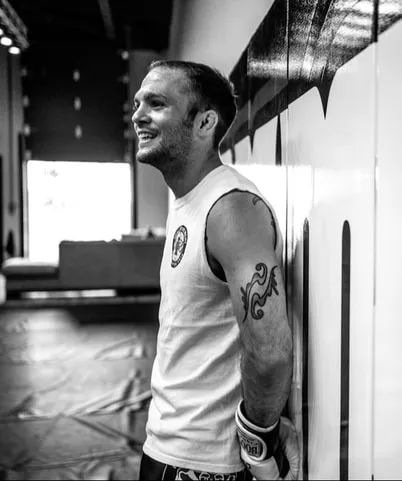
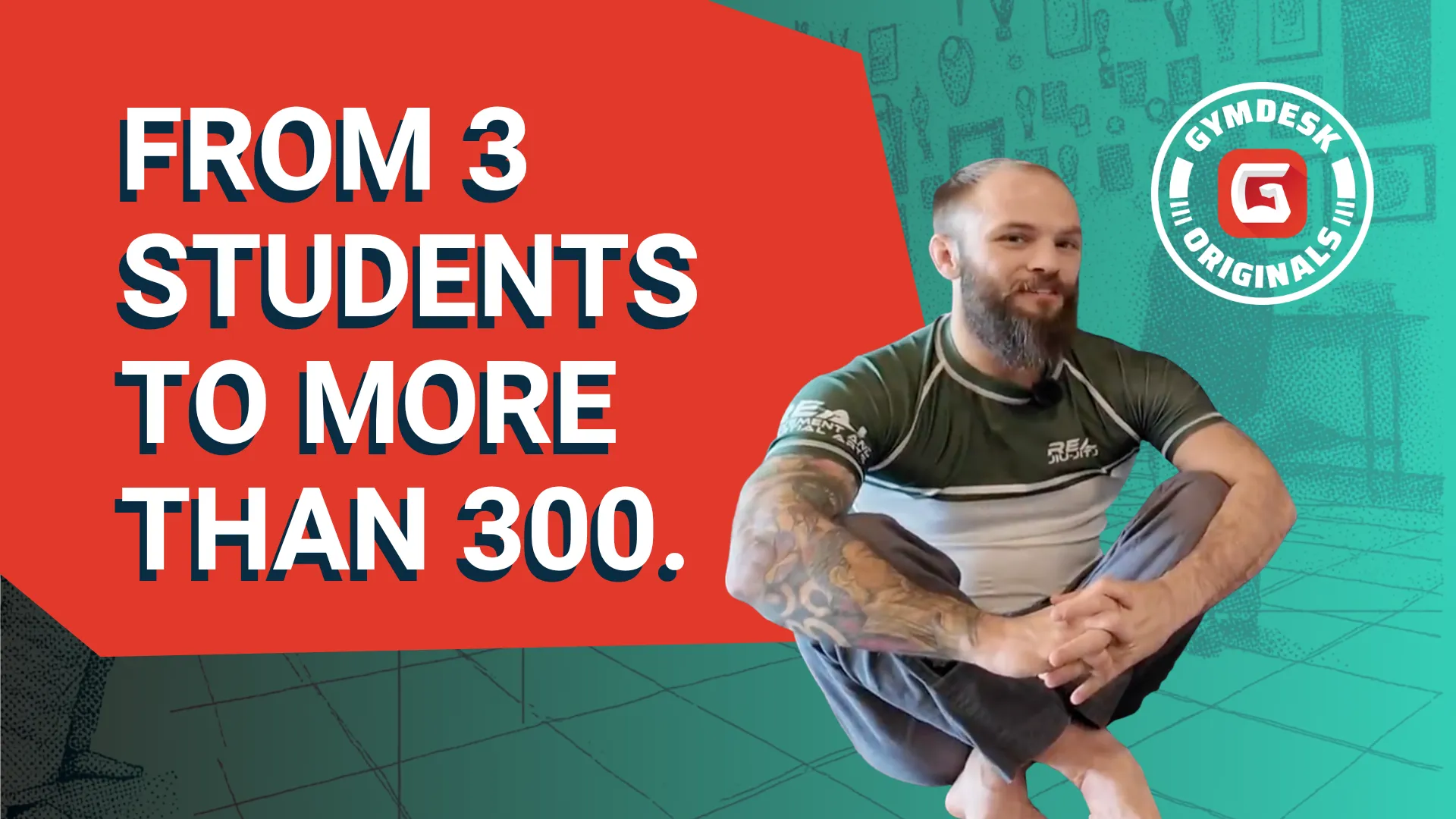
Joey Diehl is the owner and head professor of Real Movement and Martial Arts in Bartlett, Illinois — a BJJ black belt under Jeff "Big Frog" Curran and a professional MMA veteran with a record of 12-10. He started wrestling at five, was given a jiu-jitsu membership for his fourteenth birthday by his mother, who works the gym's front desk today, and turned pro at nineteen. A back injury in his early twenties led him to yoga; he was certified by twenty-five and has taught it ever since. He opened the academy in 2021 with three students in a sublet half-room and grew it past 300 members in five years, taking over the full 13,000-square-foot building in 2025. His worldview is on the record: "I'm not just someone who trains jiu-jitsu. I am a martial artist."
About the Gym
Real Movement and Martial Arts is a hybrid martial arts and wellness academy in Bartlett, Illinois, in the northwest Chicago suburbs, founded in 2021 by Joey "The Real" Diehl—a BJJ black belt in the Team Curran / Pedro Sauer lineage, a 12-10 professional MMA veteran, and a certified yoga teacher of ten years.
The academy puts Brazilian jiu-jitsu and MMA at its core and layers yoga, mobility, and group fitness on top, all framed as one practice: "real movement." Programs run from kids as young as three through adults, with a women's jiu-jitsu program led by head women's coach Tayla Meredith and a kids program led by head kids coach Kyle Perkins. The "real" in the name is the point—Joey defines it as authenticity, the opposite of gimmicky fitness fads.
📍 Location: 891 S IL Route 59, Bartlett, IL 60103
📱 Phone: (847) 987-7325
Summary
This is the story of a pro fighter who decided he was a martial artist first—and built a gym around the difference.
Joey Diehl started wrestling at five, was gifted a jiu-jitsu membership at fourteen by the mom who now works his front desk, and turned pro at nineteen. A back injury sent him to yoga at twenty-one, and he never drew a line between the two again.
He opened Real Movement and Martial Arts in 2021 with three students in a sublet half-room and the belief that "movement is for everyone"; five years later he took over the entire 13,000-square-foot building. His thesis throughout: "I'm not just someone who trains jiu-jitsu. I am a martial artist."
What They Told Us
Alex Cuevas brought the Gymdesk Originals camera—and his son, in a brand-new gi—to Real Movement and Martial Arts, a 13,000-square-foot academy in Bartlett, Illinois, out in the Chicago northwest suburbs. The owner is Joey "The Real" Diehl, a pro fighter turned professor who has spent nearly every day since he was fourteen thinking about martial arts. The building holds jiu-jitsu, MMA, yoga, and fitness under one roof, and Joey refuses to treat any of them as separate things. His word for the whole idea is movement, and the story he keeps circling back to is how three people in a sublet room became more than three hundred in five years.
Not just someone who trains
Ask Joey what he is and he doesn't reach for his fight record or his belt. He reaches for a distinction he made peace with a long time ago—the difference between doing a thing and being one. Martial arts, he says, sits at the core of who he believes he is, and it follows him wherever he goes.
"I'm not just someone who trains jiu-jitsu. I am a martial artist."
—Joey "The Real" Diehl, Owner, Real Movement and Martial Arts
Why the name says real
The name isn't only branding, and it isn't only his nickname—Joey has gone by "the real deal" for years. When he unpacks the word, though, it points at something narrower and more demanding: whether the thing in front of you actually changes your life, or just looks like it does.
"The word real, though, to me is like authenticity—instead of gimmicky stuff and gimmicky fitness fads."
—Joey "The Real" Diehl, Owner, Real Movement and Martial Arts
Movement the way you brush your teeth
Joey's case for movement isn't athletic, it's ordinary. He frames it as basic upkeep—something you owe your body every day, on the same footing as a habit you'd never skip, whether or not you feel like it that morning.
"For me, how movement feels is the same necessity of brushing your teeth. … A lot of people spend a full day, maybe not moving their shoulder or touching your toes or reaching above your head."
—Joey "The Real" Diehl, Owner, Real Movement and Martial Arts
Why he won't separate yoga and jiu-jitsu
Plenty of gyms would keep the striking room and the yoga studio in different worlds. Joey put them in the same building on purpose. A certified yoga teacher for ten years, he sees the two practices as the same act underneath—mind and body pulled into one thing through the breath—and he says the word yoga itself is quietly making that argument.
"Yoga, if you're familiar, the term just means to yoke or to unite. And it's just the union of mind and body using the tool of the breath. And you can't say jujitsu is not that."
—Joey "The Real" Diehl, Owner, Real Movement and Martial Arts
Three people to three hundred
Real Movement opened in 2021, in the thick of COVID, as half of a small room sublet inside someone else's business. Three people. Within about eight months it had taken over the gym area next door; by February 2025 it had swallowed the whole 13,000-square-foot building. Joey still sounds a little stunned by the arithmetic of it.
"It grew from something so small, with three people in a class, three people in our program, all the way now to over 300 people in five years."
—Joey "The Real" Diehl, Owner, Real Movement and Martial Arts
From a cash box to a schedule
For the first stretch there was no system—Joey ran on cash and instinct, the way a lot of owners start. When he opened the full school in 2025, the thing that finally sent him looking for software wasn't billing or marketing. It was the calendar: yoga, fitness, and jiu-jitsu all running at overlapping times, with no clean way for members to see it or book it.
"When I started my business, I didn't know anything. So I just was taking in cash at points and just starting fresh. … The big criteria I was looking for was just an ability to create a good schedule, to make it easier for people to book classes and check in."
—Joey "The Real" Diehl, Owner, Real Movement and Martial Arts
The thing they can't run without
What he found was Gymdesk, and by his account it stopped being optional fast. The overlapping class times run through a check-in kiosk up front, and the whole operation moves through the same platform every day.
"It's been great since we started. It's been a program that we obviously use every single day. … It's what keeps the doors flowing and moving."
—Joey "The Real" Diehl, Owner, Real Movement and Martial Arts
Read the full transcript
Lightly edited for readability. Speaker labels are omitted because the source recording is not diarised; quotes attributed elsewhere on this page were verified against context.
*music* Behind every gym, there's a story. A mission. A spark of passion that started it all. This is Gymdesk Original. Real owners, real struggles, and the communities they've built from the ground up. Welcome to Chicago, buddy. You excited? Gymdesk goes to Chicago. We're in the Chicago airport. We'll get the rental car, go to the hotel change, and get to our first meeting, right? All right, let's go. All right, well, we were unfortunately caught up by the airline delays, but here we are. You're sporting your brand new Gymdesk E.
And what else you got? These stripes. Two stripes, buddy. You went from zero stripes to two stripes, right? Here we are, in the car. Finally made it out of that elevator heading to real movement jiu-jitsu in Chicago. Got my son in the back, wearing his brand new Gi. How you feeling, Neil? I'm feeling good. We're gonna go check out the kids program, and I'll do a little rolling. All right, we made it. Wow, this place is huge. Look at that thing. Isn't that amazing? Yeah, I can't wait to see it.
They got yoga, fitness, jiu-jitsu, all in one. It's a pretty big building. So, are you excited? Ready to go check it out? Wow, look how big it is. Hi, I'm Alex. Pleasure. Nice to see you. Hey, this is the film boy right now. This is Neo. You got two stripes? Nice to meet you. I like the gi too. Custom gi. I want to test it out again. Let's go. So, Brian, your kids are in the class right now. They look like they're having fun. What do you think?
Honestly, they walked in, and they were super nervous. They had no idea what to expect. First five minutes, they were like, "What the heck is this?" And as the class started going and going, at least from the outside, they were starting to enjoy it a little bit more and more. It's really fun to see as a parent watching your kids jiu-jitsu the first time. I don't know if you see this or not, but now they're actually starting to get into some technique and stuff, but it's really cool.
So, I think this is really cool that you have your kids in here because it's kind of like what every parent experiences, right? When they bring their kids to jiu-jitsu for the first time, you're watching your kids, you're seeing their expressions. They're communicating with you as they are in the class through their expressions so that, you know, you can see how they're enjoying it or not enjoying it. And that's important, right? That first impression, that first class, that's important for a school to make sure. So far, it looks like these are going pretty well in here.
Hey Neo, you just had your first Chicago jiu-jitsu class here at RMMA, Real Movement, Martial Arts. What do you think, buddy? I think it was a great class and it's the first class I had in Chicago. Anything different about the class here that you liked or you just were surprised about? They didn't do submissions. Ah, no submissions, but you guys were working on your positioning, right? Like somebody was in guard or in mount, something like that, and you had to move? Yeah, there's some more games too.
Did you like the games? Yeah. What did you like about the games the most? I don't know. Alright. High five, buddy. I finally made it here. I'm glad you made it. R-M-M-A, so Real Movement Martial Arts in Chicago. Yeah. We go by a lot of names. So Real Movement and Martial Arts, the school, we also call ourselves Real Wellness. Okay. As an academy, that's kind of like our umbrella. Yeah. But Real Movement and Martial Arts, RMMA, Team Real, these are all kind of like our different monikers.
Awesome. Well, hey, thanks for having me. Appreciate you, and thank you for your business. Appreciate it. Yeah, we're excited about this. I mean, wow, this is a huge space. Yeah. I mean, I was outside, I was like, no way. It's like, what kind of gym is this? You know, it's enormous. You guys have been here since 2021? Yeah. COVID sounds like peak COVID, huh? COVID time. Yeah. This building is a 13,000 square foot facility. We started in 2021 just subletting a small space. Just that little room over there, tiny little, like half of that room.
Okay. And that's where we started the school. It was inside of an existing business. And over, I think, only eight months, we expanded too big to be in that small space. We took over the entire gym area over there. And then after a few years, we outgrew in that space, and we ended up taking over the whole facility, the whole building in 2025. So February 2025, we opened up this entire business. But I always knew when I started in 2021, the real movement of martial arts was the goal.
You know, at the time, we were just doing, you know, jiu-jitsu and martial, you know, MMA training, striking, all that stuff. But my goal was always to expand into, you know, the things that I believe are really valuable for people, for all people, which is movement. I mean, you look at the sign out there, and you have yoga listed, and, you know, movement's pretty big in general, like in your website and stuff like that. So tell me about that. What does that mean to you, and why was that a goal?
My biggest passion is obviously martial arts. I believe I'm a martial artist. That's my belief in myself. I'm not just someone who trains jiu-jitsu. I am a martial artist. It'll always be a part of my life, no matter what happens, no matter where I go or what I'm doing. It's at the core of who I believe I am. And martial arts is a movement practice. You know, it's constrained movement. It's combative. You and another person are going to try to restrict each other's movement. It's like dancing in opposite versus, you know, helping each other or trying to stop each other.
And in a way that, in reality, when you're training martial arts, it's all cooperative. It's to help each other get better and, you know, be ready for a real challenge. So to me, like, movement is like the seed of all of it. So some people, martial arts is not for them. And I admit that. I believe jiu-jitsu. I know it's a bad sales to say it, but I believe jiu-jitsu is for everyone. But not everyone wants to do what we do when it comes to fighting.
Like, I spend, since I was 14 years old, I've spent every day thinking about fighting, how to protect myself, how to compete and win in a competitive setting. I know that's not for everyone. But I know movement is for everyone. All ages, all people. So real movement and the idea of it being real, you know, it's not just like my nickname. I was, I'm Joey Diehl. Joey, the real deal has always been my nickname. So, you know, the word real though, to me is like authenticity, you know, instead of kind of gimmicky stuff and gimmicky, you know, fitness fads.
It's not to knock on any other people's business on what they like, what they think is real to them. But to me, real movement is about, it's about what actually makes a difference in your life. Yeah. Whether that's from a wellness perspective and just feeling better in your body, or maybe it's a skill development standpoint and you're trying to actually learn how to defend yourself and compete. It needs to be real. So that's kind of the seed of where, where that came from. And, but to me, it's, I don't separate it.
You know, martial arts is one thing. We have a lot of people who only train martial arts, but we have a lot of people who only train yoga classes, for example, or fitness classes. And I view them as like a martial artist, even if they don't know it. You know, they're true athletes for themselves, even if they don't think that they're competitors. Yeah. So we have a really good mix of, you know, from all ages, from three years old, all the way up to, you know, 75.
Uh, and they all are, you know, movement artists. Man, there's so many things I could, I want to pull on that you toss that by way here. Um, so one thing I would say, like, uh, you know, as I got older, I remember my father, um, he actually broke his leg when I was getting married. This was like years ago, you know, I don't know how many years ago or something. And, uh, he's older and my buddy's a doctor. He's like, Hey, uh, just make sure he's moving around.
I'm like, dude, he just broke his leg. What are you talking about? And he's like, yeah, but he has to move. I go, are you supposed to be in bed? Like healing. And he's like, no, that's what happens when you get older, you don't move. And then your bones become brittle. And then you just basically fall apart. Right. And so like, I was like, Oh, wow. It's the first time I connected to like, Oh, you don't use it. You lose it. Yeah. Right. Movement is medicine.
You know, all these things. It's so true. Uh, it's like, for me, how movement feels is the same necessity of brushing your teeth. You brush your teeth every morning, every night you brush your teeth, but a lot of people spend a full day, maybe not moving their shoulder or like touching your toes or reaching above your head. Uh, to me, it just makes no sense. It's like, um, a general preparedness of your body. That doesn't mean you need to be doing crazy workouts every single day.
And like training for me, I train every day. Not every day is the same, but every day there is an essence of movement. And that's, that's what keeps me. And I'm someone who, uh, has been beat up quite a bit. Like my entire life has been hard training and how do I stay functioning when I see people my age who can barely get out of bed or barely, you know, I can see them trying to tie their shoes and it hurts. Uh, you know, I'm not interested in that.
I don't want to be 40 years old and, you know, not be able to move. So I know longevity is an important factor there. And like you said, with your dads, like, you know, as you get older, the atrophy, the ability, your ability to move is going to diminish no matter what. All we can do is keep the, is to keep the seat of it. Keep the, you know, the ability alive as long as we can. And that's a daily practice. And I've been, um, I heard, you know, as men, you slow down in your ability to put on muscle over time.
And I was like doing research. Oh, cause I'm almost 50, man. Hey man, you look good for 50. You're doing all right. It's working jujitsu. Yeah. Exactly. And, um, and for me, I was like, Oh, okay. Well, when, when, when, when does that happen? When do I have this precipitous drop where I can't put on gains like I would. And it's like what I don't know how accurate is like 55, six, 55, 56, something like that. Then it becomes harder. You got to work like twice as hard to get the same gains.
So you can't get them. You just got to work that much harder. But then, you know, over time you start running out of, you know, you get to a certain age and now you're just trying to hold on. Yeah. Maintenance. So I'm like, Oh, it's kind of like going to the bank. Like right now I want to fill up my bank with as much muscle as I can. Yeah. Without hurting myself. And then you just start, if you start young, it makes a big difference. Oh yeah.
And for me, the jujitsu is also a cool way to like, um, reinforce it for like the strength gains. I know, you know, it's better to use skill, but still for me, it's like, Oh, it's a physical element too. Yeah. So that's been kind of cool. So you have, um, I mean, there's so many things I want to pull on. One thing is you have yoga here, which has its own vibe and culture, but that seems to be working for you guys. Yeah. I mean, I've been in the yoga world for a very long time.
I started when I was like 21. I started, I actually had a bad jujitsu injury, a back injury. Okay. It kind of led me down that path. It was like, what kind of movement modalities, what could help me? And I tried a yoga class and I hated it. I thought it was like the most boring thing. It wasn't, it wasn't for me. And then I did my own practice. I started finding people who also wrestled, who then became yoga teachers. Um, you know, shout out to a bunch of really great teachers in my life that I've had.
And then I started to really understand how this all blends together in terms of movement as a practice. And at 25, I started becoming, I was a certified yoga teacher. I've been a yoga teacher now for 10 years. Yeah. So it was a big part of my life for now 10 years. I always knew when the day came for me to have a school that I wouldn't, I wouldn't be able to separate them. I'd have to have them somehow connected. And you're right. They are very cold, uh, culturally different.
The vibe is different. And you know, it works though. You know why it works. In my opinion, it works because anyone who, if you've ever, maybe it's not yoga. Maybe it's not jujitsu for them. Maybe it's running. Maybe it's swimming. It's all the same thing at the base of it, which is this presence of mind, uh, mindfulness, this ability to drop in and be there versus, you know, all the drama of your life, your day to day, you wake up and you're thinking about what you need to do later or what you did yesterday.
And well, when you're training jujitsu for sure, someone's trying to choke you. It's like you are very much present and yoga has that same thing for a lot of people. And that's why they practice it is the level of attention to detail and like feeling, actually feeling your body and being in your body. So yoga practice, I think of jujitsu as a yoga practice. I don't want to say that very often to people. Sometimes I do. I get, I open those doors to people's thoughts, but it, you know, regardless of what you want to call it, you can call it whatever you want.
It does what yoga is. Yoga, if you're familiar, the term just means to yoke or to unite. And it's just the union of mind and body using the tool of the breath. And you can't say jujitsu is not that. Yeah. It's a hundred percent connecting your mind with your body. You know, if you've rolled before, how connected you are with every movement. It might feel like you're not even thinking. And that's really, that's union. Your body's just doing and your mind is in control. And, uh, and then of course the breath is the tool that makes that possible.
You hold your breath in jujitsu, bad things will happen. Yeah. So it all kind of, they are connected, you know, and that's, it's hard for me to, I don't really get to sit down with people and explain that, but they get it even without me explaining it for those who really practice both. Um, you know, not, I, one of my goals is to expose people who've never been exposed to that practice in both directions. So from the yoga world to try to tell them how, you know, there's a little bit of a, and this is kind of where even like our low, uh, our logo and stuff kind of comes from is that idea of the balance between, um, you know, action and relaxation or, you know, masculine, feminine, and, you know, just finding balance between strong and soft.
You know, these are things that I think most people are out of alignment with. Yeah. People who go to CrossFit gyms and just all days, their nervous system, their music is going like this all day and they never just take a deep breath and relax or the other way around all day. You're just, you're just, you've never gotten a fight in your life. I don't think that's a good part. I don't, I don't think that's the best way to live your life. If you've never had true discomfort.
Yeah. Someone just crushing you and you can go, I'm okay. It's all good. They need a little bit of that too. I just personally, I want us to be the balance between the two. That's often the hard. That's, that's super cool. I tell you, um, uh, I was not into yoga at all. I didn't like it. I was in a really stressful job. Um, gosh, this was about 10 years ago and I was in India. Um, and, um, this was, I was weightlifting a lot. I was doing some jujitsu and it was just high stress.
You know, I was having like eye problems. Um, this, uh, high cortisol thing. It's called central series for apathy. Start, start losing your vision. Okay. Cause that's how much stress that. And, uh, um, one of my guys got me, uh, like a free thing to, uh, Ayurvedic center in India. So there's a, there's a yoga master there and you know, he sat down with me and we did meditation. It was like so new for me to like, I had to sit here like this experience is wild.
Yeah. Yeah. And I ended up pulling off like a 45 minute like meditation and I started like, you know, seeing things. I was like, well, this is amazing. Right. And when he told me, he's like, Alex, you know really well how to work hard and all that, but you need to learn the art of relaxation. Yeah. And that was like, it's hard. It's hard to like turn it off. But it's amazing. Cause you're all, you found that balance and you're doing it and it's a practice for me.
So it's not something that I, um, I'm not a master in any of that. I know what I need. Yeah. And I know that I'm not alone. So it's not that I have masters because I think I'm similar to you. I'm a little bit of a workaholic in some way, like, or like a work horse. I'll like keep working, build more stress. And my coping mechanisms aren't the best. So I know this is what I need. I need to be able to balance that. And sometimes I get too far into this world and I'll go take a step in there.
Or sometimes I'm too far in that world and I need to get back to hard work and I need to, you know, so to me, it's like the juggling act that I'm aware of the difficulty of it. Yeah. Yeah. So tell me about your logo. What, where do you? Yeah. So this is actually, it's my tattoos. So it's my chest tattoo. Oh, okay. I got a full, full lotus chest tattoo. Okay. Um, and then the back, my back is actually the, so it's just my layered tattoos.
If you wonder where, where it came from, but, um, and this is a star tetrahedron, which is for me, it's like, yo, you know, jujitsu, every single triangles are, you know, everything. But this is like the two different energies, you know, this is like a transcendent, uh, sacred geometry. Yeah. Lotus. But yeah, and Lotus too is just something I believe in terms of it's, uh, what it means if you're following any Eastern religions, just that, uh, purity of growth and, uh, ability to kind of withstand the pressures of everything, the pressure of life and the jujitsu context of training and what it becomes.
It becomes enlightenment. Yeah. Yeah. Yeah. This is, it's a, it's a cool logo for me personally. Obviously it's like, yeah, it's on my body. So I better like it, but, uh, yeah, it's, um, kind of become our theme for it. Yeah. It's cool. What, what, uh, that's, that's pretty amazing to see both things. I don't, I think it's unique. I don't, I don't know too many schools like it. I have some other, um, people, you know, I was inspired by when it comes to the blending of movement and martial arts, but, um, for sure it's something I think it should be bigger than it is.
Is there, it's a little bit more, uh, kind of unknown the benefits of a yoga mindfulness practice with martial arts. And when you said earlier, you, when you opened up in during COVID, you only had one spot over there, but you had the, in your mind, Hey, this is good. This is good. Well, at some point we're going to probably take this whole space over. Cause you had this vision. Like, does that affect other people? And you know, just over time they see it and they're like, yeah, you know, it just, tell me about that.
I truly couldn't tell you. I don't really know. I know what I believed in. I believed in what we were doing. And I knew, uh, in terms of like manifesting something that you believe in, if you keep working on it might, the fact that we're here is truly unbelievable. At least in my estimation, it's wild. Uh, it's a journey that there's just really no telling how it could have changed and been different, especially with everything going on in the world at that time. And, um, so the fact that we're here doing what we're doing to me, it's a beautiful coincidence, beautiful, um, synchronicity of choices in life.
So I don't know. I can't really say that I, uh, I thought this, I knew this would happen or anything. It's just kind of going with the energy of, uh, of life. And it grew from something so small, you know, with three people in a class, three people in our program all the way now to over 300 people in five years. It's really unbelievable. Let's talk about your jiu-jitsu background. Um, so when did you start training? And I'd love to hear more about that. Yeah. I started actually with wrestling.
I wrestled since I was a kid. Okay. Five years old. I started with my brother who's, he's a lot older than me. So he was starting in like eighth grade and I started as a little kid. And the wrestling, grappling has always been a piece of my life. Uh, and I got into, I was really a big fan of MMA. Uh-huh. You know, since the early days of Royce Gracie fighting the UFC one, the UFC three, all. Like that was my, the seed of everything as a kid.
And man, I started jiu-jitsu. I founded a jiu-jitsu school close to my house when I was 14 years old. It was my gift from my mom who you just met at the front desk. Okay. It was a, my birthday gift to go train jiu-jitsu with an amazing, amazing, uh, local legend, Jeff Curran in Crystal Lake, which I lived close to. So I started that and I instantly fell in love. Like it wasn't, uh, a maybe. It was like, this is what I'm doing for the rest of my life.
And, uh, you know, I became a professional fighter at the age of 19. I turned pro. I had 10, 11 amateur fights, uh, in a year from 18 years old. I started fighting in high school all the way, uh, to 19. I turned pro and I had a bunch of professional MMA fights. I've had over 35 fights altogether. And, uh, it just, it was a big part of my life. And that's martial art, mixed martial arts. That's fighting. Uh, but like I said, I'm, I believe myself as a martial artist, not just a fighter.
I think those are two different things. Fighting is just something you do. No one does forever in terms of, uh, competing, but martial arts is for life. So I always knew jujitsu was going to be my profession, no matter what. Even I was working sheet metal, the union sheet metal worker. I turned professional in fighting. I was like, I'm going all in. Uh, and I always knew like jujitsu would be where I fall into in my life. Uh, even if I'm doing it for no money.
Yeah. I will be teaching jujitsu somewhere on a beach if I had to. Yeah. I knew this would be my lifestyle and, uh, amazing, um, upbringing in jujitsu with Jeff Curran, uh, under Pedro Sauer and the lineage of our Brazilian jiu-jitsu lineage is really amazing. It goes directly back to. Rickson, right? Yeah. Rickson, Hélio Gracie, uh, Pedro Sauer, then Jeff Curran and myself. And, uh, so the lineage is really a direct source and I've learned so much from it. I got all my belts through, through Jeff Curran.
And, you know, I never, I've, I've never stopped my jujitsu pathway. There's times when I had other passions and went other ways, but jujitsu is, I think it's one of those things. Maybe, you know, you feel it. It's like, once you start, there is a, even if you drift away and you have injuries, you go, jujitsu is just something you do. Yes. It's not just a temporary thing. So that's always been a part of my life. And so it sounds like, um, if you were going to do this, no matter what, even if the wheels fell off and you're on the beach, right?
I know it. That means you're doing it because you're passionate about this, obviously. But what, what is it about it that you just want to share to help impact other people or, you know, tell me about that. It's not to brag about the skill set of it. I just have always felt like I was a good teacher. I always felt like I could explain things in ways that, uh, that at least I teach myself a lot of stuff. So, um, I use that, like what makes me understand something.
And I try to use that as the genesis of why I teach it the way I do. And then, um, you know, I think our program is, has done a good job of that. We've developed some really amazing, talented people. And that's not just in a competitive setting. Of course we can see the results from competition, but even just on the mat training is, um, you know, so our level here is really, you know, not to brag, it's just a good level because of the, uh, you know, not just myself.
I'm just a part of it. You know, with, uh, Kyle Perkins being another head coach here and Tayla Meredith, another great female coach that we have for the women's program and our kids. And these are all, um, really great instructors who care a lot about, about the art versus it just being a job. Yeah. That's awesome. Well, maybe you could tell me how, how'd you guys find us? Yeah. Gymdesk. It wasn't, uh, ever on my radar. I wasn't really conscious of, um, the options. And, you know, I, when I started my business, I didn't know anything.
So I just was taking in cash at points and just starting fresh. Um, in 2025, when I opened up the entirety of the school with, uh, the amount of scheduling and things, the first, the big criteria I was looking for was just an ability to create a good schedule to make it easier for people to book classes and check in and all that. Um, and Gymdesk was what I found and it's been great since we started. It's been a program that we obviously use every single day.
And, uh, I don't know how we would run anything without it because it, you know, it's what keeps the doors flowing and moving. And, um, you know, our classes, because of our programs, everything's going on at similar times. So we use a kiosk of friends that kind of sets everything up. Yeah. People come in, they check in. Check in and ready to go. That's awesome. Uh, anything else that you rely in there that you look at all the time in the product? Uh, we like our sales for sure.
So we found merchandise and really nice and efficient for me to be able to use that system for it. Like the e-commerce or the POS? Yeah. The POS. Yeah. To be able to put everything in that system and be able to just bill people through what, what their saved, uh, card on file. And yeah, we use, and we just generally like being able to see our memberships and see how it's grown and kind of keep track of everything. Cool. Well, that many students and, uh, kids classes getting ready to go.
My son's super excited. Yeah. We're going to be running kids class. Speaking of my son. There he is. Hey, Neo. So, uh, with that many students, do you have any cool stories you could share about people's lives being changed? Of course. Man, uh, honestly too much. I'm, I have a hard time like kind of being, um, like talking about stories and trying to make it about, you know, the people who have had, uh, their life impacted by the school. Um, they know themselves and more than I will say, but just in general, you know, I've, I've had kids grow up on my mats, uh, to see them, you know, even just over the course of the last five years to become young, young, young kids into young adults, uh, is really special to me.
Uh, and then of course, from a competitive standpoint, seeing people go from thinking they can never do it to believing in themselves and becoming true professionals, like a professional athlete because of, uh, what we've provided from a service standpoint. So these are all just special, special things in my life. And, um, every single student we've ever had, whether they've gone somewhere else, moved away or wasn't for them, everyone who's been on the mat at some point, uh, I truly appreciate them. I think about them as a really important people.
Yeah. That's awesome. Well, we can't wait to, uh, check out the classes. And we're gearing up for the kid class and I'll try to make it through the adult with my busted knee and my bruised up. We'll take care of it. I know the cauliflower is growing. Yeah. All right, sir. Thank you so much for having us. Thank you. Much appreciated.