How Grapple Zone Built a Competition-Ready Academy From Scratch in Central London

Starring
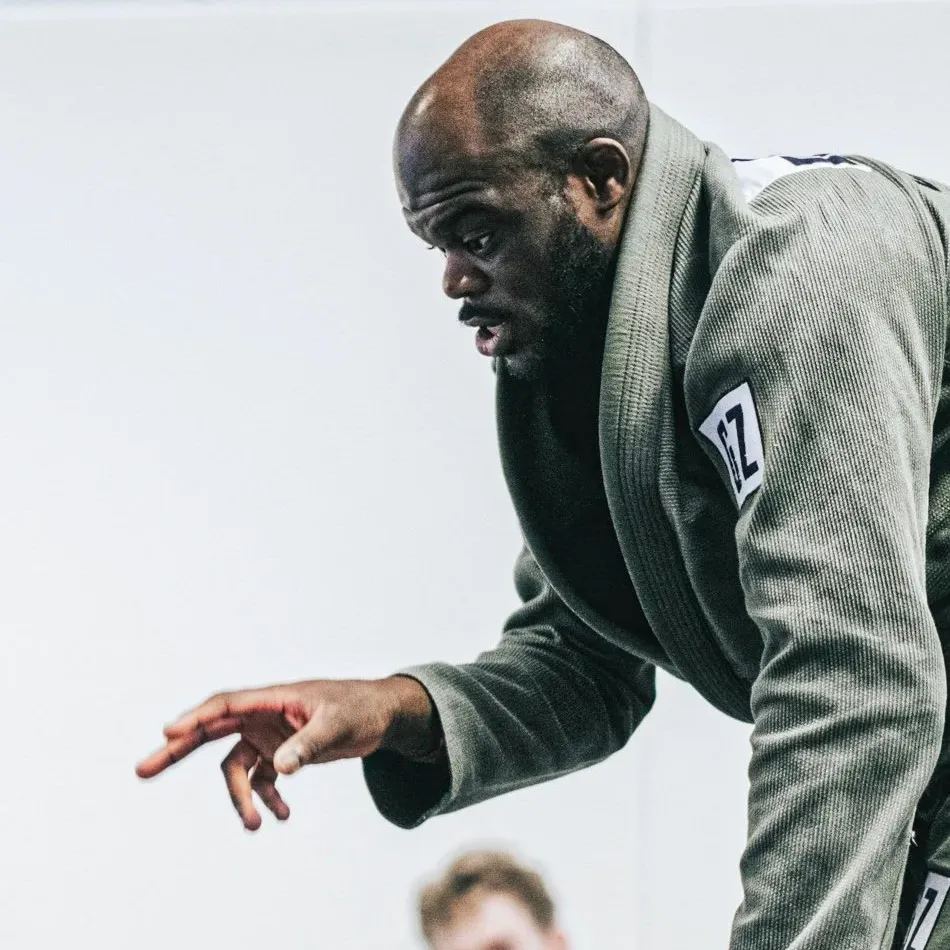
Courtney Anderson is a Brazilian Jiu-Jitsu black belt and CheckMat affiliate with over a decade of training experience who co-founded Grapple Zone to create a politics-free, community-driven academy. He leads the gym's competition program and coaching team with a focus on longevity, mobility, and building confident students.
About the Gym
Grapple Zone is a CheckMat-affiliated Brazilian Jiu-Jitsu academy located at 91 Westminster Bridge Road in Waterloo, Central London. Co-founded by Courtney Anderson—a black belt with over a decade of grappling experience—the academy offers gi and no-gi BJJ, women's-only classes taught by female instructors, kids BJJ, Muay Thai, and freestyle wrestling. Grapple Zone's facility includes a dedicated shop, basement gym for strength and conditioning, and on-site recovery services including Thai massage and chiropractic care.
The academy serves students of all ages and skill levels, with no joining fees and no long-term contracts. Grapple Zone's coaching roster includes Faris Benlamkadem, the first British male IBJJF No-Gi World Champion. The team's mission is to help people train hard, grow stronger, and build confidence in a welcoming, community-driven environment, with a coaching philosophy that emphasizes longevity, mobility, and prehab alongside technical development.
📍 91 Westminster Bridge Road, London, SE1 7HW
Summary
This is the story of Grapple Zone in Waterloo, Central London—a CheckMat-affiliated Brazilian Jiu-Jitsu academy founded by Courtney Anderson and his partners after leaving a gym plagued by politics and cliques.
In just three years, Grapple Zone has developed competitors at the highest levels, including instructor Faris Benlamkadem, who earned silver at the 2024 IBJJF No-Gi World Championship and was later awarded the title after the original winner failed a drug test—making him the first British male IBJJF No-Gi World Champion. The episode takes viewers through the facility's full-service setup, from the Gymdesk-powered check-in desk to the basement strength and conditioning area, recovery services, and dedicated mat space.
Courtney shares how he built the academy's culture around stress-free training, kids confidence-building, and adult transformation—both physical and mental. The episode also covers Grapple Zone's journey through five or six different CRM systems before returning to Gymdesk, and how the team now uses marketing automation, lead tracking, and website integration to run the business side while staying focused on the mats.
What They Told Us
Alex Cuevas brought the Gymdesk Originals camera to Waterloo in central London to visit Grapple Zone, a CheckMat-affiliated jiu-jitsu academy that founder Courtney Anderson and two partners built from scratch in three years. Anderson is a grappling specialist with roughly a decade of consistent mat time, and the roster he has developed already includes coach Faris Benlamkadem, the first British male IBJJF No-Gi World Champion. He walked Alex through why the gym exists, how he coaches, and why it took two tries to get the software right. The through-line is a founder who left a gym full of politics to build the opposite, and who is deliberate about almost everything—mat hours, injury prevention, and the culture on the mat.
Why they built their own gym
Alex asked what inspired Anderson and his two co-founders to open their own place. The answer was a reaction against the gym politics they had trained under—cliques, coaching staff holding students back on grading over trivial things, the drama that can curdle a training room. They left that situation and set out to build its opposite: somewhere people came to unwind rather than to pick up more stress.
"We don't want any of the dramas that can come sometimes at gyms … We didn't want that sort of negative environment for our students."
—Courtney Anderson, Co-Founder, Grapple Zone
Mat hours, not calendar years
Anderson has trained for more than a decade, but he is precise about what that actually means. He is quick to discount the person who claims fifteen years yet only rolled twice a week; what counts, he says, is hours logged on the mat. It is the same yardstick he applies to himself, still putting in four to five hours a week on top of coaching.
"But then when you ask them, okay, but how many mat hours do you have? … And it's the mat hours."
—Courtney Anderson, Co-Founder, Grapple Zone
Longevity over everything
Two years of a stubborn knee injury—which he eventually traced not to the knees but to tight ankles, since the tendons are all connected—pushed Anderson deep into rehab and mobility work. He now coaches prehab and mobility as seriously as technique, and he leans hard on the one word he wants students to organize their training around.
"I would highly, highly, highly recommend adding any sort of mobility work, mobility and strength and training, as well as the actual Jiu-Jitsu and technique. Again, longevity, I preach that all the time here in the gym. Longevity, longevity, longevity."
—Courtney Anderson, Co-Founder, Grapple Zone
Watching the kids grow up
The transformations Anderson points to first are the juniors who started tiny and are now competing and winning their first medals. He keeps old footage playing on a screen at the front of the gym, so a kid can see themselves at knee height and then glance at the version of themselves who now talks trash to the coach on the mat.
"Look at the coach. Come on, coach. I can sweep you. I can take you down, coach."
—Courtney Anderson, Co-Founder, Grapple Zone
The software they left, then came back to
Grapple Zone churned through five or six CRM systems, and Gymdesk was one of the early ones they dropped—it felt expensive and confusing at the time. Shopping the alternatives is what changed Anderson's mind: the other systems did not understand martial arts, and the real problem, he realized, had been on his side of the screen all along. The second time around, the team knew what to ask for, migrated their members over easily, and now run lead tracking and marketing automation wired into their website.
"No, actually they were really good. We were the problem."
—Courtney Anderson, Co-Founder, Grapple Zone
Read the full transcript
Lightly edited for readability. Speaker labels are omitted because the source recording is not diarised; quotes attributed elsewhere on this page were verified against context.
Music playing Behind every gym, there's a story, a mission, a spark of passion that started it all. This is Gymdesk Originals. Real owners, real struggles, and the communities they've built from the ground up. Good morning. I am in London today, and it's a little bit rainy. I'm heading to Waterloo. I'm going to visit Grapple Zone. Looking forward to checking out the London martial arts scene, starting with Grapple Zone. Let's get to it. Hi, Alex. How are you? I'm Courtney, and welcome to Grapple Zone. Please come in.
Let's do a little bit of a tour. So, this is us at reception. This is our TV scheme that advertises multiple, multiple things that we do here. This is our check-in, and of course, our Gymdesk System. Oh, as you can see, interactively, all our students are coming in and type your name in there and do various different classes. All right. We've got some dead feet. The students are doing some Muay Thai right now, so you can see roughly about what the club's about. Over here, this is our shop.
We're actually partnered with a store called Minotaur Fightwear. So, if you're ever in London and you need fire equipment, rash guard, shorts, gis, anything of that ilk, you are free to come down, visit us, and you've got that here. All right. So, you can come down and do that. As well as that, we run ourselves some classes, but I'll take you through just before we leave. I'll take you through our time taken as we go through. Drinks, if you need us here. We'll come down to class and you can get your drinks.
We've got you here. So, let's go down to the basement first. We are going to head down to where we've got a gym downstairs, and we've also got a Thai massage because something I was saying to Alex earlier, massive part of your training is the rehab side of it and prehab. Okay. So, we're massive, massive fans of that. So, you can offer this if it is here. Just in here, it's the gym that you've got ready. You've got a strength conditioning area. You've got more of an intimate area here where you've got free weights.
Kettlebells and your cheer up systems on the wall there. So, I'll wait around that. And, of course, you can access this once you're here in Grapple Zone. We can give you a bit more details for those at visit. Here's some more cardio slides. That right there at the end, that soap bike. I personally have a love-hate relationship with it. Massively increases my cardio, but also here with you. But, must be done. Especially for us competitors. Then, you've got the skier there, which I hate less, but still.
So, that bike though, that bike right there, is that how you increase your gas tank? That's the one. That's that one. So, they get me those gold medals in 2026 for sure. For sure. For sure. All right. So, anything we're a fan of the team, hit it. Hit it. It's going to do that. It's doing your heart good. It's going to do your cardio wonders. All right. All right. Let's go. So, that's the gym. Let the following continue through. So, in the back here, we're just going to show this, the main reception area, because there's treatments going on and we don't want to walk in there too much.
So, definitely, I want to show you the front of it and how it goes here. Okay. So, we've gone down. This is who's running our time massage here. This is their reception area. And if you'd like to come around here, down here is the rest of the rooms, right? So, if you want to come down, get a time massage here, you are more than welcome to and they'll look after you. Especially after training, if you want to come and get your muscles all relaxed, this is one of the places to be doing it.
Okay. All right. So, if you head up back upstairs, the gentleman that runs the timers here. Yeah. So, Nick here, you can see it. So, taking it back upstairs, we have these to rent down here. So, if you come down and visit us and you don't have uniforms, we have plenty here to offer you. So, don't worry about that. So, heading back up now, we're going back up to the ground floor, the training area. And then now I'm going to take you around to the back with various different other therapists, changing rooms, shower facilities, and things of that nature.
So, this is the main mat area, as you saw earlier, a few gentlemen training, but this is a bit more of the different angles than where you come. We also have various different seating arrangements. So, if you just want to sit down and watch, or maybe you're a parent and you want to watch your child do Jiu-Jitsu, then you'll be here or over there. So, you'll feel free to sit down, make yourself a tea or coffee, and then go from there. These directions, this gentleman down there is a chiropractor.
Again, going back to the self-care that we need. We have laser removal. So, if you're like me, super hairy, hairy belly. I'm getting treatment just before Christmas or just after, so I'm going to be nice and smooth for my competition, especially the no-gi. So, you'll feel free to be used to do some of that. And in here, this young lady sorts out your vitamins, for example, right? Some of our beauty therapists that I'm totally sure about, but definitely the vitamins side of it, that's who looks after me.
So, my B12, for example, I'm a vegetarian. So, my B12... Are you? I am indeed. Oh, man, I'm vegan. Whoa, let's get it. Whoa. Forever in arms. So, we do like different minerals and vitamins that we don't necessarily, because from meat you get your complete proteins. So, one of the ways that you can do is you can supplement it with this young lady here and she can take you a bit more into details on that one. If you want to supplement, of course, you can use it naturally, chickpeas, legumes and things of that nature, but that helps with in addition.
So, back here, we've got now an osteopath. Again, going back to the training, and this gentleman behind us is our chiropractor pin. I just get a person in there. Oh, he's stuck out. Right? We'll be in my changing room, which we'll leave alone at the moment. Well, actually, no one's in there if we want to have a round square. We'll always knock, just in case you're not, no one locks us. Hello? Hello? All right, we're safe. Okay, so, if I turn it on, we get changed here.
We have various different lockers that you can utilise. Okay, you simply bring your own padlock. Keep yourself locked in, stuff locked in safe. You can take it with you, or you can rent out a laundry service. I'll take you around if you have a washroom and dryer that you can utilise too. If you follow me into here, this is a shower room. So, we have two additional showers for the ladies, and we wash our hands, and we have additional toilets for the ladies here. Okay, so, you're well equipped to come and train with us, have a shower afterwards if it's a morning class, afternoon class, or evening class.
You are very, very welcome to use these facilities. So, now we're going to head over to, if I just put you over to here, this is the laundry room I was speaking to you about. So, again, if you need to wash your gis here, we had a pilot here the other day, and we washed these, we washed these gis from, from, from, from, from, he took it with him, he took it with him, he can have it hanging in the cockpit. It's just one of the most amazing things about the Jitsi, you get so many different people from so many different backgrounds, it's amazing.
So, we washed it here, he took it with him, and he's hanging in his cockpit and driving in there. So, if you need your gis, gis washed, or anything like that, we have facilities here for you, so, we've got that covered for you as well. This is a unisex toilet, so, if the females is busy in the moment, we're going to pop into the males, if that's ever busy, you've got this one to use, so let's use the grey tap with filtered water, so you can bring in your own water bottle to fill up.
alternatively, we have cups that you can use to, um, get yourself water too, so it's not a problem if you don't have a water bottle. So, let's move, carry on, moving on into the male changing room. I'll be here to our right, let's go through. Very similar to the females, basically the same design. Additional male toilet, two shower cubicles for you to utilise, and again, for those that want to shower afterwards, whether it's morning, afternoon, or have you, we've got your colors, okay? And then now, we're just going to finish up our, um, initial tour into the male changing room, so as you can see, a lot of additional space here, again, same cupboards, you can utilise padlocks if you want to, if you want to, if you want to, if you have padlocks again, smush them into the females, if you want to use it like that, so plenty of space, uh, feed the room, train, and install your stuff as well into training, okay?
Okay, so now we're going to pop back out, I'll show you, I'll show you, I'll quickly show our timetable, and then, um, we'll, we'll probably wrap things up from there. Right, so now we're heading back to the main area that we were, back to the reception area, right past our various different therapists that we were. That's it, that's it, make it look good boys, you're on camera, keep those chin tucks, elbows tight, let's get it, and myself, just to be clear, I'm not especially in grappling, I'm sorry, I'm especially in grappling, not especially in striking, that's why I had that in there, you know, a little bit bigger, you know what I mean?
Coming back to, uh, brilliant CRM system, from here, this is our, this is our timetable here, so you can see, we've got grappling here, so where it says all levels, that would be a gi card, for example, gi all levels, if it specifically says no gi, that would be a no gi, all level classes. We have various different advanced classes here, women only, which we're really excited about, we've been having that running for a good couple of years now, so we've really, we spoke about, I spoke about to Alex earlier about having a community, and one of that was having women only classes, even if they just train that class, and great, some people, some women use that as a means to get into jiu jitsu, and then come into the all level class after, so once they feel comfortable, and they like being in the environment that they're in,
okay, uh, we also offer Muay Thai, again, hence the striking, the strikers you see in the background, and wrestling at the moment, okay, that'll probably be, and grow in the near future, but that's what we offer currently, at the moment, okay, so, that's us, that's Grapplezone here at Waterloo, feel free, I'm Courtney again, some of the other founders, this would be Safiya here, this would be Timur, proud, so this gentleman here, especially, he's, he's, he might not be too happy that, um, he's gonna see himself randomly on the video,
but he's just been promoted to purple, so we're taking it from white, that white belt there to purple, so we're very, very, very proud of that, the gentleman changed with us all a while, and this here, very, very skilled opponent, um, coach here, you've named, um, Faris, you've probably seen him on the scenes now, just competed in the Nogi, Nogi World's got silver, so we're very, very proud of him on that, big, big, big time competitors, so if you want to drink the like of him,
the rest of us, we are there, and you are most, most welcome, um, thank you for your time. Hey, what's up, everybody, I'm here at Grapple Zone, in, uh, near Westminster Bridge, in Waterloo, London area. That's correct. And I'm here with Courtney Anderson, one of the founders of Grapple Zone. Hello. And that's proof that I'm actually in London, if you can hear that siren. Yeah, I'm really excited, I mean, I was looking forward to this, I've been doing, um, these, uh, GDOs, or, uh, Gymdesk Originals episodes now, for, uh, about a year, and traveling all over the place visiting customers in the U.S., in Canada, Asia, Australia, my first time here in Europe, uh, with, you know, to do one of these.
So, I'm honored, thank you so much, sir, for having me. Very welcome, good to have you here. Yeah. Happy to go. Yeah, and, you know, for me, given, uh, I've had a lot of experience, I was very curious, like, what would the, what's the vibe like, what's, what's it like in London? Um, it, because I haven't been here in a while, probably been like six, seven years since I, well, I mean, I've flown in and then flown out, but not actually gotten out. I was like, oh, I remember this.
But, uh, it also brings back for me, I don't know if the city's changed, or I, my perspective has changed, but it feels much more New York-ish. Okay, okay. Or, kind of like Toronto, very busy, and it's, I guess it's always been that way, but I just may be looking at it with fresh eyes. Um, but, plenty of martial arts here. 100%. Yeah, I'd love to know, tell us a little bit about the scene here in London. So, BJJ in general has been, it's been massive, it's been growing exponentially over, over the last, a couple of years.
So, we've got a lot of competitors, um, here, like, we've got to say competitors, isn't even trained jiu-jitsu, people that are involved in jiu-jitsu competitions around. Um, so, a lot of people that are able to be competitors and compete, even ourselves. We've just competed this year, and we're looking to compete a lot more, um, in the following year, the 20, 26 years, uh, adults and children. So, the scene, very much alive. Then you've got other martial arts, boxing, Muay Thai, that sort of thing. So, London's definitely up there as one of the hubs for combat, combat, combat sports in general.
And, um, I mean, we have a lot of jiu-jitsu customers in this area. I assume, like, everywhere else I see, it seems like jiu-jitsu, and I guess some of the striking arts, like Muay Thai, those seem to be on the up and up. More of those than, like, maybe traditional martial arts. Yes. Is that the feeling here as well? Yes, definitely. So, like, definitely back in the 80s, it would be more traditional martial arts. So, like, your karate, your taekwondo, kung fu, et cetera. Yeah. But then definitely, you know, especially in the last 15 years, 20 years or so, it's been going the other way.
It's been, it's been like your Muay Thai, your Jiu-jitsu, not so much wrestling yet, which is quite disappointing. Yeah. I definitely want to see, um, more wrestling in the scene. We are pushing, we have wrestling here at Grapple Zone as well. So, we definitely want to be, um, pushing that. And maybe if we're lucky, we get some sambo in the next couple of years as well. Yeah. And you guys have quite a bit of different arts that you're hosting here in Grapple Zone. So, can you walk us through some of these here?
Yeah. So, you've got Brazilian Jiu-Jitsu, Gi, and Nogi. We've got the wrestling, as we said, the freestyle wrestling. Um, on the Tuesdays, we've got the Muay Thai coming in. And then students are able to put that all together. So, we have various different, unofficial open mats. So, students can come in, do their practice Muay Thai, they can practice their MMA. So, they're really putting their skills that they're learning individually all together into one package. Yeah. Yeah. I start seeing more and more of that because, you know, obviously MMA is very popular.
Yeah. But, um, how do you encourage people when you have, you know, such a diverse set of skills? Do you, like if a white belt walks in here and he's never done any art, would you guide him towards a specific path first? Like do this for a certain amount of time? Or would you say, I just do, you can do whatever you want. Any kind of guidance that you give somebody? So, personally, we like to bridge it on the individual. Because some people, the assistant, they want to do striking.
So, there's, there's little point of me trying to give you towards Jiu-Jitsu. Yeah. If you're orientated towards, to move towards the striking arts first. So, the most, the key thing in our personal point of view is to make sure we're listening to the actual student and the actual customer. What do you want to do first? Yep. Once they're in and they're comfortable, they're then expressing, oh, I've seen you do BJ classes before. Or after my Muay Thai class or our striking class. What's that about? And in us coaches, then we can give them encouragement.
We'll allow people to come in and try it, free or charge, depending on the membership. You can come in and just try it, see if it's something for you, and then we'll build them up for them. Other people, they come in and like, listen, I want to be a well-rounded martial artist. What do I do? And in those people, that's when we gear them towards grappling, starting grappling, do some striking afterwards, right? And then see where I'm seeing that because some people are more striking, even though they want to do three-round-rounded, let's say MMA, for example.
They're still more geared towards striking than they are grappling and vice versa. Myself, I actually, I've got a long background, but you're going to pick that up later. Yeah, yeah, yeah. I'm more, I definitely, especially as in grappling, so if I'm going to strike, I'm going to strike closer distance. Let's say it's a self-defense situation. Yeah. I would use appropriate striking, unfortunately, because I live in the UK, so the UK law is pretty strict on that, so I can't be out here throwing elbows. But that aside, I would use my striking, getting closer so I can, inside my grappling, I control the situation from now.
You just opened up something I want to talk about, because that's like, I was in Japan, and it seemed like Singapore and Japan had similar rules about, you know, in my mind, I'm like, oh, I haven't been to Japan in a long time. And certainly within the frame of martial arts, I'd not done that before, but I trained at my Kodokan. Wow, that's enough. It was amazing. And the funny story is, I was expecting to get slammed by a bunch of black belts. Instead, I got slammed by a bunch of coral belts, which was incredible.
It's a really cool experience, but, you know, there's martial arts everywhere there, right? It's part of the culture. So I figured, oh, man, the bar fights must be crazy. But one of our customers I was interviewing was, oh, you can't get in a fight here. You get, like, severely in trouble, you know, two years in jail or something. Even if you're the, if you return, you know, a punch back, you get automatic prison time. And if you, like, attack when you're on the ground or something like that, you can get up to 10 years.
So, like, no big fights. So you just mentioned it's the laws of restrict here, too. Is that kind of the same vibe you have here? So, um, it's kind of focused around the term reasonable force. Okay. I'm not lying, I'm not lying. Yeah, yeah, yeah. Exactly, exactly. But just roughly, reasonable force. So you've got to be, the way I present to this teacher and daily students, let's say the judge or the judge over here, you've got to be able to explain your actions. Okay. And to make sure that you acted accordingly and reasonably in that situation.
So, for example, if I had a good, not that I would act, but if we got into an altercation, right, say you struck me, right, I can't necessarily then turn around and throw a hit combination on yourself. It has to be reasonable. So, if I was to hit you and say you fell over and injured your head, I would be liable for that, especially when they dig into my background and I have a martial arts background, I'm going to get into a massive amount of trouble, which is why, again, for self-defense reasons, I dare people towards grappling because you can control your phone and you can hold it.
So, when we're going to the law now, like a solicitor or the judge or what have you, right, I can say, I helped him, I helped him, I held the person in place reasonably, let him leave the airways in free because that's another big, big issue here. I can't speak for anyone else, but here in the UK, you can't be seen to obstruct someone's airways and you're going to get in trouble for that. For example, people don't seem to understand that arena could choke, so just to stay yourself there.
Like, while I'm behind and my arm's here, you can see I'm interrupting your breathing room with your airways, even though I haven't checked it properly, right? If I'm seeing you doing that, I'm an automatically aggressor. Even if you were throwing punches with me, you would beat me up and what have you, I'd reverse the situation. I'm not here, now I'm responsible. I've got to restrain you in a way that's keeping your airways free, keeping you safe, as well as myself safe and possibly whoever is around me.
And then still then ask for assistance, whether it's police or ask someone else to call for police there. I still need to explain that. So, as a rule of thumb, I say to the students, you've got to be able to explain your altercations, you've got to explain the amount of force you can use. The force has to be reasonable. It can't be excessive. Another essential excessive force, if we get to altercations, maybe I'm pushing you on the ground. And then, like you said about on the Asian continent, if I didn't continue to be there and throwing punches, I'm definitely in trouble.
You're definitely in trouble. So, it has to be reasonable. So, if rattling's nice, I can hold my partner off and keep them in place without throwing to the strikes. If you're throwing strikes, it's very difficult here in the UK to justify that. Yeah, well, I mean, I would never want to get into an altercation at all, much less in a foreign country, which would be a nightmare. But, you know, I never really thought about, like, I think about the choke for me is a way I can restrain somebody without applying it.
But visually, for others who observe it, they'll be like, oh, no, that guy's a bad guy, right? That's key. That's key. Because, again, most of the people that's going to be judging you aren't martial artists. Right. Right? So, they're going to see, he had his hand around his throat. Yeah. That's it. He was choking him to death. Yeah. And this is it. And we're like, no, no, we know what we're doing. But they're not necessarily going to see that, right? But if you were to, for example, again, I'm sorry.
Yeah, no, please. It's what's pulling you now off. Yeah, I'm leaving class. Now, if I was to wrap around the shoulder, for example, and here. So, you can see, physically see that the airways are free. Maybe I'll turn my head in here. I can draw and just keep myself here. Maybe I use my knees. Depending on the situation, I can use my legs and just keep here and just be heavy on you. You see, you're posting there. If I can keep your weight there and you're posting, that's one arm you can't use against me.
Right. And I'm here, just holding you and you're keeping in position. I can then explain that. Yeah. People watching can see that there's nothing rocked around your neck. And I can explain this in a court of law of what I'm doing. It's going to be very hard for then someone on, let's say, the victim's side. Yep. Then to say that I was excessive in the amount of force I've used. Right. And this is much more like a restraint. Yes. You're controlling the situation without hurting the other person and keeping yourself safe.
That makes a lot of sense. Okay. So maybe we can, maybe we just transition into your martial arts background. How long have you been training? Would you start in? And maybe even where are you from? Where'd you grow up? What area? Because I don't know London that well. I don't know if you're somewhere else in the UK. Great to get that background. Okay. So my background, I'm Borderlands, South London. So, yes, I've done all of my life and I've just traveled out now just to visit other places.
I haven't been as fortunate as yourself to be able to travel to most of the continent, especially at Japan and training martial arts. It's something I really want to do. Especially from the 2026 year, I'm going to be competing a lot more. And I'm going to use that as an opportunity to travel and see these continents and get my martial arts experience and maybe be around the world. Training, why I've spent about 10 years, consistently at 10 years. I say consistently because a lot of people will say, oh, I've been training 15 years, except X amount of years.
But then when you ask them, okay, but how many mat hours do you have? Right. Right? And it's the mat hours. If it's just twice a week, then it's not the same as if you train five years, but five years, but you've done like five hours a week. Yeah. That's a big difference. Right on. So consistently for the last 10 to 11 years in January now, I've done at least three hours. This is going for my wife now. I've done at least three hours a week.
Now it's up to about four hours, five hours. So again, even with the coaching, I still need to get my training. So I really started in Kung Fu, which has a special place in my heart because I really enjoyed myself. Unfortunately, the classes couldn't be maintained. So that's why I ended up leaving that. I probably would have done that a long, long, long, long time. And then going to Muay Thai, eight years ago, I think I was about 22. My maths is terrible now. I worked at the back in Sicily because I've been training longer than 11 years, but I wasn't consistent.
I was in and out, in and out. Right, right. If my maths doesn't add up, please, have mercy. So I started in Muay Thai, going to MMA. And then while in MMA classes, the guy took me down. I was like a turtle on my back. I was like, what is this? How do I get up? And he just went round and choked me out. One of my favorite stories for why I definitely got into BDJ, because it happened again, but this is years ago, this female black belt, Brazilian.
And she, I was white, but very, very near to Gathlin, and she absolutely destroyed me. And the only reason she didn't attack me, I think she had an arm bar or camora, I can't remember nowadays. And it was just because I was male. My biceps were literally able just to restrain, to resist, restrain in my arm. Other than that, absolutely, absolutely smashed. And I was like, this is the arm. She can do this to me, and I'm like twice her size. I'm like, yeah, this is what I want to do for my life, with my life, 100%.
So that day, I was about 23, 24 or something. Then, and then I really started getting consistent with Jiu-Jitsu around about 26, 27, and hence the, when I said about the mat hours, starting putting in the appropriate mat hours around that, about 26, 27, 28, roughly, mat hours. And hence now, it's been almost a decade, just over a decade of me being consistent with Jiu-Jitsu. I still do my Muay Thai, but it's more just to keep it polished, keep my striking there, as I say. But I'm definitely a specialist in grappling.
Yeah. I'm sure many of us have those stories. I remember when I first started Judo, and I think back then, I must have been at 165, maybe 170, and I was rolling with the, she was Japanese, and she was probably like 105. And I'm like, oh, come on, I'm going to take it easy. And I went flying, and I was like, wow. You know, just my mind was blown. Like, I can't believe she was able to, right? And then, you know, that happened several times, and I'm sure it would still happen today, but also rolling with gals that are about the same size as Jiu-Jitsu.
And, you know, I'm heavy, you know? Like, I'm heavier than I should be right now. Like, 190, I don't know what the translation is to, what is it? What do you guys use here for weight? Kilos? So, we use kilos, but it's a bit of both, because when we go to competitions, some people, you go, you use the pounds. Yeah. So, I weigh myself in kilos. So, what am I in kilos? I am about 90, 91 kg, so pounds 190-something. Okay, I'm probably right around there, but I'm heavier than I should be, so I should lose, like, 10 pounds, whatever.
Okay. But even at my weight, I rolled, you know, going around getting customers with women who are 110, I get smashed, and I'm like, it's just hard. It's just, you know? The technique will trump strength, and then I heard the rule was technique over strength, but strength and technique will be just pure technique. 100%. That is 100% true, because you've seen now people are really getting into the gym. Yeah. Some people are looking like this. All right, unfortunately, that's someone I'm using in boosters, let's just say.
But, you know, just to take that aside, people understand that you need the strength, conditioning, you need the cardio now to complement your technique. Because exactly what you said, if you just have pure technique, but someone has the technique and strength on you, they're going to win that fight all day long. So, you mentioned you want to start doing more competitions. What's your next competition coming up that you're prepping for? So, there's one in June. I'm doing this in All-Stars BGJ Winter, I believe. It's just a nice local one.
I haven't completed for a while. I've been suffering for the last two years, actually, with a knee injury. Oh, okay. I had both things, actually, which is funny enough, it's been the worst injury I've ever, ever had. Yeah. So, it's kept me up, so I've been in and out, in and out, in and out, in and out, consistent. So, you know, those of us have been training for, like yourself, the mental side of it. If you can't train, the demons start coming out, and you're just like, oh, man, I'm not going to cope with this.
So, it's been a bit of a record. But at the same time, running here, because we are three years old now. We were three years old last month. So, two of those years, I've been injured. Yeah. Yeah. So, I'm just going to get myself back on the horse, January, next, one, a couple of weeks. Now, go out there, compete, get the dust off the cobwebs, get a mat rust out, and then continue competing from there. And then your knee injury, was it through training, or just something else?
Mine was actually my posture. So, common, common, common thing in Jiu-Jitsu, and we've actually got some therapists here. So, we've got a chiropractor, and we have an osteopath. And speaking to them professionally, and doing my own research, a lot of the time, if you have tight ankles or tight hips, it can manifest elsewhere. So, for me, I had tightness in my ankles, and it manifested here in the knees, because tendons are all connected. Yeah. Especially things like the posterior chain. So, even though my knees hurt, the problem was here in my ankles.
So, what I've done, I had to do extensive rehabbing work, extensive stretching, to release the pressure here in my ankles, but then release it here. Right? So, one of the biggest things I would say, because I've really pressed in the last couple of years, due to injuries, is start looking at the rehab part of Jiu-Jitsu and Martial Arts, the rehabbing, the prehab, right? So, things you can do to prevent injury in the first place. I know there's loads of stuff out there now, and I can share some of the people I watch.
I used to stretch all the time. Stretching is good. Stretching is good. But what I found about it, more mobility work. So, if you're doing more, if you're mobile, it means you're strong and flexible in all articulations of your joints. For example, are you strong here? Let's use the shoulder, for example. Are you strong here? Are you strong in this position? If there's tightness, and let's say you can only get your arm here, in a grappling match, if someone wants to pin your arm, that's it, you're tapping quick, and if you don't tap quick, something's tender, something's likely to rip.
I would highly, highly, highly recommend adding any sort of mobility work, mobility and strength and training, as well as the actual Jiu-Jitsu and technique. Again, longevity, I preach that all the time here in the gym. Longevity, longevity, longevity. Especially when you're rolling, there's no metal set. Yeah, when you're competing, there's something different. Yeah. Here in the gym, you know, it's all about mobility. I'm sorry, no mobility. It's all about longevity, right? And flexibility, mobility work, especially, especially, especially, I can't emphasize it enough. Along with your strength training and your actual Jiu-Jitsu training, you'll go a long way.
Yeah. Awesome. So, congratulations on three years, right? Thank you. Thank you. That's awesome. So, what inspired you to open up your own spot? So, myself and the other two founders, we've been training again for debut training. So, it's quite similar stories. We didn't, maybe not necessarily in May, but they've done, like, traditional Jiu-Jitsu in their backgrounds. And then we go into BJJ. We basically wanted a place that we could train and I should have been trained without politics. I won't go too much into that side of things.
I don't think it's necessary, but we don't want any of the dramas that can come sometimes at gyms, you know. For example, kind of clicks, you know, this team hang around this team and these ones hang around these ones, especially when, like, you've got coaching staff involved in it too, you know, and they're holding them back on grading because you didn't do this specific thing or things like that. We didn't want that sort of negative environment for our students. So, we decided, we left that situation or situation that we found ourselves in, opened up here, and then we thought, let's go forward now and have an environment where people can train, you know, safely, competitively, right, come here to de-stress, not come here and get more stressed because the other thing doesn't make sense.
It doesn't make sense. And just brought us up going forward so that was the main reason of why Grapple Long Country came into existence. And now we're like, yeah, this is what we're doing now. Yeah. You know, so, yeah, we've got a couple of years for a while. I'm not a lot of months going to be able to just grow the club now, competitive-wise, community-wise, etc. Yeah, it sounds like community was probably your number one driver, right? 100%. 100%. Have you done anything besides just, you know, eliminating the clips and all that, but have you done anything else outside of that to call a foster community, like anything outside the gym or even things in the gym?
So, we do a lot more socials. For instance, we got Christmas, a little Christmas dude coming up on Sunday. So, it's pretty chill. You just come in, you just want to air a time coming up with some dudes. You know, need some beverages. We'll be around. We do a lot of things like that. Again, just the foster community inside and outside because some of my students, they make me laugh. They're like, oh, coach, I've never seen you in normal clothes. So, I'm going to use a t-shirt, for example.
You've always seen me like this and be and all these stuff. And I always find out I always chuckle to myself. So, let's make sure that we're going out so that we're seeing each other outside of the gym environment and take us to that. We've done a couple of shows. So, the Waterloo area, sometimes they put on events and then as a club, we'll go to those events and just showcase, grapples all, showcase who we are and get some exposure to that and expose the community to us in that fashion.
That's the sort of thing we've worked on now. We've got some other things that we want to be doing more with the real estate but we'll start building up and seeing what 2026 holds in that regard. Yeah. All right. So, you guys are technically a CheckMat affiliate, right? Yes. Yeah. Tell us a little bit about that. How did that come about? How's that been working out for you? So, when we originally opened a club before, it would be nice to get a strong, strong affiliate to the affiliation with us.
So, we sent out a lot of feelers out. We've done a lot of what's called Zoom meetings, online meetings, with heads of clubs, association, clubs that they associate with. And then we ended up having a Zoom meeting. This is, oh, I've got about three years now. Wow. Or something like that. Yeah, of course. Two and a half years at least. So, we ended up having a Zoom meeting. So, we first got in contact with CheckMat Europe, right? And then we ended up having a Zoom meeting with the founder of CheckMat, so Leo Vieira, right?
We had a conversation with him really like what he was doing, where he wanted to take CheckMat in that time. It was very different from where CheckMat was then to where they are now in terms of organizing, in terms of reputation, in terms of competition, that sort of thing. So, we quite liked the idea that we decided to participate ourselves with CheckMat. It's where we've been looking and everything. Do they come out here and visit? Like somebody from the organization? So, they can do. We haven't yet.
Again, we could do a bit more on that, a whole bit more outreach. So, like I said about this year, about traveling. Okay. Yep. What I think I'm going to start doing is, again, going around CheckMat's, run DK, around Europe, and just go ahead, do some movement, where do I go back? It's going to be a little bit more about CheckMat. Let's do some yay moms here. Maybe get some seminars, things like that. So, again, depending on the stakes, we're going to be probably some more growing up, being a bit more exposed to the team and probably going to speak the team for us and just growing up.
Yeah. Yep. That makes sense. Maybe three years is probably plenty of time getting cool stories of people who've walked through the doors and you've seen transformations, either young folks or older folks. Any stories like that you can share? Biggest ones we've seen sort of kids go from like our junior classes growing up and competing. Some of them got their first gold medals, silver medals, what have you. So a lot of them are debutants are seeing them. We've got old videos. We have a screen at the end that you can't see.
It's off the camera, but at the front and you're seeing like they're that big and now they're like up here. Yeah. Look at the coach. Come on, coach. I can sweep you. I can take you down, coach. Whereas before, you know, when they started, they didn't even know what to take down. They were just like, I was wrestling, eye poking, you know, I mean, all sorts of things. I've seen them going there and competing and getting medals and progressing that way has been amazing. Adult-wise, the biggest changes we see is going to have weight loss.
I was just talking to a student there. They used up to do some weight boys competitions coming up in the summer period. Next year, we have one, another student that's lost, I don't know what it is in pounds, but they were a hundred and let's say 20 kilos and now that person's down into the 90s. So it's almost like, they're almost like, oh, that's a lot, right? A lot of weight, a lot of weight. They've had to buy a whole new wardrobe. Yeah. All of that.
It's amazing. Yeah. So those are the biggest transformations we've seen student-wise. And then you've got some mental ones. What ones are like, I can never compete. Getting them on the mat is a big deal for them. Yeah. Now they are, they're competing. They're not going to have some missions, you know, going from white to blue and blue to purple, et cetera. So those are the transformations we've seen as a carbon nose once we've Yeah, that's rewarding. A hundred percent. What's the plan? You know, you guys have plans here in the next five years, just continue to grow here or get a bigger space.
And we'll do a tour of this space in a minute, but tell us, what are your visions here? It's definitely to expand. So one of the things I've always said to my other founders is one of the, one of the biggest people I admire in Jiu-Jitsu is Eddie Bravo. Reason being, um, main thing for me is how he grew the 10th Planet system. And when he goes to the piece, all his own blackouts, you know, so the coaching team is all 10th Planet, you know. So what I envision for us in the next five years is we're going to expand bigger spaces, additional spaces, but I want it to be all our own team.
Some people that we brought up. So we've got a couple of purple belts that we brought up now. One in particular has gone from white belt to white to purple. So we're very, very, very proud of that. Those sort of people now is the ones that we want to bring in and get into the coaching staff. I'm very, very proud of that fact. And then what we want to do now is really be built. So when we either have additional space or get a bigger space now, we want our own team, people that we brought through so that our own philosophy is we know them, we trust them because it's not just the Jiu-Jitsu side of it's the business side of it at the same time.
So you've got to have people that you trust. You've got to be able to leave the business and leave their club in the house. Now, of course, that doesn't mean we're going to completely abandon them. We're always checking them to be here because now we're experienced in the club but they don't have the experience to make sure we look after them. So the idea is to build a team now from what we've grown and expand like that. So that's the plan for the next five years.
And beyond that, afterwards, we've got another five-year plan, but we'll hit that first and then go from there. what advice would you give yourself when you go back in time three and a half years ago before you opened up? Hey, make sure you do this. What would you suggest for yourself to have a smooth, any learnings that you got, that kind of thing? I mean, it's hard because hindsight, hindsight-wise, like, for instance, patience and forgiving yourself. We made a lot of mistakes when, oh, we were very hard on ourselves in the beginning.
Very much like, okay, you made a mistake on this description. For instance, we've... we went a little bit over with Chris himself. For instance, we've done, like, health and safety, which is important, but we didn't necessarily need to outsource it. We could have done it in-source, in-house. So we outsourced a lot of the things that we didn't necessarily have to do. Because we were like, okay, let's just make sure that we cross all the T's and dot all the I's. And then now that we've gone through, we're like, well, actually, you can do a much better job than it could be internal.
And some of these descriptions that we have will still have a couple of years left on. So they're not doing anything you're still paying for. So I would say one of those are the main thing if I can go back and tell them, have a bit more faith in yourself. You guys are good. You know what you're doing. You don't need to outsource everything. We didn't outsource everything. You don't have to outsource so much. That would be the main one. Everything else was pretty much of a learning curve.
Just what you would know. Don't be upset about what you don't know. What you did know you didn't know at the end of the day. If you don't know it, then you just have to go through the motions, go take time, get yourself a bit more experience and build yourself from there. But the main thing is I would say just off the top of my head now is have a bit more to pay for yourself and you don't have to outsource so much. A lot of things you actually know, a lot of these companies they're asking you the questions and I found myself and I would be currently sitting there thinking why are we sitting there explaining this to someone else?
We didn't have done it. It is at least now. It is with itself. That sort of thing I would say don't be so quick to outsource so much. You've got a lot of the knowledge between yourselves, between ourselves, you know your craft and a bit more faith and patient and want you to involve XMAD people. Right. Makes sense. Well, one of the things you did outsource was the software. Thank you. Thank you so much. Of course. We're grateful for your business but I'm curious how did you find Gymdesk?
So, when we originally opened we... How many CRM systems have we had? I'm going to say about five to six in total, right? So, we had an original one which we weren't happy with at all early on it was either Gymdesk was second the second CRM system we ever had or like the first. So, the first time we had Gymdesk we didn't understand what the CRM system was and we didn't use the system correctly. Right. And that's enough. We didn't understand. Maybe we didn't communicate that to yourself.
I don't know if we were there at the time. No. Right. I've been here for about 14 months. Oh, no. You wouldn't be there. You wouldn't have been there. Fine. This is pretty pretty much yourself. Right. So, maybe we didn't explain to the team what we needed at the time or maybe when they had the meetings we didn't absorb it too much. Right. and we didn't use Gymdesk as we should have and it ended up being really expensive. So, we were like save nothing. Oh, my God.
I'm going to get rid of it. Right. And then we went around and then we went around some other softwares and then we looked at it and we were like no, actually they were really good. We were the problem. We just didn't understand and going through these other ones we saw again hindsight. Yeah. we saw how we should have been running the business like these other ones they're just taking money they don't know what martial arts is they have no idea they have no idea we're asking the questions they're like oh, that's a really good point well, what is this system?
And we're like no, we're paying you. No, this doesn't make sense. So, then the second time now we've gone back we knew what we wanted and then I can't remember if we reached at the Gymdesk or Gymdesk reached back to us I can't remember now and then we sat down now we asked the right questions so we got the right responses and we built this time we had more features I believe I might be wrong but there's a lot of other features that you got going for yourselves now and we were like yeah, okay all right we're ready now so it reminds me of a problem like I'm going to say Asian Chinese problem I might be wrong on this one please correct me if it goes out and you see the comments when a student is ready the teacher will appear
so the second time we were we were ready Gymdesk was there and it's just run smoothly it's just complete integration completely smooth between our communication with our clients our clients communication with us whether it's standing students standing students that we have whether it's new trials things like that very, very, very smooth and very good interaction with the system between our club and everyone everyone else this is another one of our students so if you hear a lot of whoah whoah and sweat coming over hopefully no blood no joke please ignore that they're training in the background but yeah so this time around it's been fantastic it's actually fantastic and we are not moving but again a lovely really good feature I like about Gymdesk you made it really easy to
migrate clientele over to the system the second time not that we know how to use it the second time that was fantastic and we're like we're not going for this day we're not going for this so when we chose Gymdesk we're like right this is it this is the commitment very very happy we've had a system works and like I said you know what we're doing now so right we're using it to its fullest potential or near fullest potential right as opposed to what we did last time we've not understand it and then end up complaining but we're complaining because we even know what we're doing with the system now right right so that's what draws back to newtoness we went around and were like yeah these other ones nah
they aren't it they're not it not it well I mean over the last 14 months that I've been here things that are air quote new like the lead the marketing automation so that automatically handle all the leads and how that goes are you guys fully using that part yeah so we've got we've got tags now that we've put in the leads go in the right place so as they come it's integrating with our website yeah and it's reintegrating with whatsapp now so as they come in it's all connected we're like yes I'm the one they want to pay you an extra link to do they're like well that's kind of necessary I don't understand why it's not yeah we've talked about that a lot because everyone else does that like
oh for this piece I'm going to charge you for this market I'm like we're doing that because I think to your point it's fundamental because our mission is less admin more members period so that's the core of what we have right this is why that is going to stay that way and then we added some templates now I don't know if you saw those we have a bunch of templated marketing automations we did that because we figured a lot of our customers are probably not marketing experts but we have market expertise so let's put it in the gym vest so people can just grab those and select whatever they want that was during my time you know most notably recently we updated the calendaring if you saw the new schedule
you actually have a calendar view now which people really like so yeah we're just I think again it must be integrated because we've changed our calendar and like I said it links up so one of my other family members deals more with that but I'm seeing the difference like I said I like the how it synchronizes now with our website for example because that's all we needed and we needed our CRM system to synchronize with our website so everything's seamless so we're not going over here to find this and going over here to find that and if we want this feature then it's going to have X amount a month or whatever or whatever you know so I'm very excited with what we're doing and what we're providing at the
moment awesome yeah well one of the one of the last things I'll ask you is a lot of people don't get a chance to spend time with you right and they're not going to have a one-on-one conversation so they might come in and train so they know you for six months or a year but what are some cool things about you that they may not know that you might want to share with them personality wise a lot of people so those that do we do a lot of socials when I'm out I have quite a lovely personality it's funny I make a lot of jokes I don't want to say too much because we're on camera but let's say more geared towards adults let's say that they appreciate that human
but I don't necessarily do that in class because obviously you've got a range of people and you've got to cater to everyone else in a smaller group once you know each other you know the limitations so I would say that side of me that people don't really see unless they know me a bit more on a personal personal basis right that can be quite fun again going back to your earlier question about fostering fostering sorry fostering an environment that's happy you know and people are happy to spend time in the gym whether it's inside training or outside right so that part of it I would say people haven't really seen we've seen snippets here and there maybe on the Instagram as well on the Instagram I like to play a
lot on the Instagram not allowed to be too too serious yeah technical course outside of the same inside I like to be a bit more of a human base so come visit me when we're when we're outside of the gym if you can see the bit more funnier side of things there awesome well anything else you want to share just thank you for yourself for coming down amazing amazing job we've worked and done we've did this so far I look forward to some new features and you should communicate with yourself like you're coming down and actually training yeah if you're in a South London area please come down you're more than welcome to like I said Waterloo based central London based in Waterloo yeah come down train with us come check them out alright thank you sir thank you thank you