University Executive by Day, Jiu-Jitsu Professor by Night: Inside Chicago MMA
Starring
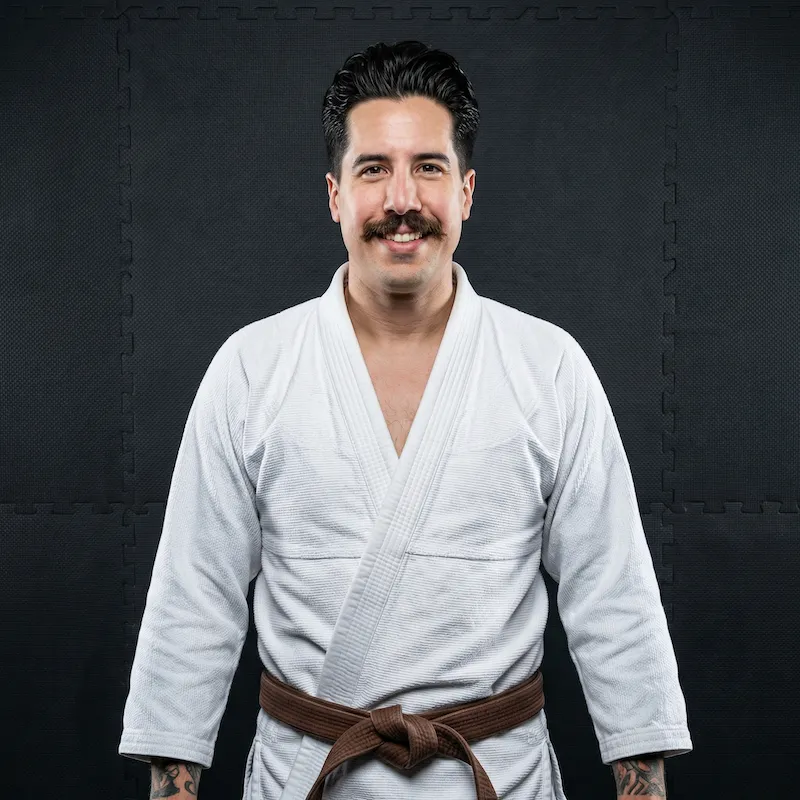
Kevin Manko leads the kids' program at Chicago MMA. A longtime student who has trained for more than a decade, he's spent the last several years building out the youth classes—running them twice a week at the South Loop location and four days a week in Lincoln Park. His approach is fun-first: kids don't care about every step and every detail the way adults do, so he meets them where they are. On camera he tells the story of a teenager who came in dealing with bullying and a tanked sense of confidence, and who now "stands a little taller."
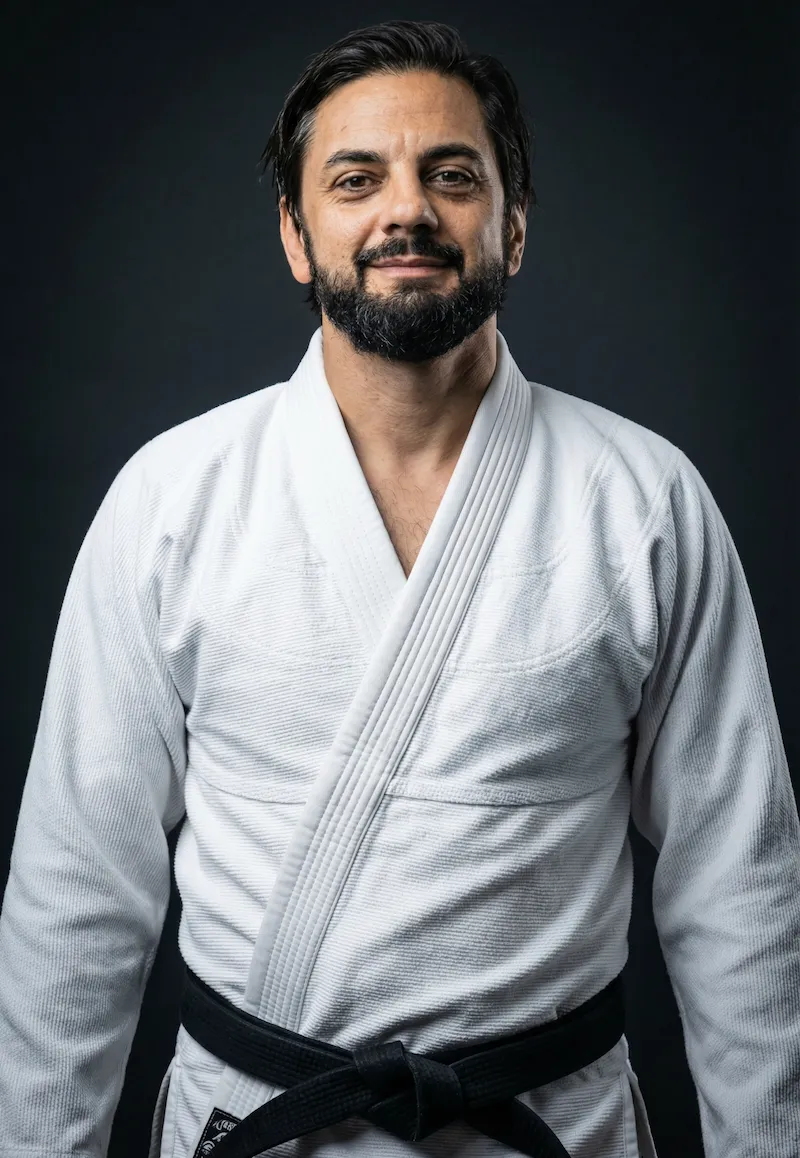
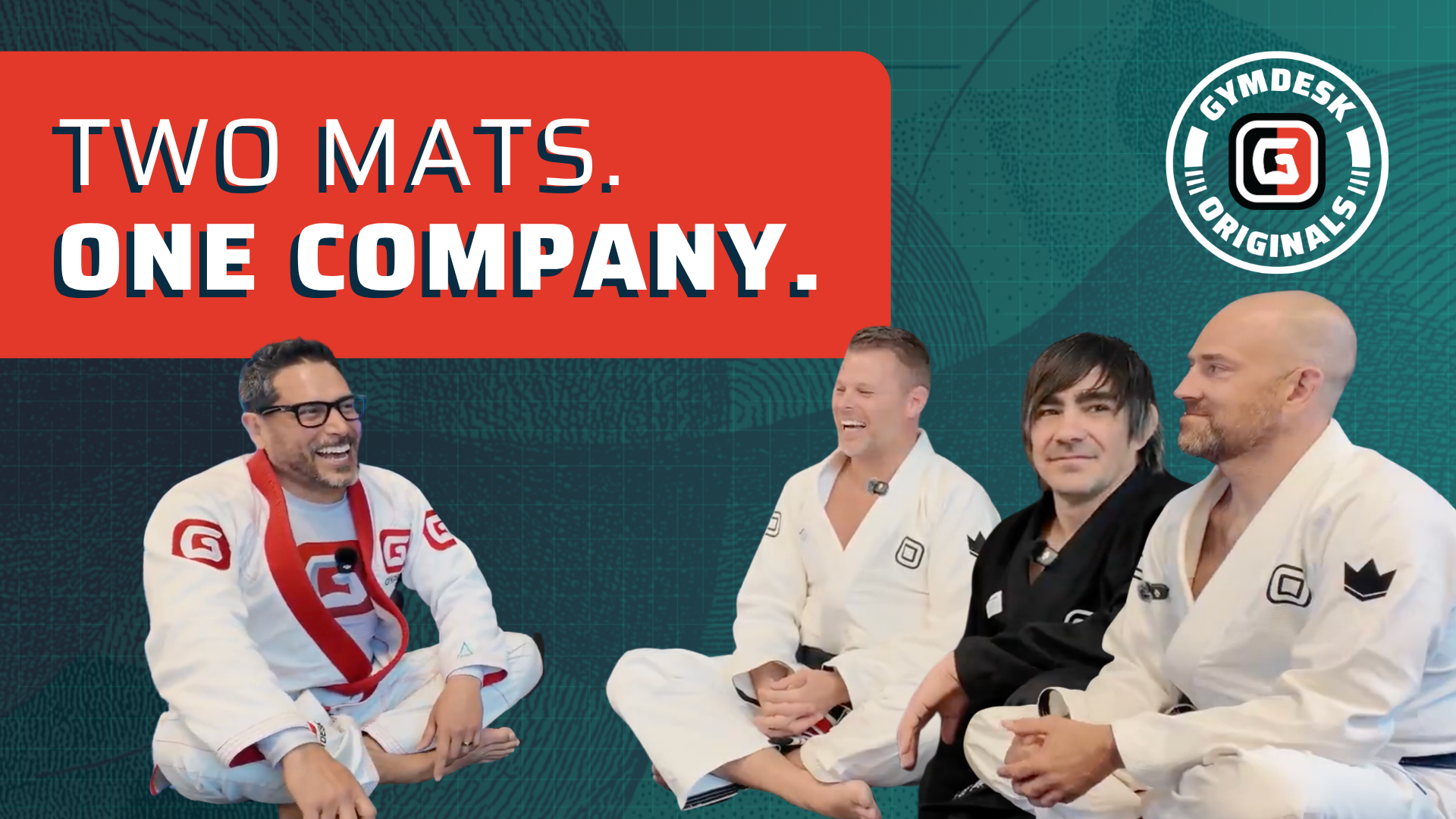
Misho Ceko is a fourth-degree Brazilian Jiu-Jitsu black belt under Ralph Gracie and the founder of Chicago MMA. The son of Bosnian immigrants raised on Chicago's South Side, he found jiu-jitsu in 1998 after a magazine article led him to Ralph Gracie's academy in Mountain View, California—about a block from his house—where he trained alongside BJ Penn and the Camarillo brothers and earned his black belt in 2004. He went on to train Muay Thai under Mark DellaGrotte in Boston and, during a United Nations posting in Mozambique, ended up running rolls out of his apartment and opening a school there. He founded Chicago MMA in 2010. By day he runs business operations at the University of Chicago; by night and on weekends he teaches at the gym he built.
About the Gym
Chicago MMA (Chicago Mixed Martial Arts) is a two-location martial arts academy teaching Brazilian Jiu-Jitsu, Muay Thai, MMA, and a growing kids program. Professor Misho Ceko opened the original Chicago MMA in Lincoln Park in 2010 and added a second location in the South Loop in October 2025—a purpose-built space with no front desk, kiosk check-in, full locker rooms, a weight room, and a second matted area.
Misho is a fourth-degree Brazilian Jiu-Jitsu black belt under Ralph Gracie with a Muay Thai background under Mark DellaGrotte's Sityodtong lineage, and he's built the gym around a belief that the discipline is converging—that most serious schools are moving toward mixed martial arts rather than any single style. The academy runs a competition fight team alongside everyday classes for adults and kids, and Misho teaches in the evenings and on weekends while a coaching staff carries the daytime load.
📍 Lincoln Park (original): 1528 N Halsted St, Chicago, IL 60642
📍 South Loop: 110 E Cermak Rd, Chicago, IL 60616
Summary
This is the story of a man who runs two lives at once. Professor Misho Ceko spends his days as an executive at the University of Chicago and his nights on the mats at Chicago MMA, the academy he founded in Lincoln Park in 2010. He's the son of Bosnian immigrants who grew up on Chicago's South Side—his mom cleaned hotel rooms for thirty years, his dad worked the steel mill—and he found jiu-jitsu in 1998 at Ralph Gracie's legendary Mountain View academy, training alongside BJ Penn before earning his black belt in 2004.
A career in academia and a United Nations posting took him from California to Boston to Mozambique and finally back home to Chicago, where he built a school that now spans two locations. Sitting across from Alex—a friend of three decades who turns out to share the same immigrant-kid upbringing—Misho explains why his dad still tells him to "go get a real job," why the brutal training room that hooked him isn't the one he wants to run, and how martial-arts-specific software let a part-time owner put two gyms on one system in under a month.
What They Told Us
Alex Cuevas has known Misho Ceko for thirty years, so this Gymdesk Originals visit to Chicago MMA played less like an interview than two old friends picking up a conversation. Misho is a Bosnian immigrant's son who found Brazilian jiu-jitsu in the Bay Area in 1998, built a gym in Chicago in 2010, and still teaches nights and weekends around a full-time job at the university. What came through was a story about work—the kind his parents did, the kind he does now, and why he thinks you never actually get the balance right.
You don't balance it, you keep moving
Alex asked the obvious question of a man running a gym on top of a demanding career: how do you balance it all? Misho didn't pretend there was a trick to it. He rejected the premise instead.
"I don't think you ever balance it. I think you just keep moving forward."
—Misho Ceko, Founder and Head Professor, Chicago MMA
Nine to five, then five to nine
The way he tells it, the gym isn't a break from the day job—it's a second one he chose on purpose. The university fills the day; the mats fill the night, and the point of the night shift isn't the training so much as the people.
"I have my nine to five and then I have my five to nine … I'm at my day job at the university … all day. And then after that, I come here and teach some classes and try to help build the culture."
—Misho Ceko, Founder and Head Professor, Chicago MMA
Where the work ethic came from
Ask Misho where the appetite for two full-time lives comes from and he points back a generation, to parents who came to this country and took the jobs that were available. He says it plainly, and then says you can't really appreciate that kind of labor until you've watched it up close for years.
"My mom was a cleaning lady for Red Roof Inn for 30 years."
—Misho Ceko, Founder and Head Professor, Chicago MMA
The first class that hooked him
His entire jiu-jitsu life traces back to one day in 1998, walking into Ralph Gracie's Bay Area academy a block from his house. There was no gentle on-ramp. They threw him straight into a live round, then gave him just enough to survive it.
"They pulled me aside. They told me how to pass the guard. They told me how to do an Americana. And that was pretty much it."
—Misho Ceko, Founder and Head Professor, Chicago MMA
Sixteen years, and a second room
Chicago MMA is not a young gym, and Misho measures its life in a plain arithmetic he clearly still finds a little surprising. The growth has been patient—a decade and a half in one place before he was ready to open anywhere else.
"I started Chicago MMA in 2010. So, it's been 16 years and then we opened up our second location just six months ago."
—Misho Ceko, Founder and Head Professor, Chicago MMA
From PayPal to a system that fits
The business side grew up the hard way, one workaround at a time. Misho ran the gym on whatever could handle a recurring charge, moved to a platform built for yoga studios that treated martial arts as an afterthought, and eventually landed on software made for gyms like his.
"When I opened the gym in 2010, we were using like PayPal … it was the only way to have some kind of recurring payment system. … After a few years, MindBody Online came on board."
—Misho Ceko, Founder and Head Professor, Chicago MMA
Read the full transcript
Lightly edited for readability. Speaker labels are omitted because the source recording is not diarised; quotes attributed elsewhere on this page were verified against context.
We'll be right back. Behind every gym, there's a story, a mission, a spark of passion that started it all. This is Gymdesk Original. Real owners, real struggles, and the communities they've built from the ground up. I'm super excited about this one. This is me visiting a buddy of mine that I've known for like 30 plus years. I'm here at Chicago MMA and about a mile away from the downtown area. Let's go check this place out. There he is. What's up, brother? Yo. Welcome to Chicago MMA South Loop.
Come on in. Thank you. This is our brand new facility. Six months old. Trying to keep it together. You can see we've got a kids class going on. Yeah, so new spot for you, right? This is our second location. Yeah. We just opened it up in October. I'd love to show you around. Yeah, let's check it out. One of the things we did is we got rid of the front desk. I think most gyms have a front desk where you greet people. We moved away from that.
We wanted it to feel more like a living room where people are just welcome, come in. It's a little more disorganized. People don't know what to do, but they feel very welcome here. So they walk in. You can see through the glass. You can see the classes that are going on. They come in. We always have something martial arts related on the TV. Grappling matches, UFC, kickboxing. They walk in. This is their first step. It's a Gymdesk kiosk. They come here. They log in. One of the hardest part is getting people to check in for class.
Everyone's trying to sneak in. So we make sure that they're familiar with the app. They come here. They punch in their email. They register for class. Usually you'll have a couple of students hanging out here, watching the fights. They come here to steal some of our drinks. So my manager makes all the cameras to make sure they don't steal too many. So if anyone steals a drink, we put their picture right here. First time they steal something, they get charged double and it doubles every time after that.
Oh, there you go. By the fifth time, they're paying us like 20 bucks for a water bottle. Oh, there you go. That's a good scheme for you guys. Yep. Yep. This is our lockers. Full lockers here. Friends and women's. I don't know if you want to see it. I don't know if you want to see showers. Oh, yeah. Showers? Yeah, yeah, yeah. You don't mess around. So if you're in the area you need to go back to work, you can do that? You can go right back to work.
Yep. And then this is our second matted area. People can come here, warm up. They can hit the bags before class. There's the latest equipment from Fuji. Thank you from our boys at Fuji for matting us up. And then we have a weight room here. So after class or before class, members can come in. They can work out. They can watch the fights, pick the bags, all the latest Rogue equipment, getting our fighters in shape for their competition. That's it. Now we're ready to start working out.
Yeah, and this is the bike I see in a lot of places. This is everyone's favorite training tool. The assault bike. We force people to rip through five calories and move on to the erg weights. Do some circuit training. So this is brutal. Yeah. So what's the big deal about this bike? I've seen it before and it's at many places. This is very popular in wrestling and MMA, MMA trainers. You are forced to use your entire body. You're pushing, you're pulling with your arms and your legs.
You're trying to get as many, trying to burn out five calories as fast as you can. So it simulates, in many ways it simulates a fight. And so it's great for the Tabata style workout. Interesting. Yeah. You think, this is not like riding a bike. 20 seconds going 100% intensity. It's going to put you on your butt. All right. Thanks for the tour. Anytime. Okay. We're here with Coach Kevin. We just finished the kids' conversation. Okay. We're here with Coach Kevin. We just finished the kids' class a little while ago, and I think we're doing Muay Thai in the background here.
And we'd love to just know a little bit about your background. How long have you been training? And I think you're teaching the kids' class here at this location and the other location as well? Yeah. So we just opened up our second location about six months ago. So we're still growing our program. We've got classes here two times a week. Our location, we got classes four days a week. So we're still trying to build up our business. I've been teaching the kids now for about three or four years.
We've been training for over a decade now. So it's really nice to kind of take what I've learned and be able to pay that forward, teach it in a more fun and interactive way. Kids can kind of enjoy the process because the way I've seen it is you sort of just get thrown into the deep end of things. And I really like to kind of give people a great experience. So as they're starting out to have kind of a safe, more supportive environment. So as they're learning, right, it becomes more fun.
They get to share it with their friends, bring in more people. So I really like that aspect of bringing people in and kind of building up this community. Yeah. And so my son was in the class and he told me he had a great time. And, you know, when you teach kids, I think you have to have like a different mentality, skill set, approach even. But you still managed to make it pretty fun. Have you always kind of gravitated towards teaching children or has it just kind of evolved for you that's what you prefer or you do both and you enjoy both?
So I did start with the kids program when I was a white belt a long time ago. I just asked to volunteer for one of the kids classes at my old gym. Like, yeah, come on by. We need more people. Right. And when I moved here, I was like, hey, you know, I helped out with these classes a little bit. You know, and I was like, hey, you need some help, you know, and they were very gracious to bring me in. And so I as a blue belt, I started teaching, learning how to teach, also learning my own skill.
And I suppose I am. I'm a big kid myself. So I enjoy just being with the kids, having fun. So, you know, adults might care about all the steps and all the technique. Kids don't really care about all that. They just want to have fun. They want to do a fun activity. And so I think just keeping it lighthearted, breaking it up. So there's a lot of games while they're still learning the technique. That seems to be my go to. Awesome. And I guess another question I'd have for you is, as it relates to children.
So you've been doing it for at least three, four years, right? You have any cool stories you could share about like a kid coming in and then through training has transformed their lives and more confident? Anything that stands out for you? Yeah. So I won't share his name, but there's a 13 year old teen that came in about a year or two ago. He was experiencing a lot of bullying and fighting. He came in, his parents actually sought us out. Because he wanted to get some training in.
He had gotten into a fight. It really tanked his confidence. And you'd see he would just kind of walk around with this kind of posture of. And so he started training. He actually came to me first. We started doing some private training. Then he joined the kids class. Now he's doing the adult classes. He's old enough now to be training with the adults. But I've just, I've watched him kind of just, you know, he stands a little taller. And I know that it helps quite a bit being here, surrounded by this community and learning a new skill set.
So I really appreciate being able to be a part of that process. Awesome. And then one last question. So obviously there's a lot of different programs or striking programs. You're doing jujitsu. Do you also train yourself in Muay Thai or you just like to stick to jujitsu? Yeah, I'm a pretty much jujitsu guy. I've done some Muay Thai. But, you know, it's, I think I need to get over the barrier of being bad at it. I'll admit, you know, I'm not, I'm not a great striker.
That's okay. But it's, with jujitsu, it takes a long time to get good at it, right? You're bad for a really long time. And I think there's a little bit of a mental aspect of me, like, knowing I'm going to be really bad at something for a while before I start to get good. So, but maybe this is a little nudge I need. So yeah, thanks for the question. Awesome. Yeah, great. Well, I appreciate, thank you. Thank you for helping us today and teaching my kids and Brian's kids were here too.
So it was really cool that second class that they had ever. And yeah, great. Thank you. Misho Ceko. My friend, Alex. It's been 30 years since I've seen you in the flesh, right? 30 years. Time flies. Time flies. And it's weird, man. Cause I mean, you know, when you haven't seen somebody for that long in the flesh, you kind of get transported back. At least I do. And I'm like, yeah, what was I doing? This is back in 98. We were kids. Kids. I was actually doing an internship my last year between junior and senior year.
And then you came in, you were fresh from Chicago and, uh, trying to get established in the Bay Area. And I said to myself, I got to add value to this man. And I'm like, what could I want to know if, uh, I just came here from Chicago. So I thought it'd be a good idea to tell you, Hey, you got to listen to this station. It's just like, in retrospect, I was like, I thought about this for years. Like what a dumb thing to say.
Like, you don't have a scan button to find the station yourself. I'm like trying to tell you all the cool stations. It was hot 97.7. If you're from the Bay Area, that dates me, uh, that station went away from those what it is now. But, um, yeah, so I met you way back when, which is really interesting. Cause it's also, uh, at the genesis of your martial arts. Yeah. Right. In that same summer, I think you started doing your thing. Exactly. That summer. Um, I just moved to the Bay Area.
I found you showed me around a little bit. Um, I was looking for something to do in the Bay Area. So, um, funny enough, there was a magazine called Maxim. Remember Maxim back in the day? Yeah. I don't think it exists anymore. Yeah. They usually have, uh, provocative covers and stuff. They did. Yeah. Um, and there was an article about Ralph, the pit bull gray scene. And it said this guy who choked out pit bulls. And at the end of the article, it says he has a, uh, an academy in Mountain View, California.
I'm like, no way. Yeah. And literally his academy was about one block from my house. Um, I walked in the first day. There was probably five or six people training and two of the guys got into a fist fight on the mat during practice. And 30 years later, I don't know if I've seen another fight like that in a gym, in a martial arts studio. Oh, and we're talking about a Jiu Jitsu place. It was a, it was a, it was a grappling class. Okay. Oh, you're not supposed to do that.
You're not supposed to hit each other. We don't, we don't hit each other. It's not an MMA. This is like before MMA classes were a thing. They were fighting. And so I think most normal people probably would have walked out of the gym and said, I'm going to go find a taekwondo school or something. Um, I was, I got hooked. So I started going there and while you were working, I was sneaking out to train at Ralph's gym. That's why I didn't see you for lunch.
Misho, let's go. He's not here right now. That was the start of it all. Um, 30 years later, here we are. Yeah. So you first started, like you had zero background? Zero. Zero. Yeah. All right. So 98, you walk in, you're in a Jiu Jitsu school. You see a fist fight, which is not supposed to happen in a Jiu Jitsu school. Um, but besides that, the instruction and all that, you're like, Ooh, there's something here. You got hooked to it. Uh, you got hooked. Um, but you're not, you're not a BJJ guy only.
You have pretty, pretty extensive background. Uh, in striking you are, is it Muay Thai that you're mostly? Yep. Muay Thai. Okay. So how'd that happen? So, uh, San Francisco is very popular in martial arts. Like there are several gyms, but Ralph was the main Jiu Jitsu guy. Um, but they had a lot of great kickboxing all over the peninsula, right? They had American Kickboxing Academy in San Jose. They had Fairtex in San Francisco. There was another place called the Peninsula Kickboxing back in the day. I think it was Redwood City.
And so it was very easy to find good training in the Bay Area. Um, Jiu Jitsu was a kind of an upstart. Like there's a, it was a new thing back then. Um, and I remember the very first UFC. Like I bought the pay-per-view. It was two men enter, one man leaves. It was a death match. Yeah. And I remember the first match. I remember, uh, the guy, uh, the Samoan guy, I don't remember his name now. Oh, the tooth. The tooth. Oh, yeah. It wasn't Tua, was it?
Um, but the tooth. Yeah. And I think I was like, this stuff is crazy. Yeah. I didn't know people trained it. Like I, there were styles obviously, but I just, it wasn't popular in Chicago. Um, and then I found that place and, uh, that started the, my kind of love affair with it and learning different styles. And, um, the Bay Area is a perfect place for that. Yeah. So how long had you been doing jujitsu before you said, let me try Muay Thai? Probably three months.
Oh, wow. You started like right. I got hooked. I just got hooked. Um, so then how do you like, how do you split your time? You know, it was, it depended. Uh, for the most part, the early days was more jujitsu than anything. Yeah. Um, in 2005 and moved to Boston. Um, and then that's where I met, um, Mark DellaGrotte, uh, with Sityodtong. And so his, he was, he's a unbelievable teacher. Probably the best in America. Um, and his passion just kind of drew me to the sport.
And then I realized it was an art form just like jujitsu was. Like earlier on, it was just about learning striking and adding striking to my grappling. And then, then I realized like, this is a beautiful art by itself. And then I went down that rabbit hole and started studying and learning and asking people for help and training. And to this day, we focus on grappling and striking and now MMA. Cause I see like most schools are kind of converging, uh, towards MMA. Yeah. So it's been an awesome ride.
And, you know, I've known you for so long and, you know, we've kept in touch here and there. And I remember I spoke to you, um, gosh, but it must've been two years ago when I was doing, I was running a different company. And then, you know, before coming here, my team does a little background. It's like, wow, dude, I did not know you were so busy. Scatterbrain. You've done a lot of things. And right now, you know, you're kind of like the guy who, um, you know, the, you're like the casual, you know, your profile, you know, from on a professional side, it's kind of like the casual, uh, hobbyist.
Right. But you're not, you're actually full blown. I got to take that. Yeah. And, but you're still, you're still doing your thing, right? You're presently working at the university of Chicago. Yep. COO, right? COO, yep. And Dean. So it's like, when I was like, oh, am I going to say Sensei Misho? Am I going to be Dean Misho? Coach? Most of it was a professor. Coach? That's it. Okay. Coach. Because they can't pronounce my name. So they're like, they're not going to try this. Like, hey, coach.
Hey, coach. Yeah. No. Yeah. I mean, very busy. And, you know, you got the professional. You've yet quite a, uh, um, distinct career. Um, how's it, how do you, how do you balance it all? I don't think you ever balance it. I think you just keep moving forward. Yeah. Joke that I have my nine to five and then I have my five to nine, right? Like I'm at my day job at the university. Yeah. Um, all day. And then after that, I come here and, uh, teach some classes and try to help build the culture and then get to know folks.
And right now we're training a bunch of people to compete in MMA. So we're slowly building up our fight team and getting the kids to compete more and some of the adults and grappling. So it's like, it's a busy schedule. Yeah. And I wonder if, uh, I guess, uh, if you're at a business, um, meeting, I'm sure you're more like, oh, I'm wearing a Chicago hat or, you know, uh, university Chicago hat. But if you're something martial art related, you're a business owner, right? Um, if there's none of that, like, how do you think of yourself?
Like, I never really thought about that. I'm trying to think about that. You didn't do it. I just do it. Yeah. I've always been somebody who follows my passions. I never, um, at least not anymore. I don't take a job for the money. It has to be something that I'm really driven by, right? I believe in the mission and whether it's education, um, or martial arts, in many ways, this is similar to a school, right? Like a university, people come here to learn, right? And we treat it like that.
So I think you and I have some things in common, I think from, uh, like parents, you know, my parents are immigrants, um, my mom and dad, they used to, you know, they used to clean for a while. Then my dad became a hard laborer, just doing like landscaping and stuff like that. Um, and, uh, you know, they always had these thoughts of what they wanted. They wanted me to do something different than having to be out there in the sun. Like my dad was baking all day and everything.
And, uh, your parents are also immigrants. Yes. Yep. Your father was in a steel mill or something like that. He worked in a steel mill. Um, my mom was a cleaning lady for Red Roof Inn for 30 years. Wow. Yeah. Isn't that crazy? Yeah. Um, and you don't, you don't appreciate how much work it is to do these type of labor jobs. You know, they're, they grew up, they were post-World War II Bosnia, right? There was no opportunities. They'd left school at probably 12 or 13 years old.
They work on the farm. Uh, America was a land of opportunity. Yeah. So they came here in late 60s, 69, 70. Um, and they made it work. Yeah. Yeah. It's just crazy. And they pushed us, you know, uh, into college and graduate school and work. And yeah, I'm sure they have the same kind of, was that their thing? Like wanting to push you to like, Hey, have a better life. They never went to school. So they landed, of course, us to go to school. Dude, man, I never talked to you about this.
I got the same exact background. Yeah. Yeah. Mom and dad had, my mom had a library, even though she could, her English reading. My parents still didn't speak English. Yeah. Yeah. My cousin, he's been here 60 years. It's wild, man. Yeah. That's another interesting, uh, coincidence on both of us. So when you said, Hey, I want to open a martial art place, was this just like, Oh, that's another one of Misho's projects or were they like, you know, they don't get it. They don't get it.
Yeah. They think it's crazy. Yeah. They're like, you're going to what? Like to have people punch you and punch people. Like I'm 51 years old, 52. They still, my dad still doesn't understand. He's like, why are you wasting your time doing this stuff? Like go get a real job. So I don't think they're ever going to get it. Yeah. And, um, uh, but, uh, did they ever discourage you or anything like that? Or they were just kind of like, all right. Yeah. They weren't into sports.
Yeah. They just weren't like, it was all about education. Yeah. But as a kid, sports is your life. Now, now I'm the, you know, 40, 50 years later, I can still do things that I love to do. Right. I'm still active. I'm on the mat every day. Yeah. And, um, I was hoping, uh, to get on the mat today. I don't think I'm going to, I told you about my little injuries. I'm kind of a wreck today. I have a busted nose right here. My ears all bruised.
You're falling apart. Falling apart. My knees all swollen. So, uh, but I think for me, uh, the, uh, the jokes aside from your text messages, I should not be trying to submit people. I've had a lot of fun. It's kind of reinvigorated and, um, it motivates me to go to the gym because I know it'll help me in my jujitsu game, especially when I'm not able to trap and, you know, and I also think that if you suck at jujitsu, if you're just kind of like the gym is a big element of pushing me forward because my technique isn't that great, but that's okay.
Cause there's like a, you know, there's a give and take here a little bit. Um, so, uh, Ralph Gracie's Academy, right? That's where you first started training. BJ Penn, did you train in the same school with them or how'd that work out? In 1998, um, there were probably two main gyms in the country where the, most of the competitors came out of. One was like Renzo Gracie in New York and that was the East coast and then Ralph Gracie's gym, uh, on the West coast. Right.
And so you had BJ and his two brothers, uh, Reagan and JD. Then you had the two Camarillo brothers who are two of the best judokas in the country at that point. I think Dave, one of the, I think they were just beyond Jimmy, behind Jimmy Pedro. I don't know if you remember Jimmy, Jimmy Pedro, Fuji Mats. He was, he's an Olympic, Olympic, probably top US guy, uh, that we've produced, uh, or one of them. And so you had the Camarillos, the Pens, Gumby, you talk to Gumby.
Yeah, Gumby, we gotta come do this with you. Yeah, Gumby, I'm gonna come next time. Um, Gumby and, uh, Scott Nelson. And they had the, on the mat, it was a very popular website, 10 or 15 years ago or longer now. Um, they had a bunch of killers on the mat. And so when you walk in, it's pretty intimidating place. Yeah. Um, there wasn't a focus on let's, let's slow walk people into the gym and get them comfortable. It's like they throw you into the fire.
Oh man. The first practice was literally, there was probably 20 people and the end of practice instead of 10 on 10 battle royal commission. No way. First practice. Literally the first. Oh my gosh. So this, I don't know if I told this story to anyone, but, um, I'm like, this is very weird. This is like, this is like a cult or something. And so I'm a big, I was a bigger guy and, you know, I'm 220 pounds back then. And I'm like, I'm just going to hang out in the outside when everyone's like battling.
I'm just going to wait till it whittles away. So hold on. How, how many, how long, how many years, how many years have you had when this is happening? I had 30 minutes of class. Oh my God. This is the beginning. This is the first day. This is literally the first day of, this is the first class I've ever attended. Okay. Battle royale and you're just in. They pulled me aside. They told me how to pass the guard. They told me how to do an Americana.
Um, and that was pretty much it. And so, uh, I remember like, I wasn't just going to hang out on the outside. Everybody's fighting. They're trying to tap each other. I'm like, these people are maniacs. There's a few people left. I'm like, I'm ready to go now. And this is with the gi. And I remember I lock up with, uh, Dan Camarillo. So this is Dave Camarillo's brother. He was also one of the best, you know, players. I didn't know this. I'm like, I'm going to smash this guy.
I'm 220. He's like a buck 50. And within a second, I was, he had tossed me over his head into an arm bar. Oh no. Like, I didn't remember flying through the air. I don't know how to break falls. Oh no. I'm flying through the air. He throws me in an arm bar. And I'm like, what's just happening? Like, this is day one. And I think at that point, I'm like, I got to figure out what they're doing. Yeah. Yeah. So it was kind of a, that was a start of it.
And that must've been your, uh, moment of, um, you know, shattering this illusion of 220. I can take on anybody. You got a 150 pound guy that just handled me. I stopped going to the gym and lifting. I was like, I need to figure out the technique. I'm going to do it. Yeah. Yeah. It was, it's a very technical sport. So the, was that room like that often? Every day. Every day. Yeah. Yeah. So it was, you built a, you built a lot of very good competitors.
Um, I think the challenge was growing a school and making it accessible to everybody, right? There's a fine balance. There's a certain type of training if you're trying to build killers. And there's a certain type of training. If you just want to have a successful martial, community martial arts school, right? And that wasn't conducive to having three or 400 students. Yeah. But it worked like that was the mentality back there. It wasn't about the money. It was, you wanted to say you had the best team in the country.
Yeah. And so that was the training. So a lot of people didn't survive more than a few weeks of training before they said, nah, this is not probably for me. Yeah. I mean, I think you're, uh, I think you're a very rare breed, at least, you know, in my travels in terms of meeting people, there's always the ones that are super passionate about the arts. Um, but you have a, you know, pretty fancy, uh, educational background too. I mean, you've got Harvard, Kellogg, um, business, MBA, and you know, that, I think that's a, it's a very unique thing.
Um, you've also done, um, United Nations. Yep. I worked there for a little bit. I mean, it's like, you've been like everywhere. You've had all these, uh, really, really cool experiences. Um, but your passion, you know, always came back here. Yeah. You've, you've been here now. How many years have you had this team? So, uh, this, I started Chicago MMA in 2010. So, it's been 16 years and then we opened up our second location, uh, just six months ago. Yeah. And you, so you're training in the Bay Area, you're doing BJJ and then Muay Thai.
And did you rank your, did you get a black belt then? Yeah. So, I got a black belt from Ralph in 2004. Okay. Um, right when, and when I was leaving and then moved to Chicago, uh, to start business school. Okay. Um, and then I started training with, uh, Carlson Gracie. Carlson Gracie senior was around and he had started the first school in Chicago. Wow. So, senior and junior were here and Carlson Gracie was a legend. Like he had the best fight team in the world.
And also in the fifties and sixties, he was the top guy. Yeah. He's known for like pressure, right? Yeah. He's a, yeah. Pressure guy. So, I had an embarrassing incident. It was probably like the first day. I was a black belt already. I've been training a while. I'm like, ah, I'm like, I'm going to kill people. Yeah. He's like, he was watching me and I see him laughing. He's like, get over here. I'm like, what? He's like, who taught you how to tie a belt? I was like, nobody actually.
Nobody teaches you how to tie a belt. Just kind of wrap it up. And he pulled it off in front of the whole class. He's like, I'm a black belt. He's teaching me how to tie my belt for me. But he was like, there was nobody like him in the world. Like him and his son, yeah. Yeah. Is his son in London now? No, they have a gym still here in Chicago. In Chicago. Okay. All right. Yeah. I visited one of their locations in Hackney, probably about a month and a half ago or something like that.
Yeah. But yeah, that's when I got introduced to the pressure and I was like, ooh. And I, you know, I kind of, as a joke, my son trains in jujitsu and he tapped the pressure and I was like, bro, what are you doing? Man, don't tap the pressure, you know. I introduced a new game now. So a lot of gyms do like flow rolling. Yeah. So you just, you can't use muscle. Yeah. And you don't even try to submit each other, but you want to have a lot of transitions and movement.
I started introducing that, but the opposite. No submissions, but as much pressure on the person as possible. Try to smash each other. Yeah. Like eliminating all the space and just kind of rolling like that. You still can't hold someone just, but you have to try to smash them instead of just flowing. So flowing and trying to be very light, athletic, a lot of scrambles. This is the opposite. Low, controlled, kind of methodical movements. And I'm trying to, like as you get older, your game slows down for sure.
Yeah. But the pressure you can create on folks increases. Yeah. I have done the flow rolling with the eyes closed and the music you're going to talk about. Yeah, yeah, yeah, yeah. We do that too. It's cool. I like that. And it's just helpful because you go slow and you go on the, and the pressure thing is something that like I had to unlearn. Because I, like I started doing different, like I say, kesa. And if when I'm doing it with my son, I'm not going to crush him.
Yeah. So I ended up like, you know, just doing it wrong when I'm doing it with an adult, I'm doing the same thing. And, you know, pressure is a big deal. Like now if I do it, you know, I think about the piece of paper, you can put a piece of paper, you're good. And just like on top of that, using a little bit of, so it makes a big difference to the game. So what, tell me about Mozambique. You opened up an MMA school there?
So we, in 2009, my wife and I moved to Mozambique. I was starting a new contract with the UN. And I was, my biggest concern wasn't housing or food or anything. It was like, how am I going to train the next couple of years if I moved to a new country? I don't speak the English. I don't speak the language. So I can speak Portuguese there. And I remember after Google search or something, I found a judo school and I called the school up and I said, Hey, I trained martial arts.
I'd love to come by. And the guy was very welcome. He was a Portuguese guy. I loved it. And he's like, Hey, come in. Very warm guy. Show up at the gym early, warming up. They start with some randori and we just had a freak accident. Like I was training with some guy and I had more like a wrestling background than a traditional and judo background. And so I shot in the guy, took him down. He planted his arm and it snapped. So I'm in this room with probably 20 Mozambicans.
I was the only white dude. American, doesn't speak the language. And the dude screaming on the mat with his arm inverted. Oh, dang. And they, I mean, it was, I was like, I was in shock. And the, luckily the instructor's like very chill about it. He's like, Oh, you know, it happens. Like, let's go take him to the hospital. I was like, okay, let's, this is the first adventure. This is like day one of moving there. Oh my goodness. And so we, I go to the emergency room the first day.
I'm like in Maputo and this kid's like, he's in pain. His arms, he was probably like 19 or 20, a young guy. Yeah. And I remember his family showed up at the hospital and I'm just like, Oh, I'm dead. I'm dead. Like what is going on? They were great. They were great. The coach pulls me aside. He's like, listen, maybe judo is not right for you. He's like, but there's a Brazilian jujitsu school in Maputo. Like why, like they didn't have a website or anything and he literally drove me to the school and they were practicing when they showed up and he walked up and he spoke Portuguese.
The guy didn't speak any English, the teacher, he was like a blue belt from Brazil who had just moved there for work or something. And I remember him asking the guy, you know, ask him how long he's been training. At that point it was maybe 12, 13 years. And the guy's like, two or three years. He's like, no, no, 12 or 13. He's like, Oh, what belt are you? He's like, black belt. And the guy's like, black belt. He's like, okay, you're going to teach. And then we're going to be the students.
Oh, no way. And so he immediately just said, here you go. You run the thing. Yeah. He's, I mean, he was a very humble guy and he's just like, that's the, that's the kind of respect that art has. Right. And we had grown the program. And at some point we had actually lost, we lost our mat space and, um, we're trying to think about ways we keep training. And I ended up driving, uh, South Africa and I bought mats, puzzle mats, and we set it up in our spare bedroom and our condo.
And all these guys would come over and retraining my house. No way. It didn't smell the best, but my wife was happy about it. Uh, when we lived on a 10, 10th floor of a walkup. So, and they had like security guards at the lower level. And every night you would see 20 sweaty Mozambicans leaving my apartment. We're like, what is going on in this place? Yeah. So, uh, I, one question I think about when you're saying you're doing this stuff in, um, regardless of where you go in the world, you're going to find martial arts, right?
Like traveling in Japan, obviously. And that was the magical thing. Like moved to Mozambique. Yeah. And we literally had a Brazilian jiu-jitsu school two blocks from our house. Right. Right. So my question is this, so you go, cause you're seeking, you want to roll, you want to train, right? And suddenly when they, and this is what I've heard from other people, um, like a buddy of mine, he's a, who's a coach. He's like, yeah, when I'm teaching, I don't get to roll. Yeah. So I can't practice.
So that was the hardest part of the transition from being competitive to being a teacher. Yeah. So did you get a chance to work out with them too? Yeah. Yeah. So you built that into your program. But now as you become an owner of a school, a coach and a competitor, something has to fall off. There's just not enough hours in a day, right? Like when you first start, I think I was training 20 to 25 hours a week for the first six years, which is, you know, four, three to four hours a day, every day.
And then now after you're teaching, it's a completely different mindset where you have to think about the students first before yourself. And so it's, even though you're not training hard, it's mentally very exhausting. And so flipping that switch from being competitive to being more nurturing, uh, has been, there's always a tough transition for a lot of people. Yeah. Like, and as you get older, like you can't do the same thing you did when you were 20. Oh, you can't? I can't. I was talking about you.
Guys like you, guys like me, we can still do it. Are you crazy? I just, I was trying to connect with you, but I guess that didn't work. All my jokes are falling flat today. So, I mean, I usually ask the question, like, how'd you hear about Gymdesk? But I assume you already knew Gymdesk before I came on board, right? We've been, so I think when I opened the gym in 2010, we were using like PayPal, right? Like, it was the only way to have some kind of recurring payment system.
Um, after a few years, MindBody Online came on board. And I think they were mostly like, I think they were built around yoga. Yeah. And so martial arts was an afterthought, but it was kind of good enough. The system was very complicated. I could never find anything I wanted to do. I was on tech support saying, how do I do this? And they'd be like, click this. Well, after a while, we're like, we need to, there's got to be something better. So we tried a couple other systems, again, better, but still not there.
Um, you called me one day, said, Hey, um, went over to Gymdesk. I was like, oh, I heard of Gymdesk. Like, but I was like, it's such a pain in the, pain in the butt to change systems. Right. Like, and so I was like, I hope he doesn't ask me this way. I hope he, cause I know, like, I don't want to be, I don't want to say no. You never put that. You never put the price. You never asked, right? You never asked. Yeah. You never asked.
Um, and then we decided to open up a second gym. And I said, you know what? Let's, let's, let's give Alex a call. Let's see what Gymdesk can do for us. And so I said, Hey, uh, we're willing to set it up in this new location. Um, it was very easy process. Took no effort. Your team was wonderful in terms of the transition, uh, migrating the data over. Uh, it was very simple because I think we were on Stripe in the past and Stripe can easily, uh, change.
And then within a month, we're like, Hey, let's put both gyms on the system. And it's been fantastic ever since. Yeah. So, uh, so far so good then. Wonderful. Yeah. I can tell you, I think we've had fewer issues than ever before. And fewer questions from students and members on how things work, right? I think the process is much more streamlined. I think Gymdesk is also built for martial arts schools versus some of the other ones where it's kind of a nice add on. And they picked a different vertical.
They said, okay, where else can we grow? Martial arts makes sense. So they come over. But I think you, given your martial arts background, you did judo and taekwondo. You kind of understood how schools work, martial arts schools, and they're not yoga studios. It's very different culturally, um, belt management, uh, the waivers, right? It's just a different, different beast. Um, and so you knew what, um, what it takes on a martial arts school because you've been around for a long time. Well, I know, um, we're going to, we're going to run into your other class. I think I should come back and go check out your other studio. We'll do another, we'll do another, but, uh, it's been great, man. I appreciate you so much. Thank you for the trust. Absolutely. Thank you for everything. Yeah. It's been great.