The Business of Judo: What It Really Takes to Build a Dojo
Starring
.webp)
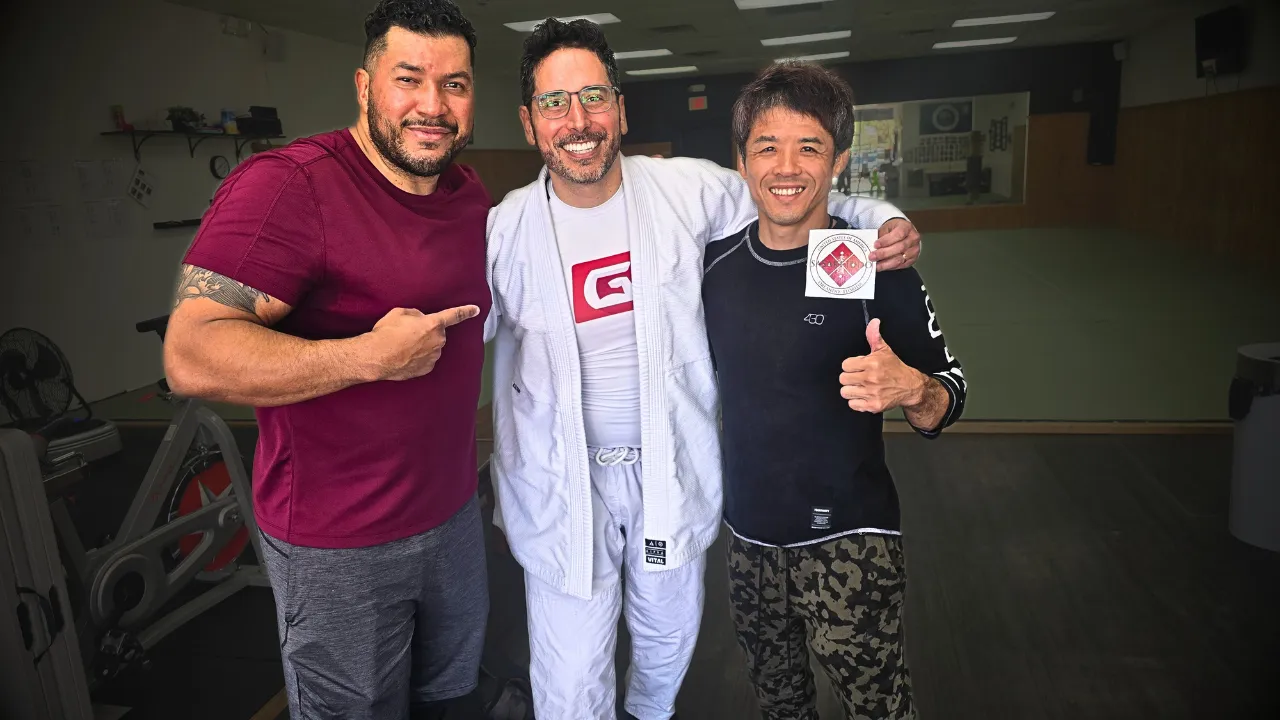
Eric Mieles is an instructor at Sasaki Judo in Orlando, Florida, where he has been a dedicated student for over 10 years and now leads daytime classes.
.webp)
Originally from Japan, Sensei Sasaki opened his own dojo after overcoming the challenges of immigrating and establishing a business in the U.S. He is deeply passionate about teaching and spreading judo, emphasizing personal connection with his students and a commitment to continuous learning.
About the Gym
Sasaki Judo, founded in 2017, offers expert judo training for students of all levels. Led by Sensei Shinjiro Sasaki, the dojo provides classes focused strictly on judo, emphasizing foundational techniques and continuous improvement. The facility supports individual and group instruction, student competitions, and cultural exchange programs, including trips to Japan. Sasaki Judo maintains a close-knit, supportive environment, ensuring personalized instruction and strong community engagement within a modern, well-equipped training space.
📍3385 S US Hwy 17 92, Casselberry, FL 32707
📞 689-308-7117
Summary
In this episode, Alex Cuevas visits Sasaki Judo in Orlando, Florida, for an inside look at building and running a successful judo dojo. Sensei Shinjiro Sasaki shares his journey from starting judo at age six in Japan to opening his own school in the U.S. despite visa and business challenges.
The discussion covers the importance of staying passionate, focusing on the art rather than just business growth, and maintaining personal connections with students. Instructor Eric Mieles highlights the dojo’s commitment to a family-like atmosphere and high-level competition, with students regularly attending tournaments and even traveling to Japan.
They also discuss how Gymdesk has streamlined their operations, from class check-ins to member management, making administrative tasks much easier and allowing the instructors to focus on teaching.
What They Told Us
Shinjiro Sasaki runs a judo-only dojo in the Orlando area, in a market where the money is in Brazilian jiu-jitsu and MMA. He's a Japanese immigrant who couldn't open under his own name until his visa cleared, which is why the name "Sasaki Judo" is about fifteen years old and this dojo only about eight. His wife and co-owner, Rieko Sasaki, a 4th-degree black belt and 2024 veteran world medalist, runs the software side. Here's what the conversation surfaced about building a business you refuse to let outgrow the room.
Why judo, and not the sports that pay
The question he fields constantly is why he didn't build around MMA or BJJ, where the demand is. His answer isn't a business case. It's vocational.
"Many people ask me why I didn't do MMA or something. I just love Judo … using my talent, I wanted to live … I thought that's the best way to success my life."
—Shinjiro Sasaki, owner and head instructor
Why the sign says Judo, not Dojo
Sasaki named the school after himself on purpose, as an accountability device. The model he cites is Gracie Jiu-Jitsu as a naming choice, not a lineage. He claims no Gracie affiliation.
"I named Sasaki Judo like a Gracie Jiu-Jitsu … they don't name Gracie Dojo. Gracie Jiu-Jitsu. That's their own name … Sasaki Judo means I have the responsibility for the dojo, for the name. So, if I stop learning … my brand stop growing."
—Shinjiro Sasaki
Bigger business, same-size dojo
This is the thesis, and it cuts against standard growth advice. He wants the business to grow. He does not want the dojo to. He grows the first without the second through contract coaching at other schools that need a judo class but have only BJJ instructors, plus an annual student trip to Japan, while the room itself stays capped at a size he can keep full and still know every name.
"I want to make my business bigger, but I'm not interested in making dojo bigger. I just want to stay in this place."
—Shinjiro Sasaki
The seminar where nobody knew his name
The cap isn't arbitrary. It's set to the number of students one sensei can actually know, and it has an origin: being called "hey, you" by a clinician at a seminar.
"when I went to a seminar … the clinician said, hey, you, that's my name. Hey, you. So, me. Then I felt like, oh, it's a little sad."
—Shinjiro Sasaki
The part he's bad at, and who does it
Sasaki is candid that the business skills aren't his. The dojo runs on his students absorbing what he can't do himself, and on Rieko running the software so he doesn't have to.
"Even I am a good product, but I don't know how to sell this product. So, that's why I need somebody to sell my product … Always my students help. So, that's why I will help my students 100%."
—Shinjiro Sasaki
"there's some people like me. It is good to teach or support the students, but not good at like desk work. So, Gymdesk, that system helps people like me. Mostly, everything's automatic."
—Shinjiro Sasaki
The student who became the coach
Eric Mieles walked in ten years ago, got dizzy in the corner of his first class, and the room quietly assumed he'd never come back. He now coaches the daytime class. Ask what the sales pitch was and it was four words, repeated.
"And his response was, just come in and do Judo every day. Just do Judo every day."
—Eric Mieles, daytime coach and ten-year student
Read the full transcript
Lightly edited for readability. Speaker labels are omitted because the source recording is not diarised; quotes attributed elsewhere on this page were verified against context.
I've been doing judo since six years old. I want to grow this sport. For someone who wants to open their own judo school or any other martial arts school, what are some lessons that you maybe you wish you would have done earlier? Today I'm checking out Sasaki Judo in Orlando, Florida. Here we go. Place out. Alex, how are you? Good morning. Good to have you. Yeah, look at this place. It's amazing. We're going to have a great session. Yeah, sounds great. Man, that was a warm-up.
I'm already burnt. It had been 1995 since I actually trained judo in a judo place. And it's 2025. It's been 30 years. And it was an amazing class. I mean, it brings back a lot of memories, a lot of muscle memory of things I used to do. I had a great time sweating still. It was fun. Maybe we can start with some quick introductions. Absolutely. Well, first off, it's a pleasure to have you. Thank you for dropping in. It's great to have you. Thank you for taking the class.
And it's really a pleasure. So thank you so much. My name is Eric Mieles. I'm a coach here at Sasaki Judo. I've been a student for 10 years studying under the Sasakis. And I had the very fortunate pleasure to lead the daytime class. And I'm grateful for the trust that they've given me. So thank you for joining the class. And this is Sensei Sasaki. Hi. My name is Shinjiro Sasaki. I'm glad you joined today's class and had a great time with Eric. Yeah. Also, I'm glad Eric enjoys having that.
It's great to break down the fundamentals like we were doing. Even the small steps that we were doing where we're learning how to move properly. So we're not hopping or crossing our feet so we can get, you know, tripped. Just the fundamentals. And then applying it right after to some of the Uchikomis. It's awesome. I'd love to know more about your background and, you know, when you decided to start the school, your inspiration and your martial arts background. My martial arts background is just Judo. So I've been doing Judo since six years old.
Oh, wow. Just Judo, just one way. Of course, I was doing other sports too, but I had never stopped Judo. Yeah. Playing softball, playing soccer, but I had never stopped Judo. Every day. Judo every day. Yeah. This is your first school? This is my first school under my name. Okay. So Sasaki Judo, the name is about 15 years. But this dojo has been seven years, right? Eight years? Eight years? Yeah. Eight years. Okay. Yeah. So because I'm an immigrant. So from Japan. So it's not easy to open my business, you know?
Yeah. So you need to go through visa issue. I went through the visa issue well. And then so finally, so using my name, I have my own gym now. So have you been in this location for eight years? Eight years. Okay. Yes. Got it. And this is where you all met here? Prior to this location, I had found Sensei Sasaki. Real quick, funny story. Yeah. Yeah. Sensei Sasaki comes from hard-nosed Judo. Judo, Judo, Judo. It's life. And I was in my 30s. I saw, I think, a YouTube video of Sensei Sasaki.
I looked up Judo in Orlando. I saw the website or videos of him. I go, wow, this guy's right here in Orlando. Let me call and see if I can take a class. I call. He picks up. I thought maybe an assistant would pick up or someone else. And it's him. And I go, hi, my name's Eric Mieles. I'd like to start to try to do Judo. And his response was, just come in and do Judo every day. Just do Judo every day. Do Judo every day.
And I was like, wow. Okay. All right. I guess I'll come in and do Judo every day. And we were just talking about this last night. And my first class, I came in. I had gym shorts on. I did one role. I started sweating. I got dizzy. I sat in a corner. And they said to themselves, this big guy will never come back. He'll never be back. And 10 years later, I'm sitting with them with here. And it's been an incredible journey. But I want to add one real quick.
The unique thing that I believe here in the Central Florida area is, and I don't want to speak for you, Sensei, but he's very dedicated to just having a Judo school. The Sensei, the Sasaki Judo name is a Judo name. We don't have really anything else here. We do Judo every day here. And I think that is a tremendous value add to the students that attend and are members of Sasaki Judo. I named Sasaki Judo because I want to spread this name, Judo, this sport. Many people know Brazilian Jiu-Jitsu, BJJ, right?
I'm a judoka. Simply, I want Judo to get bigger. So, that's why I named Sasaki Judo like a Gracie Jiu-Jitsu. See, they don't name Gracie Dojo. Gracie Jiu-Jitsu. That's their own name. So, that's why they have their responsibility in their name, right? So, my name too. Sasaki Judo means I have the responsibility for the dojo, for the name. So, if I stop learning, you know, my brand stop growing. So, that's why I never stop learning and improving myself. Yeah. It is important. Yeah. Even Sensei's position, I believe it.
Never stop learning. So. So, eight years in this location, you've learned a lot for someone who wants to open their own Judo school or any other martial arts school. Like, what are some lessons that you, maybe you wish you would have done earlier? Many people ask me why I didn't do MMA or something. I just love Judo. Yeah. Yeah. Like, no reason. Just, I want to do Judo. That's why I'm doing Judo. I want to grow this sport. Yeah. So, that's why I'm just doing Judo.
Plus, I feel myself, like, I have a talent in Judo. So, using my talent, I wanted to live. So, this life. Yeah. So, I thought that's the best way to success my life. And so, when you think about vision and what you would like to do, obviously, you probably want to have this as full as possible with as many students as possible. But do you have other vision beyond that? Like, you want multiple locations or you want to move to a bigger location or you're just happy if you can fill this place?
Probably in business, I should say, I want to make it, I want to make my business bigger, but I'm not interested in making dojo bigger. I just want to stay in this place. I mean, in the dojo. And then for me, I have 150 students. Sensei is only one, right? So, if I cannot remember their face and their name, it's not good, Sensei. That's how I feel. Yeah. So, that was my experience. So, when I went to a seminar, so, the clinician said, hey, you, that's my name.
Hey, you. So, me. Then I felt like, oh, it's a little sad. Yeah, yeah. So, and then if I say, hey, you, of course, I don't remember your name. I'm struggling, but I didn't want to say, hey, you. Yeah. Yeah. So, if I cannot remember their name, I'm not good, Sensei. Yeah, because we are sharing, you know, they are sharing my knowledge. That's respect, I think. Yeah. But just, I want to make this dojo full. A good customer experience. I know, again, it's a fine line between being a judo practitioner and an artist and a teacher and also business, right?
So, there's business skills that have to layer in to the art. And so, I can understand when Sensei says, if it's just for the sake of business and scaling and growth, but the art gets lost or the customer experience and people feel like a number here, I would imagine things start to change. And the customer experience, and the customer experience as a whole might not be the way it is now. We do really feel like a family. I'm speaking from, as a, I'm speaking as a student now.
Yeah. Here, there is a family element and environment here. We all have access to Sensei Sasaki, Sensei Rieko Sasaki. And I think that's one of the things that he's speaking about, I believe, when I'll speak for you, Sensei. Even I am a good product, but I don't know how to sell this product. So, that's why I need somebody to sell my product. So, he helped me a lot. Not only him, so other students do. Always my students help. So, that's why I will help my students 100%.
Yeah. And given my role here, I have obviously moved around quite a bit and spoke to a lot of people. When people open gyms, whatever the art is, what I have found is that it comes from a deep passion, right? You want to help spread this knowledge that you have because you think it will improve the world for the better. Well, just this sport is fun. I want to share. Yeah, that's amazing. So, when you started, did you have any background at all before you started doing judo?
I had an athletic background. So, I come from a bodybuilding background in my early 20s, played football. So, I've always been athletic, big and muscular and strong. As far as a judo background, no. I had thought what art might work for me. And as I did, I surveyed on the internet and I thought judo was a grappling art. And as a bigger guy and strong guy, maybe that would fit well. And then I have more than 100 pounds on sensei, and they would ragdoll me around.
My muscles meant nothing. And I was always tense and stiff and burning out and in the corner sweating. And, but yeah, to answer your question, sorry. That's what you did with fun. That's what you did with fun. Because all these years, and even, obviously, you never stop learning. But you can see the evolution. You can see the looseness of the muscle and the fluidity and the way that the body moves and adapts and, you know, what a journey it's been. But, sorry, to answer your question, no, I didn't come from any type of judo background, but I was athletic.
And so, what do you do, like, outside? Like, what's your job or profession? I train like an athlete, but I'm not an athlete. Like, my life, I do judo almost every day. And I'm a real estate guy. So, I have rental properties and, you know, I had a real estate business. And for real, for right now, I'm just kind of doing judo, living life, got rental properties and kind of life is good. Yeah, that's awesome. And do you have also something outside of this or is this, you're fully dedicated to just the dojo?
Sometimes, so, like, I get contract with other dojo to help their dojo. Okay. So, like, they want to do judo class, but they have only Brazilian jiu-jitsu senseis. Yeah. And then, so, yeah, just I go to their dojo and help for one semester or something like that. I see. Yeah. Is that you do that around this area or do you travel? This area. This area. Yeah. Yeah, this area. Yeah. So, is your, are you guys also competing in tournaments, judo tournaments here and there? Like, tell us a little bit about that.
What does that look like? Do you're sending groups of people or how does that look? Yeah. We definitely have students that compete at the international level. First off, Sensei Rieko Sasaki and Sensei Beata back there have won veteran world titles. Oh, wow. Absolutely. Just last year, she is a veteran, both of them are medalists at the veteran world championships. Okay. We have a gentleman who is national champion, ranked number one in the country in his division. He fought at worlds, veteran worlds last year as well, and he travels all over the place.
And then we have our young students who compete all the time. We're always at the US Open, the nationals. So, the answer is yes. We have a good core group of students who compete and do well at many of the tournaments. That's amazing. Yeah. Because there's a lot of different ways people find Gymdesk. I'm curious about the story of how you, what were you doing before that and how did you find Gymdesk? Well, first, I'd like to say, on the record, we struggled with software and kind of like, right, Sensei Rieko?
We struggled. We would use this product, that product. It was not easy prior to finding Gymdesk. And then it was a recommendation off of somebody who recommended the company, and that's been the staple now here at the dojo. But full disclosure, prior to finding Gymdesk, it was a mess. Thank you for your business. We appreciate you very much. Thank you so much. Yeah, those stories are always pretty amazing. Really fun for me to come out and meet with folks like yourselves. One of the things I wanted to talk through is, are you guys, are you familiar with the marketing automation we have in the product?
Have we been using the marketing portion of the Gymdesk software? Not yet, no. There's no extra cost. You guys have it. Okay. So, a couple of things. We also have the website you can use, right, that's part of our software, also included. Sure. So, you can use that, or you can just use widgets, like the schedule, booking. You can put all that on the website, or you can just turn one of ours on. It's pretty simple to do. But the marketing automation is cool because it'll automatically do lead follow-up for you.
It does a lot of other cool things. So, like if someone submits their information, I want to learn more about Judo, the product will automatically send an email every two days. Hey, you're still interested in Judo, waits another two days, sends another email, can send text messages. Very cool. So, it's very powerful, and it's included. I realize a lot of people know about it, especially if they've been on software for a little while. They may not know that it's there. Any future plans for this year?
Any big things that you guys are planning on doing for the dojo? So, my goal this year is to make 130 students for this year. I mean, my max goal is 150 students, and then it's going to be packed. But still, 120, 20 or 25. So, my goal for this year is 130 people. I need to go always. Otherwise, it's hard to push myself. Yeah, because as a judoka, I'm not a competitor anymore. Yeah. So, I'm a sensei now. So, but even being a sensei, I just, I want to have some goals.
Yeah. Not just being stronger, getting stronger. Yeah. So, we do that every year so far. Yeah, this time, just students, with students. And now, we go to Japan together. And, yeah. Oh, you train there as well? Yes. Oh, that's amazing. Dojos using my connection. Yeah. So, and then we visit universities and high schools, local dojos, and some business group teams, strong team, and Olympics team. So, something like that. It is good experience. Yeah, that's amazing. So, most of these people are probably black belts at their meeting?
No, no, no, no, no, no. But some people just white belt. Yeah. And then, yeah, I want to go to Japan. Oh, okay. So, anybody is welcome. Some, you know, parents never do judo. Yeah. But they can see Japanese culture. Yes. Yeah, it's not only judo. So, just we visit something famous location for sightseeing. Like Tokyo? Yeah, Tokyo. And not only Tokyo, Tokyo to West Coast. And then, Tokyo, everyone goes to Tokyo. Yeah. Yeah. Tokyo to my hometown, Hiroshima, and then West Coast. Yeah. Yeah. That sounds like a lot of fun.
Yeah. You know, I kind of take for granted that I, you know, okay, I know what judo is and jiu-jitsu because I've kind of been doing this stuff. Yeah. But it'd be great to hear from you. Where did judo come from? Like, where did it originate from? Judo history came from Samurai Asian. And then, so, used to be, before judo, that was jiu-jitsu. But jiu-jitsu means kill somebody. Oh. Yeah. That's not education, right? Yeah. So, but Sensei Kano, he made judo not to kill anybody. So, learning judo techniques means learning dangerous techniques, let's be a good person.
So, because you have responsibility to use your techniques. Same as gun, see? If you are not educated and you have a gun, you should, you know, you may kill somebody. But if you are trained, you use this gun correctly to help somebody, see? To protect somebody. So, it took away most of the deadly moves and turned it into something that you could practice in a kind way with a partner. Yes. Yes. Absolutely. Well, I guess the last thing I would ask, if someone was on the fence and they were thinking about getting a gym member management software, would you recommend Gymdesk?
To my understanding, absolutely. I mean, it's been working here at the dojo. From a student standpoint, iPad is at the front. I put my name. It's one button. I'm checked into class. That's all that I need to do. So, the ease of use and working with Sensei Rieko, I believe, you know, it's been a great tool for the dojo thus far. So, the answer is yes, absolutely. In Judo business or martial arts business, I think there's some people like me. It is good to teach or support the students, but not good at like desk work.
So, Gymdesk, that system helps people like me. Mostly, everything's automatic, so it helps me a lot. Thank you both very much. It's been an honor to be here. Thank you so much for hosting me and thank you again for your business. Thank you so much. It's been awesome. And kudos to you. There's not a lot of CEOs that get out in the field and meet with their customers and take a class. So, I really got to give it up to you. It's great on you and great on the company. Great. Awesome. Yeah, you're welcome. Thank you very much. Thank you so much.