The Customer Who Inspired Gymdesk Originals: Inside Cast Iron Jiu-Jitsu
Starring
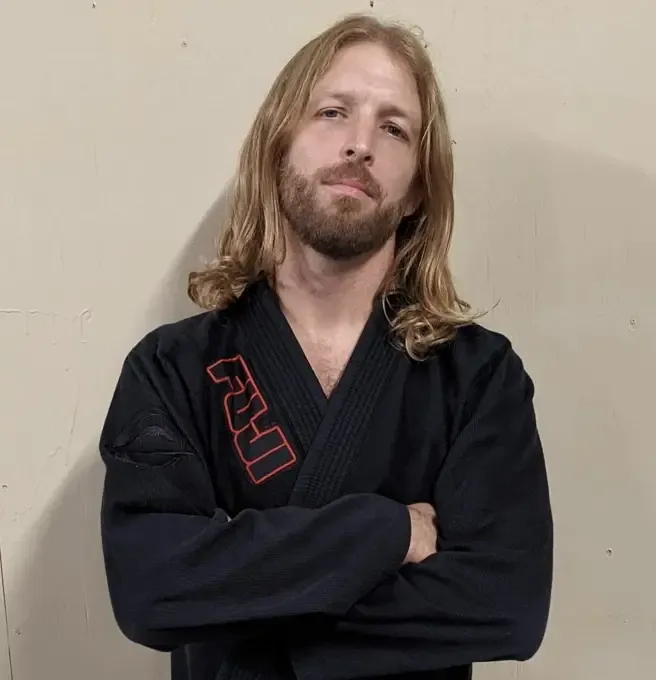
Founder and head instructor of Cast Iron Jiu-Jitsu, opened in 2014. A former 15-year union floor installer, he trains under Renato Tavares and competes in the masters black-belt featherweight division.
About the Gym
Cast Iron Jiu-Jitsu is an independent, jiu-jitsu-first academy in the northeast Kansas City metro, about fifteen minutes from the airport. Coach Josh opened it in 2014—going on twelve years—after coming up through taekwondo, high-school wrestling, boxing, and MMA before settling on jiu-jitsu, which he started in 2006. He founded the gym to fill a gap: at the time, there were no stand-alone jiu-jitsu gyms north of the river in Kansas City; the only straight jiu-jitsu school he knew of, KC BJJ, sat south of it, and everywhere else was "in the back of a karate studio, in someone's basement." His mission, then and now, is simply to spread the art.
Josh trains under Renato Tavares (Vero Beach, FL), collaborating two to three times a year, and competes regularly—he went to the Pans in March in the masters black-belt featherweight division. (Per the gym's site, Josh is a third-degree black belt under the Renato Tavares Association; he founded the gym in 2014.) The academy runs adult gi and no-gi, a kids and teen program, and a standing women-only class, and it's grown from three members in Excelsior Springs to a peak of around 107—a deliberately slow climb Josh is proud of, on the theory that a gym should grow only as fast as the quality of the jiu-jitsu can hold.
📍 Address: 6603B Royal St, Pleasant Valley, MO 64068 (greater Kansas City metro)
📞 Phone: (816) 520-1764
Summary
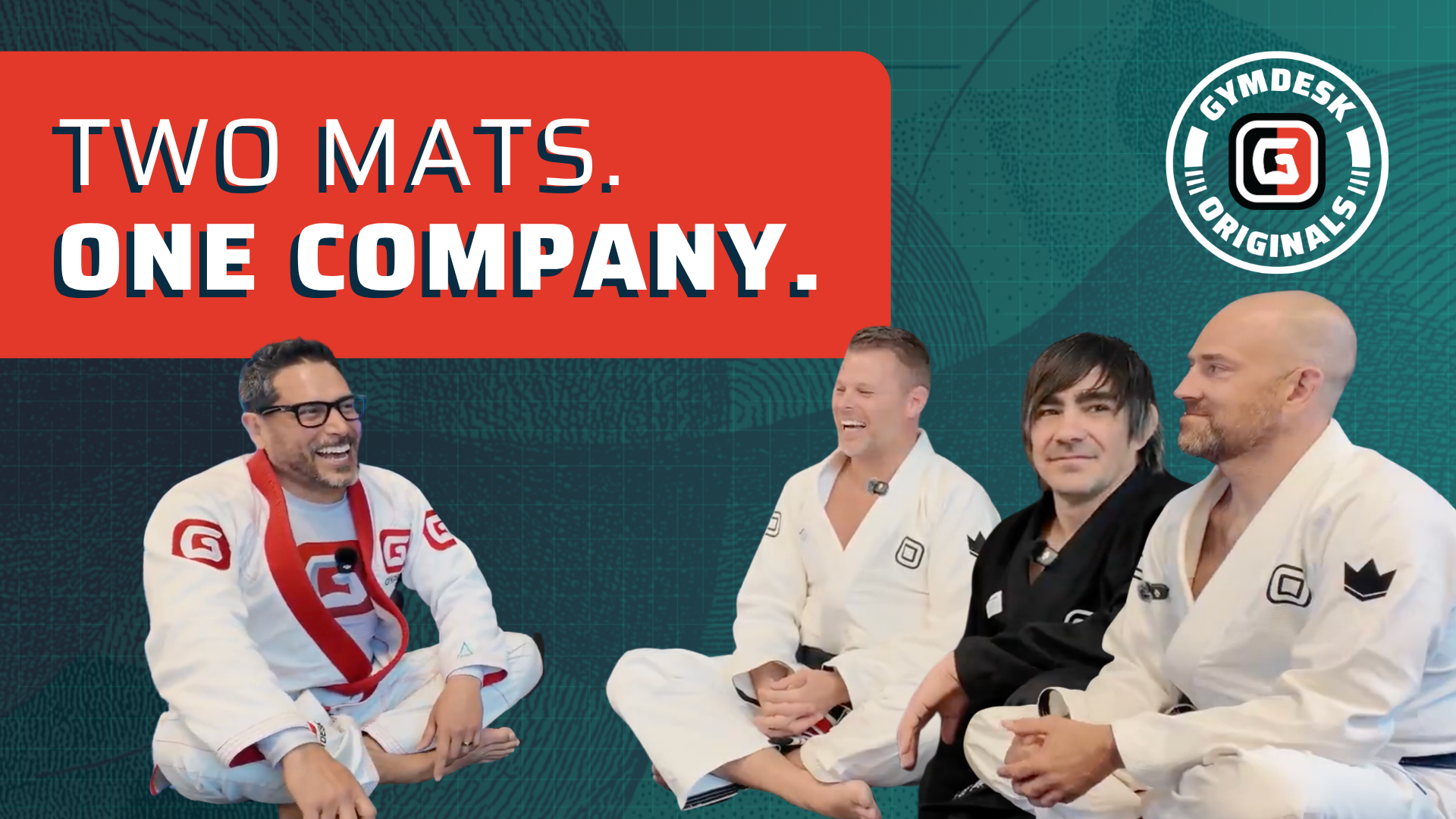
This is the episode that explains the whole series. Years ago, when Alex was a new CEO just visiting customers to hear how they were doing, he stopped by a Kansas City jiu-jitsu gym and got to talking with the owner while the man cleaned his mats. Coach Josh's reason for doing what he did—"I just want to spread jiu-jitsu"—stuck with Alex so completely that, six or seven visits later, he asked if he could record it. That was the seed of Gymdesk Originals, now 50-plus interviews deep.
Josh's own story is a slow-burn the same way the series was. He spent fifteen years as a union floor installer, training jiu-jitsu after work—off the clock at 3:30, a nap, then on the mat until 9:30, up at 5 to do it again—because those two hours were the one part of the day his boss couldn't call him.
He came up through wrestling, boxing, and MMA before jiu-jitsu hooked him on the one thing he didn't expect: how hard it actually was. Laid off from his trade, he took two gym offers at once, sold his tools after a year, and opened what would become Cast Iron, starting with three people in Excelsior Springs because there was nowhere north of the river to train straight, high-level jiu-jitsu.
Twelve years later, sitting across from Alex, Josh lays out a philosophy of patient, quality-first growth—"focus on the details and the quality of the jiu-jitsu, everything else will come"—a "friendly, competitive" culture where the pros sharpen the hobbyists, and an expansion plan that's almost boringly disciplined: grow to a size, open a second gym one town over, and walk in twenty or thirty members so the bills are paid on day one.
He also explains, plainly, when a gym actually needs software: he ran everything on paper until he was around forty members and started "losing money by not keeping track of people." That's when he switched to martial-arts-specific software.
What They Told Us
Alex Cuevas took the Gymdesk Originals camera to Cast Iron Jiu-Jitsu, a Kansas City gym about fifteen minutes from the airport, north of the river. He'd visited before, as CEO checking on a customer, and a sidebar with the owner—Coach Josh Littleton, twelve years and going on his craft—planted the seed for the whole interview series. This time the cameras were rolling. What came back was a plain-spoken argument for building a gym slowly, on quality, and for the love of the thing itself.
A place that just does jiu-jitsu
When Josh opened in 2014, there were no stand-alone jiu-jitsu gyms in Kansas City north of the river. The art lived in the back of a karate studio, in someone's basement, or under an MMA banner that pulled you in with striking and slipped grappling in later. He wanted the opposite of the bait-and-switch—a school that said plainly what it was.
"So I wanted to offer straight, higher-level jiu-jitsu for the purpose of jiu-jitsu. Like, we will help MMA fighters, but this is about jiu-jitsu first."
—Josh Littleton, Head Instructor and Founder, Cast Iron Jiu-Jitsu
Hooked by how hard it was
Josh came to the art sideways—taekwondo as a kid, wrestling in high school, boxing in his early twenties, then MMA, which he'd been promised would let him skip grappling entirely. As a smaller guy, he found out that promise was empty. What kept him wasn't that jiu-jitsu was easy. It was that it wasn't.
"Originally, I didn't know that it was so hard. And that's really what the draw was for me. I thought it was just a bunch of dumb tricks to get around hard work. And then it's like, oh, no, this really is hard work. I want to do more."
—Josh Littleton, Head Instructor and Founder, Cast Iron Jiu-Jitsu
The two hours his boss couldn't reach him
Before the gym, Josh spent fifteen years as a union floor installer, training around the job. He describes the schedule matter-of-factly, but it's the shape of a life built around one thing—the daily grind that came right as cell phones took over, carving out the only stretch of the day nobody could call him.
"I'd get off work at 3.30, take an hour nap, and then train pretty much until, like, 9, 9.30 at night, and then wake up at 5 in the morning and do it all over again."
—Josh Littleton, Head Instructor and Founder, Cast Iron Jiu-Jitsu
Why the pros should train with everyone
Josh's tagline has always been "friendly, competitive." He wants people to walk in and meet friendly faces, then have the option to compete as hard as they want. He rejects both the pure-competition gym and the fearful hobbyist gym—and his reason for mixing the two is an economic one most owners never say out loud.
"if everybody's a pro and everybody's selling tickets, there's nobody to buy the tickets. … So why would you not have the pros work with the regular people, help the regular people to get as good as they can get, and have someone to sell tickets to."
—Josh Littleton, Head Instructor and Founder, Cast Iron Jiu-Jitsu
Quality first, or you get a McDojo
Asked what advice he'd pass to his younger self opening a gym, Josh didn't reach for a marketing tactic. He named the thing he thinks quietly separates a real school from a full one—and he was honest that chasing headcount over craft is the fast road to a name every serious grappler knows.
"Focus on the details and focus on the quality of the jiu-jitsu. Everything else will come. … If you just focus on the business, you can get a lot of people in, but if the jiu-jitsu doesn't hold up, now you just have the classic McDojo thing."
—Josh Littleton, Head Instructor and Founder, Cast Iron Jiu-Jitsu
Opening a second gym without starting from zero
Twelve years in, having peaked once or twice around 107 members, Josh has a patient plan for what's next. The next town up is Kearney, and he won't open there and pray it fills. His model is to seed the second location with members from the first, so the rent is covered before the doors open.
"grow to a certain size and then open another gym somewhat nearby and send 20 members with them. So there's already a certain amount of bills paid day one, walking in the door."
—Josh Littleton, Head Instructor and Founder, Cast Iron Jiu-Jitsu
Read the full transcript
Lightly edited for readability. Speaker labels are omitted because the source recording is not diarised; quotes attributed elsewhere on this page were verified against context.
Music playing Music playing Behind every gym, there's a story, a mission, a spark of passion that started it all. This is Gymdesk Original. Real owners, real struggles, and the communities they've built from the ground up. What's up everybody? I'm here in Kansas City, very close to the airport. And today's episode, kind of a special episode. The reason is, one of the first customers that I visited when I started here as CEO was Cast Iron Jiu-Ji-Ji-Ji-Ji-Ji. And my intention was only just to say hello, see how customers are doing.
Done that for years now, running companies and just connecting with customers. And the story that I got, just like the sidebar conversation about what was inspiring Coach Josh and why he was doing what he was doing was so interesting. I just wished, I'm like, oh man, I really wish I had a camera on him to record it and share it with the world because I thought it was amazing in terms of what his motivation is in general for the business. And just the inspiration behind his jiu-jitsu and all the cool things he was talking about.
And, you know, that little seed planted in my head. And it wasn't until, you know, probably another three or four visits later that I became less bashful and I asked if I could record. And here we are. So we're now on season two of Jim Desk Originals. And I go back to the seed that was planted long ago and do a formal interview with Coach Josh. So I'm really excited about that today. Let's go check him out. Thanks for having me back again. Good to see you.
It's been a little over a year now since I was first here. And I don't think you know how much you inspired me that one visit that we had. I'm glad to hear that. Yeah, it was great. Now I'll tell you, I was just talking about it outside right before I walked in, but I have been, you know, I had been doing that for a long time. I was just visiting customers and a lot of different software companies that I've been a part of. And mostly it's just to hear how we're doing, what can we do better, that kind of thing.
And you planted a seed with me. I don't know that you intentionally did it. But when you were cleaning and you were just telling me about your passion for jiu-jitsu and why you do what you do and how important it was and sort of your mission was just to spread jiu-jitsu. And I was like, gosh, I wish I had that recorded because it was one of these things that just I thought about it over and over. And then I was still kind of bashful to, like, ask, you know, for that kind of thing.
And eventually, like, probably six or seven visits later, I asked somebody, do you mind if I record this? And here we are, season two now. And I think we have over 50 interviews that I've done now with customers. And so it's going really well. So I want to thank you for the idea just by being you. Thank you. That's fantastic. I'm glad to hear that. Yeah. And so cast iron jiu-jitsu right here in Kansas City, pretty close to the airport. Yep. About 15 minutes. Pretty close.
About 15 minutes. And you've been around for, what, 10 years? 12 now. 12. Yep. Going on 12. 2014. Yeah. And we had this conversation when I first arrived. But maybe we could talk about your martial art history. Because I think you've had a lot of different things that you've done in the past. You've settled on jiu-jitsu as being your... Yeah. I think, again, everybody did taekwondo in the late 80s, early 90s. That was, you know, the early stages. You learned how to tie your belt. You learned how to stand up straight.
Say yes or no, sir. And, you know, that's pretty neat. But then, you know, I get a little bit older. And, you know, then wrestling in high school. And a little bit older yet. Boxed in my early 20s. That seemed like a great idea at the time. And then MMA, of course, was the next natural step. Because I was promised I would not have to do jiu-jitsu. And then, well, then I found out I'm actually not that big. So I learned jiu-jitsu is actually pretty necessary.
As far as, like, putting all the pieces together. And, you know, making the MMA thing actually hit. And then I just kind of found a passion with jiu-jitsu. So MMA was your gateway to jiu-jitsu. Because you realized you needed that as a smaller guy. Kind of the traditional story, right? Yeah. And I was absolutely promised I would not have to do it. Because the boxing and wrestling experience, I was just going to beat up jiu-jitsu guys. That's literally what I was promised. Yeah. And so then you get a taste for it.
And you're like, oh, I really like this more than the other things that I'm doing, right? Yeah. Originally, I didn't know that it was so hard. And that's really what the draw was for me. I thought it was just a bunch of dumb tricks to get around hard work. And then it's like, oh, no, this really is hard work. I want to do more. So it kind of led right to it. Yeah. And so your journey starts how long ago when you got into jiu-jitsu? 2006.
Okay. 20 years ago. Yep. Gone in a flash. So eight years into that journey, you decided to open up Cast Iron, yeah? Yep. I was laid off at work at the time, and I had two different offers to open up gyms, and I took them both. Okay. And I sold my tools after one year and changed trades entirely. Okay. And so what kind of work were you doing before? Before I was a union floor installer for 15 years. Okay. Wow. So, yeah. So then you were doing jiu-jitsu, like, after work or in the morning or whatever.
Yeah, I'd get off work at 3.30, take an hour nap, and then train pretty much until, like, 9, 9.30 at night, and then wake up at 5 in the morning and do it all over again. Yeah. So obviously a passion for you at that time. What did you feel like it did for you at that, you know, time? It actually started out, it was right at, you know, when cell phones really became a big thing, and it was two hours out of the day where my boss could not call me.
It was my escape from my phone. Yeah. So you had your, like, mental reset time, right? Yeah. And honestly, like, I missed, originally I missed high school wrestling. I liked the camaraderie, and I liked the study, and I liked, you know, trying to get better at something and having a little bit of teamwork, but still the individual results. And I feel like that transferred very neatly to jiu-jitsu. It did not so much for MMA and boxing. There were certain elements of it, but the brain damage is pretty real.
With strikes? Yeah. Yeah. I'm too old to get hit, and I'm 44. I'm not going back to that. Yeah. Yeah. So being that you've had this place for 12 years, I'm sure you've seen, earlier we saw kids in here, and you've had young children that have matured and grown up in your gym. Yeah. How's that been? It's very humbling. Like, I feel very old. It's pretty neat, though. It's like getting to see, like, you know, the difference between a kid who grew up doing this and someone who just discovered it at the same age is fascinating.
Seeing, like, you know, the way that they represent the art and what we do and the way they solve problems is very interesting to me. Yeah. Well, you know, maybe we can just go a little deeper on the thing I brought up earlier in terms of what I asked you, like, you know, it was alluding to, like, the mission, you know, why you do what you do, and you basically said, I just want to spread jiu-jitsu. Exactly. Yeah, and, like, tell us more. Why? Well, I got the job offer, actually.
This was in Excelsior Springs, and at the time there were no stand-alone jiu-jitsu gyms in Kansas City. Not north of the river. There was, where I came from, KCBJJ, south of the river, and that was it. Every place before that was in the back of a karate studio, in the back of a karate maga studio, in someone's basement, or something like that. There was not, like, a place where you go, like, this is the jiu-jitsu school, or, you know, an MMA school that also does jiu-jitsu, and they pull you in by saying you're going to do MMA, and then you end up doing jiu-jitsu anyway.
Like, just say you're doing jiu-jitsu and be good at that. So I wanted to offer straight, higher-level jiu-jitsu for the purpose of jiu-jitsu. Like, we will help MMA fighters, but this is about jiu-jitsu first. And that's kind of the mission that I've continued from my instructor, KCBJJ, and, you know, my current instructor, Hinato, also, same thing. It's like he's got amazing jiu-jitsu for the purpose of teaching good jiu-jitsu, and I want to spread that. And where's your instructor now? Right now, I train under Hinato Tavares.
He's in Vero Beach. Okay. In Florida. Oh, in Florida. Okay. Do you get out there much? Yep. Yeah, I try to make it. He comes up here about two, three times a year, and I try to make it down there once or twice a year, and we collaborate a lot, and really, really high-level people, really good people. Nice. Nice. And I think I saw you on either on Instagram or Facebook somewhere, and you had just competed recently, right? Yep. Yep. Went to the PANS in March.
And the PANS are in, was it Florida? Also in Florida, yeah. Yeah, that's right. I just missed it. I think I was there like one day before, and I missed it. I was like, man, two years in a row, I haven't been able to go. But, yeah, how was that experience? It's fantastic. You know, it's like, it's, once again, it's humbling, because, you know, in the master's divisions, you're dealing with people who grew up doing this, and they're not out of shape. So, you know, you get to deal with legends every time you go, and it's pretty cool just to be there.
You know, like, 50% of the people lose their first match. I try to make it, but, you know, this year I lost my first match, but still, I learned so much from the experience and got to see what the best of the best do and got to experience being in that division, and it's pretty cool just to experience. Yeah. You know, one of the things that I've noticed, there's a lot of schools out there that they don't consider themselves to be competition gyms, but yet they compete.
Yeah. You know, so there's like this element of like, well, we're not pushing people. And kind of, where do you guys fall on that spectrum? I actually, my tagline has always been friendly, competitive jiu-jitsu. I want people to walk in the, walk in the room and meet friendly people, and I want them to also have the option of being as competitive as they want to be. And a lot of that is, you think about it, if, say like we have a pro show coming up here in about a month or so, and if everybody's a pro and everybody's selling tickets, there's nobody to buy the tickets.
Yeah. So why would you not have the pros work with the regular people, help the regular people to get as good as they can get, and have someone to sell tickets to and say, hey, I train with this guy and bring all your work buddies. And, you know, then you're, it's a, what's the word I'm looking for, like a community in that way. You know, like, of course we have our competitors. We have our guys that we know can beat a lot of people, and we want to watch.
We're just curious. So I think that it's a better community in that way, rather than having a strict competition gym where we're just selling tickets to the masses, or, you know, having a strict hobbyist gym where we're scared of competitors, and we talk about them like they're caged animals. And, you know, it teaches you to find a balance between the two. Yeah. And is your opinion that going to a competition is a good way to validate, you know, whether your skills are there, you know? You definitely have the closest thing you can get to an even match.
You know, I'm looking for other black belts between 40 and 45 years old, featherweight. That's a fairly small group of people. You know, as far as people who are willing to compete and have the time and ability to get to those competitions, it's, you know, finding that division is hard to do. Yeah. So you're not just going to find a bunch of them in this gym. You can't find, you know, there's a few of them in Kansas City peppered around here and there, and most of them are also running gyms.
They're busy. So being at it for 12 years and you guys thinking about opening a gym, you know, what advice would you give your old self? Wow. Oh, that's a good question. Honestly, I was given the advice early on that I would probably still pass on is focus on the details and focus on the quality of the jiu-jitsu. Everything else will come. That's something I think that a lot of times, like if you just focus on the business, you can get a lot of people in, but if the jiu-jitsu doesn't hold up, now you just have the classic McDojo thing.
Yeah. You know, so you want to have a, you know, a good gym with good quality jiu-jitsu and it grows as fast as it grows. Yeah. And I hear, you know, you see a lot of the McDojo, you know, Instagram reels and making fun of that and all. How do you, how do gyms fall into the trap of becoming a McDojo? Or I don't even know if I'd call it a trap. It just, you know. Yeah. It sounds like a good idea at the time, you know, like the classic karate guys have done it for years and they know how to make money at it and people, you know, it's not like, it's not like a bad thing because it's for the people who can't handle anything that's too rough, you know, so it's for a certain group of people, a certain demographic actually want that because they can't handle serious jiu-jitsu.
Yeah. You know, and I feel like once again, finding that balance of having a competitor who knows how to not hurt you while still, you know, while still being competitive in his division. I just saw a thing the other day saying like, I think Hodge or Gracie or someone like that had, I think him and Fabrizio Verdum had been training with white belts leading up to their championships and it's like, yeah, you can train with anybody as long as you know how to get mutual benefit.
And I think that's important is just getting that mutual benefit out of the training. You know, no matter who you're training with, you know, I shouldn't have to go and seek out other black belts only for mutual benefit training. I should be able to train with any of these guys in here and get good training with them. Yeah. I do remember that. There was something about the white belt. I don't remember exactly, was it like, cause they're unpredictable and he just wanted to test, you know, I was, I can't remember exactly what- Usually they want to see what they can do.
You know, if a white belt's going with another white belt, they want to see if they can beat that other white belt, they're not going to try it on a purple belt. Yeah. Unless they're, nevermind. Cool. So what's next? I mean, as you think about the business in the next like five years. Um, I'm looking at, you know, slow, steady growth and my personal business plan is to grow to a certain size and then open another gym somewhat nearby and send 20 members with them. So there's already a certain amount of bills paid day one, walking in the door.
It's like, you're not starting from scratch. Yeah. So almost like having a, um, would you think of it like, well, my main gym here is going to subsidize a smaller one until it gets up to a certain amount of volume or? I would say like send 20 guys with them. Okay. So right away. Like next road up the town is Kearney. I'll probably open one in Kearney and I'll send 20, 30 guys with them. And hopefully I'll be to a point now at that stage to where I can burn 20 or 30 guys, not, not lose my shirt and everybody wins.
That's the goal. Yeah. We'll see how that works, but. Yeah. Sounds good. And then we could just transition to, um, you know, Gymdesk. You've been with us for a while now. Yeah. And just curious, you know, how did you find Gymdesk and, you know, get started? I had a friend of mine, Josh Smith actually recommended from square one jujitsu. Great guy. Yeah. Saw him yesterday. And, uh, you know, he recommended it and I've, I messed with a few different gym softwares and I was very small at the time and I didn't have the spare money to put into it.
So I just did everything on paper and I took my time growing and I hit a certain point where I was losing money by not keeping track of people. So I knew that was when I needed to switch to software. It's not a thing that I needed to do with five, 10 members. You know, I started out with three people in Excelsior Springs and grew from there. And I think that we've peaked, I think once or twice we've hit 107. So you know, you hit a certain point and it's like, I think over about 40 members and it's like, okay, I need software to help me to keep track of this stuff.
And yeah, you know, automatic billing, things like that, things that definitely make it an easier job. Yeah. Booking, uh, waivers, right? Yeah. Keeping track of things becomes very hairy. Yeah. Um, and, uh, have you utilized like the marketing automations that are in the product yet? A little bit. Not too much. I'm very, I'm very old mannish about technology. Yeah. So I take my time and I don't get in too much of a hurry, but when I learned how something works and I try to make it part of my regular routine.
Yeah. Well, maybe we can, uh, you know, drill into that. One of the cool things that we put in to the product was on the marketing automations allow you to take, when someone comes in and they're interested, it'll automatically do things for you and follow like a predetermined number of steps. Um, and then if they decide to sign up, it bumps out of it. So it's kind of like having someone in your front desk, right? Um, we came out with some templates as well. We had our marketing team put together.
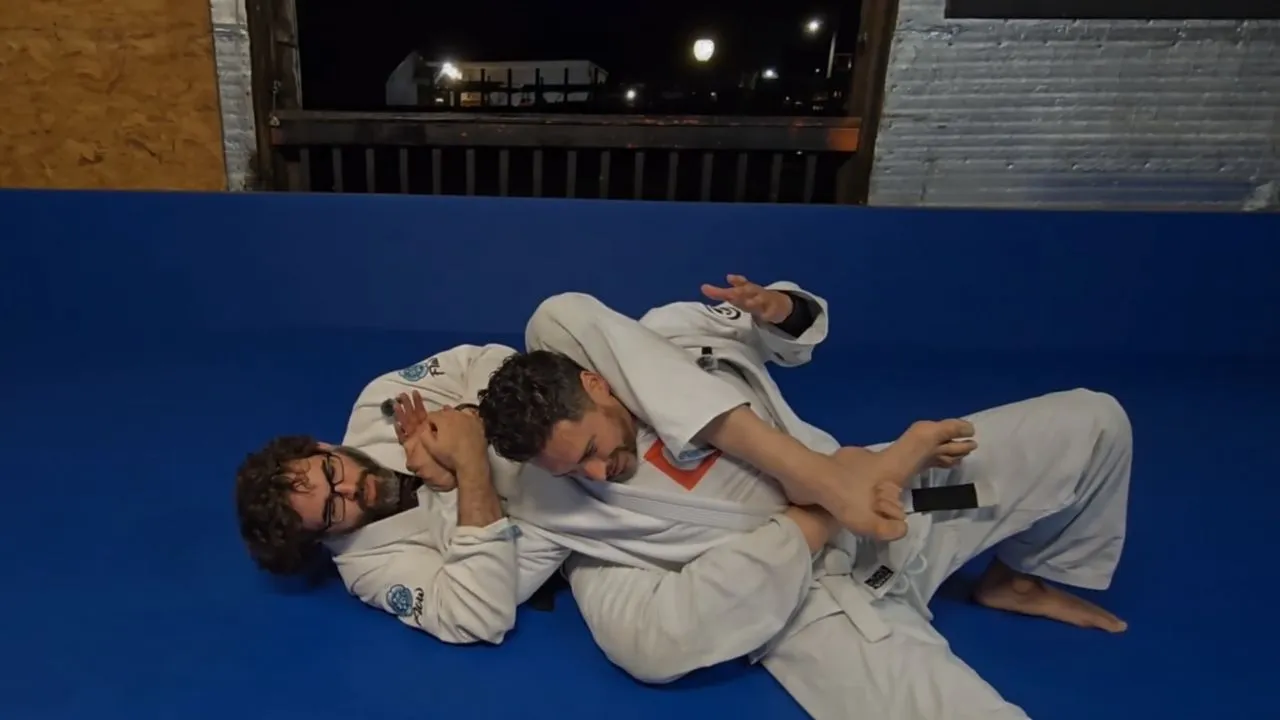
Hey, this is what I would do if I was running a gym. So those are in there and available now if you want to take a look, but happy to walk you through those. I like that a lot. Thank you. Yeah. Cool. We'll be here in a few minutes. It's an adult class, yeah? Yep. Yeah. And, um, what kind of class are we doing today? So, Wednesday is, I call it fundamentals, but it's usually just whatever we're working on and if we're doing something crazy then we strip it down to something that's reasonable.
Yeah. And this week we're working deep half. We work the same thing Sunday through Thursday and this is that last, last big push on half guard this week. So. Half, perfect for my injured knee. Yep. So, busted this last week. I was talking about that earlier. And last week I was a mess. Not only my knee was messed up, my ear was all black from bruise. My nose. Oh my goodness. Yeah. So I went through the ringer. So I've been doing all kinds of other stuff too.
Like when I visited Muay Thai place, I do that. Or capoeira. So yeah, I'm having a good time. Um, and, uh, I guess just talking about the schedule real quick. I noticed you have kids class. We just saw one. And you also have a women's only class, right? Yep. So how's that going? I'm pretty good. There's only women at it. Yeah. And I've seen that happen more, or more, more gyms are now putting, uh, those programs in place because a lot of times women, you know, this is, this was what explained to me.
And I didn't click. Yeah. So someone said, you know, a woman going with the man, average delta is like 50 pounds probably, maybe more. And it's like me going with a 250 pound guy. That's a big difference. Yeah. Yeah. You know, so like that opened my mind to think, oh yeah, that makes sense. Why you'd want to have a women's only class so they're comfortable and all that. There's also some very specific differences in the way that men and women move. Like their center of gravity is slightly different because of the hips.
They tend to actually be a little bit better with the hand fight. They have some really good, tricky hand fighting things. They just solve problems differently than a man would because they have a different set of tools. Yeah. Right. And it, um, I feel like it's a fascinating way to get a mutual benefit out of learning. And I actually copy a lot of things from women's game because I'm a smaller dude. And it's like, well, we both got to deal with big guys. Yeah. So yeah, there's, there's a lot to learn there.
Okay. Well, um, thanks again for having me. I appreciate it. Thank you. You did me the favor of when I was here, you actually had the cameras recording. You gave me some footage. Maybe we'll splice that in there where you were coaching and telling me to do this or that. And that, you know, once again, that was another moment of inspiration. Like, oh yeah. Like the little coaching was a little bump in my like excitement for the art. So yeah, thank you for that. I didn't ask for that.
You did it for me and I'm very grateful. Awesome, man. Glad to hear that. Cool. All right. Thanks so much. Thank you. Okay. So I just got out of the class over here at cast iron jujitsu in Kansas city. I'm a bit tired. My knee held up. So that's good. Still, it's a little swollen. Um, it's a little sore, but, um, I had a great time. I'll tell you what stands out for me is, uh, let me just talking about specifically the class for a second.
Um, I don't really use my legs that much when I'm doing a pass. Um, so being able to drill it in a very calm, like we only did like, uh, two variations of the same thing, but for a long time, we were doing it for like 10 to 15 minutes. So much that I felt like I actually, I'm going to remember it, which is pretty cool to spend a lot of time. Only just done a few moves and repeating and repeating and repeating. There wasn't, didn't feel like I was pressure.
So I was able to kind of calm down and go through it. So that was pretty cool. I like that. So I learned a couple of passes that I'll try out soon. And, um, the other thing that stands out is, man, you know, Coach Josh is just a very passionate person when it comes to Jiu Jitsu. He's dedicated his life. He's been here for 12 years. Um, been practicing Jiu Jitsu for 20. And like he's, he said, and we say in the episode here, he just wants to spread Jiu Jitsu and what an amazing mission.
And I feel like, Hey, guess what? I kind of have the same mission here, uh, at Gymdesk. I want to enable people to spread their passion. And for him, it's Jiu Jitsu. I have a shared passion in Jiu Jitsu as well. Obviously I'm at a much different level. Um, but, uh, I'm definitely into it. You know, my family's into it. My kids, um, I'm getting other people to train here, uh, in Jiu Jitsu as well. Within the company, which is cool because we're all kind of really diving into the community.
So it's a good time, but to have that long, you know, think about how much time we have in this world. And if you're around for, if you're lucky a hundred and you do 20 years, that's 20% of your life dedicated to something. Um, which is pretty cool. So, uh, I had a great time. Uh, hope to come back here soon. Well, I think we'll be back in about three months. I'll definitely stop by and say hello. All right, guys. Thanks. Bye.