How a Filmmaker and Brown Belt Brought Carlson Gracie Pressure to Hackney

Starring
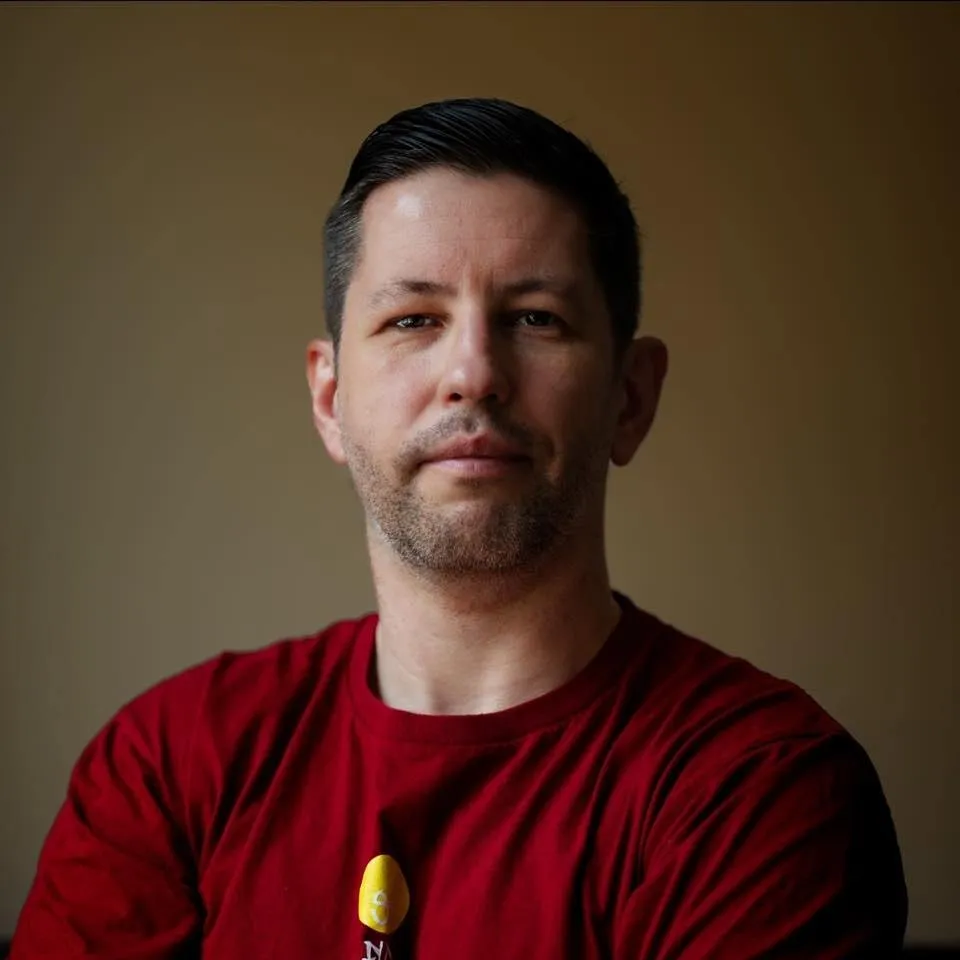
Konrad is a Brazilian Jiu-Jitsu brown belt under Wilson Junior who trains six days a week and teaches no-gi twice weekly at Carlson Gracie Hackney. He is also a Polish-born film director whose feature debut *Fighter* (2019) is available on Netflix.
About the Gym
Carlson Gracie Hackney is a Brazilian Jiu-Jitsu academy located at Unit 9, 1b Darnley Road in Hackney, East London. The gym operates as part of the Carlson Gracie Team UK network, founded over 20 years ago by Wilson Junior in Hammersmith. Head Coach Nelson Sanchez, a two-time European Champion and Abu Dhabi Grand Slam runner-up, leads the Hackney location alongside instructors Fabrizio Comelli, Junior Berti, Pedro Izidio, and Dhruv Datta. The academy follows the Carlson Gracie tradition of pressure-based, fundamental jiu-jitsu.
The gym offers kids classes, beginner fundamentals, and intermediate/advanced sessions, serving students of all ages and experience levels. Approximately two years old at the time of filming, the academy had recently promoted its first "homemade" blue belts. The club welcomes newcomers with a free trial class and emphasizes finding the right training environment where students feel comfortable and motivated to put in consistent work.
📍 Unit 9, 1b Darnley Road, London, E9 6QH
📞 07754 079 208
Summary
This episode follows Alex's early-morning double-decker bus ride across London to Carlson Gracie Hackney, a two-year-old satellite academy of the Carlson Gracie London network. It features Konrad, a brown belt who trains six days a week and teaches nogi twice weekly at the Hackney location. A former Aikido black belt turned BJJ practitioner, Konrad also works as a film director with a feature film (Fighter) on Netflix.
It captures a small pre-Christmas no-gi class and Konrad's perspective on how gym management systems give coaches critical attendance data for tracking student progress and informing belt promotions. He emphasizes that the best systems stay invisible to students while providing coaches with the information they need to run a more effective academy.
What They Told Us
Alex Cuevas caught a pre-dawn double-decker across London to make a 7 a.m. no-gi class at Carlson Gracie Hackney, where Konrad Piotrowski coaches. Konrad is a Polish-born brown belt and a working film director, and he talks about jiu-jitsu the way he talks about filmmaking—as a long game you never finish, sustained by the people who show up for reasons that have nothing to do with winning. What follows is his account of a complete martial art, the discipline behind it, and why the hobbyists on the mat matter more than the champions.
A whole group of things
Konrad had just put Alex through a no-gi session, and he was quick to place it inside a bigger picture. He resists treating any single format as the whole of the art, and trains gi, no-gi, and MMA as parts of one thing rather than separate disciplines. It is the lens he brings to everything else in the conversation.
"No-gi is a part of jiu-jitsu. I'm seeing jiu-jitsu as a whole group of things. Gi, no-gi, MMA."
—Konrad Piotrowski, No-Gi Coach, Carlson Gracie Hackney
The decision to stay
Konrad came to jiu-jitsu from Aikido, holding a black belt and, by his own account, some confidence he was about to lose. His first-ever spar was against Dickey Martin, a multiple-time Masters champion, who—in Konrad's words—cleared the floor with him. Sitting in the changing room afterward, he weighed walking away against staying.
"I have two ways. Way number one, I will forgot what just happened. I will go home. Back to my life. I will be respecting a martial art teacher. Or, I joined them. As you see, I joined them."
—Konrad Piotrowski, No-Gi Coach, Carlson Gracie Hackney
The long game
Ask him about the state of the sport and he lands on patience. The biggest problem he sees in newer students is not talent but time horizon—a generation trained to expect fast feedback meeting an art that pays out over a decade or more. Konrad, a brown belt after years of steady work, treats that slow return as the point rather than the obstacle.
"The biggest problem is that the young generation don't want to do things which are hard. So, if you see the way they've grown, they avoid hard work and longer time of feedback from hard work. So, they want to do something and have feedback and award very fast."
—Konrad Piotrowski, No-Gi Coach, Carlson Gracie Hackney
The filmmaker on the mat
Jiu-jitsu is not Konrad's only craft. He writes and directs films—his feature "Fighter" is on Netflix—and he frames the years of unglamorous groundwork before a film gets made in the same terms as staying on the mat: always prepared, always polishing, ready for the one time someone finally says yes.
"I'm a film director and writer, so I'm writing scripts and try to make them into the picture."
—Konrad Piotrowski, No-Gi Coach, Carlson Gracie Hackney
Who keeps the lights on
For all his talk of champions, Konrad is clear about who actually sustains a gym. Only a handful of people train purely to compete; everyone else comes for fitness, fun, or a sense of safety—and it is those members, he argues, who make the professional side of the sport possible at all.
"To make the sport push and evolve, we need these amateurs, we need these hobbyists. They're paying the bills for the gyms. If they were not there, there would be no sport Jiu Jitsu."
—Konrad Piotrowski, No-Gi Coach, Carlson Gracie Hackney
Reading the room
As one of the senior members who helps run the mornings, Konrad signs new students in through Gymdesk and treats the attendance data as something quieter than a dashboard. It tells him who is really putting in the hours, so he can meet a student's progress with a coach's read instead of a guess—useful, he insists, only when it stays in the background.
"So for me, it's just source of information. So I can help students more because I know a little statistic and that's helpful always."
—Konrad Piotrowski, No-Gi Coach, Carlson Gracie Hackney
Read the full transcript
Lightly edited for readability. Speaker labels are omitted because the source recording is not diarised; quotes attributed elsewhere on this page were verified against context.
Music by Ben Thede Behind every gym, there's a story, a mission, a spark of passion that started it all. This is Gymdesk Originals. Real owners, real struggles, and the communities they've built from the ground up. Good morning. It's 6, 17 a.m. There we go. And I'm on top of one of those buses, the London buses, the double-deckers, heading to Carlson Gracie Hackney, 4, at 7 a.m., no-gi, jutsu. Can't wait. All right, well, here I am. I'm here a little early, so I guess I gotta get some, see if I can get some water and get ready to roll.
Look forward to it. Good morning. Good morning. Hi, I'm Alex. Hi, it's good to meet you, Alex. Nice to meet you. Thank you. Good signal. Good call. Okay, so I am here in Hackney at Carlson Gracie. Amazing class today. We did no-gi. Thank you very much. With, not professor. Just Conrad. Just regular Conrad. Just regular Conrad. Regular Conrad. And, you know, I would self-admit, I'm not the best at no-gi. I'm trying to get better. I've probably done it 12 times now, 13 times, so I can count the...
You did well. Yeah. No-gi is a part of jiu-jitsu. I'm seeing jiu-jitsu as a whole group of things. Gi, no-gi, MMA. Uh-huh. If you see an old version of jiu-jitsu, they were going to fight at the ring. It had to work. Yeah. So, what is happening in jiu-jitsu at the moment is that we become very proficient in beating people in jiu-jitsu. So, lots of techniques become focused on beating other jiu-jitsu person, not beating other person. It is good and bad at the same time. It has their constant pros like everything in life.
It's not bad. It's not bad at all. So, people who do it sports-orientated jiu-jitsu only, they are still proficient on the street. They are fit. They are technical. They know what they do. They will not do it beating ball on the road like people saying, "Oh, he will do it beating ball on the road." Never happened. I didn't see any video like that on the street, but I saw a lot of videos on the street that people doing well. So, for me, jiu-jitsu is all these three aspects and I'm doing all the three aspects.
So, I'm doing no gi and mostly here in Hackney. I'm doing gi in headquarter, Carson Gracie, London, which is in Hammersmith with my teacher, Wilson and other coaches there. And I used to do a little bit MMA as well, just to have a feeling what will happen if someone wants to punch you, how you control the distance, how you control things, how you put someone down because a little bit of wrestling and a little bit of judo, it is needed. It is needed. And we so specialised in the sport version that we start fighting from sitting on the ground, like, "Yeah." To be honest, for the sport aspect, let's do it.
But you need to put a little bit more on the classes. Not everyone is sport-oriented. Not everyone who is coming to your club want to do sport only. Some people want to just fit. Some people want to just have fun. Some other people, they just want to feel safe. And you have to explain that, especially the last group of people, that you will never be fully safe because anything can happen and it needs time to make your digits work. It's not two weeks' self-defense course and after that you're going to the street and you are saying, "Hey, it doesn't work this way." Yeah.
But, you know, there's a lot of things on the internet and people believe it. But back to the subject, yes, we are in Hackney Castle and Gracie. So, how long have you lived in London? I'm living in the UK. By the day, I'm Polish. I've come to this country like 20 years ago. On the first few years, I was just going all around the country. So, I've been from the north in Scotland, Birmingham. I'm back to London. And I'm in London since 2007, something like that.
Okay. I came to the UK in 2005. So, yeah. Now, 17 years, something around that. And then, did you discover Jiu Jitsu here? Yes. So, basically, I was an Aikido person. I've been in London Aikikai. I was teaching Aikido. I was learning then as well. I had my black belt from London Aikikai. And I've been asked to take some classes. And then, I went to Carson Gracie London. And I thought, I'll go there with my black belt and show them how it's done. But I was smart enough not to take this black belt with me.
I took normal white belts. Yeah, yeah. And my first session, my first sparring ever, I had with Dickey Martin, who is many times Master European Champion and twice World Masters Champion. So, this is the very first introduction to Jiu Jitsu. My first sparring ever. Round one. Round one. I'm going to show these fuckers how it's done. And Dickey Martin just cleared the floor with me. Yeah. So, I went to the changing room. I was speaking with some young lads who, till this day, beat me severely.
Yeah. And then, I sit there for a few minutes and I thought, I have two ways. Way number one, I will forgot what just happened. I will go home. Back to my life. I will be respecting a martial art teacher. Or, I joined them. As you see, I joined them. And I don't regret it. I enjoyed it very, very much. And, I add up some techniques from Aikido to Jiu Jitsu, which make people very, very unhappy. There's a strange thing, thinking about Aikido in Jiu Jitsu environments, that it's everything bullshit.
It's not. All setups are bullshit. They are really bad setups for the purpose of fighting. You mean in Aikido? In Aikido. Yeah, like the wrist thing and... Endings, the wrist locks, the couple of positions work perfectly in Jiu Jitsu environment. I had to tap many high belts and many high Jiu Jitsu people with techniques from Aikido with Jiu Jitsu setups. Oh, wow. Okay. So, this thing that you see in the Aikido when they grab your wrist, and everyone criticizes that's never going to happen. But what follows from it...
From it. But if we're going here, and I've got here, and I'm just going to take Potegayashi. Oh my God! That works. Yeah, it does work. So, Aikido has very bad setups. Yeah. But there is a couple of things which one we can adopt. And why not? But, as a general, Jiu Jitsu is much more practical. Yeah. And as we know, I love Jiu Jitsu and that's why I'm here. Yeah. And so... I've got better value in Jiu Jitsu. Are you... When you're in certain positions, does your Aikido mind, like, see an opportunity and you, like, switch gears?
Are you thinking, like... To be honest, it didn't happen for many years. For many years, anything that I had from Aikido, it was useless in Jiu Jitsu. Okay. Like, completely useless. And probably, if someone just moved to Jiu Jitsu from Aikido, that's what I would find. Useless. With time. When I've become much more proficient in Jiu Jitsu. Much better in Jiu Jitsu. I found that there are opportunities to use Aikido techniques. Okay. Because I create the setups to finish from Aikido. And I didn't have it done before.
There was no setups. So, if you related that to MMA, if you see Anderson Silva. On one of his fights, he started using Wing Chun techniques. He was doing these hands, things like that. Yeah. And everyone's saying, "Oh, he's doing Wing Chun." Now, he becomes so proficient in MMA that he can put this kind of things into where their opportunity happened. Yeah. So, if someone is very proficient in Jiu Jitsu and he wants to put something from outside, he can do it because he feel and see the opportunities.
Yeah. Creating the space. Creating the space. Yeah. To be able to... To put something a little bit from somewhere else. Yeah. That's how we evolve in anything. We bring something interesting from the other things. Yeah. So, and you can find many interesting stuff in other martial arts. Not Aikido only. Aikido is... Like I said, most of the setups just... No. No. Mm-hmm. But Aikido wasn't created as martial arts to fight. It was religion things. Mm-hmm. They just started to advertise it after Steven Segal as fighting martial arts and...
Right. That's where we are. And Aikido was mostly... Was it disarming when someone had a sword or something like that? It's hand-to-hand, sword-to-hand, sword-to-sword, stick-to-stick. Okay. Yeah. Not gonna put all the names from Aikido. We have enough for Aikido here. Yeah, yeah. Fair enough. So then, let's talk about... Carson Gracie. Well, before it's Carson Gracie, I'm just curious about the martial arts scene in general in London, since you've been here for a while. Have you seen it just flourish and start to grow and... So, there are phases, like in every martial art.
There was a big boom on Jiu Jitsu, especially, for some time. And there is lots of Jiu Jitsu Jews in London. Lots of them are very good. The instructors, you know, they're passionate about what they're doing. And they have my hard respect. Of course, there is a couple of ones which I would not recommend. I'm not gonna say which one. But as a general martial arts, it's growing. The biggest problem is that the young generation don't want to do things which are hard. So, if you see the way they've grown, they avoid hard work and longer time of feedback from hard work.
So, they want to do something and have feedback and award very fast. Mm-hmm. And Jiu Jitsu and most of the martial arts works this way that you start to feel that you are awarded for your hard work with time. 10 years, 15 years. It's a long time journey. Right. And when you've done this 15 years and you are black belt or something, you just realize that it's just black belt. You're still going to the club, still doing exactly the same as what you do in the brown, purple, blue, and you're still evolving.
And you see other black belts, you know, black belts longer than you even do in Jiu Jitsu. And you see how they move and you say, how we are the same belt. It's like, why? It's impossible. Yes. I just feel, you know, so small compared to these people. And these people have people like that who they know. Like, there never is the best person. There's always someone who can beat you. Yeah. That's beauty of Jiu Jitsu. Like Gordon Ryan, probably the best nogi person ever. But he has their holes and people try to develop and looking for sooner or later, someone will find it.
Yeah. There will be someone who beat Gordon Ryan if Gordon Ryan comes back to competition. And it's just natural. It's not good or bad. He's amazing. I'm like that compared to him. But, you know, you cannot win with age. You cannot win with other things. You cannot win with other things. You can be the best for short time and go. Yeah. And it's always someone… Ever evolving game. Yeah. The game never stops. Yeah. Yeah. Even after… And I've heard this from what you just said from other black belts who have said, "Oh, you know, I thought I'd get my black belt." But then you realize that you're still just in the beginning of the journey.
There's so much more to learn. It just never stops. Just to clear. I'm not black belt yet. I'm brown belt. Mm-hmm. For a couple of years already. And hopefully my teacher one day will think, "Ah, okay, he's here." So I'm not black belts. I'm not trying to put any glory on myself. Mm-hmm. I'm just doing it for a long time and I'm just enjoying it. Yeah. So tell me then more about Carlson Gracie. What are you guys known for in the area? So Carlson Gracie Huckney is quite a young club.
So the origin of the club is we all are from Carlson Gracie London, which is the headquarter of Carlson Gracie in the UK. Mm-hmm. And 20 something years ago, that's where Carlson Gracie brand start in this country with Wilson, who is my teacher. And a group of us, mostly Nelson and Fabrizio, they wanted to open their own gym in this area. So they found an opportunity to open it. And they asked me if I want to join them and help them with some classes. So I'm doing it twice a week in Harkney.
I'm teaching Nogi. Same time I'm practicing in Carlson Gracie London with my teacher. Like I said, we're always learning. There's always something to learn. And one day when we stop learning, that's when we're going back. Yeah. And this club is here like for three years. We have our first Bluebells, like homemade Bluebells. Yeah. We can go this way. Yeah. Some people, of course, doing Dries before they join us as well. We have a couple of them. But as a general, it's a very young club. And we're doing well.
And we just have fun. We're just doing what we love. Right. Nice. And have you had a chance to... Are you competing or did you used to compete? I used to compete. I'm competing occasionally. I'm mostly the London area and not very far away from London. I just don't want to travel anymore for competing only. Yeah. The reason why in my bracket is always one person. Yeah. Me and someone. I'm master four now. So you're similar age. You know how it is. You're going to the competition.
You sign up. There's like two people except you. You're going there and there's nobody. Yeah. And I had a few times this kind of thing. Yeah. So I just thought... I'm traveling a couple of hours just to go and back. Yeah. So what I can do is only to go into the biggest IBJF competitions like European or Masters European or World Masters and stuff like that. But on the other hand, to Masters Wars, you have to go to the US. Mm-hmm. It's a trip. Yeah. And I'm going to...
What I'm doing is... Locally, I'm still competing sometimes two times. Plus, whenever it's an opportunity that some teachers coming from outside Carson Blaise, you just have advertisement that they will be in some place. I'm just going to see. I'm going to join. I'm going to learn something new. Mm-hmm. Meet people. Shake their hands. And definitely learn something. Because there's no one good way. There's many good ways. It's like what they're saying for Jiu-Jitsu. Jiu-Jitsu is for everyone. Just not everyone is for Jiu-Jitsu. Mm-hmm. The same is with...
You see, Jiu-Jitsu, you have many styles of Jiu-Jitsu. You have people who are jumping like crazy. You have people like in Carson who are putting pressure. And you can find something for yourself. It's not good or bad. It's just something works for you. Right. Yep. Yeah. Now, a lot of folks that I talk to also, besides martial arts, they have a life outside. Sounds like you have... You do something else outside. I believe everyone has a life outside. I'm a filmmaker. Mm-hmm. I'm trying to make movies.
As you see, I'm not a very famous one because if I would be, you will know who I am. I'm a film director and writer, so I'm writing scripts and try to make them into the picture. My movie "Fighter" is on Netflix. I fixed this because I didn't watch it for some time because how often you can watch your own movie? Yeah. If someone watches their own work, it's crazy. It means that you have problems. If you want to watch once, forgetting. And this will be new.
Create something new. So your movie is right now on Netflix? Yes, it is. "Fighter". "Fighter", yes. "Fighter", let's link to that and make sure we put it out there. Yeah. And now I'm trying to push other projects. I'm in the middle of the conversations with some investors. Before you can go to the film set and do it, what is fun there is a couple of years grounding work, going with the idea, going with the script, talking to people. People ignore you. 99% of people say no.
Most of them remove your phone from their phone because they think they are Inouye. But one moment, one time someone says, "Okay, we can talk about it". And that's your chance. Yeah. And this chance can happen or not. And you can go with this chance with two ways only. Prepare or not prepare. Yeah. So like in Jiu Jitsu, you always want to be prepared. That's what I like in the other ways of Jiu Jitsu. That they wasn't preparing for one fight only. They were always prepared.
They were always polishing their skills. They were always in the training. Of course, if they had some big fights, they were putting some work for that. But in general, there was nothing like in MMA that happened that after the fight, you have a big break. And after that, maybe you went back to training or doing some little bit and then always come because we have a fight. The real martial artist is always polishing their sword. And I'm going with this idea. I'm doing Jiu Jitsu six times a week.
Six times a week? Yes. Wow. That's very dedicated. I found time for it. So I'm coming to Jiu Jitsu every morning here in London. And I'm just putting my time and hours there. So I have the rest of the day for my work and for my family. Because I used to do it on evenings and it didn't work. And the problem with evening is for me that when you are young, it's cool. But when you are at some age, you need a day for other things.
You need a day to complete, make your wife, lover, two lovers if you're happy. You have kids or you have work. You need to do something, prepare something outside of work. Do any charge at home and you never have time because you're never there. Because when you're going on evening, the whole day is gone. Yeah. When you do Jiu Jitsu in some ways in the morning, then you're going home, then you have to work, afternoon evening for yourself and your family. So it works for me.
It doesn't have to work for everyone, but the system works for me. That's why I'm able to do Jiu Jitsu six times a week. Right. Yeah, mornings, I think for a lot of people who, well, at least what I have seen, it would be the most, I don't have that opportunity where I live, but that seems to be the most convenient where it's least disruptive in the rest of your day. Yeah. You can do whatever you need to do, work, family. You know, you have to remember as well that this sport is not based on professionals.
The sport is based on people who come into the gym, who doing that for fun, who do that for layers, that all other reasons except sport. Yeah. The people who do it that purely for fighting and winning competitions, there's a small amount of people. Right. to the rest of them. But to make them be able to do it, we need all the other peoples. Right. To make the sport push and evolve, we need these amateurs, we need these hobbyists. They're paying the bills for the gyms.
If they were not there would be no sport Jiu Jitsu. Right. Because there is no money in Jiu Jitsu as a sport. There's only a few people who are doing money. They're selling instructors, they're selling tapes, videos, you know. That's the way they do money. They don't do money because they do it to competitions. They do it to competitions. They may be known in the community of Jiu Jitsu. And that's how they can sell the tapes. Right. So if we don't have all these people here who are not professionals, there will be no Jiu Jitsu.
Right. Not the way we know it, this way. Today class, we had a small class today because Christmas is coming. Most people are gone already and all of them doing it for fun. Caroline, she's competing a bit more, but the other two, they're just purely for enjoyment. Right. And you can see that they put lots of sweat and work inside the room. But competing for them is not a priority. Right. But people like them, they pay for everyone else to compete. Yeah, it makes sense. You got to keep the lights on.
Yeah. Yeah. It's an important part. If you don't have a gym, you cannot do Jiu Jitsu. Yeah. That's right. So what's been your experience? I know you're not necessarily running the spot, but you're part of the organization. So what's been your experience with Gymdesk? Definitely. In London, there's a management system, which I'm sometimes using because as one of the seniors, especially in the mornings, I'm helping always new guys to have them sign the waivers to do all these things. Everything is doing it now electronically, which makes it much easier.
Yeah. You don't have to go with the pants looking for papers. Yeah. Yeah. So you just go to them. Everyone has a mobile. I can scan the codes, go sign it. We're good. So I like this aspect of that. It's always had gyms to have control what's going on inside the gym. Like if you see gyms who don't use in management systems, the teacher mostly know the people. No doubt about that. But on the end, you want to see, okay, how often Caroline is coming to which classes?
And you have management system. All you can see is sign here. Very simple. You see that Caroline put hours and you see her progress on the mat and say, okay, she's doing that long time. Lots of hours. I see the progress. So all the rounds, oh, I'm here five years and I don't see the progress. Yeah, but you are once, twice a month. Yeah. I remember your face. So for me, it's just source of information. So I can help students more because I know a little statistic and that's helpful always.
But it has to be in the background. In my opinion, students don't need to think about it as an important part. Students, maybe they need to just put number and just go forward and forget about the system. And that's it. That's the only contact with this. Of course, payments and all the things set up for that. But less student think about it, better for you as a gym manager. That's information for you. And you have to learn how to work with it to make your gym works better and more sophisticated.
You can see that I have not enough students or I have, like, sometimes you say, oh, I have so many classes. Why I have no students? Because you have 20 members and 50 classes. What do you want? So people don't think about that. They just want to make students' life easier. But once you have management system, you straight away see the problems, gaps like that. Right. And you can say, okay, I have to reduce the hours, make the people coming. And if I will find more people, then I can introduce more hours or I need to think how to advertise my gym.
Because people thinking, for example, Hojo Reisi, Roger, whatever people call him, it's a big name, one of the biggest names in Jiu Jitsu. And everyone thinking, oh, it's easy for him to advertise the people coming. But he's not advertising himself to the people in Jiu Jitsu. He wants to advertise himself to people outside Jiu Jitsu. Right. That's the biggest challenge. Right. So how to advertise to someone who doesn't have idea what Jiu Jitsu is? To make it interesting to come, to put this white belt on his hips, to start doing Jiu Jitsu.
Because that's what we need in Jiu Jitsu. Because we have less and less white belts in general. Because like I said, people are avoiding hard work. Yeah. And things like that, I believe that management companies like Gymdesk can help with. Right. Looking for the way how to advertise our sport outside our community. Because we don't need advertising inside. People who are inside, they are already hooked. They already watch some YouTubes. They already know who is now. They already know where is someone. What Gordon Ryan eat for breakfasts.
And John Danaher and his favorite positions. All of these things, they know it. But how to make people who are outside making, I want to try this Jitsu thing. So there's many ways. Internet is a very important part. But the most important part is good feedback from your students, in my opinion. And they can always bring more students. They can always say, "John, John, I'm doing this Jitsu for two years. You should try it's fun." And John is coming. And things like that are the same important.
But you cannot rely only on one way. You need to think. Like in this movement, every opening can give you a few ways to deal with it. And you need to do the same with advertisement. You need to find a few ways to bring new students to the gym. Make lights on. Yeah. Yeah. That makes sense. Well, anything else you think you want to share with folks who might be watching, who might be in the area, that are curious about Jiu Jitsu? If you're curious about Jiu Jitsu, you can do one thing.
Come here. Carson Gracie Hackney. Our coaches are professional, and they will show you the way. If you come here and like the vibe, stay. If you don't like the vibe, it doesn't mean that Jiu Jitsu is not for you. Maybe you just need a different vibe. Find a different club. My big advice for the beginners is find a place you feel good and stay there. And if you need something else, if you come here and you're thinking, Oh, I like the Jiu Jitsu, but the people are assholes, that's not here after all.
I don't like the vibe. I feel uncomfortable there. Maybe Jiu Jitsu is for you, just the place is not for you. So we want people who feel the vibe, who put hard work and who enjoy this place. And everyone is welcome to try. Everyone should try. And if you're hooked, that's the place for you. Awesome. Come check them out. Thank you very much, sir. Thank you very much. Appreciate your time. Thank you.