From Aikido Black Belt to BJJ Brown Belt: How Konrad Found His Real Fight
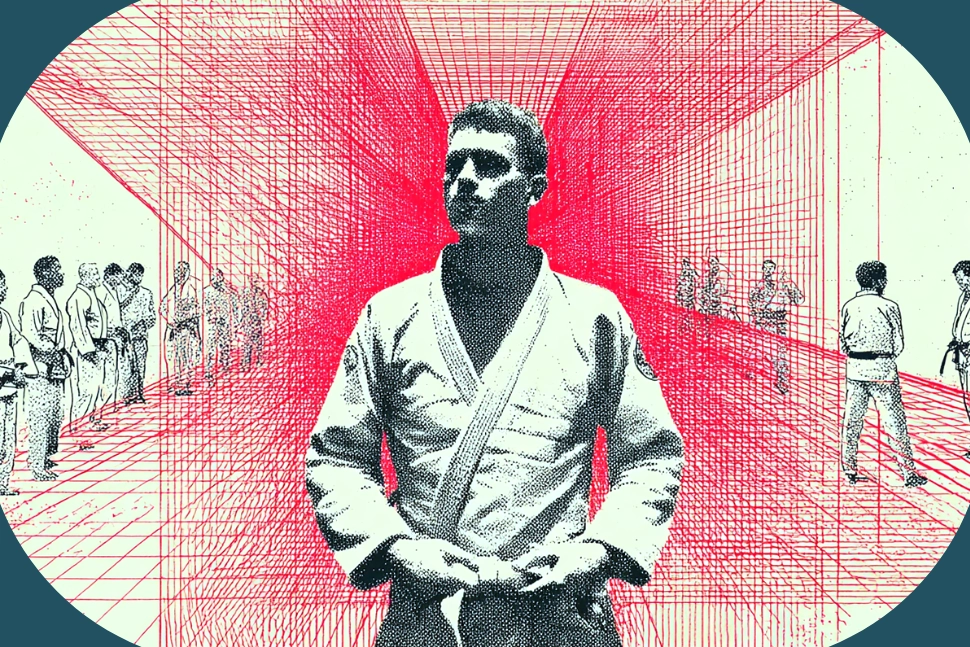
There's a moment every martial artist dreads. Not the tap. Not the loss. The moment you realize everything you thought you knew doesn't work.
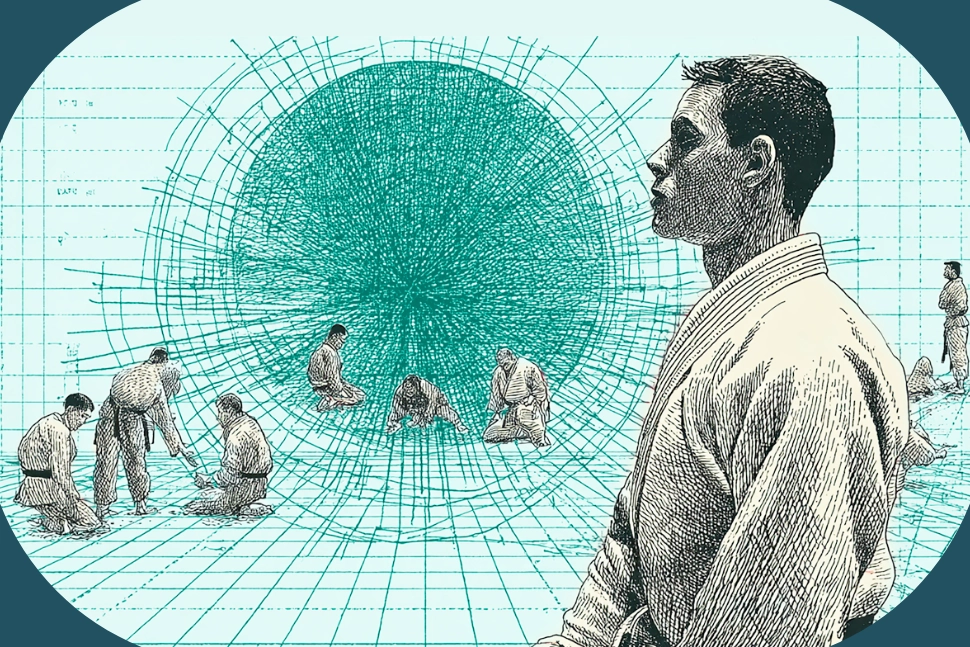
For Konrad, that moment came in his first sparring round at Carlson Gracie London. He walked in with an Aikido black belt's confidence, years of training, and the quiet belief that he'd show these grapplers something they hadn't seen before.
He was smart enough to leave the black belt at home. He wasn't smart enough to leave the ego.
Round One Against a World Champion
Konrad had earned his black belt at London Aikikai. He was teaching Aikido. He was respected.
He knew how to move, how to redirect force, how to control a wrist. So when he stepped onto the mats at Carlson Gracie London for the first time, he expected to hold his own.
"I thought I'll go there with my black belt and show them how it's done," he says. "But I was smart enough not to take this black belt with me. I took a normal white belt."
Smart move. But the white belt didn't save him from what came next.
His first sparring partner was Dickie Martin—multiple-time European champion, twice world masters champion. Not a hobbyist. Not a fellow beginner. A world-class competitor who happened to be on the mats that day.
"My first sparring round ever—I'm gonna show these guys how it's done. And Dickie Martin just cleared the floor with me."
It wasn't close. Dickie ran through him like he wasn't there.
Konrad walked off the mats and sat in the changing room. Around him were younger guys—guys who still beat him today, years later. And in that silence, he made a decision that would define the next decade of his life.
Two Ways
There's a version of this story where Konrad goes home. Where he tells himself that Aikido is different, that mat sparring isn't real fighting, that the whole thing was unfair.
Plenty of martial artists have told themselves that story. It's comfortable. It protects the ego.
Konrad didn't choose comfort.
I have two ways. Way number one, I will forget what just happened. I will go home back to my life, be a respectful martial arts teacher. Or I join them.
As you see, I joined them.
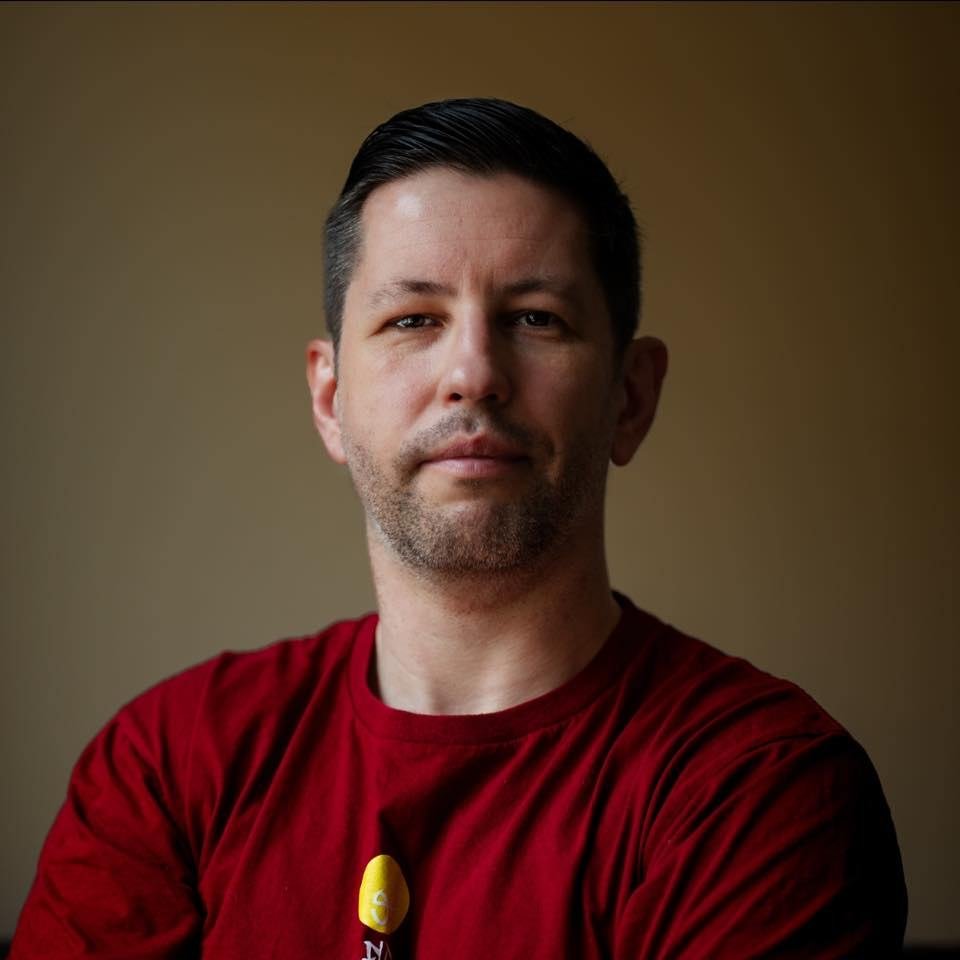
That decision—made in a changing room in Hammersmith, surrounded by people who'd just exposed everything he didn't know—is why some people train for a decade and others quit after a month.
Every gym owner, every coach, every lifelong practitioner has a version of this moment. The day they chose to start over.
If you've ever watched a new student sit on the bench after their first hard roll, you've seen this exact crossroads. Most people never come back. The ones who do? They're the ones who build something.
When Aikido Started Working (And Why It Took Years)
He didn't abandon Aikido. He didn't pretend those years of training never happened.
But he also didn't force it. For a long time, nothing from his previous martial art translated to the mats.
"For many years, anything I had from Aikido was useless in jiu-jitsu. Completely useless."
That's a hard thing to admit when you've invested a decade in something. But Konrad kept training. He kept showing up. He earned his stripes—literally—working through the belts under head instructor Wilson Junior at Carlson Gracie London's headquarters in Hammersmith.
And then something shifted.
"With time, when I became much more proficient, I found opportunities to use Aikido techniques. Because I create the setups."
Not Aikido setups. Jiu-jitsu setups. His grappling had to become good enough to create the openings where wrist locks and redirections actually worked. The techniques weren't useless—they were just waiting for a delivery system.
He draws a parallel to Anderson Silva's use of Wing Chun in MMA.
Silva didn't start using unorthodox hand movements because Wing Chun was secretly superior. He used them because he'd become so proficient in MMA that he could cross-train different martial arts and find pockets where something unexpected could land.
"He becomes so proficient in MMA that he can put this kind of thing in where the opportunity happens," Konrad explains. "If someone is very proficient in jiu-jitsu and wants to put something from outside, he can do it because he feels and sees the opportunities."
KEY TAKEAWAY:
Your previous experience isn't wasted. It's just not ready yet. Get good at the fundamentals first—the rest will find its place when your base is strong enough to create the openings.
The Sword That's Always Sharp
Today Konrad is a brown belt training six times a week. Not because he's chasing a competition medal. Because that's who he is.
"A real martial artist is always polishing their sword."
Six sessions a week sounds impossible if you have a career and a family. Konrad is a filmmaker and director—his movie Fighter hit Netflix and reached number one on the Polish Netflix Top 10.
He's not training full-time. He's not independently wealthy. He solved the scheduling problem the way any resourceful person would: he trains in the mornings.
Nearly every day, he's at Carlson Gracie (London or Hackney) before most people are awake. By the time his workday starts, he's already rolled. Evenings belong to his family and his film projects. No guilt. No missed dinners.
"When you do it in the morning, then you have work, afternoon, evening for yourself and your family. So it works for me."
Sounds obvious. It took him years to figure out. The best training schedule isn't the one with the most sessions—it's the one you can keep up without burning down the rest of your life.
Building Something Young in Hackney
Konrad teaches no-gi twice a week at Carlson Gracie Hackney, a satellite location in East London that's roughly two years old.
Nelson Sanchez and Fabrizio Comelli run the spot. Konrad was invited to help with classes, and he said yes—the same way he said yes in that changing room years earlier.
The gym is young. They've just produced their first homemade blue belts. The classes are small, intimate.
When Alex (Gymdesk's CEO) visited—riding a double-decker bus at 6:17 AM to get there—it was Christmas time. A handful of students on the mats. The kind of morning session where everybody knows everybody.
That smallness isn't a weakness. It's the foundation.
The people who do it purely for fighting and winning competitions—there is a small amount of people. But to make them able to do it, we need all the other people. They're paying the bills.
If they're not there, there's no sport jiu-jitsu.
Every gym lives or dies by its recreational members. The competitors get the Instagram highlights. The hobbyists keep the lights on.
That one should be on a poster somewhere. Without the people who train for fun, for fitness, for stress relief—there are no mats to compete on. No gym to house the dream.
The hobbyists aren't supporting the business. They are the business.
What the Numbers Actually Show You
Konrad isn't the business guy at Carlson Gracie Hackney. But as the guy who opens the gym most mornings, he's seen firsthand how gym management software changes what a coach can actually see.
"You have 20 members and 50 classes—what do you want?" he says bluntly. "But once you have a management system, you straight away see the problems."
He uses the system to track attendance, spot who's progressing, identify who's falling off. It's the difference between knowing a student's face and knowing their training patterns. Between gut feeling and actual data.
But Konrad's insight goes deeper than the numbers. He believes the system should be invisible to students.
"Less the student thinks about it, better for you as a gym manager. That's information for you."
Students scan a code, sign a waiver, check in, and forget the system exists. Meanwhile, coaches see who's training three times a week and who shows up once a month claiming they've been at it for five years.
That kind of attendance data doesn't just track numbers—it helps coaches have honest conversations about progress and expectations.
PRO TIP:
The best gym management setup is the one your students forget exists. They scan a code, sign a waiver, and check in without thinking about it. Meanwhile, you see who's training three times a week and who shows up once a month claiming five years of mat time.
The Real Marketing Problem
Ask Konrad about growth and he doesn't talk about Instagram algorithms or paid ads. He talks about the people who've never heard of jiu-jitsu.
"How to advertise to someone who doesn't have any idea what jiu-jitsu is—to make them interested to come, to put this white belt on, to start doing jiu-jitsu. That's what we need."
He points out that even Roger Gracie—one of the biggest names in the sport—isn't marketing to people inside the jiu-jitsu community. Those people are already hooked. They already know who Gordon Ryan is and what John Danaher eats for breakfast.
The real challenge is reaching people who have never stepped on a mat.
Here's what that means for you: your next 100 members aren't scrolling BJJ hashtags. They're your current members' coworkers, neighbors, and friends. Word-of-mouth from happy students is still the most powerful growth tool in the sport.
Find the Vibe, Stay for the Fight
When asked what advice he'd give someone considering jiu-jitsu, Konrad doesn't talk about technique or competition records. He talks about feeling.
"Find a place you feel good in and stay there. If you come there and you're thinking, I like the jiu-jitsu, but the people are assholes—maybe jiu-jitsu is for you, just the place is not for you."
It's the most honest thing a martial artist can say. The art is universal. The environment is everything. A great gym with the wrong culture will lose students faster than a modest gym with the right one.
And creating that culture is the hardest, most important thing a gym owner does.
That Hammersmith changing room is where it started. Now he's on the mats by 7 AM, six days a week, squeezing rolls in between film sets and family dinners. Somehow the Aikido wrist locks even show up now and then.
The Aikido black belt who walked into Carlson Gracie London looking to prove himself? He's still proving himself. Every morning. One roll at a time.
Watch the full story of Carlson Gracie Hackney in our Gymdesk Originals series:
About Gymdesk Originals: Real owners. Real struggles. The communities they've built from the ground up. Watch all episodes.
Gym management software that frees up your time and helps you grow.
Simplified billing, enrollment, student management, and marketing features that help you grow your gym or martial arts school.


FAQ

Sean has spent the last decade creating content that helps businesses—small and not so small—grow smarter to allow operators to do more of what they love. You know, the fun stuff.
From shipping and international logistics to web development and marketing, he's done the work (not just the words) to scale retail and service businesses efficiently.
You can find his work at Sendle, Shogun, The Retail Exec, Gymdesk, and more.