How Sunny Dojo Turned a COVID-Era Rec Center Into Serra Mesa's Family Dojo
Starring
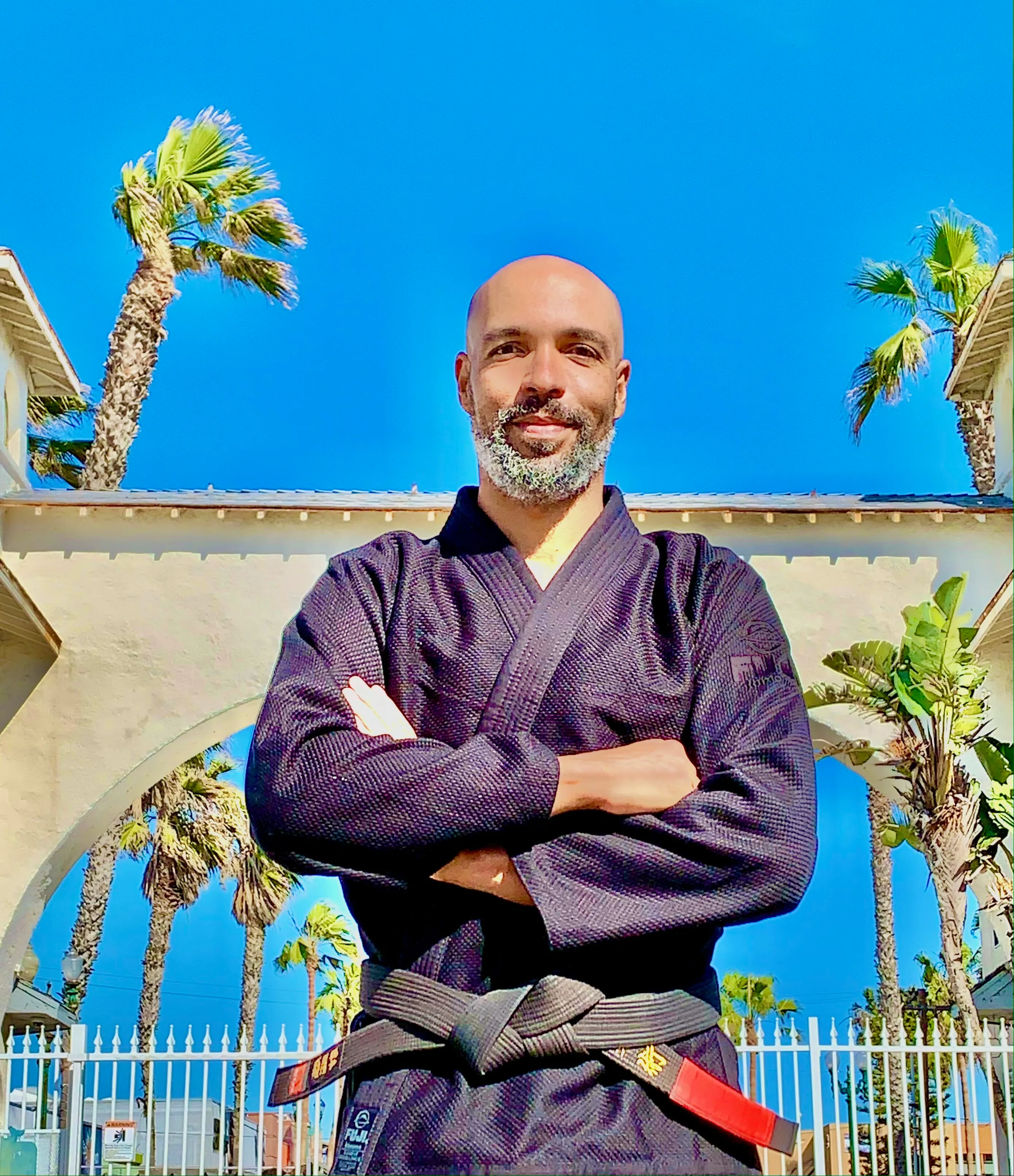
Professor Clyde Morgan was born in Salvador, Bahia, Brazil, where he began training Capoeira Angola at age four before discovering Brazilian Jiu-Jitsu in New York. He founded Sunny Dojo with his wife Pamela in 2022, building a non-competition, self-defense-focused academy that serves Serra Mesa families from age 4 to 83.
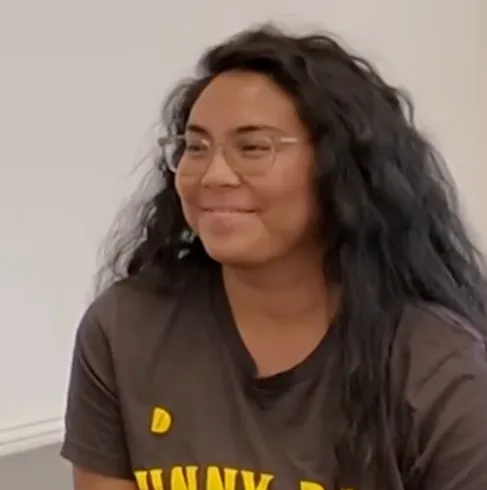
Pamela Morgan co-founded Sunny Dojo after writing the business plan during COVID, when she was furloughed from her job. She manages the dojo's back-office operations---including client communications, social media, and Gymdesk administration---while Clyde leads instruction on the mats.
About the Gym
Sunny Dojo Martial Arts is a Brazilian Jiu-Jitsu and Muay Thai kickboxing academy located at 2691 Mission Village Drive in Serra Mesa, San Diego. Founded in 2022 by Clyde and Pamela Morgan, the dojo offers Little Ninjas (ages 4-6), Ninjas (ages 7-12), Advanced Ninjas (invitation only), kickboxing (13+), and gi and no-gi Brazilian Jiu-Jitsu. The academy describes itself as "not a competition academy," focusing instead on practical self-defense, discipline, and personal development in a safe, community-driven environment.
Sunny Dojo serves the Serra Mesa neighborhood and surrounding areas, hosting monthly hill walks to Snapdragon Stadium, a fall festival at St. Columba, and dedicated Moms Week and Dads Week events. Saturday mornings feature a Mommy and Me / Daddy and Me class where parents and children train together. Clyde also leads self-defense seminars for young people in the community.
📍 2691 Mission Village Drive, San Diego, CA 92123
📞 619-880-0273
Summary
This is the story of Sunny Dojo Martial Arts in Serra Mesa, San Diego—a neighborhood dojo founded by Professor Clyde Morgan and his wife Pamela after she was furloughed during COVID. Pamela wrote the business plan over Thanksgiving break at her parents' house, and by the following April they were renting space at the local rec center. They moved into their own location with 15 students already signed up, growing steadily through word of mouth and a post in the Serra Mesa Mamas Facebook group.
The video shows how the Morgans carved out a niche in one of the most saturated martial arts markets in the country by focusing on practical self-defense rather than competition. Clyde—born in Salvador, Bahia, Brazil, and trained in Capoeira Angola from age four—shares how the dojo serves members from age 4 to 83 and is working toward a nonprofit to remove cost barriers for underprivileged youth.
What They Told Us
When Sunny Dojo's owners sat down with Gymdesk Originals host Alex Cuevas, the conversation traced how a pandemic furlough turned into a neighborhood martial arts academy in Serra Mesa, San Diego. Clyde Morgan runs the mat; his wife Pamela runs the business. Together they walk through starting at a rec center with 15 students, why they built a deliberately non-competition dojo in one of the country's most saturated markets, and what the training is really for.
Starting during a furlough
Sunny Dojo exists because of a pause. When COVID furloughed Pamela from her job, Clyde was still teaching at another gym and wanted to get back to jiu-jitsu. With time on her hands, she started drafting a business plan from her parents' house, and the couple talked their way toward a date to open their own classes.
"It was COVID. I was furloughed from my job and he was working still at another gym … I started working on a business plan and we decided, we talked more and more and more about it and we decided, like, that next April was when we started classes."
—Pamela Morgan, Co-Owner, Sunny Dojo
Word of mouth in Serra Mesa
The dojo's first students didn't come from paid ads. Pamela began at the rec center by posting in a neighborhood Facebook group, and interest built from there—steadily rather than explosively. In a tight-knit pocket of San Diego with several elementary and middle schools nearby, the word traveled through neighbors, classmates, and friends.
"I remember when we first started at the rec center, I found Facebook, Serra Mesa Mamas Group. And that's where I started putting it out there. Hey, we're going to have kids' classes. And that's where everyone started getting interested. And the word started spreading, so on and so forth. It spread like, not like wildfire in this area, but I feel like it was a steady growth."
—Pamela Morgan, Co-Owner, Sunny Dojo
A dojo that doesn't compete
San Diego is crowded with martial arts schools, and Sunny Dojo deliberately isn't chasing tournaments. Clyde trained Brazilian jiu-jitsu in a non-competitive environment himself, and he tells parents up front that competition here means something internal rather than a medal. If a student does want to compete, he's happy to point them to the many other schools in the area.
"So my training in Brazilian jiu-jitsu specifically was non-competitive. And initially, I wanted to compete … And I realized that for me, my competition came within myself."
—Clyde Morgan, Owner and Head Instructor, Sunny Dojo
Brazilian roots, learned in America
Clyde's path to the art is unusual. Born in Salvador, Bahia, Brazil, he grew up around Capoeira Angola from the age of four before ever stepping onto a jiu-jitsu mat. It wasn't until he was living in New York, years later, that friends finally talked him into training the thing his home country is famous for.
"I didn't train Brazilian jiu-jitsu until living in America, which is very interesting because I feel, I feel that Gracie jiu-jitsu, Brazilian jiu-jitsu was developed in Brazil. It really flourished and is really flourishing abroad and especially here in the U.S. So, I feel it's kind of fitting that I learned it here."
—Clyde Morgan, Owner and Head Instructor, Sunny Dojo
What the training is really for
Ask Clyde why any of this matters and he doesn't start with technique. For him, martial arts is about having a voice—he had always spoken up for other people but was slower to stand up for himself, and training changed that. He carries the lesson into self-defense seminars for kids, where a single question tends to land hard.
"And then doing seminars, self-defense seminars, especially for young people, you say, oh, raise your hand if you think you're worth defending. And maybe, depending on the age, they don't really get the question. But it's interesting how many young people don't raise their hand right away."
—Clyde Morgan, Owner and Head Instructor, Sunny Dojo
How they found Gymdesk
When it came time to handle the business side, the couple didn't shop around for long. Clyde suggested searching Reddit for the best software for a martial arts studio, and one name kept surfacing. Pamela took that as answer enough.
"No, you actually came up with the idea to search on Reddit, like the best CRM to use for a jiu-jitsu or a martial arts studio. And Gym Desk was number one. And I was like, there's really no need to look at any other ones. If it's, everyone's saying it's number one, we'll go with that."
—Pamela Morgan, Co-Owner, Sunny Dojo
Read the full transcript
Lightly edited for readability. Speaker labels are omitted because the source recording is not diarised; quotes attributed elsewhere on this page were verified against context.
Music playing Behind every gym, there's a story, a mission, a spark of passion that started it all. This is Gymdesk Originals. Real owners, real struggles, and the communities they've built from the ground up. What's up, everybody? Welcome to another episode of Gymdesk Originals. I am in sunny San Diego. It's about 75 degrees, and I left home at around 30 degrees in snow, so I'm happy to be here. But I'm at Sunny Dojo Martial Arts in San Diego. Perfect name for a perfect day. Let's go see what they got.
I know they do jiu-jitsu, kickboxing, and other programs, especially with kids. Let's go check them out. All right, let's see if... Neo, you made it! Yeah, I sure did! Welcome! You're in San Diego for the first time. You're at Sunny Dojo Martial Arts in sunny San Diego. How you feeling, buddy? I'm feeling good, and this is the first Gymdesk Originals in San Diego. Yeah, well, not the first one we've ever done in San Diego, but it's the first one season two and the first one you've been in, right?
Yeah. All right. What are you excited about checking out today? I'm excited about the class because every class is different. Cool. All right. You're going to check out the ninja class. It starts in just a little bit. Ninja class? Yeah. Let's get in there. Let's get you changed. Yeah. All right, buddy. Come on in. Thank you very much. Welcome. Nice to see you again. Nice to see you again. Good to see you. This is our dojo. Make yourselves at home. We'll be right back. We'll be right back.
First time we've been on a GDL, so welcome to season two. Yes. To being a part of our documentary here. Thank you for having me. Yeah, welcome back. Yeah, and one of the things I think that I want to look at, Josh, is it three years now? Right? No. And there's a back story here as well, right? So, we have Professor Clyde who has been doing martial arts for a long time. Yes. Well, you were encouraged to start the business because I think originally you were thinking, I'm going to start this when I retire, right?
Yes. And then you said, or then that changed, obviously, when you started before. But I'd love to kind of unpack that a little bit. Can you guys talk to us about that? It was COVID. I was furloughed from my job and he was working still at another gym. But I had brought up the idea of, because he wanted to teach again and he wasn't teaching jiu-jitsu because he likes to do. And so, I had brought that up again and was giving grace, sitting at my parents' house with a laptop.
I was like, got nothing to do right now, but he's running around. And so, I started working on a business plan and we decided, we talked more and more and more about it and we decided, like, that next April was when we started classes. We rented a room at the restaurant here at Serra Mesa. That's how we began. So, initially, fairly low risk, right? You opened up in a place where it's not really a lot of our place, but you're like, I'm going to try it here.
Yeah. Are you testing the market? Is that kind of the idea of the thought process? Yes. We had looked at spaces, like, one or two spaces, and then we realized when we were taking Kailani to the park, which was at the rec center, that they have rooms there. They had a room to rent. So, we contacted them, saw cost, how much it would cost, and we started from there. We decided, let's move with, what was it, three, four times a week, we would make the space for a couple hours.
Okay. Thank you. All right. So, the suggestion is, let's get started. Let's open up the place to get you an opportunity to start teaching. How did that make you feel that time? Nervous. Yeah. But I felt like I had the tools that I needed, and we're still very much in touch with my sensei and his wife, Professor Carroll. So, we were confident, nervous, but confident. Yeah. So, now you're feeling like, oh, maybe I can do this without having to retire, and you go and you start at the rec center.
Yes. And how was it first getting students? I think you guys ended up opening, I think, this spot officially, and you had more than maybe you wanted in the beginning, because you had, I think, was 15 students or something like that I read when you got started, and you were hoping maybe a little bit more ramp to learn. Can you tell us a little bit about that? Yeah. I believe the target was 20 students. But, yeah, we had about 15 when we moved here, and the rest, as they say, is history.
So, right when you opened the doors, you already had 15? Yes. Okay. So, I get it. Yeah. Okay. So, you started that from the rec center. Yes. And to me, that seems like such a smart way to do it, because you're not, like, sweating on the rent and all the other costs associated with opening a gym, and there's nobody coming, right? But you already had a little bit of a base. You had a little bit of a following. And so, when you first opened, you had 15, and then what was your goal?
It's like, all right, we got to get to, I don't know, 30, 40, 50, or whatever. How did that thought process work out? So, I believe the next goal was about 50. So, 50, 75, 100. Round numbers. Yeah. Yeah. Okay. And the program has been, do you feel like the things that have led to your growth have been intentional, or sort of the market has shown you, here's where we need to double down on, because, for example, more kids are coming without you trying, you know, or more adults, that kind of thing.
How has the market response framed how you guys are applying your programs? That's a great question. You know, we started because we noticed a need in the community for, you know, kids. The young kids were having trouble interacting with one another during the pandemic. The older kids were getting into trouble hopping over fences and jumping into pools. So, that was one of the things that really drove us to begin. And, you know, maybe it's a little bit of everything, but that is the program that grew.
The fastest was the little ninjas, ninjas, and now the juniors program. And so, when, you know, if a parent is curious, they want to enroll their kid into the school, I mean, what should they be thinking about? What are attributes about your program that you guys are really proud of? Maybe talk a little bit about that. I would say the, you know, the community aspect. The kids are always, you know, curious, you know, who the new student is. The majority of them will take it upon themselves to go up to them and shake hands, introduce themselves, which are things that we encourage, for sure.
Also, things we feel that are lacking nowadays, you know, things that some of us take for granted. But, again, you know, I feel like the word community is thrown around a lot, but, you know, our neighbors, our classmates, our schoolmates, right? People that we walk past and sometimes are afraid to say hi to, or we don't want to be the first one to say hi. Yeah. Yeah, and I think the other thing that's impressive to see is when you have a market, at least there's many markets that are very saturated.
San Diego is pretty busy with other schools, martial arts schools, jiu-jitsu and all that. And you guys still decided, you know, we're going to do our own thing anyway, because maybe it had to do with some community. And there's a lot of big names around here, too. But you guys are carving out a nice little spot for yourselves here. Maybe talk a little bit about that. I think it helps the area that we live in, Serra Mesa, little community. We're a little bit isolated from other areas of San Diego, even though we are still easily accessible.
In our area alone, we have about five to seven elementary and middle schools. So, that helps with our programs as well. I remember when we first started at the rec center, I found Facebook, Serra Mesa Mamas Group. And that's where I started putting it out there. Hey, we're going to have kids' classes. And that's where everyone started getting interested. And the word started spreading, so on and so forth. It spread like, not like wildfire in this area, but I feel like it was a steady growth.
And when you have students come in and you have this community aspect, especially at the target demographic, how is that community sort of influencing more people that come in? Like, how do they talk about it? Is this something that happens at school? Like, oh, I train jiu-jitsu. You know, like, how does that work in this area? I think a lot of it is word of mouth. Either neighbors, schoolmates, classmates, yeah, a lot of friends. I know that on our intake form, when they initially fill it out, we ask at the end, how do you hear about us?
And a lot of it is friends, Google, friend, friend, friend. And they'll name a specific person, too, a lot of the times, which is nice. That's where. And then we're like, oh, they're talking about us, which is awesome. Yeah, that must be a great feeling, especially when other people are recommending something that you are so passionate about, obviously. And more people are coming to experience that. That's pretty cool. You guys are touting yourselves as a non-competition space, right? Maybe talk a little bit about that. Like, why is that important to you?
Or, you know, what should people expect? Does that mean nobody competes here or you're just not focused on it? Can you unpack that a little bit? So my training in Brazilian jiu-jitsu specifically was non-competitive. And initially, I wanted to compete. I said, okay, so I know how good I am with, you know, the people that I train with, right, at my dojo. But how about everywhere else? And I realized that for me, my competition came within myself, right? Training six days a week, you know, three classes a day, friends, you know, family, other things are happening.
But after a while, it was a no-brainer. I didn't even think about it. And, you know, friends and family knew that after, you know, training, then I may be available for some extracurricular activities. So my own competition came from myself. And that's the environment that I trained this particular martial arts in. So for me, it was easy. Yeah, easy choice. And luckily, you know, if someone comes in and they do want to train, there are so many options that, you know, I don't even feel bad, you know, if we were the only school within 100 miles and, you know, someone's looking for something specific.
But there are so many choices here in this area that it feels good. Oh, I see you saying if somebody wants to compete, there's plenty of options. There's plenty of options that, yeah, available. What about practical self-defense versus jiu-jitsu? Can you talk a little bit about that? Well, sure. I see it as, one, you know, they go hand in hand. And not that, you know, people who specifically train sports jiu-jitsu or for competition cannot defend themselves. But the idea where someone comes in and within, you know, a few classes or a few weeks of training, they have learned some skills where if they did need to, you know, use one of these techniques out in the, you know, in a live situation in the real world, they would feel confident that they had some skills that they could use.
So, you know, I wanted to move to your other physical talents like dance. Yes. You trained in capoeira as well? Yes. And my first martial art. Yeah, capoeira. Okay. Yes. Do you still do any of that? I do a little bit. I'll incorporate some movements in the warm-up sometimes. And capoeira is, you could say, it's a fight dance. It was brought from the Africans that went to Brazil, who were taken to Brazil. And it's the dance of the zebra. So, very physical, it was a dance where the young men would show their prowess during a rite of passage.
So, the particular form of capoeira that I trained, capoeira angola, is a little slower. And it lends itself, I feel, a lot to anything. You know, everything is movement. So, whether it's dance, Brazilian jiu-jitsu, Muay Thai, anything. Yeah. And where did you learn that? I learned that in Brazil. Oh, okay. Saabado Bahia, where I was born. Oh, no kidding. Okay. So, you were born. Oh, let's unpack that, too. I thought, for some reason, I thought you were, you know, a U.S. citizen and, well, not that.
I mean, born here. So, in Brazil, you're now studying capoeira because it's part of the culture. It's part of the culture, yes. Yeah. And, obviously, jiu-jitsu is huge there, too. It is. So, how long did you do capoeira before you discovered jiu-jitsu? And what part of Brazil did you grow up in? So, I grew up in Saabado Bahia. I think it's the oldest city in Brazil, if I'm not mistaken. There's an old part of the city and a new part of the city. And many of the old traditions that came from West Africa are still alive and well there.
And capoeira, that's one of the birthplaces of capoeira. Wow. Yes. Yeah. So, then you, what age did you start? I started probably around four or five, just seeing it and trying to mimic and imitate it. And then my father's American and my mother's Brazilian. So, we would live back and forth. Okay. And I would train as a teenager and then I would train as an adult on trips back. Got it. And then, when did you discover jiu-jitsu? In Brazil or in the U.S.? I discovered jiu-jitsu in New York.
Okay. All right. Many years later. So, I had friends who, you know, tried to get me to train. They, you know, you're Brazilian. You should do this. Yeah. And I always had an excuse. Oh, my limbs are kind of long. I'll get arm hard. I knew what it was. I was interested, you know, but I didn't train Brazilian jiu-jitsu until living in America, which is very interesting because I feel that, you know, Gracie jiu-jitsu, Brazilian jiu-jitsu was developed in Brazil. It really flourished and is really flourishing, you know, abroad and especially here in the U.S.
So, I feel it's kind of fitting that I learned it here. Yes. Yeah, for sure. I mean, I had the, I don't know, we'll call it the luck and good fortune to go to the Gracie 100 in Rio. Oh, wow. Awesome. Matter of fact, I was supposed to be in San Diego. At that same time, I had some meeting schedules. Sorry about that, guys. But I was invited to the thing by three different customers. Wow. How do we not go to this? Like, oh, I'll go to the next one when I'm 150 years old.
And 15. Yeah. So, I was able to experience Brazilian, you know, culture, which was amazing for me. First time in Brazil. Love acai bowls. Nice. Fresh. Everywhere. And it tastes different. Yes. Amazing. And of course, being in the birthplace of Gracie Jiu Jitsu was just so cool. Just to learn all the history and all the greats that have come out of that area. So, it was pretty cool. So, maybe I'll just transition over to the ninjas program. Yes. My son Neo, is here with me on this journey.
And he'll be attending the class. But, you know, what's made that so popular? What's that all about? I think living in the area that we do, there isn't really something for, maybe now there is. But, during COVID especially, there wasn't a lot for kids to do around here besides a public park. Like, looking back at, like, the plaza down that way, I think there used to be a martial arts studio over there, like, 10, 20 years ago. And so, we were like, this is kind of the perfect area to do this.
And this tap, this Serra Mesa area has a lot of growing families. I think in the past 10 years or so, many young couples have moved in, had kids, and they're, you know, COVID babies. Yeah. We had one. So, yeah. One question for you on what it's like to be partners in business. So, my wife was my business partner for 10 years, and it was tough navigating, you know, relationship plus work disagreements and all that. So, we're no longer in that business. But how do you guys navigate that?
It might be a touchy subject. It's not a touchy subject, but it's tough. Yeah. As you said, it's a lot of work because I also still work part-time and we're doing this as well. So, it's a lot of balancing, but you got to carve out time for this and that and every little thing. And I do my best to keep a schedule, even though that schedule never stays on schedule, so to speak. But, yeah, you just try to carve out the time for everything. And we actually, this last year, we started having monthly meetings where it's just us, no kids, no one to distract us, just us, so we can talk business and take care of things and get things, get the balls rolling, so to speak.
Yeah. And I think those meetings have been helpful. Oh, good. Very helpful. Yeah. Nice. I mean, this is just my own skeletons coming out of the closet here. I just remember a good advice that my wife gave me once when we were out doing one of these things where it's just she and I was just talking about the business the whole time. Yeah. She's like, can we just not talk about the business? And I'm like, yeah, because we never not talk about the business. So, yeah, I think there's got to be a little bit of, you know, relationship time.
Yeah, there's that other thing where I think we learned from Professor Carroll that they have a day where they don't talk about business, whether it's Sunday or whatever, one day of the week where they don't talk about business at all, no matter what. And I'm like, that's kind of cool. Yeah. We're not there just yet, but I would like that. Yeah. Looking forward to that day. Yeah. So, can you tell me about the Mommy and Me class? What's that about? So, it's also Daddy and Me class, Saturday mornings for jiu-jitsu classes.
Any adults that train here, they can bring their kids along too, to train with them. Okay. That's a way to get the kids into class. Also, we've been also having events here and there where we get the parents to get on the mats too. So, we're trying to get them involved. Yes. Yeah. And I've seen that great move because if your kid is training jiu-jitsu, and they're being armbarred and your advice is, just get up. Like, it's different than like, oh, you know, get your frames in or move to the side, you know, whatever.
Because you know the game. So, that's the way to go. I think I've heard that now from at least three different customers. And that will increase the adults. And it'll build a tighter union. Yeah, community. And for me, that's why I love training with my son. It's like, we have things to talk about. And I hope as we continue to progress in the art together, at some point, he's going to submit me. And he will throw me and I will have nothing. But not yet. Not yet, you know.
Ten more years, maybe. So, but no, I think that's the right move. So, what is the class called then? So, we actually, it's Saturday. It's Mommy and Me or Daddy and Me. And then we have a Mother's Day class, Father's Day class. And we also recently had Mom's Week in November, first week of November. And Dad's Week, first week of December. Are you guys also doing some community things with the churches? Some services? Or you had some aspirations of doing something like that? Nothing with any churches in particular.
We do a hill walk once a month. So, we'll go up and down this hill to Snapdragon Stadium. There's a couple who's in their 80s and they walk that hill every day. I think the wife walks it three times. The husband does it twice, at least, or around there. And so, while she is still doing her last lap, he's usually just sitting there, standing there. And then we noticed someone made a bench. But then, I don't know how many weeks ago, we noticed the tree next to that bench was cut down.
And so, we moved the bench to another tree so that they had a spot. And then we met the person who actually made the bench. And they live right here, too, in this area, which was nice. So, it's like getting to know everyone and helping out. Yeah, be part of the community. Exactly. Yeah. Pretty cool. There is a fall festival that we do yearly at St. Columba. And it's a church and a Catholic school as well. Okay. Yeah, I was going to say, hey, my marketing team didn't – you guys gave me the wrong information.
You are correct. I'm not thinking. Okay. Another question, a nonprofit for underprivileged youth? Yeah. That's a goal that you're working towards? That's a goal that we're definitely working towards. This is, you know, getting the dojo up and running is our first goal. And, you know, the idea, you know, people say like, oh, you know, they always tell their friends or their family, oh, you should train, right? Like, oh, everybody should train. It's like – and you think about what this world would be like if everyone trained, right?
Yeah. And, you know, a lot of times we think that, oh, you know, this person's lazy or this – you know, why don't they train or why don't they get their kids to train? You know, and sometimes or a lot of times they can't afford to, right? So if we could get that excuse out of the way and get more people, you know, training as a result of that, like the opportunity, being able to provide them that opportunity. So that's something that, you know, is always, you know, on our mind and something that we're definitely working towards.
It's just – it's so fascinating to hear you say that because you think about a lot of people I've spoken to, they're like, hey, I just opened this spot because I just want to make jujitsu even more popular. And it's like, well, why are people doing this? Like, because this is not easy, man. This is like starting your own business. You put yourself out there and all that. And, you know, we go back to, like, what you're saying. Like, you think it's so important that people who can't afford it, they should have it in their life.
You know, for you, everyone might have a slightly different answer, but, like, what is it for you? Like, what has jujitsu done for you or just martial arts in general that you're hoping to instill this gift to the community and to kids? I think, for me, it's having a voice, right? So, I've always spoken up for other people. If I saw, you know, someone being taken advantage of or, you know, in trouble, I would always say something. But I noticed I was not always so quick to speak up for myself, right?
Whether it's a, you know, crowded subway train. And the more crowded it gets during the commute, the more, like, pushy, you know, this person gets until you say, you know, excuse me. And all of a sudden, you know, they realize what they were doing. So, something as small as that, right, or you're unhappy in a situation, maybe at work, right, and you feel like you don't have a voice, just realizing, like, all right, well, what's this person going to do? Like, armbar me or, you know, put me in a guillotine?
It's like, no, right? It's like, okay, I can say something, right, respectfully, of course. Or, you know, just being able to speak up for yourself. And then doing seminars, self-defense seminars, especially for young people, you know, you say, oh, raise your hand if you think you're worth defending. And maybe, depending on the age, they don't really get the question. But it's interesting how many young people don't raise their hand right away. So, for me, I would say it's that, you know, not learning these techniques so you could go and, you know, just find some random person on the street and put them in a headlock.
Right. But for me, it was realizing that we all have a voice. Yeah, and I think this is just a theory because I feel like it's done this for me. But the more I train, the less likely I'll ever use it in combat, right? And the more I realize, especially when I get smashed by somebody, I'm like, that dude was like 150 and I'm like pushing 190. Yes. And I just got, I'm like, why would I ever do anything to anybody? Because you never know. Yes.
Like, there's that, you know, it's like, I don't know, it's more like the human potential to just be a killing machine is just even more obvious when you train. Yes. So, I think if more people knew, there'd be a lot less static out there. For sure. There's that element. And more confidence, you know, which as a result would lead to less static, right? Yeah. Yeah. Yeah, for sure. Okay, well, then maybe we'll just go into one more dynamic. So, obviously, professors on the mat, teaching the classes and that kind of thing.
Wife, in the background, doing all the business aspects. Is that kind of how you guys have segmented? Lately, for sure. And up until maybe, I would say, eight months of the last pregnancy with Nalu, she was also, you know, training, presenting jiu-jitsu and kickboxing. Wow. Yeah. Yeah. So, in terms of the types of things that you're, like, taking on in terms of responsibilities for the business, what are those? What's the scope of responsibility you decided to take on? A lot. Decided is a funny word. It's funny.
So, like, things come up. Someone says, oh, I want to book a class. How does that work? What are those? So, you got to explain everything. And we come up with, like, we have a, what is it called now? I can't even think. A script to follow. Something to send right away. So, we've systemized a couple things and other things. Not so much because you can't, but talking to clients, potential clients, bringing them in. What else? Social media. I feel like that takes up a lot of my time.
Creating a reel takes forever. What else? Yeah. All of the back stuff that no one thinks about. So, yeah, I got sucked into the Instagram, you know, the reels thing because obviously we're doing these promotions and I'm on there now. People are adding me. And so, I'm like, oh, man, I don't know how to add this or that. Now, I'm, like, getting better at it. It feels funny, but we're doing it. I think it's valuable because it raises awareness, right? Yes. And it's free. It's free.
I feel like they, every so often, they'll add something and it's like, how do you do this again? Or they'll switch up the layout of the page. And I'm like, no, I was used to this. Why didn't you change it? So, maybe as, you know, three years ago, walking us through, how'd you find us? How'd you find Gymdesk? What were we listening? No, you actually came up with the idea to search on Reddit, like the best CRM to use for a jiu-jitsu or a martial arts studio.
And Gymdesk was number one. And I was like, there's really no need to look at any other ones. If it's, everyone's saying it's number one, we'll go with that. So, that's how we started with Gymdesk. Yeah. And how's it been so far? It's been great. Yeah. Really good. What are some of the things that you're relying on now, especially as a back office, that are really key for you? Attendance tracking. We started asking everyone to start booking classes ahead of time, which is helping us to keep track of attendance.
Yeah. Being able to plan ahead, you know, curriculum, new course offerings, or modifying the current schedule. And both of us have a background in design. So, the interface is, you know, nice to look at, which for me is a plus. You know, nothing worse than having to look at something and your eyes are like checked out. Yeah. That's true. Have you guys taken advantage of the marketing automations and the templates that we put in there? So, I started doing that last year and it's been helping a lot, like the automations.
Really helpful. Yeah. Yeah. And then, did you see the templates as well? Yes. Okay. Because you can customize those and change them up however you need it. Another area that people take advantage of is the skills on the promotion side. Have you guys seen that? Where you can do, like, if you want to get to this next level, you got to learn these skills. Oh. So, that's it. I did not see that. That's another cool one. Look at that too. Yeah. Okay. So, like, I don't know.
Was that your idea? No, it wasn't. But I love it because my son, when I was teaching him, so I have a black belt in Taekwondo. So, I feel okay. Unfortunately, I've never given him any kind of, not even a tape, piece of tape or a belt. But I trained him for a long time, like over a year. But I'm like, oh, no, we'll let somebody else do that for you. But I was going to do it. And so, what I did, because he was asking, so how do I get to the next step, right?
So, answering that question, not from a gamification standpoint, but it kind of is like, well, here's what you need to do. Your progress. You know, your front kick, your side kick, your back kick, your roundhouse, and you must get at least a three out of five. And so, you can do all that in Gymdesk, and then you can even link to that example of a kick, whether it's you doing it or you YouTube it. So, it could be you showing a Kimura, and this is how you do it.
Like, if you need, you know, some people want to build their own video library, so you can do that. And only when you're going from this belt to that belt, you have access to that content. So, that's another really cool thing that you could take advantage of. Nice. Good to know. Anything else that you think would be cool for people who may not know you guys, right? Parents that come in here and bring their kids every day who've been with you guys for a long time.
Some cool facts about you guys that might be interesting for them that we didn't ask? I don't know about cool facts, but as a segue, you know, much like Gymdesk, we're always looking to improve and always, you know, have our ears and eyes open. So, yeah. That's awesome. I look forward to growing with you, for sure. Awesome. Well, we'll wrap it up, and we'll be doing some more footage when we do the class. Awesome. Thank you, sir. Thank you, sir. Pressure. Thank you very much. Thank you.
Pleasure. Thank you, everyone. See you guys. Hi. We're Sunny Dojo. We're located in Saramesa, San Diego. If you or someone you know are interested in Brazilian Jiu-Jitsu or Muay Thai kickboxing, this is the place to be. Our youngest members begin at the age of four, and our eldest member is currently 83. So... Everyone is welcome. Please join us. We'll be right back.