Gym Owner Interviews
San Diego has a version of itself it puts on the postcards—the pier, the surf, the eternal 72 degrees. Alex spent his trip in the other one.
He drove the county with a camera and a list of martial arts gyms in San Diego, and the route read like a cross-section of the place: a converted theater a block off the sand in Ocean Beach, a fight gym in a Chula Vista strip mall near the border, a family dojo in a Serra Mesa neighborhood most visitors never find, and a karate space in El Cajon that had sat dark for five years.
Four gyms. Four founders. Not one of them got there the same way.
That's the part worth slowing down for.
You learn how a city actually works from the people who signed a lease and flipped on the lights—not the chamber of commerce, not the tourist board. These four signed in very different rooms, for very different reasons.
If London asked what is a gym for?, San Diego asks the messier question every owner faces first: how do you actually start one?
Here's what Alex found, gym by gym, and the three things all four got right.
OB Jiu-Jitsu Collective, Ocean Beach: The Passion Project
Ocean Beach is the part of San Diego that never quite signed up for the rest of San Diego. Tattoo shops, a farmers market that shuts the street down, dogs everywhere.
It's the kind of block where a jiu-jitsu academy that doubles as an art gallery doesn't even register as strange.
That's what Alina Grayeske and Andres Cervantes built, in a former theater one block off the water.
The walls show five local artists, and everything on them is for sale.
We're a jiu-jitsu academy and an art gallery. We feature local artists, all the art's for sale.

The origin story moves faster than it should. Alina spotted the "for rent" sign while she was having breakfast across the street, pulled the listing, and they signed the lease five days later.
Doors opened seven weeks after that.
The buildout was held together with friends and nerve. The mats arrived three days before the first open mat.
Ten people helped throw them down the night before, the academy ran its first session with the frames not fully set, and they finished the room the next morning.
Fifty-three days, lease to lights-on.
And here's the part most owners will feel in their stomach:
We both have other jobs. We opened this business while we both are employed doing other things. This is our passion project.
It runs through the culture, too. A female co-founder, two female coaches, a free Sunday women's class—and roughly a third of the hundred-plus members in year one are women, a number most BJJ gyms never touch.
For the full visit—the gallery, the five-day signing, the female-forward room—watch the full OB Jiu-Jitsu episode.
TEAMSMMA, Chula Vista: The Military Operators
Drive south and the city loosens its tie.
Chula Vista sits close enough to the border that the polish wears off—the right backdrop for a gym run by two men who deal in the unpolished.
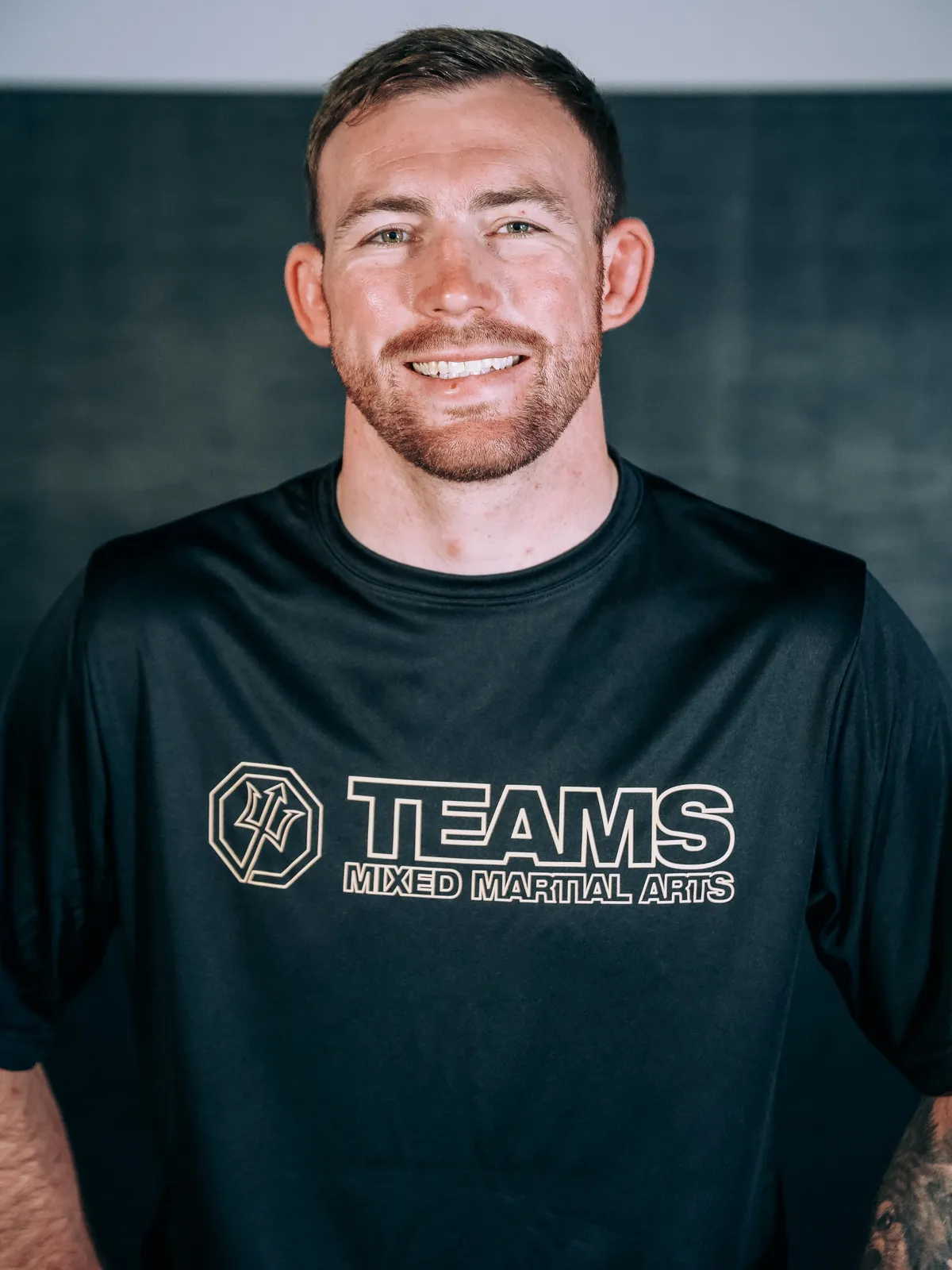
Danny Felix and Bobby Winther are active-duty Naval Special Warfare operators. They met around 2021, and they opened their own gym to connect the two worlds they live in: military combat training and civilian MMA.
The military part isn't branding. It's the curriculum.
We've done martial arts our whole lives. We've been in the military half of our lives.
You see it on the mat.
Where sport jiu-jitsu might trade away the bottom position, Bobby drills athletes to fight for top and stay on their feet—because in the world he trained for, there might be a weapon in the room.
They train combatives, not just competition.
The structure goes past the techniques. The name is the thesis: TEAMS, for together everybody achieves more success.
Danny describes the culture in language any veteran would recognize—fundamentals executed under pressure, run until they harden into what he calls concrete confidence.
It's built as a pipeline, too.
Kids and adults train on side-by-side mats at the same hour, learning the same system, so a family can argue about technique on the drive home—then up through amateurs and pros who teach the daily classes.
The full TEAMSMMA episode covers the combatives breakdown, the dual-mat family setup, and the pro team in detail.
Sunny Dojo, Serra Mesa: The COVID Family Dojo
Serra Mesa is a neighborhood you only end up in on purpose. No beach, no nightlife—just houses, a rec center, and people who've known each other a while.
A fitting place for a gym that exists because someone got laid off and decided not to sit still.
Pamela Morgan was furloughed during COVID.
Her husband Clyde—born in Salvador, Bahia, who started capoeira around age four and earned a Taekwondo black belt before he ever found jiu-jitsu—had always figured they'd open a gym someday. COVID moved someday up.
It was COVID. I was furloughed from my job, and he was working still at another gym.
I was sitting at my parents' house with a laptop. I was like, 'Got nothing to do right now.' And so I started working on a business plan.

She wrote that plan over Thanksgiving break at her parents' kitchen table. By April they were renting a room at the rec center, running a couple of classes a week.
Their first marketing channel wasn't an ad.
It was the Serra Mesa Mamas Facebook group, where Pamela mentioned kids classes were coming.
Word moved house to house, and they opened their own location with about fifteen students already signed up.
What they built is, on purpose, not a fight gym.
In one of the most saturated BJJ markets in the country, the Morgans went the other direction—a non-competition, self-defense-first family dojo with members from age 4 to 83.
Clyde puts the philosophy plainly:
For me, my competition came within myself.

Watch the full Sunny Dojo episode for the rec-center start, the Facebook moms group, and the all-ages mat.
Adayama Jiu-Jitsu, El Cajon: The Day-Job Revivalist
Head inland and the ocean breeze gives out around the time the rent starts making sense. El Cajon is twenty minutes and a whole different economy from the coast.
It's where Marty Herrick found his gym the way the rest of us find a taco spot.
Marty's a black belt who's trained since 2009, born in San Diego to a Navy father and an Asian mother. He had a plan to run a jiu-jitsu program at a university in Kansas City. He prepped the house, flew out—and the deal fell apart.
He came home convinced the universe was telling him he wasn't ready.
A few months later, a former instructor called about a space. The first one was wrong.
So that night, Marty sat down at his desk and went looking.
I sat down at my desk, and I googled jiu-jitsu in San Diego, and I looked at all the pins dropped for all the schools. And I found this pocket, and I was like, 'Why is there nothing there?'
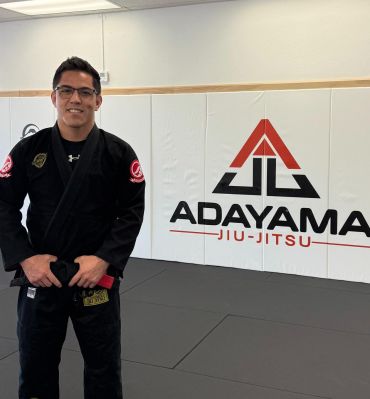
The pocket was in El Cajon. The space inside it had been a karate school three separate times and had sat empty for almost five years.
In a place people call a mecca of jiu-jitsu, he'd found a neighborhood nobody was serving.
He didn't do it alone. As Marty tells it, Ellen—his wife and Adayama's co-founder—is the reason the gamble happened at all: she's the one who let him push all in.
He runs the place while keeping a full-time fintech job, leaning on automation to stay in front of leads and members when he physically can't be.
It makes it look like you are much more omnipresent than you actually are.
For the full visit—the Kansas City detour, the late-night map search, the day-job operating model—watch the full Adayama episode.
What These Four Founders Get Right
Four gyms, four on-ramps, one county. Line them up and the contrasts stop being trivia—they start being a lesson plan.
Here's the whole trip in one glance:
Three things hold across all four, whether you're building a fight team or an all-ages family room.
You don't have to quit your day job
The cleanest myth two of these founders break is that opening a gym means betting the house.
Alina and Andres opened OB while both kept full-time jobs—it's still their passion project, not yet their paycheck.
Marty runs Adayama on top of a fintech career, and makes it work by letting his software do the follow-up he can't.
A phased, part-time start isn't a compromise.
It's a legitimate way in, and often a smarter one—you build the room before you depend on it.
If that's your situation, here's how to start a BJJ academy without quitting first, and a longer look at doing it with very little money.
Find the underserved pocket, not the prime corner
Picture Marty at his desk near midnight, zooming around a map of San Diego, hunting for the one neighborhood with no pins on it.
That's the whole location strategy: find the gap, take the space nobody else wanted.
The others ran the same play in their own way. OB took an odd former theater off the main drag, and Sunny started in a rec-center room and grew through a neighborhood Facebook group instead of a storefront on a busy street.
Location, for these founders, was a decision about market gaps and community roots—not foot traffic on the most expensive corner.
That's the difference between paying for visibility and building it, and it starts with knowing how to find the right location for your school.
Sell an identity, not "martial arts"
Here's the trick none of these four miss: even with three of them teaching jiu-jitsu, no two sell the same thing.
- OB sells a creative, laid-back Ocean Beach room with art on the walls.
- What TEAMSMMA puts on offer is military-grade structure and a fighter's pipeline.
- Sunny sells a non-competition family where a 4-year-old and an 83-year-old train under the same roof.
- Adayama is a community-first home for an overlooked neighborhood.
The discipline is almost beside the point. The identity is the moat—it's what makes the right person walk in and stay, and it's the real work of building a culture people want to belong to.
Four Starts, One Series
San Diego is the kind of trip that proves why this series exists.
One gym was a five-day decision. One was a military discipline made civilian.
One was a furlough turned into a family dojo. One was a map pin nobody else had claimed.
Put them together and the takeaway isn't a single playbook. It's permission—there's no one right way to start, and the founders who make it are the ones who built the version that fit their life, their neighborhood, and the people they wanted on the mat.
Alex will keep filming as he goes, so think of this as a living dispatch from San Diego, with more academies to add as we visit them. You can see the rest of the series, and where it goes next, on Gymdesk Originals.