The Complete BJJ Gi Guide: Everything You Need to Know
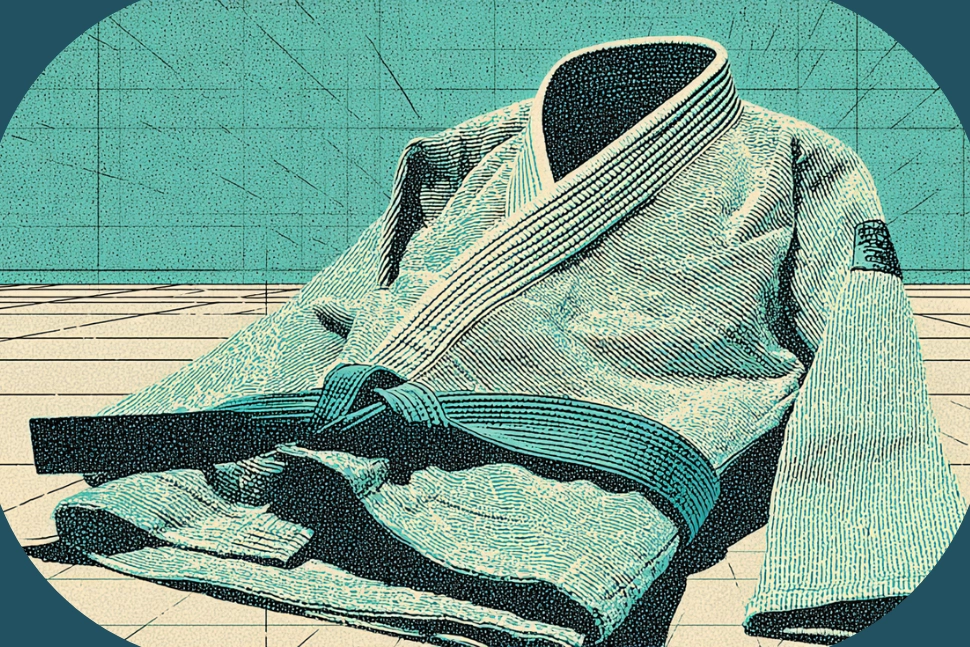
The BJJ gi is more than just a uniform. It shapes how techniques are executed, how you learn, and how deep your game goes.
Whether you're stepping on the mats for the first time or trying to make sense of weave types and IBJJF color rules, here's everything you need to know.
What Is a BJJ Gi?
The BJJ gi, also called a kimono in Brazil, is the traditional uniform worn during training and competition.
It serves both practical and cultural purposes: enabling grip-dependent techniques while connecting you to a martial art that started in Japan and was transformed in Brazil.
A complete gi has three parts:
- The jacket (uwagi): Heavy cotton or cotton-blend fabric with a thick collar built for collar chokes and lapel grips. Sleeves extend to the wrists with a snug cuff that limits what your opponent can grab.
- The pants (shitabaki): Reinforced drawstring trousers made from durable canvas or denim-style fabric, with reinforced knees built to survive years of guard work.
- The belt (obi): Your rank in cloth form. White through black—it literally holds the jacket shut, but it means a lot more than that. (For a full breakdown of the rank system, see IBJJF Belt Requirements. For how stripes and colors progress, see BJJ Belt System.)
The gi evolved from the judo uniform but got trimmed down for ground fighting. Judo gis have wider, baggier sleeves and longer jacket skirts suited for throws.
BJJ gis taper the sleeves and shorten the cut to reduce the fabric an opponent can grab during guard work and positional transitions. That narrower cuff is intentional—it makes gripping harder for both of you.
In Brazil, practitioners still often say they're "putting on their kimono." In English-speaking countries, "gi" stuck. Both terms describe the same uniform. "Gi" comes from keikogi—Japanese for training clothes (keiko = practice, gi = dress or clothes).
Neither term is wrong; you'll hear both on the mats.
BJJ Gi Materials: Which Weave Is Right for You?
The weave determines weight, durability, and how the gi feels after 200 washes. Here's how the main options compare.
Weave | Weight (GSM) | Best For | Trade-Off |
Single weave | 350–400 | Beginners, hot climates, budget-friendly | Shows wear faster under heavy training |
Pearl weave | 400–450 | Most practitioners—training, competition, daily use | Best all-around balance; no major downsides |
Gold weave | 450–500 | Advanced practitioners, high-frequency training | Retains heat, slower to dry |
Double weave | 550+ | Competition, maximum durability | Heavy, stiff when new, long dry time |
Ripstop | 300–350 | Travel, summer training, lightweight option | Not as strong at initial stress points as pearl weave |
Single weave
The lightest option available—typically 350–400 GSM (grams per square meter). Breathable, quick-drying, and affordable. Good for beginners or hot climates.
The trade-off: single weave shows wear faster under intensive training. Fine for learning, but most regular practitioners move on.
Pearl weave
The most popular choice in BJJ for a reason. Pearl weave sits in the 400–450 GSM range and offers a better durability-to-weight ratio than single weave.
The small pearl-like bumps on the fabric surface add texture that helps with grip development.
If you train three to four times per week and want one gi that does everything—training, local competitions, regular washing—pearl weave is the answer.
Gold weave
Heavier and denser than pearl weave, typically 450–500 GSM.
More resistant to wear over time, but it retains heat and takes longer to dry. Popular among advanced practitioners who train frequently and prioritize longevity over lightness.
Double weave
The heaviest option at 550+ GSM. Extremely durable and provides more grip resistance, which some competitors use strategically. Takes a long time to dry, feels stiff when new, and can be uncomfortable in hot gyms.
Best suited for high-frequency training and competition.
Ripstop
A modern option that sits around 300–350 GSM while incorporating reinforcement threads woven in a grid pattern to prevent tears from spreading.
Lightweight, fast-drying, and great for travel or summer training.
One clarification: ripstop prevents tear propagation well, but it isn't necessarily stronger than pearl weave at the point of initial stress. Think of it as lighter with solid tear resistance—not a heavyweight replacement.
PRO TIP:
If you’re not sure which weave to start with, pearl weave is the safe bet. It handles everything—training, competition, frequent washing—without the weight of double weave or the fragility of single weave.
Pants construction
Most quality gi pants use cotton canvas that resists tearing while allowing the mobility you need for guard work. Look for reinforced stitching at the knees, seat, and waistband—those are the stress points that fail first.
IBJJF Gi Rules: What You Need to Know Before Competing
Showing up to a tournament with a non-compliant gi is a miserable way to start competition day. (For more on why competition matters for your program, see Benefits of Martial Arts Competition.) Here's what the IBJJF actually requires.
Approved colors
The IBJJF permits three colors: white, black, and blue. White is the most traditional and universally accepted. Black and blue gis became widely accepted in BJJ competition as the sport formalized in the 1990s—the IBJJF was founded in 1994.
All three colors must be solid throughout—no patterns, no mixed colors. Local tournaments sometimes allow gray or navy, but if you want to compete anywhere, stick to IBJJF-approved.
Fit requirements
IBJJF regulations are specific:
- Jacket sleeves: Must extend no more than 5 cm beyond the wrist bone when the arm is extended
- Jacket skirt: Must cover the thighs when standing
- Lapel thickness: Cannot exceed 1.3 cm
- Pants: Must extend no more than 5 cm beyond the ankle bone
These measurements get checked at weigh-ins. Competitors who've washed their gi repeatedly without careful attention to shrinkage sometimes discover it no longer passes. Bring a backup gi to tournaments. Seriously.
Patches and prohibited features
No metal components of any kind. Patches follow placement rules: manufacturer's patch on the lower jacket skirt, team patches on the upper arms and shoulders (within size limits), sponsor patches with specific size and placement restrictions.
Name and country patches are encouraged on the lower back.
GYM OWNER TIP:
If you’re running a competition team, make sure your students check gi compliance before tournament week—not the morning of. One failed inspection can throw off an entire competition day. For a broader look at how rank interacts with competition requirements, see What Is BJJ.
How to Choose a BJJ Gi (Beginner to Competitor)
You may have some idea after reading all those details, but let's get conditional with it here. What you roll in really depends on where you are in your BJJ journey.
If you're just starting out
Don't overthink your first gi. You want something that fits, doesn't fall apart in the wash, and doesn't cost you $200 before you know if you'll stick with the sport.
- Fabric: Pearl weave or single weave. Pearl weave holds up better if you start training consistently fast.
- Color: White or blue. Both are accepted everywhere. White is more traditional. Blue hides stains slightly better between washes—practical if you're washing twice a week.
- Budget: Quality beginner gis land in the $75–150 range (as of 2026) from reputable manufacturers. Avoid anything under $60—cheap construction fails fast and ends up costing more.
- Sizing: Buy slightly larger than the manufacturer's chart suggests. Beginners often make care mistakes and experience some shrinkage. A gi that fits loosely can be tightened over time; one that shrinks too small becomes unusable.
If you're competing
Competition gi selection involves a few more considerations:
- IBJJF compliance: Verify sleeve length, pant measurements, and lapel thickness before you buy—not the morning of the tournament.
- Fabric weight: Many competitors prefer heavier fabric (pearl weave or double weave) for the grip resistance it provides. But heavier gis contribute to weigh-in weight. If you're cutting close to a weight class, factor that in.
- Color strategy: Some competitors believe certain colors affect perception under specific lighting. Marginal at best, but cost-free to consider.
- Multiple gis: Own at least two competition-legal gis. Inspection failures happen. Washing emergencies happen. Having a backup removes one stressor from competition day.
Climate and training environment
Hot, humid gym? Lighter fabric—single weave or ripstop. You'll be more comfortable and your gi will dry faster between sessions.
Cold or unheated facility? Heavier construction like pearl weave or double weave adds warmth. Well-ventilated, climate-controlled gym? You have flexibility across all weights.
Training frequency
Training Frequency | Recommended Weave | How Many Gis |
1–2 times per week | Single weave or pearl weave | One gi is fine |
3–4 times per week | Pearl weave or gold weave | Two to rotate |
5+ times per week | Double weave or quality pearl weave | Multiple—rotation and drying time are essential |
Popular BJJ Gi Brands and What to Look For
The gi market has expanded dramatically alongside BJJ's growth. A few brands worth knowing:
- Fuji: One of the oldest martial arts equipment manufacturers. Consistently durable, well-fitted, traditional cut. Strong value at mid-range prices.
- Tatami: UK-based, known for quality pearl weave construction with modern fits. Good international shipping and strong customer support.
- Scramble: Distinctive designs with premium materials. Loyal following among practitioners who want both function and aesthetics.
- Origin: Maine-based, American-made focus, premium materials and construction. Higher price point, but the quality reflects it.
Editorial note: Brand recommendations date quickly as companies change ownership, quality, or pricing. The quality indicators below are more durable than any specific brand list—use them to evaluate any gi you're considering.
Quality indicators that actually matter
After a while, you develop an eye for gi quality. Certain aspects stand out.
- Stitching at stress points: Check the armpits, crotch, and knees. Look for double or triple stitching at critical seams. Consistent stitch lines throughout. Thread that won't unravel after the first wash.
- Fabric consistency: Inspect for thin spots, irregular weaving, or sections that look different from the main construction. Consistent weave pattern and color saturation throughout.
- Hardware: Drawstring, grommets, reinforcement patches. Quality manufacturers use durable rope and reinforce grommet holes so they don't tear out.
- Pre-shrunk treatment: Look for sanforization—pre-shrinking that minimizes sizing changes after washing. Gis without this can drop a size after the first wash.
Price tiers (as of 2026)
Tier | Price Range | Best For |
Budget | $50–100 | Beginners, casual training |
Mid-range | $100–200 | Best value for most practitioners |
Premium | $200–400 | Advanced competitors, collectors |
Ultra-premium | $400+ | Limited editions, exotic materials |
Most serious practitioners find what they need in the $100–200 range. (If you're a gym owner factoring gi costs into your BJJ pricing models, this is the range to reference when advising students.)
Warning signs
- Prices significantly below market (often means poor construction)
- Consistent reviews mentioning rapid shrinkage or stitching failure
- Vague sizing charts without actual measurements
- No warranty or highly restrictive return policy
Gi Care and Maintenance
A quality gi is an investment. Treating it right means it lasts 18–24 months instead of six.
Washing
Cold water only. This is the one rule that matters most.
Hot water breaks down cotton fibers and causes significant shrinkage that can take a competition-legal gi out of regulation permanently.
Pre-treat heavily soiled areas—collar, sleeve cuffs, knees—with cold water and mild detergent 15–20 minutes before washing. Use a bleach-free detergent, even for white gis. Bleach weakens fibers over time and can cause yellowing instead of whitening.
Wash gis separately or with other soft cotton items. Zippers and hooks from other laundry can snag gi fabric.
Drying
Line dry, indirect sunlight. Machine drying—even on low heat—causes gradual shrinkage over time.
Hang jackets by the shoulders, pants by the waistband. Hanging by sleeves or pant legs creates stretching that affects fit and appearance.
Turn dark gis inside-out during drying to reduce color fading.
QUICK WIN:
After washing, reshape your gi while it’s still damp—pull sleeves to length, straighten the collar, smooth the lapels. Takes 30 seconds and helps the gi hold its shape between washes.
Dark-colored gis
Add one cup of white vinegar to the rinse cycle during the first three washes to help set the dye and reduce future fading.
Wash new dark gis separately for the first five washes to prevent color transfer to lighter items.
When to replace
Watch for seam separation at stress points (armpits, crotch, knees). Small tears caught early can be repaired. Extensive damage usually means replacement is coming.
Replace gis that no longer meet competition measurement standards—even if they're still fine for training.
A gi that's failed for competition can keep serving as a training-only uniform before you retire it.
Expected lifespan with proper care:
- Single weave: 12–18 months at 3x/week
- Pearl weave: 18–24 months at 3x/week
- Double weave: 2–3 years at 3x/week
BJJ Gi vs Other Martial Arts Uniforms
On first glance, martial arts uniforms seem to be same-same, but there are key distinctions.
BJJ gi vs judo gi (judogi)
The BJJ gi started as a judo uniform. Decades of adapting to ground fighting created real differences:
- Sleeve and pant cuffs: BJJ gis have significantly tighter cuffs. Judo's wide, baggy cuffs worked for throwing grips. As BJJ shifted to ground fighting, tighter cuffs improved mobility and reduced what opponents could grab.
- Jacket length: BJJ gis have shorter jacket skirts. Less excess fabric for opponents to control during guard work and transitions.
- Fabric weight: Most BJJ gis are lighter than traditional judogis—partly climate, partly that lighter fabric makes establishing gi grips easier, which supports BJJ's grip-intensive ground game.
Can I use a judo gi for BJJ? You can train in one, but you'll notice the difference fast.
The baggy cuffs limit your mobility during ground work, your instructor will probably notice, and it won't pass IBJJF inspection for competition. Fine as a stopgap, not a long-term solution.
BJJ gi vs karate gi
These uniforms are designed for completely different purposes.
Karate gis are lightweight and loose—built for strikes, kicks, and fast movement. They don't have the fabric weight or reinforcement to handle constant gripping and ground contact.
The collar isn't built for choke pressure. The knees aren't reinforced for mat friction.
Trying to train BJJ in a karate gi means you'll probably destroy it within a few months. It's also a safety consideration—fabric that tears unexpectedly during training creates entanglement hazards.
Gi vs No-Gi Training
Gi and no-gi are different expressions of the same art.
Understanding both helps you decide where to invest your training time—and if you run a BJJ school, it helps you understand what your students are actually asking when they want to add a no-gi class.
What gi training gives you:
- Collar chokes, lapel guards, spider guard, de la riva guard, lasso guard—none of this exists without fabric grips
- Slower pace with more control, which accelerates early learning (one of many benefits of Brazilian jiu jitsu)
- Grip strength and hand conditioning that transfers to everything
- Clearer positional feedback that makes it easier for instructors to correct technique
What no-gi training gives you:
- Faster, more scramble-heavy grappling that favors athleticism
- Leg lock and heel hook systems that are often restricted in gi competitions
- Direct relevance to MMA and submission grappling competitions
- Different grip demands (wrist control, underhooks, body locks)
Most traditional BJJ schools recommend starting with the gi. The slower pace and clear positional structure help beginners build a foundation that transfers well to no-gi later.
The reverse—starting no-gi and adding gi—tends to be harder. If you're building a BJJ curriculum, most instructors still start new students in the gi for this reason.
Competition rule differences: Gi competitions typically have longer match times, more positional emphasis, and restrictions on certain leg locks that are legal in no-gi formats. If you're training specifically for competition, know the ruleset you're competing under.
The Bottom Line
When students are considering gi vs no-gi grappling, understanding the details of the gi are important. Here's the high-level breakdown.
- The BJJ gi consists of three parts: jacket, pants, and belt—each with specific construction requirements for training and competition
- Pearl weave is the default choice for most practitioners: good durability-to-weight ratio, competition-legal, and handles regular washing well
- IBJJF allows only white, black, and blue gis—solid colors only, with specific fit requirements that get checked at inspection
- Wash cold, line dry—those two habits extend gi life more than anything else
- Budget $100–200 for your first real gi (as of 2026); don't go under $60, and don't overspend until you know what you want
If you're managing a BJJ school and tracking uniform compliance for students—especially ahead of competitions—tools like Gymdesk can help you manage student records and communication without juggling spreadsheets. Worth looking at if competition season prep is taking up time you'd rather spend coaching.
Gym management software that frees up your time and helps you grow.
Simplified billing, enrollment, student management, and marketing features that help you grow your gym or martial arts school.


FAQ
BJJ Gi FAQs

Josh is a martial arts educator and coach who bridges live training on the mats with evidence-based teaching. A 4th degree Taekwondo black belt and dedicated Brazilian Jiu-Jitsu practitioner, he’s spent years running classes, mentoring students, and helping instructors move beyond rote drills to training that actually works under pressure.
He holds a Master of Education in Teaching & Learning from Liberty University and runs Combat Learning, where he breaks down ecological dynamics, constraints-led coaching, and games-based training for combat sports. Through his writing and podcast work with Gymdesk, Josh turns coaching science and gym-owner stories into practical ideas you can use to run better classes and build a stronger martial arts school.