Coaching, Instruction & Training
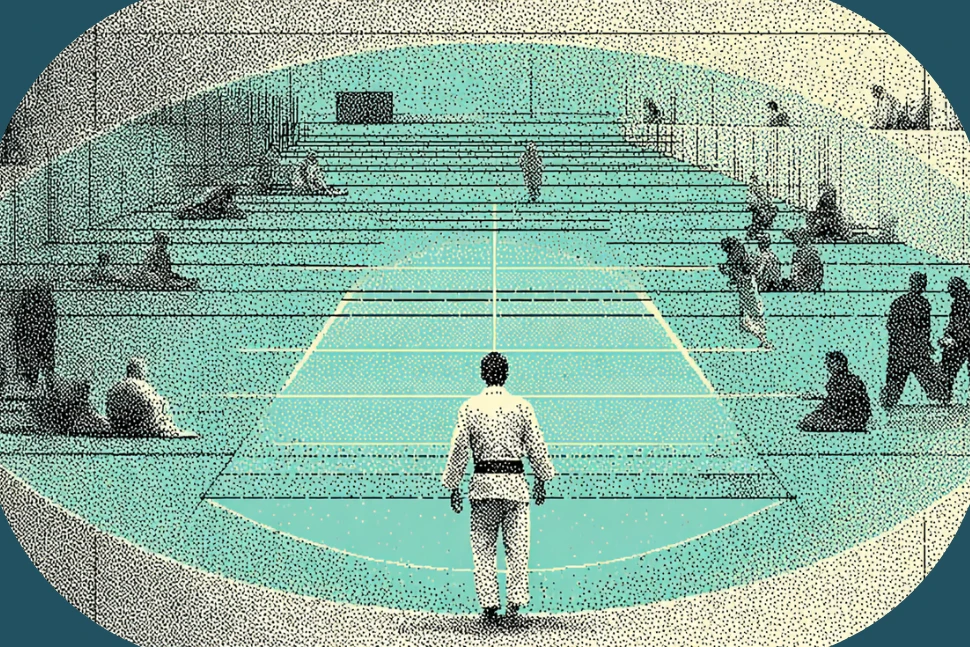
Many kids' martial arts classes aren't designed.
It's a common problem; they kind of grow together—a class got too big, so a coach split it. A parent asked for a younger class, so one appeared. A coach moved away, and their band got folded into the next one up. Nobody ever sat down and designed it.
It's curriculum drift.
When this happens, you eventually end up with too many ages inside one band training together. The injury rate shoots up. Student promotion rules become inconsistent and unclear. Students begin disappearing around age 11.
A successful martial arts program begins with structure. What does this mean? It means deliberate age bands, a clear curriculum, age-appropriate pacing, and, key point, a clear handoff between age bands as students grow.
Why Age Bands Beat Everything Else
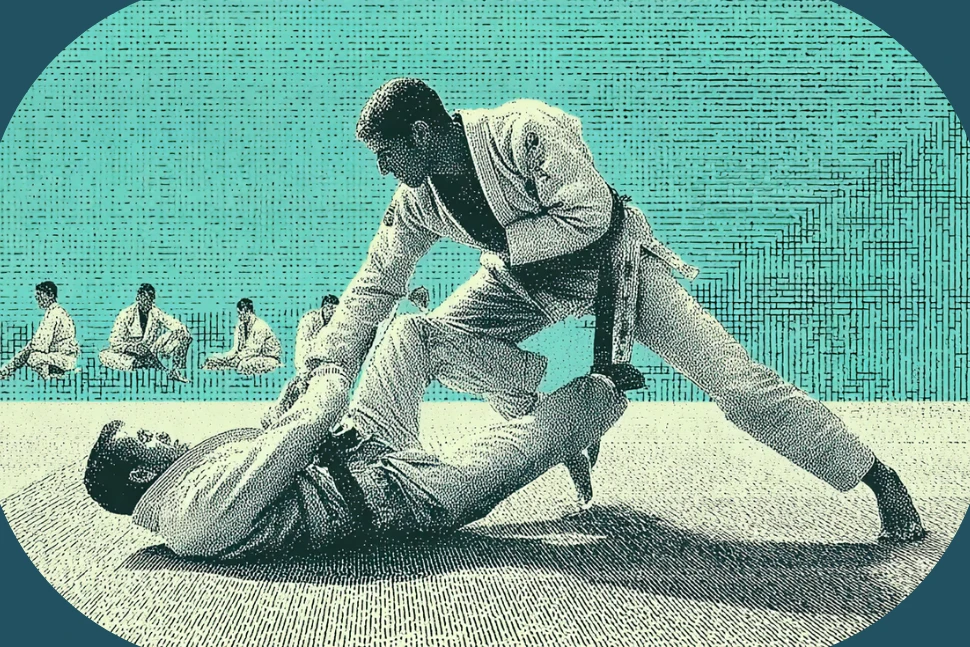
My son was in a jiu-jitsu program. At age 9, he was training with a 14-year-old in the kids' class—an obvious red flag (though we didn't know it at the time). This 14-year-old had poor judgment, a chip on his shoulder, and something to prove.
No surprise, he caught a submission on my son during rolls. You see where this is going?
He decided to squeeze a little too hard, and he injured my son. My wife said, gently, "Hey, accidents happen." She asked him to be careful next time.
"I could've done harder."
This 14-year-old made an already unpleasant situation so much worse. It turned into a fiasco between the instructors and several parents.
We ended up in the ER; my son ended up with a bruised spleen. This whole situation could have been avoided if instructors had recognized the situation ahead of time.
And here's the part that lands on you as the owner: those red flags show up early. The kid with something to prove rarely hides it—and once you can see it, managing it is your job, not the parents' and not the other kids'. That usually means a quiet word first, then hard limits on who they're allowed to roll with, then one clear line they don't get to cross twice. If none of it lands, they don't train in your kids' class.
But this issue could also have been avoided with a simple rule.
Age is the dividing line.
In fact, age should usually be the first dividing line—not rank. A 9-year-old and a 14-year-old may technically have the same rank, but their instruction needs differ significantly.
There's no special formula, no magic cutoff.
Here are some real examples:
Gym | Bands | Cutoffs | What drove the split |
3 | 4–6 (Mighty Mites), 7–9 (Youth Fundamentals), 10–12 | Who teaches it—each band is cast to a different coach | |
2 | 6–9 (Chimpanzees), 10–12 (Junior Gorillas) | Hard floor at six; Rich caps the whole gym near 150 | |
4 | 3–6 (Cubs), plus three tiers above | Play-based entry, then ability rather than age | |
— | Rule, not a fixed split | A five-year-old never trains beside a fifteen-year-old |
Four gyms, four different answers, and not one of them is wrong. What they have in common is that somebody chose.
The 3–5 band in our example model can work if, again, your instructors love working with that age group. The key point here is this: the age bands are deliberate.
You want students with more similarities working together—same age band, roughly the same size/strength, etc.
If you're deciding which classes to offer, start with your current batch of students. Don't go with an arbitrary industry template. Use testing to figure out what works best for your gym.
We'll keep you in the loop with fresh content, podcasts, how-to guides, tool reviews, and product exclusives.
Decide Your Bands by Who Teaches Them
Your age bands and your coaches are connected. You'll want to match your instructor's personality to the developmental stage of the age band they're working with.
Match the coach to the stage
Young kids need the right coach for the job. Here's how Patrick Teruel, owner of NEO Martial Arts, describes it:
Older children will need an instructor who is calm, structured, and willing to hold them accountable.
The wrong personality can turn a great curriculum into a miserable training experience.
That's why Patrick Teruel recommends choosing instructors based on these strengths: younger children get coaches who are more nurturing and love working with them. Older kids (tweens, teens) get instructors whose personalities fit their growing independence and desire to test their limits. And matching the coach to the stage isn't the same as going soft on the little ones—as Patrick puts it, "there is no fun unless there's discipline first."
What a mismatch costs
Luiz Costa, owner of Octa BJJ, is pretty blunt about the consequences:
When a child repeatedly clashes with their instructor, they often begin to associate their experiences with the entire martial art.
In the child's mind, their instructor is a big part of the curriculum.
Set Class Length and Pacing by Band
Your class schedule isn't simply a matter of preference.
Experienced instructors know that successful scheduling is tied to developmental milestones; it's more than a scheduling decision.
It's an understanding of what each age band can handle.
Nobody publishes these numbers for martial arts. So they're borrowed from two sports that do, mapped onto our bands.
Band | Class length | Activity change | Block structure | Where the number comes from |
3–6 | 30–45 min | Every ~6 min | Game, skill, game | Argyle's kindergarten rule; Unlimited runs 30 min at age 3 |
6–9 | 45–60 min | 6 stations / 50 min | Stations, mostly games | US Youth Soccer U8; USA Hockey 8U |
10–12 | 60–75 min | 10–15 min | Skill, drill, live game | US Youth Soccer U10–U12 |
13+ | 75–90 min | 15–20 min | Technique, drilling, live rounds | US Youth Soccer U14–U16 |
Unlimited Jiu-Jitsu, for example, runs a 30-minute class for young kids; each session focuses on a single technique and a single game.
If you're looking for ways to keep young kids engaged, add Paul Gilman's six-minute rule—he's the best thing we have on rotation. He changes activity every six minutes, and he brought it from six years teaching kindergarten in Korea before he ever taught jiu-jitsu:
Many kids' programs emphasize short instruction, station work, and games—they assume that a child's attention span is finite.
USA Hockey's own coaching material says the opposite outright:
The key detail here is novelty and activity change—gimmicks like "two minutes of attention per year of age" aren't as effective and tend to be difficult to manage.
How Many Instructors Does a Kids' Class Need?
Okay, let's get the important part out of the way. There is no universal martial arts teaching ratio.
Many online sources cite the "7:1" ratio to claim otherwise. This ratio comes from Caring for Our Children, a document that lists recommended ratios for childcare centers.
Age | Max Child:Staff Ratio | Max Group Size |
≤ 12 months | 3:1 | 6 |
13–35 months | 4:1 | 8 |
3-year-olds | 7:1 | 14 |
4-year-olds | 8:1 | 16 |
5-year-olds | 8:1 | 16 |
6–8-year-olds | 10:1 | 20 |
9–12-year-olds | 12:1 | 24 |
MIXED-AGE RULE:
"When there are mixed age groups in the same room, the child:staff ratio and group size should be consistent with the age of most of the children."—Caring for Our Children
So a 6–9 band with a few five-year-olds in it gets staffed to the five-year-olds.
These are voluntary recommendations that are originally intended for childcare settings.
If you are offering childcare in your gym, that's a different story. That said, they're a helpful reference for adult supervision—the canary in the coal mine.
In a kid's martial arts program, the real control variable is group size. When a band becomes too large to coach well, you're faced with three choices:
- Add another section
- Add another instructor
- Continue as-is (not recommended)
Here are three examples:
- Michael Baez caps NC Budo at 20–25 and opens a new section rather than mixing ages
- Fernando Brazileiro split Renzo Niagara's Little Ninjas at about thirty
- Argyle runs 25–30 in the 4–7 band with two coaches
Many martial arts schools have a single teacher for their kids program and, if they're lucky, one or two (unpaid) assistants.
This gives you the clarity you need to adjust your kids' classes as needed.
This assumes that you're making safeguarding structural: according to SafeSport guidelines, contact with kids should always be observable and interruptible. Set strict policies for communication and interactions with kids.
Want to learn how to create a safer environment for your students and instructors? Take a look at our guide on safeguarding your school.
Build the Curriculum Band by Band
Don't just shrink or repackage your adult curriculum. Create a plan.
Some schools choose to simplify the material they teach adults. Others use games to teach movement before they introduce students to formal techniques.
Both of these approaches can work. The important thing is being intentional about how you build it.
What each band trains
Here's a breakdown showing possible directions for your kids' program.
Band | What a class actually contains | Technical content | What they're learning that isn't technique |
3–6 | Tag variants, animal walks, cone races, falling games. One technique, one game, thirty minutes. | Positional shapes only—where to put your body, not a named move | Leaving a parent, joining a line, taking a turn |
6–9 | Sumo from knees, king-of-the-mat, sharks-and-minnows on the mat, grip-fighting tag | First named techniques, controlled partner drills, one combination at a time | Losing a round without it ruining the class |
10–12 | Positional sparring from set starts, tactical games with a constraint, live rounds with rules | Real depth, chains and combinations, their own game starting to appear | Choosing what to work on; helping the band below them |
A worked kids example shows what one band's content looks like end to end. If you're building the method itself rather than the band, start by building a curriculum—a detailed post on how a children's program converts games and drills into concrete skills.
The fork every school hits
Ask four owners how to build a kids' curriculum, and you'll get two answers. Both work.
Cody Goodfriend at Shogun West mirrors the adult curriculum, simplified. Same material, smaller pieces, slower.
Paul Gilman at Argyle goes the other way. Under seven, he teaches no step-by-step technique at all—the movement games carry the skill, and the kids don't know they're drilling.
Fernando Brazileiro at Renzo Gracie Niagara does something odder and better. He teaches breakfalls as Canadian winter safety. Not this is how you fall in jiu-jitsu—this is how you fall on ice in February.
The kids learn the same skill and take it home.
The fork isn't the decision. The decision is picking one on purpose instead of doing half of each.
Promotion Cadence Is a Retention Tool
Kids need recognition.
They need visual cues that show they're making progress. Promotion should be public—it often includes factors like character, attendance, skill, or a combination of the three.
Character-weighted
Cody Goodfriend's Warriors Path at Shogun West: 12-month virtue curriculum, monthly collectible card, and red-belt stripe, verified by a parent at home or school.
Fred Silva's Alliance Fort Mill awards stripes across behavior, discipline, dedication, friendship, and academics.
Attendance-counted
For example, Gabriel Goulart, the owner of Alliance SFV, gives students one stripe for every 30 classes.
This isn't about which system is best. It's about applying the system you choose consistently in your kids' program.
The Band Transition Is Where You Lose Them
What's the biggest retention mistake instructors make with their kids' program? They treat the next age band as someone else's problem.
This is a huge problem.
It's a hidden problem that operates quietly in a gym's blind spot. It's a leak that's never really plugged because most instructors don't even know that it's happening.
As a result, they mishandle the band. The 7–9 coach thinks the 10–12 coach has it. The 10–12 coach thinks the kid will show up or won't.
There's a cliff at age 11.
Kids tend to quit organized sports around age 11, after an average of only 2.86 years in a sport.
Here's why kids quit: children cite 'fun' as the primary reason for participation in organized sport, and its absence as the number-one reason for youth sport attrition.
Project Play reports that children quit sports after 2.86 years on average, with 36% leaving because they stopped enjoying the sport and only 15% leaving for another sport.
The misalignment of adult and child priorities could play a role in why 6 out of 10 kids say they quit sports because they "lost interest."
Okay, why does it stop being fun?
Handoff | Why they churn here | The mechanic | What to track |
Into 6–9 from 3–5 | New coach, new room, new expectations, no friends yet | Buddy—pair them with a kid already in the band for four weeks | Attendance, weeks 1–4 |
Into 10–12 from 6–9 | Training gets harder and stops being mostly games | A job—line leader, warm-up caller, gear check | Attendance plus one "are you enjoying it" check-in |
Age 11–12, inside the band | Identity shift; martial arts competes with everything else | Leadership track—visible marker, assisting duty | Attendance trend across 8 weeks |
Into teens from 10–12 | No teen band exists, so they age into nothing | Teen pathway—a named role, not a class | 90-day retention post-transition |
So what does this mean for gym owners? If a child starts at age eight, your 10–12 band may be your last chance to keep them.
Build a role for teens, not a teen class
Teens are eager to assert their independence. They want to prove themselves; they want to show that they're capable.
Give your teen students a role.
Used properly, a student-to-leader program can turn teens into assistant instructors, junior leaders, demo-team members, mentors, and guides. This changes their perspective completely. Instead of thinking, "When do I get promoted?" or "When do I graduate?" students begin thinking, "What do I get to become?"
King Tiger gives leadership students distinct uniform pants and beginner-class assisting duty, and the kids below are chomping at the bit for it. Patrick Teruel goes further: his 14-to-21s run mock sales calls and read the gym's dashboards.
For a deeper dive on the retention problem during transition, take a look at our guide, Why Kids Quit.
What a Band Needs to Be Worth Running
The 8–10 students-to-launch rule isn't a credible way to determine cost. It's also not a credible way to determine whether a particular age band is worth running.
The question still needs an answer, though.
Here's a formula you can use to calculate the economics of each age band:
(students in the band × monthly tuition) − (monthly instructor cost for that band's classes) = the band's contribution
If a band runs twice a week and you pay a coach $40 a class, that's roughly $350 a month in instructor cost. Eight students at $120 clears it. Five doesn't.
Be sure to account for secondary factors like mat space, schedule availability, and administrative overhead.
Families spend an average of $1,015.64 annually on their child's primary sport. Don't rely on a generic minimum figure. Use the kids' program revenue projector and instructor pay calculator to arrive at a more accurate number.
If you're still in the planning stages, take a look at our guide on starting a school, and our guide to kids' program revenue.
Decide Your Parent Policy on Purpose
Parents are competitive. Parent viewing needs to be a program/design decision.
Lion's Heart took the lobby seating out. Not reduced—removed. Parents watch a livestream from the hallway, and sideline coaching stopped because the sideline stopped existing.
SBG Niagara runs the middle path with a twist. Parents watch the full class for a new student's first two weeks, then the last ten minutes only. Rich didn't decide that for the parents' benefit. The kids asked for class to be their own time.
Octa Jiu-Jitsu went the other way entirely and built viewing areas around the mat—then started training the parents concurrently, which turns the spectator into a student.
None of these options is automatically correct. None of these options is inherently wrong. What is important is being intentional about your decision.
The policy you choose needs to meet parental needs (not wants) and support your students and their learning environment.
If sideline coaching or competitive parents are problems, you may need to look for additional options (e.g., alternative seating arrangements, policy updates, or even offering childcare).
Let the Schedule and the Data Do the Work
Administration needs to be part of the structure you build. Once you've defined your age bands, give your data the time to show you how to improve.
You can use this data in a variety of ways:
- Age-banded scheduling: Use class booking to run your bands across one week without scheduling conflicts. This is a problem you don't have until you follow our advice and you go from one kids' class to four.
- Per-band attendance: Use attendance tracking to spot declining attendance before a student disappears.
- Promotion tracking: Use gym management software like Gymdesk to manage different promotion cadences (without paper spreadsheets).
- Family memberships: Use martial arts software to handle automatic sibling discounts and shared billing. Software also keeps family members, discounts, history, forms, and documentation organized under a single account.
That is why martial arts software systems matter. They can turn these administrative rules into repeatable processes or reports you can automate.
Design the Handoffs, Not Just the Classes
A strong kids' program isn't just a collection of classes. It's an intentionally designed system structured around the developmental milestones and needs of the bands you serve.
This means deliberate decisions about the age bands you'll serve and the coaches best suited to each group.
There's a curriculum that's tailor-made for that developmental level, a promotion cadence kids can follow, and a clear plan of action that leads them naturally into the next band.
This is how you do it.
This is how you turn the 11-year-old cliff into a stepping stone that retains your students.
If you're building or rebuilding your program, start by mapping out each age band, its coaches, the class length, and your curriculum. Begin with the end in mind; what's the destination?
If you want the structure of a successful, well-maintained gym without the administrative headaches and busywork, you need martial arts software.
With the right platform, you can automate billing, scheduling, attendance, onboarding, and more. Software that runs quietly in the background, providing you with the tools and data to plug retention leaks for good.
For Martial Arts Gym Owners
You just mapped four age bands, a promotion cadence, and a handful of handoffs. Gymdesk runs the age-banded scheduling, per-band attendance, sibling billing, and promotion tracking—so the structure you designed holds without a stack of spreadsheets.
Explore martial arts software