
From Four Families to 600 Students: How RPMA Built a Multi-Partner Gym That Actually Works

Most business partnerships don't last. The reasons are predictable: unclear roles, poor communication, conflicting visions.
When things get hard, partners point fingers instead of solving problems. The dream of shared ownership becomes a nightmare of shared blame.
So when you hear that RPMA Jiu-Jitsu in Rochester, New York runs on four partner families, your first thought is probably: That sounds like a recipe for disaster.
Except it's not.
RPMA isn't just surviving their multi-partner structure—they're thriving because of it. Four families. A 10-year goal to reach 600 students. A new location opened in 2023. Satellite schools on the horizon.
The kind of ambitious growth that makes solo gym owners exhausted just thinking about it.
The difference is intentionality. While most partnerships form because two training buddies decide to "figure it out as they go," RPMA built their partnership the way you'd build a curriculum—with clear structure, defined roles, and systematic progression.
They didn't hope it would work. They engineered it to work. Here's how they did it. And how you can steal their playbook.
The Foundation: When One Person Can't (and Shouldn't) Do Everything
Brennan Strimple and his wife Lee founded RPMA Jiu-Jitsu in 2014.
For nearly a decade, they built it the way most gym owners build their schools—through sheer force of will, long hours, and doing everything themselves.
Brennan taught. Lee handled admin. Together they created a family-focused BJJ academy that served their Rochester community.
Then COVID hit.
Post-2020 recovery was brutal. By 2023, the gym had reopened, but attendance was struggling. Brennan was teaching classes, managing operations, handling marketing, overseeing finances, maintaining the website, tracking student progress.
The mental load was crushing. Like many gym owners trying to do everything themselves, he faced a choice: stay small or find another way.
Not because he was failing. Because he had a bigger vision.
"I didn't want to do everything myself. I wanted to have different instructors and different outlooks."
That's the key insight most gym owners miss when they think about partnerships. You don't bring in partners because you're desperate. You bring them in because you're strategic. Because you recognize that your gym's ceiling is limited by your capacity—and your skillset.
Brennan could have ground it out solo. He could have stayed small, stayed manageable, stayed within his bandwidth. But he wanted to build something bigger. Something that required complementary skills, not just more hours.
So in 2023, he started bringing in partners.
The Partnership Evolution: Why Complementary Skills Matter

Here's where most partnerships go wrong: people partner with their training buddies. With people they like. With people who share their passion for martial arts.
All good things—but not sufficient things.
When roles aren't clearly defined, partnerships struggle. When everyone does a little bit of everything, accountability dissolves. Nobody owns outcomes. Decisions stall because five people need to weigh in on things that should be one person's call.
RPMA avoided this trap by being ruthlessly intentional about complementary skills. Brennan didn't recruit people like him. He recruited people who brought what he lacked.
George Curran came in first.
Numbers guy. Financial modeling. Growth metrics. The kind of person who gets excited about spreadsheets and revenue projections. George describes himself with characteristic directness:
"I'm definitely the numbers guy. I like telling everybody they're just a number to me."
He's joking—mostly. But his role is dead serious: track the financials, forecast growth, make data-driven decisions about where to invest resources.
Veronica Curran brought the marketing and customer service expertise.
A cancer survivor who found healing through BJJ, Veronica understands the emotional journey students take when they walk through the door. She handles lead nurturing, trial conversions, the customer experience that turns prospects into members and members into family.
Dan Curran (no relation to George or Veronica) took operations.
Instructor scheduling. Class planning. And attendance tracking—so much attendance tracking that they started calling him "the attendance police."
Dan ensures the day-to-day operations run smoothly, that instructors show up when they're supposed to, that students are showing up consistently.
Jason (the fourth partner) stepped into the ambassador role.
Charisma. Conflict resolution. Member relations. The person who smooths tensions, builds community connections, makes every member feel valued.
And Brennan remained the curriculum visionary.
Instructional quality. Program development. The breadth of experience that comes from years on the mats.
Dan captures the partnership structure perfectly:
"George is the numbers guy focused on growth. I'm on the operation side. Brennan's our curriculum guru. Jason's got the charisma."
Five partners. Five distinct roles. Zero overlap.
RPMA didn't just stumble into this structure. They engineered it. Each partner brings something unique. Each partner owns their domain. Together they create coverage across every critical business function.
The Framework: How They Actually Make Decisions
Complementary skills solve the role problem. But they don't solve the decision-making problem.
Five partners could still mean five competing visions, endless meetings, decisions that never get made. RPMA solved this with systematic intentionality.
They adopted the EOS (Entrepreneurial Operating System) framework—a proven business operating system that brings structure to multi-partner organizations.
Dan explains their approach:
"One of the things that I think was really important as growing our business is intentionality. We have regular meetings... weekly, monthly, quarterly."
Let’s break that down:
- Weekly tactical meetings. What needs to happen this week? These are short, focused, action-oriented. Who's handling the upcoming kids' tournament? What's the plan for the trial class surge? Who's following up with members who've missed two weeks? Tactical execution, not strategic debate.
- Monthly strategic check-ins. How are we tracking against goals? Where are we ahead? Where are we behind? What adjustments do we need to make? This is where George's numbers meet Veronica's marketing insights meet Dan's operational realities. Data-driven course corrections.
- Quarterly vision alignment. Are we still heading where we want to go? This is the why conversation. The big picture. The 600-student goal. The satellite school plans. The legacy they're building for their kids who train at the gym.
This meeting cadence creates rhythm without creating meeting fatigue.
Partners stay aligned without living in each other's inboxes. Everyone knows when to raise issues, when to make decisions, when to execute.
And critically, this framework creates accountability. When George owns the numbers, Dan owns operations, and Veronica owns marketing—and everyone meets weekly to review progress—there's nowhere to hide.
No finger-pointing. Just clear ownership and transparent results.
Compare this to the typical gym partnership: ad hoc conversations in the hallway between classes, vague agreements that nobody writes down, decisions that get revisited three times because nobody remembers who decided what.
RPMA's systematic approach isn't sexy. But it works. Because intentionality beats improvisation every single time.
The Systems: Tools That Enable Roles
Here's what most gym owners miss about partnerships: you can't just divide roles—you need systems that support those roles.
In 2023, when RPMA expanded their partnership structure and moved to their new location, they also made critical systems decisions.
They needed a management system that could handle their growing complexity: multiple programs, automated billing, attendance tracking, lead management, website presence.
They looked at Zen Planner and other options. They chose Gymdesk.
The decision came down to features that directly enabled their partner structure:
- Automated attendance tracking meant Dan could actually be the "attendance police" without manually checking clipboards. He could see patterns: which members were falling off, which kids needed outreach, which classes had low attendance. The system created visibility without micromanagement.
- Website builder meant Veronica—with zero HTML experience and a healthcare background—could build and maintain their online presence herself. No outside developer. No bottleneck waiting for someone else to update class schedules or post new content.
- Marketing automation meant Veronica could nurture leads systematically. Trial reminder emails. Follow-up sequences. Re-engagement campaigns for inactive members. The automations did the heavy lifting so she could focus on strategy and personal touches.
- Schedule management and check-in systems meant operations ran smoothly without Dan having to be physically present for every class. Instructors knew their schedules. Students could check in seamlessly. The systems supported growth.
George puts it simply: they compared Gymdesk's reviews and features against competitors, saw what they needed (scheduling, tracking, website, automation), and realized Gymdesk had everything in one platform.
They didn't need to cobble together five different tools.
These systems decisions directly enabled their partnership model. Dan became attendance police because the system made it possible. Veronica handled marketing because automation multiplied her impact. George tracked growth metrics because the data was accessible and accurate.
Here's the lesson: systems aren't separate from partnership success—they're foundational to it.
When each partner has clear tools to execute their role, they can actually focus on their domain of expertise instead of fighting with clunky processes.
The Roles in Action: How It Actually Works
Theory is one thing. Practice is another. So what does RPMA's partnership structure look like in real life?
Say the gym hits a plateau. Student growth stalls. Here's how their complementary roles interact:
- George sees it first in the numbers. Revenue is flat. Trial-to-member conversion has dropped five percentage points. He brings this to the monthly strategic meeting with data: here's where we are, here's where we need to be, here's the gap.
- Veronica digs into the marketing side. Are leads down? No—trial requests are steady. So the problem is conversion, not top-of-funnel. She hypothesizes: maybe the trial experience needs work. Or maybe follow-up timing is off.
- Jason talks to recent trials who didn't convert. His charisma and member-facing role make these conversations natural. He discovers a pattern: parents love the program, but kids are intimidated by the first class. They need more hand-holding, more encouragement, more connection.
- Brennan adjusts the curriculum approach for trial classes. More games. More encouragement. Clearer explanation to parents about the progression journey. He trains instructors on the new trial class structure.
- Dan updates operations. He schedules additional instructor coverage for trial classes to ensure extra attention. He sets up automated check-ins with Veronica's marketing system: did your child enjoy the trial? What questions do you have?
Two months later, George's numbers show conversion back on track. The system worked because everyone owned their piece—and nobody stepped on anyone else's toes.
Or consider expansion planning for satellite schools.
George models the financials: how many students do we need to make a second location viable? What's the revenue threshold? What are the startup costs?
Dan maps the operational requirements: instructor coverage, class schedules, equipment needs, management bandwidth.
Veronica researches markets: where are members driving 45 minutes from? Where's the demand we're not serving?
Jason builds relationships with potential landlords and community partners in target areas. His ambassador skills open doors.
Brennan ensures curriculum consistency: how do we maintain RPMA's teaching quality across locations? What systems need to be in place?
Every partner contributes from their strength. Every partner owns their deliverable. Together they make better decisions than any solo owner could make.
This is what complementary partnerships look like in practice: not five people doing everything, but five people doing their thing in coordination with each other.
The Vision: Building Something Bigger Than Any One Person
Last year, RPMA's four partner families set a 10-year goal: 600 students.
That's an aggressive target. Strong martial arts school retention requires constant attention to member experience, which means you need strong acquisition and exceptional retention to hit strong numbers.
Most gym owners would look at that goal and think: impossible. RPMA looks at it and sees: achievable—because we're not doing this alone.
George frames it with his characteristic focus on numbers:
"We want 600 students. The more people you have doing this, the better it is."
But this isn't growth for growth's sake. Four of the five partners have kids training in the program. They're building their children's futures. Satellite schools aren't just business expansion—they're creating more access for families who currently drive 45 minutes to train.
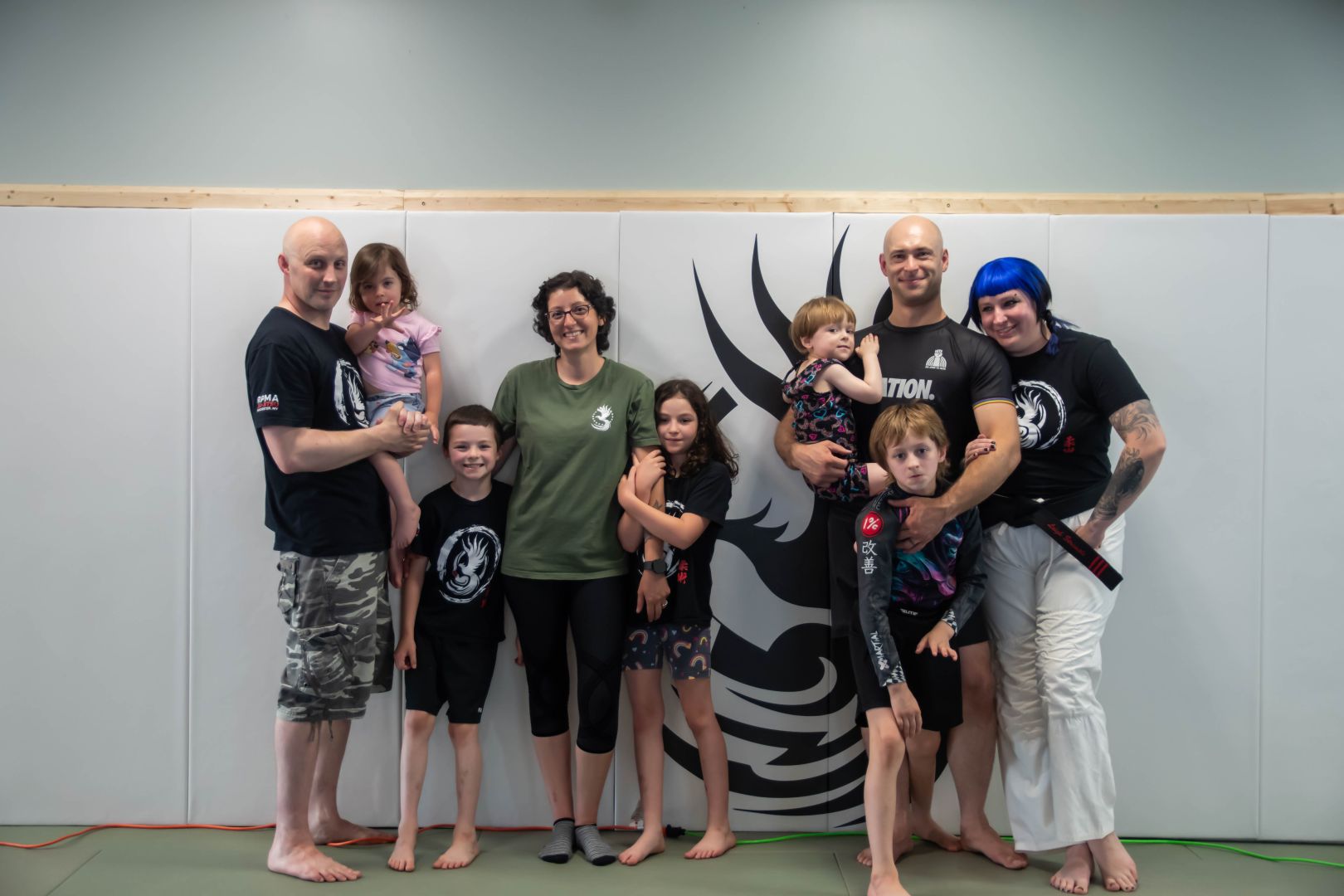
This is the power of partnership done right: you can dream bigger because you're not limited by your individual capacity.
Brennan couldn't hit 600 students solo—he'd burn out. But four families with complementary skills, systematic decision-making, and shared vision? That becomes possible.
And critically, the vision keeps them aligned. When partners disagree on tactics (and they will—five strong personalities don't always agree), they return to the shared vision: are we moving toward 600 students? Are we serving more families? Are we building something our kids will be proud of?
Shared vision doesn't eliminate conflict. But it creates a North Star that makes conflict productive instead of destructive.
Watch the whole episode to learn all about RPMA and see it in action:
What Other Gym Owners Can Learn
Most gym partnerships fail. RPMA's succeeds. Here's what you can steal from their playbook:
1. Intentionality over proximity. Don't partner with your training buddy just because you get along on the mats. Find people with complementary skills who fill gaps in your expertise. If you're great at teaching but terrible at numbers, you don't need another great instructor—you need a George. If you're operationally strong but marketing-challenged, you don't need another operations person—you need a Veronica.
2. Clear roles from day one. Define who owns what before conflicts arise. Write it down. Make it explicit. When everyone knows their lane, accountability becomes natural and decision-making becomes faster. Ambiguity kills partnerships. Clarity creates momentum.
3. Systematic decision-making. Adopt a meeting cadence that keeps everyone aligned without creating meeting fatigue. RPMA's weekly/monthly/quarterly rhythm creates regular touchpoints without endless deliberation. You don't need EOS specifically—but you need some framework that brings structure to multi-partner decision-making.
4. Systems enable roles. Choose systems that support your partner structure. If your operations partner can't track attendance because your systems are manual chaos, they can't do their job effectively. If your marketing partner is fighting with a terrible website builder, they'll waste energy on tools instead of strategy. Invest in systems (like Gymdesk for RPMA) that multiply your partners' effectiveness.
5. Shared vision, diverse skills. Agree on where you're going, bring different tools to get there. RPMA's partners align on the 600-student vision, but they bring radically different skills to achieve it. That's the magic: unified destination, diverse paths.
6. Start with trust, reinforce with systems. RPMA's partners trust each other—but they don't rely on trust alone. Regular meetings create transparency. Clear roles create accountability. Systems create visibility. Trust is the foundation, but structure is what scales.
If you're considering bringing in a partner, use RPMA's questions:
- What skills do I lack that this partnership needs?
- Does this potential partner fill those gaps or create redundancy?
- Can we articulate clear, non-overlapping roles?
- Are we willing to commit to systematic decision-making (not just "we'll figure it out")?
- Do we share a vision big enough to justify the complexity of partnership?
If you're already in a struggling partnership, use RPMA's framework:
- Define roles explicitly—who owns what?
- Implement a meeting cadence (weekly tactical, monthly strategic, quarterly vision)
- Invest in systems that support your roles
- Return to shared vision when conflicts arise
Partnerships aren't inherently risky. Unintentional partnerships are risky. Partnerships without clear roles are risky. Partnerships without systematic communication are risky.
RPMA proves that when you build partnerships with the same intentionality you'd bring to building your curriculum or your facility—with structure, clarity, and systems—they become your competitive advantage instead of your liability.
The Bottom Line
Most gym partnerships fail because of unclear roles and poor communication—not because partnerships are inherently flawed.
When roles overlap and decision-making processes are undefined, even strong relationships struggle
RPMA's four-family structure works because they engineered it to work:
- Complementary skills. Each partner brings unique expertise (numbers, marketing, operations, curriculum, community relations) with zero overlap
- Systematic decision-making. EOS framework with weekly tactical, monthly strategic, and quarterly vision meetings keeps everyone aligned without endless debate
- Systems investment. Management systems (Gymdesk) that enable partners to execute their roles effectively through automation, tracking, and visibility
- Shared vision. 600 students and satellite schools create a North Star ambitious enough to justify the complexity of multi-partner ownership
- Clear accountability. Defined roles and regular meetings make ownership transparent—no hiding, no finger-pointing
The result is a gym that's not just surviving with four partner families—it's thriving because of them.
If you're considering a partnership or trying to fix a struggling one, steal RPMA's playbook. Define complementary roles. Build systematic decision-making. Choose infrastructure that supports your structure. Align on shared vision. Most partnerships fail because people wing it.
RPMA proves that intentional partnerships can build something bigger than any solo owner could create. Four families. 600 students. A legacy their kids will inherit.
That's not luck. That's engineering.
Gym management software that frees up your time and helps you grow.
Simplified billing, enrollment, student management, and marketing features that help you grow your gym or martial arts school.


FAQ

Sean has spent the last decade creating content that helps businesses—small and not so small—grow smarter to allow operators to do more of what they love. You know, the fun stuff.
From shipping and international logistics to web development and marketing, he's done the work (not just the words) to scale retail and service businesses efficiently.
You can find his work at Sendle, Shogun, The Retail Exec, Gymdesk, and more.