
BJJ Gym Software: The Complete 2026 Guide for Brazilian Jiu-Jitsu Schools

Short answer: For a BJJ academy, the platforms worth comparing are Gymdesk, Zen Planner, Mindbody, PushPress, Spark Membership, Wodify, and WellnessLiving.
Gymdesk is the strongest fit for most academies under 400 students: it tracks belt progression at the technique level, and students and parents both see a live percentage toward the next belt. Family billing, sibling discounts, and a gym website are included at every tier, starting at $75/month with Gymdesk Payments. No setup fee or contract.
Choose Zen Planner if you run several disciplines under one roof, Spark if lead generation matters more to you than curriculum depth, PushPress if you program strength work alongside the mats, and Mindbody if you need multi-location enterprise reporting.
It's belt testing week at your academy. You're cross-referencing three different spreadsheets—attendance records, technique checklists, and time-in-grade tracking—trying to figure out which of your 60 students are ready for promotion.
Did Timmy complete his 40 required classes? Does he know all 15 blue belt techniques? Has he been training for at least six months?
Eight hours into this data archaeology project, you're still not done, and you should be on the mat drilling.
Next week gets worse.
Thirty parents will text you asking when their kid is ready for the next belt. Your inbox is already filling up with "How's Sofia doing?" and "What does Marcus need for his yellow belt?" messages that you'll answer between classes while standing in the parking lot.
You didn't open a BJJ academy to become a spreadsheet expert. You did it to teach jiu-jitsu.
This is why choosing the right BJJ gym software matters.
The right software handles belt tracking, parent communication, and family billing automatically. Students log in and see exactly what they need for their next rank.
Parents check a dashboard instead of texting you.
But the platform you're probably evaluating was built for spin classes, not gi classes. It won't understand that belt progression isn't the same as completing a workout challenge—and it definitely won't handle three kids from the same family across different programs.
Why Generic Fitness Software Doesn't Work for BJJ
We get it—you're a black belt in jiu-jitsu, not software selection. Teaching five or six days per week while running the business doesn't leave much time for evaluating platforms.
Most of the software marketed to gyms was designed for spin classes and yoga studios.
They'll handle your scheduling and billing just fine. But they fall apart when you need to track whether a white belt has mastered guard passing fundamentals—or when a parent wants to see their kid's progress toward the next rank.
We know choosing the wrong platform costs you 3–6 months of frustration rebuilding your data and retraining staff. You'll build workarounds in spreadsheets, field the same parent questions over and over, and waste time on manual processes that should be automated.
The right platform fades into the background, letting you focus on teaching.
We'll keep you in the loop with fresh content, podcasts, how-to guides, tool reviews, and product exclusives.
Understanding BJJ-Specific Needs
BJJ schools operate differently from fitness gyms.
Belt progression combines attendance (40+ classes), technical skill mastery (15 specific techniques), and time-in-grade minimums (6+ months). Generic fitness software treats progress like workout completion, which doesn't work for martial arts advancement.
Family billing gets complicated when one parent pays for three kids across different programs with sibling discounts.
Each student needs separate attendance and belt tracking, but they share one credit card and billing account. Fitness software built for individual memberships can't handle this easily.
Parent communication matters when kids’ programs drive 40% of revenue.
Parents need visibility into their child's belt progress and technique development. They're paying but not training, so they want proof that their investment is working. Fitness platforms assume the person working out is the person checking the app.
The 5 must-have features for BJJ academies
As I said just above, BJJ schools are different. Thus, they need software that includes specific features for them. That includes:
1. Skills and curriculum tracking. Students see required techniques for their next belt with progress bars showing completion percentage. Track specific movements (arm bars, guard passes, escapes) tied to rank requirements.
2. Family account management. Link multiple students to a single parent account with automatic sibling discounts. Parents see all kids' schedules, attendance, and belt progress in one dashboard.
3. Automated billing. Recurring charges process automatically with failed payment retries and configurable late fees. No manual payment processing or chasing expired cards.
4. Parent communication portals. Parents check their kid's progress independently (28/40 classes, 10/15 techniques mastered, 4/6 months complete) instead of texting you at 9pm.
5. Attendance tied to promotion. Check-ins automatically count toward belt requirements. Students see real-time progress, which motivates consistent training.
PRO TIP:
When testing belt tracking, check if students can see their own progress. Platforms that only show instructors the data won't reduce "when do I get promoted?" questions.
Let’s dig into each software by category—those made for BJJ, those with a martial arts focus, and those that are meant for multiple sports. First up (obviously) are the BJJ-specific ones.
Category 1: Built for BJJ
This BJJ gym software category was designed with martial arts in mind—skills progression, curriculum tracking, and family billing are core features, not afterthoughts.
If BJJ-specific workflows matter to your academy, start here.
1. Gymdesk
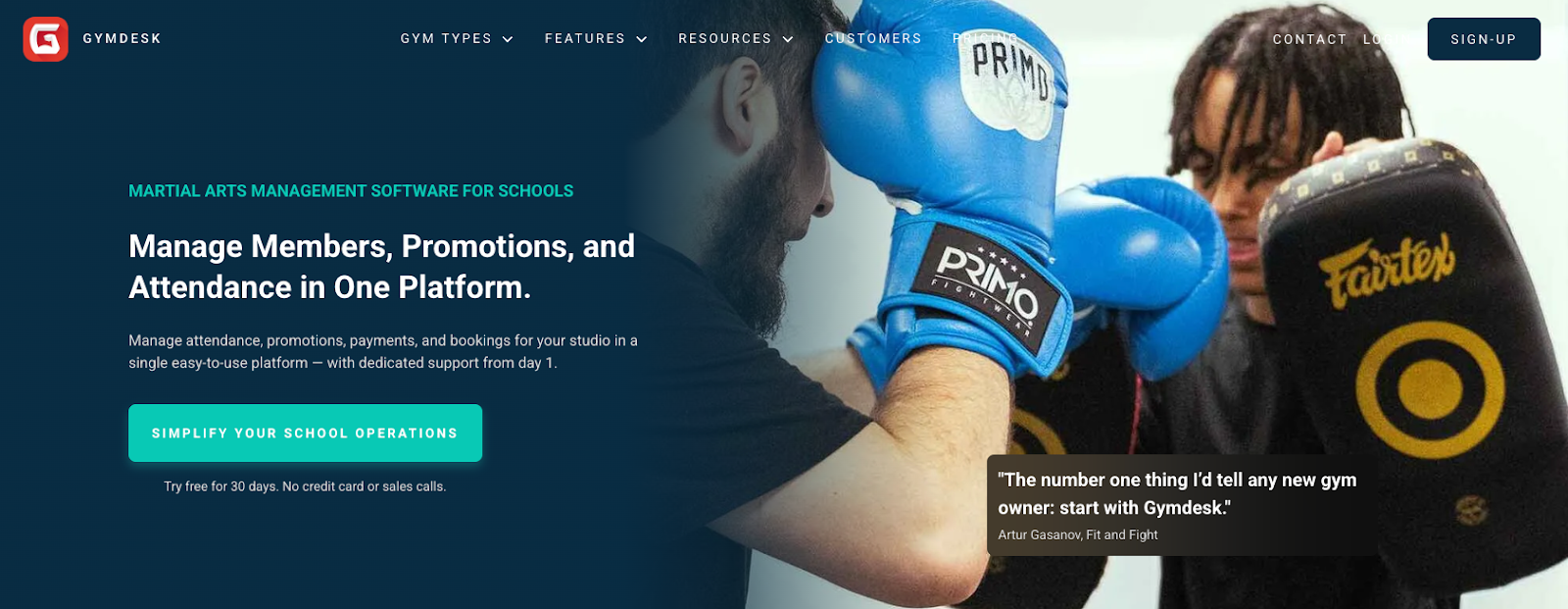
Gymdesk built its platform around martial arts progression, not fitness workouts.
Key features:
- Skills tracking. Create a library of techniques (arm bars, guard passes, escapes) linked to belt requirements, with progress bars showing completion percentage.
- Student visibility. Students see exactly where they stand: 32 of 40 classes, 12 of 15 techniques mastered, 5.2 months logged.
- Parent portal. Parents view the same progression data for their kids, cutting down "how's my child doing?" questions.
- Schedule integration. Skills display on your schedule view so you see the week's curriculum at a glance.
- Family accounts. Link multiple students with automatic sibling discounts and shared parent billing.
- Free website builder. Included at every tier with no hosting fees (saves $3,000-$5,000 in development costs).
- Automated billing. Recurring charges, failed payment retries, and late fees handled automatically.
You can connect three kids to one parent account and set the sibling discount once; the system applies it to every monthly charge thereafter.
The parent can see all three kids' schedules, attendance records, and belt progression in a single dashboard. When it's time to update emergency contact information or payment methods, they do it once instead of three times.
Automated billing supports Stripe, Square, and Authorize.net for payment processing.
When a card fails, the system handles retries on a schedule you control and sends reminder emails to the member. You're not spending Sunday evenings manually processing payments or tracking down expired credit cards.
The built-in website builder gives you a responsive site that works on phones and desktops, handles class bookings, displays your schedule, and captures new leads 24/7.
Reporting gives you attendance analytics broken down by rank or skill, revenue tracking, member growth metrics, and retention data. You can export attendance data with custom fields included, which helps when you're preparing for belt tests or analyzing which techniques need more class time.
Pricing:
Plan | Active Members | Monthly Price (with Gymdesk Payments) | Ideal For |
Micro Gym | Up to 50 | $75/month | Newly opened gyms up to 50 members |
Small Gym | 51–100 | $100/month | Smaller gyms up to 100 members |
Medium Gym | 101–150 | $150/month | Medium-sized gyms up to 150 members |
Large Gym | 151–250 | $200/month | Larger gyms with up to 250 active members |
Over 250 | 251+ | Talk to us | Bigger academies and multi-location groups |
*Visitors, frozen/cancelled members, and prospects are not counted toward active member limits.
Use your own payment processor instead and it's $25 a month more ($40 on Large). No setup fees, no contracts, no cancellation penalties. 30‑day free trial, no credit card required. Every account comes with a free gym website and all features included. Smoothcomp Connect comes with every plan at no extra cost, so you can find tournaments, register your students, and see their results come back to their member records without leaving Gymdesk. Gymdesk and Smoothcomp are now one company.
Best for: Small to mid-sized martial arts schools (50-300 students) prioritizing curriculum management and skills progression. The skills tracking and family account features give it an edge for BJJ academies specifically.
Limitations: Fewer third-party integrations than enterprise systems. If you need extensive API connections or Zapier automation, you might find the integration options limited.
Category 2: Martial Arts Focused
You'll find these platforms across karate, taekwondo, and MMA gyms. They include curriculum features, but they're not exclusively built for Brazilian jiu-jitsu.
Consider these if you run multiple disciplines or need enterprise-level features.
2. Zen Planner

Zen Planner serves martial arts and fitness facilities with strong scheduling and lead management.
The platform handles basic rank tracking—you can log which belt a student holds—but doesn’t publish detail on progress bars, percentage completion, or technique checklists.
Features include: Class capacity management, waitlists, lead tracking, and reporting on member growth and revenue.
Pricing:
Members | Base Studio | Typical Extras* | Realistic Total |
0–75 | $99–$155 | Payments + EMV + add-ons | $250–$450+ |
76–200 | $189–$239 | Higher processing + EMV + add-ons | $400–$700+ |
200+ | $269+ | Processing, EMV, add-ons, contracts | $600–$900+ |
*Extras often include required Zen Payments processing (with markups), EMV hardware fees, onboarding/setup, and paid add‑ons like Engage marketing, branded app, and website builder.
Note: Zen Planner requires booking a demo with sales before accessing the platform. Trial features are limited to basic functionality.
Best for: Multi-discipline schools running BJJ alongside other programs.
Limitations: Belt tracking is less detailed than BJJ-specific platforms. No progress visualization or technique mastery checklists.
3. Mindbody

Mindbody is the enterprise option for large fitness operations.
They offer martial arts features including basic belt tracking, but the platform is designed for broad fitness businesses rather than BJJ specifically.
Features include: Belt/rank progression tracking, automated promotion triggers based on visit counts, complex scheduling across locations, robust payment processing, and marketing tools.
Pricing: Plans start at $79/month per location. Mindbody doesn’t publish rates for its Starter, Accelerate, or Ultimate tiers—all three route to a sales conversation, and total cost depends on which add-ons and payment terms you land on. Contract length varies by plan rather than being a flat 12-month commitment.
Best for: Large academies (300+ members) needing enterprise features, multi-location management, or integration with a broad wellness marketplace.
Limitations: Expensive and complex for small operations. Belt tracking exists but treats progression more like fitness goals than martial arts curriculum. Contract requirements and add-on fees increase total cost significantly.
4. Spark Membership
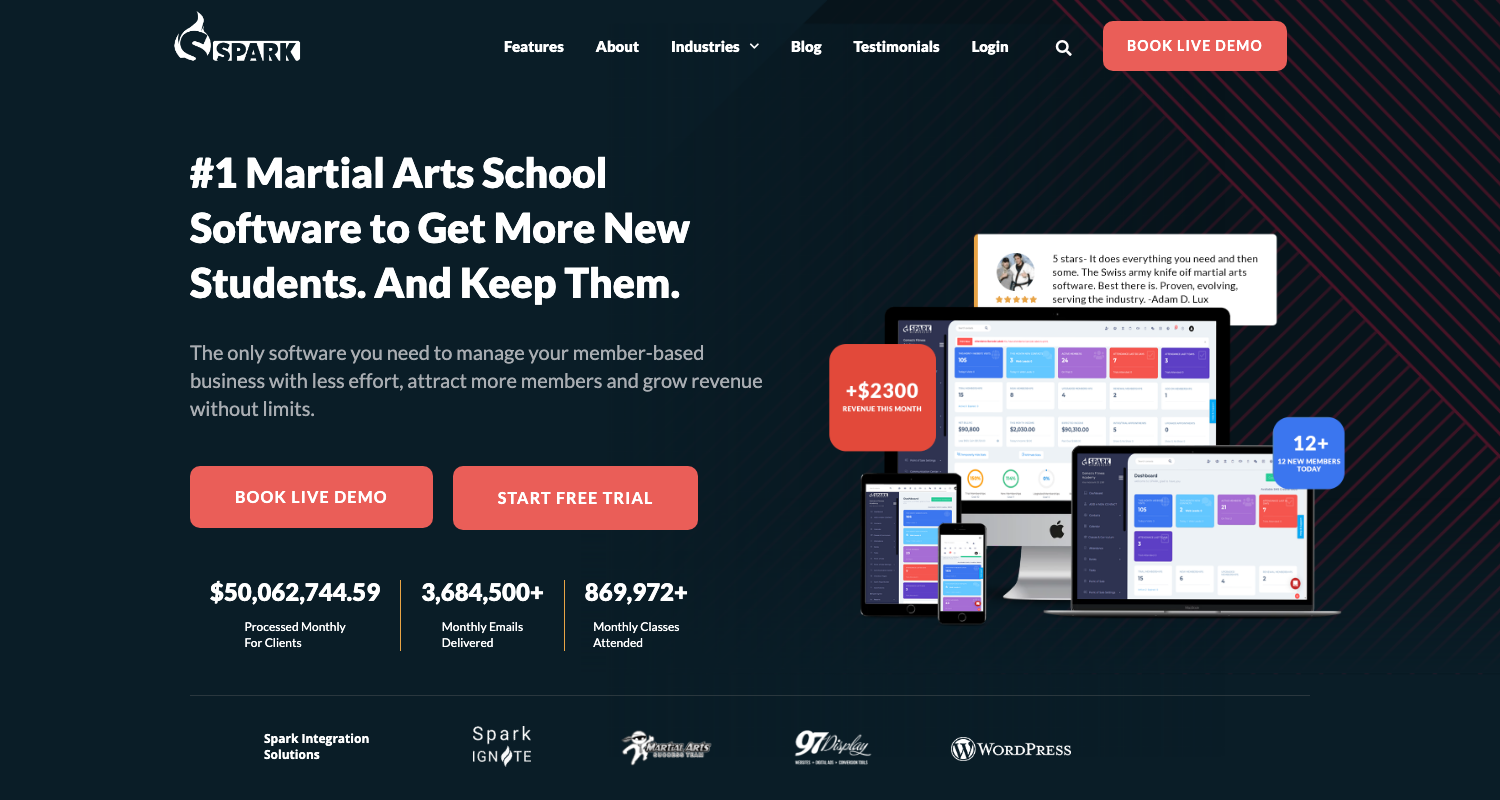
Spark Membership is a martial arts school platform built by Master Ron Sell and Grand Master Cheong Park, two 7th-dan black belts who ran schools for more than twenty years before they built software. It leans hard toward sales and marketing (lead capture, funnels, SMS campaigns), with belt tracking wired into the same system.
Features include: Belt rank progression tied to attendance data, with curriculum requirements you set per rank and automatic notifications to both the instructor and the student when a testing milestone is reached. A CRM that segments by belt rank, trial stage, and last attendance date. Email and SMS automation, landing page and checkout page builders, sales funnels, point-of-sale, and a member app covering class booking, two-way chat, event registration, and video curriculum.
Pricing: $199/month for full access to every feature, with no tiers and nothing locked behind an upgrade. Spark discounts this often—the pricing page currently advertises 50% off the first twelve months ($99/month) plus an eight-week free trial, and other pages run $1 introductory offers. Sold through a demo, though a direct-to-trial path exists. Data migration is free.
Best for: Martial arts schools whose bottleneck is enrollment rather than curriculum, and owners who want a dedicated account rep to handle setup rather than configuring it themselves.
Limitations: Spark’s published materials describe curriculum requirements at the rank level, not technique-by-technique checklists, so a student doesn’t get a per-move mastery view or a percentage toward their next belt. No parent portal is documented anywhere on the site. Rank and attendance history live in the member’s own profile, and the app’s family handling is a multi-profile login on one email rather than a parent dashboard spanning siblings. Pricing is flat, which is good value at 200 students and expensive at 40. If you want to see the product, you go through a sales conversation first. Worth comparing against a Spark Membership alternative if curriculum depth and parent visibility are what you’re solving for.
5. Wodify

Wodify was built for CrossFit gyms first—while it now supports martial arts, functional fitness remains its foundation.
Features include: Workout tracking, leaderboards, performance metrics, and belt tracking for martial arts (including automated progression, milestone tracking, and stripe advancement).
Pricing: Wodify uses per-location, tiered pricing. Historical rates started at $79/month, with tiers at $149 and $299. Current pricing is quote-based—contact Wodify for 2026 rates.
Best for: Hybrid CrossFit/BJJ facilities, or martial arts schools that also offer functional fitness programming.
Limitations: CrossFit-centric design means the interface and workflows prioritize workout tracking over curriculum management. Belt tracking exists but isn't as detailed as BJJ-specific platforms.
6. Xplor Recreation

Xplor Recreation (formerly PerfectMind) serves organizations from single-location dojos to large multi-site operations. They offer belt tracking but pricing requires contacting sales.
Features include: Configurable martial arts ranking management, automated belt testing workflows, attendance tracking tied to promotion requirements, and multi-location support.
Pricing: Not publicly disclosed for most configurations. Third-party sources show tiers at $100, $150, and $250/month, but enterprise pricing varies based on annual revenue and organization size.
Best for: Organizations wanting a platform that can scale from single location to multi-site, or those already using Xplor's broader recreation management ecosystem.
Limitations: Pricing opacity makes comparison difficult. No evidence of detailed technique checklists or curriculum mapping—belt tracking appears attendance-based rather than skills-based.
Category 3: Multi-Sport/Fitness
These platforms serve general fitness gyms, yoga studios, and multi-sport facilities.
They handle billing and scheduling effectively, but lack BJJ-specific belt tracking features. Consider these only if belt progression tracking isn't a priority for your academy.
7. Arbox
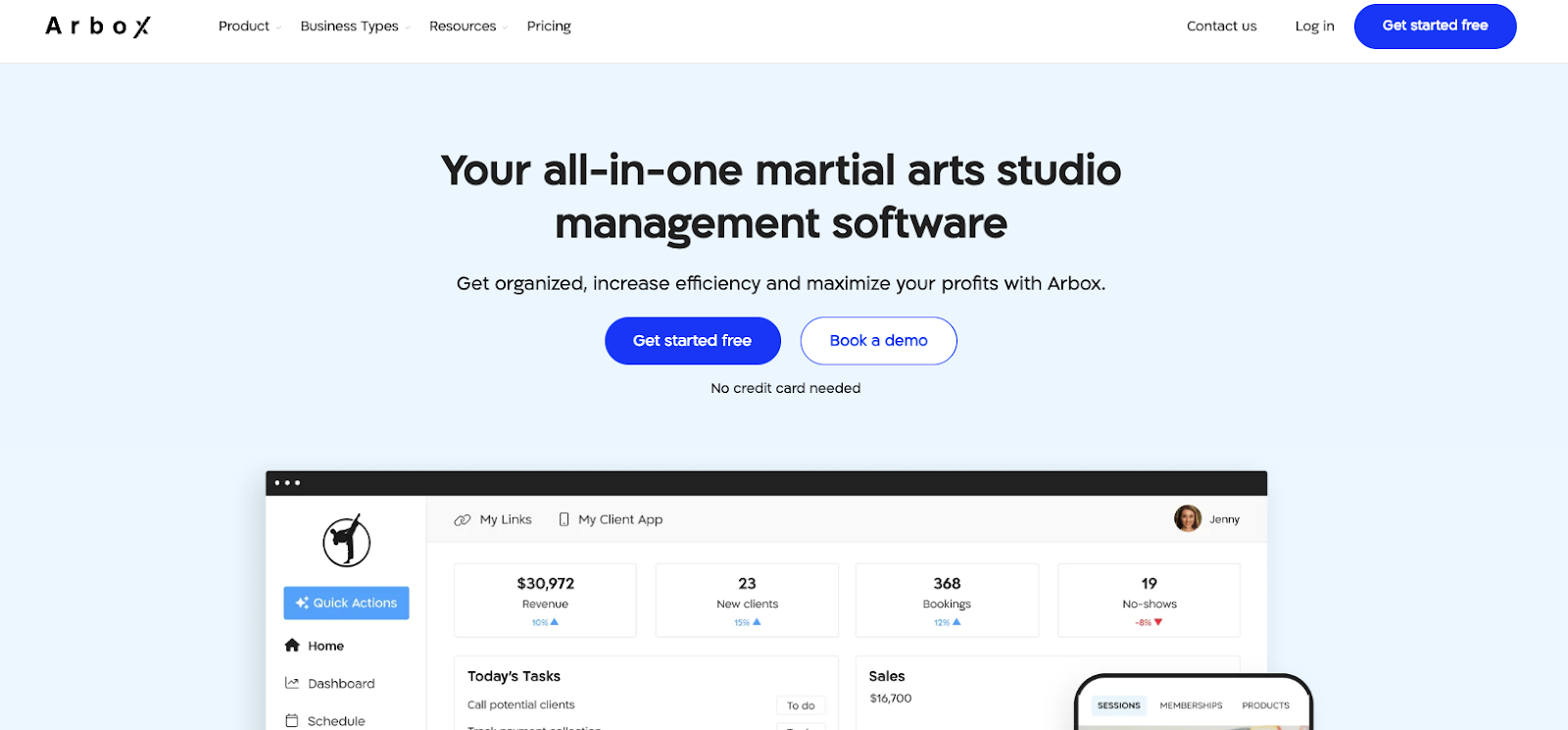
Arbox is a fitness-focused platform designed for gyms, yoga studios, and wellness businesses. It offers strong marketing automation and member management but lacks BJJ-specific features.
Features include: Email campaign builders, landing page creation, automated follow-up sequences for leads, billing, scheduling, and attendance tracking with mobile app access for members.
Pricing: Free plan for small operations and testing, then paid plans starting at $49/month with more sessions, onboarding, and support. Standard and Professional tiers add unlimited sessions, data migration, in-person onboarding, and premium features, while Enterprise offers custom pricing with on-site implementation and VIP support. Annual pricing offers 20-25% savings.
Best for: Fitness studios prioritizing marketing automation where BJJ is a secondary offering.
Limitations: No belt/rank tracking, no curriculum management, no parent portal, no family account linking. Not designed for martial arts progression tracking.
8. ABC Glofox
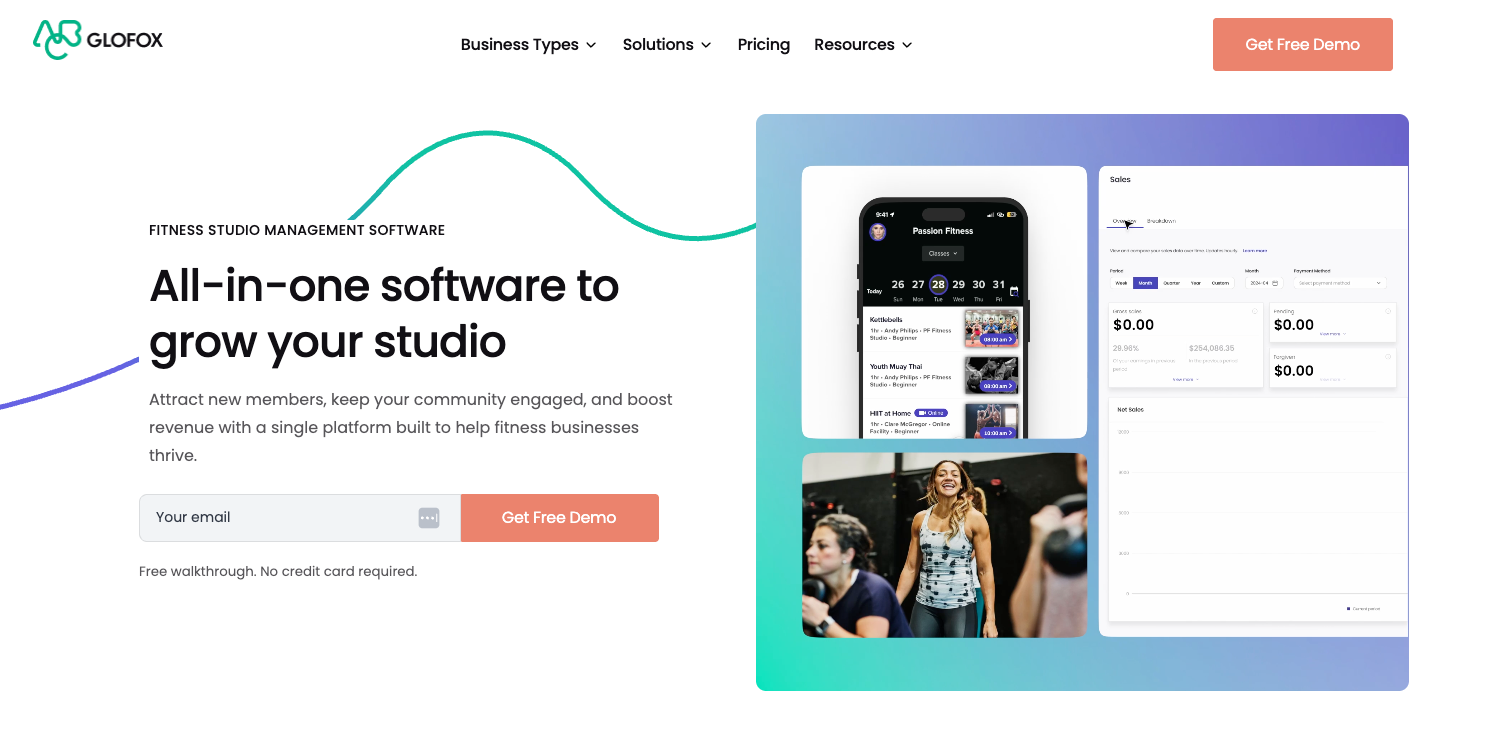
Boutique fitness platform for yoga, pilates, and group fitness—strong on class scheduling, memberships, and a “fitness studio” experience.
Pricing: Not published. Glofox’s pricing page is a quote request—you’ll need to talk to sales to get a number.
Best for: Studios where martial arts is secondary to fitness programs (e.g., BJJ offered as a small add-on class block).
Limitations: No belt/stripe tracking, curriculum mapping, or skills progression features—so advancement and coaching structure live outside the system.
9. Pike13
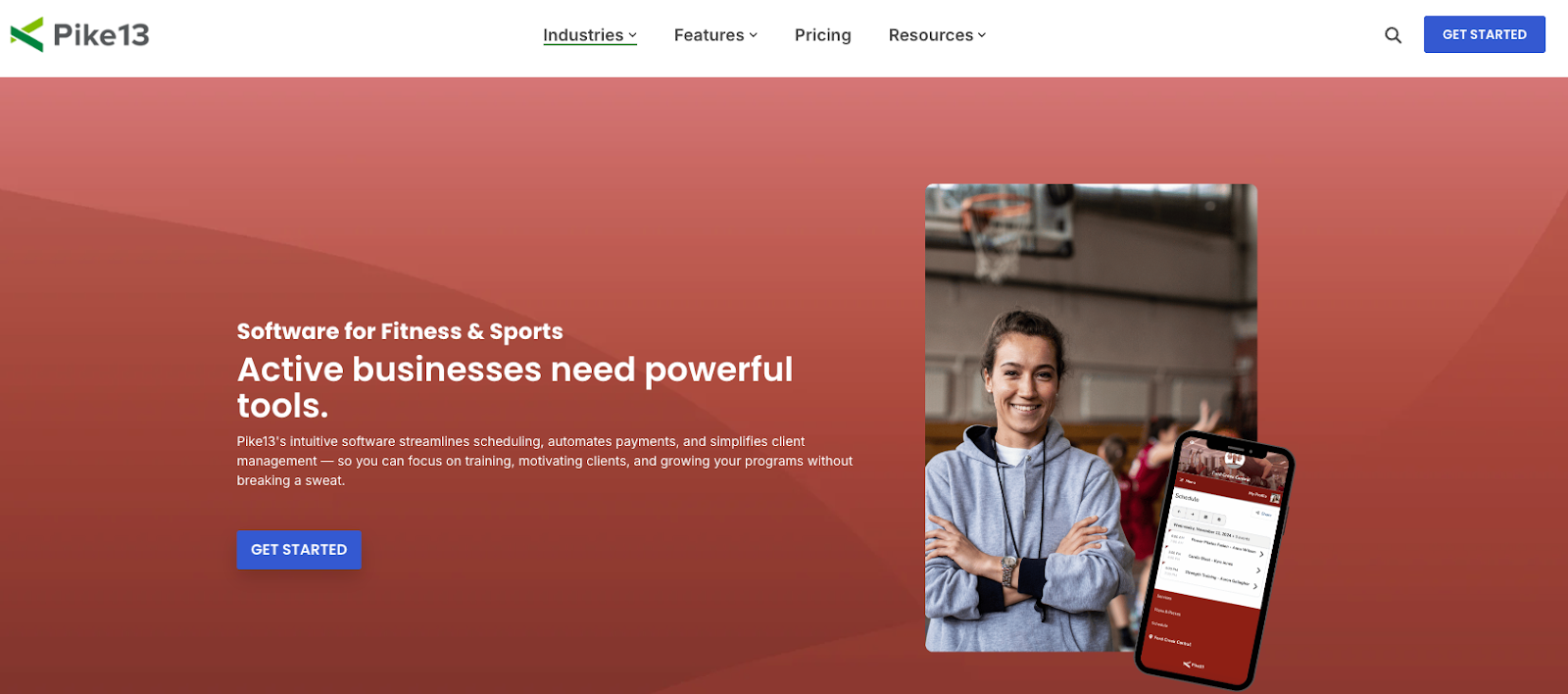
Multi-program management platform used by swim schools, dance studios, and recreation programs—built for handling lots of class types, schedules, and client accounts.
Pricing: Multiple tiers starting at $159/month (annual discounts available).
Best for: Facilities offering multiple program types with BJJ as one component (especially where family accounts and varied schedules are central).
Limitations: Handles family billing and multi-program ops well, but lacks BJJ-specific progression (belts/stripes), curriculum, and rank-history tracking.
10. WellnessLiving

WellnessLiving is an all-in-one wellness platform that serves fitness studios, yoga, and martial arts schools. It includes belt tracking but is not martial arts-focused.
Features include: Belt/rank tracking with conditional awards tied to attendance, manual belt assignment, automated promotions, scheduling, billing, and marketing automation.
Pricing: Multiple tiers starting at $69/month, ranging up to $569/month for premium features.
Best for: Wellness businesses offering martial arts alongside other programming (yoga, fitness classes).
Limitations: Belt tracking is attendance-based rather than skills-based. No detailed curriculum or technique checklist features. Martial arts is one of many verticals, not the primary focus.
11. PushPress
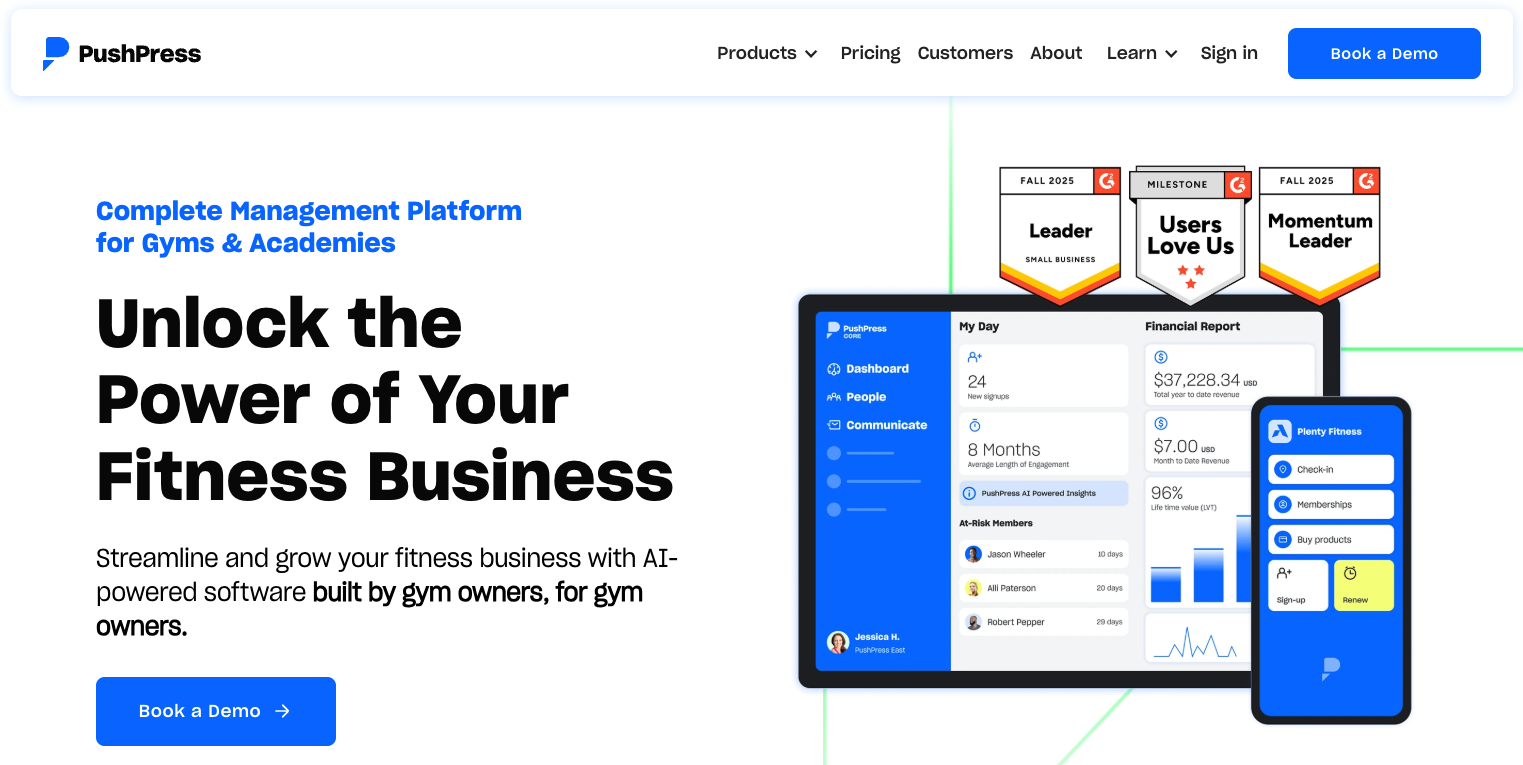
PushPress came up through CrossFit and strength gyms and has moved into martial arts in earnest. It now sells directly to BJJ, MMA, karate, taekwondo, and muay thai schools, and reports more than 5,000 gyms across 46 countries.
The belt tracking is real. You can build custom rank hierarchies with stripes from white to black, set promotion rules based on time at rank and attendance, log promotions with a full history per student, and run invite-only events for belt tests.
Features include: Custom rank and sub-rank tracking with configurable promotion criteria, bulk promotions, invite-only events for belt testing, multi-program scheduling (gi, no-gi, striking, kids), family plans with automatic sibling discounts, automated failed-payment recovery, digital waivers with guardian signature for minors, and a member app on every plan.
Pricing: Core is genuinely free—no credit card, no time limit, unlimited members, staff, and admins. Core Pro is $159/month and Core Max is $229/month, and the paid tiers also lower your payment processing rate. Add-ons price separately: Train workout tracking from $79/month, Grow CRM at $329/month, and a branded app at $81–$97/month. PushPress lists a full-stack bundle around $559/month.
Best for: Academies that also program strength or conditioning, schools that want to start free and grow into paid features, and owners who weigh lead automation heavily.
Limitations: Rank tracking sits on the paid tiers. PushPress’s own pricing page marks it unavailable on the free Core plan, so the free option doesn’t track belts at all—belt tracking starts at $159/month. Progression is stored as rank state and promotion history rather than technique-by-technique mastery, so there’s no published per-move checklist and no student-facing percentage toward the next belt. Marketing automation is a separate product at $329/month. If curriculum depth is the reason you’re switching, it’s worth running the PushPress vs Gymdesk comparison before you commit.
Feature Comparison Matrix
You're comparing 11 platforms. Here's the quick version—which features actually work versus which ones you'll end up working around.
Feature | Gymdesk | Zen Planner | Mindbody | Wodify | PushPress | Spark | WellnessLiving | Others* |
Skills/curriculum tracking | ✅ Detailed | ⚠️ Basic | ⚠️ Basic | ⚠️ Basic | ⚠️ Ranks (Pro+) | ⚠️ Rank-level | ⚠️ Basic | ❌ None |
Parent portal access | ✅ Yes | ⚠️ Limited | ⚠️ Limited | ❌ No | ⚠️ App milestones | ❌ Not documented | ❌ No | ❌ No |
Family account linking | ✅ Automatic | ✅ Yes | ✅ Yes | ⚠️ Limited | ✅ Sibling discounts | ⚠️ Multi-profile | ⚠️ Limited | ⚠️ Varies |
Automated billing | ✅ Yes | ✅ Yes | ✅ Yes | ✅ Yes | ✅ Yes | ✅ Yes | ✅ Yes | ✅ Yes |
Built-in website | ✅ Free | ❌ No | ❌ No | ❌ No | ⚠️ Add-on | ⚠️ Landing pages | ❌ No | ❌ No |
Free trial | ✅ 30 days | ⚠️ Demo first | ❌ Demo only | Varies | ✅ Free tier | ⚠️ Demo first | Varies | Varies |
Contract required | ❌ No | ⚠️ Optional | ✅ Yes | Varies | ❌ No | Varies | Varies | Varies |
Competition and tournament integration | ✅ Smoothcomp Connect, included | ❌ No Smoothcomp connection | ❌ No Smoothcomp connection | ❌ No Smoothcomp connection | ❌ No Smoothcomp connection | ❌ No Smoothcomp connection | ❌ No Smoothcomp connection | ❌ No Smoothcomp connection |
*Others includes Glofox, Pike13, Arbox, and Xplor Recreation—none offer BJJ-specific curriculum tracking.
Legend: ✅ = Excellent/Included | ⚠️ = Limited/Partial | ❌ = Not available/Weak
PushPress rank tracking requires Core Pro ($159/month) or above; it is not included on the free plan.
Pricing accurate as of July 2026. Contact vendors for current rates and verify features during free trials.
Deep Dive: Belt Tracking Systems Compared
Let’s get into some of the little details specific to BJJ academies and what they need.
How belt tracking should work in BJJ software
Belt progression in Brazilian Jiu-Jitsu combines three elements: time on the mat, technical skill mastery, and minimum time at each rank.
Software built for BJJ needs to track all three and show students where they stand.
What you need from belt tracking software:
- Attendance counting. Classes automatically count toward belt requirements when students check in.
- Technique mastery tracking. You mark competency in specific moves (arm bars, guard passes, escapes) and the system tracks it.
- Time-in-grade enforcement. Prevents promotion until minimum training duration is met, even if other requirements are complete.
- Progress visibility for students. Students see progress bars showing percentage completion: "73% to blue belt: 32/40 classes, 12/15 techniques, 5.2/6 months"
- Parent portal access. Parents see the same data for their kids without texting you at 9pm.
- Promotion readiness reports. Filter by belt and timeframe to see who's ready to test.
Platforms ranked by belt tracking depth
Gymdesk offers the most comprehensive belt-tracking features, including skills libraries, progress bars showing percentage completion, technique checklists tied to rank requirements, parent visibility into kids' progress, and promotion-readiness reports.
The skills display directly on the schedule so instructors can see the week's curriculum at a glance. Students and parents both have full access to progression data.
Zen Planner provides customizable ranking systems with automated belt promotion workflows and eligibility criteria.
The system tracks attendance and can trigger promotions, though it focuses more on attendance counts than detailed technique mastery checklists.
Mindbody, Wodify, PushPress, Spark Membership, and WellnessLiving all offer belt tracking, but with less depth than BJJ-specific platforms.
These systems typically track ranks and can automate promotions based on attendance or time-in-grade, but lack detailed technique checklists or skills libraries. They're adequate for basic belt management but won't give students visibility into exactly which techniques they've mastered.
Two of those come with a catch. Spark sets curriculum requirements per rank, and nothing on its site shows a student which moves they still owe. And PushPress keeps rank tracking off its free Core plan—belt tracking starts at Core Pro, $159/month.
Glofox, Pike13, and Arbox lack meaningful belt tracking. If curriculum management and promotion readiness are priorities, these platforms will require manual workarounds.
Deep Dive: Parent Communication Tools
BJJ has become hugely popular with kids and their parents. So, it’s extremely important that your BJJ software has parent communication built in.
Kids programs represent 40% or more of revenue for most BJJ academies. Parents paying for training they're not participating in need visibility into progress.
Without good communication tools, instructors spend hours answering "when will my kid test?" and "how's my child doing?" questions via text and email.
Parent portals eliminate most of this by giving guardians direct access to belt readiness, attendance, and technique mastery data.
What to look for in a parent portal
Essential parent portal features:
- Attendance history: Parents see how many classes their child attended each month to identify patterns
- Belt progression status: Percentage completion with specific breakdowns (30/40 classes, 11/15 techniques, 4.5/6 months)
- Technique checklists: Visual indicators showing which moves are mastered and which are still in progress
- Belt testing dates: Upcoming test schedules with eligibility status so families can plan ahead
- Billing self-service: Parents verify charges, download receipts, and update payment methods independently
- Academy announcements: Schedule changes and updates appear automatically without separate communications
Parent portal comparison
Let’s quickly compare all of these platforms on parent comms for full visibility into their child’s progress.
Platform | Parent Portal | Belt Progress Visible | Technique Checklist | Progress Reports |
Gymdesk | ✅ Full access | ✅ Yes | ✅ Yes | ✅ Available |
Zen Planner | ⚠️ Limited | ⚠️ Basic | ❌ No | ⚠️ Manual |
Mindbody | ⚠️ Billing focus | ⚠️ Basic | ❌ No | ❌ No |
Wodify | ❌ No | ❌ No | ❌ No | ❌ No |
PushPress | ⚠️ Member app | ⚠️ Milestones | ❌ No | ❌ No |
Spark Membership | ❌ Not documented | ⚠️ In member profile | ❌ No | ❌ No |
WellnessLiving | ❌ No | ❌ No | ❌ No | ❌ No |
BJJ Gym Software Pricing: What You'll Actually Pay
We covered the pricing for each in the listings above, but let’s see it all together for a clear comparison of what you’ll pay now and as you grow.
Pricing tiers by academy size
You see "$75/month" and think that's the price. Then setup fees, contracts, and add-ons appear.
Here's what you'll actually pay.
Platform | 50 Members | 100 Members | 200 Members | Contract? | Setup Fee |
Gymdesk (with Gymdesk Payments) | $75/mo | $100/mo | $200/mo | No | $0 |
Zen Planner | ~$99/mo | ~$167/mo | ~$247/mo | Optional | $0 (free onboarding) |
Mindbody | ~$79/mo | Quote-based | Quote-based | Varies | $0* |
Wodify | Quote-based | Quote-based | Quote-based | Varies | Varies |
PushPress | $159/mo† | $159/mo† | $229/mo† | No | $0 |
Spark Membership | $199/mo | $199/mo | $199/mo | Varies | $0 (free migration) |
WellnessLiving | ~$69/mo | ~$99/mo | ~$149/mo | Varies | Varies |
Glofox | Quote-based | Quote-based | Quote-based | Optional | Varies |
Pike13 | $159/mo | $195/mo | $249/mo | No | $0 |
Arbox | ~$49/mo | ~$129/mo | ~$299/mo | Optional | Varies |
Xplor Recreation | Quote-based | Quote-based | Quote-based | Varies | Varies |
*Mindbody states there is no setup fee on any plan; premium implementation and custom data conversion are priced separately.
†PushPress Core is free, but rank tracking is not included on the free plan. Belt tracking starts at Core Pro, $159/month.
Arbox rates shown are month-to-month; annual billing reduces them to roughly $39, $99, and $239.
These figures reflect base software costs as of July 2026. Payment processing fees typically run 2.5–3% per transaction on top of these monthly rates. Verify current pricing directly with vendors before making decisions.
Hidden costs to watch for
You’ve seen the big type pricing and costs for these platforms, so just watch for the hidden fees that can crop up if you aren’t careful.
- Payment processing fees. These can run 2.5-3% per transaction on top of monthly rates (some platforms mark up beyond processor costs). They are unavoidable, but you can find better rates on some platforms.
- Setup and onboarding fees. Some enterprise platforms charge several hundred to a thousand dollars to get started, and some charge nothing. Zen Planner and Spark both include onboarding and migration at no cost; Mindbody says there’s no setup fee on any plan, though premium implementation and custom data conversion cost extra. Ask for the number in writing before you sign.
- Contract requirements. Some platforms lock you into 12-month commitments with early termination penalties.
- Add-on features. Extra charges for SMS, advanced reporting, branded apps, or integrations.
- Per-location fees. Multiplies monthly cost for each additional academy you operate.
What BJJ Academy Owners Actually Experience
Comparison tables tell you what a platform can do. They don't tell you what happens when your 9pm Tuesday night class ends and you're staring at a billing dashboard instead of going home. Here's what real academy owners report after switching platforms.
Grapple Zone (London, CheckMat-affiliated)—Courtney Anderson
Courtney's team went through five or six CRM systems before landing on Gymdesk—and even then, the first attempt didn't stick.
"The first time we had Gymdesk, we didn't understand what the CRM system was, and we didn't use the system correctly," he said.
They left, tried other options, and came back. The second migration was smoother because Gymdesk simplified the data transfer.
The takeaway isn't that every platform switch goes perfectly. It's that organizational readiness matters as much as software capability. Courtney's team needed to understand what they wanted from a CRM before any platform could deliver it.
East Austin Jiu-Jitsu Parlor (Austin, TX)—William & Vince
William and Vince built the #1-ranked BJJ academy in Austin within their first year.
A key operational advantage: automating the connection between their gym management software and their public-facing website.
"Having everything that you make in Gymdesk being able to automatically be like front end available on the website is very, very, very helpful," William said.
They didn't hire a web developer. The schedule, class descriptions, and enrollment flow updated automatically.
Fit & Fight (Chicago)—Artur
Artur Gasanov started about three and a half years ago with roughly 10 kids, using spare hours in a taekwondo school. Within six months, he'd outgrown it.
He'd settled the billing question before he opened:
"First thing you have to do, have a good software. So, you can collect the money from the people… because the old system with the paper and the pen, it's hard."
His first platform got slow enough to bother him. He tried Spark, canceled after two months, and moved to Gymdesk.
When your academy is small, manual billing feels manageable. By the time you realize it isn't, you've already lost revenue to missed payments and forgotten follow-ups.
How the right software changes daily operations
Metric | Before (Manual/Generic) | After (BJJ-Specific Platform) |
Time on belt test prep | 6–8 hours per cycle | Under 1 hour (reports auto-generate) |
"When do I get promoted?" questions | 5–10 per week | Near zero (students see progress) |
Parent progress inquiries | Daily texts/emails | Self-service portal handles 80%+ |
Failed payment follow-up | Manual calls/texts | Automated retries + reminders |
New student onboarding | 30–45 minutes per student | 10–15 minutes (online enrollment) |
These aren't hypothetical. They're the operational shifts academy owners describe after moving from spreadsheets or generic fitness platforms to software built for martial arts.
How to Choose the Best BJJ Gym Software for Your Academy
Choosing any software takes some research. You’ve gotta look at features, user reviews, pricing, fees, customer support, and on and on. Here’s how you can do it right.
Match platform to academy size and needs
The size of your operation matters. Not all platforms can scale well with your needs, or become prohibitively expensive if they do.
- Small academies (50-100 members): BJJ gym software platforms like Gymdesk and Arbox offer belt tracking and family billing without enterprise complexity and cost.
- Mid-sized academies (100-300 members): Gymdesk, Zen Planner, and Arbox scale effectively. Choose based on whether belt tracking depth or enterprise features matter more.
- Large academies (300+ members) or multi-location: Zen Planner, Gymdesk, and Mindbody provide enterprise reporting and multi-location management, though with some of these options, belt tracking capabilities decrease.
Questions to ask during free trials
Use your 14-30 day trial to test core features with actual academy data:
- Belt tracking:
- Can students see progress percentage and technique gaps?
- Does it track attendance + skills + time-in-grade together?
- Can parents view kids' belt readiness?
- Family accounts:
- Can you link multiple students with automatic sibling discounts?
- Do parents see all kids in one dashboard?
- Billing:
- Do recurring charges and failed payment retries work automatically?
- Can you configure late fees once and forget about them?
- Setup:
- Can you configure core features in 1-2 days without extensive training?
- Does support respond quickly during onboarding?
💡 Evaluation tip:
When testing billing automation during free trials, set up a test member and run a recurring charge, then simulate a failed payment to see how the system handles it. If this doesn't work smoothly, nothing else matters.
The Bottom Line
Gymdesk offers the deepest BJJ-specific features—skills tracking, family billing, and parent portals—at competitive pricing ($75-200/month with Gymdesk Payments).
Zen Planner serves multi-discipline schools with solid belt tracking and operational tools. Mindbody provides enterprise features for large operations but at higher cost and complexity.
Several platforms (Wodify, PushPress, WellnessLiving) now offer basic belt tracking, but they're not purpose-built for martial arts. Spark Membership is built for martial arts schools, but it sets curriculum requirements per rank and doesn't document technique-by-technique tracking.
If detailed curriculum management and parent visibility into technique progress matter to your academy, BJJ-focused platforms have a significant advantage.
Platforms like Glofox, Pike13, and Arbox lack belt tracking entirely—only consider these if you don't need progression management or you're willing to handle it manually.
Pricing ranges from $69/month (basic tiers) to $500+/month (enterprise systems with add-ons).
Many platforms require demos rather than self-service trials, so budget time for sales conversations when evaluating options.
The right platform handles billing automatically, gives parents belt progress visibility, and returns your evenings to teaching instead of administrative work. Focus on platforms matching your academy size, verify belt tracking depth meets your needs, and confirm billing and scheduling work reliably.
BUILT FOR BJJ:
Gymdesk was built by BJJ practitioners for gym owners who got tired of spreadsheets. Skills tracking, family accounts, and a website builder are included at every pricing tier.
The 30-day trial doesn't need a credit card, so you can test belt tracking and parent portals with your actual students before deciding anything. Try Gymdesk free for 30 days →
Gym management software that frees up your time and helps you grow.
Simplified billing, enrollment, student management, and marketing features that help you grow your gym or martial arts school.


FAQ
BJJ Gym Software FAQs

Sean has spent the last decade creating content that helps businesses—small and not so small—grow smarter to allow operators to do more of what they love. You know, the fun stuff.
From shipping and international logistics to web development and marketing, he's done the work (not just the words) to scale retail and service businesses efficiently.
You can find his work at Sendle, Shogun, The Retail Exec, Gymdesk, and more.